Bernstein Menafsirkan Lonjakan MRNA 177%: Mana Dasar Fundamental, Mana Gelembung?

marsbitPublished on 2026-08-21Last updated on 2026-08-21

Abstract

Bernstein menjelaskan kenaikan saham Moderna (MRNA) sebesar 177% setelah mengumumkan hasil positif uji coba fase 3 terapi kanker kulit melanoma. Data klinis yang kuat adalah pendorong utama, tetapi kenaikan sebesar itu juga didorong oleh tiga faktor lain: penilaian ulang platform mRNA Moderna untuk pengobatan kanker lainnya, penutupan posisi short yang tinggi (short squeeze), dan perputaran aliran dana dari sektor teknologi ke farmasi. Terapi INT (inti-smeran autogene) adalah pengobatan personalisasi, bukan vaksin pencegahan. Meski sukses di melanoma, keberhasilannya di kanker paru-paru, ginjal, atau kandung kemih masih perlu dibuktikan dalam uji coba lanjutan. Bernstein memperkirakan penjualan puncak untuk melanoma dan kanker paru-paru sekitar $24 miliar (tanpa penyesuaian risiko), namun margin keuntungan akan terbatas oleh biaya produksi personalisasi dan pembagian keuntungan dengan Merck. Analis menegaskan bahwa terobosan klinis nyata, tetapi pasar telah menetapkan harga saham seolah-olah kesuksesan di berbagai jenis kanker dan efisiensi komersial sudah pasti tercapai. Mereka mempertahankan peringkat "Market-Perform" dan target harga $45 untuk Moderna, jauh di bawah harga penutupan $174.

19 Agustus, Moderna dan Merck mengumumkan hasil garis atas fase tiga untuk terapi antigen baru individual intismeran autogene (disingkat INT) yang dikombinasikan dengan Keytruda dalam pengobatan melanoma risiko tinggi.

INTerpath-001 merekrut total 1137 pasien melanoma kulit stadium IIB hingga IV yang telah menjalani reseksi bedah lengkap dan sebelumnya belum menerima pengobatan sistemik. Pada analisis interim pertama, uji coba ini secara bersamaan mencapai endpoint utama kelangsungan hidup bebas kekambuhan (RFS) dan endpoint sekunder kunci kelangsungan hidup bebas metastasis jarak jauh (DMFS). Data kelangsungan hidup keseluruhan (OS) belum matang, dan uji coba akan berlanjut.

Perusahaan saat ini hanya mengonfirmasi bahwa hasil memiliki signifikansi statistik dan klinis yang bermakna, tetapi belum mengungkapkan rasio bahaya spesifik, interval kepercayaan, subkelompok pasien, dan data keamanan lengkap. Dengan kata lain, pasar telah mengonfirmasi keberhasilan uji coba, tetapi belum mengetahui seberapa kuat sebenarnya kemanjurannya.

Setelah pengumuman ini, saham Moderna naik sekitar 177% menjadi 174,38 dolar AS, menambah kapitalisasi pasar sekitar 45 miliar dolar AS dalam satu hari; saham Merck naik sekitar 13% menjadi 152,20 dolar AS, menambah kapitalisasi pasar sekitar 50 miliar dolar AS. Perdebatan pasar juga dengan cepat beralih dari "Apakah uji coba akan berhasil" menjadi "Apakah kenaikan sebesar ini dapat didukung oleh fundamental?".

Terobosan Klinis Nyata, Tetapi Tidak Cukup Menjelaskan Kenaikan 177%

Bernstein berpendapat bahwa pencapaian endpoint RFS dan DMFS oleh INTerpath-001 pada analisis interim pertama menunjukkan bahwa kemanjurannya mungkin cukup kuat.

Analisis interim biasanya memerlukan ambang batas statistik yang lebih tinggi. Laporan ini memperkirakan bahwa rasio bahaya RFS dalam uji fase tiga kemungkinan berada di kisaran 0,50 hingga 0,65, dan rasio bahaya DMFS mungkin mendekati 0,40, yang kira-kira sejalan dengan data fase dua sebelumnya.

Rasio bahaya di bawah 1 berarti risiko relatif kejadian kekambuhan, metastasis jarak jauh, atau kematian pada kelompok terapi kombinasi lebih rendah dibandingkan kelompok Keytruda tunggal. Misalnya, rasio bahaya 0,50 kira-kira berarti penurunan risiko kejadian terkait sekitar 50%, tetapi tidak berarti setengah pasien sembuh.

Kisaran di atas hanyalah perkiraan Bernstein berdasarkan ambang batas statistik dan data masa lalu, bukan hasil fase tiga yang diumumkan perusahaan. Kemanjuran spesifik, keamanan, dan tren kelangsungan hidup keseluruhan masih perlu menunggu data lengkap.

Namun, signifikansi uji coba ini tidak hanya terletak pada melanoma. Ini adalah uji kunci pertama Moderna yang berhasil di luar vaksin pernapasan, dan juga skema antigen baru individual pertama yang terbukti dapat lebih meningkatkan kemanjuran Keytruda dalam penelitian fase tiga.

Ini memberikan bukti klinis kunci bagi mRNA untuk berkembang dari vaksin penyakit menular ke terapi kanker, dan juga merupakan titik awal bagi pasar untuk menilai ulang nilai platform Moderna.

Pasar Memperdagangkan Penilaian Ulang Platform dan Penutupan Posisi Short

Hasil klinis dapat menjelaskan kenaikan harga saham, tetapi tidak cukup untuk menjelaskan besarnya kenaikan.

Bernstein berpendapat bahwa bahkan dengan harapan keberhasilan yang relatif optimis untuk semua proyek tahap akhir INT, sulit untuk mendukung kenaikan harian Moderna sekitar 177%. Gelombang ini terutama didorong oleh tiga kekuatan yang saling tumpang tindih:

Keberhasilan klinis mengurangi risiko sisa proyek melanoma;

Investor mulai memberi harga pada potensi platform perluasan mRNA ke lebih banyak jenis kanker;

Posisi short yang tinggi memicu penutupan posisi short (short covering), memperbesar pembelian jangka pendek.

Sebelum pengumuman hasil, sekitar 14% hingga 15% saham beredar Moderna mengalami short selling. Setelah hasil klinis melampaui ekspektasi pesimis, pihak short dipaksa membeli untuk menutup posisi, dan investor yang sebelumnya underweight pada saham ini juga mulai mengejar kenaikan (chase). Volume perdagangan Moderna pada hari itu mendekati 200 juta saham, setara dengan sekitar setengah dari total saham perusahaan.
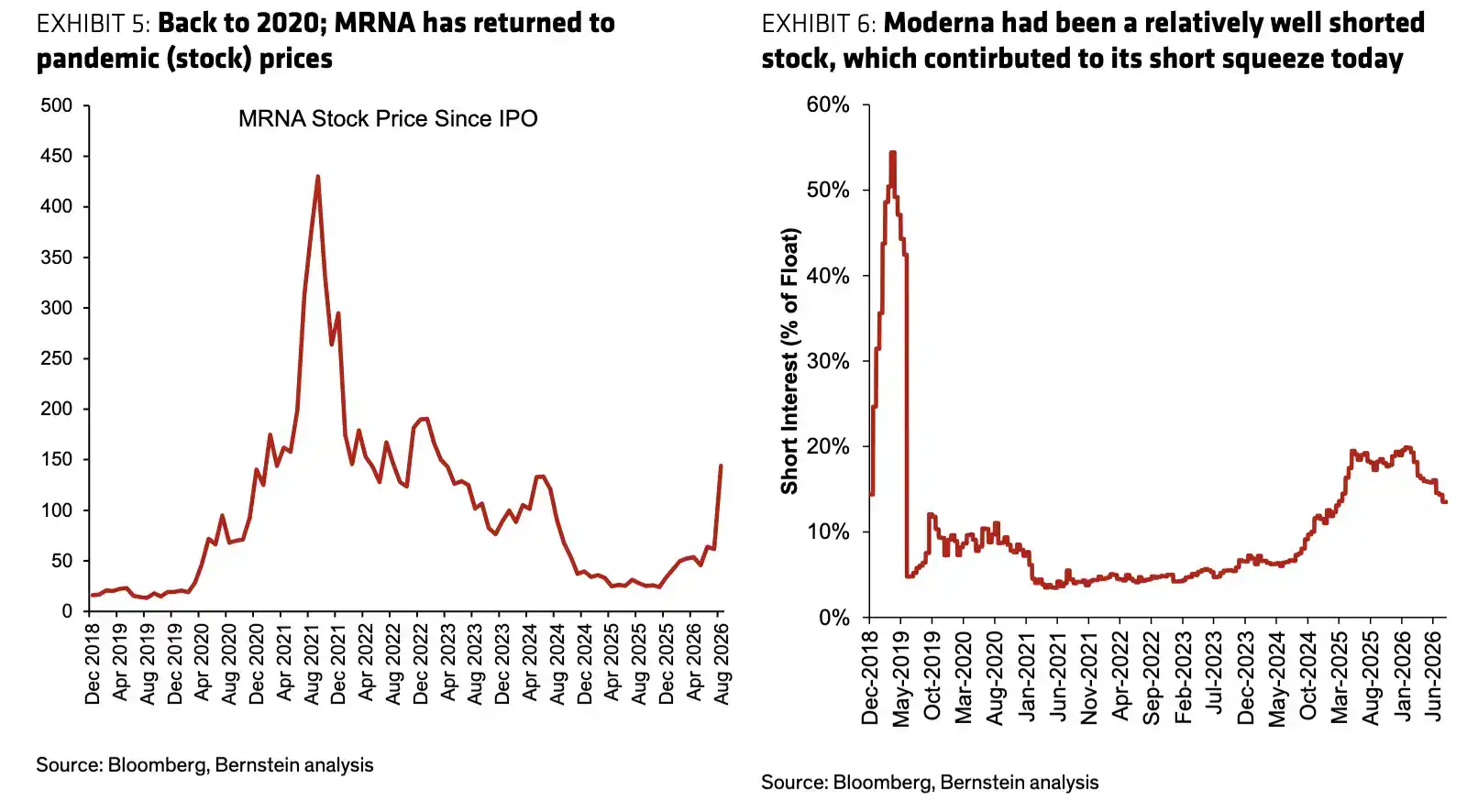
Grafik pergerakan harga saham MRNA (kiri) dan grafik persentase short interest (kanan). Harga saham MRNA telah kembali ke level sebelum pandemi setelah melonjak pada 19 Agustus 2026, sementara sebelumnya sekitar 14-15% saham beredar mengalami short selling, menciptakan kondisi untuk short squeeze. Data klinis memicu kenaikan, tetapi penutupan posisi short (short covering) semakin memperbesar kenaikan.

Label berita "Keberhasilan vaksin kanker" semakin memperkuat efek penyebaran. Dibandingkan dengan "Terapi antigen baru individual fase tiga mencapai endpoint", ungkapan ini lebih mudah membuat pasar mengasosiasikannya dengan platform besar yang mencakup berbagai jenis kanker.

Oleh karena itu, data klinis adalah pemicu kenaikan, sedangkan narasi platform, penutupan posisi short, dan efek berita memperbesar kenaikan. Besarnya kenaikan harga saham tidak berarti pasar telah mengonfirmasi bahwa INT mampu menciptakan pendapatan dan laba dengan skala yang sama.

Melatonin Hanya Awal, Replikasi Platform Masih Perlu Diverifikasi

Moderna dan Merck saat ini memiliki empat studi fase tiga dan lima studi fase dua yang berfokus pada INT, mencakup melanoma, kanker paru-paru sel non-kecil (NSCLC), karsinoma sel ginjal (RCC), dan kanker kandung kemih, dan mulai memasuki tumor yang tidak dapat diangkat atau metastatik.

Bernstein memperkirakan bahwa pasien potensial di AS yang sesuai untuk INTerpath-001 adalah sekitar 13.000 hingga 19.000 orang, yang merupakan sekitar 30% dari skala pasien yang dapat diakses oleh proyek fase tiga dan fase dua potensial yang dapat mendaftar, dan sekitar 17% dari semua proyek fase dua dan fase tiga.
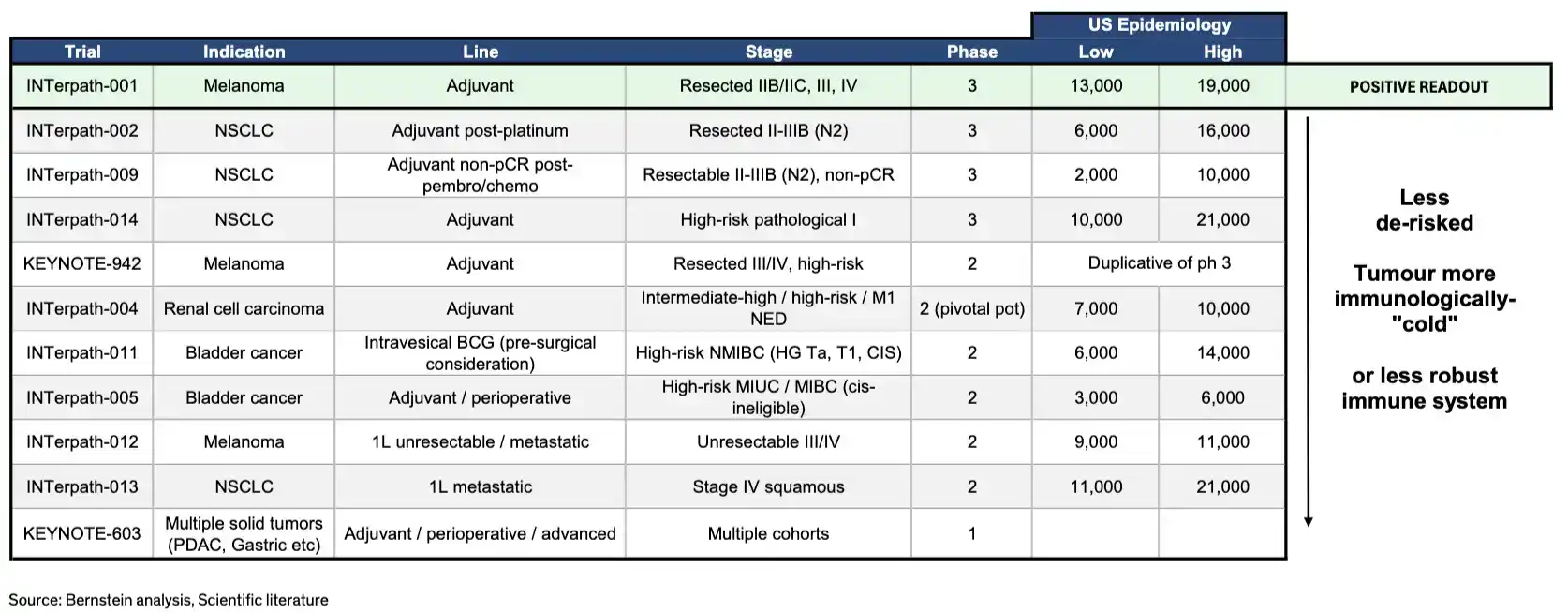
Skala pasien yang dapat diakses di AS untuk INTerpath-001 diperkirakan sekitar 13.000 hingga 19.000 orang, hanya sekitar 30% dari total pasien yang dapat diakses oleh proyek kunci saat ini, dan sekitar 17% dari semua studi INT fase II dan III. Keberhasilan pada melanoma tidak berarti kanker paru-paru, ginjal, dan jenis kanker lainnya dapat secara otomatis mereplikasi hasil yang sama.

Jika proyek kanker paru-paru, ginjal, dan kandung kemih juga dapat mereplikasi keberhasilan melanoma, ruang pasar INT akan berkembang secara signifikan. Bernstein saat ini memberikan perkiraan penjualan yang belum disesuaikan risiko untuk melanoma dini dan kanker paru-paru sekitar 2,4 miliar dolar AS.

Laporan ini juga menggunakan Keytruda sebagai referensi ke atas: pendapatan indikasi kanker dini pada tahun 2025 sekitar 7,9 miliar dolar AS, dan diperkirakan sekitar 9,2 miliar dolar AS pada tahun 2028, sedangkan harga INT di masa depan mungkin lebih tinggi daripada Keytruda.

Namun, 2,4 miliar dolar AS adalah perkiraan penjualan yang belum disesuaikan risiko, bukan laba, apalagi kinerja yang sudah terwujud. INT juga belum mencakup beberapa indikasi penting Keytruda seperti kanker payudara triple-negatif, kanker serviks, dan kanker kepala-leher.

Yang lebih krusial, melanoma biasanya memiliki imunogenisitas yang kuat, dan keberhasilannya tidak dapat langsung diekstrapolasikan ke tumor dengan lingkungan imun berbeda seperti kanker paru-paru, ginjal, dan kandung kemih.

INTerpath-001 membuktikan bahwa platform memiliki kemungkinan untuk direplikasi, tetapi tidak membuktikan bahwa replikasi pasti akan terjadi. Pasar telah mulai memperdagangkan skenario akhir keberhasilan pada jenis kanker lain, tetapi data klinis terkait masih dalam perjalanan.

Oleh karena itu, Bernstein mempertahankan peringkat "Market Perform" dan target harga 45 dolar AS untuk Moderna, jauh di bawah harga penutupan 174,38 dolar AS pada 19 Agustus.

Label "Vaksin Kanker" Mengaburkan Realitas Komersial

INT bukanlah vaksin preventif untuk populasi sehat, melainkan pengobatan individual untuk pasien kanker. Pada tahap ini, ini digunakan sebagai terapi adjuvan setelah pasien menyelesaikan reseksi tumor, dengan tujuan mengurangi risiko kekambuhan dan metastasis jarak jauh yang disebabkan oleh lesi residual.

Setiap pasien perlu dikumpulkan sampel jaringan tumor dan darah secara terpisah, kemudian menjalani sekuensing gen dan analisis algoritma. Sistem menyaring hingga 34 antigen baru spesifik dari mutasi tumor pasien, kemudian memproduksi konstruksi mRNA yang sesuai untuk menginduksi respons sel T terhadap tumor.
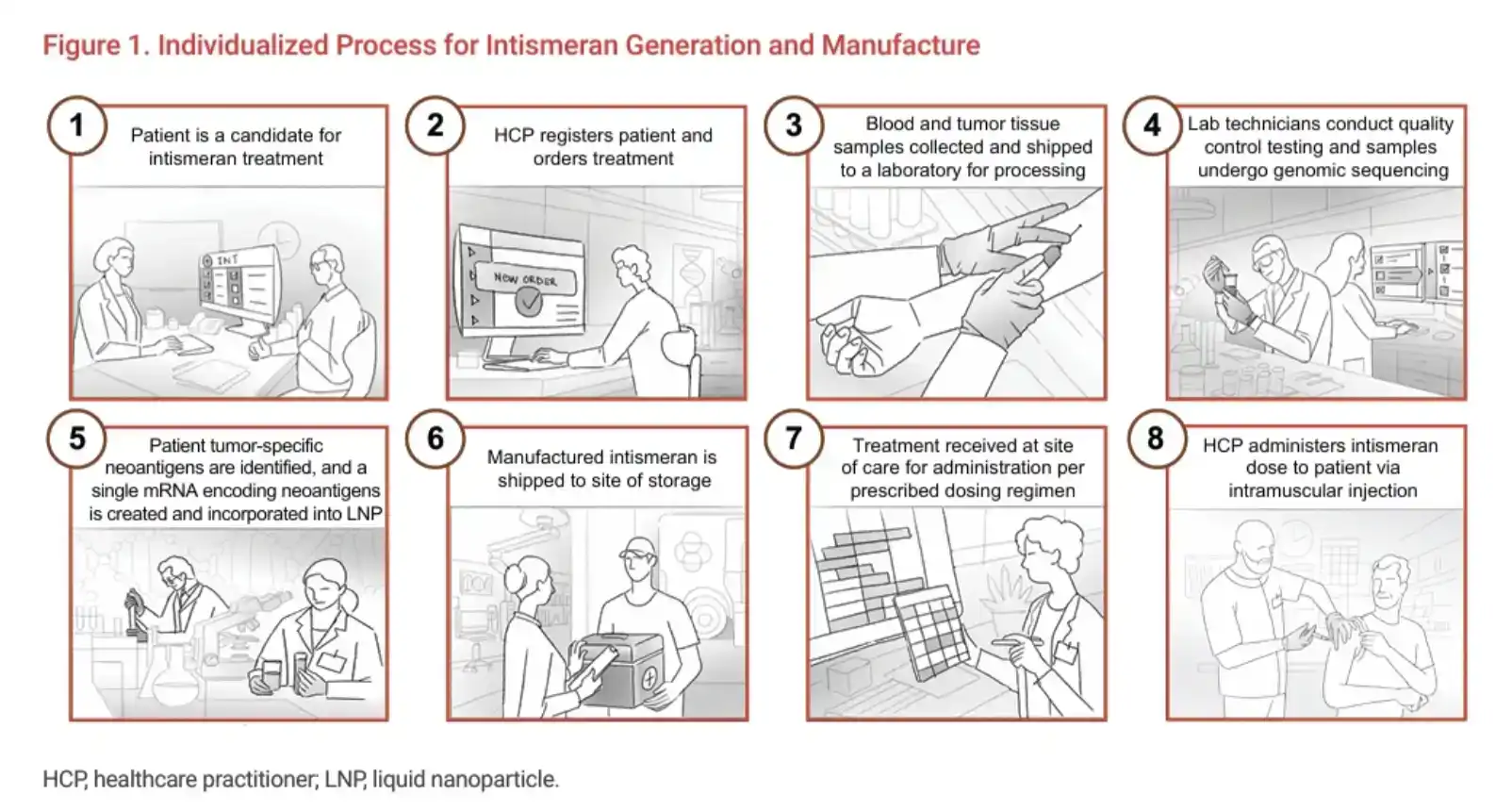
Oleh karena itu, meskipun INT menggunakan platform mRNA Moderna, model bisnisnya lebih mirip dengan obat tumor individual:

Pasien target berjumlah puluhan ribu, bukan puluhan juta atau ratusan juta seperti vaksin tradisional;

Setiap pasien memerlukan sekuensing, desain, dan produksi terpisah;

Biaya produksi sulit dikurangi secara cepat seperti vaksin massal;

Regulasi, penetapan harga, dan penggantian juga akan mengikuti jalur obat kanker.

"Vaksin kanker" adalah label yang mudah disebarkan, tetapi dapat memperbesar imajinasi pasar tentang skala pasien dan melemahkan kendala realitas seperti biaya produksi individual dan efisiensi komersialisasi. Dampak tambahan keberhasilan INT terhadap pemasok bahan baku vaksin tradisional juga relatif terbatas.

Pendapatan Miliaran Dolar, Berapa Banyak Laba yang Akan Bertahan?

Dibandingkan dengan ruang penjualan, Bernstein lebih mengkhawatirkan margin laba INT.

Merck akan bertanggung jawab atas komersialisasi global, Moderna akan berpartisipasi dalam promosi bersama di AS, sedangkan pasar di luar AS akan dipasarkan dan dijual secara independen oleh Merck. Kedua belah pihak akan berbagi biaya dan laba sesuai dengan perjanjian.

Bernstein mengambil contoh indikasi tunggal melanoma, dengan asumsi penjualan puncak INT mencapai 1,2 miliar dolar AS, margin kotor meningkat bertahap dari 35% pada awal peluncuran menjadi 60%. Setelah dikurangi biaya penjualan, umum, dan administrasi sekitar 250 juta dolar AS dan pembagian laba, kontribusi terhadap laba per saham (EPS) Moderna pada tahap matang diperkirakan sekitar 0,6 dolar AS.

Ini adalah skenario perhitungan Bernstein, bukan panduan perusahaan. Ini menunjukkan bahwa bahkan jika INT menjadi produk miliaran dolar, biaya produksi individual dan pembagian laba akan membatasi pelepasan laba.

Namun, harga pasar saat ini sudah mencerminkan beberapa kondisi yang menguntungkan: keberhasilan berturut-turut pada jenis kanker lain, ekspansi produksi kustom yang lancar, penetapan harga dan penggantian yang mapan, serta perbaikan margin kotor yang berkelanjutan. Kondisi-kondisi ini saat ini belum diverifikasi sepenuhnya.

Bagi Merck, nilai strategis INT terutama terletak pada perluasan penggunaan Keytruda. Sebagian besar uji coba menggunakan desain "INT dikombinasikan dengan Keytruda" vs "Keytruda tunggal", sehingga INT pertama-tama adalah terapi tambahan, bukan pengganti Keytruda.

Jika rejimen kombinasi menjadi pengobatan standar baru, Opdivo Bristol Myers Squibb, Tecentriq Roche, dan Imfinzi AstraZeneca mungkin menghadapi tekanan pangsa pasar di sebagian pasar melanoma dan kanker paru-paru sel non-kecil. Namun, margin kotor awal yang rendah dan pembagian laba juga dapat menghambat kontribusi INT terhadap margin laba operasional Merck.

Oleh karena itu, penambahan kapitalisasi pasar Merck sekitar 50 miliar dolar AS juga sulit dijelaskan hanya oleh laba proyek melanoma saat ini.

Kenaikan Sektor Farmasi Juga Dipengaruhi Rotasi Perdagangan AI

Bernstein berpendapat bahwa gelombang ini tidak sepenuhnya merupakan cerita individu Moderna.

Laporan mengamati bahwa baru-baru ini, sektor farmasi dan semikonduktor menunjukkan karakteristik perdagangan yang agak berlawanan. Dalam konteks kepemilikan AI dan semikonduktor yang semakin terkonsentrasi, farmasi mulai dianggap oleh sebagian investor sebagai pilihan defensif yang relatif bersih: permintaan kurang terpengaruh oleh siklus ekonomi, sekaligus dapat memperoleh manfaat jangka panjang dari penerapan AI dalam pengembangan obat dan uji klinis.
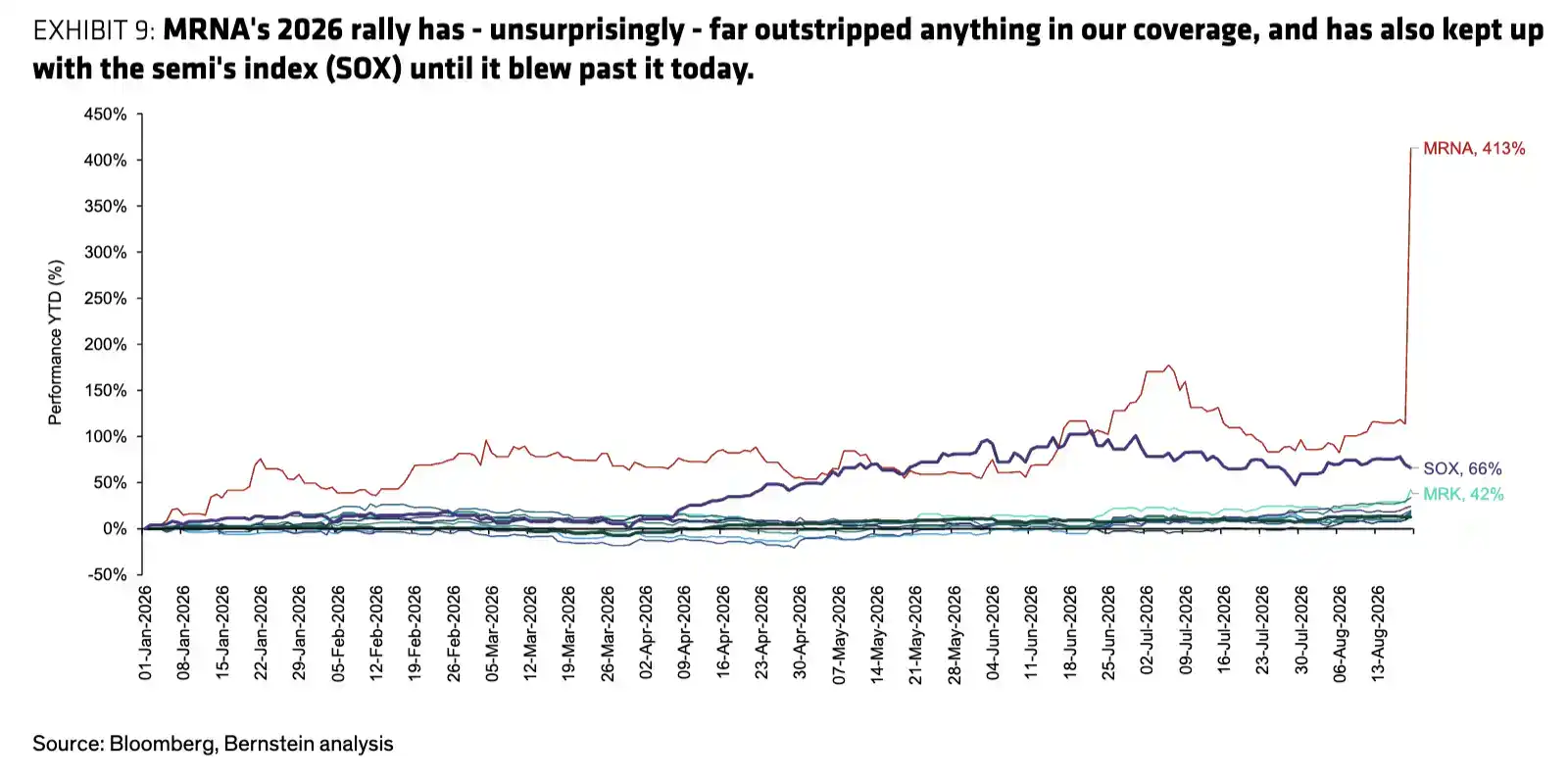
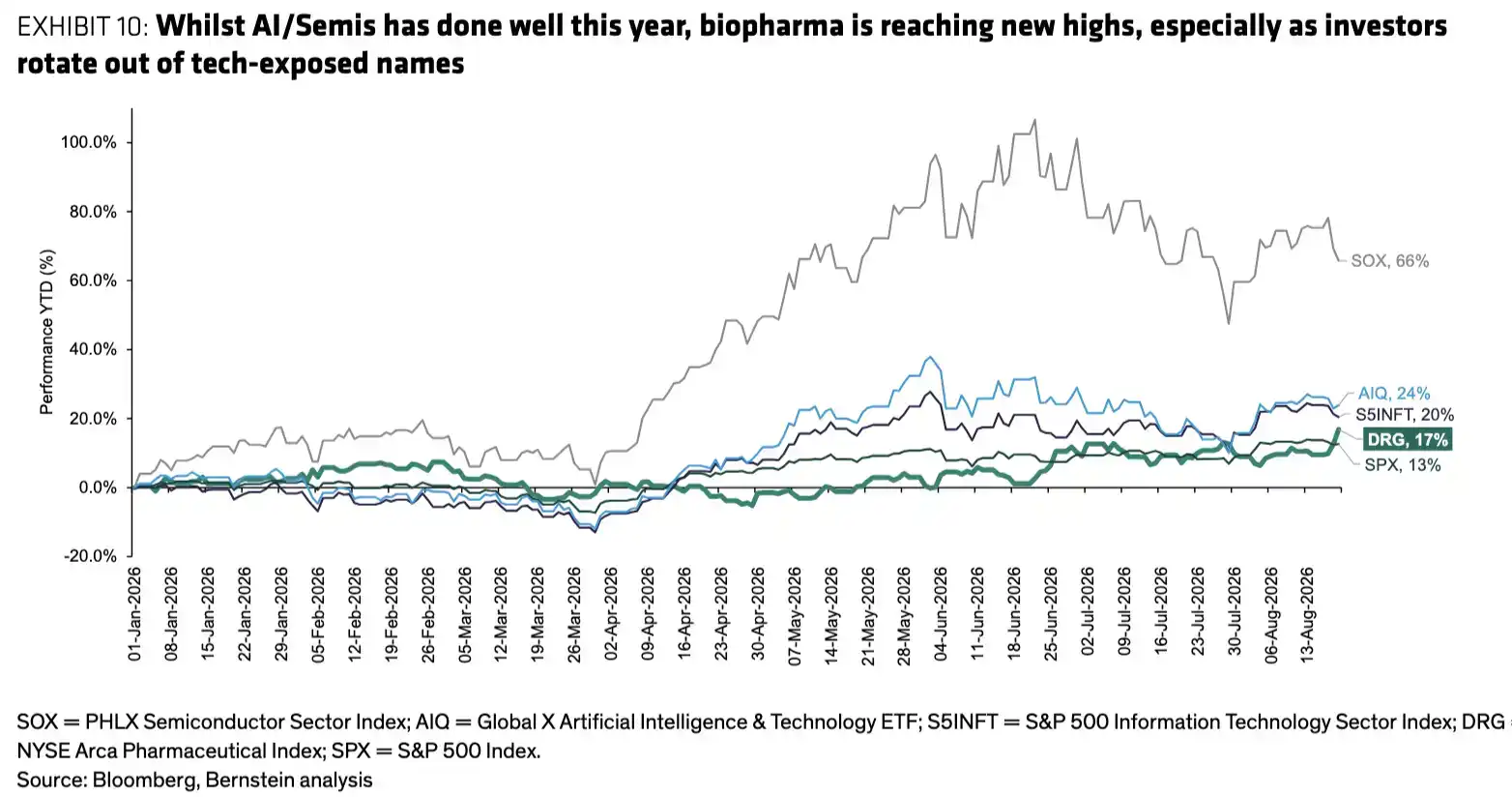
Pada tahun 2026, sektor farmasi (DRG) dan indeks semikonduktor (SOX) menunjukkan karakteristik perdagangan berlawanan yang jelas. Ketika tema AI berfluktuasi dan dana mengalir keluar dari sektor teknologi, sektor farmasi sebagai aset defensif menerima arus masuk dana. Kenaikan Moderna bukan hanya cerita individu, tetapi juga hasil dari rotasi sektor.

Ini hanyalah penjelasan Bernstein tentang perilaku dana, dan tidak berarti ada hubungan negatif yang stabil antara farmasi dan semikonduktor. Tetapi ketika volatilitas saham teknologi meningkat, rotasi dana dapat memberikan pembelian tambahan untuk sektor farmasi dan memperbesar dampak pasar dari hasil klinis INT.

Dengan demikian, kenaikan Moderna mengandung tiga lapisan perdagangan: lapisan dasar adalah keberhasilan fase tiga melanoma, lapisan tengah adalah penilaian ulang platform mRNA, dan lapisan luar adalah penutupan posisi short dan rotasi sektor. Semakin ke lapisan luar, semakin jauh jarak pergerakan dengan fundamental yang dapat diukur.

Dari Terobosan Klinis ke Titik Balik Kinerja, Masih Perlu Tiga Verifikasi

INTerpath-001 telah membuktikan bahwa terapi antigen baru individual mRNA dapat berhasil dalam uji coba fase tiga skala besar. Namun, untuk mendefinisikannya sebagai titik balik kinerja Moderna, setidaknya perlu menunggu tiga verifikasi:

Pertama, data fase tiga lengkap. Rasio bahaya spesifik, keamanan, subkelompok pasien, dan tren kelangsungan hidup keseluruhan akan menentukan keunggulan sebenarnya INT dibandingkan Keytruda tunggal.

Kedua, replikasi lintas jenis kanker. Hasil selanjutnya pada kanker paru-paru, ginjal, dan kandung kemih akan menentukan apakah melanoma hanya merupakan indikasi yang menguntungkan, atau titik awal platform tumor yang lebih luas.

Ketiga, efisiensi komersialisasi. Siklus produksi kustom, kapasitas, penetapan harga, penggantian, dan margin kotor menentukan apakah penjualan dapat diubah menjadi laba yang cukup untuk mendukung valuasi.

Bernstein tidak menyangkal nilai klinis INTerpath-001. Peringatan sebenarnya adalah: pasar telah dengan cepat melompat dari uji coba melanoma yang sukses ke penetapan harga skenario akhir platform multi-kanker dan realisasi laba jangka panjang.

Terobosan klinis telah terjadi, tetapi titik balik kinerja belum dikonfirmasi. Harga saham saat ini lebih banyak memperdagangkan imajinasi keberhasilan platform, dan permintaan jangka pendek yang diperbesar oleh posisi short yang tinggi.


Trending Cryptos

Related Questions

QMenurut analisis Bernstein, apa yang menyebabkan kenaikan harga saham Moderna sebesar 177%?

AKenaikan 177% didorong oleh tiga faktor yang saling memperkuat: (1) Kesuksesan klinis dalam uji coba INTerpath-001 untuk melanoma, (2) Penilaian ulang pasar terhadap potensi platform mRNA Moderna untuk terapi kanker di luar penyakit menular, dan (3) Pemaksaan likuidasi posisi short (short squeeze) akibat sekitar 14-15% saham beredar yang sebelumnya di-short, yang memperbesar pembelian dalam jangka pendek.

QApa arti signifikansi klinis dari kesuksesan uji coba INTerpath-001 menurut Bernstein?

ASignifikansi klinisnya adalah: (1) Ini adalah uji kunci pertama Moderna di luar vaksin pernapasan yang berhasil, membuktikan platform mRNA dapat diperluas ke pengobatan kanker. (2) Ini adalah skema terapi antigen neoantigen individual pertama yang terbukti dalam uji Fase 3 dapat meningkatkan efektivitas Keytruda. (3) Ini memberikan bukti klinis kritis bahwa pendekatan ini berfungsi pada melanoma, membuka jalan untuk uji coba di jenis kanker lainnya.

QBerapa perkiraan Bernstein untuk ukuran pasar potensial (jumlah pasien) dari INT untuk melanoma di AS, dan mengapa hal ini penting?

APerkiraan Bernstein untuk pasien potensial di AS dari uji INTerpath-001 (melanoma) adalah sekitar 13.000 hingga 19.000 orang. Ini penting karena jumlah ini hanya mewakili sekitar 30% dari pasien yang dapat dijangkau dalam proyek Fase 3 dan Fase 2 registrasi potensial saat ini, dan hanya sekitar 17% dari semua studi INT Fase II dan III. Artinya, melanoma hanyalah titik awal, dan kesuksesan komersial masa depan sangat bergantung pada replikasi hasil positif di kanker paru-paru, ginjal, kandung kemih, dan lainnya.

QMengapa Bernstein menyatakan bahwa label 'vaksin kanker' dapat membingungkan realitas komersial dari INT (intismeran autogene)?

ALabel 'vaksin kanker' membingungkan karena INT adalah terapi individual untuk pasien kanker yang telah menjalani operasi, bukan vaksin pencegahan untuk populasi sehat. Model bisnisnya lebih mirip obat tumor individual: setiap pasien memerlukan pengurutan, desain, dan produksi terpisah, sehingga biaya produksi tidak dapat ditekan seperti vaksin massal. Ini membatasi potensi skala dan efisiensi komersial, serta mempengaruhi margin keuntungan.

QApa tiga validasi tambahan yang menurut Bernstein masih diperlukan untuk mengonfirmasi titik balik kinerja (performance inflection point) Moderna setelah kesuksesan klinis ini?

ATiga validasi yang diperlukan adalah: (1) Data lengkap uji Fase 3, termasuk rasio bahaya spesifik, keamanan, subkelompok pasien, dan tren kelangsungan hidup keseluruhan. (2) Replikasi lintas jenis kanker, yaitu hasil positif pada uji coba untuk kanker paru-paru, ginjal, dan kandung kemih. (3) Efisiensi komersialisasi, termasuk siklus produksi individual, kapasitas, penetapan harga, penggantian biaya, dan margin keuntungan yang dapat diwujudkan.

Related Reads

Grayscale: Zcash, Financial Privacy in the Age of AI

Grayscale Research suggests a third wave of public focus on financial privacy is approaching, driven by stablecoin/blockchain adoption and new AI-powered surveillance tools. In this context, Zcash emerges as a decentralized digital currency, similar to Bitcoin but with built-in, robust privacy mechanisms via its "shielded" transactions that conceal sender, receiver, and amount using zero-knowledge proofs. While privacy is often seen as a niche feature, it is argued to be a core requirement for functional money, needed by individuals and businesses alike. Zcash's optional privacy is distinct from mixers or default-private chains like Monero. After years of development (Sapling, Orchard/NU5, Ironwood upgrades) to improve usability, key metrics show growing adoption: shielded transactions comprise ~90% of network activity, and ~25% of circulating ZEC is in shielded pools—a historical high. Despite this, ZEC's market valuation remains low (~0.6% of the "digital currency" sector), implying the market prices privacy as a marginal concern. The investment thesis hinges on a potential re-rating if the value of financial privacy is recognized more broadly. Risks include regulatory challenges around shielded transactions, legacy trusted setup pools, quantum computing threats, and execution risks for upcoming upgrades like Tachyon for scaling. In summary, Zcash represents a significant, technologically mature option in the privacy currency space, with current valuation offering potential upside if privacy demand grows.

marsbit35m ago

Grayscale: Zcash, Financial Privacy in the Age of AI

marsbit35m ago

The Bear Market Has Ended, A New Bull Cycle Has Begun

**Title: Bear Market Over, New Bull Cycle Begins** Bitcoin surged over 20% in just three days, from a low of $64,100 on August 19th to a high of $79,500 by August 21st, marking a dramatic shift in market sentiment. This rapid rise triggered massive liquidations exceeding $4 billion, with short positions accounting for $3.7 billion—the largest short squeeze since 2021. The rally was fueled by several key factors. Macroeconomic conditions improved as the US Treasury doubled its long-term bond buyback size, easing pressure. Significant regulatory developments included a White House meeting where former President Trump urged Senate action on the CLARITY Act and hinted at potential US Bitcoin reserves, followed by the CFTC Chairman stating the agency would establish crypto market rules if the bill stalls. On-chain data revealed a fierce battle: large whales faced substantial liquidations on short positions, while others took profits or doubled down on longs. Major altcoins like ETH and XRP also saw impressive gains. Analysts are divided but increasingly bullish. Many, including CryptoQuant's founder, declare the bear market over and a new bull cycle begun. Price targets range from $100k by year-end to ambitious long-term projections of $200k. However, some caution against immediate chasing, noting overbought conditions and viewing the move as a potential "trap" ahead of the crucial September 15th Senate vote on the CLARITY Act. The market's next test is sustaining the momentum with real buying pressure, holding above key resistance near $78k-$80k, and watching ETF inflows and the upcoming regulatory vote.

marsbit40m ago

The Bear Market Has Ended, A New Bull Cycle Has Begun

marsbit40m ago

Xiaomi Defended Its Smartphone Gross Margin, Yet to Find a Profit Successor

Xiaomi's Q2 2026 financial report reveals a company navigating a complex transition. While smartphone gross margin held steady at 8.5% through strategic product mix and a record-high average selling price (ASP), this came at the cost of a 26.5% year-over-year decline in global shipments, pressuring its core user acquisition engine. This illustrates Xiaomi's central challenge: managing the "timing gap" between its established and emerging growth engines. Its smartphone business is pivoting from scale to premiumization, but it's unclear if high-end models can fully offset the volume loss from more price-sensitive segments, especially in markets like India and Africa. Meanwhile, the electric vehicle segment has become a significant revenue contributor, delivering 104,200 units and generating ¥23.9 billion. However, its profit contribution remains unclear as it, along with AI investments, is still in a scaling and investment phase. The AI and humanoid robot initiatives, though strategically prioritized and tested in Xiaomi's own factories, are in early-stage validation with no near-term commercialization timeline. Financially, the company remains stable, supported by a robust cash position and its high-margin internet services business, which hit a new high in monthly active users. Management emphasized continued heavy investment in AI, chips, and robotics to fuel the next growth cycle. The key question is whether these new engines—cars, AI, robotics—can achieve commercial scale and profitability before the smartphone engine's growth slows further.

marsbit40m ago

Xiaomi Defended Its Smartphone Gross Margin, Yet to Find a Profit Successor

marsbit40m ago

Is RWA Still Meaningful Without DeFi?

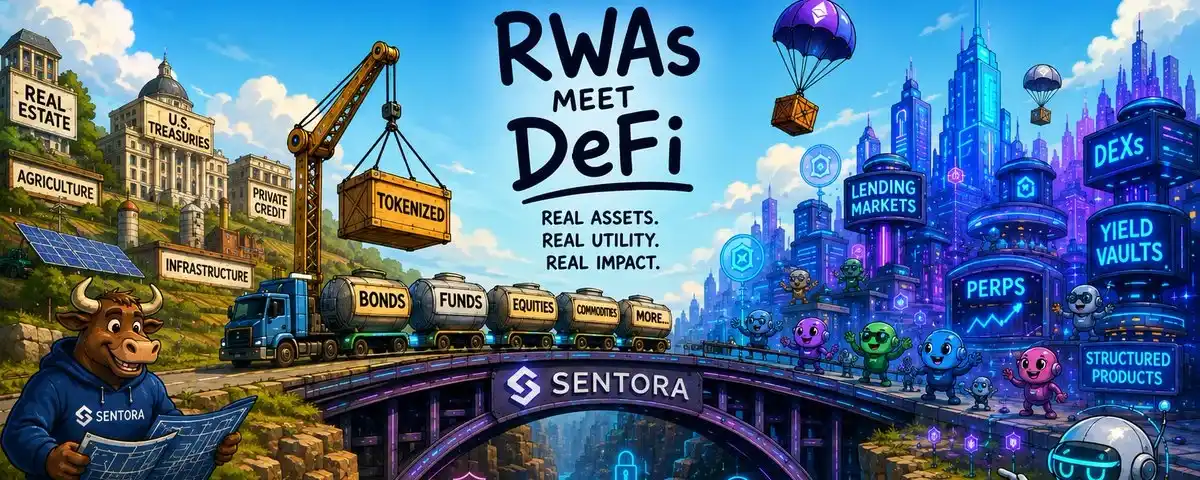
The article "Would RWA Still Matter Without DeFi?" argues that tokenizing real-world assets (RWA) alone, like putting a barcode on a container, is not transformative. True value emerges when these tokenized assets are integrated into decentralized finance (DeFi) ecosystems, enabling valuation, financing, hedging, trading, and loss management in a programmable, automated manner. Tokenization provides digital representation, but DeFi provides utility through leverage, liquidity, and composability. The core challenge lies in aligning the different "time clocks" of blockchain (fast, 24/7), traditional markets (limited hours), and asset redemption (slow processes), which creates liquidation risks and gaps. Effective RWA integration requires more than a token; it needs a full stack: legally enforceable rights, reliable data oracles, clear transfer rules, executable secondary liquidity, appropriate collateral parameters, and credible loss resolution paths. Liquidity is defined not by total value locked (TVL) but by the ability to exit a position under stress within a required timeframe. Risk management for RWAs must be modeled as a dependency graph, monitoring interconnected nodes like issuers, custodians, oracles, and liquidity pools for early warning signs beyond just price data. While tokenized government bonds serve as an initial "ping test," the future lies in more complex assets like computing power and energy, which require bespoke risk models. Tokenized stocks paired with perpetual futures present a major test, combining global equity ownership with crypto-native leverage, necessitating robust architectural safeguards like isolation and dynamic collateral rules. The conclusion is that without DeFi, RWA tokenization offers limited value—improving distribution and transparency. The significant opportunity arises when tokenized assets become functional components within open, programmable capital markets, where they can be used as collateral and facilitate complex financial strategies. The token is merely the barcode; the market operating system is the real machine.

marsbit1h ago

Is RWA Still Meaningful Without DeFi?

marsbit1h ago

Trading

Spot

Hot Articles

What is SONIC

Sonic: Pioneering the Future of Gaming in Web3 Introduction to Sonic In the ever-evolving landscape of Web3, the gaming industry stands out as one of the most dynamic and promising sectors. At the forefront of this revolution is Sonic, a project designed to amplify the gaming ecosystem on the Solana blockchain. Leveraging cutting-edge technology, Sonic aims to deliver an unparalleled gaming experience by efficiently processing millions of requests per second, ensuring that players enjoy seamless gameplay while maintaining low transaction costs. This article delves into the intricate details of Sonic, exploring its creators, funding sources, operational mechanics, and the timeline of significant events that have shaped its journey. What is Sonic? Sonic is an innovative layer-2 network that operates atop the Solana blockchain, specifically tailored to enhance the existing Solana gaming ecosystem. It accomplishes this through a customised, VM-agnostic game engine paired with a HyperGrid interpreter, facilitating sovereign game economies that roll up back to the Solana platform. The primary goals of Sonic include: Enhanced Gaming Experiences: Sonic is committed to offering lightning-fast on-chain gameplay, allowing players and developers to engage with games at previously unattainable speeds. Atomic Interoperability: This feature enables transactions to be executed within Sonic without the need to redeploy Solana programmes and accounts. This makes the process more efficient and directly benefits from Solana Layer1 services and liquidity. Seamless Deployment: Sonic allows developers to write for Ethereum Virtual Machine (EVM) based systems and execute them on Solana’s SVM infrastructure. This interoperability is crucial for attracting a broader range of dApps and decentralised applications to the platform. Support for Developers: By offering native composable gaming primitives and extensible data types - dining within the Entity-Component-System (ECS) framework - game creators can craft intricate business logic with ease. Overall, Sonic's unique approach not only caters to players but also provides an accessible and low-cost environment for developers to innovate and thrive. Creator of Sonic The information regarding the creator of Sonic is somewhat ambiguous. However, it is known that Sonic's SVM is owned by the company Mirror World. The absence of detailed information about the individuals behind Sonic reflects a common trend in several Web3 projects, where collective efforts and partnerships often overshadow individual contributions. Investors of Sonic Sonic has garnered considerable attention and support from various investors within the crypto and gaming sectors. Notably, the project raised an impressive $12 million during its Series A funding round. The round was led by BITKRAFT Ventures, with other notable investors including Galaxy, Okx Ventures, Interactive, Big Brain Holdings, and Mirana. This financial backing signifies the confidence that investment foundations have in Sonic’s potential to revolutionise the Web3 gaming landscape, further validating its innovative approaches and technologies. How Does Sonic Work? Sonic utilises the HyperGrid framework, a sophisticated parallel processing mechanism that enhances its scalability and customisability. Here are the core features that set Sonic apart: Lightning Speed at Low Costs: Sonic offers one of the fastest on-chain gaming experiences compared to other Layer-1 solutions, powered by the scalability of Solana’s virtual machine (SVM). Atomic Interoperability: Sonic enables transaction execution without redeployment of Solana programmes and accounts, effectively streamlining the interaction between users and the blockchain. EVM Compatibility: Developers can effortlessly migrate decentralised applications from EVM chains to the Solana environment using Sonic’s HyperGrid interpreter, increasing the accessibility and integration of various dApps. Ecosystem Support for Developers: By exposing native composable gaming primitives, Sonic facilitates a sandbox-like environment where developers can experiment and implement business logic, greatly enhancing the overall development experience. Monetisation Infrastructure: Sonic natively supports growth and monetisation efforts, providing frameworks for traffic generation, payments, and settlements, thereby ensuring that gaming projects are not only viable but also sustainable financially. Timeline of Sonic The evolution of Sonic has been marked by several key milestones. Below is a brief timeline highlighting critical events in the project's history: 2022: The Sonic cryptocurrency was officially launched, marking the beginning of its journey in the Web3 gaming arena. 2024: June: Sonic SVM successfully raised $12 million in a Series A funding round. This investment allowed Sonic to further develop its platform and expand its offerings. August: The launch of the Sonic Odyssey testnet provided users with the first opportunity to engage with the platform, offering interactive activities such as collecting rings—a nod to gaming nostalgia. October: SonicX, an innovative crypto game integrated with Solana, made its debut on TikTok, capturing the attention of over 120,000 users within a short span. This integration illustrated Sonic’s commitment to reaching a broader, global audience and showcased the potential of blockchain gaming. Key Points Sonic SVM is a revolutionary layer-2 network on Solana explicitly designed to enhance the GameFi landscape, demonstrating great potential for future development. HyperGrid Framework empowers Sonic by introducing horizontal scaling capabilities, ensuring that the network can handle the demands of Web3 gaming. Integration with Social Platforms: The successful launch of SonicX on TikTok displays Sonic’s strategy to leverage social media platforms to engage users, exponentially increasing the exposure and reach of its projects. Investment Confidence: The substantial funding from BITKRAFT Ventures, among others, emphasizes the robust backing Sonic has, paving the way for its ambitious future. In conclusion, Sonic encapsulates the essence of Web3 gaming innovation, striking a balance between cutting-edge technology, developer-centric tools, and community engagement. As the project continues to evolve, it is poised to redefine the gaming landscape, making it a notable entity for gamers and developers alike. As Sonic moves forward, it will undoubtedly attract greater interest and participation, solidifying its place within the broader narrative of blockchain gaming.

2.4k Total ViewsPublished 2024.04.04Updated 2024.12.03

What is SONIC

What is $S$

Understanding SPERO: A Comprehensive Overview Introduction to SPERO As the landscape of innovation continues to evolve, the emergence of web3 technologies and cryptocurrency projects plays a pivotal role in shaping the digital future. One project that has garnered attention in this dynamic field is SPERO, denoted as SPERO,$$s$. This article aims to gather and present detailed information about SPERO, to help enthusiasts and investors understand its foundations, objectives, and innovations within the web3 and crypto domains. What is SPERO,$$s$? SPERO,$$s$ is a unique project within the crypto space that seeks to leverage the principles of decentralisation and blockchain technology to create an ecosystem that promotes engagement, utility, and financial inclusion. The project is tailored to facilitate peer-to-peer interactions in new ways, providing users with innovative financial solutions and services. At its core, SPERO,$$s$ aims to empower individuals by providing tools and platforms that enhance user experience in the cryptocurrency space. This includes enabling more flexible transaction methods, fostering community-driven initiatives, and creating pathways for financial opportunities through decentralised applications (dApps). The underlying vision of SPERO,$$s$ revolves around inclusiveness, aiming to bridge gaps within traditional finance while harnessing the benefits of blockchain technology. Who is the Creator of SPERO,$$s$? The identity of the creator of SPERO,$$s$ remains somewhat obscure, as there are limited publicly available resources providing detailed background information on its founder(s). This lack of transparency can stem from the project's commitment to decentralisation—an ethos that many web3 projects share, prioritising collective contributions over individual recognition. By centring discussions around the community and its collective goals, SPERO,$$s$ embodies the essence of empowerment without singling out specific individuals. As such, understanding the ethos and mission of SPERO remains more important than identifying a singular creator. Who are the Investors of SPERO,$$s$? SPERO,$$s$ is supported by a diverse array of investors ranging from venture capitalists to angel investors dedicated to fostering innovation in the crypto sector. The focus of these investors generally aligns with SPERO's mission—prioritising projects that promise societal technological advancement, financial inclusivity, and decentralised governance. These investor foundations are typically interested in projects that not only offer innovative products but also contribute positively to the blockchain community and its ecosystems. The backing from these investors reinforces SPERO,$$s$ as a noteworthy contender in the rapidly evolving domain of crypto projects. How Does SPERO,$$s$ Work? SPERO,$$s$ employs a multi-faceted framework that distinguishes it from conventional cryptocurrency projects. Here are some of the key features that underline its uniqueness and innovation: Decentralised Governance: SPERO,$$s$ integrates decentralised governance models, empowering users to participate actively in decision-making processes regarding the project’s future. This approach fosters a sense of ownership and accountability among community members. Token Utility: SPERO,$$s$ utilises its own cryptocurrency token, designed to serve various functions within the ecosystem. These tokens enable transactions, rewards, and the facilitation of services offered on the platform, enhancing overall engagement and utility. Layered Architecture: The technical architecture of SPERO,$$s$ supports modularity and scalability, allowing for seamless integration of additional features and applications as the project evolves. This adaptability is paramount for sustaining relevance in the ever-changing crypto landscape. Community Engagement: The project emphasises community-driven initiatives, employing mechanisms that incentivise collaboration and feedback. By nurturing a strong community, SPERO,$$s$ can better address user needs and adapt to market trends. Focus on Inclusion: By offering low transaction fees and user-friendly interfaces, SPERO,$$s$ aims to attract a diverse user base, including individuals who may not previously have engaged in the crypto space. This commitment to inclusion aligns with its overarching mission of empowerment through accessibility. Timeline of SPERO,$$s$ Understanding a project's history provides crucial insights into its development trajectory and milestones. Below is a suggested timeline mapping significant events in the evolution of SPERO,$$s$: Conceptualisation and Ideation Phase: The initial ideas forming the basis of SPERO,$$s$ were conceived, aligning closely with the principles of decentralisation and community focus within the blockchain industry. Launch of Project Whitepaper: Following the conceptual phase, a comprehensive whitepaper detailing the vision, goals, and technological infrastructure of SPERO,$$s$ was released to garner community interest and feedback. Community Building and Early Engagements: Active outreach efforts were made to build a community of early adopters and potential investors, facilitating discussions around the project’s goals and garnering support. Token Generation Event: SPERO,$$s$ conducted a token generation event (TGE) to distribute its native tokens to early supporters and establish initial liquidity within the ecosystem. Launch of Initial dApp: The first decentralised application (dApp) associated with SPERO,$$s$ went live, allowing users to engage with the platform's core functionalities. Ongoing Development and Partnerships: Continuous updates and enhancements to the project's offerings, including strategic partnerships with other players in the blockchain space, have shaped SPERO,$$s$ into a competitive and evolving player in the crypto market. Conclusion SPERO,$$s$ stands as a testament to the potential of web3 and cryptocurrency to revolutionise financial systems and empower individuals. With a commitment to decentralised governance, community engagement, and innovatively designed functionalities, it paves the way toward a more inclusive financial landscape. As with any investment in the rapidly evolving crypto space, potential investors and users are encouraged to research thoroughly and engage thoughtfully with the ongoing developments within SPERO,$$s$. The project showcases the innovative spirit of the crypto industry, inviting further exploration into its myriad possibilities. While the journey of SPERO,$$s$ is still unfolding, its foundational principles may indeed influence the future of how we interact with technology, finance, and each other in interconnected digital ecosystems.

429 Total ViewsPublished 2024.12.17Updated 2024.12.17

What is $S$

What is AGENT S

Agent S: The Future of Autonomous Interaction in Web3 Introduction In the ever-evolving landscape of Web3 and cryptocurrency, innovations are constantly redefining how individuals interact with digital platforms. One such pioneering project, Agent S, promises to revolutionise human-computer interaction through its open agentic framework. By paving the way for autonomous interactions, Agent S aims to simplify complex tasks, offering transformative applications in artificial intelligence (AI). This detailed exploration will delve into the project's intricacies, its unique features, and the implications for the cryptocurrency domain. What is Agent S? Agent S stands as a groundbreaking open agentic framework, specifically designed to tackle three fundamental challenges in the automation of computer tasks: Acquiring Domain-Specific Knowledge: The framework intelligently learns from various external knowledge sources and internal experiences. This dual approach empowers it to build a rich repository of domain-specific knowledge, enhancing its performance in task execution. Planning Over Long Task Horizons: Agent S employs experience-augmented hierarchical planning, a strategic approach that facilitates efficient breakdown and execution of intricate tasks. This feature significantly enhances its ability to manage multiple subtasks efficiently and effectively. Handling Dynamic, Non-Uniform Interfaces: The project introduces the Agent-Computer Interface (ACI), an innovative solution that enhances the interaction between agents and users. Utilizing Multimodal Large Language Models (MLLMs), Agent S can navigate and manipulate diverse graphical user interfaces seamlessly. Through these pioneering features, Agent S provides a robust framework that addresses the complexities involved in automating human interaction with machines, setting the stage for myriad applications in AI and beyond. Who is the Creator of Agent S? While the concept of Agent S is fundamentally innovative, specific information about its creator remains elusive. The creator is currently unknown, which highlights either the nascent stage of the project or the strategic choice to keep founding members under wraps. Regardless of anonymity, the focus remains on the framework's capabilities and potential. Who are the Investors of Agent S? As Agent S is relatively new in the cryptographic ecosystem, detailed information regarding its investors and financial backers is not explicitly documented. The lack of publicly available insights into the investment foundations or organisations supporting the project raises questions about its funding structure and development roadmap. Understanding the backing is crucial for gauging the project's sustainability and potential market impact. How Does Agent S Work? At the core of Agent S lies cutting-edge technology that enables it to function effectively in diverse settings. Its operational model is built around several key features: Human-like Computer Interaction: The framework offers advanced AI planning, striving to make interactions with computers more intuitive. By mimicking human behaviour in tasks execution, it promises to elevate user experiences. Narrative Memory: Employed to leverage high-level experiences, Agent S utilises narrative memory to keep track of task histories, thereby enhancing its decision-making processes. Episodic Memory: This feature provides users with step-by-step guidance, allowing the framework to offer contextual support as tasks unfold. Support for OpenACI: With the ability to run locally, Agent S allows users to maintain control over their interactions and workflows, aligning with the decentralised ethos of Web3. Easy Integration with External APIs: Its versatility and compatibility with various AI platforms ensure that Agent S can fit seamlessly into existing technological ecosystems, making it an appealing choice for developers and organisations. These functionalities collectively contribute to Agent S's unique position within the crypto space, as it automates complex, multi-step tasks with minimal human intervention. As the project evolves, its potential applications in Web3 could redefine how digital interactions unfold. Timeline of Agent S The development and milestones of Agent S can be encapsulated in a timeline that highlights its significant events: September 27, 2024: The concept of Agent S was launched in a comprehensive research paper titled “An Open Agentic Framework that Uses Computers Like a Human,” showcasing the groundwork for the project. October 10, 2024: The research paper was made publicly available on arXiv, offering an in-depth exploration of the framework and its performance evaluation based on the OSWorld benchmark. October 12, 2024: A video presentation was released, providing a visual insight into the capabilities and features of Agent S, further engaging potential users and investors. These markers in the timeline not only illustrate the progress of Agent S but also indicate its commitment to transparency and community engagement. Key Points About Agent S As the Agent S framework continues to evolve, several key attributes stand out, underscoring its innovative nature and potential: Innovative Framework: Designed to provide an intuitive use of computers akin to human interaction, Agent S brings a novel approach to task automation. Autonomous Interaction: The ability to interact autonomously with computers through GUI signifies a leap towards more intelligent and efficient computing solutions. Complex Task Automation: With its robust methodology, it can automate complex, multi-step tasks, making processes faster and less error-prone. Continuous Improvement: The learning mechanisms enable Agent S to improve from past experiences, continually enhancing its performance and efficacy. Versatility: Its adaptability across different operating environments like OSWorld and WindowsAgentArena ensures that it can serve a broad range of applications. As Agent S positions itself in the Web3 and crypto landscape, its potential to enhance interaction capabilities and automate processes signifies a significant advancement in AI technologies. Through its innovative framework, Agent S exemplifies the future of digital interactions, promising a more seamless and efficient experience for users across various industries. Conclusion Agent S represents a bold leap forward in the marriage of AI and Web3, with the capacity to redefine how we interact with technology. While still in its early stages, the possibilities for its application are vast and compelling. Through its comprehensive framework addressing critical challenges, Agent S aims to bring autonomous interactions to the forefront of the digital experience. As we move deeper into the realms of cryptocurrency and decentralisation, projects like Agent S will undoubtedly play a crucial role in shaping the future of technology and human-computer collaboration.

1.1k Total ViewsPublished 2025.01.14Updated 2025.01.14

What is AGENT S

Discussions

Welcome to the HTX Community. Here, you can stay informed about the latest platform developments and gain access to professional market insights. Users' opinions on the price of S (S) are presented below.

活动图片