Bitwise CEO认为,银行与比特币对立的时代即将结束

cryptonews.ruPublished on 2026-08-16Last updated on 2026-08-16

Abstract

华尔街与全球金融机构正加速进入数字资产市场,传统金融与去中心化金融间的界限逐渐模糊。Bitwise首席执行官亨特·霍斯利认为,做多比特币、做空银行业务的时代已结束,金融机构正转向加密行业的另一侧,推动数字资产的采用。霍斯利提到,今年夏天已有两家管理资产超1万亿美元的金融巨头在熊市条件下批准了加密产品上线,显示出机构对该创新行业的信心。 Sygnum首席投资官法比安·多里指出,银行与加密行业的关系已发生结构性转变:银行从抵制数字资产转向通过托管、代币化及合规交易等方式参与构建、支持与推广。Anchorage Digital首席执行官内森·麦考利透露,近两年其客户群日益体现传统金融与加密金融的融合,大型金融机构更倾向于与专业加密基础设施公司合作,而非自建技术系统。 近年来,包括Swissquote、DBS Bank、BBVA、BNY Mellon、瑞信相关机构以及摩根士丹利和嘉信理财等越来越多金融机构已进入加密市场。

华尔街和全球金融机构正在加速进入数字资产市场,因此传统金融(TradFi)与去中心化金融(DeFi)之间的界限正逐渐模糊。

Bitwise首席执行官亨特·霍斯利认为,“做多比特币、做空银行业”的时代已经结束,金融机构正将重心转向加密货币行业的另一侧,推动数字资产的采用。

亨特·霍斯利补充道,今年夏天,两家管理资产超过1万亿美元的金融巨头在熊市条件下批准了加密产品的推出。

今年每个人都穿上了加密T恤。现在每个人都在为加密行业工作,——霍斯利解释道,这说明了上述机构的步骤以及他们对创新行业成功的信心。

Sygnum首席投资官法比安·多里也认为,银行与加密行业之间的关系已经发生了结构性变化:

银行已经从抵制数字资产,转变为通过托管、代币化以及在交易中遵守法规来创造、支持和传播数字资产。

Anchorage Digital首席执行官内森·麦考利分享的信息表明,过去两年,该公司的客户群越来越反映出传统金融与加密金融的融合。大型金融机构通常更倾向于与专业的加密基础设施公司合作,而不是构建自己的技术系统。

近年来,越来越多的金融机构进入加密市场,其中包括:Swissquote、星展银行、BBVA、纽约梅隆银行、与瑞信相关的组织,以及摩根士丹利和嘉信理财。

end-content

Trending Cryptos

Related Questions

QBitwise公司的CEO认为银行与比特币之间何种关系的时代正在结束?

ABitwise公司的CEO Hunter Horsley认为,“做多比特币、做空银行”的对立时代正在结束。

Q根据文章,传统金融(TradFi)与去中心化金融(DeFi)之间的关系正在发生什么变化?

A华尔街和全球金融机构正在加速进入数字资产市场,导致传统金融(TradFi)和去中心化金融(DeFi)之间的界限逐渐模糊。

Q文章中提到,今年夏天有哪两类大型机构批准了加密产品的推出?

A今年夏天,有两家资产管理规模超过1万亿美元的金融巨头,在熊市条件下批准了加密产品的推出。

QSygnum的首席投资官Fabian Döring如何看待银行与加密行业关系的转变?

AFabian Döring认为,银行与加密行业的关系已经发生了结构性变化,银行已经从抵制数字资产转变为通过托管、代币化和合规交易来创建、支持和传播数字资产。

QAnchorage Digital的CEO Nathan McCauley观察到其客户群在过去两年反映了什么趋势?

ANathan McCauley观察到,在过去两年中,其客户群越来越反映出传统金融与加密金融的融合趋势,大型金融机构更倾向于与专业的加密基础设施公司合作,而非自建技术系统。

Related Reads

The 19 Must-Know Top Chinese and American Entrepreneurs Born After 2000 • The 21st-Century Successors Have Arrived

The 21st century's first generation of entrepreneurs, born in the 2000s, are already taking center stage. This analysis of publicly prominent founders reveals distinct trends between China and the U.S., shaped by their respective ecosystems. In China, young founders are heavily focused on giving AI a physical presence, tackling challenges in robotics and hardware. Examples include Huang Yi (RoboParty, humanoid robots), Qin Shentao (Yuanchen Taichu, embodied AI data infrastructure), and founders working on robotic hands, home cleaning robots, and computing power networks. Their paths often emerge from university labs and robotics competitions, prioritizing prototype demonstration, cost control, and manufacturing delivery. In contrast, their U.S. counterparts frequently leverage software, AI, and capital networks to rapidly reorganize digital services and information flows. Startups like Mercor (AI talent/data, reaching $10B revenue), Etched (AI chips), and various AI-powered SaaS tools for consumers and SMBs demonstrate a focus on user growth, subscription models, and global scalability. However, this velocity has also led to high-profile cases questioning business practices and credibility. The key differentiator for this generation is not merely youth, but the compressed early stage of venture creation. Access to open-source tools, AI models, mature supply chains, and willing venture capital allows them to bypass traditional career ladders. Yet, while technology lowers the barrier to product creation, it does not reduce the challenges of building a sustainable company—managing teams, ensuring reliable delivery, and establishing trust remain hard-earned skills. The article concludes that the true test for these founders will be the "second growth": evolving from product creators into responsible company leaders capable of sustained execution and organizational building. For established businesses, the rise of these fast-moving, technologically adept teams necessitates new strategies for collaboration, competition, and investment.

marsbit4m ago

The 19 Must-Know Top Chinese and American Entrepreneurs Born After 2000 • The 21st-Century Successors Have Arrived

marsbit4m ago

A Trillion-Dollar Consumer Credit Market Lacks Key Players

The trillion-dollar global consumer credit market remains largely untapped by blockchain technology. While projects like Pharos have rapidly attracted millions in stablecoin deposits for short-term consumer loans in emerging markets, they represent early attempts to bring this massive asset class on-chain. The core challenge isn't technical tokenization, but the "repackaging" of countless small, heterogeneous loans into standardized, investable products that digital asset funds can understand and price. Current approaches primarily change the *distribution* of capital—using stablecoins for settlement and smart contracts for transparency—but do not eliminate underlying credit risk. Several models are emerging: Pharos and Huma Finance/Tala focus on connecting high-yield emerging market loans to global crypto capital. Figure stands out by building full-stack, regulated infrastructure, securing AAA ratings for its securitizations and proving blockchain assets can meet traditional institutional standards. Conversely, Goldfinch's difficulties highlight that on-chain transparency cannot replace offline credit underwriting and collection capabilities. The article identifies a four-layer value chain: 1) loan origination, 2) credit structuring & securitization, 3) on-chain infrastructure, and 4) capital. The current gap is in the second layer—the mature capital markets expertise for structuring, rating, credit enhancement, and institutional distribution. This is the critical link needed to transform scattered loans into large-scale, trustworthy on-chain credit assets, bridging traditional finance's rigor with blockchain's new capital pools.

marsbit40m ago

A Trillion-Dollar Consumer Credit Market Lacks Key Players

marsbit40m ago

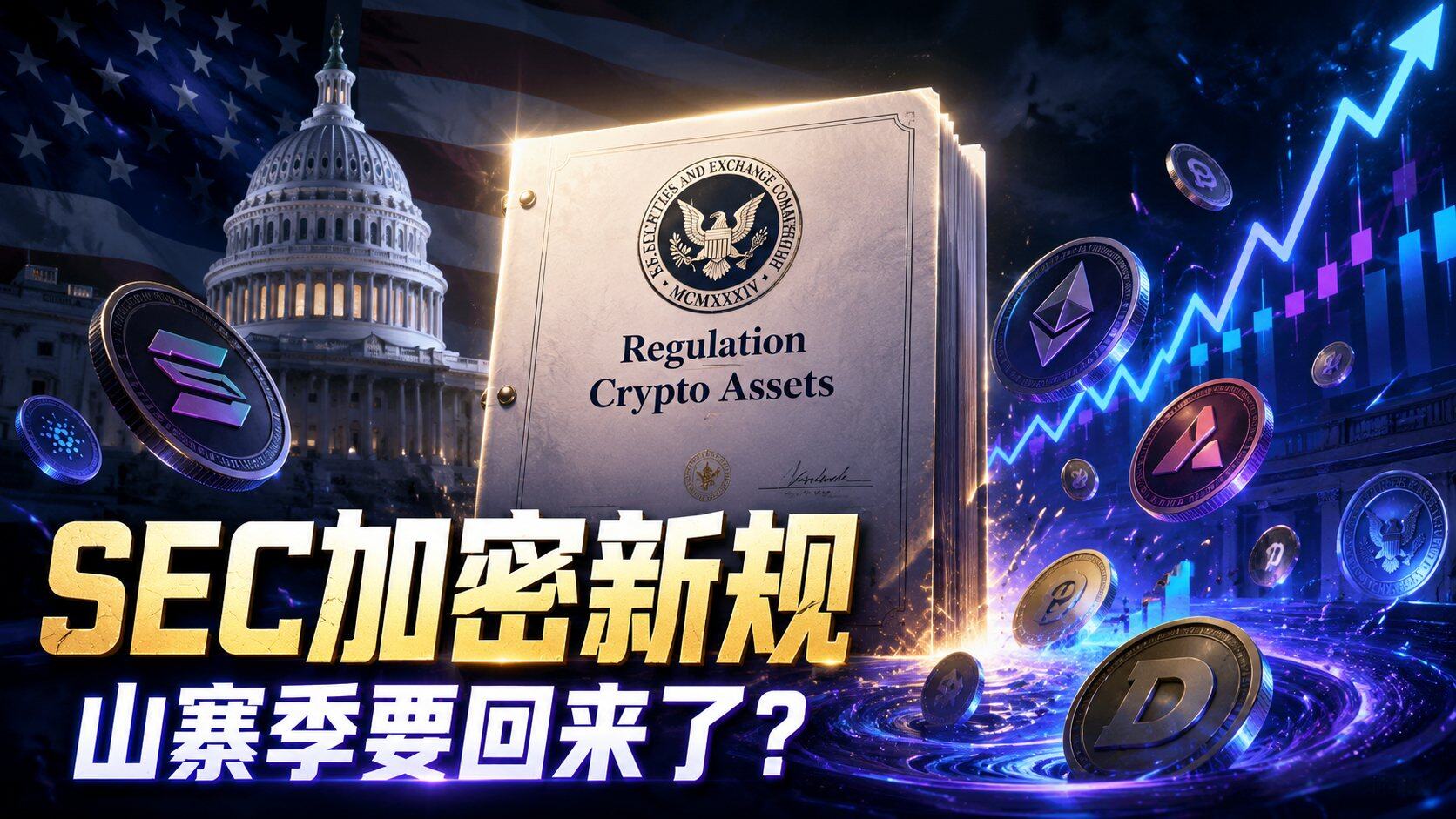
Interpretation of SEC's New Crypto Regulatory Rules: Fundraising Below $5 Million Exempt from Registration, Is Altcoin Season Making a Comeback?

The U.S. Securities and Exchange Commission (SEC) has proposed a new regulatory framework titled "Regulation Crypto Assets." This proposal aims to establish tailored exemptions for crypto asset fundraising and a pathway for tokens to transition out of being classified as securities. The core provisions include two exemptions from standard securities registration: 1. **Startup Exemption**: Allows early-stage projects to raise up to $5 million over four years with simplified, narrative-based disclosures, avoiding full registration. 2. **Fundraising Exemption**: Permits raising up to $75 million within any 12-month period. It requires audited financial statements and imposes ongoing reporting obligations, similar to the Regulation A+ framework. A key component is the **Investment Contract Safe Harbor**. This rule allows a token initially sold as an investment contract (a security) to lose that designation once the issuer has completed or permanently ceased the "essential managerial efforts" promised to investors. This theoretically clears regulatory hurdles for tokens where development is finished or abandoned. The proposal defines a narrow scope, applying only to crypto assets that are not securities themselves and are part of an investment contract involving no other assets. This SEC initiative is seen as a response to the stalled progress of the comprehensive *CLARITY Act* in Congress. It represents a shift from relying solely on the historical Howey test, which the SEC admits is ill-suited for dynamic crypto assets. The proposal is currently in a 60-day public comment period, with a final rule likely months away, leaving the U.S. regulatory landscape for crypto in a transitional state.

Odaily星球日报1h ago

Interpretation of SEC's New Crypto Regulatory Rules: Fundraising Below $5 Million Exempt from Registration, Is Altcoin Season Making a Comeback?

Odaily星球日报1h ago

Trading

Spot

Hot Articles

What is $BITCOIN

DIGITAL GOLD ($BITCOIN): A Comprehensive Analysis Introduction to DIGITAL GOLD ($BITCOIN) DIGITAL GOLD ($BITCOIN) is a blockchain-based project operating on the Solana network, which aims to combine the characteristics of traditional precious metals with the innovation of decentralized technologies. While it shares a name with Bitcoin, often referred to as “digital gold” due to its perception as a store of value, DIGITAL GOLD is a separate token designed to create a unique ecosystem within the Web3 landscape. Its goal is to position itself as a viable alternative digital asset, although specifics regarding its applications and functionalities are still developing. What is DIGITAL GOLD ($BITCOIN)? DIGITAL GOLD ($BITCOIN) is a cryptocurrency token explicitly designed for use on the Solana blockchain. In contrast to Bitcoin, which provides a widely recognized value storage role, this token appears to focus on broader applications and characteristics. Notable aspects include: Blockchain Infrastructure: The token is built on the Solana blockchain, known for its capacity to handle high-speed and low-cost transactions. Supply Dynamics: DIGITAL GOLD has a maximum supply capped at 100 quadrillion tokens (100P $BITCOIN), although details regarding its circulating supply are currently undisclosed. Utility: While precise functionalities are not explicitly outlined, there are indications that the token could be utilized for various applications, potentially involving decentralized applications (dApps) or asset tokenization strategies. Who is the Creator of DIGITAL GOLD ($BITCOIN)? At present, the identity of the creators and development team behind DIGITAL GOLD ($BITCOIN) remains unknown. This situation is typical among many innovative projects within the blockchain space, particularly those aligning with decentralized finance and meme coin phenomena. While such anonymity may foster a community-driven culture, it intensifies concerns about governance and accountability. Who are the Investors of DIGITAL GOLD ($BITCOIN)? The available information indicates that DIGITAL GOLD ($BITCOIN) does not have any known institutional backers or prominent venture capital investments. The project seems to operate on a peer-to-peer model focused on community support and adoption rather than traditional funding routes. Its activity and liquidity are primarily situated on decentralized exchanges (DEXs), such as PumpSwap, rather than established centralized trading platforms, further highlighting its grassroots approach. How DIGITAL GOLD ($BITCOIN) Works The operational mechanics of DIGITAL GOLD ($BITCOIN) can be elaborated on based on its blockchain design and network attributes: Consensus Mechanism: By leveraging Solana’s unique proof-of-history (PoH) combined with a proof-of-stake (PoS) model, the project ensures efficient transaction validation contributing to the network's high performance. Tokenomics: While specific deflationary mechanisms have not been extensively detailed, the vast maximum token supply implies that it may cater to microtransactions or niche use cases that are still to be defined. Interoperability: There exists the potential for integration with Solana’s broader ecosystem, including various decentralized finance (DeFi) platforms. However, the details regarding specific integrations remain unspecified. Timeline of Key Events Here is a timeline that highlights significant milestones concerning DIGITAL GOLD ($BITCOIN): 2023: The initial deployment of the token occurs on the Solana blockchain, marked by its contract address. 2024: DIGITAL GOLD gains visibility as it becomes available for trading on decentralized exchanges like PumpSwap, allowing users to trade it against SOL. 2025: The project witnesses sporadic trading activity and potential interest in community-led engagements, although no noteworthy partnerships or technical advancements have been documented as of yet. Critical Analysis Strengths Scalability: The underlying Solana infrastructure supports high transaction volumes, which could enhance the utility of $BITCOIN in various transaction scenarios. Accessibility: The potential low trading price per token could attract retail investors, facilitating wider participation due to fractional ownership opportunities. Risks Lack of Transparency: The absence of publicly known backers, developers, or an audit process may yield skepticism regarding the project's sustainability and trustworthiness. Market Volatility: The trading activity is heavily reliant on speculative behavior, which can result in significant price volatility and uncertainty for investors. Conclusion DIGITAL GOLD ($BITCOIN) emerges as an intriguing yet ambiguous project within the rapidly evolving Solana ecosystem. While it attempts to leverage the “digital gold” narrative, its departure from Bitcoin's established role as a store of value underscores the need for a clearer differentiation of its intended utility and governance structure. Future acceptance and adoption will likely depend on addressing the current opacity and defining its operational and economic strategies more explicitly. Note: This report encompasses synthesised information available as of October 2023, and developments may have transpired beyond the research period.

2.0k Total ViewsPublished 2025.05.13Updated 2025.05.13

What is $BITCOIN

Discussions

Welcome to the HTX Community. Here, you can stay informed about the latest platform developments and gain access to professional market insights. Users' opinions on the price of BTC (BTC) are presented below.

活动图片