Un joven de Hangzhou nacido en 1995 compra un castillo de Silicon Valley por 500 millones

marsbitPublished on 2026-08-16Last updated on 2026-08-16

Abstract

El joven de Hangzhou de 31 años y cofundador de xAI, Tony Wu, ha adquirido la propiedad más cara del área de la Bahía de San Francisco hasta ahora en 2024: una mansión de 70 millones de dólares (unos 5.000 millones de RMB) en Hillsborough, Silicon Valley. La transacción se realizó a través de una empresa recién creada, lo que señala a Wu como el comprador probable. Este movimiento llega después de que comprara otra residencia de lujo por 12 millones de dólares el año pasado. Wu, nacido en 1995, es doctor en aprendizaje automático y fue una figura clave en el equipo de razonamiento de xAI, contribuyendo al desarrollo del modelo Grok 3. Dejó la empresa tras su fusión con SpaceX y su posterior OPI histórica, que revalorizó significativamente las participaciones de los fundadores. Aunque se desconoce el monto exacto de su ganancia, su reciente inversión inmobiliaria sugiere un considerable éxito financiero derivado de la salida a bolsa. Su historia refleja una tendencia más amplia en Silicon Valley, donde el auge de la IA está creando una nueva generación de ricos, impactando también en el mercado de viviendas de lujo de la región.

¿A dónde fueron los cofundadores de xAI de Musk después de dejar la empresa?

Unos se lanzaron a emprender, otros cambiaron de trabajo.

En contraste, Wu Yuhuai (Tony Wu) fue bastante pragmático y muy chino:

Comprar una casa en Silicon Valley.

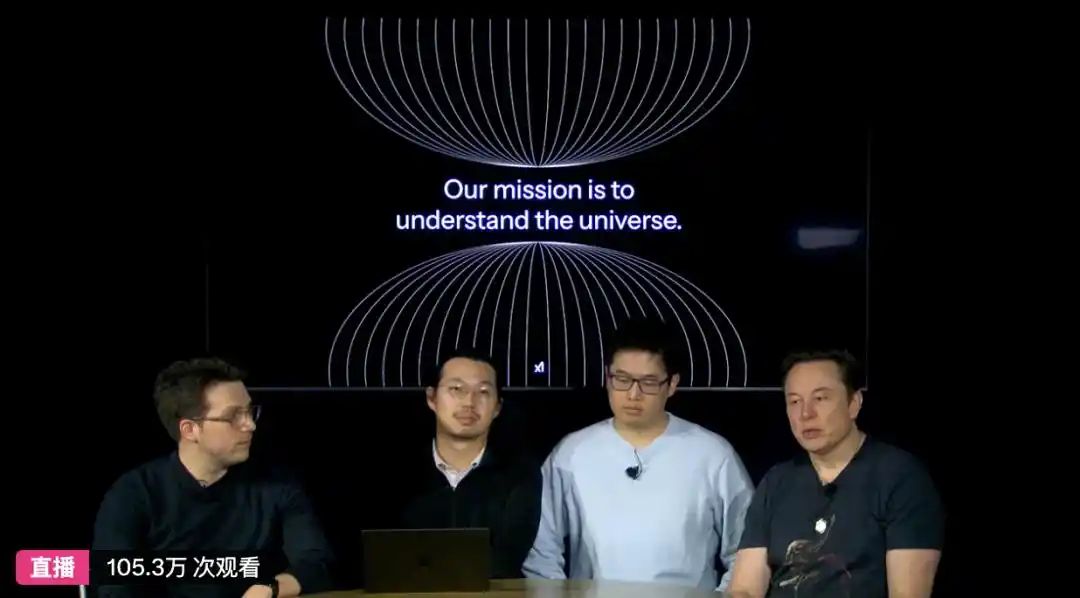
Sí, no leíste mal, es el joven de Hangzhou nacido en 1995 que apareció con el brazo sobre el hombro de Musk en la conferencia de lanzamiento de Grok 3 el año pasado.

31 años, acaba de desembolsar 500 millones por una mansión en el Área de la Bahía... ¡La vida del protagonista de una novela de éxito, fácil como un juego!
¿Qué pasó exactamente?

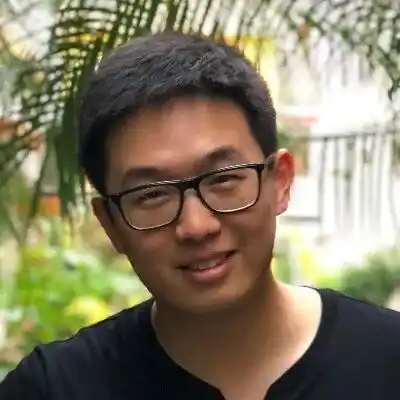
Recientemente, el Área de la Bahía de San Francisco completó la transacción de una casa de lujo más cara hasta la fecha este año. Los medios de comunicación, siguiendo las pistas, descubrieron que el comprador apunta a Wu Yuhuai, cofundador de xAI, "un joven que trabaja en IA".

Y justo el año pasado, había adquirido una vivienda de primera categoría por 12 millones de dólares (aproximadamente 80 millones de yuanes RMB).
Vaya, también se puso a jugar al Monopoly en la vida real · versión tecnológica.

El precio de venta subía como un cohete SpaceX, ¡esta mega OPI completada con xAI fue un tremendo éxito!

La mansión más cara del año en el Área de la Bahía: cae en manos de un cofundador chino de xAI

La nueva finca adquirida está ubicada en Hillsborough, una zona tradicionalmente acomodada de Silicon Valley. La propiedad abarca unas 12 acres (4.86 hectáreas), la casa principal tiene aproximadamente 1,200 metros cuadrados y hay una casa de huéspedes de unos 427 metros cuadrados.

Cancha de tenis, campo de golf de nueve hoyos, green de putt de dieciocho hoyos, estanque de koi son solo equipamientos estándar. La finca también cuenta con un teatro al aire libre para 150 personas, un acuario de 2,100 galones (7,950 litros), y un conjunto de fuentes exteriores inspiradas en las del Bellagio de Las Vegas.
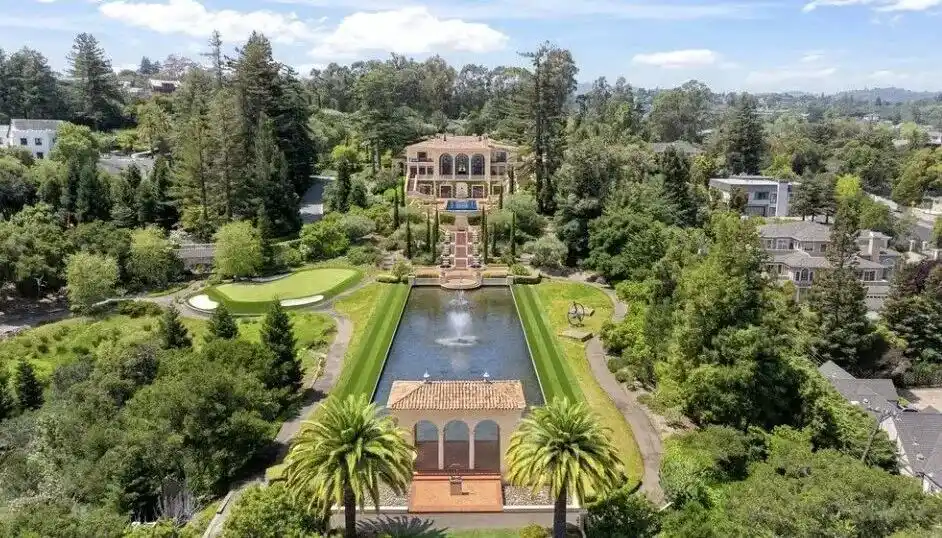
La casa se listó inicialmente en 88 millones de dólares. Después de una reducción de 10 millones, finalmente se vendió el 6 de agosto por 70 millones de dólares (aproximadamente 500 millones de yuanes RMB), convirtiéndose en la transacción residencial más grande del norte de California hasta ahora este año.

A diferencia de su asombroso lujo, la identidad del comprador se mantuvo muy oculta.

Los registros públicos muestran que la propiedad fue comprada por una empresa llamada Daikon no Hana Capital (Flor de Rábano), registrada el 9 de julio, cuyo administrador es un abogado especializado en planificación patrimonial.

Y "casualmente", una semana antes de la compra de la nueva finca, este mismo abogado transfirió la vivienda anterior de Wu Yuhuai, valorada en 12 millones de dólares, a un fideicomiso familiar.

Otra coincidencia: el único otro negocio residencial de gran valor que el agente de compradores había manejado en los últimos 5 años fue precisamente la compra de Wu Yuhuai en 2025.

Con varias pistas apuntando a él simultáneamente, la identidad del verdadero comprador es evidente.

Pero antes de sus inversiones inmobiliarias, Wu Yuhuai era conocido en el mundo de la IA por los modelos de razonamiento.
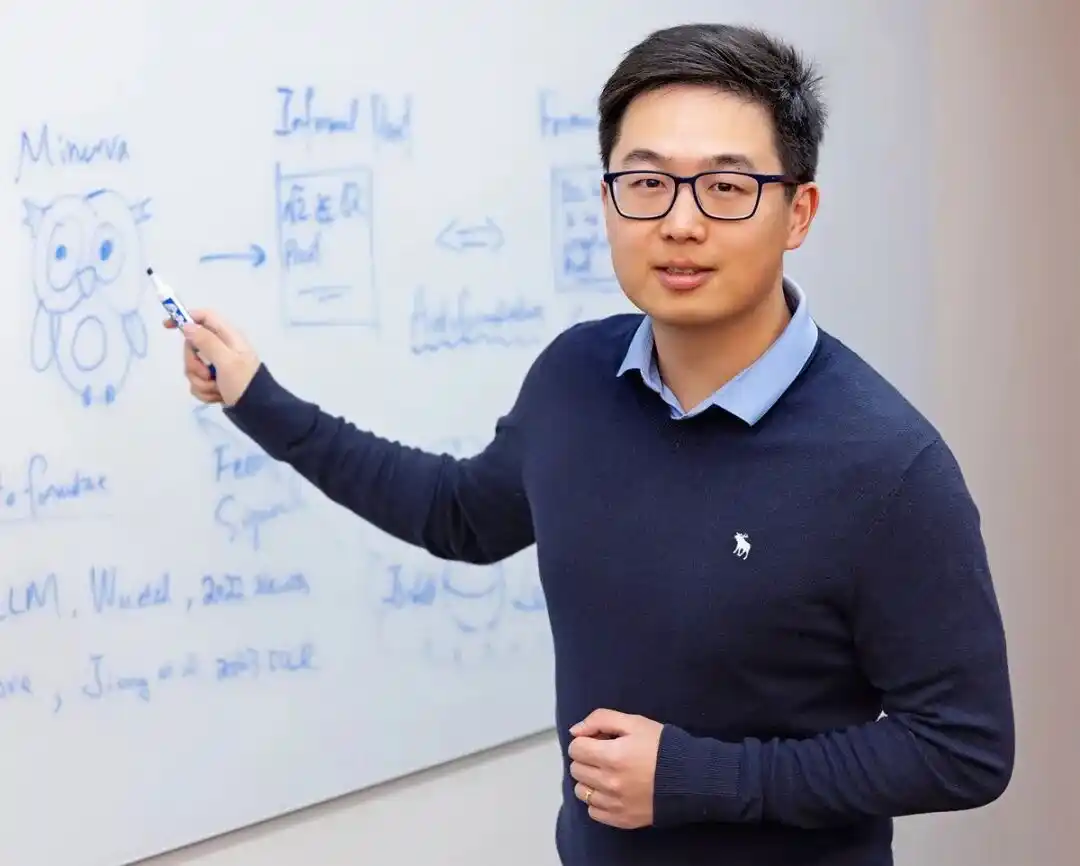
Wu Yuhuai nació en 1995 en Jiande, Hangzhou. Posteriormente, se fue a la Universidad de Toronto para realizar un doctorado en aprendizaje automático, bajo la supervisión de Roger Grosse y Jimmy Ba.

Después del doctorado, realizó una investigación postdoctoral en Stanford. En su página personal, su dirección de investigación se describe como "construir máquinas que puedan razonar".

Siguiendo esta línea, participó en proyectos como la IA AlphaStar para StarCraft, el razonador autodidacta STaR, el modelo matemático Minerva, el sistema de razonamiento geométrico AlphaGeometry, y realizó prácticas en OpenAI y Google.
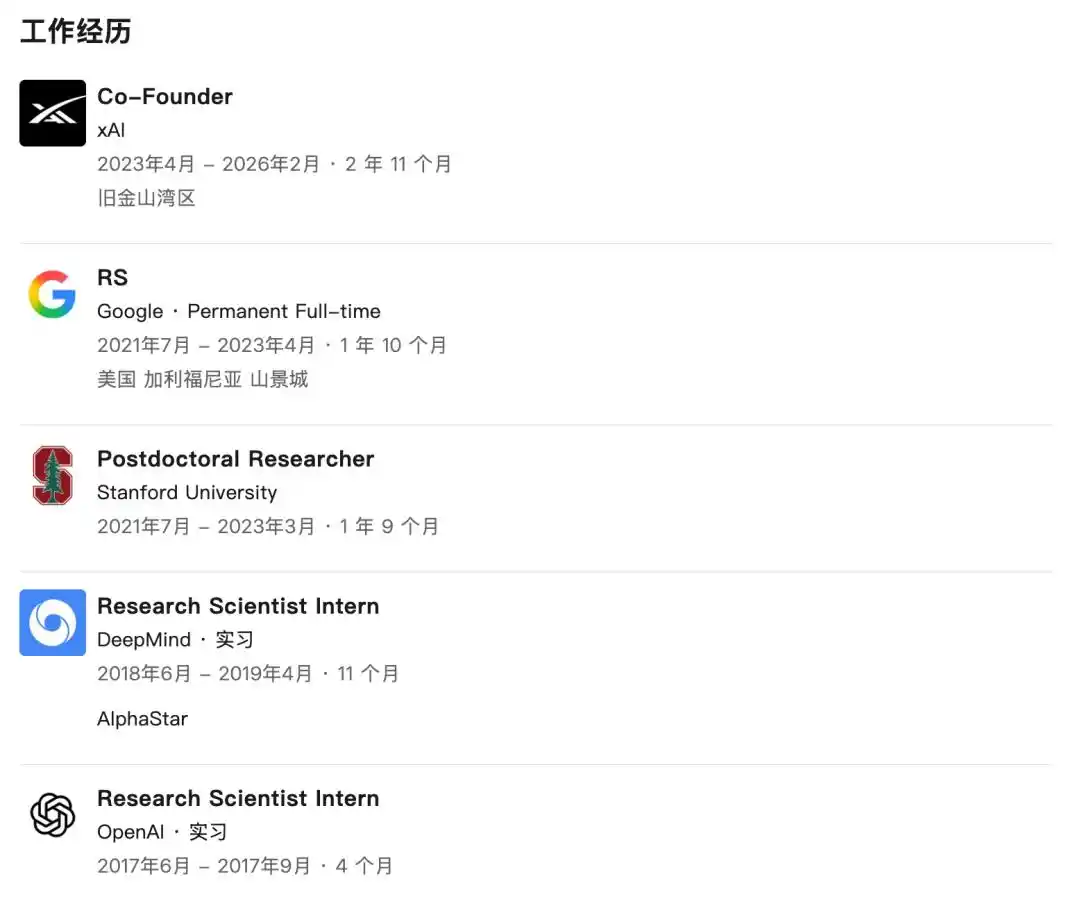
En resumen, se especializó en hacer que los modelos generen pasos de razonamiento, verifiquen el proceso y continúen aprendiendo de sus propios resultados de razonamiento.

Y esta línea de investigación es precisamente la vanguardia de la competencia actual de los grandes modelos.

En 2023, Musk formó xAI, y Wu Yuhuai, junto con su tutor Jimmy Ba, se unieron, convirtiéndose en uno de los 12 cofundadores. Para el lanzamiento de Grok 3, ya era una figura central en el equipo de razonamiento.

La característica principal de Grok 3, "pensar antes de responder", y cómo retroceder, verificar y realizar deducciones prolongadas, son la materialización en producto de sus años previos de investigación.

En febrero de este año, tras la fusión de xAI con SpaceX, Wu Yuhuai anunció su renuncia. Un día después, su tutor Jimmy Ba también anunció su partida.

En ese momento, la razón que dio fue:

En adelante, exploraré un nuevo capítulo en mi vida, y creo que un pequeño equipo armado con IA puede mover montañas.
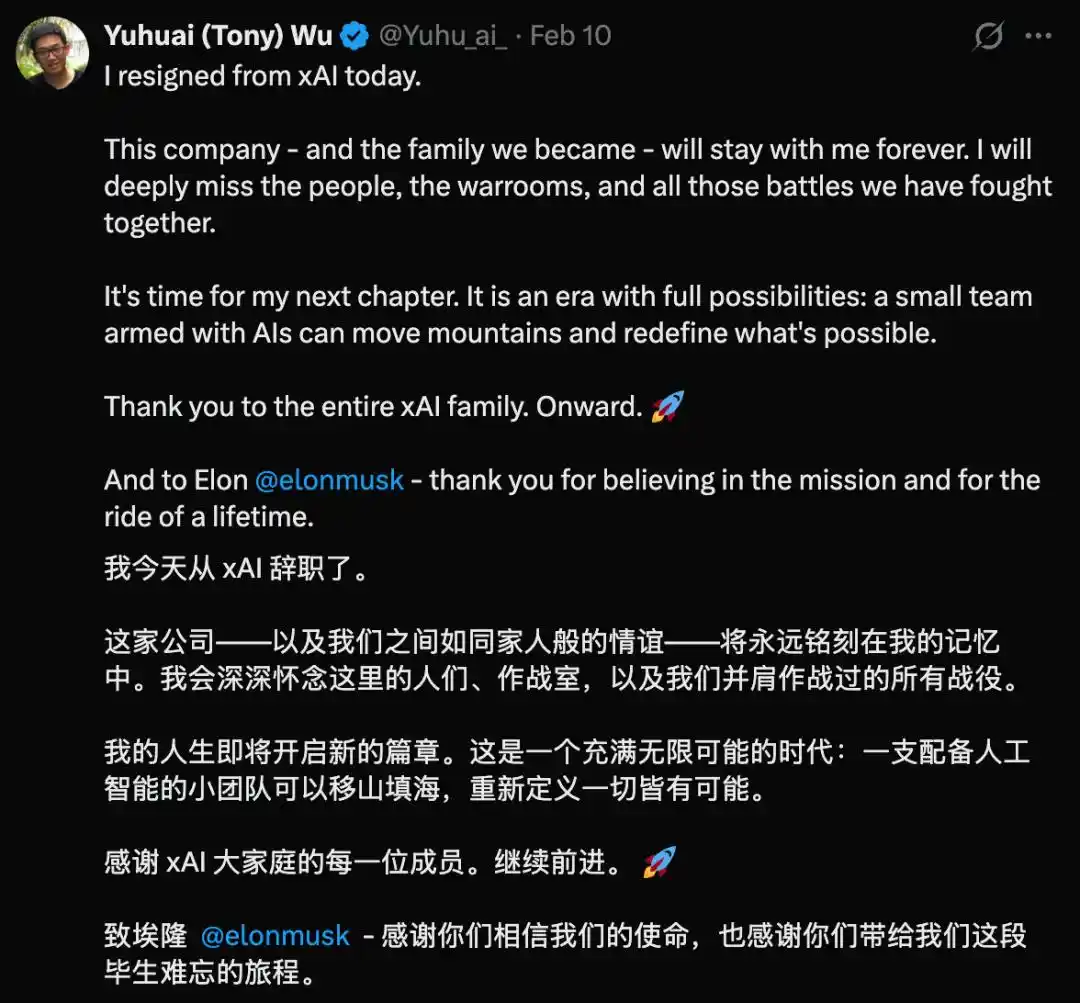
Han pasado seis meses, aún no hay noticias de una nueva empresa, pero la riqueza acumulada en acciones de xAI ha vuelto a causar revuelo, esta vez en forma de mansión.

La generación de riqueza de xAI

La fusión de SpaceX y xAI a principios de año, vista ahora, ciertamente logró un efecto 1+1>2.

La OPI conjunta batió récords históricos, y los derechos accionariales de los cofundadores originales se multiplicaron varias veces.

Los documentos de valores estadounidenses revelan que, mediante conversión, cada acción de xAI corresponde a 0.7165 acciones de SpaceX. Según el precio de cierre del primer día de cotización, el valor sería de aproximadamente 115.32 dólares.

En comparación con la opción en efectivo de 75.46 dólares por acción que SpaceX ofreció a algunos elegibles durante la fusión, es aproximadamente un 53% más alta.

Sin embargo, el número exacto de acciones que posee Wu Yuhuai aún no se ha hecho público, por lo que cuánto ha obtenido sigue siendo una incógnita.

Pero a juzgar por sus compras de lujo a lo grande, evidentemente es muy valioso, ya que incluso la escala de creación de riqueza de SpaceX en sí misma es considerable.
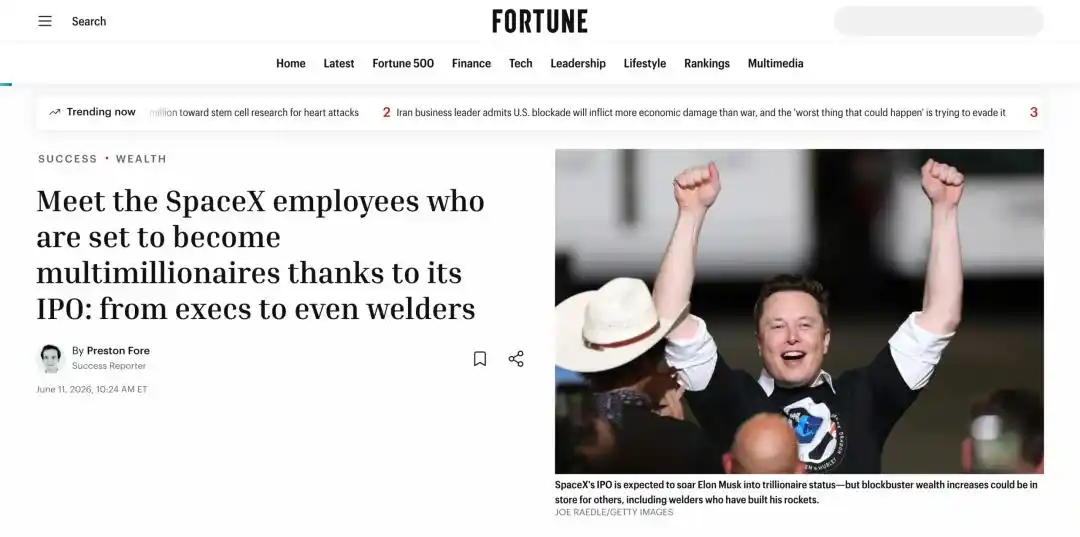
Según cálculos de los medios, más de 4400 empleados actuales y anteriores se convirtieron en millonarios gracias a la salida a bolsa, y alrededor de 400 tienen participaciones valoradas en más de 100 millones de dólares.

Y esta historia de transformación de riqueza se repite ahora a diario en Silicon Valley.

Después de que Anthropic y OpenAI salgan a bolsa sucesivamente, más talentos de IA de élite lograrán saltos continuos en sus activos a través de adquisiciones de acciones y mega OPIs.

Estos investigadores de primera línea se están convirtiendo a una velocidad asombrosa en los protagonistas del nuevo panorama de riqueza de Silicon Valley.

El reflejo más directo de este cambio es el precio de las viviendas en el Área de la Bahía:

No ha dejado de subir, aumentando un 14% solo en el último año.
Enlaces de referencia:[1]https://sfstandard.com/2026/08/12/xai-cofounder-hillsborough-buyer/[2]https://xhslink.cn/o/6g6pj41mkne[3]https://www.linkedin.com/in/yuhuai-tony-wu-02a641b5/[4]https://yuhuaiwu.github.io/

Da triple interactividad: «Me gusta» «Compartir» «Corazón»

¡Bienvenido a dejar tus ideas en la sección de comentarios!

Este artículo proviene del WeChat público "Quantum Bits", autor: Atentos a la Tecnología de Vanguardia


Trending Cryptos

Related Questions

Q¿Quién es el comprador de la mansión más cara de Silicon Valley mencionada en el artículo?

AEl comprador es Wu Yuhuai (Tony Wu), un coinfundador de xAI y científico de IA de Hangzhou, nacido en 1995.

Q¿Cuánto costó la mansión en Hillsborough y cuáles son algunas de sus características más llamativas?

ALa mansión se vendió por 70 millones de dólares (unos 500 millones de RMB). Entre sus características destacan un teatro al aire libre para 150 personas, un acuario de 2100 galones, pistas de tenis, un campo de golf de 9 hoyos y una fuente al estilo del Bellagio de Las Vegas.

Q¿Cuál fue la trayectoria profesional de Wu Yuhuai (Tony Wu) antes de unirse a xAI?

AObtuvo un doctorado en Aprendizaje Automático en la Universidad de Toronto, fue investigador postdoctoral en Stanford, trabajó en proyectos como AlphaStar y AlphaGeometry, e hizo prácticas en OpenAI y Google, especializándose en hacer que los modelos de IA razonen y aprendan de sus propios procesos.

Q¿Qué evento corporativo reciente contribuyó significativamente a la riqueza de los fundadores de xAI como Wu Yuhuai?

ALa fusión de xAI con SpaceX y su posterior OPI (Oferta Pública Inicial), que estableció un récord histórico y aumentó sustancialmente el valor de las acciones y derechos de los fundadores iniciales.

QSegún el artículo, ¿cómo ha afectado el auge de la IA a los precios de la vivienda en el área de la Bahía de San Francisco?

ALos precios de la vivienda en el Área de la Bahía han aumentado un 14% en el último año, impulsados en parte por la nueva riqueza generada por las salidas a bolsa y las fusiones en el sector de la IA, que crean millonarios entre los empleados e inversores.

Related Reads

AI Democratizes Hacking, Bitcoin Red Team White Hats Race in Speed-Based Attack-Defense Contest

AI is democratizing powerful hacking tools, putting them in the hands of those with little cybersecurity expertise. Cryptocurrency developers are now in a race to find system vulnerabilities before attackers do. The Bitcoin Red Team, a group of 20-25 volunteers including anonymous developers like Calle, has formed to urgently address these AI-augmented security threats within the Bitcoin ecosystem. Calle emphasizes that while the Bitcoin core protocol itself is secure, the real risk lies in the wallets, applications, services, and other third-party software built on top of it—the software most users interact with. Incidents like the Coldcard wallet hack and the emergence of powerful Chinese AI models have accelerated their proactive security auditing efforts. The team both accepts audit requests from Bitcoin projects and proactively scans major open-source projects. They report found vulnerabilities to developers and refine their classification standards. Notably, Calle states the team frequently uses Chinese AI models over US counterparts, as the latter's strict safety guardrails often block cybersecurity research tasks, hindering their utility for finding or fixing vulnerabilities. Calle warns that AI is erasing the information asymmetry that previously protected some vulnerabilities. It lowers the technical barrier, allowing non-experts to exploit simple flaws. He describes the current state of Bitcoin software as "on fire" and believes the direct financial incentive of cryptocurrency makes it a first target in this industry-wide shift, with other sectors to follow. The era of security through obscurity is over.

marsbit20m ago

AI Democratizes Hacking, Bitcoin Red Team White Hats Race in Speed-Based Attack-Defense Contest

marsbit20m ago

Foreign Capital Sells Off $29 Billion in Short-Term US Treasuries, Why is the US Betting on Stablecoins to "Take Over"?

In June, foreign investors netted $133.5 billion into U.S. financial markets but simultaneously sold $29 billion in short-term U.S. Treasury bills. This divergence highlights a strong preference for U.S. equities over government debt. While overseas buyers purchased $181.4 billion in stocks, demand for Treasuries weakened significantly. This trend explains why the U.S. is looking to stablecoins as a potential new source of demand for its debt. Stablecoin issuers like Tether and Circle back their tokens primarily with highly liquid assets, including short-term Treasuries. As users buy stablecoins, issuers convert that dollar demand into Treasury purchases. Recent U.S. legislative efforts, such as the proposed rules under the *GENIUS Act*, formalize this by mandating stablecoin reserves be held in assets like cash and short-term Treasuries. Currently, stablecoins represent a substantial existing buyer base. For instance, Tether alone held nearly $115 billion in direct T-bill exposure in Q2. However, recent stablecoin supply growth has been minimal and does not account for the $29 billion sell-off by foreign investors in June. For stablecoins to act as a meaningful counterbalance to waning foreign demand, their circulating supply would need to expand significantly. The next TIC report will be crucial to monitor whether foreign selling continues and if stablecoin growth begins to fill the demand gap. Ultimately, the U.S. is strategically positioning the regulated stablecoin sector as a potential new pillar of demand for its government debt.

marsbit21m ago

Foreign Capital Sells Off $29 Billion in Short-Term US Treasuries, Why is the US Betting on Stablecoins to "Take Over"?

marsbit21m ago

Unitree Investors Jointly Heavy Bet on an Embodied Team

Unibot's early investors, including Meituan, Sequoia Capital, and Matrix Partners, have jointly invested in MiaoDong Technology, another humanoid robotics startup. Founded by former DJI employees—CEO Gao Jianrong, a 9-year DJI veteran who led multiple core business units, and CTO Yang Shuo, who previously worked in Tesla's Optimus team—MiaoDong is known for its combined expertise in hardware productization and advanced robotics cognition. Their core strategy centers on in-house motor R&D and full-stack software-hardware capabilities. The company recently made headlines with its first product, Beni, a wheel-legged "camera robot" designed for low-angle, ground-level filming and personal companionship. Successfully launched on Kickstarter, Beni set a record for the highest fundraising amount in the platform's robotics category. It received a perfect 10/10 rating from influential tech reviewer Marques Brownlee (MKBHD). Beni features capabilities like autonomous obstacle avoidance, the ability to jump 25cm, and self-righting after a fall. MiaoDong plans to leverage the technological and user data feedback from Beni's consumer launch to inform the development of future home-use humanoid robots. The company emphasizes a product-first, user-centric approach, prioritizing real-world applications and reliability over rapid, demo-focused scaling. With Beni set for global release in October and an internal target to sell millions of units, MiaoDong aims to establish itself as a significant player in the embodied AI space through steady, product-driven growth.

marsbit35m ago

Unitree Investors Jointly Heavy Bet on an Embodied Team

marsbit35m ago

Trading

Spot

Hot Articles

What is ₿O₿

Bitcoin Bob ($₿o₿): Pioneering Bitcoin-Centric DeFi Through Hybrid Layer-2 Innovation In an era where the digital economy is rapidly evolving, Bitcoin Bob ($₿o₿) emerges as a revolutionary project aiming to enhance Bitcoin's utility in the decentralized finance (DeFi) sector. Officially launched in May 2024, Bitcoin Bob, also known as Build on Bitcoin (BOB), represents a hybrid Layer-2 blockchain solution that melds Bitcoin’s renowned security and immutability with Ethereum's programmability. This initiative seeks to fill a crucial gap in the Bitcoin ecosystem by facilitating the integration of smart contracts and decentralized applications while maintaining the core principles of trust and security inherent to Bitcoin. With significant backing from prominent venture capitalists, Bitcoin Bob is positioned to redefine the role of Bitcoin in the DeFi landscape, making it a cornerstone of decentralized financial operations globally. What Is Bitcoin Bob, $₿o₿? At its core, Bitcoin Bob is a hybrid blockchain solution designed to enhance the functionality of Bitcoin. The main objective of the project is to enable decentralized finance on Bitcoin, facilitating swift and seamless transactions while ensuring high levels of security. Bitcoin Bob employs advanced technology, specifically a hybrid layer-2 architecture that combines Bitcoin's security attributes with the programmability and flexibility of the Ethereum Virtual Machine (EVM). This pragmatic approach allows the project to operate effectively without compromising the fundamental values of Bitcoin, making it a monumental step in bridging the gap between traditional Bitcoin holders and the emerging DeFi ecosystem. One of the standout features of Bitcoin Bob is its role in providing a trust-minimized environment through innovative mechanisms, such as optimistic rollups initially relying on Ethereum, transitioning eventually to full Bitcoin integration. This hybrid system is designed to ensure that the vast liquidity present in Bitcoin is not only preserved but also utilized effectively in various DeFi protocols. Who Is the Creator of Bitcoin Bob, $₿o₿? The creative force behind Bitcoin Bob is co-founder and CEO Alexei Zamyatin, who brings a wealth of experience and knowledge from his extensive background in the cryptocurrency space. Zamyatin holds a PhD in Computer Science and has been actively involved in Bitcoin development since 2015. His deep understanding of both Bitcoin and Ethereum ecosystems plays a crucial role in shaping Bitcoin Bob’s vision and technological underpinnings. Alongside Zamyatin is co-founder Dominik Harz, who serves as the Chief Technology Officer (CTO). Together, the duo has cultivated a team of talented individuals with a shared passion for pushing the boundaries of blockchain technology, ensuring Bitcoin Bob's innovative stature in the market. Who Are the Investors of Bitcoin Bob, $₿o₿? Bitcoin Bob has successfully garnered support from a range of prominent investors and venture capital firms that recognize its potential to transform the Bitcoin landscape. In March 2024, the project completed a robust $10 million seed funding round, led by Castle Island Ventures, with notable participation from firms like Coinbase Ventures and Bankless Ventures. Shortly afterward, in July 2024, Bitcoin Bob secured an additional $1.6 million in strategic funding. This round was co-led by Ledger Ventures and featured angels from various prominent firms such as BlackRock, Aave, and Curve. The strong financial backing reflects an industry-wide recognition of Bitcoin Bob’s innovative approach to unlocking Bitcoin’s potential in the DeFi space. This funding is crucial not only for the project’s continued development but also for establishing an incubator to foster Bitcoin-native decentralized applications (dApps) aimed specifically at meeting the needs of a growing user base. How Does Bitcoin Bob, $₿o₿ Work? The operational mechanics of Bitcoin Bob are rooted in its hybrid rollup architecture, which is designed to combine the benefits of Bitcoin's security with the versatility of Ethereum’s EVM. The project employs a phased security model that outlines its interaction with users and developers in the following manner: Phase 1 – The initial phase operates as an optimistic rollup on Ethereum, wherein transactions are processed with a promising expectation of validity, paving the way for future developments on Bitcoin. Phase 2 – As the project transitions, it will integrate Bitcoin finality through Bitcoin Staking, leveraging the Babylon Network to enhance security. This mechanism requires validators to lock up Bitcoin, thus verifying BOB transactions, which not only enhances security but also creates yield prospects for participants. Phase 3 – The forward-looking vision for Bitcoin Bob is to fully integrate with Bitcoin, using innovative technologies such as BitVM and zero-knowledge proofs to facilitate off-chain computation while retaining the security integrity of Bitcoin. Key innovations such as BitVM2, a trust-minimized bridge protocol co-authored by Zamyatin, are critical to the project's functionality, allowing for Bitcoin deposits and withdrawals without the need for extensive network reliance. This enables the ecosystem to efficiently connect with Ethereum and other compatible chains, creating a streamlined and effective interaction model for users and developers. Timeline of Bitcoin Bob, $₿o₿ Understanding the evolution of Bitcoin Bob involves tracking its important milestones: 2019: Alexei Zamyatin and Dominik Harz establish a research firm focused on blockchain solutions, laying the groundwork for future projects. March 2024: Bitcoin Bob successfully raises $10 million in a seed funding round, marking its entrance into the competitive blockchain landscape. May 1, 2024: The official mainnet launch occurs, showcasing the project’s capabilities with significant user adoption and total value locked (TVL). July 2024: The project attracts an additional $1.6 million in strategic funding for establishing its incubator, aimed at fostering Bitcoin-driven innovations. October 2024: Bitcoin Bob releases a “Vision Paper,” detailing its hybrid layer-2 design and forward-looking strategies. 2025: Expected rollout of Phase 2 features, focusing on Bitcoin finality and BitVM bridges aimed at enhancing overall functionality. Conclusion: Redefining Bitcoin’s Role in Decentralized Finance Bitcoin Bob ($₿o₿) is not just another blockchain project; it represents a paradigm shift in the way Bitcoin can interact with broader financial applications. By meticulously combining Bitcoin's security with Ethereum's flexibility, Bitcoin Bob aims to reshape the DeFi landscape, bridging the gap between digital currency and decentralized applications. With a robust technological framework, strong leadership, and strategic funding, Bitcoin Bob is well-positioned to establish itself as a fundamental player in the cryptocurrency ecosystem, unlocking new dimensions of liquidity and utility for Bitcoin. As the project continues to evolve and expand, it promises to usher in a new era of innovation, proving that Bitcoin's potential extends far beyond being a mere store of value, but rather as a cornerstone of the future financial landscape. As the project advances through its anticipated phases, all eyes will be on Bitcoin Bob, particularly regarding its commitment to incorporating decentralized principles and ensuring that users can enjoy the full benefits of DeFi anchored by Bitcoin.

160 Total ViewsPublished 2025.06.30Updated 2025.06.30

What is ₿O₿

Discussions

Welcome to the HTX Community. Here, you can stay informed about the latest platform developments and gain access to professional market insights. Users' opinions on the price of O (O) are presented below.

活动图片