Elon Musk is Building Terafab: The Largest Chip Plant for AI, Robots, and Space Data Centers

cryptonews.ruPublished on 2026-08-15Last updated on 2026-08-15

Abstract

Elon Musk's SpaceX and Tesla have launched the massive Terafab project to build a semiconductor plant in Grimes County, Texas. Spanning over 9.3 million square meters, the facility will integrate logic chip and memory production, advanced packaging, and testing. The initial phase requires $16.8 billion in capital investment, with a long-term goal of producing over 1 terawatt of computing power annually. This output is intended to supply Tesla's Optimus robots and Cybercab autonomous vehicles, as well as SpaceX's orbital data centers. Texas Governor Greg Abbott confirmed the project's start on August 6, 2026, highlighting the creation of 3,000 jobs and a $30 million grant from the Texas Enterprise Fund. Musk emphasized the strategic advantage of combining chip design, memory production, and packaging under one roof to accelerate hardware development. He stated the fully built complex would be "the largest and most valuable building on Earth," about 50 times larger than the Pentagon. An estimated 25% of production is earmarked for Tesla's robotics, with 75% for SpaceX's space-based AI systems. Earlier tax documents suggested a total project cost of up to $119 billion, but this has not been officially confirmed. Intel is the key technology partner, with plans to use its 14A process node for chip manufacturing. This partnership aims to diversify supply chains and reduce dependence on dominant foundries like TSMC. The initiative aligns with the broader U.S. Pax Silica program, w...

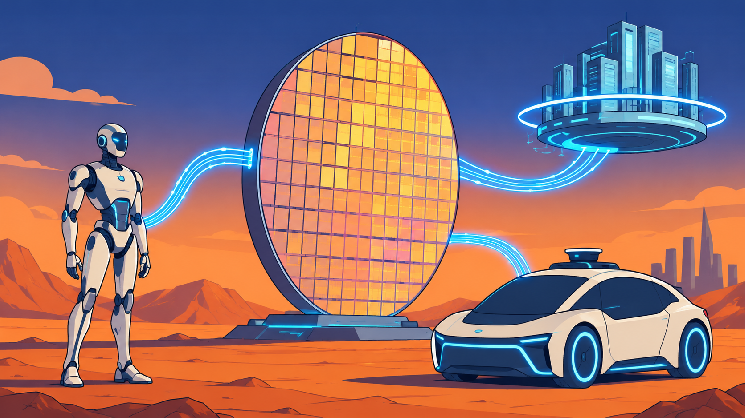
SpaceX and Tesla have launched the large-scale Terafab project to build a semiconductor plant in Grimes County, Texas. The facility will integrate logic chip production, memory production, chip packaging, and testing across an area exceeding 9.3 million square meters. The first phase of the complex will require capital investment of $16.8 billion, and the stated long-term goal is to produce computing hardware with a capacity of over 1 terawatt per year to support Optimus robots, Cybercab autonomous vehicles, and orbital data centers.

Government Support and First Phase Parameters

Texas Governor Greg Abbott confirmed the project's start on August 6, 2026, highlighting the creation of 3,000 new jobs and a $30 million grant from the Texas Enterprise Fund. The initiative also qualifies under the Texas Jobs, Energy, Technology, and Innovation (JETI) program, securing additional benefits. SpaceX and Tesla CEO Elon Musk emphasized the strategic importance of combining logic design, memory production, and advanced packaging under one roof to accelerate hardware solution development.

On social network X, Elon Musk called the future complex "the largest and most valuable building on Earth," stating that its fully equipped area would exceed the size of the Pentagon by approximately 50 times. The distribution of production capacity is planned as follows: about 25% of the output is intended for Tesla robotics, and the remaining 75% is for SpaceX space-based artificial intelligence systems. Earlier tax incentive documents mentioned estimates of around $55 billion for the initial phase, with a possible total of up to $119 billion if all stages are realized, although an official confirmation of the total investment amount is currently absent.

Technology Partnership and Geopolitical Context

A key partner for design and production is Intel: back in April 2026, Musk announced plans to use Intel's 14A process technology for chip production at the new plant. This decision aims to diversify supply chains, as TSMC maintains a dominant position in contract manufacturing with a market share of about 70–73%, and the concentration is even higher on advanced nodes below 5 nm. Vertical integration helps reduce dependence on external suppliers and control critical stages of microelectronics creation.

The Pax Silica initiative, launched by the U.S. Department of State in December 2025, is forming an international coalition to ensure reliable supply chains from critical minerals to AI infrastructure. The program unites Japan, the Republic of Korea, the Netherlands, the EU, and the UK, creating an alternative security ecosystem. According to the Stanford AI Index Report 2026, in 2025, the U.S. produced 59 notable AI models compared to 35 Chinese ones, and the number of data centers in the country reached 5,427 units, highlighting the need to increase domestic production capacity.

Construction of the Terafab plant will begin in the coming months following the official announcement, and the commissioning of the facility will be a significant step in forming a national semiconductor base. The project's implementation could change the balance of power in chip manufacturing and strengthen the U.S. position in global technological competition by creating a closed-loop cycle for computing hardware development and production.

AI Opinion

From a machine data analysis perspective, the scale of Terafab should be compared with the history of major semiconductor construction projects in the U.S. in recent years. A similar Intel project in Ohio (New Albany) was repeatedly delayed: the launch, initially planned for 2026, was postponed by the company to 2030 due to corporate difficulties and shifting priorities. This experience demonstrates that announced timelines and budgets for mega-fabs often diverge from reality by years, and factors such as workforce availability, power supply, and stability of partner chains (in this case, collaboration with Intel on the 14A process) are rarely factored into initial forecasts.

The situation also shows an interesting paradox: the larger the project, the greater the dependence on external factors that are difficult to control even for companies like SpaceX and Tesla. Whether Terafab can avoid the fate of similar giant construction projects is a question, the answer to which will not be clear until the end of this decade.

Trending Cryptos

Related Questions

QWhat is the primary purpose of Elon Musk's Terafab factory project in Texas?

AThe primary purpose of the Terafab factory is to produce semiconductor chips, integrating logic chip design, memory production, advanced packaging, and testing. Its long-term goal is to manufacture over 1 terawatt of computing power annually to support Tesla's Optimus robots and Cybercab autonomous vehicles, as well as SpaceX's orbital data centers.

QWhat is the estimated investment for the first phase of the Terafab project and how many jobs will it create?

AThe estimated investment for the first phase of the Terafab project is $16.8 billion. It is expected to create 3,000 new jobs in Texas.

QWhich company is the key technology partner for the Terafab factory's chip manufacturing process?

AIntel is the key technology partner. Elon Musk announced plans to use Intel's 14A process technology for chip production at the Terafab factory.

QWhat geopolitical initiative mentioned in the article aims to secure semiconductor supply chains?

AThe geopolitical initiative mentioned is the 'Pax Silica' program, launched by the U.S. State Department in December 2025. It forms an international coalition including Japan, South Korea, the Netherlands, the EU, and the UK to ensure secure supply chains from critical minerals to AI infrastructure.

QWhat concern does the AI Opinion section raise about the Terafab project, based on historical precedent?

AThe AI Opinion section raises the concern that large-scale semiconductor fab projects often experience significant delays and budget overruns, citing the example of Intel's repeatedly delayed Ohio fab. It questions whether Terafab can avoid similar fates due to dependencies on external factors like talent availability, power supply, and the stability of the partnership with Intel.

Related Reads

Elon Musk Building Terafab: The Largest Chip Factory for AI, Robots, and Space Data Centers

Elon Musk's SpaceX and Tesla have launched the Terafab project to build a massive semiconductor facility in Grimes County, Texas. The plant, exceeding 9.3 million square meters, aims to integrate logic chip manufacturing, memory production, advanced packaging, and testing. The initial phase requires $16.8 billion in capital investment, with a long-term goal of producing over 1 terawatt of computing power annually. This capacity will support Tesla's Optimus robots and Cybercab autonomous vehicles, as well as SpaceX's orbital data centers. Texas Governor Greg Abbott confirmed the project's start in August 2026, highlighting 3,000 new jobs and a $30 million state grant. Elon Musk emphasized the strategic advantage of combining logic, memory, and packaging under one roof. Musk called the future complex the "largest and most valuable building on Earth," with an area roughly 50 times that of the Pentagon. Intel is the key technology partner, with plans to use its 14A process node for chip production. This partnership aims to diversify supply chains currently dominated by TSMC. The project aligns with the U.S. Pax Silica initiative to secure semiconductor supply chains. An AI analysis notes the project's scale and potential challenges, comparing it to delays seen in other U.S. megafab projects like Intel's Ohio facility. It questions whether Terafab can avoid similar pitfalls related to timelines, budgets, workforce, and supply chain stability. The facility's success could significantly shift the global semiconductor balance and strengthen the U.S. position in the tech race.

cryptonews.ru2h ago

Elon Musk Building Terafab: The Largest Chip Factory for AI, Robots, and Space Data Centers

cryptonews.ru2h ago

"AI God of Stocks" Blowup Dragged Down, Jane Street Suffered Massive 15 Billion Loss in July, First Monthly Loss in a Decade

Jane Street, a major proprietary trading firm, suffered an estimated $15 billion loss in July, marking its first monthly loss in about a decade. The loss was primarily triggered by the blow-up of the AI-focused hedge fund Situational Awareness, which faced massive margin calls amid a sharp sell-off in AI and semiconductor stocks in July. Jane Street, an investor in the fund, was significantly impacted. Compounding the loss were substantial declines in Jane Street's own Asian non-AI equity long positions, which had performed well earlier in the year. The firm described the losses as a concentrated reversal of previously successful trading strategies in AI and tech sectors. Despite the historic monthly loss, Jane Street's net trading income for the year to date remains strong at over $40 billion. In response, the firm stated it has become more selective in risk-taking, closing specific losing exposures and reducing risk in other strategies. Coinciding with the loss, Jane Street is undergoing a major debt refinancing of approximately $14.6 billion, led by JPMorgan. The move aims to shift more debt from public markets to private investors like Pimco and Fidelity, accepting higher costs for greater flexibility and less public disclosure. The Situational Awareness incident highlights systemic risks in the prime brokerage ecosystem, where leveraged bets on crowded AI trades can lead to forced liquidations and market volatility. Jane Street's subsequent risk reduction and debt restructuring are seen as key responses to this costly lesson.

marsbit2h ago

"AI God of Stocks" Blowup Dragged Down, Jane Street Suffered Massive 15 Billion Loss in July, First Monthly Loss in a Decade

marsbit2h ago

Trading

Spot

Hot Articles

How to Buy ELON

Welcome to HTX.com! We've made purchasing Dogelon Mars (ELON) simple and convenient. Follow our step-by-step guide to embark on your crypto journey.Step 1: Create Your HTX AccountUse your email or phone number to sign up for a free account on HTX. Experience a hassle-free registration journey and unlock all features.Get My AccountStep 2: Go to Buy Crypto and Choose Your Payment MethodCredit/Debit Card: Use your Visa or Mastercard to buy Dogelon Mars (ELON) instantly.Balance: Use funds from your HTX account balance to trade seamlessly.Third Parties: We've added popular payment methods such as Google Pay and Apple Pay to enhance convenience.P2P: Trade directly with other users on HTX.Over-the-Counter (OTC): We offer tailor-made services and competitive exchange rates for traders.Step 3: Store Your Dogelon Mars (ELON)After purchasing your Dogelon Mars (ELON), store it in your HTX account. Alternatively, you can send it elsewhere via blockchain transfer or use it to trade other cryptocurrencies.Step 4: Trade Dogelon Mars (ELON)Easily trade Dogelon Mars (ELON) on HTX's spot market. Simply access your account, select your trading pair, execute your trades, and monitor in real-time. We offer a user-friendly experience for both beginners and seasoned traders.

3.9k Total ViewsPublished 2024.03.29Updated 2025.03.21

How to Buy ELON

Discussions

Welcome to the HTX Community. Here, you can stay informed about the latest platform developments and gain access to professional market insights. Users' opinions on the price of ELON (ELON) are presented below.

活动图片