La carrera de las máquinas de litografía, recibe un participante inesperado

marsbitPublished on 2026-08-12Last updated on 2026-08-12

Abstract

En la primavera de 2026, Elon Musk desveló TeraFab, un ambicioso plan para fabricación de chips, afirmando que SpaceX y Tesla necesitarán al menos 1 teravatio de potencia computacional. Recientemente, fuentes sugieren que está apostando por entrar en el mercado de las máquinas de litografía, posiblemente adoptando la tecnología FEL (Free Electron Laser) para competir con el monopolio de la litografía EUV de ASML. Actualmente, ASML domina el sector con sus máquinas EUV que utilizan tecnología LPP (Laser Produced Plasma). Sin embargo, esta se enfrenta a limitaciones como baja eficiencia energética (menos del 0,5%), contaminación por partículas de estaño y un límite de potencia que ronda los 600W, insuficiente para nodos de 2nm o inferiores, que requieren más de 1,5kW. La tecnología FEL, investigada por empresas como xLight (respaldada por el ex CEO de Intel, Pat Gelsinger), ofrece una alternativa. Genera luz ultravioleta extrema (EUV) acelerando electrones en un ondulador, sin necesidad de plasma de estaño. Esto promete mayor potencia (potencialmente >10kW), eficiencia y elimina la contaminación, pudiendo alimentar múltiples máquinas litográficas. Se posiciona como una solución "plug-and-play" para actualizar fábricas existentes. El panorama de la litografía muestra tres tendencias: la evolución incremental de ASML con su próximo High-NA EUV (aunque costoso y con adopción lenta, como indica TSMC); la innovación en fuentes de luz (como FEL o rayos X); y alternativas que evita...

En la primavera de 2026, Elon Musk reveló oficialmente el gran plan de fabricación de chips TeraFab. Su razonamiento era bastante simple: SpaceX y Tesla necesitarían al menos 1 teravatio de potencia de cálculo en el futuro, una escala que supera diez veces la capacidad actual de suministro de chips a nivel mundial.

Luego, ese mismo mes, pareció hacer una apuesta aún mayor: incursionar en las máquinas de litografía.

01 TeraFab tiene sus ojos puestos en las máquinas de litografía

Un blogger publicó información que, según los mensajes divulgados por TeraFab, Elon Musk parece estar adoptando el camino del Láser de Electrones Libres (FEL, por sus siglas en inglés), con el objetivo de desafiar el monopolio del EUV tradicional.
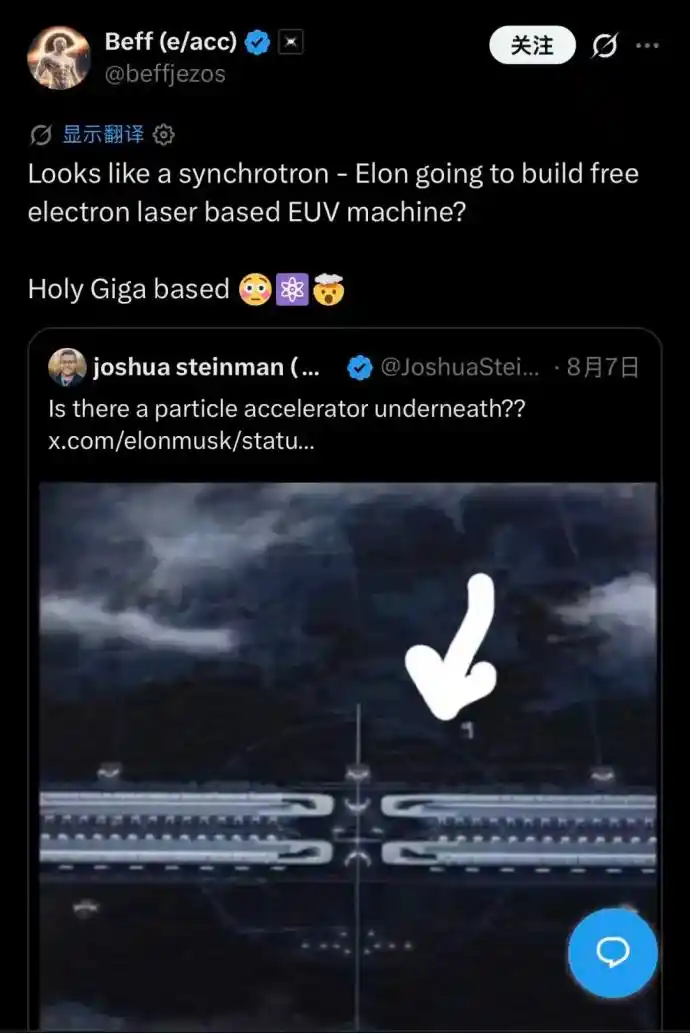
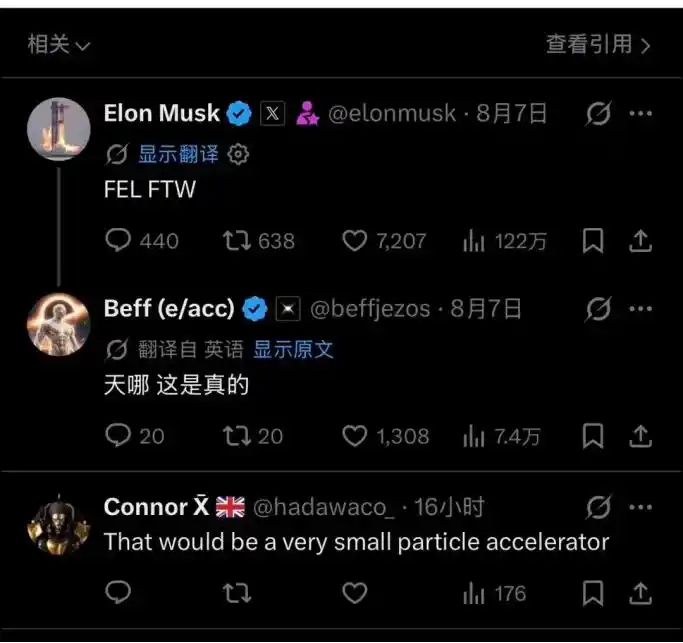
El propio Musk publicó posteriormente en una plataforma social "FEL FTW" (FEL For The Win, ¡FEL ganará!), lo que fue interpretado por los observadores externos como una confirmación indirecta de esta especulación. Combinando el diseño de planta alargada de TeraFab y las declaraciones de Musk, la ruta tecnológica del FEL se convirtió en la dirección de especulación más candente en ese momento. Según la planificación anterior, TeraFab construirá una base de fabricación de chips integrada que producirá simultáneamente chips lógicos y de memoria, integrando además todas las etapas de litografía, encapsulado y pruebas dentro de una misma fábrica.

No fue la única señal. En julio del año pasado, la startup de semiconductores xLight anunció la finalización de una ronda de financiación Serie B sobresuscrita por 40 millones de dólares. Estos fondos se destinarán principalmente al desarrollo del FEL, con el objetivo de superar los límites físicos de la tecnología de litografía EUV actual y proporcionar soporte de fuente de luz clave para la producción en masa de chips de 2 nanómetros y nodos más avanzados. Es de destacar que en marzo del año pasado, Pat Gelsinger, ex CEO de Intel, publicó un post en la plataforma LinkedIn anunciando que se había unido a xLight como Presidente Ejecutivo.

Por un momento, las características mismas de la tecnología FEL desataron un intenso debate en la industria.

02 FEL, una solución alternativa para el EUV

En toda la cadena de suministro de chips de IA, la empresa holandesa ASML es actualmente la única compañía en el mundo capaz de fabricar equipos EUV, ocupando más del noventa por ciento de la cuota de mercado de equipos de litografía.

La máquina de litografía EUV de esta compañía utiliza una fuente de luz EUV de plasma láser (LPP). Su principio consiste en bombardear gotas de estaño líquido que salen de una boquilla a una velocidad de 50,000 por segundo con un láser de dióxido de carbono de 30kW de potencia. Cada gota es golpeada dos veces (es decir, se requieren 100,000 pulsos láser por segundo), vaporizándolas para convertirlas en plasma, y generando así luz EUV con una longitud de onda de 13.5nm a través de las transiciones entre niveles de energía de los iones de estaño altamente cargados.

Aunque la tecnología LPP ha hecho posible la comercialización de la litografía EUV, sus limitaciones físicas inherentes se están amplificando a medida que avanza el proceso de fabricación.

En primer lugar, está el cuello de botella de la eficiencia de conversión de energía. En la explicación anterior hay una palabra clave: longitud de onda de 13.5nm. Esto significa que, en comparación con la fuente de luz de 193nm utilizada en las máquinas de litografía DUV actuales, la fuente de luz EUV es solo una quinceava parte, lo que permite grabar canales más pequeños en la oblea de silicio. Actualmente, ASML utiliza principalmente láseres de dióxido de carbono de la empresa estadounidense Cymer para excitar el plasma de estaño y generar luz ultravioleta extrema de 13.5nm. La eficiencia de conversión de la energía del láser al plasma de estaño con esta tecnología es del 5.5%. Sumado a la eficiencia electro-óptica del propio láser de CO2 de aproximadamente el 10%, y a las pérdidas de transmisión del espejo recolector, la utilización real de la luz EUV desde la red eléctrica hasta la oblea es generalmente inferior al 0.5%.

En segundo lugar, está la contaminación por desechos de estaño. Durante el proceso de generación del plasma, los iones de estaño y los desechos neutros proyectados a alta velocidad se depositan continuamente sobre la superficie del costosísimo espejo recolector de múltiples capas, provocando una disminución de la reflectividad y un acortamiento de su vida útil.

En tercer lugar, está el techo de potencia. La fuente de luz EUV LPP actual ha alcanzado una potencia máxima EUV de aproximadamente 600W. Sin embargo, para satisfacer las necesidades de fabricación para nodos de 2 nanómetros e inferiores, se requiere una potencia EUV superior a 1.5 kilovatios. En la actualidad, las especificaciones de EUV de 500-600W dependen principalmente de múltiples exposiciones para acumular dosis de fotones y así compensar la limitación de potencia de la fuente.

En febrero de este año, ASML anunció su plan de, antes de 2030, aumentar la productividad de la próxima generación de máquinas de litografía EUV de alta apertura numérica en un 50%, mediante la introducción de un sistema de fuente de luz completamente nuevo y de hasta 1000 vatios de potencia. Para 2030, la capacidad de procesamiento de obleas por hora de un solo equipo EUV aumentará de 220 a 330.

En comparación con la tecnología LPP, el FEL no depende de la conversión de plasma. FEL significa Láser de Electrones Libres. Todo el sistema de fuente de luz consiste en un cañón de electrones que emite un haz de electrones inicial, el cual es acelerado hasta velocidades cercanas a la de la luz mediante un acelerador lineal (los esquemas avanzados suelen utilizar aceleradores lineales superconductores). El haz de electrones de alta densidad en estado relativista entra en un ondulador compuesto por campos magnéticos alternos periódicos; los electrones oscilan transversalmente de forma periódica bajo la influencia del campo magnético y producen radiación espontánea. El campo de radiación modula continuamente el haz de electrones, promoviendo la formación de micro-haces de electrones con el período de la onda de radiación; los electrones de estos micro-haces producen radiación coherente y forman una retroalimentación positiva, amplificando exponencialmente la intensidad de la radiación. Combinado con técnicas como la inyección de semilla, el sistema puede finalmente emitir un haz EUV de longitud de onda estable.

Por lo tanto, la longitud de onda de la luz ultravioleta extrema generada por el FEL se considera una candidata para la próxima generación de litografía. Esta banda de longitud de onda es más corta que la actual EUV de 13.5 nm, acercándose al rango de los rayos X blandos. Según información pública, el objetivo tecnológico de xLight es sintonizar con precisión en la banda Blue-X (también llamada banda "más allá del EUV") de 2 a 7 nanómetros.

Además, en toda la trayectoria óptica no existe el proceso de bombardeo de gotas de estaño líquido o proyección de plasma, por lo que la cavidad de vacío de la trayectoria óptica no genera depósitos de desechos metálicos. La fuente de luz EUV-FEL también puede generar una alta potencia EUV superior a 10 kW, capaz de suministrar más de 1000W de potencia EUV a 10 máquinas de litografía EUV simultáneamente, sin causar contaminación por estaño en las superficies de los espejos reflectores de Mo/Si.

03 ¿Se han reescrito las reglas del juego de las máquinas de litografía?

Desglosando la cáscara de la industria de la litografía, se pueden ver tres trayectorias tecnológicas claras: la evolución incremental del EUV, la innovación en la fuente de luz del EUV y las soluciones alternativas no basadas en EUV. Las tres coexisten, pero la evolución incremental del EUV sigue siendo el protagonista absoluto, mientras que las dos últimas se asemejan más a "jugadas de variación" en el tablero de ajedrez.

Primer campo: La evolución incremental de ASML sigue siendo el protagonista absoluto.

ASML mantiene un control firme sobre la pista principal. En el primer trimestre, sus ventas netas fueron de 8,800 millones de euros, con un beneficio neto de 2,800 millones de euros; en el segundo trimestre, las ventas netas totales fueron de 9,326 millones de euros, con un beneficio neto de 2,918 millones de euros. Paralelamente, ASML revisó significativamente al alza por segunda vez en el año su guía de resultados anual, elevando sustancialmente la previsión de ventas para 2026 a un rango de 43,000 a 45,000 millones de euros.

Como fabricante de equipos de litografía más crucial aguas arriba en la fabricación de obleas, el fuerte aumento en los resultados de ASML refleja la carrera armamentística tecnológica que se está desarrollando en toda la industria. Gigantes como Amazon, Google y Microsoft han invertido cientos de miles de millones de dólares en infraestructura, desatando una enorme demanda aguas abajo de chips de IA de alta gama. Las fábricas de obleas, tanto de lógica como de memoria, están acelerando la expansión de su capacidad, llevando la demanda de máquinas de litografía a un punto álgido.

La expansión de capacidad también es agresiva. La compañía planea, sobre la base de su plan de capacidad para 2026 de aproximadamente 65 unidades EUV de baja apertura numérica (Low NA), aumentar la capacidad en un 30% para 2027, y está estudiando incrementarla otro 30% en 2028. Al mismo tiempo, planea, sobre la base de su plan de capacidad para 2026 de aproximadamente 130 unidades DUV de inmersión, aumentar la capacidad en un 30% para 2027, y está estudiando incrementarla otro 30% en 2028.

El High-NA EUV (litografía ultravioleta extrema de alta apertura numérica) es el próximo "as en la manga" de ASML. Emplea un sistema óptico de apertura numérica 0.55, logrando una resolución de 8 nanómetros, soportando procesos de fabricación de 3 nanómetros e inferiores, y proporcionando reserva técnica para nodos de 1 nanómetro. Este equipo mejora la precisión del grabado de circuitos en 1.7 veces mediante una sola exposición, aumenta el contraste de la imagen en un 40%, logra una densidad de transistores 2.9 veces mayor que la del sistema anterior, y reduce efectivamente el consumo energético del chip mientras mejora su velocidad de cálculo.

Sin embargo, dado que el coste de una sola máquina High-NA EUV es de aproximadamente 400 millones de dólares, casi el doble que el de una máquina de litografía EUV tradicional, y existe una gran dificultad técnica para la adaptación e integración en la línea de producción, la adopción del High-NA EUV no es muy ideal. Zhang Xiaogiang, Vicepresidente Senior de Desarrollo de Negocio y Negocios Globales y COO Adjunto Conjunto de TSMC, reveló a los medios antes de la conferencia anual de tecnología de la compañía que actualmente no hay planes de desplegar el equipo High-NA EUV de ASML, diseñado para la próxima generación de procesadores.

Segundo campo: Innovación en la fuente de luz — un golpe preciso al "corazón" de ASML.

Esta es la ruta del FEL elegida por TeraFab de Musk y xLight. No desafía frontalmente el dominio de ASML en las máquinas ópticas completas, sino que busca un punto de ruptura en el eslabón de la fuente de luz. Esto significa que los fabricantes de chips no necesitan reemplazar en gran medida los equipos auxiliares existentes de litografía, grabado, deposición, inspección, etc., sino que simplemente reemplazando el sistema de fuente de luz pueden obtener mejoras significativas en capacidad y coste — esta ruta de actualización "plug-and-play" es muy atractiva para las fábricas de obleas.

xLight afirma que la potencia de su sistema FEL es más de 4 veces superior a la de los sistemas actuales. Desplegar el FEL de xLight en fábricas de obleas existentes en EE.UU. podría aumentar la productividad en un 50% y eliminar la necesidad de consumibles como el estaño o el hidrógeno; mientras que desplegarlo en nuevas fábricas de obleas podría aumentar la productividad en un 100%. Esto permitiría a los productores fabricar chips con dimensiones más pequeñas y mayor eficiencia, expandiendo así la tecnología de litografía de próxima generación.

Si la fuente de luz pudiera ser reemplazada de forma independiente, el poder de negociación de ASML se vería estructuralmente debilitado. Sin embargo, es importante destacar que ASML consideró la ruta de la fuente de luz FEL EUV hace ya una década, pero finalmente la consideró de riesgo elevado y optó por la fuente de luz EUV LPP. Por lo tanto, si los problemas de producción en masa del FEL pueden ser resueltos y cuándo, quizás aún requiera tiempo para explorarse.

Además, existen otras rutas de fuente de luz. Por ejemplo, la startup de San Francisco Substrate, fundada en 2022, eligió el camino de la litografía por rayos X basada en aceleradores de partículas. China también está avanzando en tecnología de fuente de luz EUV autónoma. Según información pública, múltiples equipos chinos están explorando diferentes rutas tecnológicas, incluyendo la investigación inversa de la tecnología LPP existente, con el objetivo de lograr un avance entre 2028 y 2030.

Entre ellos, instituciones como la Universidad de Harbin están intentando desarrollar un esquema de litografía basado en plasma inducido por descarga láser (LDP). El principio consiste en evaporar estaño entre electrodos y luego excitar plasma mediante descarga de alto voltaje. Su estructura es más simple y ocupa menos espacio que la LPP, pero su densidad de potencia luminosa es limitada, y queda la duda de si podrá soportar la producción en masa.

Tercer campo: Soluciones no tradicionales que evitan por completo el EUV, están creciendo en la sombra.

La litografía por nanoimpresión (NIL) es la de progreso comercial más rápido. Al imprimir patrones directamente mediante un molde físico, la NIL no requiere complejos sistemas ópticos ni fuentes de luz, y su costo de equipo y consumo de energía son mucho menores que los del EUV. El fabricante japonés Canon ya está impulsando la aplicación en masa de la NIL en el campo de los chips de memoria. Aunque su resolución aún no puede competir con la del High-NA EUV, en el mercado de chips de memoria, donde los requisitos de ancho de línea son relativamente más flexibles, la NIL ya ha demostrado competitividad en costes.

La escritura directa por haz de electrones (EBL) sigue un camino completamente diferente. La litografía por haz de electrones es esencialmente una tecnología de escritura directa que utiliza un haz de electrones enfocado para exponer punto por punto un fotoresist, delineando gráficos con precisión mediante control electromagnético. Este método no depende de máscaras, lo que es muy ventajoso en etapas de desarrollo con iteraciones frecuentes de diseño, especialmente adecuado para escenarios como dispositivos cuánticos, nuevas estructuras de materiales, prototipos de chips y fabricación de máscaras.

Pero hasta ahora, la litografía por haz de electrones ha permanecido principalmente en el ámbito de la investigación y aplicaciones a pequeña escala. La razón no está en la resolución, sino en la eficiencia. La escritura directa por haz de electrones es una exposición en serie; incluso con una alta precisión puntual, su capacidad de procesamiento general sigue siendo limitada, lo cual es difícil de aceptar para la producción en masa a nivel de oblea. Sin embargo, en la etapa de investigación, esta característica de "lentitud" se cambia por una gran flexibilidad. Para equipos de investigación que necesitan modificar repetidamente el diseño, verificar modelos físicos o explorar nuevas estructuras de dispositivos, evitar el proceso de fabricación de máscaras a menudo es más importante que aumentar la velocidad de exposición.

Hoy en día, el EUV se asemeja cada vez más a un veterano que ha corrido durante mucho tiempo. Sus cuellos de botella tecnológicos son reales, pero la red ecológica que ASML ha tejido a su alrededor durante veinte años también lo es. Para que un nuevo participante entre en el campo, no basta con correr rápido por sí solo; necesita que toda la pista cambie las reglas con él.

El plan TeraFab de Musk es, en esencia, una gran apuesta: apostar a que el FEL pueda pasar del laboratorio a la fábrica de obleas, apostar a que el reemplazo "plug-and-play" de la fuente de luz pueda eludir las barreras de patentes de ASML, y apostar a que la demanda de 1 teravatio de potencia de cálculo sea suficiente para sostener una nueva cadena de suministro.

La dirección que debe tomar la próxima generación de tecnología de litografía quizás no esté muy lejos. Pero lo que es seguro es que, cuando Musk publicó "FEL FTW" en la plataforma social, el negocio de las máquinas de litografía ya no es un juego solo para ASML.

Este artículo proviene del WeChat público "Semiconductor Industry Vertical and Horizontal" (ID: ICViews), autor: Feng Ning


Trending Cryptos

Related Questions

Q¿Qué es FEL y por qué se considera una posible alternativa a la tecnología EUV de ASML?

AFEL significa Free Electron Laser (láser de electrones libres). Se considera una alternativa a la tecnología EUV de ASML porque utiliza electrones acelerados a velocidades relativistas para generar luz en el rango de longitud de onda extrema ultravioleta (EUV), evitando problemas como la baja eficiencia de conversión de energía, la contaminación por desechos de estaño y el límite de potencia asociados con la tecnología LPP (Plasma de Láser Producido) utilizada por los EUV actuales. Además, promete mayor potencia y no contamina los espejos de la cavidad óptica.

Q¿Qué desafíos específicos enfrenta la tecnología LPP-EUV de ASML según el artículo?

ASegún el artículo, la tecnología LPP-EUV de ASML enfrenta tres desafíos principales: 1) Baja eficiencia de conversión de energía (menos del 0.5% desde la red eléctrica hasta la luz EUV en la oblea). 2) Contaminación por desechos de estaño, donde los iones y fragmentos de estaño del plasma se depositan en los costosos espejos colectores, reduciendo su reflectividad y vida útil. 3) Un límite de potencia, ya que las fuentes actuales alcanzan unos 600W, pero se necesitarán más de 1.5 kW para nodos de 2 nm e inferiores.

Q¿Cómo planea TeraFab de Elon Musk integrar la fabricación de chips y qué objetivo de cómputo tiene?

ATeraFab de Elon Musk planea crear una base de fabricación de chips integrada, produciendo tanto chips lógicos como de memoria, e integrando en una misma fábrica los pasos de fotolitografía, empaquetado y prueba. Su objetivo es satisfacer la necesidad de al menos 1 teravatio (1 TW) de potencia de cómputo para las futuras operaciones de SpaceX y Tesla, una escala que supera 10 veces la capacidad actual de suministro global de chips.

QAdemás de FEL, ¿qué otras alternativas a la fotolitografía EUV se mencionan en el texto?

AAdemás de FEL, el texto menciona otras dos categorías de alternativas. Una es la Nanolitografía por Impresión (NIL), que utiliza un molde físico para estampar patrones, es más barata y se usa comercialmente en chips de memoria. La otra es la Litografía por Haz de Electrones (EBL), que dibuja patrones punto por punto con un haz de electrones, ofreciendo alta precisión y flexibilidad, ideal para I+D y fabricación de máscaras, aunque su velocidad la hace menos adecuada para la producción en masa de obleas.

Q¿Por qué la máquina High-NA EUV de ASML, a pesar de ser su próxima 'carta maestra', no está siendo adoptada rápidamente según el artículo?

ASegún el artículo, la máquina High-NA EUV de ASML, a pesar de sus capacidades avanzadas para nodos de 3 nm e inferiores, no se está adoptando rápidamente debido a dos razones principales: su costo extremadamente alto (alrededor de 400 millones de dólares por unidad, casi el doble que las máquinas EUV tradicionales) y la alta dificultad técnica para integrarla y adaptarla a las líneas de producción existentes. Un ejemplo dado es que TSMC, el mayor fabricante de fundición, declaró que actualmente no tiene planes de desplegar estos equipos High-NA EUV.

Related Reads

Elon Musk Building Terafab: The Largest Chip Factory for AI, Robots, and Space Data Centers

Elon Musk's SpaceX and Tesla have launched the Terafab project to build a massive semiconductor facility in Grimes County, Texas. The plant, exceeding 9.3 million square meters, aims to integrate logic chip manufacturing, memory production, advanced packaging, and testing. The initial phase requires $16.8 billion in capital investment, with a long-term goal of producing over 1 terawatt of computing power annually. This capacity will support Tesla's Optimus robots and Cybercab autonomous vehicles, as well as SpaceX's orbital data centers. Texas Governor Greg Abbott confirmed the project's start in August 2026, highlighting 3,000 new jobs and a $30 million state grant. Elon Musk emphasized the strategic advantage of combining logic, memory, and packaging under one roof. Musk called the future complex the "largest and most valuable building on Earth," with an area roughly 50 times that of the Pentagon. Intel is the key technology partner, with plans to use its 14A process node for chip production. This partnership aims to diversify supply chains currently dominated by TSMC. The project aligns with the U.S. Pax Silica initiative to secure semiconductor supply chains. An AI analysis notes the project's scale and potential challenges, comparing it to delays seen in other U.S. megafab projects like Intel's Ohio facility. It questions whether Terafab can avoid similar pitfalls related to timelines, budgets, workforce, and supply chain stability. The facility's success could significantly shift the global semiconductor balance and strengthen the U.S. position in the tech race.

cryptonews.ru1h ago

Elon Musk Building Terafab: The Largest Chip Factory for AI, Robots, and Space Data Centers

cryptonews.ru1h ago

Elon Musk is Building Terafab: The Largest Chip Plant for AI, Robots, and Space Data Centers

Elon Musk's SpaceX and Tesla have launched the massive Terafab project to build a semiconductor plant in Grimes County, Texas. Spanning over 9.3 million square meters, the facility will integrate logic chip and memory production, advanced packaging, and testing. The initial phase requires $16.8 billion in capital investment, with a long-term goal of producing over 1 terawatt of computing power annually. This output is intended to supply Tesla's Optimus robots and Cybercab autonomous vehicles, as well as SpaceX's orbital data centers. Texas Governor Greg Abbott confirmed the project's start on August 6, 2026, highlighting the creation of 3,000 jobs and a $30 million grant from the Texas Enterprise Fund. Musk emphasized the strategic advantage of combining chip design, memory production, and packaging under one roof to accelerate hardware development. He stated the fully built complex would be "the largest and most valuable building on Earth," about 50 times larger than the Pentagon. An estimated 25% of production is earmarked for Tesla's robotics, with 75% for SpaceX's space-based AI systems. Earlier tax documents suggested a total project cost of up to $119 billion, but this has not been officially confirmed. Intel is the key technology partner, with plans to use its 14A process node for chip manufacturing. This partnership aims to diversify supply chains and reduce dependence on dominant foundries like TSMC. The initiative aligns with the broader U.S. Pax Silica program, which seeks to build secure international semiconductor supply chains with allied nations. An AI-driven analysis notes that megafab projects, such as Intel's delayed Ohio facility, often face schedule and budget overruns. While Terafab represents a significant step toward U.S. semiconductor self-sufficiency and could shift the global tech balance, its success will depend on factors like skilled labor availability, energy supply, and supply chain stability. The final outcome may not be clear until the late 2030s.

cryptonews.ru1h ago

Elon Musk is Building Terafab: The Largest Chip Plant for AI, Robots, and Space Data Centers

cryptonews.ru1h ago

"AI God of Stocks" Blowup Dragged Down, Jane Street Suffered Massive 15 Billion Loss in July, First Monthly Loss in a Decade

Jane Street, a major proprietary trading firm, suffered an estimated $15 billion loss in July, marking its first monthly loss in about a decade. The loss was primarily triggered by the blow-up of the AI-focused hedge fund Situational Awareness, which faced massive margin calls amid a sharp sell-off in AI and semiconductor stocks in July. Jane Street, an investor in the fund, was significantly impacted. Compounding the loss were substantial declines in Jane Street's own Asian non-AI equity long positions, which had performed well earlier in the year. The firm described the losses as a concentrated reversal of previously successful trading strategies in AI and tech sectors. Despite the historic monthly loss, Jane Street's net trading income for the year to date remains strong at over $40 billion. In response, the firm stated it has become more selective in risk-taking, closing specific losing exposures and reducing risk in other strategies. Coinciding with the loss, Jane Street is undergoing a major debt refinancing of approximately $14.6 billion, led by JPMorgan. The move aims to shift more debt from public markets to private investors like Pimco and Fidelity, accepting higher costs for greater flexibility and less public disclosure. The Situational Awareness incident highlights systemic risks in the prime brokerage ecosystem, where leveraged bets on crowded AI trades can lead to forced liquidations and market volatility. Jane Street's subsequent risk reduction and debt restructuring are seen as key responses to this costly lesson.

marsbit1h ago

"AI God of Stocks" Blowup Dragged Down, Jane Street Suffered Massive 15 Billion Loss in July, First Monthly Loss in a Decade

marsbit1h ago

Trading

Spot

Hot Articles

What is LINON

Linde plc Tokenized Stock (Ondo): Revolutionizing Traditional Equity Access Through Blockchain Innovation The emergence of Linde plc Tokenized Stock (Ondo), represented by the ticker $LINON, signifies a monumental shift in the fusion of traditional financial structures and decentralized finance (DeFi). This innovative financial instrument showcases the tremendous potential of blockchain technology to democratize access to traditional equity markets while ensuring the security and regulatory compliance necessary for institutional-grade financial products. Through Ondo Finance's pioneering tokenization platform, $LINON provides a seamless pathway for global investors to engage with one of the world's leading industrial gas companies, Linde plc, creating a blockchain-native representation of the underlying equity. Introduction to Linde plc Tokenized Stock The landscape of financial markets is witnessing a groundbreaking transformation through the tokenization of real-world assets. Linde plc Tokenized Stock (Ondo) epitomizes this revolutionary approach by bridging the gap between conventional stock ownership and blockchain-enabled financial infrastructure. The $LINON token allows investors to gain exposure to one of the prominent industrial companies worldwide through decentralized technology. Operating within Ondo Finance's comprehensive ecosystem, $LINON symbolizes a practical application of tokenization technology that enhances accessibility, efficiency, and global connectivity in traditional financial markets. By leveraging blockchain infrastructure, this tokenized stock enables international investors to participate in U.S. equity markets, overcoming traditional barriers associated with cross-border investing. The significance of $LINON goes beyond technological innovation; it represents a fundamental shift in asset structuring, distribution, and trading in the digital age. This tokenized stock maintains all the economic benefits associated with traditional Linde plc shares while offering improved liquidity, programmable compliance features, and seamless integration with decentralized finance protocols. The development of $LINON indicates a growing acceptance of blockchain technology as a viable means for traditional finance, exemplifying how even well-established assets like Linde plc can integrate into blockchain systems. This approach preserves the core attributes that appeal to investors while introducing advanced capabilities that enhance the overall investment proposition. Project Overview and Objectives Linde plc Tokenized Stock (Ondo) encapsulates a strategic effort to democratize access to traditional equity markets through advanced blockchain technologies. The primary objective of $LINON is to provide approved global investors seamless access to the economic exposure associated with Linde plc shares, furthering an effort to create a more inclusive financial ecosystem. Beyond the digital representation of traditional assets, $LINON endeavors to eliminate barriers of geography and time zones that limit investor participation. Its design ensures that blockchain technology can elevate traditional investment vehicles without undermining the security or compliance requirements expected by investors. Key goals of the project include enhanced liquidity provision, programmable compliance mechanisms, and interoperability with other blockchain networks. Each $LINON token is fortified by actual Linde plc securities housed at U.S.-registered broker-dealers, allowing holders to reap economic advantages akin to traditional stockholders, such as dividend reinvestment. Furthermore, $LINON aims to establish new industry standards for institutional-grade tokenized securities, paving the way for traditional assets to embrace blockchain technology while remaining compliant with regulatory frameworks. By associating itself with a company as reputable as Linde plc, the project opens avenues for exploring tokenized equities catering to both conservative institutional players and daring retail investors. Project Creator and Development Team The vision for Linde plc Tokenized Stock (Ondo) comes from Nathan Allman, founder and CEO of Ondo Finance. His background in traditional finance coupled with expertise in blockchain technology positions him uniquely to navigate the complexities of asset tokenization. Allman's academic journey began at Brown University, focusing on Economics and Biology, equipping him with valuable analytical skills. His time at Goldman Sachs in the Digital Assets division strengthened his understanding of the interplay between financial institutions and emerging technologies, laying the groundwork for his later endeavors in alternative investment strategies. Under Allman's guidance, Ondo Finance has emerged as a leader in asset tokenization, launching $LINON as a flagship example of the company's larger mission towards revolutionizing traditional financial systems using blockchain technology. His commitment to leveraging blockchain for creating institutional-grade financial products has shaped the landscape of real-world asset tokenization. Investment and Funding Structure The growth of Ondo Finance, the platform powering Linde plc Tokenized Stock (Ondo), is bolstered by robust financial backing from prestigious venture capital firms and strategic investors. This strong investment foundation underpins the development of the key infrastructure essential for compliant tokenized securities like $LINON. In August 2021, Ondo Finance secured $4 million in seed funding led by a major venture capital firm, which enabled the company to commence platform development and establish the necessary regulatory processes for tokenizing real-world assets. This early investment cemented Ondo Finance's credibility within the industry. The Series A funding round followed, garnering $20 million with participation from renowned firms committed to transformative technology companies. This backing demonstrated substantial institutional confidence in Ondo Finance's vision, allowing it to hone its approach to asset tokenization through mechanisms that ensure compliance and accessibility. Noteworthy contributors, including institutional investors and experienced partners, have added significant value to Ondo Finance’s development efforts. Their involvement underscores the confidence across sectors in Ondo Finance's approach to bridging traditional finance with blockchain innovations. Technical Infrastructure and Innovation The technical architecture that underpins Linde plc Tokenized Stock (Ondo) represents a sophisticated melding of traditional finance systems and cutting-edge blockchain technology. The architecture's foundation is built on the Ethereum network, renowned for its security and programmability—both critical for intricate financial instruments. The $LINON tokenization process comprises creating a blockchain-native representation of Linde plc shares that preserves economic benefits while augmenting investor capabilities. Each token corresponds to actual shares held at U.S.-registered broker-dealers, creating a compliant custody structure that legitimizes the asset's existence and value. Automated compliance systems are integrated into the tokenization process, managing critical components such as know-your-customer (KYC) verification and anti-money laundering (AML) protocols. This incorporation of programmable compliance empowers $LINON to uphold regulatory standards essential for institutional proliferation. Cross-chain interoperability characterizes the advanced technical features of $LINON. While initially deployed on Ethereum, the framework is designed for expansion to other networks such as Solana and BNB Chain. This adaptability enhances liquidity and accessibility, allowing investors to select their preferred blockchain ecosystems. Historical Timeline and Development Crafting the history of Linde plc Tokenized Stock (Ondo) unfolds in parallel with the evolution of Ondo Finance's tokenization platform. The timeline's inception dates back to March 2021 when Nathan Allman laid the foundations for creating institutional-grade financial products on blockchain infrastructure. The initial funding round in August 2021 provided crucial resources for developing the platform and establishing partnerships necessary for effective tokenization. By January 2023, Ondo Finance launched its tokenized treasury products, establishing mechanisms that would facilitate future tokenized equities such as $LINON. A pivotal milestone arose in February 2025 when Ondo Chain—a Layer 1 blockchain designed specifically for asset tokenization—was introduced. This infrastructure enhances capabilities vital for institutional markets, demonstrating Ondo Finance's long-term commitment to tokenization. Subsequently, the launch of Ondo Global Markets in September 2025 marked the official debut of $LINON. This milestone showcased the successful transition from development to active trading, enabling investors around the world to access American financial markets seamlessly. Ongoing development plans include a targeted expansion of available tokenized assets to over 1,000 by the end of 2025, pointing to a bright future for Ondo Finance's ecosystem and its mission to broaden tokenized equity accessibility. Regulatory Compliance and Legal Framework The legal architecture governing Linde plc Tokenized Stock (Ondo) emphasizes a sophisticated approach to regulatory compliance, allowing tokenized securities to be implemented within a blockchain-based framework. The legal structure governing $LINON spans multiple jurisdictions while maintaining a robust legal footing. Compliance systems ensure that only eligible investors can access the token, enforced through automated verification that aligns with international regulations. This innovative regulatory technology promises real-time enforcement of complex requirements, considerably enhancing efficiency in operating within the regulatory landscape. The custody framework undergirding $LINON ensures that the underlying shares are securely held at U.S.-registered broker-dealers, complying with necessary regulations while delivering blockchain-driven access to investors. The token maintains its economic equivalency and security through this carefully structured custody arrangement. KYC and AML compliance systems are embedded within the smart contract architecture, ensuring integrity and adherence to regulatory practices while fostering transparency for investors. The jurisdictional restrictions mark a commitment to navigating the evolving landscape of international securities laws. Market Impact and Industry Significance The advent of Linde plc Tokenized Stock (Ondo) holds profound implications for the broader financial landscape, symbolizing a clear shift towards blockchain-enabled markets. $LINON serves as a proof-of-concept for integrating traditional companies into blockchain ecosystems, showcasing the potential benefits such as broader accessibility and improved efficiency. The market's response to $LINON indicates a growing acceptance of tokenization among institutional investors, contributing to the emergence of an expanding sector wherein traditional assets can be interconnected with blockchain innovations. The success of $LINON further solidifies market confidence, indicating an overarching shift towards recognizing asset tokenization as a transformative force in finance. Future Development and Expansion Plans The future trajectory for Linde plc Tokenized Stock (Ondo) centers around the expansion of the tokenization ecosystem and enhanced infrastructure supporting blockchain-enabled financial services. Plans for cross-chain integration usher in new opportunities for liquidity and flexibility within the investment framework, with existing capabilities poised for continuous enhancement. With the introduction of Ondo Chain, Ondo Finance aims to transition $LINON to an optimized blockchain environment specifically designed for asset tokenization. This new infrastructure heralds exciting prospects for the development of institutional-grade financial products, ensuring ongoing compatibility with contemporary investment strategies. Further integration with decentralized finance protocols signifies a commitment to empowering $LINON holders through advanced financial strategies. The anticipated expansion of available tokenized assets promises to broaden investor access, enhancing the utility and appeal of the platform. In alignment with ambitions for regulatory expansion, ongoing efforts to secure approvals for new jurisdictions will enhance investor access, further positioning $LINON at the forefront of the burgeoning tokenization market. Conclusion Linde plc Tokenized Stock (Ondo), as represented by the $LINON token, stands at the intersection of traditional finance and blockchain innovation. It embodies a transformative milestone in how financial assets are structured, distributed, and engaged within modern investment ecosystems. The technical sophistication behind $LINON, combined with its regulatory compliance framework, illustrates that asset tokenization can improve financial infrastructure rather than simply digitizing existing products. This pioneering effort not only enhances investor access to U.S. equity markets but also signifies an evolution of how traditional financial services can integrate blockchain technology. As the asset tokenization market grows exponentially, with prospects suggesting significant valuation increases, $LINON paves the way for a future where tokenized securities become standard fixtures in the financial landscape. The trajectory of $LINON will undoubtedly influence how traditional finance adapts to a transformed, blockchain-powered world.

4.4k Total ViewsPublished 2025.12.05Updated 2025.12.05

What is LINON

What is CRMON

Salesforce Tokenized Stock (Ondo): Revolutionising Traditional Equity Access Through Blockchain Innovation The emergence of Salesforce Tokenized Stock (CRMON) marks a pivotal advancement in integrating traditional financial markets with blockchain technology. This innovative approach offers investors unprecedented access to equity exposure through tokenisation. Developed by Ondo Finance, CRMON provides tokenholders with economic exposure equivalent to holding Salesforce stock (CRM) while automatically reinvesting dividends. This effectively bridges the gap between conventional equity markets and decentralised finance (DeFi). Introduction and Comprehensive Overview of Salesforce Tokenized Stock In recent years, the financial landscape has dramatically transformed due to blockchain technology, fundamentally altering how investors access and interact with traditional assets. The development of Salesforce Tokenized Stock (CRMON) is a prime example of this evolution, representing a sophisticated fusion of conventional equity markets with cutting-edge distributed ledger technology. CRMON is a tokenised version of Salesforce stock, emerging from the innovative work of Ondo Finance, a leading platform in the real-world asset tokenisation sector that positions itself as a bridge between traditional finance and decentralised systems. Designed to provide tokenholders with economic exposure that mirrors the performance of the underlying Salesforce stock, CRMON incorporates automatic dividend reinvestment mechanisms. This eliminates many traditional barriers associated with international equity investment, such as complex brokerage relationships, currency conversion challenges, and restricted trading hours. The tokenisation process reimagines stock ownership as a blockchain-native asset while maintaining its economic equivalence with the underlying security, offering enhanced portability and integration capabilities within decentralised finance ecosystems. CRMON transcends its individual utility as an investment instrument to represent a fundamental shift in how financial markets can operate in an increasingly digital world. By maintaining full backing through U.S.-registered broker-dealers and implementing robust compliance frameworks, CRMON demonstrates that tokenised securities can achieve the regulatory standards necessary for institutional adoption while delivering the technological advantages of blockchain infrastructure. Understanding Tokenized Real-World Assets and CRMON's Strategic Position Tokenised real-world assets signify one of the most significant innovations in modern finance, fundamentally reimagining how traditional securities are represented, traded, and utilised within digital ecosystems. CRMON operates as a tokenised equity instrument correlating directly with Salesforce stock while optimising accessibility and efficiency. This aligns with Ondo Finance's broader mission to democratise access to institutional-grade financial products through innovative tokenisation strategies. The tokenisation process guarantees complete economic equivalence with the underlying Salesforce equity. Each CRMON token represents a proportional claim on Salesforce stock held by qualified custodians, with dividend payments automatically reinvested to maintain continuous exposure to total return performance. This structure simplifies dividend management and ensures that tokenholders receive the full economic benefit of their equity exposure, encompassing both capital appreciation and income generation. Ondo Finance's strategy in tokenising Salesforce stock demonstrates its expertise in creating compliant, institutional-grade products that meet traditional financial markets' stringent requirements. The platform’s focus on merging regulatory compliance with blockchain benefits positions it at the forefront of decentralised finance, captivating both institutional and retail investors seeking blockchain-native solutions. The Technology and Innovation Framework Behind CRMON The technological infrastructure supporting CRMON integrates blockchain technology with traditional financial mechanisms, delivering institutional-grade security and compliance while maintaining the operational advantages of decentralised systems. Built on the Ethereum blockchain, CRMON utilises robust smart contract capabilities to ensure transparent, secure operations. The smart contract architecture incorporates layered security and compliance mechanisms, enabling automated compliance checks and real-time asset backing verification. Integration with oracle services maintains accurate pricing and dividend information, ensuring CRMON reflects the underlying Salesforce stock's accurate performance. This architecture delivers automated dividend reinvestments and other corporate actions, eliminating manual processing requirements and directly enhancing tokenholder benefits. Ondo Finance ensures CRMON's security structure includes daily third-party verification of holdings, independent collateral agents, and a multiple-layer custody system through partnerships with established financial institutions. This framework safeguards tokenholder interests against operational risks while providing robust asset backing. The user interface enhances integration capabilities, allowing seamless interaction between CRMON and various decentralised finance protocols, as well as cryptocurrency exchanges. This interoperability enables users to leverage their tokenised equity across multiple platforms, creating sophisticated investment strategies that marry traditional equity characteristics with blockchain-native innovation. Leadership and Corporate Structure of Ondo Finance The leadership team behind CRMON and Ondo Finance blends expertise from traditional finance and blockchain technology, presenting a robust combination of skills essential for successfully bridging conventional markets with decentralised finance. Nathan Allman, the founder and CEO, emerged from a distinguished financial background before establishing Ondo Finance in 2021. Allman's experience includes notable roles at major financial institutions, including significant contributions to developing cryptocurrency market services. His insights into regulatory compliance were paramount in developing products like CRMON that successfully unify traditional securities with blockchain technology. With a team of professionals boasting substantial experience in both conventional finance and blockchain sectors, Ondo Finance's leadership comprises diverse expertise that covers every aspect of tokenised asset development. Justin Schmidt serves as President and COO, contributing unique operational expertise, while Chris Tyrell brings essential compliance knowledge. Investment Landscape and Funding History The investment landscape surrounding Ondo Finance reflects significant institutional confidence in its mission to tokenise real-world assets. The company has raised substantial funds through various investment rounds, attracting leading venture capital firms and strategic investors that recognise the transformative potential of tokenised securities like CRMON. Notably, Ondo Finance completed a successful Series A funding round in 2022, led by well-known venture capital firms. This funding success validates Ondo Finance's innovative approach to creating compliant, institutional-grade tokenised products. In total, Ondo Finance has successfully secured substantial funding, raising significant capital for product development and market expansion, including a noteworthy token sale that reinforced its governance structure through the establishment of the ONDO token. The diverse composition of investors reflects broad market confidence in Ondo Finance's business model, demonstrating support from both traditional and blockchain-native organisations. Operational Mechanics and Technical Implementation The operational framework supporting CRMON exemplifies sophisticated integration of traditional financial mechanisms with blockchain technology. The technical implementation introduces multiple layers of security, compliance, and operational efficiency to meet institutional standards while enhancing accessibility. The tokenisation process begins by acquiring actual Salesforce stock through U.S.-registered broker-dealers, ensuring each CRMON token maintains direct correlation with the underlying equity performance. Smart contracts automate operational processes, including dividend reinvestment and corporate action processing, facilitating a streamlined user experience. The Minting and redemption processes allow authorised participants to manage CRMON tokens effectively. During U.S. trading hours, institutions can mint new tokens by depositing stablecoins that are used to purchase corresponding Salesforce equity. This structure maintains a tight correlation with underlying assets, enhancing liquidity and price discovery. Additionally, the infrastructure supports twenty-four-hour token transfer capabilities, providing CRMON holders with operations outside traditional market hours. This represents a significant advantage over conventional securities ownership, thus promoting integration with decentralised finance applications. Plans for cross-chain compatibility through partnerships signal further ambitions for CRMON's market reach. By expanding to other blockchain networks, Ondo Finance aims to enhance accessibility and user engagement with tokenised equity products. Timeline and Historical Development of Tokenized Equity Innovation The timeline of CRMON's development and Ondo Finance's broader tokenised capabilities demonstrates a systematic innovation process beginning with the company's founding in 2021. 2021: Ondo Finance is founded by Nathan Allman and co-founders, launching initial products focused on structured vault offerings on the Ethereum blockchain. 2022: The company completes substantial funding rounds—both equity and token sales—totaling significant capital and launching initial tokenised U.S. Treasury products. 2023-2024: Ondo Finance experiences substantial growth, establishing partnerships with major financial institutions while expanding its product offerings beyond fixed-income securities. February 2025: Ondo Global Markets is announced, marking the transition into equity tokenisation with plans for accessing over one hundred U.S. stocks and ETFs. September 2025: The official launch of Ondo Global Markets includes CRMON alongside other tokenised equity offerings, marking a significant evolution in Ondo Finance's product ecosystem. This timeline highlights the organisation's rapid growth and its capability to adapt its technological and compliance frameworks to accommodate different asset classes effectively while maintaining security and regulatory integrity. Regulatory Framework and Compliance Approach Ondo Finance's regulatory framework showcases a sophisticated compliance strategy, essential for achieving institutional adoption in the tokenised securities market. The company's strong partnerships with U.S.-registered broker-dealers promote adherence to Securities and Exchange Commission regulations and apply robust investor protections. Acquisitions, such as Oasis Pro—a registered broker-dealer—significantly enhance Ondo Finance's compliance capabilities, ensuring thorough alignment with existing regulatory structures. The company employs independent verification procedures that foster transparency, aiming for a solid performance standards reputation. Furthermore, Ondo Finance's commitment extends to international regulatory compliance, ensuring token access remains restricted to eligible investors while adhering to pertinent cross-border securities regulations. Comprehensive attention to tax implications and reporting requirements fortifies the security and compliance landscape of CRMON, ensuring that investor obligations remain manageable. Future Prospects and Market Positioning The forward-looking landscape for CRMON and Ondo Finance illustrates substantial growth opportunities driven by institutional adoption of blockchain technology and escalating demand for efficient alternatives to conventional securities ownership. Market projections indicate the tokenised asset sector could value multiple trillion dollars by 2030. With plans to scale CRMON offerings significantly and integrate it with a dedicated blockchain infrastructure—Ondo Chain—Ondo Finance aims to elevate its institutional-grade tokenised asset operations. Additionally, the development of strategic partnerships enhances distribution capabilities while establishing the company's credibility in the financial market. Furthermore, the integration of tokenised equity with decentralised finance protocols offers new potential for innovative financial products and strategies previously impossible with traditional securities. These factors underscore CRMON's positioning to effectively capture increased market share and deliver innovative solutions for international investment exposure. Conclusion Salesforce Tokenized Stock (CRMON) symbolises a transformative development within financial markets, successfully bridging traditional equity ownership with blockchain technology to create unprecedented accessibility for global investors. Through Ondo Finance's sophisticated tokenisation framework, CRMON provides complete economic exposure to Salesforce equity performance while enhancing operational advantages that exceed traditional ownership. The launch of CRMON reflects the broader evolution of financial markets towards blockchain infrastructures that maintain regulatory compliance while delivering increased efficiency. Ondo Finance's extensive approach to regulatory adherence, institutional-grade security, and technological innovation solidifies CRMON as a model for future tokenised securities, delivering access previously unattainable in conventional brokerage structures. As the tokenised asset sector continues to develop, CRMON is well-positioned to address historical inefficiencies in capital markets while providing investors with innovative solutions for accessing traditional securities. The outlook for CRMON looks exceptionally promising, supported by ambitious expansion plans, technological innovations, and strategic partnerships, thereby representing a pioneering model of modern financial infrastructure evolving through blockchain integration.

4.6k Total ViewsPublished 2025.12.05Updated 2025.12.05

What is CRMON

What is SHOPON

Shopify Tokenized Stock (Ondo): A Comprehensive Analysis of Real-World Asset Tokenization in Web3 This article delves into the Shopify Tokenized Stock (Ondo), recognised by its ticker symbol $SHOPON, exploring its implications at the intersection of traditional finance and blockchain technology. As a part of Ondo Finance's tokenized securities platform, Shopify’s tokenized stock exemplifies advancements in democratizing access to global capital markets through innovative digital assets. Introduction and Overview of Shopify Tokenized Stock (Ondo) Shopify Tokenized Stock (Ondo), or $SHOPON, portrays a pivotal innovation in the realm of tokenized securities, allowing investors to gain economic exposure akin to directly owning shares of Shopify Inc. This token, developed under the umbrella of Ondo Finance, not only provides investors with the ability to hold digital representations of the company’s stock but also integrates features such as automatic reinvestment of dividends. This advancement represents a substantial shift in the landscape of decentralized finance (DeFi), linking conventional equity markets with blockchain solutions designed to enhance accessibility, transparency, and liquidity. By eliminating geographical barriers and enabling 24/7 trading capabilities, $SHOPON is positioned as a bridge connecting traditional financial instruments and the emerging Web3 ecosystem. What is Shopify Tokenized Stock (Ondo), $SHOPON? The $SHOPON token serves as a digital manifestation of Shopify Inc.'s shares, engineered to provide a direct correlation to the underlying asset's performance. Through the utilization of blockchain technology, the token gives holders a mechanism to participate in the economic benefits associated with equity ownership, including capital appreciation and dividend distribution. The unique aspect of $SHOPON lies in its automatic dividend reinvestment mechanism, which allows returns to compound without necessitating active management by the investor. This feature inherently enhances its attractiveness as an investment vehicle, particularly for individuals seeking passive income growth alongside exposure to high-performing equities. The tokenization process is facilitated by the custody of actual Shopify shares through regulated intermediaries, ensuring that every $SHOPON token is verifiably backed by real equity. This structure empowers investors with the dual advantages of both traditional financial characteristics and the innovative benefits tied to blockchain technology. Who is the Creator of Shopify Tokenized Stock (Ondo)? The creator of Shopify Tokenized Stock (Ondo), Nathan Allman, is an experienced figure in the finance sector, formerly associated with Goldman Sachs. His rich background includes significant expertise in digital asset development, bridging the gap between traditional finance and cryptocurrencies. Allman’s educational journey, marked by studies at Brown University, provided him with a deep understanding of economics and biology, equipping him with analytical skills that inform his strategic vision. In 2021, he founded Ondo Finance, committing to developing tokenized securities that meet institutional-grade standards while leveraging blockchain's transformative capabilities. Under Allman's leadership, Ondo Finance has focused on creating compliant and innovative financial products that empower a diverse investor base. Who are the Investors of Shopify Tokenized Stock (Ondo)? The investment landscape surrounding Shopify Tokenized Stock (Ondo) is notably robust, underpinned by significant institutional support. Primarily, Pantera Capital stands out as a strategic partner through the Ondo Catalyst initiative, a $250 million commitment aimed at accelerating the development of on-chain capital markets. This partnership not only signifies institutional confidence in the potential of tokenized assets but also reinforces Ondo Finance's operational capabilities and market positioning. The funding pathways have included earlier rounds that amassed millions in seed funding and further structural investments, solidifying relationships with both venture capital firms and private investors. Moreover, the financial framework is complemented by strategic partnerships with established financial institutions and technology companies, enhancing Ondo’s infrastructure and operational expertise. How Does Shopify Tokenized Stock (Ondo), $SHOPON Work? At the core of $SHOPON's operational framework is a sophisticated system integrating traditional finance mechanisms with blockchain technology. The custody of actual Shopify shares ensures that token holders retain authentic economic exposure, safeguarding their investments in line with recognized legal structures. The smart contracts employed in managing $SHOPON handle various functions, including automatic dividend reinvestment and ownership transfer, offering instant settlement and increased liquidity, marking a significant departure from conventional trading systems plagued by multi-day settlement delays. By providing interoperability with other decentralized finance applications, $SHOPON empowers holders with potentially lucrative opportunities for advanced investment strategies, including lending and automated market making. This complex integration presents a unique value proposition, catering to both traditional and crypto-native investors. The innovative structure of $SHOPON also allows for real-time settlements and transactions documented on the blockchain, delivering unparalleled transparency and security—a major advancement over standard equity trading practices. Timeline of Shopify Tokenized Stock (Ondo) March 2021: Nathan Allman establishes Ondo Finance, initially focusing on decentralized finance yield optimization. August 2021: Completion of a $4 million seed funding round led by Pantera Capital. January 2023: Launch of initial tokenized treasury security products, laying the groundwork for future equity tokenization. July 2025: Announcement of the Ondo Catalyst initiative, a strategic investment program valued at $250 million, aimed at propelling the development of tokenization in capital markets. September 3, 2025: Launch of Ondo Global Markets featuring over 100 tokenized U.S. stocks and ETFs, including $SHOPON. Technical Implementation and Blockchain Infrastructure Shopify Tokenized Stock (Ondo) operates on a technical architectural framework that marries blockchain protocols with traditional financial custody arrangements. The ecosystem leverages Ethereum's smart contract capabilities, providing seamless transaction management while ensuring compliance with regulatory standards through established financial custodians. Central to this architecture are security measures and transparent transaction records that affirm the legitimacy of each tokenholder's economic stake. With automated features managed by intricate smart contracts, $SHOPON not only streamlines ownership transfers but also allows for the tactical reinvestment of dividends—a hallmark of modern investment strategies. Moreover, the incorporation of LayerZero technology facilitates cross-chain interoperability, making $SHOPON accessible across multiple blockchain environments while preserving its functional robustness. This forward-thinking technical design positions $SHOPON as an adaptable asset within the larger DeFi milieu. Regulatory Framework and Compliance Architecture $SHOPON's regulatory framework is built upon the meticulous navigation of existing financial regulations that govern securities. The custody arrangements for the underlying Shopify shares are managed by U.S.-regulated broker-dealers, ensuring compliance and protection for investors. By maintaining a separation between the blockchain tokenization process and traditional custody, $SHOPON adheres to legal requirements while offering innovative functionalities that challenge conventional constraints. This dual-layered compliance approach enhances investor confidence and underscores Ondo Finance's commitment to regulatory integrity. Notably, the availability of $SHOPON is tailored to international investors from regions such as Asia-Pacific, Europe, and Africa, as regulatory parameters in the U.S. and U.K. present challenges in accessing tokenized securities. Market Access and Global Distribution Strategy The distribution strategy of $SHOPON is keenly designed to optimize global access while conforming to regulatory standards. The platform aims to establish comprehensive coverage for eligible investors across multiple regions, effectively dismantling traditional barriers through the implementation of blockchain technology. Integration with various cryptocurrency wallets and exchanges also promotes user-friendliness and accessibility, establishing a streamlined experience for investors to manage their holdings. Moreover, the 24/7 trading capabilities afforded by the tokenized model allow participants to react promptly to market shifts, fundamentally transforming how global equities are accessed and traded. Technology Integration and Cross-Chain Functionality The remarkable technological underpinnings of $SHOPON propagate its multi-chain functionality, set to expand its reach beyond Ethereum to networks such as Solana and BNB Chain. Such cross-chain capabilities allow users flexibility when navigating between blockchains, concurrently leveraging distinct network attributes to optimize their trading experience. LayerZero serves as the backbone for ensuring decentralized transfers between networks while providing the requisite security and speed, quintessential for maintaining investor trust. This comprehensive interoperability illustrates $SHOPON's commitment to being a versatile, user-centric asset in the evolving investment landscape. Ecosystem Integration and DeFi Compatibility Incorporating $SHOPON into broader DeFi protocols signifies its potential beyond traditional stock ownership. Token holders can leverage their holdings for various sophisticated strategies and applications, enhancing investment returns and liquidity management. By establishing a presence in lending protocols and automated trading systems, $SHOPON effectively democratizes access to advanced financial strategies previously limited to institutional investors. Such integration contributes to a more competitive and dynamic financial landscape, where individual investors can capitalize on tools typically reserved for larger entities. Risk Management and Security Framework Security remains paramount in the operational infrastructure of $SHOPON. The tokenization framework employs multiple layers of protection—beginning with regulated custody of the underlying Shopify shares. The operational protocols establish rigorous auditing, key management, and transaction monitoring standards, thus safeguarding against potential vulnerabilities. Moreover, meticulous adherence to evolving regulatory requirements provides an extra layer of security, fortifying investor protections and institutional compliance. Market Impact and Industry Implications The introduction of Shopify Tokenized Stock (Ondo) heralds a transformative shift in how financial markets operate, emphasizing the potential of tokenized securities to reshape traditional investment paradigms. The successful integration of $SHOPON encapsulates the efficiencies inherent in blockchain technology and opens avenues for new user demographics previously barred from extensive market participation. The impact extends beyond the immediate benefits to token holders, indicating broader trends that may challenge the status quo of investment services, particularly in addressing geographic restrictions and operational costs typically associated with traditional brokerage platforms. Undeniably, $SHOPON encapsulates the potential for traditional institutions to innovate further, leveraging the increasing demand for seamless blockchain access to complement existing financial infrastructure. Future Development Roadmap and Strategic Vision As Ondo Finance looks forward, the trajectory of $SHOPON rests on ambitious goals aimed at broadening the spectrum of available tokenized assets significantly. Over the next few years, plans are in place to expand to more than 1,000 tokenized securities, further enhancing market participation and investment options for individuals worldwide. Continued integration with traditional financial actors, development of specialized institutional products, and enhancements in automated trading capabilities will ensure that $SHOPON maintains its position at the forefront of financial innovation. Regulatory collaboration will also remain a focal point, establishing a framework that not only supports the compliance requirements but also promotes a healthy environment for tokenized asset proliferation. Conclusion and Market Significance In summary, Shopify Tokenized Stock (Ondo), represented by the ticker $SHOPON, is more than merely a tokenized equity offering; it embodies the innovation possible when traditional finance collides with modern blockchain applications. With a robust technical architecture, a commitment to compliance, and a clear strategic vision, $SHOPON exemplifies the potential for tokenized assets to enhance liquidity, accessibility, and functionality in capital markets. As the global investment landscape evolves, the transformative implications of $SHOPON extend beyond individual investors to revolutionize how financial instruments are perceived, traded, and utilized within both traditional and decentralized frameworks.

4.5k Total ViewsPublished 2025.12.05Updated 2025.12.05

What is SHOPON

Discussions

Welcome to the HTX Community. Here, you can stay informed about the latest platform developments and gain access to professional market insights. Users' opinions on the price of CHIP (CHIP) are presented below.

活动图片