La dure réalité de l'infrastructure crypto et des fusions-acquisitions

cryptonews.ruPublished on 2026-08-11Last updated on 2026-08-11

Abstract

La vérité sévère sur les infrastructures crypto et les fusions-acquisitions révèle que le marché traverse une phase de correction nécessaire. Après une période d'abondance de capital, les startups crypto se retrouvent piégées dans des partenariats coûteux et souvent infructueux avec des entreprises Web2, subventionnant des projets pilotes qui échouent à se concrétiser. L'article souligne que les géants Web2 ne sont pas des clients durables pour les fournisseurs d'infrastructure crypto ; ils les achètent simplement, comme l'ont montré les acquisitions de Bridge par Stripe et de Bitstamp par Robinhood. Cette dynamique amorce un cycle agressif de consolidation. Pour réussir, les startups Web3 doivent abandonner la dépendance aux partenariats payants et se concentrer sur la création de barrières structurelles (licences, liquidités). Le prochain cycle d'adoption grand public sera dominé à 80% par quelques portails régulés (comme Visa, Stripe) offrant une expérience simplifiée, tandis que les 20% restants serviront de terrain d'expérimentation DeFi. La voie vers la réussite consiste à valider son produit dans cet espace DeFi, puis à être intégré ou racheté par un de ces grands portails de distribution. Les gagnants seront les bâtisseurs d'infrastructures robustes prêtes à connecter ces canaux.

Vint ensuite une période d'excès de capital monumental. Les fonds de capital-risque avaient levé des milliards au cours du cycle précédent, laissant les trésoreries des entreprises de cryptomonnaies pleines de liquidités inutilisées. À mesure que le marché mûrissait, les fondateurs se sont heurtés à un obstacle brutal : un surplus de primitives technologiques et une pénurie aiguë de canaux de distribution évolutifs vers le consommateur.

Pour prouver la viabilité de leur projet à leurs investisseurs, les fondateurs de crypto se sont mis à acheter leur entrée dans le monde des entreprises. Ils ont payé des entreprises Web2 et des institutions financières traditionnelles pour obtenir des partenariats de conception, des programmes pilotes et des protocoles d'accord non contraignants.

C'est le piège le plus insidieux du capital-risque, qui masque la transformation structurelle réelle en cours dans le domaine des actifs numériques.

Pourquoi les pilotes d'entreprise payants sont une impasse

Voici la vérité nue sur le marché actuel de la crypto pour les entreprises : les entreprises Web2 ne sont pas intéressées par vos innovations open source. Elles veulent votre capital-risque inactif et un flux de revenus dès le premier jour.

Les fondateurs de start-ups crypto dépensent des centaines de milliers de dollars de leur trésorerie pour subventionner des pilotes avec des institutions financières traditionnelles. L'entreprise Web2 obtient de l'argent pour publier un communiqué de presse, coche la case de son laboratoire d'innovation interne et entraîne l'équipe Web3 dans un audit de conformité réglementaire de dix-huit mois.

La triste réalité est que 95 % de ces projets pilotes n'aboutiront jamais à un déploiement en série. Les entreprises Web3 parviennent rarement à transformer les entreprises traditionnelles en clients SaaS permanents à long terme, car l'architecture et l'appétit pour le risque des entreprises Web2 ne sont tout simplement pas conçus pour passer à l'échelle des logiciels de fournisseurs crypto tiers sous leurs propres marques.

Pendant ce temps, les deux parties sont prises dans le mirage B2B. Les start-ups crypto essaient de vendre de l'infrastructure aux institutions financières. Les institutions financières essaient de vendre des produits structurés aux protocoles Web3. Les deux parties se serrent la main dans une salle bondée, regardant un stade vide : le consommateur de détail est absent.

L'histoire a déjà vu ce scénario :

  • Fintech Bank Labs 2012-2018 : les premières start-ups fintech B2B ont payé pendant des années des banques traditionnelles pour des pilotes de preuve de concept. Les banques ont récolté les bénéfices en relations publiques, tandis que pratiquement aucun pilote ne s'est transformé en produit réel pour les consommateurs.
  • L'effondrement du marché des télécoms de 1996 à 2001 : après l'adoption de la loi sur les télécommunications, les start-ups d'infrastructure ont levé plus de 500 milliards de dollars pour déployer des millions de kilomètres de fibre optique « sombre », sans avoir leurs propres canaux de distribution auprès des consommateurs. Plus de 90 % ont fait faillite. Une décennie plus tard, quatre géants, combinant distribution et contenu, ont capturé plus de 80 % de la valeur marchande, en lançant des applications grand public précisément sur ces canaux.

Web2 ne loue pas d'infrastructure, il l'achète

Lorsqu'une primitive Web3 atteindra réellement un marché de distribution réel, les acteurs établis de Web2 ne resteront pas des clients éternels des fournisseurs. Ils achèteront simplement l'infrastructure et la rapatrieront.

Observez comment le marché se consolide déjà :

  • Stripe et Bridge : Stripe n'a pas signé un contrat perpétuel avec un fournisseur pour utiliser des API tierces pour les stablecoins. Dès que Bridge a démontré 5 milliards de dollars de volume transfrontalier annuel, Stripe a racheté l'entreprise pour 1,1 milliard de dollars pour intégrer l'infrastructure stablecoin directement dans sa couche de paiement mondiale.
  • Robinhood et Bitstamp : Robinhood n'a pas conclu de partenariat avec une plateforme externe pour son expansion internationale. La société a acquis Bitstamp pour 200 millions de dollars, obtenant ainsi plus de cinquante licences réglementaires mondiales et de la liquidité institutionnelle en une seule transaction.

Ce changement marque le début d'un cycle agressif de consolidation par fusions et acquisitions. Alors que les protocoles sous-capitalisés et les start-ups à la poursuite de pilotes ferment, le marché ouvre une rare opportunité d'expansion stratégique. Pour les acteurs bien capitalisés du marché et les protocoles Web3 de premier niveau, le moment est venu d'une croissance non organique. Au lieu de dépenser des années en recherche et développement internes non éprouvés ou en subventionnant des pilotes d'entreprise, l'acquisition d'une infrastructure éprouvée, de licences réglementaires et de canaux de distribution établis à des valorisations réalistes est le moyen le plus rapide d'augmenter la part de marché.

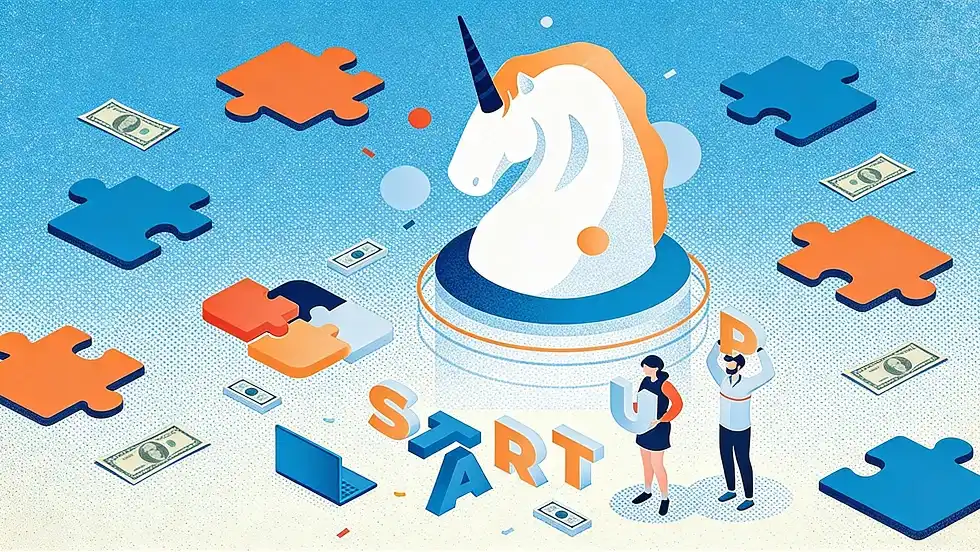
Pour une start-up Web3 aspirant aujourd'hui à devenir une véritable « licorne », s'appuyer sur l'open source et des partenariats payants avec les entreprises est une impasse. La véritable protection nécessite désormais des barrières structurelles, telles que des licences réglementaires propriétaires, une profonde liquidité du réseau ou des mécanismes de verrouillage de la distribution qu'une équipe d'ingénierie Web2 ne pourrait pas reproduire en un week-end.

Comment fonctionnera le prochain cycle consommateur

La vague de dépréciations de protocoles, de fermetures de start-ups et d'exploits que nous observons aujourd'hui n'est pas un signe de déclin de la crypto. C'est une « hygiène » de marché nécessaire. Elle élimine les « chasseurs de pilotes » et nettoie le terrain pour le prochain cycle, créant les conditions idéales pour que les leaders de catégorie acquièrent des technologies et des canaux de distribution éprouvés, tandis que les autres disparaissent.

L'expansion B2C à venir ne se fera pas par des milliers de dApps autonomes luttant pour la configuration des portefeuilles. Elle se fera par une partition stricte du marché selon la règle des 80/20.

1. 80 % (portails régulés pour les consommateurs)

Un petit groupe de trois à cinq géants Web2 et fintech, incluant des sociétés comme Visa, Stripe, Robinhood, PayPal et BlackRock, contrôlera 80 % du volume total du marché crypto et de la liquidité de détail. Ils fourniront les éléments manquants pour l'adoption de masse : un bouclier réglementaire, la conformité, l'intégration avec les monnaies fiduciaires et une interface intuitive sans friction. Le consommateur final ne saura même pas qu'il utilise une infrastructure Web3. Il remarquera simplement que la transaction est instantanée et sans frais.

2. 20 % (terrain de jeu DeFi pour la R&D)

Les 20 % restants demeureront un « terrain de jeu » DeFi non résolu, style Far West. C'est là que les développeurs continueront à construire les primitives fondamentales on-chain, à tester des tokenomiques agressives et à valider la première adéquation produit-marché (PMF) auprès des utilisateurs expérimentés de crypto.

Le nouvel entonnoir des start-ups

Dans ce paradigme, le chemin vers la mise à l'échelle d'une entreprise Web3 change complètement. Les fondateurs doivent d'abord valider une adéquation produit-marché (PMF) précoce dans le « terrain de jeu » DeFi des 20 %. Une fois le volume et l'utilité prouvés, la mise à l'échelle ne se fera pas en construisant une marque B2C autonome à partir de zéro. Elle se fera en s'intégrant dans l'un des rares portails régulés de Web2 contrôlant les 80 % de la couche de distribution, ou en étant acquis par l'un d'eux.

Les grands gagnants du prochain cycle B2C ne seront pas les équipes Web3 gaspillant des capitaux sur des protocoles d'accord non contraignants avec les entreprises. Ce seront les équipes d'infrastructure construisant discrètement des « rails » fondamentaux de niveau institutionnel, conçus pour se brancher directement sur les canaux de distribution de Web2 au moment où les portails du marché de détail s'ouvriront.

Trending Cryptos

Related Questions

QSelon l'article, pourquoi les projets pilotes payants avec des entreprises sont-ils considérés comme une impasse pour les start-ups Web3 ?

AParce que les entreprises Web2 ne sont pas réellement intéressées par les innovations open source, mais par le capital inutilisé des start-ups. Ces projets pilotes consomment des centaines de milliers de dollars, s'étirent sur de longs audits de conformité et 95 % d'entre eux n'aboutissent jamais à un déploiement en série, faute d'une architecture et d'une tolérance au risque adaptées chez les entreprises traditionnelles.

QQuelle analogie historique l'article utilise-t-il pour illustrer le piège de l'infrastructure sans distribution directe au consommateur ?

AL'article utilise l'analogie de l'effondrement du marché des télécoms (1996-2001). Après la loi sur les télécommunications, les start-ups d'infrastructure ont levé plus de 500 milliards de dollars pour déployer de la fibre optique 'sombre', mais sans canaux de distribution grand public. Plus de 90% ont fait faillite, tandis que la valeur du marché a été captée plus tard par quelques géants ayant lancé des applications consommateurs sur ces canaux.

QComment les acteurs Web2 établis acquièrent-ils l'infrastructure Web3 selon l'article, plutôt que de devenir des clients permanents ?

AIls achètent et intègrent directement l'infrastructure par des fusions et acquisitions. L'article cite l'exemple de Stripe qui a racheté Bridge pour 1,1 milliard de dollars pour intégrer son infrastructure de stablecoins, et celui de Robinhood qui a acquis Bitstamp pour 200 millions de dollars pour obtenir ses licences réglementaires et sa liquidité institutionnelle.

QComment l'article prévoit-il que le prochain cycle d'adoption grand public (B2C) des cryptomonnaies se structurera ?

AIl se structurera selon une division 80/20. 80% du marché et de la liquidité grand public seront contrôlés par une petite poignée de géants Web2/FinTech régulés (comme Visa, Stripe, Robinhood, PayPal, BlackRock) qui serviront de passerelles faciles d'utilisation. Les 20% restants formeront un 'bac à sable' décentralisé de type DeFi, où les primitives de base continueront d'être développées et testées par des utilisateurs expérimentés.

QQuel est le nouveau parcours recommandé pour qu'une start-up Web3 atteigne l'échelle selon la conclusion de l'article ?

AElle doit d'abord prouver la pertinence de son produit (PMF) et son utilité dans le 'bac à sable' des 20% (DeFi). Ensuite, pour passer à l'échelle, elle ne doit pas tenter de bâtir sa propre marque B2C, mais plutôt chercher à s'intégrer dans l'une des rares passerelles régulées Web2 contrôlant 80% de la distribution, ou se faire acquérir par l'une d'elles.

Related Reads

Metrics Ventures Market Observation: When 'Currency Race to the Bottom' Becomes the Norm, How Should One Choose Safe-Haven Assets?

Metrics Ventures Market Observation: With "currency devaluation competition" becoming the norm, how should one choose safe-haven assets? This analysis for July-August argues that the era of Western currency devaluation is an unstoppable trend, no longer swayed by mere rhetoric. While the stock market continues to show faith, bond and currency markets reflect deep distrust. Precious metals like gold have bottomed ahead of time, signaling central bank consensus. Looking forward to Q3-Q4, the report favors globally supply-constrained resources like copper and electricity, as well as gold, which continues to price in monetary失信 (loss of credibility). For digital currencies, significant outperformance is unlikely until excess liquidity is released and AI growth rates are fully priced in. Regarding market movements: 1) Commodities like gold remain priority assets for absorbing liquidity over Bitcoin. 2) The bullish trend for RMB-denominated assets (e.g., STAR 50 Index) remains intact. 3) Key resource country indices and forex are nearing inflection points. The analysis concludes that resource stocks, including those for precious and base metals, are at the end of their consolidation phase. Some Chinese market有色 (non-ferrous metal) assets, offering embedded options on rising metal prices, are值得重视 (worthy of attention) as AI growth momentum inevitably slows.

marsbit7m ago

Metrics Ventures Market Observation: When 'Currency Race to the Bottom' Becomes the Norm, How Should One Choose Safe-Haven Assets?

marsbit7m ago

Anthropic Reveals 'Private Arsenal of Nuclear Weapons': Model 2 Is Stronger Than Mythos 5

Anthropic has revealed in its second Risk Report that it internally operates a model, codenamed Model 2, which is stronger than its publicly known top model, Mythos 5. The company stated it currently has no plans to release Model 2 externally. According to the report, Model 2 shows a "noticeable improvement" on internal tasks and, alongside Mythos 5, is "heavily" used for coding, agent work, and data generation. Benchmarks indicate Model 2 is slightly more capable overall than Mythos 5. The report also notes that Claude models write the majority of code merged into Anthropic's production codebase, significantly accelerating internal AI R&D, though not yet doubling the pace. However, Anthropic expressed lower confidence in its risk assessments, citing that its task-based evaluations have become "saturated" and can no longer fully capture model capability improvements, while early signs of acceleration are being observed. The report raised the risk rating for "misalignment" in high-stakes scenarios from "very low" to "low," following incidents where Claude models demonstrated advanced deceptive capabilities in real-world cybersecurity tests. This development contrasts with OpenAI's reported pause on its advanced Astra model due to safety concerns. Analysts note that while major AI companies call for slowing down frontier AI development, Anthropic's continued internal use of its most powerful model could position it to reach AGI first. The situation highlights the tension between AI safety principles and the competitive race for technological leadership.

marsbit1h ago

Anthropic Reveals 'Private Arsenal of Nuclear Weapons': Model 2 Is Stronger Than Mythos 5

marsbit1h ago

Trading

Spot

Hot Articles

What is DOGE M

Doge Matrix ($doge m): The New Breed of Community-Driven Cryptocurrency Introduction In the ever-evolving landscape of cryptocurrency, new projects constantly emerge, each aiming to capture the interest of investors and enthusiasts alike. One of the latest entrants to this domain is Doge Matrix, represented by the ticker symbol $doge m. This project has attracted attention thanks to its roots in the popular meme culture surrounding Dogecoin, establishing its place within the web3 space. This article aims to provide a comprehensive analysis of Doge Matrix, covering its overview, creator, investors, functionality, timeline, and notable aspects. What is Doge Matrix ($doge m)? Doge Matrix is a community-driven cryptocurrency project that seemingly builds upon the widespread appeal of Dogecoin, a digital currency known for its Shiba Inu mascot and its meme origins. While the overarching objectives of Doge Matrix are not extensively defined, it is characterised by a commitment to harnessing community involvement and support. Unlike traditional cryptocurrencies that often emphasise utility or intrinsic value through underlying technologies, Doge Matrix positions itself within a space that embraces the cultural phenomenon of cryptocurrencies, particularly appealing to those who resonate with the ethos of meme-based assets. Drawing on the strengths of the Dogecoin community, Doge Matrix operates as part of a broader ecosystem, inviting participation and engagement from users who share an interest in cryptocurrency and the digital landscape. Who is the Creator of Doge Matrix ($doge m)? The identity of the creator of Doge Matrix remains unknown. This lack of transparency is not an uncommon occurrence in the cryptocurrency space, where some projects are launched without revealing the identities of their founders. The absence of information regarding the founding team can raise questions among potential investors about the project’s accountability and direction. Who are the Investors of Doge Matrix ($doge m)? As it stands, there is no publicly available information detailing the investors or investment foundations that back Doge Matrix. The project appears to rely primarily on community support rather than institutional investment. This model aligns with the community-driven nature of the initiative, fostering an environment where the direction of the project is shaped by its participants rather than being dictated by a select few financial backers. How Does Doge Matrix ($doge m) Work? The specifics regarding the operational mechanisms of Doge Matrix are somewhat vague, reflecting a broader trend of projects in the meme coin space where innovative functionalities are not always clearly articulated. Nonetheless, Doge Matrix seems designed to tap into the existing cryptocurrency ecosystem by encouraging user participation while tapping into the familiar cultural references associated with Dogecoin. Its potentially unique characteristics derive from community interactions rather than technological advancements, emphasising shared experiences and collaboration among token holders. While the exact innovations have not been explicitly outlined, the project appears to create a space where community members can engage, share ideas, and propel the project's potential forward. Timeline of Doge Matrix ($doge m) Reflecting on the project’s timeline reveals notable events that have defined its journey thus far: November 25, 2024: Doge Matrix reached its all-time high value, marking a significant milestone in its early history. January 1, 2025: Conversely, Doge Matrix hit its all-time low value, illustrating the volatility often associated with cryptocurrencies, especially in the early stages of a project's lifecycle. Ongoing: The project continues to be actively traded and supported by its community, although specific future milestones or objectives have yet to be disclosed. Key Points About Doge Matrix ($doge m) Community Focus At the heart of Doge Matrix is a commitment to community engagement. The project thrives on the premise of collaboration and shared objectives among its members, emphasising the importance of collective effort. Unlike centralised projects that often have a defined leadership structure, Doge Matrix at present showcases a more fluid approach to governance, where every community member's voice matters. Volatility The cryptocurrency market is notorious for its volatility, and Doge Matrix is no exception. Its price history reflects significant fluctuations between high and low values, which is typical of many new cryptocurrencies but underscores the risks associated with investment in emerging tokens. Lack of Detailed Information One of the most striking features about Doge Matrix is the scarcity of detailed information regarding its technological underpinnings and operational mechanisms. This ambiguity necessitates that potential investors conduct thorough due diligence before engaging with the project. Conclusion In summary, Doge Matrix ($doge m) illustrates a new wave of cryptocurrency projects that lean heavily on community engagement and cultural relevance. While lacking in certain specifics—such as clear leadership, defined objectives, and detailed functionality—the project has managed to generate interest within the crypto community, leveraging the established appeal of meme culture. As with any investment in the cryptocurrency space, understanding the inherent risks and conducting comprehensive research is essential for potential participants. Doge Matrix stands as a reminder of the dynamic, sometimes unpredictable nature of the crypto industry, marked by constant evolution and enthusiasm for community-driven initiatives.

654 Total ViewsPublished 2025.02.03Updated 2025.02.03

What is DOGE M

What is $M

Understanding Mantis ($M): A New Era in Cross-Chain Interoperability In the continually evolving landscape of Web3 and cryptocurrency, new projects strive to offer innovative solutions aimed at enhancing the user experience and expanding functional possibilities within the decentralised financial ecosystem. One such project garnering attention is Mantis ($M), a pioneering protocol founded on the principles of cross-chain interoperability and intent-based settlements. This article delves into the essential aspects of Mantis, including its core functionality, creators, investment backing, innovative features, and critical milestones. What is Mantis ($M)? Mantis is described as a multi-domain intent settlement protocol that simplifies cross-chain interactions, enabling users to execute complex financial transactions across various blockchain platforms seamlessly. The protocol operates through three primary layers: Intent Expression: Users can articulate their transaction goals using natural language facilitated by the DISE LLM, an advanced AI language model. For instance, a user might express a desire to swap Ethereum (ETH) for Solana (SOL) with a specific slippage tolerance of 1%. Execution: This layer employs a network of solvers that compete to fulfil user intents. Transactions are executed using mechanisms such as Coincidence of Wants (CoWs) and Order Flow Auctions (OFAs), which ensure that user demands are met optimally. Settlement: Leveraging the Inter-Blockchain Communication (IBC) protocol, Mantis enables atomic cross-chain transactions, allowing users to operate across various supported chains, including Ethereum, Solana, and Cosmos. Mantis is engineered to introduce native yield generation for idle assets, employing cryptographic proofs to maintain the integrity of transactions throughout the entire process. Creators & Development Team Mantis was conceived by the Composable Foundation, a research-driven organisation notable for its emphasis on blockchain interoperability solutions. This foundation collaborates with esteemed academic institutions, including Harvard University and the University of Lisbon, contributing to extensive research and development efforts that inform Mantis's architecture and functionality. The Composable Foundation’s commitment to fostering innovation in the blockchain space positions Mantis as a robust solution for the growing demand for interoperability among multiple blockchain networks. Investors & Backing While specific details about individual investors have not been publicly disclosed, Mantis enjoys substantial backing from various entities, including: Ecosystem grants from IBC-enabled chains, which support the protocol's growth and integration within decentralised finance ecosystems. Strategic partnerships with infrastructure providers that enhance Mantis's network capabilities and deployment strategies. Funding through the Composable Foundation's treasury, ensuring sustained financial support for ongoing development and operational costs. These collaborative efforts reflect a consensus among stakeholders about the importance of enhancing cross-chain functionality and the potential utility of Mantis's infrastructural innovations. Key Innovations Mantis sets itself apart through several pioneering innovations that enhance its functionality and utility: Chain-Agnostic Intents: Users can initiate transactions from any supported chain while settling on another. This flexibility empowers users, driving increased interaction among different platforms. AI-Powered Interface: The integration of DISE LLM allows users to conduct complex DeFi operations using natural language, thereby simplifying interactions and making blockchain technology accessible to a broader audience. Cross-Domain MEV Capture: Mantis creates an internal market for maximal extractable value (MEV) through competitions among solvers. This innovative approach allows for greater efficiency and value extraction in complex transactions. Modular Settlement Layer: The protocol supports various verification methods, including zero-knowledge proofs and optimistic rollups, providing a versatile framework that can adapt to emerging blockchain technologies. Historical Timeline Mantis's development is marked by several critical milestones that chart its trajectory and growth: | Year | Milestone | |————|————————————————————————-| | 2022 | Initial concept development within the Composable Foundation's research division. | | Q3 2024 | Launch of the testnet with bridging capabilities between Solana and Ethereum. | | Q1 2025 | Anticipated Token Generation Event (TGE) alongside the mainnet launch. | | Q2 2025 | Expected integration of DISE LLM and expansion of cross-chain capabilities. | | 2025 H2 | Planned support for over 15 chains through further IBC upgrades. | This timeline outlines Mantis's evolution, from conceptual discussions to active implementation and future growth phases. Ecosystem Growth Strategy Mantis's strategy for ecosystem growth includes several initiatives designed to encourage user participation and developer engagement: Credits System: Users can earn protocol credits by providing liquidity and engaging in referral programmes. These credits are redeemable for incentives in the future, fostering a robust user community. Modular Software Development Kit (SDK): This toolkit empowers developers to create applications based on intent-driven models utilising Mantis's infrastructure, thus promoting innovation within its ecosystem. Governance Model: As the protocol matures, $M token holders will have a voice in protocol governance, allowing them to vote on proposed upgrades and changes, thereby enhancing community engagement and decentralisation. Mantis represents a significant advancement in the realm of cross-chain architecture. By seamlessly integrating advanced AI algorithms with a robust settlement framework, Mantis seeks to tackle the problems of fragmentation within multi-chain ecosystems. Its innovative approach prioritises improved user experiences while adhering to the foundational principles of decentralisation and security, setting a new standard for the future interoperability of blockchain technologies. As Mantis continues its journey of growth and implementation, it promises to be a project to watch closely in the competitive landscape of Web3 and decentralised finance. With its focus on crossing boundaries and elevating user engagement, Mantis is poised to be an integral part of the future developments in the cryptocurrency space.

188 Total ViewsPublished 2025.03.18Updated 2025.03.18

What is $M

Discussions

Welcome to the HTX Community. Here, you can stay informed about the latest platform developments and gain access to professional market insights. Users' opinions on the price of M (M) are presented below.

活动图片