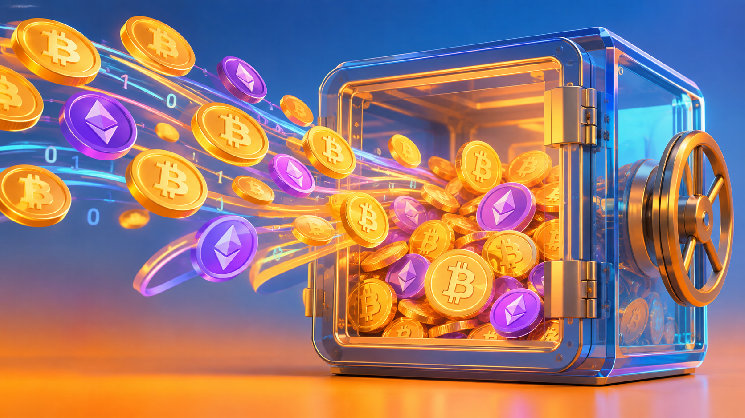
Pourquoi le prix du bitcoin est-il resté stable et n'a pas chuté malgré un récent piratage majeur ? Voici le secret

cryptonews.ruPublished on 2026-08-04Last updated on 2026-08-04

Abstract

Dans une interview sur la chaîne "Wolf of All Streets", des experts ont expliqué pourquoi le prix du Bitcoin est resté stable malgré un piratage de 100 millions de dollars visant des portefeuilles froids individuels. Les analystes de Bitwise, Ryan Rasmussen et Matt Hougan, ainsi que Tillman Holloway d'Arch Public, ont souligné la maturation du marché. Ils attribuent cette résilience au passage d'un marché dominé par les détenteurs individuels à un marché institutionnel. La majorité des nouveaux investissements transitent désormais par des ETF spot ou des plateformes régulées (Coinbase, Anchorage), isolant l'impact des incidents touchant les portefeuilles privés. Les intervenants notent une "changement de garde" : Wall Street et les capitaux institutionnels (Morgan Stanley, Wells Fargo, UBS) déterminent désormais la dynamique des prix. Ces acteurs adoptent des stratégies à long terme, considérant les corrections comme des opportunités d'achat dans le cycle de 4 ans, et non comme des crashes. Le risque perçu a diminué avec l'intégration du Bitcoin dans les indices financiers traditionnels, incitant les gestionnaires de porteféuille à y allouer 1% à 6% de leurs actifs.

Dans une interview diffusée sur la chaîne bien connue du secteur "Wolf of All Streets", les transformations institutionnelles survenues sur le marché des crypto-monnaies et la dynamique des prix du bitcoin ont été discutées en détail.

L'émission, animée par Andrew Parish, a réuni Matt Hougan, directeur des investissements de Bitwise, Ryan Rasmussen, analyste chez Bitwise, et Tillman Holloway, PDG d'Arch Public. L'émission a abordé les raisons pour lesquelles le bitcoin n'a pas réagi à une fuite de données de 100 millions de dollars dans l'écosystème des portefeuilles froids individuels, ainsi que la domination de Wall Street dans ce secteur.

En ouverture de l'émission, Andrew Parish s'est interrogé sur la raison pour laquelle une vulnérabilité de 100 millions de dollars sur un portefeuille froid n'a pas entraîné d'effondrement du marché, notant qu'un incident similaire il y a quelques années aurait pu provoquer une chute brutale de 10 à 20%.

Commentant la situation, Ryan Rasmussen, analyste chez Bitwise Research, a déclaré que le marché avait clairement mûri : des détenteurs individuels de bitcoins vers les investisseurs institutionnels. Rasmussen a noté que la grande majorité des nouveaux investisseurs entrent sur le marché via des ETF au comptant ou des services de garde agréés et régulés, tels que Coinbase et Anchorage. Par conséquent, a-t-il ajouté, les vulnérabilités liées aux portefeuilles froids individuels ne concernent qu'une très petite partie de tous les acteurs du marché et ne provoquent pas de panique à grande échelle.

Matt Hougan, directeur des investissements de Bitwise, a déclaré que dans le cycle actuel, le marché était devenu plus résistant aux nouvelles négatives. Hougan a noté que les vendeurs avaient épuisé leurs options et que les investisseurs restants faisaient preuve d'une position inébranlable, ajoutant que la présence de capitaux institutionnels réduisait la pression des mauvaises nouvelles sur les prix.

Tillman Holloway, PDG d'Arch Public, a déclaré qu'un "changement de garde" était en cours dans le secteur des crypto-monnaies. Rappelant que par le passé, le mouvement des prix était déterminé par les mineurs et les bourses de crypto-monnaies individuelles, Holloway a déclaré qu'aujourd'hui, le contrôle était entièrement passé à Wall Street et aux capitaux institutionnels.

Commentant les attentes du marché, Matt Hougan a affirmé qu'il existait un énorme fossé entre l'atmosphère pessimiste sur les réseaux sociaux et l'approche des géants financiers de Wall Street. Il a noté que de grandes institutions comme Morgan Stanley, Wells Fargo et UBS fonctionnent avec des stratégies à long terme sur 10 ans, et que le monde financier traditionnel considère les corrections de prix actuelles non pas comme un effondrement, mais comme une opportunité d'achat normale dans le cadre d'un cycle de 4 ans.

Ryan Rasmussen a indiqué que les gestionnaires de portefeuille avec des années d'expérience commençaient à inclure des actifs cryptographiques dans leurs portefeuilles, à l'instar des révolutions technologiques passées. Rasmussen a déclaré que les équipes de recherche des grandes banques recommandaient à leurs clients d'allouer de 1% à 6% au bitcoin, et que le facteur de risque avait diminué tant au niveau professionnel qu'institutionnel, l'actif s'étant intégré dans les indices financiers traditionnels.

*Ceci n'est pas un conseil en investissement.

end-content

Trending Cryptos

Related Questions

QPourquoi le prix du Bitcoin n'a-t-il pas chuté après le piratage de portefeuilles froids de 100 millions de dollars ?

ALe marché a mûri et la majorité des nouveaux investisseurs entrent via des ETF ou des plateformes réglementées (Coinbase, Anchorage). Les vulnérabilités affectant les portefeuilles froids individuels ne concernent qu'une très petite partie du marché, évitant ainsi une panique généralisée.

QQuelle transformation majeure observe-t-on sur le marché des crypto-monnaies selon les intervenants ?

AIl y a un transfert de contrôle des mineurs et des bourses individuelles vers Wall Street et les investisseurs institutionnels, avec une augmentation significative de la participation institutionnelle via des produits comme les ETF.

QComment les grandes institutions financières perçoivent-elles les corrections de prix du Bitcoin ?

ADes institutions comme Morgan Stanley, Wells Fargo et UBS les considèrent comme des opportunités d'achat normales dans le cadre d'un cycle de 4 ans, et non comme un effondrement, suivant des stratégies à long terme (10 ans).

QQuel est l'impact des investisseurs institutionnels sur la stabilité du marché du Bitcoin ?

ALa présence de capitaux institutionnels rend le marché plus résilient aux mauvaises nouvelles en réduisant la pression à la vente, car ces investisseurs ont des positions plus stables et des stratégies à long terme.

QQuelle est la recommandation d'allocation pour le Bitcoin selon les groupes de recherche des grandes banques ?

ALes groupes de recherche des grandes banques recommandent à leurs clients d'allouer entre 1% et 6% de leur portefeuille au Bitcoin, considérant que son intégration dans les indices financiers traditionnels a réduit le risque perçu.

Related Reads

He Gave Wang Xingxing the First 2 Million, Now Serves as Chairman for the Next 'Unitree'

On August 19, 2024, Unitree Robotics, China's "first humanoid robotics stock," went public. Its founder, Wang Xingxing, started a decade ago with his self-developed XDog. In 2016, at a critical funding juncture, he received his first angel investment of 2 million RMB from Yin Fangming. This bet has since yielded a return of over 140 times. Yin Fangming is more than just a key investor. He was a co-founder of the AI robotics company ROOBO, whose own venture ultimately struggled. This firsthand experience with the hardware challenges in robotics gave him unique insight when backing Unitree, a company renowned for its hardware R&D and cost control. While his own company faltered, Yin continued investing shrewdly. He partially cashed out some Unitree shares early, reinvesting the proceeds into sectors like energy (e.g., solid-state battery firm TaiLan) and commercial aerospace (e.g., small launch vehicle developer XianDeng Aerospace). However, his most significant move after Unitree is his deep involvement with Galaxy General, a leading embodied AI unicorn. In July 2024, Yin stepped from behind the scenes to officially become its Chairman, indicating a role far beyond a typical investor. This comes as Galaxy General is viewed as preparing for future capital moves. Yin's career has consistently been ahead of the curve—from mobile internet to AI and robotics. Known for his foresight and low profile, he declined an interview for this story, offering only a statement encouraging support for visionary entrepreneurs like Wang Xingxing.

marsbit14m ago

He Gave Wang Xingxing the First 2 Million, Now Serves as Chairman for the Next 'Unitree'

marsbit14m ago

Coldcard Theft Reflection: Source Code Visibility Does Not Equal Security

The article examines the open-source vs. closed-source debate in crypto, prompted by a theft of over $100M in Bitcoin from Coldcard hardware wallets. It clarifies key terminology: true "Free and Open Source Software" (FOSS) grants four essential freedoms (use, study, share, modify), while "source available" code, like Coldcard's firmware, may have usage restrictions. The piece argues that visible source code alone does not guarantee security; actual safety depends on the economic incentives for thorough, ongoing review by skilled individuals. Using Bitcoin Core as a model, the article describes a successful, transparent open-source development culture built on public review and consensus. It contrasts this with the Coldcard case, where a critical bug in a lightly-reviewed, source-available library went undetected for years, highlighting a "tragedy of the commons" scenario where assumed but absent scrutiny creates vulnerability. The economics of licensing are crucial: restrictive licenses can limit the pool of motivated commercial reviewers. Finally, the article explores AI's impact. It cites the Bitcoin Red Team's use of AI to rapidly audit codebases and find vulnerabilities at scale, demonstrating a powerful new tool for security. However, AI also floods projects with low-quality code, straining maintainers. The piece concludes that in high-stakes crypto, only well-audited projects—whether open or closed-source—can withstand evolving threats, with AI both challenging and aiding security practices.

marsbit24m ago

Coldcard Theft Reflection: Source Code Visibility Does Not Equal Security

marsbit24m ago

Mysterious "Ox Alpha" Large Model Goes Viral with Limited-Time Free Access

A mysterious anonymous AI model named "Ox Alpha," nicknamed "Cow is Coming" by Chinese netizens, has appeared on OpenRouter, sparking widespread speculation. The model offers a 1 million token context, supports text, image, and video inputs, can call tools, and is currently free. Its standout feature is strong coding ability. Initial tests on the DeepSWE benchmark, which evaluates real-world software engineering tasks, showed an 80% pass rate on a subset of tasks, reportedly nearing top-tier code models. However, follow-up tests yielded a 63% score, with variations attributed to different task sets and configurations. The model's true developer is a major topic of debate. The prevailing theory points to Zhipu AI's unreleased GLM-5.3 Flash or its multimodal variant. Evidence cited includes identical visual token consumption patterns with GLM-5V-Turbo for videos, a consistent offset in text token counts compared to GLM-5.3, and similar behavioral traits like refusing audio processing. Zhipu has a precedent of anonymous testing. Simultaneously, another anonymous model, "korrine," appeared on Code Arena, with guesses ranging from Moonshot's Kimi K3.1 to models from Qwen or MiMo, adding to the industry's guessing game. This trend of anonymous "undercover" testing allows for unbiased performance evaluation in platforms like Arena and provides real-world, high-pressure testing through tools like OpenRouter before official release. It also serves as an effective marketing tactic, prolonging discussion through suspense. If Ox Alpha is indeed a "Flash" model, its performance raises expectations for the full-scale version's potential.

marsbit5h ago

Mysterious "Ox Alpha" Large Model Goes Viral with Limited-Time Free Access

marsbit5h ago

Trading

Spot

Hot Articles

How to Buy WELL

Welcome to HTX.com! We've made purchasing Moonwell Artemis (WELL) simple and convenient. Follow our step-by-step guide to embark on your crypto journey.Step 1: Create Your HTX AccountUse your email or phone number to sign up for a free account on HTX. Experience a hassle-free registration journey and unlock all features.Get My AccountStep 2: Go to Buy Crypto and Choose Your Payment MethodCredit/Debit Card: Use your Visa or Mastercard to buy Moonwell Artemis (WELL) instantly.Balance: Use funds from your HTX account balance to trade seamlessly.Third Parties: We've added popular payment methods such as Google Pay and Apple Pay to enhance convenience.P2P: Trade directly with other users on HTX.Over-the-Counter (OTC): We offer tailor-made services and competitive exchange rates for traders.Step 3: Store Your Moonwell Artemis (WELL)After purchasing your Moonwell Artemis (WELL), store it in your HTX account. Alternatively, you can send it elsewhere via blockchain transfer or use it to trade other cryptocurrencies.Step 4: Trade Moonwell Artemis (WELL)Easily trade Moonwell Artemis (WELL) on HTX's spot market. Simply access your account, select your trading pair, execute your trades, and monitor in real-time. We offer a user-friendly experience for both beginners and seasoned traders.

3.0k Total ViewsPublished 2024.03.29Updated 2026.06.02

How to Buy WELL

What is $WELL

WELL3, $$WELL: Revolutionizing Health and Wellness with DePIN and AI Introduction In the rapidly evolving landscape of digital technology, the health and wellness sector stands at the forefront of innovation, striving to enhance patient care and promote healthier lifestyles. A groundbreaking player in this domain is WELL3, a pioneering Web3 project that seeks to revolutionize how individuals engage with their health. By leveraging technologies such as Decentralized Physical Infrastructure Network (DePIN), Decentralized Identity (DID), and Artificial Intelligence (AI), WELL3 aims to foster secure, data-empowered health journeys. This comprehensive article delves deep into the core aspects of WELL3, $$WELL, exploring its functionalities, creators, investors, and unique features. What is WELL3, $$WELL? WELL3 serves as an innovative platform set to redefine the approach towards health and wellness. Focused on integrating DePIN and DID alongside AI systems, the project is designed to create personalized user experiences while ensuring the safety and privacy of individuals' health data. With an impressive figure of over one million pre-registered users, the primary mission of WELL3 revolves around enhancing well-being through secure, data-driven health journeys. At its core, WELL3 employs advanced blockchain technologies to ensure that users have complete control over their personal information. This project not only addresses the challenges of data security and accessibility but also aspires to create a vibrant community connected by a shared commitment to better health. Key Features of WELL3: DePIN and DID: These technologies enable secure ownership and authentication of data, giving users full control over their information. AI Integration: Utilizing AI analytics, WELL3 offers personalized insights and solutions tailored to individual health needs. Community Engagement: Facilitates a supportive environment where users can connect, share experiences, and motivate each other toward healthier living. Creator of WELL3, $$WELL The identity of the creator of WELL3 remains unspecified in the available information. As the project progresses, further details may emerge, shedding light on the visionary minds behind this transformative initiative. Investors of WELL3, $$WELL WELL3 has garnered support from a myriad of influential investment entities, highlighting its credibility and potential in the health and wellness space. Notable investors include: Animoca Brands AWS Samsung The Spartan Group Blocore Fenbushi Capital Newman Group Soul Capital XY Finance Lumoz The backing from these established organizations demonstrates a strong belief in WELL3's mission, providing it with the necessary resources to innovate and expand its offerings. How Does WELL3, $$WELL Work? WELL3 operates by melding cutting-edge technologies in a multichain framework, ensuring a seamless and innovative user experience. Below are some factors that uniquely position WELL3 in the wellness market: 1. Secure Data Ownership With the integration of DePIN and DID, users can maintain complete control over their personal health information. This layer of security is paramount in today's digital age, where data breaches and unauthorized access are rampant. Through WELL3, data ownership is decentralised, enabling users to manage their information proactively. 2. Personalization through AI WELL3 implements AI-driven analytics to provide users with tailored health insights. By harnessing the power of AI, the platform can offer individualised recommendations and solutions, encouraging users to achieve their health goals more effectively. 3. Multichain Framework The WELL3 project is designed to work across multiple blockchain platforms, including Bitcoin, Ethereum, Polygon, Solana, Blast, and TON. This multichain capability ensures that users can interact with the platform seamlessly across different networks, enhancing accessibility and usability. 4. WELL Token Central to the WELL3 ecosystem is the WELL Token, which serves multiple functions including utility, governance, and rewards. The token allows for ecosystem participation, supports health data sharing, and incentivizes users based on their engagement with the platform. Timeline of WELL3, $$WELL The trajectory of WELL3 showcases significant milestones in its development, each contributing to the project's overall success. Here is a brief timeline of critical events in the history of WELL3: February 10, 2024: WELL3 launched its NFT project, quickly rising to prominence as the largest NFT collection on the opBNB chain with over 324,000 owners and reaching 8 million NFTs created by April 27, 2024. Public Sale: The project achieved a remarkable total value locked (TVL) of approximately 15,237.2 ETH within just seven days, indicating robust market interest and backing. WELL ID Launch: The platform saw over 900,000 users sign up for the WELL ID and its corresponding NFT Ring whitelist, marking a significant adoption phase within the ecosystem. Partnership Development: WELL3 established partnerships with leading entities including Animoca Brands, AWS, Samsung, and others to enhance its ecosystem and expand its reach. Transaction Volume: WELL3 has facilitated over $17 million in transactions, reflecting its growing utility and engagement within the health and wellness community. Key Points About WELL3, $$WELL As a progressive initiative shifting towards the wellness market, WELL3 has identified several vital elements that will contribute to its ongoing success. Here are some key takeaways to note: Tokenomics The $$WELL token has a maximum supply of 42 billion, with a significant 71% earmarked for community initiatives. This distribution strategy emphasises the project's commitment to its user base and long-term sustainability. Lock-Up Period To ensure stability within the ecosystem, tokens are released in batches over a 24-month lock-up period, promoting trust and confidence among users. Ecosystem Development WELL3's vision extends toward creating a comprehensive and sustainable ecosystem to encourage thriving community engagement, health-enhancing behaviors, and digital solutions that address the pressing needs of the wellness domain. Market Fit The wellness industry, valued at $5.6 trillion, presents a lucrative opportunity that WELL3 aims to tap into. With an anticipated annual growth rate of 5-10%, the project is ideally positioned amid a rising trend towards health-conscious living. Wearables Introducing the WELL3 Ring, a crypto-incentivized wearable, aligns with the growing demand for personalized health data. This device not only enhances user experience but also redefines what it means to be engaged with one’s health in the context of Web3. Conclusion WELL3 represents a significant advancement in the integration of blockchain technology within the health and wellness sector. By addressing crucial issues around data ownership, personalization, and community engagement, this innovative platform offers a forward-thinking solution to enhance individual well-being. With robust backing from notable investors and a commitment to pioneering technologies, WELL3 stands poised to make a lasting impact in the wellness landscape. For those seeking to navigate the complexities of health in the digital age, WELL3 is certainly one to watch as it continues to evolve and grow.

1.1k Total ViewsPublished 2024.07.14Updated 2024.12.03

What is $WELL

Discussions

Welcome to the HTX Community. Here, you can stay informed about the latest platform developments and gain access to professional market insights. Users' opinions on the price of WELL (WELL) are presented below.

活动图片