TradeXYZ compensará a los traders por pérdidas tras el desplome de las acciones de SK Hynix, que provocó liquidaciones por valor de 57 millones de dólares

cryptonews.ruPublished on 2026-07-29Last updated on 2026-07-29

Abstract

La empresa TradeXYZ ha anunciado que compensará a los operadores por las pérdidas sufridas durante la negociación de acciones de la empresa de semiconductores SK Hynix. Esto se produce tras una caída en el mercado que provocó la liquidación de posiciones largas por valor de 57 millones de dólares. El incidente se desencadenó durante la sesión asiática cuando las acciones de SK Hynix cayeron bruscamente de 1.127,9 a 917,25 dólares. Esta anomalía de precios fue causada principalmente por la ejecución de una única orden de venta al límite inferior diario al inicio de la negociación en la bolsa surcoreana NXT, lo que estableció un precio de referencia bajo que fue recogido por los oráculos de TradeXYZ. En la plataforma HIP-3, el contrato perpetuo de SK Hynix (SKHX) experimentó una caída del 17.9% en minutos, lo que llevó a la liquidación de 960 cuentas de operadores con posiciones largas apalancadas. TradeXYZ aclaró que sus sistemas de oráculo funcionaron correctamente y que la liquidación no se debió a un error de la plataforma. La empresa se ha comprometido a cubrir las pérdidas relacionadas con esta anomalía y publicará pronto los criterios para la compensación. El volumen total negociado con SKHX en TradeXYZ supera los 20.900 millones de dólares, y el contrato fue uno de los más activos en HIP-3 el 29 de julio. El evento refleja un creciente interés de los grandes inversores por tomar posiciones cortas en el sector de los semiconductores, como se observa también en operaci...

La empresa TradeXYZ ha anunciado que compensará a los traders las pérdidas sufridas al operar con acciones de la empresa de semiconductores SK Hynix (SKHX). Un mercado descentralizado provocó liquidaciones tras una caída excesiva de las acciones de SK Hynix en la negociación previa a la apertura.

La empresa surcoreana de semiconductores SK Hynix (Nasdaq:SKHY) es uno de los futuros más activamente negociados en TradeXYZ. Actualmente, el principal índice KOSPI no está disponible, pero los traders en la blockchain reaccionaron rápidamente al potencial de movimientos direccionales de SK Hynix. Las acciones también reflejan el sentimiento general hacia el mercado de empresas de semiconductores.
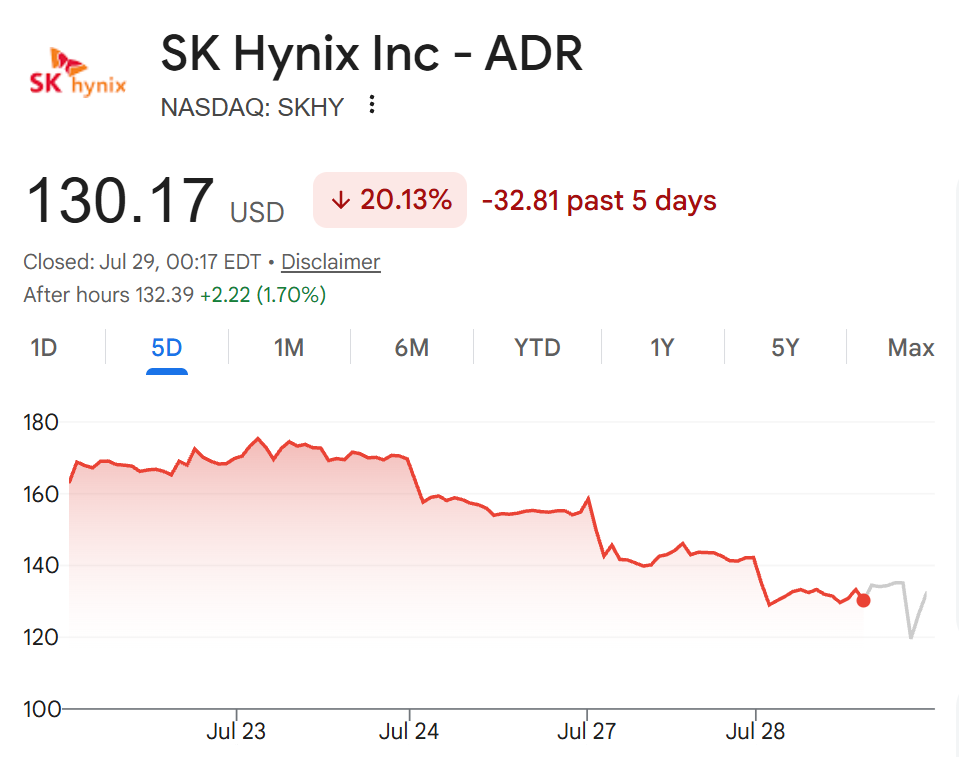
Las acciones de SK Hynix se encuentran en una tendencia bajista, convirtiéndose en un área activa para posiciones direccionales con apalancamiento en la plataforma Hyperliquid. | Fuente: Google Finance

Dado que el mercado surcoreano entró en otra corrección, HIP-3 es una de las plataformas donde los traders pueden apostar a la baja y abrir inmediatamente una posición corta en acciones de SK Hynix.

Hasta ahora, el volumen total negociado en el mercado SKHX de TradeXYZ supera los 20.900 millones de dólares. Esto causó un impacto desproporcionado, ya que las bruscas fluctuaciones del índice provocaron la liquidación de posiciones largas.
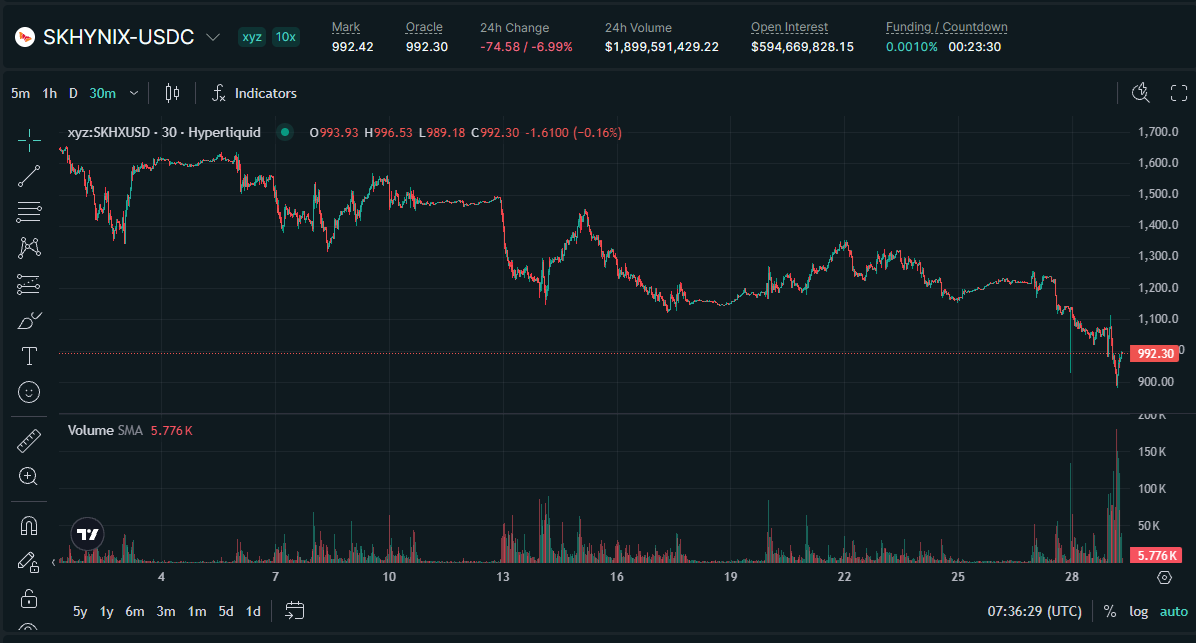
Para SKHX, este fue uno de los días más activos en HIP-3, con fuertes posiciones direccionales en el contrato. | Fuente: Hyperliquid

En la bolsa HIP-3, al 29 de julio, SKHX fue el segundo futuro perpetuo más activo. El interés abierto en el contrato alcanzó los 493 millones de dólares, y el volumen negociado en las últimas 24 horas fue de 589 millones de dólares. El día pasado fue uno de los más activos para la negociación de SKHX en julio.

En la bolsa de futuros perpetuos Lighter también se observó un precio anormalmente bajo, que cayó hasta los 839 dólares, pero luego la mecha de la vela desapareció y el mercado muestra el estado de "excluido de la lista".

¿Por qué hubo una ola de liquidaciones en TradeXYZ?

TradeXYZ explicó que las acciones de SK Hynix cayeron de $1127.9 a $917.25 durante el horario comercial asiático. TradeXYZ utiliza oráculos para acceder a precios externos, y en este caso, el oráculo funcionó. Según el desarrollador, el sistema de oráculos actuó correctamente y las liquidaciones no fueron causadas por otros errores por parte de la bolsa.

La bolsa prometió cubrir las pérdidas relacionadas con la anomalía de precios y hará públicos los criterios para recibir compensación en los próximos días.

En la bolsa surcoreana NXT, SKHX mostró una magnitud anormal, un 29% por debajo del precio de cierre del día anterior. El precio efectivamente estaba distorsionado, pero fue aceptado por los oráculos de TradeXYZ. El precio de los futuros perpetuos en HIP-3 cayó un 17.9% en cuestión de minutos, lo que llevó a la liquidación de posiciones largas por valor de unos 57 millones de dólares en 960 cuentas de traders.

La anomalía de precios surgió de una única orden ejecutada a las 08:00 hora local de Corea del Sur, cuando se vendió una acción al límite inferior diario. Al abrirse la negociación, la escasa cantidad de órdenes de compra significó que esta venta de una sola acción determinó el primer precio de referencia, que luego se distribuyó a los oráculos para el comercio descentralizado.

Durante las fluctuaciones de precios, la liquidez de TradeXYZ absorbió alrededor de 11 puntos porcentuales, pero esto no logró salvar todas las posiciones largas apalancadas.

Los grandes inversores vuelven a vender en corto SKHX

El principal atractivo de SKHX radica en el potencial de movimientos direccionales y la posibilidad de abrir posiciones cortas a medida que se desacelera el crecimiento en el sector de semiconductores.

Las posiciones de SKHX en el contrato cuentan con 108 grandes posiciones, lo que las convierte en una de las mejores opciones en la plataforma HIP-3. De estas, 48 son posiciones largas en SKHX. La posición más grande está valorada en 47.35 millones de dólares, con una ganancia no realizada que supera los 10 millones de dólares.

Este mismo gran jugador también está abriendo posiciones cortas en acciones de Nvidia (Nasdaq:NVDA), lo que refleja una actitud general hacia el trading de semiconductores.


Trending Cryptos

Related Questions

Q¿Qué compañía se ha comprometido a compensar las pérdidas de los traders tras el desplome de las acciones de SK Hynix?

ALa compañía TradeXYZ ha anunciado que compensará a los traders por las pérdidas sufridas en el comercio de acciones de SK Hynix.

Q¿Cuál fue el valor total de los activos liquidados tras la caída de las acciones de SK Hynix en la plataforma TradeXYZ?

ALa caída de las acciones de SK Hynix provocó la liquidación de posiciones largas por un valor total de aproximadamente 57 millones de dólares.

Q¿Cuál fue la principal causa de la anomalía de precio que desencadenó las liquidaciones según TradeXYZ?

ALa anomalía de precio fue causada por una única orden de venta ejecutada al límite inferior diario durante la apertura del mercado surcoreano, la cual fue captada por los oráculos de TradeXYZ.

Q¿En qué plataforma de trading descentralizado (DEX) fue especialmente activo el contrato de SK Hynix (SKHX) el 29 de julio?

AEl contrato de SK Hynix (SKHX) fue especialmente activo en la plataforma HIP-3, donde fue el segundo contrato perpetuo más activo el 29 de julio.

QAdemás de SK Hynix, ¿qué otra acción importante del sector de los semiconductores menciona el artículo que los grandes inversores están vendiendo en corto?

AEl artículo menciona que los grandes inversores también están abriendo posiciones cortas en acciones de Nvidia (Nasdaq: NVDA), reflejando una visión similar sobre el sector de los semiconductores.

Related Reads

2026 Mid-Year Report On-Chain RWA: Tokenized Stock Market Cap Doubles in a Year, But 90% of Rights Are Hollow Shells

The 2026 Mid-Year Report on On-Chain RWA highlights a significant growth in tokenized stock market capitalization, which nearly doubled from $951 million in March to $1.89 billion by July. However, the report reveals a fundamental contradiction in this "layer 2.5" ecosystem: products with the strongest legal foundation (like regulated U.S. infrastructure) lack liquidity and distribution, while freely tradable offshored wrapper products often lack substantive ownership rights. The increase is driven largely by a few products (SECZ, FGRS, STRCx) and platforms (Ondo, xStocks, Securitize collectively hold over 85% share). While distributed value across networks like Ethereum, Solana, and BNB Chain has grown, the market remains fragmented. Products referencing the same underlying asset (e.g., Apple stock) are distinct legal liabilities with different intermediaries and jurisdictional rules, offering varying degrees of legal claim. The report cautions that headline numbers are misleading, as they reflect changes in distributed token value—driven by issuance, conversions, and price movements—not pure investor inflows. True "canonical shares" with legal ownership, wide wallet distribution, institutional liquidity, and independent on-chain price discovery do not yet exist at scale. Tokenized treasuries show stronger product-market fit, and ETFs may be easier to scale than single stocks. The core takeaway is a trade-off: legal certainty versus liquidity and composability.

marsbit29m ago

2026 Mid-Year Report On-Chain RWA: Tokenized Stock Market Cap Doubles in a Year, But 90% of Rights Are Hollow Shells

marsbit29m ago

Coldcard Hardware Wallet Hacked: 594 Bitcoin Withdrawn in 25 Minutes

The Coldcard hardware wallet has been compromised, with hackers stealing approximately 594.5 Bitcoin (~$40 million) from 500 addresses in just 25 minutes. The root cause was a critical software bug, undetected for five years, which disabled the device's secure chip for generating true random numbers. This led to the creation of private keys based on predictable data like the processor's serial number, drastically reducing cryptographic security. The attackers exploited this offline by brute-forcing possible seed phrases, finding active addresses on the public ledger, and signing transactions. Initially, Coinkite (Coldcard's maker) claimed only older models were at risk but later admitted all devices running the compromised firmware were vulnerable. CEO Rodolphe Novak (NVK) apologized but ruled out financial compensation for affected users. To secure funds, owners must urgently update their firmware to specific safe versions, generate a completely new seed phrase on the updated device, and transfer all assets to new addresses created with that new seed. While a BIP-39 passphrase can help, it does not replace this migration process. Other Coinkite products like TAPSIGNER were not affected. This incident underscores that even specialized hardware requires rigorous, independent code audits, especially for cryptographic functions. It parallels past failures, like a 2006 OpenSSL bug in Debian, and raises questions about whether automated code analysis can ever fully replace human scrutiny in critical security areas.

cryptonews.ru2h ago

Coldcard Hardware Wallet Hacked: 594 Bitcoin Withdrawn in 25 Minutes

cryptonews.ru2h ago

Trading

Spot

Hot Articles

What is USDC(WORMHOLE)

USD Coin (Wormhole): A Comprehensive Overview Introduction In the rapidly evolving world of cryptocurrencies, USD Coin (Wormhole), referred to as $USDC(Wormhole), stands out as a pioneering solution within the DeFi (Decentralized Finance) landscape. Operating on several blockchain platforms, including Solana, USD Coin (Wormhole) is more than just a digital representation of the United States dollar. It embodies the innovative spirit of modern finance, enabling seamless cross-chain transactions and enhanced interoperability among diverse blockchain ecosystems through the advanced Wormhole protocol. What is USD Coin (Wormhole)? USD Coin (Wormhole) is a tokenized version of the US dollar designed to facilitate frictionless transactions across different blockchain networks. Its primary aim is to bolster liquidity and enhance the functionality of the DeFi ecosystem. By leveraging the Wormhole protocol, which establishes a robust cross-chain communication network, users can effortlessly transfer USDC tokens across various platforms. This cross-chain capability marks a significant advancement in cryptocurrency use, promoting a more interconnected and efficient ecosystem where assets can flow freely between different blockchains. The value proposition of USD Coin (Wormhole) lies not only in its stability, being pegged to the US dollar, but also in its ability to bridge gaps between disparate blockchain environments. This innovative approach fosters a greater level of participation among users and developers, paving the way for new and exciting applications within decentralized finance. Who is the creator of USD Coin (Wormhole)? The origins of USD Coin (Wormhole) are intricately tied to the Wormhole network, which was developed by Jump Crypto. While specific individual creators are not prominently documented, Jump Crypto is notable for its involvement in advancing blockchain technology and supporting its applications in finance. By creating the Wormhole network, Jump Crypto has played a vital role in promoting cross-chain asset transfers, enhancing the efficiency and diversity of cryptocurrency usage. Who are the investors of USD Coin (Wormhole)? The success of USD Coin (Wormhole) is supported by investments from several notable funds and organizations within the cryptocurrency realm. Key investors include: Coinbase Ventures: A prominent venture capital arm backed by one of the leading cryptocurrency exchanges in the industry, Coinbase Ventures provides essential capital and strategic support to promising blockchain projects. Arrington XRP Capital: Specializing in digital assets, Arrington XRP Capital recognizes the potential of innovative projects like USD Coin (Wormhole) and has invested accordingly to back its development. Jump Trading: As the parent organization of Jump Crypto, Jump Trading brings not only investment but a wealth of expertise in trading technology and market dynamics to bolster the Wormhole project. How Does USD Coin (Wormhole) Work? The operational framework of USD Coin (Wormhole) is intricately designed to facilitate effective cross-chain transactions, maximizing security and efficiency. Here’s a simplified overview of how it functions: Asset Locking: When a user wishes to transfer USDC from one blockchain to another, they first lock their tokens on the source blockchain. This process ensures that the assets are secure and are set to be either burned or moved later. Token Minting: After the tokens are locked, an equivalent amount of USDC is minted on the destination blockchain. This provides the user with access to their funds on a new platform, reflecting the flexibility that the Wormhole protocol enables. Cross-Chain Transfer: The Wormhole protocol efficiently facilitates the entire transfer process. It ensures that once the USDC is minted on the destination chain, the equivalent tokens are burned on the source chain. The result is a seamless transfer of value between two distinct blockchain environments. This cross-chain methodology ensures that transactions remain secure and transparent, significantly enhancing liquidity within the different DeFi ecosystems. Timeline of USD Coin (Wormhole) Understanding the evolution of USD Coin (Wormhole) provides vital context for its significance in the cryptocurrency arena. Here’s a timeline highlighting important milestones in the project’s history: 2021: The Wormhole project is launched, establishing a framework for cross-chain asset transfers and setting the stage for the development of USD Coin (Wormhole). 2022: The Wormhole network experiences a significant challenge with a security breach that results in a $325 million theft. However, the incident is later addressed and refunded by Jump Crypto, showcasing the project’s commitment to security and transparency. 2023: USD Coin (Wormhole) integrates with Circle’s Cross-Chain Transfer Protocol (CCTP), enhancing its capabilities for cross-chain transfers and further solidifying its place within the DeFi ecosystem. 2024: Ongoing development and expansion of the Wormhole network continue, aimed at increasing the utility and reach of USD Coin (Wormhole) as well as enhancing its operational framework. Key Features The success of USD Coin (Wormhole) can be attributed to several key features that differentiate it from other cryptocurrency offerings: Cross-Chain Interoperability At the core of USD Coin (Wormhole) is its ability to facilitate seamless transfers across multiple blockchain networks. This interoperability serves as a cornerstone for decentralized finance, allowing various platforms to interact with each other, thereby accelerating the evolution of financial services. Security Wormhole employs a well-designed Guardian Network comprised of node validators that ensure secure cross-chain transactions. This collective oversight minimizes the risk of fraud and provides users with confidence that their assets are protected during cross-chain transfers. Liquidity Enhancement By enabling USDC to circulate freely across different blockchains, USD Coin (Wormhole) enhances liquidity in the DeFi ecosystem. This increased liquidity can foster more efficient trading, contribute to better pricing strategies, and improve the overall market dynamics encompassing various digital assets. Conclusion USD Coin (Wormhole) is a pivotal innovation in the blockchain space, reinforcing the capabilities of decentralized finance (DeFi) and establishing a more connected financial ecosystem. With its robust framework for cross-chain transactions, security features, and strong backing from reputable investors, USD Coin (Wormhole) is positioned to play a key role in the future of cryptocurrency. As the digital finance landscape continues to evolve, USD Coin (Wormhole) not only embraces the future of interconnectivity among blockchain networks but also reaffirms the power of tokenization and blockchain technology in transforming how we perceive and utilize value in a digital world. By navigating the complexities of cross-chain functionality, it demonstrates a sophisticated approach to enabling financial inclusivity and innovation in the world of cryptocurrencies.

1.6k Total ViewsPublished 2024.04.01Updated 2024.12.03

What is USDC(WORMHOLE)

What is W$C

World$tateCoin ($W$C): A Comprehensive Exploration of the Emerging Cryptocurrency Project Introduction In the ever-evolving landscape of cryptocurrencies, World$tateCoin ($W$C) has emerged as a project that aims to harness the power of web3 technologies to create a distinctive digital ecosystem. As traditional models of online interaction undergo significant transformation, World$tateCoin seeks to establish itself in this budding third generation of the internet. This article will delve into the intricacies of World$tateCoin, providing an overview of the project, its objectives, and its potential impact on the web3 space. What is World$tateCoin ($W$C)? World$tateCoin ($W$C) is designed as a cryptocurrency that facilitates seamless transactions within a web3 environment. Aimed at creating a decentralized platform where users can interact with various web3 applications, $W$C intends to streamline user experience and enhance accessibility to digital services. While the project aspires to become an integral part of the web3 landscape, detailed insights into its specific objectives and use cases remain limited, raising questions regarding its potential role and utility in a rapidly advancing digital context. The essence of web3 revolves around decentralization and empowering users with greater control over their interactions online. World$tateCoin intends to align with these principles, although specific applications and functionalities of the currency are still under discussion within the community. Who is the Creator of World$tateCoin ($W$C)? In exploring the origins of World$tateCoin, information regarding its creator remains elusive. As of now, there is no publicly available data identifying the individuals or organizations behind the project. This obscurity may cast a shadow of uncertainty over the project’s credibility, but the commitment to innovation within the cryptocurrency framework could be a driving force for its adoption in the future. The lack of identifiable leadership may result in hurdles related to trust and transparency—elements that are crucial for establishing a strong community in the crypto space. Who are the Investors of World$tateCoin ($W$C)? Current research does not reveal any specific investors or backing organizations involved with World$tateCoin. It is not uncommon for emerging cryptocurrency projects to either attract discreet investments or operate in a minimalist financial structure during their initial phase. The ambiguity surrounding investment supports and funding methodologies could affect the project’s sustainability and growth prospects. When assessing new projects within the cryptocurrency domain, investors generally look for transparency regarding financial backing and support from established entities. The absence of this information might necessitate a cautious approach for potential users and stakeholders interested in the future of World$tateCoin. How Does World$tateCoin ($W$C) Work? The operational mechanics of World$tateCoin are grounded in the principles of decentralization, a hallmark of web3 technologies. By facilitating transactions directly between users without the intervention of intermediaries, $W$C is designed to enhance trust and efficiency. However, comprehensive documentation detailing the unique features and operational framework that distinguish World$tateCoin from other cryptocurrencies is markedly sparse. This lack of information complicates the understanding of how $W$C functions within the broader web3 ecosystem and what unique propositions it brings to users and developers alike. Nevertheless, the fundamental goal of allowing for decentralized transactions holds the promise of a more liberated financial landscape, should the project deliver on its aspirations of implementing robust mechanisms and user-friendly interfaces. Timeline of World$tateCoin ($W$C) Constructing a timeline that encapsulates the historical progression of World$tateCoin poses challenges due to an absence of significant documentation on key events and milestones. Nevertheless, an approximate sequence of hypothetical phases can be envisaged, constituting a path forward for the project: Initial Concept (Date Unknown): Conceptualization of the World$tateCoin framework in the broader context of web3 technologies. Development Phase (Date Unknown): Commencement of technical development and coding processes. Community Engagement (Date Unknown): Outreach to potential users and stakeholders to foster community interest in the project. Launch Target (Date Unknown): Announcing an expected launch date, contingent on the progress of development and testing phases. Due to the lack of substantiated dates and details surrounding these phases, stakeholders will need to remain vigilant and engaged with the project's communications for updates regarding its trajectory. Key Topics About World$tateCoin ($W$C) As the project unfolds, certain key subjects arise that embody the potential and aspirations of World$tateCoin: Decentralization: The core philosophy driving the project, aimed at fostering direct user interactions. Web3 Integration: The goal of mirroring web3 principles and enabling seamless user access to an array of digital services. Digital Currency: Positioned as a currency to facilitate internet-based transactions, World$tateCoin aims to inject additional liquidity into the web3 market. Challenge of Information Scarcity: The notable absence of detailed information regarding the project's foundations, creators, and operational methods, necessitating increased transparency from developers to build community trust. Conclusion World$tateCoin ($W$C) is positioned within an exciting yet uncertain terrain of cryptocurrency and web3 integration. While it aims to cultivate a decentralized environment, the limited availability of information regarding its creators, investors, and specific functionalities presents challenges for potential stakeholders and users. In the dynamic world of cryptocurrencies, transparency, engagement, and well-structured communication are vital for the success of projects such as World$tateCoin. As the landscape continues to evolve, stakeholders will be eager to see how the project can solidify its place within the web3 narrative and contribute to the ongoing transformation of the digital ecosystem.

1.3k Total ViewsPublished 2024.04.01Updated 2024.12.03

What is W$C

How to Buy W

Welcome to HTX.com! We've made purchasing Wormhole (W) simple and convenient. Follow our step-by-step guide to embark on your crypto journey.Step 1: Create Your HTX AccountUse your email or phone number to sign up for a free account on HTX. Experience a hassle-free registration journey and unlock all features.Get My AccountStep 2: Go to Buy Crypto and Choose Your Payment MethodCredit/Debit Card: Use your Visa or Mastercard to buy Wormhole (W) instantly.Balance: Use funds from your HTX account balance to trade seamlessly.Third Parties: We've added popular payment methods such as Google Pay and Apple Pay to enhance convenience.P2P: Trade directly with other users on HTX.Over-the-Counter (OTC): We offer tailor-made services and competitive exchange rates for traders.Step 3: Store Your Wormhole (W)After purchasing your Wormhole (W), store it in your HTX account. Alternatively, you can send it elsewhere via blockchain transfer or use it to trade other cryptocurrencies.Step 4: Trade Wormhole (W)Easily trade Wormhole (W) on HTX's spot market. Simply access your account, select your trading pair, execute your trades, and monitor in real-time. We offer a user-friendly experience for both beginners and seasoned traders.

6.5k Total ViewsPublished 2024.04.02Updated 2026.06.02

How to Buy W

Discussions

Welcome to the HTX Community. Here, you can stay informed about the latest platform developments and gain access to professional market insights. Users' opinions on the price of W (W) are presented below.

活动图片