Author: SOL, The Perplexed
Is a Global Financial Crisis on the Horizon? It Sure Looks Like It!
1/ The storage market continues to crash, and the Korean stock market keeps hitting circuit breakers. Many see it as a joke, attributing it to excessive local leverage. But if you review the history of global financial crises over the past thirty years, you'll notice a pattern: in every major crisis, South Korea is always the first to fall.
2/ During the 2020 pandemic-induced market crash, the South Korean KOSPI had already dropped 35% three weeks before the four circuit breakers in the US stock market.
Two months before the Lehman Brothers collapse in 2008, South Korea was already experiencing a dollar shortage.
Before the Nasdaq crash in 2000, Samsung and SK Hynix revised their forecasts downward, signaling the peak of the Korean semiconductor industry. In the 1997 Asian financial crisis, South Korea was the first core economy to be breached.
3/ This is no coincidence. South Korea's capital market is almost completely open, with foreign ownership consistently exceeding 30%. Companies like Samsung and SK Hynix are among the world's most liquid assets. Funds flow freely, with ample buying support, allowing for quick execution of large sell orders.
4/ Therefore, South Korea has become a "backup cash pool" for global capital. European and American institutions usually seek returns in Korea. Once domestic liquidity tightens, margin calls loom, or debts come due, their first instinct is to sell overseas holdings and repatriate funds to fight fires at home.
5/ The priority is clear: protect the home market first, then abandon the periphery; sell liquid assets first, then tackle hard-to-sell ones. This has little to do with whether the Korean economy is strong or if its stock market is in a bubble; it's purely a capital preservation instinct.
6/ This time, the trigger in Korea is the semiconductor bubble combined with leverage. On average, every Korean has two stock trading accounts, and one out of every three trades is on margin. When foreign capital withdraws, domestic leveraged positions trigger a chain reaction of forced liquidations, leading to relentless circuit breakers. There have been 35 programmatic halts and 5 market-wide halts since the beginning of the year, already breaking the 2008 record.
7/ But Korea's problem is not Korea's alone. It's an early warning signal of global liquidity tightening. When global capital starts withdrawing from overseas markets, Korea is the first point of bleeding, and the shockwave then spreads outward along the chain of capital and industry.
8/ In the four historical crises, the triggers were different, but the underlying logic was the same: a liquidity gap first appears in Europe and the US, capital is pulled from Korea, Korea collapses first, then the contagion spreads to the Asia-Pacific, commodities, emerging markets, and finally back to Europe and the US.
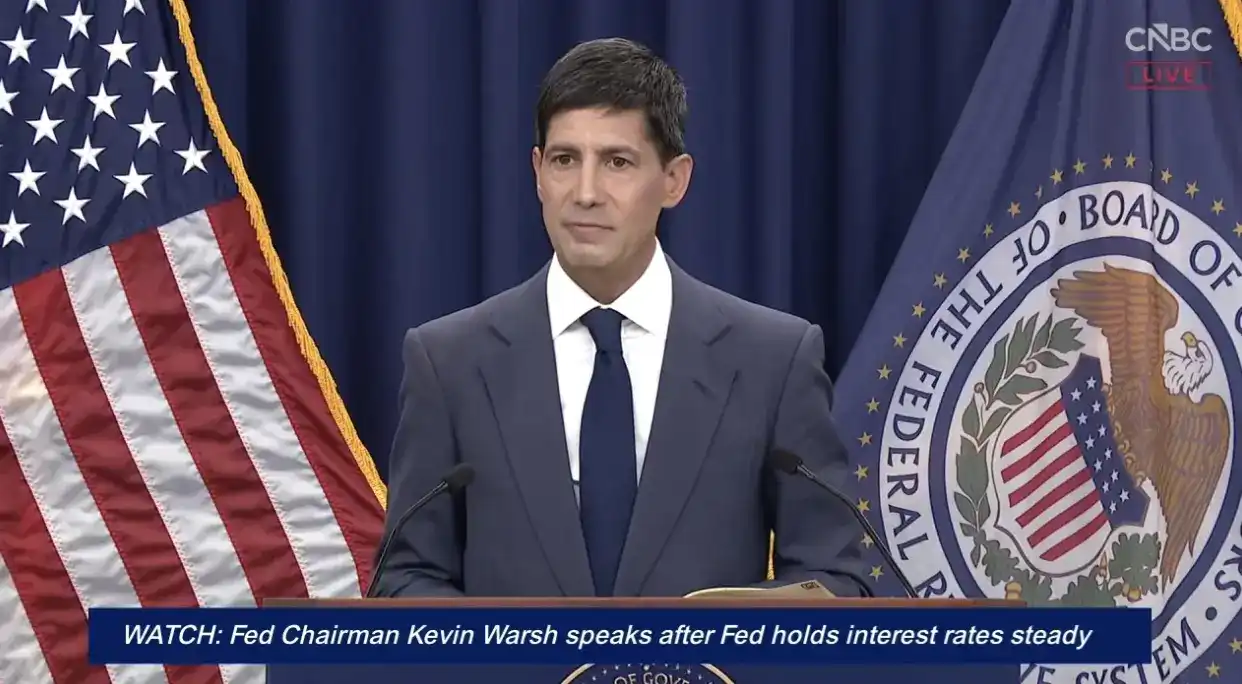
9/ Will this escalate into a global financial crisis? The key variable is not Korea, but the United States. In 2020, the Federal Reserve forcefully suppressed the crisis with unlimited easing and zero interest rates. What about this time? If the Fed can still cut rates and provide liquidity, the market might be propped up as it was in 2020. If the Fed continues raising rates or is slow to act, then the real crisis might just be beginning.
10/ So my judgment: Korea's circuit breakers are a warning, not a conclusion. Whether a financial crisis arrives depends on whether the Fed still has ammunition and is willing to use it. Both are uncertain right now.
11/ For ordinary people, the most important thing in times like these is not to predict the crisis, but to control your position. Never be fully invested, and certainly don't use leverage. Always keep a portion of your portfolio in cash, because true wealth-building opportunities often emerge during the most panicked moments.
12/ My approach: A core position of 60% is in the S&P 500 and Nasdaq 100, held long-term without trading. The remaining 40% is cash or short-term bonds, specifically for adding to positions when the indices drop 15%, 30%, or 40%. It's not about timing the bottom; it's about executing a plan.
13/ Historical data is clear: After every major crisis, the Nasdaq 100 and S&P 500 have reached new all-time highs. 1987, 2000, 2008, 2020, 2022—no exceptions. Crises are not the enemy of long-term investors; they are opportunities.
14/ So I'm not afraid of crises. What I fear is having no cash to add to positions when a crisis hits. I fear even more panicking during a crisis and selling at a loss, handing over bloodied chips to others.
15/ Korea's circuit breakers are an alarm bell, not a signal to sell everything. They remind you to check your positions, control leverage, and preserve cash. The real winners are not those who predict crises, but those who can hold their chips during a crisis and have ammunition to buy more.
So the question arises: Can you invest in the S&P 500 and Nasdaq now?
1/ Conclusion first: Yes, but not all-in. You can buy now, but not with the blind confidence of three years ago. High valuations are a fact, but high valuations don't mean the end is nigh; they only mean future returns will be compressed.
2/ The Buffett Indicator for the S&P 500 is at 236%, the Shiller CAPE is at 41x, Buffett has been a net seller for 13 consecutive quarters, and cash reserves are at an all-time high.
All these data points say the same thing: it's not cheap right now.
3/ But cheap and good investment are two different things. In 2000, the CAPE was at 44x, and the S&P 500's annualized return for the next decade was indeed negative. But in 1996, when the CAPE was 25x, people also called it expensive, and the S&P 500 proceeded to rise 80% over the next three years. Those waiting for a crash often end up missing the rally, not finding an opportunity.
4/ What do high valuations mean? They mean the likely 10-year annualized return will probably drop from 10% to 2%-5%, or even lower. But it doesn't necessarily mean a crash is imminent. The market can churn at high levels for many years, digesting valuations over time rather than through a collapse.
5/ So the question "Can I buy?" depends on your time horizon. If you plan to hold for three years, the risk-reward ratio is indeed poor now. If you plan to hold for twenty years, today's valuation is just noise at the start of your journey.
6/ Historical data is clear: Buying the S&P 500 at any point and holding for 20 years yields a median annualized return of over 7%. Even buying at the absolute peak in 2000 would have doubled your money by 2020. What you should fear is not buying at a high point, but not having any position at all.
7/ But we can't ignore risk. CPI exceeding expectations again, the Fed resuming rate hikes, disappointing AI commercialization, a consumer recession, escalating geopolitics—any of these could cause the S&P 500 to drop 20%, 30%, or 40%.
The question is, which of these can you predict? If you can't predict them, then your strategy cannot be built on "waiting for a big crash."
8/ The biggest problem with waiting for a crash is not missing it, but being too scared to buy when it finally arrives. How many people shouted about waiting for the crash in March 2020, only to sell in panic when it actually happened? Human nature is like that; don't overestimate yourself.
9/ So what to do? If you have a position, keep holding it, but don't aggressively add more. Especially if your Nasdaq exposure is too heavy, consider shifting some to the S&P 500, dividend ETFs, or short-term bonds to reduce portfolio volatility. This isn't bearishness; it's rebalancing.
10/ If you have no position, don't go all-in, but don't stay completely in cash either. Dollar-cost averaging is the least exciting but most correct strategy. Spread your purchases over 10 to 15 months, investing a fixed amount into the S&P 500 and Nasdaq 100 each month. Buy more if it falls, buy less if it rises. After all, you're investing for twenty years, not twenty days.
11/ As for the Nasdaq, be a bit more cautious. The tech industry is winner-takes-all, but the winners keep changing. A decade ago, the top ten in the Nasdaq included Intel, Cisco, and Qualcomm; they're not there now. Today you're betting on Nvidia, Microsoft, Tesla; in twenty years, it might be a different batch. The advantage of the Nasdaq 100 is its automatic reconstitution; the downside is much higher volatility than the S&P 500.
12/ So my personal allocation strategy: Core position of 60% S&P 500, 20% Nasdaq 100, and 20% cash or short-term bonds. The cash isn't for waiting for a crash; it's for waiting for opportunities. When real opportunities appear, you need money to pick up the chips.
13/ One final point: Price determines the rate of return, but time determines whether you can achieve that return. Buying great companies when they're expensive leads to mediocre short-term returns; buying great companies when they're cheap—you might never get the chance. Ordinary investors shouldn't obsess over buying at the absolute bottom; first, ensure you're always in the game.
14/ Holding cash isn't painful, but being completely out of the market is even more painful. Because you never know when to get back in. The best strategy isn't market timing; it's this: Always be in the game, always have ammunition, and never panic.
Stay strong, brothers!