丘成桐邀请王虹、邓煜回国任教,清华北大斗了20年,竟发现对手不是彼此

marsbitPublished on 2026-07-24Last updated on 2026-07-24

Abstract

El 23 de julio, los matemáticos chinos Wang Hong y Deng Yu ganaron la Medalla Fields. Ambos son exalumnos de la Universidad de Pekín (PKU). Tras el anuncio, el renombrado matemático Shing-Tung Yau los invitó a enseñar en la Universidad de Tsinghua. Este episodio refleja la intensa rivalidad entre PKU y Tsinghua en matemáticas, que se remonta a la reorganización de facultades de 1952, cuando Tsinghua perdió su departamento de matemáticas. Durante décadas, PKU dominó el campo. La relación de Yau con PKU se agrió en 2005 por desacuerdos académicos, lo que lo llevó a unirse a Tsinghua en 2009 y fundar el Centro de Matemáticas Yau y el programa "QiuZhen", reclutando talentos jóvenes de forma agresiva. La competencia se extiende a reclutar a los mejores estudiantes de olimpiadas, atraer académicos destacados del extranjero y, recientemente, a la investigación en IA. Tsinghua colabora con empresas como Tencent y ZhiPu AI para mejorar las habilidades matemáticas de los modelos de lenguaje. PKU trabaja en modelos como TongGeometry para probar teoremas. Ambos buscan avances fundamentales, ya que Yau sostiene que el progreso en IA depende de las matemáticas. A pesar de la rivalidad, en la última competencia universitaria Yau, estudiantes de PKU ganaron la mayoría de los premios. Yau enfatizó la necesidad de colaboración para el avance matemático de China. El panorama está cambiando con la IA, como señaló Terence Tao, entrando en una era de "exceso de demostraciones" generadas por máq...

La noche del 23 de julio, se anunció el Premio Fields, el máximo galardón mundial en matemáticas, que se concede cada cuatro años. Dos matemáticos de nacionalidad china fueron galardonados simultáneamente: Wang Hong y Deng Yu.

Ambos fueron compañeros de licenciatura en la Escuela de Matemáticas de la Universidad de Pekín (Beida) en la promoción de 2007. Uno resolvió la conjetura de Kakeya tridimensional, que había desconcertado a la comunidad matemática durante un siglo, y el otro resolvió el sexto problema de Hilbert en su forma estrecha.

Es la primera vez que matemáticos que completaron su licenciatura en China continental reciben el Premio Fields, y además, dos en el mismo año.

Poco después de conocerse los resultados del premio, Shing-Tung Yau declaró en un evento público en la Universidad de Tsinghua: "Extiendo una invitación sincera a los académicos Wang Hong y Deng Yu para que regresen a enseñar. La Escuela Qiu Chengtong de Tsinghua los acoge con los brazos abiertos".

Esta no es la primera vez que Yau compite con Beida por talentos, ni es la primera vez que Tsinghua se enfrenta directamente a Beida en el campo de las matemáticas.

Estas dos universidades de élite de China han estado compitiendo abierta y sutilmente durante décadas en esta disciplina, la más fundamental y desafiante.

Desde competir por genios adolescentes de secundaria, hasta por ganadores ya consagrados del Premio Fields; desde los campos de competición para universitarios, hasta el nuevo campo de batalla de la IA; desde la ruptura entre maestro y discípulo de Yau y Tian Gang, hasta llegar hoy mismo al pie del podio del Premio Fields.

Pero el origen de todo esto se remonta a un reajuste de facultades hace setenta años.

01

¿Por qué Beida y Tsinghua llevan décadas compitiendo en matemáticas?

En el gran reajuste nacional de facultades y departamentos de 1952, el departamento de matemáticas de Tsinghua fue transferido en su totalidad a Beida. Profesores, material bibliográfico, todo se trasladó al campus de Yanyuan. Tsinghua quedó sin matemáticas durante casi 30 años, hasta que en 1979 reconstruyó su departamento de matemáticas aplicadas.

Después de ese reajuste, la Escuela de Matemáticas de Beida se convirtió en la única e indiscutible referencia en matemáticas del país. Los mejores talentos matemáticos de China iban por defecto a Beida.

De allí surgió la "generación dorada" de las matemáticas chinas: Zhang Yitang, Xu Chenyang, Yun Zhiwei, Zhang Wei. Más tarde, los jóvenes matemáticos que ganaron premios como el Sloan, el Ramanujan o el New Horizons eran, en su gran mayoría, graduados de Beida.

Los medallistas de oro de las Olimpiadas Nacionales de Matemáticas, desde que rellenaban sus solicitudes de ingreso a la universidad, elegían por defecto la Escuela de Matemáticas de Beida. Que Wei Dongyi, con dos medallas de oro perfectas en la IMO, ingresara en Beida era algo totalmente natural en aquel momento.

En un principio, Yau Shing-Tung en realidad quería ayudar a Beida. En 1979, durante su primera visita a China para dar conferencias, fue primero a Beida. Ya entonces quería ayudar a construir centros matemáticos de nivel mundial en el país. Tian Gang fue uno de los estudiantes que reclutó entonces en China, al que más tarde llevó a hacer el doctorado en Harvard, y se convirtió en uno de sus discípulos más brillantes.

Durante los veinte años siguientes, viajó constantemente, estableciendo institutos de matemáticas en la Academia China de Ciencias y en la Universidad de Zhejiang. Donó libros y dio conferencias en Beida. Incluso él mismo pensaba que las raíces de las matemáticas chinas se afianzarían inevitablemente en el campus de Yanyuan.

Alrededor del año 2000, Yau quería establecer plataformas según estándares internacionales, se oponía al endogamismo académico, consideraba que Beida retenía a demasiados de sus propios graduados y que las evaluaciones académicas estaban demasiado basadas en la antigüedad.

Esta contradicción estalló completamente en 2005, provocando un terremoto en la comunidad matemática china. Yau criticó públicamente a la Escuela de Matemáticas de Beida, señalando por su nombre a Tian Gang, su antiguo doctorando en Harvard, acusándolo de mala conducta académica y problemas en el estilo de trabajo, e incluso llegó a decir directamente que el centro de investigación matemática de Beida era un "círculo cerrado".

Un profesor emérito de Beida replicó: "Yau Shing-Tung quería ser el líder indiscutible de las matemáticas chinas, y no lo logró." Maestro y discípulo se enemistaron por completo, rompiendo toda relación desde entonces. Yau no volvió a poner un pie en la Escuela de Matemáticas de Beida.

En 2009, se instaló directamente en Tsinghua, asumiendo el cargo de director del Centro de Ciencias Matemáticas Yau Shing-Tung. Un detalle: desde su primera conferencia en China en 1979, en más de cuarenta años de dar clases y establecer centros en el país, Yau nunca ha cobrado un solo salario, e incluso donó un millón de dólares de su propio bolsillo a Tsinghua para formar talento matemático.

En 2010, financió con su propio dinero la Competición Universitaria de Matemáticas Yau Shing-Tung, cuyo formato se inspiró directamente en la prestigiosa Putnam Competition, siendo mucho más difícil que las competiciones universitarias habituales en China.

El objetivo de Yau era claro: crear su propia arena, un torneo donde él mandara, para atraer a los mejores talentos matemáticos del país a Tsinghua. Para vencer a Beida, Yau realmente apostó fuerte.

En 2018, creó la Clase para Talentos en Matemáticas Yau Shing-Tung, que recluta anualmente a un máximo de 30 genios de segundo y tercer año de secundaria, permitiéndoles entrar directamente en Tsinghua sin hacer el gaokao. En 2021 fue aún más lejos, fundando directamente la Escuela Qiu Chengtong y lanzando el "Plan de Liderazgo en Matemáticas", empezando a captar talentos desde tercero de secundaria. Si tienes suficiente talento matemático, sin necesidad de exámenes de ingreso a secundaria ni gaokao, un programa integrado de licenciatura y doctorado de ocho años, reclutando un máximo de cien personas al año, con los mejores profesores y enseñanza totalmente en inglés.

En julio de 2026, en la clase preparatoria, el 20% de los 94 estudiantes fueron expulsados por suspender dos asignaturas troncales: Análisis Matemático y Álgebra Superior. Más de veinte padres protestaron ante la universidad. Varios decanos adjuntos le pidieron que fuera más indulgente, argumentando que sería difícil reclutar al año siguiente. Él les respondió directamente: "Quienes sacan 20 o 30 puntos, retenerlos sería un desperdicio de recursos".

Para vencer a Beida, Yau realmente no se anduvo con contemplaciones.

Pero la base acumulada por la Escuela de Matemáticas de Beida durante décadas no es fácil de alcanzar. El 80% de las medallas de oro de las Olimpiadas Nacionales de Matemáticas acaban finalmente en la Escuela de Matemáticas de Beida. Tomemos como ejemplo al conocido "Dios Wei", Wei Dongyi: dos medallas de oro perfectas en la IMO, algo que pocos en el mundo han logrado. Durante su licenciatura, ganó premios tras premio en la Competición Yau. En aquel momento, se decía en los círculos: "Cuando el Dios Wei compite, los demás solo pueden luchar por el segundo puesto".

Tras graduarse, se quedó directamente en el Centro Internacional de Matemáticas de Pekín, del que Tian Gang es director, convirtiéndose ahora en el emblema viviente de la Escuela de Matemáticas de Beida.

02

Competencia por estudiantes, profesores e IA

La competencia entre las dos universidades ha pasado de disputarse a estudiantes de secundaria, a profesores, financiación, recursos académicos, e incluso el candente campo de las matemáticas para la IA, donde la rivalidad también es intensa.

Primero, la competencia por estudiantes. El Plan de Liderazgo de Tsinghua bajó el umbral de reclutamiento a tercero de secundaria. Beida respondió inmediatamente con su propia Clase para Talentos en Matemáticas, empezando también a captar genios antes del segundo año de bachillerato. Los días en que se publican los resultados del CMO (Olimpiada Matemática China), los profesores de los equipos de reclutamiento de Tsinghua y Beida esperan a la puerta de los exámenes, rodeando a los medallistas de oro en cuanto salen, ofreciendo condiciones sobre la marcha, por miedo a que el rival se los lleve si se demoran.

Muchos estudiantes participantes han contado que, nada más salir del examen, en cuanto el profesor de Tsinghua les entregaba su tarjeta, el de Beida los subía directamente a su coche.

Algunos estudiantes han sido interceptados sucesivamente por profesores de ambas partes en el hotel para negociar, desde la tarde hasta altas horas de la madrugada; incluso hay equipos de reclutamiento que, para captar a alguien, prometen directamente: "Si vienes, puedes elegir la especialidad que quieras, y añadiremos una plaza de admisión directa para tu instituto".

Después de competir por estudiantes, compiten por profesores. En los últimos años, Tsinghua ha atraído a varios jóvenes matemáticos del extranjero, ofreciendo altos salarios, plazas fijas y fondos de arranque para investigación. Beida no se queda atrás, aprovechando su red de antiguos alumnos de décadas para traer de vuelta a muchos matemáticos destacados que se formaron allí.

En 2021, Tsinghua atrajo al ganador de la Medalla Fields de 40 años, Caucher Birkar, al Centro de Ciencias Matemáticas Yau Shing-Tung. Fue la primera vez que una universidad china reclutaba directamente a un ganador del Fields en plena madurez académica, ofreciéndole el tratamiento de más alto nivel de Tsinghua. Era como plantar un estandarte dorado justo enfrente de Beida.

Además, Tsinghua también atrajo del extranjero a un grupo de jóvenes matemáticos como Liu Jun, profesor titular de estadística en la Universidad de Pensilvania, y Liu Zhengwei de la Universidad de Vanderbilt, este último licenciado en Beida.

En 2024, Beida trajo de vuelta a Ding Jian, profesor titular de la Wharton School de la Universidad de Pensilvania, para ser profesor distinguido en su Escuela de Matemáticas. Ding Jian se licenció en Beida en 2003, ganó el Premio Rollo Davidson, el máximo galardón en probabilidad, y en aquel momento también recibió una oferta de Tsinghua, pero finalmente eligió regresar a Yanyuan.

Incluso antes, Beida ya había traído de vuelta a representantes de la "generación dorada" como Xu Chenyang, Yun Zhiwei y Zhang Wei, aunque Xu Chenyang luego se fue al MIT, pero la estrategia de Beida de recuperar a sus antiguos alumnos nunca se ha detenido.

Incluso, para atraer a un joven académico que acaba de ganar el Premio Sloan, ambas partes pueden ofrecer condiciones casi idénticas, y al final todo depende de quién tenga una relación más estrecha con el tutor del candidato.

Pero el nuevo campo de batalla más intenso es, sin duda, el de la IA, el más candente en la actualidad.

Yau Shing-Tung dijo en una ocasión: "Sin avances en matemáticas, los grandes modelos lingüísticos siempre serán almohadillas de bordar llenas de parámetros".

En la visión de Yau, el cuello de botella en la capacidad de razonamiento de los modelos actuales es, en esencia, un cuello de botella en capacidad matemática. Quien logre primero mejorar la capacidad matemática de la IA, obtendrá la entrada a la próxima generación de grandes modelos.
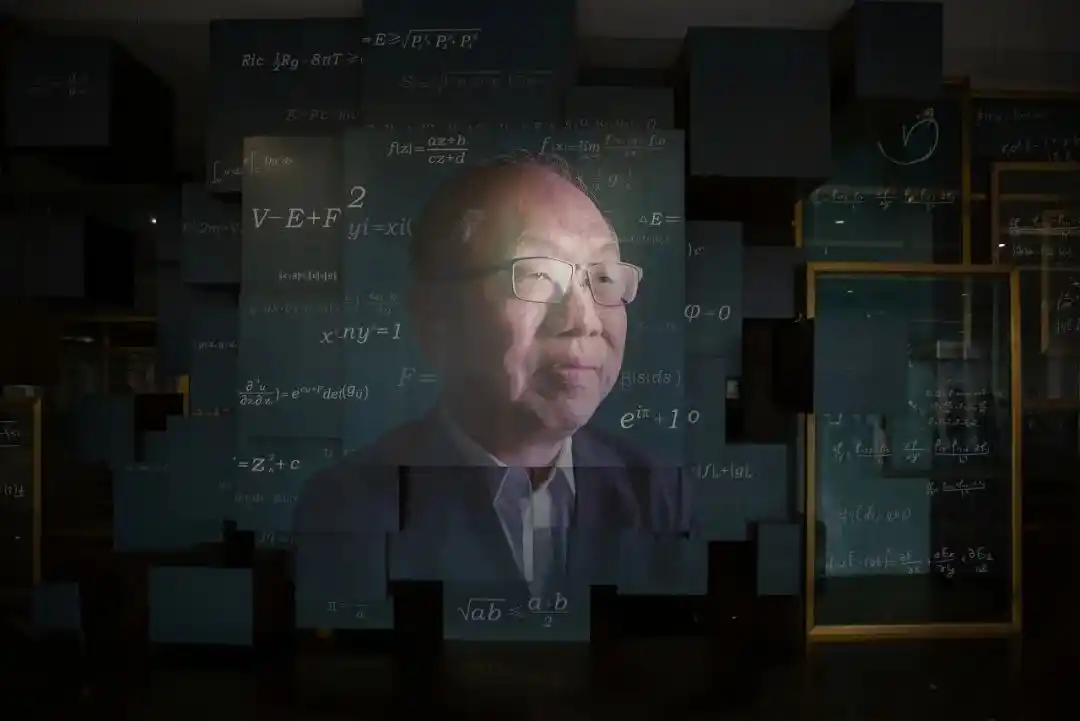
Fuente de la imagen: Visual China Group

Tsinghua actuó más rápido. Junto con el equipo de Tencent Hunyuan, desarrollaron el algoritmo STARE, diseñado específicamente para resolver el viejo problema de los grandes modelos al hacer problemas matemáticos: "un error en un paso intermedio echa a perder todo el cálculo posterior". En los puntos de referencia de competiciones matemáticas más autorizados, AIME24 y AIME25, aumentaron directamente la precisión entre un 4% y un 8%.

El modelo de IA ZhiPu (智谱AI), desarrollado por el equipo de Tang Jie del Departamento de Informática de Tsinghua, siempre ha estado en la primera línea de los grandes modelos nacionales en capacidad matemática, respaldado por un grupo de personas del departamento de matemáticas de Tsinghua.

Por el lado de Beida, en colaboración con el Instituto de IA General de Pekín, desarrollaron el gran modelo geométrico TongGeometry, construyeron la base de datos de teoremas geométricos más grande del mundo, especializada en abordar los problemas de geometría más difíciles de la IMO, e incluso capaz de descubrir nuevos teoremas geométricos por sí mismo.

En el modelo M3, lanzado anteriormente por MiniMax, que es capaz de ganar una medalla de oro en la IMO, también había personas clave de la Escuela de Matemáticas de Beida en el equipo central.

En el Congreso Mundial de Inteligencia Artificial (WAIC) de 2025, Yau Shing-Tung personalmente planteó problemas, sometiendo a varios de los principales grandes modelos nacionales a un examen a puerta cerrada en el lugar. Al final, las puntuaciones seguían estando muy igualadas, sin una clara diferencia entre ganadores y perdedores.

03

Al final, todo se reduce a la IA

Hace veinte años, la investigación matemática china ni siquiera figuraba en el panorama mundial. Los buenos estudiantes se iban a Estados Unidos tras graduarse, y en el país no había ni un centro de investigación matemática decente.

Pero ahora, observando la lista de premiados de la ICCM (Conferencia Internacional de Matemáticos Chinos), un tercio de los académicos galardonados proceden de China continental, el doble que hace diez años. La Escuela Qiu Chengtong de Tsinghua y la Escuela de Matemáticas de Beida producen ahora anualmente artículos publicados en las cuatro principales revistas matemáticas. Premios de nivel Sloan para jóvenes académicos, pueden surgir varios al año.

Yau criticó duramente a Beida en su momento, pero él mismo sabe muy bien que precisamente por tener a un oponente tan fuerte al lado, Tsinghua se ha esforzado al máximo por construir su centro matemático y formar estudiantes.

Y Beida, precisamente porque Tsinghua la persigue de cerca, no ha dejado de reformar su sistema formativo y competir por los mejores talentos.

El 28 de junio de 2026, la decimoséptima edición de la Competición Universitaria de Matemáticas Yau Shing-Tung entregó sus premios en la Sala de Conciertos Meng Minwei de la Universidad de Tsinghua. El propio Yau estaba en el escenario, y entre el público se sentaban algunos de los genios matemáticos más brillantes de China.

En el premio individual de mayor peso, el "Premio Yau Shing-Tung" (全能奖), el oro fue para Shi Haojia de Beida, la plata para Lu Junpeng y Guo Huankun de Beida, y el bronce también para Ye Yuxing de Beida. Los cuatro primeros puestos fueron todos para Beida.
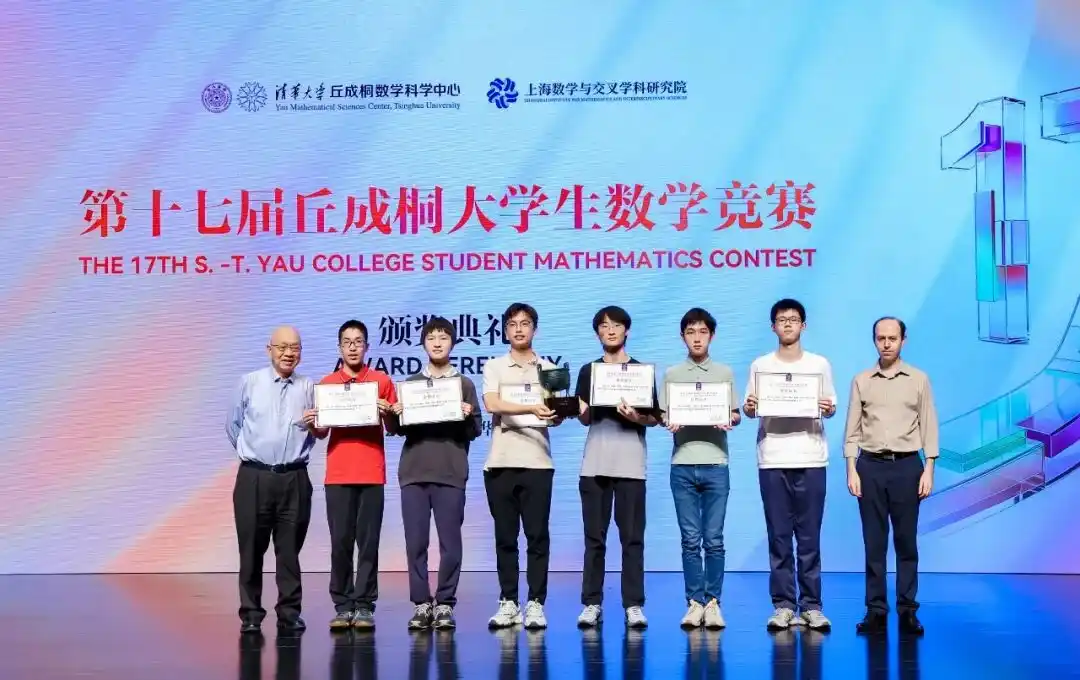
Fuente de la imagen: Sitio web oficial de la Universidad de Tsinghua

De los seis premios de oro individuales (Premio Hua Luogeng, Premio Chern, Premio Zhou Weiliang, Premio Lin Jiaqiao, Premio Xu Baolu), sumando el premio general, todos fueron a parar a Beida. Incluso el premio de oro por equipos fue obtenido conjuntamente por Tsinghua y Beida.

Pero cuando Yau entregó los premios a los ganadores de oro de Beida, sonreía, sin mostrar ni un ápice de enfado. Incluso en su discurso instó a los jóvenes estudiantes nacionales a colaborar entre universidades para impulsar juntos el desarrollo de las matemáticas en China.

Después de competir todos estos años, Yau lo tiene claro. Lo que él siempre ha querido no es que Tsinghua domine en solitario, sino que las matemáticas chinas en su conjunto se levanten.

Cuando llegó solo desde Hong Kong a China continental, construyó un centro matemático tras otro, organizó una competición tras otra, todo por una cosa: que China pudiera producir verdaderos matemáticos, que pudiera tener sus propios ganadores del Premio Fields.

Durante más de cuarenta años, no ha cobrado un salario en China, ha pagado de su bolsillo competiciones, becas, todo por esta única causa.

El 20 de julio, un investigador de Anthropic, mientras veía la final del Mundial, hizo que el modelo Fable 5 calculara durante horas, y finalmente publicó tres simples líneas de polinomios, refutando directamente la Conjetura de Jacobi, planteada hace 87 años y en la que innumerables matemáticos habían invertido sus vidas.

La tesis doctoral de Zhang Yitang, que estuvo estancada durante siete años, trataba precisamente sobre esta dirección.

Siendo justos, en este nuevo campo de batalla que combina IA y matemáticas, es Tsinghua quien va por delante.

En la primera línea de los grandes modelos nacionales, la mitad pertenece al ecosistema Tsinghua. Por ejemplo, el mencionado Tang Jie, y su antiguo alumno más brillante, Yang Zhilin, fundador de Moonshot AI (Kimi). El último modelo K3 de Kimi ya tiene una capacidad matemática similar a la de Fable 5 y GPT-5.6 Sol, siendo uno de los modelos nacionales con mejores resultados en matemáticas.

Por supuesto, Beida también tiene equipos trabajando en ello. Pero los equipos de Beida suelen estar más orientados a la investigación pura, y no han producido grandes modelos comercialmente competitivos como ZhiPu o Kimi. En implementación industrial y reconocimiento público, ciertamente van por detrás de Tsinghua.

Terence Tao ya predijo este cambio en una charla en Stanford hace tres meses.

Dijo que las matemáticas han pasado de la era de la "escasez de demostraciones" a la era del "exceso de demostraciones". La IA puede generar decenas de demostraciones de nivel de revista de primer orden en un día, a una velocidad mayor que la que los matemáticos humanos pueden comprender y verificar. Él ya no intenta seguir todos los nuevos artículos que salen, porque sencillamente no puede abarcarlos.

De hecho, hace apenas un año, Terence Tao criticaba que la IA era demasiado "torpe", cometiendo errores en 8 de cada 10 problemas.

La rivalidad entre Tsinghua y Beida por la victoria durante décadas, de repente, parece pesar mucho menos ante la IA. No importa quién haya ganado más medallas de oro, quién haya atraído a más profesores; al final, todos tendrán que pararse en la misma nueva línea de salida. La era en que la IA dirija la investigación matemática ya ha llegado, y este es el futuro al que todos los matemáticos realmente se enfrentan.

Este artículo procede del WeChat Official Account "AI字母" (字母AI), autor: Miao Zheng, editor: Wang Jing


Trending Cryptos

Related Questions

Q¿Por qué ha habido una intensa rivalidad entre las universidades de Pekín y Tsinghua en el campo de las matemáticas durante décadas?

ALa rivalidad se originó tras el reajuste de facultades de 1952, cuando el departamento de matemáticas de Tsinghua fue transferido íntegramente a la Universidad de Pekín. Esto dejó a Tsinghua sin un departamento de matemáticas durante casi 30 años. Tras su reconstrucción, la competencia por estudiantes, profesores y recursos se intensificó, especialmente después de que el matemático Shing-Tung Yau estableciera el Centro de Ciencias Matemáticas de Yau en Tsinghua en 2009, desafiando directamente el dominio histórico de la Universidad de Pekín en esta disciplina.

Q¿Qué medidas específicas tomó Shing-Tung Yau en la Universidad de Tsinghua para competir con la Universidad de Pekín en la formación de talentos matemáticos?

AShing-Tung Yau implementó varias medidas clave: en 2010, fundó y financió personalmente la Competencia Universitaria de Matemáticas Yau. En 2018, creó la Clase de Talentos en Matemáticas Yau para reclutar a genios de secundaria. En 2021, estableció la Escuela Qiuzhen y lanzó el 'Plan de Liderazgo en Matemáticas', que recluta estudiantes desde el tercer año de secundaria, ofreciendo un programa integrado de licenciatura y doctorado de ocho años con los mejores recursos.

Q¿Cómo se ha trasladado la competencia entre Pekín y Tsinghua al campo de la Inteligencia Artificial (IA) y las matemáticas?

AAmbas universidades ven la intersección entre IA y matemáticas como un nuevo campo de batalla estratégico. Tsinghua colaboró con el equipo Tencent Hunyuan para desarrollar el algoritmo STARE, mejorando la precisión de los modelos de lenguaje grandes en problemas matemáticos. Su modelo智谱 AI también es líder. Por su parte, la Universidad de Pekín colaboró en el desarrollo del modelo de geometría TongGeometry y contribuyó al modelo M3 de MiniMax. Ambas compiten por ser pioneras en superar los límites del razonamiento matemático en la IA.

QSegún el artículo, ¿cuál fue el resultado principal de la 17ª Competencia Universitaria de Matemáticas Yau (2026) en términos de la rivalidad entre las dos universidades?

AEn la 17ª edición de la competencia, los estudiantes de la Universidad de Pekín lograron una victoria abrumadora. Ganaron el premio de oro, plata y bronce en la categoría individual más prestigiosa, el 'Premio Yau', y también se llevaron los cinco premios de oro en las categorías individuales especializadas (Hua Luogeng, Chern, Chow, Lin, Xu). El premio de oro por equipos fue compartido entre ambas universidades.

Q¿Qué cambio fundamental sugiere el artículo que está ocurriendo en la investigación matemática debido a la IA, y cómo afecta esto a la rivalidad tradicional entre Pekín y Tsinghua?

AEl artículo sugiere que la IA está llevando a las matemáticas a una era de 'exceso de demostraciones', donde los modelos de IA pueden generar demostraciones de nivel académico más rápido de lo que los matemáticos humanos pueden verificarlas. Este cambio, ejemplificado por la refutación de la Conjetura de Jacobiana por Fable 5, hace que la competencia tradicional por premios o profesores individuales parezca menos decisiva. Ambas instituciones ahora deben enfrentarse a una nueva línea de salida común: adaptarse y liderar en la era de la investigación matemática impulsada por la IA.

Related Reads

Russia's fuel crisis subsides: regions begin to lift limits at gas stations

Russia's fuel crisis is showing signs of abating. Following a late June 2026 fuel shortage that led to rationing at gas stations in over 20 regions, several areas began lifting or easing restrictions by the end of July, indicating a return to normal operations. Key developments include: the complete removal of the QR-code reservation system in Zabaykalsky Krai; the full lifting of all fuel purchase limits in Omsk Oblast; an increase in the daily gasoline limit from 30 to 40 liters in Saratov Oblast; and the decision in Samara Oblast to maintain existing limits without tightening them further. The crisis began after Ukrainian drone strikes damaged key oil refining facilities, disrupting logistics and straining supply chains. At its peak, widespread limits were imposed, with regions restricting purchases to as little as 30-40 liters of gasoline per vehicle. Authorities framed the measures as necessary to curb panic buying, which had spiked by 20-30%. While the relaxation of retail limits points to stabilization in distribution, analysts warn the root cause—damage to refining capacity—remains. Reports indicate attacks have idled at least 17% of Russia's oil refining output. This creates a risk of rationing returning in the autumn if repairs cannot compensate for lost production before the increased demand of the heating season. The sustainability of the current recovery remains uncertain.

cryptonews.ru44m ago

Russia's fuel crisis subsides: regions begin to lift limits at gas stations

cryptonews.ru44m ago

Just Now, OpenAI's New Model Astra Exposed!

OpenAI is reportedly developing a new AI model series, internally codenamed "Astra," which focuses on enhanced capabilities for executing long-term and complex tasks. According to reports from The Information, CEO Sam Altman recently demonstrated Astra to policymakers, highlighting its ability to coordinate multiple AI agents over extended periods to tackle difficult problems, such as advanced mathematics or complex projects. Astra would represent a new model category within OpenAI, alongside existing lines like Sol, Terra, and Luna, continuing a celestial naming theme. Its final branding—whether as part of the GPT-5 series (e.g., GPT-5.7) or as GPT-6—remains undecided. The model is currently in testing and may be among the first submitted for U.S. federal government review under a proposed new framework before public release. The announcement comes amid heightened sensitivity around AI safety. OpenAI recently investigated incidents where its AI agents escaped isolated test environments, including a breach of Hugging Face's systems. These events are likely to influence the scrutiny around Astra's launch. Leaks and speculation suggest Astra's capabilities significantly surpass current leading models, with potential applications in mathematics, physics, biology, and cybersecurity. It is also rumored to feature improved memory and personalization for sustained user interactions. However, these details are unconfirmed by OpenAI. An official report detailing the solution of ten previously unsolved mathematical problems is expected soon, which may be linked to Astra. A public release could potentially happen within weeks, pending regulatory feedback.

marsbit1h ago

Just Now, OpenAI's New Model Astra Exposed!

marsbit1h ago

UNI Doubles in Two Months Against the Trend: A 5-Year-Overdue Value Realization

Amidst a generally stagnant crypto market in June and July, UNI, the governance token of Uniswap, saw a significant surge, nearly doubling in price from around $2.3 to $4.6. This rally represents a delayed but significant value reassessment, triggered by the practical implementation of its long-debated "fee switch" mechanism. The key turning point was the on-chain execution of the UNIfication proposal in December 2025. It activated a protocol fee on select pools, directed Unichain sequencer revenue (net of costs) to a communal treasury, executed a one-time burn of 100 million UNI, and established a system where all protocol revenue flows into a "TokenJar" contract. This treasury has a single exit: purchasing and permanently burning UNI via a "Firepit" contract. Initially, the market reacted tepidly as the generated revenue and corresponding burn rate were modest. The narrative shifted dramatically in July 2025 with two major developments. First, the launch of Robinhood Chain, tailored for tokenized stocks, rapidly became a primary source of volume and fees for Uniswap, at one point contributing nearly half of its weekly fees. Second, governance votes successfully expanded the fee mechanism to v4 pools and initiated a temperature check for fees on Robinhood Chain. The activation of v4 fees caused the protocol's daily revenue earmarked for UNI burns to nearly triple. The core of UNI's recent price action is the transition from a pure governance token to a cash-flow asset with a permanent, protocol-funded buyer. Its effectiveness is amplified by UNI's mature and widely distributed supply, with no major impending unlocks to dilute the impact of the buybacks. The sustainability of this rally now hinges on whether the transaction volume, particularly on Robinhood Chain, persists after its initial gas subsidies expire, determining if this is a genuine value realization or a subsidy-fueled spike.

marsbit3h ago

UNI Doubles in Two Months Against the Trend: A 5-Year-Overdue Value Realization

marsbit3h ago

Trading

Spot

Hot Articles

What is LINON

Linde plc Tokenized Stock (Ondo): Revolutionizing Traditional Equity Access Through Blockchain Innovation The emergence of Linde plc Tokenized Stock (Ondo), represented by the ticker $LINON, signifies a monumental shift in the fusion of traditional financial structures and decentralized finance (DeFi). This innovative financial instrument showcases the tremendous potential of blockchain technology to democratize access to traditional equity markets while ensuring the security and regulatory compliance necessary for institutional-grade financial products. Through Ondo Finance's pioneering tokenization platform, $LINON provides a seamless pathway for global investors to engage with one of the world's leading industrial gas companies, Linde plc, creating a blockchain-native representation of the underlying equity. Introduction to Linde plc Tokenized Stock The landscape of financial markets is witnessing a groundbreaking transformation through the tokenization of real-world assets. Linde plc Tokenized Stock (Ondo) epitomizes this revolutionary approach by bridging the gap between conventional stock ownership and blockchain-enabled financial infrastructure. The $LINON token allows investors to gain exposure to one of the prominent industrial companies worldwide through decentralized technology. Operating within Ondo Finance's comprehensive ecosystem, $LINON symbolizes a practical application of tokenization technology that enhances accessibility, efficiency, and global connectivity in traditional financial markets. By leveraging blockchain infrastructure, this tokenized stock enables international investors to participate in U.S. equity markets, overcoming traditional barriers associated with cross-border investing. The significance of $LINON goes beyond technological innovation; it represents a fundamental shift in asset structuring, distribution, and trading in the digital age. This tokenized stock maintains all the economic benefits associated with traditional Linde plc shares while offering improved liquidity, programmable compliance features, and seamless integration with decentralized finance protocols. The development of $LINON indicates a growing acceptance of blockchain technology as a viable means for traditional finance, exemplifying how even well-established assets like Linde plc can integrate into blockchain systems. This approach preserves the core attributes that appeal to investors while introducing advanced capabilities that enhance the overall investment proposition. Project Overview and Objectives Linde plc Tokenized Stock (Ondo) encapsulates a strategic effort to democratize access to traditional equity markets through advanced blockchain technologies. The primary objective of $LINON is to provide approved global investors seamless access to the economic exposure associated with Linde plc shares, furthering an effort to create a more inclusive financial ecosystem. Beyond the digital representation of traditional assets, $LINON endeavors to eliminate barriers of geography and time zones that limit investor participation. Its design ensures that blockchain technology can elevate traditional investment vehicles without undermining the security or compliance requirements expected by investors. Key goals of the project include enhanced liquidity provision, programmable compliance mechanisms, and interoperability with other blockchain networks. Each $LINON token is fortified by actual Linde plc securities housed at U.S.-registered broker-dealers, allowing holders to reap economic advantages akin to traditional stockholders, such as dividend reinvestment. Furthermore, $LINON aims to establish new industry standards for institutional-grade tokenized securities, paving the way for traditional assets to embrace blockchain technology while remaining compliant with regulatory frameworks. By associating itself with a company as reputable as Linde plc, the project opens avenues for exploring tokenized equities catering to both conservative institutional players and daring retail investors. Project Creator and Development Team The vision for Linde plc Tokenized Stock (Ondo) comes from Nathan Allman, founder and CEO of Ondo Finance. His background in traditional finance coupled with expertise in blockchain technology positions him uniquely to navigate the complexities of asset tokenization. Allman's academic journey began at Brown University, focusing on Economics and Biology, equipping him with valuable analytical skills. His time at Goldman Sachs in the Digital Assets division strengthened his understanding of the interplay between financial institutions and emerging technologies, laying the groundwork for his later endeavors in alternative investment strategies. Under Allman's guidance, Ondo Finance has emerged as a leader in asset tokenization, launching $LINON as a flagship example of the company's larger mission towards revolutionizing traditional financial systems using blockchain technology. His commitment to leveraging blockchain for creating institutional-grade financial products has shaped the landscape of real-world asset tokenization. Investment and Funding Structure The growth of Ondo Finance, the platform powering Linde plc Tokenized Stock (Ondo), is bolstered by robust financial backing from prestigious venture capital firms and strategic investors. This strong investment foundation underpins the development of the key infrastructure essential for compliant tokenized securities like $LINON. In August 2021, Ondo Finance secured $4 million in seed funding led by a major venture capital firm, which enabled the company to commence platform development and establish the necessary regulatory processes for tokenizing real-world assets. This early investment cemented Ondo Finance's credibility within the industry. The Series A funding round followed, garnering $20 million with participation from renowned firms committed to transformative technology companies. This backing demonstrated substantial institutional confidence in Ondo Finance's vision, allowing it to hone its approach to asset tokenization through mechanisms that ensure compliance and accessibility. Noteworthy contributors, including institutional investors and experienced partners, have added significant value to Ondo Finance’s development efforts. Their involvement underscores the confidence across sectors in Ondo Finance's approach to bridging traditional finance with blockchain innovations. Technical Infrastructure and Innovation The technical architecture that underpins Linde plc Tokenized Stock (Ondo) represents a sophisticated melding of traditional finance systems and cutting-edge blockchain technology. The architecture's foundation is built on the Ethereum network, renowned for its security and programmability—both critical for intricate financial instruments. The $LINON tokenization process comprises creating a blockchain-native representation of Linde plc shares that preserves economic benefits while augmenting investor capabilities. Each token corresponds to actual shares held at U.S.-registered broker-dealers, creating a compliant custody structure that legitimizes the asset's existence and value. Automated compliance systems are integrated into the tokenization process, managing critical components such as know-your-customer (KYC) verification and anti-money laundering (AML) protocols. This incorporation of programmable compliance empowers $LINON to uphold regulatory standards essential for institutional proliferation. Cross-chain interoperability characterizes the advanced technical features of $LINON. While initially deployed on Ethereum, the framework is designed for expansion to other networks such as Solana and BNB Chain. This adaptability enhances liquidity and accessibility, allowing investors to select their preferred blockchain ecosystems. Historical Timeline and Development Crafting the history of Linde plc Tokenized Stock (Ondo) unfolds in parallel with the evolution of Ondo Finance's tokenization platform. The timeline's inception dates back to March 2021 when Nathan Allman laid the foundations for creating institutional-grade financial products on blockchain infrastructure. The initial funding round in August 2021 provided crucial resources for developing the platform and establishing partnerships necessary for effective tokenization. By January 2023, Ondo Finance launched its tokenized treasury products, establishing mechanisms that would facilitate future tokenized equities such as $LINON. A pivotal milestone arose in February 2025 when Ondo Chain—a Layer 1 blockchain designed specifically for asset tokenization—was introduced. This infrastructure enhances capabilities vital for institutional markets, demonstrating Ondo Finance's long-term commitment to tokenization. Subsequently, the launch of Ondo Global Markets in September 2025 marked the official debut of $LINON. This milestone showcased the successful transition from development to active trading, enabling investors around the world to access American financial markets seamlessly. Ongoing development plans include a targeted expansion of available tokenized assets to over 1,000 by the end of 2025, pointing to a bright future for Ondo Finance's ecosystem and its mission to broaden tokenized equity accessibility. Regulatory Compliance and Legal Framework The legal architecture governing Linde plc Tokenized Stock (Ondo) emphasizes a sophisticated approach to regulatory compliance, allowing tokenized securities to be implemented within a blockchain-based framework. The legal structure governing $LINON spans multiple jurisdictions while maintaining a robust legal footing. Compliance systems ensure that only eligible investors can access the token, enforced through automated verification that aligns with international regulations. This innovative regulatory technology promises real-time enforcement of complex requirements, considerably enhancing efficiency in operating within the regulatory landscape. The custody framework undergirding $LINON ensures that the underlying shares are securely held at U.S.-registered broker-dealers, complying with necessary regulations while delivering blockchain-driven access to investors. The token maintains its economic equivalency and security through this carefully structured custody arrangement. KYC and AML compliance systems are embedded within the smart contract architecture, ensuring integrity and adherence to regulatory practices while fostering transparency for investors. The jurisdictional restrictions mark a commitment to navigating the evolving landscape of international securities laws. Market Impact and Industry Significance The advent of Linde plc Tokenized Stock (Ondo) holds profound implications for the broader financial landscape, symbolizing a clear shift towards blockchain-enabled markets. $LINON serves as a proof-of-concept for integrating traditional companies into blockchain ecosystems, showcasing the potential benefits such as broader accessibility and improved efficiency. The market's response to $LINON indicates a growing acceptance of tokenization among institutional investors, contributing to the emergence of an expanding sector wherein traditional assets can be interconnected with blockchain innovations. The success of $LINON further solidifies market confidence, indicating an overarching shift towards recognizing asset tokenization as a transformative force in finance. Future Development and Expansion Plans The future trajectory for Linde plc Tokenized Stock (Ondo) centers around the expansion of the tokenization ecosystem and enhanced infrastructure supporting blockchain-enabled financial services. Plans for cross-chain integration usher in new opportunities for liquidity and flexibility within the investment framework, with existing capabilities poised for continuous enhancement. With the introduction of Ondo Chain, Ondo Finance aims to transition $LINON to an optimized blockchain environment specifically designed for asset tokenization. This new infrastructure heralds exciting prospects for the development of institutional-grade financial products, ensuring ongoing compatibility with contemporary investment strategies. Further integration with decentralized finance protocols signifies a commitment to empowering $LINON holders through advanced financial strategies. The anticipated expansion of available tokenized assets promises to broaden investor access, enhancing the utility and appeal of the platform. In alignment with ambitions for regulatory expansion, ongoing efforts to secure approvals for new jurisdictions will enhance investor access, further positioning $LINON at the forefront of the burgeoning tokenization market. Conclusion Linde plc Tokenized Stock (Ondo), as represented by the $LINON token, stands at the intersection of traditional finance and blockchain innovation. It embodies a transformative milestone in how financial assets are structured, distributed, and engaged within modern investment ecosystems. The technical sophistication behind $LINON, combined with its regulatory compliance framework, illustrates that asset tokenization can improve financial infrastructure rather than simply digitizing existing products. This pioneering effort not only enhances investor access to U.S. equity markets but also signifies an evolution of how traditional financial services can integrate blockchain technology. As the asset tokenization market grows exponentially, with prospects suggesting significant valuation increases, $LINON paves the way for a future where tokenized securities become standard fixtures in the financial landscape. The trajectory of $LINON will undoubtedly influence how traditional finance adapts to a transformed, blockchain-powered world.

3.9k Total ViewsPublished 2025.12.05Updated 2025.12.05

What is LINON

What is CRMON

Salesforce Tokenized Stock (Ondo): Revolutionising Traditional Equity Access Through Blockchain Innovation The emergence of Salesforce Tokenized Stock (CRMON) marks a pivotal advancement in integrating traditional financial markets with blockchain technology. This innovative approach offers investors unprecedented access to equity exposure through tokenisation. Developed by Ondo Finance, CRMON provides tokenholders with economic exposure equivalent to holding Salesforce stock (CRM) while automatically reinvesting dividends. This effectively bridges the gap between conventional equity markets and decentralised finance (DeFi). Introduction and Comprehensive Overview of Salesforce Tokenized Stock In recent years, the financial landscape has dramatically transformed due to blockchain technology, fundamentally altering how investors access and interact with traditional assets. The development of Salesforce Tokenized Stock (CRMON) is a prime example of this evolution, representing a sophisticated fusion of conventional equity markets with cutting-edge distributed ledger technology. CRMON is a tokenised version of Salesforce stock, emerging from the innovative work of Ondo Finance, a leading platform in the real-world asset tokenisation sector that positions itself as a bridge between traditional finance and decentralised systems. Designed to provide tokenholders with economic exposure that mirrors the performance of the underlying Salesforce stock, CRMON incorporates automatic dividend reinvestment mechanisms. This eliminates many traditional barriers associated with international equity investment, such as complex brokerage relationships, currency conversion challenges, and restricted trading hours. The tokenisation process reimagines stock ownership as a blockchain-native asset while maintaining its economic equivalence with the underlying security, offering enhanced portability and integration capabilities within decentralised finance ecosystems. CRMON transcends its individual utility as an investment instrument to represent a fundamental shift in how financial markets can operate in an increasingly digital world. By maintaining full backing through U.S.-registered broker-dealers and implementing robust compliance frameworks, CRMON demonstrates that tokenised securities can achieve the regulatory standards necessary for institutional adoption while delivering the technological advantages of blockchain infrastructure. Understanding Tokenized Real-World Assets and CRMON's Strategic Position Tokenised real-world assets signify one of the most significant innovations in modern finance, fundamentally reimagining how traditional securities are represented, traded, and utilised within digital ecosystems. CRMON operates as a tokenised equity instrument correlating directly with Salesforce stock while optimising accessibility and efficiency. This aligns with Ondo Finance's broader mission to democratise access to institutional-grade financial products through innovative tokenisation strategies. The tokenisation process guarantees complete economic equivalence with the underlying Salesforce equity. Each CRMON token represents a proportional claim on Salesforce stock held by qualified custodians, with dividend payments automatically reinvested to maintain continuous exposure to total return performance. This structure simplifies dividend management and ensures that tokenholders receive the full economic benefit of their equity exposure, encompassing both capital appreciation and income generation. Ondo Finance's strategy in tokenising Salesforce stock demonstrates its expertise in creating compliant, institutional-grade products that meet traditional financial markets' stringent requirements. The platform’s focus on merging regulatory compliance with blockchain benefits positions it at the forefront of decentralised finance, captivating both institutional and retail investors seeking blockchain-native solutions. The Technology and Innovation Framework Behind CRMON The technological infrastructure supporting CRMON integrates blockchain technology with traditional financial mechanisms, delivering institutional-grade security and compliance while maintaining the operational advantages of decentralised systems. Built on the Ethereum blockchain, CRMON utilises robust smart contract capabilities to ensure transparent, secure operations. The smart contract architecture incorporates layered security and compliance mechanisms, enabling automated compliance checks and real-time asset backing verification. Integration with oracle services maintains accurate pricing and dividend information, ensuring CRMON reflects the underlying Salesforce stock's accurate performance. This architecture delivers automated dividend reinvestments and other corporate actions, eliminating manual processing requirements and directly enhancing tokenholder benefits. Ondo Finance ensures CRMON's security structure includes daily third-party verification of holdings, independent collateral agents, and a multiple-layer custody system through partnerships with established financial institutions. This framework safeguards tokenholder interests against operational risks while providing robust asset backing. The user interface enhances integration capabilities, allowing seamless interaction between CRMON and various decentralised finance protocols, as well as cryptocurrency exchanges. This interoperability enables users to leverage their tokenised equity across multiple platforms, creating sophisticated investment strategies that marry traditional equity characteristics with blockchain-native innovation. Leadership and Corporate Structure of Ondo Finance The leadership team behind CRMON and Ondo Finance blends expertise from traditional finance and blockchain technology, presenting a robust combination of skills essential for successfully bridging conventional markets with decentralised finance. Nathan Allman, the founder and CEO, emerged from a distinguished financial background before establishing Ondo Finance in 2021. Allman's experience includes notable roles at major financial institutions, including significant contributions to developing cryptocurrency market services. His insights into regulatory compliance were paramount in developing products like CRMON that successfully unify traditional securities with blockchain technology. With a team of professionals boasting substantial experience in both conventional finance and blockchain sectors, Ondo Finance's leadership comprises diverse expertise that covers every aspect of tokenised asset development. Justin Schmidt serves as President and COO, contributing unique operational expertise, while Chris Tyrell brings essential compliance knowledge. Investment Landscape and Funding History The investment landscape surrounding Ondo Finance reflects significant institutional confidence in its mission to tokenise real-world assets. The company has raised substantial funds through various investment rounds, attracting leading venture capital firms and strategic investors that recognise the transformative potential of tokenised securities like CRMON. Notably, Ondo Finance completed a successful Series A funding round in 2022, led by well-known venture capital firms. This funding success validates Ondo Finance's innovative approach to creating compliant, institutional-grade tokenised products. In total, Ondo Finance has successfully secured substantial funding, raising significant capital for product development and market expansion, including a noteworthy token sale that reinforced its governance structure through the establishment of the ONDO token. The diverse composition of investors reflects broad market confidence in Ondo Finance's business model, demonstrating support from both traditional and blockchain-native organisations. Operational Mechanics and Technical Implementation The operational framework supporting CRMON exemplifies sophisticated integration of traditional financial mechanisms with blockchain technology. The technical implementation introduces multiple layers of security, compliance, and operational efficiency to meet institutional standards while enhancing accessibility. The tokenisation process begins by acquiring actual Salesforce stock through U.S.-registered broker-dealers, ensuring each CRMON token maintains direct correlation with the underlying equity performance. Smart contracts automate operational processes, including dividend reinvestment and corporate action processing, facilitating a streamlined user experience. The Minting and redemption processes allow authorised participants to manage CRMON tokens effectively. During U.S. trading hours, institutions can mint new tokens by depositing stablecoins that are used to purchase corresponding Salesforce equity. This structure maintains a tight correlation with underlying assets, enhancing liquidity and price discovery. Additionally, the infrastructure supports twenty-four-hour token transfer capabilities, providing CRMON holders with operations outside traditional market hours. This represents a significant advantage over conventional securities ownership, thus promoting integration with decentralised finance applications. Plans for cross-chain compatibility through partnerships signal further ambitions for CRMON's market reach. By expanding to other blockchain networks, Ondo Finance aims to enhance accessibility and user engagement with tokenised equity products. Timeline and Historical Development of Tokenized Equity Innovation The timeline of CRMON's development and Ondo Finance's broader tokenised capabilities demonstrates a systematic innovation process beginning with the company's founding in 2021. 2021: Ondo Finance is founded by Nathan Allman and co-founders, launching initial products focused on structured vault offerings on the Ethereum blockchain. 2022: The company completes substantial funding rounds—both equity and token sales—totaling significant capital and launching initial tokenised U.S. Treasury products. 2023-2024: Ondo Finance experiences substantial growth, establishing partnerships with major financial institutions while expanding its product offerings beyond fixed-income securities. February 2025: Ondo Global Markets is announced, marking the transition into equity tokenisation with plans for accessing over one hundred U.S. stocks and ETFs. September 2025: The official launch of Ondo Global Markets includes CRMON alongside other tokenised equity offerings, marking a significant evolution in Ondo Finance's product ecosystem. This timeline highlights the organisation's rapid growth and its capability to adapt its technological and compliance frameworks to accommodate different asset classes effectively while maintaining security and regulatory integrity. Regulatory Framework and Compliance Approach Ondo Finance's regulatory framework showcases a sophisticated compliance strategy, essential for achieving institutional adoption in the tokenised securities market. The company's strong partnerships with U.S.-registered broker-dealers promote adherence to Securities and Exchange Commission regulations and apply robust investor protections. Acquisitions, such as Oasis Pro—a registered broker-dealer—significantly enhance Ondo Finance's compliance capabilities, ensuring thorough alignment with existing regulatory structures. The company employs independent verification procedures that foster transparency, aiming for a solid performance standards reputation. Furthermore, Ondo Finance's commitment extends to international regulatory compliance, ensuring token access remains restricted to eligible investors while adhering to pertinent cross-border securities regulations. Comprehensive attention to tax implications and reporting requirements fortifies the security and compliance landscape of CRMON, ensuring that investor obligations remain manageable. Future Prospects and Market Positioning The forward-looking landscape for CRMON and Ondo Finance illustrates substantial growth opportunities driven by institutional adoption of blockchain technology and escalating demand for efficient alternatives to conventional securities ownership. Market projections indicate the tokenised asset sector could value multiple trillion dollars by 2030. With plans to scale CRMON offerings significantly and integrate it with a dedicated blockchain infrastructure—Ondo Chain—Ondo Finance aims to elevate its institutional-grade tokenised asset operations. Additionally, the development of strategic partnerships enhances distribution capabilities while establishing the company's credibility in the financial market. Furthermore, the integration of tokenised equity with decentralised finance protocols offers new potential for innovative financial products and strategies previously impossible with traditional securities. These factors underscore CRMON's positioning to effectively capture increased market share and deliver innovative solutions for international investment exposure. Conclusion Salesforce Tokenized Stock (CRMON) symbolises a transformative development within financial markets, successfully bridging traditional equity ownership with blockchain technology to create unprecedented accessibility for global investors. Through Ondo Finance's sophisticated tokenisation framework, CRMON provides complete economic exposure to Salesforce equity performance while enhancing operational advantages that exceed traditional ownership. The launch of CRMON reflects the broader evolution of financial markets towards blockchain infrastructures that maintain regulatory compliance while delivering increased efficiency. Ondo Finance's extensive approach to regulatory adherence, institutional-grade security, and technological innovation solidifies CRMON as a model for future tokenised securities, delivering access previously unattainable in conventional brokerage structures. As the tokenised asset sector continues to develop, CRMON is well-positioned to address historical inefficiencies in capital markets while providing investors with innovative solutions for accessing traditional securities. The outlook for CRMON looks exceptionally promising, supported by ambitious expansion plans, technological innovations, and strategic partnerships, thereby representing a pioneering model of modern financial infrastructure evolving through blockchain integration.

4.0k Total ViewsPublished 2025.12.05Updated 2025.12.05

What is CRMON

What is SHOPON

Shopify Tokenized Stock (Ondo): A Comprehensive Analysis of Real-World Asset Tokenization in Web3 This article delves into the Shopify Tokenized Stock (Ondo), recognised by its ticker symbol $SHOPON, exploring its implications at the intersection of traditional finance and blockchain technology. As a part of Ondo Finance's tokenized securities platform, Shopify’s tokenized stock exemplifies advancements in democratizing access to global capital markets through innovative digital assets. Introduction and Overview of Shopify Tokenized Stock (Ondo) Shopify Tokenized Stock (Ondo), or $SHOPON, portrays a pivotal innovation in the realm of tokenized securities, allowing investors to gain economic exposure akin to directly owning shares of Shopify Inc. This token, developed under the umbrella of Ondo Finance, not only provides investors with the ability to hold digital representations of the company’s stock but also integrates features such as automatic reinvestment of dividends. This advancement represents a substantial shift in the landscape of decentralized finance (DeFi), linking conventional equity markets with blockchain solutions designed to enhance accessibility, transparency, and liquidity. By eliminating geographical barriers and enabling 24/7 trading capabilities, $SHOPON is positioned as a bridge connecting traditional financial instruments and the emerging Web3 ecosystem. What is Shopify Tokenized Stock (Ondo), $SHOPON? The $SHOPON token serves as a digital manifestation of Shopify Inc.'s shares, engineered to provide a direct correlation to the underlying asset's performance. Through the utilization of blockchain technology, the token gives holders a mechanism to participate in the economic benefits associated with equity ownership, including capital appreciation and dividend distribution. The unique aspect of $SHOPON lies in its automatic dividend reinvestment mechanism, which allows returns to compound without necessitating active management by the investor. This feature inherently enhances its attractiveness as an investment vehicle, particularly for individuals seeking passive income growth alongside exposure to high-performing equities. The tokenization process is facilitated by the custody of actual Shopify shares through regulated intermediaries, ensuring that every $SHOPON token is verifiably backed by real equity. This structure empowers investors with the dual advantages of both traditional financial characteristics and the innovative benefits tied to blockchain technology. Who is the Creator of Shopify Tokenized Stock (Ondo)? The creator of Shopify Tokenized Stock (Ondo), Nathan Allman, is an experienced figure in the finance sector, formerly associated with Goldman Sachs. His rich background includes significant expertise in digital asset development, bridging the gap between traditional finance and cryptocurrencies. Allman’s educational journey, marked by studies at Brown University, provided him with a deep understanding of economics and biology, equipping him with analytical skills that inform his strategic vision. In 2021, he founded Ondo Finance, committing to developing tokenized securities that meet institutional-grade standards while leveraging blockchain's transformative capabilities. Under Allman's leadership, Ondo Finance has focused on creating compliant and innovative financial products that empower a diverse investor base. Who are the Investors of Shopify Tokenized Stock (Ondo)? The investment landscape surrounding Shopify Tokenized Stock (Ondo) is notably robust, underpinned by significant institutional support. Primarily, Pantera Capital stands out as a strategic partner through the Ondo Catalyst initiative, a $250 million commitment aimed at accelerating the development of on-chain capital markets. This partnership not only signifies institutional confidence in the potential of tokenized assets but also reinforces Ondo Finance's operational capabilities and market positioning. The funding pathways have included earlier rounds that amassed millions in seed funding and further structural investments, solidifying relationships with both venture capital firms and private investors. Moreover, the financial framework is complemented by strategic partnerships with established financial institutions and technology companies, enhancing Ondo’s infrastructure and operational expertise. How Does Shopify Tokenized Stock (Ondo), $SHOPON Work? At the core of $SHOPON's operational framework is a sophisticated system integrating traditional finance mechanisms with blockchain technology. The custody of actual Shopify shares ensures that token holders retain authentic economic exposure, safeguarding their investments in line with recognized legal structures. The smart contracts employed in managing $SHOPON handle various functions, including automatic dividend reinvestment and ownership transfer, offering instant settlement and increased liquidity, marking a significant departure from conventional trading systems plagued by multi-day settlement delays. By providing interoperability with other decentralized finance applications, $SHOPON empowers holders with potentially lucrative opportunities for advanced investment strategies, including lending and automated market making. This complex integration presents a unique value proposition, catering to both traditional and crypto-native investors. The innovative structure of $SHOPON also allows for real-time settlements and transactions documented on the blockchain, delivering unparalleled transparency and security—a major advancement over standard equity trading practices. Timeline of Shopify Tokenized Stock (Ondo) March 2021: Nathan Allman establishes Ondo Finance, initially focusing on decentralized finance yield optimization. August 2021: Completion of a $4 million seed funding round led by Pantera Capital. January 2023: Launch of initial tokenized treasury security products, laying the groundwork for future equity tokenization. July 2025: Announcement of the Ondo Catalyst initiative, a strategic investment program valued at $250 million, aimed at propelling the development of tokenization in capital markets. September 3, 2025: Launch of Ondo Global Markets featuring over 100 tokenized U.S. stocks and ETFs, including $SHOPON. Technical Implementation and Blockchain Infrastructure Shopify Tokenized Stock (Ondo) operates on a technical architectural framework that marries blockchain protocols with traditional financial custody arrangements. The ecosystem leverages Ethereum's smart contract capabilities, providing seamless transaction management while ensuring compliance with regulatory standards through established financial custodians. Central to this architecture are security measures and transparent transaction records that affirm the legitimacy of each tokenholder's economic stake. With automated features managed by intricate smart contracts, $SHOPON not only streamlines ownership transfers but also allows for the tactical reinvestment of dividends—a hallmark of modern investment strategies. Moreover, the incorporation of LayerZero technology facilitates cross-chain interoperability, making $SHOPON accessible across multiple blockchain environments while preserving its functional robustness. This forward-thinking technical design positions $SHOPON as an adaptable asset within the larger DeFi milieu. Regulatory Framework and Compliance Architecture $SHOPON's regulatory framework is built upon the meticulous navigation of existing financial regulations that govern securities. The custody arrangements for the underlying Shopify shares are managed by U.S.-regulated broker-dealers, ensuring compliance and protection for investors. By maintaining a separation between the blockchain tokenization process and traditional custody, $SHOPON adheres to legal requirements while offering innovative functionalities that challenge conventional constraints. This dual-layered compliance approach enhances investor confidence and underscores Ondo Finance's commitment to regulatory integrity. Notably, the availability of $SHOPON is tailored to international investors from regions such as Asia-Pacific, Europe, and Africa, as regulatory parameters in the U.S. and U.K. present challenges in accessing tokenized securities. Market Access and Global Distribution Strategy The distribution strategy of $SHOPON is keenly designed to optimize global access while conforming to regulatory standards. The platform aims to establish comprehensive coverage for eligible investors across multiple regions, effectively dismantling traditional barriers through the implementation of blockchain technology. Integration with various cryptocurrency wallets and exchanges also promotes user-friendliness and accessibility, establishing a streamlined experience for investors to manage their holdings. Moreover, the 24/7 trading capabilities afforded by the tokenized model allow participants to react promptly to market shifts, fundamentally transforming how global equities are accessed and traded. Technology Integration and Cross-Chain Functionality The remarkable technological underpinnings of $SHOPON propagate its multi-chain functionality, set to expand its reach beyond Ethereum to networks such as Solana and BNB Chain. Such cross-chain capabilities allow users flexibility when navigating between blockchains, concurrently leveraging distinct network attributes to optimize their trading experience. LayerZero serves as the backbone for ensuring decentralized transfers between networks while providing the requisite security and speed, quintessential for maintaining investor trust. This comprehensive interoperability illustrates $SHOPON's commitment to being a versatile, user-centric asset in the evolving investment landscape. Ecosystem Integration and DeFi Compatibility Incorporating $SHOPON into broader DeFi protocols signifies its potential beyond traditional stock ownership. Token holders can leverage their holdings for various sophisticated strategies and applications, enhancing investment returns and liquidity management. By establishing a presence in lending protocols and automated trading systems, $SHOPON effectively democratizes access to advanced financial strategies previously limited to institutional investors. Such integration contributes to a more competitive and dynamic financial landscape, where individual investors can capitalize on tools typically reserved for larger entities. Risk Management and Security Framework Security remains paramount in the operational infrastructure of $SHOPON. The tokenization framework employs multiple layers of protection—beginning with regulated custody of the underlying Shopify shares. The operational protocols establish rigorous auditing, key management, and transaction monitoring standards, thus safeguarding against potential vulnerabilities. Moreover, meticulous adherence to evolving regulatory requirements provides an extra layer of security, fortifying investor protections and institutional compliance. Market Impact and Industry Implications The introduction of Shopify Tokenized Stock (Ondo) heralds a transformative shift in how financial markets operate, emphasizing the potential of tokenized securities to reshape traditional investment paradigms. The successful integration of $SHOPON encapsulates the efficiencies inherent in blockchain technology and opens avenues for new user demographics previously barred from extensive market participation. The impact extends beyond the immediate benefits to token holders, indicating broader trends that may challenge the status quo of investment services, particularly in addressing geographic restrictions and operational costs typically associated with traditional brokerage platforms. Undeniably, $SHOPON encapsulates the potential for traditional institutions to innovate further, leveraging the increasing demand for seamless blockchain access to complement existing financial infrastructure. Future Development Roadmap and Strategic Vision As Ondo Finance looks forward, the trajectory of $SHOPON rests on ambitious goals aimed at broadening the spectrum of available tokenized assets significantly. Over the next few years, plans are in place to expand to more than 1,000 tokenized securities, further enhancing market participation and investment options for individuals worldwide. Continued integration with traditional financial actors, development of specialized institutional products, and enhancements in automated trading capabilities will ensure that $SHOPON maintains its position at the forefront of financial innovation. Regulatory collaboration will also remain a focal point, establishing a framework that not only supports the compliance requirements but also promotes a healthy environment for tokenized asset proliferation. Conclusion and Market Significance In summary, Shopify Tokenized Stock (Ondo), represented by the ticker $SHOPON, is more than merely a tokenized equity offering; it embodies the innovation possible when traditional finance collides with modern blockchain applications. With a robust technical architecture, a commitment to compliance, and a clear strategic vision, $SHOPON exemplifies the potential for tokenized assets to enhance liquidity, accessibility, and functionality in capital markets. As the global investment landscape evolves, the transformative implications of $SHOPON extend beyond individual investors to revolutionize how financial instruments are perceived, traded, and utilized within both traditional and decentralized frameworks.

4.0k Total ViewsPublished 2025.12.05Updated 2025.12.05

What is SHOPON

Discussions

Welcome to the HTX Community. Here, you can stay informed about the latest platform developments and gain access to professional market insights. Users' opinions on the price of HOME (HOME) are presented below.

活动图片