32 milliards de financement sur papier après six ans, 90% détournés vers la trésorerie : le vrai et le faux de « l'industrialisation » du carbure de silicium chez Lixiao Technology | Investigation approfondie de Titanium Media

marsbitPublished on 2026-07-20Last updated on 2026-07-20

Abstract

**Résumé :** En six ans, Luxiao Technology (002617.SZ) a levé environ 3,2 milliards de yuans via deux augmentations de capital axées sur le carbure de silicium (SiC). Finalement, plus de 90% des fonds (environ 2,9 milliards de yuans) ont été détournés pour combler des lacunes de trésorerie ou rembourser des dettes, avec moins de 3% réellement investis dans les projets annoncés. L'entreprise a récemment mis fin à ses principaux projets de substrats SiC de 6 pouces, invoquant une surcapacité du marché. Son entrée tardive dans le SiC (2020) a toujours été en retard sur le secteur, passant du 4 au 6 pouces alors que les concurrents (comme Tianke Heda et Tianyue Advanced) maîtrisaient déjà le 8 pouces. Luxiao promet désormais de se concentrer sur le 8/12 pouces avec des fonds propres, mais ses capacités de R&D et de production restent limitées. La situation de son scientifique en chef, Chen Zhizhan, est floue, et ses contributions récentes sont peu visibles. Historiquement, Luxiao a une stratégie erratique de "poursuite des tendances" (photovoltaïque, véhicules électriques, etc.), souvent financée par des levées de capitaux, avec des résultats médiocres. Depuis son introduction en bourse, elle a levé 7,07 milliards de yuans mais n'a généré que 221 millions de yuans de bénéfices cumulés. Parallèlement, la famille du contrôleur a réalisé des ventes importantes d'actions pour environ 1,99 milliard de yuans depuis 2018. L'histoire de Luxiao illustre les risques des sociétés cotées q...

Le soir du 7 juillet, Lixiao Technology (002617.SZ) a publié un communiqué annonçant officiellement l'arrêt de deux projets majeurs de carbure de silicium (SiC) financés par l'augmentation de capital de 2021, et le détournement permanent des fonds restants, soit 1,217 milliard de yuans, vers la trésorerie. Durant les huit jours de bourse suivant cette annonce, le cours de l'action de l'entreprise a chuté de près de 40 %.

Le couperet sur le graphique en chandeliers n'a pas seulement entamé la confiance du marché, mais aussi le projet de cent milliards de yuans en carbure de silicium que Lixiao Technology dessinait depuis 2020.

En 2020, Lixiao Technology s'est lancée avec fracas dans la troisième génération de semi-conducteurs, planifiant des investissements de l'ordre de cent milliards de yuans et lançant deux augmentations de capital. Six ans plus tard, le bilan est le suivant : les deux augmentations de capital ont collecté environ 3,2 milliards de yuans, mais moins de 300 millions ont réellement été investis dans la construction de projets SiC. Les 2,9 milliards restants ont été « détournés » vers la trésorerie, le remboursement de dettes, etc.

Ce qui est plus inquiétant, c'est que « la vieille promesse » n'est pas tenue qu'une « nouvelle promesse » est déjà en route. Tout en mettant fin aux projets, l'entreprise a souligné qu'elle continuerait à développer les substrats SiC de 8 et 12 pouces avec ses propres fonds ou des fonds levés. Cependant, la réalité est que la course technologique et l'expansion des capacités des concurrents sont passées des 6 pouces aux 8 pouces, voire 12 pouces, et la structure sectorielle commence à se figer. Quant à l'état actuel de M. Chen Zhizhan, le « monsieur clé » de la technologie SiC de l'entreprise – son directeur scientifique –, les informations fournies par l'entreprise sont évasives.

Sur une plus longue période, depuis son introduction en bourse en 2011, Lixiao Technology a toujours couru dans tous les sens, multipliant les acquisitions et investissements « à la poursuite des tendances », passant successivement des fils émaillés à l'électromécanique, au saphir, aux véhicules électriques, au photovoltaïque, au carbure de silicium, aux nacelles élévatrices, etc. Mais après toutes ces années d'agitation, les succès sont rares. Selon les données Wind, depuis son introduction en bourse, l'entreprise a levé 7,069 milliards de yuans en financement direct (IPO, augmentations de capital, émissions obligataires), mais n'a réalisé qu'un bénéfice cumulé de 221 millions de yuans, avec seulement 88,8312 millions de yuans de dividendes distribués. En contraste frappant, les actionnaires de contrôle ont été occupés à réaliser des bénéfices. Selon des estimations incomplètes, depuis 2018, la famille des actionnaires de contrôle a réalisé des bénéfices d'environ 1,993 milliard de yuans, et début juin, elle a annoncé un plan de cession d'un maximum de 33,4105 millions d'actions.

Ces dernières années depuis son introduction en bourse, Lixiao Technology a montré au marché un échantillon d'opérations financières ayant pour toile de fond le financement et pour cœur la poursuite des tendances. Analyser Lixiao Technology pourrait devenir un miroir, reflétant la folie du marché A, et mettant en garde les investisseurs « emballés ».

La voie des « promesses » en SiC pour 3,2 milliards de financement

Le développement des substrats SiC par Lixiao Technology a commencé en 2020. À cette époque, l'industrie chinoise des semi-conducteurs de troisième génération bénéficiait d'une fenêtre politique, et Lixiao Technology y est entrée avec fracas, annonçant en août un projet majeur : investir conjointement avec le district de Changfeng à Hefei dans un parc industriel de semi-conducteurs de puissance de troisième génération (carbure de silicium), avec un investissement prévu de 100 milliards de yuans. Selon le plan, la première phase d'un investissement de 2,1 milliards de yuans prévoyait une capacité annuelle de 240 000 substrats conducteurs SiC et 50 000 épitaxies, avec une construction en 12 mois, des revenus annuels stables prévus à 1,274 milliard de yuans et un bénéfice net de 152 millions de yuans. En octobre de la même année, l'entité du projet, Hefei Lixiao Semiconductor Materials Co., Ltd. (ci-après « Hefei Lixiao »), a été rapidement enregistrée.

Pour soutenir ce grand récit, Lixiao Technology a lancé deux augmentations de capital en trois ans :

Première (lancée en avril 2020, émission achevée en février 2021) : Le plan publié en avril 2020 prévoyait de lever 1 milliard de yuans, mais seulement 643 millions (montant net 615 millions) ont été levés en février 2021. Sur ce montant, 285 millions étaient destinés au « nouveau projet d'industrialisation de substrats SiC » (4/6 pouces), 30 millions au centre de R&D SiC, et 300 millions au remboursement de prêts bancaires. Mais au 31 décembre 2021, seulement 20,40 millions avaient été investis dans le projet d'industrialisation, 3,895 millions dans le centre de R&D, tandis que les 300 millions pour le remboursement des prêts étaient entièrement utilisés. Le 30 septembre 2022, le conseil d'administration a approuvé l'arrêt de ces deux projets, les fonds restants (96,05%) étant détournés de façon permanente vers la trésorerie.
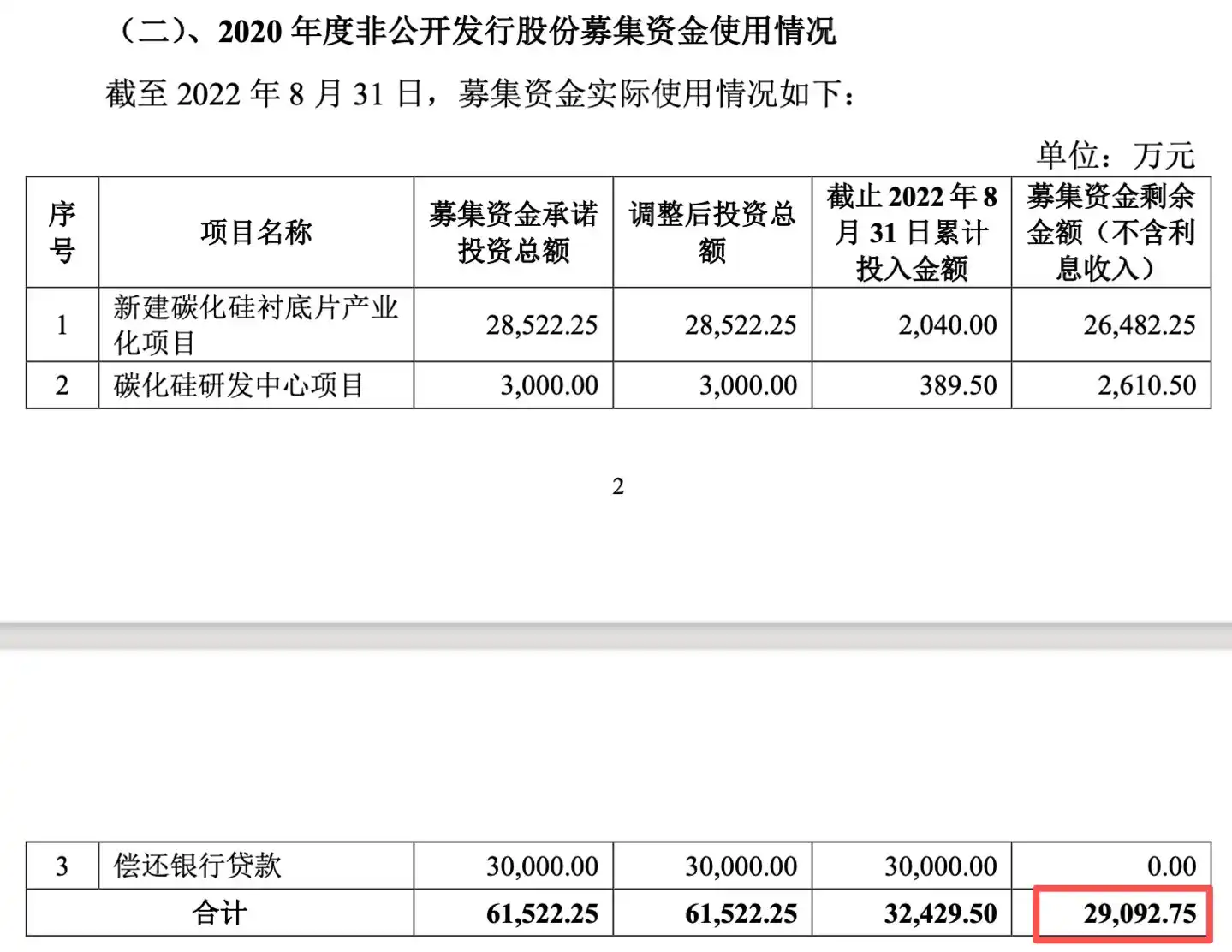
(Source : Communiqué de Lixiao Technology du 1er octobre 2022)

Deuxième (plan d'augmentation de capital divulgué le 23 novembre 2021, émission achevée en juin 2022. Lors de la finalisation de cette seconde levée, la majeure partie des fonds de la première levée pour le projet SiC n'était pas encore utilisée) : Montant levé 2,567 milliards de yuans, montant net 2,513 milliards. Sur ce montant, 1,94 milliard était destiné au projet de première phase du parc industriel de semi-conducteurs de puissance de troisième génération (SiC 6 pouces), et 445 millions au projet de centre de R&D pour substrats SiC de grande taille (8 pouces). Mais l'avancement fut lent. En janvier 2026, l'entreprise a réduit l'enveloppe du projet de parc industriel de 1,94 à 990 millions de yuans, libérant ainsi 950 millions pour un détournement permanent vers la trésorerie. En juillet 2026, l'entreprise a totalement arrêté ces deux projets, détournant les 1,217 milliard restants de façon permanente vers la trésorerie.
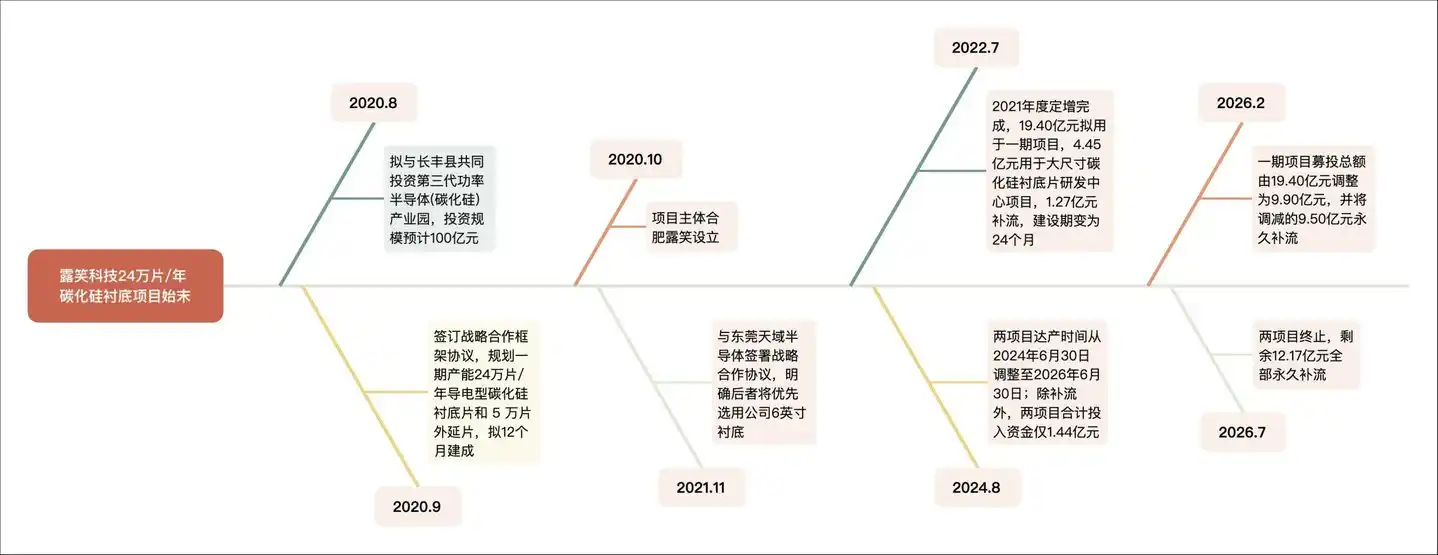
(Historique du projet de substrats SiC de 240 000 tranches/an chez Lixiao Tech, Graphique : Company Observation d'après les communiqués de l'entreprise)

Les deux augmentations de capital ont levé un montant net total d'environ 3,156 milliards de yuans, mais seulement environ 242 millions ont été réellement investis dans la construction d'équipements/lignes de production et la R&D SiC, soit environ 7,75%. Les 2,9 milliards restants ont été utilisés via des détournements vers la trésorerie, le remboursement de dettes, etc.

Cependant, avant l'arrêt des projets, l'entreprise a à plusieurs reprises exprimé sa confiance et ses perspectives dans les rapports périodiques et les activités de relations avec les investisseurs. En novembre 2021, elle a aussi annoncé avec fracas la signature d'un « accord de coopération stratégique » avec Dongguan Tianyu Semiconductor Technology Co., Ltd., stipulant que cette dernière choisirait en priorité ses substrats SiC de 6 pouces.
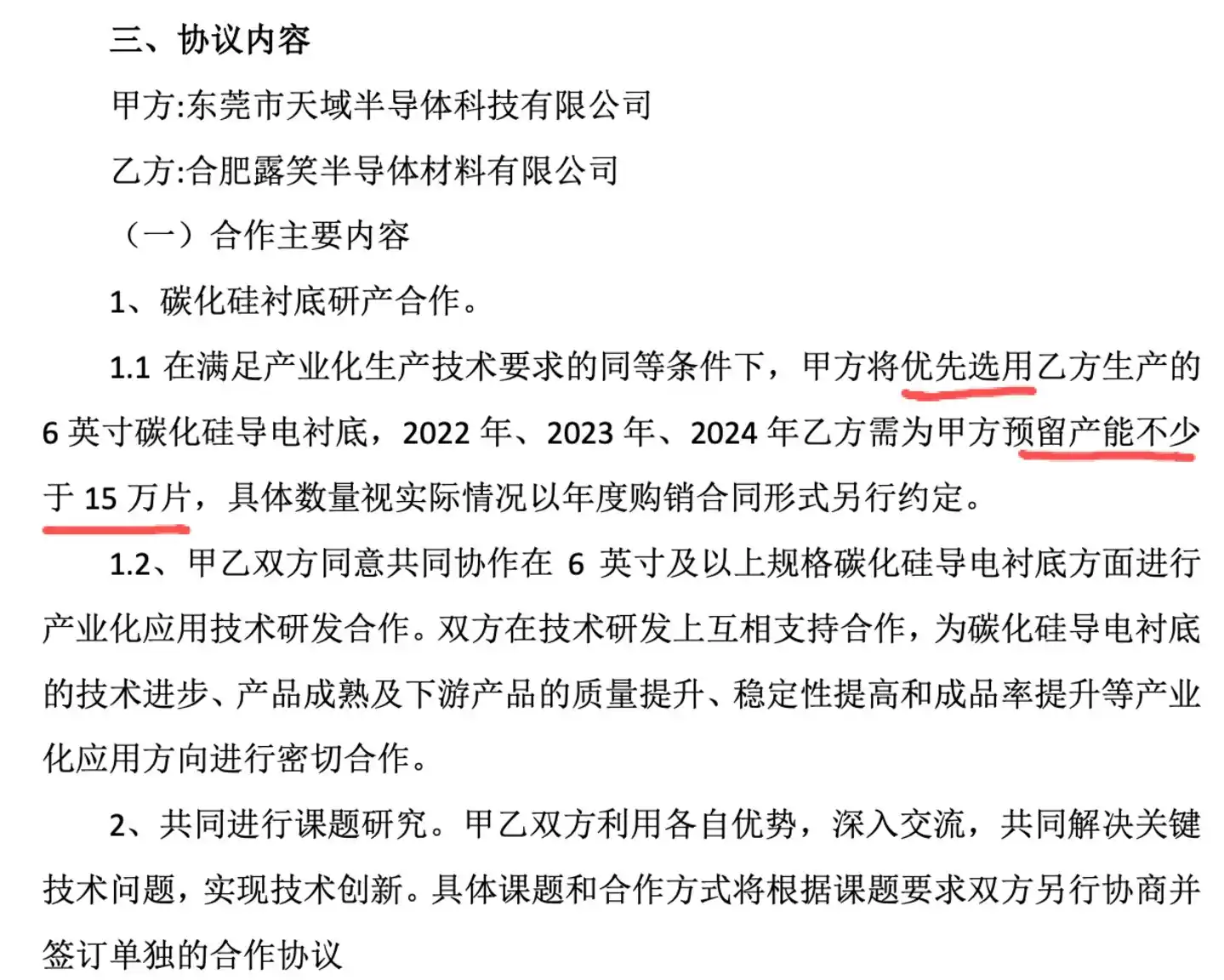
(Source : Communiqué de Lixiao Technology de 2021)

Pourtant, deux ans, puis encore deux ans, la première phase a toujours progressé lentement. L'entreprise a annoncé l'arrêt des deux projets le soir du 7 juillet, justifiant cette décision par : la surcapacité et l'offre excédentaire de substrats SiC 6 pouces, et le fait que ses investissements en R&D pour les substrats de grande taille satisfont désormais ses besoins actuels.

Les données sectorielles étayent en partie ce jugement – le prix moyen des substrats 6 pouces de TankeBlue a chuté de 4 780,67 yuans/tranche en 2023 à 1 695,96 yuans/tranche en 2025, et le pionnier mondial du SiC, Wolfspeed, a déposé le bilan en 2025.
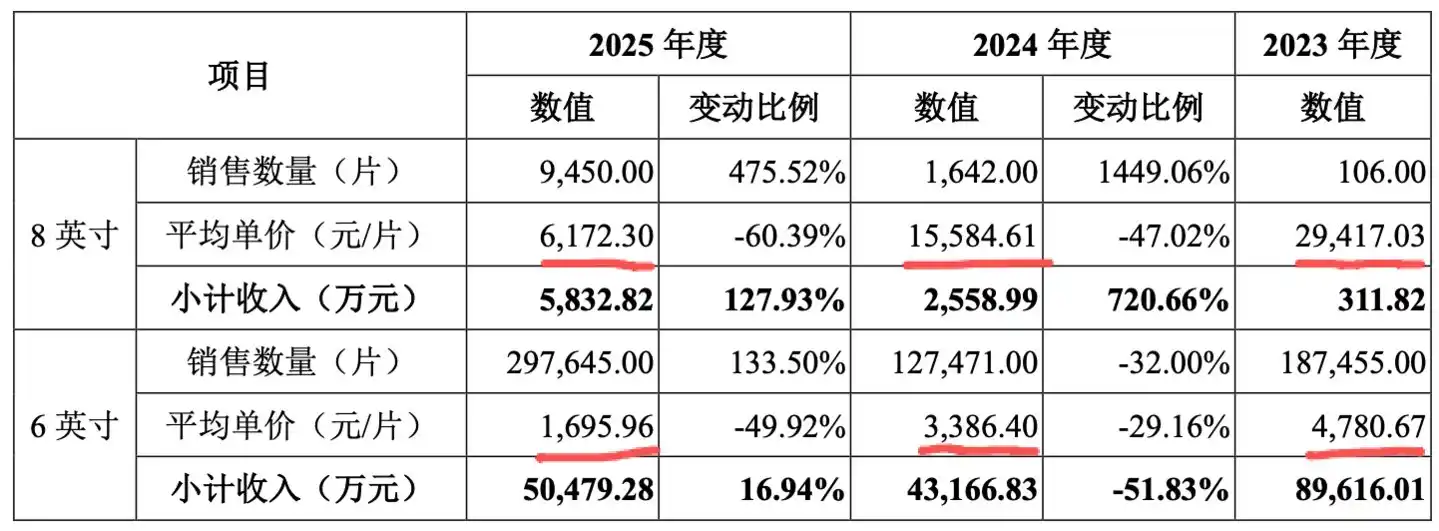
(Prix de vente moyen de TankeBlue, Source : Document d'information)

Ce qui est étrange, c'est qu'après six ans, la capacité de production de substrats SiC que Lixiao Technology a toujours reportée reste un mystère. Selon les notes d'une réunion avec les investisseurs en mai de cette année, Hefei Lixiao a actuellement atteint une capacité de production de 60 000 tranches/an pour la première phase, avec un plan préliminaire de démarrage d'une expansion supplémentaire au second semestre 2026 pour porter progressivement la capacité à 120 000 tranches/an. Mais le 8 juillet au matin, Huajin Securities a organisé une conférence téléphonique avec le secrétaire du conseil M. Li Chentao et le directeur général de Hefei Lixiao, M. Hu Yang. Selon leurs déclarations, « cette année, après avoir équipé toutes les lignes de traitement, la capacité totale prévue de l'entreprise est d'atteindre 60 000 tranches ; d'ici octobre de cette année, l'entreprise réalisera une production complète et une correspondance totale des ventes pour sa capacité de production de 60 000 tranches de SiC 6 pouces par an. »
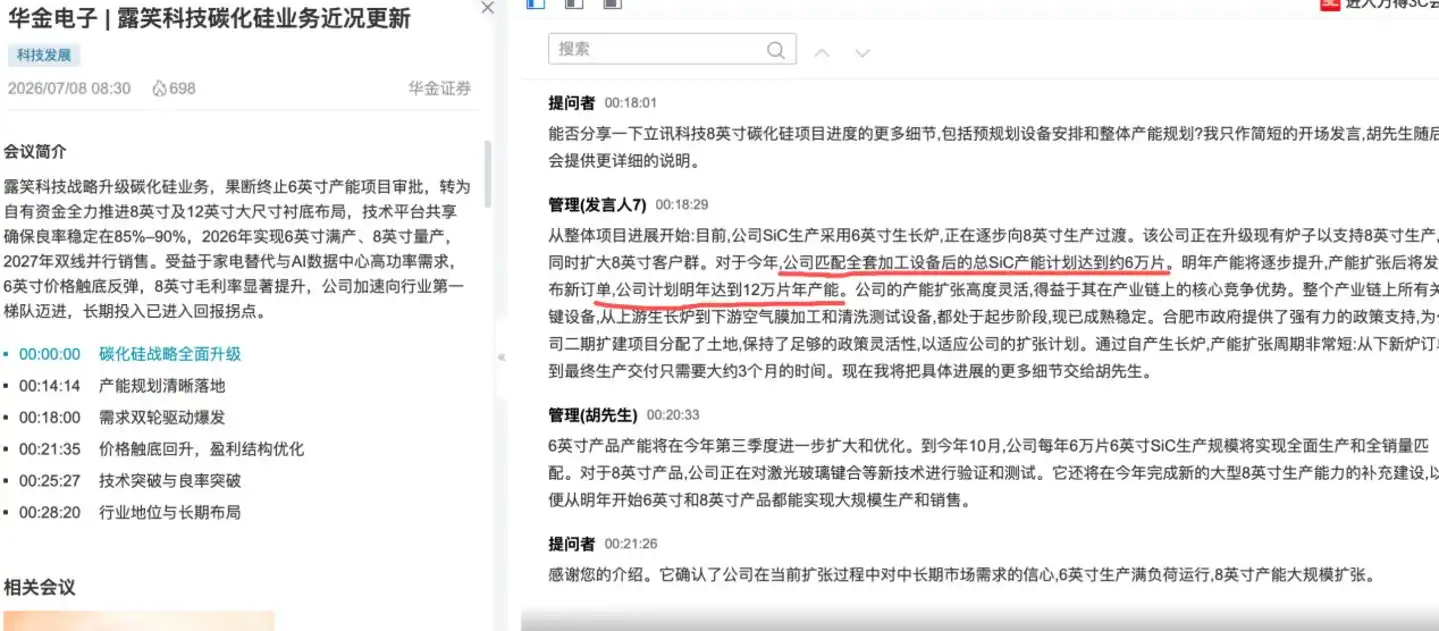
(Source : Contenu de la conférence téléphonique de Huajin Securities)

Il existe une différence subtile mais cruciale entre « atteinte » et « prévue ». Company Observation a contacté Lixiao Technology en se présentant comme un investisseur pour demander si la capacité de 60 000 tranches/an était réellement atteinte. Un employé de l'entreprise a déclaré ne pas maîtriser ces données, invitant simplement à se référer aux informations publiques divulguées.

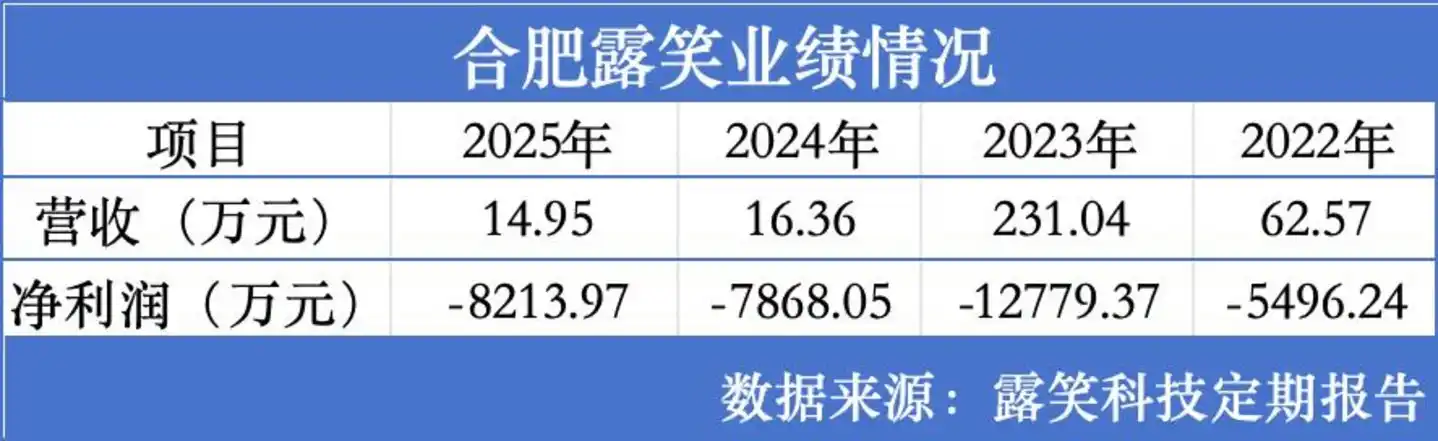
Bien sûr, qu'elle soit atteinte ou non, ce développement commercial ne peut être qualifié que d'échec. Les rapports périodiques révèlent que de 2022 à 2025, Hefei Lixiao a cumulé un chiffre d'affaires de 3,2492 millions de yuans et des pertes de 344 millions de yuans.
De 4 pouces à 6 pouces puis 8 pouces : toujours « à la traîne »

L'analyse du développement SiC de Lixiao Technology révèle un rythme particulier – toujours à la traîne d'un demi-pas par rapport au secteur, mais à chaque retard, elle lance un nouveau plan pour une taille plus grande. De plus, les déclarations publiques de l'entreprise sont d'une « positivité déconcertante » :

« L'activité SiC reste une orientation stratégique de l'entreprise, qui continuera à utiliser ses fonds propres ou des fonds levés pour développer les substrats SiC de 8 et 12 pouces. » « L'arrêt du projet SiC 6 pouces initialement financé ne signifie pas que l'entreprise se retire du SiC. Au contraire, c'est une optimisation et un ajustement prospectif de la disposition de nos projets SiC... »

Dans ses communiqués et conférences téléphoniques, Lixiao Technology a réitéré qu'elle poursuivrait l'activité des substrats SiC, déclarant : « Actuellement, notre production SiC utilise des fours de croissance 6 pouces et nous passons progressivement à la production 8 pouces ; pour les produits 8 pouces, nous validons et testons de nouvelles technologies comme le collage par laser, et achèverons cette année la construction complémentaire d'une nouvelle capacité de production 8 pouces de grande taille. »

Avec les échecs successifs des 4 et 6 pouces, et les nouveaux plans pour 8/12 pouces en cours, cette « nouvelle promesse » sera-t-elle tenue ?

Au niveau sectoriel, pour la troisième génération de semi-conducteurs représentée par le SiC, le cœur en amont réside dans les substrats et l'épitaxie, les substrats étant l'étape la plus difficile et la plus coûteuse. Dès 2016-2017, TankeBlue réalisait une industrialisation préliminaire en 6 pouces ; de 2019 à 2020, la production de masse en 6 pouces devenait mature ; en 2022, le 8 pouces était développé avec succès ; en 2025, la production de masse en 8 pouces devenait mature. TankeBlue (688234.SH, 02631.HK) a aussi produit en masse des 6 pouces en 2019, et des 8 pouces en 2023. En 2025, la capacité de production de substrats SiC de TankeBlue atteignait 410 700 tranches/an, avec une production de 398 600 tranches ; la production de TanKe Advanced était de 690 400 tranches, en hausse de 68,31 %.

Il est à noter que le rapport annuel de TanKe Advanced indique que son site de production de Shanghai a commencé l'installation des équipements en janvier 2023, livré des produits dès mai 2023, et atteint une capacité de production annuelle de 300 000 tranches au premier semestre 2024, alors que la date prévue pour cet objectif était 2026.

Autrement dit, alors que les concurrents se précipitaient pour augmenter les capacités, Lixiao Technology non seulement n'a pas suivi le rythme du secteur, mais a constamment retardé. Se lancer aujourd'hui dans les capacités 6 et 8 pouces est clairement « arriver à la fin du marché ».

« Le 6 pouces reste dominant, mais l'itération vers le 8 pouces est rapide. » a déclaré à Company Observation une personne d'une entreprise leader en substrats SiC. Avec la demande croissante des applications à grande échelle en aval (véhicules électriques, production photovoltaïque et stockage) et la dynamique des applications émergentes (infrastructures de calcul IA, lunettes AR), le SiC évolue vers de plus grandes tailles, car elles signifient moins de pertes sur les bords, une meilleure utilisation et un meilleur contrôle des coûts.

Selon les statistiques et prévisions de Yole, en 2025, les livraisons en 6 pouces représenteront 88 %, le 8 pouces progressant à 8 % ; d'ici 2030, le 8 pouces devrait atteindre environ 35 %. Parallèlement, les principaux acteurs du secteur promeuvent activement la R&D et la production de masse des produits 12 pouces.

(Source : Document d'information de TankeBlue)

Concrètement, par entreprise, la structure sectorielle est plus tangible : En 2025, les produits 8 pouces de TanKe Advanced représentaient 44 % de ses revenus, avec plus de 50 % de parts de marché mondiales ; en novembre 2024, elle a lancé le premier substrat 12 pouces du secteur, ayant déjà reçu des commandes de clients majeurs et effectué des livraisons. TankeBlue a aussi réussi à développer des substrats 12 pouces en 2025, et la part des produits 8 pouces dans ses revenus est passée à 10,22 %. Jingsheng Electromechanical (300316.SZ) a quant à elle indiqué en juillet avoir activement promu la validation par les clients mondiaux des substrats 8 pouces, obtenant des commandes groupées en Chine et à l'étranger, et réalisé des percées en R&D sur les substrats 12 pouces avec une petite production de masse.

Bien sûr, cette personne a aussi indiqué que cela ne signifiait pas que le 6 pouces était totalement obsolète, une certaine quantité subsisterait. Company Observation a contacté TanKe Advanced et appris que l'entreprise conservait actuellement une capacité 6 pouces, mais n'en ajouterait plus ; les nouvelles capacités seraient construites en 8 ou 12 pouces selon la demande aval. Elle a aussi révélé : « Les lignes de production 6 pouces récentes peuvent être converties en 8 pouces en ajustant les fours de croissance et les creusets, mais les lignes plus anciennes ne le peuvent pas. »

Mais le problème actuel est que Lixiao Technology n'a jamais vraiment profité du boom du 6 pouces, et se tourne maintenant vers le 8/12 pouces. Alors que les capacités planifiées en 8 pouces en Chine dépassent 4 millions de tranches, le scénario de surcapacité du 6 pouces va-t-il se rejouer avec le 8 pouces ?

« Le point d'inflexion pour le 8 pouces est prévu en 2027. Si toutes les capacités planifiées sont réalisées à ce moment-là, la concurrence sera probablement féroce. » a déclaré franchement cette personne, ajoutant que le secteur entrant dans sa seconde moitié, la concurrence ne se fera plus sur une seule performance, mais la capacité stable de production de masse à grande échelle, une chaîne d'approvisionnement autonome complète, etc., pourraient être les clés du succès.

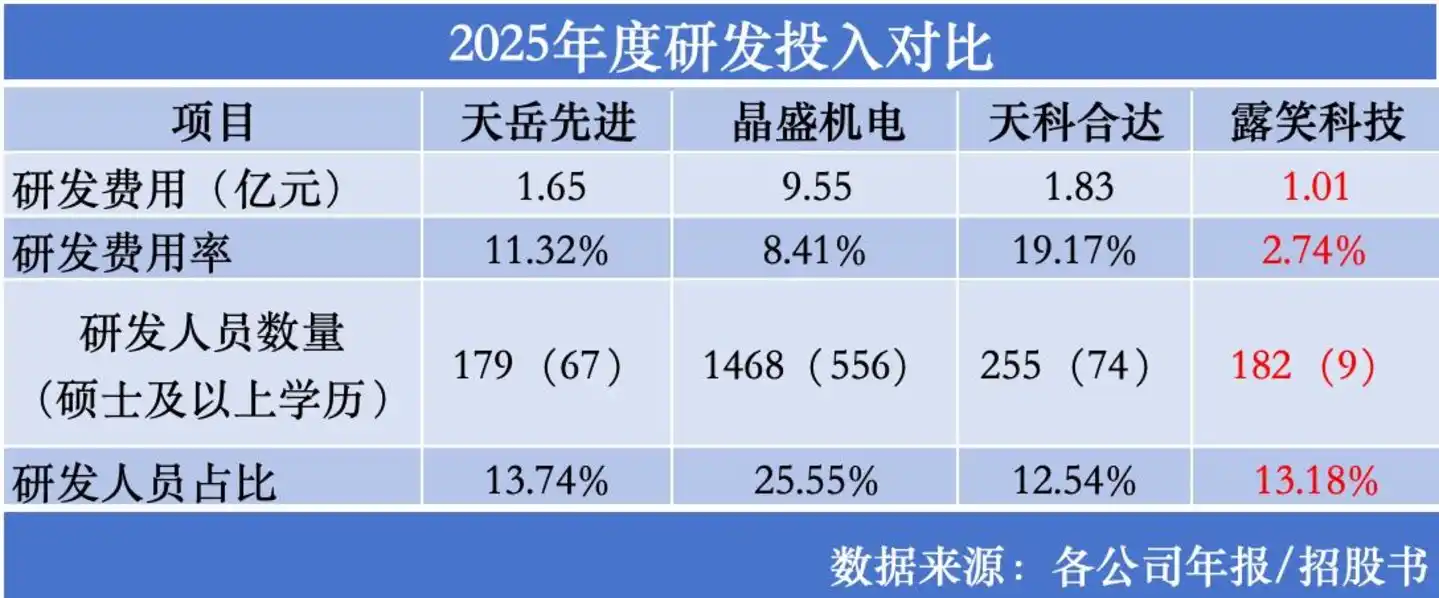
Il est clair que, que la capacité de 60 000 tranches soit atteinte ou non, celle de Lixiao Technology est difficilement comparable à celle de ses concurrents. De plus, Company Observation a constaté que l'entreprise est aussi à la traîne en matière d'investissements en R&D cruciaux. En 2025, ses dépenses de R&D étaient de 101 millions de yuans, soit seulement 2,74 % de son chiffre d'affaires, alors que ses concurrents sont tous au-dessus de 8 % ; la proportion de personnel de R&D est similaire à celle des concurrents, mais elle ne compte que 9 personnes titulaires d'un master, aucun doctorat n'est mentionné, alors que la proportion de masters et doctorats chez les concurrents dépasse 29 %.
Le directeur scientifique Chen Zhizhan est-il toujours le monsieur clé ?

Le substrat SiC est une industrie à forte intensité technologique, le personnel en est la variable clé. Lixiao Technology suscite également des inquiétudes sur ce point crucial.

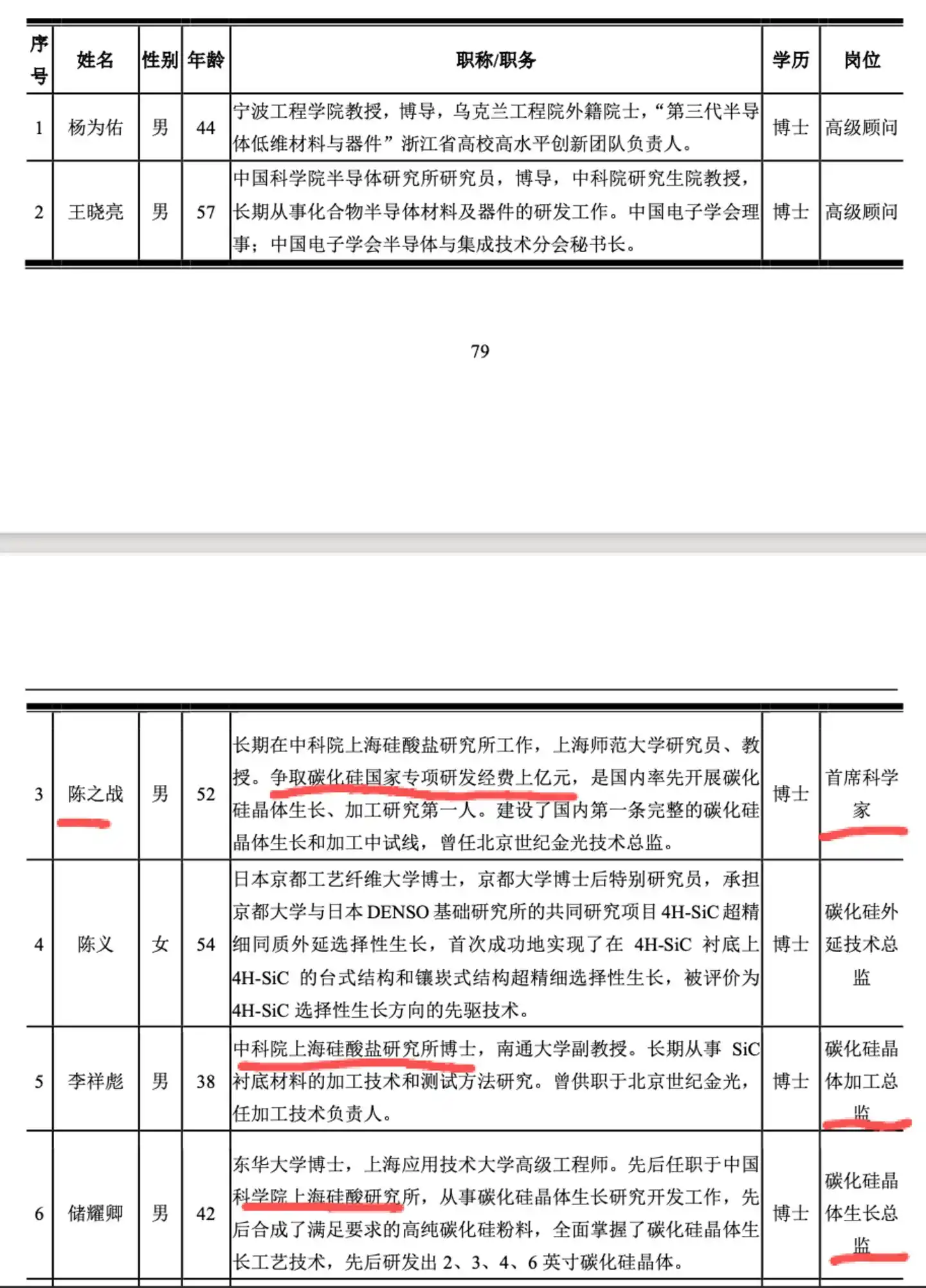
Depuis l'augmentation de capital de 2020, chaque fois que l'entreprise parle de son développement SiC, elle mentionne son vivier de talents – l'expert Dr. Chen Zhizhan et son équipe, parmi les premiers en Chine à étudier la croissance des cristaux SiC. M. Chen occupe le poste de directeur scientifique et s'est vu attribuer 1 million d'actions via le plan d'actionnariat salarié de 2021. Étrangement, depuis le rapport annuel 2023, l'entreprise n'a plus mentionné M. Chen Zhizhan, ni annoncé s'il avait quitté l'entreprise.
(Source : Communiqué de Lixiao Technology de 2020)

Company Observation a contacté Lixiao Technology et appris que « le Dr. Chen Zhizhan est toujours employé par l'entreprise ». Mais lorsqu'on lui a demandé si M. Chen était toujours responsable des aspects technologiques du segment des substrats SiC, et si son équipe et sa technologie conservaient un avantage concurrentiel dans le secteur, l'employé a éludé la question, disant seulement que les produits de l'entreprise avaient des avantages, et s'est dérobé en prétextant « ne pas bien connaître les détails techniques spécialisés ».

Si M. Chen Zhizhan est toujours employé par l'entreprise, pourquoi, depuis 2021, les rapports annuels n'ont-ils jamais mentionné de doctorants dans la composition par diplôme du personnel de R&D ?

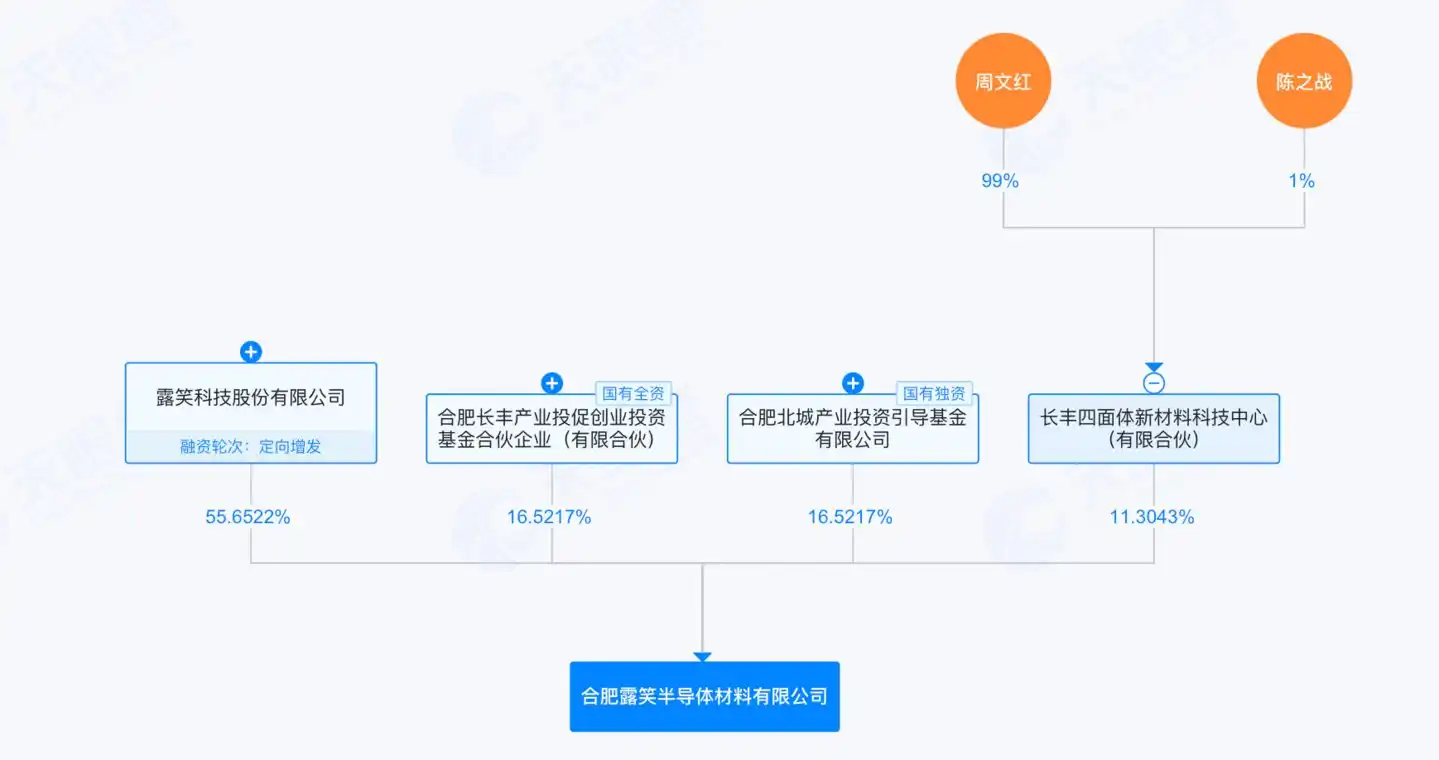
De plus, le lien entre M. Chen et l'entreprise n'est pas seulement celui d'un employeur et de son directeur scientifique. Le 10 octobre 2020, M. Chen Zhizhan et son épouse Mme Zhou Wenhong ont enregistré la création de Changfeng四面体 (四面体) New Materials Technology Center (partenariat limité) (ci-après « Changfeng四面体 »), détenant respectivement 1% et 99%. Le 27 octobre, Hefei Lixiao a été enregistrée, l'un de ses actionnaires étant Changfeng四面体, détenant initialement 5%. Des communiqués de 2023 montrent que Changfeng四面体 était aussi le sous-traitant pour la R&D externe de l'activité SiC de l'entreprise ; pour les périodes avant et y compris 2021, 2022 et le premier trimestre 2023, Lixiao Technology a versé des frais de R&D externe de 23,8364 millions, 24,4115 millions et 122 700 yuans respectivement ; en mars 2023, l'entreprise avait prévu d'acquérir 2,61% des actions de Hefei Lixiao détenues par Changfeng四面体, mais cette acquisition n'a pas été finalisée. Tianyancha montre que Changfeng四面体 détient toujours 11,30% de Hefei Lixiao.
(Source : Tianyancha)

Concernant la situation récente de M. Chen, les informations accessibles publiquement sur sa production académique sont les suivantes :

Company Observation a recherché le mot-clé « Chen Zhizhan » sur le site de l'Institut de céramique de Shanghai de l'Académie chinoise des sciences ; le contenu le concernant est rare : 11 articles trouvés, mais publiés en 2007 ou avant ; 6 brevets déposés, mais en 2011 ou avant. Le site de la Faculté de physique de l'Université normale de Shanghai indique que M. Chen Zhizhan a le titre de professeur de rang supérieur. Sur CNKI, sa dernière publication date de 2016 ; sur Web of Science, sa dernière publication date de 2017.

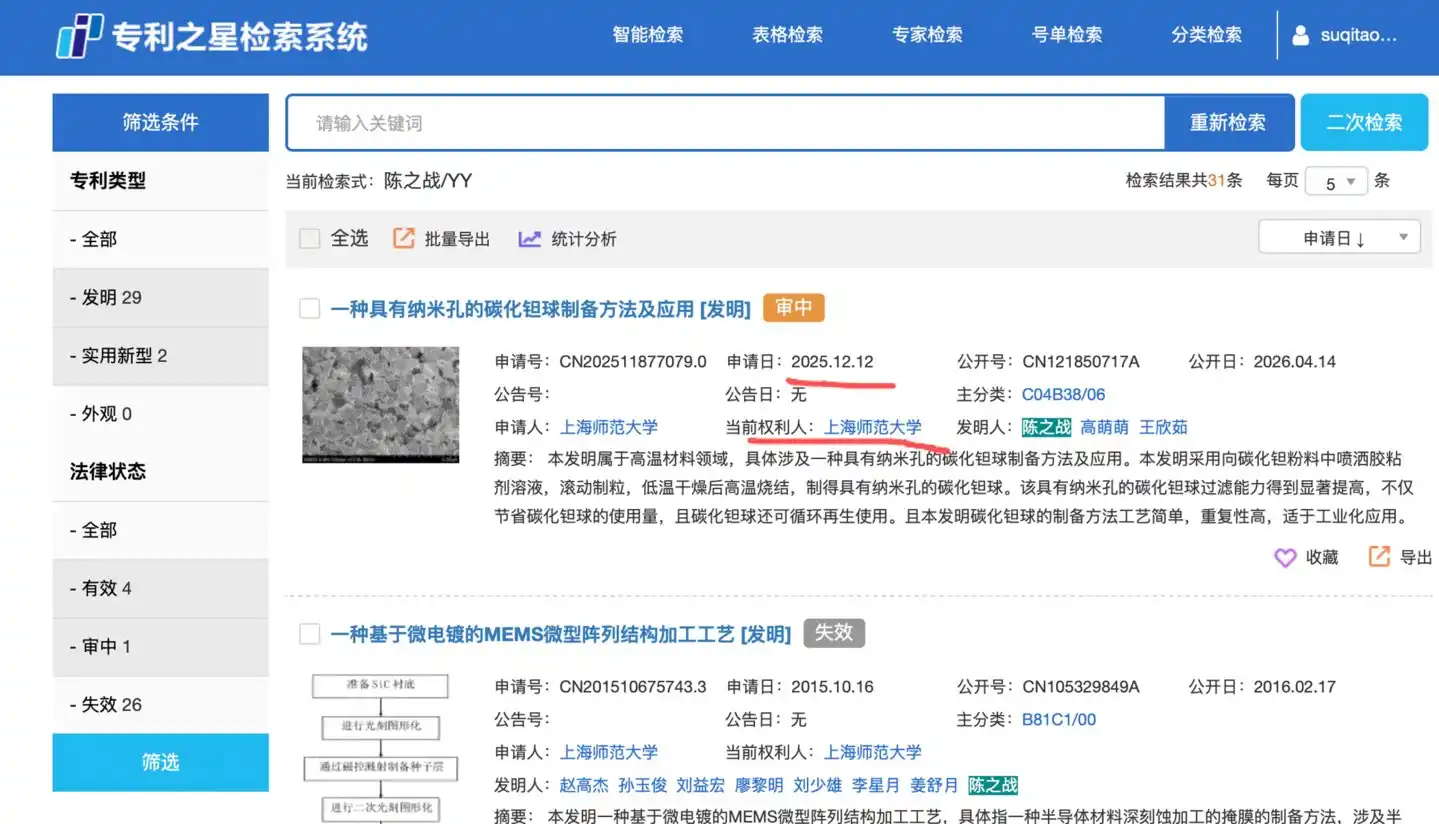
De plus, en recherchant « Chen Zhizhan » dans le système de recherche de brevets Patent Star, il possède 31 brevets au total : 4 valides, 26 invalides, 1 en examen ; et les 4 inventions valides ont été publiées en 2011/2012, le titulaire actuel des droits étant Anhui Weixin Yangtze River Semiconductor Materials Co., Ltd. ; l'invention en examen a été déposée le 12 décembre 2025, le titulaire des droits étant l'Université normale de Shanghai.
(Source : Patent Star)

Un professionnel de la R&D a indiqué à Company Observation qu'au vu des publications accessibles, du facteur d'impact des revues, du nombre de citations et des inventions, il est difficile de les relier à des « fonds de recherche dépassant 100 millions de yuans ». Bien sûr, l'arrêt de la production académique peut signifier que son centre de gravité s'est déplacé vers les applications industrielles, mais l'attitude floue de l'entreprise dans la divulgation d'informations sur ses figures technologiques de proue accroît sans doute les doutes externes.

Quinze ans à poursuivre les tendances : le SiC n'est que le dernier chapitre

Mis à part le projet de substrats SiC, l'historique de la transformation de Lixiao Technology depuis son introduction en bourse en 2011 est typique de la « poursuite des tendances », ayant successivement étendu son activité principale via acquisitions/investissements à l'électromécanique, au saphir, aux véhicules électriques, au photovoltaïque, au carbure de silicium, aux nacelles élévatrices, etc.
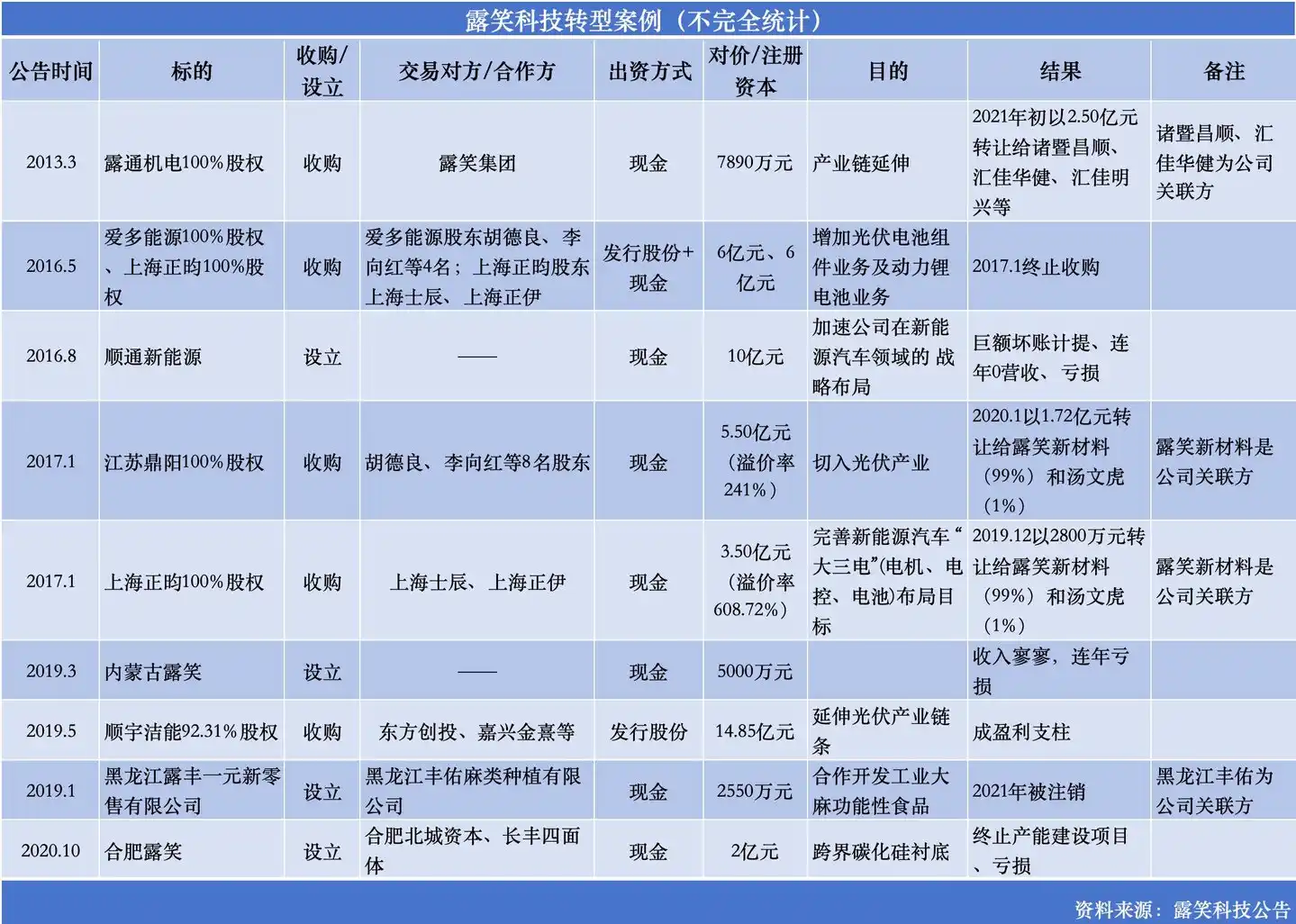
Par exemple, en 2015, les secteurs chinois des véhicules électriques et du photovoltaïque ont connu une phase haussière, avec des valorisations boursières qui ont explosé. En 2016, l'entreprise a rapidement planifié l'acquisition, par émission d'actions et paiement en espèces, de Aidoo Energy et Shanghai Zhengyun, pour entrer dans ces deux secteurs brûlants, mais sans succès final.

En septembre de la même année, Lixiao Technology a créé une filiale à 100 %, Shuntong New Energy Vehicle Service Co., Ltd. (ci-après « Shuntong New Energy »), avec un capital de 1 milliard de yuans. Mais les données disponibles montrent que Shuntong New Energy n'a enregistré des revenus que pour 103 millions de yuans et un bénéfice net de 93,0162 millions en 2017 ; les autres années, elle a eu des revenus nuls/des pertes, ou n'a pas divulgué de résultats, sur les 4 années avec résultats, les pertes cumulées sont de 542 millions de yuans. Pour les seuls exercices 2018 et 2019, Shuntong New Energy a constitué des provisions pour créances douteuses de 378,2293 millions et 67,9823 millions de yuans respectivement.

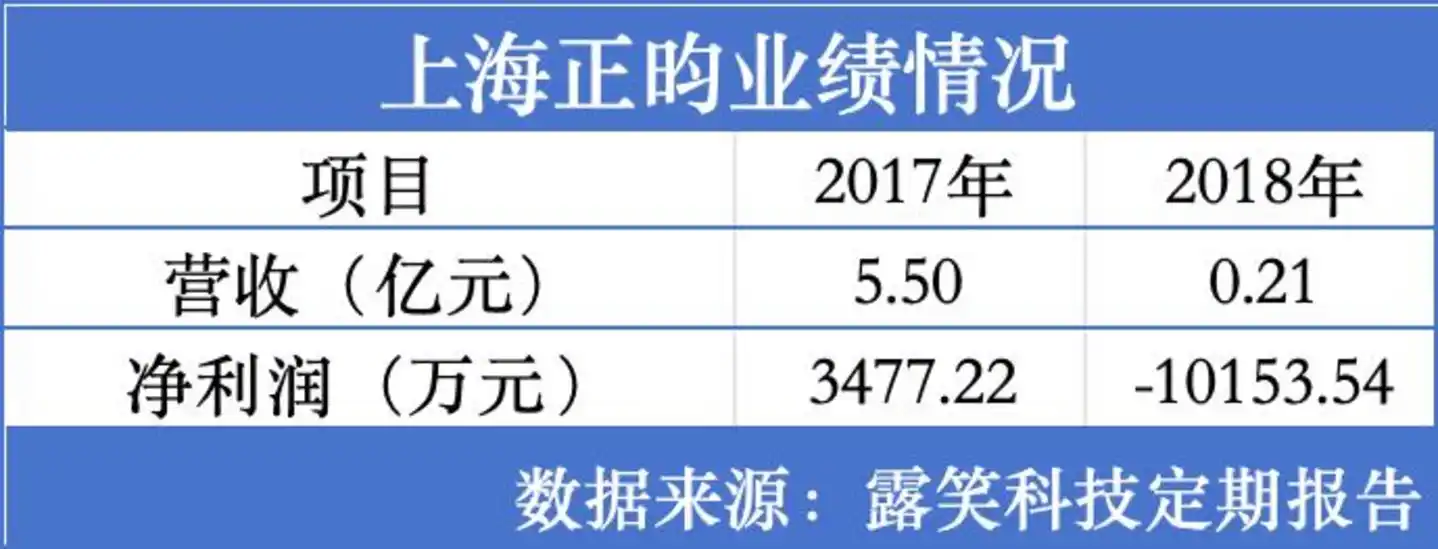
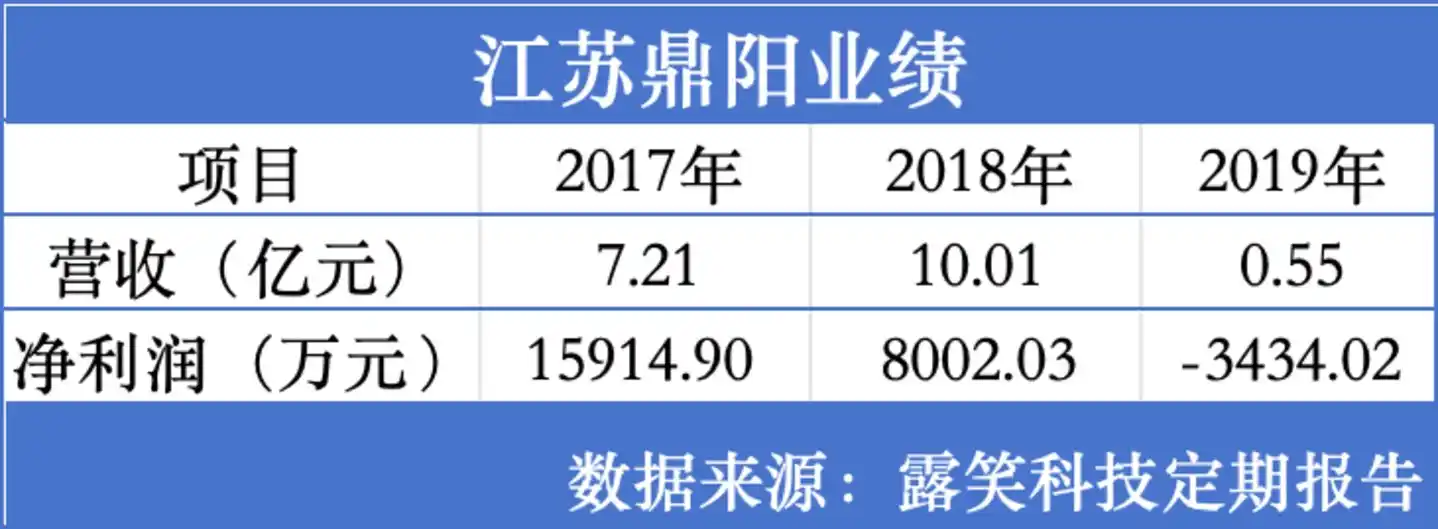
En janvier 2017, l'entreprise a aussi acquis 100% de Shanghai Zhengyun avec une prime de 600% pour 350 millions de yuans, soi-disant pour parfaire son positionnement dans les véhicules électriques ; le même mois, elle a acquis 100% de Jiangsu Dingyang avec une prime de 241% pour 550 millions de yuans en espèces, pour entrer dans le photovoltaïque. Mais en 2018, des dépréciations d'écarts d'acquisition de 270 millions et 264 millions de yuans ont été constatées pour Shanghai Zhengyun et Jiangsu Dingyang respectivement ; en 2019, Jiangsu Dingyang a subi une autre dépréciation de 106 millions. Finalement, l'entreprise s'est séparée de ces deux sociétés en 2019 et 2020 pour des prix dérisoires de 28 millions et 172 millions de yuans respectivement, les cédant à Zhejiang Lixiao New Materials (99%) et Tang Wenhu (1%). Il est à noter que Zhejiang Lixiao New Materials est en réalité contrôlée par Lu Xiaojun et Li Boying.
Seule l'acquisition de Shunyu Jieneng peut être considérée comme un cas réussi. En 2019, Lixiao Technology a émis des actions pour acquérir 92,31% de Shunyu Jieneng et lever des fonds complémentaires, pour un montant de transaction de 1,485 milliard de yuans, ajoutant ainsi l'activité de production d'électricité photovoltaïque.

À partir de 2023, l'entreprise est entrée dans le secteur des nacelles élévatrices. Depuis, ses activités principales sont les fils émaillés, la production photovoltaïque, le SiC et les nacelles, mais le moteur du chiffre d'affaires reste les fils émaillés, et la source de profit provient entièrement de Shunyu Jieneng. Par exemple, en 2025, l'entreprise a enregistré un chiffre d'affaires de 3,672 milliards de yuans, dont 2,114 milliards (57,58%) provenant des fils émaillés, mais avec une marge brute de seulement 6,26% ; le bénéfice net consolidé était de 212 millions de yuans, tandis que le bénéfice net de Shunyu Jieneng pour la même période était de 208 millions.

Bien sûr, les transformations nécessitent un soutien financier réel. Chez Lixiao Technology, les opérations financières sont poussées à l'extrême. Selon Wind, incluant l'IPO, l'entreprise a effectué 7 financements directs, levant 7,069 milliards de yuans ; les multiples acquisitions/investissements mentionnés ont été réalisés via des émissions d'actions ou directement avec les fonds levés. Les fonds inutilisés de l'augmentation de capital de 2021 ont été temporairement détournés vers la trésorerie, principalement pour le développement de la nouvelle activité des nacelles élévatrices.
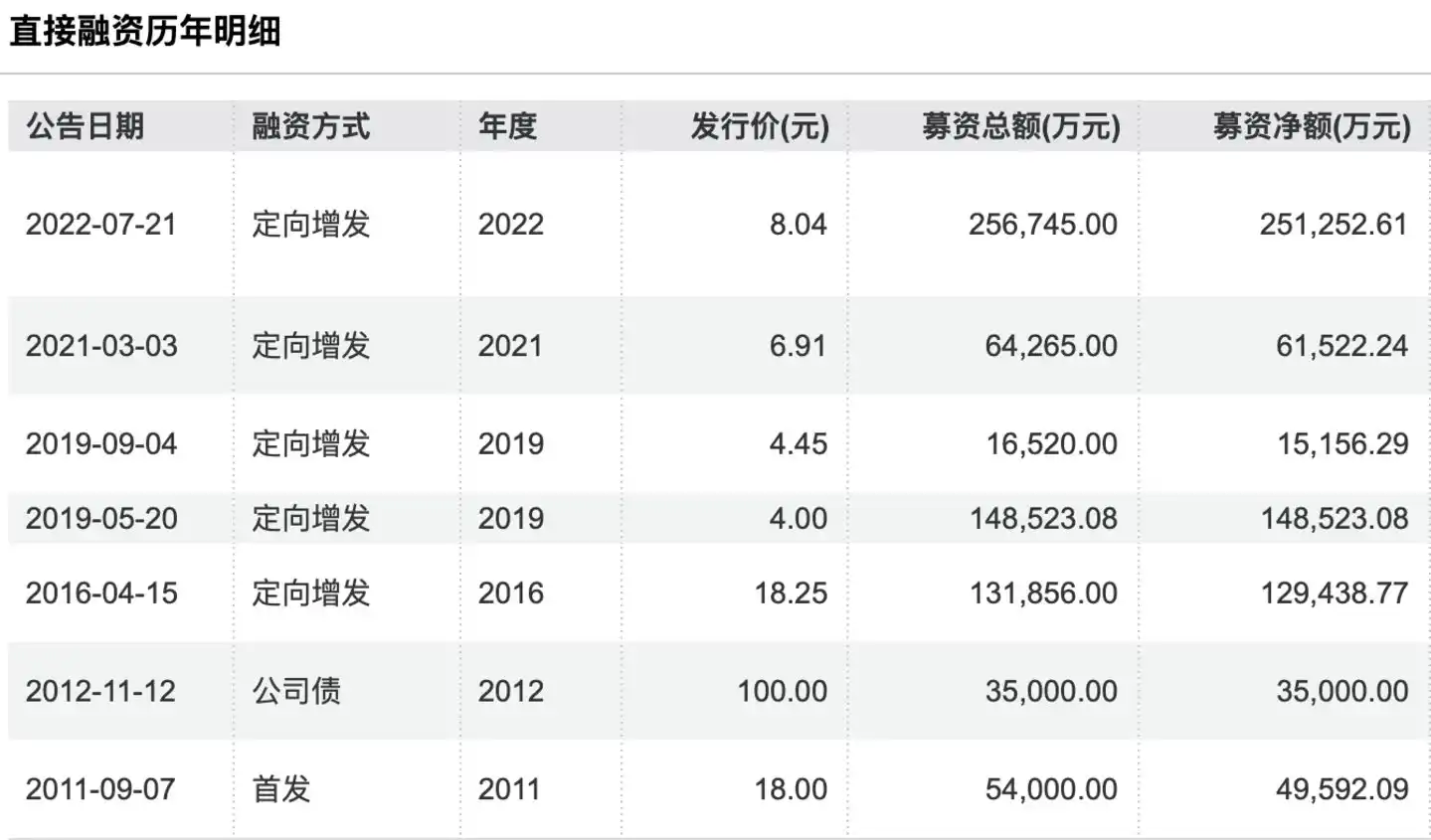
(Détails du financement direct de Lixiao Technology)

Sur la même période, l'entreprise n'a réalisé qu'un bénéfice total de 221 millions de yuans, distribué 88,8312 millions de yuans de dividendes, et la société mère présente encore des pertes non comblées. Parallèlement, les créances de l'entreprise sont élevées ; en 2024 et 2025, les comptes clients et effets à recevoir représentaient 59,30% et 77,86% du chiffre d'affaires respectif. Lixiao Technology, incapable de « s'auto-financer » suffisamment, a donc naturellement dû lever des fonds à plusieurs reprises pour sa trésorerie ou détourner de façon permanente les fonds des projets initialement financés.
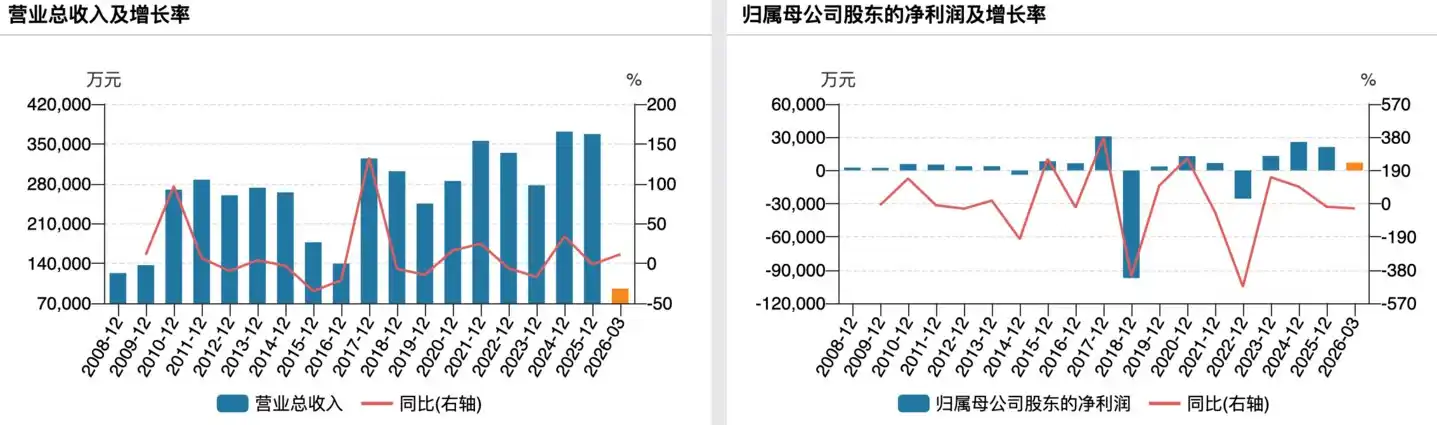
(Évolution des performances de Lixiao Technology)

Cependant, même ainsi, la capacité de remboursement à court terme de l'entreprise reste sous pression. Fin du premier trimestre 2026, les emprunts à court terme s'élevaient à 767 millions de yuans, les dettes non courantes échéant dans l'année à 297 millions, tandis que les liquidités n'étaient que de 503 millions et les actifs financiers à la transaction de 104 millions.

Il est à noter que pendant que Lixiao Technology levait des fonds pour « poursuivre les tendances », le cours de son action a souvent augmenté, et les actionnaires de contrôle ont réalisé fréquemment des bénéfices. Par exemple, depuis « 924 » 2024, l'action Lixiao Technology a augmenté en raison de concepts à la mode, et la famille des actionnaires de contrôle a réalisé une série de bénéfices à des niveaux relativement élevés entre décembre 2025 et janvier 2026.
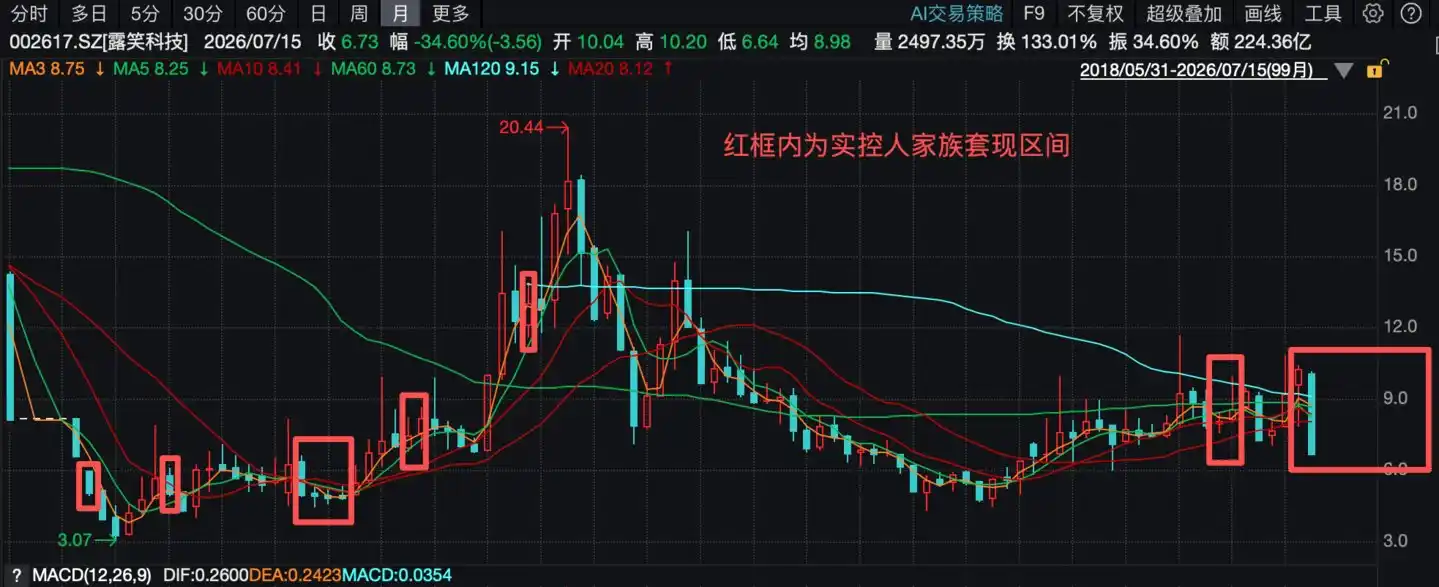
(Graphique mensuel en chandeliers de Lixiao Technology)

Selon des estimations approximatives, depuis 2018, la famille des actionnaires de contrôle a réalisé des bénéfices cumulés de 1,993 milliard de yuans.
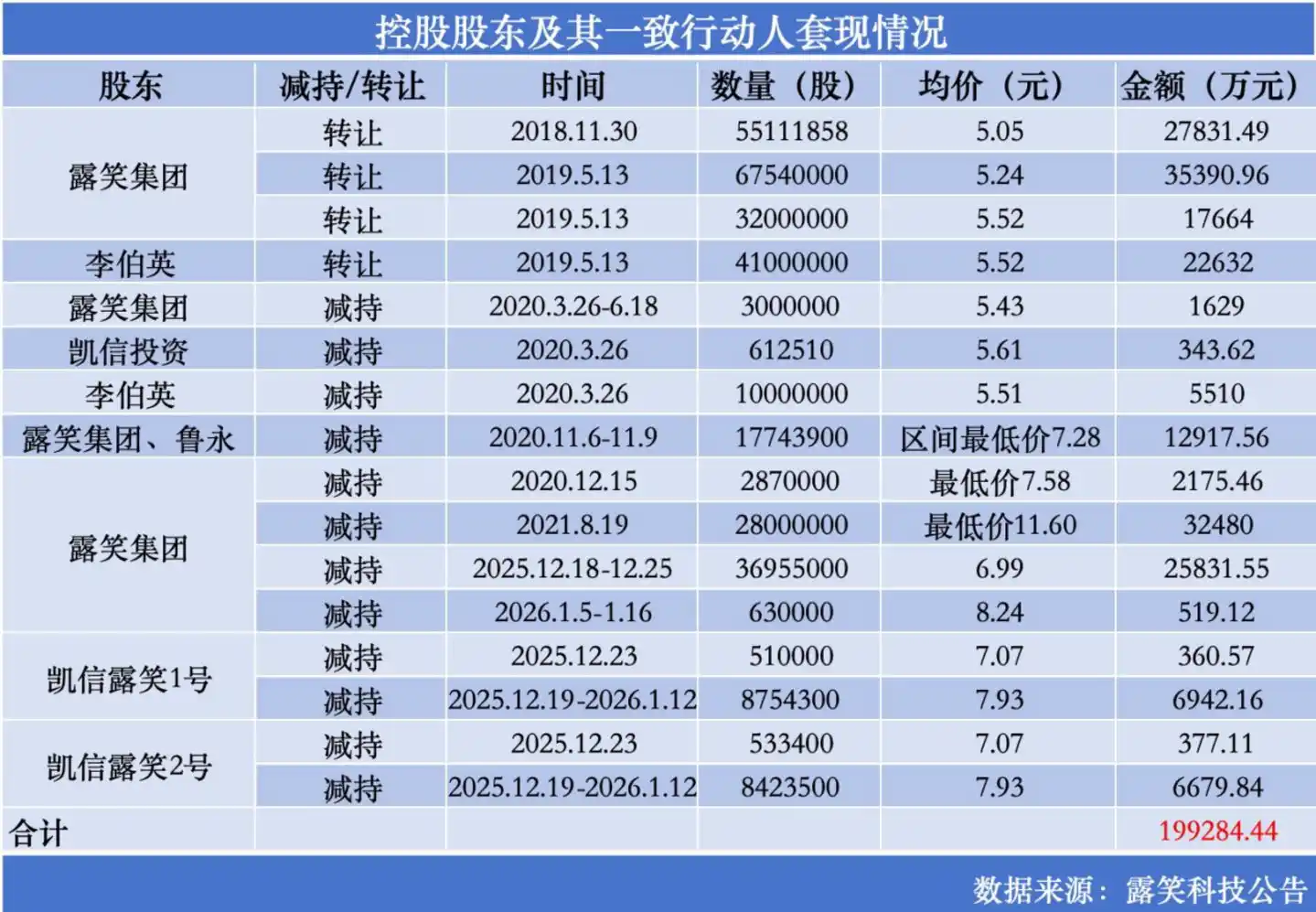
Début juin de cette année, la famille des actionnaires de contrôle a annoncé un plan de cession d'un maximum de 33,4105 millions d'actions. Même au cours de clôture du 17 juillet, le montant réalisé atteindrait environ 200 millions de yuans. (Article|Company Observation, Auteur|Su Qitao, Éditeur|Cao Shengyuan)


Trending Cryptos

Related Questions

QQuels sont les problèmes soulevés dans l'article concernant la collecte de fonds et l'utilisation des capitaux par Luxiao Technology pour son projet de carbure de silicium (SiC) ?

AL'article révèle que Luxiao Technology a levé environ 3,2 milliards de yuans via deux augmentations de capital privé en six ans pour des projets de carbure de silicium. Cependant, moins de 300 millions de yuans ont été effectivement investis dans la construction et la R&D des projets. Le reste, soit environ 2,9 milliards de yuans, a été utilisé pour combler les déficits de trésorerie et rembourser des prêts, avant que les projets ne soient finalement abandonnés.

QComment l'article décrit-il la stratégie de diversification et l'historique des acquisitions de Luxiao Technology depuis son introduction en bourse ?

AL'article décrit la stratégie de Luxiao Technology comme une poursuite frénétique des 'tendances chaudes'. Depuis son introduction en bourse en 2011, l'entreprise a successivement étendu ses activités principales du fil émaillé à la fabrication de machines électriques, au saphir synthétique, aux véhicules à énergie nouvelle, au photovoltaïque, au carbure de silicium et aux plateformes élévatrices. La plupart de ces tentatives de diversification se sont soldées par des échecs ou des pertes, à l'exception notable de l'acquisition de Shunyujieneng dans le secteur photovoltaïque.

QQuelle est la situation actuelle de la capacité de production de substrats en carbure de silicium de 6 pouces de Luxiao Technology selon l'article ?

AL'article souligne des incohérences dans les communications de l'entreprise concernant sa capacité de production. Un communiqué de mai indiquait que la première phase du projet Hefei Luxiao avait atteint une capacité de production de 60 000 substrats par an. Cependant, lors d'une conférence téléphonique en juillet, des responsables ont déclaré que l'objectif était d'atteindre une capacité totale de 60 000 substrats par an d'ici octobre, après l'ajout d'équipements. Un employé contacté par les journalistes n'a pas pu confirmer ces données, renvoyant aux informations publiques.

QQuel est le rôle et la situation actuelle du Dr Chen Zhizhan, le scientifique en chef clé du projet de carbure de silicium de Luxiao, selon les investigations de l'article ?

AL'article indique que le Dr Chen Zhizhan, présenté comme la figure clé technologique, n'est plus mentionné dans les rapports annuels de l'entreprise depuis 2023, bien que l'entreprise ait confirmé par téléphone qu'il était toujours employé. Les recherches montrent que ses dernières publications académiques et brevets actifs datent respectivement de 2017 et 2012. L'entreprise a versé des millions de yuans en frais de R&D externe à une société liée au Dr Chen. Ces éléments soulèvent des questions sur son rôle actuel et l'avantage technologique réel de Luxiao.

QQuelles sont les actions de la famille du contrôleur de Luxiao Technology concernant ses participations, comme rapporté dans l'article ?

AL'article rapporte que depuis 2018, la famille du contrôleur de Luxiao Technology a cédé pour environ 1,993 milliard de yuans d'actions. Une nouvelle proposition de vente portant sur un maximum de 33,41 millions d'actions (d'une valeur d'environ 200 millions de yuans au prix de clôture du 17 juillet) a été annoncée début juin. Ces cessions ont souvent coïncidé avec des hausses du cours de l'action liées à des concepts à la mode promus par l'entreprise.

Related Reads

Trading

Spot

Hot Articles

What is LINON

Linde plc Tokenized Stock (Ondo): Revolutionizing Traditional Equity Access Through Blockchain Innovation The emergence of Linde plc Tokenized Stock (Ondo), represented by the ticker $LINON, signifies a monumental shift in the fusion of traditional financial structures and decentralized finance (DeFi). This innovative financial instrument showcases the tremendous potential of blockchain technology to democratize access to traditional equity markets while ensuring the security and regulatory compliance necessary for institutional-grade financial products. Through Ondo Finance's pioneering tokenization platform, $LINON provides a seamless pathway for global investors to engage with one of the world's leading industrial gas companies, Linde plc, creating a blockchain-native representation of the underlying equity. Introduction to Linde plc Tokenized Stock The landscape of financial markets is witnessing a groundbreaking transformation through the tokenization of real-world assets. Linde plc Tokenized Stock (Ondo) epitomizes this revolutionary approach by bridging the gap between conventional stock ownership and blockchain-enabled financial infrastructure. The $LINON token allows investors to gain exposure to one of the prominent industrial companies worldwide through decentralized technology. Operating within Ondo Finance's comprehensive ecosystem, $LINON symbolizes a practical application of tokenization technology that enhances accessibility, efficiency, and global connectivity in traditional financial markets. By leveraging blockchain infrastructure, this tokenized stock enables international investors to participate in U.S. equity markets, overcoming traditional barriers associated with cross-border investing. The significance of $LINON goes beyond technological innovation; it represents a fundamental shift in asset structuring, distribution, and trading in the digital age. This tokenized stock maintains all the economic benefits associated with traditional Linde plc shares while offering improved liquidity, programmable compliance features, and seamless integration with decentralized finance protocols. The development of $LINON indicates a growing acceptance of blockchain technology as a viable means for traditional finance, exemplifying how even well-established assets like Linde plc can integrate into blockchain systems. This approach preserves the core attributes that appeal to investors while introducing advanced capabilities that enhance the overall investment proposition. Project Overview and Objectives Linde plc Tokenized Stock (Ondo) encapsulates a strategic effort to democratize access to traditional equity markets through advanced blockchain technologies. The primary objective of $LINON is to provide approved global investors seamless access to the economic exposure associated with Linde plc shares, furthering an effort to create a more inclusive financial ecosystem. Beyond the digital representation of traditional assets, $LINON endeavors to eliminate barriers of geography and time zones that limit investor participation. Its design ensures that blockchain technology can elevate traditional investment vehicles without undermining the security or compliance requirements expected by investors. Key goals of the project include enhanced liquidity provision, programmable compliance mechanisms, and interoperability with other blockchain networks. Each $LINON token is fortified by actual Linde plc securities housed at U.S.-registered broker-dealers, allowing holders to reap economic advantages akin to traditional stockholders, such as dividend reinvestment. Furthermore, $LINON aims to establish new industry standards for institutional-grade tokenized securities, paving the way for traditional assets to embrace blockchain technology while remaining compliant with regulatory frameworks. By associating itself with a company as reputable as Linde plc, the project opens avenues for exploring tokenized equities catering to both conservative institutional players and daring retail investors. Project Creator and Development Team The vision for Linde plc Tokenized Stock (Ondo) comes from Nathan Allman, founder and CEO of Ondo Finance. His background in traditional finance coupled with expertise in blockchain technology positions him uniquely to navigate the complexities of asset tokenization. Allman's academic journey began at Brown University, focusing on Economics and Biology, equipping him with valuable analytical skills. His time at Goldman Sachs in the Digital Assets division strengthened his understanding of the interplay between financial institutions and emerging technologies, laying the groundwork for his later endeavors in alternative investment strategies. Under Allman's guidance, Ondo Finance has emerged as a leader in asset tokenization, launching $LINON as a flagship example of the company's larger mission towards revolutionizing traditional financial systems using blockchain technology. His commitment to leveraging blockchain for creating institutional-grade financial products has shaped the landscape of real-world asset tokenization. Investment and Funding Structure The growth of Ondo Finance, the platform powering Linde plc Tokenized Stock (Ondo), is bolstered by robust financial backing from prestigious venture capital firms and strategic investors. This strong investment foundation underpins the development of the key infrastructure essential for compliant tokenized securities like $LINON. In August 2021, Ondo Finance secured $4 million in seed funding led by a major venture capital firm, which enabled the company to commence platform development and establish the necessary regulatory processes for tokenizing real-world assets. This early investment cemented Ondo Finance's credibility within the industry. The Series A funding round followed, garnering $20 million with participation from renowned firms committed to transformative technology companies. This backing demonstrated substantial institutional confidence in Ondo Finance's vision, allowing it to hone its approach to asset tokenization through mechanisms that ensure compliance and accessibility. Noteworthy contributors, including institutional investors and experienced partners, have added significant value to Ondo Finance’s development efforts. Their involvement underscores the confidence across sectors in Ondo Finance's approach to bridging traditional finance with blockchain innovations. Technical Infrastructure and Innovation The technical architecture that underpins Linde plc Tokenized Stock (Ondo) represents a sophisticated melding of traditional finance systems and cutting-edge blockchain technology. The architecture's foundation is built on the Ethereum network, renowned for its security and programmability—both critical for intricate financial instruments. The $LINON tokenization process comprises creating a blockchain-native representation of Linde plc shares that preserves economic benefits while augmenting investor capabilities. Each token corresponds to actual shares held at U.S.-registered broker-dealers, creating a compliant custody structure that legitimizes the asset's existence and value. Automated compliance systems are integrated into the tokenization process, managing critical components such as know-your-customer (KYC) verification and anti-money laundering (AML) protocols. This incorporation of programmable compliance empowers $LINON to uphold regulatory standards essential for institutional proliferation. Cross-chain interoperability characterizes the advanced technical features of $LINON. While initially deployed on Ethereum, the framework is designed for expansion to other networks such as Solana and BNB Chain. This adaptability enhances liquidity and accessibility, allowing investors to select their preferred blockchain ecosystems. Historical Timeline and Development Crafting the history of Linde plc Tokenized Stock (Ondo) unfolds in parallel with the evolution of Ondo Finance's tokenization platform. The timeline's inception dates back to March 2021 when Nathan Allman laid the foundations for creating institutional-grade financial products on blockchain infrastructure. The initial funding round in August 2021 provided crucial resources for developing the platform and establishing partnerships necessary for effective tokenization. By January 2023, Ondo Finance launched its tokenized treasury products, establishing mechanisms that would facilitate future tokenized equities such as $LINON. A pivotal milestone arose in February 2025 when Ondo Chain—a Layer 1 blockchain designed specifically for asset tokenization—was introduced. This infrastructure enhances capabilities vital for institutional markets, demonstrating Ondo Finance's long-term commitment to tokenization. Subsequently, the launch of Ondo Global Markets in September 2025 marked the official debut of $LINON. This milestone showcased the successful transition from development to active trading, enabling investors around the world to access American financial markets seamlessly. Ongoing development plans include a targeted expansion of available tokenized assets to over 1,000 by the end of 2025, pointing to a bright future for Ondo Finance's ecosystem and its mission to broaden tokenized equity accessibility. Regulatory Compliance and Legal Framework The legal architecture governing Linde plc Tokenized Stock (Ondo) emphasizes a sophisticated approach to regulatory compliance, allowing tokenized securities to be implemented within a blockchain-based framework. The legal structure governing $LINON spans multiple jurisdictions while maintaining a robust legal footing. Compliance systems ensure that only eligible investors can access the token, enforced through automated verification that aligns with international regulations. This innovative regulatory technology promises real-time enforcement of complex requirements, considerably enhancing efficiency in operating within the regulatory landscape. The custody framework undergirding $LINON ensures that the underlying shares are securely held at U.S.-registered broker-dealers, complying with necessary regulations while delivering blockchain-driven access to investors. The token maintains its economic equivalency and security through this carefully structured custody arrangement. KYC and AML compliance systems are embedded within the smart contract architecture, ensuring integrity and adherence to regulatory practices while fostering transparency for investors. The jurisdictional restrictions mark a commitment to navigating the evolving landscape of international securities laws. Market Impact and Industry Significance The advent of Linde plc Tokenized Stock (Ondo) holds profound implications for the broader financial landscape, symbolizing a clear shift towards blockchain-enabled markets. $LINON serves as a proof-of-concept for integrating traditional companies into blockchain ecosystems, showcasing the potential benefits such as broader accessibility and improved efficiency. The market's response to $LINON indicates a growing acceptance of tokenization among institutional investors, contributing to the emergence of an expanding sector wherein traditional assets can be interconnected with blockchain innovations. The success of $LINON further solidifies market confidence, indicating an overarching shift towards recognizing asset tokenization as a transformative force in finance. Future Development and Expansion Plans The future trajectory for Linde plc Tokenized Stock (Ondo) centers around the expansion of the tokenization ecosystem and enhanced infrastructure supporting blockchain-enabled financial services. Plans for cross-chain integration usher in new opportunities for liquidity and flexibility within the investment framework, with existing capabilities poised for continuous enhancement. With the introduction of Ondo Chain, Ondo Finance aims to transition $LINON to an optimized blockchain environment specifically designed for asset tokenization. This new infrastructure heralds exciting prospects for the development of institutional-grade financial products, ensuring ongoing compatibility with contemporary investment strategies. Further integration with decentralized finance protocols signifies a commitment to empowering $LINON holders through advanced financial strategies. The anticipated expansion of available tokenized assets promises to broaden investor access, enhancing the utility and appeal of the platform. In alignment with ambitions for regulatory expansion, ongoing efforts to secure approvals for new jurisdictions will enhance investor access, further positioning $LINON at the forefront of the burgeoning tokenization market. Conclusion Linde plc Tokenized Stock (Ondo), as represented by the $LINON token, stands at the intersection of traditional finance and blockchain innovation. It embodies a transformative milestone in how financial assets are structured, distributed, and engaged within modern investment ecosystems. The technical sophistication behind $LINON, combined with its regulatory compliance framework, illustrates that asset tokenization can improve financial infrastructure rather than simply digitizing existing products. This pioneering effort not only enhances investor access to U.S. equity markets but also signifies an evolution of how traditional financial services can integrate blockchain technology. As the asset tokenization market grows exponentially, with prospects suggesting significant valuation increases, $LINON paves the way for a future where tokenized securities become standard fixtures in the financial landscape. The trajectory of $LINON will undoubtedly influence how traditional finance adapts to a transformed, blockchain-powered world.

3.9k Total ViewsPublished 2025.12.05Updated 2025.12.05

What is LINON

What is CRMON

Salesforce Tokenized Stock (Ondo): Revolutionising Traditional Equity Access Through Blockchain Innovation The emergence of Salesforce Tokenized Stock (CRMON) marks a pivotal advancement in integrating traditional financial markets with blockchain technology. This innovative approach offers investors unprecedented access to equity exposure through tokenisation. Developed by Ondo Finance, CRMON provides tokenholders with economic exposure equivalent to holding Salesforce stock (CRM) while automatically reinvesting dividends. This effectively bridges the gap between conventional equity markets and decentralised finance (DeFi). Introduction and Comprehensive Overview of Salesforce Tokenized Stock In recent years, the financial landscape has dramatically transformed due to blockchain technology, fundamentally altering how investors access and interact with traditional assets. The development of Salesforce Tokenized Stock (CRMON) is a prime example of this evolution, representing a sophisticated fusion of conventional equity markets with cutting-edge distributed ledger technology. CRMON is a tokenised version of Salesforce stock, emerging from the innovative work of Ondo Finance, a leading platform in the real-world asset tokenisation sector that positions itself as a bridge between traditional finance and decentralised systems. Designed to provide tokenholders with economic exposure that mirrors the performance of the underlying Salesforce stock, CRMON incorporates automatic dividend reinvestment mechanisms. This eliminates many traditional barriers associated with international equity investment, such as complex brokerage relationships, currency conversion challenges, and restricted trading hours. The tokenisation process reimagines stock ownership as a blockchain-native asset while maintaining its economic equivalence with the underlying security, offering enhanced portability and integration capabilities within decentralised finance ecosystems. CRMON transcends its individual utility as an investment instrument to represent a fundamental shift in how financial markets can operate in an increasingly digital world. By maintaining full backing through U.S.-registered broker-dealers and implementing robust compliance frameworks, CRMON demonstrates that tokenised securities can achieve the regulatory standards necessary for institutional adoption while delivering the technological advantages of blockchain infrastructure. Understanding Tokenized Real-World Assets and CRMON's Strategic Position Tokenised real-world assets signify one of the most significant innovations in modern finance, fundamentally reimagining how traditional securities are represented, traded, and utilised within digital ecosystems. CRMON operates as a tokenised equity instrument correlating directly with Salesforce stock while optimising accessibility and efficiency. This aligns with Ondo Finance's broader mission to democratise access to institutional-grade financial products through innovative tokenisation strategies. The tokenisation process guarantees complete economic equivalence with the underlying Salesforce equity. Each CRMON token represents a proportional claim on Salesforce stock held by qualified custodians, with dividend payments automatically reinvested to maintain continuous exposure to total return performance. This structure simplifies dividend management and ensures that tokenholders receive the full economic benefit of their equity exposure, encompassing both capital appreciation and income generation. Ondo Finance's strategy in tokenising Salesforce stock demonstrates its expertise in creating compliant, institutional-grade products that meet traditional financial markets' stringent requirements. The platform’s focus on merging regulatory compliance with blockchain benefits positions it at the forefront of decentralised finance, captivating both institutional and retail investors seeking blockchain-native solutions. The Technology and Innovation Framework Behind CRMON The technological infrastructure supporting CRMON integrates blockchain technology with traditional financial mechanisms, delivering institutional-grade security and compliance while maintaining the operational advantages of decentralised systems. Built on the Ethereum blockchain, CRMON utilises robust smart contract capabilities to ensure transparent, secure operations. The smart contract architecture incorporates layered security and compliance mechanisms, enabling automated compliance checks and real-time asset backing verification. Integration with oracle services maintains accurate pricing and dividend information, ensuring CRMON reflects the underlying Salesforce stock's accurate performance. This architecture delivers automated dividend reinvestments and other corporate actions, eliminating manual processing requirements and directly enhancing tokenholder benefits. Ondo Finance ensures CRMON's security structure includes daily third-party verification of holdings, independent collateral agents, and a multiple-layer custody system through partnerships with established financial institutions. This framework safeguards tokenholder interests against operational risks while providing robust asset backing. The user interface enhances integration capabilities, allowing seamless interaction between CRMON and various decentralised finance protocols, as well as cryptocurrency exchanges. This interoperability enables users to leverage their tokenised equity across multiple platforms, creating sophisticated investment strategies that marry traditional equity characteristics with blockchain-native innovation. Leadership and Corporate Structure of Ondo Finance The leadership team behind CRMON and Ondo Finance blends expertise from traditional finance and blockchain technology, presenting a robust combination of skills essential for successfully bridging conventional markets with decentralised finance. Nathan Allman, the founder and CEO, emerged from a distinguished financial background before establishing Ondo Finance in 2021. Allman's experience includes notable roles at major financial institutions, including significant contributions to developing cryptocurrency market services. His insights into regulatory compliance were paramount in developing products like CRMON that successfully unify traditional securities with blockchain technology. With a team of professionals boasting substantial experience in both conventional finance and blockchain sectors, Ondo Finance's leadership comprises diverse expertise that covers every aspect of tokenised asset development. Justin Schmidt serves as President and COO, contributing unique operational expertise, while Chris Tyrell brings essential compliance knowledge. Investment Landscape and Funding History The investment landscape surrounding Ondo Finance reflects significant institutional confidence in its mission to tokenise real-world assets. The company has raised substantial funds through various investment rounds, attracting leading venture capital firms and strategic investors that recognise the transformative potential of tokenised securities like CRMON. Notably, Ondo Finance completed a successful Series A funding round in 2022, led by well-known venture capital firms. This funding success validates Ondo Finance's innovative approach to creating compliant, institutional-grade tokenised products. In total, Ondo Finance has successfully secured substantial funding, raising significant capital for product development and market expansion, including a noteworthy token sale that reinforced its governance structure through the establishment of the ONDO token. The diverse composition of investors reflects broad market confidence in Ondo Finance's business model, demonstrating support from both traditional and blockchain-native organisations. Operational Mechanics and Technical Implementation The operational framework supporting CRMON exemplifies sophisticated integration of traditional financial mechanisms with blockchain technology. The technical implementation introduces multiple layers of security, compliance, and operational efficiency to meet institutional standards while enhancing accessibility. The tokenisation process begins by acquiring actual Salesforce stock through U.S.-registered broker-dealers, ensuring each CRMON token maintains direct correlation with the underlying equity performance. Smart contracts automate operational processes, including dividend reinvestment and corporate action processing, facilitating a streamlined user experience. The Minting and redemption processes allow authorised participants to manage CRMON tokens effectively. During U.S. trading hours, institutions can mint new tokens by depositing stablecoins that are used to purchase corresponding Salesforce equity. This structure maintains a tight correlation with underlying assets, enhancing liquidity and price discovery. Additionally, the infrastructure supports twenty-four-hour token transfer capabilities, providing CRMON holders with operations outside traditional market hours. This represents a significant advantage over conventional securities ownership, thus promoting integration with decentralised finance applications. Plans for cross-chain compatibility through partnerships signal further ambitions for CRMON's market reach. By expanding to other blockchain networks, Ondo Finance aims to enhance accessibility and user engagement with tokenised equity products. Timeline and Historical Development of Tokenized Equity Innovation The timeline of CRMON's development and Ondo Finance's broader tokenised capabilities demonstrates a systematic innovation process beginning with the company's founding in 2021. 2021: Ondo Finance is founded by Nathan Allman and co-founders, launching initial products focused on structured vault offerings on the Ethereum blockchain. 2022: The company completes substantial funding rounds—both equity and token sales—totaling significant capital and launching initial tokenised U.S. Treasury products. 2023-2024: Ondo Finance experiences substantial growth, establishing partnerships with major financial institutions while expanding its product offerings beyond fixed-income securities. February 2025: Ondo Global Markets is announced, marking the transition into equity tokenisation with plans for accessing over one hundred U.S. stocks and ETFs. September 2025: The official launch of Ondo Global Markets includes CRMON alongside other tokenised equity offerings, marking a significant evolution in Ondo Finance's product ecosystem. This timeline highlights the organisation's rapid growth and its capability to adapt its technological and compliance frameworks to accommodate different asset classes effectively while maintaining security and regulatory integrity. Regulatory Framework and Compliance Approach Ondo Finance's regulatory framework showcases a sophisticated compliance strategy, essential for achieving institutional adoption in the tokenised securities market. The company's strong partnerships with U.S.-registered broker-dealers promote adherence to Securities and Exchange Commission regulations and apply robust investor protections. Acquisitions, such as Oasis Pro—a registered broker-dealer—significantly enhance Ondo Finance's compliance capabilities, ensuring thorough alignment with existing regulatory structures. The company employs independent verification procedures that foster transparency, aiming for a solid performance standards reputation. Furthermore, Ondo Finance's commitment extends to international regulatory compliance, ensuring token access remains restricted to eligible investors while adhering to pertinent cross-border securities regulations. Comprehensive attention to tax implications and reporting requirements fortifies the security and compliance landscape of CRMON, ensuring that investor obligations remain manageable. Future Prospects and Market Positioning The forward-looking landscape for CRMON and Ondo Finance illustrates substantial growth opportunities driven by institutional adoption of blockchain technology and escalating demand for efficient alternatives to conventional securities ownership. Market projections indicate the tokenised asset sector could value multiple trillion dollars by 2030. With plans to scale CRMON offerings significantly and integrate it with a dedicated blockchain infrastructure—Ondo Chain—Ondo Finance aims to elevate its institutional-grade tokenised asset operations. Additionally, the development of strategic partnerships enhances distribution capabilities while establishing the company's credibility in the financial market. Furthermore, the integration of tokenised equity with decentralised finance protocols offers new potential for innovative financial products and strategies previously impossible with traditional securities. These factors underscore CRMON's positioning to effectively capture increased market share and deliver innovative solutions for international investment exposure. Conclusion Salesforce Tokenized Stock (CRMON) symbolises a transformative development within financial markets, successfully bridging traditional equity ownership with blockchain technology to create unprecedented accessibility for global investors. Through Ondo Finance's sophisticated tokenisation framework, CRMON provides complete economic exposure to Salesforce equity performance while enhancing operational advantages that exceed traditional ownership. The launch of CRMON reflects the broader evolution of financial markets towards blockchain infrastructures that maintain regulatory compliance while delivering increased efficiency. Ondo Finance's extensive approach to regulatory adherence, institutional-grade security, and technological innovation solidifies CRMON as a model for future tokenised securities, delivering access previously unattainable in conventional brokerage structures. As the tokenised asset sector continues to develop, CRMON is well-positioned to address historical inefficiencies in capital markets while providing investors with innovative solutions for accessing traditional securities. The outlook for CRMON looks exceptionally promising, supported by ambitious expansion plans, technological innovations, and strategic partnerships, thereby representing a pioneering model of modern financial infrastructure evolving through blockchain integration.

4.0k Total ViewsPublished 2025.12.05Updated 2025.12.05

What is CRMON

What is SHOPON

Shopify Tokenized Stock (Ondo): A Comprehensive Analysis of Real-World Asset Tokenization in Web3 This article delves into the Shopify Tokenized Stock (Ondo), recognised by its ticker symbol $SHOPON, exploring its implications at the intersection of traditional finance and blockchain technology. As a part of Ondo Finance's tokenized securities platform, Shopify’s tokenized stock exemplifies advancements in democratizing access to global capital markets through innovative digital assets. Introduction and Overview of Shopify Tokenized Stock (Ondo) Shopify Tokenized Stock (Ondo), or $SHOPON, portrays a pivotal innovation in the realm of tokenized securities, allowing investors to gain economic exposure akin to directly owning shares of Shopify Inc. This token, developed under the umbrella of Ondo Finance, not only provides investors with the ability to hold digital representations of the company’s stock but also integrates features such as automatic reinvestment of dividends. This advancement represents a substantial shift in the landscape of decentralized finance (DeFi), linking conventional equity markets with blockchain solutions designed to enhance accessibility, transparency, and liquidity. By eliminating geographical barriers and enabling 24/7 trading capabilities, $SHOPON is positioned as a bridge connecting traditional financial instruments and the emerging Web3 ecosystem. What is Shopify Tokenized Stock (Ondo), $SHOPON? The $SHOPON token serves as a digital manifestation of Shopify Inc.'s shares, engineered to provide a direct correlation to the underlying asset's performance. Through the utilization of blockchain technology, the token gives holders a mechanism to participate in the economic benefits associated with equity ownership, including capital appreciation and dividend distribution. The unique aspect of $SHOPON lies in its automatic dividend reinvestment mechanism, which allows returns to compound without necessitating active management by the investor. This feature inherently enhances its attractiveness as an investment vehicle, particularly for individuals seeking passive income growth alongside exposure to high-performing equities. The tokenization process is facilitated by the custody of actual Shopify shares through regulated intermediaries, ensuring that every $SHOPON token is verifiably backed by real equity. This structure empowers investors with the dual advantages of both traditional financial characteristics and the innovative benefits tied to blockchain technology. Who is the Creator of Shopify Tokenized Stock (Ondo)? The creator of Shopify Tokenized Stock (Ondo), Nathan Allman, is an experienced figure in the finance sector, formerly associated with Goldman Sachs. His rich background includes significant expertise in digital asset development, bridging the gap between traditional finance and cryptocurrencies. Allman’s educational journey, marked by studies at Brown University, provided him with a deep understanding of economics and biology, equipping him with analytical skills that inform his strategic vision. In 2021, he founded Ondo Finance, committing to developing tokenized securities that meet institutional-grade standards while leveraging blockchain's transformative capabilities. Under Allman's leadership, Ondo Finance has focused on creating compliant and innovative financial products that empower a diverse investor base. Who are the Investors of Shopify Tokenized Stock (Ondo)? The investment landscape surrounding Shopify Tokenized Stock (Ondo) is notably robust, underpinned by significant institutional support. Primarily, Pantera Capital stands out as a strategic partner through the Ondo Catalyst initiative, a $250 million commitment aimed at accelerating the development of on-chain capital markets. This partnership not only signifies institutional confidence in the potential of tokenized assets but also reinforces Ondo Finance's operational capabilities and market positioning. The funding pathways have included earlier rounds that amassed millions in seed funding and further structural investments, solidifying relationships with both venture capital firms and private investors. Moreover, the financial framework is complemented by strategic partnerships with established financial institutions and technology companies, enhancing Ondo’s infrastructure and operational expertise. How Does Shopify Tokenized Stock (Ondo), $SHOPON Work? At the core of $SHOPON's operational framework is a sophisticated system integrating traditional finance mechanisms with blockchain technology. The custody of actual Shopify shares ensures that token holders retain authentic economic exposure, safeguarding their investments in line with recognized legal structures. The smart contracts employed in managing $SHOPON handle various functions, including automatic dividend reinvestment and ownership transfer, offering instant settlement and increased liquidity, marking a significant departure from conventional trading systems plagued by multi-day settlement delays. By providing interoperability with other decentralized finance applications, $SHOPON empowers holders with potentially lucrative opportunities for advanced investment strategies, including lending and automated market making. This complex integration presents a unique value proposition, catering to both traditional and crypto-native investors. The innovative structure of $SHOPON also allows for real-time settlements and transactions documented on the blockchain, delivering unparalleled transparency and security—a major advancement over standard equity trading practices. Timeline of Shopify Tokenized Stock (Ondo) March 2021: Nathan Allman establishes Ondo Finance, initially focusing on decentralized finance yield optimization. August 2021: Completion of a $4 million seed funding round led by Pantera Capital. January 2023: Launch of initial tokenized treasury security products, laying the groundwork for future equity tokenization. July 2025: Announcement of the Ondo Catalyst initiative, a strategic investment program valued at $250 million, aimed at propelling the development of tokenization in capital markets. September 3, 2025: Launch of Ondo Global Markets featuring over 100 tokenized U.S. stocks and ETFs, including $SHOPON. Technical Implementation and Blockchain Infrastructure Shopify Tokenized Stock (Ondo) operates on a technical architectural framework that marries blockchain protocols with traditional financial custody arrangements. The ecosystem leverages Ethereum's smart contract capabilities, providing seamless transaction management while ensuring compliance with regulatory standards through established financial custodians. Central to this architecture are security measures and transparent transaction records that affirm the legitimacy of each tokenholder's economic stake. With automated features managed by intricate smart contracts, $SHOPON not only streamlines ownership transfers but also allows for the tactical reinvestment of dividends—a hallmark of modern investment strategies. Moreover, the incorporation of LayerZero technology facilitates cross-chain interoperability, making $SHOPON accessible across multiple blockchain environments while preserving its functional robustness. This forward-thinking technical design positions $SHOPON as an adaptable asset within the larger DeFi milieu. Regulatory Framework and Compliance Architecture $SHOPON's regulatory framework is built upon the meticulous navigation of existing financial regulations that govern securities. The custody arrangements for the underlying Shopify shares are managed by U.S.-regulated broker-dealers, ensuring compliance and protection for investors. By maintaining a separation between the blockchain tokenization process and traditional custody, $SHOPON adheres to legal requirements while offering innovative functionalities that challenge conventional constraints. This dual-layered compliance approach enhances investor confidence and underscores Ondo Finance's commitment to regulatory integrity. Notably, the availability of $SHOPON is tailored to international investors from regions such as Asia-Pacific, Europe, and Africa, as regulatory parameters in the U.S. and U.K. present challenges in accessing tokenized securities. Market Access and Global Distribution Strategy The distribution strategy of $SHOPON is keenly designed to optimize global access while conforming to regulatory standards. The platform aims to establish comprehensive coverage for eligible investors across multiple regions, effectively dismantling traditional barriers through the implementation of blockchain technology. Integration with various cryptocurrency wallets and exchanges also promotes user-friendliness and accessibility, establishing a streamlined experience for investors to manage their holdings. Moreover, the 24/7 trading capabilities afforded by the tokenized model allow participants to react promptly to market shifts, fundamentally transforming how global equities are accessed and traded. Technology Integration and Cross-Chain Functionality The remarkable technological underpinnings of $SHOPON propagate its multi-chain functionality, set to expand its reach beyond Ethereum to networks such as Solana and BNB Chain. Such cross-chain capabilities allow users flexibility when navigating between blockchains, concurrently leveraging distinct network attributes to optimize their trading experience. LayerZero serves as the backbone for ensuring decentralized transfers between networks while providing the requisite security and speed, quintessential for maintaining investor trust. This comprehensive interoperability illustrates $SHOPON's commitment to being a versatile, user-centric asset in the evolving investment landscape. Ecosystem Integration and DeFi Compatibility Incorporating $SHOPON into broader DeFi protocols signifies its potential beyond traditional stock ownership. Token holders can leverage their holdings for various sophisticated strategies and applications, enhancing investment returns and liquidity management. By establishing a presence in lending protocols and automated trading systems, $SHOPON effectively democratizes access to advanced financial strategies previously limited to institutional investors. Such integration contributes to a more competitive and dynamic financial landscape, where individual investors can capitalize on tools typically reserved for larger entities. Risk Management and Security Framework Security remains paramount in the operational infrastructure of $SHOPON. The tokenization framework employs multiple layers of protection—beginning with regulated custody of the underlying Shopify shares. The operational protocols establish rigorous auditing, key management, and transaction monitoring standards, thus safeguarding against potential vulnerabilities. Moreover, meticulous adherence to evolving regulatory requirements provides an extra layer of security, fortifying investor protections and institutional compliance. Market Impact and Industry Implications The introduction of Shopify Tokenized Stock (Ondo) heralds a transformative shift in how financial markets operate, emphasizing the potential of tokenized securities to reshape traditional investment paradigms. The successful integration of $SHOPON encapsulates the efficiencies inherent in blockchain technology and opens avenues for new user demographics previously barred from extensive market participation. The impact extends beyond the immediate benefits to token holders, indicating broader trends that may challenge the status quo of investment services, particularly in addressing geographic restrictions and operational costs typically associated with traditional brokerage platforms. Undeniably, $SHOPON encapsulates the potential for traditional institutions to innovate further, leveraging the increasing demand for seamless blockchain access to complement existing financial infrastructure. Future Development Roadmap and Strategic Vision As Ondo Finance looks forward, the trajectory of $SHOPON rests on ambitious goals aimed at broadening the spectrum of available tokenized assets significantly. Over the next few years, plans are in place to expand to more than 1,000 tokenized securities, further enhancing market participation and investment options for individuals worldwide. Continued integration with traditional financial actors, development of specialized institutional products, and enhancements in automated trading capabilities will ensure that $SHOPON maintains its position at the forefront of financial innovation. Regulatory collaboration will also remain a focal point, establishing a framework that not only supports the compliance requirements but also promotes a healthy environment for tokenized asset proliferation. Conclusion and Market Significance In summary, Shopify Tokenized Stock (Ondo), represented by the ticker $SHOPON, is more than merely a tokenized equity offering; it embodies the innovation possible when traditional finance collides with modern blockchain applications. With a robust technical architecture, a commitment to compliance, and a clear strategic vision, $SHOPON exemplifies the potential for tokenized assets to enhance liquidity, accessibility, and functionality in capital markets. As the global investment landscape evolves, the transformative implications of $SHOPON extend beyond individual investors to revolutionize how financial instruments are perceived, traded, and utilized within both traditional and decentralized frameworks.

4.0k Total ViewsPublished 2025.12.05Updated 2025.12.05

What is SHOPON

Discussions

Welcome to the HTX Community. Here, you can stay informed about the latest platform developments and gain access to professional market insights. Users' opinions on the price of SKY (SKY) are presented below.

活动图片