Claude Code's Father's Night Shift AI Army, Fable 5 Built with Two Commands

marsbitPublished on 2026-07-20Last updated on 2026-07-20

Abstract

For the past year, Boris Cherny, creator of Claude Code, hasn't written a single line of code himself. He manages hundreds, even thousands, of AI agents that run day and night, autonomously handling tasks from writing and submitting code to fixing CI tests and gathering user feedback. His secret lies in a "loop" system, where tasks are defined and set to run repeatedly, combined with a critical "/goal" command that provides a clear, verifiable objective and a "supervisor" model to check progress. This approach transforms the programmer's role from a coder to a system designer and reviewer. At Anthropic, AI agents even collaborate in Slack channels to divide work. The recently released Fable 5 model is built for such long-term autonomous operation, featuring self-verification and the ability to understand complex charts. Effective use requires the "/goal" command for targeted tasks and "/loop" for recurring ones. To maximize efficiency, a local context system can be set up in 20 minutes, providing the AI with persistent memory of your projects, preferences, and procedures. The key takeaway is that the future lies not in prompting AI for each step, but in building autonomous systems driven by clear, verifiable goals.

For the past year, he hasn't written a single line of code by hand.

He submits dozens of PRs every day, and one day hit 150, setting a personal record.

What's even more outrageous is that he has hundreds of AI agents running simultaneously on his side, and thousands more work the night shift for him.

This was personally stated by Boris Cherny, the father of Claude Code, during a recent public discussion with developers.
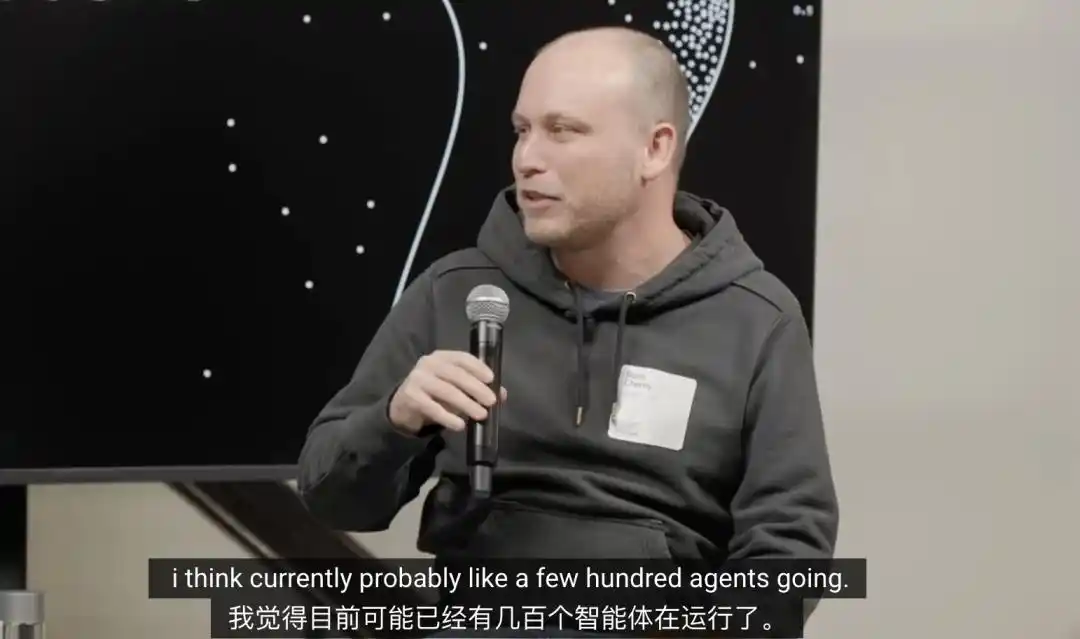

He has the Claude app open on his phone, with a small code tab on the left, containing 5 to 10 concurrent sessions.

Under each session is a cluster of agents, hundreds running during the day, and once night falls, thousands start doing deeper work.

The models write all the code, he doesn't touch a single line.

For him, the task of programming has been solved.

How Can One Person Manage Thousands of Agents?

One person manages thousands of agents, having them all modify code in the same repository simultaneously, without losing control, fighting each other, or creating piles of garbage.

Boris's secret lies behind one word: Loop.

He says a Loop is the simplest yet most useful thing he's seen; Loops are the future.

The essence of a Loop is letting Claude schedule a repeatable task using a cron job—every minute, every five minutes, daily, as you set it. Once it's running, it basically requires no management.

He has dozens of Loops running perpetually:

One specifically monitors his PRs, automatically fixing continuous integration (CI) and rebasing;

One is responsible for keeping CI healthy, fixing any unstable tests itself;

And another scrapes user feedback from X every 30 minutes, clusters and organizes it, then submits it to him.

More crucially, later on, even the step of initiating a Loop rarely requires Boris to speak up.

Once he just asked the model to run a data query, and the model replied: "I noticed this data keeps changing, so I'll start a Loop and give you a report every 30 minutes."

He said okay, just send it to my Slack. The model then handled the matter.

Not long ago, Boris also mentioned he no longer writes prompts, only loops.

Soon, he might not even need to write loops.

Agents

Are Redefining "Getting Work Done"

Behind this, "getting work done" itself is changing.

In the past, it was you writing a line, AI answering, you writing the next line; now, it's you building a small system that can find work, do it, and submit it on its own, then you walk away.

Anthropic recently launched Routines, moving the same mechanism to the server side. Close your laptop, and it still runs.

The role of "engineer" is also being rewritten in Boris's case:

The model writes the code, he's responsible for building the system and acceptance testing. Dozens to hundreds of PRs emerge daily from the agents. His real job is deciding which can be merged and which need to be sent back.

In his words, this is not "AI replacing engineers," but humans transitioning from operators and executors to designers of automated systems: the focus shifts from "writing this line of code correctly" to "building a system that can write code correctly on its own."

He even predicts that in another year, security steps like prompt injection protection, command validation, and manual approval will become less important because models will become increasingly conscientious about doing the right thing.

And this approach is no longer just his personal play.

According to Boris, there's hardly any manual coding left in the company; even SQL is written by models. It's hard to find a few lines of code still typed by a human in the entire company.

Even more surreal is another scene. When his Claude agents are writing code in a Loop, they'll go to Slack themselves, chat with colleagues' Claude agents, aligning on things no one has figured out yet.

A group of AIs holding meetings in a Slack channel, dividing up the work, and going back to do it—this is daily routine at Anthropic.

Even more intense is the team composition: engineering managers, product managers, designers, data scientists, finance, user researchers—everyone is writing code.

The functions remain, but everyone has gained an extra layer of general capability: "orchestrating AI to get work done," becoming cross-disciplinary generalists.

From Writing Prompts to Writing Loops

The Gap Lies in a Step Called Acceptance

How can an AI that works autonomously infinitely not be a machine producing bugs at high speed?

The answer lies in a step most people overlook: acceptance.

A Loop can run autonomously without going off the rails, relying on a "goal-driven" mechanism, corresponding to the /goal command in Claude Code.

You give it a goal, like "All unit tests under /tests/ pass, linting clean." After each step, a separate, smaller model judges: Is it done? If not, keep going; if yes, stop.

This "supervising model" responsible for scoring is not the one doing the work.

This simple design is precisely the heart of the entire loop.

Without it, a Loop running all night could very well be a machine that's asleep yet still bulk-submitting garbage code, and doing so righteously.

Boris verified this long ago.

When sharing his workflow previously, he gave this piece of advice: the most important step to squeeze the utmost out of Claude Code is to give it a way to verify its own work.
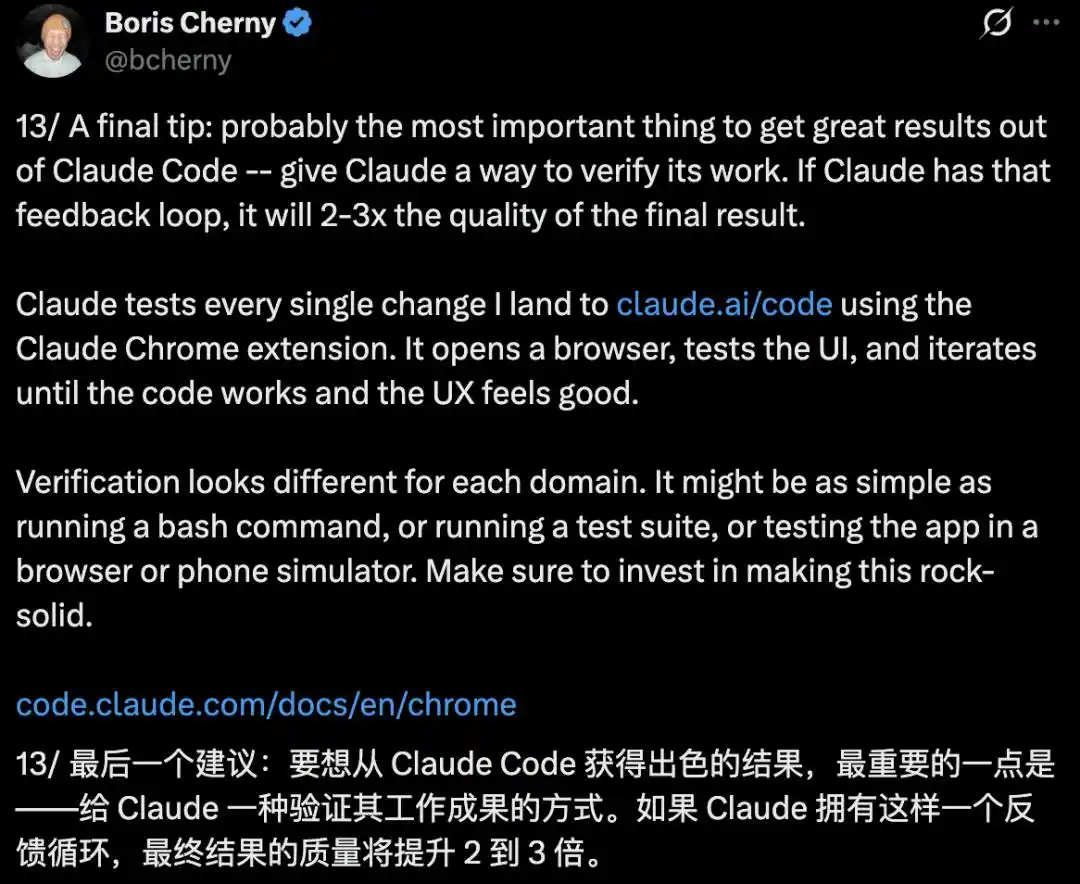
Once this feedback loop is established, output quality typically improves by 2 to 3 times.

A single action of "making AI check itself" is equivalent to upgrading a generation of models.

This Cycle is Usable by Ordinary People Too

The aforementioned cycle has been turned into a product; ordinary people can use it just the same.

After the release of Fable 5, a widely circulated tutorial on X stated, after three weeks of hands-on testing by the author: Most people use Fable 5 like they use ordinary Claude, which is a complete waste of what truly makes it worth paying for.

The author first points out three capabilities that distinguish Fable 5 from all previous Claude models.
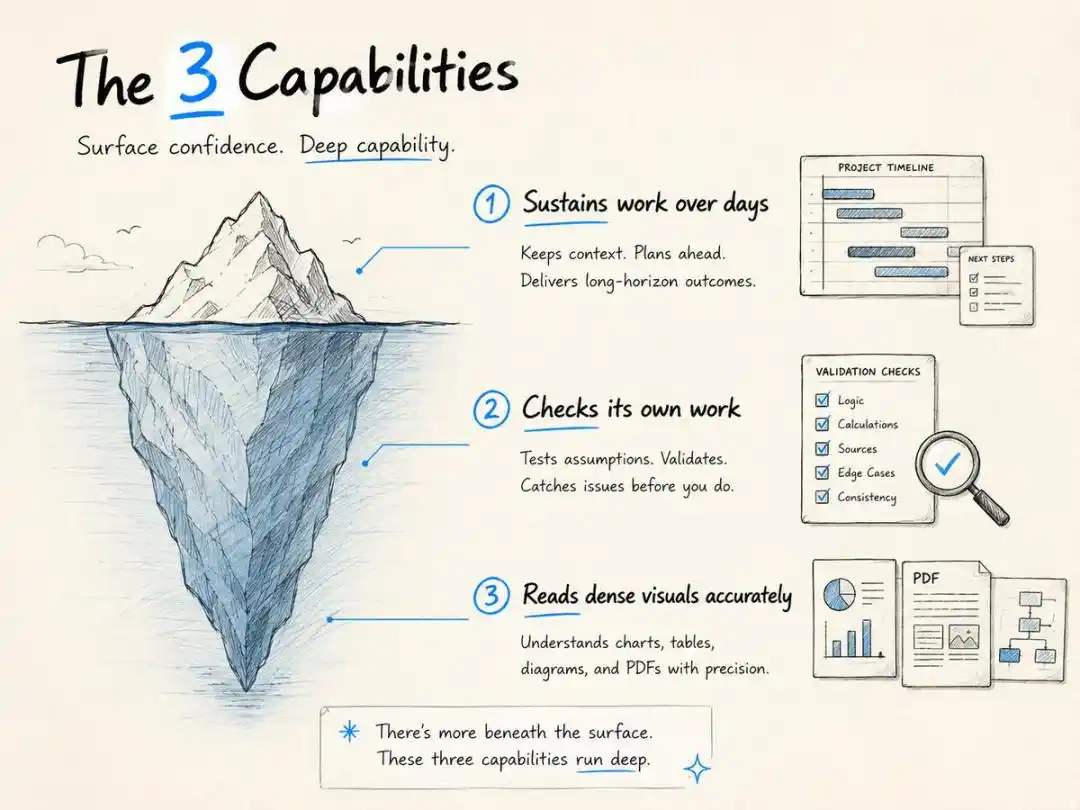
The three major capabilities of Fable 5 summarized in the tutorial: Long-term autonomous work, self-verification, understanding dense charts.

First, it can work continuously for days, not minutes.

Previous models were sprinters; Fable 5 is the first model built for "long-term autonomous work."

In Claude Code, you can give it an entire multi-day project; it plans in phases itself, dispatches sub-agents, and keeps working until the goal is met.

Second, it checks its own work. After finishing a task, it doesn't rush to deliver; it first writes tests, runs them, catches errors, fixes them, and only then says "done."

Third, the ability to understand dense charts.

According to the author's tests, for tables in financial reports, charts embedded in PDFs, architecture diagrams, dashboard screenshots—areas where Opus 4.8 occasionally misidentified columns or confused axes—Fable 5 can read them accurately and consistently.

And to truly utilize these capabilities, it relies on two commands: /goal and /loop.

Without them, you're paying double the price for a chatbot; with them, you're buying an autonomous working employee.
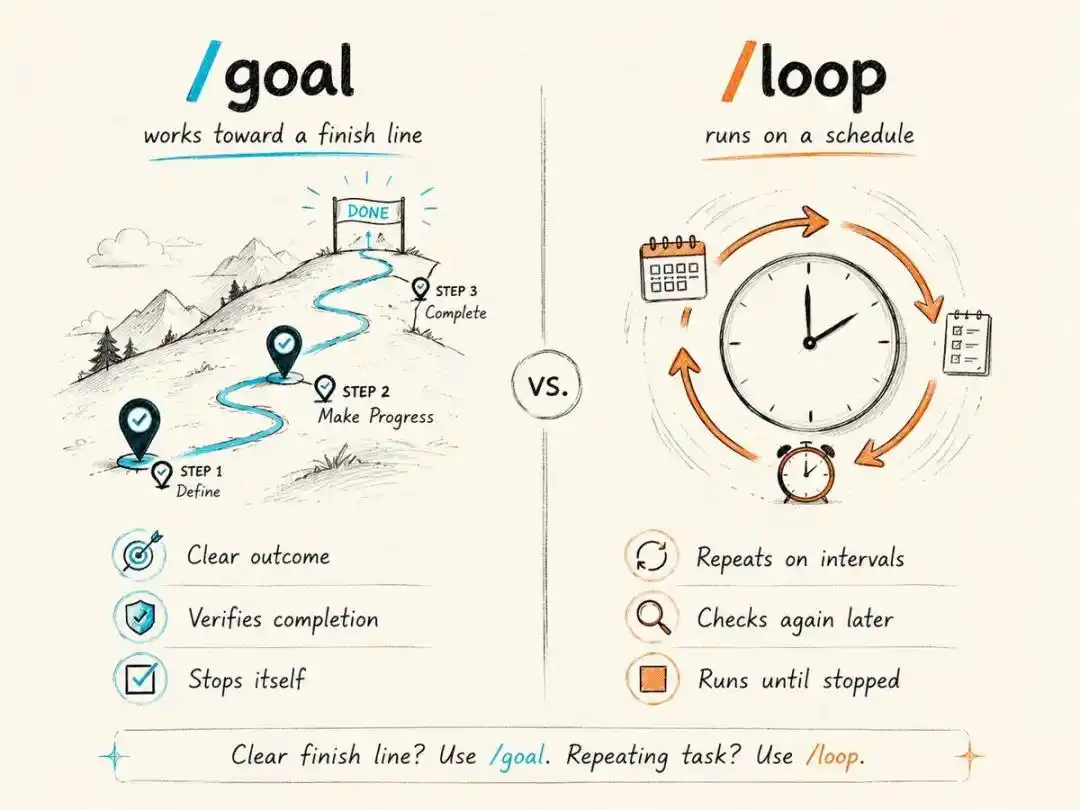
/goal runs towards the finish line and stops itself when reached; /loop runs repeatedly on schedule until you tell it to stop.

The mechanism of /goal is: you define the result, it's responsible for iteration. Whether it runs well follows an ironclad rule: write the "completion criteria" concretely, and must include an exit strategy for failure.

For example, "Improve this piece of code" is a bad goal because it's unverifiable; "All tests under /tests/ pass, only files in /src are allowed to be modified, stop and report if still failing after 3 fixes" is a good goal because each point can be verified.

/loop doesn't target a specific endpoint; it runs repeatedly on schedule until you stop it.

For example, check error logs every 30 minutes, pick out severity-level ones and report them in plain language; or scan the inbox every hour, summarize new emails, and draft replies for those needing responses.

The division of labor mantra is three sentences: For a clear endpoint, use /goal; for periodic repetition, use /loop; to keep running until a condition is met, combine both.

Before letting go, there's one more piece of very practical advice: set the spending limit first. An uncapped /goal hitting a difficult problem can burn through tokens frighteningly fast.

Making It Remember You: 20 Minutes of Local Configuration

The tutorial also mentions a step most guides skip, which is precisely the most crucial.

Fable 5 won't remember you. Every new session, it knows nothing about your business, writing style, clients, or preferences, starting from zero each time.

The solution is to set up a local context system on your own machine, which takes only 20 minutes.
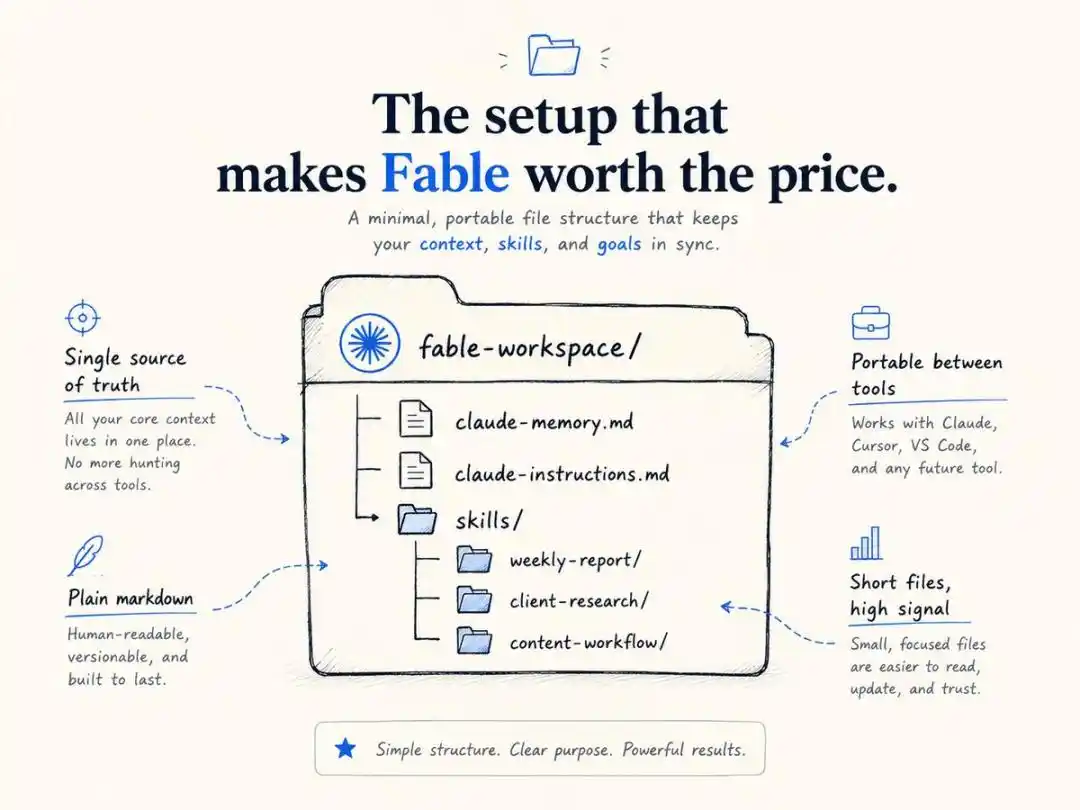
One folder, two markdown files, and a set of skills—that's all the configuration needed for Fable 5 to "know you."

It's done in four steps.

Step one, create a context folder, e.g., named `fable-workspace`, serving as the "single source of truth" it must read before starting any work.

The folder can contain items like: a one-page summary of business and priorities, standard operating procedures for frequent tasks, key information for ongoing projects, often-referenced strategic documents, plus a decision log.

Keep each file to one page; too much content eats up the context window.

Step two, create a memory file `claude-memory.md`, and leave an instruction: Whenever I mention important information about business, preferences, or situation, update the key points into it, keep it brief, and date it.

From then on, it updates itself. Mention a new client once, and it already knows in the next session.

Step three, create an instruction file `claude-instructions.md`, clearly stating behavioral rules for each session: read the memory file before starting work, check past decisions before giving advice, ask if unsure—don't guess, proactively report after finishing work and mark areas needing human review.

Step four, in Claude Code, use `/add` to point to this folder, or write into CLAUDE.md. Once connected, at the start of every session, it already comes loaded with your full context.

This configuration has another benefit: if you switch to another AI tool someday, you can directly package and take your context with you.

Regarding saving money, there's an 80/20 approach: only use Fable 5 for that 20% of tasks that truly leverage its strengths.

In Claude Code, Fable can also dispatch cheaper sub-agents to do rough work: it comes up with the plan, Sonnet, Haiku, etc., execute it, and finally, it returns to validate.

At this point, you'll realize Boris's "Night Shift AI Army" breaks down to just three things:

A model that works autonomously, a set of standards defining "done," and a cycle that runs on schedule.

The model and the cycle are already in place.

What's truly scarce is the person who can clearly explain to the model "what a finished task looks like."

References:

https://safe.ai/blog/significant-increase-in-digital-labor-automation

https://x.com/free_ai_guides/status/2073050543027638443

https://youtu.be/SlGRN8jh2RI

https://x.com/bcherny/status/2007179861115511237

This article is from WeChat public account "Xinzhiyuan", edited by: Yuanyu

Trending Cryptos

Related Questions

QWhat is the core concept that allows Claude Code's creator to manage thousands of AI agents simultaneously without chaos?

AThe core concept is the 'Loop'. It involves setting up timed, automated tasks (like code fixes, CI health checks, or user feedback collection) that run periodically (e.g., every minute, 5 minutes, or daily) with minimal human oversight. This enables continuous, self-directed work by AI agents.

QAccording to the article, how is the role of an 'engineer' being redefined in Boris's workflow?

AThe role is shifting from being a hands-on coder to a designer and manager of automated systems. The engineer sets up the systems (like Loops), defines goals, and acts as a reviewer/approver for the code (PRs) generated by AI agents, rather than writing the code line-by-line themselves.

QWhat is the critical component that prevents an autonomous AI loop from becoming a machine that generates bugs?

AThe critical component is a 'verification' or 'acceptance' mechanism, specifically the '/goal' command in Claude Code. A separate 'supervisor' model independently checks if the AI's work meets the predefined, concrete completion criteria after each step, creating a feedback loop that ensures quality and stops the process when the goal is achieved.

QWhat are the two key commands in Fable 5 that users must utilize to unlock its potential for autonomous work?

AThe two key commands are '/goal' and '/loop'. '/goal' is for tasks with a clear end state, where the AI iterates until the goal is met. '/loop' is for recurring, periodic tasks that run until manually stopped. Using them transforms Fable 5 from a chatbot into an autonomous worker.

QWhat practical setup does the article suggest to make Fable 5 'remember' a user's context across different sessions?

AIt suggests creating a local context system with a dedicated folder (e.g., 'fable-workspace'). This folder should contain concise Markdown files summarizing the business, priorities, operating procedures, and active projects. A 'claude-memory.md' file is used for the AI to self-update with important user information, and a 'claude-instructions.md' file defines session behavior rules. This folder is then linked to Claude Code via the '/add' command or a CLAUDE.md file.

Related Reads

After Three Consecutive Quarters of Decline, Can the Crypto Market Find a Window for Stabilization in Q3?

The cryptocurrency market has just concluded its worst-performing quarter since 2022, with total capitalization dropping 12.6% to $2.1 trillion. All core metrics indicate capital is leaving the sector, not just rotating within it. Bitcoin fell 14.2% and Ethereum dropped 25.4% in Q2, breaking their previous correlation with US tech stocks. A key driver is the reversal in US spot Bitcoin ETF flows, which saw a net outflow of approximately $4.67 billion in Q2, including a record monthly outflow near $4.5 billion in June. While recent data suggests long-term holders are accumulating again, sustained ETF outflows mean continued selling pressure. Market focus is now singularly on the Federal Reserve. The upcoming July FOMC meeting is seen as the most critical event for Q3. A dovish signal could support Bitcoin reclaiming a $68,000-$84,000 range, while a hawkish stance might establish a new trading band around $50,000-$56,000. Additionally, regulatory uncertainty persists, with the progress of the crucial *CLARITY Act* stalling in the Senate, reducing its perceived 2026 passage probability to 40-45%. Despite the broad downturn, a few sectors showed growth. Prediction markets saw nominal volume surge 48.7% year-over-year to $113.8 billion, and tokenized collectibles transaction volume rose 143% quarterly to $1.4 billion. The Real-World Asset (RWA) tokenization sector also continued steady growth, now representing ~$28.1 billion in on-chain value. The market's foundation for an extreme crash appears limited, with Bitcoin price hovering near its 200-week moving average. However, the trading paradigm has shifted from narrative-driven speculation to decisions based on price action, policy developments, and interest rate expectations, making a broad sentiment-driven rally unlikely in the near term.

marsbit8h ago

After Three Consecutive Quarters of Decline, Can the Crypto Market Find a Window for Stabilization in Q3?

marsbit8h ago

BIT Trading Moment: BTC Still Suppressed by Weekly 200 EMA, Rejection May Restart Decline; Storage and Semiconductors that Surged Last Night Begin Falling in Evening Trading

**Crypto & Stock Market Wrap: Bitcoin Tests Resistance, Stocks Retreat After AI Surge** Bitcoin consolidates around $66,000, facing key resistance near $68,000—an area seen as a major psychological and technical hurdle where previous rallies have failed. Analysts note the cryptocurrency is caught between its 200-week moving average (~$63,333) and 200-week EMA (~$68,328). A clear break above $68k is needed to signal a stronger bullish trend, while a rejection could lead to a retest of $63k support. Market sentiment remains cautious, with low futures open interest pointing to a low-liquidity rebound rather than a full bull market. Bitcoin spot ETFs saw another $203 million inflow. US stock futures pointed lower after a strong Tuesday session led by a massive rebound in semiconductors and memory stocks. The rally was fueled by renewed optimism about AI-driven hardware demand, with Micron, SanDisk, and SK Hynix surging. However, those gains reversed in pre-market trading. Super Micro Computer (SMCI) soared over 20% after hours on strong guidance and a record backlog. Other standouts included Rocket Lab and nuclear energy plays Oklo and X-Energy. Rising oil prices (Brent above $91) and climbing Treasury yields (10-year near 4.64%), however, are reigniting inflation concerns and acting as a headwind for equities. In Asia, markets were mixed. South Korea's KOSPI pared early gains to close slightly higher as semiconductor stocks like SK Hynix gave back initial surges. Japan's Nikkei edged lower as the yen hit a fresh 38-year low against the dollar, raising fears of potential market intervention. Key events to watch include the Samsung Galaxy launch, AMD's AI event, and a slew of major tech earnings from Alphabet, Tesla, and IBM after the close on Wednesday, followed by the ECB meeting and Intel's earnings on Thursday.

marsbit8h ago

BIT Trading Moment: BTC Still Suppressed by Weekly 200 EMA, Rejection May Restart Decline; Storage and Semiconductors that Surged Last Night Begin Falling in Evening Trading

marsbit8h ago

Former CFTC Chairman, Circle President Tarbert: Preaching Long-Termism While Cashing Out $30 Million Himself

Former CFTC Chairman and Circle President Heath Tarbert has consistently advocated for a long-term vision in public, urging patience from investors as Circle’s stock price has fallen significantly from its peak. However, it has been revealed that since Circle’s IPO, Tarbert has continuously sold his CRCL shares through pre-arranged trading plans, cashing out approximately $30 million, without making any public market purchases. This contrast between his public messaging and personal actions has drawn criticism. Tarbert joined Circle in July 2023 as Chief Legal Officer, leveraging his regulatory experience to help guide the company through its IPO and expansion. Despite promoting stablecoins as long-term infrastructure, he established a 10b5-1 trading plan just before Circle went public, leading to substantial stock sales over the following year. In March 2026, he initiated another plan to sell more shares. His career trajectory highlights a pattern of moving between high-level regulatory roles and influential positions in the financial sector. After resigning as CFTC Chairman in early 2021, he joined Citadel Securities as Chief Legal Officer just 27 days later, during a period of intense regulatory scrutiny for the firm. He later joined Circle, aiding its efforts to navigate regulatory challenges for its public listing. While Tarbert's expertise in policy and compliance is valuable to companies like Circle, his actions—advocating long-term confidence while personally divesting—raise questions about the alignment between his public statements and his private financial decisions, leaving investors who followed his advice to bear the market risks.

marsbit8h ago

Former CFTC Chairman, Circle President Tarbert: Preaching Long-Termism While Cashing Out $30 Million Himself

marsbit8h ago

Gate Research Institute: The 'Wall Street-ization' Wave of Crypto Financial Products – Competition or Integration?

The article titled "Gate Research Institute: Are Crypto Financial Products Sparking a 'Wall Street' Wave—Competition or Convergence?" explores the evolving relationship between the crypto ecosystem and traditional finance (TradFi). The piece begins by reflecting on Bitcoin's original 2009 vision of decentralization, disintermediation, and moving away from banks. It then contrasts this with the 2024 landscape, where key crypto assets like Bitcoin are increasingly held through Wall Street products like ETFs issued by giants like BlackRock. The article questions whether this signifies that TradFi is systematically taking over the rights to issue, price, custody, and distribute crypto financial assets. The core argument is that this is not a zero-sum takeover but rather a bidirectional convergence where each side addresses the other's weaknesses. Crypto offers 24/7 global markets, programmable settlement, and open access but lacks compliant channels, institutional-grade custody, deep fiat liquidity, and mainstream distribution. TradFi possesses these but is constrained by legacy systems, limited operating hours, and slow settlement. Two primary convergence paths are highlighted: * **Path A (CEX to TradFi):** Exemplified by Gate, which has progressed from offering tokenized stocks and CFDs to providing direct, real stock trading (US, Hong Kong, South Korea) within its platform, using USDT. * **Path B (TradFi to Crypto):** Exemplified by Robinhood, which has integrated crypto trading, acquired exchanges like Bitstamp, and is moving traditional assets like stocks onto the blockchain via tokenization and its own Layer 2. Both paths are ultimately competing to become the next-generation, unified financial account—a "super account" where users can seamlessly trade cryptocurrencies, stocks, ETFs, RWA (Real World Assets), and tokenized treasury products in one interface. The growth of RWA and tokenized treasuries (e.g., BlackRock's BUIDL) is presented as the asset-layer fusion, providing stable, yield-bearing assets on-chain and acting as a bridge between the two worlds. In conclusion, the "Wall Street-ization" of crypto is framed as a mutual transformation. Decentralized ideals persist in the protocol layer, while at the application layer, a more efficient, global, and accessible unified capital market is emerging from this convergence. The future competition lies not between crypto exchanges and stockbrokers, but between platforms vying to offer the most comprehensive asset coverage, liquidity, and user experience within a single account.

marsbit8h ago

Gate Research Institute: The 'Wall Street-ization' Wave of Crypto Financial Products – Competition or Integration?

marsbit8h ago

Trading

Spot

Hot Articles

What is SONIC

Sonic: Pioneering the Future of Gaming in Web3 Introduction to Sonic In the ever-evolving landscape of Web3, the gaming industry stands out as one of the most dynamic and promising sectors. At the forefront of this revolution is Sonic, a project designed to amplify the gaming ecosystem on the Solana blockchain. Leveraging cutting-edge technology, Sonic aims to deliver an unparalleled gaming experience by efficiently processing millions of requests per second, ensuring that players enjoy seamless gameplay while maintaining low transaction costs. This article delves into the intricate details of Sonic, exploring its creators, funding sources, operational mechanics, and the timeline of significant events that have shaped its journey. What is Sonic? Sonic is an innovative layer-2 network that operates atop the Solana blockchain, specifically tailored to enhance the existing Solana gaming ecosystem. It accomplishes this through a customised, VM-agnostic game engine paired with a HyperGrid interpreter, facilitating sovereign game economies that roll up back to the Solana platform. The primary goals of Sonic include: Enhanced Gaming Experiences: Sonic is committed to offering lightning-fast on-chain gameplay, allowing players and developers to engage with games at previously unattainable speeds. Atomic Interoperability: This feature enables transactions to be executed within Sonic without the need to redeploy Solana programmes and accounts. This makes the process more efficient and directly benefits from Solana Layer1 services and liquidity. Seamless Deployment: Sonic allows developers to write for Ethereum Virtual Machine (EVM) based systems and execute them on Solana’s SVM infrastructure. This interoperability is crucial for attracting a broader range of dApps and decentralised applications to the platform. Support for Developers: By offering native composable gaming primitives and extensible data types - dining within the Entity-Component-System (ECS) framework - game creators can craft intricate business logic with ease. Overall, Sonic's unique approach not only caters to players but also provides an accessible and low-cost environment for developers to innovate and thrive. Creator of Sonic The information regarding the creator of Sonic is somewhat ambiguous. However, it is known that Sonic's SVM is owned by the company Mirror World. The absence of detailed information about the individuals behind Sonic reflects a common trend in several Web3 projects, where collective efforts and partnerships often overshadow individual contributions. Investors of Sonic Sonic has garnered considerable attention and support from various investors within the crypto and gaming sectors. Notably, the project raised an impressive $12 million during its Series A funding round. The round was led by BITKRAFT Ventures, with other notable investors including Galaxy, Okx Ventures, Interactive, Big Brain Holdings, and Mirana. This financial backing signifies the confidence that investment foundations have in Sonic’s potential to revolutionise the Web3 gaming landscape, further validating its innovative approaches and technologies. How Does Sonic Work? Sonic utilises the HyperGrid framework, a sophisticated parallel processing mechanism that enhances its scalability and customisability. Here are the core features that set Sonic apart: Lightning Speed at Low Costs: Sonic offers one of the fastest on-chain gaming experiences compared to other Layer-1 solutions, powered by the scalability of Solana’s virtual machine (SVM). Atomic Interoperability: Sonic enables transaction execution without redeployment of Solana programmes and accounts, effectively streamlining the interaction between users and the blockchain. EVM Compatibility: Developers can effortlessly migrate decentralised applications from EVM chains to the Solana environment using Sonic’s HyperGrid interpreter, increasing the accessibility and integration of various dApps. Ecosystem Support for Developers: By exposing native composable gaming primitives, Sonic facilitates a sandbox-like environment where developers can experiment and implement business logic, greatly enhancing the overall development experience. Monetisation Infrastructure: Sonic natively supports growth and monetisation efforts, providing frameworks for traffic generation, payments, and settlements, thereby ensuring that gaming projects are not only viable but also sustainable financially. Timeline of Sonic The evolution of Sonic has been marked by several key milestones. Below is a brief timeline highlighting critical events in the project's history: 2022: The Sonic cryptocurrency was officially launched, marking the beginning of its journey in the Web3 gaming arena. 2024: June: Sonic SVM successfully raised $12 million in a Series A funding round. This investment allowed Sonic to further develop its platform and expand its offerings. August: The launch of the Sonic Odyssey testnet provided users with the first opportunity to engage with the platform, offering interactive activities such as collecting rings—a nod to gaming nostalgia. October: SonicX, an innovative crypto game integrated with Solana, made its debut on TikTok, capturing the attention of over 120,000 users within a short span. This integration illustrated Sonic’s commitment to reaching a broader, global audience and showcased the potential of blockchain gaming. Key Points Sonic SVM is a revolutionary layer-2 network on Solana explicitly designed to enhance the GameFi landscape, demonstrating great potential for future development. HyperGrid Framework empowers Sonic by introducing horizontal scaling capabilities, ensuring that the network can handle the demands of Web3 gaming. Integration with Social Platforms: The successful launch of SonicX on TikTok displays Sonic’s strategy to leverage social media platforms to engage users, exponentially increasing the exposure and reach of its projects. Investment Confidence: The substantial funding from BITKRAFT Ventures, among others, emphasizes the robust backing Sonic has, paving the way for its ambitious future. In conclusion, Sonic encapsulates the essence of Web3 gaming innovation, striking a balance between cutting-edge technology, developer-centric tools, and community engagement. As the project continues to evolve, it is poised to redefine the gaming landscape, making it a notable entity for gamers and developers alike. As Sonic moves forward, it will undoubtedly attract greater interest and participation, solidifying its place within the broader narrative of blockchain gaming.

1.9k Total ViewsPublished 2024.04.04Updated 2024.12.03

What is SONIC

What is $S$

Understanding SPERO: A Comprehensive Overview Introduction to SPERO As the landscape of innovation continues to evolve, the emergence of web3 technologies and cryptocurrency projects plays a pivotal role in shaping the digital future. One project that has garnered attention in this dynamic field is SPERO, denoted as SPERO,$$s$. This article aims to gather and present detailed information about SPERO, to help enthusiasts and investors understand its foundations, objectives, and innovations within the web3 and crypto domains. What is SPERO,$$s$? SPERO,$$s$ is a unique project within the crypto space that seeks to leverage the principles of decentralisation and blockchain technology to create an ecosystem that promotes engagement, utility, and financial inclusion. The project is tailored to facilitate peer-to-peer interactions in new ways, providing users with innovative financial solutions and services. At its core, SPERO,$$s$ aims to empower individuals by providing tools and platforms that enhance user experience in the cryptocurrency space. This includes enabling more flexible transaction methods, fostering community-driven initiatives, and creating pathways for financial opportunities through decentralised applications (dApps). The underlying vision of SPERO,$$s$ revolves around inclusiveness, aiming to bridge gaps within traditional finance while harnessing the benefits of blockchain technology. Who is the Creator of SPERO,$$s$? The identity of the creator of SPERO,$$s$ remains somewhat obscure, as there are limited publicly available resources providing detailed background information on its founder(s). This lack of transparency can stem from the project's commitment to decentralisation—an ethos that many web3 projects share, prioritising collective contributions over individual recognition. By centring discussions around the community and its collective goals, SPERO,$$s$ embodies the essence of empowerment without singling out specific individuals. As such, understanding the ethos and mission of SPERO remains more important than identifying a singular creator. Who are the Investors of SPERO,$$s$? SPERO,$$s$ is supported by a diverse array of investors ranging from venture capitalists to angel investors dedicated to fostering innovation in the crypto sector. The focus of these investors generally aligns with SPERO's mission—prioritising projects that promise societal technological advancement, financial inclusivity, and decentralised governance. These investor foundations are typically interested in projects that not only offer innovative products but also contribute positively to the blockchain community and its ecosystems. The backing from these investors reinforces SPERO,$$s$ as a noteworthy contender in the rapidly evolving domain of crypto projects. How Does SPERO,$$s$ Work? SPERO,$$s$ employs a multi-faceted framework that distinguishes it from conventional cryptocurrency projects. Here are some of the key features that underline its uniqueness and innovation: Decentralised Governance: SPERO,$$s$ integrates decentralised governance models, empowering users to participate actively in decision-making processes regarding the project’s future. This approach fosters a sense of ownership and accountability among community members. Token Utility: SPERO,$$s$ utilises its own cryptocurrency token, designed to serve various functions within the ecosystem. These tokens enable transactions, rewards, and the facilitation of services offered on the platform, enhancing overall engagement and utility. Layered Architecture: The technical architecture of SPERO,$$s$ supports modularity and scalability, allowing for seamless integration of additional features and applications as the project evolves. This adaptability is paramount for sustaining relevance in the ever-changing crypto landscape. Community Engagement: The project emphasises community-driven initiatives, employing mechanisms that incentivise collaboration and feedback. By nurturing a strong community, SPERO,$$s$ can better address user needs and adapt to market trends. Focus on Inclusion: By offering low transaction fees and user-friendly interfaces, SPERO,$$s$ aims to attract a diverse user base, including individuals who may not previously have engaged in the crypto space. This commitment to inclusion aligns with its overarching mission of empowerment through accessibility. Timeline of SPERO,$$s$ Understanding a project's history provides crucial insights into its development trajectory and milestones. Below is a suggested timeline mapping significant events in the evolution of SPERO,$$s$: Conceptualisation and Ideation Phase: The initial ideas forming the basis of SPERO,$$s$ were conceived, aligning closely with the principles of decentralisation and community focus within the blockchain industry. Launch of Project Whitepaper: Following the conceptual phase, a comprehensive whitepaper detailing the vision, goals, and technological infrastructure of SPERO,$$s$ was released to garner community interest and feedback. Community Building and Early Engagements: Active outreach efforts were made to build a community of early adopters and potential investors, facilitating discussions around the project’s goals and garnering support. Token Generation Event: SPERO,$$s$ conducted a token generation event (TGE) to distribute its native tokens to early supporters and establish initial liquidity within the ecosystem. Launch of Initial dApp: The first decentralised application (dApp) associated with SPERO,$$s$ went live, allowing users to engage with the platform's core functionalities. Ongoing Development and Partnerships: Continuous updates and enhancements to the project's offerings, including strategic partnerships with other players in the blockchain space, have shaped SPERO,$$s$ into a competitive and evolving player in the crypto market. Conclusion SPERO,$$s$ stands as a testament to the potential of web3 and cryptocurrency to revolutionise financial systems and empower individuals. With a commitment to decentralised governance, community engagement, and innovatively designed functionalities, it paves the way toward a more inclusive financial landscape. As with any investment in the rapidly evolving crypto space, potential investors and users are encouraged to research thoroughly and engage thoughtfully with the ongoing developments within SPERO,$$s$. The project showcases the innovative spirit of the crypto industry, inviting further exploration into its myriad possibilities. While the journey of SPERO,$$s$ is still unfolding, its foundational principles may indeed influence the future of how we interact with technology, finance, and each other in interconnected digital ecosystems.

156 Total ViewsPublished 2024.12.17Updated 2024.12.17

What is $S$

What is AGENT S

Agent S: The Future of Autonomous Interaction in Web3 Introduction In the ever-evolving landscape of Web3 and cryptocurrency, innovations are constantly redefining how individuals interact with digital platforms. One such pioneering project, Agent S, promises to revolutionise human-computer interaction through its open agentic framework. By paving the way for autonomous interactions, Agent S aims to simplify complex tasks, offering transformative applications in artificial intelligence (AI). This detailed exploration will delve into the project's intricacies, its unique features, and the implications for the cryptocurrency domain. What is Agent S? Agent S stands as a groundbreaking open agentic framework, specifically designed to tackle three fundamental challenges in the automation of computer tasks: Acquiring Domain-Specific Knowledge: The framework intelligently learns from various external knowledge sources and internal experiences. This dual approach empowers it to build a rich repository of domain-specific knowledge, enhancing its performance in task execution. Planning Over Long Task Horizons: Agent S employs experience-augmented hierarchical planning, a strategic approach that facilitates efficient breakdown and execution of intricate tasks. This feature significantly enhances its ability to manage multiple subtasks efficiently and effectively. Handling Dynamic, Non-Uniform Interfaces: The project introduces the Agent-Computer Interface (ACI), an innovative solution that enhances the interaction between agents and users. Utilizing Multimodal Large Language Models (MLLMs), Agent S can navigate and manipulate diverse graphical user interfaces seamlessly. Through these pioneering features, Agent S provides a robust framework that addresses the complexities involved in automating human interaction with machines, setting the stage for myriad applications in AI and beyond. Who is the Creator of Agent S? While the concept of Agent S is fundamentally innovative, specific information about its creator remains elusive. The creator is currently unknown, which highlights either the nascent stage of the project or the strategic choice to keep founding members under wraps. Regardless of anonymity, the focus remains on the framework's capabilities and potential. Who are the Investors of Agent S? As Agent S is relatively new in the cryptographic ecosystem, detailed information regarding its investors and financial backers is not explicitly documented. The lack of publicly available insights into the investment foundations or organisations supporting the project raises questions about its funding structure and development roadmap. Understanding the backing is crucial for gauging the project's sustainability and potential market impact. How Does Agent S Work? At the core of Agent S lies cutting-edge technology that enables it to function effectively in diverse settings. Its operational model is built around several key features: Human-like Computer Interaction: The framework offers advanced AI planning, striving to make interactions with computers more intuitive. By mimicking human behaviour in tasks execution, it promises to elevate user experiences. Narrative Memory: Employed to leverage high-level experiences, Agent S utilises narrative memory to keep track of task histories, thereby enhancing its decision-making processes. Episodic Memory: This feature provides users with step-by-step guidance, allowing the framework to offer contextual support as tasks unfold. Support for OpenACI: With the ability to run locally, Agent S allows users to maintain control over their interactions and workflows, aligning with the decentralised ethos of Web3. Easy Integration with External APIs: Its versatility and compatibility with various AI platforms ensure that Agent S can fit seamlessly into existing technological ecosystems, making it an appealing choice for developers and organisations. These functionalities collectively contribute to Agent S's unique position within the crypto space, as it automates complex, multi-step tasks with minimal human intervention. As the project evolves, its potential applications in Web3 could redefine how digital interactions unfold. Timeline of Agent S The development and milestones of Agent S can be encapsulated in a timeline that highlights its significant events: September 27, 2024: The concept of Agent S was launched in a comprehensive research paper titled “An Open Agentic Framework that Uses Computers Like a Human,” showcasing the groundwork for the project. October 10, 2024: The research paper was made publicly available on arXiv, offering an in-depth exploration of the framework and its performance evaluation based on the OSWorld benchmark. October 12, 2024: A video presentation was released, providing a visual insight into the capabilities and features of Agent S, further engaging potential users and investors. These markers in the timeline not only illustrate the progress of Agent S but also indicate its commitment to transparency and community engagement. Key Points About Agent S As the Agent S framework continues to evolve, several key attributes stand out, underscoring its innovative nature and potential: Innovative Framework: Designed to provide an intuitive use of computers akin to human interaction, Agent S brings a novel approach to task automation. Autonomous Interaction: The ability to interact autonomously with computers through GUI signifies a leap towards more intelligent and efficient computing solutions. Complex Task Automation: With its robust methodology, it can automate complex, multi-step tasks, making processes faster and less error-prone. Continuous Improvement: The learning mechanisms enable Agent S to improve from past experiences, continually enhancing its performance and efficacy. Versatility: Its adaptability across different operating environments like OSWorld and WindowsAgentArena ensures that it can serve a broad range of applications. As Agent S positions itself in the Web3 and crypto landscape, its potential to enhance interaction capabilities and automate processes signifies a significant advancement in AI technologies. Through its innovative framework, Agent S exemplifies the future of digital interactions, promising a more seamless and efficient experience for users across various industries. Conclusion Agent S represents a bold leap forward in the marriage of AI and Web3, with the capacity to redefine how we interact with technology. While still in its early stages, the possibilities for its application are vast and compelling. Through its comprehensive framework addressing critical challenges, Agent S aims to bring autonomous interactions to the forefront of the digital experience. As we move deeper into the realms of cryptocurrency and decentralisation, projects like Agent S will undoubtedly play a crucial role in shaping the future of technology and human-computer collaboration.

824 Total ViewsPublished 2025.01.14Updated 2025.01.14

What is AGENT S

Discussions

Welcome to the HTX Community. Here, you can stay informed about the latest platform developments and gain access to professional market insights. Users' opinions on the price of S (S) are presented below.

活动图片













