Altman Kembali ke Stanford untuk Mengakui Kesalahan: Outsource Pikiran ke AI, Otak Satu Generasi Sedang Menyusut

marsbitPublished on 2026-07-16Last updated on 2026-07-16

Abstract

Semua orang mengira AI akan memaksa sistem pendidikan berubah drastis, tapi ChatGPT sudah dirilis selama tiga setengah tahun, dan sistem pendidikan hampir tidak berubah. CEO OpenAI Sam Altman kembali ke almamaternya Stanford, mengakui bahwa dia salah prediksi. Dia mengira sistem pendidikan akan mereformasi diri dengan cepat setelah siswa mulai menyontek dengan AI, tetapi nyatanya tidak. Dia mengkhawatirkan jika sistem pendidikan tetap mengajar dan mengevaluasi siswa dengan metode lama di era pra-AGI, seperti menghafal, jawaban standar, dan ujian tertutup, hal itu tidak hanya membuat metode tersebut usang, tetapi juga menyebabkan "kemampuan berpikir" manusia menyusut. Outsourcing pemikiran ke AI akan melemahkan "otot" berpikir kritis, seperti otot yang tidak digunakan. Riset menunjukkan bahwa setelah ChatGPT masuk, nilai ujian turun signifikan. Analisis dari UC Berkeley terhadap lebih dari 500.000 sampel nilai menemukan bahwa nilai tugas untuk mata kuliah menulis dan pemrograman naik, tetapi nilai ujian tidak berubah. Ini karena siswa "mengalihdayakan" pekerjaan mereka, bukan benar-benar belajar. Pertanyaan besarnya adalah: mengapa revolusi pendidikan yang dijanjikan AI belum datang? Jawabannya terletak pada inersia sistem. Alat bisa diperbarui dengan cepat, tetapi aturan dan lembaga butuh waktu lama untuk berubah. AI tutor pribadi yang murah dan efektif secara teoritis sudah tersedia, tetapi sistem pendidikan lambat beradaptasi. Lalu, apa yang harus diajarkan? Altman berp...

Banyak yang mengira sekolah akan dipaksa berubah total oleh AI.

Tapi tiga setengah tahun sejak ChatGPT diluncurkan, pendidikan hampir tak berubah.

Pada Mei tahun ini, Altman kembali ke almamaternya Stanford, berdiri di podium kelas CS153, dan mengakui kesalahan:

Ini adalah salah satu prediksi saya yang keliru.

Dia juga memberikan peringatan keras: jika tidak berubah, kemampuan berpikir manusia akan menyusut.

Belum lama ini, di podium kelas CS153 Stanford, seseorang bertanya kepada CEO OpenAI Sam Altman: Bagaimana pendapat Anda tentang pendidikan?

Dia berhenti sejenak: "Saya sangat khawatir. Saya pikir sampai sekarang, pendidikan seharusnya sudah berubah."
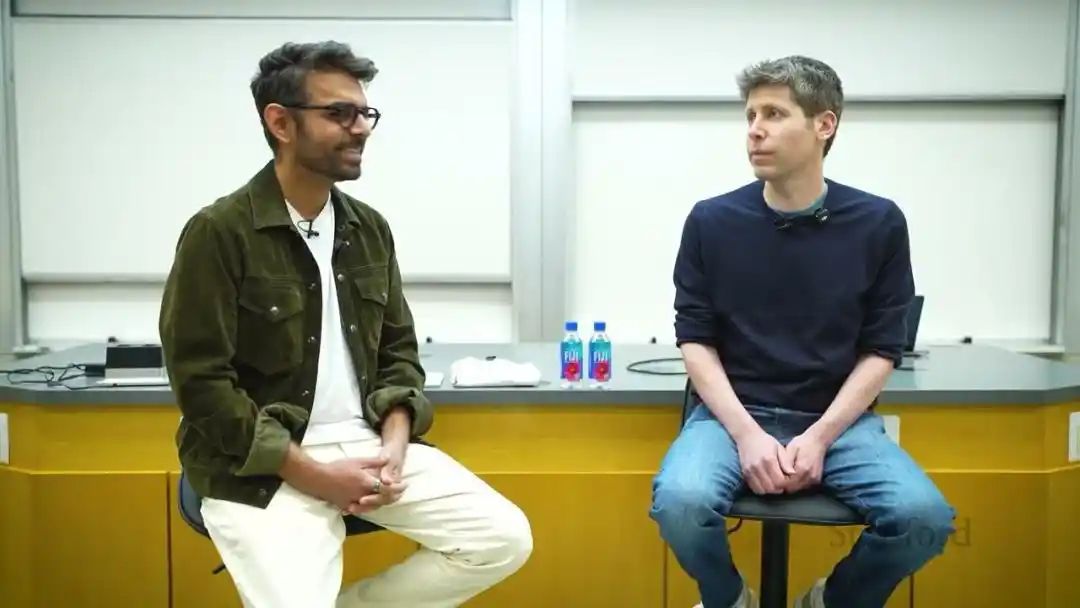
Altman muncul di kelas CS153 Stanford untuk membicarakan pendidikan di era AI, mengakui dia meremehkan kecepatan perubahan sistem pendidikan. (Sumber: Stanford Online)

Tiga setengah tahun lalu, saat ChatGPT baru diluncurkan, Altman waktu itu berpikir, siswa akan menyontek selama setahun, kemudian seluruh sistem pendidikan akan dipaksa merekonstruksi diri, menghasilkan orang yang lebih pandai berpikir daripada sebelumnya.

Namun, tiga setengah tahun berlalu, skenarionya tidak berjalan seperti yang dibayangkan Altman.

Di sisi AI, dari GPT-3.5 yang hanya bisa menulis teks, berevolusi hingga mampu membuktikan kebalikan dari konjektur matematika yang belum terpecahkan selama puluhan tahun.

Sementara di sisi sekolah, masih menggunakan cara yang sama untuk menguji siswa: hafalan, jawaban standar, menulis tutup buku.

Tugas, ujian, makalah... semuanya masih sama. Setelah menelusuri seluruh sistem pendidikan, dia tidak menemukan satu pun perubahan struktural penting.

Seseorang yang berhasil menebak "Hukum Skala" (Scaling Law), justru keliru melihat pendidikan.

Dia mengatakan, ini adalah salah satu prediksi terbesar yang meleset dalam beberapa tahun terakhir.

Seseorang yang selalu menyebut-nyebut kecerdasan buatan umum (AGI), ternyata cemas dengan ruang kelas.

Apa sebenarnya yang dia takutkan?

Dia Kira Sekolah Sudah Seharusnya Berubah

Kembali ke November 2022, saat ChatGPT baru dirilis.

Waktu itu, penilaian Altman masih optimis:

Tahun pertama, siswa akan menggunakannya untuk menyontek, tidak belajar apa-apa; kemudian sistem pendidikan akan membangun ulang dirinya sendiri, mengajar jauh lebih baik daripada sebelumnya.

Menurut bayangannya, guru akan memberikan proyek yang mengharuskan penggunaan AI, sehingga siswa justru harus lebih banyak berpikir, menghasilkan lebih banyak hal baru.

Pada 2024, dia juga pernah secara terbuka optimis: kecerdasan super akan membawa tutor pribadi untuk setiap orang, pendidikan akan beralih dari hafalan ke pemecahan masalah, ke pemikiran kritis.

Hasilnya, AI berevolusi pesat setapak demi setapak setiap tahun, sementara pendidikan tidak bergerak sama sekali.

Outsource ke AI, Sedang Menggerogoti Pemikiran Kritis

Kesenjangan inilah yang benar-benar dikhawatirkan Altman.

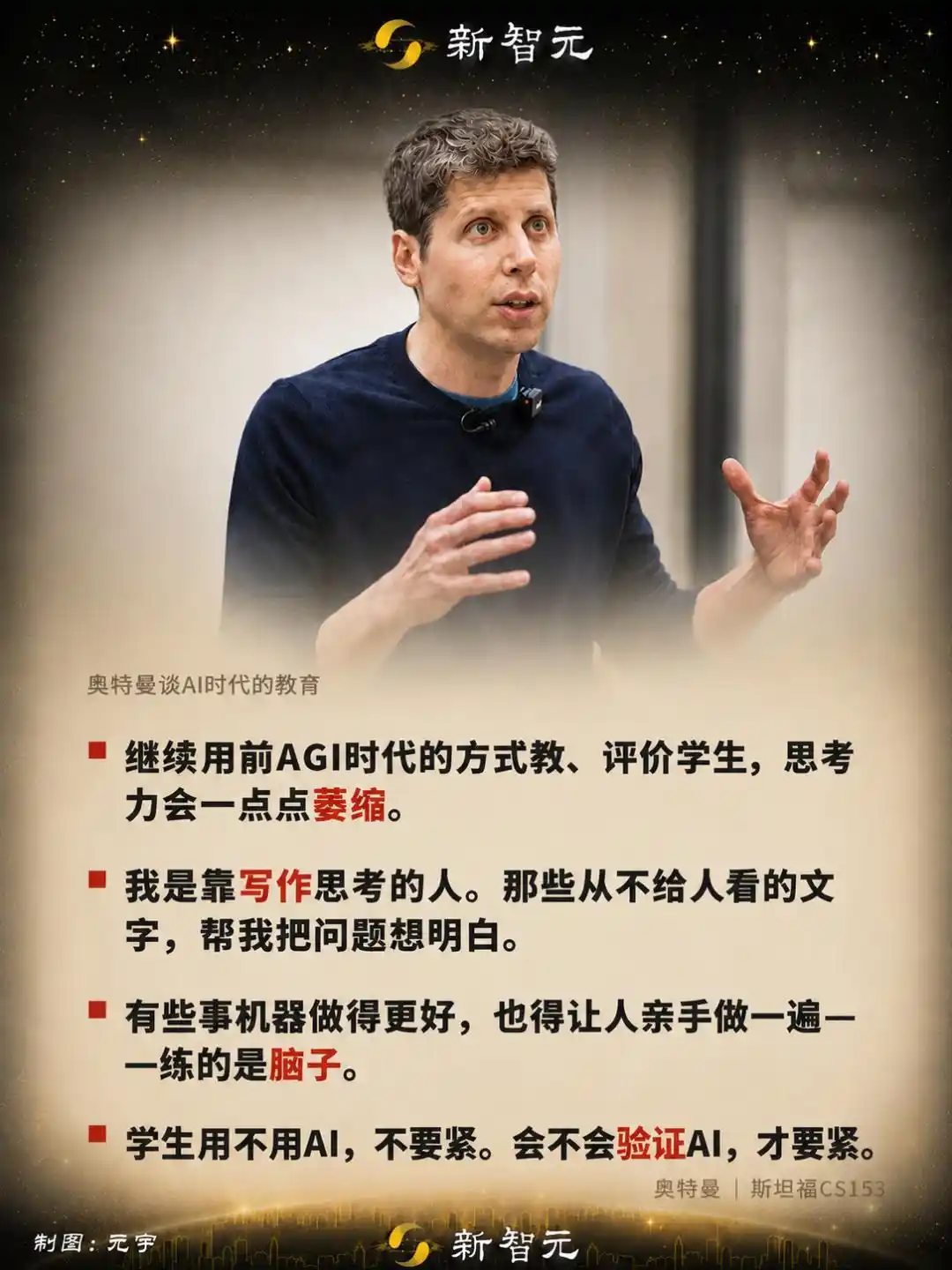
Dia berkata, jika kita terus mengajar dan mengevaluasi siswa dengan cara lama dunia "pra-AGI", tidak hanya akan membuat metode ini tidak efektif, tetapi juga membuat orang "tidak belajar berpikir", menyebabkan pemikiran kritis perlahan-lahan menyusut.

Mengalihdayakan pemikiran ke AI, awalnya hanya untuk mencari kemudahan.

Tapi jika tidak digunakan akan hilang kemampuannya, otot otak yang bertanggung jawab untuk berpikir mandiri itu, seperti lengan yang lama tidak digunakan, akan diam-diam menyusut dan melemah, dalam kata-kata Altman — atrofi otot (atrophy).

Apakah ini hanya kekhawatiran Altman, atau sudah menjadi kenyataan yang terjadi?

Sebuah penelitian menunjukkan, setelah ChatGPT masuk ke kelas, nilai ujian bulanan turun sekitar 20% dalam enam bulan; ujian masuk yang benar-benar menentukan masa depan, nilainya masing-masing turun 18% dan 24%, dan efek ini baru terlihat jelas setelah dua tahun.

Yang lebih menggambarkan masalah adalah analisis dari University of California, Berkeley (UC Berkeley).

Dalam lebih dari 500.000 sampel nilai, untuk mata pelajaran seperti menulis dan pemrograman, setelah ChatGPT diluncurkan, nilai jelas bergeser ke atas, tapi yang naik semuanya adalah nilai tugas, nilai ujian tidak bergerak sama sekali.
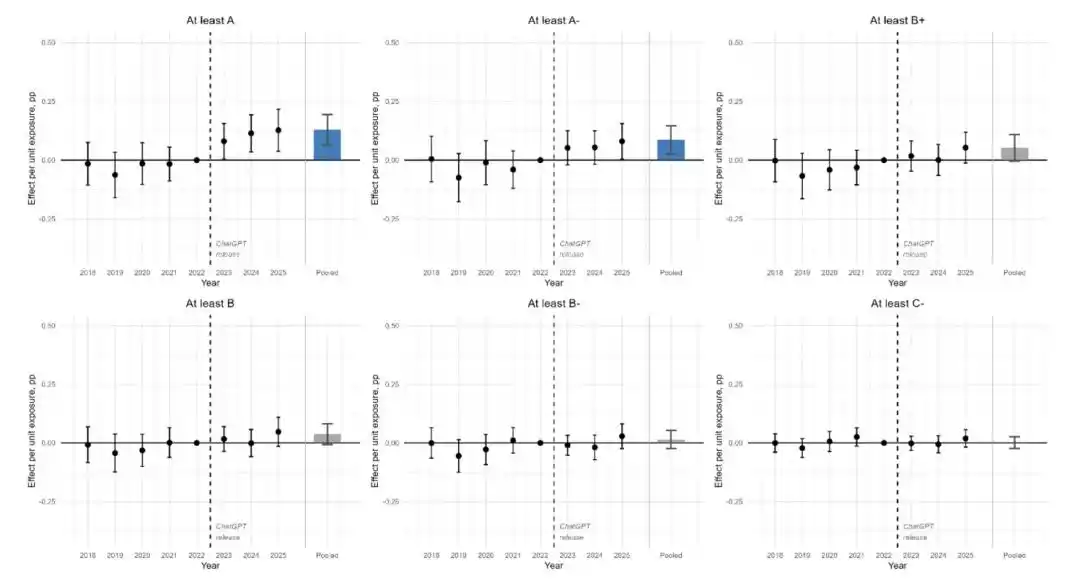
Analisis UC Berkeley terhadap lebih dari 500.000 nilai: Setelah ChatGPT dirilis, proporsi nilai A, A- pada mata kuliah menulis dan pemrograman meningkat signifikan (biru signifikan positif), B+ dan ke bawah hampir tidak berubah. (Sumber: Chirikov/CSHE)

Mengapa? Ini adalah "outsource", bukan "belajar".

Penelitian lain yang mencakup jutaan interaksi matematika di Amerika selama sepuluh tahun juga mengarah pada kesimpulan yang sama: begitu chatbot datang, soal diselesaikan lebih cepat, tapi belajar lebih sedikit.

Tugas dikumpulkan semakin bagus, tapi otak semakin kosong.

Renaisans Pendidikan yang Dijanjikan, Kenapa Tidak Datang

Yang bingung, bukan hanya Altman seorang.
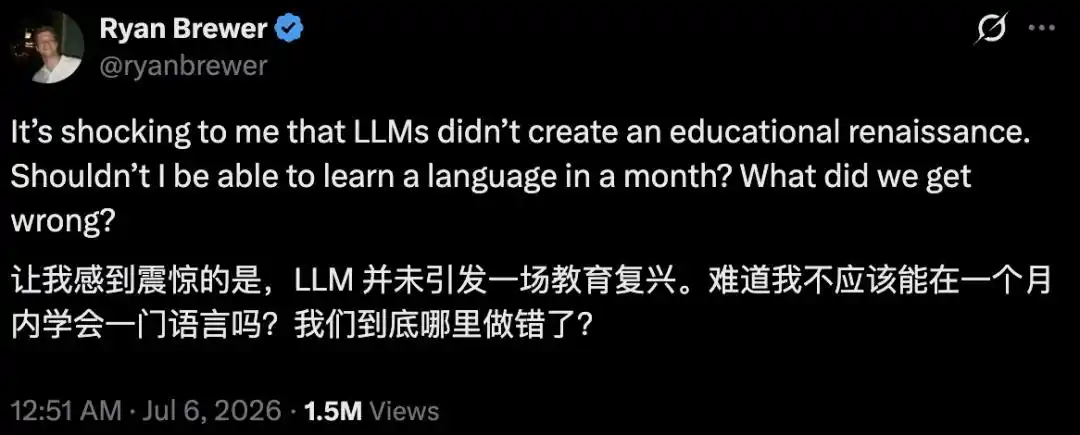
Anggota tim teknis OpenAI, Ryan Brewer, memposting bahwa dia terkejut model besar tidak memicu renaisans pendidikan:

Bukankah saya seharusnya bisa belajar satu bahasa dalam sebulan? Di mana salahnya kita?

Keraguan serupa dengan cepat menyebar di X: dengan alat belajar terhebat sepanjang sejarah, mengapa tutor pribadi AI belum masuk ke setiap rumah, revolusi pendidikan tak kunjung datang?

Jawabannya bukan pada teknologi, tapi pada inersia sistem.

Sistem evaluasi universitas, ujian, makalah, tugas, selama ratusan tahun berdiri pada premis tersembunyi: hal-hal ini memakan waktu terlalu banyak, tidak ada yang akan mengambil jalan pintas.

Begitu AI datang, premis ini berubah.

Tapi sekolah masih menggunakan standar era pra-AGI, untuk mengukur generasi baru yang sudah tumbuh bersama AI, kenyataannya generasi pertama penduduk asli ChatGPT sudah lulus.

Pergantian alat hanya butuh satu nomor versi, pergantian sistem butuh satu generasi: secara teknis sudah siap, tapi aturan masih tertinggal di era sebelumnya.

Seorang tutor pribadi AI yang tidak kenal lelah 24 jam, bisa mengajar sesuai bakat, murah hampir gratis, secara teori hari ini bisa diberikan pada setiap anak.

Tapi dia tak kunjung datang, alasan sebenarnya di baliknya adalah kecepatan sistem pendidikan merekonstruksi dirinya sendiri.

Dalam pidato yang sama, Altman juga melontarkan penilaian seperti ini:

Sejak ChatGPT muncul sampai sekarang, tiga setengah tahun. Bahkan jika AI hanya berjalan di kurva yang sama, maju tiga setengah tahun lagi, hal yang dapat dilakukan masyarakat manusia, akan sama sekali tidak setara dengan hari ini.

Dengan teknologi yang berlari eksponensial, kesenjangan antara teknologi dan pendidikan hanya akan semakin melebar, dan akhirnya akan diisi oleh generasi siswa yang saat ini masih duduk di sistem ujian, tugas, dan evaluasi lama.

Keterampilan yang mereka pelajari, mungkin begitu keluar sekolah langsung diambil alih oleh AI; kemampuan menilai yang tidak mereka latih, mungkin sulit dipulihkan seumur hidup.

Di balik ini, yang terutang adalah "hutang kognitif" satu generasi.

Mesin Bisa Menulis, Kenapa Manusia Masih Harus Belajar

Lalu apa yang seharusnya diajarkan?

Jawaban Altman agak kontra-intuitif: ada hal-hal yang mesin jelas bisa lakukan lebih baik, manusia tetap harus melakukannya sendiri sekali.

Dia menceritakan contohnya sendiri.

Dia mengatakan dirinya adalah tipe orang yang "berpikir melalui menulis", menulis banyak teks yang tidak pernah diberikan kepada siapa pun, hanya untuk memikirkan suatu masalah dengan jelas, dan bersyukur pernah belajar menulis.

Pemrograman juga sama, kode bisa dihasilkan AI dalam satu detik, tapi proses membangun logika dengan tangan sendiri, melatih otak.

Singkatnya, menulis dan pemrograman seperti soal pembuktian matematika di era kalkulator: hasilnya sudah bisa dihitung mesin, kita tetap menyuruh siswa membuktikannya sendiri. Bukan untuk jawaban di balik masalah, tapi untuk dua keterampilan meta "berpikir" dan "belajar", dan menulis serta pemrograman, adalah alat untuk melatihnya.

Mengikuti alur pikir ini, Altman menganjurkan untuk mengubah tujuan pendidikan dari "mengingat lebih banyak pengetahuan", menjadi "mengajukan pertanyaan yang lebih baik"; dari menguji ingatan, menjadi menguji penilaian, kreativitas, dan kemampuan lintas disiplin yang sesungguhnya.
Dan akar masalahnya, tepatnya ada pada sistem evaluasi.

Ujian hari ini masih menguji apa?

Hafalan, jawaban standar, menyelesaikan sendiri dengan buku tertutup. Ketiga hal ini, kebetulan adalah yang paling dikuasai AI, yang paling bisa digantikan untuk Anda.

Saat sekolah masih menggunakan "siapa yang ingat lebih banyak, siapa yang menjawab lebih tepat" untuk mengevaluasi siswa, AI telah mengubah "ingat banyak, jawab tepat" menjadi komoditas berbiaya nol.

Dengan pengukur yang bisa dengan mudah dilalui AI, untuk mengukur kemampuan generasi berikutnya, berapa banyak makna yang tersisa dari angka yang diukur?

Inilah yang benar-benar membuat Altman cemas: apakah siswa menggunakan AI atau tidak bukan yang terpenting, yang terpenting adalah apakah bisa memverifikasi AI.

Yang lebih mengkhawatirkan daripada ketergantungan berlebihan pada AI, adalah menggunakan AI tapi tidak bisa memverifikasi, menerima begitu saja apa yang dikeluarkan mesin.

Jika kita membiarkan inersia ini berlanjut selama tiga setengah tahun lagi, satu generasi perlahan kehilangan tempat latihan berpikir mandiri, saat tersadar baru menyadari: sudah tidak terlalu bisa berpikir sendiri.

Referensi:

https://www.youtube.com/watch?v=F_7M4Hc-usM

https://x.com/hesamation/status/2073884828861071557

https://x.com/ryanbrewer/status/2073812031988535760

Artikel ini berasal dari akun WeChat "新智元", penulis: ASI启示录

Trending Cryptos

Related Questions

QApa yang diprediksi salah oleh Sam Altman mengenai dampak AI terhadap pendidikan?

ASam Altman memprediksi bahwa dalam waktu satu tahun setelah ChatGPT dirilis, sistem pendidikan akan berubah secara signifikan untuk mengajarkan cara berpikir kritis yang lebih baik. Namun, setelah tiga setengah tahun, sistem pendidikan hampir tidak berubah, dan ini merupakan salah satu prediksi kesalahannya yang terbesar.

QMenurut Sam Altman, apa dampak negatif dari 'mengalihdayakan' pemikiran kepada AI?

AMenurut Sam Altman, jika kita terus-menerus mengalihdayakan pemikiran kepada AI, kemampuan berpikir kritis akan mengalami 'atrofi' atau penyusutan, seperti otot yang tidak digunakan. Hal ini dapat menyebabkan generasi muda kehilangan kemampuan untuk berpikir mandiri.

QApa yang ditunjukkan oleh penelitian UC Berkeley mengenai penggunaan ChatGPT dalam pendidikan?

APenelitian UC Berkeley terhadap lebih dari 500.000 sampel nilai menunjukkan bahwa setelah ChatGPT dirilis, nilai tugas (terutama untuk mata pelajaran menulis dan pemrograman) meningkat signifikan, tetapi nilai ujian tetap tidak berubah. Ini mengindikasikan bahwa siswa menggunakan AI untuk menyelesaikan tugas (alih daya) tetapi tidak benar-benar memahami materinya.

QMengapa revolusi pendidikan yang diharapkan dengan kehadiran AI belum juga terjadi menurut artikel?

ARevolusi pendidikan belum terjadi bukan karena masalah teknologi, tetapi karena inersia atau kelembaman sistem. Sistem evaluasi pendidikan (ujian, tugas, esai) masih didasarkan pada asumsi pra-AGI dan membutuhkan waktu yang lama untuk beradaptasi, sementara teknologi berkembang sangat cepat.

QApa saran Sam Altman untuk fokus pendidikan di era AI?

ASam Altman menyarankan agar fokus pendidikan bergeser dari menghafal pengetahuan ke arah kemampuan mengajukan pertanyaan yang lebih baik, menilai informasi, berkreasi, dan memiliki keterampilan lintas disiplin. Meskipun AI dapat menulis dan memprogram, manusia tetap perlu mempelajari prosesnya untuk melatih 'keterampilan meta' seperti berpikir dan belajar.

Related Reads

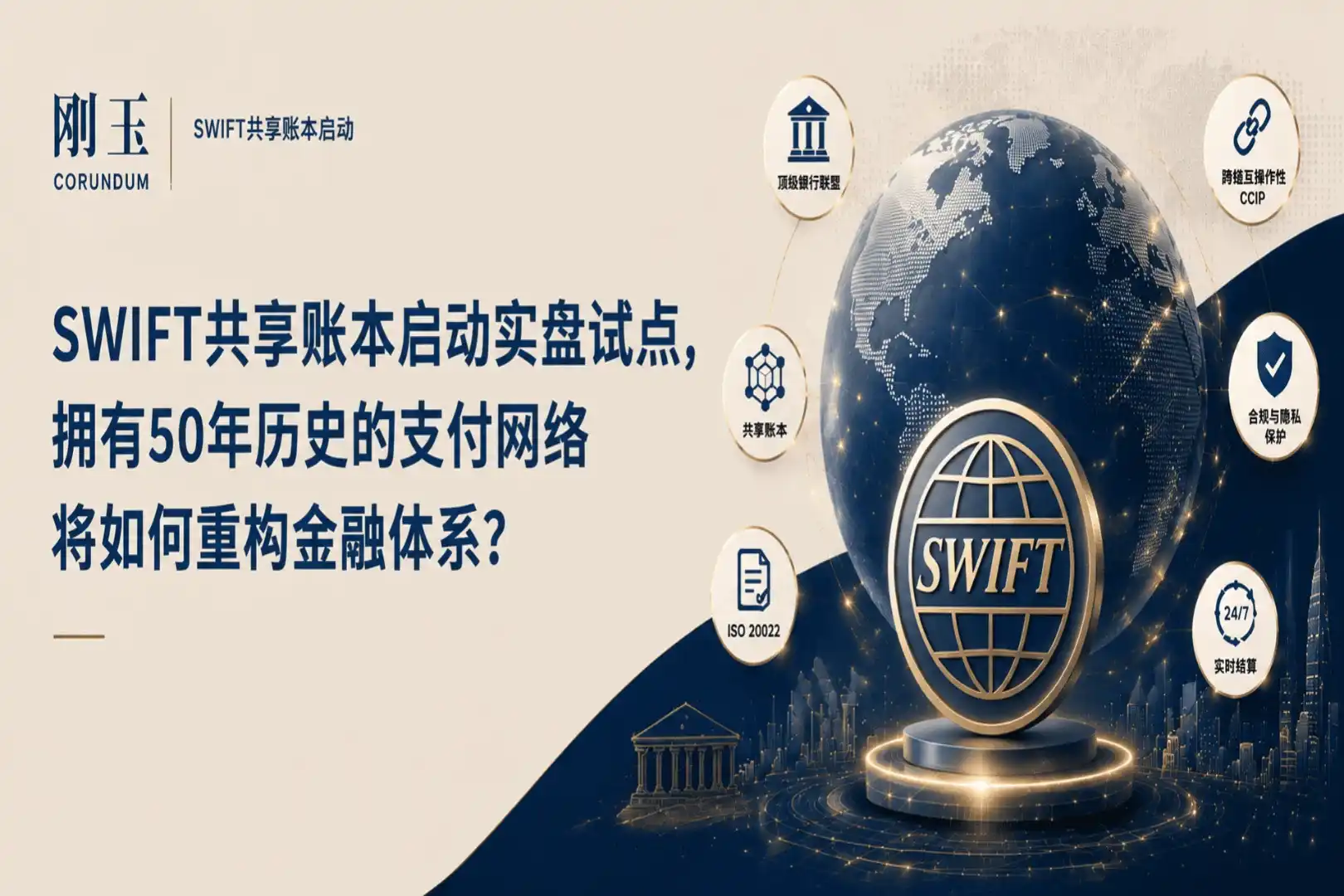
SWIFT Shared Ledger Launches Live Pilot, How Will the 50-Year-Old Payment Network Reconstruct the Financial System?

SWIFT, a global financial messaging provider with a 50-year history, has launched a live pilot of a blockchain-based "shared ledger" in July 2026, involving 17 major banks. This marks a direct move by traditional finance to upgrade its core payment infrastructure using blockchain technology, transforming SWIFT's role from a messaging channel to a "value orchestration layer" for digital payments. The system is built on Hyperledger Besu (EVM-compatible) and integrates Chainlink's CCIP for cross-chain interoperability. It deepens the fusion of the ISO 20022 messaging standard with smart contracts to automate compliance (KYC/AML). The primary settlement medium in this network is "tokenized deposits"—digital representations of traditional bank deposits, not independent stablecoins—preserving the existing two-tier banking system. The move introduces "atomic settlement" (24/7, instant) but requires banks to adopt "pre-funding" models, increasing demands on liquidity management. It presents direct competitive pressure on native blockchain payment tokens (e.g., XRP) by offering an efficient, bank-backed alternative for cross-border settlement. Significant regulatory hurdles remain, including legal jurisdiction over cross-border digital assets, legal definitions of "settlement finality" for smart contracts, and balancing blockchain transparency with data privacy/localization laws. Technologies like zero-knowledge proofs may be needed to resolve privacy-compliance conflicts. Industry views are mixed: participating banks and SWIFT emphasize extending trusted, compliant finance into the digital realm with real-time efficiency, while crypto analysts warn of potential "liquidity backlash" as capital flows back to the traditional, now-tech-enhanced banking system. This pilot signifies that traditional finance and crypto are entering a phase of direct competition and fusion at the infrastructure level, likely leading to a future of interconnected, highly regulated financial networks rather than a fully decentralized system.

marsbit3m ago

SWIFT Shared Ledger Launches Live Pilot, How Will the 50-Year-Old Payment Network Reconstruct the Financial System?

marsbit3m ago

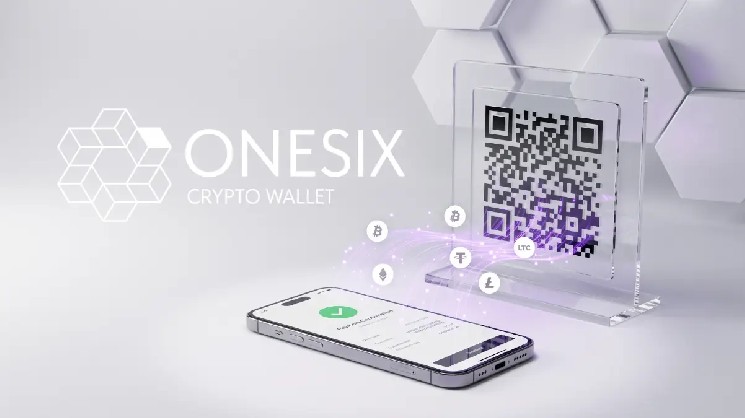
Why P2P and Exchangers Are Becoming Obsolete, and What Will Replace Them

Titled "Why P2P and Exchanges Are Becoming Obsolete, and What Will Replace Them," this article discusses the evolution of stablecoins, particularly USDT, from a trading tool to a global payment method. However, converting crypto back to fiat for daily expenses remains a challenge. The process of using P2P platforms or crypto exchanges has become increasingly risky and complex due to stricter banking anti-fraud measures, new legislation in Russia, and rampant fraud schemes like "triangles," where sellers can inadvertently receive stolen funds. The article highlights that while P2P was convenient, banks now scrutinize frequent peer-to-peer transfers, often freezing accounts. Exchanges also pose risks like unfavorable rates and unclear compliance. The market is therefore shifting towards integrated services that eliminate the manual conversion step. It cites OneSix as an example—a crypto wallet accessible via Telegram and web that embeds currency conversion directly into payment and withdrawal scenarios. Users can pay bills or send money as if using a bank app, with the crypto-to-fiat exchange happening seamlessly in the background. It also offers invoicing for freelancers and conducts AML checks, returning suspicious transactions instantly instead of freezing them. In conclusion, as crypto integrates into everyday finance, the demand for manual, risky exchange methods is declining. The future lies in unified platforms that combine storage, compliance, conversion, and payments into a single, secure user experience.

cryptonews.ru58m ago

Why P2P and Exchangers Are Becoming Obsolete, and What Will Replace Them

cryptonews.ru58m ago

The CEO of MARA Holdings Compares AI Operations to Bitcoin Mining! Which is More Profitable?

Fred Thiel, CEO of MARA Holdings (a major Bitcoin mining company), states that the rapid growth of the artificial intelligence (AI) sector is transforming mining companies' business models. He claims that powering data centers for AI is significantly more profitable than Bitcoin mining. In a recent interview, Thiel explained why many mining firms are diversifying into AI infrastructure. According to Thiel, the energy demands of data centers are surging, especially due to the spread of generative AI applications. This creates new revenue opportunities for Bitcoin mining companies with robust power infrastructure. MARA Holdings is among those monitoring this shift and aims to develop its energy and infrastructure services for AI data centers. Thiel emphasized that this move toward AI does not mean the end of Bitcoin mining. He stated that Bitcoin mining remains a sustainable business model, especially for miners in regions with low electricity costs, and it is still a crucial field for utilizing excess or idle power capacity. In recent years, many Bitcoin mining companies have begun using their energy-intensive infrastructure not just for block production but also for high-performance computing (HPC) and AI applications. This strategy aims to diversify revenue sources and increase resilience against cryptocurrency market volatility. Analysts note that the growing energy demand in the AI sector presents significant transformation opportunities for mining companies. The need for high-power, uninterrupted electricity supply, particularly for large data centers, gives Bitcoin miners with existing energy infrastructure expertise a considerable advantage.

cryptonews.ru1h ago

The CEO of MARA Holdings Compares AI Operations to Bitcoin Mining! Which is More Profitable?

cryptonews.ru1h ago

Trading

Spot

Hot Articles

What is SONIC

Sonic: Pioneering the Future of Gaming in Web3 Introduction to Sonic In the ever-evolving landscape of Web3, the gaming industry stands out as one of the most dynamic and promising sectors. At the forefront of this revolution is Sonic, a project designed to amplify the gaming ecosystem on the Solana blockchain. Leveraging cutting-edge technology, Sonic aims to deliver an unparalleled gaming experience by efficiently processing millions of requests per second, ensuring that players enjoy seamless gameplay while maintaining low transaction costs. This article delves into the intricate details of Sonic, exploring its creators, funding sources, operational mechanics, and the timeline of significant events that have shaped its journey. What is Sonic? Sonic is an innovative layer-2 network that operates atop the Solana blockchain, specifically tailored to enhance the existing Solana gaming ecosystem. It accomplishes this through a customised, VM-agnostic game engine paired with a HyperGrid interpreter, facilitating sovereign game economies that roll up back to the Solana platform. The primary goals of Sonic include: Enhanced Gaming Experiences: Sonic is committed to offering lightning-fast on-chain gameplay, allowing players and developers to engage with games at previously unattainable speeds. Atomic Interoperability: This feature enables transactions to be executed within Sonic without the need to redeploy Solana programmes and accounts. This makes the process more efficient and directly benefits from Solana Layer1 services and liquidity. Seamless Deployment: Sonic allows developers to write for Ethereum Virtual Machine (EVM) based systems and execute them on Solana’s SVM infrastructure. This interoperability is crucial for attracting a broader range of dApps and decentralised applications to the platform. Support for Developers: By offering native composable gaming primitives and extensible data types - dining within the Entity-Component-System (ECS) framework - game creators can craft intricate business logic with ease. Overall, Sonic's unique approach not only caters to players but also provides an accessible and low-cost environment for developers to innovate and thrive. Creator of Sonic The information regarding the creator of Sonic is somewhat ambiguous. However, it is known that Sonic's SVM is owned by the company Mirror World. The absence of detailed information about the individuals behind Sonic reflects a common trend in several Web3 projects, where collective efforts and partnerships often overshadow individual contributions. Investors of Sonic Sonic has garnered considerable attention and support from various investors within the crypto and gaming sectors. Notably, the project raised an impressive $12 million during its Series A funding round. The round was led by BITKRAFT Ventures, with other notable investors including Galaxy, Okx Ventures, Interactive, Big Brain Holdings, and Mirana. This financial backing signifies the confidence that investment foundations have in Sonic’s potential to revolutionise the Web3 gaming landscape, further validating its innovative approaches and technologies. How Does Sonic Work? Sonic utilises the HyperGrid framework, a sophisticated parallel processing mechanism that enhances its scalability and customisability. Here are the core features that set Sonic apart: Lightning Speed at Low Costs: Sonic offers one of the fastest on-chain gaming experiences compared to other Layer-1 solutions, powered by the scalability of Solana’s virtual machine (SVM). Atomic Interoperability: Sonic enables transaction execution without redeployment of Solana programmes and accounts, effectively streamlining the interaction between users and the blockchain. EVM Compatibility: Developers can effortlessly migrate decentralised applications from EVM chains to the Solana environment using Sonic’s HyperGrid interpreter, increasing the accessibility and integration of various dApps. Ecosystem Support for Developers: By exposing native composable gaming primitives, Sonic facilitates a sandbox-like environment where developers can experiment and implement business logic, greatly enhancing the overall development experience. Monetisation Infrastructure: Sonic natively supports growth and monetisation efforts, providing frameworks for traffic generation, payments, and settlements, thereby ensuring that gaming projects are not only viable but also sustainable financially. Timeline of Sonic The evolution of Sonic has been marked by several key milestones. Below is a brief timeline highlighting critical events in the project's history: 2022: The Sonic cryptocurrency was officially launched, marking the beginning of its journey in the Web3 gaming arena. 2024: June: Sonic SVM successfully raised $12 million in a Series A funding round. This investment allowed Sonic to further develop its platform and expand its offerings. August: The launch of the Sonic Odyssey testnet provided users with the first opportunity to engage with the platform, offering interactive activities such as collecting rings—a nod to gaming nostalgia. October: SonicX, an innovative crypto game integrated with Solana, made its debut on TikTok, capturing the attention of over 120,000 users within a short span. This integration illustrated Sonic’s commitment to reaching a broader, global audience and showcased the potential of blockchain gaming. Key Points Sonic SVM is a revolutionary layer-2 network on Solana explicitly designed to enhance the GameFi landscape, demonstrating great potential for future development. HyperGrid Framework empowers Sonic by introducing horizontal scaling capabilities, ensuring that the network can handle the demands of Web3 gaming. Integration with Social Platforms: The successful launch of SonicX on TikTok displays Sonic’s strategy to leverage social media platforms to engage users, exponentially increasing the exposure and reach of its projects. Investment Confidence: The substantial funding from BITKRAFT Ventures, among others, emphasizes the robust backing Sonic has, paving the way for its ambitious future. In conclusion, Sonic encapsulates the essence of Web3 gaming innovation, striking a balance between cutting-edge technology, developer-centric tools, and community engagement. As the project continues to evolve, it is poised to redefine the gaming landscape, making it a notable entity for gamers and developers alike. As Sonic moves forward, it will undoubtedly attract greater interest and participation, solidifying its place within the broader narrative of blockchain gaming.

1.9k Total ViewsPublished 2024.04.04Updated 2024.12.03

What is SONIC

What is $S$

Understanding SPERO: A Comprehensive Overview Introduction to SPERO As the landscape of innovation continues to evolve, the emergence of web3 technologies and cryptocurrency projects plays a pivotal role in shaping the digital future. One project that has garnered attention in this dynamic field is SPERO, denoted as SPERO,$$s$. This article aims to gather and present detailed information about SPERO, to help enthusiasts and investors understand its foundations, objectives, and innovations within the web3 and crypto domains. What is SPERO,$$s$? SPERO,$$s$ is a unique project within the crypto space that seeks to leverage the principles of decentralisation and blockchain technology to create an ecosystem that promotes engagement, utility, and financial inclusion. The project is tailored to facilitate peer-to-peer interactions in new ways, providing users with innovative financial solutions and services. At its core, SPERO,$$s$ aims to empower individuals by providing tools and platforms that enhance user experience in the cryptocurrency space. This includes enabling more flexible transaction methods, fostering community-driven initiatives, and creating pathways for financial opportunities through decentralised applications (dApps). The underlying vision of SPERO,$$s$ revolves around inclusiveness, aiming to bridge gaps within traditional finance while harnessing the benefits of blockchain technology. Who is the Creator of SPERO,$$s$? The identity of the creator of SPERO,$$s$ remains somewhat obscure, as there are limited publicly available resources providing detailed background information on its founder(s). This lack of transparency can stem from the project's commitment to decentralisation—an ethos that many web3 projects share, prioritising collective contributions over individual recognition. By centring discussions around the community and its collective goals, SPERO,$$s$ embodies the essence of empowerment without singling out specific individuals. As such, understanding the ethos and mission of SPERO remains more important than identifying a singular creator. Who are the Investors of SPERO,$$s$? SPERO,$$s$ is supported by a diverse array of investors ranging from venture capitalists to angel investors dedicated to fostering innovation in the crypto sector. The focus of these investors generally aligns with SPERO's mission—prioritising projects that promise societal technological advancement, financial inclusivity, and decentralised governance. These investor foundations are typically interested in projects that not only offer innovative products but also contribute positively to the blockchain community and its ecosystems. The backing from these investors reinforces SPERO,$$s$ as a noteworthy contender in the rapidly evolving domain of crypto projects. How Does SPERO,$$s$ Work? SPERO,$$s$ employs a multi-faceted framework that distinguishes it from conventional cryptocurrency projects. Here are some of the key features that underline its uniqueness and innovation: Decentralised Governance: SPERO,$$s$ integrates decentralised governance models, empowering users to participate actively in decision-making processes regarding the project’s future. This approach fosters a sense of ownership and accountability among community members. Token Utility: SPERO,$$s$ utilises its own cryptocurrency token, designed to serve various functions within the ecosystem. These tokens enable transactions, rewards, and the facilitation of services offered on the platform, enhancing overall engagement and utility. Layered Architecture: The technical architecture of SPERO,$$s$ supports modularity and scalability, allowing for seamless integration of additional features and applications as the project evolves. This adaptability is paramount for sustaining relevance in the ever-changing crypto landscape. Community Engagement: The project emphasises community-driven initiatives, employing mechanisms that incentivise collaboration and feedback. By nurturing a strong community, SPERO,$$s$ can better address user needs and adapt to market trends. Focus on Inclusion: By offering low transaction fees and user-friendly interfaces, SPERO,$$s$ aims to attract a diverse user base, including individuals who may not previously have engaged in the crypto space. This commitment to inclusion aligns with its overarching mission of empowerment through accessibility. Timeline of SPERO,$$s$ Understanding a project's history provides crucial insights into its development trajectory and milestones. Below is a suggested timeline mapping significant events in the evolution of SPERO,$$s$: Conceptualisation and Ideation Phase: The initial ideas forming the basis of SPERO,$$s$ were conceived, aligning closely with the principles of decentralisation and community focus within the blockchain industry. Launch of Project Whitepaper: Following the conceptual phase, a comprehensive whitepaper detailing the vision, goals, and technological infrastructure of SPERO,$$s$ was released to garner community interest and feedback. Community Building and Early Engagements: Active outreach efforts were made to build a community of early adopters and potential investors, facilitating discussions around the project’s goals and garnering support. Token Generation Event: SPERO,$$s$ conducted a token generation event (TGE) to distribute its native tokens to early supporters and establish initial liquidity within the ecosystem. Launch of Initial dApp: The first decentralised application (dApp) associated with SPERO,$$s$ went live, allowing users to engage with the platform's core functionalities. Ongoing Development and Partnerships: Continuous updates and enhancements to the project's offerings, including strategic partnerships with other players in the blockchain space, have shaped SPERO,$$s$ into a competitive and evolving player in the crypto market. Conclusion SPERO,$$s$ stands as a testament to the potential of web3 and cryptocurrency to revolutionise financial systems and empower individuals. With a commitment to decentralised governance, community engagement, and innovatively designed functionalities, it paves the way toward a more inclusive financial landscape. As with any investment in the rapidly evolving crypto space, potential investors and users are encouraged to research thoroughly and engage thoughtfully with the ongoing developments within SPERO,$$s$. The project showcases the innovative spirit of the crypto industry, inviting further exploration into its myriad possibilities. While the journey of SPERO,$$s$ is still unfolding, its foundational principles may indeed influence the future of how we interact with technology, finance, and each other in interconnected digital ecosystems.

194 Total ViewsPublished 2024.12.17Updated 2024.12.17

What is $S$

What is AGENT S

Agent S: The Future of Autonomous Interaction in Web3 Introduction In the ever-evolving landscape of Web3 and cryptocurrency, innovations are constantly redefining how individuals interact with digital platforms. One such pioneering project, Agent S, promises to revolutionise human-computer interaction through its open agentic framework. By paving the way for autonomous interactions, Agent S aims to simplify complex tasks, offering transformative applications in artificial intelligence (AI). This detailed exploration will delve into the project's intricacies, its unique features, and the implications for the cryptocurrency domain. What is Agent S? Agent S stands as a groundbreaking open agentic framework, specifically designed to tackle three fundamental challenges in the automation of computer tasks: Acquiring Domain-Specific Knowledge: The framework intelligently learns from various external knowledge sources and internal experiences. This dual approach empowers it to build a rich repository of domain-specific knowledge, enhancing its performance in task execution. Planning Over Long Task Horizons: Agent S employs experience-augmented hierarchical planning, a strategic approach that facilitates efficient breakdown and execution of intricate tasks. This feature significantly enhances its ability to manage multiple subtasks efficiently and effectively. Handling Dynamic, Non-Uniform Interfaces: The project introduces the Agent-Computer Interface (ACI), an innovative solution that enhances the interaction between agents and users. Utilizing Multimodal Large Language Models (MLLMs), Agent S can navigate and manipulate diverse graphical user interfaces seamlessly. Through these pioneering features, Agent S provides a robust framework that addresses the complexities involved in automating human interaction with machines, setting the stage for myriad applications in AI and beyond. Who is the Creator of Agent S? While the concept of Agent S is fundamentally innovative, specific information about its creator remains elusive. The creator is currently unknown, which highlights either the nascent stage of the project or the strategic choice to keep founding members under wraps. Regardless of anonymity, the focus remains on the framework's capabilities and potential. Who are the Investors of Agent S? As Agent S is relatively new in the cryptographic ecosystem, detailed information regarding its investors and financial backers is not explicitly documented. The lack of publicly available insights into the investment foundations or organisations supporting the project raises questions about its funding structure and development roadmap. Understanding the backing is crucial for gauging the project's sustainability and potential market impact. How Does Agent S Work? At the core of Agent S lies cutting-edge technology that enables it to function effectively in diverse settings. Its operational model is built around several key features: Human-like Computer Interaction: The framework offers advanced AI planning, striving to make interactions with computers more intuitive. By mimicking human behaviour in tasks execution, it promises to elevate user experiences. Narrative Memory: Employed to leverage high-level experiences, Agent S utilises narrative memory to keep track of task histories, thereby enhancing its decision-making processes. Episodic Memory: This feature provides users with step-by-step guidance, allowing the framework to offer contextual support as tasks unfold. Support for OpenACI: With the ability to run locally, Agent S allows users to maintain control over their interactions and workflows, aligning with the decentralised ethos of Web3. Easy Integration with External APIs: Its versatility and compatibility with various AI platforms ensure that Agent S can fit seamlessly into existing technological ecosystems, making it an appealing choice for developers and organisations. These functionalities collectively contribute to Agent S's unique position within the crypto space, as it automates complex, multi-step tasks with minimal human intervention. As the project evolves, its potential applications in Web3 could redefine how digital interactions unfold. Timeline of Agent S The development and milestones of Agent S can be encapsulated in a timeline that highlights its significant events: September 27, 2024: The concept of Agent S was launched in a comprehensive research paper titled “An Open Agentic Framework that Uses Computers Like a Human,” showcasing the groundwork for the project. October 10, 2024: The research paper was made publicly available on arXiv, offering an in-depth exploration of the framework and its performance evaluation based on the OSWorld benchmark. October 12, 2024: A video presentation was released, providing a visual insight into the capabilities and features of Agent S, further engaging potential users and investors. These markers in the timeline not only illustrate the progress of Agent S but also indicate its commitment to transparency and community engagement. Key Points About Agent S As the Agent S framework continues to evolve, several key attributes stand out, underscoring its innovative nature and potential: Innovative Framework: Designed to provide an intuitive use of computers akin to human interaction, Agent S brings a novel approach to task automation. Autonomous Interaction: The ability to interact autonomously with computers through GUI signifies a leap towards more intelligent and efficient computing solutions. Complex Task Automation: With its robust methodology, it can automate complex, multi-step tasks, making processes faster and less error-prone. Continuous Improvement: The learning mechanisms enable Agent S to improve from past experiences, continually enhancing its performance and efficacy. Versatility: Its adaptability across different operating environments like OSWorld and WindowsAgentArena ensures that it can serve a broad range of applications. As Agent S positions itself in the Web3 and crypto landscape, its potential to enhance interaction capabilities and automate processes signifies a significant advancement in AI technologies. Through its innovative framework, Agent S exemplifies the future of digital interactions, promising a more seamless and efficient experience for users across various industries. Conclusion Agent S represents a bold leap forward in the marriage of AI and Web3, with the capacity to redefine how we interact with technology. While still in its early stages, the possibilities for its application are vast and compelling. Through its comprehensive framework addressing critical challenges, Agent S aims to bring autonomous interactions to the forefront of the digital experience. As we move deeper into the realms of cryptocurrency and decentralisation, projects like Agent S will undoubtedly play a crucial role in shaping the future of technology and human-computer collaboration.

864 Total ViewsPublished 2025.01.14Updated 2025.01.14

What is AGENT S

Discussions

Welcome to the HTX Community. Here, you can stay informed about the latest platform developments and gain access to professional market insights. Users' opinions on the price of S (S) are presented below.

活动图片