Saylor của Strategy cho biết việc ngân hàng áp dụng Bitcoin đạt 32%, nhưng ‘chúng ta vẫn còn sớm’

ambcryptoPublished on 2026-07-15Last updated on 2026-07-15

Abstract

Theo chỉ số Bitcoin Banking Adoption Index mới được công bố bởi Michael Saylor, nhà sáng lập Strategy, việc các ngân hàng lớn toàn cầu chấp nhận Bitcoin đang tăng tốc nhưng vẫn còn ở giai đoạn sớm, với mức độ áp dụng tổng thể là 32%. Fidelity dẫn đầu với tỷ lệ 71%, tiếp theo là BNY Mellon (46%) và Goldman Sachs (45%). Một điểm đáng chú ý là việc sử dụng Bitcoin làm tài sản thế chấp để vay vẫn còn hạn chế, với các ngân hàng ưa chuộng ETF Bitcoin giao ngay hơn là Bitcoin vật chất. Điều này đặt ra thách thức cho tầm nhìn biến Strategy thành "ngân hàng Bitcoin đầu tiên trên thế giới" của Saylor, vì Bitcoin chưa được coi là tài sản thế chấp chất lượng cao một cách đầy đủ. Trong các phát triển khác, Strategy đã tăng dự trữ tiền mặt lên 3 tỷ USD, đủ chi trả cho các nghĩa vụ tài chính trong 20 tháng, gần với khuyến nghị 24-36 tháng từ JPMorgan. Tóm lại, dù có sự phát triển đáng khích lệ, giấc mơ "ngân hàng Bitcoin" của Strategy vẫn còn nhiều thách thức và cần thêm thời gian để trở thành hiện thực.

Bitcoin đã chứng kiến việc áp dụng ngày càng nhanh bởi các ngân hàng lớn toàn cầu, nhưng mức độ phổ biến này vẫn “còn sớm”. Đây là nhận định của Michael Saylor, người sáng lập Strategy, công ty kho bạc nắm giữ BTC lớn nhất thế giới. Trong một Chỉ số Áp dụng Ngân hàng Bitcoin mới được công bố, bao gồm giao dịch ETF, tín dụng và hơn thế nữa, Saylor nói thêm,

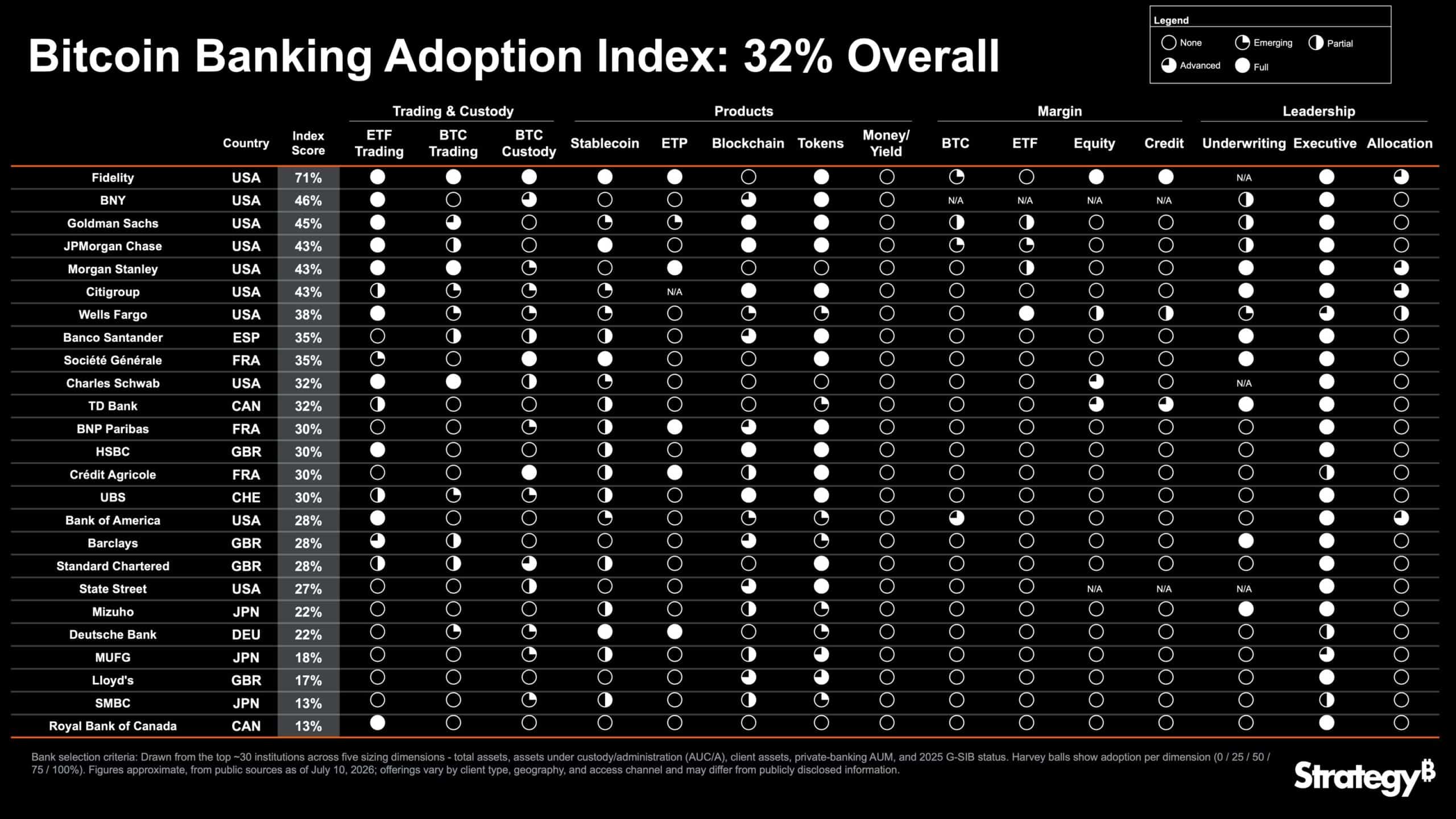
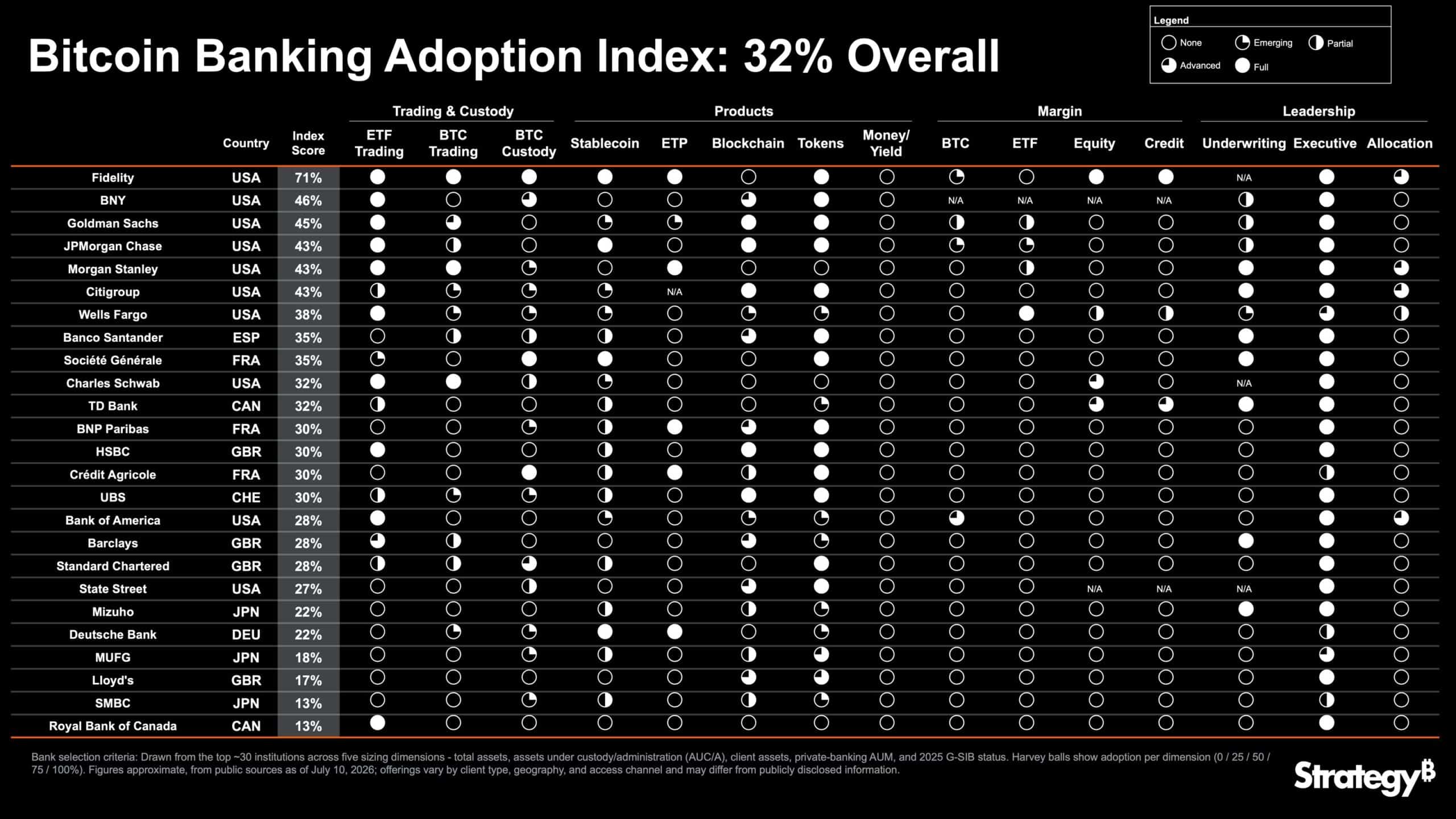
Việc các ngân hàng lớn áp dụng Bitcoin đang tăng tốc, nhưng vẫn còn sớm: tổng cộng 32% theo chỉ số đo lường.
Nguồn: Strategy

Fidelity dẫn đầu trong cuộc đua áp dụng với mức xếp hạng 71%, đạt điểm tối đa cho lưu ký, BTC và giao dịch ETF cùng với việc phát hành stablecoin. BNY Mellon đứng thứ hai với điểm số 46%, trong khi Goldman Sachs đóng danh sách top ba với mức xếp hạng 45%.

Các đối thủ toàn cầu xếp hạng cao khác bao gồm Banco Santander của Tây Ban Nha, Société Générale của Pháp và Standard Chartered của Vương quốc Anh.

Strategy vẫn đang nhắm đến tầm nhìn ‘ngân hàng Bitcoin’?

Phần thú vị nhất của chỉ số tổng hợp mới là mục ‘tín dụng’, tức là các ngân hàng cho phép vay tín dụng dựa trên BTC giao ngay hoặc các công cụ phái sinh như iShares Bitcoin Trust (IBIT) của BlackRock. Nói cách khác, là các ngân hàng cho phép sử dụng đòn bẩy hoặc cung cấp tín dụng bằng cách sử dụng Spot BTC hoặc ETF làm tài sản thế chấp.

Tính đến năm 2026, hầu hết các ngân hàng có xu hướng sử dụng Spot BTC ETF làm tài sản thế chấp hơn là spot BTC. Tuy nhiên, với các vòng tròn rỗng trên biểu đồ, điều đó có nghĩa là việc áp dụng BTC hoặc ký quỹ ETF vẫn còn tương đối thấp.

Điều này đặc biệt quan trọng vì Saylor đã từng đề xuất định vị Strategy trở thành “ngân hàng Bitcoin đầu tiên trên thế giới”. Theo ông, công ty có thể sử dụng lượng nắm giữ BTC khổng lồ của mình làm tài sản thế chấp để tạo ra các công cụ tín dụng mới ngoài STRC và hợp tác với các ngân hàng hàng đầu cho mục đích tương tự.

Mức áp dụng 32% ở các ngân hàng là đáng khen ngợi. Tuy nhiên, chỉ số áp dụng cho thấy rõ ràng rằng BTC vẫn chưa được coi là tài sản thế chấp chất lượng cao, ít nhất là tính đến năm 2026. Mở rộng ra, điều đó có nghĩa là tầm nhìn trở thành một “ngân hàng BTC” của họ vẫn có thể còn xa mới khả thi.

Thú vị là, Metaplanet cũng đang khám phá điều tương tự nhưng dành cho thị trường trái phiếu Nhật Bản.

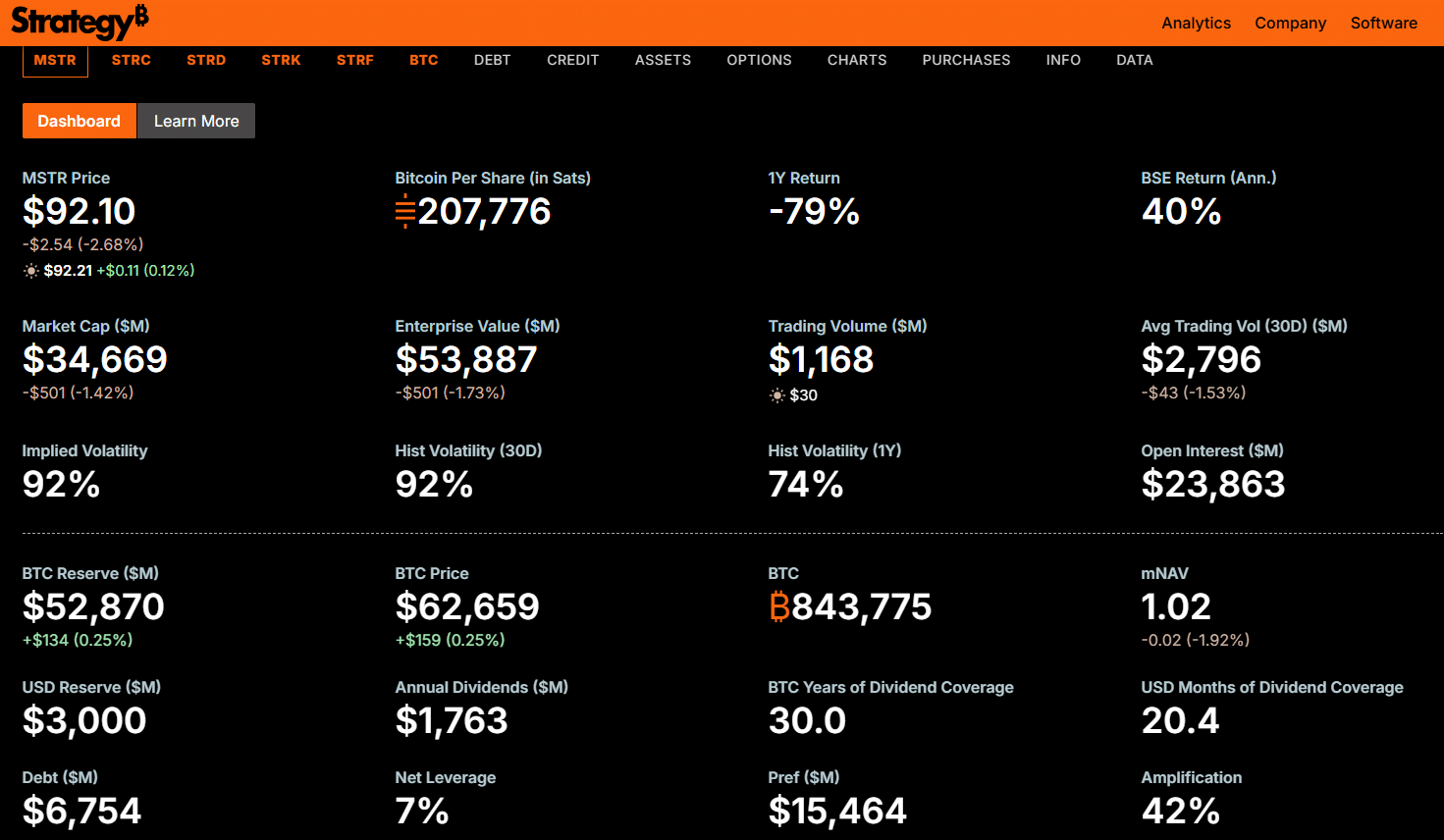
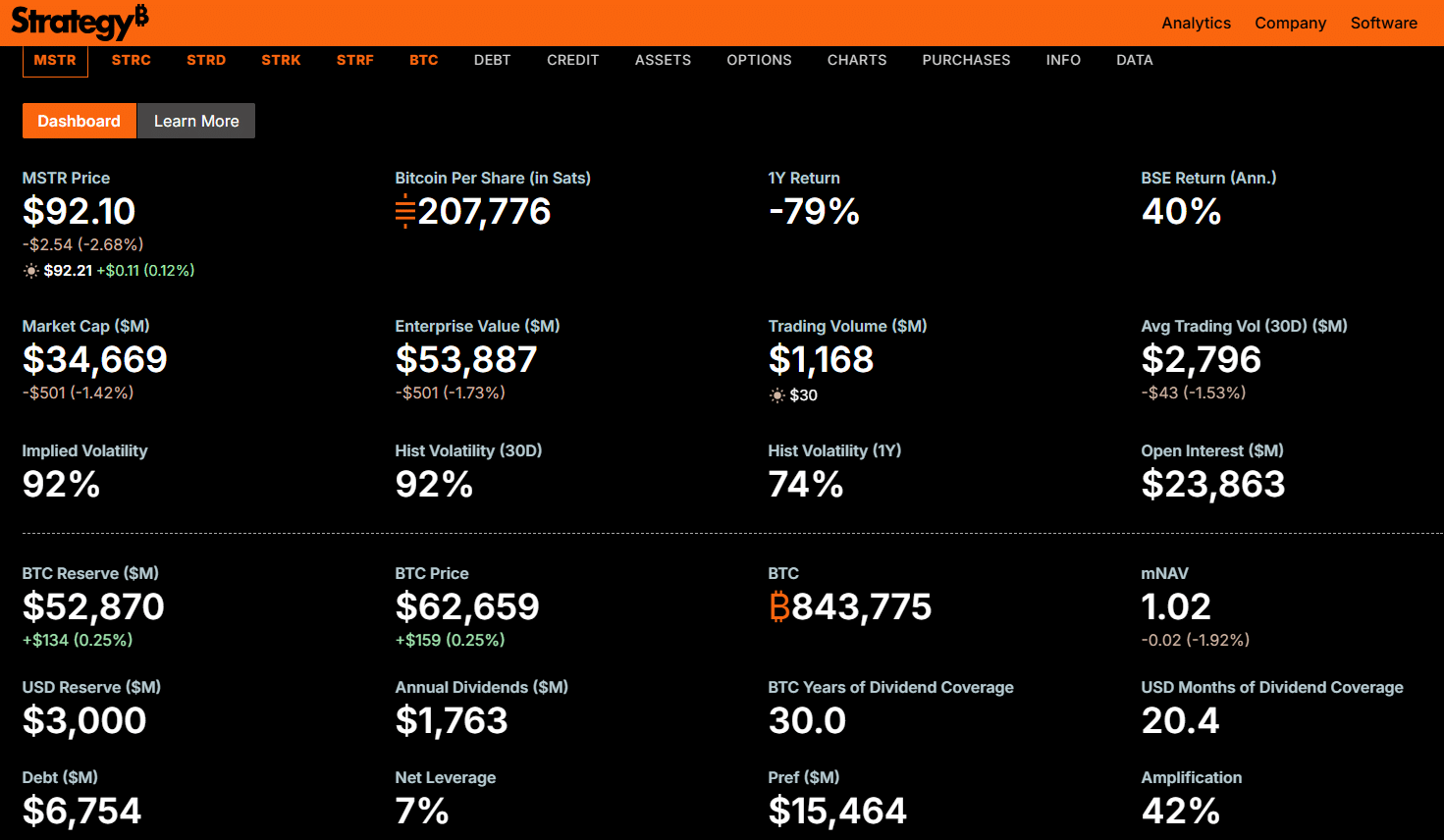
Trong các diễn biến khác, Strategy đã tăng dự trữ tiền mặt lên 3 tỷ USD sau vụ bán cổ phiếu MSTR trị giá 467 triệu USD. Điều này đã giúp tăng thời gian đảm bảo cho các nghĩa vụ tài chính của họ lên 20 tháng.
Nguồn: Strategy

Có vẻ như công ty một phần đang tuân theo khuyến nghị của các nhà phân tích JPMorgan, những người đã thúc giục dự trữ tiền mặt từ 24-36 tháng bằng cách bán thêm MSTR, chứ không phải bán lượng BTC đang nắm giữ.

Nhìn chung, giấc mơ “ngân hàng Bitcoin” của Strategy hiện tại vẫn có thể còn xa vời. Tuy nhiên, sự phát triển tại các ngân hàng có thể quyết định liệu nó có khả thi trong tương lai hay không.


Tóm tắt cuối cùng

  • Việc áp dụng Bitcoin trong các ngân hàng đã tăng mạnh 32%, nhưng Spot BTC ETF có thể được ưa chuộng hơn để ký quỹ so với BTC vật lý.
  • Strategy đã tăng dự trữ tiền mặt lên 3 tỷ USD và thời gian đảm bảo lên 20 tháng, chỉ thấp hơn một chút so với mức 24 tháng được JPMorgan khuyến nghị.


Trending Cryptos

Related Questions

QChỉ số chấp nhận ngân hàng Bitcoin hiện tại là bao nhiêu và ai là người công bố?

ATheo Michael Saylor, người sáng lập Strategy, chỉ số chấp nhận Bitcoin của các ngân hàng lớn hiện đạt 32%. Ông công bố điều này trong Chỉ số Chấp nhận Ngân hàng Bitcoin vừa được phát hành.

QBa ngân hàng dẫn đầu về mức độ chấp nhận Bitcoin trong chỉ số là những ai và điểm số của họ là bao nhiêu?

ABa ngân hàng dẫn đầu là: Fidelity (dẫn đầu với 71%), BNY Mellon (thứ hai với 46%) và Goldman Sachs (thứ ba với 45%).

QTầm nhìn 'ngân hàng Bitcoin' của Strategy đang đối mặt với thách thức chính nào dựa trên bài viết?

AThách thức chính là Bitcoin vẫn chưa được đối xử hoàn toàn như một tài sản thế chấp chất lượng cao. Chỉ số cho thấy việc sử dụng Bitcoin hoặc ETF Bitcoin làm ký quỹ vẫn còn tương đối thấp, điều này khiến tầm nhìn 'ngân hàng Bitcoin' có thể chưa khả thi vào thời điểm hiện tại (năm 2026).

QStrategy đã tăng dự trữ tiền mặt của mình lên bao nhiêu và tại sao?

AStrategy đã tăng dự trữ tiền mặt lên 3 tỷ USD sau khi bán cổ phiếu MSTR trị giá 467 triệu USD. Điều này giúp công ty tăng thời gian đảm bảo cho các nghĩa vụ tài chính lên 20 tháng, gần đạt mức khuyến nghị 24-36 tháng của các nhà phân tích JPMorgan.

QBài viết đề cập đến một công ty nào khác cũng đang khám phá mô hình tương tự 'ngân hàng Bitcoin' của Strategy?

ABài viết đề cập rằng Metaplanet cũng đang khám phá một mô hình tương tự, nhưng là dành cho thị trường trái phiếu Nhật Bản.

Related Reads

Annual Salary of Millions Competing for Electricians, Meta Rushes to Open Its Own Technical School

The AI boom is facing an unexpected bottleneck: a severe shortage of skilled construction workers and electricians. As tech giants like Meta, OpenAI, and Alphabet race to build massive data centers—such as OpenAI's $16 billion "Stargate" project—they are hitting a critical labor wall. The U.S. needs an estimated 130,000 more electricians, 240,000 construction workers, and 150,000 supervisors by 2030 for AI infrastructure alone, but tens of thousands of electrician jobs go unfilled each year. While AI companies offer high premiums, with electricians earning up to $280,000 annually, worker scarcity still causes massive losses—delays on a single project can cost $14.2 million per month. The complexity of building AI data centers, which require immense power (equivalent to powering hundreds of thousands of homes), sophisticated electrical systems, and advanced liquid cooling solutions, demands highly skilled technicians who are in short supply. To combat this, companies are investing heavily in training. Meta has committed $115 million to a free training school offering tuition, housing, and stipends, targeting 5,000 new workers. OpenAI is partnering with unions to secure skilled labor. These efforts are paying off, with a significant rise in Gen Z interest in trade schools over college. However, the power demands are staggering. AI data centers are driving a rapid surge in electricity consumption, projected to account for up to 12% of U.S. power use by 2028 and raising costs for consumers. Furthermore, the construction boom is project-based, leading to a potential future glut of trained workers once building peaks, which could depress wages industry-wide. The race for AI supremacy now depends as much on skilled hands as on advanced chips.

marsbit1h ago

Annual Salary of Millions Competing for Electricians, Meta Rushes to Open Its Own Technical School

marsbit1h ago

OpenAI No Longer Sells Its Most Expensive Model for Profit

OpenAI is shifting its business strategy away from promoting its most expensive, flagship models for every task. Recent price cuts—80% for GPT-5.6 Luna and 20% for Terra—signal a deeper change: the company now actively advises users that many tasks don't require the most powerful model. Instead, OpenAI recommends a tiered approach: use the high-end GPT-5.6 Sol for complex planning and analysis, then delegate execution to cheaper models like Luna. This mirrors moves by Anthropic, which recently launched Claude Opus 5 at half the price of its top model, Fable 5. Both companies are de-emphasizing flagship models as primary revenue drivers, using them instead for brand prestige and technological showcases. The industry is entering a "mass-market" phase, similar to automotive, where high-volume, cost-effective models handle daily operations and drive scale. OpenAI's price reductions are partly enabled by AI models themselves optimizing underlying code and infrastructure, creating a self-reinforcing cycle of efficiency gains and cost reduction. Competition is shifting from "who is smartest" to "who offers the best value." The goal is no longer selling individual models but fostering widespread API adoption and ecosystem lock-in. By making AI calls cheap and ubiquitous, companies like OpenAI aim to become the indispensable, utility-like infrastructure powering automated workflows—the "water and electricity" of software, quietly embedded everywhere.

marsbit1h ago

OpenAI No Longer Sells Its Most Expensive Model for Profit

marsbit1h ago

Trading

Spot

Hot Articles

What is $BITCOIN

DIGITAL GOLD ($BITCOIN): A Comprehensive Analysis Introduction to DIGITAL GOLD ($BITCOIN) DIGITAL GOLD ($BITCOIN) is a blockchain-based project operating on the Solana network, which aims to combine the characteristics of traditional precious metals with the innovation of decentralized technologies. While it shares a name with Bitcoin, often referred to as “digital gold” due to its perception as a store of value, DIGITAL GOLD is a separate token designed to create a unique ecosystem within the Web3 landscape. Its goal is to position itself as a viable alternative digital asset, although specifics regarding its applications and functionalities are still developing. What is DIGITAL GOLD ($BITCOIN)? DIGITAL GOLD ($BITCOIN) is a cryptocurrency token explicitly designed for use on the Solana blockchain. In contrast to Bitcoin, which provides a widely recognized value storage role, this token appears to focus on broader applications and characteristics. Notable aspects include: Blockchain Infrastructure: The token is built on the Solana blockchain, known for its capacity to handle high-speed and low-cost transactions. Supply Dynamics: DIGITAL GOLD has a maximum supply capped at 100 quadrillion tokens (100P $BITCOIN), although details regarding its circulating supply are currently undisclosed. Utility: While precise functionalities are not explicitly outlined, there are indications that the token could be utilized for various applications, potentially involving decentralized applications (dApps) or asset tokenization strategies. Who is the Creator of DIGITAL GOLD ($BITCOIN)? At present, the identity of the creators and development team behind DIGITAL GOLD ($BITCOIN) remains unknown. This situation is typical among many innovative projects within the blockchain space, particularly those aligning with decentralized finance and meme coin phenomena. While such anonymity may foster a community-driven culture, it intensifies concerns about governance and accountability. Who are the Investors of DIGITAL GOLD ($BITCOIN)? The available information indicates that DIGITAL GOLD ($BITCOIN) does not have any known institutional backers or prominent venture capital investments. The project seems to operate on a peer-to-peer model focused on community support and adoption rather than traditional funding routes. Its activity and liquidity are primarily situated on decentralized exchanges (DEXs), such as PumpSwap, rather than established centralized trading platforms, further highlighting its grassroots approach. How DIGITAL GOLD ($BITCOIN) Works The operational mechanics of DIGITAL GOLD ($BITCOIN) can be elaborated on based on its blockchain design and network attributes: Consensus Mechanism: By leveraging Solana’s unique proof-of-history (PoH) combined with a proof-of-stake (PoS) model, the project ensures efficient transaction validation contributing to the network's high performance. Tokenomics: While specific deflationary mechanisms have not been extensively detailed, the vast maximum token supply implies that it may cater to microtransactions or niche use cases that are still to be defined. Interoperability: There exists the potential for integration with Solana’s broader ecosystem, including various decentralized finance (DeFi) platforms. However, the details regarding specific integrations remain unspecified. Timeline of Key Events Here is a timeline that highlights significant milestones concerning DIGITAL GOLD ($BITCOIN): 2023: The initial deployment of the token occurs on the Solana blockchain, marked by its contract address. 2024: DIGITAL GOLD gains visibility as it becomes available for trading on decentralized exchanges like PumpSwap, allowing users to trade it against SOL. 2025: The project witnesses sporadic trading activity and potential interest in community-led engagements, although no noteworthy partnerships or technical advancements have been documented as of yet. Critical Analysis Strengths Scalability: The underlying Solana infrastructure supports high transaction volumes, which could enhance the utility of $BITCOIN in various transaction scenarios. Accessibility: The potential low trading price per token could attract retail investors, facilitating wider participation due to fractional ownership opportunities. Risks Lack of Transparency: The absence of publicly known backers, developers, or an audit process may yield skepticism regarding the project's sustainability and trustworthiness. Market Volatility: The trading activity is heavily reliant on speculative behavior, which can result in significant price volatility and uncertainty for investors. Conclusion DIGITAL GOLD ($BITCOIN) emerges as an intriguing yet ambiguous project within the rapidly evolving Solana ecosystem. While it attempts to leverage the “digital gold” narrative, its departure from Bitcoin's established role as a store of value underscores the need for a clearer differentiation of its intended utility and governance structure. Future acceptance and adoption will likely depend on addressing the current opacity and defining its operational and economic strategies more explicitly. Note: This report encompasses synthesised information available as of October 2023, and developments may have transpired beyond the research period.

1.4k Total ViewsPublished 2025.05.13Updated 2025.05.13

What is $BITCOIN

Discussions

Welcome to the HTX Community. Here, you can stay informed about the latest platform developments and gain access to professional market insights. Users' opinions on the price of BTC (BTC) are presented below.

活动图片














