Aset Viral Pertama di Robinhood Chain Ternyata Meme Kucing: Retail Investor Gali 'Nama Lama' CashCat, CEO Tampil Mainkan Gimmick

marsbitPublished on 2026-07-08Last updated on 2026-07-08

Abstract

Robinhood Chain, layer-2 berbasis Arbitrum yang diluncurkan resmi pada 1 Juli, menyaksikan aset pertama yang viral justru bukan token saham AS yang diusung secara resmi, melainkan meme token bernama CASHCAT. Dalam 24 jam, token ini pernah melonjak lebih dari 1700%, dengan kapitalisasi pasar tembus $120 juta. Kisah di balik CASHCAT berasal dari sejarah perusahaan Robinhood. CEO Vlad Tenev pernah mengungkapkan bahwa nama awal yang dipertimbangkan untuk perusahaan adalah "CashCat", sebelum akhirnya memilih "Robinhood". Narasi sejarah inilah yang menjadi bahan bakar utama bagi meme ini. Pada puncak kenaikan harga, Tenev membagikan cuitan yang menyebut Robinhood Chain "juga berjalan baik untuk meme", yang ditafsirkan komunitas sebagai bentuk pengakuan tidak langsung terhadap demam CASHCAT. Namun, pihak Robinhood secara resmi tidak memberikan dukungan apa pun. Artikel ini juga memperingatkan tentang munculnya token duplikat CASHCAT di blockchain lain (seperti Solana) dan akun-akun palsu yang menyerupai influencer ternama seperti "Roaring Kitty" untuk mempromosikan kontrak palsu. Peringatan diberikan mengenai likuiditas yang masih tipis, risiko slippage tinggi, dan volatilitas ekstrem yang melekat pada aset meme di jaringan baru.

Penulis: Claude, Deep Tide TechFlow

Panduan Deep Tide: Robinhood Chain mainnet telah online selama seminggu, token saham AS yang dipromosikan resmi belum viral, namun seekor kucing Meme bernama CASHCAT justru meledak, kenaikan harian sempat melebihi 1700%, kapitalisasi pasar menembus 120 juta dolar AS. Narasinya hanya satu kalimat: nama kerja Robinhood saat startup dulu adalah CashCat. CEO Tenev sendiri pernah bercerita tentang sejarah ini, dan bahkan mainkan gimmick di tweet pada hari harga melonjak. Sementara itu, versi tiruan dan akun promosi palsu 'Roaring Kitty' sudah bersiap-siap.
Menarik perhatian dan aliran pengguna, masih harus mengandalkan Meme.

Robinhood menghabiskan waktu satu tahun untuk mempersiapkan blockchainnya sendiri, menjadikan tokenisasi saham AS sebagai cerita inti. Namun aset yang benar-benar viral pertama di chain itu malah sebuah kucing kartun yang memegang uang.

Menurut pemantauan GMGN, pada 8 Juli, kapitalisasi pasar token Meme CASHCAT di Robinhood Chain menembus 120 juta dolar AS, kenaikan 24 jam melebihi 1700%. Dalam beberapa jam berikutnya, pembacaan dari berbagai platform data terus naik. Menurut data CoinGecko, CASHCAT terutama diperdagangkan di Uniswap V3 di Robinhood Chain, volume perdagangan pasangan CASHCAT/WETH dalam 24 jam sekitar 28 juta dolar AS. Untuk sebuah chain baru yang baru online seminggu dengan aplikasi ekosistem yang bisa dihitung jari, kucing inilah yang menjadi arus perhatian saat ini.

Hari Ketujuh Mainnet Online, Aset Viral Pertama Adalah Meme

Mari jelaskan latar belakangnya dulu.

Pada 1 Juli, Robinhood meluncurkan secara resmi mainnet publik Robinhood Chain di acara peluncuran di London. Ini adalah Layer 2 Ethereum berbasis teknologi Arbitrum, diumumkan oleh CEO Vlad Tenev dan kepala bisnis kripto Johann Kerbrat. Posisi resmi chain ini cukup 'serius', produk intinya Stock Tokens melacak performa harga lebih dari 200 saham AS dan ETF, terbuka untuk lebih dari 120 wilayah yurisdiksi (kecuali pengguna AS), protokol DeFi seperti Uniswap, 1inch dideploy di hari pertama, dan Robinhood berjanji membayar semua biaya Gas selama 90 hari pertama.

Menurut skenario resmi, pemeran utama chain ini seharusnya adalah saham yang ditokenisasi dan RWA (aset dunia nyata di-chain). Namun skenarionya tidak berjalan sesuai harapan. Dalam minggu pertama setelah mainnet online, pasangan perdagangan paling aktif di chain bukanlah token saham AS mana pun, melainkan CASHCAT. Investor retail terlebih dahulu menentukan nada untuk 'chain broker retail' ini.

Peringatan bagi pemegang cukup langsung: likuiditas CASHCAT saat ini terkonsentrasi pada satu pasangan perdagangan di satu DEX tertentu. Likuiditas di chain baru tipis, pembacaan harga sangat berbeda antar platform, risiko slippage saat masuk/keluar dan pin risk jauh lebih tinggi dibandingkan Meme di chain yang matang.

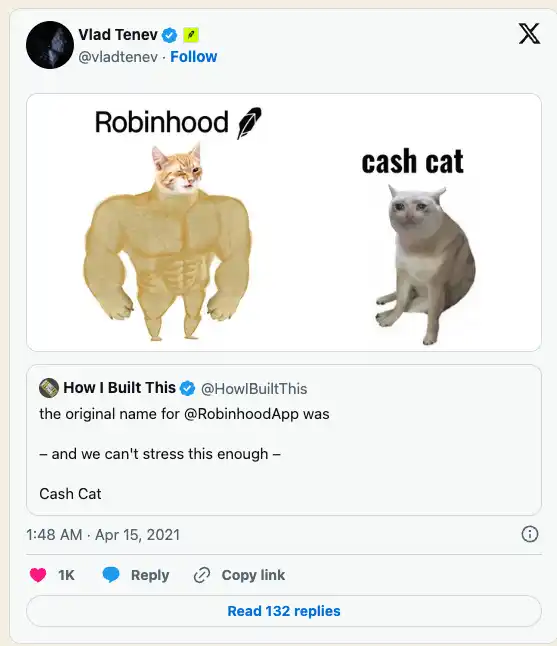
'Nama Lama' Arkeologi, Tenev Sendiri Pernah Cerita Kisah CashCat

CASHCAT bisa menonjol, berkat sejarah perusahaan yang nyata.

Tenev dalam wawancara awal pernah mengingat proses penamaan perusahaan, "Nama kerja awalnya sebenarnya adalah CashCat, tapi orang-orang merasa nama itu kurang kuat. Istri saya saat memperkenalkan saya kepada teman-temannya bilang, mereka adalah Robin Hood di dunia keuangan, melakukan hal-hal untuk orang kecil. Nama Robinhood akhirnya diputuskan begitu saja." Rekaman lisan ini dikutip oleh banyak artikel ulasan perusahaan setelah peristiwa GameStop, termasuk 'bahan arkeologi' yang dapat diverifikasi. Ini juga menjadi perbedaan terbesar CASHCAT dengan koin kucing/anjing lain yang mengarang cerita dari nol.

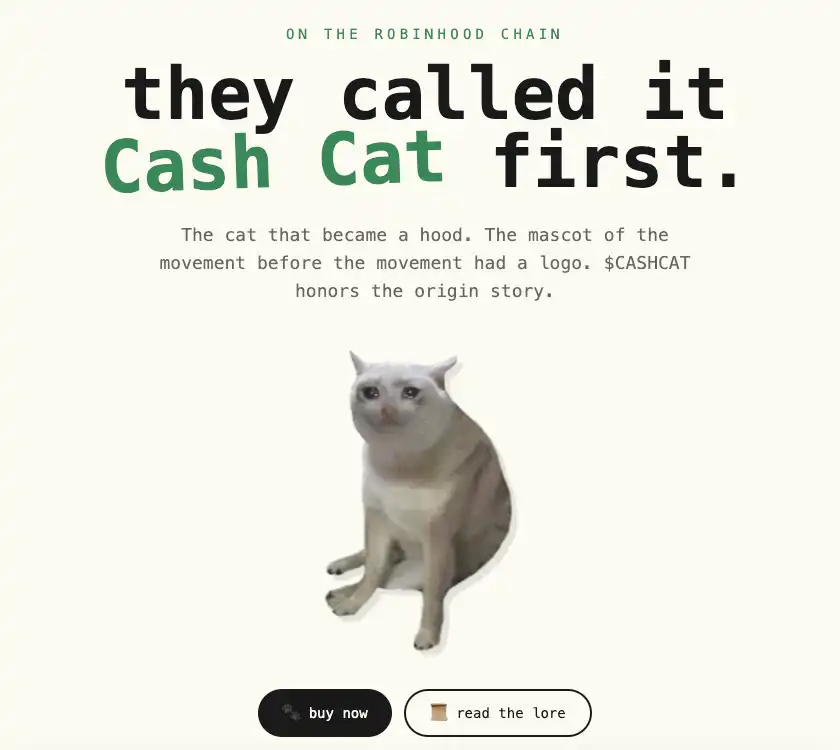
Struktur token itu sendiri sangat sederhana. Menurut pengungkapan situs web proyek, total suplai 10 miliar token, biaya jual beli nol, token pool likuiditas telah dibakar seluruhnya, memposisikan diri sebagai "tanpa utilitas, seratus persen kucing". Situs web juga jelas menuliskan bahwa proyek ini tidak terkait dengan Robinhood, "Ini adalah fan fiction dengan ticker".

Narasi nyata, produk tidak terkait. Pembaca perlu membedakan dua hal ini: sejarah Robinhood memberikan bahan penyebaran untuk kucing ini, tetapi perusahaan tidak mendukungnya, nilai token sepenuhnya dibangun di atas perhatian, dan tidak ada penopang sama sekali saat perhatian surut.
Tenev Mainkan Gimmick di Tweet, Pasar Membacanya Sebagai Setengah Dukungan

Yang benar-benar mendorong tren ke puncak adalah Tenev sendiri.

Pada 8 Juli, Tenev memposting di platform X, "Kami sedang membangun Robinhood Chain menjadi public chain RWA terbaik... Tapi ini juga berjalan sangat baik untuk Meme." Tweet itu mendapatkan lebih dari 500 ribu tayangan dalam beberapa jam. Dia tidak menyebut nama CASHCAT, tetapi waktu postingnya kebetulan tepat pada hari harga melonjak, komunitas menafsirkannya sebagai persetujuan diam-diam atau bahkan bantuan terhadap panasnya Meme di chain.

Ada ironi sejarah di sini. Dalam pertarungan GameStop 2021, Robinhood karena membatasi pembelian GME oleh investor retail dibawa ke sidang kongres, menjadi 'penjahat' dalam narasi investor retail. Lima tahun kemudian, blockchain perusahaan ini menyelesaikan cold start, justru mengandalkan budaya Meme yang paling dikuasai investor retail, dan objek spekulasi adalah nama lama yang dibuang perusahaan sendiri. Situs web CASHCAT bahkan khusus memainkan gimmick ini, "Cash Cat tidak melakukan opsi, juga tidak bermain Payment for Order Flow (PFOF)".
Bagi trader, perlu memberi diskon pada nilai sebenarnya dari tweet ini. Jarak antara Tenev main gimmick dengan dukungan Robinhood dipisahkan oleh seluruh departemen kepatuhan. Perusahaan tersebut tidak memiliki komitmen penyimpanan, pencatatan, atau likuiditas apa pun terhadap token Meme, masa berlaku katalis emosi biasanya dihitung dalam jam.

Versi Tiruan dan 'Roaring Kitty' Palsu Sudah Siap

Setelah panasnya muncul, alat berburu investor retail juga sudah siap.

Pertama, versi tiruan lintas chain. Menurut informasi pemantauan yang diagregasi CoinGecko, di chain Solana telah muncul deployment CASHCAT dengan nama yang sama. Kontrak asli dideploy di Robinhood Chain, alamat dimulai dengan 0x020b dan diakhiri dengan 18b4, token dengan nama yang sama di chain lain tidak terkait dengan versi asli.

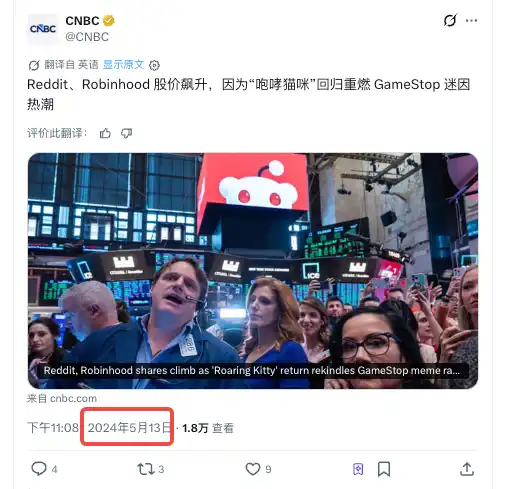
Kedua, akun influencer palsu yang mempromosikan. Misalnya, akun X dengan ID "RK", username yang sangat mirip dengan protagonis peristiwa GameStop 'Roaring Kitty' Keith Gill, men-tweet bahwa "CASHCAT adalah Meme penting pertama di chain Robinhood", dan melampirkan alamat kontrak Solana dalam tweet.

Chain baru, Meme baru, akun palsu, versi imitasi lintas chain, kombinasi ini telah memanen orang di setiap gelombang tren Meme sebelumnya. Jika masih memutuskan untuk berpartisipasi sekarang, setidaknya lakukan tiga hal: verifikasi alamat kontrak, hanya gunakan bridge lintas chain resmi atau utama, dan kendalikan posisi pada ukuran lotre.

Seluruh nilai CASHCAT saat ini hanyalah sebuah cerita bagus ditambah gelombang perhatian, keduanya tidak memiliki mekanisme retensi.


Trending Cryptos

Related Questions

QApa itu CASHCAT di Robinhood Chain dan mengapa token tersebut menjadi populer?

ACASHCAT adalah token meme berbasis kucing di Robinhood Chain yang menjadi aset pertama yang viral. Populeritasnya didorong oleh narasi sejarah bahwa nama awal Robinhood saat startup adalah 'CashCat', yang diceritakan oleh CEO Vlad Tenev. Token ini mengalami kenaikan harga hingga 1700% dalam 24 jam setelah diluncurkan.

QBagaimana peran CEO Vlad Tenev dalam popularitas CASHCAT?

AVlad Tenev, CEO Robinhood, ikut mempopulerkan CASHCAT dengan membagikan cerita asal-usul nama 'CashCat' dan membuat postingan di media sosial yang menyebutkan bahwa Robinhood Chain cocok untuk perdagangan meme. Meskipun tidak secara langsung mendukung token ini, komunitas menafsirkannya sebagai bentuk dukungan tidak langsung.

QApa risiko utama dalam berinvestasi pada CASHCAT?

ARisiko utama termasuk likuiditas rendah di Robinhood Chain yang baru diluncurkan, volatilitas harga tinggi, potensi penipuan dengan token tiruan di blockchain lain, serta ketergantungan sepenuhnya pada perhatian pasar tanpa nilai intrinsik atau dukungan resmi dari Robinhood.

QApa saja penipuan yang terkait dengan CASHCAT yang perlu diwaspadai?

APenipuan yang muncul meliputi token palsu dengan nama serupa di blockchain lain seperti Solana, serta akun media sosial palsu yang mengaku sebagai influencer terkenal seperti 'Roaring Kitty' untuk mempromosikan kontrak palsu. Penting untuk memverifikasi alamat kontrak resmi dan hanya menggunakan jembatan lintas rantai yang tepercaya.

QBagaimana CASHCAT mencerminkan budaya investasi retail di Robinhood Chain?

ACASHCAT mencerminkan kecenderungan investor retail untuk mendukung aset berbasis meme dan narasi yang menarik, meskipun tanpa dasar fundamental. Hal ini menggemakan budaya investasi retail di Robinhood selama peristiwa GameStop 2021, di mana kekuatan komunitas dan momentum media sosial dapat mendorong pergerakan pasar.

Related Reads

Breaking: Google Earth Urgently Pulls Back Nano Banana 2 Image Generation Feature!

Google Earth's newly launched "Create image" feature, powered by the Nano Banana 2 AI image generation model, was abruptly withdrawn shortly after its release due to being "played" by users. The feature allowed users to generate and overlay AI-created visuals directly onto real-world satellite and 3D maps in Google Earth. The tool enabled creative applications like historical recreations (e.g., visualizing ancient Pompeii), generating informational graphics for landmarks, and envisioning architectural projects or futuristic cityscapes on real terrain. It operated under "geospatial grounding," meaning the AI respected the underlying geography, topography, and perspective of the chosen map view. The model also integrated with Gemini to retrieve relevant factual information. However, upon release, users quickly tested its limits. A prominent example involved reimagining Philadelphia's historic Independence Hall as a post-apocalyptic ruin overrun by "happy" zombies, evil clowns, and giant alien mechs. This highlighted both the feature's playful potential and its risks regarding the generation of inappropriate or misleading content on realistic maps, leading to its swift temporary removal. Google stated it would re-release the feature after implementing "enhanced guardrails." Analysts note this move strategically leverages Google's vast proprietary geospatial data, positioning its AI not just for artistic generation but for spatially accurate world visualization—a unique advantage in the competitive AI image generation landscape.

marsbit59m ago

Breaking: Google Earth Urgently Pulls Back Nano Banana 2 Image Generation Feature!

marsbit59m ago

Altman Admits: Overestimated AI Snatching Jobs! Huang Renxun: The Unemployment Narrative Is Completely Backwards

Sam Altman has revised his earlier predictions about AI rapidly replacing jobs, admitting he overestimated the speed at which AI would eliminate entry-level white-collar roles. Speaking on the "Invest Like the Best" podcast, he stated that people do not truly want an AI CEO, as accountability and human connection remain critical. He found that individuals prefer interacting with people who can be held responsible for decisions. Similarly, NVIDIA's Jensen Huang argued that the narrative of AI destroying jobs is misguided. He distinguishes between tasks and jobs, noting that while AI can automate specific tasks, entire jobs—encompassing communication, judgment, coordination, and accountability—are not eliminated. He cited examples like radiologists and software engineers, where demand for these roles has increased as AI handles repetitive tasks, allowing for business expansion and the creation of more positions. Data from a University of Maryland and LinkUp study supports this, showing that U.S. job postings for new graduates have actually risen, countering the fear of vanishing entry-level roles. However, a significant shift is occurring: the traditional entry-level tasks that help newcomers gain experience are being automated, making initial career access more challenging. The key insight is that as AI takes over standardized tasks, the enduring value of human work shifts toward areas of responsibility, trust-building, and final decision-making—aspects that AI cannot replicate. The real "moat" for professionals lies in these irreplaceable human elements.

marsbit1h ago

Altman Admits: Overestimated AI Snatching Jobs! Huang Renxun: The Unemployment Narrative Is Completely Backwards

marsbit1h ago

Weekly Editor's Picks (0725-0731)

Weekly Editor's Picks (0725-0731) provides a curated selection of deep analysis, filtering out market noise. Key themes from this week include: **Macro & Policy:** The Federal Reserve's upcoming meeting is marked by high uncertainty, balancing cooling inflation data against persistent price pressures. Meanwhile, the U.S. crypto regulatory Clarity Act faces critical political hurdles, with its 2026 passage probability seen as low. **Investing & Crypto:** Analysis suggests long-term crypto success depends on conviction through volatile cycles, focusing on assets like Bitcoin and core smart contract platforms. A trend noted is the increasing similarity between global equity markets (especially tech) and crypto, driven by narrative and leverage. Several major crypto protocols show strong revenue growth, but this isn't always translating to token price appreciation due to sell pressure and structural factors. **AI & Semiconductors:** Nvidia's rising credit default swap rates signal market concern over AI infrastructure financing risks. The storage sector experienced volatility as markets began pricing in potential 2027 oversupply. Despite a record profitable quarter, SK Hynix's results were deemed "below expectations," reflecting heightened investor demands for future growth visibility. **Markets & DeFi:** TradeXYZ demonstrated remarkable accuracy in pre-market pricing for a major A股 listing. The token ONDO saw gains, linked to its growing role in the on-chain tokenized stock ecosystem. **Ethereum:** Post-Pectra upgrade, a major structural shift is underway as Lido begins migrating millions of ETH to new validator architectures designed for capital efficiency. **Also Highlighted:** Butian's bullish stock market move; OpenAI's Altman promising major advances; Samsung and SK Hynix securing large AI chip deals; Apple reaching a $5T market cap; and ongoing discussions around exchange security following Poolin's bankruptcy case.

marsbit1h ago

Weekly Editor's Picks (0725-0731)

marsbit1h ago

Low Investment Isn't Apple's Immunity Pass

While Meta and Google face investor scrutiny over ballooning AI capital expenditures, Apple's minimal AI investment has paradoxically become a strength. Its market cap recently reclaimed the global top spot, surpassing $5 trillion. The irony is deep: Apple's own AI efforts have lagged, with "Apple Intelligence" delayed and core talent lost, forcing reliance on partners like Google Gemini and Alibaba's Qianwen. Its Q3 FY2026 (Q2 CY) earnings initially seemed stellar. Revenue hit $109.4B (up 16% YoY), with iPhone and Mac sales, growing 22% and 29% respectively, driving most of the growth. However, the stock fell over 8% post-earnings. The primary concern was a weaker Q4 revenue growth forecast of 9-11%, below expectations, due to looming supply chain constraints. Apple is feeling the indirect cost of the AI boom. Soaring memory and chip prices, fueled by massive data center investments from Microsoft, Amazon, and others, are forcing Apple to raise Mac and iPad prices significantly. The upcoming iPhone launch is also expected to see substantial price hikes. Despite avoiding heavy AI infrastructure spending—its capital expenditures are actually down 28%—Apple cannot escape the industry-wide supply and cost pressures. While Apple's operating cash flow remains robust, its substantial R&D spending (up 32% YoY) has yet to yield major AI breakthroughs. As Tim Cook prepares to step down as CEO, Apple faces a challenging transition: balancing its premium hardware success against the strategic and cost pressures of the AI era it has so far cautiously navigated.

marsbit2h ago

Low Investment Isn't Apple's Immunity Pass

marsbit2h ago

Trading

Spot

Hot Articles

What is TRUMP CAT

Trump Cat Family, $Trump Cat: An Unraveled Mystery Introduction In the constantly evolving landscape of crypto projects and web3 innovations, a curious phenomenon has emerged—one that appears to straddle the line between cryptocurrency and internet meme culture. This is the enigmatic “Trump Cat Family”, also referred to as “$Trump Cat”. Though it might arouse curiosity among crypto enthusiasts, the reality appears far removed from the standard definition of a crypto project. This article aims to explore the concept of Trump Cat Family, bringing to light the context surrounding it and clarifying its status in the crypto realm. What is Trump Cat Family, $Trump Cat? At first glance, one might think that “Trump Cat Family” refers to a legitimate cryptocurrency or web3 project. However, upon deeper investigation, it becomes evident that the term lacks the trappings of a traditional crypto venture. Instead, “Trump Cat” seems to be predominantly associated with the viral meme culture that surged following controversial statements made by former U.S. President Donald Trump regarding Haitian immigrants. The media coverage sparked a myriad of memes, humorous interpretations, and a wave of social commentary. These memes depict various forms of satire centred on Trump's dialogue, often utilising cats in comedic and sometimes absurd scenarios. Rather than a structured project aimed at addressing technological advancements or financial transactions, the “Trump Cat Family” concept exists predominantly in the realm of internet humour. Who is the Creator of Trump Cat Family, $Trump Cat? In the investigation of who stands behind the “Trump Cat Family,” it becomes apparent that there exists no identifiable creator or founding figure. The phenomenon seems to have originated from collective internet expression, rather than from a singular visionary with a defined project goal. This anonymity further emphasises its status as a meme rather than a structured initiative akin to most known crypto projects. Who are the Investors of Trump Cat Family, $Trump Cat? Given that “Trump Cat Family” does not conform to the characteristics of a reputable crypto project, the question of investment becomes moot. There have been no established foundations or organisations expressing support for a project by this name. Instead, what exists are individual contributors to meme culture—hobbyists, artists, and social media users who collectively populate the internet with their interpretations and humour surrounding the term “Trump Cat.” This organic growth within digital human communication reflects more of a social commentary than a financial investment landscape. How Does Trump Cat Family, $Trump Cat Work? If one seeks to establish how “Trump Cat Family” operates, the answer is vastly different from what might be expected of standard crypto projects. There are no operational mechanisms, technological innovations, or unique features inherent to this phenomenon. Instead, it exists through viral spread online, relying upon social media platforms for proliferation. The “how” lies in the realm of culture and communication—its essence derived from the dynamics of social interaction rather than from established crypto protocols or blockchain functionalities. What makes “Trump Cat” unique, if anything, is the way it dramatizes a political dialogue through humour. People utilise engaging visuals, inside jokes, and inventive storytelling to convey sentiments regarding political figures and societal issues. The power of memes transcends traditional communication, encapsulating complex thoughts in a form that resonates widely, yet remains elusive in terms of quantifiable success or structured goals. Timeline of Trump Cat Family, $Trump Cat September 2024: The discourse surrounding Donald Trump's comments about Haitian immigrants allegedly consuming pets gains traction online, leading to a blossoming of memes and parodic interpretations across various platforms. Continuing Impact: Following this period, the “Trump Cat” phenomenon sees continued life as social media users leverage humour to address, critique, or simply celebrate the absurdity of political conversations and events. It is essential to note that as “Trump Cat Family” lacks the formal structure of a traditional project, the timeline consists primarily of anecdotal observation rather than remarkable milestones commonly found in recognised crypto ventures. Key Points Meme Culture: Rather than a structured crypto initiative, “Trump Cat” aligns more with the evolving landscape of internet memes. Origin of the Term: The genesis of “Trump Cat” relates directly to commentary on President Trump's remarks about Haitian immigrants, sparking widespread humorous representation. Absence of a Project Framework: The term fails to align with any defined project objectives, creators, or investors, marking it as a novel cultural experience rather than a crypto project. Conclusion In summary, the investigation into “Trump Cat Family, $Trump Cat” reveals a phenomenon entrenched in internet meme culture rather than a recognised project within the cryptocurrency or web3 sectors. The virality surrounding the term is birthed from collective user engagement, reflective of modern digital discourse rather than a formalised initiative with structure or strategic foresight. For all the curiosity it may invoke among those seeking the next big crypto project, “Trump Cat Family” serves as a testament to humanity's creativity, humour, and often absurd relationship with politics in the digital age.

306 Total ViewsPublished 2025.01.22Updated 2025.01.22

What is TRUMP CAT

Discussions

Welcome to the HTX Community. Here, you can stay informed about the latest platform developments and gain access to professional market insights. Users' opinions on the price of CAT (CAT) are presented below.

活动图片












