Bitcoin Suisse Accélère Son Expansion au Moyen-Orient et Obtient une Autorisation de Services Financiers à Abou Dabi

TheNewsCryptoPublished on 2026-07-07Last updated on 2026-07-07

Abstract

Bitcoin Suisse, pionnier suisse des services financiers en actifs numériques, accélère son expansion internationale avec une avancée majeure au Moyen-Orient. Sa filiale, BTCS (Middle East) Ltd., a obtenu une autorisation de services financiers (FSP) de l'Autorité de régulation des services financiers (FSRA) de l'ADGM, centre financier d'Abou Dhabi. Cette licence permet à Bitcoin Suisse d'offrir une gamme complète de services réglementés en actifs numériques aux clients institutionnels et professionnels des Émirats arabes unis. Fort de plus d'une décennie d'expérience et de la sécurisation de 3,7 milliards de dollars d'actifs crypto, le groupe propose dans la région une infrastructure institutionnelle incluant la garde réglementée, le trading et, à l'avenir, l'accès à des actifs réels tokenisés. Cette autorisation renforce la stratégie de croissance mondiale de Bitcoin Suisse et témoigne de l'attractivité de l'écosystème d'Abou Dhabi pour les institutions financières innovantes.

Zoug, Suisse, 7 juillet 2026, Chainwire

Le pionnier des actifs virtuels premium BTCS (Middle East) Ltd. est désormais pleinement autorisé par l'Autorité de Régulation des Services Financiers (FSRA) de l'ADGM, permettant des services institutionnels réglementés à travers les Émirats Arabes Unis.

Fort de sa position de principal fournisseur de services financiers cryptographiques en Suisse, Bitcoin Suisse accélère davantage son expansion internationale. La filiale du groupe Bitcoin Suisse, BTCS (Middle East) Ltd. (« BTCS ME ») a obtenu une Autorisation de Services Financiers (FSP) de la part de l'Autorité de Régulation des Services Financiers (FSRA) de l'ADGM, le centre financier international d'Abou Dabi. Cela marque une autre étape importante vers la stratégie de croissance internationale du Groupe visant à devenir un partenaire mondial de premier plan dans la gestion de patrimoine.

La FSP marque l'aboutissement d'un processus de licence rigoureux et en plusieurs étapes et permet à BTCS ME de proposer une gamme complète de services financiers réglementés sur actifs numériques aux clients institutionnels et professionnels aux Émirats Arabes Unis. Bitcoin Suisse apporte plus d'une décennie d'expérience couvrant plusieurs cycles de marché d'actifs numériques aux Émirats Arabes Unis. Le Groupe sécurise actuellement 3,7 milliards de dollars d'actifs cryptographiques et se classe comme le quatrième plus grand opérateur de staking au monde.

Avec la FSP, les clients bénéficient des mêmes fondements qui ont fait de Bitcoin Suisse un partenaire de confiance pour les investisseurs, les institutions et les innovateurs de la blockchain depuis plus de dix ans. À travers de multiples cycles de marché, Bitcoin Suisse s'est forgé une réputation de résilience, alliant une infrastructure propriétaire robuste à une philosophie de service centrée sur des relations clients à long terme.

Les clients institutionnels et professionnels peuvent accéder à une infrastructure financière réglementée pour actifs numériques conçue pour des besoins sophistiqués, y compris la gestion et la couverture de l'exposition aux actifs numériques, dans un environnement entièrement conforme, une garde institutionnelle et la négociation d'actifs virtuels approuvés. Le tout est soutenu par un gestionnaire de relation dédié, garantissant l'accès non seulement à une technologie de niveau institutionnel et à une clarté réglementaire, mais aussi à une attention personnalisée, une continuité et une expertise approfondie. À mesure que le marché évolue, BTCS ME est également bien placée pour soutenir ses clients dans l'accès aux actifs du monde réel tokenisés à l'avenir.

En combinant la force réglementaire, la profondeur opérationnelle et une approche hautement personnalisée du service client, BTCS ME est conçue pour accompagner les clients dans la prochaine phase d'adoption institutionnelle.

Ceyda Majcen, Directrice Générale et Directrice de l'Optimisation pour les Moteurs de Recherche (CEO et SEO) de BTCS ME, dirige l'expansion du groupe Bitcoin Suisse au Moyen-Orient et apporte une vaste et ancienne expérience de direction senior au sein du Groupe.
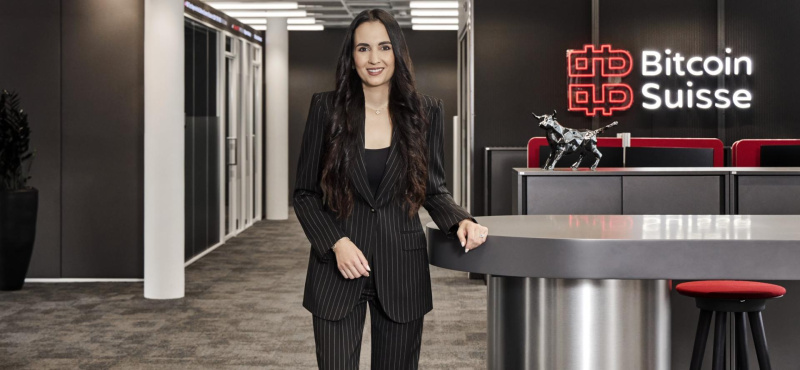
L'obtention de la FSP de la part de la FSRA est une étape majeure dans notre stratégie de croissance internationale. Cette autorisation reflète plus d'une décennie d'expérience dans la construction d'une infrastructure résiliente, de cadres de gestion des risques et de relations de confiance avec les clients. Nous sommes ravis d'apporter notre combinaison unique de capacités de niveau institutionnel et de service hautement personnalisé aux Émirats Arabes Unis, l'un des hubs les plus dynamiques au monde pour les actifs numériques.

Arvind Ramamurthy, Directeur du Développement des Marchés à l'ADGM, a déclaré « Nous félicitons Bitcoin Suisse pour l'obtention de sa FSP de la part de la FSRA. Son expansion dans l'ADGM renforce la solidité et la maturité de notre écosystème d'actifs numériques, qui continue d'attirer les principales institutions mondiales à la recherche de clarté réglementaire, d'accès aux marchés et d'opportunités de croissance à long terme. Alors qu'Abou Dabi consolide davantage sa position de centre financier leader dans la région, l'ADGM reste engagé à permettre l'innovation dans un environnement réglementaire robuste et internationalement reconnu. »

À propos de Bitcoin Suisse

Bitcoin Suisse est un fournisseur leader de services financiers premium sur actifs numériques. Fondée en 2013 par des experts en actifs numériques, elle propose une suite cohérente de services de trading, de garde, de staking et de prêt pour les clients institutionnels, les fondations d'actifs numériques, les family offices, les gestionnaires d'actifs et les particuliers fortunés. Bitcoin Suisse a son siège à Zoug et compte plus de 200 employés en Suisse, au Liechtenstein, aux Émirats Arabes Unis et aux Bermudes. www.bitcoinsuisse.com

Contact

Lukas Mettler
Bitcoin Suisse
l.mettler@bitcoinsuisse.com

Trending Cryptos

Related Questions

QQuel est l'objectif principal de l'annonce faite par Bitcoin Suisse ?

AL'objectif principal est d'annoncer que la filiale de Bitcoin Suisse, BTCS (Middle East) Ltd., a obtenu une autorisation de services financiers (FSP) de la part de l'Autorité de régulation des services financiers (FSRA) d'ADGM à Abu Dhabi, marquant une étape importante dans son expansion au Moyen-Orient et sa stratégie de croissance internationale.

QQuelle autorité a délivré l'autorisation de services financiers (FSP) à BTCS (Middle East) Ltd. ?

AL'autorisation de services financiers (FSP) a été délivrée par la Financial Services Regulatory Authority (FSRA) de l'Abu Dhabi Global Market (ADGM), le centre financier international d'Abu Dhabi.

QQuels services réglementés Bitcoin Suisse pourra-t-il désormais proposer aux Émirats arabes unis grâce à cette autorisation ?

AGrâce à cette autorisation, Bitcoin Suisse pourra proposer une gamme complète de services financiers d'actifs numériques réglementés aux clients institutionnels et professionnels aux Émirats arabes unis, notamment la garde institutionnelle, la négociation d'actifs virtuels approuvés, la gestion et la couverture de l'exposition aux actifs numériques dans un environnement entièrement conforme.

QSelon Arvind Ramamurthy d'ADGM, qu'est-ce que l'expansion de Bitcoin Suisse renforce ?

ASelon Arvind Ramamurthy, responsable du développement du marché chez ADGM, l'expansion de Bitcoin Suisse dans ADGM renforce la solidité et la maturité de l'écosystème des actifs numériques de la place, qui continue d'attirer des institutions mondiales de premier plan à la recherche de clarté réglementaire, d'accès au marché et d'opportunités de croissance à long terme.

QQui est à la tête de l'expansion de Bitcoin Suisse au Moyen-Orient et quelle est son expérience ?

ACeyda Majcen est la directrice générale et responsable de l'optimisation pour les moteurs de recherche (SEO) de BTCS ME. Elle dirige l'expansion du groupe Bitcoin Suisse au Moyen-Orient et possède une vaste expérience de leadership senior de longue date au sein du groupe.

Related Reads

Founder of Baixing.com: The Notion That Large Language Models Will Devour Everything, I Believe Half of It

Founder of Baixing.com: I Only Half-Believe the Saying “Large Language Models Will Devour Everything” Author: Wang Jianshuo, Founder of Baixing.com Many proclaim that large models are everything, but the author is skeptical. He argues that such sweeping claims often stem from a limited understanding of the future. Drawing parallels to past technologies like electricity and the internet—which were predicted to “devour everything” but didn’t—he suggests that large language models (LLMs) are better seen as a foundational base. Like electricity, this base is essential for modern development, but its real value emerges only when applied to specific scenarios through various “machines” or “tools” (e.g., Claude Code for programming, Claude Design for design). The author acknowledges that LLMs may indeed replace many existing software systems built on rigid rules, workflows, and forms (e.g., CRMs, SaaS tools), as these are precisely what LLMs excel at processing. However, he emphasizes that beyond software, elements like customer data, execution capabilities (e.g., booking a flight), trust, and physical-world interactions will not be “devoured.” Instead, he foresees that after streamlining existing software, LLMs will open up a larger space for innovative, next-generation applications. These new tools will likely feature fluid interfaces and rely less on fixed rules, unleashing greater creativity. The author cautions against short-sightedness, recalling how in 2004 many believed internet giants like Sina, Sohu, and NetEase would monopolize the market—only to be proven wrong by subsequent disruptions. In conclusion, while LLMs are a crucial foundation and a current focal point, the true mainstream of this wave lies in the diverse applications built atop them to solve concrete problems. The phrase “devour everything” is imprecise; the real opportunity lies in identifying and leveraging the areas where LLMs do bring transformative change.

marsbit2h ago

Founder of Baixing.com: The Notion That Large Language Models Will Devour Everything, I Believe Half of It

marsbit2h ago

Founder of Baixing.com: I Only Half Believe in the Notion that Large Language Models Devour Everything

The founder of Baixing Wang states that while large language models (LLMs) are an extremely important foundational technology—akin to electricity or the internet—he only "half believes" the notion that they will "consume everything." He argues that LLMs provide a base layer of intelligence, but real-world value and transformation come from integrating this intelligence into specific applications and devices designed for particular scenarios—like how electricity powers various appliances from washing machines to TVs. He agrees LLMs will likely consume or replace a significant portion of existing rule-based, workflow-driven software (e.g., many SaaS systems, CRMs), as these are precisely what LLMs excel at handling. However, numerous other elements—such as customer data, execution capabilities (e.g., booking a flight), trust, and physical-world interactions—will not be consumed. Wang emphasizes that after LLMs absorb certain software layers, they will open up a much larger space for innovation: new types of "streaming" software with less rigid interfaces, where fixed rules are managed by AI. This next wave of applications built on top of the stable LLM foundation is where the true mainstream opportunity lies. He cautions against the short-sightedness of declaring any technology as all-consuming, drawing parallels to past premature predictions about internet giants monopolizing the web. The key is to find opportunities within the areas LLMs do transform.

链捕手2h ago

Founder of Baixing.com: I Only Half Believe in the Notion that Large Language Models Devour Everything

链捕手2h ago

Trading

Spot

Hot Articles

What is $BITCOIN

DIGITAL GOLD ($BITCOIN): A Comprehensive Analysis Introduction to DIGITAL GOLD ($BITCOIN) DIGITAL GOLD ($BITCOIN) is a blockchain-based project operating on the Solana network, which aims to combine the characteristics of traditional precious metals with the innovation of decentralized technologies. While it shares a name with Bitcoin, often referred to as “digital gold” due to its perception as a store of value, DIGITAL GOLD is a separate token designed to create a unique ecosystem within the Web3 landscape. Its goal is to position itself as a viable alternative digital asset, although specifics regarding its applications and functionalities are still developing. What is DIGITAL GOLD ($BITCOIN)? DIGITAL GOLD ($BITCOIN) is a cryptocurrency token explicitly designed for use on the Solana blockchain. In contrast to Bitcoin, which provides a widely recognized value storage role, this token appears to focus on broader applications and characteristics. Notable aspects include: Blockchain Infrastructure: The token is built on the Solana blockchain, known for its capacity to handle high-speed and low-cost transactions. Supply Dynamics: DIGITAL GOLD has a maximum supply capped at 100 quadrillion tokens (100P $BITCOIN), although details regarding its circulating supply are currently undisclosed. Utility: While precise functionalities are not explicitly outlined, there are indications that the token could be utilized for various applications, potentially involving decentralized applications (dApps) or asset tokenization strategies. Who is the Creator of DIGITAL GOLD ($BITCOIN)? At present, the identity of the creators and development team behind DIGITAL GOLD ($BITCOIN) remains unknown. This situation is typical among many innovative projects within the blockchain space, particularly those aligning with decentralized finance and meme coin phenomena. While such anonymity may foster a community-driven culture, it intensifies concerns about governance and accountability. Who are the Investors of DIGITAL GOLD ($BITCOIN)? The available information indicates that DIGITAL GOLD ($BITCOIN) does not have any known institutional backers or prominent venture capital investments. The project seems to operate on a peer-to-peer model focused on community support and adoption rather than traditional funding routes. Its activity and liquidity are primarily situated on decentralized exchanges (DEXs), such as PumpSwap, rather than established centralized trading platforms, further highlighting its grassroots approach. How DIGITAL GOLD ($BITCOIN) Works The operational mechanics of DIGITAL GOLD ($BITCOIN) can be elaborated on based on its blockchain design and network attributes: Consensus Mechanism: By leveraging Solana’s unique proof-of-history (PoH) combined with a proof-of-stake (PoS) model, the project ensures efficient transaction validation contributing to the network's high performance. Tokenomics: While specific deflationary mechanisms have not been extensively detailed, the vast maximum token supply implies that it may cater to microtransactions or niche use cases that are still to be defined. Interoperability: There exists the potential for integration with Solana’s broader ecosystem, including various decentralized finance (DeFi) platforms. However, the details regarding specific integrations remain unspecified. Timeline of Key Events Here is a timeline that highlights significant milestones concerning DIGITAL GOLD ($BITCOIN): 2023: The initial deployment of the token occurs on the Solana blockchain, marked by its contract address. 2024: DIGITAL GOLD gains visibility as it becomes available for trading on decentralized exchanges like PumpSwap, allowing users to trade it against SOL. 2025: The project witnesses sporadic trading activity and potential interest in community-led engagements, although no noteworthy partnerships or technical advancements have been documented as of yet. Critical Analysis Strengths Scalability: The underlying Solana infrastructure supports high transaction volumes, which could enhance the utility of $BITCOIN in various transaction scenarios. Accessibility: The potential low trading price per token could attract retail investors, facilitating wider participation due to fractional ownership opportunities. Risks Lack of Transparency: The absence of publicly known backers, developers, or an audit process may yield skepticism regarding the project's sustainability and trustworthiness. Market Volatility: The trading activity is heavily reliant on speculative behavior, which can result in significant price volatility and uncertainty for investors. Conclusion DIGITAL GOLD ($BITCOIN) emerges as an intriguing yet ambiguous project within the rapidly evolving Solana ecosystem. While it attempts to leverage the “digital gold” narrative, its departure from Bitcoin's established role as a store of value underscores the need for a clearer differentiation of its intended utility and governance structure. Future acceptance and adoption will likely depend on addressing the current opacity and defining its operational and economic strategies more explicitly. Note: This report encompasses synthesised information available as of October 2023, and developments may have transpired beyond the research period.

656 Total ViewsPublished 2025.05.13Updated 2025.05.13

What is $BITCOIN

Discussions

Welcome to the HTX Community. Here, you can stay informed about the latest platform developments and gain access to professional market insights. Users' opinions on the price of BTC (BTC) are presented below.

活动图片