Les tokens dévorent 30% des salaires, la facture IA de la Silicon Valley devient incontrôlable

marsbitPublished on 2026-07-06Last updated on 2026-07-06

Abstract

Les coûts liés aux jetons (tokens) d'IA, représentant désormais 30 % de la masse salariale chez certains acteurs comme SemiAnalysis, illustrent la transformation radicale de la productivité dans les services spécialisés. Si cette dépense achète une efficacité plusieurs fois supérieure au travail humain pour des tâches comme l'analyse de données, d'autres géants technologiques comme Uber ou Microsoft font face à des factures d'IA explosives et à un retour sur investissement encore incertain. Le paradoxe actuel est frappant : les investissements en IA explosent (7400 milliards de dollars en 2024), tandis que les réductions de coûts se poursuivent. Pourtant, l'impact économique mesurable reste limité. La thèse centrale de l'article est que cette phase de construction d'infrastructure précède toujours l'arrivée des bénéfices. L'optimisme repose sur une baisse structurelle des coûts. Grâce aux progrès matériels (ex: GB300 NVL72, +32x de débit) et logiciels (optimisations logicielles multipliant les performances par 14), le prix réel du traitement des jetons s'effondre. Chez SemiAnalysis, un coût affiché de 5$/million de tokens est ramené à 0.99$ grâce à un cache efficace et un ratio entrée/sortie favorable. Cette déflation devrait se poursuivre, rendant l'IA de plus en plus accessible. Le choix pour les entreprises est désormais clair : adopter dès maintenant ces outils pour gagner un avantage concurrentiel décisif, ou attendre et risquer de prendre un retard considérable.

Seulement 0,99 dollar par million de tokens.

C'est le coût réel sur la propre facture de SemiAnalysis – l'agence de recherche sur les semi-conducteurs la plus pointue de la Silicon Valley.

Mais ce qui est encore plus explosif, c'est ce chiffre : les dépenses en tokens pour les modèles internes de grande envergure représentent déjà 30% de la masse salariale totale.

Cela semble beaucoup – mais calculé à l'envers, la production achetée avec cet argent aurait nécessité plusieurs fois le coût de main-d'œuvre pour être couverte auparavant. Par personne, près de 5 milliards de tokens sont consommés par mois, soit plus de 5 fois le niveau par personne chez Meta, et les contributeurs clés en consomment même plus de 100 milliards par mois.

Des tâches qui prenaient auparavant plusieurs heures à un analyste junior, comme la conversion d'un modèle Excel ou la création de graphiques pour des rapports financiers, sont désormais réalisées en quelques minutes, pour quelques dollars seulement.
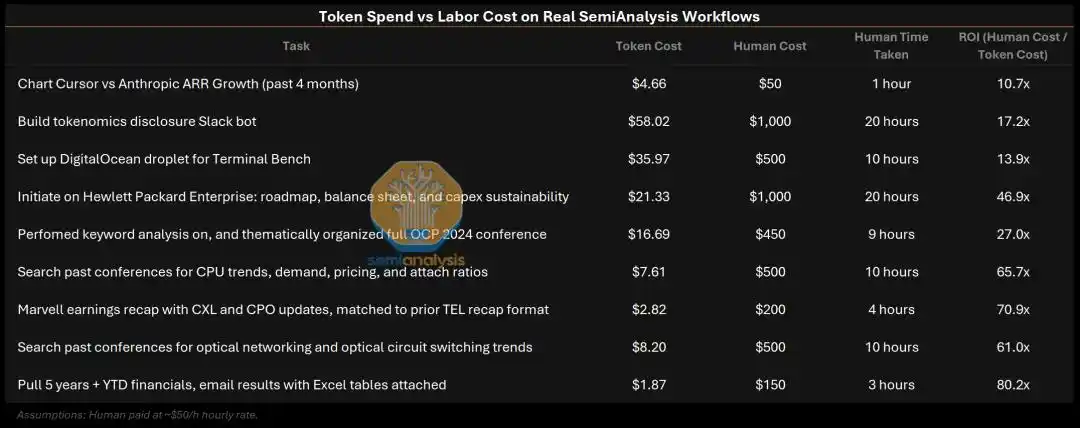
L'évaluation de SemiAnalysis est sans appel : Il ne s'agit pas d'une amélioration d'efficacité de 10%, mais de la réécriture de l'économie unitaire des services professionnels.

Les sociétés de recherche, les fonds spéculatifs, les cabinets d'avocats – dans toutes les industries qui vivent de matière grise, il n'est qu'une question de temps avant que les dépenses en tokens atteignent 20 à 30% des salaires.

Jensen Huang, le PDG de Nvidia, est plus pressé que quiconque.

Lors de la conférence GTC de cette année, il a lancé ce message clair : Un ingénieur avec un salaire de 500 000 dollars par an qui ne consomme pas pour 250 000 dollars de tokens d'ici la fin de l'année ?

« Je vais carrément péter un câble. »
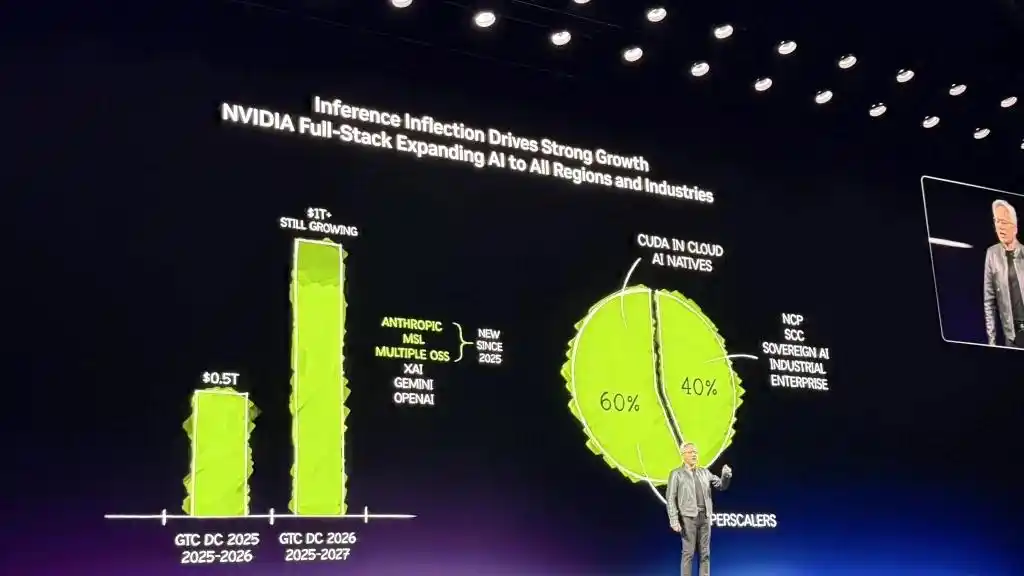
Il prévoit de donner à chaque ingénieur de Nvidia un budget en tokens équivalent à six mois de salaire, et de faire travailler ses 75 000 employés aux côtés de 7,5 millions d'agents intelligents d'IA.

Ne pas utiliser l'IA ? Huang dit que c'est comme si un concepteur de puces insistait pour utiliser du papier et un crayon.

Le token n'est plus un outil, il est en train de devenir le « moyen de production » de la nouvelle ère.

Mais l'autre moitié de la Silicon Valley pète un câble à cause de la facture IA

Ce qui est intéressant, c'est qu'au moment même où SemiAnalysis économise de l'argent réel grâce aux tokens, les géants de la Silicon Valley sont aux prises avec des factures d'IA qui leur donnent des migraines.

Uber est le cas d'école par excellence.

Fin de l'année dernière, la société a lancé Claude Code auprès de 5 000 ingénieurs, avec même un classement – plus on l'utilise, plus le rang est élevé, la compétition interne était à son comble.

Résultat : un succès trop grand. Le taux d'utilisation par les ingénieurs était de 32% en février, il a grimpé à 84% en mars, et en avril, 95% des ingénieurs utilisaient l'IA chaque mois, 70% du code soumis provenait de l'IA, et le budget annuel – était déjà épuisé.

Le CTO a dit qu'il « fallait refaire le budget de zéro ». Plus tard, encore plus radical – Bloomberg a révélé qu'Uber avait imposé une limite mensuelle de 1 500 dollars en tokens par employé, dépassement nécessitant une autorisation spéciale.

Mais le COO Andrew Macdonald a dit une grande vérité dans un podcast : L'utilisation de l'IA augmente effectivement, mais le lien avec l'innovation dans les fonctionnalités consommateur... pour l'instant, on ne le voit pas.

La situation chez Microsoft est encore plus surréaliste. Le mois dernier, The Verge a révélé que Microsoft annulait la plupart des licences Claude Code pour passer à son propre GitHub Copilot CLI.

La raison est simple : L'argent partait plus vite que la production n'arrivait.

Bryan Catanzaro, vice-président de l'apprentissage profond appliqué chez Nvidia, l'a dit encore plus directement en avril dernier : « Pour mon équipe, le coût du calcul dépasse de loin le coût des employés. »

Une étude du MIT en 2024 : dans les postes où le travail est principalement visuel, l'automatisation par l'IA n'est économiquement rentable que dans 23% des cas.

Dans les 77% des cas restants, embaucher une personne est moins cher que d'utiliser l'IA.

Il y a même des ingénieurs qui se plaignent que des agents IA « ont détruit sa base de données et son réseau » en cours d'utilisation – il appelle cela le prix d'une « utilisation excessive ».

Budgets faramineux, utilisation incontrôlée, incidents à répétition – la Silicon Valley traverse la phase la plus déchirante de l'économie de l'IA.

D'un côté, une productivité sans précédent grâce à la technologie, de l'autre, des factures qui gonflent à une vitesse tout aussi inédite.

L'effondrement des coûts ne fait que commencer

Mais l'argument central de SemiAnalysis est : Ne regardez pas le prix d'aujourd'hui, l'effondrement des coûts ne fait que commencer.

Regardons d'abord le côté logiciel.

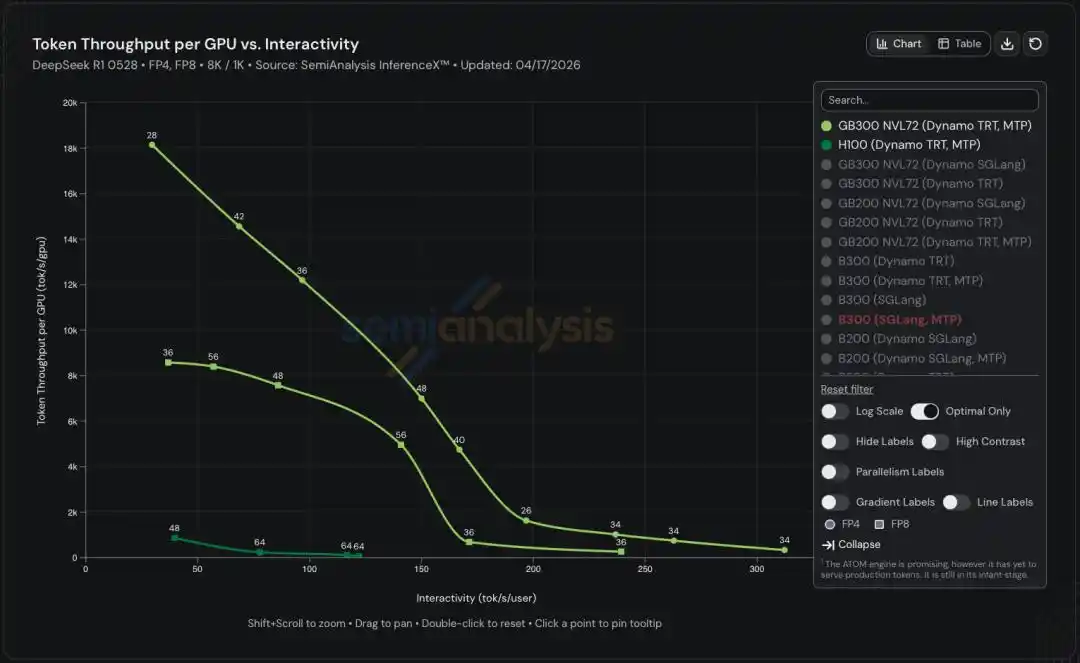
Exécuter DeepSeek R1 sur B300, avec les optimisations purement logicielles en trois couches wideEP, disagg et MTP, fait passer le débit par GPU de 1000 tokens/seconde en référence à 14000 tokens/seconde – une amélioration de 14 fois, uniquement grâce au code.
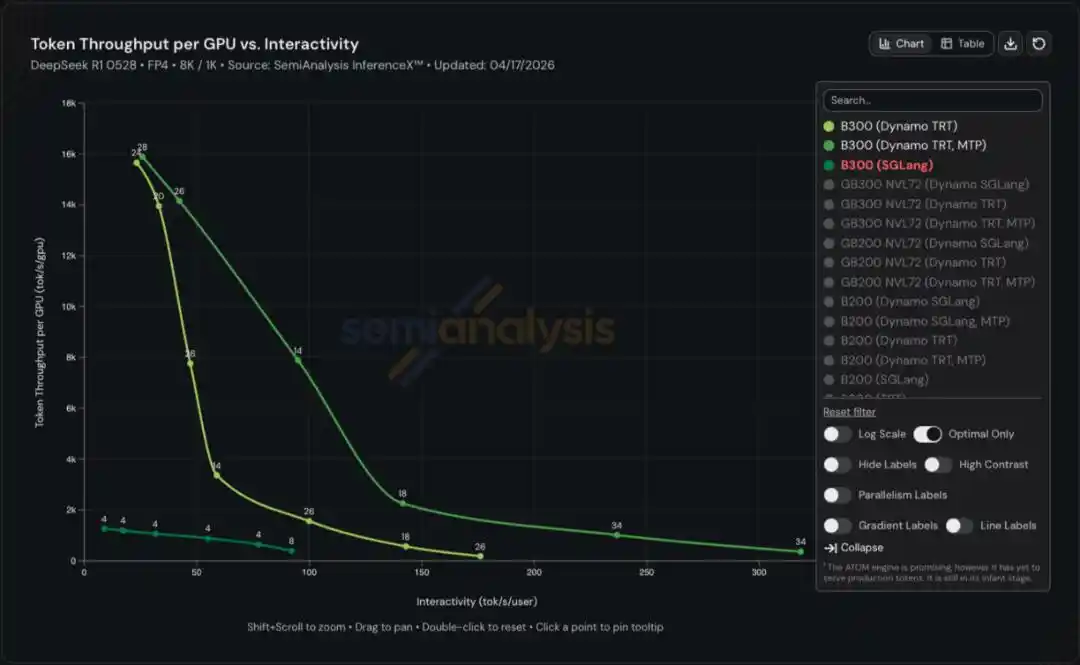
Regardons maintenant le côté matériel.

Le débit d'une GB300 NVL72 dans sa configuration optimale est 17 fois supérieur à celui d'un H100, et passe à 32 fois supérieur en passant en précision FP4.
Le prix officiel d'Opus 4.7 est de 5 dollars par million en entrée, 25 dollars par million en sortie, ce qui ne semble pas bon marché.

Mais en raison du ratio entrée/sortie élevé des charges de travail des agents (jusqu'à 300:1) et d'un taux de succès du cache dépassant 90%, le coût mixte réel est compressé à 0,99 dollar.

Moins d'un cinquième du prix officiel.

En superposant logiciel et matériel, une conclusion est difficile à éviter : L'expansion de la marge brute des grands modèles n'est pas une coïncidence ponctuelle de tarification, mais une tendance structurelle.

L'ARR d'Anthropic cette année est passé de 9 milliards de dollars à plus de 44 milliards, et la marge brute est passée de 38% à plus de 70% – Les tokens deviennent moins chers, mais ceux qui les vendent gagnent encore plus d'argent.

Le rapport de Gartner de mars dernier corrobore ce point : d'ici 2030, le coût d'inférence des grands modèles de mille milliards de paramètres sera inférieur de plus de 90% par rapport à 2025.

Le jugement de SemiAnalysis est clair : si vous voulez estimer le prix des tokens en 2027, la réponse tient en un mot – Baisse.

L'argent est dépensé, et après ?

C'est précisément l'endroit le plus déchirant de l'IA actuelle : les dépenses d'investissement en IA des entreprises technologiques mondiales cette année s'élèvent à 7400 milliards de dollars annoncés, une augmentation de 69% par rapport à l'année dernière ; en même temps, le rythme des licenciements dans le secteur technologique a déjà dépassé celui de l'année dernière.

L'argent brûle à un rythme effréné, les gens sont licenciés, mais l'économiste en chef de Goldman Sachs a dit une grande vérité – L'impact réel de l'IA sur l'économie, jusqu'à présent, est essentiellement nul.

Ce n'est pas que l'IA ne fonctionne pas, mais c'est la douleur de l'enfantement que traverse chaque révolution d'infrastructure : D'abord on brûle de l'argent pour construire les canalisations, ensuite on attend que l'eau arrive.

Le réseau électrique a été ainsi, internet a été ainsi, l'IA ne fait pas exception.

La seule différence, c'est que cette fois, la vitesse de déploiement des canalisations, et la vitesse à laquelle l'eau arrive, sont d'un ordre de grandeur que la génération précédente n'a jamais vu.

SemiAnalysis est déjà du côté où l'eau arrive – 30% de la masse salariale a été échangée contre un levier de production plusieurs fois supérieur, et la courbe des coûts continue de chuter brutalement.

Quant aux autres entreprises : traverser la rivière maintenant à gué, ou attendre que ceux de l'autre rive aient déjà construit une ville pour courir après.

Références :

https://x.com/SemiAnalysis_/status/2070915305858007345

Cet article provient du compte WeChat officiel « New Zhiyuan », auteur : ASI Révélation, éditeur : Salomon


Trending Cryptos

Related Questions

QQuel est le pourcentage du salaire des employés que représente les dépenses en tokens pour le modèle interne de SemiAnalysis ?

ALes dépenses en tokens pour le modèle interne représentent 30% du salaire total des employés chez SemiAnalysis.

QQuelle est la limite mensuelle en dollars fixée par Uber pour les dépenses en tokens par employé, et que se passe-t-il si elle est dépassée ?

AUber a fixé une limite mensuelle de 1500 dollars par employé pour les dépenses en tokens. Si cette limite est dépassée, une approbation spéciale est requise.

QSelon l'article, quelle est l'évolution prévue du coût des tokens d'ici 2027 ?

ASelon l'article, le coût des tokens devrait baisser d'ici 2027. La prédiction de SemiAnalysis est que le prix va 'descendre'.

QSelon le rapport de Gartner cité, de combien le coût d'inférence des grands modèles de langage devrait-il diminuer d'ici 2030 par rapport à 2025 ?

ASelon le rapport de Gartner de mars 2024, le coût d'inférence des grands modèles de langage de l'ordre du billion de paramètres devrait diminuer de plus de 90% d'ici 2030 par rapport à 2025.

QQuelle comparaison Jensen Huang, le PDG de Nvidia, a-t-il utilisée pour critiquer les ingénieurs qui n'utilisent pas l'IA ?

AJensen Huang a comparé les ingénieurs qui n'utilisent pas l'IA à des concepteurs de puces qui insisteraient pour travailler avec du papier et un crayon.

Related Reads

Glassnode: Cryptocurrency Market Entering Late-Stage Consolidation Phase

Bitcoin has now been trading below the realized price and short-term holder cost basis for nearly five months, indicating a prolonged period of undervaluation. The market exhibits late-stage accumulation characteristics. Long-term holders (LTHs) are the primary source of sell-side pressure, with their realized losses reaching a daily peak of $280 million, the highest since December 2022, and accounting for 43% of total on-chain realized losses. A sustained decline in this LTH selling is a crucial prerequisite for a meaningful reversal. Spot ETF flows, while moderating from June peaks, remain in a state of monthly net outflows. Daily trading volumes have collapsed roughly 80% from the October 2025 highs, reflecting weak institutional demand and lack of confidence. Derivatives markets show a cautious tilt towards bullishness, with the put/call ratio hitting a 2026 low and funding rates neutral. However, the options volatility skew remains in "put premium," indicating persistent demand for downside protection, even as the absolute cost of that protection has declined. The spot price currently trades approximately 6% below the $66,000 max pain level. In summary, key conditions for a market bottom are in place, including sustained undervaluation and significant LTH capitulation. However, definitive signals for a transition to a bull market—namely, a sustained drop in LTH realized losses, stabilization of ETF fund flows, and price reclaiming key on-chain cost bases—are not yet confirmed. The market is in the late stages of basing, awaiting these catalysts for a sustained recovery.

marsbit23m ago

Glassnode: Cryptocurrency Market Entering Late-Stage Consolidation Phase

marsbit23m ago

Trading

Spot

Hot Articles

What is SONIC

Sonic: Pioneering the Future of Gaming in Web3 Introduction to Sonic In the ever-evolving landscape of Web3, the gaming industry stands out as one of the most dynamic and promising sectors. At the forefront of this revolution is Sonic, a project designed to amplify the gaming ecosystem on the Solana blockchain. Leveraging cutting-edge technology, Sonic aims to deliver an unparalleled gaming experience by efficiently processing millions of requests per second, ensuring that players enjoy seamless gameplay while maintaining low transaction costs. This article delves into the intricate details of Sonic, exploring its creators, funding sources, operational mechanics, and the timeline of significant events that have shaped its journey. What is Sonic? Sonic is an innovative layer-2 network that operates atop the Solana blockchain, specifically tailored to enhance the existing Solana gaming ecosystem. It accomplishes this through a customised, VM-agnostic game engine paired with a HyperGrid interpreter, facilitating sovereign game economies that roll up back to the Solana platform. The primary goals of Sonic include: Enhanced Gaming Experiences: Sonic is committed to offering lightning-fast on-chain gameplay, allowing players and developers to engage with games at previously unattainable speeds. Atomic Interoperability: This feature enables transactions to be executed within Sonic without the need to redeploy Solana programmes and accounts. This makes the process more efficient and directly benefits from Solana Layer1 services and liquidity. Seamless Deployment: Sonic allows developers to write for Ethereum Virtual Machine (EVM) based systems and execute them on Solana’s SVM infrastructure. This interoperability is crucial for attracting a broader range of dApps and decentralised applications to the platform. Support for Developers: By offering native composable gaming primitives and extensible data types - dining within the Entity-Component-System (ECS) framework - game creators can craft intricate business logic with ease. Overall, Sonic's unique approach not only caters to players but also provides an accessible and low-cost environment for developers to innovate and thrive. Creator of Sonic The information regarding the creator of Sonic is somewhat ambiguous. However, it is known that Sonic's SVM is owned by the company Mirror World. The absence of detailed information about the individuals behind Sonic reflects a common trend in several Web3 projects, where collective efforts and partnerships often overshadow individual contributions. Investors of Sonic Sonic has garnered considerable attention and support from various investors within the crypto and gaming sectors. Notably, the project raised an impressive $12 million during its Series A funding round. The round was led by BITKRAFT Ventures, with other notable investors including Galaxy, Okx Ventures, Interactive, Big Brain Holdings, and Mirana. This financial backing signifies the confidence that investment foundations have in Sonic’s potential to revolutionise the Web3 gaming landscape, further validating its innovative approaches and technologies. How Does Sonic Work? Sonic utilises the HyperGrid framework, a sophisticated parallel processing mechanism that enhances its scalability and customisability. Here are the core features that set Sonic apart: Lightning Speed at Low Costs: Sonic offers one of the fastest on-chain gaming experiences compared to other Layer-1 solutions, powered by the scalability of Solana’s virtual machine (SVM). Atomic Interoperability: Sonic enables transaction execution without redeployment of Solana programmes and accounts, effectively streamlining the interaction between users and the blockchain. EVM Compatibility: Developers can effortlessly migrate decentralised applications from EVM chains to the Solana environment using Sonic’s HyperGrid interpreter, increasing the accessibility and integration of various dApps. Ecosystem Support for Developers: By exposing native composable gaming primitives, Sonic facilitates a sandbox-like environment where developers can experiment and implement business logic, greatly enhancing the overall development experience. Monetisation Infrastructure: Sonic natively supports growth and monetisation efforts, providing frameworks for traffic generation, payments, and settlements, thereby ensuring that gaming projects are not only viable but also sustainable financially. Timeline of Sonic The evolution of Sonic has been marked by several key milestones. Below is a brief timeline highlighting critical events in the project's history: 2022: The Sonic cryptocurrency was officially launched, marking the beginning of its journey in the Web3 gaming arena. 2024: June: Sonic SVM successfully raised $12 million in a Series A funding round. This investment allowed Sonic to further develop its platform and expand its offerings. August: The launch of the Sonic Odyssey testnet provided users with the first opportunity to engage with the platform, offering interactive activities such as collecting rings—a nod to gaming nostalgia. October: SonicX, an innovative crypto game integrated with Solana, made its debut on TikTok, capturing the attention of over 120,000 users within a short span. This integration illustrated Sonic’s commitment to reaching a broader, global audience and showcased the potential of blockchain gaming. Key Points Sonic SVM is a revolutionary layer-2 network on Solana explicitly designed to enhance the GameFi landscape, demonstrating great potential for future development. HyperGrid Framework empowers Sonic by introducing horizontal scaling capabilities, ensuring that the network can handle the demands of Web3 gaming. Integration with Social Platforms: The successful launch of SonicX on TikTok displays Sonic’s strategy to leverage social media platforms to engage users, exponentially increasing the exposure and reach of its projects. Investment Confidence: The substantial funding from BITKRAFT Ventures, among others, emphasizes the robust backing Sonic has, paving the way for its ambitious future. In conclusion, Sonic encapsulates the essence of Web3 gaming innovation, striking a balance between cutting-edge technology, developer-centric tools, and community engagement. As the project continues to evolve, it is poised to redefine the gaming landscape, making it a notable entity for gamers and developers alike. As Sonic moves forward, it will undoubtedly attract greater interest and participation, solidifying its place within the broader narrative of blockchain gaming.

1.8k Total ViewsPublished 2024.04.04Updated 2024.12.03

What is SONIC

What is $S$

Understanding SPERO: A Comprehensive Overview Introduction to SPERO As the landscape of innovation continues to evolve, the emergence of web3 technologies and cryptocurrency projects plays a pivotal role in shaping the digital future. One project that has garnered attention in this dynamic field is SPERO, denoted as SPERO,$$s$. This article aims to gather and present detailed information about SPERO, to help enthusiasts and investors understand its foundations, objectives, and innovations within the web3 and crypto domains. What is SPERO,$$s$? SPERO,$$s$ is a unique project within the crypto space that seeks to leverage the principles of decentralisation and blockchain technology to create an ecosystem that promotes engagement, utility, and financial inclusion. The project is tailored to facilitate peer-to-peer interactions in new ways, providing users with innovative financial solutions and services. At its core, SPERO,$$s$ aims to empower individuals by providing tools and platforms that enhance user experience in the cryptocurrency space. This includes enabling more flexible transaction methods, fostering community-driven initiatives, and creating pathways for financial opportunities through decentralised applications (dApps). The underlying vision of SPERO,$$s$ revolves around inclusiveness, aiming to bridge gaps within traditional finance while harnessing the benefits of blockchain technology. Who is the Creator of SPERO,$$s$? The identity of the creator of SPERO,$$s$ remains somewhat obscure, as there are limited publicly available resources providing detailed background information on its founder(s). This lack of transparency can stem from the project's commitment to decentralisation—an ethos that many web3 projects share, prioritising collective contributions over individual recognition. By centring discussions around the community and its collective goals, SPERO,$$s$ embodies the essence of empowerment without singling out specific individuals. As such, understanding the ethos and mission of SPERO remains more important than identifying a singular creator. Who are the Investors of SPERO,$$s$? SPERO,$$s$ is supported by a diverse array of investors ranging from venture capitalists to angel investors dedicated to fostering innovation in the crypto sector. The focus of these investors generally aligns with SPERO's mission—prioritising projects that promise societal technological advancement, financial inclusivity, and decentralised governance. These investor foundations are typically interested in projects that not only offer innovative products but also contribute positively to the blockchain community and its ecosystems. The backing from these investors reinforces SPERO,$$s$ as a noteworthy contender in the rapidly evolving domain of crypto projects. How Does SPERO,$$s$ Work? SPERO,$$s$ employs a multi-faceted framework that distinguishes it from conventional cryptocurrency projects. Here are some of the key features that underline its uniqueness and innovation: Decentralised Governance: SPERO,$$s$ integrates decentralised governance models, empowering users to participate actively in decision-making processes regarding the project’s future. This approach fosters a sense of ownership and accountability among community members. Token Utility: SPERO,$$s$ utilises its own cryptocurrency token, designed to serve various functions within the ecosystem. These tokens enable transactions, rewards, and the facilitation of services offered on the platform, enhancing overall engagement and utility. Layered Architecture: The technical architecture of SPERO,$$s$ supports modularity and scalability, allowing for seamless integration of additional features and applications as the project evolves. This adaptability is paramount for sustaining relevance in the ever-changing crypto landscape. Community Engagement: The project emphasises community-driven initiatives, employing mechanisms that incentivise collaboration and feedback. By nurturing a strong community, SPERO,$$s$ can better address user needs and adapt to market trends. Focus on Inclusion: By offering low transaction fees and user-friendly interfaces, SPERO,$$s$ aims to attract a diverse user base, including individuals who may not previously have engaged in the crypto space. This commitment to inclusion aligns with its overarching mission of empowerment through accessibility. Timeline of SPERO,$$s$ Understanding a project's history provides crucial insights into its development trajectory and milestones. Below is a suggested timeline mapping significant events in the evolution of SPERO,$$s$: Conceptualisation and Ideation Phase: The initial ideas forming the basis of SPERO,$$s$ were conceived, aligning closely with the principles of decentralisation and community focus within the blockchain industry. Launch of Project Whitepaper: Following the conceptual phase, a comprehensive whitepaper detailing the vision, goals, and technological infrastructure of SPERO,$$s$ was released to garner community interest and feedback. Community Building and Early Engagements: Active outreach efforts were made to build a community of early adopters and potential investors, facilitating discussions around the project’s goals and garnering support. Token Generation Event: SPERO,$$s$ conducted a token generation event (TGE) to distribute its native tokens to early supporters and establish initial liquidity within the ecosystem. Launch of Initial dApp: The first decentralised application (dApp) associated with SPERO,$$s$ went live, allowing users to engage with the platform's core functionalities. Ongoing Development and Partnerships: Continuous updates and enhancements to the project's offerings, including strategic partnerships with other players in the blockchain space, have shaped SPERO,$$s$ into a competitive and evolving player in the crypto market. Conclusion SPERO,$$s$ stands as a testament to the potential of web3 and cryptocurrency to revolutionise financial systems and empower individuals. With a commitment to decentralised governance, community engagement, and innovatively designed functionalities, it paves the way toward a more inclusive financial landscape. As with any investment in the rapidly evolving crypto space, potential investors and users are encouraged to research thoroughly and engage thoughtfully with the ongoing developments within SPERO,$$s$. The project showcases the innovative spirit of the crypto industry, inviting further exploration into its myriad possibilities. While the journey of SPERO,$$s$ is still unfolding, its foundational principles may indeed influence the future of how we interact with technology, finance, and each other in interconnected digital ecosystems.

104 Total ViewsPublished 2024.12.17Updated 2024.12.17

What is $S$

What is AGENT S

Agent S: The Future of Autonomous Interaction in Web3 Introduction In the ever-evolving landscape of Web3 and cryptocurrency, innovations are constantly redefining how individuals interact with digital platforms. One such pioneering project, Agent S, promises to revolutionise human-computer interaction through its open agentic framework. By paving the way for autonomous interactions, Agent S aims to simplify complex tasks, offering transformative applications in artificial intelligence (AI). This detailed exploration will delve into the project's intricacies, its unique features, and the implications for the cryptocurrency domain. What is Agent S? Agent S stands as a groundbreaking open agentic framework, specifically designed to tackle three fundamental challenges in the automation of computer tasks: Acquiring Domain-Specific Knowledge: The framework intelligently learns from various external knowledge sources and internal experiences. This dual approach empowers it to build a rich repository of domain-specific knowledge, enhancing its performance in task execution. Planning Over Long Task Horizons: Agent S employs experience-augmented hierarchical planning, a strategic approach that facilitates efficient breakdown and execution of intricate tasks. This feature significantly enhances its ability to manage multiple subtasks efficiently and effectively. Handling Dynamic, Non-Uniform Interfaces: The project introduces the Agent-Computer Interface (ACI), an innovative solution that enhances the interaction between agents and users. Utilizing Multimodal Large Language Models (MLLMs), Agent S can navigate and manipulate diverse graphical user interfaces seamlessly. Through these pioneering features, Agent S provides a robust framework that addresses the complexities involved in automating human interaction with machines, setting the stage for myriad applications in AI and beyond. Who is the Creator of Agent S? While the concept of Agent S is fundamentally innovative, specific information about its creator remains elusive. The creator is currently unknown, which highlights either the nascent stage of the project or the strategic choice to keep founding members under wraps. Regardless of anonymity, the focus remains on the framework's capabilities and potential. Who are the Investors of Agent S? As Agent S is relatively new in the cryptographic ecosystem, detailed information regarding its investors and financial backers is not explicitly documented. The lack of publicly available insights into the investment foundations or organisations supporting the project raises questions about its funding structure and development roadmap. Understanding the backing is crucial for gauging the project's sustainability and potential market impact. How Does Agent S Work? At the core of Agent S lies cutting-edge technology that enables it to function effectively in diverse settings. Its operational model is built around several key features: Human-like Computer Interaction: The framework offers advanced AI planning, striving to make interactions with computers more intuitive. By mimicking human behaviour in tasks execution, it promises to elevate user experiences. Narrative Memory: Employed to leverage high-level experiences, Agent S utilises narrative memory to keep track of task histories, thereby enhancing its decision-making processes. Episodic Memory: This feature provides users with step-by-step guidance, allowing the framework to offer contextual support as tasks unfold. Support for OpenACI: With the ability to run locally, Agent S allows users to maintain control over their interactions and workflows, aligning with the decentralised ethos of Web3. Easy Integration with External APIs: Its versatility and compatibility with various AI platforms ensure that Agent S can fit seamlessly into existing technological ecosystems, making it an appealing choice for developers and organisations. These functionalities collectively contribute to Agent S's unique position within the crypto space, as it automates complex, multi-step tasks with minimal human intervention. As the project evolves, its potential applications in Web3 could redefine how digital interactions unfold. Timeline of Agent S The development and milestones of Agent S can be encapsulated in a timeline that highlights its significant events: September 27, 2024: The concept of Agent S was launched in a comprehensive research paper titled “An Open Agentic Framework that Uses Computers Like a Human,” showcasing the groundwork for the project. October 10, 2024: The research paper was made publicly available on arXiv, offering an in-depth exploration of the framework and its performance evaluation based on the OSWorld benchmark. October 12, 2024: A video presentation was released, providing a visual insight into the capabilities and features of Agent S, further engaging potential users and investors. These markers in the timeline not only illustrate the progress of Agent S but also indicate its commitment to transparency and community engagement. Key Points About Agent S As the Agent S framework continues to evolve, several key attributes stand out, underscoring its innovative nature and potential: Innovative Framework: Designed to provide an intuitive use of computers akin to human interaction, Agent S brings a novel approach to task automation. Autonomous Interaction: The ability to interact autonomously with computers through GUI signifies a leap towards more intelligent and efficient computing solutions. Complex Task Automation: With its robust methodology, it can automate complex, multi-step tasks, making processes faster and less error-prone. Continuous Improvement: The learning mechanisms enable Agent S to improve from past experiences, continually enhancing its performance and efficacy. Versatility: Its adaptability across different operating environments like OSWorld and WindowsAgentArena ensures that it can serve a broad range of applications. As Agent S positions itself in the Web3 and crypto landscape, its potential to enhance interaction capabilities and automate processes signifies a significant advancement in AI technologies. Through its innovative framework, Agent S exemplifies the future of digital interactions, promising a more seamless and efficient experience for users across various industries. Conclusion Agent S represents a bold leap forward in the marriage of AI and Web3, with the capacity to redefine how we interact with technology. While still in its early stages, the possibilities for its application are vast and compelling. Through its comprehensive framework addressing critical challenges, Agent S aims to bring autonomous interactions to the forefront of the digital experience. As we move deeper into the realms of cryptocurrency and decentralisation, projects like Agent S will undoubtedly play a crucial role in shaping the future of technology and human-computer collaboration.

771 Total ViewsPublished 2025.01.14Updated 2025.01.14

What is AGENT S

Discussions

Welcome to the HTX Community. Here, you can stay informed about the latest platform developments and gain access to professional market insights. Users' opinions on the price of S (S) are presented below.

活动图片