Les actions semi-conducteurs s'effondrent, mais Anthropic veut fabriquer une puce 2 nm

链捕手Published on 2026-07-03Last updated on 2026-07-03

Abstract

Selon des informations, l'entreprise d'IA Anthropic aurait initié les premiers travaux pour développer sa propre puce dédiée à l'IA, envisageant de la fabriquer en partenariat avec Samsung en utilisant sa technologie de fabrication avancée de 2 nanomètres et son emballage de pointe. Ce projet, encore à un stade précoce de définition des spécifications, pourrait être abandonné. Cette initiative s'inscrit dans un contexte où la demande de calcul pour son modèle Claude dépasse l'offre disponible. En développant une puce d'inférence personnalisée, Anthropic cherche à optimiser les performances, réduire les coûts opérationnels et gagner en indépendance. Elle rejoint ainsi d'autres géants comme OpenAI, Google et Meta dans cette course à l'autonomie matérielle. Le choix de Samsung comme partenaire de fabrication n'est pas une surprise, ce dernier étant un investisseur stratégique dans le dernier tour de table d'Anthropic. Pour Samsung, c'est l'opportunité de renforcer son activité de fonderie face à TSMC en s'associant à un acteur majeur de l'IA. Cependant, cette quête d'indépendance crée paradoxalement de nouvelles interdépendances dans la chaîne d'approvisionnement mondiale des semi-conducteurs. Anthropic maintient une stratégie de diversification de ses sources de calcul, avec des engagements à long terme massifs auprès d'Amazon AWS (puces Trainium) et de Google (TPU), ainsi que la location d'un vaste cluster de GPU NVIDIA auprès de xAI. Malgré la tendance à la personnalisatio...

Par Boyang, Tencent Technology

Anthropic se lance dans la fabrication de ses propres puces, et comme Elon Musk, elle a choisi Samsung plutôt que TSMC.

The Information, citant trois sources informées, rapporte qu'Anthropic a démarré les travaux préliminaires sur une puce IA maison. La société discute actuellement avec Samsung de l'utilisation de la technologie de fabrication la plus avancée de ce dernier, en 2 nanomètres, ainsi que de ses techniques d'assemblage avancées pour produire cette puce.

Ces sources indiquent qu'Anthropic est également en train de définir les fonctionnalités, les paramètres de performance de la puce et son intégration dans les serveurs ou les clusters. L'entreprise a déjà entamé des discussions avec plusieurs prestataires de services de conception, mais est encore loin des étapes de conception détaillée, de test et de production de masse. Les sources rappellent également qu'Anthropic pourrait toujours abandonner le projet en cours de route.

Des informations publiques montrent que l'équipe puces d'Anthropic commence à se constituer. Par exemple, la société a recruté le 9 juin Clive Chan, un ancien membre de l'équipe de puces sur mesure d'OpenAI.
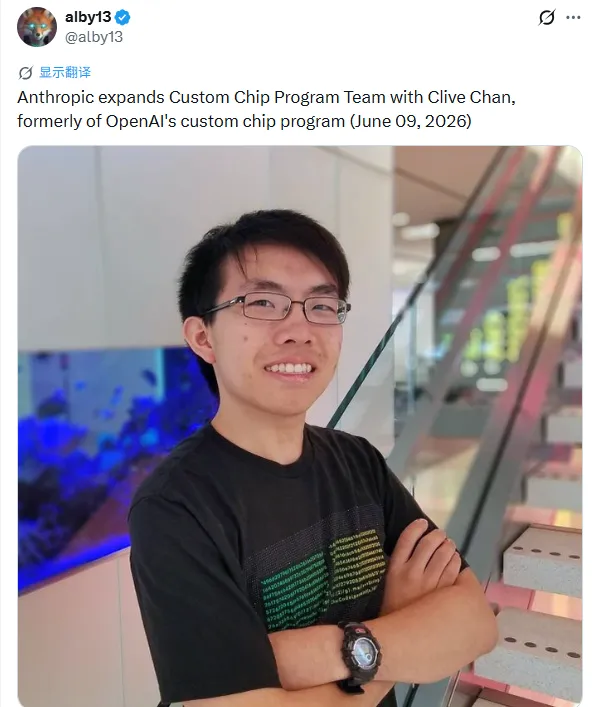
Clive Chan, ancien membre de l'équipe de puces sur mesure d'OpenAI, a rejoint Anthropic.

Anthropic reste très prudente dans ses déclarations publiques sur ses puces maison, insistant sur le fait que son expansion future en capacité de calcul dépendra principalement des Trainium d'AWS, des TPU de Google et des GPU de Nvidia, tout en refusant de commenter sa propre feuille de route en matière de puces.

En réalité, des rumeurs sur les intentions d'Anthropic concernant des puces maison circulaient déjà il y a quelques mois. En avril, Reuters rapportait que la demande de calcul de Claude augmentait trop rapidement par rapport à la capacité disponible, poussant Anthropic à envisager de fabriquer ses propres puces. Mais il ne s'agissait alors que d'une idée préliminaire. Aujourd'hui, le projet semble avoir progressé.

Il est à noter que la révélation des ambitions d'Anthropic dans la fabrication de puces intervient au moment où les actions du secteur des semi-conducteurs mondial ont subi deux journées consécutives de fortes baisses. L'indice Philadelphia Semiconductor a chuté de près de 12% cumulé sur deux jours, la plus forte baisse depuis le 5 juin. Les actions des fabricants de puces mémoire ont été particulièrement touchées, Samsung Electronics perdant 9,1% et SanDisk 14,1% dans la nuit.

01 Un financement qui prépare le terrain, et la bataille de Samsung pour percer dans la fonderie

Que Samsung devienne le partenaire d'Anthropic n'est pas une surprise.

En mai dernier, Anthropic a complété un tour de financement de série H de 650 milliards de dollars, auquel Samsung Electronics a participé en tant qu'investisseur stratégique, aux côtés des géants de la mémoire SK Hynix et Micron Technology.

À l'époque, l'offre de puces mémoire était tendue, forçant des fabricants d'électronique grand public comme Apple à augmenter leurs prix. Un avantage direct de cet investissement était de lier Anthropic à ses fournisseurs de puces, essentiels à sa croissance.

Mais les calculs de Samsung ne se limitent pas à un retour financier.

L'entreprise est un leader dans le domaine des puces mémoire, mais reste à la traîne de TSMC dans le secteur de la fonderie. Les lignes de production avancées de TSMC restent la référence de l'industrie pour les puces IA de pointe. Cependant, la demande actuelle de puces IA met à rude épreuve la capacité de production de TSMC, offrant à Samsung une opportunité de séduire des clients avec sa technologie en 2 nm.

Selon The Information, Google envisage déjà de confier la production d'une partie de ses futurs TPU à Samsung. Si Samsung parvenait également à décrocher Anthropic, ce serait une victoire majeure pour sa division fonderie.

Deux sources informées révèlent qu'Anthropic évalue actuellement le procédé de fabrication en 2 nm et les installations d'assemblage avancé de Samsung. Le "2 nm" est l'une des technologies de fabrication de puces les plus avancées de l'industrie, permettant des processeurs plus denses et plus économes en énergie. L'assemblage avancé consiste à placer le processeur principal plus près de la mémoire haute vitesse, accélérant le transfert des données à l'intérieur de la puce.

Samsung est le partenaire de fabrication de la mémoire HBM de Nvidia et des puces LPU ; en retour, Samsung utilise les logiciels de Nvidia pour produire ses puces. Les deux entreprises construisent conjointement une usine de puces IA en Corée du Sud. Si Anthropic rejoint la liste des clients, Samsung disposera d'un atout supplémentaire pour rattraper TSMC sur les procédés avancés.

La volonté de Samsung de séduire Anthropic s'inscrit dans le contexte d'un engagement national de la Corée du Sud en faveur de l'industrie des semi-conducteurs.

Le gouvernement sud-coréen a récemment annoncé un plan d'investissement décennal mené par le groupe Samsung (maison mère de Samsung Electronics) et le groupe SK (maison mère de SK Hynix), prévoyant un investissement combiné de 5 180 milliards de dollars pour construire quatre usines de puces mémoire en Corée du Sud.

Samsung seul, le 2 juillet, a annoncé un plan d'investissement pour la région de Chungcheong, d'un montant supérieur à 140 000 milliards de wons, soit environ 900 milliards de dollars. Samsung Electronics construira des sites de production de HBM de nouvelle génération à Cheongju et Uinyeong, ajoutant cinq nouvelles lignes de production. Depuis la ruée vers l'IA, les HBM sont en pénurie constante. L'expansion de la capacité devrait générer des revenus supplémentaires de plusieurs milliards de dollars pour Samsung dans les années à venir. Samsung Electro-Mechanics augmentera quant à elle la capacité de production de ses substrats pour serveurs IA à Sejong, tout en investissant dans la R&D pour les technologies d'assemblage avancé.

La participation de Samsung au tour de financement d'Anthropic est un pari sur le fait de devenir le partenaire matériel à long terme de cette dernière.

02 Les puces d'inférence, un levier pour briser le cercle vicieux des coûts

La première puce en 2 nm d'Anthropic devrait, comme celle d'OpenAI, se concentrer sur l'inférence.

Une puce d'inférence sur mesure permettrait aux modèles d'Anthropic de fonctionner plus rapidement, avec une consommation électrique réduite, des factures cloud allégées, et serait optimisée spécifiquement pour le matériel exécutant Claude.

Précédemment, OpenAI a choisi Broadcom pour concevoir une puce d'inférence nommée "Jalapeño", visant à exécuter les grands modèles de langage de manière plus efficace. OpenAI affirme que cette puce est plus économe en énergie et offre de meilleures performances par watt que ses concurrentes.
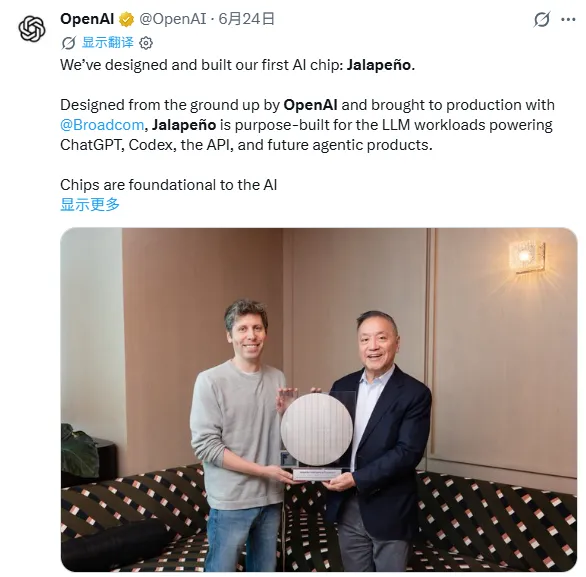
OpenAI s'est associé à Broadcom pour concevoir une puce d'inférence nommée "Jalapeño".

Google a ses TPU, Amazon ses Trainium, Microsoft a Maia, et Meta développe également ses propres puces. Anthropic est pratiquement le dernier grand laboratoire d'IA à utiliser entièrement des puces tierces. La perspective de contrôler ce domaine est trop tentante.

En février dernier, Dario Amodei, PDG d'Anthropic, a expliqué la logique des décisions en matière de puissance de calcul lors d'un entretien avec le podcasteur Dwarkesh Patel.

Amodei déclarait : "Si je suppose que les revenus continuent de croître de 10 fois par an, d'ici fin 2026, ce sera 100 milliards, et fin 2027, ce sera 1 000 milliards. Sur cette base, je pourrais commander 1 000 milliards de puissance de calcul. Mais si je me trompe ? Si le taux de croissance est de 5 fois et non de 10 ? Si en 2027, les revenus ne sont que de 800 milliards et non de 1 000 ? Alors je fais faillite. Aucune couverture ne pourrait me sauver."

Ainsi, Amodei doit trouver un équilibre pour Anthropic : acheter suffisamment de puissance de calcul pour pouvoir gérer une forte croissance, mais ne pas surinvestir au point que tout ralentissement de la croissance écrase l'entreprise sous le poids des investissements initiaux.

Amodei a révélé que la puissance de calcul construite dans le monde cette année serait d'environ 10 à 15 gigawatts, triplant à peu près chaque année. D'ici 2028 ou 2029, l'industrie investira chaque année des milliers de milliards de dollars dans la puissance de calcul. Il estime que c'est la tendance que suit actuellement le secteur.

Développer ses propres puces, c'est augmenter ses mises dans ce jeu.

D'une part, toute amélioration de l'efficacité de l'inférence sur une puce maison peut permettre d'économiser des sommes considérables sur des clusters de plusieurs gigawatts. D'autre part, alors que tout le monde se dispute les processeurs, les centres de données et l'électricité, posséder ses propres puces donne un avantage lors des négociations.

03 La chaîne d'approvisionnement en "poupées russes" : qui dépend de qui ?

Anthropic souhaite l'indépendance en matière de puces, mais ce réseau devient de plus en plus complexe.

Le programmeur Benny Lam a souligné sur les réseaux sociaux un phénomène : chaque laboratoire d'IA américain recherche un partenariat avec une fonderie asiatique pour des puces sur mesure. Le résultat n'est pas une indépendance, mais un renforcement des liens au sein de la chaîne d'approvisionnement.

Anthropic a besoin des fonderies de Samsung pour réduire sa dépendance envers Nvidia ; Nvidia a besoin des fonderies de Samsung pour répondre à sa demande sans cesse croissante. Et Samsung doit, quant à lui, satisfaire ces deux grands clients pour maintenir la compétitivité de son activité de fonderie face à TSMC.

Les trois parties sont liées, aucune ne peut se passer des autres.

Lam commente que la tendance aux puces sur mesure était censée donner aux laboratoires d'IA plus d'autonomie, mais que chaque nouvelle collaboration entre un laboratoire américain et une fonderie asiatique rend ce réseau plus dense et plus difficile à démanteler.

Le blogueur technologique Vaibhav Sisinty a également noté le rôle particulier de Samsung dans cette partie d'échecs.

Il écrit que l'investissement de Samsung dans le tour de financement de 650 milliards de dollars d'Anthropic n'était pas uniquement motivé par un retour financier. Samsung est un fabricant de puces, un fournisseur de mémoire, une usine d'assemblage avancé ; son investissement est un pari pour devenir le partenaire matériel d'Anthropic. Avec plusieurs millions de requêtes par jour, chaque appel d'Anthropic entraîne un paiement pour les ressources de calcul, générant une facture astronomique. Celui qui contrôle sa puce d'inférence contrôle la vitesse de son expansion et ses coûts.

04 Les remparts de Nvidia restent solides

Concevoir une puce IA compétitive est extrêmement complexe : architecture, logiciel, fabrication, tests, déploiement à grande échelle, chaque étape prend du temps. Anthropic ne pourra pas se passer de ses partenaires matériels actuels à court terme.

À en juger par la disposition actuelle de la puissance de calcul d'Anthropic, sa stratégie est déjà très claire. L'entreprise a toujours maintenu une approche de location multi-cloud, sans se lier exclusivement au matériel Nvidia comme OpenAI ou xAI. Elle utilise simultanément les puces d'Amazon, Google et Nvidia, et discute actuellement de collaborations avec Microsoft ainsi qu'avec la start-up britannique Fractile.

Anthropic est particulièrement liée à Amazon et Google.

En avril 2026, Anthropic a élargi sa collaboration avec AWS, s'engageant à investir plus de 1 000 milliards de dollars sur la prochaine décennie, garantissant ainsi 5 gigawatts de nouvelle capacité de calcul couvrant les puces sur mesure Trainium2, Trainium3, Trainium4, etc. Amazon a accumulé des investissements de plusieurs dizaines de milliards de dollars dans Anthropic.

Simultanément, Anthropic a signé un accord à long terme avec Google et Broadcom pour obtenir environ 3,5 gigawatts de capacité de calcul avec les TPU de nouvelle génération à partir de 2027. Déjà en 2025, les deux parties avaient signé un accord de plusieurs centaines de milliards de dollars, couvrant des millions de TPU et une capacité supérieure à 1 gigawatt.

Claude est également l'un des rares modèles de pointe disponible simultanément sur AWS, Google Cloud et Azure.

Ce n'est pas tout. En mai 2026, Anthropic a loué l'intégralité de la capacité du cluster de calcul SpaceX Colossus 1 de xAI.

Ce cluster, situé dans un centre de données de Memphis, contient plus de 220 000 GPU Nvidia, avec une puissance dépassant les 300 mégawatts, pour un loyer mensuel d'environ 1,25 milliard de dollars. Le contrat total vaut plusieurs centaines de milliards de dollars et court jusqu'en 2029 environ. Les deux parties ont même discuté de la possibilité de déployer une puissance de calcul de plusieurs gigawatts en orbite.

Une large diversification, l'utilisation parallèle de plusieurs fournisseurs, c'est la manière dont Anthropic atténue ses risques.

Mais pour l'instant, le croupier à la table reste Nvidia. Selon les estimations de The Information, malgré la hausse des financements et des activités de conception dans le marché des puces d'inférence, la part de marché de Nvidia a en réalité augmenté ces dernières années, atteignant 74 %. Son PDG, Jensen Huang, affirme toujours que pour les tâches d'inférence, les puces de Nvidia sont plus efficaces que toute solution alternative.

Trending Cryptos

Related Questions

QQuelle est la principale raison pour laquelle Anthropic envisage de développer sa propre puce IA, selon l'article ?

ASelon l'article, Anthropic envisage de développer sa propre puce IA principalement pour optimiser l'inférence (l'exécution) de ses modèles comme Claude, afin qu'ils fonctionnent plus rapidement, avec une consommation énergétique réduite et à un coût inférieur, tout en obtenant un matériel spécialement optimisé pour ses besoins.

QQuel partenaire de fabrication et quelle technologie de processus Anthropic a-t-il choisi pour son projet de puce, et pourquoi ce choix est-il significatif ?

AAnthropic discute avec Samsung pour fabriquer sa puce en utilisant la technologie de processus 2 nanomètres de pointe et des techniques de packaging avancées. Ce choix est significatif car il permet à Samsung, qui est derrière TSMC dans le secteur de la fonderie, de saisir une opportunité pour attirer des clients importants comme Anthropic et renforcer sa position concurrentielle.

QComment l'investissement de Samsung dans le tour de financement d'Anthropic est-il lié à ses ambitions commerciales plus larges ?

AL'investissement de Samsung dans le tour de financement d'Anthropic n'était pas seulement une opportunité financière. Il s'agissait d'un pari stratégique pour devenir un partenaire matériel à long terme d'Anthropic, renforçant ainsi son activité de fonderie (foundry) et ses parts de marché face à TSMC dans la fabrication de puces AI avancées.

QQuel paradoxe concernant la chaîne d'approvisionnement est soulevé par le programmeur Benny Lam dans l'article ?

ABenny Lam souligne le paradoxe selon lequel, bien que les laboratoires d'IA américains comme Anthropic développent des puces sur mesure pour réduire leur dépendance envers des fournisseurs comme NVIDIA, chaque nouvelle collaboration avec une fonderie asiatique (comme Samsung) rend en réalité le réseau d'approvisionnement plus interdépendant et plus difficile à démêler, créant une relation de dépendance mutuelle.

QMalgré les projets de puces sur mesure d'Anthropic, pourquoi NVIDIA conserve-t-il une position dominante sur le marché selon l'article ?

AMalgré la montée en puissance des puces d'inférence sur mesure, NVIDIA conserve une position dominante avec environ 74% de part de marché, car la conception d'une puce IA compétitive est extrêmement complexe. De plus, son PDG, Jensen Huang, soutient que les puces de NVIDIA restent plus efficaces pour les tâches d'inférence que toute alternative. Anthropic continue donc de s'appuyer fortement sur des fournisseurs comme AWS, Google et NVIDIA pour sa puissance de calcul.

Related Reads

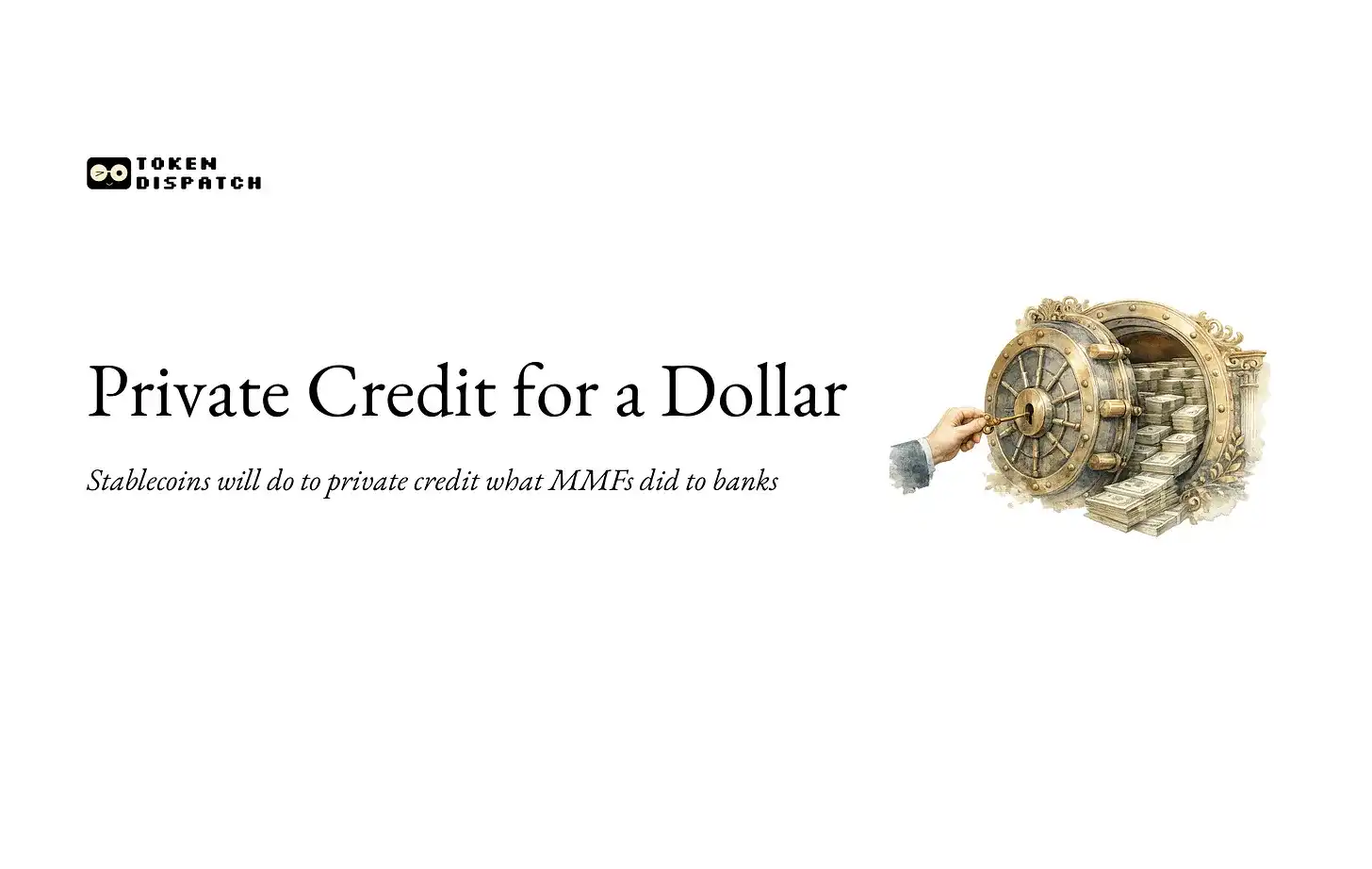
Private Credit in US Dollar

Stablecoins are evolving into a new type of money market fund, channeling crypto deposits into the $2 trillion private credit market. This mirrors the 1970s innovation where money market funds pooled small deposits to buy high-yield government securities, bypassing bank restrictions. Today, platforms like Apollo's ACRED tokenized fund and Figure's on-chain lending system allow stablecoin holders to access institutional private credit strategies with no minimum investment, offering yields of 8-12%. On-chain tokenization enables greater liquidity and DeFi composability (e.g., using tokens as collateral for leveraged positions) compared to traditional, locked-up private credit funds. Consequently, on-chain private credit has grown 15x in a year to $5.87 billion, though it remains a tiny fraction (0.3%) of the global market. However, this model carries significant risks, as illustrated by the failure of Goldfinch. Launched in 2021, it directed crypto deposits to motorcycle loans in Kenya and Nigeria. Critical issues included a lack of local oversight, leading to unauthorized fund transfers and borrower defaults. With $56 million now trapped in non-performing loans, its collapse highlights that while blockchain streamlines capital transfer, the essential 90% of lending—underwriting, monitoring, and recovery—remains a costly, localized challenge. Success requires robust, traditional credit infrastructure, not just on-chain execution.

marsbit10m ago

Private Credit in US Dollar

marsbit10m ago

Goldman Sachs: How to Invest in Tech Stocks in the Second Half of the Year?

Goldman Sachs remains bullish on tech stocks in the second half of the year, advising a shift from "buying the sector" to "picking individual companies." The firm's latest report indicates the AI-driven tech cycle shows no signs of peaking, with supply exceeding demand or technological progress slowing yet to materialize. Recent pullbacks are viewed as healthy corrections following rapid gains, not a trend reversal. Three core investment themes are highlighted: 1) Maintain overweight positions in AI server and data center-related hardware stocks. 2) Conduct more nuanced risk-reward assessments in sub-sectors where supply and demand are tightening. 3) During periods of declining risk appetite, consider software and IT services companies leveraging AI to create new business opportunities as a defensive play. The report emphasizes that future outperformance will depend more on individual company competitiveness (alpha) rather than broad sector momentum (beta). Companies likely to excel are those benefiting from price increases, possessing strong capacity expansion capabilities, having undervalued AI growth potential, or holding unique catalysts. For defense, Goldman suggests focusing on AI-enabling software and service firms—such as those in AI consulting, data infrastructure, and cybersecurity—which may see efficiency gains and new demand, rather than retreating to traditional defensive sectors. Overall, the strategy balances offensive exposure to AI infrastructure with defensive positioning in AI-applicable software and services.

链捕手15m ago

Goldman Sachs: How to Invest in Tech Stocks in the Second Half of the Year?

链捕手15m ago

Wall Street's Take on the June Fed Meeting Minutes: Focus on Core Inflation, No Short-Term Urgency to Hike Rates

Wall Street's View on Fed June Minutes: Inflation is the Key, No Urgency for Near-Term Hike The minutes of the Federal Reserve's June FOMC meeting revealed a unified Wall Street interpretation: inflation remains the true determinant for future policy moves. Major institutions including Goldman Sachs, Morgan Stanley, and Citigroup concluded that the Fed remains data-dependent, with its path hinging on upcoming inflation data. Key takeaways from the minutes: * **No Immediate Tightening**: Despite "a few" participants seeing reasons to hike, none actively advocated for it at the June meeting. The consensus was to hold the federal funds rate steady at 3.5%-3.75%. * **Inflation as the Decisive Factor**: The Fed outlined two primary scenarios. If inflation declines "soon" toward the 2% target, "almost all" officials would support maintaining or eventually cutting rates. If inflation persists high due to factors like AI demand or supply shocks, "almost all" would see some policy tightening as necessary. * **Patience is Warranted**: Officials noted inflation remains above target but cited anchored inflation expectations and a labor market not currently driving price pressures as reasons for patience. The Fed is focused on the *direction* of inflation over the next few months. * **No Policy Framework Shift**: The minutes reaffirmed a data-dependent approach rather than a fundamental shift toward pre-emptive tightening. Institutional Forecasts: * **Morgan Stanley**: Expects rates on hold in 2026, with potential cuts in 2027 if inflation cools. * **Goldman Sachs**: Baseline scenario sees rates unchanged through 2026, with inflation moderating gradually. * **Citigroup**: Takes a more dovish view, suggesting market pricing for a July hike is too aggressive and forecasting potential rate cuts starting in late 2026. Overall, the minutes were perceived as marginally dovish, emphasizing a watchful stance on inflation data with no near-term urgency to hike.

marsbit21m ago

Wall Street's Take on the June Fed Meeting Minutes: Focus on Core Inflation, No Short-Term Urgency to Hike Rates

marsbit21m ago

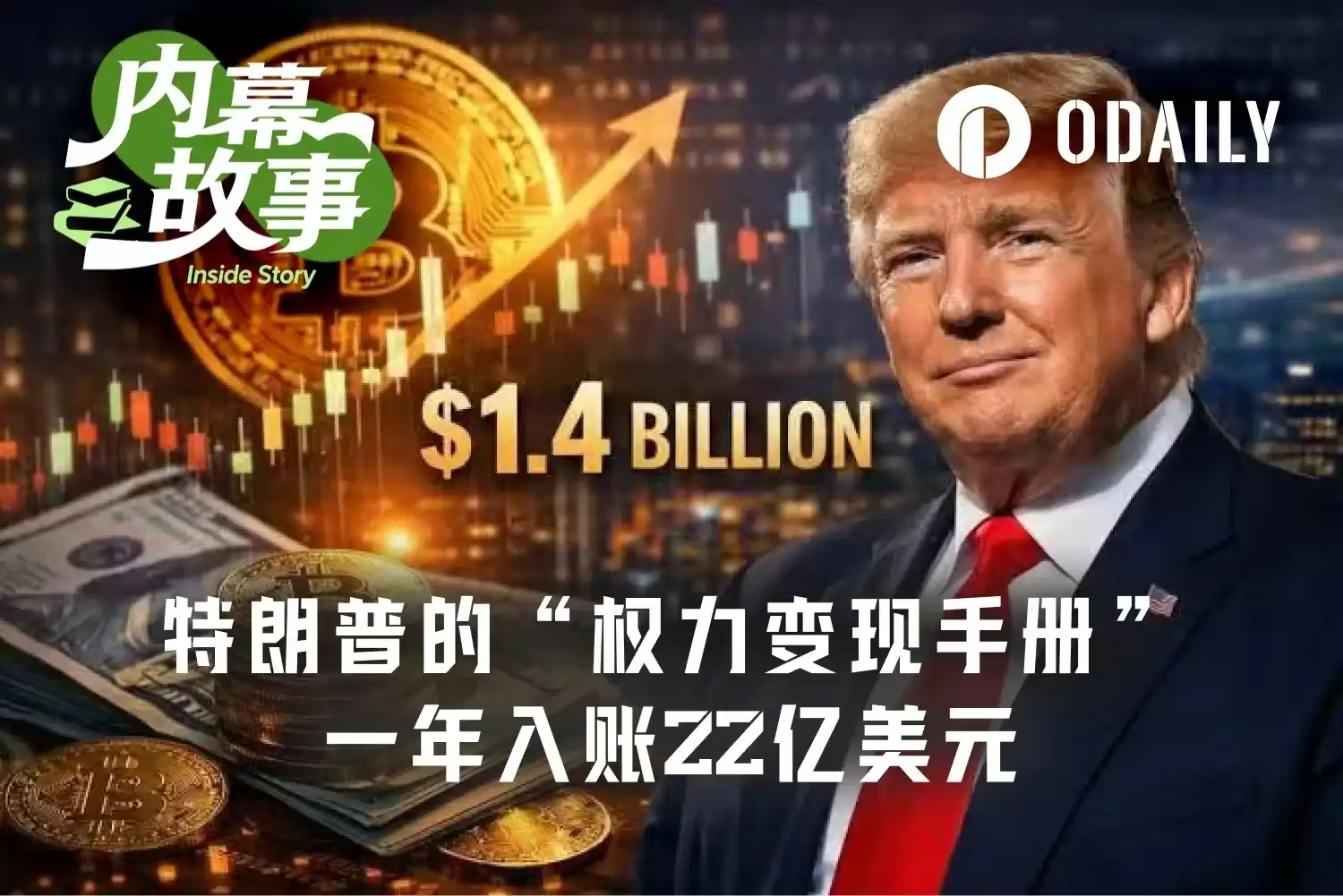
Trump Earns $2.2 Billion Annually, Two-Thirds from Cryptocurrency, with 87 Stock Trades Daily

Former U.S. President Donald Trump reported a personal income exceeding $2.2 billion in 2025, the highest annual income for a sitting president, according to U.S. government financial disclosures. This income primarily stemmed from cryptocurrency ventures and investments, starkly contrasting the standard presidential salary of $400,000. More than two-thirds ($1.4 billion) of his income originated from cryptocurrency-related activities. This includes over $1 billion in Bitcoin and Ethereum holdings, approximately $800 million from World Liberty Financial (a crypto project co-founded with his son), and about $635 million from sales of the TRUMP meme coin. Overall, Trump family crypto operations reportedly generated over $2.3 billion in profit after his 2025 inauguration. Trump's stock portfolio showed heavy trading activity, with over 22,000 trades executed in 2025—averaging 87 trades per day. Major holdings included tech giants like Google, Apple, Nvidia, and Microsoft. Notably, some large-scale stock purchases coincided with major policy announcements, such as tariffs, raising questions about potential insider trading. His traditional business empire, centered on real estate and branding, contributed $575 million. Additionally, he earned nearly $60 million through numerous "DT Marks" licensing companies, which leverage the Trump brand globally in locations like Dubai and Abu Dhabi. The report highlights significant conflicts of interest, as countries like the UAE and Saudi Arabia, whose entities invested in Trump's businesses, later received favorable U.S. policy treatment. Trump has stated he delegates financial management and is not directly involved in day-to-day investment decisions.

Odaily星球日报22m ago

Trump Earns $2.2 Billion Annually, Two-Thirds from Cryptocurrency, with 87 Stock Trades Daily

Odaily星球日报22m ago

Trading

Spot

Hot Articles

What is LINON

Linde plc Tokenized Stock (Ondo): Revolutionizing Traditional Equity Access Through Blockchain Innovation The emergence of Linde plc Tokenized Stock (Ondo), represented by the ticker $LINON, signifies a monumental shift in the fusion of traditional financial structures and decentralized finance (DeFi). This innovative financial instrument showcases the tremendous potential of blockchain technology to democratize access to traditional equity markets while ensuring the security and regulatory compliance necessary for institutional-grade financial products. Through Ondo Finance's pioneering tokenization platform, $LINON provides a seamless pathway for global investors to engage with one of the world's leading industrial gas companies, Linde plc, creating a blockchain-native representation of the underlying equity. Introduction to Linde plc Tokenized Stock The landscape of financial markets is witnessing a groundbreaking transformation through the tokenization of real-world assets. Linde plc Tokenized Stock (Ondo) epitomizes this revolutionary approach by bridging the gap between conventional stock ownership and blockchain-enabled financial infrastructure. The $LINON token allows investors to gain exposure to one of the prominent industrial companies worldwide through decentralized technology. Operating within Ondo Finance's comprehensive ecosystem, $LINON symbolizes a practical application of tokenization technology that enhances accessibility, efficiency, and global connectivity in traditional financial markets. By leveraging blockchain infrastructure, this tokenized stock enables international investors to participate in U.S. equity markets, overcoming traditional barriers associated with cross-border investing. The significance of $LINON goes beyond technological innovation; it represents a fundamental shift in asset structuring, distribution, and trading in the digital age. This tokenized stock maintains all the economic benefits associated with traditional Linde plc shares while offering improved liquidity, programmable compliance features, and seamless integration with decentralized finance protocols. The development of $LINON indicates a growing acceptance of blockchain technology as a viable means for traditional finance, exemplifying how even well-established assets like Linde plc can integrate into blockchain systems. This approach preserves the core attributes that appeal to investors while introducing advanced capabilities that enhance the overall investment proposition. Project Overview and Objectives Linde plc Tokenized Stock (Ondo) encapsulates a strategic effort to democratize access to traditional equity markets through advanced blockchain technologies. The primary objective of $LINON is to provide approved global investors seamless access to the economic exposure associated with Linde plc shares, furthering an effort to create a more inclusive financial ecosystem. Beyond the digital representation of traditional assets, $LINON endeavors to eliminate barriers of geography and time zones that limit investor participation. Its design ensures that blockchain technology can elevate traditional investment vehicles without undermining the security or compliance requirements expected by investors. Key goals of the project include enhanced liquidity provision, programmable compliance mechanisms, and interoperability with other blockchain networks. Each $LINON token is fortified by actual Linde plc securities housed at U.S.-registered broker-dealers, allowing holders to reap economic advantages akin to traditional stockholders, such as dividend reinvestment. Furthermore, $LINON aims to establish new industry standards for institutional-grade tokenized securities, paving the way for traditional assets to embrace blockchain technology while remaining compliant with regulatory frameworks. By associating itself with a company as reputable as Linde plc, the project opens avenues for exploring tokenized equities catering to both conservative institutional players and daring retail investors. Project Creator and Development Team The vision for Linde plc Tokenized Stock (Ondo) comes from Nathan Allman, founder and CEO of Ondo Finance. His background in traditional finance coupled with expertise in blockchain technology positions him uniquely to navigate the complexities of asset tokenization. Allman's academic journey began at Brown University, focusing on Economics and Biology, equipping him with valuable analytical skills. His time at Goldman Sachs in the Digital Assets division strengthened his understanding of the interplay between financial institutions and emerging technologies, laying the groundwork for his later endeavors in alternative investment strategies. Under Allman's guidance, Ondo Finance has emerged as a leader in asset tokenization, launching $LINON as a flagship example of the company's larger mission towards revolutionizing traditional financial systems using blockchain technology. His commitment to leveraging blockchain for creating institutional-grade financial products has shaped the landscape of real-world asset tokenization. Investment and Funding Structure The growth of Ondo Finance, the platform powering Linde plc Tokenized Stock (Ondo), is bolstered by robust financial backing from prestigious venture capital firms and strategic investors. This strong investment foundation underpins the development of the key infrastructure essential for compliant tokenized securities like $LINON. In August 2021, Ondo Finance secured $4 million in seed funding led by a major venture capital firm, which enabled the company to commence platform development and establish the necessary regulatory processes for tokenizing real-world assets. This early investment cemented Ondo Finance's credibility within the industry. The Series A funding round followed, garnering $20 million with participation from renowned firms committed to transformative technology companies. This backing demonstrated substantial institutional confidence in Ondo Finance's vision, allowing it to hone its approach to asset tokenization through mechanisms that ensure compliance and accessibility. Noteworthy contributors, including institutional investors and experienced partners, have added significant value to Ondo Finance’s development efforts. Their involvement underscores the confidence across sectors in Ondo Finance's approach to bridging traditional finance with blockchain innovations. Technical Infrastructure and Innovation The technical architecture that underpins Linde plc Tokenized Stock (Ondo) represents a sophisticated melding of traditional finance systems and cutting-edge blockchain technology. The architecture's foundation is built on the Ethereum network, renowned for its security and programmability—both critical for intricate financial instruments. The $LINON tokenization process comprises creating a blockchain-native representation of Linde plc shares that preserves economic benefits while augmenting investor capabilities. Each token corresponds to actual shares held at U.S.-registered broker-dealers, creating a compliant custody structure that legitimizes the asset's existence and value. Automated compliance systems are integrated into the tokenization process, managing critical components such as know-your-customer (KYC) verification and anti-money laundering (AML) protocols. This incorporation of programmable compliance empowers $LINON to uphold regulatory standards essential for institutional proliferation. Cross-chain interoperability characterizes the advanced technical features of $LINON. While initially deployed on Ethereum, the framework is designed for expansion to other networks such as Solana and BNB Chain. This adaptability enhances liquidity and accessibility, allowing investors to select their preferred blockchain ecosystems. Historical Timeline and Development Crafting the history of Linde plc Tokenized Stock (Ondo) unfolds in parallel with the evolution of Ondo Finance's tokenization platform. The timeline's inception dates back to March 2021 when Nathan Allman laid the foundations for creating institutional-grade financial products on blockchain infrastructure. The initial funding round in August 2021 provided crucial resources for developing the platform and establishing partnerships necessary for effective tokenization. By January 2023, Ondo Finance launched its tokenized treasury products, establishing mechanisms that would facilitate future tokenized equities such as $LINON. A pivotal milestone arose in February 2025 when Ondo Chain—a Layer 1 blockchain designed specifically for asset tokenization—was introduced. This infrastructure enhances capabilities vital for institutional markets, demonstrating Ondo Finance's long-term commitment to tokenization. Subsequently, the launch of Ondo Global Markets in September 2025 marked the official debut of $LINON. This milestone showcased the successful transition from development to active trading, enabling investors around the world to access American financial markets seamlessly. Ongoing development plans include a targeted expansion of available tokenized assets to over 1,000 by the end of 2025, pointing to a bright future for Ondo Finance's ecosystem and its mission to broaden tokenized equity accessibility. Regulatory Compliance and Legal Framework The legal architecture governing Linde plc Tokenized Stock (Ondo) emphasizes a sophisticated approach to regulatory compliance, allowing tokenized securities to be implemented within a blockchain-based framework. The legal structure governing $LINON spans multiple jurisdictions while maintaining a robust legal footing. Compliance systems ensure that only eligible investors can access the token, enforced through automated verification that aligns with international regulations. This innovative regulatory technology promises real-time enforcement of complex requirements, considerably enhancing efficiency in operating within the regulatory landscape. The custody framework undergirding $LINON ensures that the underlying shares are securely held at U.S.-registered broker-dealers, complying with necessary regulations while delivering blockchain-driven access to investors. The token maintains its economic equivalency and security through this carefully structured custody arrangement. KYC and AML compliance systems are embedded within the smart contract architecture, ensuring integrity and adherence to regulatory practices while fostering transparency for investors. The jurisdictional restrictions mark a commitment to navigating the evolving landscape of international securities laws. Market Impact and Industry Significance The advent of Linde plc Tokenized Stock (Ondo) holds profound implications for the broader financial landscape, symbolizing a clear shift towards blockchain-enabled markets. $LINON serves as a proof-of-concept for integrating traditional companies into blockchain ecosystems, showcasing the potential benefits such as broader accessibility and improved efficiency. The market's response to $LINON indicates a growing acceptance of tokenization among institutional investors, contributing to the emergence of an expanding sector wherein traditional assets can be interconnected with blockchain innovations. The success of $LINON further solidifies market confidence, indicating an overarching shift towards recognizing asset tokenization as a transformative force in finance. Future Development and Expansion Plans The future trajectory for Linde plc Tokenized Stock (Ondo) centers around the expansion of the tokenization ecosystem and enhanced infrastructure supporting blockchain-enabled financial services. Plans for cross-chain integration usher in new opportunities for liquidity and flexibility within the investment framework, with existing capabilities poised for continuous enhancement. With the introduction of Ondo Chain, Ondo Finance aims to transition $LINON to an optimized blockchain environment specifically designed for asset tokenization. This new infrastructure heralds exciting prospects for the development of institutional-grade financial products, ensuring ongoing compatibility with contemporary investment strategies. Further integration with decentralized finance protocols signifies a commitment to empowering $LINON holders through advanced financial strategies. The anticipated expansion of available tokenized assets promises to broaden investor access, enhancing the utility and appeal of the platform. In alignment with ambitions for regulatory expansion, ongoing efforts to secure approvals for new jurisdictions will enhance investor access, further positioning $LINON at the forefront of the burgeoning tokenization market. Conclusion Linde plc Tokenized Stock (Ondo), as represented by the $LINON token, stands at the intersection of traditional finance and blockchain innovation. It embodies a transformative milestone in how financial assets are structured, distributed, and engaged within modern investment ecosystems. The technical sophistication behind $LINON, combined with its regulatory compliance framework, illustrates that asset tokenization can improve financial infrastructure rather than simply digitizing existing products. This pioneering effort not only enhances investor access to U.S. equity markets but also signifies an evolution of how traditional financial services can integrate blockchain technology. As the asset tokenization market grows exponentially, with prospects suggesting significant valuation increases, $LINON paves the way for a future where tokenized securities become standard fixtures in the financial landscape. The trajectory of $LINON will undoubtedly influence how traditional finance adapts to a transformed, blockchain-powered world.

3.4k Total ViewsPublished 2025.12.05Updated 2025.12.05

What is LINON

What is CRMON

Salesforce Tokenized Stock (Ondo): Revolutionising Traditional Equity Access Through Blockchain Innovation The emergence of Salesforce Tokenized Stock (CRMON) marks a pivotal advancement in integrating traditional financial markets with blockchain technology. This innovative approach offers investors unprecedented access to equity exposure through tokenisation. Developed by Ondo Finance, CRMON provides tokenholders with economic exposure equivalent to holding Salesforce stock (CRM) while automatically reinvesting dividends. This effectively bridges the gap between conventional equity markets and decentralised finance (DeFi). Introduction and Comprehensive Overview of Salesforce Tokenized Stock In recent years, the financial landscape has dramatically transformed due to blockchain technology, fundamentally altering how investors access and interact with traditional assets. The development of Salesforce Tokenized Stock (CRMON) is a prime example of this evolution, representing a sophisticated fusion of conventional equity markets with cutting-edge distributed ledger technology. CRMON is a tokenised version of Salesforce stock, emerging from the innovative work of Ondo Finance, a leading platform in the real-world asset tokenisation sector that positions itself as a bridge between traditional finance and decentralised systems. Designed to provide tokenholders with economic exposure that mirrors the performance of the underlying Salesforce stock, CRMON incorporates automatic dividend reinvestment mechanisms. This eliminates many traditional barriers associated with international equity investment, such as complex brokerage relationships, currency conversion challenges, and restricted trading hours. The tokenisation process reimagines stock ownership as a blockchain-native asset while maintaining its economic equivalence with the underlying security, offering enhanced portability and integration capabilities within decentralised finance ecosystems. CRMON transcends its individual utility as an investment instrument to represent a fundamental shift in how financial markets can operate in an increasingly digital world. By maintaining full backing through U.S.-registered broker-dealers and implementing robust compliance frameworks, CRMON demonstrates that tokenised securities can achieve the regulatory standards necessary for institutional adoption while delivering the technological advantages of blockchain infrastructure. Understanding Tokenized Real-World Assets and CRMON's Strategic Position Tokenised real-world assets signify one of the most significant innovations in modern finance, fundamentally reimagining how traditional securities are represented, traded, and utilised within digital ecosystems. CRMON operates as a tokenised equity instrument correlating directly with Salesforce stock while optimising accessibility and efficiency. This aligns with Ondo Finance's broader mission to democratise access to institutional-grade financial products through innovative tokenisation strategies. The tokenisation process guarantees complete economic equivalence with the underlying Salesforce equity. Each CRMON token represents a proportional claim on Salesforce stock held by qualified custodians, with dividend payments automatically reinvested to maintain continuous exposure to total return performance. This structure simplifies dividend management and ensures that tokenholders receive the full economic benefit of their equity exposure, encompassing both capital appreciation and income generation. Ondo Finance's strategy in tokenising Salesforce stock demonstrates its expertise in creating compliant, institutional-grade products that meet traditional financial markets' stringent requirements. The platform’s focus on merging regulatory compliance with blockchain benefits positions it at the forefront of decentralised finance, captivating both institutional and retail investors seeking blockchain-native solutions. The Technology and Innovation Framework Behind CRMON The technological infrastructure supporting CRMON integrates blockchain technology with traditional financial mechanisms, delivering institutional-grade security and compliance while maintaining the operational advantages of decentralised systems. Built on the Ethereum blockchain, CRMON utilises robust smart contract capabilities to ensure transparent, secure operations. The smart contract architecture incorporates layered security and compliance mechanisms, enabling automated compliance checks and real-time asset backing verification. Integration with oracle services maintains accurate pricing and dividend information, ensuring CRMON reflects the underlying Salesforce stock's accurate performance. This architecture delivers automated dividend reinvestments and other corporate actions, eliminating manual processing requirements and directly enhancing tokenholder benefits. Ondo Finance ensures CRMON's security structure includes daily third-party verification of holdings, independent collateral agents, and a multiple-layer custody system through partnerships with established financial institutions. This framework safeguards tokenholder interests against operational risks while providing robust asset backing. The user interface enhances integration capabilities, allowing seamless interaction between CRMON and various decentralised finance protocols, as well as cryptocurrency exchanges. This interoperability enables users to leverage their tokenised equity across multiple platforms, creating sophisticated investment strategies that marry traditional equity characteristics with blockchain-native innovation. Leadership and Corporate Structure of Ondo Finance The leadership team behind CRMON and Ondo Finance blends expertise from traditional finance and blockchain technology, presenting a robust combination of skills essential for successfully bridging conventional markets with decentralised finance. Nathan Allman, the founder and CEO, emerged from a distinguished financial background before establishing Ondo Finance in 2021. Allman's experience includes notable roles at major financial institutions, including significant contributions to developing cryptocurrency market services. His insights into regulatory compliance were paramount in developing products like CRMON that successfully unify traditional securities with blockchain technology. With a team of professionals boasting substantial experience in both conventional finance and blockchain sectors, Ondo Finance's leadership comprises diverse expertise that covers every aspect of tokenised asset development. Justin Schmidt serves as President and COO, contributing unique operational expertise, while Chris Tyrell brings essential compliance knowledge. Investment Landscape and Funding History The investment landscape surrounding Ondo Finance reflects significant institutional confidence in its mission to tokenise real-world assets. The company has raised substantial funds through various investment rounds, attracting leading venture capital firms and strategic investors that recognise the transformative potential of tokenised securities like CRMON. Notably, Ondo Finance completed a successful Series A funding round in 2022, led by well-known venture capital firms. This funding success validates Ondo Finance's innovative approach to creating compliant, institutional-grade tokenised products. In total, Ondo Finance has successfully secured substantial funding, raising significant capital for product development and market expansion, including a noteworthy token sale that reinforced its governance structure through the establishment of the ONDO token. The diverse composition of investors reflects broad market confidence in Ondo Finance's business model, demonstrating support from both traditional and blockchain-native organisations. Operational Mechanics and Technical Implementation The operational framework supporting CRMON exemplifies sophisticated integration of traditional financial mechanisms with blockchain technology. The technical implementation introduces multiple layers of security, compliance, and operational efficiency to meet institutional standards while enhancing accessibility. The tokenisation process begins by acquiring actual Salesforce stock through U.S.-registered broker-dealers, ensuring each CRMON token maintains direct correlation with the underlying equity performance. Smart contracts automate operational processes, including dividend reinvestment and corporate action processing, facilitating a streamlined user experience. The Minting and redemption processes allow authorised participants to manage CRMON tokens effectively. During U.S. trading hours, institutions can mint new tokens by depositing stablecoins that are used to purchase corresponding Salesforce equity. This structure maintains a tight correlation with underlying assets, enhancing liquidity and price discovery. Additionally, the infrastructure supports twenty-four-hour token transfer capabilities, providing CRMON holders with operations outside traditional market hours. This represents a significant advantage over conventional securities ownership, thus promoting integration with decentralised finance applications. Plans for cross-chain compatibility through partnerships signal further ambitions for CRMON's market reach. By expanding to other blockchain networks, Ondo Finance aims to enhance accessibility and user engagement with tokenised equity products. Timeline and Historical Development of Tokenized Equity Innovation The timeline of CRMON's development and Ondo Finance's broader tokenised capabilities demonstrates a systematic innovation process beginning with the company's founding in 2021. 2021: Ondo Finance is founded by Nathan Allman and co-founders, launching initial products focused on structured vault offerings on the Ethereum blockchain. 2022: The company completes substantial funding rounds—both equity and token sales—totaling significant capital and launching initial tokenised U.S. Treasury products. 2023-2024: Ondo Finance experiences substantial growth, establishing partnerships with major financial institutions while expanding its product offerings beyond fixed-income securities. February 2025: Ondo Global Markets is announced, marking the transition into equity tokenisation with plans for accessing over one hundred U.S. stocks and ETFs. September 2025: The official launch of Ondo Global Markets includes CRMON alongside other tokenised equity offerings, marking a significant evolution in Ondo Finance's product ecosystem. This timeline highlights the organisation's rapid growth and its capability to adapt its technological and compliance frameworks to accommodate different asset classes effectively while maintaining security and regulatory integrity. Regulatory Framework and Compliance Approach Ondo Finance's regulatory framework showcases a sophisticated compliance strategy, essential for achieving institutional adoption in the tokenised securities market. The company's strong partnerships with U.S.-registered broker-dealers promote adherence to Securities and Exchange Commission regulations and apply robust investor protections. Acquisitions, such as Oasis Pro—a registered broker-dealer—significantly enhance Ondo Finance's compliance capabilities, ensuring thorough alignment with existing regulatory structures. The company employs independent verification procedures that foster transparency, aiming for a solid performance standards reputation. Furthermore, Ondo Finance's commitment extends to international regulatory compliance, ensuring token access remains restricted to eligible investors while adhering to pertinent cross-border securities regulations. Comprehensive attention to tax implications and reporting requirements fortifies the security and compliance landscape of CRMON, ensuring that investor obligations remain manageable. Future Prospects and Market Positioning The forward-looking landscape for CRMON and Ondo Finance illustrates substantial growth opportunities driven by institutional adoption of blockchain technology and escalating demand for efficient alternatives to conventional securities ownership. Market projections indicate the tokenised asset sector could value multiple trillion dollars by 2030. With plans to scale CRMON offerings significantly and integrate it with a dedicated blockchain infrastructure—Ondo Chain—Ondo Finance aims to elevate its institutional-grade tokenised asset operations. Additionally, the development of strategic partnerships enhances distribution capabilities while establishing the company's credibility in the financial market. Furthermore, the integration of tokenised equity with decentralised finance protocols offers new potential for innovative financial products and strategies previously impossible with traditional securities. These factors underscore CRMON's positioning to effectively capture increased market share and deliver innovative solutions for international investment exposure. Conclusion Salesforce Tokenized Stock (CRMON) symbolises a transformative development within financial markets, successfully bridging traditional equity ownership with blockchain technology to create unprecedented accessibility for global investors. Through Ondo Finance's sophisticated tokenisation framework, CRMON provides complete economic exposure to Salesforce equity performance while enhancing operational advantages that exceed traditional ownership. The launch of CRMON reflects the broader evolution of financial markets towards blockchain infrastructures that maintain regulatory compliance while delivering increased efficiency. Ondo Finance's extensive approach to regulatory adherence, institutional-grade security, and technological innovation solidifies CRMON as a model for future tokenised securities, delivering access previously unattainable in conventional brokerage structures. As the tokenised asset sector continues to develop, CRMON is well-positioned to address historical inefficiencies in capital markets while providing investors with innovative solutions for accessing traditional securities. The outlook for CRMON looks exceptionally promising, supported by ambitious expansion plans, technological innovations, and strategic partnerships, thereby representing a pioneering model of modern financial infrastructure evolving through blockchain integration.

3.5k Total ViewsPublished 2025.12.05Updated 2025.12.05

What is CRMON

What is SHOPON

Shopify Tokenized Stock (Ondo): A Comprehensive Analysis of Real-World Asset Tokenization in Web3 This article delves into the Shopify Tokenized Stock (Ondo), recognised by its ticker symbol $SHOPON, exploring its implications at the intersection of traditional finance and blockchain technology. As a part of Ondo Finance's tokenized securities platform, Shopify’s tokenized stock exemplifies advancements in democratizing access to global capital markets through innovative digital assets. Introduction and Overview of Shopify Tokenized Stock (Ondo) Shopify Tokenized Stock (Ondo), or $SHOPON, portrays a pivotal innovation in the realm of tokenized securities, allowing investors to gain economic exposure akin to directly owning shares of Shopify Inc. This token, developed under the umbrella of Ondo Finance, not only provides investors with the ability to hold digital representations of the company’s stock but also integrates features such as automatic reinvestment of dividends. This advancement represents a substantial shift in the landscape of decentralized finance (DeFi), linking conventional equity markets with blockchain solutions designed to enhance accessibility, transparency, and liquidity. By eliminating geographical barriers and enabling 24/7 trading capabilities, $SHOPON is positioned as a bridge connecting traditional financial instruments and the emerging Web3 ecosystem. What is Shopify Tokenized Stock (Ondo), $SHOPON? The $SHOPON token serves as a digital manifestation of Shopify Inc.'s shares, engineered to provide a direct correlation to the underlying asset's performance. Through the utilization of blockchain technology, the token gives holders a mechanism to participate in the economic benefits associated with equity ownership, including capital appreciation and dividend distribution. The unique aspect of $SHOPON lies in its automatic dividend reinvestment mechanism, which allows returns to compound without necessitating active management by the investor. This feature inherently enhances its attractiveness as an investment vehicle, particularly for individuals seeking passive income growth alongside exposure to high-performing equities. The tokenization process is facilitated by the custody of actual Shopify shares through regulated intermediaries, ensuring that every $SHOPON token is verifiably backed by real equity. This structure empowers investors with the dual advantages of both traditional financial characteristics and the innovative benefits tied to blockchain technology. Who is the Creator of Shopify Tokenized Stock (Ondo)? The creator of Shopify Tokenized Stock (Ondo), Nathan Allman, is an experienced figure in the finance sector, formerly associated with Goldman Sachs. His rich background includes significant expertise in digital asset development, bridging the gap between traditional finance and cryptocurrencies. Allman’s educational journey, marked by studies at Brown University, provided him with a deep understanding of economics and biology, equipping him with analytical skills that inform his strategic vision. In 2021, he founded Ondo Finance, committing to developing tokenized securities that meet institutional-grade standards while leveraging blockchain's transformative capabilities. Under Allman's leadership, Ondo Finance has focused on creating compliant and innovative financial products that empower a diverse investor base. Who are the Investors of Shopify Tokenized Stock (Ondo)? The investment landscape surrounding Shopify Tokenized Stock (Ondo) is notably robust, underpinned by significant institutional support. Primarily, Pantera Capital stands out as a strategic partner through the Ondo Catalyst initiative, a $250 million commitment aimed at accelerating the development of on-chain capital markets. This partnership not only signifies institutional confidence in the potential of tokenized assets but also reinforces Ondo Finance's operational capabilities and market positioning. The funding pathways have included earlier rounds that amassed millions in seed funding and further structural investments, solidifying relationships with both venture capital firms and private investors. Moreover, the financial framework is complemented by strategic partnerships with established financial institutions and technology companies, enhancing Ondo’s infrastructure and operational expertise. How Does Shopify Tokenized Stock (Ondo), $SHOPON Work? At the core of $SHOPON's operational framework is a sophisticated system integrating traditional finance mechanisms with blockchain technology. The custody of actual Shopify shares ensures that token holders retain authentic economic exposure, safeguarding their investments in line with recognized legal structures. The smart contracts employed in managing $SHOPON handle various functions, including automatic dividend reinvestment and ownership transfer, offering instant settlement and increased liquidity, marking a significant departure from conventional trading systems plagued by multi-day settlement delays. By providing interoperability with other decentralized finance applications, $SHOPON empowers holders with potentially lucrative opportunities for advanced investment strategies, including lending and automated market making. This complex integration presents a unique value proposition, catering to both traditional and crypto-native investors. The innovative structure of $SHOPON also allows for real-time settlements and transactions documented on the blockchain, delivering unparalleled transparency and security—a major advancement over standard equity trading practices. Timeline of Shopify Tokenized Stock (Ondo) March 2021: Nathan Allman establishes Ondo Finance, initially focusing on decentralized finance yield optimization. August 2021: Completion of a $4 million seed funding round led by Pantera Capital. January 2023: Launch of initial tokenized treasury security products, laying the groundwork for future equity tokenization. July 2025: Announcement of the Ondo Catalyst initiative, a strategic investment program valued at $250 million, aimed at propelling the development of tokenization in capital markets. September 3, 2025: Launch of Ondo Global Markets featuring over 100 tokenized U.S. stocks and ETFs, including $SHOPON. Technical Implementation and Blockchain Infrastructure Shopify Tokenized Stock (Ondo) operates on a technical architectural framework that marries blockchain protocols with traditional financial custody arrangements. The ecosystem leverages Ethereum's smart contract capabilities, providing seamless transaction management while ensuring compliance with regulatory standards through established financial custodians. Central to this architecture are security measures and transparent transaction records that affirm the legitimacy of each tokenholder's economic stake. With automated features managed by intricate smart contracts, $SHOPON not only streamlines ownership transfers but also allows for the tactical reinvestment of dividends—a hallmark of modern investment strategies. Moreover, the incorporation of LayerZero technology facilitates cross-chain interoperability, making $SHOPON accessible across multiple blockchain environments while preserving its functional robustness. This forward-thinking technical design positions $SHOPON as an adaptable asset within the larger DeFi milieu. Regulatory Framework and Compliance Architecture $SHOPON's regulatory framework is built upon the meticulous navigation of existing financial regulations that govern securities. The custody arrangements for the underlying Shopify shares are managed by U.S.-regulated broker-dealers, ensuring compliance and protection for investors. By maintaining a separation between the blockchain tokenization process and traditional custody, $SHOPON adheres to legal requirements while offering innovative functionalities that challenge conventional constraints. This dual-layered compliance approach enhances investor confidence and underscores Ondo Finance's commitment to regulatory integrity. Notably, the availability of $SHOPON is tailored to international investors from regions such as Asia-Pacific, Europe, and Africa, as regulatory parameters in the U.S. and U.K. present challenges in accessing tokenized securities. Market Access and Global Distribution Strategy The distribution strategy of $SHOPON is keenly designed to optimize global access while conforming to regulatory standards. The platform aims to establish comprehensive coverage for eligible investors across multiple regions, effectively dismantling traditional barriers through the implementation of blockchain technology. Integration with various cryptocurrency wallets and exchanges also promotes user-friendliness and accessibility, establishing a streamlined experience for investors to manage their holdings. Moreover, the 24/7 trading capabilities afforded by the tokenized model allow participants to react promptly to market shifts, fundamentally transforming how global equities are accessed and traded. Technology Integration and Cross-Chain Functionality The remarkable technological underpinnings of $SHOPON propagate its multi-chain functionality, set to expand its reach beyond Ethereum to networks such as Solana and BNB Chain. Such cross-chain capabilities allow users flexibility when navigating between blockchains, concurrently leveraging distinct network attributes to optimize their trading experience. LayerZero serves as the backbone for ensuring decentralized transfers between networks while providing the requisite security and speed, quintessential for maintaining investor trust. This comprehensive interoperability illustrates $SHOPON's commitment to being a versatile, user-centric asset in the evolving investment landscape. Ecosystem Integration and DeFi Compatibility Incorporating $SHOPON into broader DeFi protocols signifies its potential beyond traditional stock ownership. Token holders can leverage their holdings for various sophisticated strategies and applications, enhancing investment returns and liquidity management. By establishing a presence in lending protocols and automated trading systems, $SHOPON effectively democratizes access to advanced financial strategies previously limited to institutional investors. Such integration contributes to a more competitive and dynamic financial landscape, where individual investors can capitalize on tools typically reserved for larger entities. Risk Management and Security Framework Security remains paramount in the operational infrastructure of $SHOPON. The tokenization framework employs multiple layers of protection—beginning with regulated custody of the underlying Shopify shares. The operational protocols establish rigorous auditing, key management, and transaction monitoring standards, thus safeguarding against potential vulnerabilities. Moreover, meticulous adherence to evolving regulatory requirements provides an extra layer of security, fortifying investor protections and institutional compliance. Market Impact and Industry Implications The introduction of Shopify Tokenized Stock (Ondo) heralds a transformative shift in how financial markets operate, emphasizing the potential of tokenized securities to reshape traditional investment paradigms. The successful integration of $SHOPON encapsulates the efficiencies inherent in blockchain technology and opens avenues for new user demographics previously barred from extensive market participation. The impact extends beyond the immediate benefits to token holders, indicating broader trends that may challenge the status quo of investment services, particularly in addressing geographic restrictions and operational costs typically associated with traditional brokerage platforms. Undeniably, $SHOPON encapsulates the potential for traditional institutions to innovate further, leveraging the increasing demand for seamless blockchain access to complement existing financial infrastructure. Future Development Roadmap and Strategic Vision As Ondo Finance looks forward, the trajectory of $SHOPON rests on ambitious goals aimed at broadening the spectrum of available tokenized assets significantly. Over the next few years, plans are in place to expand to more than 1,000 tokenized securities, further enhancing market participation and investment options for individuals worldwide. Continued integration with traditional financial actors, development of specialized institutional products, and enhancements in automated trading capabilities will ensure that $SHOPON maintains its position at the forefront of financial innovation. Regulatory collaboration will also remain a focal point, establishing a framework that not only supports the compliance requirements but also promotes a healthy environment for tokenized asset proliferation. Conclusion and Market Significance In summary, Shopify Tokenized Stock (Ondo), represented by the ticker $SHOPON, is more than merely a tokenized equity offering; it embodies the innovation possible when traditional finance collides with modern blockchain applications. With a robust technical architecture, a commitment to compliance, and a clear strategic vision, $SHOPON exemplifies the potential for tokenized assets to enhance liquidity, accessibility, and functionality in capital markets. As the global investment landscape evolves, the transformative implications of $SHOPON extend beyond individual investors to revolutionize how financial instruments are perceived, traded, and utilized within both traditional and decentralized frameworks.

3.4k Total ViewsPublished 2025.12.05Updated 2025.12.05

What is SHOPON

Discussions

Welcome to the HTX Community. Here, you can stay informed about the latest platform developments and gain access to professional market insights. Users' opinions on the price of CHIP (CHIP) are presented below.

活动图片