ENS 创始人想从 DAO 手里「夺权」

Foresight NewsPublished on 2026-07-02Last updated on 2026-07-02

Abstract

6月29日,ENS社区关于将ENS DAO安全委员会一票否决权续期两年的提案进入链上投票。创始人Nick Johnson动用大量持仓投出反对票,使反对票激增至355万票,远超最初支持票数。 安全委员会成立于2024年7月,旨在通过4/8多签否决恶意提案,以保护DAO超3.5亿美元金库,其权限每两年需续期一次。Nick的反对源于对当前治理状况的担忧。自2025年11月起,他多次指出DAO内部存在政治斗争、有能力者流失、决策权落入经验不足或利益不一致者之手等问题。ENS DAO秘书Limes也曾提议关闭部分工作组,批评提案沦为互相支持的“游戏”。 6月19日,ENS COO Katherine Wu提出改革方案,计划将日常运营、金库管理等移交重组的ENS基金会,并设立董事会以增强执行力,同时承诺DAO保留核心协议治理权。此提案引发争议,批评者认为这削弱了代币持有者对金库的控制,违背了DAO初衷。 Nick投下反对票被视为其对DAO治理模式改革的明确表态。他解释反对是因担心现有委员会权力缺乏制衡,且否决权可能被用于政治目的。随后,Katherine提出了修正案,包括提高否决门槛至5/8、增加权力限制和成员移除机制等。 近年来ENS协议收入持续下滑,从2023年的超1000万美元降至2025年的不足200万美元。在行业下行压力下,巨额金库的管理效率成为焦点。Nick凭借其持股份额有能力推动变革,但其推动的集权化改革也使其面临必须证明新基金会能比DAO做得更好的压力。ENS核心团队如何解决治理与效率的平衡问题,成为下一步关键。


撰文:Eric,Foresight News


6 月 29 日,ENS 社区关于将 ENS DAO 安全委员会一票否决权续期两年的提案进入链上投票阶段。开始后不久,超过 80 万的赞成票就远超了不到 30 万的反对票,但 ENS 创始人 Nick Johnson 动用了自身持有的大量 ENS 持仓,一口气将反对票提高到了 355 万票。
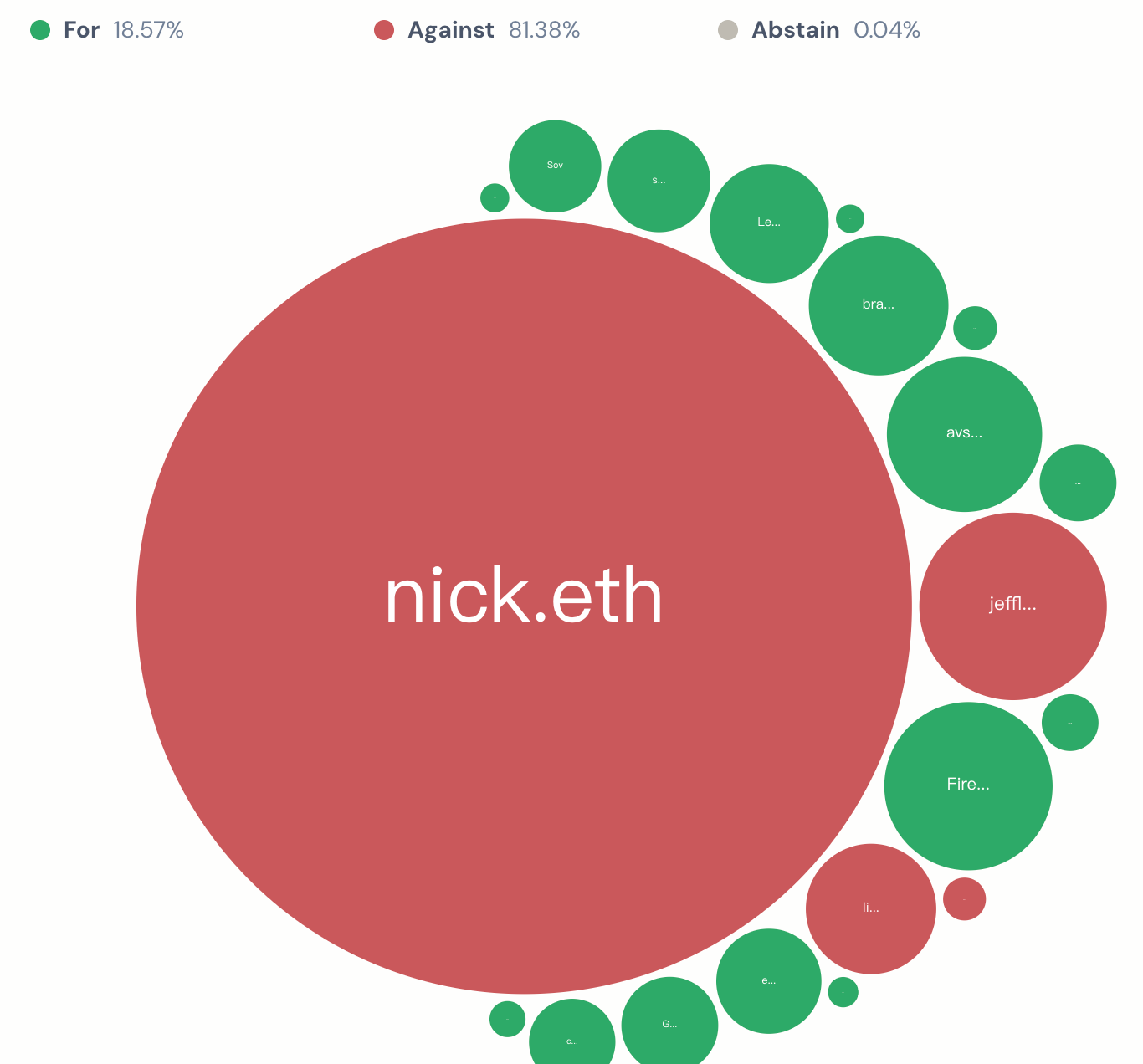


ENS DAO 安全委员会成立于 2024 年 7 月。由于彼时 ENS DAO 提案活跃的参与者和投票的票数均较低,为了防止有大户借此发起恶意提案危及 ENS DAO 超 3.5 亿美元的金库,DAO 选择设立安全委员会,通过 4/8 多签给予其对恶意提案的直接否决权限。


但该委员会的权力只限于否决恶意提案,无权干涉正常提案的流程,也无权发起提案,且权限一次只保留两年方便随时调整。


照理说这样一个保护 DAO 金库的组织,在任期结束之前续期权限是一件挺正常的事,为何 ENS 创始人要亲自下场为这个保护 DAO 的提案投下反对票?


要理解这个「独裁」的决定,要追溯至去年 11 月关于 ENS DAO 治理的一次讨论。


笔者曾在《看到 ENS 在为治理头疼,我觉得是该聊聊 DAO 的问题了》(https://foresightnews.pro/article/detail/93316)一文中提到过这一事件:Nick Johnson 在 2025 年 11 月在论坛上写下了一段意味深长的话,大概的意思是现在 ENS DAO 内部充满了政治斗争,有能力的人在慢慢离开,DAO 的领导权反而落入了缺乏经验甚至利益与协议不一致的人手中。


ENS DAO 的秘书 Limes 也在当月提交了一份提案,建议在第六任期结束时,也就是 2025 年 12 月 31 日,终止元治理、生态系统和公共物品三个工作组的运营。至于原因,其一是因为现在提案已经变成了「你支持我,我支持你」的游戏,没有人在意真正应该做什么;其二则是因为没有设置准入标准使得「劣币驱逐良币」的现象频发。Limes 认为改进流程已经解决不了这种结构性顽疾,shut down 是唯一的出路。


虽然这份提案最终并未通过,但 Nick 想要变革 DAO 的想法已经昭然若揭。


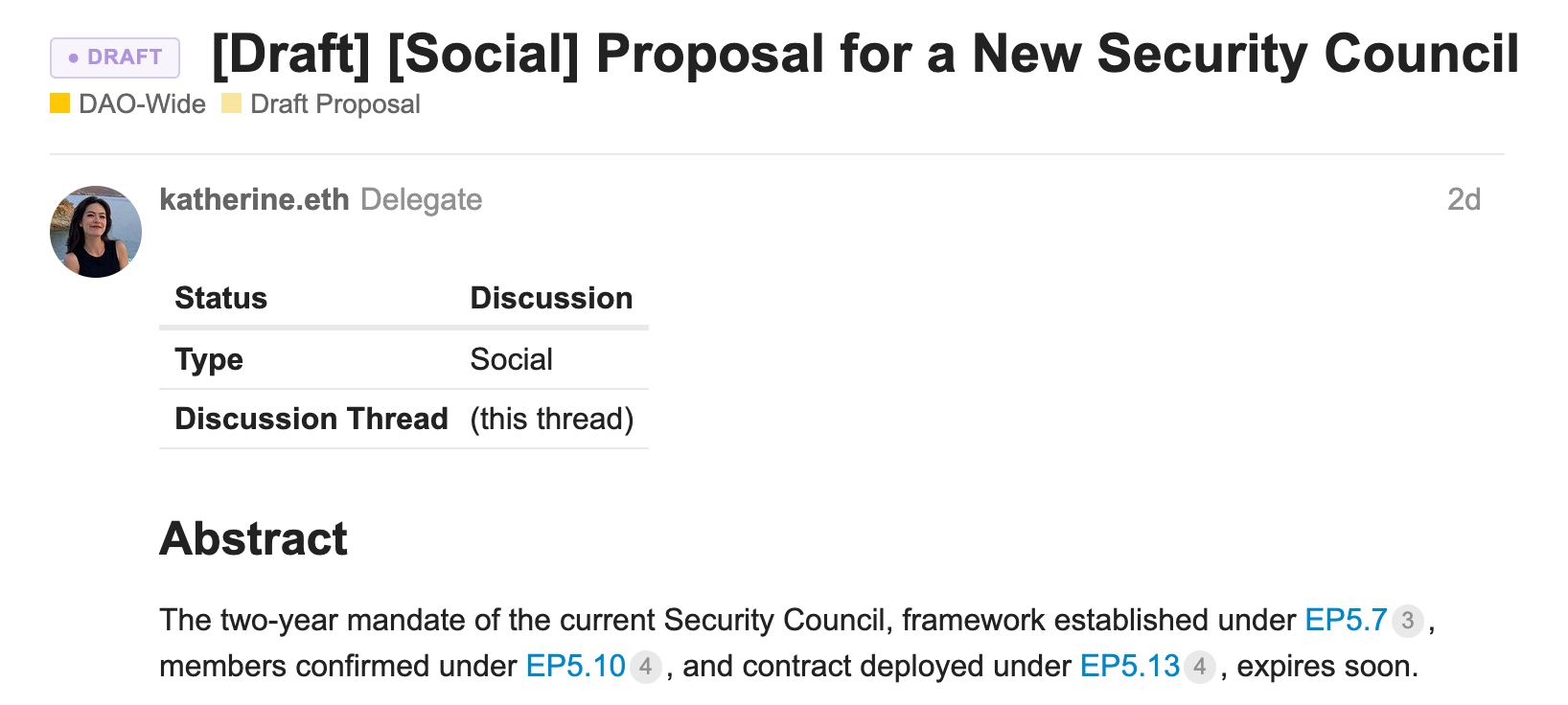
6 月 19 日,ENS COO Katherine Wu 在 ENS 论坛发布新提案:《Next Era of ENS DAO: Empowering the ENS Foundation》。提案核心内容有二,一是将日常运营、金库管理和长期资本策略移交给重组后的 ENS 基金会,基金会将负责日常金库操作、公共物品拨款、工作组协调、生态战略、商标 / 品牌资产等。此外,基金会将成立一个 5 人的董事会,增强专业执行力和问责制。


二是承诺 DAO 和代币持有者将保留核心权力,包括协议层治理合约升级、注册表控制、费用结构、宪法修改等。


这份提案最大的争议点在于 DAO 金库。批评者认为这会让基金会及背后的 ENS Labs 实际控制巨额资金,削弱代币持有者的直接影响。ENS 原始宪法作者 Brantly Millegan 表达了强烈反对,认为这违背了代币持有者应同时掌控协议和金库的 DAO 最初设计,本质上是 ENS Labs 想直接控制金库。
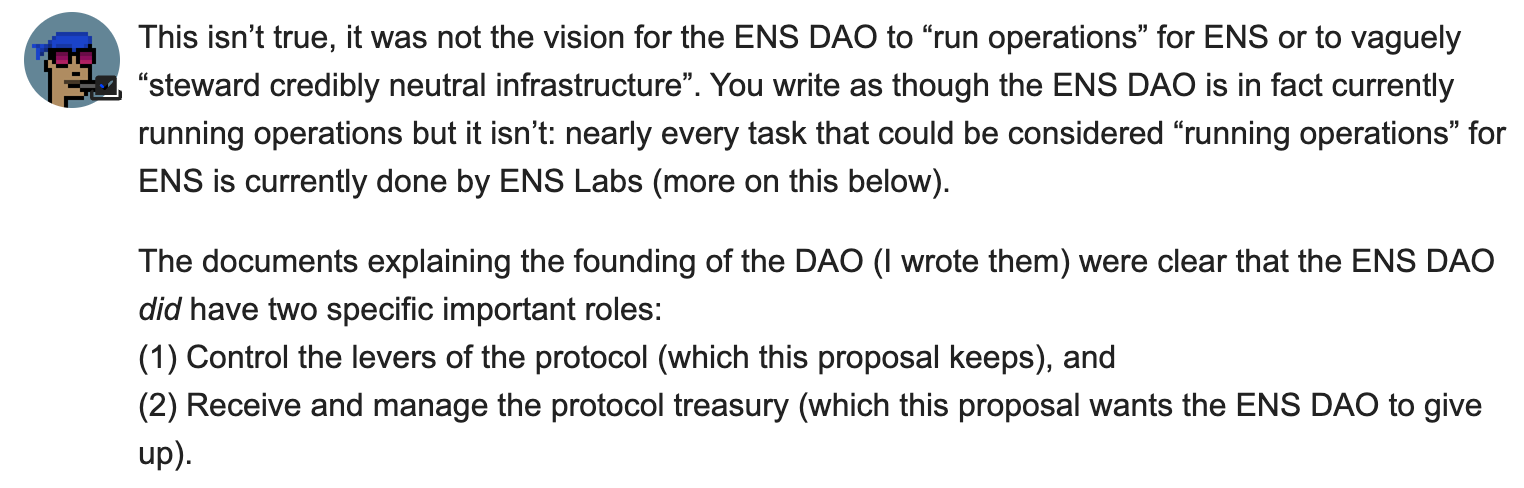


这是去中心化原教旨主义者和实际运营者的矛盾,一边不认为低效是基金会「夺权」DAO 的理由,一边经历了数年的沉浮,还是觉得集权至少在当下更有利于项目的发展。


Nick 投下的 300 多万反对票,被视为了打响权力战争的第一枪。


但 Nick 本人也对此进行了解释,其反对的原因是担心当前委员会的权力缺乏足够制衡,续期两年会固化这些问题,同时,他也担心部分成员可能将否决权权力用于政治目的,阻止他们个人不喜欢的普通提案,而非仅限于真正紧急的情况。


为此,Katherine 发布了一个新的提案,提高了否决执行的门槛(从 4/8 提高到 5/8),实施了更严格的权力限制,还添加了成员移除机制等,以防止权力集中。


数据显示,ENS 2023 年全年收入超 1000 万美元,2024 年下滑至 700 万美元,2025 年已经下降至不足 200 万美元。当钱足够多的时候,没人在乎钱会怎么花;但当行业下行,收入下降的时候,即使是几亿美元的资产也需要精打细算。


Nick 持有的大量 ENS 足够他实现这些改变,但卡代币持有量的 Bug 强行实施的改变让 Nick 没有任何退路,新的基金会必须要做的至少比 DAO 更好。「怎么做」是 Nick 下一阶段必须要解决的问题,希望 ENS 的核心团队已经有了答案。


Trending Cryptos

Related Questions

QENS创始人Nick Johnson为何反对将DAO安全委员会的一票否决权续期两年?

ANick Johnson反对的主要原因是担心当前安全委员会的权力缺乏足够制衡,续期两年会固化这些问题。同时,他担心部分成员可能将否决权用于个人政治目的,阻止他们不喜欢的普通提案,而非仅限于处理真正紧急的恶意提案。

Q在文章中,ENS COO Katherine Wu提出的变革提案(《Next Era of ENS DAO: Empowering the ENS Foundation》)的核心内容是什么?

A该提案的核心内容有两点:一是将ENS DAO的日常运营、金库管理和长期资本策略移交给重组后的ENS基金会,基金会将负责具体执行并成立董事会;二是承诺DAO和代币持有者仍保留核心权力,如协议层治理合约升级、注册表控制、费用结构修改等。

Q针对Nick Johnson的反对意见,Katherine Wu后续提出了什么修改方案?

AKatherine Wu随后发布了一份修订提案,旨在提高否决权的执行门槛(从原来的4/8多签同意提高到5/8),并实施更严格的权力限制,同时添加了成员移除机制,以防止安全委员会的权力过于集中或被滥用。

Q根据文章,ENS DAO内部治理在2025年底前出现了哪些问题?

AENS DAO内部治理出现的问题主要包括:DAO内部充满了政治斗争,有能力的人逐渐离开,领导权落入了缺乏经验或利益与协议不一致的人手中。提案过程变成了“你支持我,我支持你”的游戏,且由于缺乏准入标准,出现了“劣币驱逐良币”的现象。

QENS协议的收入情况在近三年有何变化?文章作者认为这与当前治理斗争有何关联?

AENS协议的收入在2023年超过1000万美元,2024年下滑至700万美元,2025年已下降至不足200万美元。文章作者认为,当行业下行、收入锐减时,即使金库仍有数亿美元资产,资金的使用也需要更加精打细算。这使得关于金库控制权和治理效率的争论变得更加尖锐和紧迫。

Related Reads

Bitwise Chief Investment Officer: STRC Plunge is a Bottom Signal, Bull Market to Start in Autumn

Bitwise CIO: STRC's Plunge Signals Market Bottom, Bull Run Likely This Fall Bitwise CIO Matt Hougan analyzes the recent sharp decline of Strategy's perpetual preferred shares (STRC) and its implications for the bitcoin market. STRC, a product designed for stable, high-yield income, fell dramatically from its $100 target to $75 amid concerns about Strategy's ability to maintain dividends as bitcoin prices dropped. While Strategy's overall balance sheet remains strong, with ample assets to cover liabilities, market panic stemmed from its right to suspend STRC dividends. In response, Strategy introduced a new framework, committing to sell bitcoin as needed to fund dividends and allowing STRC to float freely, abandoning the $100 peg mechanism. This shift marks a change in Strategy's role from a consistent net buyer to a more dynamic participant in the bitcoin market. Hougan views the STRC volatility and related sell-off in MicroStrategy (MSTR) stock as classic late-cycle behavior, where mismatched leverage is being purged from the system. He draws parallels to the GBTC premium unwind after the 2021 bull market. This necessary deleveraging, he argues, is a precursor to finding a market bottom. Key bottoming signals to watch include MSTR trading at a discount to its net asset value (NAV), crypto fear & greed indices hitting extreme lows, and sustained negative bitcoin funding rates. Hougan concludes that as excess leverage is cleared, the market is nearing its bottom, setting the stage for a new bull cycle to begin in the autumn. The next major wave of buyers, he believes, will be institutional investors like banks, asset managers, and pension funds.

marsbit21m ago

Bitwise Chief Investment Officer: STRC Plunge is a Bottom Signal, Bull Market to Start in Autumn

marsbit21m ago

The Largest Upgrade Since The Merge? How Glamsterdam Will Affect Ethereum?

Ethereum's next major upgrade, Glamsterdam (combining consensus layer "Gloas" and execution layer "Amsterdam"), is scheduled for late 2026 and considered the most significant overhaul since The Merge. It aims to fundamentally enhance L1 performance and architecture to prepare for substantial capacity increases. The upgrade centers on three core changes: 1. **Enshrined PBS (ePBS - EIP-7732):** Integrates the Proposer-Builder Separation directly into the protocol, eliminating reliance on external relays. This extends the window for processing execution payloads, allowing nodes more time to handle larger blocks and more data, paving the way for a higher Gas Limit. 2. **Block-Level Access Lists (BALs - EIP-7928):** Provides a pre-declared "map" in the block header of all state data (accounts, storage) that transactions will access and modify. This enables potential parallel transaction processing and faster state synchronization for nodes. 3. **Gas Repricing (EIP-8037):** Overhauls the gas model to more accurately reflect the real resource costs for nodes. It separates computation costs from state storage costs, making operations that create permanent state data (like new accounts) more expensive, while computation-heavy operations become relatively cheaper. These changes work together to solve the trilemma of scaling: giving nodes more time to process larger blocks (ePBS), reducing execution bottlenecks (BALs), and controlling unsustainable state growth (Gas Repricing). The goal is a credible path to a higher Gas Limit (e.g., 200M gas) without compromising decentralization by overburdening node hardware. For users: * Transaction fees for simple transfers may decrease and become more stable due to increased block space, but state-intensive operations (contract deployment) may cost more. * Gas estimation by wallets will improve in accuracy. * L2 data posting costs could become more stable long-term due to increased Blob capacity. * EIP-7708 will standardize logs for ETH transfers, improving tracking for wallets and exchanges. Node operators must upgrade clients, but ETH holders need take no action. In essence, Glamsterdam doesn't just raise the block size limit; it re-engineers Ethereum's core block production, execution, and economic models to enable sustainable, decentralized scaling.

marsbit1h ago

The Largest Upgrade Since The Merge? How Glamsterdam Will Affect Ethereum?

marsbit1h ago

Trading

Spot

Hot Articles

How to Buy DAO

Welcome to HTX.com! We've made purchasing DAO Maker (DAO) simple and convenient. Follow our step-by-step guide to embark on your crypto journey.Step 1: Create Your HTX AccountUse your email or phone number to sign up for a free account on HTX. Experience a hassle-free registration journey and unlock all features.Get My AccountStep 2: Go to Buy Crypto and Choose Your Payment MethodCredit/Debit Card: Use your Visa or Mastercard to buy DAO Maker (DAO) instantly.Balance: Use funds from your HTX account balance to trade seamlessly.Third Parties: We've added popular payment methods such as Google Pay and Apple Pay to enhance convenience.P2P: Trade directly with other users on HTX.Over-the-Counter (OTC): We offer tailor-made services and competitive exchange rates for traders.Step 3: Store Your DAO Maker (DAO)After purchasing your DAO Maker (DAO), store it in your HTX account. Alternatively, you can send it elsewhere via blockchain transfer or use it to trade other cryptocurrencies.Step 4: Trade DAO Maker (DAO)Easily trade DAO Maker (DAO) on HTX's spot market. Simply access your account, select your trading pair, execute your trades, and monitor in real-time. We offer a user-friendly experience for both beginners and seasoned traders.

2.5k Total ViewsPublished 2024.03.29Updated 2026.06.02

How to Buy DAO

Discussions

Welcome to the HTX Community. Here, you can stay informed about the latest platform developments and gain access to professional market insights. Users' opinions on the price of DAO (DAO) are presented below.

活动图片