Commentaire Spicy|Le post « avec la plus grande valeur émotionnelle » ! STRC sera-t-elle la prochaine LUNA ?

Foresight NewsPublished on 2026-06-26Last updated on 2026-06-26

Abstract

**Résumé de l'article :** L'article « Le post le plus porteur de "valeur émotionnelle" ! STRC sera-t-il le prochain LUNA ? » de la rubrique hebdomadaire *Spicy Review* passe en revue trois événements marquants de la semaine dans la cryptosphère. Tout d'abord, face à la forte baisse du marché en juin (BTC perdant plus de 20%), un post sur Reddit disant simplement « À bas la peur, l'incertitude et le doute (FUD) ! » a déclenché une vague de soutien communautaire. Les commentaires reflètent l'état d'esprit des petits investisseurs, partagés entre la résolution de « HODL » (tenir bon) et l'humour face aux pertes. Ensuite, l'article se penche sur le STRC, une action privilégiée perpétuelle émise par la société MicroStrategy, offrant un dividende annuel de 11,5%. Sa valeur a dévissé à environ 76,2$, soit une décote de 25% par rapport à sa valeur nominale de 100$, suscitant des comparaisons avec l'effondrement de LUNA. La principale inquiétude est la capacité de MicroStrategy à maintenir le paiement des dividendes, qui s'élèvent à environ 1,2 milliard de dollars par an, alors que ses réserves en cash sont d'environ 1,4 milliard. Contrairement à LUNA, MicroStrategy, une entreprise réelle, n'a pas l'obligation légale de verser ces dividendes, mais un arrêt pourrait peser sur son action ordinaire (MSTR). Le PDG de MicroStrategy a acheté pour 1 million de dollars de STRC, un geste qui rappelle des tactiques passées dans la cryptosphère. Enfin, l'article analyse le parcours de « Chua...


Rédigé par : Nicky, Foresight News


Bienvenue de retour dans « Commentaire Spicy », votre rendez-vous hebdomadaire pour observer les scènes célèbres de « motivation, décrochage et ventes discrètes » dans le monde cryptographique.


Trois événements cette semaine : « Les vétérans de Reddit se remontent le moral en marché baissier, le STRC de MicroStrategy sera-t-il la prochaine LUNA, les 1828 tweets d'un trader mis à nu ».


Le post « avec la plus grande valeur émotionnelle » de ce mois-ci


En juin, le marché des cryptomonnaies a connu une forte baisse. Le BTC a chuté de plus de 20 % sur le mois, tombant sous la barre psychologique des 60 000 dollars, l'ambiance de marché atteignant un point de congélation.
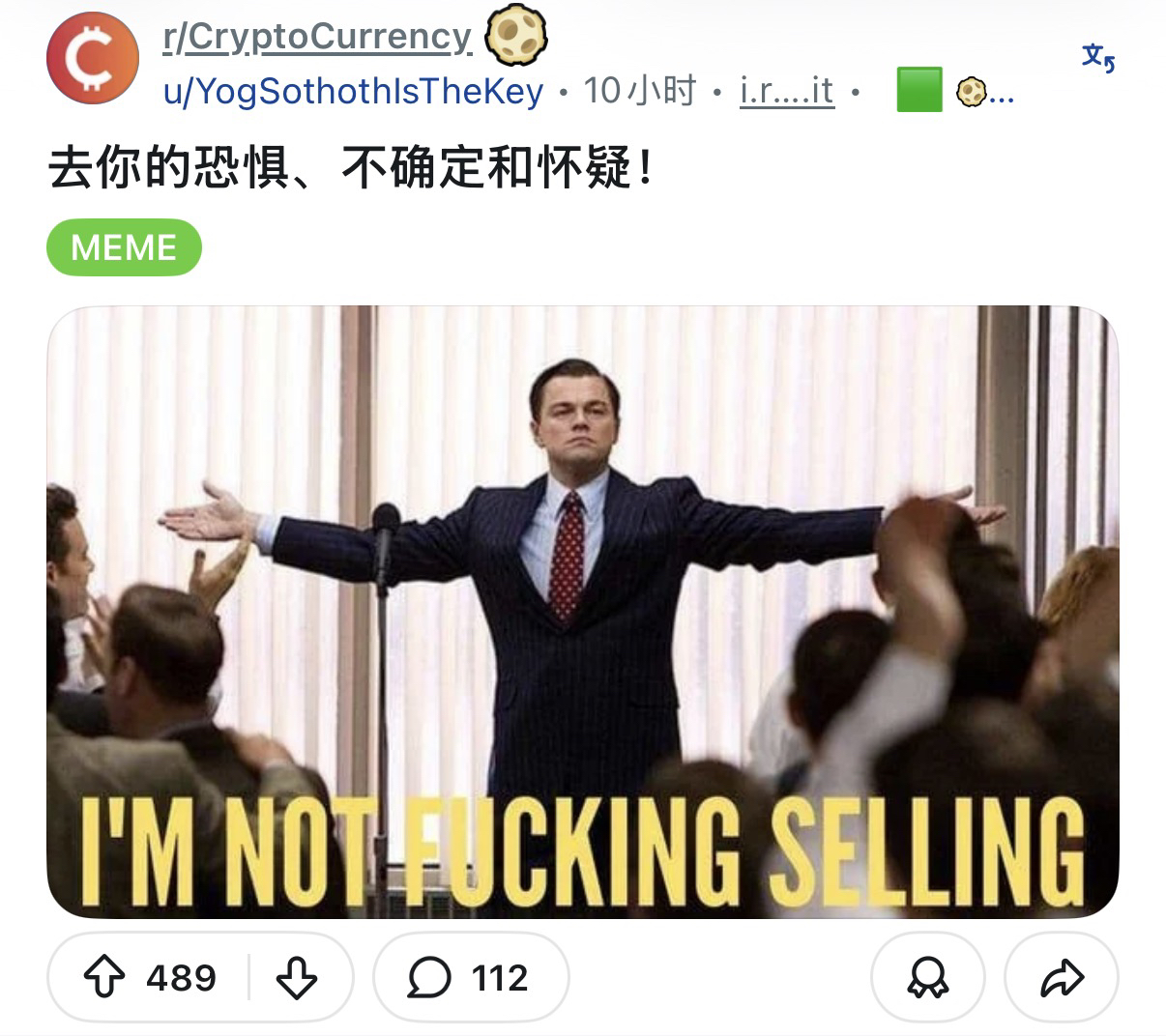


Sur le subreddit CryptoCurrency de Reddit, quelqu'un a publié un post dont le contenu se résumait à une seule phrase :


« Au diable la peur, l'incertitude et le doute ! »


La section des commentaires est instantanément devenue une scène de défoulement émotionnel pour les petits porteurs :


« Le FUD c'est pour les noobs, les mains de diamant achètent sans regarder. »


Commentaire d'un internaute : « C'est le post avec la plus grande valeur émotionnelle ce mois-ci. »
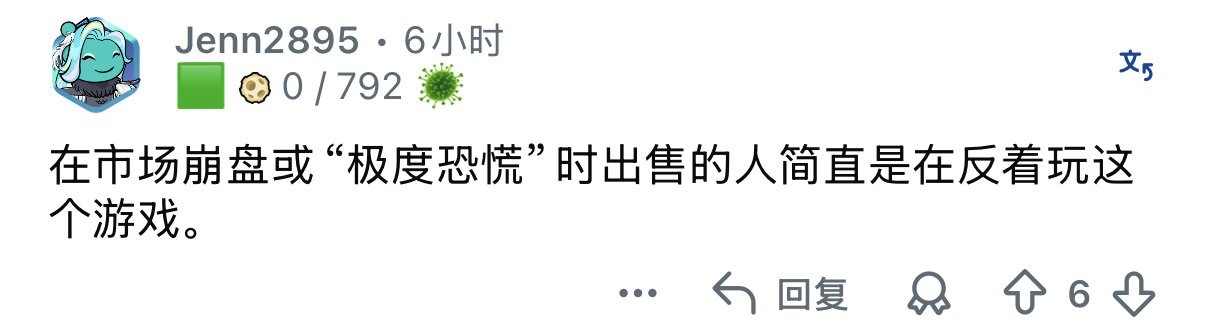


Soyez gourmand quand les autres sont apeurés, et apeurés quand les autres sont gourmands.



Salut à ceux qui continuent de détenir 🫡.
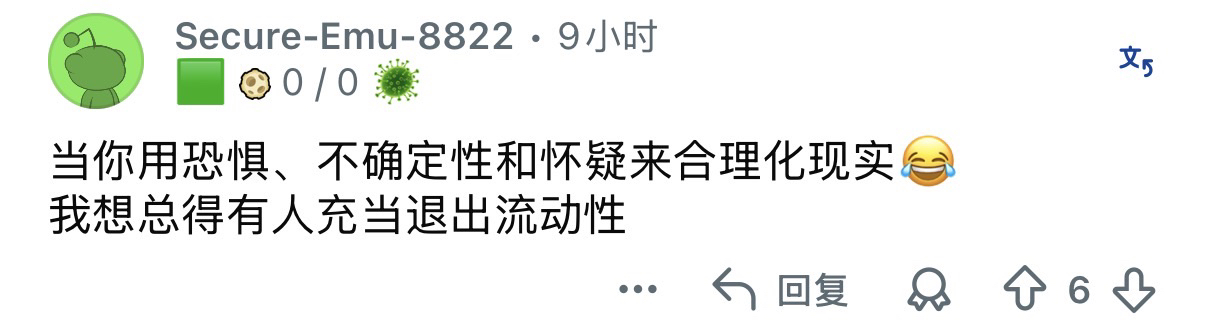


Qui servira de liquidité de sortie alors ? 🤔


Ceux qui disent aux autres de ne pas vendre, les « complices » 🤣.
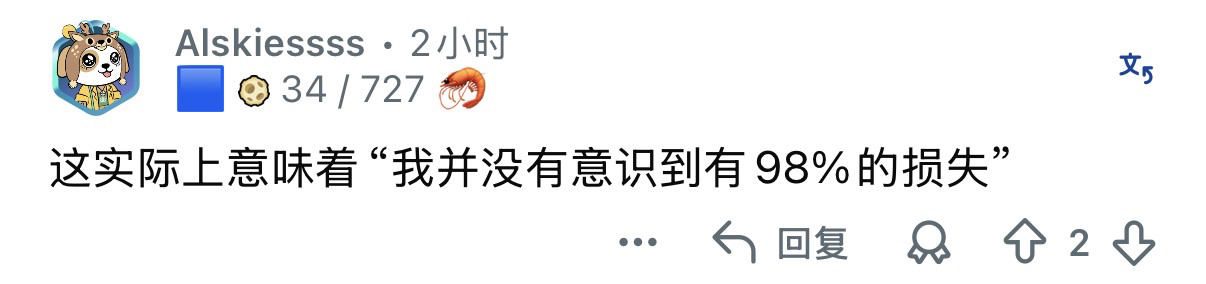


Tant qu'on ne vend pas, ce ne sont que des « pertes latentes » 🥶.
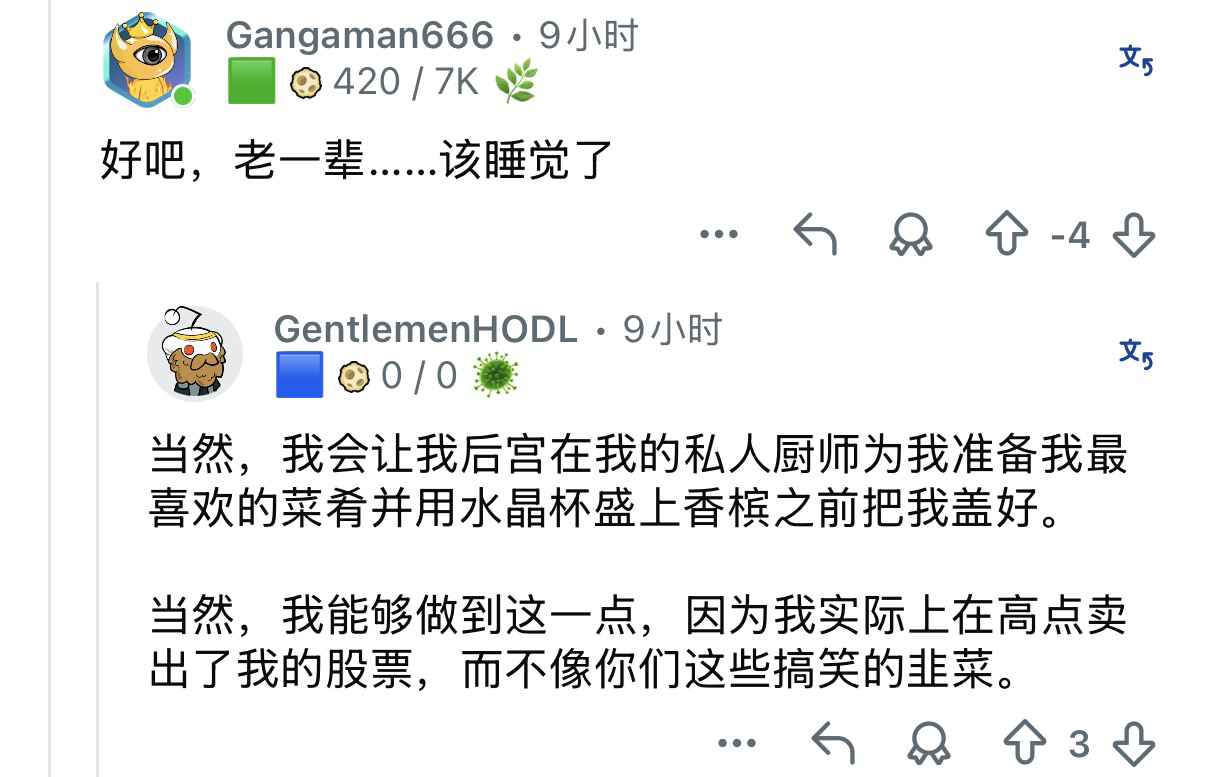


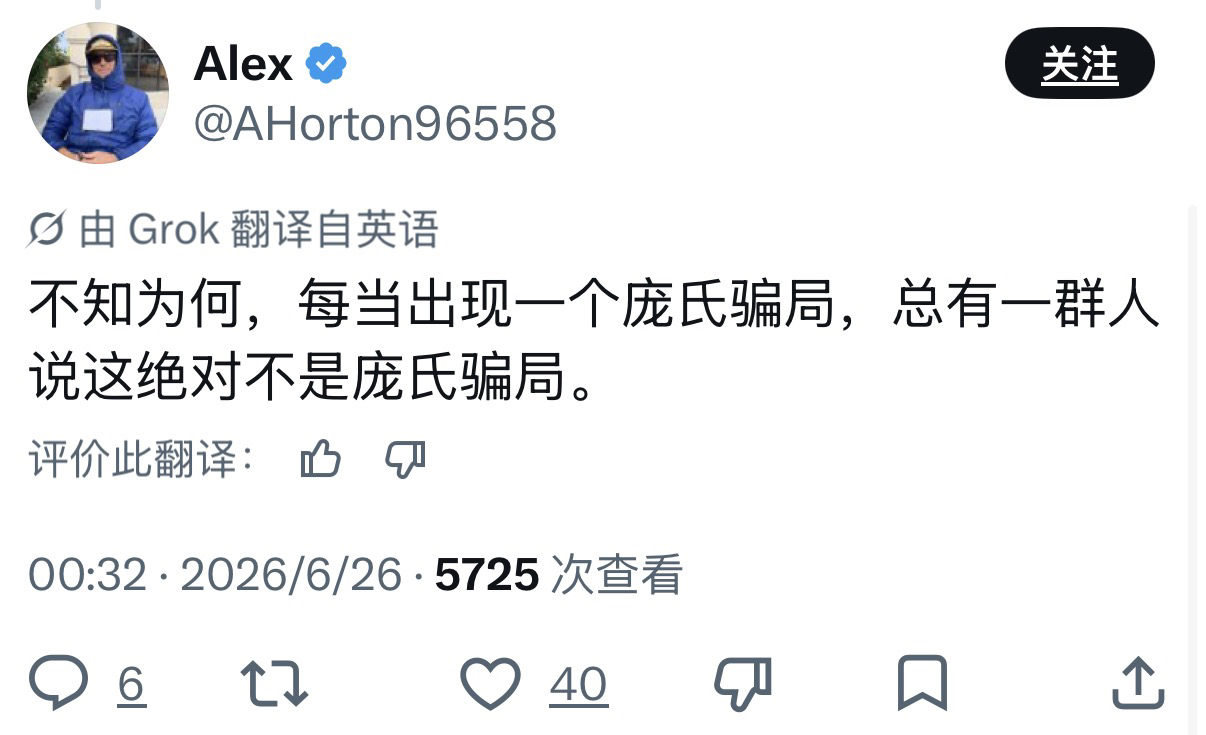
Donc si on vend au sommet, on peut vivre une vie de luxe ? 🤪
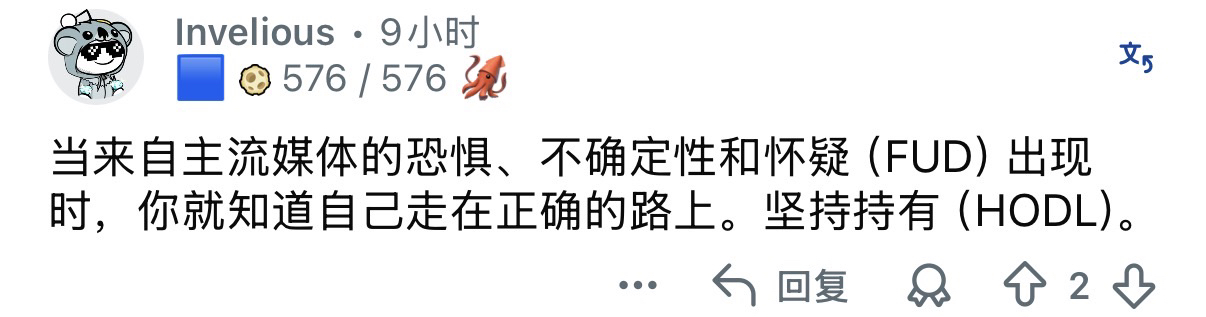


Détenir fermement (HODL) !
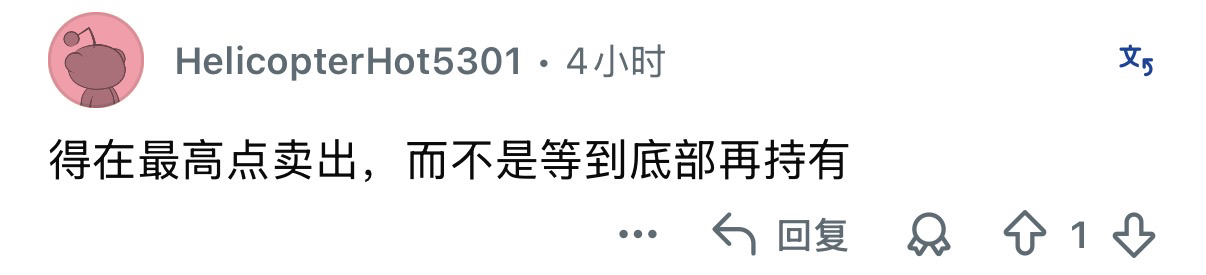


Vendre au sommet 📈, acheter au creux 📉 !
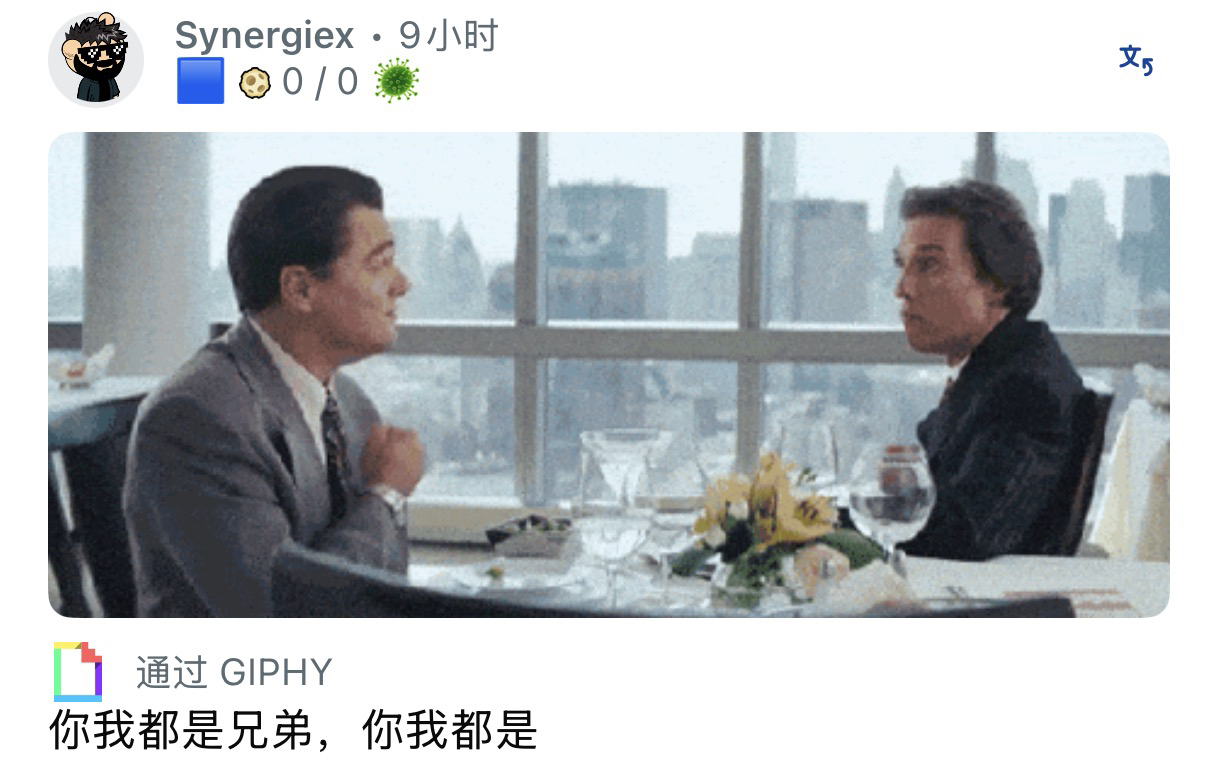


Nous sommes tous des frères !


Le décrochage du STRC, sera-t-il la prochaine LUNA ?
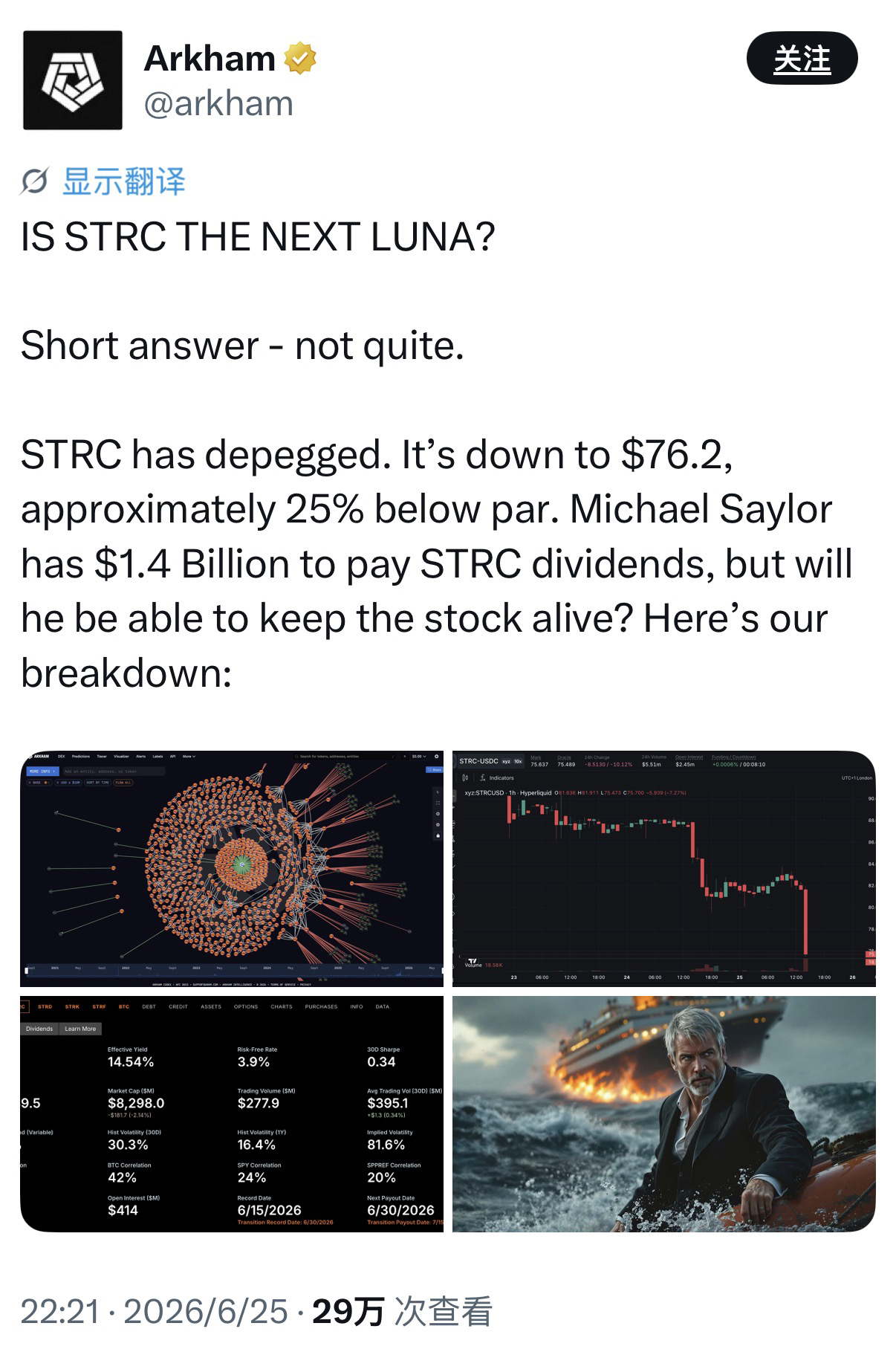


Le compte officiel d'Arkham a posé une question sensible le 25 juin : « STRC sera-t-elle la prochaine LUNA ? »


La réponse : pas exactement la même chose, mais le problème est sérieux.


Explication préalable : STRC est une action privilégiée perpétuelle émise par MicroStrategy, d'une valeur nominale de 100 dollars, payant un dividende annuel de 11,5 %.
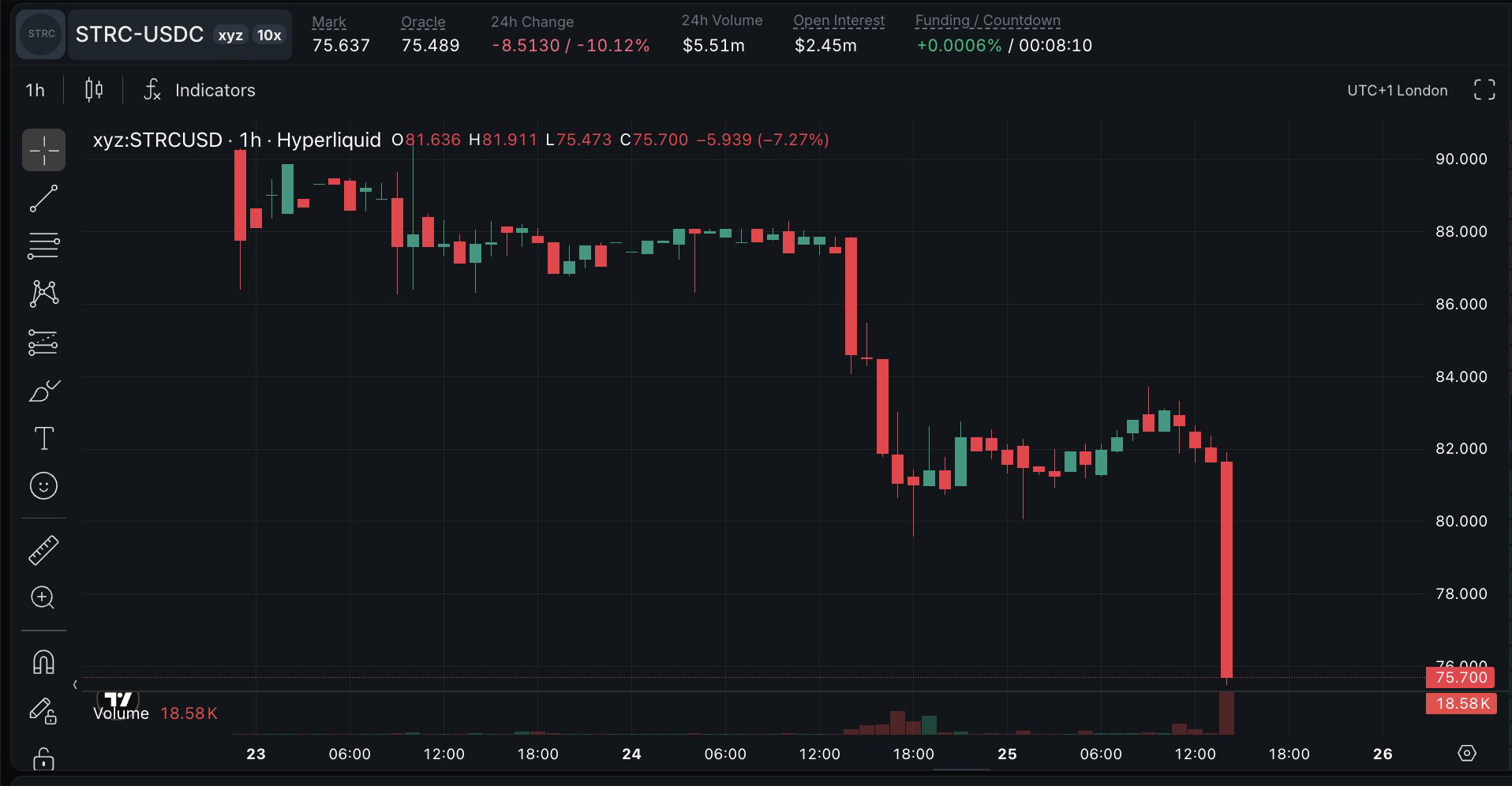


Actuellement, le STRC est tombé à environ 76,2 dollars, soit une décote d'environ 25 % par rapport à sa valeur nominale, c'est-à-dire un « décrochage ».


Pourquoi cette chute ? Parce que les investisseurs commencent à douter : Saylor est-il encore prêt et capable de continuer à débourser 1,2 milliard de dollars par an pour payer les dividendes ?


Selon les données, il y a environ 105 millions d'actions STRC en circulation, nécessitant un paiement de dividendes annuel d'environ 1,2 milliard de dollars. Les réserves en dollars de MicroStrategy, publiées lundi, s'élèvent à environ 1,4 milliard de dollars, suffisantes pour une année, mais pas pour la seconde.


La différence cruciale est que : Saylor n'a aucune obligation légale de payer ces dividendes. S'il décide de suspendre le dividende, le STRC pourrait continuer à baisser, mais MicroStrategy elle-même ne fera pas faillite du jour au lendemain comme LUNA.


Mais le risque est ailleurs : si les investisseurs de MSTR (les actions ordinaires de MicroStrategy) découvrent que l'argent qu'ils injectent est utilisé pour payer en priorité les dividendes des actions privilégiées, ils pourraient réduire leurs achats de MSTR.
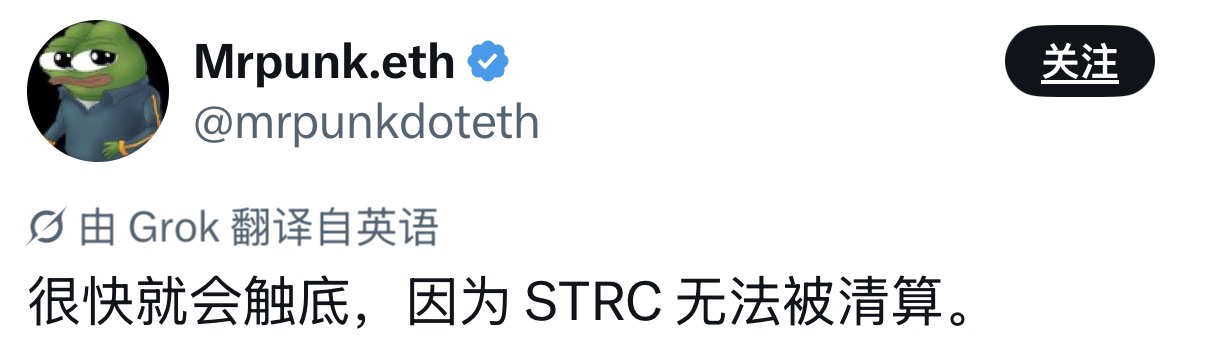


Alors, quel est le vrai « plancher » du prix ?



Le graphique en chandeliers montre déjà le « résultat final » 📉.


Peut-être que les gens ne veulent pas admettre ce fait 🫢.
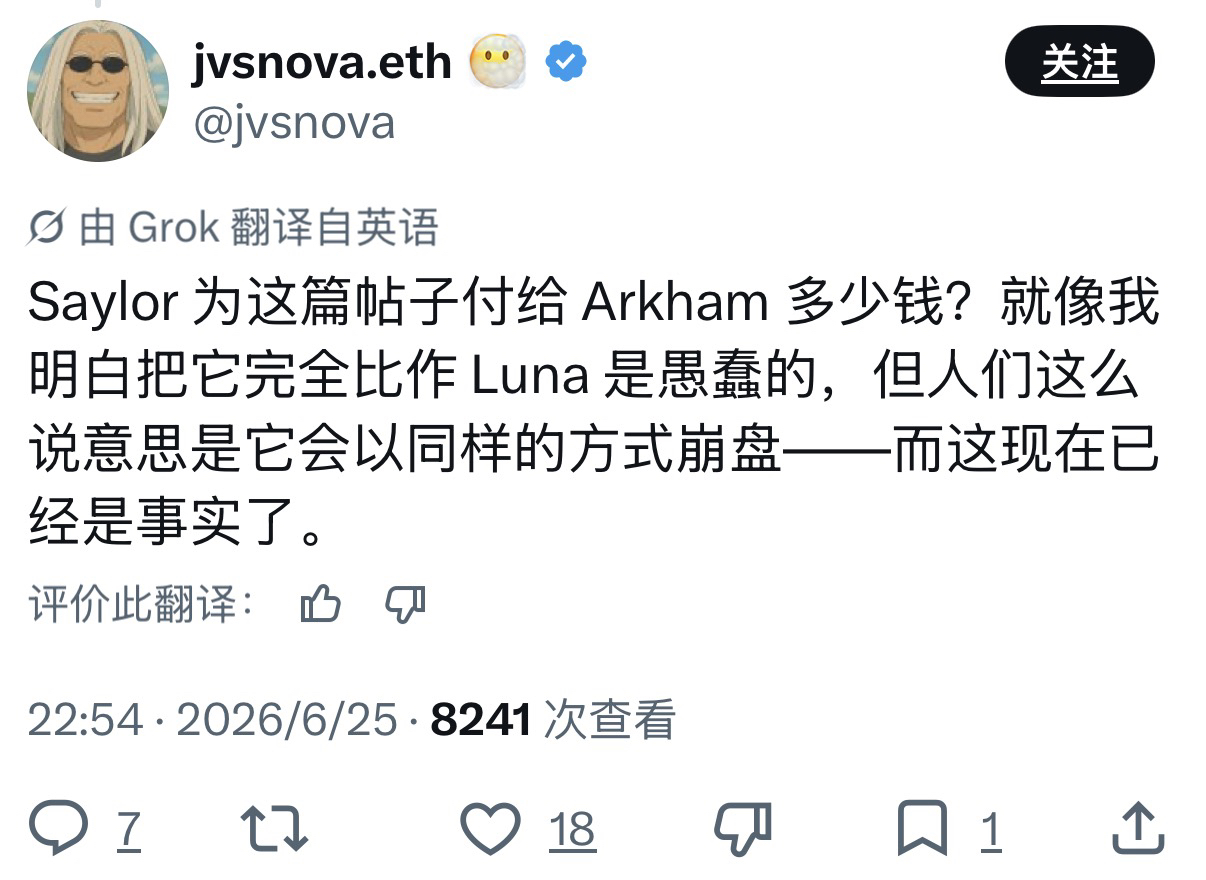


Saylor paye pour dire que ce n'est pas comme l'effondrement de LUNA ? 😜
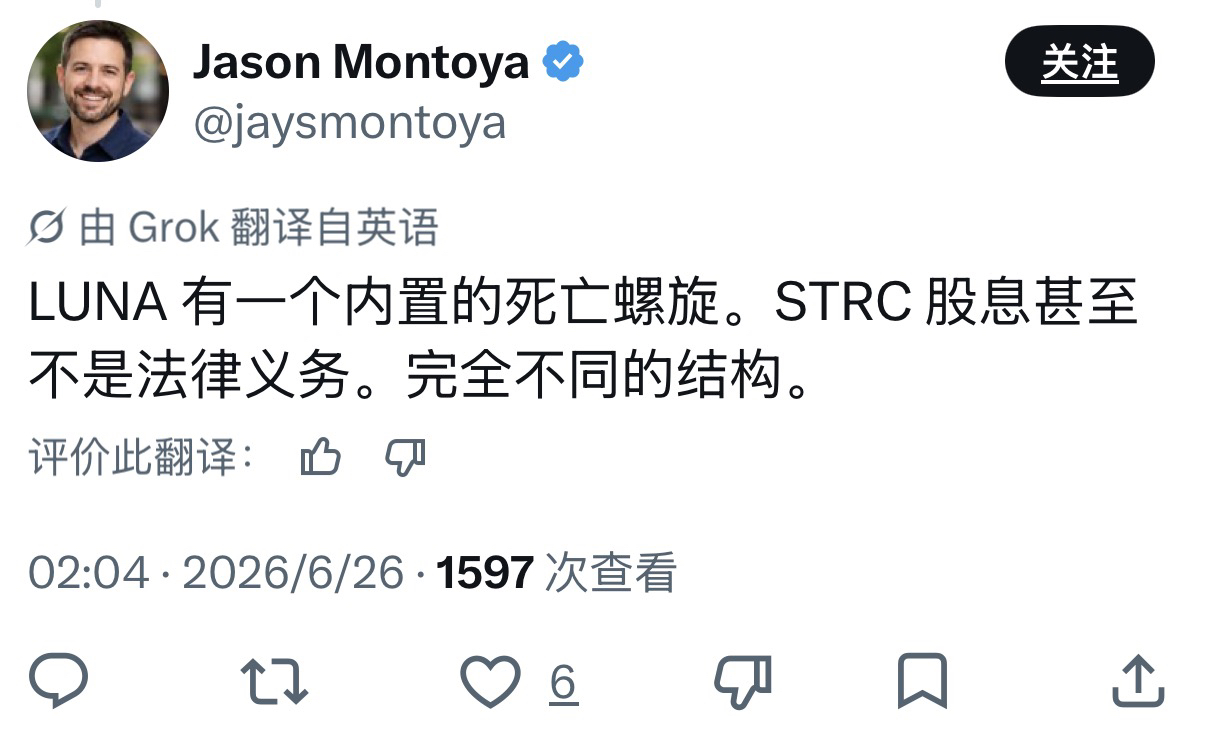


Alors, devons-nous nous inquiéter ? 🙂↕️
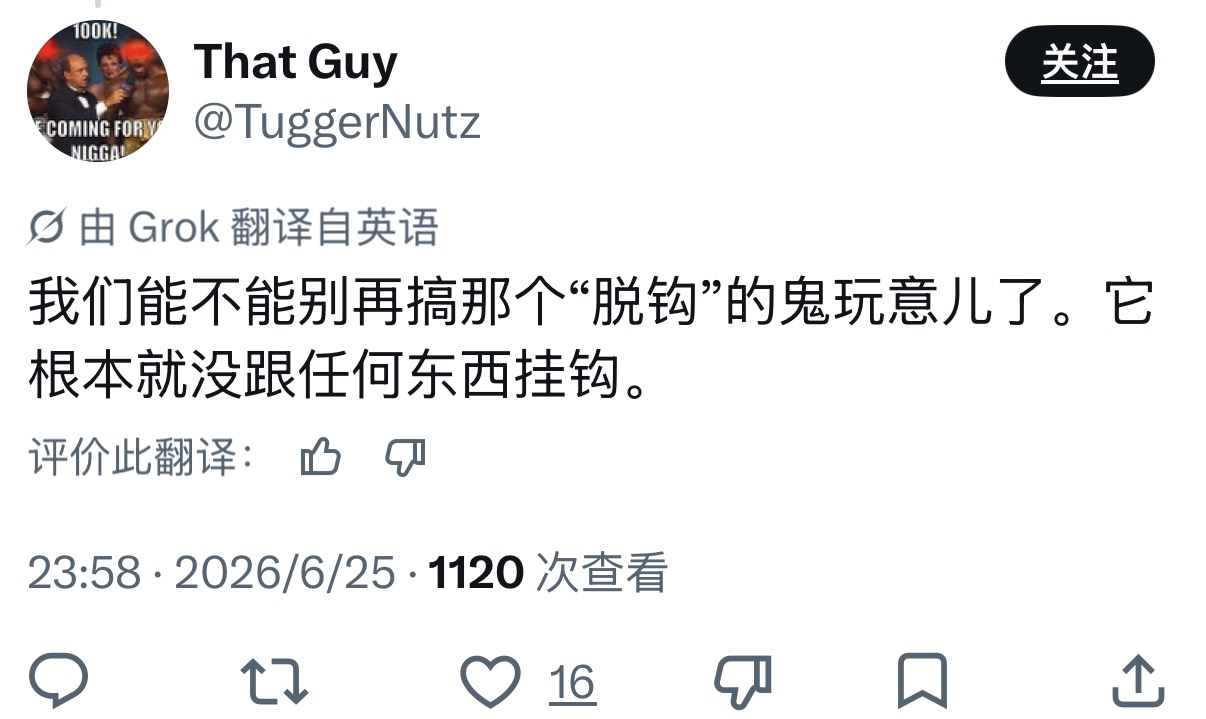


C'est juste le marché qui détermine le prix, non ? 🧐
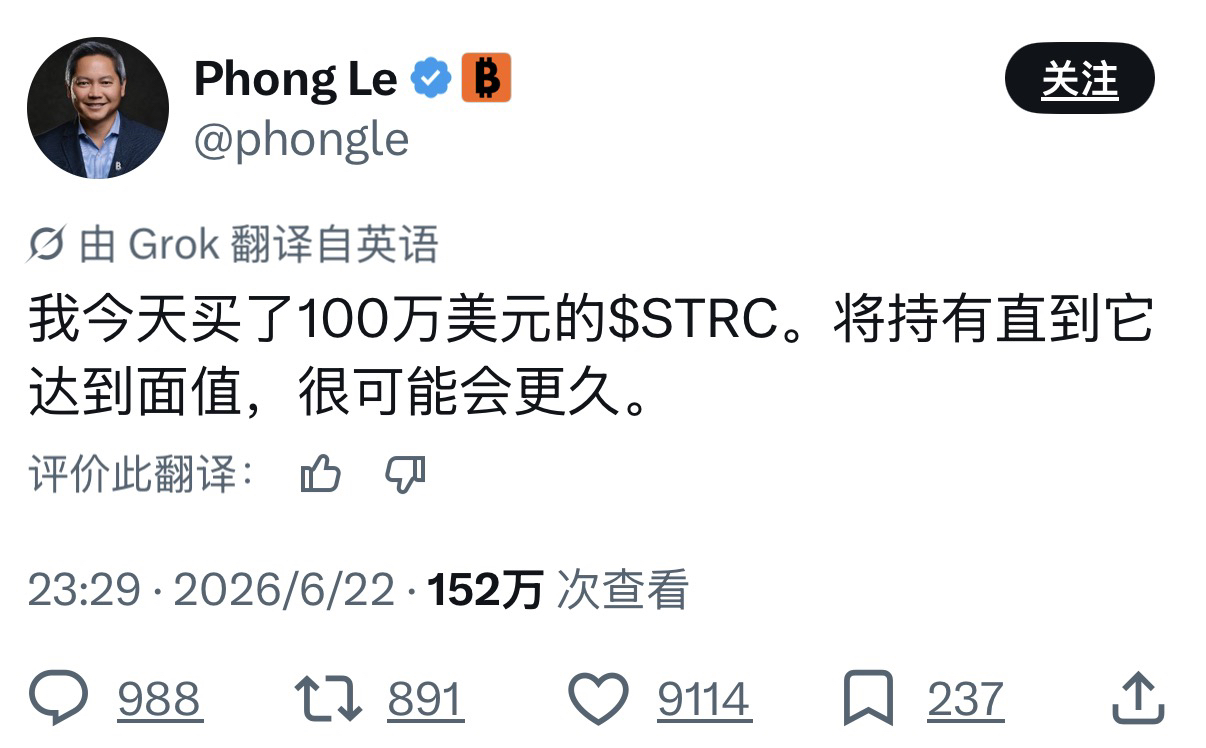


Le PDG de MicroStrategy, Phong Le, a déclaré le 22 juin avoir acheté pour 1 million de dollars de STRC.
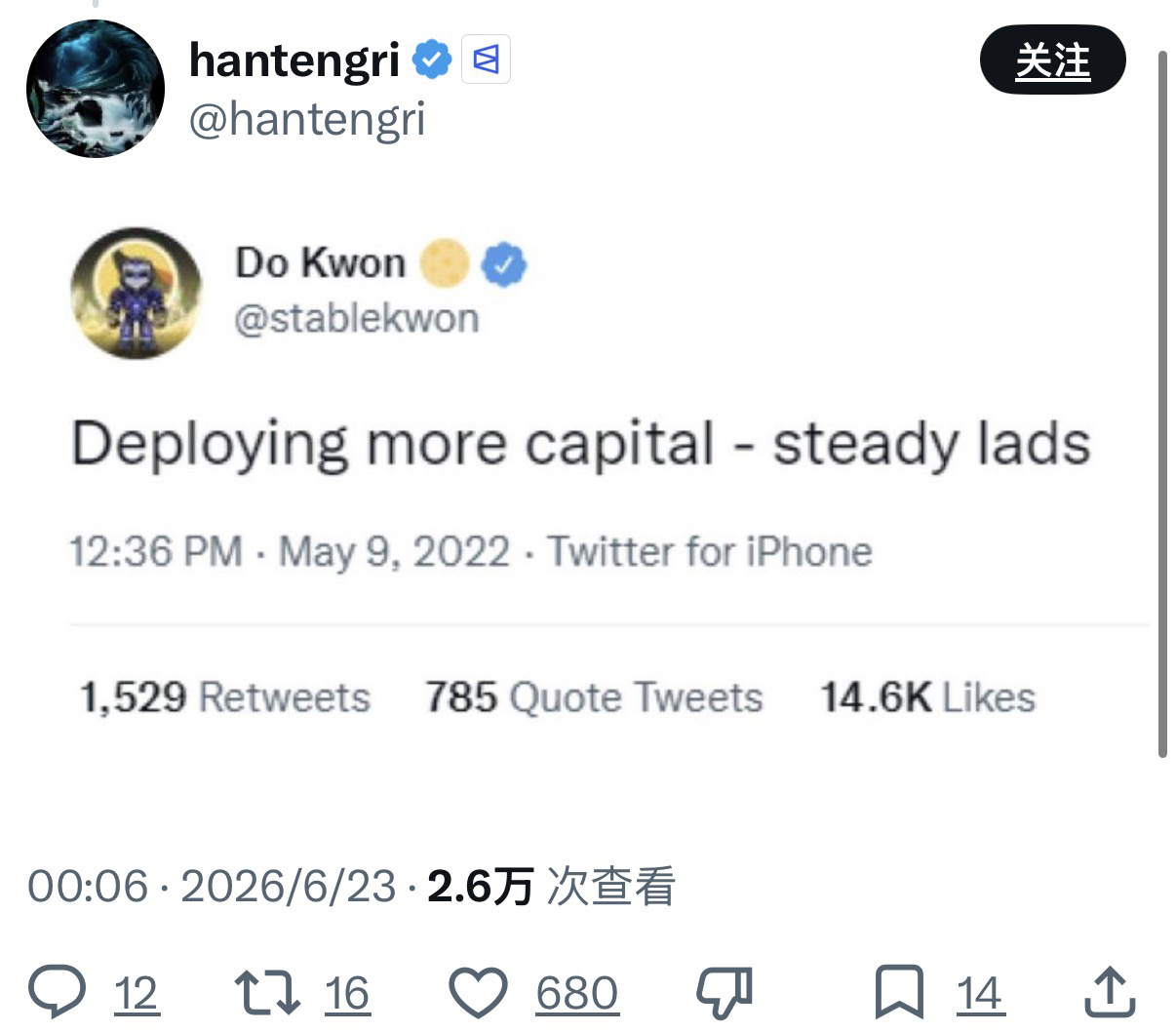


Coïncidence, « déployons plus de capital, restons stables », une opinion similaire avait été exprimée par le fondateur de Luna, Do Kwon, sur Twitter 😅.
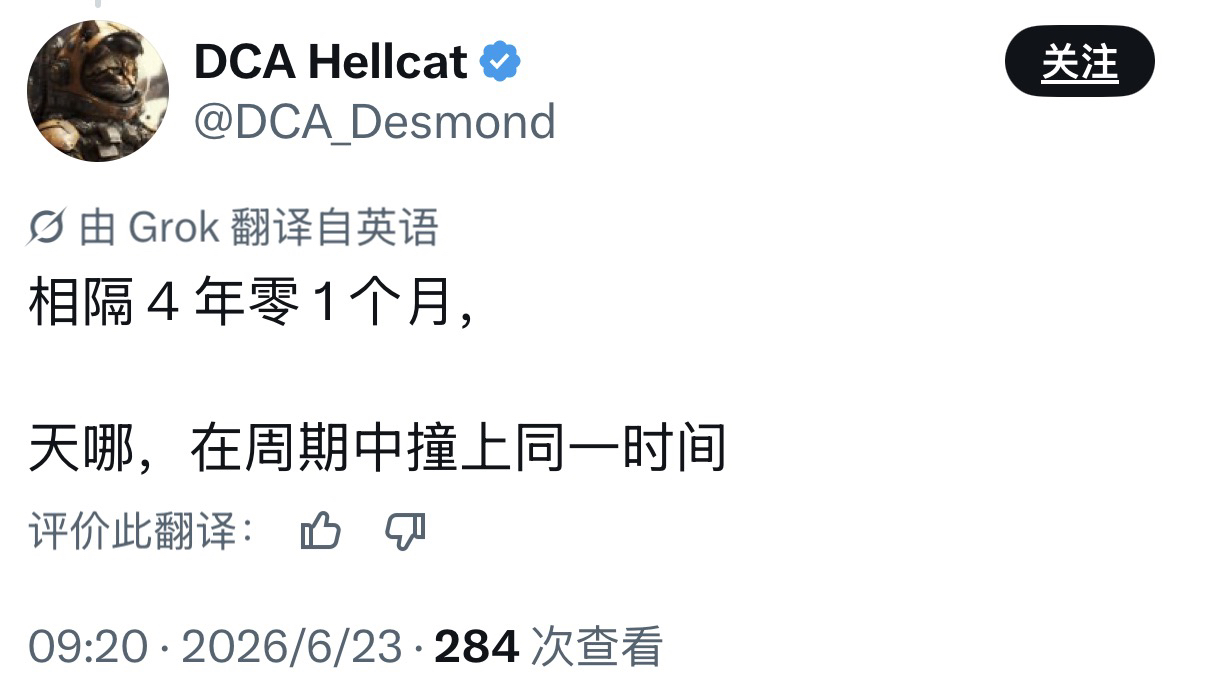


Nous sommes exactement à 4 ans et 1 mois de l'effondrement de LUNA. Cependant, comparé à LUNA, STRC a au moins une entreprise réelle et solide derrière lui.


Les 1828 tweets de Chuanmu mis à nu, révélant un « personnage contradictoire »


Un blogueur a réalisé une analyse approfondie, au titre direct : « J'ai épluché les 1828 tweets de Chuanmu ».
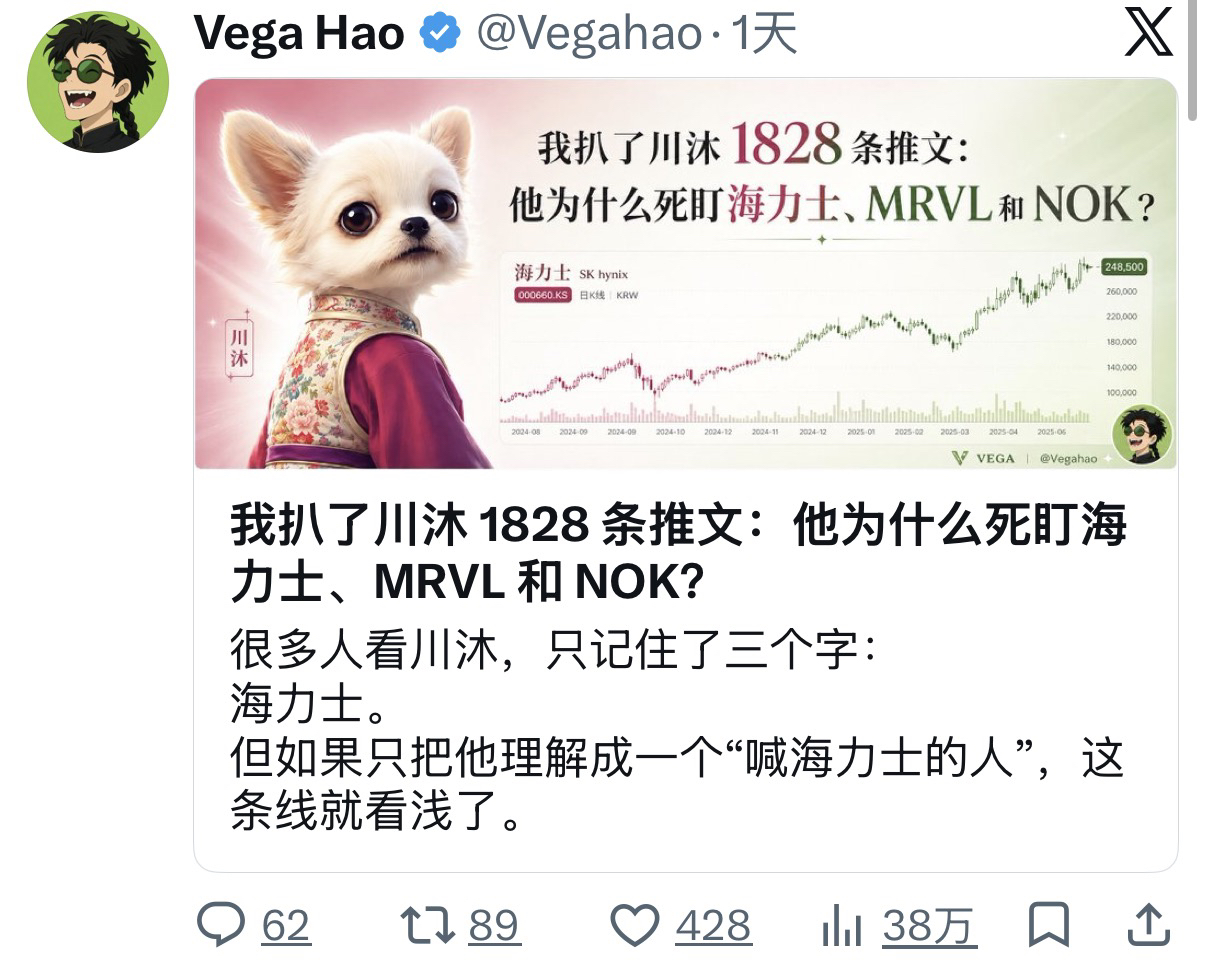


Qui est Chuanmu ? Durant la hausse des inscriptions ORDI en 2023, il est passé de 500 dollars à 1 million de dollars de capital.


Lors de la chute brutale du marché cryptographique en 2025, il a de nouveau vendu à découvert un panier d'altcoins, passant de 10 000 dollars à 1 million de dollars en un mois.


En octobre 2025, il a annoncé ouvertement son retrait du marché Crypto, évitant précisément la grande chute, pour se tourner vers les actions de Hong Kong / USA / Chine. SK Hynix, Samsung, MRVL, NOK... il a touché de nombreuses actions en hausse, son compte d'actions dépassant les 100 millions.


L'auteur de l'article, en analysant ses tweets, a découvert que ce qui rend vraiment Chuanmu fort, c'est sa manière de poser les questions : dans la vague de l'IA, qui sont les applications finales ? Qui sont les infrastructures ? Qui sont les goulets d'étranglement de la chaîne d'approvisionnement ? Qui a le plus de mal à augmenter sa production ? Qui est mal évalué par le marché ?


Il ne demande pas d'abord « quelle action va monter », mais d'abord « où est-ce que le système entier va se bloquer ».


Suivant cette logique, son fil conducteur a migré : à l'été 2025, il était encore sur les actions américaines liées au Crypto (MSTR, SBET, CRCL) ; fin 2025, il est passé aux premiers indices d'infrastructure IA (Micron, LITE) ; début 2026, il a pris de fortes positions sur SK Hynix et Samsung, c'est-à-dire l'étape la plus critique du stockage pour l'IA ; en mai 2026, il s'est étendu au pied gauche (stockage DRAM) et au pied droit (communication optique, avec MRVL pour l'interconnexion optique intra-puce et NOK pour la communication optique longue distance inter-puces).


Cependant, certains internautes ont aussi émis des doutes sur Chuanmu. Certains jetons qu'il avait promus ont par la suite connu des mouvements de « récolte ». De plus, il a vendu en cours de route des actions qu'il avait dit vouloir détenir un certain temps, alors que les internautes qui avaient « copié » ses positions n'en savaient rien 🥹.
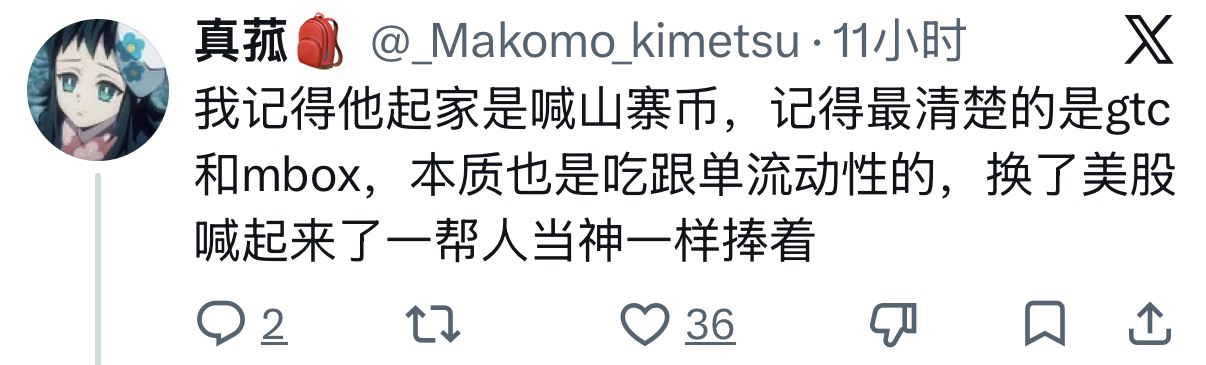


Donc, après le succès, « de grands lettrés lui trouvent des justifications » ? 🫢
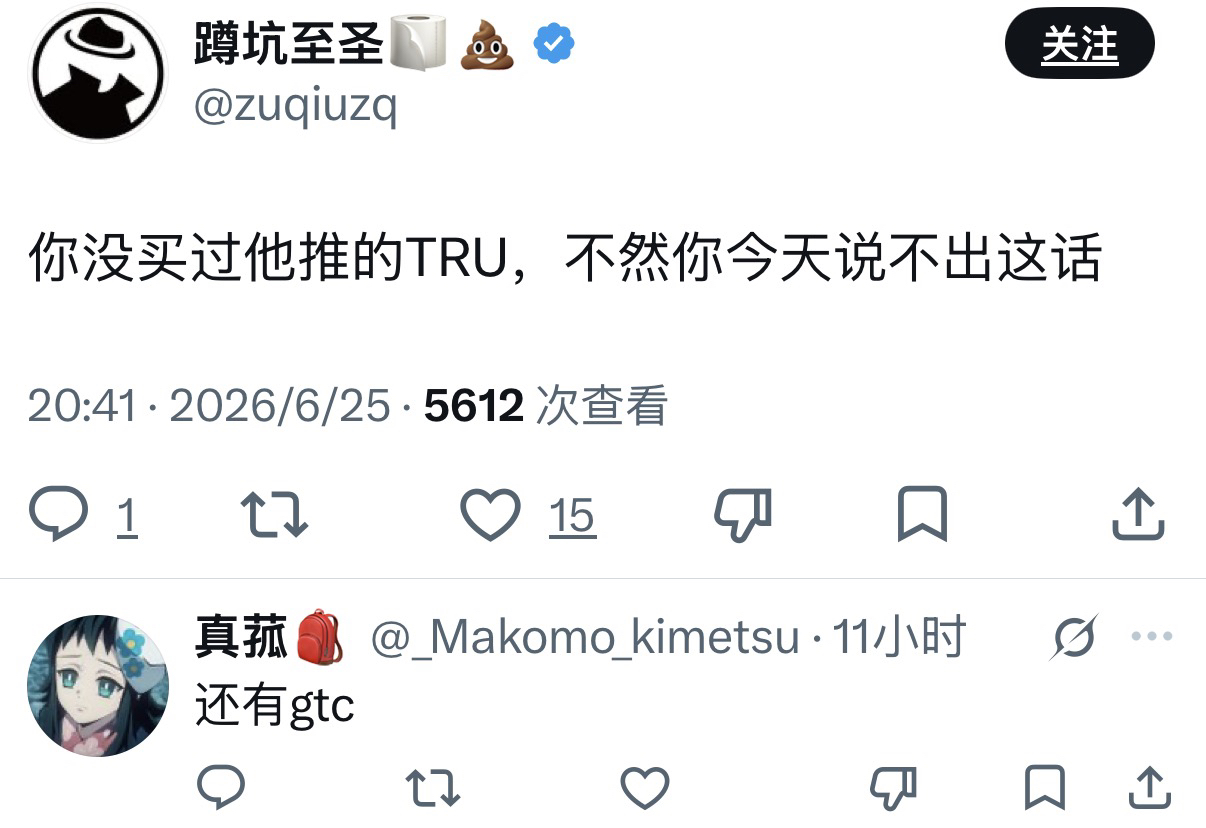


Seuls ceux qui l'ont vécu peuvent en parler.
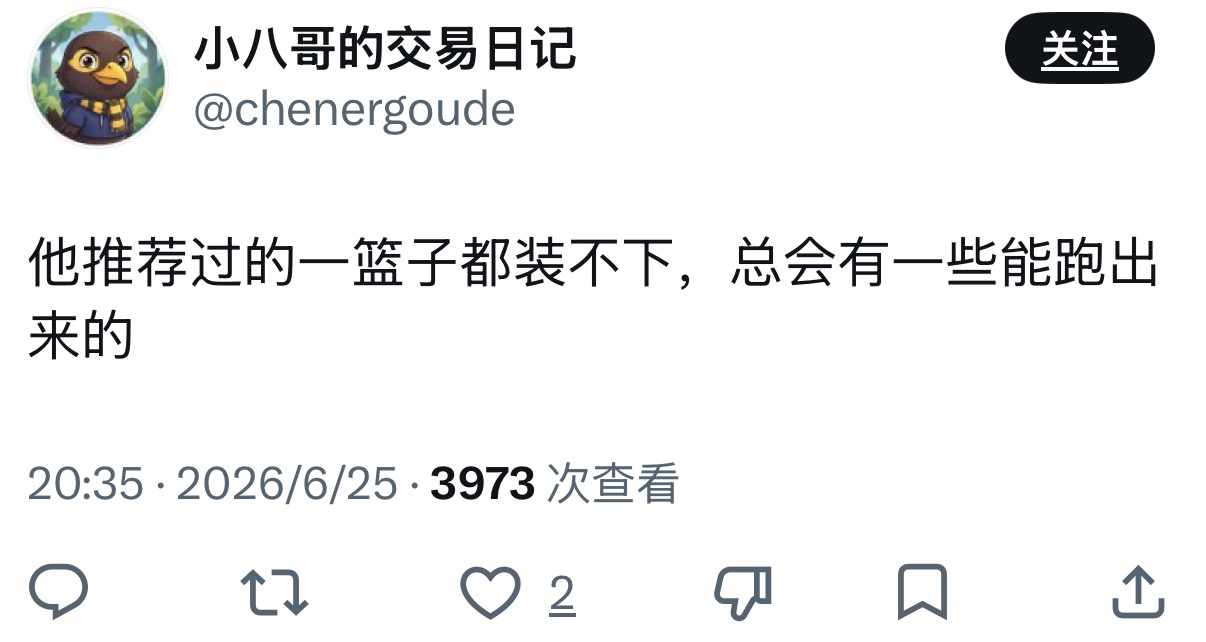


La « promotion » devient un jeu de probabilités 🎲.
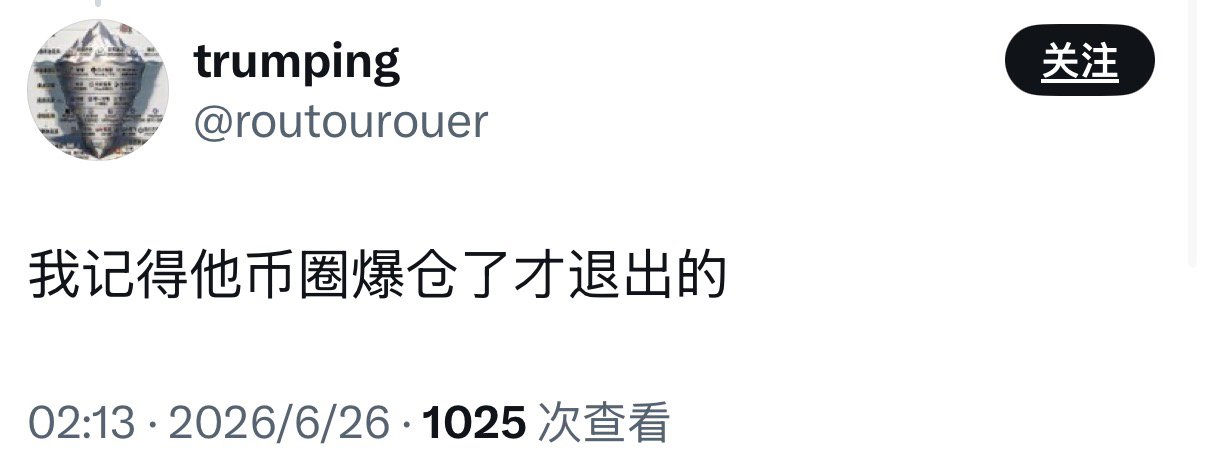


Derrière, ce sont des histoires de sang et de larmes 😭.
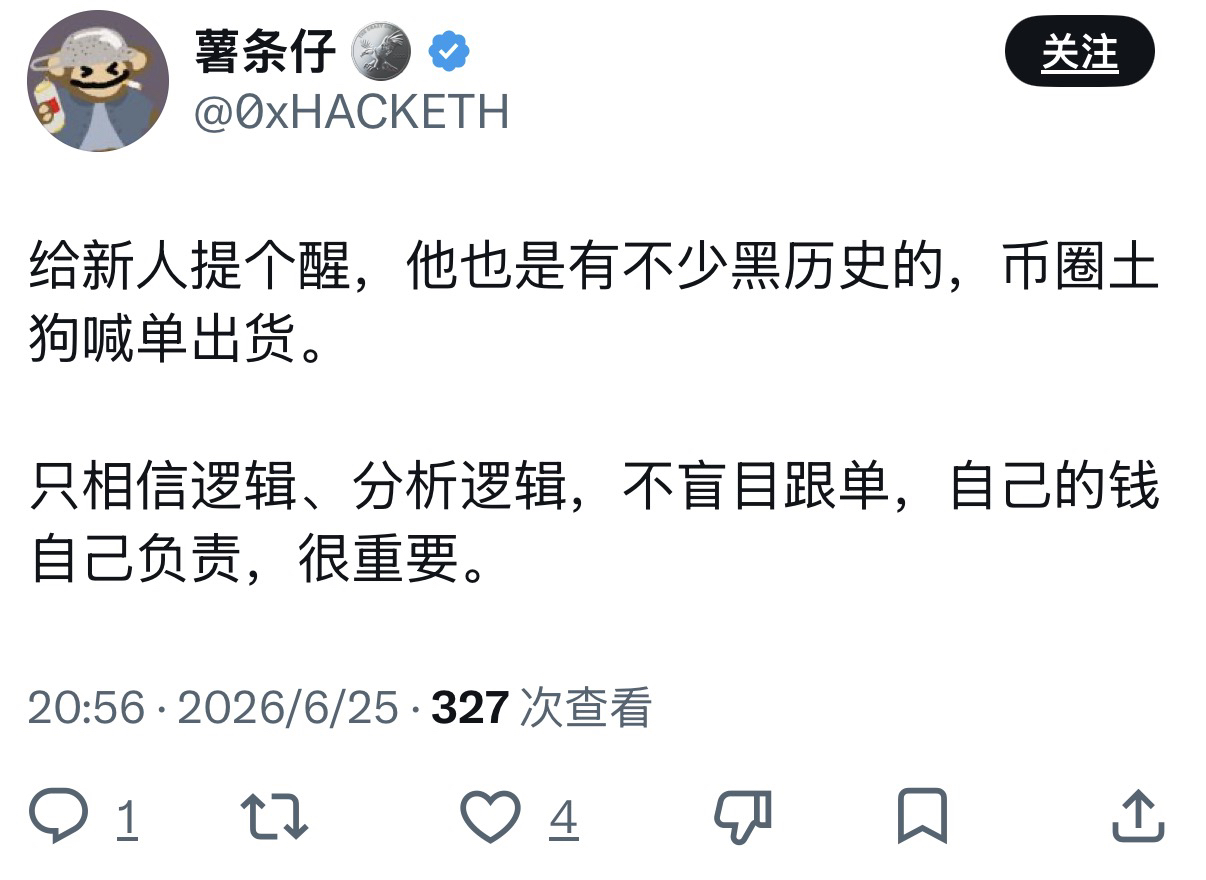


Il faut comprendre une personne dans son ensemble, ne pas croire aveuglément, garder sa capacité de jugement !
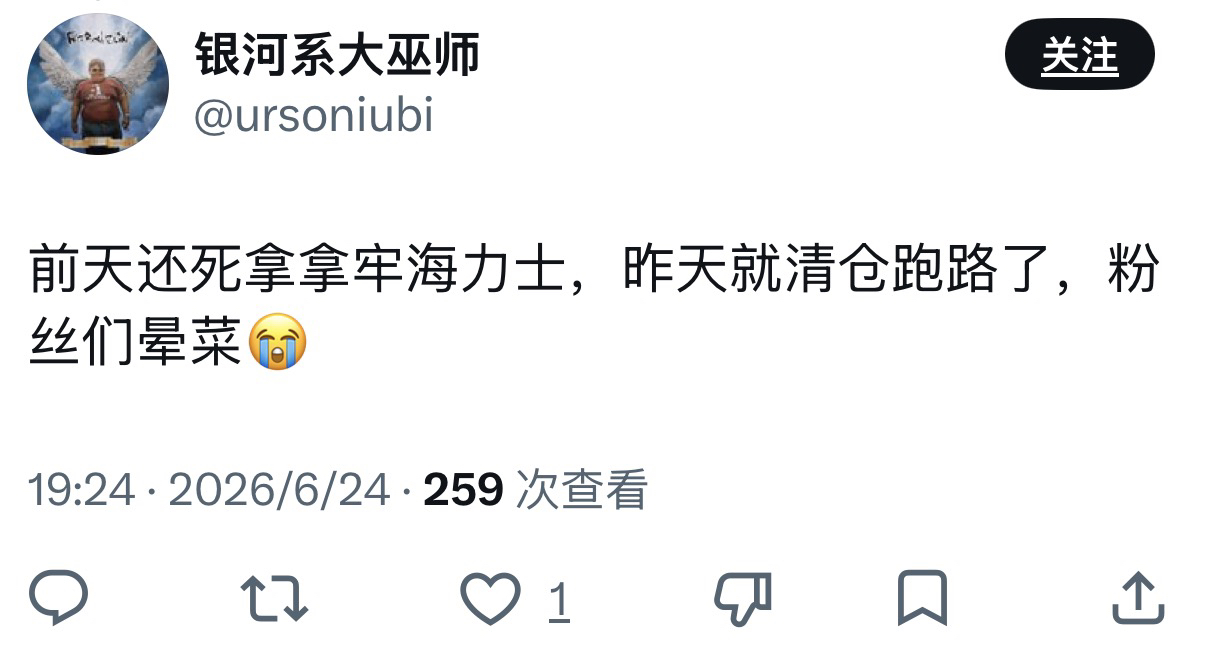


Maître, quand vous êtes descendu du train, pourquoi ne pas nous avoir prévenus ? 🫪
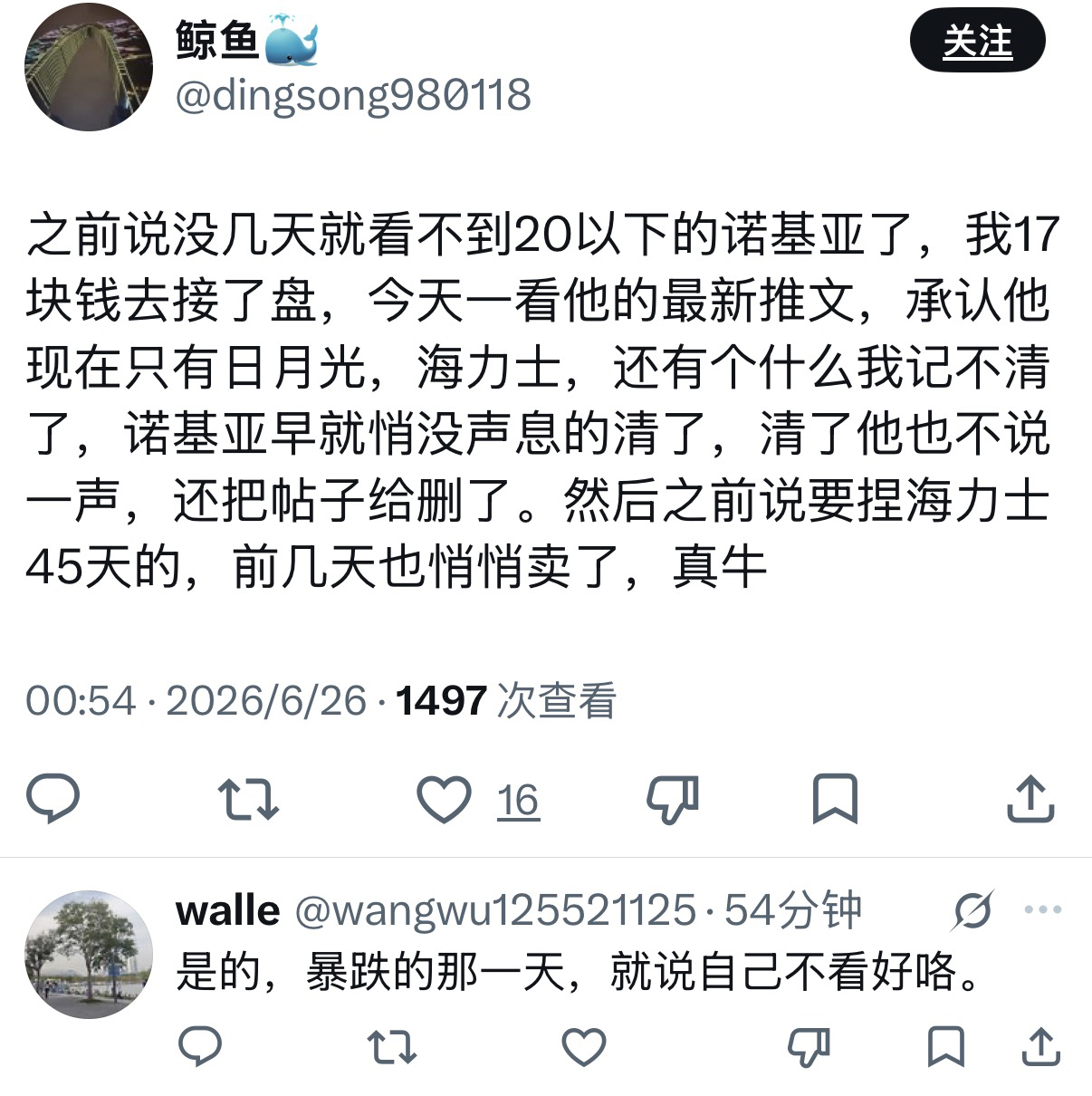


Les « profits » affichés sont ce qu'il veut que nous voyions 🤩, il y a une partie qu'il ne veut pas que nous voyions.


De la « victoire psychologique Reddit » du BTC, au « dilemme du dividende de 1,2 milliard de dollars » du STRC, en passant par le « personnage contradictoire » de Chuanmu. Cette semaine, certains se sont encouragés mutuellement, d'autres ont calculé les réserves de trésorerie, d'autres ont examiné des tweets pour trouver la prochaine étape.


Bon week-end à tous ! À la semaine prochaine !


(Le contenu de cette édition est basé sur des informations publiques et des discussions en ligne, interprétation légère, uniquement à titre de référence.)


Revue des précédentes éditions : Commentaire Spicy | Michael Saylor tient des propos de « mauvais garçon » ; Une dame de 60 ans après la liquidation de ses contrats « embobine un jeune »
Commentaire Spicy | Trois histoires qui vous disent : Dans le monde des crypto, plus on est « diligent », plus on est « misérable »
Commentaire Spicy | Le « roi des petits porteurs » s'est fait pirater son compte par son frère pour « escroquer » ? L'IA « découvre » le Bitcoin...

Trending Cryptos

Related Questions

QQuelle est la principale préoccupation concernant l'action privilégiée perpétuelle STRC (de Stratify) et en quoi sa situation diffère-t-elle de l'effondrement de LUNA ?

ALa préoccupation principale concernant le STRC est qu'il s'est décroché de sa valeur nominale de 100 $, atteignant environ 76,2 $, en raison des doutes des investisseurs sur la capacité et la volonté de Stratify (et de Michael Saylor) de continuer à payer le dividende annuel de 11,5%, soit environ 1,2 milliard de dollars. La différence clé avec LUNA est que Saylor n'a pas l'obligation contractuelle de verser ces dividendes. S'il les suspend, le STRC pourrait chuter davantage, mais Stratify elle-même ne s'effondrerait pas comme l'écosystème Terra/LUNA, car il existe une entreprise réelle avec des actifs (réserves de dollars et de Bitcoin) en arrière-plan.

QSelon l'article, quel a été le déclencheur émotionnel majeur sur Reddit lors de la chute du marché des cryptomonnaies en juin, et quelle était la réaction typique de la communauté ?

ALe déclencheur émotionnel majeur a été un post sur le subreddit CryptoCurrency déclarant simplement : « F*** FUD » (FUD signifiant Peur, Incertitude et Doute). La réaction typique de la communauté a été un soutien mutuel et une résistance à la vente paniquée. Les commentaires reflétaient des mantras comme « les mains en diamant achètent la baisse », « HODL » (conserver ses actifs), et l'idée que la peur des autres est une opportunité, créant un espace de valeur émotionnelle pour les investisseurs découragés.

QQuelle méthodologie d'analyse de marché est attribuée au trader Chuan Mu (川沐) selon l'analyse de ses tweets, et quel a été son parcours d'investissement remarquable ?

ALa méthodologie d'analyse de Chuan Mu consiste à ne pas chercher d'abord quelle action ou quel jeton va monter, mais à identifier les goulets d'étranglement systémiques et les maillons critiques d'une tendance technologique (comme la vague de l'IA). Il se demande : qui sont les applications finales, les infrastructures, les contraintes d'approvisionnement, et quelles entités sont sous-évaluées par le marché. Son parcours remarquable va de multiplier 500 $ en 1 million de dollars sur ORDI en 2023, à reproduire cet exploit en tradant à la baisse en 2025, puis à quitter le marché crypto au bon moment pour investir avec succès dans des actions technologiques liées à l'IA comme SK Hynix, Samsung, Marvell et Nokia, atteignant un portefeuille actions de plus de 100 millions de dollars.

QQuelles critiques ou contradictions sont soulevées concernant la figure de Chuan Mu (川沐) dans l'article ?

AL'article soulève deux critiques principales : Premièrement, certains jetons qu'il a recommandés (« shillés ») ont par la suite connu des mouvements de marché défavorables ressemblant à des « récoltes » pour les suiveurs. Deuxièmement, il aurait vendu des actions qu'il avait publiquement déclaré vouloir conserver à long terme, sans en informer sa communauté, laissant ainsi ceux qui l'avaient suivi (« copié ses trades ») dans l'ignorance. Cela crée un « personnage contradictoire » entre son génie analytique perçu et des pratiques potentiellement problématiques de transparence.

QQuelle action concrète le PDG de Stratify, Phong Le, a-t-il entreprise concernant la chute du STRC, et pourquoi cette action rappelle-t-elle un événement historique négatif dans la cryptosphère ?

ALe PDG de Stratify, Phong Le, a acheté pour 1 million de dollars de STRC le 22 juin, probablement pour tenter de soutenir le prix et de rassurer le marché. Cette action rappelle des déclarations similaires de Do Kwon, le fondateur de Terra (LUNA), qui avait tweeté « deploying more capital - steady lads » (« déployer plus de capital - restez calmes les gars ») juste avant l'effondrement cataclysmique de l'écosystème Terra en mai 2022, ce qui souligne l'ironie et les inquiétudes des observateurs.

Related Reads

Trading

Spot

Hot Articles

How to Buy LUNA

Welcome to HTX.com! We've made purchasing Terra (LUNA) simple and convenient. Follow our step-by-step guide to embark on your crypto journey.Step 1: Create Your HTX AccountUse your email or phone number to sign up for a free account on HTX. Experience a hassle-free registration journey and unlock all features.Get My AccountStep 2: Go to Buy Crypto and Choose Your Payment MethodCredit/Debit Card: Use your Visa or Mastercard to buy Terra (LUNA) instantly.Balance: Use funds from your HTX account balance to trade seamlessly.Third Parties: We've added popular payment methods such as Google Pay and Apple Pay to enhance convenience.P2P: Trade directly with other users on HTX.Over-the-Counter (OTC): We offer tailor-made services and competitive exchange rates for traders.Step 3: Store Your Terra (LUNA)After purchasing your Terra (LUNA), store it in your HTX account. Alternatively, you can send it elsewhere via blockchain transfer or use it to trade other cryptocurrencies.Step 4: Trade Terra (LUNA)Easily trade Terra (LUNA) on HTX's spot market. Simply access your account, select your trading pair, execute your trades, and monitor in real-time. We offer a user-friendly experience for both beginners and seasoned traders.

4.5k Total ViewsPublished 2024.03.29Updated 2026.06.02

How to Buy LUNA

What is $LUNA

Luna28 ($$LUNA): A Moon-Inspired Crypto Venture Introduction In the ever-evolving world of cryptocurrencies, innovation is key. Luna28 stands out as a project that not only embraces technology but also intertwines it with the mystique of cosmic cycles. Inspired by the moon's 28-day cycle, Luna28 ($$LUNA) aims to create a unique and engaging experience for its community, merging the concepts of tokenomics and lunar-themed non-fungible tokens (NFTs). At its core, this project employs a distinctive token burn mechanism aligned with lunar and solar eclipses, setting a new precedent in the crypto space. What is Luna28? Luna28 is a token-based cryptocurrency project built on the Ethereum blockchain. It seeks to offer its users a blend of cosmic engagement through a series of innovative features. Key to its identity is the launch of lunar-themed NFTs which enhance community interaction while celebrating the moon's cultural significance. The project aims to create a deeper connection between its community members and the cosmos. This connection is facilitated through a carefully crafted ecosystem that leverages lunar themes, token burns, and dynamic activities associated with celestial events. The goal is not just about enhancing token value but fostering a sense of belonging and enjoyment within the community. Creator of Luna28 The details surrounding the creator of Luna28 remain largely unknown. This lack of information has led to an air of mystery around the project, further adding to its uniqueness. The anonymous nature of its creation reflects a broader trend within the crypto industry, where the focus is often on the project and its community rather than individual profiles. Investors of Luna28 Currently, there is no publicly available information regarding the specific investment foundations or organizations that support Luna28. This aspect may indicate a grassroots initiative where the community plays a vital role in the project's development and growth. The absence of prominent investors can sometimes create a more decentralized and independent project, allowing for organic community engagement and involvement. How Does Luna28 Work? One of the most compelling aspects of Luna28 is how it operates, particularly its unique features that set it apart from other cryptocurrency projects. 1. Lunar and Solar Eclipse Token Burns Luna28 incorporates a special token burn mechanism, which involves periodically burning a portion of its token supply during lunar and solar eclipses. This approach not only creates excitement around celestial events but also works on the fundamental principle of increasing scarcity. By reducing the overall token supply through burns, the remaining tokens have the potential for increased value, benefiting all holders. 2. Tokenomics The economic structure of Luna28 is crafted to ensure sustainability and growth. Each transaction incurs a 4.4% tax: 2% contributes to the Moon Cycle Fund, which is burned every 28 days during the full moon. The remaining 2.4% is earmarked for development and marketing, facilitating the project’s expansion and continuous improvement. This tax structure establishes a steady flow of funding while maintaining a deflationary approach that can enhance the token's value proposition. 3. 100% Burned Liquidity Security and trust are paramount in any cryptocurrency project. Luna28 addresses these concerns by locking its liquidity pool tokens in a burn wallet. This ensures that liquidity is permanently secured, fostering confidence within the community as they engage with the platform. 4. NFT Drops Further enhancing community engagement, Luna28 plans to release lunar-themed NFTs. These digital collectibles not only serve as a source of fun and creativity but also offer users unique assets tied to the larger lunar theme. The introduction of NFTs reflects a growing trend in the crypto space, blending traditional forms of artistic expression with innovative technology. 5. Hyper Deflationary Token Luna28 is classified as a hyper deflationary token, emphasizing its commitment to a declining token supply through systematic burns. This design encourages long-term holding, as community members anticipate potential value growth driven by scarcity. 6. First Buyer Incentive In a bid to promote active participation, Luna28 offers a unique first buyer incentive. After each celestial burn event, the first participant in the market is rewarded with 10% of the tokens burned during that event. This encourages immediate engagement and interest surrounding each significant celestial phenomenon. 7. Sustainable Tax Structure The project's tax model is specifically designed to encourage sustainable growth, balancing the need for ongoing project development with the goal of enhancing token value. This innovative tax structure serves the dual purpose of supporting the community's interests while maintaining a healthy ecosystem for the project. Timeline of Luna28 A well-charted timeline helps in understanding the progression and milestones of Luna28. Here’s a synopsis of important events in the project’s history: Stealth Launch: The project entered the crypto arena under a stealth launch, garnering significant community interest and posting a remarkable 1792% increase from its initial listing. This initial surge indicated strong community reception and a solid foundation for future growth. Token Burns: Committing to its unique approach, Luna28 plans to burn 28% of its token supply over a three-year period, timed specifically during lunar and solar eclipses. Community members eagerly await their opportunities to participate in these events. Community Involvement: Emphasizing transparency and the importance of community feedback, Luna28 plans to notify its users in advance about upcoming token burn events. This engagement approach encourages active participation, fostering a strong sense of community. Key Features Luna28's distinctive features bolster its appeal within the cryptocurrency sector: Hyper Deflationary Nature: The project's focus on hyper deflationary mechanics enables a strategic reduction in supply, aiming for enhanced value retention. Incentives for Early Engagement: The project rewards early participants with direct benefits, which cultivates a proactive community eager to contribute. Commitment to Community Development: The sustainable tax model not only ensures the project's growth but also actively involves the community in shaping its future direction. Conclusion Luna28 represents a unique fusion of technology, community engagement, and celestial inspiration in the cryptocurrency landscape. By integrating innovative mechanisms such as token burns during astrological events and creating engaging lunar-themed NFTs, the project distinguishes itself as a trailblazer within its niche. As a community-driven endeavor, Luna28 promises to deliver not just another cryptocurrency but an experience that marries elements of cosmic fascination with blockchain technology. With its innovative features and strong emphasis on community involvement, Luna28 has the potential to create a lasting impact in the world of digital currencies. The connection it forges between its users and the universe represents not only a creative endeavor but also a brilliantly calculated business strategy poised for growth. As we observe the evolution of Luna28, it is evident that it is more than just a token; it is a concept that encourages its community to look up at the cosmos and ponder their place within it, all while navigating the exciting world of cryptocurrency. The future for Luna28 looks bright and full of potential, eagerly awaiting its next lunar cycle.

854 Total ViewsPublished 2024.04.01Updated 2024.12.03

What is $LUNA

What is TERRA

Exploring the Terra Ecosystem: A Comprehensive Overview Introduction In the ever-evolving landscape of blockchain technology and cryptocurrency, the Terra Ecosystem has emerged as an ambitious project designed to facilitate a decentralized financial system. This innovative platform focuses on creating stable and scalable algorithmic stablecoins, aimed at driving the widespread adoption of cryptocurrencies. In this article, we will delve into the foundational aspects of the Terra Ecosystem, exploring its operational mechanisms, its creators, investors, notable components, and the timeline of its development. What is the Terra Ecosystem? Founded in 2018, the Terra Ecosystem is a layer-one blockchain designed to provide an efficient and reliable payment platform. The core mission of Terra is to create a preferred form of money that is not only decentralized but also practical for everyday use. At the heart of the ecosystem is its native algorithmic stablecoin, TerraUSD (UST), which is pegged to the US dollar using an innovative algorithmic mechanism. This unique approach addresses a common concern in the cryptocurrency space: the volatility that often accompanies digital assets. The Terra Ecosystem aims to enhance the usability of cryptocurrencies by creating an environment where digital currencies function similarly to traditional currencies. By being user-friendly and stable, Terra sets out to attract users outside of the crypto community, ultimately fostering mass adoption. The Creators of the Terra Ecosystem The Terra Ecosystem emerged under the guidance of its co-founders Daniel Shin and Do Kwon. Both individuals, with a wealth of experience in entrepreneurship and technology, launched Terraform Labs to spearhead this groundbreaking project. Daniel Shin, a prominent figure in the South Korean tech landscape, has co-founded multiple tech companies, while Do Kwon has an extensive background in computer science and engineering. Their partnership is pivotal in steering the development and growth trajectory of the Terra Ecosystem. Investors in the Terra Ecosystem While detailed information about specific investors remains limited, it is widely acknowledged that Terraform Labs has garnered substantial financial support from a variety of angel investors and venture capital firms. This backing provides the necessary resources for the ongoing development and expansion of the Terra Ecosystem. The emphasis on acquiring diversified investment sources reflects the strong belief in the project's potential within the cryptocurrency community. How Does the Terra Ecosystem Work? At the core of the Terra Ecosystem's functionality lies its innovative proof-of-stake (PoS) consensus mechanism. This allows holders of the LUNA token, the native currency of the ecosystem, to participate in the governance and operation of the network. The dual-token structure differentiates Terra from many other projects, with LUNA serving both as a stake for validators and as a governance token. The mechanism operates in a distinctive way, whereby the supply of LUNA backs the stablecoin UST. If the demand for UST increases, the algorithm automatically adjusts the supply of LUNA to maintain the stability of UST at its dollar peg. Users are enabled to exchange 1 UST for an equivalent value in LUNA, ensuring that fluctuations in demand do not affect the peg. This innovative approach enables the Terra Ecosystem to maintain price stability, one of its primary goals. Timeline of the Terra Ecosystem The development journey of the Terra Ecosystem has been marked by significant milestones: 2018: Establishment of Terraform Labs by Daniel Shin and Do Kwon, laying the groundwork for the Terra Ecosystem. April 2019: The initial release of the Terra blockchain, initiating its journey into the broader cryptocurrency landscape. 2021: Terra experiences remarkable growth as its total value locked (TVL) reaches new heights, positioning it as a dominant player in decentralized finance (DeFi). May 2022: A turbulent period arises as the Terra blockchain is temporarily halted following the collapse of UST and LUNA, leading to a significant impact on market perception and capitalization. January 2024: Terraform Labs files for bankruptcy, marking another critical event in the project's history, sparking discussions on the sustainability and future of the ecosystem. Key Components of the Terra Ecosystem A variety of features contribute to the unique functionality of the Terra Ecosystem: Core Functionality The Terra Ecosystem includes essential functionalities such as managing transaction fees, monitoring price fluctuations, and maintaining historical balances of transactions, all of which are crucial for ensuring user experience and operational integrity. Applications One of the flagship features of the Terra Ecosystem is its diverse array of applications. This includes: Anchor Protocol: A money market protocol that provides high stablecoin yields and tokenized stakes for users seeking to maximize returns on their investments. Mirroring Technology: Enabling users to create assets that mirror real-world assets and trades, allowing for broader use cases and applications. Chai: A payment platform designed to facilitate everyday transactions using Terra's stablecoin technology. Swaps and Exchanges The ecosystem provides functionality for seamless asset exchanges. Notable features include native swapping capabilities and platforms such as Terraswap, allowing users to exchange Terra assets efficiently while benefiting from competitive rates. Governance Governance plays a critical role in the decentralized nature of the Terra Ecosystem. Token holders use their LUNA tokens to propose changes or vote on proposals that affect the network, ensuring collective decision-making and community involvement in the ecosystem's evolution. Notable Projects in the Terra Ecosystem Beyond the core functionalities, the Terra Ecosystem is also home to notable projects that further augment its capabilities: Terraswap: This decentralized exchange (DEX) emerged to facilitate easy swapping of Terra assets, thus promoting a vibrant trading environment within the ecosystem. Astroport: Another DEX known for its high total value locked, Astroport enhances trading opportunities and liquidity provision for users. Loop Markets: This integrated exchange hub offers users a range of trading tools and services, significantly contributing to the user experience across the Terra platform. Conclusion The Terra Ecosystem stands as a significant player within the blockchain and cryptocurrency domains, aiming to create a stable and scalable financial platform designed for widespread cryptocurrency adoption. Although the ecosystem faced dramatic challenges, notably the collapse of its stablecoin UST and the LUNA token, it continues to adapt and evolve in the face of adversity. As the project navigates its future, it remains committed to its foundational vision of building practical products accessible to a broader audience, thereby reinforcing the potential of decentralized finance. The Terra Ecosystem, with its robust features and innovative approach, holds promise as it seeks to redefine the landscape of digital currency use, remaining a focal point for enthusiasts and investors alike in the ongoing evolution of blockchain technology.

1.3k Total ViewsPublished 2024.12.17Updated 2024.12.17

What is TERRA

Discussions

Welcome to the HTX Community. Here, you can stay informed about the latest platform developments and gain access to professional market insights. Users' opinions on the price of LUNA (LUNA) are presented below.

活动图片