辣评|¿Es el post "con más valor emocional"! ¿Será STRC el próximo LUNA?

Foresight NewsPublished on 2026-06-26Last updated on 2026-06-26

Abstract

Artículo: Comentarios Picantes|¿Será STRC el próximo LUNA? Resumen en español: En un contexto de caída del mercado cripto en junio, con BTC perdiendo más del 20%, un post en Reddit que rechazaba el FUD se convirtió en un punto de encuentro para el ánimo de los pequeños inversores, lleno de comentarios sobre "manos de diamante" y "HODL". El artículo analiza luego la situación de STRC, las acciones preferentes perpetuas de MicroStrategy. Su precio ha caído a unos 76,2 dólares, desviándose de su valor nominal de 100 dólares. La preocupación central es si MicroStrategy puede mantener el pago del dividendo anual del 11.5%, que requiere unos 1,200 millones de dólares. Aunque la empresa tiene reservas en efectivo, solo cubren aproximadamente un año de dividendos. A diferencia de LUNA, MicroStrategy no está obligada a pagar estos dividendos, por lo que un colapso total es menos probable, pero el riesgo de una mayor devaluación persiste. Finalmente, se examina la figura del trader "川沐", famoso por sus éxitos en cripto y acciones. Un análisis de sus 1,828 tweets revela su metodología: identificar cuellos de botella en cadenas de suministro y sectores infravalorados, migrando de cripto a infraestructura de IA y luego a memoria y óptica. Sin embargo, también enfrenta críticas por supuestamente "señalar" activos que luego caen y vender posiciones en acciones sin avisar a sus seguidores, creando una "personalidad contradictoria". La semana resumió la resiliencia comunitaria, los riesg...


Escrito por: Nicky, Foresight News


Bienvenido de nuevo a "辣评" (Comentarios Picantes), donde cada semana te mostramos esos escenarios espectaculares de "inspiración, desanclaje y venta furtiva" en el mundo cripto.


Tres temas esta semana: "Los viejos de Reddit se animan mutuamente en el mercado bajista, ¿Será STRC de Strategy el próximo LUNA? Se desentierran 1828 tuits de un trader".


El post "con más valor emocional" del mes


En junio, el mercado de criptomonedas sufrió una fuerte caída. BTC cayó más del 20% en el mes, rompiendo el nivel psicológico de 60,000 dólares, y el sentimiento del mercado tocó fondo.
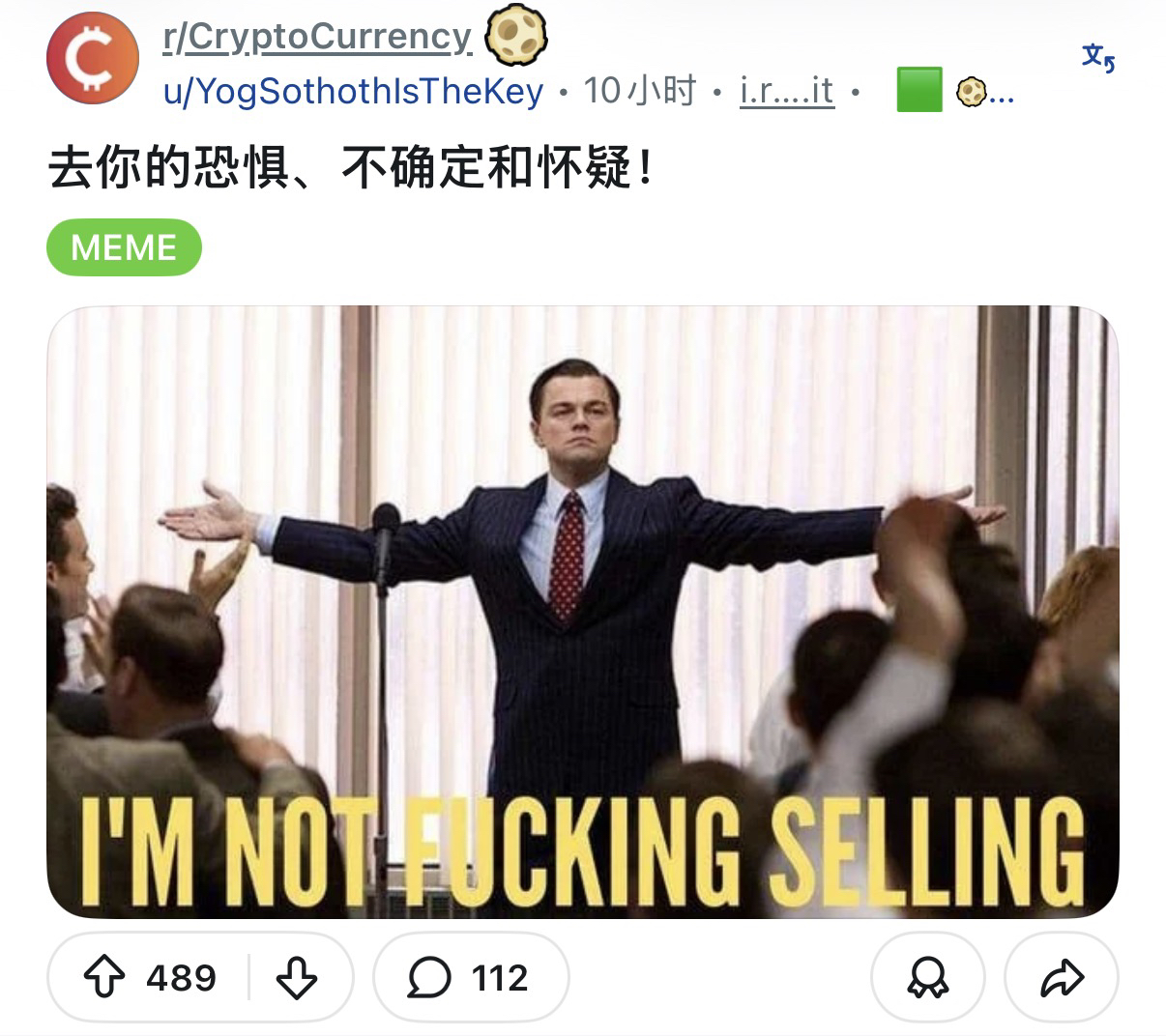


En el subreddit CryptoCurrency, alguien publicó un post cuyo contenido era solo una frase:


"¡A la mierda el miedo, la incertidumbre y la duda!"


Los comentarios se convirtieron instantáneamente en una descarga emocional para los pequeños inversores:


"El FUD es para los novatos, las manos de diamante solo miran hacia abajo y acumulan."


Comentario picante de un usuario: "Este es el post con más valor emocional del mes."
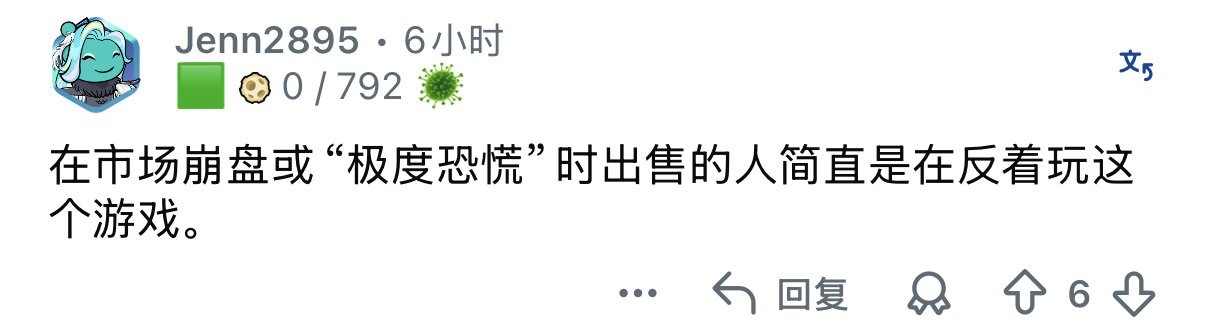


Cuando otros temen, yo codicio. Cuando otros codician, yo temo.



Un homenaje a quienes continúan manteniendo 🫡.
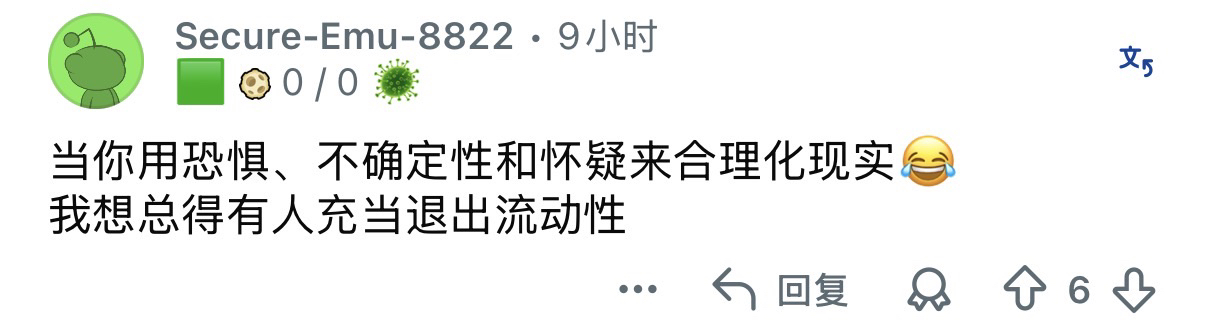


¿Quién actuará como la liquidez de salida? 🤔
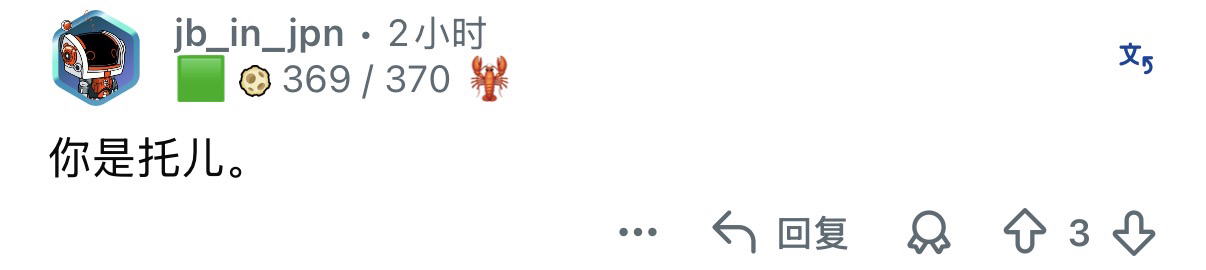


El "acompañante" que le dice a todos que no vendan 🤣.
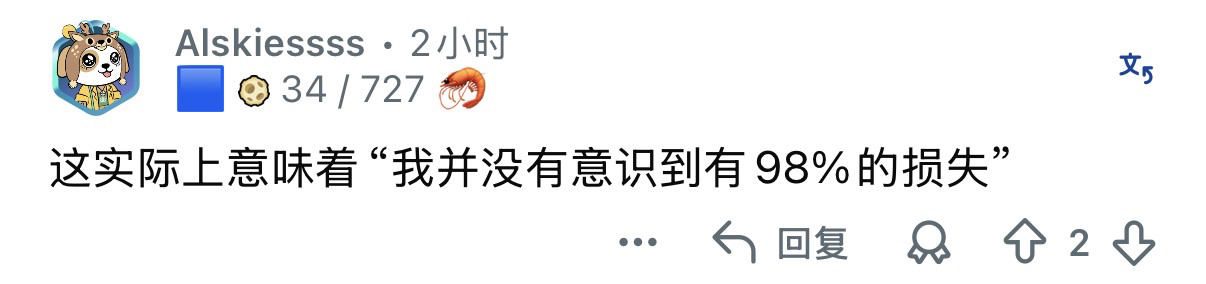


Si no vendes, son solo "pérdidas no realizadas" 🥶.
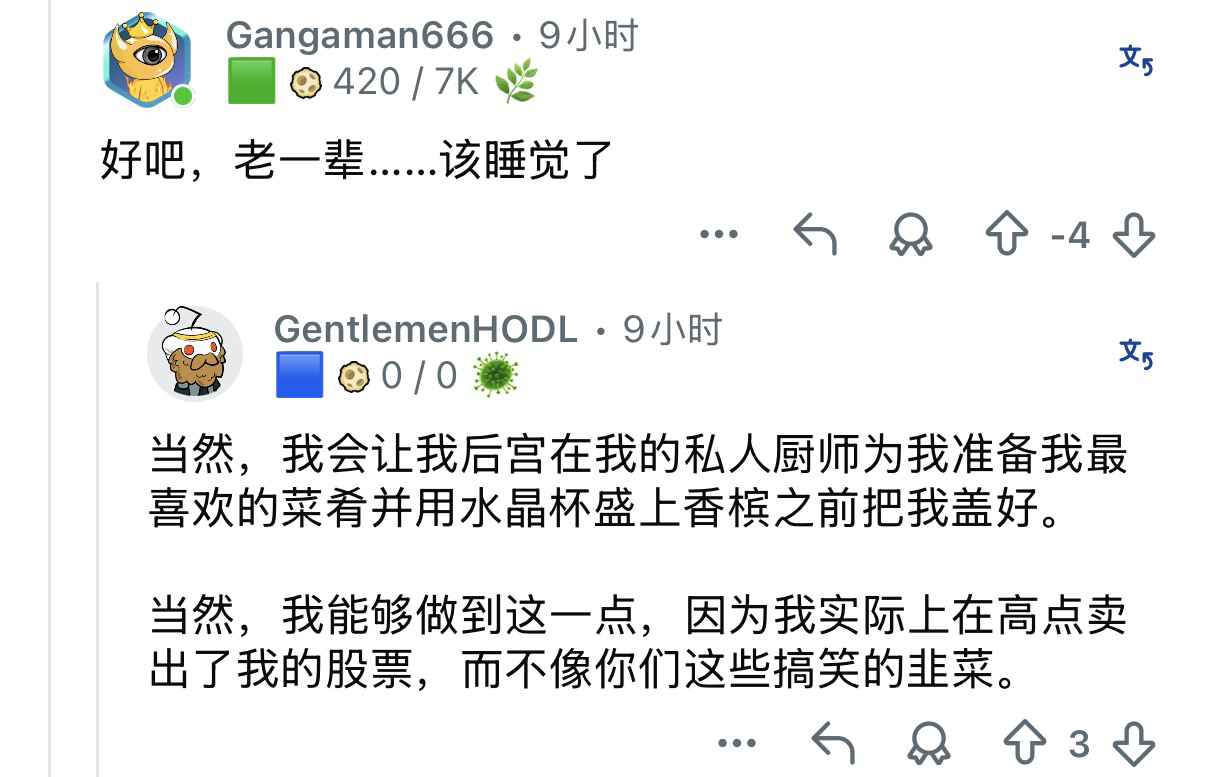


¿Así que vender en el pico te permite vivir una vida de lujo? 🤪
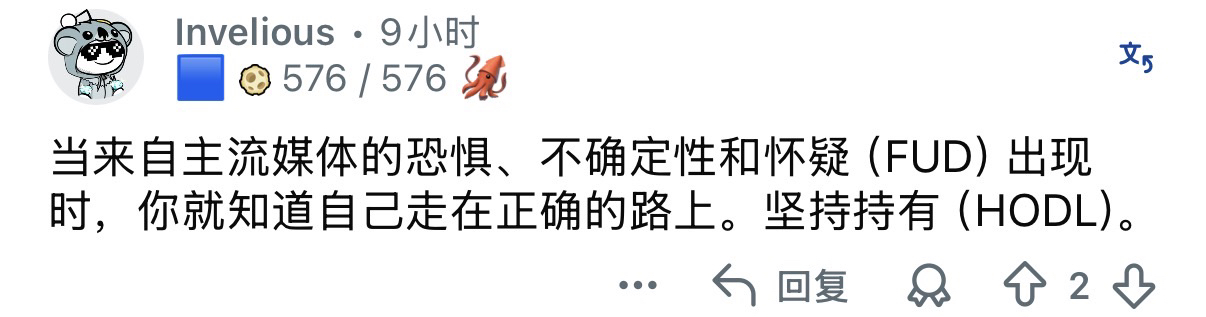


¡Mantente firme (HODL)!
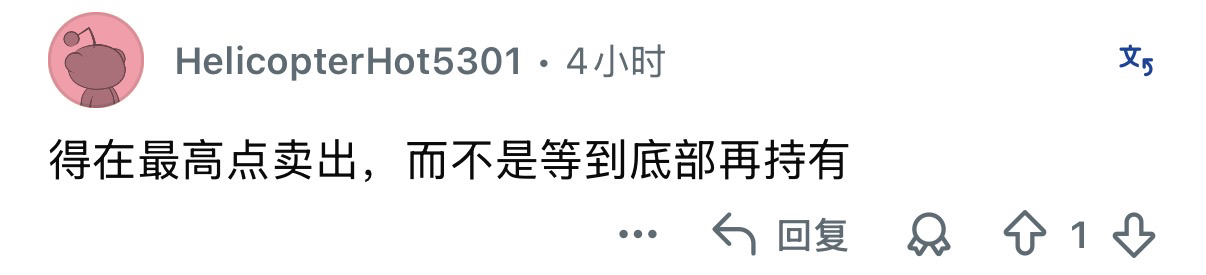


¡Vender en el pico 📈, comprar en el valle 📉!
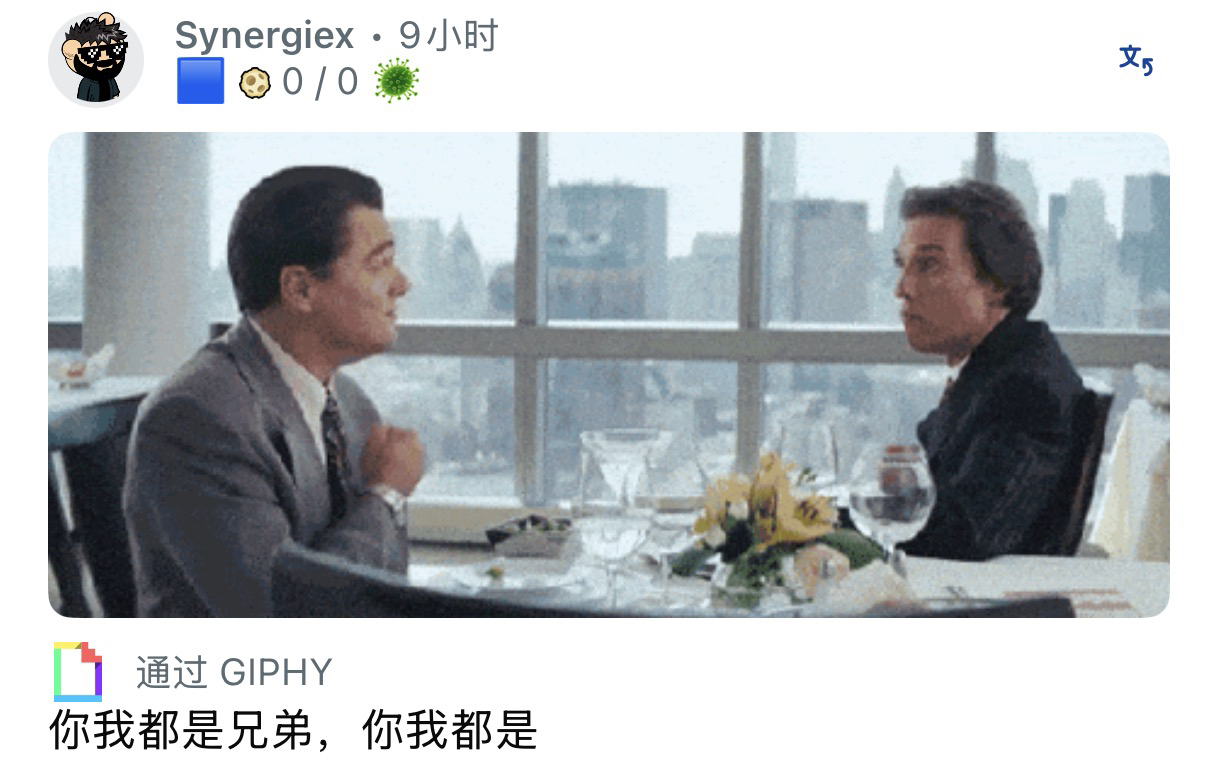


¡Todos somos hermanos!


STRC se desancla, ¿será el próximo LUNA?
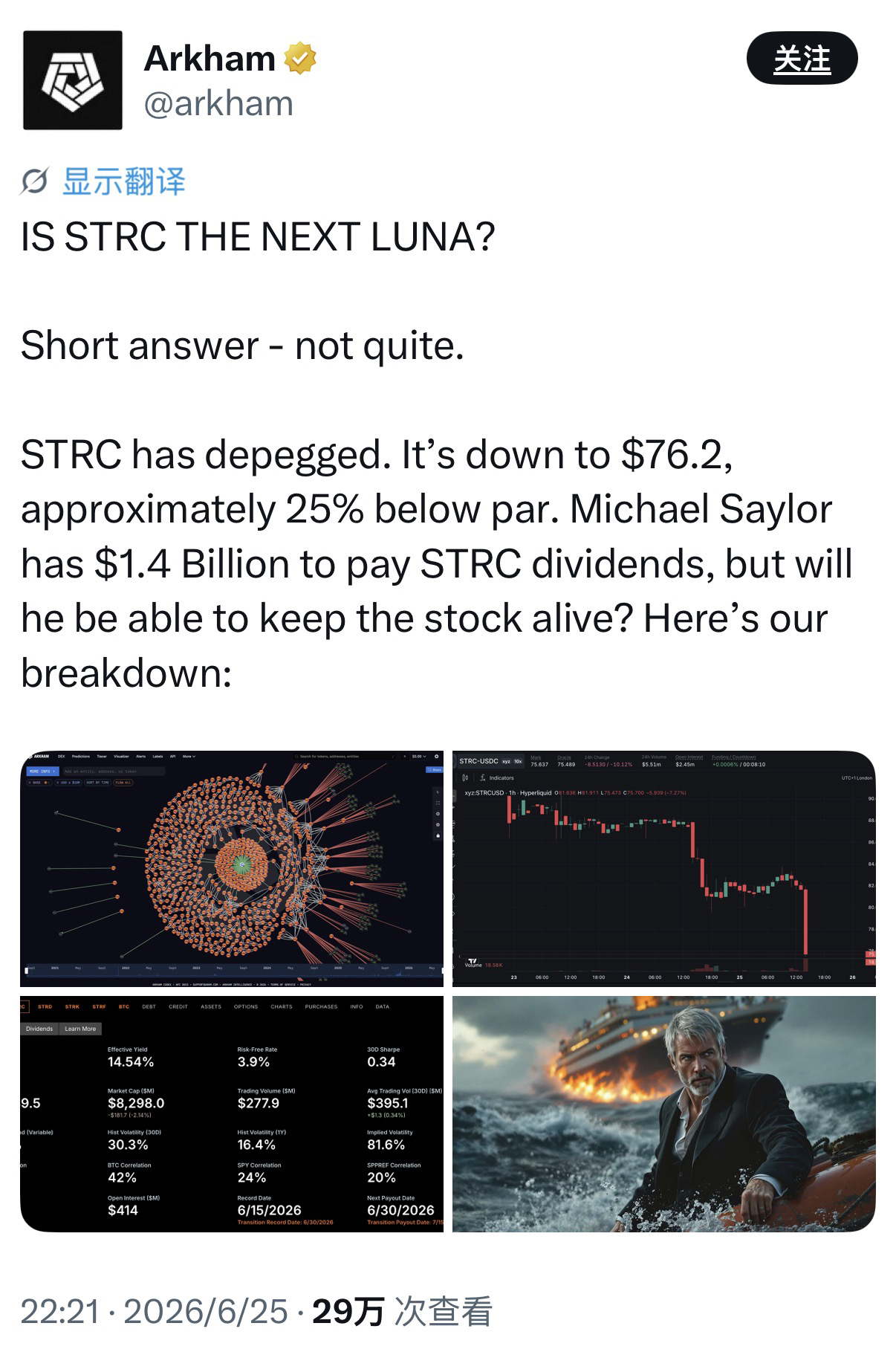


La cuenta oficial de Arkham lanzó el 25 de junio una pregunta sensible: "¿Será STRC el próximo LUNA?"


La respuesta es: No exactamente igual, pero hay problemas serios.


Primero una explicación: STRC es una acción preferente perpetua emitida por Strategy, con un valor nominal de 100 dólares y un dividendo anual del 11.5%.
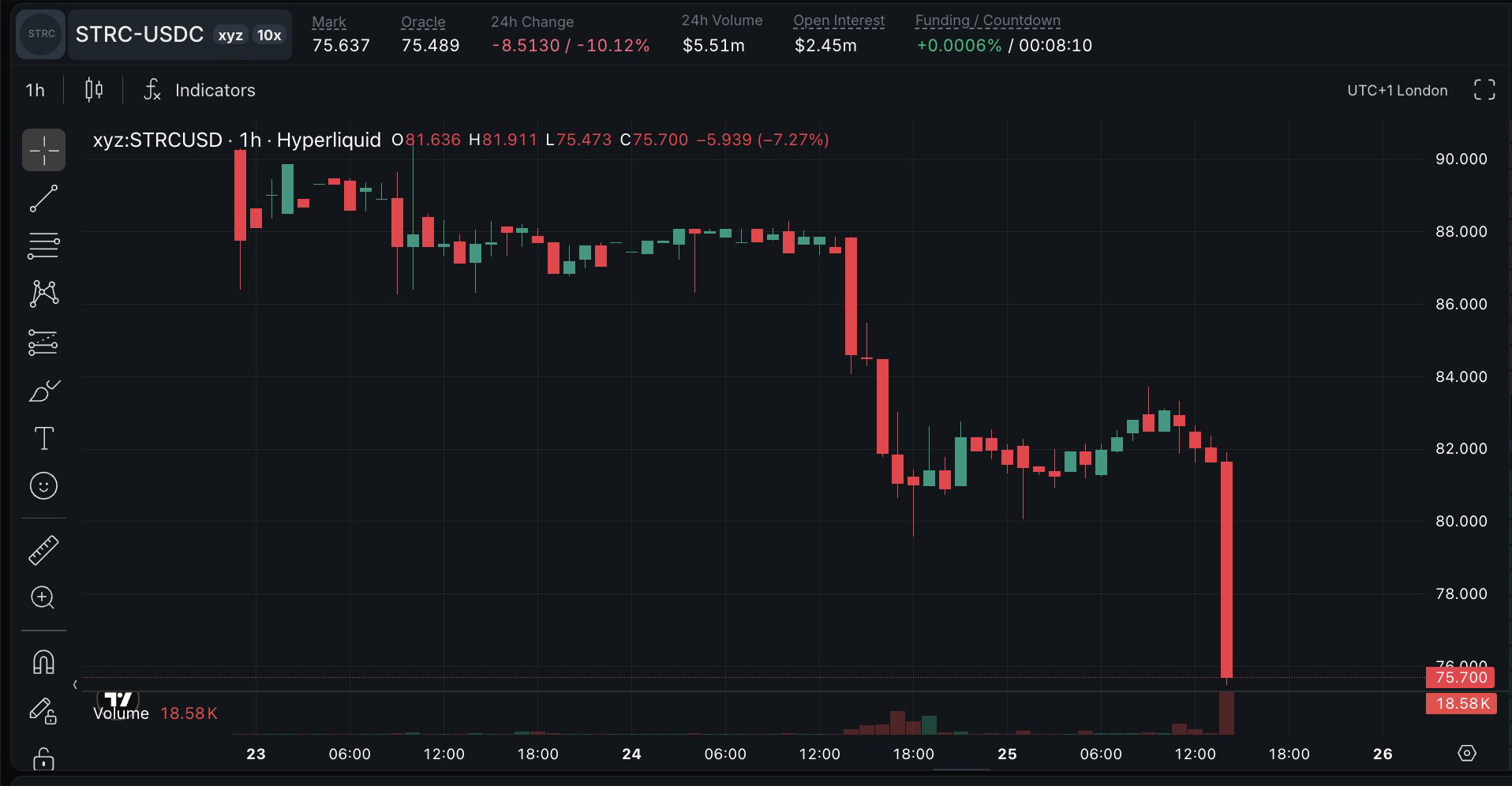


Actualmente, STRC ha caído a unos 76.2 dólares, un descuento de aproximadamente el 25% sobre su valor nominal, es decir, se ha "desanclado".


¿Por qué la caída? Porque los inversores empiezan a dudar: ¿Saylor está todavía dispuesto y será capaz de seguir pagando 1.2 mil millones de dólares anuales en dividendos?


Según los datos, hay unas 105 millones de acciones de STRC en circulación, lo que supone un gasto en dividendos de unos 1.2 mil millones de dólares anuales. Strategy anunció este lunes unas reservas en dólares de unos 1.4 mil millones, suficiente para un año, pero no para el segundo.


La diferencia clave es que Saylor no tiene la obligación de pagar esos dividendos. Si decide suspenderlos, STRC podría seguir cayendo, pero Strategy en sí no colapsará a cero de la noche a la mañana como LUNA.


Pero el riesgo está más adelante: si los inversores de MSTR (acciones ordinarias de Strategy) descubren que su dinero se usa prioritariamente para pagar dividendos de las acciones preferentes, podrían reducir sus compras de MSTR.
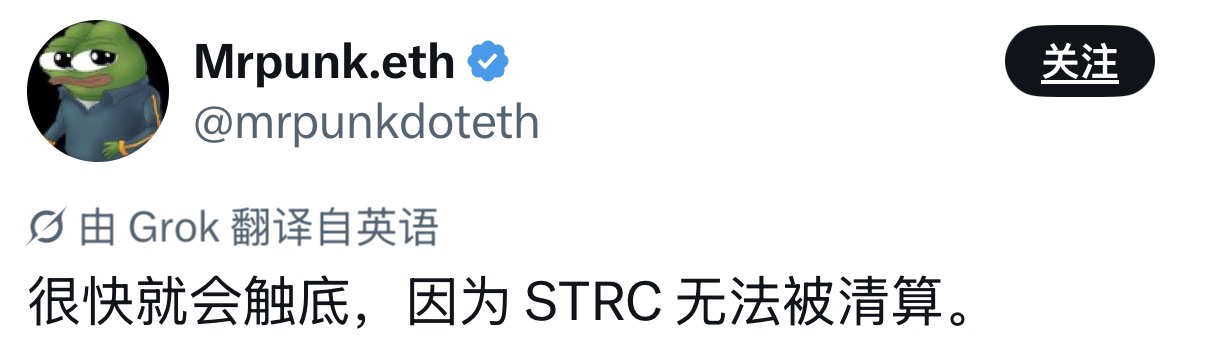


Entonces, ¿cuál es realmente el precio de "fondo"?



</p

El gráfico de velas ya muestra el "resultado final" 📉.
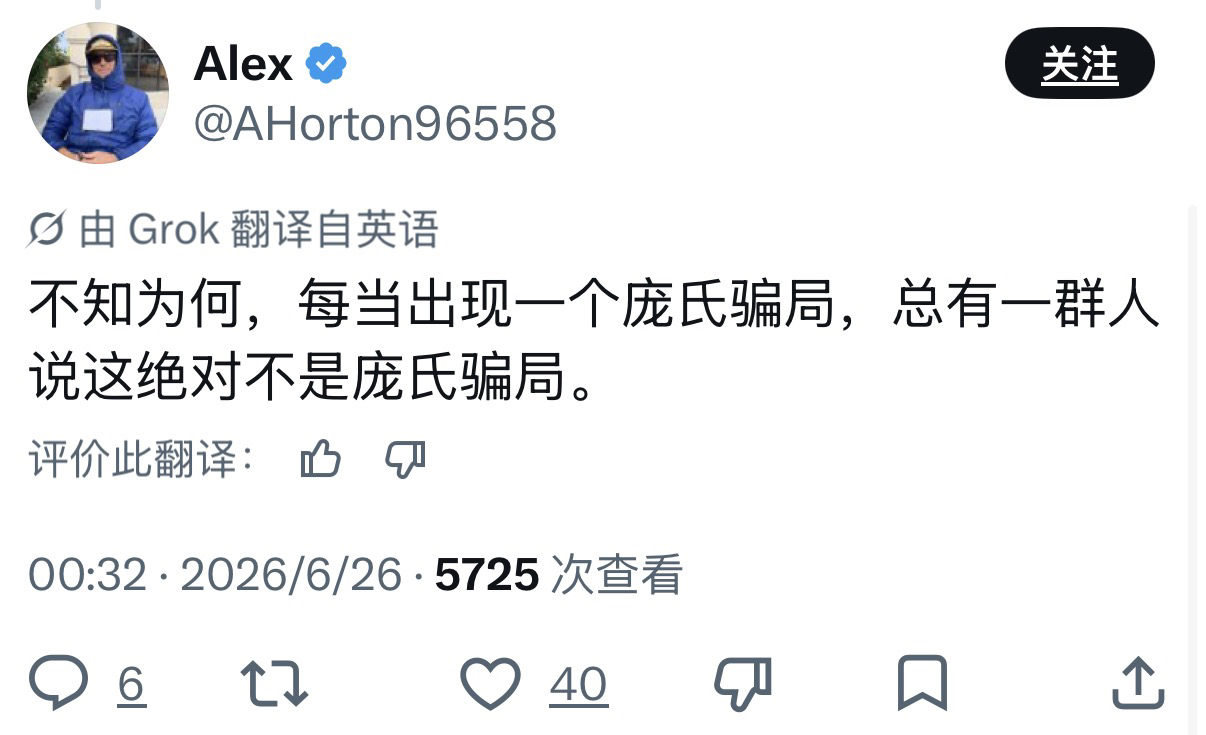


Quizás la gente no quiere admitir este hecho 🫢.
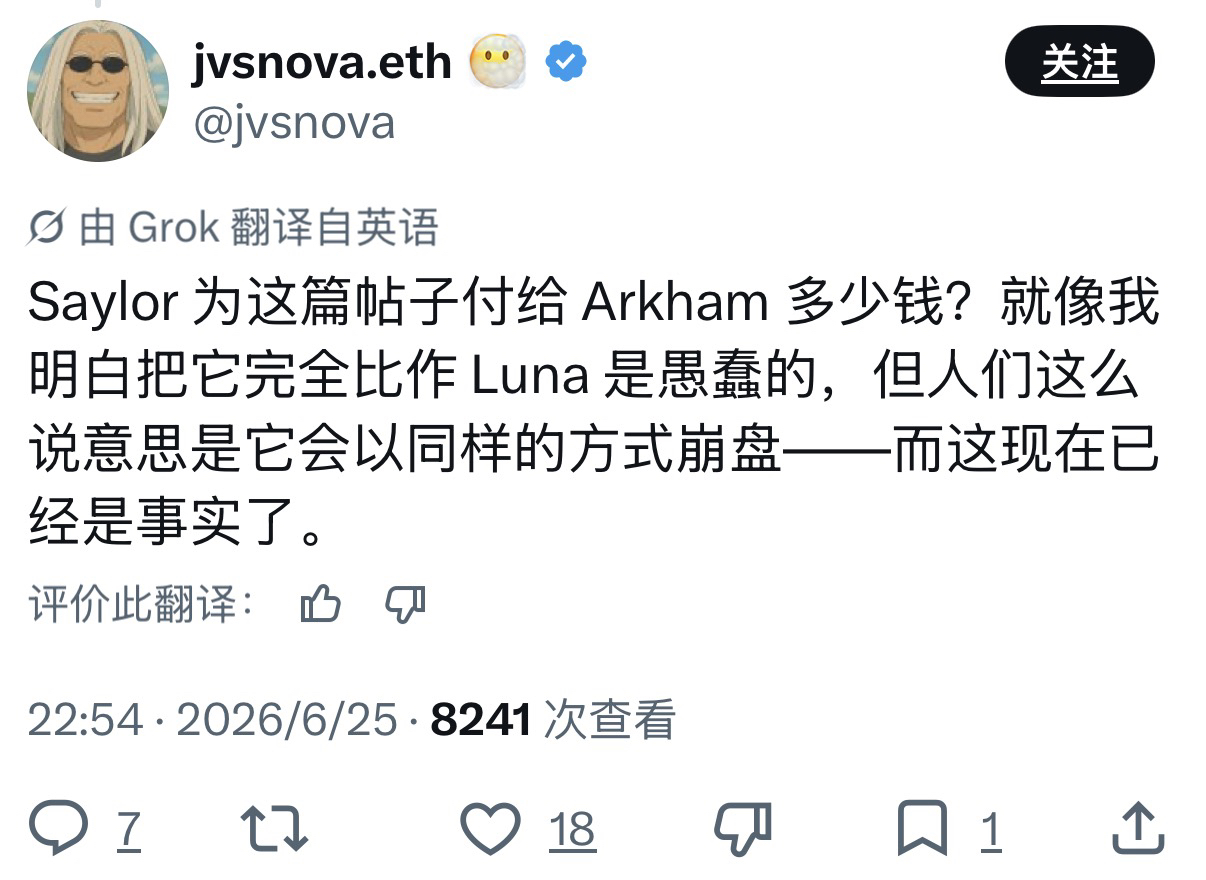


¿Saylor paga para demostrar que esto no es igual al colapso de LUNA? 😜
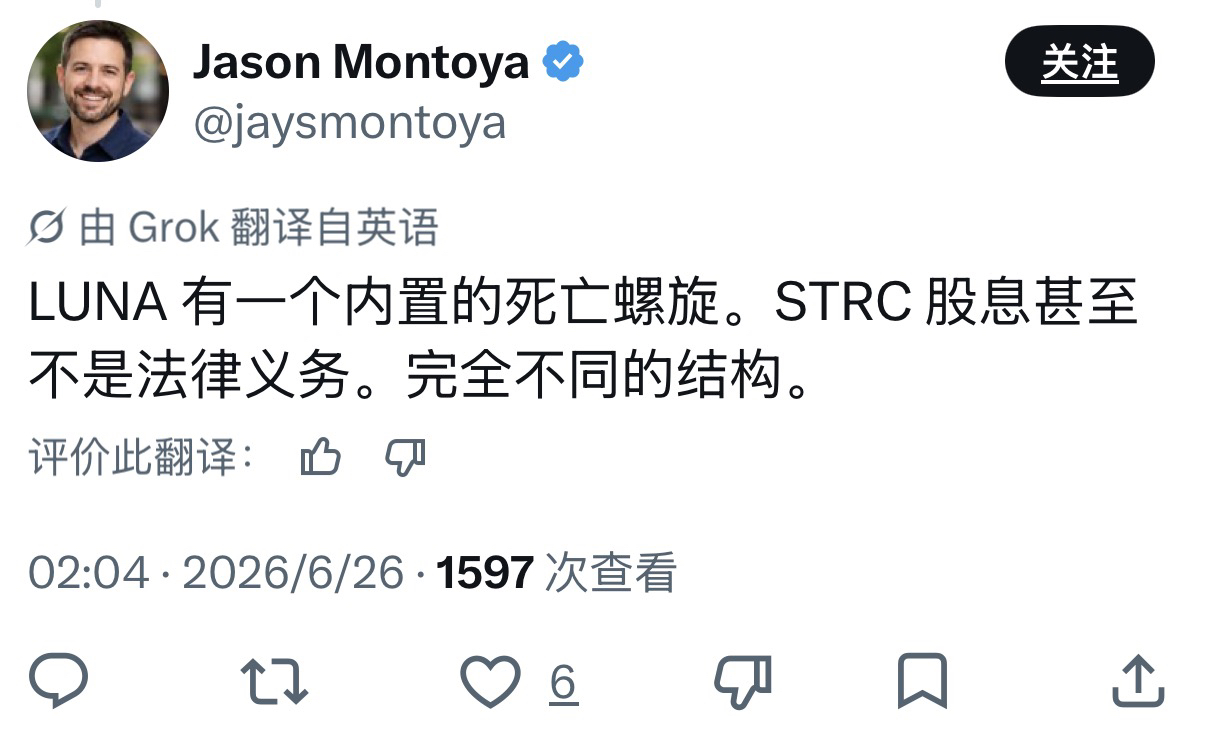


Entonces, ¿debemos preocuparnos? 🙂↕️
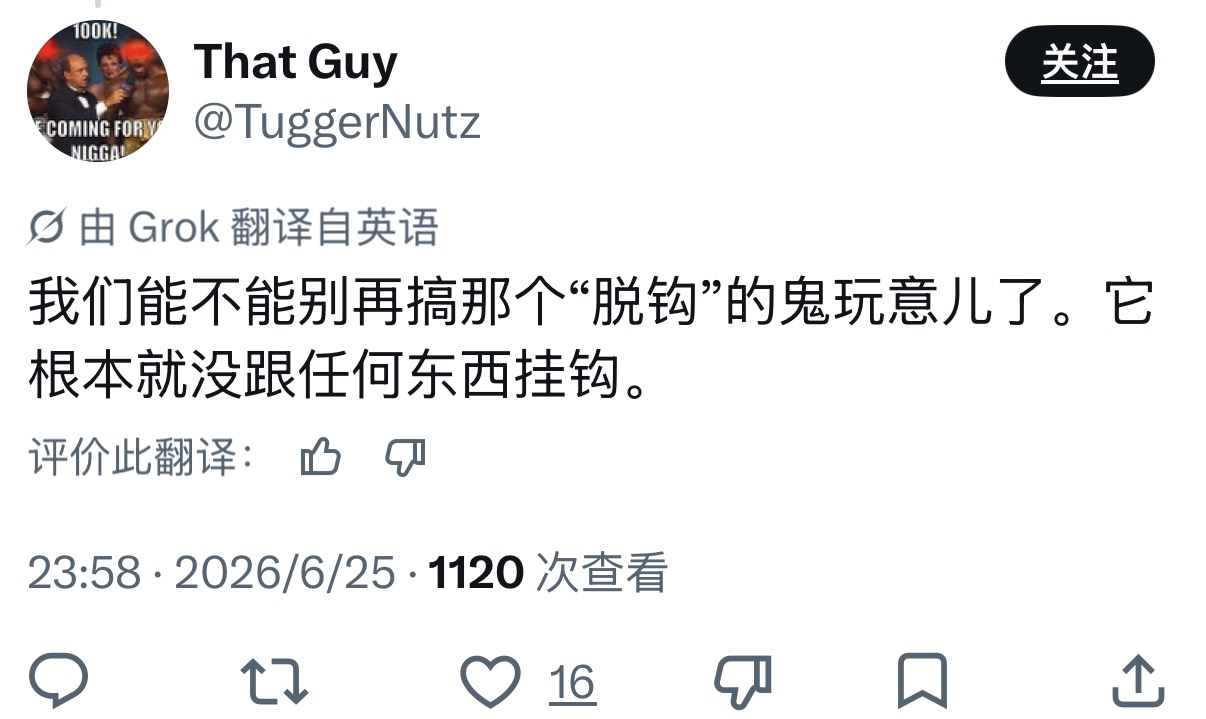


Es solo que el mercado determina el precio 🧐.
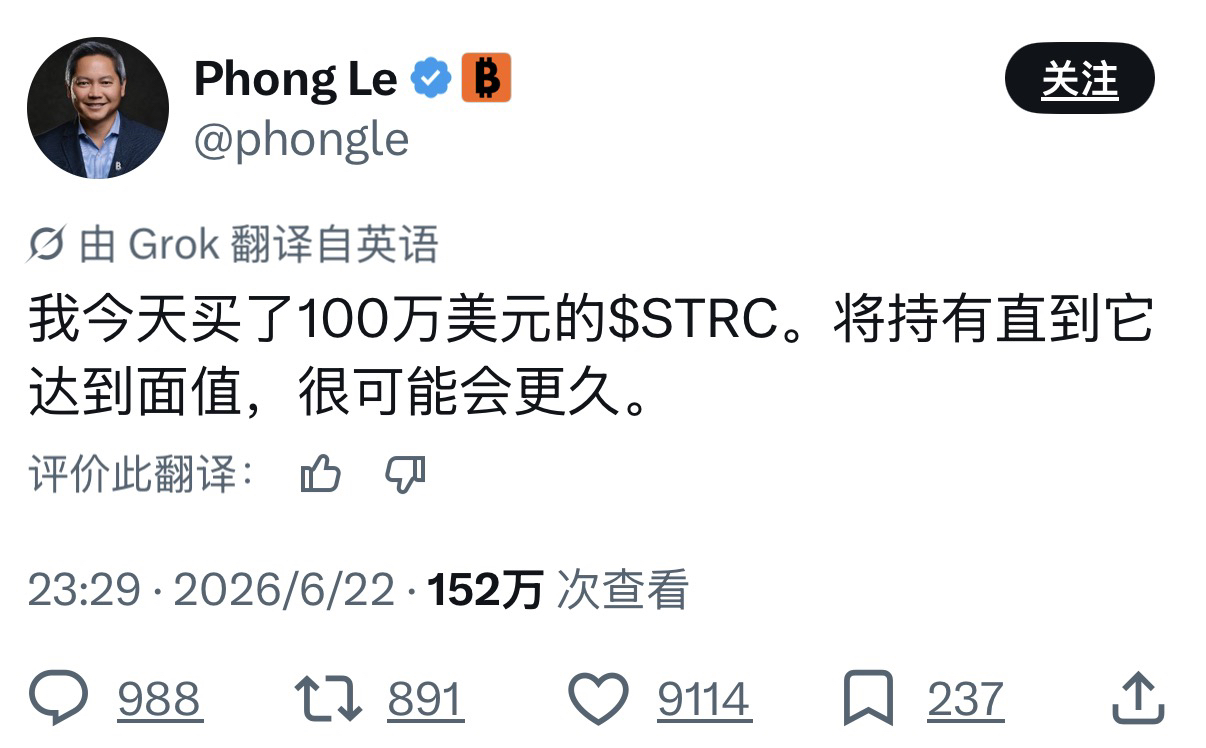


El CEO de Strategy, Phong Le, dijo el 22 de junio que había comprado STRC por valor de 1 millón de dólares.
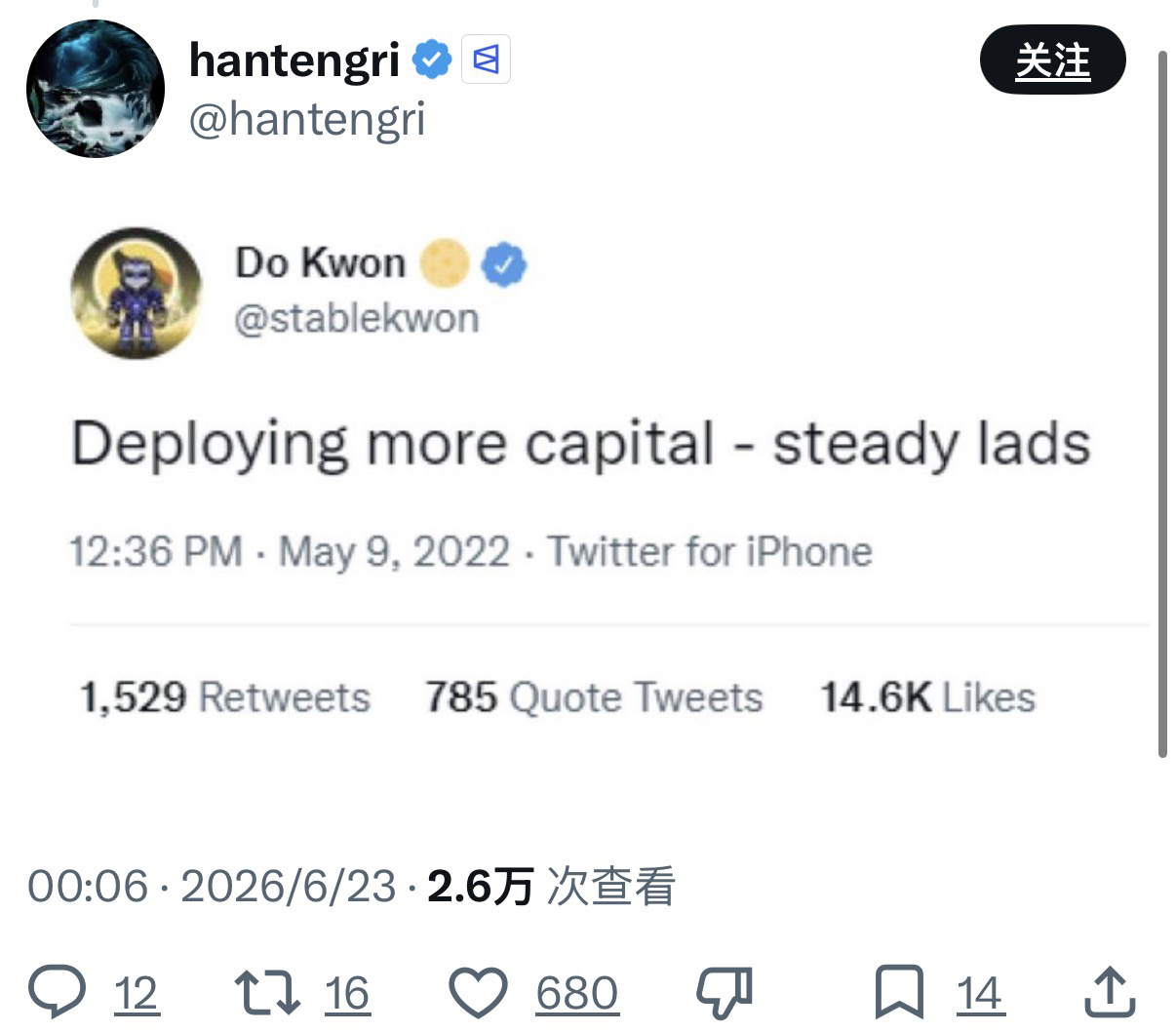


Casualmente, "estamos desplegando más capital para estabilizar", el fundador de Luna, Do Kwon, tuiteó algo similar una vez 😅.
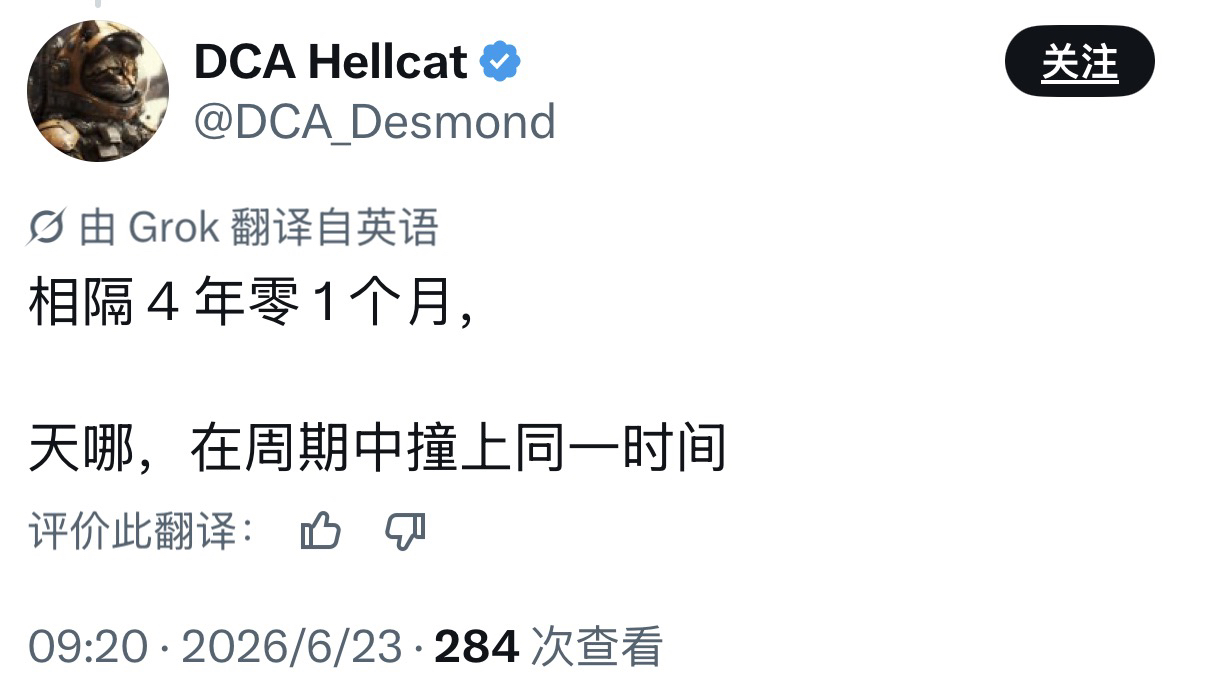


Actualmente, han pasado exactamente 4 años y 1 mes desde el colapso de LUNA. Sin embargo, en comparación con LUNA, al menos STRC tiene una empresa real detrás.


Se desentierran 1828 tuits de Chuanshan, revelando una "personalidad contradictoria"


Un blogger hizo un análisis en profundidad, con un título directo: "He desenterrado 1828 tuits de Chuanshan".
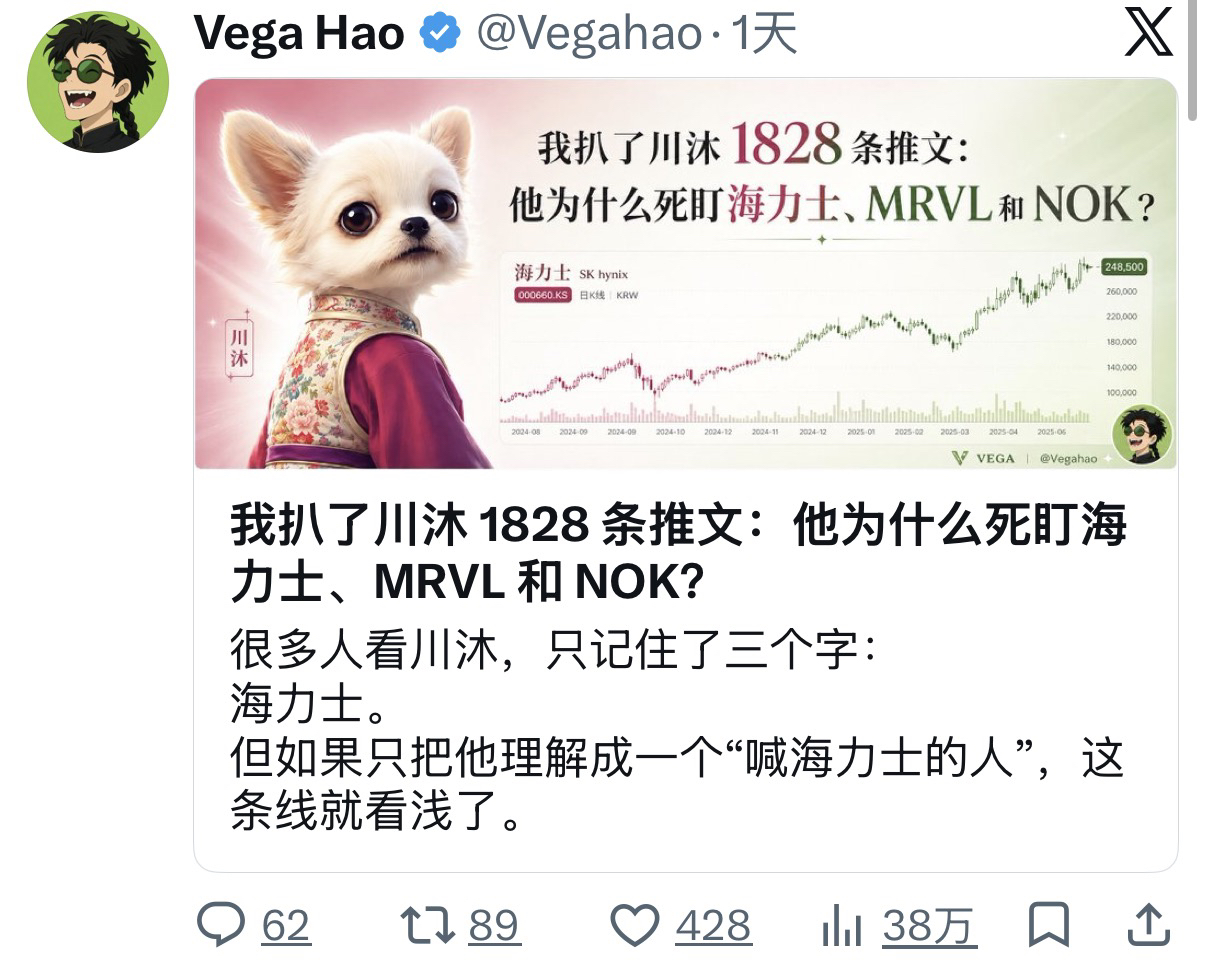


¿Quién es Chuanshan? En el movimiento de inscripciones ORDI de 2023, convirtió 500 dólares en 1 millón de dólares.


En la caída de 2025, vendió al descubierto una canasta de altcoins, convirtiendo 10,000 dólares en 1 millón en un mes.


Tras octubre de 2025, declaró abiertamente su salida del mercado Crypto, esquivando con precisión la gran caída, y pasó a los mercados de acciones de HK/USA/A. SK Hynix, Samsung, MRVL, NOK... Acertó en muchas acciones alcistas, su cuenta de acciones superó los 100 millones.


El autor del artículo, analizando sus tuits, descubrió que lo realmente impresionante de Chuanshan es su forma de cuestionar: En la ola de la IA, ¿quién es la aplicación final? ¿Quién es la infraestructura? ¿Cuál es el cuello de botella de la cadena de suministro? ¿Quién tiene más dificultad para expandir la producción? ¿Quién está mal valorado por el mercado?


No pregunta primero "qué acción subirá", sino "dónde se atascará todo el sistema".


Siguiendo esta lógica, su línea principal también migró: en el verano de 2025 aún operaba con reflejos de Crypto en acciones estadounidenses (MSTR, SBET, CRCL); a finales de 2025 cambió a las primeras pistas de infraestructura de IA (Micron, LITE); a principios de 2026, apostó fuerte por SK Hynix y Samsung, el eslabón más crítico en el almacenamiento de IA; en mayo de 2026, se expandió aún más al almacenamiento (DRAM) con el pie izquierdo y a las comunicaciones ópticas (MRVL para interconexión óptica dentro del chip, NOK para comunicaciones ópticas de larga distancia fuera del chip) con el pie derecho.


Pero algunos usuarios también cuestionaron a Chuanshan, algunas monedas que había promocionado luego tuvieron movimientos de "cosecha". Además, acciones que dijo que mantendría por un tiempo las vendió a mitad de camino, pero los usuarios que "copiaron" su operativa no lo sabían 🥹.
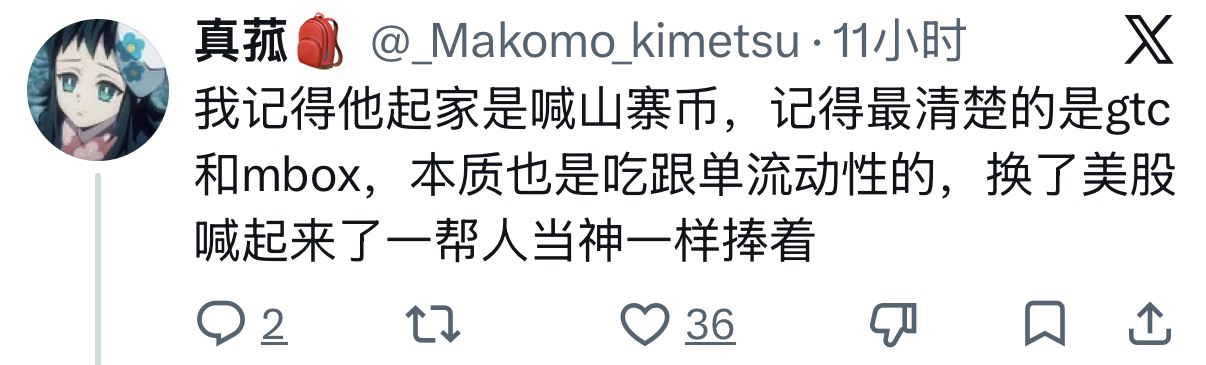


Así que, tras el éxito, siempre habrá "grandes eruditos que le hagan la apología" 🫢?
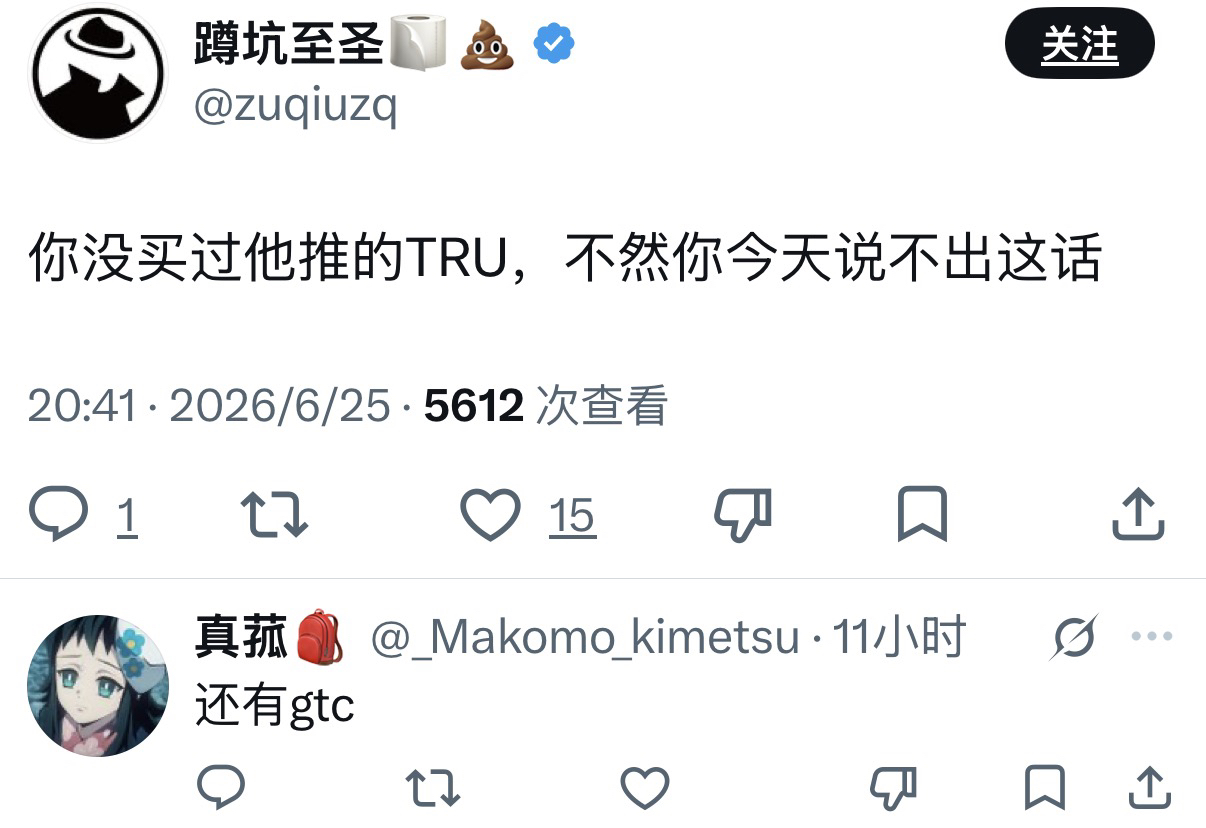


Solo quienes lo han vivido tienen derecho a hablar.
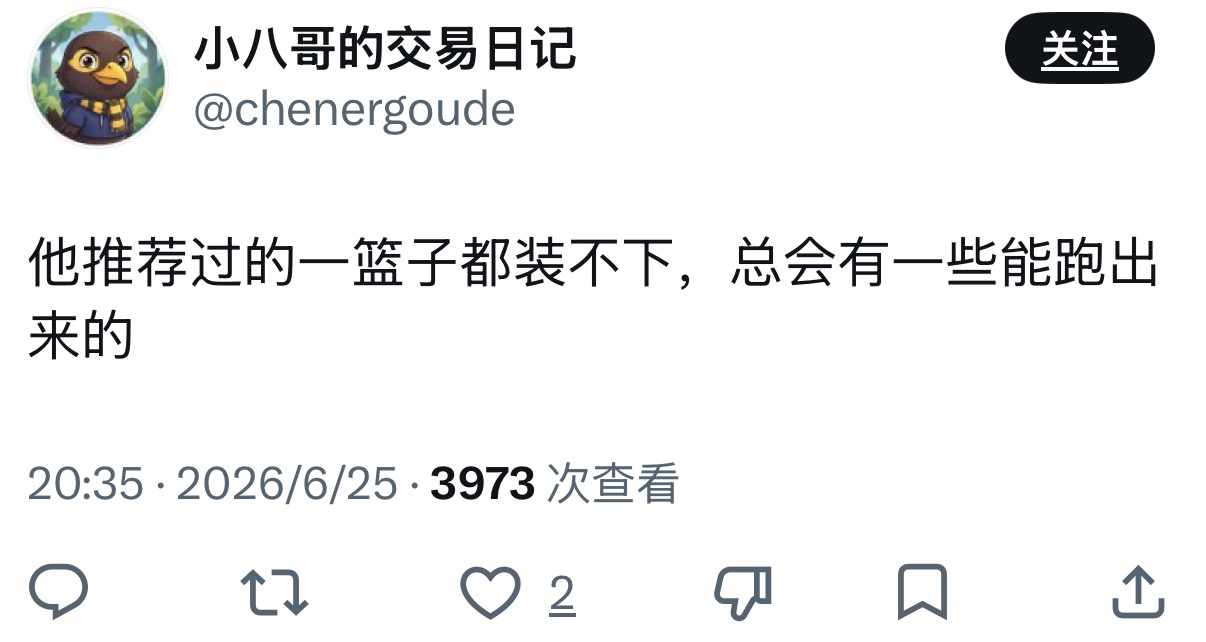


"Promocionar" se convirtió en un juego de probabilidades 🎲.
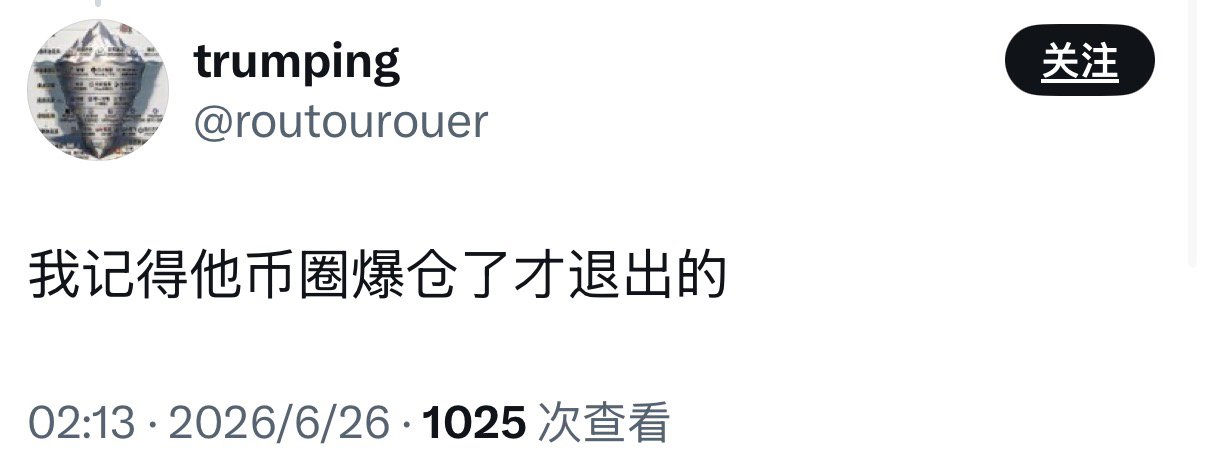


Historias de sangre y lágrimas detrás 😭.
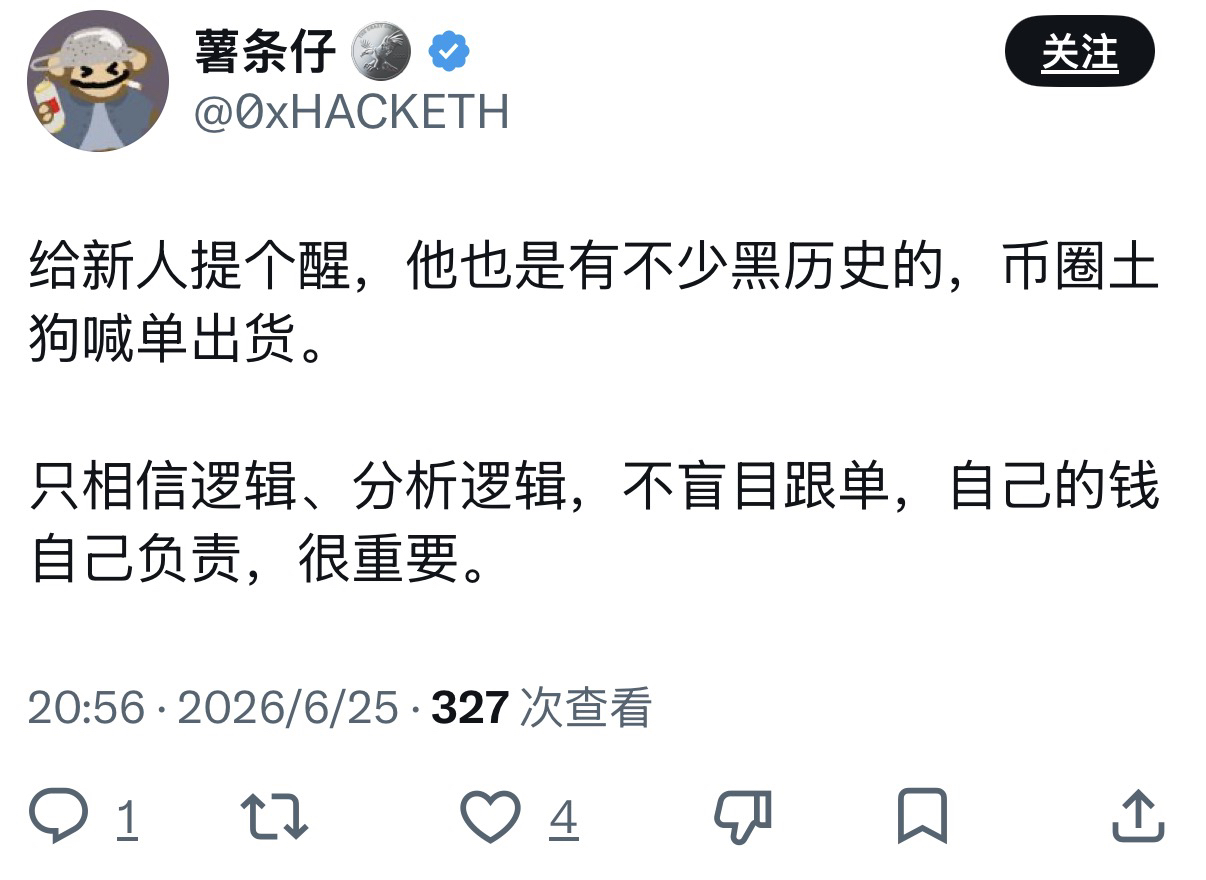


¡Hay que conocer a una persona desde todos los ángulos, no creer ciegamente y mantener la capacidad de juicio propio!
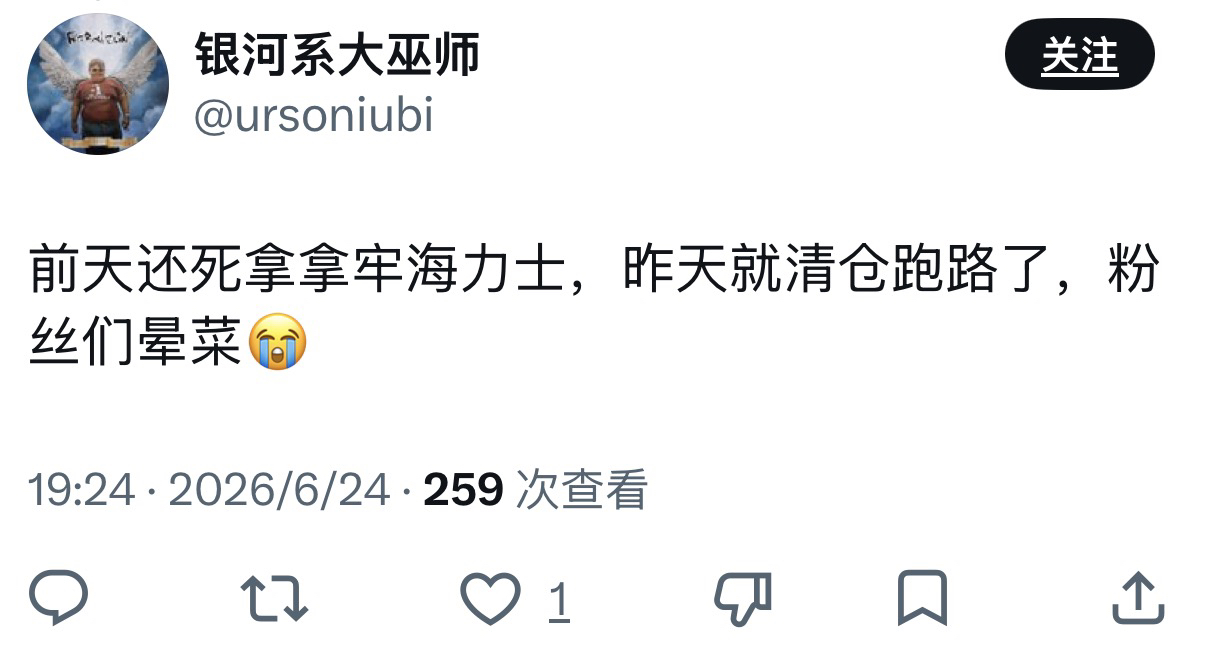


Maestro, cuando te bajaste, ¿por qué no avisaste? 🫪
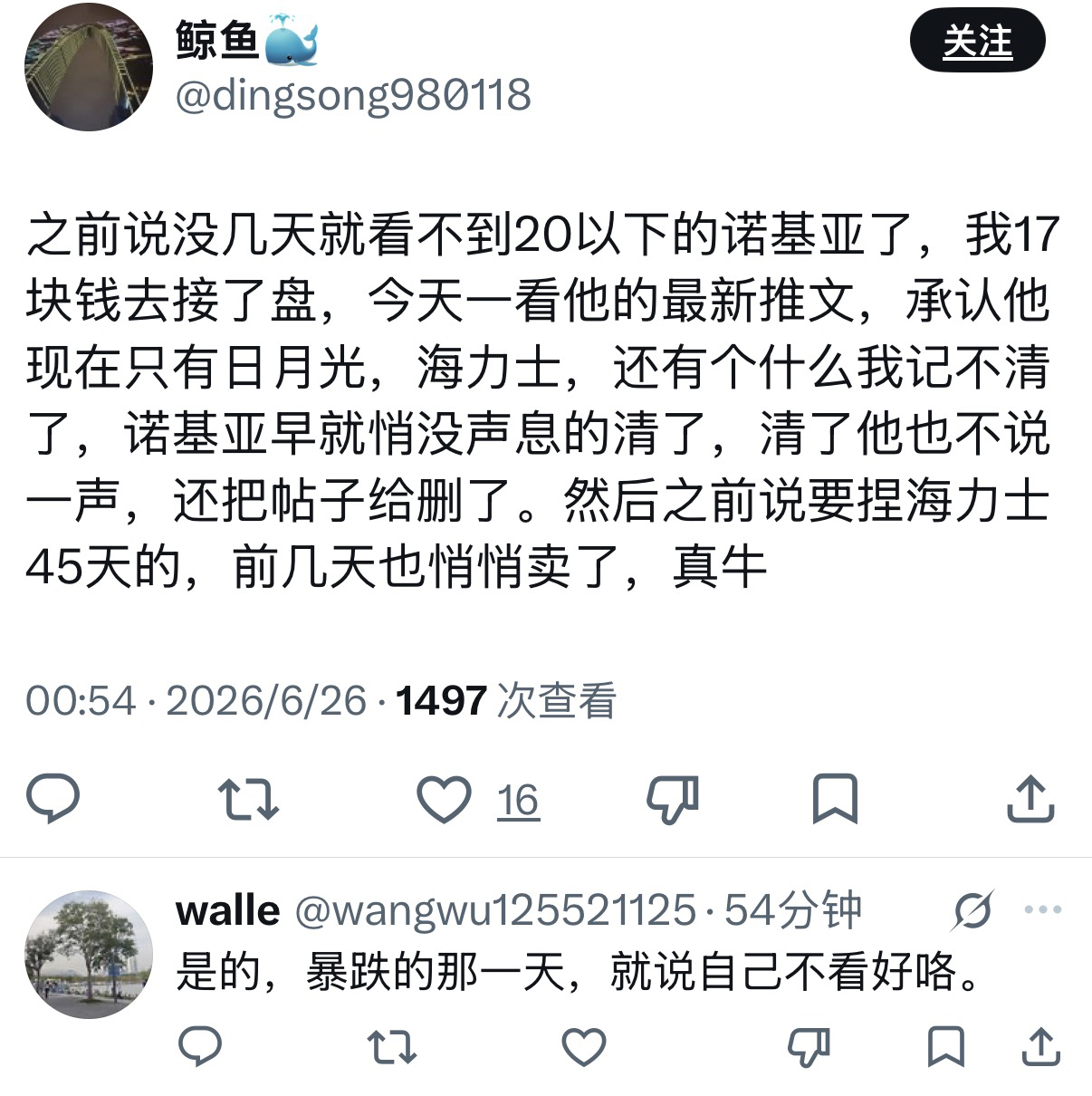


Las "ganancias" que muestra son las que quiere que la gente vea 🤩, hay otra parte que no quiere que la gente vea.


Desde el "triunfo espiritual de Reddit" de BTC, hasta el "interrogatorio de 1.2 mil millones en dividendos" de STRC, y la "personalidad contradictoria" de Chuanshan. Esta semana, algunos se animaban mutuamente, otros calculaban reservas de efectivo, otros buscaban la próxima parada analizando tuits.


¡Les deseo un feliz fin de semana! ¡Nos vemos la próxima semana!


(El contenido de este número se basa en información pública y discusiones en línea, interpretación ligera, solo como referencia.)


Repaso de números anteriores: 辣评|Michael Saylor emite "declaraciones de chico malo"; Una tía de 60 años, tras liquidar sus contratos, "rompe al chico"
辣评|Tres historias te lo cuentan: En el mundo de las cripto, cuanto más te esfuerzas, más "desgraciado".
辣评|¿El "rey de los minoristas" fue hackeado por su hermano para "estafar"? La IA "excava" Bitcoin...


Trending Cryptos

Related Questions

Q¿Qué suceso en Reddit CryptoCurrency es descrito como el post 'con mayor valor emocional' del mes y por qué?

ASe trata de un post que simplemente decía '¡A la mierda el miedo, la incertidumbre y la duda (FUD)!'. Se considera así porque, durante una fuerte caída del mercado de criptomonedas en junio, sirvió como punto de reunión para que los pequeños inversores (retail) desahogaran su frustración y se animaran mutuamente a mantener sus posiciones (HODL), creando un sentimiento de comunidad y resistencia.

Q¿Qué es STRC y por qué se menciona que podría ser el 'próximo LUNA'? ¿Cuál es la diferencia clave según el artículo?

ASTRC es una acción preferente perpetua emitida por la empresa MicroStrategy, con un valor nominal de 100 dólares y que paga un dividendo anual del 11.5%. Se menciona como un posible 'próximo LUNA' porque su precio ha caído alrededor de un 25%, 'desancorándose' de su valor nominal, lo que genera dudas sobre la sostenibilidad de los pagos de dividendos. La diferencia clave es que, a diferencia de LUNA/UST que colapsó por un mecanismo algorítmico, MicroStrategy es una empresa real con reservas de efectivo. Además, Michael Saylor no tiene la obligación contractual de pagar los dividendos, por lo que una suspensión de los mismos no haría que la empresa desapareciera, aunque sí podría dañar la confianza en sus acciones ordinarias (MSTR).

QSegún el análisis de los 1828 tuits de '川沐' (Chuan Mu), ¿cuál se describe como su verdadera fortaleza o método de inversión?

ASu verdadera fortaleza no es predecir qué activo subirá, sino su forma de hacer preguntas estructurales sobre las tendencias del mercado. Él se pregunta: 'En la ola de la IA, ¿quién es la aplicación final? ¿Quién es la infraestructura? ¿Dónde están los cuellos de botella de la cadena de suministro? ¿A quién le cuesta más expandir la producción? ¿Quién está mal valorado por el mercado?'. Este enfoque sistémico le permite identificar los eslabones clave de una tendencia (como los semiconductores de memoria para IA) y migrar su estrategia principal a lo largo del tiempo.

Q¿Qué crítica o duda se plantea sobre la figura de '川沐' (Chuan Mu) en el artículo?

ASe plantean dudas sobre su transparencia y coherencia. Algunos usuarios señalan que ciertos criptoactivos que él promocionó ('shill') posteriormente tuvieron movimientos de precio que 'liquidaron' a los seguidores. Además, se critica que vendió acciones que había dicho que mantendría por un tiempo, sin informar a sus seguidores que lo 'copiaban', dejándolos en posiciones perjudiciales. Esto crea una 'personalidad contradictoria' entre su imagen de genio inversor y las prácticas cuestionables.

Q¿Cuáles son los tres eventos principales que resume el artículo de '辣评' (Hot Takes) de esta semana?

ALos tres eventos principales son: 1) El post de ánimo mutuo en Reddit durante la caída del mercado ('el post con mayor valor emocional'). 2) La caída y preocupación en torno a la acción preferente STRC de MicroStrategy y su comparación con el colapso de LUNA. 3) El análisis y las controversias en torno a la figura del trader '川沐' (Chuan Mu) tras revisar sus 1828 tuits.

Related Reads

Xing Bo Strikes Again: Last Time 'Critiquing' World Models, This Time It's Agents' Turn

Xing Bo, President of MBZUAI and professor at Carnegie Mellon University, along with co-authors Mingkai Deng and Jinyu Hou, has released a new paper, "Critique of Agent Model," critiquing the current state of artificial intelligence agents. The paper draws a crucial distinction between "agentic" systems, which rely on external toolchains, prompts, and workflows, and truly "agentive" systems capable of genuine autonomy driven by internal decision-making structures. To illustrate this, it references a real-world incident where an AI programming assistant, following an external prompt but lacking internalized judgment, caused a catastrophic data deletion. The authors propose a detailed analysis and a new framework, "Goal-Identity-Configurator" (GIC), for building truly autonomous agents. This framework systematically addresses five key dimensions where current "Agent" designs fall short: 1. **Goal:** Moving from step-by-step human instruction to a system capable of autonomously decomposing a single long-term goal and adapting sub-goals based on new information. 2. **Identity:** Evolving self-assessment updated by experience, rather than a static description in a system prompt. 3. **Decision Making:** Replacing textual Chain-of-Thought reasoning with "simulative reasoning" that uses a dedicated world model to predict real-world consequences before selecting actions. 4. **Cognitive Control:** Introducing a separate "System III" metacognitive module that dynamically decides when to deliberate, stick to a plan, or act quickly. 5. **Learning:** Enabling "continual autonomous learning," where the agent itself decides when to act, practice in simulation, or update its world model and self-perception. The GIC architecture integrates six components—a belief encoder, goal decomposer, identity evolver, configurator (System III), simulation-based planner (System II), and executor (System I)—to embody these principles. The paper argues that a growth path akin to pilot training (ground theory, simulator practice, real deployment) should be underpinned by a unified cognitive architecture, not separate workflows. On safety, the authors contend that the GIC framework's modular, explicit design enhances inspectability, allowing problematic behavior to be traced to specific components (e.g., flawed goal or poorly trained module) rather than emerging opaquely. However, they acknowledge that ultimate safety depends on correctly training these modules in the first place. In conclusion, the paper challenges the loose application of the term "Agent," asserting that task completion alone does not equal true autonomy. True autonomy requires goals, identity, and judgment to be genuinely internalized within the agent's architecture, not merely enforced by external scripts.

marsbit39m ago

Xing Bo Strikes Again: Last Time 'Critiquing' World Models, This Time It's Agents' Turn

marsbit39m ago

How Collector Crypt Uses 'Recirculating Buybacks' to Create an Illusion of Growth

Title: How Collector Crypt Creates a Growth Illusion with "Buyback Loops" Key Findings: Collector Crypt's (CC) net take rate has halved from 11.2% in Q3 2025 to 5.6% in Q2 2026, while GMV grew 4.7x. This growth is driven by higher-tier card packs ($250, $1,000, $2,500) which have lower platform dollar retention rates. The newly launched $2,500 Mythic tier captured 36.7% of June GMV within 13 days. Growth is fueled by a small cohort of high-spending, high-frequency wallets rather than broad user base expansion. The economic model faces pressure from three key areas: 1) **Shifting GMV Mix**: Pushing users towards larger, lower-retention card packs increases GMV but reduces overall profitability. 2) **Physical Redemptions**: Card redemptions for physical items remove reusable inventory from the system, creating costly replenishment needs. In May, redemptions consumed 41.6% of pre-redemption net income. Only 75 wallets drove redemptions in June. 3) **B2B/API Strategy**: Partner revenue remains negligible (cumulatively $1.83M) and dependent on CC for inventory, vaulting, and buyback services, failing to create a scalable, asset-light recurring revenue stream. The core product is a repetitive pack-buyback loop with limited secondary market activity and token value accrual. Sensitive modeling shows CC's economics turn negative when any two of the following pressures coincide: replenishment costs near market price, redemption rates exceeding 9%, or high-tier buyback rates around 93%. While CC operates in a large and growing collectibles market, its current growth levers—bigger packs, high buyback rates, and capital recycling by a few wallets—create a volume illusion without demonstrating sustainable collector engagement, deep secondary markets, or a viable path to improved margins. Future proof points include broadening collector participation, deepening secondary trading, and developing true asset-light B2B revenue channels.

Foresight News1h ago

How Collector Crypt Uses 'Recirculating Buybacks' to Create an Illusion of Growth

Foresight News1h ago

Trading

Spot

Hot Articles

How to Buy LUNA

Welcome to HTX.com! We've made purchasing Terra (LUNA) simple and convenient. Follow our step-by-step guide to embark on your crypto journey.Step 1: Create Your HTX AccountUse your email or phone number to sign up for a free account on HTX. Experience a hassle-free registration journey and unlock all features.Get My AccountStep 2: Go to Buy Crypto and Choose Your Payment MethodCredit/Debit Card: Use your Visa or Mastercard to buy Terra (LUNA) instantly.Balance: Use funds from your HTX account balance to trade seamlessly.Third Parties: We've added popular payment methods such as Google Pay and Apple Pay to enhance convenience.P2P: Trade directly with other users on HTX.Over-the-Counter (OTC): We offer tailor-made services and competitive exchange rates for traders.Step 3: Store Your Terra (LUNA)After purchasing your Terra (LUNA), store it in your HTX account. Alternatively, you can send it elsewhere via blockchain transfer or use it to trade other cryptocurrencies.Step 4: Trade Terra (LUNA)Easily trade Terra (LUNA) on HTX's spot market. Simply access your account, select your trading pair, execute your trades, and monitor in real-time. We offer a user-friendly experience for both beginners and seasoned traders.

4.6k Total ViewsPublished 2024.03.29Updated 2026.06.02

How to Buy LUNA

What is $LUNA

Luna28 ($$LUNA): A Moon-Inspired Crypto Venture Introduction In the ever-evolving world of cryptocurrencies, innovation is key. Luna28 stands out as a project that not only embraces technology but also intertwines it with the mystique of cosmic cycles. Inspired by the moon's 28-day cycle, Luna28 ($$LUNA) aims to create a unique and engaging experience for its community, merging the concepts of tokenomics and lunar-themed non-fungible tokens (NFTs). At its core, this project employs a distinctive token burn mechanism aligned with lunar and solar eclipses, setting a new precedent in the crypto space. What is Luna28? Luna28 is a token-based cryptocurrency project built on the Ethereum blockchain. It seeks to offer its users a blend of cosmic engagement through a series of innovative features. Key to its identity is the launch of lunar-themed NFTs which enhance community interaction while celebrating the moon's cultural significance. The project aims to create a deeper connection between its community members and the cosmos. This connection is facilitated through a carefully crafted ecosystem that leverages lunar themes, token burns, and dynamic activities associated with celestial events. The goal is not just about enhancing token value but fostering a sense of belonging and enjoyment within the community. Creator of Luna28 The details surrounding the creator of Luna28 remain largely unknown. This lack of information has led to an air of mystery around the project, further adding to its uniqueness. The anonymous nature of its creation reflects a broader trend within the crypto industry, where the focus is often on the project and its community rather than individual profiles. Investors of Luna28 Currently, there is no publicly available information regarding the specific investment foundations or organizations that support Luna28. This aspect may indicate a grassroots initiative where the community plays a vital role in the project's development and growth. The absence of prominent investors can sometimes create a more decentralized and independent project, allowing for organic community engagement and involvement. How Does Luna28 Work? One of the most compelling aspects of Luna28 is how it operates, particularly its unique features that set it apart from other cryptocurrency projects. 1. Lunar and Solar Eclipse Token Burns Luna28 incorporates a special token burn mechanism, which involves periodically burning a portion of its token supply during lunar and solar eclipses. This approach not only creates excitement around celestial events but also works on the fundamental principle of increasing scarcity. By reducing the overall token supply through burns, the remaining tokens have the potential for increased value, benefiting all holders. 2. Tokenomics The economic structure of Luna28 is crafted to ensure sustainability and growth. Each transaction incurs a 4.4% tax: 2% contributes to the Moon Cycle Fund, which is burned every 28 days during the full moon. The remaining 2.4% is earmarked for development and marketing, facilitating the project’s expansion and continuous improvement. This tax structure establishes a steady flow of funding while maintaining a deflationary approach that can enhance the token's value proposition. 3. 100% Burned Liquidity Security and trust are paramount in any cryptocurrency project. Luna28 addresses these concerns by locking its liquidity pool tokens in a burn wallet. This ensures that liquidity is permanently secured, fostering confidence within the community as they engage with the platform. 4. NFT Drops Further enhancing community engagement, Luna28 plans to release lunar-themed NFTs. These digital collectibles not only serve as a source of fun and creativity but also offer users unique assets tied to the larger lunar theme. The introduction of NFTs reflects a growing trend in the crypto space, blending traditional forms of artistic expression with innovative technology. 5. Hyper Deflationary Token Luna28 is classified as a hyper deflationary token, emphasizing its commitment to a declining token supply through systematic burns. This design encourages long-term holding, as community members anticipate potential value growth driven by scarcity. 6. First Buyer Incentive In a bid to promote active participation, Luna28 offers a unique first buyer incentive. After each celestial burn event, the first participant in the market is rewarded with 10% of the tokens burned during that event. This encourages immediate engagement and interest surrounding each significant celestial phenomenon. 7. Sustainable Tax Structure The project's tax model is specifically designed to encourage sustainable growth, balancing the need for ongoing project development with the goal of enhancing token value. This innovative tax structure serves the dual purpose of supporting the community's interests while maintaining a healthy ecosystem for the project. Timeline of Luna28 A well-charted timeline helps in understanding the progression and milestones of Luna28. Here’s a synopsis of important events in the project’s history: Stealth Launch: The project entered the crypto arena under a stealth launch, garnering significant community interest and posting a remarkable 1792% increase from its initial listing. This initial surge indicated strong community reception and a solid foundation for future growth. Token Burns: Committing to its unique approach, Luna28 plans to burn 28% of its token supply over a three-year period, timed specifically during lunar and solar eclipses. Community members eagerly await their opportunities to participate in these events. Community Involvement: Emphasizing transparency and the importance of community feedback, Luna28 plans to notify its users in advance about upcoming token burn events. This engagement approach encourages active participation, fostering a strong sense of community. Key Features Luna28's distinctive features bolster its appeal within the cryptocurrency sector: Hyper Deflationary Nature: The project's focus on hyper deflationary mechanics enables a strategic reduction in supply, aiming for enhanced value retention. Incentives for Early Engagement: The project rewards early participants with direct benefits, which cultivates a proactive community eager to contribute. Commitment to Community Development: The sustainable tax model not only ensures the project's growth but also actively involves the community in shaping its future direction. Conclusion Luna28 represents a unique fusion of technology, community engagement, and celestial inspiration in the cryptocurrency landscape. By integrating innovative mechanisms such as token burns during astrological events and creating engaging lunar-themed NFTs, the project distinguishes itself as a trailblazer within its niche. As a community-driven endeavor, Luna28 promises to deliver not just another cryptocurrency but an experience that marries elements of cosmic fascination with blockchain technology. With its innovative features and strong emphasis on community involvement, Luna28 has the potential to create a lasting impact in the world of digital currencies. The connection it forges between its users and the universe represents not only a creative endeavor but also a brilliantly calculated business strategy poised for growth. As we observe the evolution of Luna28, it is evident that it is more than just a token; it is a concept that encourages its community to look up at the cosmos and ponder their place within it, all while navigating the exciting world of cryptocurrency. The future for Luna28 looks bright and full of potential, eagerly awaiting its next lunar cycle.

865 Total ViewsPublished 2024.04.01Updated 2024.12.03

What is $LUNA

What is TERRA

Exploring the Terra Ecosystem: A Comprehensive Overview Introduction In the ever-evolving landscape of blockchain technology and cryptocurrency, the Terra Ecosystem has emerged as an ambitious project designed to facilitate a decentralized financial system. This innovative platform focuses on creating stable and scalable algorithmic stablecoins, aimed at driving the widespread adoption of cryptocurrencies. In this article, we will delve into the foundational aspects of the Terra Ecosystem, exploring its operational mechanisms, its creators, investors, notable components, and the timeline of its development. What is the Terra Ecosystem? Founded in 2018, the Terra Ecosystem is a layer-one blockchain designed to provide an efficient and reliable payment platform. The core mission of Terra is to create a preferred form of money that is not only decentralized but also practical for everyday use. At the heart of the ecosystem is its native algorithmic stablecoin, TerraUSD (UST), which is pegged to the US dollar using an innovative algorithmic mechanism. This unique approach addresses a common concern in the cryptocurrency space: the volatility that often accompanies digital assets. The Terra Ecosystem aims to enhance the usability of cryptocurrencies by creating an environment where digital currencies function similarly to traditional currencies. By being user-friendly and stable, Terra sets out to attract users outside of the crypto community, ultimately fostering mass adoption. The Creators of the Terra Ecosystem The Terra Ecosystem emerged under the guidance of its co-founders Daniel Shin and Do Kwon. Both individuals, with a wealth of experience in entrepreneurship and technology, launched Terraform Labs to spearhead this groundbreaking project. Daniel Shin, a prominent figure in the South Korean tech landscape, has co-founded multiple tech companies, while Do Kwon has an extensive background in computer science and engineering. Their partnership is pivotal in steering the development and growth trajectory of the Terra Ecosystem. Investors in the Terra Ecosystem While detailed information about specific investors remains limited, it is widely acknowledged that Terraform Labs has garnered substantial financial support from a variety of angel investors and venture capital firms. This backing provides the necessary resources for the ongoing development and expansion of the Terra Ecosystem. The emphasis on acquiring diversified investment sources reflects the strong belief in the project's potential within the cryptocurrency community. How Does the Terra Ecosystem Work? At the core of the Terra Ecosystem's functionality lies its innovative proof-of-stake (PoS) consensus mechanism. This allows holders of the LUNA token, the native currency of the ecosystem, to participate in the governance and operation of the network. The dual-token structure differentiates Terra from many other projects, with LUNA serving both as a stake for validators and as a governance token. The mechanism operates in a distinctive way, whereby the supply of LUNA backs the stablecoin UST. If the demand for UST increases, the algorithm automatically adjusts the supply of LUNA to maintain the stability of UST at its dollar peg. Users are enabled to exchange 1 UST for an equivalent value in LUNA, ensuring that fluctuations in demand do not affect the peg. This innovative approach enables the Terra Ecosystem to maintain price stability, one of its primary goals. Timeline of the Terra Ecosystem The development journey of the Terra Ecosystem has been marked by significant milestones: 2018: Establishment of Terraform Labs by Daniel Shin and Do Kwon, laying the groundwork for the Terra Ecosystem. April 2019: The initial release of the Terra blockchain, initiating its journey into the broader cryptocurrency landscape. 2021: Terra experiences remarkable growth as its total value locked (TVL) reaches new heights, positioning it as a dominant player in decentralized finance (DeFi). May 2022: A turbulent period arises as the Terra blockchain is temporarily halted following the collapse of UST and LUNA, leading to a significant impact on market perception and capitalization. January 2024: Terraform Labs files for bankruptcy, marking another critical event in the project's history, sparking discussions on the sustainability and future of the ecosystem. Key Components of the Terra Ecosystem A variety of features contribute to the unique functionality of the Terra Ecosystem: Core Functionality The Terra Ecosystem includes essential functionalities such as managing transaction fees, monitoring price fluctuations, and maintaining historical balances of transactions, all of which are crucial for ensuring user experience and operational integrity. Applications One of the flagship features of the Terra Ecosystem is its diverse array of applications. This includes: Anchor Protocol: A money market protocol that provides high stablecoin yields and tokenized stakes for users seeking to maximize returns on their investments. Mirroring Technology: Enabling users to create assets that mirror real-world assets and trades, allowing for broader use cases and applications. Chai: A payment platform designed to facilitate everyday transactions using Terra's stablecoin technology. Swaps and Exchanges The ecosystem provides functionality for seamless asset exchanges. Notable features include native swapping capabilities and platforms such as Terraswap, allowing users to exchange Terra assets efficiently while benefiting from competitive rates. Governance Governance plays a critical role in the decentralized nature of the Terra Ecosystem. Token holders use their LUNA tokens to propose changes or vote on proposals that affect the network, ensuring collective decision-making and community involvement in the ecosystem's evolution. Notable Projects in the Terra Ecosystem Beyond the core functionalities, the Terra Ecosystem is also home to notable projects that further augment its capabilities: Terraswap: This decentralized exchange (DEX) emerged to facilitate easy swapping of Terra assets, thus promoting a vibrant trading environment within the ecosystem. Astroport: Another DEX known for its high total value locked, Astroport enhances trading opportunities and liquidity provision for users. Loop Markets: This integrated exchange hub offers users a range of trading tools and services, significantly contributing to the user experience across the Terra platform. Conclusion The Terra Ecosystem stands as a significant player within the blockchain and cryptocurrency domains, aiming to create a stable and scalable financial platform designed for widespread cryptocurrency adoption. Although the ecosystem faced dramatic challenges, notably the collapse of its stablecoin UST and the LUNA token, it continues to adapt and evolve in the face of adversity. As the project navigates its future, it remains committed to its foundational vision of building practical products accessible to a broader audience, thereby reinforcing the potential of decentralized finance. The Terra Ecosystem, with its robust features and innovative approach, holds promise as it seeks to redefine the landscape of digital currency use, remaining a focal point for enthusiasts and investors alike in the ongoing evolution of blockchain technology.

1.3k Total ViewsPublished 2024.12.17Updated 2024.12.17

What is TERRA

Discussions

Welcome to the HTX Community. Here, you can stay informed about the latest platform developments and gain access to professional market insights. Users' opinions on the price of LUNA (LUNA) are presented below.

活动图片