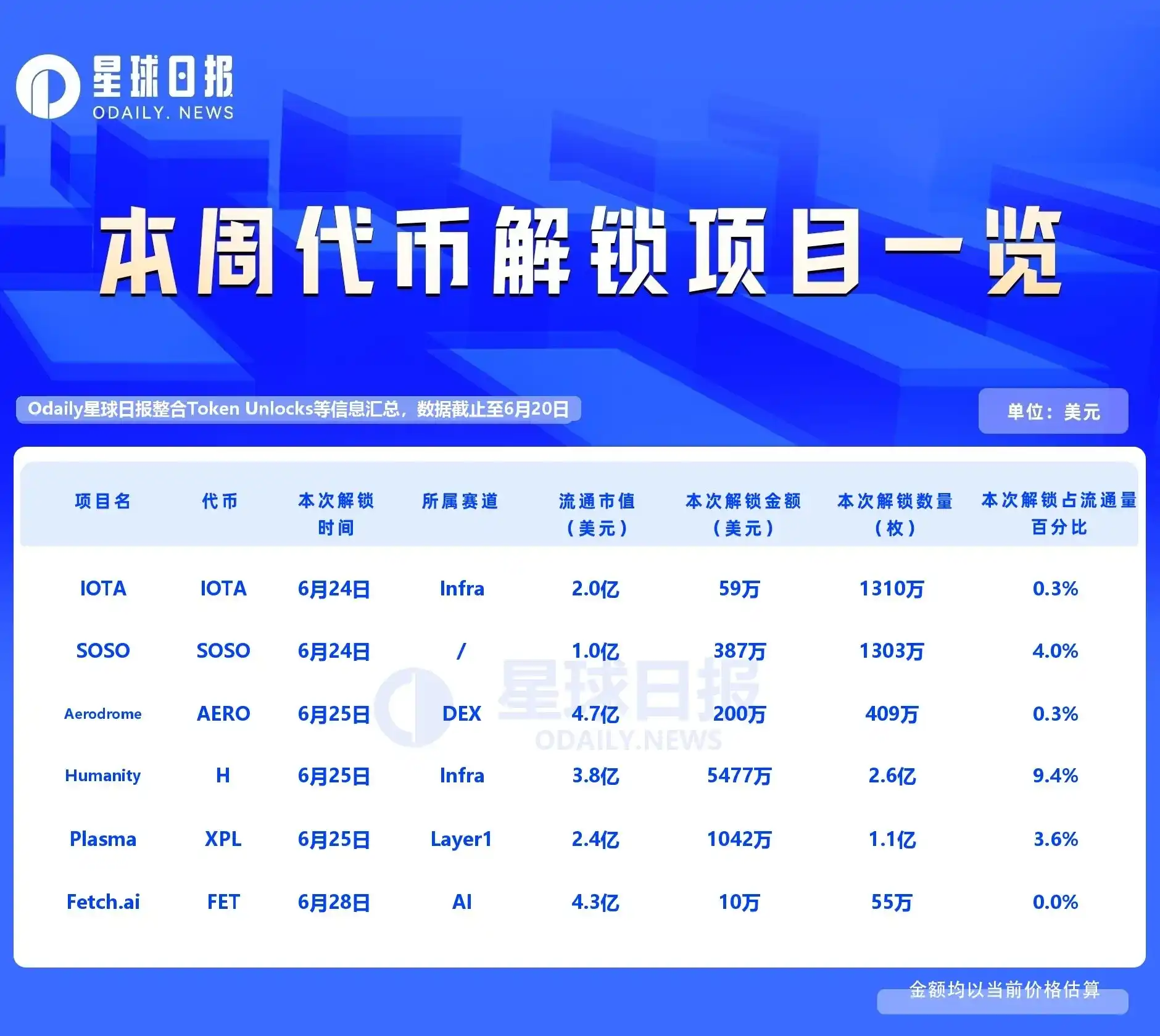
Giải phóng Token trong tuần: XPL giải phóng token trị giá hàng triệu đô la

marsbitPublished on 2026-06-21Last updated on 2026-06-21

Abstract

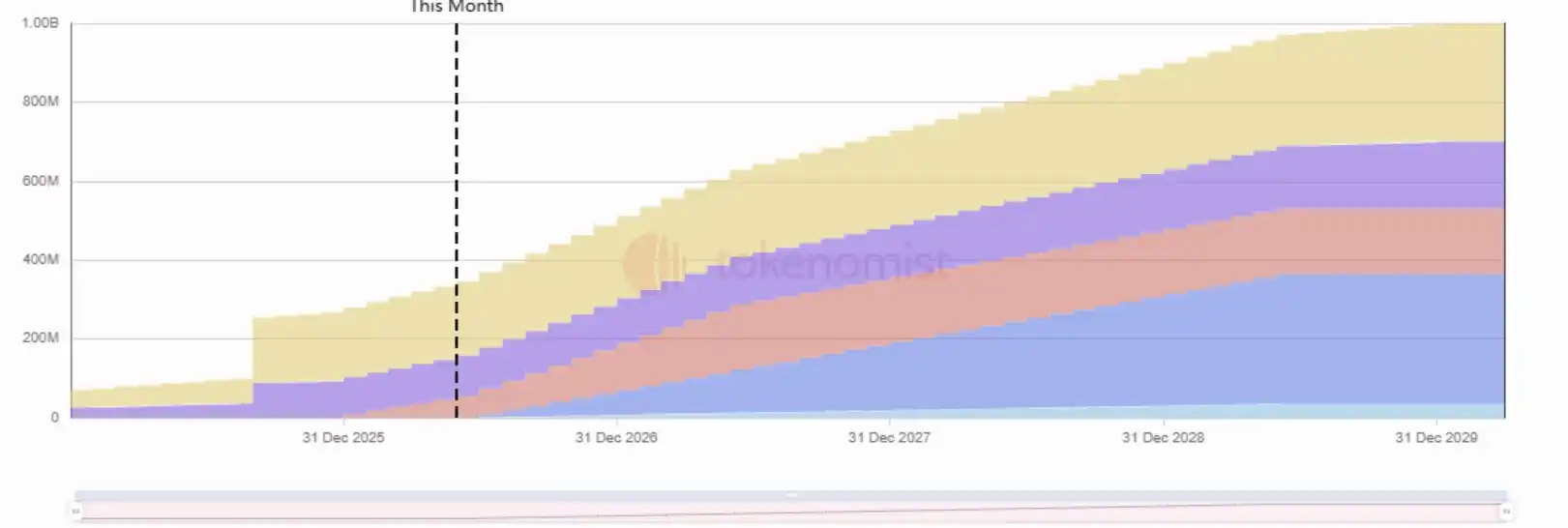
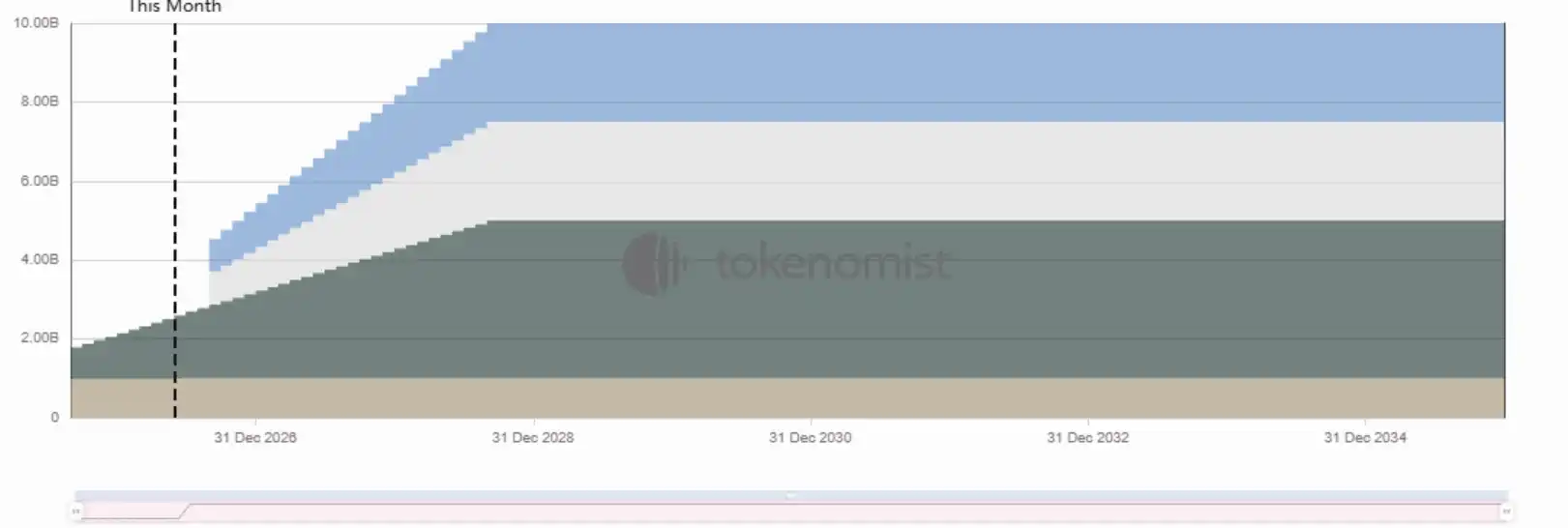
SoSoValue (XPL) và Plasma là hai dự án có lượng token lớn được mở khóa trong tuần này, với tổng giá trị lên tới hơn 14 triệu USD. **SoSoValue (XPL):** Một nền tảng nghiên cứu đầu tư được hỗ trợ bởi AI, kết hợp hiệu quả của CeFi với tính minh bạch của DeFi. Lần mở khóa này sẽ giải phóng **13.03 triệu token**, tương đương khoảng **3.87 triệu USD**. **Plasma:** Một blockchain Layer 1 được xây dựng chuyên cho thanh toán bằng stablecoin toàn cầu, với khả năng tương thích EVM. Lần mở khóa này có quy mô lớn hơn, với **110 triệu token** được giải phóng, có giá trị ước tính khoảng **10.42 triệu USD**. Cả hai bài viết đều cung cấp biểu đồ đường cong giải phóng token cụ thể cho từng dự án.

SoSoValue

Twitter dự án: https://x.com/SoSoValueCrypto

Trang web chính thức dự án: https://sosovalue.com/

Số lượng giải phóng lần này: 13.03 triệu token

Giá trị giải phóng lần này: Khoảng 3.87 triệu USD

SoSoValue là một nền tảng nghiên cứu đầu tư điều khiển bằng trí tuệ nhân tạo, kết hợp hiệu quả của CeFi với tính minh bạch của DeFi, cam kết giải quyết các thách thức như quá tải thông tin và quản lý tài sản đa chuỗi trong thị trường tiền điện tử.

Đường cong giải phóng cụ thể như sau:

Plasma

Twitter dự án: https://x.com/Plasma

Trang web chính thức dự án: https://www.plasma.to/

Số lượng giải phóng lần này: 110 triệu token

Giá trị giải phóng lần này: Khoảng 10.42 triệu USD

Plasma là một blockchain Layer 1 được xây dựng chuyên biệt cho thanh toán bằng stablecoin toàn cầu. Nó kết hợp thông lượng cao, tính năng gốc dành cho stablecoin và khả năng tương thích EVM đầy đủ, cung cấp cơ sở hạ tầng cho các nhà phát triển xây dựng ứng dụng thanh toán và tài chính thế hệ tiếp theo. Nó cũng hỗ trợ token Gas có thể tùy chỉnh, chuyển khoản USDT không mất phí và thanh toán riêng tư.

Đường cong giải phóng cụ thể như sau:

Trending Cryptos

Related Questions

QBài viết này nói về sự kiện gì liên quan đến mã thông báo?

ABài viết liệt kê danh sách các dự án có mã thông báo (token) được mở khóa (unlock) trong tuần, bao gồm thông tin về số lượng và giá trị mở khóa.

QDự án SoSoValue giải quyết những thách thức nào trong thị trường tiền mã hóa?

ASoSoValue là nền tảng nghiên cứu đầu tư được hỗ trợ bởi trí tuệ nhân tạo, nhằm giải quyết các thách thức về quá tải thông tin và quản lý tài sản đa chuỗi (cross-chain) trong thị trường tiền mã hóa.

QSố lượng và giá trị token Plasma được mở khóa trong đợt này là bao nhiêu?

ATrong đợt mở khóa này, Plasma sẽ mở khóa 110 triệu token, với giá trị ước tính khoảng 10.42 triệu USD.

QPlasma là gì và nó được thiết kế cho mục đích chính nào?

APlasma là một blockchain Lớp 1 (Layer 1) được xây dựng chuyên biệt cho thanh toán bằng stablecoin toàn cầu. Nó tập trung vào thông lượng cao, tích hợp các tính năng gốc cho stablecoin và tương thích đầy đủ với EVM.

QBài viết cung cấp thông tin gì thêm về mỗi dự án ngoài số liệu mở khóa?

AĐối với mỗi dự án (SoSoValue và Plasma), bài viết cung cấp liên kết Twitter, trang web chính thức, mô tả ngắn gọn về dự án và biểu đồ (hoặc thông tin) về lịch trình phát hành (release curve) token của họ.

Related Reads

Mining Firms Flock to AI, but Wall Street Cools Valuation Enthusiasm. The Earnings Season Reveals Who's 'Swimming Naked'?

Bitcoin mining companies are increasingly pivoting to AI and HPC (high-performance computing) infrastructure, but Wall Street is growing skeptical, demanding proof of a viable business model over mere announcements. An analysis shows that while early AI-related announcements triggered significant stock price movements (average absolute change of 24.1%), recent similar news has had a much smaller market impact (average ~10.2%), despite the underlying business value of AI/HPC hosting contracts improving. A review of Q2 2024 earnings from five major mining firms reveals a mixed picture: * **Marathon Digital (MARA):** Reported declining revenue ($175M, down 27%) and a large net loss ($610M+). Its AI/HPC transformation remains in the building phase, contributing negligible revenue so far. * **Core Scientific:** Successfully shifted its business model, with AI/HPC hosting now dominating revenue (83% of total $164.2M). However, this came with high capital expenditure and negative shareholder equity. * **TeraWulf:** Showed early results from its pivot, with HPC leasing generating 71% of its total revenue ($44.77M). It secured major long-term contracts but also reported a significant net loss. * **Hut 8:** Achieved substantial revenue growth ($74.9M, up 81.4%) driven by computing operations and completed commercialization of its first major AI data center campus. It remains unprofitable on a net income basis. * **CleanSpark:** Revenue still relies entirely on Bitcoin mining ($138M, down 30.5%). Its main AI highlight was signing a $6.6 billion, 20-year data center lease, but revenue from it is not expected until late 2027. The key takeaway is that the market's focus has shifted from the "AI story" to tangible execution, project delivery capabilities, customer quality, and the ability to generate future cash flow.

marsbit17m ago

Mining Firms Flock to AI, but Wall Street Cools Valuation Enthusiasm. The Earnings Season Reveals Who's 'Swimming Naked'?

marsbit17m ago

All Metrics Smashing Records, Yet Stock Prices Plunge Across the Board

Memory giants like Western Digital (WDC) and SanDisk (SNDK) reported blockbuster earnings in the summer of 2026, featuring毛利率 exceeding 80%, massive customer prepayments, and long-term supply agreements. Despite this seemingly perfect performance, their stocks plummeted post-earnings (WDC down 13%, SNDK down 7%), along with peers like Micron. The collapse highlights a core market rule: "good" isn't enough; results must beat already sky-high expectations. With valuations at peak "perfect asset" levels, even slightly conservative forward guidance triggered a sell-off. The market saw "peak performance" as a signal to exit. Beneath the stellar numbers, four反常 trends emerged: 1. **Financialized Pricing:** Customers provide百亿级 in upfront "interest-free deposits" to secure future capacity. 2. **Reversed Cost Curve:** Advanced DRAM (HBM4, DDR6) costs are rising per bit due to complex packaging, breaking Moore's Law. 3. **AI vs. Consumer Split:** Data center storage demand soars (+103% for SanDisk), while consumer electronics demand weakens under high costs. 4. **HDD Revival:** Hard drives, now used for AI agent context caching, see毛利率 near 55-57%. Underlying隐忧 persist. Soaring capital expenditure (CapEx) by SK Hynix and Micron risks future oversupply. Revenue growth is increasingly driven by price hikes, not surging shipment volumes (bit growth), making profits vulnerable to any price correction. In conclusion, while AI has created a long-term growth narrative, transforming storage into "strategic infrastructure," the market's violent reaction signals that peak valuations and expectations have left no safety margin. The周期 hasn't disappeared; it's merely wearing an AI disguise.

marsbit18m ago

All Metrics Smashing Records, Yet Stock Prices Plunge Across the Board

marsbit18m ago

Building the Next-Generation Financial Information Terminal with BlockBeats

BlockBeats is building a next-generation personal financial information portal, integrating real-time global market data, news, professional research, and AI-powered analysis. We are actively hiring for multiple roles across our teams in Beijing, with strictly remote opportunities available. We are seeking passionate individuals to join our Hot News Team as Global Market Information Editors, responsible for real-time tracking and analysis of global tech, financial markets, and industry trends. Our In-Depth Reporting & Research Team is looking for Tech Finance Researchers to conduct deep analysis on AI, capital markets, digital assets, and emerging industries. Our Operations Team needs Social Media Specialists to drive user growth and community engagement on platforms like Twitter and Telegram. The Business Team has openings for Business Executives to manage client partnerships and Overseas Business Development specialists to expand our global footprint. Technical roles include Frontend and Backend Developers to help build our products. We are also forming a Prediction Markets Team, seeking Researchers/Content Writers to analyze market events, on-chain data, and provide actionable insights. Ideal candidates are curious about future tech, sensitive to financial markets, adept at extracting value from information, and eager to build new products. Both full-time positions and internships are available.

marsbit32m ago

Building the Next-Generation Financial Information Terminal with BlockBeats

marsbit32m ago

Trading

Spot

Hot Articles

What is PLASMA

Plasma: A Cutting-Edge Solution for Blockchain Scalability Introduction to Plasma As the cryptocurrency landscape evolves, there is an increasing need for enhanced efficiency within blockchain networks. Plasma, a Layer 2 scaling solution, emerges as a pioneering player in this area, particularly in the sphere of Web3 development. By strategically shifting a significant portion of tasks from the main chain to a series of smaller chains, Plasma aims to significantly enhance the scalability and performance of Ethereum—a widely-used blockchain platform that is at the forefront of decentralised applications. What is Plasma? Plasma is an innovative off-chain scaling solution specifically designed for the Ethereum blockchain. It was introduced in August 2017 by Vitalik Buterin, co-founder of Ethereum, and Joseph Poon, a prominent advocate of scaling solutions like the Lightning Network. Plasma serves as a framework that enables the creation of scalable applications by establishing a hierarchical structure of child chains that sit above the main Ethereum chain. At its core, Plasma facilitates the development of potentially unlimited side chains that can operate independently while still relying on the Ethereum network for security and consensus. This architecture is supported by smart contracts and Merkle Trees, which efficiently manage transactions and data storage. Core Objectives of Plasma The primary goal of Plasma is to increase the throughput of the Ethereum network. By diverting a significant volume of transactions away from the congested main chain, Plasma's architecture offers higher transaction speeds, more efficient data processing, and lower transaction costs. This is particularly crucial in an age where the demand for decentralised applications—especially in finance, gaming, and supply chain management—is reaching unprecedented levels. Creator of Plasma Plasma is the brainchild of two renowned figures in the blockchain community: Vitalik Buterin and Joseph Poon. Buterin is celebrated primarily for co-founding Ethereum and pushing the boundaries of what blockchain technology can achieve. Poon, on the other hand, is known for advocating scalable solutions that enable faster and more cost-effective transactions on blockchain networks. Their collaboration on the Plasma framework has significantly contributed to its innovative nature, merging advanced technical insights with practical applications. Investors of Plasma While the specific investment foundations or organisations supporting Plasma remain undisclosed, the project has attracted interest from various prominent figures and players in the blockchain and cryptocurrency space. With its potential for enhancing scalability within Ethereum, it has captured the attention of various entities aiming to push the boundaries of blockchain technology. How Does Plasma Work? Plasma's unique functionality stems from its architectural framework that relies on child chains and their interaction with the main Ethereum network. Below are some key factors that contribute to Plasma's innovative approach: Child Chains: Plasma establishes numerous child chains that can execute transactions independently of the main Ethereum chain. Each child chain operates as a separate smart contract with unique features, allowing developers to create tailored solutions based on their specific requirements. Smart Contracts and Merkle Trees: The framework utilises smart contracts, which are self-executing agreements with predefined conditions, combined with Merkle Trees that enable efficient verification of data. This technology allows Plasma to achieve both high scalability and security. Transaction Compression: By batching transactions on the child chains, Plasma reduces the data load on the Ethereum network. This implies that fewer transactions need to be recorded on the main chain—thereby freeing up space and alleviating congestion. Enhanced Security: Despite being off-chain, Plasma leverages the security measures of the main Ethereum network, ensuring that all transactions on child chains maintain a high level of integrity and security. Timeline of Plasma Understanding the development of Plasma involves tracing its significant milestones: August 2017: Plasma was first introduced by Vitalik Buterin and Joseph Poon as a scalable solution to address Ethereum's performance challenges. 2018: The Plasma framework was officially developed and made available on GitHub, marking a crucial step towards its implementation in practical applications. 2019: As awareness about Plasma grew, it began to attract developers interested in scaling Ethereum applications, thus increasing its adoption. 2020: Plasma continued evolving, with substantial enhancements made to its architecture and functionality—making it even more appealing to developers. Key Features of Plasma Plasma boasts several characteristics that position it as a transformative solution in the blockchain space: Scalability: By creating multiple child chains, Plasma can handle a higher volume of transactions without placing further strain on the main Ethereum chain. Speed: Each child chain can process transactions more rapidly, providing users with a better experience and service. Lower Transaction Costs: Plasma's structure effectively reduces the costs associated with transactions by minimising the burden on the main chain. Interoperability: The architecture allows Plasma to seamlessly interact with multiple blockchains, enhancing cross-network functionality. Security: By harnessing the security of Ethereum’s main chain, Plasma ensures the integrity of its operations while using its child chains. Use Cases for Plasma The innovative architecture of Plasma opens the door for various practical applications across different sectors: Decentralised Finance (DeFi): Plasma has the capacity to enhance the scalability and efficiency of DeFi applications, creating smoother and more effective trading processes. Gaming: The framework facilitates the development of quick and cost-efficient gaming experiences, making it appealing to developers in the gaming industry. Supply Chain Management: With the ability to achieve efficient transaction processing, Plasma can promote the development of decentralised supply chain management solutions. Conclusion Plasma stands at the forefront of blockchain technology, positioned as a pivotal Layer 2 scaling solution aimed at enhancing the efficiency of the Ethereum network and beyond. Through its unique structure of child chains, smart contracts, and Merkle Trees, Plasma presents a compelling solution to the scalability crisis that has long plagued blockchain networks. As blockchain technology continues to advance, solutions like Plasma promise to reshape how developers approach scalability challenges, potentially revolutionising how decentralised applications function. The ongoing efforts by its creators and the interest of various stakeholders indicate a bright future for Plasma as it seeks to elevate blockchain capabilities to new heights in the digital realm.

255 Total ViewsPublished 2024.12.03Updated 2024.12.03
What is PLASMA

Discussions

Welcome to the HTX Community. Here, you can stay informed about the latest platform developments and gain access to professional market insights. Users' opinions on the price of XPL (XPL) are presented below.

活动图片