Bitcoin Remains Below Glassnode’s $77,200 True Market Mean

bitcoinistPublished on 2026-06-19Last updated on 2026-06-19

Abstract

Glassnode's latest report indicates Bitcoin continues to trade below its "True Market Mean," a key on-chain model estimating the average acquisition price of economically active coins at approximately $77,200. With BTC price roughly 15% below this level, the market is characterized as being in a repair or bearish regime rather than a confirmed bullish recovery. Trading below this cost-basis metric suggests a significant portion of active supply is under pressure, which can hinder rallies as underwater investors may sell into rebounds. The report highlights ongoing stress among short-term holders, contributing to market sensitivity. While a defense of current support levels shows demand, a sustained reclaim of the $77,200 True Market Mean is viewed as a more constructive signal for a broader regime shift than a simple relief bounce. For a bullish recovery to be confirmed, the market needs sufficient demand to overcome this overhead cost pressure.

Glassnode’s Week Onchain report says Bitcoin remains below its True Market Mean, with the model sitting near $77,200 and price trading at a sizeable discount.

TL;DR

  • Glassnode says Bitcoin is still below its $77,200 True Market Mean.
  • The metric is a cost-basis model for economically active coins.
  • Trading below it suggests the market remains in a repair or bearish regime.
  • A reclaim of the level would be more constructive than a simple relief bounce.

Bitcoin Still Below A Key Cost-Basis Line

Glassnode’s latest Week Onchain report shows Bitcoin trading below its True Market Mean, a cost-basis model that the firm says sits around $77,200. With BTC roughly 15% below that level, the report frames the market as still in a repair phase rather than a confirmed bullish recovery.

The True Market Mean is not a magic support or resistance line. It is an onchain model designed to capture the average acquisition price of economically active coins. But because cost-basis models track where different investor cohorts are sitting in profit or loss, traders often use them to understand when sentiment has shifted from stress to recovery.

Why The $77,200 Level Matters

When price trades below a widely watched cost-basis band, it usually means a meaningful portion of active supply is under pressure. That does not automatically mean more downside is coming, but it does help explain why rallies can struggle. Investors who are underwater often sell into rebounds, while short-term holders may hesitate to add exposure until breakeven levels are reclaimed.

Glassnode’s framing is important because it separates market repair from full regime change. Bitcoin can bounce from support, absorb selling, and show accumulation signals while still being below the level that would confirm broader strength. That nuance matters in a market still digesting macro pressure, ETF flows, and changing liquidity expectations.

Short-Term Holder Stress Remains A Watchpoint

The report also points to stress among short-term holders, a group that often drives faster market reactions. When short-term holder metrics remain below breakeven, the market can become more sensitive to bad news because recent buyers are sitting on unrealized losses.

That helps explain why Bitcoin’s move around the $64,000 zone has become so important. A defense of that area may show demand is still present, but a clean reclaim of the True Market Mean would carry a different message: that the active-investor cost basis is no longer acting as overhead pressure.

What Traders Are Watching Next

The setup leaves Bitcoin in a middle zone. On one hand, trading at a discount to the True Market Mean can attract value-focused buyers who believe the market is oversold relative to active investor cost basis. On the other, failure to reclaim the model keeps the bearish-regime argument alive.

For now, the practical takeaway is simple. Bitcoin bulls need more than a relief bounce. They need enough demand to push price back toward higher cost-basis levels and keep it there. Until then, Glassnode’s data suggests the market is still healing, not yet clearly breaking into a new expansion phase.

This article was written by the News Desk and edited by Samuel Rae.

This report is based on information from Glassnode Insights. at Glassnode

Trending Cryptos

Related Questions

QWhat is the current value of Glassnode's True Market Mean for Bitcoin, according to the article?

AAccording to the article, Glassnode's True Market Mean model for Bitcoin is sitting near $77,200.

QWhat does the True Market Mean metric represent?

AThe True Market Mean is a cost-basis model designed to capture the average acquisition price of economically active Bitcoin coins. It tracks where different investor cohorts are sitting in profit or loss.

QWhat does Bitcoin trading below the True Market Mean signify for the market regime?

AAccording to Glassnode's report, Bitcoin trading below this level suggests the market remains in a repair or bearish regime, rather than a confirmed bullish recovery.

QAccording to the article, what is more important for confirming broader market strength than a simple relief bounce in price?

AA clean reclaim of the True Market Mean (the $77,200 level) would be more constructive and carry a different message than a simple relief bounce, as it would show the active-investor cost basis is no longer acting as overhead pressure.

QWhich specific investor group's ongoing stress is highlighted in the report as a key watchpoint for market sensitivity?

AThe report points to stress among short-term holders as a key watchpoint. When their metrics remain below breakeven, the market can become more sensitive to bad news because these recent buyers are sitting on unrealized losses.

Related Reads

The Hunter Becomes the Hunted: The Most Profitable MEV Bot Gets Hacked

A well-known and highly profitable Ethereum MEV Bot, Jaredfromsubway.eth, suffered a sophisticated on-chain attack this Saturday, losing over $7.5 million. Analysis by Blockaid and others reveals this was not a conventional phishing or smart contract exploit, but a targeted "counter-MEV honeypot attack." The attacker meticulously laid a trap over several weeks, deploying 66 fake token contracts and liquidity pools disguised as major assets like WETH and USDC. These pools created the illusion of arbitrage opportunities. The MEV Bot's automated system detected these signals, executed trades, and in the process, granted approval permissions to attacker-controlled contracts. These approvals were not revoked, creating a persistent vulnerability. The attacker then exploited this in a single transaction, draining the bot's ETH, USDC, and USDT holdings. Jaredfromsubway.eth is notorious as one of Ethereum's most active and profitable MEV Bots, primarily known for executing "sandwich attacks" to profit from transaction slippage. Estimates suggest it has earned tens of millions in MEV revenue. The incident highlights escalating crypto security threats, demonstrating that even top-tier automated "predators" are vulnerable to novel, logic-based attacks designed to exploit their own operational rules. Following the hack, an unverified X account impersonating Jaredfromsubway.eth emerged, falsely offering a bounty for the return of funds, prompting developer warnings for users to stay vigilant.

marsbit34m ago

The Hunter Becomes the Hunted: The Most Profitable MEV Bot Gets Hacked

marsbit34m ago

The Reality of Payments in Latin America Is Not What You Think

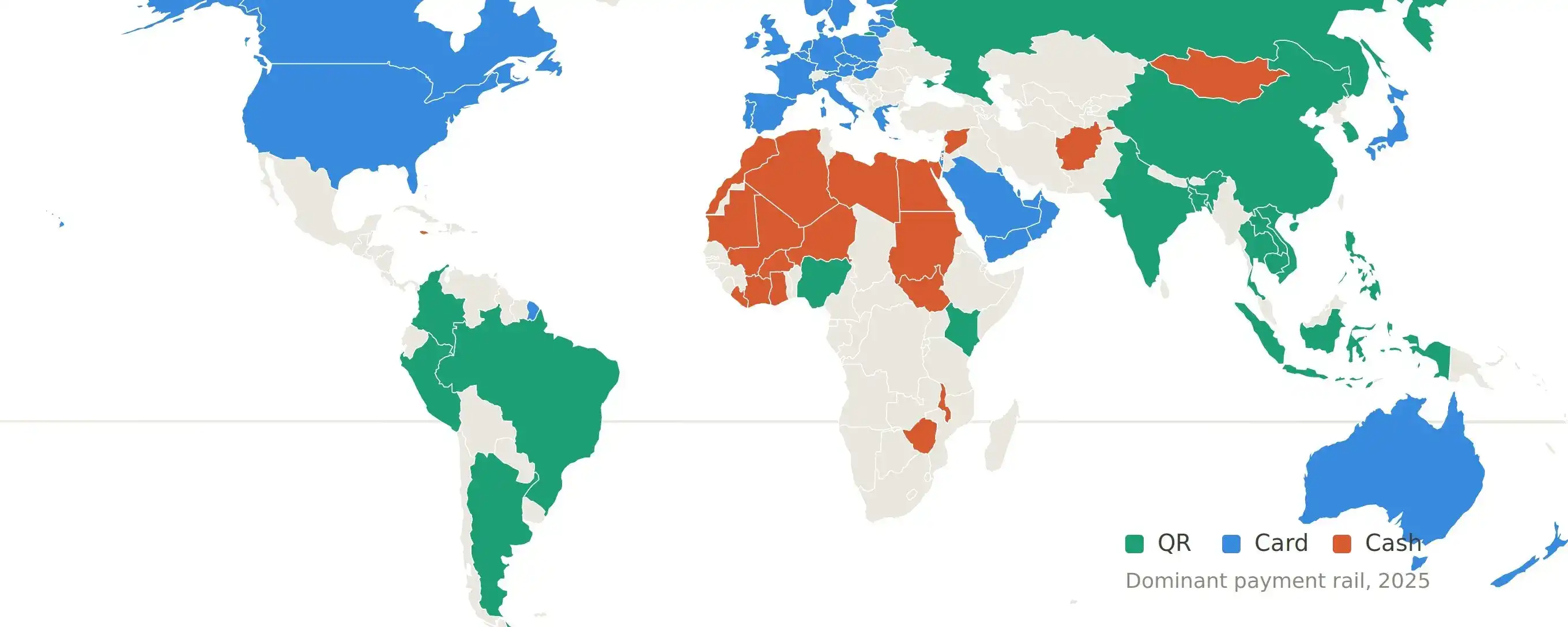
The payment landscape in Latin America is undergoing a fundamental shift, driven by on-the-ground realities that challenge common perceptions. Based on over 500 hours of field research across the region, key insights emerge. Firstly, QR code payments, like Brazil's Pix, are becoming the dominant payment method in most emerging markets, overtaking cards. However, these domestic instant payment systems lack international interoperability, creating a significant gap for cross-border users. Secondly, the narrative around crypto cards is often misunderstood; their primary volume comes from high-net-worth professionals using them for salary conversions (e.g., USDT to local currency via Pix), not retail micro-payments. Competition in payments is shifting from customer acquisition to controlling the settlement layer, leading fintechs to acquire banking licenses for efficiency. Thirdly, treating "Latin America" as a single market is a mistake. Countries like Argentina, Brazil, and Mexico have distinct economic realities, user segments, and regulatory approaches. Brazil alone has at least five distinct user segments with different financial flows. Overlooked markets like Guatemala, Honduras, and El Salvador (the "forgotten five") offer high remittance volumes with lower competitive density. Finally, regulation in Latin America is often ahead of the US, with clearer frameworks for digital assets and a pragmatic approach from regulators focused on safety rather than obstruction. The margin on stablecoin forex is rapidly compressing toward zero, meaning future winners will be those building value-added services on top of the infrastructure, not just the cheapest exchange.

marsbit49m ago

The Reality of Payments in Latin America Is Not What You Think

marsbit49m ago

Making Music in a Bear Market: The Survival Experiment of a Bitcoin Band

"Orange Pill Jam: A Bitcoin Band's Survival in the Bear Market" Orange Pill Jam is a musical group exploring themes of financial sovereignty and privacy, born from the Bitcoin community. Formed after singer Mermaid performed her song "Dollar Apocalypse" at a 2022 conference, the band creates music intended for both Bitcoin enthusiasts and general audiences. Their creative process involves Mermaid writing lyrics and melodies, which producer/multi-instrumentalist Michi then shapes with a precise, rhythm-focused approach, often demanding numerous retakes to achieve his unique standard of timing. Their songs, like "Cypherpunks' Manifesto" and "Fire of Freedom," tackle concepts of digital privacy, the pitfalls of "free" services, and personal sovereignty, influenced by experiences in places like El Salvador. Despite operating in a crypto bear market with a Copyleft model (offering music for free sharing/remixing and accepting optional Bitcoin donations), they face practical challenges. Their growth is slow on platforms like YouTube and Spotify, which aren't optimized for their niche content. The band also navigates the rise of AI-generated music. While acknowledging AI's efficiency for certain tasks, they believe human creativity occupies a unique space that algorithms cannot replicate—the ability to create new genres and capture intangible rhythmic feeling. For Orange Pill Jam, the core argument for both Bitcoin in a downturn and human artistry in the AI age lies in this irreplaceable, intentional, and imperfectly human creative process. Their project persists as an anti-algorithm experiment, valuing the unquantifiable impact of music over scalable metrics.

marsbit56m ago

Making Music in a Bear Market: The Survival Experiment of a Bitcoin Band

marsbit56m ago

Trading

Spot
Futures

Hot Articles

What is $BITCOIN

DIGITAL GOLD ($BITCOIN): A Comprehensive Analysis Introduction to DIGITAL GOLD ($BITCOIN) DIGITAL GOLD ($BITCOIN) is a blockchain-based project operating on the Solana network, which aims to combine the characteristics of traditional precious metals with the innovation of decentralized technologies. While it shares a name with Bitcoin, often referred to as “digital gold” due to its perception as a store of value, DIGITAL GOLD is a separate token designed to create a unique ecosystem within the Web3 landscape. Its goal is to position itself as a viable alternative digital asset, although specifics regarding its applications and functionalities are still developing. What is DIGITAL GOLD ($BITCOIN)? DIGITAL GOLD ($BITCOIN) is a cryptocurrency token explicitly designed for use on the Solana blockchain. In contrast to Bitcoin, which provides a widely recognized value storage role, this token appears to focus on broader applications and characteristics. Notable aspects include: Blockchain Infrastructure: The token is built on the Solana blockchain, known for its capacity to handle high-speed and low-cost transactions. Supply Dynamics: DIGITAL GOLD has a maximum supply capped at 100 quadrillion tokens (100P $BITCOIN), although details regarding its circulating supply are currently undisclosed. Utility: While precise functionalities are not explicitly outlined, there are indications that the token could be utilized for various applications, potentially involving decentralized applications (dApps) or asset tokenization strategies. Who is the Creator of DIGITAL GOLD ($BITCOIN)? At present, the identity of the creators and development team behind DIGITAL GOLD ($BITCOIN) remains unknown. This situation is typical among many innovative projects within the blockchain space, particularly those aligning with decentralized finance and meme coin phenomena. While such anonymity may foster a community-driven culture, it intensifies concerns about governance and accountability. Who are the Investors of DIGITAL GOLD ($BITCOIN)? The available information indicates that DIGITAL GOLD ($BITCOIN) does not have any known institutional backers or prominent venture capital investments. The project seems to operate on a peer-to-peer model focused on community support and adoption rather than traditional funding routes. Its activity and liquidity are primarily situated on decentralized exchanges (DEXs), such as PumpSwap, rather than established centralized trading platforms, further highlighting its grassroots approach. How DIGITAL GOLD ($BITCOIN) Works The operational mechanics of DIGITAL GOLD ($BITCOIN) can be elaborated on based on its blockchain design and network attributes: Consensus Mechanism: By leveraging Solana’s unique proof-of-history (PoH) combined with a proof-of-stake (PoS) model, the project ensures efficient transaction validation contributing to the network's high performance. Tokenomics: While specific deflationary mechanisms have not been extensively detailed, the vast maximum token supply implies that it may cater to microtransactions or niche use cases that are still to be defined. Interoperability: There exists the potential for integration with Solana’s broader ecosystem, including various decentralized finance (DeFi) platforms. However, the details regarding specific integrations remain unspecified. Timeline of Key Events Here is a timeline that highlights significant milestones concerning DIGITAL GOLD ($BITCOIN): 2023: The initial deployment of the token occurs on the Solana blockchain, marked by its contract address. 2024: DIGITAL GOLD gains visibility as it becomes available for trading on decentralized exchanges like PumpSwap, allowing users to trade it against SOL. 2025: The project witnesses sporadic trading activity and potential interest in community-led engagements, although no noteworthy partnerships or technical advancements have been documented as of yet. Critical Analysis Strengths Scalability: The underlying Solana infrastructure supports high transaction volumes, which could enhance the utility of $BITCOIN in various transaction scenarios. Accessibility: The potential low trading price per token could attract retail investors, facilitating wider participation due to fractional ownership opportunities. Risks Lack of Transparency: The absence of publicly known backers, developers, or an audit process may yield skepticism regarding the project's sustainability and trustworthiness. Market Volatility: The trading activity is heavily reliant on speculative behavior, which can result in significant price volatility and uncertainty for investors. Conclusion DIGITAL GOLD ($BITCOIN) emerges as an intriguing yet ambiguous project within the rapidly evolving Solana ecosystem. While it attempts to leverage the “digital gold” narrative, its departure from Bitcoin's established role as a store of value underscores the need for a clearer differentiation of its intended utility and governance structure. Future acceptance and adoption will likely depend on addressing the current opacity and defining its operational and economic strategies more explicitly. Note: This report encompasses synthesised information available as of October 2023, and developments may have transpired beyond the research period.

412 Total ViewsPublished 2025.05.13Updated 2025.05.13

What is $BITCOIN

Discussions

Welcome to the HTX Community. Here, you can stay informed about the latest platform developments and gain access to professional market insights. Users' opinions on the price of BTC (BTC) are presented below.

活动图片