XRP Tụt Hậu Trước Đối Thủ XLM: Tại Sao Nhà Đầu Tư Nhỏ Lẻ Đang Bán Một Đồng Tiền Để Mua Đồng Kia

bitcoinistPublished on 2026-06-03Last updated on 2026-06-03

Abstract

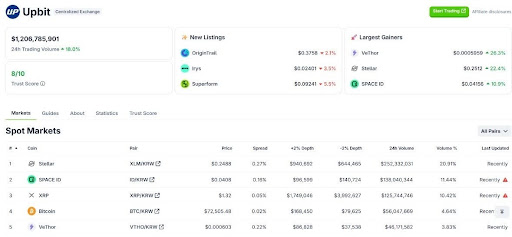
Mối cạnh tranh giữa XRP và Stellar (XLM) lại nổi lên, với báo cáo cho thấy các nhà giao dịch bán lẻ ở Hàn Quốc đang chuyển từ XRP sang XLM. Trên sàn Upbit lớn nhất Hàn Quốc, khối lượng giao dịch 24 giờ của XLM đạt khoảng 252,3 triệu USD, gấp đôi so với XRP (125,7 triệu USD), đánh dấu lần đầu tiên XLM vượt XRP về khối lượng tại đây. Sự dịch chuyển này được thúc đẩy bởi sự quan tâm đến vai trò của Stellar trong lĩnh vực tài chính mã hóa, đặc biệt sau thông tin về kế hoạch liên kết mạng lưới này với các nỗ lực mã hóa tài sản liên quan đến DTCC. Trong tuần qua, giá XLM đã tăng hơn 55%. Trong khi đó, XRP gặp khó khăn, giảm xuống dưới 1,3 USD. Một nhà phân tích khác, CW, dự báo XRP có thể là 'người chiến thắng' tiếp theo sau đợt tăng của XLM, cho rằng XRP đang ở vị trí tương tự trước khi bứt phá và nhắm mục tiêu giá cao kỷ lục mới gần 56 USD, dù đây là dự báo đầy tham vọng.

Sự cạnh tranh giữa XRP và Stellar (XLM) đã kéo dài trong nhiều năm, với các nhà đầu tư thường so sánh hai loại tiền điện tử tập trung vào thanh toán này do cùng nguồn gốc và trường hợp sử dụng tương tự. Trong khi XRP từ lâu vẫn duy trì sự hiện diện thị trường lớn hơn, XLM dường như đang giành lợi thế ở một số khu vực. Một báo cáo mới cho thấy các nhà giao dịch nhỏ lẻ tại Hàn Quốc hiện đang bán XRP để mua XLM, thúc đẩy giá trị thị trường của Stellar tăng mạnh trong khi giá XRP tiếp tục giảm.

XLM Vượt XRP Về Khối Lượng Giao Dịch Tại Hàn Quốc

Token gốc của Stellar, XLM, đã vượt lên trước XRP trong một sự thay đổi lớn trên sàn giao dịch tiền điện tử lớn nhất Hàn Quốc, Upbit. Sự phát triển này diễn ra khi các nhà giao dịch nhỏ lẻ đổ xô vào XLM, đẩy hoạt động giao dịch của nó lên trên một trong những tài sản kỹ thuật số phổ biến nhất tại quốc gia này.

Dữ liệu được chia sẻ bởi nhà phân tích thị trường Xaif Crypto cho thấy XLM ghi nhận khoảng 252,3 triệu USD khối lượng giao dịch trong 24 giờ trên Upbit. Trong khi đó, XRP chỉ đạt khoảng 125,7 triệu USD trong cùng kỳ, chưa bằng một nửa khối lượng của XLM. Khoảng cách đáng kinh ngạc này đánh dấu lần đầu tiên XLM vượt XRP về khối lượng giao dịch, hiện xếp hạng số một trên Upbit.
Nguồn: CoinCodex

Đợt tăng mới nhất đến sau khi sự quan tâm đến vai trò của Stellar trong lĩnh vực tài chính token hóa bùng nổ tại Hàn Quốc. Các nhà giao dịch đã phản ứng tích cực trước các kế hoạch gần đây liên kết mạng lưới blockchain này với nỗ lực token hóa liên quan đến Tổng Công ty Lưu ký và Thanh toán Bù trừ Hoa Kỳ (DTCC), một trong những công ty cơ sở hạ tầng thị trường tài chính lớn nhất thế giới.

Tin tức về DTCC đã giúp thúc đẩy nhu cầu mới đối với XLM trong giới nhà đầu tư Hàn Quốc, những người thường ưa chuộng giao dịch XRP. Đáng chú ý, XLM cũng ghi nhận mức tăng giá mạnh cùng với sự gia tăng hoạt động giao dịch. Báo cáo cho thấy token này đã tăng hơn 55% lên 11 USD trong tuần qua khi động lực tiếp tục hình thành trên khắp thị trường. Trong khi đó, XRP đã phải vật lộn để theo kịp đợt tăng giá, thậm chí giảm xuống dưới 1,3 USD, bất chấp sự phổ biến lâu đời của nó trong giới giao dịch Hàn Quốc.

Sự thay đổi về mối quan tâm và nhu cầu này rất đáng chú ý vì XRP từ lâu đã là một trong những loại tiền điện tử được giao dịch nhiều nhất tại các thị trường châu Á như Hàn Quốc, Nhật Bản và Thái Lan. Chỉ vài tuần trước, XRP đang dẫn đầu về khối lượng giao dịch trên Upbit của Hàn Quốc, vượt cả Bitcoin và Ethereum. Tuy nhiên, các con số mới nhất cho thấy sự chú ý của giới đầu tư nhỏ lẻ hiện đã chuyển hướng sang XLM khi các nhà giao dịch đuổi theo động lực mạnh nhất trên thị trường.

Nhà Phân Tích Dự Báo Đợt Tăng Giá Cho XRP Sau Khi XLM Bứt Phá

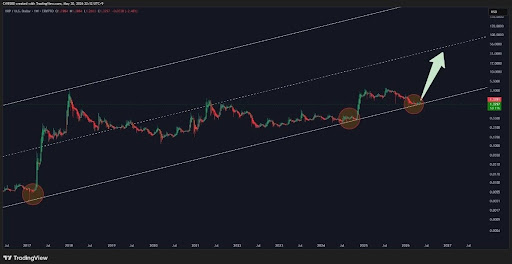
Trong một phân tích riêng biệt, nhà phân tích tiền điện tử CW tin rằng XRP có thể là người chiến thắng lớn tiếp theo sau đợt bứt phá gần đây của Stellar. Trong một bài đăng chia sẻ trên X, nhà phân tích này cho biết đợt tăng giá mạnh cho XLM đã bắt đầu và gợi ý rằng XRP hiện đang ở vị trí tương tự trước khi có động thái tăng giá của riêng mình.

Theo CW, XRP đang chờ đợi một "tín hiệu khởi động" và hiện đang giao dịch quanh mức mà XLM từng ở trước đợt tăng giá 57% gần đây. Nhà phân tích lập luận rằng XRP có thể đi theo con đường tăng giá của XLM nếu động lực tiếp tục được xây dựng.
Nguồn: X

Tuy nhiên, biểu đồ của CW dự đoán một động thái lớn hơn nhiều cho XRP, hướng tới mức cao kỷ lục mới tiềm năng gần 56 USD. Mặc dù dự đoán này vẫn mang tính suy đoán cao và đầy tham vọng do giá hiện tại của loại tiền điện tử này còn thấp, nhưng nó phản ánh sự lạc quan ngày càng tăng trong số một số người tham gia thị trường, những người tin rằng XRP vẫn chưa thực hiện bước di chuyển lớn nhất của mình trong chu kỳ hiện tại.

Giá theo xu hướng giảm của thị trường | Nguồn: XRPUSDT trên Tradingview.com

Related Questions

QTại sao các nhà giao dịch bán lẻ tại Hàn Quốc đang chuyển từ XRP sang XLM?

ABáo cáo cho thấy sự dịch chuyển này chủ yếu do sự quan tâm đến vai trò của Stellar trong lĩnh vực tài chính token hóa, đặc biệt sau thông tin về kế hoạch liên kết mạng lưới blockchain này với các nỗ lực token hóa của DTCC (Tổng công ty Lưu ký & Thanh toán Bù trừ Hoa Kỳ). Sự kiện này đã thúc đẩy nhu cầu mới đối với XLM.

QSự khác biệt về khối lượng giao dịch giữa XLM và XRP trên sàn Upbit của Hàn Quốc như thế nào?

ATheo dữ liệu, XLM đã ghi nhận khối lượng giao dịch 24 giờ khoảng 252,3 triệu USD trên Upbit, trong khi XRP chỉ đạt khoảng 125,7 triệu USD trong cùng kỳ. XLM đã vượt XRP về khối lượng giao dịch lần đầu tiên và hiện đứng đầu trên sàn Upbit.

QPhản ứng của giá XLM và XRP trước sự thay đổi nhu cầu này là gì?

AXLM đã tăng hơn 55% lên mức 11 USD trong tuần qua, được thúc đẩy bởi khối lượng giao dịch tăng và động lực thị trường tích cực. Trong khi đó, XRP gặp khó khăn trong việc theo kịp đà tăng, thậm chí giảm xuống dưới 1,3 USD.

QNhà phân tích CW dự báo điều gì về XRP sau đợt tăng giá của XLM?

ANhà phân tích CW tin rằng XRP có thể là 'người chiến thắng lớn tiếp theo'. Ông cho rằng XRP hiện đang ở vị trí tương tự XLM trước đợt tăng giá và đang chờ 'tín hiệu khởi động' để có thể tăng mạnh, với mục tiêu dài hạn lên tới vùng cao kỷ lục mới gần 56 USD.

QTại sao sự thay đổi về sự quan tâm từ XRP sang XLM lại đáng chú ý?

AĐiều này đáng chú ý vì XRP từ lâu đã là một trong những tiền mã hóa được giao dịch nhiều nhất tại các thị trường châu Á như Hàn Quốc, Nhật Bản và Thái Lan. Chỉ vài tuần trước, XRP còn dẫn đầu khối lượng giao dịch trên Upbit trước cả Bitcoin và Ethereum, cho thấy sự luân chuyển nhanh chóng trong sở thích của các nhà giao dịch bán lẻ.

Related Reads

Fed's Internal Doves Flock to Hawkish Stance, Warsh's Debut "Between a Rock and a Hard Place"

U.S. Federal Reserve officials who previously advocated for rate cuts, including Governor Christopher Waller, have recently shifted their stance, with many now not ruling out the possibility of future rate hikes. This sets a challenging stage for new Fed Chair Kevin Warsh's first policy meeting. Appointed by President Trump based on his dovish views, Warsh now faces a committee where the debate has pivoted from "when to cut" to "whether to hike," driven by persistent inflation above 3%, a strong labor market, and supply-side pressures from AI infrastructure demands and geopolitical tensions. Key figures illustrate the shift. Governor Waller, once concerned about employment, now says data has pushed him toward considering rate increases. Even moderate voices like Governor Lisa Cook, while expecting inflation to ease, have indicated readiness to hike if it fails to do so. Long-time hawks such as regional Fed presidents Beth Hammack, Lorie Logan, and Neel Kashkari have grown more vocal, arguing that the real policy rate is effectively falling and that action may soon be needed. The upcoming Fed meeting is expected to keep rates steady but will likely remove the "easing bias" from its statement, signaling a neutral stance between cuts and hikes. The quarterly "dot plot" is anticipated to show most officials projecting no cuts this year, with some potentially indicating hikes. Chair Warsh, a critic of the Fed's reliance on forward guidance like the dot plot, must navigate communicating this pivot using tools he has questioned, all while steering policy in a direction counter to the preferences of the president who appointed him. The consensus suggests the Fed's next move could well be a rate increase.

marsbit18m ago

Fed's Internal Doves Flock to Hawkish Stance, Warsh's Debut "Between a Rock and a Hard Place"

marsbit18m ago

The Trillion-Yuan Market Cap 'Yi Zhong Tian': Who is the True Value King?

The article analyzes the three leading Chinese optical module companies, collectively nicknamed "Yi Zhong Tian": Xinyisheng, Zhongji Innolight, and TFC Optical Communication. It evaluates their "cost-performance" not by current stock price, but through three lenses: PEG ratio (growth vs. valuation), earnings quality, and premium/discount for certainty. Xinyisheng shows the most attractive PEG ratio and high profitability, but its valuation reflects discounts for risks like high customer concentration and reliance on overseas markets. Zhongji Innolight, the most expensive, commands a premium for its market leadership, dominant share in key products like 800G/1.6T modules, and higher earnings certainty, though it faces geopolitical risks. TFC Optical, as an upstream component supplier ("water seller"), has the highest gross margin and bets on the long-term CPO/NPO architecture trend, but trades at a high valuation with more stable, less explosive growth. The core argument is that while these companies dominate module assembly, the true profit pool and technological moat lie upstream in laser and switch chips, currently controlled by U.S. firms like Lumentum and Coherent. The long-term "cost-performance" for these Chinese leaders hinges on whether the domestic industry, exemplified by companies like Yuanjie Technology, can successfully move up the value chain into high-power laser chips. Otherwise, their high growth may remain confined to the lower-margin assembly segment.

marsbit28m ago

The Trillion-Yuan Market Cap 'Yi Zhong Tian': Who is the True Value King?

marsbit28m ago

Has the Crypto Market Bottomed? Here's What Institutions Think

The crypto market is in a period of significant debate, with leading institutions offering differing views on whether a bottom has been reached. Three prominent firms have published detailed analyses: * **Galaxy Digital** argues Bitcoin has **not yet bottomed**. Their analysis of 13 historical indicators across six dimensions (valuation, profit-taking, miner pressure, etc.) shows only four are fully met. They project a potential bottom range between $30k and $54k. * **NYDIG** states a bottom is **possible but not likely**. While metrics are close to historic bear market extremes, they note the absence of a classic panic-selling event. They also suggest increased institutional adoption may have structurally altered the market cycle, potentially leading to a shallower downturn. * **Standard Chartered Bank** asserts the **bottom has already occurred** at around $59k. They cite two key factors: potential US-Iran diplomatic progress and the anticipated SpaceX IPO, which they believe absorbed capital and caused ETF selling pressure that is now subsiding. They forecast a year-end price target of $100k. Despite the surface-level disagreement, the reports share critical common ground more valuable for long-term investors: 1. All three believe the market bottom will form **within this year**. 2. All agree the current price is **closer to the bottom than to previous highs**. 3. All maintain a **bullish long-term outlook** for Bitcoin and a new cycle. The core takeaway is that while the exact bottom price ($40k, $50k, or $60k) is debated, the consensus is that a bottom is imminent. For long-term holders, the primary focus should not be pinpointing the absolute low, but on the future potential for prices to reach $100k, $200k, or higher. The fundamental thesis for Bitcoin—sovereign debt accumulation, inflation, declining trust in centralized institutions, global digitization, and improved accessibility—remains intact and is arguably strengthening. The overall landscape is viewed as more favorable than in previous crypto winters.

marsbit38m ago

Has the Crypto Market Bottomed? Here's What Institutions Think

marsbit38m ago

The 'Chip' Challenge and Breakthroughs in China's Optical Industry Chain

China's Photonics Industry: Bottlenecks and Breakthroughs In the global AI race, computing chips dominate the narrative, but the underlying bottleneck increasingly defining the scale of AI clusters is light—or more specifically, optical connectivity. Optical modules, which translate electrical signals to light and vice versa, are crucial for connecting thousands of GPUs in AI data centers, preventing data congestion and ensuring efficient model training. High-speed modules (800G, 1.6T) are now standard, with performance hinging on advanced DSP (Digital Signal Processor) chips. This is where a critical dependency lies. Two US giants—Marvell and Broadcom—collectively dominate over 90% of the high-end DSP chip market. Chinese optical module leaders like Zhongji Innolight and Eoptolink rely on these chips to manufacture modules for overseas AI customers, primarily in North America. While this creates a supply chain vulnerability, complete decoupling is difficult. Marvell derives over half its revenue from Greater China, and the US firms depend on Chinese partners for chip packaging and optical components. The risk from laser chips (e.g., from Lumentum), another key component, is considered more manageable due to multiple global suppliers and faster progress in domestic alternatives from companies like YOFC and Accelink. To mitigate risks, China's industry is pursuing a multi-pronged strategy: diversifying supply chains and locking in long-term orders; fostering a domestic market ecosystem to adopt homegrown DSPs from firms like Huawei HiSilicon and CETC; accelerating R&D in high-speed DSPs and advanced packaging; and investing in next-gen technologies like silicon photonics and Co-Packaged Optics (CPO) to reduce reliance on discrete DSPs. The ultimate solution lies not in short-term博弈 but in persistent advancement of domestic high-end chip R&D and manufacturing. While challenges remain in performance, certification, and ecosystem building, China's vast domestic market and manufacturing base provide a crucial buffer, buying time for the industry to achieve greater technological independence.

marsbit52m ago

The 'Chip' Challenge and Breakthroughs in China's Optical Industry Chain

marsbit52m ago

Trading

Spot
Futures

Hot Articles

What is XRP 2.0

XRP 2.0: A New Frontier in the Cryptocurrency Landscape Introduction to XRP 2.0 In the ever-evolving realm of cryptocurrency, new projects continuously emerge, vying for attention and adoption. One such promising initiative is XRP 2.0, a novel cryptocurrency project designed to leverage advanced blockchain technology and robust encryption methodologies. While the name draws parallels with Ripple’s XRP, it’s crucial to note that XRP 2.0 operates independently, focusing on enhancing transaction security, privacy, and scalability. As the digital financial landscape increasingly embraces decentralized solutions, XRP 2.0 aims to contribute meaningfully to web3 and the overall expansion of crypto projects. What is XRP 2.0? At its core, XRP 2.0 is a cryptocurrency project that aims to create a secure and decentralized digital currency ecosystem. Its foundational technology integrates sophisticated blockchain principles with cutting-edge encryption techniques. The overarching goal of XRP 2.0 is to establish itself as a reliable and efficient platform enabling swift transaction execution while prioritizing enhanced privacy protections for its users. The project is promoted as a solution to many limitations faced by existing cryptocurrencies, proposing a system that can handle a higher volume of transactions with improved speed and privacy. This versatility positions XRP 2.0 as a significant contender in a marketplace riddled with various digital currencies. Who is the Creator of XRP 2.0? The identity of the creator behind XRP 2.0 has been flagged as ‘Wilbur.’ However, comprehensive details regarding Wilbur or their associated entity remain elusive. The anonymity of many cryptocurrency creators is not an uncommon phenomenon in the industry, often designed to maintain a degree of privacy and security. Who are the Investors of XRP 2.0? As of now, specific information related to the investment foundations or organizations supporting XRP 2.0 is not publicly available. In the cryptocurrency sector, the backing by reputed investors can significantly influence a project's credibility and success, yet the transparency regarding the financial supporters of XRP 2.0 has not been established. How Does XRP 2.0 Work? XRP 2.0 stands out by employing a combination of blockchain technology and advanced encryption algorithms that ensures secure and decentralized transactions. Its innovative structure includes unique features designed to foster user engagement and broaden functionalities beyond conventional cryptocurrency transactions. Among these features, XRP 2.0 incorporates AI-powered capabilities, such as text-to-image and text-to-speech functionalities. These additions are designed to enhance the interactive experience for users, promoting broader applicability across various sectors. By bridging technological advancements with user-centered design, XRP 2.0 aims to capture the attention of a diverse range of individuals and enterprises looking to integrate cryptocurrency solutions into their operational frameworks. Timeline of XRP 2.0 Understanding XRP 2.0 requires examining the milestones that have defined its journey thus far: July 23, 2023: XRP 2.0 is introduced as a novel cryptocurrency project, aiming to revolutionize secure and decentralized transaction capabilities in the blockchain domain. September 8, 2023: The launching of another project, XRP20, occurs, marking the emergence of an ERC-20 token on the Ethereum blockchain that remains unrelated to XRP 2.0. November 13, 2023: The XRP Ledger undergoes a significant update with the release of rippled server software version 2.0.0. It is essential to note that this development is disconnected from the XRP 2.0 cryptocurrency project. Key Points About XRP 2.0 To distill the essence of XRP 2.0, several critical factors emerge: Unique Features: The inclusion of features like AI-powered text-to-image and text-to-speech further diversifies the potential applications of XRP 2.0. Blockchain Technology: The framework utilizes advanced blockchain mechanisms and encryption protocols, ensuring a secure and decentralized environment for transactions. Scalability and Privacy: XRP 2.0 prioritizes enhanced privacy protections in transaction processes and the scalability necessary to accommodate a growing user base. No Affiliation with Ripple: Importantly, despite its name, XRP 2.0 does not have any allegiance or collaboration with Ripple’s XRP, distinguishing its operational framework and objectives within the cryptocurrency ecosystem. Conclusion XRP 2.0 represents an ambitious venture into the cryptocurrency sphere, aiming to offer a combination of security, privacy, and efficiency in digital transactions. By integrating sophisticated technologies and user-friendly features, the project sets out to broaden the horizons of what cryptocurrency can achieve in today's digital economy. While the anonymity of its creator and lack of disclosed investors might raise questions for some, XRP 2.0's focus on advanced functionalities and decentralisation enhances its appeal amidst an increasingly crowded crypto market. As the cryptocurrency landscape continues to evolve, XRP 2.0 may yet emerge as a pivotal player in the expansion of secure and scalable blockchain solutions.

955 Total ViewsPublished 2024.04.01Updated 2024.12.03

What is XRP 2.0

Discussions

Welcome to the HTX Community. Here, you can stay informed about the latest platform developments and gain access to professional market insights. Users' opinions on the price of XRP (XRP) are presented below.

活动图片















