脱钩时代来临,比特币不再是加密的唯一罗盘

marsbitPublished on 2026-06-01Last updated on 2026-06-01

Abstract

文章指出,加密市场正告别以比特币为单一风向标的时代,分化为“内生型”和“外生型”两大资产阵营。 内生型资产(如比特币和多数传统加密货币)的价值仍与加密市场整体行情深度绑定。而外生型资产的崛起成为新趋势,其价值主要依托自身业务的真实需求和基本面,日益独立于比特币价格波动。 例如,Hyperliquid作为混合型案例,其部分合约交易已转向非加密资产。Venice等项目则完全脱离加密市场,其商业模式更接近消费级AI服务,收入来自用户为AI推理付费。Figure公司利用区块链技术提升贷款效率,其核心价值在于金融科技业务本身。 此外,稳定币等赛道的企业收购与高增长(如BVNK、Bridge),也显示了其发展与加密牛熊周期的脱钩。 这一转变意味着行业分析逻辑的根本改变:研究外生型资产需要像分析传统企业一样,专注于用户群体、经济模型和行业护城河等基本面,而非紧盯比特币价格。文章列举了多个具备潜力的外生型赛道,包括链上金融服务、AI与加密融合、新型数字银行、支付、非金融消费产品等。 目前,投资相关企业股权仍是主要途径,代币机制仍需优化。但核心趋势已定:加密市场的驱动力正变得多元,行业研究重心将从解读比特币图表转向深耕企业基本面。未来,加密市场齐涨共跌的局面或将不再。

原文作者:Charlie

原文编译:Luffy,Foresight News

一直以来,整个加密市场的行情走势都围绕比特币。如今,这样的时代正在走向终结。

加密经济如今分化为两大阵营:内生型资产与外生型资产。

所谓内生型,就是大众熟知的传统加密品类:这类代币与项目的价值,完全依托加密资产整体行情涨跌。而外生型资产,只是名义上属于加密赛道,其价值走势越来越独立于加密市场。
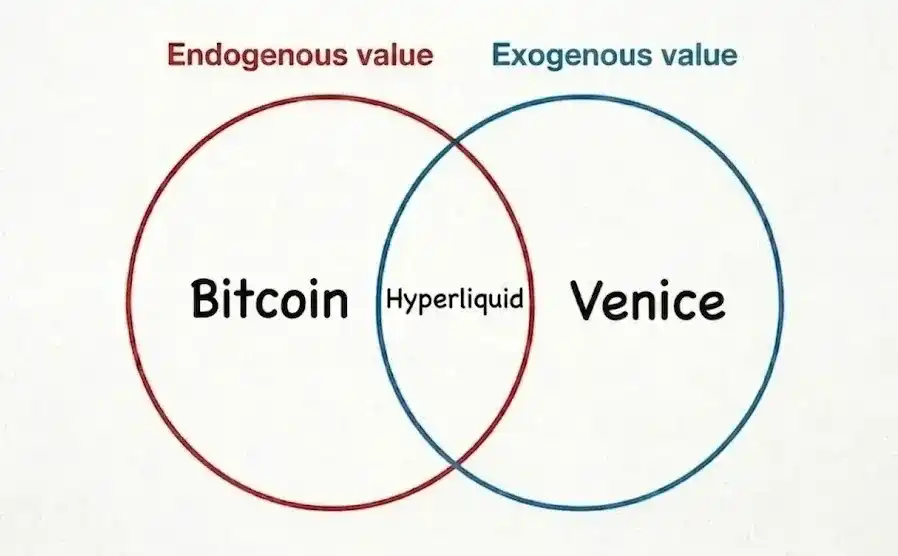
比特币的价值来源于自身属性,并反过来体现在其价格上。价格上涨,会进一步强化市场对其价值属性的认知。牛市顶峰时,比特币被奉为 「星际通用货币」,是人类手中最稀缺的数字流通资产;熊市谷底之际,它又被贬低为毫无现金流支撑的数字收藏品。

Hyperliquid 则处于两大阵营之间。其大部分业务依旧依赖加密市场行情,但供需两端都在不断拓宽。不少链上金融基础设施都属于这一范畴,底层资产也逐步转向现实资产代币化品类。
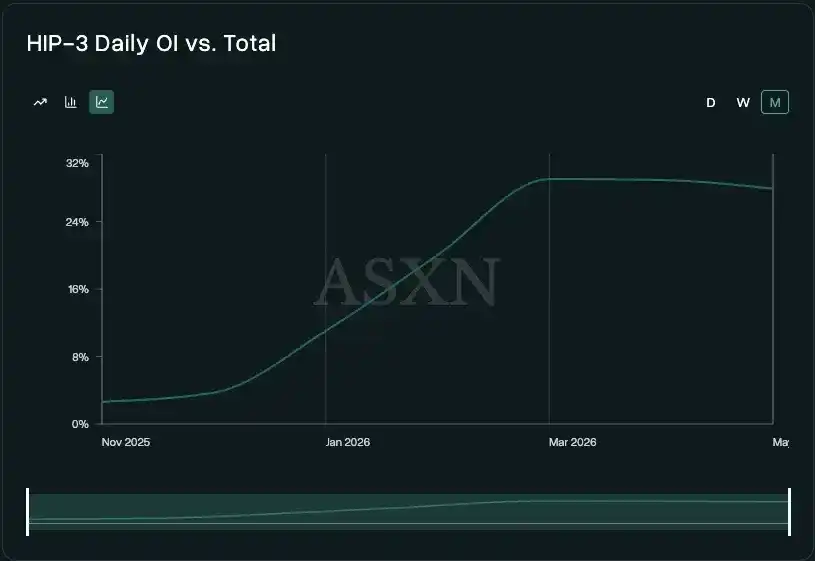
HIP-3 未平仓合约量可大致反映非加密类交易的活跃度。目前,HIP-3 合约占 Hyperliquid 总未平仓合约量的比重约 30%,而在 2025 年 11 月,这一比例仅为 4%。即将上线的 HIP-4 预测市场,还会进一步拉动增长,同时带来新增交易用户与交易标的。

而像 Venice 这类项目,则完全归属于外生型阵营,其发展逻辑彻底脱离加密市场。虽然部分用户群体存在重叠,但它的商业模式更偏向消费级人工智能,而非 Uniswap 这类原生加密产品。Uniswap 的核心业务仍是用户交易各类内生型资产,业绩自然随资产价格波动;Venice 则将私有多模态推理服务打包,采用 「按需使用 + 订阅」 的收费模式。

Venice 与加密领域唯一的关联,就是选用代币作为价值承载载体,另外其部分算力供应商本身带有加密行业背景。项目负责人 Erik Voorhees 深耕加密行业,他认为如果运用得当,代币可以成为绝佳的营销工具。

上市企业中的 Figure 也是典型案例。这家金融科技借贷公司自研区块链,将房屋净值贷款的审批时长缩短至 5 分钟以内。对它而言,区块链只是配套技术,核心价值在于信贷业务本身。

无论是代币市场还是上市公司板块,外生型赛道规模化崛起,有着深远意义。过去,由于绝大多数商业模式都与加密资产价格深度绑定,纯粹自下而上的基本面投资很难落地。加密行业并非从未出现过 「重区块链、轻比特币」 的叙事热潮,但过往几轮风口最终都会回归比特币行情。究其原因,这些赛道始终没能形成稳定需求、产生持续营收;即便有收入,也无法传导至代币价值。一旦代币价格停止上涨,项目便失去了支撑。

这一轮行情与以往截然不同。如今我们能清晰看到付费群体与付费逻辑,多数赛道的市场需求可量化,不再是单纯靠情绪炒作;同时,代币作为价值载体的机制也在持续完善。Venice 的收入来自用户购买 AI 推理服务的真实付费,即便加密市场整体下行,其业务也不会受到明显冲击,因为它本就不依赖币价涨跌。本轮周期拥有前几轮风口不具备的两大核心优势:可持续的实际使用需求,以及投资者开始基于基本面、而非单纯市场叙事进行投资。

私募市场里的稳定币赛道亦是如此。2026 年 3 月,万事达卡宣布最高将斥资 18 亿美元收购 BVNK,而这家公司在 15 个月前完成 B 轮融资时,估值仅为 7.5 亿美元。另一家稳定币相关企业 Bridge 在 2025 年 2 月被 Stripe 以 11 亿美元收购,据 Stripe 年度报告显示,Bridge 目前的年业务增速达到四倍。这些企业的发展,全都和加密行业牛熊周期脱钩。

这并不是说看空内生型资产。就像黄金乃至小型金矿企业,在投资组合中始终有其配置价值,比特币及一众内生型加密资产也同样拥有存在的意义。但两类资产的业绩驱动逻辑、市场联动性,已然出现本质区别,数据也印证了这一点。
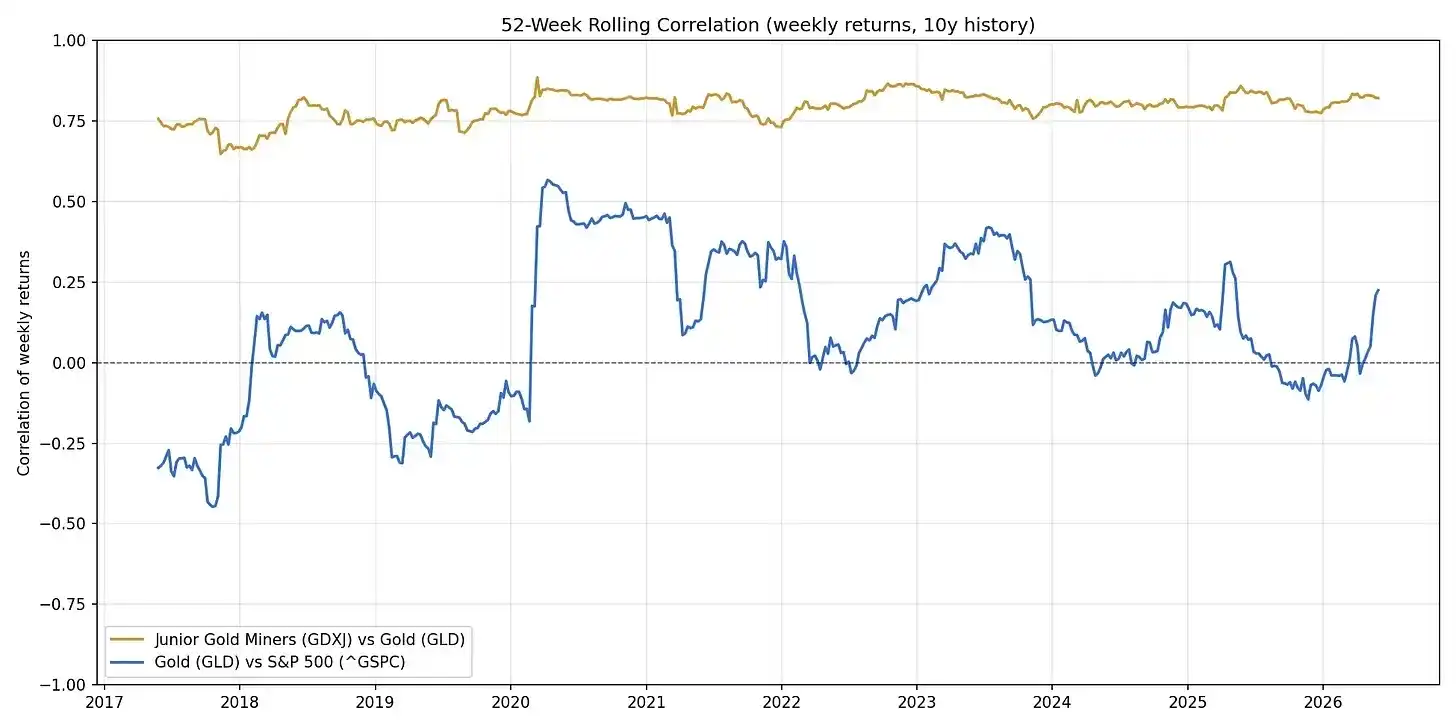
这个比喻可以具象化:小型金矿股与黄金价格的相关系数常年维持在 0.75 左右。这正是如今传统加密市场的现状 —— 一众加密资产如同小型金矿,比特币则对应黄金,整个赛道都是对标比特币的杠杆式投资。而图中的蓝色曲线代表另一种关系:黄金与标普 500 指数会受宏观经济影响产生微弱联动,但各自拥有独立的运行逻辑。这也正是外生型资产未来的发展方向。长期来看,这类资产会逐步脱离 「跟随比特币涨跌」 的走势。
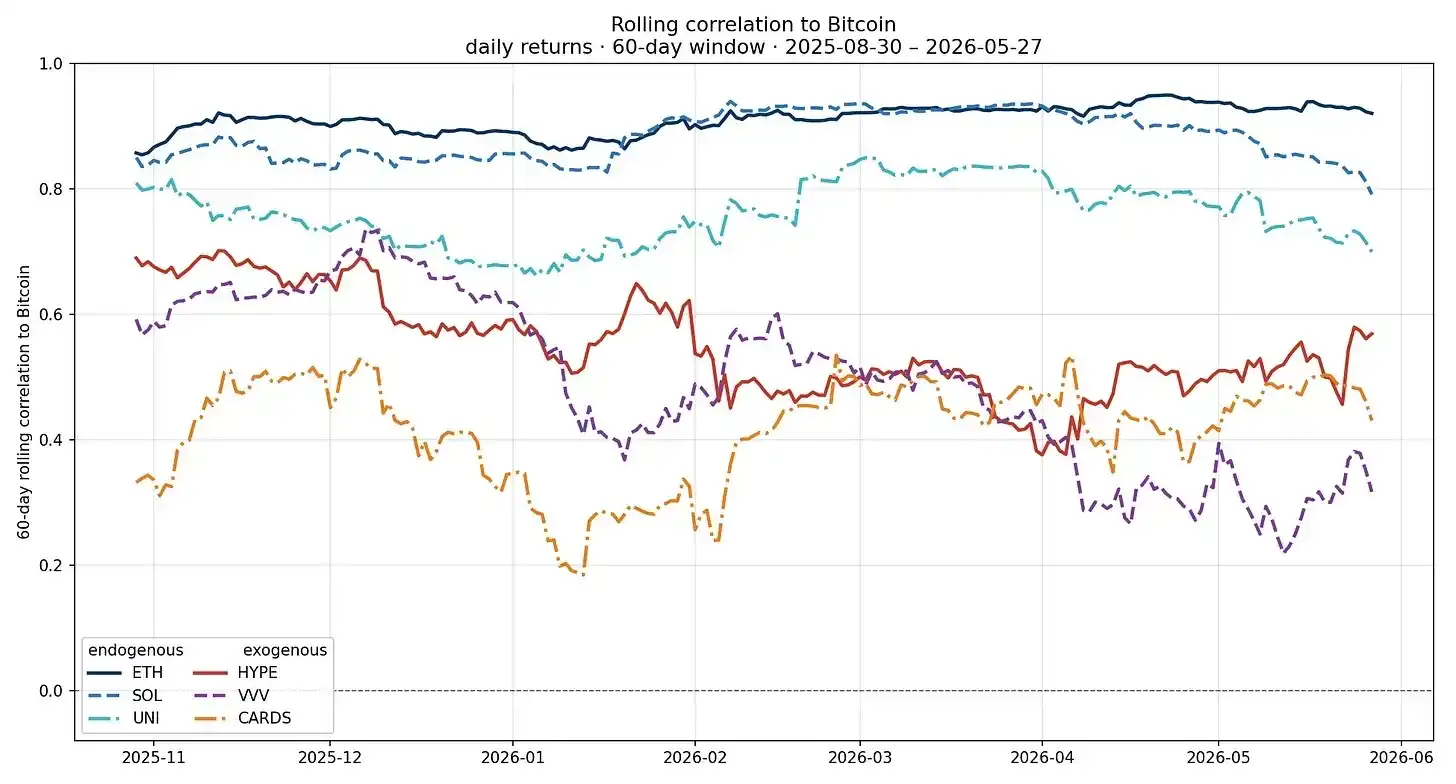
需要说明的是,不少外生型标的本身也发行代币,这一现象既印证了上述趋势,也算是一种特殊情况。

目前,绝大多数内生型资产依旧和比特币走势高度同步;少数外生型资产的联动性有所降低,但由于发展周期尚短,暂时还不具备强参考性。行业规律向来是基本面先行,市场联动关系随后发生改变。

这一变化,也彻底改写了行业分析逻辑。研究外生型资产,需要像分析传统企业一样做基本面尽调:梳理付费用户群体、测算单体经济模型、评估行业护城河。比特币价格不再是第一参考指标,分析这类项目,更像是金融科技投资者在做研判,只是额外多了资产托管这一特殊环节。

以下是当下具备发展潜力的外生型赛道:

  • 链上交易所与经纪服务商
  • 长尾资产代币化的清算、赎回解决方案
  • 加密 + 人工智能深度融合赛道(私有推理、类似 Nous Research 旗下 Psyche 的分布式开源模型训练等)
  • 新型数字银行(侧重隐私保护的 Payy、Raycash 值得关注;为其提供可编程隐私基础设施的 Aztec 与 Zama 也具备潜力)
  • 借贷赛道(Morpho 已成为机构类回购市场的主流选择;Valinor、3jane 等中小项目则深耕私人信贷细分领域)
  • 稳定币发行商、现实资产代币化服务商
  • 支付通道(通用支付领域,Stripe 和 Tempo 是行业标杆;智能体支付领域,目前由 Coinbase 领跑)
  • 非金融类加密消费产品(以 Venice、Collector Crypt 为代表,这类项目将实体业务价值赋予代币,既拉动产品普及,也实现了营销赋能)
  • 智能体经济(核心机遇在于接入层的智能体、服务商与创作者协同生态,该环节可替代性较低。Cloudflare 布局领先,但它究竟会从中收取流量费用,还是仅提供基础功能服务,目前仍未有定论)

现阶段,想要布局上述赛道,投资相关企业股权仍是最稳妥的方式,优质代币标的属于少数特例。只有当代币的价值承载机制持续优化,其作用才会进一步提升,而这需要监管机构与全行业共同推进。目前相关工作已有进展:监管层面,《CLARITY 法案》稳步推进;行业层面,Blockworks 等机构也在推动市场信息透明化。代币机制仍有很长的优化之路要走。

但以上细节,都改变不了一个核心趋势:加密市场的驱动力,正从单一因素转向多元因素。行业研究的重心,也从解读比特币行情图表,转变为深耕企业基本面。未来十年,不必再困惑为何 「加密市场」 不再齐涨齐跌,因为行业格局已经焕然一新。


Related Questions

Q文章中将加密资产分为哪两大阵营?并简要解释其定义。

A文章将加密资产分为两大阵营:内生型资产和外生型资产。内生型资产指传统加密品类,其价值完全依托整个加密资产市场的行情涨跌。外生型资产只是名义上属于加密赛道,其价值走势越来越独立于加密市场,拥有自身的基本面和业务逻辑。

Q以Venice项目为例,说明为什么它被归为外生型资产?

AVenice项目被归为外生型资产,是因为其发展逻辑彻底脱离加密市场。它的核心商业模式是提供消费级人工智能服务(私有多模态推理服务),采用“按需使用+订阅”的收费模式。其收入来源于用户购买AI服务的真实付费,不受加密市场牛熊周期影响。它与加密领域的关联仅在于使用代币作为价值载体,以及部分算力供应商有加密行业背景。

Q文章认为本轮行情与以往相比,有哪两大核心优势?

A本轮行情与以往相比,拥有两大核心优势:一是拥有了可持续的实际使用需求,多数赛道的市场需求变得可量化,而非单纯情绪炒作;二是投资者开始基于项目的基本面(如付费用户、营收模型、行业护城河)进行投资,而非仅仅依赖市场叙事和代币价格涨跌。

Q文章中提到分析外生型资产的逻辑发生了怎样的转变?

A分析外生型资产的逻辑发生了根本性转变。其研究重点不再是解读比特币行情图表,而是像分析传统企业一样进行基本面尽调。这包括梳理付费用户群体、测算单体经济模型、评估行业护城河等。比特币价格不再是首要参考指标,分析这类项目更像是金融科技投资研判,只是额外需要考虑资产托管这一环节。

Q文章列举了哪些当下具备发展潜力的外生型赛道?(请至少列出五个)

A文章列举的具备发展潜力的外生型赛道包括:链上交易所与经纪服务商;长尾资产代币化的清算、赎回解决方案;加密与人工智能深度融合赛道(如私有推理、分布式开源模型训练);新型数字银行(侧重隐私保护);借贷赛道(如机构回购、私人信贷);稳定币发行商、现实资产代币化服务商;支付通道(通用支付、智能体支付);非金融类加密消费产品(如Venice、Collector Crypt);智能体经济(如接入层生态、服务商协同)。

Related Reads

Trump's Crypto Empire: A $2.3 Billion Wealth Transfer Experiment

In June 2026, Reuters investigations revealed that since Donald Trump's return to the White House, his family has accumulated roughly $2.3 billion in profits from four core crypto ventures: World Liberty Financial (WLFI), the $TRUMP meme coin, American Bitcoin, and ALT5 Sigma (later renamed AI Financial). Coincidentally, overall investor losses in these projects were estimated to be a similar amount. The businesses, spanning DeFi, stablecoins, meme coins, Bitcoin mining, and digital payments, largely relied not on technological innovation but on converting the political influence and notoriety of the Trump brand into financial assets sold to the market. This marks a dramatic shift from Trump's earlier skepticism of cryptocurrencies. The ventures operated on a similar logic: leveraging the Trump name to generate market hype and trust, attracting investment through token sales or public listings, and enabling the family to capture profits upfront through equity, token allocations, and fees, while later entrants often bore the brunt of the risk as markets cooled. WLFI, the most profitable venture, generated an estimated $1.6 billion for the family, primarily through sales of its locked, illiquid governance token and its USD1 stablecoin. The $TRUMP meme coin, a direct monetization of the presidential IP, brought in over $600 million for Trump-linked entities before its price crashed nearly 97% from its peak. American Bitcoin gained a "Trump stock" premium for its mining operations, and ALT5 Sigma/AI Financial combined Trump, AI, and crypto themes for a temporary valuation surge. The episode underscores how political influence can be packaged into financial assets, creating substantial wealth for promoters while highlighting the risks for investors who base decisions on hype and brand allegiance over fundamental business models and cash flows.

marsbit6m ago

Trump's Crypto Empire: A $2.3 Billion Wealth Transfer Experiment

marsbit6m ago

CFTC Proposes New Rules for Prediction Markets, Redefining Which Events Can Be Listed and Who Can Participate

The U.S. Commodity Futures Trading Commission (CFTC) has proposed new rules to establish a clearer regulatory framework for prediction markets. The proposal aims to modify how "event contracts" are reviewed, creating a structured process to determine if contracts involving terrorism, assassination, war, or illegal activities violate the public interest. This moves away from a blanket ban toward a case-by-case assessment of whether a contract's subject matter is acceptable for financial trading. A key focus is distinguishing between predicting the impact of risks and predicting the occurrence of harm. The proposal suggests that many sports-based prediction markets—such as those on game outcomes, scores, or season standings—may be permissible as they can provide price discovery and meaningful information. However, markets on easily manipulated events like specific player injuries, referee calls, or outcomes of youth sports would face stricter scrutiny. The rules directly target insider trading and manipulation risks, highlighting cases where individuals with non-public information or the ability to influence an event's outcome could unfairly profit. This underscores a shift toward ensuring market fairness. The proposal does not end the regulatory debate, particularly with state gambling regulators who argue that sports prediction markets are essentially sports betting and should fall under state jurisdiction. Nonetheless, the CFTC's action signals a move toward formalizing prediction markets, pushing the industry from a phase of rapid, often unregulated expansion into a more institutionalized, rule-based environment that more closely resembles traditional financial markets.

marsbit18m ago

CFTC Proposes New Rules for Prediction Markets, Redefining Which Events Can Be Listed and Who Can Participate

marsbit18m ago

CFTC Proposes New Rules for Prediction Markets, Redefining Which Events and Who Can Participate

The U.S. Commodity Futures Trading Commission (CFTC) has proposed new rules to establish a regulatory framework for prediction markets, aiming to define which event contracts can be traded and who can participate. The 267-page proposal seeks to amend regulations to create a structured review process for "event contracts." The core goal is to determine whether contracts involving sensitive topics like terrorism, assassination, war, or illegal activities are contrary to the "public interest." The CFTC's approach is not an outright ban but a case-by-case assessment, focusing on whether a contract predicts harmful acts themselves or merely their commercial or risk-related impacts. The proposal suggests that most mainstream sports prediction markets—based on final scores, winners, or season outcomes—may be permissible as they provide price discovery and informational value. However, markets on easily manipulated granular events (e.g., player injuries, specific referee calls) or those encouraging harm/cheating would face stricter scrutiny. A primary regulatory target is insider trading and market manipulation, where individuals with non-public knowledge or influence over an event's outcome could unfairly profit. Recent alleged incidents involving military personnel, former politicians, and corporate insiders highlight this risk. The move clarifies federal oversight but does not end the debate. State regulators and gambling associations argue that many prediction markets, especially on sports, constitute gambling and should fall under state, not federal, jurisdiction. This sets up a potential conflict over regulatory authority. Overall, the CFTC's proposal signals a shift for prediction markets from rapid, less-regulated expansion toward a more institutionalized, rules-based model resembling traditional financial markets. Growth will increasingly depend on demonstrating market fairness, transparent settlement, and controlled risks.

Odaily星球日报27m ago

CFTC Proposes New Rules for Prediction Markets, Redefining Which Events and Who Can Participate

Odaily星球日报27m ago

Trading

Spot
Futures

Hot Articles

What is $BITCOIN

DIGITAL GOLD ($BITCOIN): A Comprehensive Analysis Introduction to DIGITAL GOLD ($BITCOIN) DIGITAL GOLD ($BITCOIN) is a blockchain-based project operating on the Solana network, which aims to combine the characteristics of traditional precious metals with the innovation of decentralized technologies. While it shares a name with Bitcoin, often referred to as “digital gold” due to its perception as a store of value, DIGITAL GOLD is a separate token designed to create a unique ecosystem within the Web3 landscape. Its goal is to position itself as a viable alternative digital asset, although specifics regarding its applications and functionalities are still developing. What is DIGITAL GOLD ($BITCOIN)? DIGITAL GOLD ($BITCOIN) is a cryptocurrency token explicitly designed for use on the Solana blockchain. In contrast to Bitcoin, which provides a widely recognized value storage role, this token appears to focus on broader applications and characteristics. Notable aspects include: Blockchain Infrastructure: The token is built on the Solana blockchain, known for its capacity to handle high-speed and low-cost transactions. Supply Dynamics: DIGITAL GOLD has a maximum supply capped at 100 quadrillion tokens (100P $BITCOIN), although details regarding its circulating supply are currently undisclosed. Utility: While precise functionalities are not explicitly outlined, there are indications that the token could be utilized for various applications, potentially involving decentralized applications (dApps) or asset tokenization strategies. Who is the Creator of DIGITAL GOLD ($BITCOIN)? At present, the identity of the creators and development team behind DIGITAL GOLD ($BITCOIN) remains unknown. This situation is typical among many innovative projects within the blockchain space, particularly those aligning with decentralized finance and meme coin phenomena. While such anonymity may foster a community-driven culture, it intensifies concerns about governance and accountability. Who are the Investors of DIGITAL GOLD ($BITCOIN)? The available information indicates that DIGITAL GOLD ($BITCOIN) does not have any known institutional backers or prominent venture capital investments. The project seems to operate on a peer-to-peer model focused on community support and adoption rather than traditional funding routes. Its activity and liquidity are primarily situated on decentralized exchanges (DEXs), such as PumpSwap, rather than established centralized trading platforms, further highlighting its grassroots approach. How DIGITAL GOLD ($BITCOIN) Works The operational mechanics of DIGITAL GOLD ($BITCOIN) can be elaborated on based on its blockchain design and network attributes: Consensus Mechanism: By leveraging Solana’s unique proof-of-history (PoH) combined with a proof-of-stake (PoS) model, the project ensures efficient transaction validation contributing to the network's high performance. Tokenomics: While specific deflationary mechanisms have not been extensively detailed, the vast maximum token supply implies that it may cater to microtransactions or niche use cases that are still to be defined. Interoperability: There exists the potential for integration with Solana’s broader ecosystem, including various decentralized finance (DeFi) platforms. However, the details regarding specific integrations remain unspecified. Timeline of Key Events Here is a timeline that highlights significant milestones concerning DIGITAL GOLD ($BITCOIN): 2023: The initial deployment of the token occurs on the Solana blockchain, marked by its contract address. 2024: DIGITAL GOLD gains visibility as it becomes available for trading on decentralized exchanges like PumpSwap, allowing users to trade it against SOL. 2025: The project witnesses sporadic trading activity and potential interest in community-led engagements, although no noteworthy partnerships or technical advancements have been documented as of yet. Critical Analysis Strengths Scalability: The underlying Solana infrastructure supports high transaction volumes, which could enhance the utility of $BITCOIN in various transaction scenarios. Accessibility: The potential low trading price per token could attract retail investors, facilitating wider participation due to fractional ownership opportunities. Risks Lack of Transparency: The absence of publicly known backers, developers, or an audit process may yield skepticism regarding the project's sustainability and trustworthiness. Market Volatility: The trading activity is heavily reliant on speculative behavior, which can result in significant price volatility and uncertainty for investors. Conclusion DIGITAL GOLD ($BITCOIN) emerges as an intriguing yet ambiguous project within the rapidly evolving Solana ecosystem. While it attempts to leverage the “digital gold” narrative, its departure from Bitcoin's established role as a store of value underscores the need for a clearer differentiation of its intended utility and governance structure. Future acceptance and adoption will likely depend on addressing the current opacity and defining its operational and economic strategies more explicitly. Note: This report encompasses synthesised information available as of October 2023, and developments may have transpired beyond the research period.

363 Total ViewsPublished 2025.05.13Updated 2025.05.13

What is $BITCOIN

Discussions

Welcome to the HTX Community. Here, you can stay informed about the latest platform developments and gain access to professional market insights. Users' opinions on the price of BTC (BTC) are presented below.

活动图片