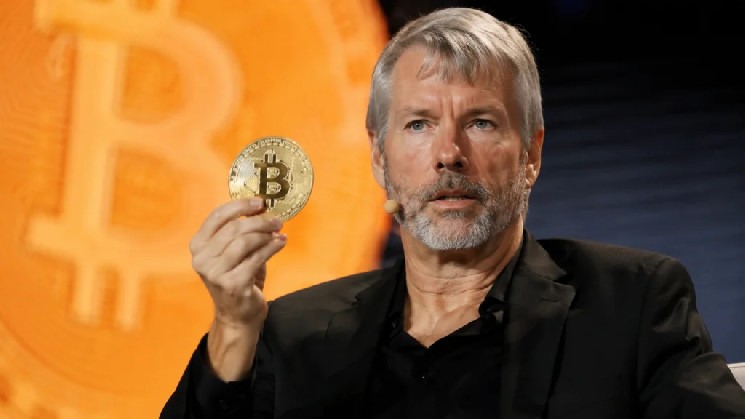
Tom Lee's Core Investment Logic for 2026: Companies Selling Scarce Assets Are Crushing the Market

链捕手Published on 2026-05-10Last updated on 2026-05-10

Abstract

Tom Lee, founder of Fundstrat and manager of the Granny Shots fund, argues "scarcity" is the core investment theme for 2026. His thesis states companies selling "scarce assets"—products or services with structurally constrained supply and explosively growing demand—are dominating the market due to strong pricing power. He identifies three key scarcity areas: 1) AI compute (e.g., NVIDIA, AMD), limited by advanced chip manufacturing capacity; 2) AI memory/HBM (e.g., Micron), facing complex production challenges; and 3) energy infrastructure (e.g., GE Vernova), with long lead times for equipment needed to power booming data centers. Lee provides a macro trading framework: peaking oil prices signal lower inflation and potential Fed rate cuts, which benefit growth assets like the S&P 500 and Magnificent 7 stocks. Despite the S&P reaching his initial 7300 target, he sees a potential "feel-like-a-bear-market" mid-year pullback as a buying opportunity, raising his year-end target to 7700. Investment themes are prioritized as: 1) Global labor scarcity + AI automation, 2) Cybersecurity + energy security. The conclusion is that identifying companies benefiting from fundamental supply-demand imbalances, not just chasing rallies, is the path to outperformance in 2026.

Original Title: Tom Lee's Core Investment Logic for 2026: 'Companies Selling Scarce Assets Are Crushing the Market'

Original Author: Chris Lee

Tom Lee, one of Wall Street's most accurate bulls and founder of Fundstrat and manager of the Granny Shots fund, recently stated that the single most crucial investment keyword for the 2026 market is 'scarcity.' He bluntly said, 'Companies selling scarce assets are crushing the market.' This seemingly simple statement contains a complete stock-picking logic, macro judgment, and profound bets on Federal Reserve policy and geopolitics.

I. Core Definition and Logic of Scarce Assets

The 'scarce assets' defined by Tom Lee are not traditional scarce goods like gold or collectibles, but **products or services where supply is severely constrained while demand is exploding.** This structural supply-demand mismatch grants sellers extremely strong pricing power, thereby driving excess returns.

He specifically highlights three key scarcity areas:

1. AI Computing Power: Companies like NVIDIA, AMD, and Intel. Training and running AI large models require massive amounts of GPUs and accelerator chips, but capacity expansion for TSMC's advanced nodes, CoWoS packaging, etc., faces physical limits. According to reports, the AI chip supply chain tightness will last at least until the end of 2026.

2. AI Memory (HBM High-Bandwidth Memory): Manufacturers like Micron and SanDisk. In AI servers, HBM is a bottleneck as critical as GPUs, with complex manufacturing processes and slow yield improvements; capacity is already fully booked by giants like NVIDIA.

3. Energy Infrastructure: Companies like GE Vernova (GEV). Data center power demand is exploding; by 2030, North American data center electricity consumption is projected to account for 9-10% of total power generation (only 3-4% in 2025). Delivery cycles for large equipment like gas turbines and transformers are as long as 2-3 years, with extremely slow capacity expansion.

Logical Chain: The demand brought by the AI revolution is explosive, while physical, process-related, and time constraints on the supply side cannot match it quickly. This imbalance is not a short-term phenomenon but a structural opportunity that will persist through 2026. Precisely because of this, these companies have high gross margins, strong pricing power, and their performance and stock prices far exceed market averages. This is also the core strategy of the Granny Shots fund - focusing on 'companies selling scarce things.' The fund's AUM has surpassed $4 billion, with capital voting with its feet.

II. Macro Background and Practical Trading Framework

Tom Lee emphasizes that the market is currently in a 'fog of war' with persistent geopolitical risks. However, he observes that oil prices may have peaked and provides a clear trading framework: when oil prices fall, buy assets negatively correlated with oil prices, including the S&P 500, Ethereum, and the Mag7 (Magnificent 7).

The logic is: Falling oil prices → easing inflationary pressures → increased expectations for Fed rate cuts → benefiting growth stocks and risk assets. While conflicts may push oil prices higher, a peak and subsequent decline in oil prices can instead become a positive signal to buy growth stocks. This provides investors with a practical guide for contrarian action in an uncertain environment.

III. Strong Earnings and Full-Year Market Outlook

This quarter's earnings season has been exceptionally bright: among companies that have reported, 87% exceeded expectations, by a significant margin of 19%. Tom Lee points out this is 'emerging market-level' earnings growth happening in the US, with the core driver being the productivity revolution brought by AI.

Market Path Judgment:

The S&P 500 has reached the 7,300 point target predicted at the start of the year, but **now is not the time to sell**.

A 'bear market-like' correction may occur mid-year, potentially driven by the market testing a new Fed chair or extended geopolitical conflicts.

Following the correction, a rebound is expected, with the full-year target revised up to at least 7,700 points, maintaining an overall bullish view.

He specifically reminds: The Mag7, cryptocurrency, and software sectors have already experienced one bear market-like episode. Investors shouldn't chase highs at 7,300 points, nor panic during a correction—the correction is precisely a good opportunity to add to positions in scarce assets.

IV. Theme Prioritization and Real-World Implications

Tom Lee ranks investment themes as follows:

1. Global Labor Scarcity + AI (Top Priority): An aging population pushes up labor costs, forcing companies to replace human labor with AI and automation—a structural trend lasting a decade.

2. Cybersecurity + Energy Security (Second Priority): Geopolitical tensions are prompting countries to increase investment in related infrastructure.

3. Seasonal Factors.

Last week's performance of Granny Shots stocks also validated this framework: top gainers like Qantas, Google, Caterpillar, Tesla, and AMD all fit the scarcity logic; some short-term pullbacks (e.g., GE Vernova, Sofi) were mostly due to guidance falling short of the market's exceedingly high expectations—normal volatility that doesn't change the long-term trend.

Conclusion: The Investment Code for 2026 is 'Scarcity'

Tom Lee's complete logical chain is clear and powerful: AI-driven structural demand + supply constraints = pricing power and excess returns for scarce assets. Amid macro uncertainty, peaking oil prices are a signal for growth stocks, a mid-year correction is an opportunity to add positions, and the full-year S&P 500 may challenge 7,700 points.

For investors, the real takeaway is not simply chasing rallies, but shifting mindset: from 'what's rising' to 'why it's rising.' Only by seizing companies with constrained supply and exploding demand can one achieve sustained excess returns in 2026. Scarcity is not a concept; it's the tangible, hard constraint of supply and demand—this is precisely the most important investment framework Tom Lee leaves for the market.


Trending Cryptos

Related Questions

QAccording to Tom Lee, what is the single most important investment keyword for 2026?

AScarcity.

QWhat is Tom Lee's definition of 'scarce assets' in the context of this article?

AScarce assets are products or services where supply is severely constrained while demand is experiencing explosive growth. This structural supply-demand mismatch gives sellers strong pricing power.

QWhat are the three primary categories of scarce assets that Tom Lee highlights?

AThe three categories are: 1. AI computing power (e.g., NVIDIA, AMD, Intel), 2. AI memory/HBM (e.g., Micron, SanDisk), and 3. Energy infrastructure (e.g., GE Vernova).

QWhat is the practical trading framework Tom Lee suggests based on oil price movements?

AHe suggests that when oil prices decline, investors should buy assets negatively correlated with oil, such as the S&P 500, Ethereum, and the Magnificent 7 (Mag7). The logic is that lower oil prices ease inflation pressure, increase expectations for Fed rate cuts, and benefit growth stocks and risk assets.

QWhat is Tom Lee's outlook for the S&P 500 index, including his key advice regarding market pullbacks?

AHe believes the S&P 500, having reached his initial 7300-point target, still has room to rise, with a full-year target of at least 7700 points. He expects a 'feel like a bear market' pullback mid-year but advises investors not to panic. Instead, he views such a pullback as an opportunity to add positions in scarce assets.

Related Reads

The Crypto Industry Enters the 'Show Me' Era: Vision Alone Is No Longer Enough

The crypto industry has entered a "Show Me" era, where grand visions and white papers are no longer sufficient to gain traction. This shift is driven by increased skepticism, high-profile bad actors, and notably, the serious entry of traditional finance (TradFi) institutions like BlackRock, Fidelity, and JPMorgan Chase, which are launching real, scaled products such as tokenized funds and blockchain-based settlement. This raises the bar for what constitutes a credible project. The communication dynamic has fundamentally changed. The focus is no longer on "what you are building" but on "what you have built and who is using it." Startups must now provide a "proof stack": verifiable data like mainnet transaction volume and active wallets, genuine partnerships with signed contracts, and evidence of organic product-market fit from real users, not just investors. Announcements must be backed by concrete, chain-verifiable evidence. For communication strategies, this means leading with proven facts and hard data—even if modest—rather than speculative narratives. A compelling story must be grounded in demonstrated results. While vision remains important, the balance has inverted from 80% vision/20% substance to the opposite. This higher threshold ultimately benefits builders with genuine traction, filtering out noise and allowing their real signals to stand out clearly. The "Show Me" era is a permanent maturation, demanding that communication strategies prove value, not just promise it.

链捕手18m ago

The Crypto Industry Enters the 'Show Me' Era: Vision Alone Is No Longer Enough

链捕手18m ago

Meta Follows the Trend into Prediction Markets: Can It Avoid Repeating the Failure of the Metaverse?

Meta, the tech giant behind Facebook, has reportedly formed a team to develop "Arena," a new application focused on prediction markets. Users would use platform points to place bets on outcomes in politics, sports, and global events. This move follows Meta's massive, nearly $900 billion, losses from its heavily-invested metaverse division, Reality Labs. The prediction market industry is already showing strong demand, with leading platforms like Kalshi and Polymarket facilitating hundreds of billions in annual volume. Meta, with its 3.56 billion daily active users across its apps, possesses the unprecedented scale to bring this niche activity to a mainstream audience, similar to its past success in cloning features like Stories and Reels. However, Arena faces significant hurdles. Meta plans to start with a points-based system to avoid strict financial regulations, but this may dilute the core incentive of accurate prediction that real-money markets provide. More critically, Meta enters the space with a major trust deficit stemming from its past regulatory battles, notably the failed Libra/Diem stablecoin project, and its controversial history with political content and misinformation. The prediction market sector itself is under increasing regulatory scrutiny, with recent CFTC actions including fines and the first-ever insider trading case. While Meta's vast user base offers a unique opportunity to expand the market, its success hinges on navigating complex regulations and rebuilding the credibility necessary for a platform dealing with sensitive topics like elections. The outcome could range from Meta dramatically growing the industry to Arena becoming a high-profile regulatory target before it can scale.

Foresight News35m ago

Meta Follows the Trend into Prediction Markets: Can It Avoid Repeating the Failure of the Metaverse?

Foresight News35m ago

Stock Soars 1200% on First Day, 80s Sales Engineer's Reversal: From Selling FRP to a Fortune of 29 Billion

On its first day of listing, Zhenbao Technology (stock code "N Zhenbao") surged by 1207%, marking itself as the second "ten-bagger" new stock of the year on the STAR Market. The closing price of 585 yuan propelled it into the top 20 of the A-share market by stock price. Dubbed the "first share of semiconductor consumables," the company is backed by a comprehensive shareholder list including National Integrated Circuit Industry Investment Fund Phase II, SMIC, BOE, and YMTC. Zhenbao's business model focuses on supplying critical consumable components like silicon rings and quartz parts to semiconductor fabs. Unlike expensive core equipment with low repurchase rates, these consumables require frequent replacement as long as production lines are running, generating stable recurring revenue—a key reason for its high market valuation. Founder Wang Bing, an 80s-born former sales engineer, built the company by identifying a supply chain vulnerability: foreign monopolies on high-purity materials led to high costs and unstable deliveries for domestic fabs. Zhenbao's strategy emphasized reliability and speed over absolute top-tier performance, offering products at about 50% of the price with 80% of the performance but 100% on delivery and responsiveness. To achieve this, the company vertically integrated its operations across "raw materials + components + surface treatment," ensuring supply chain control and cost reduction. Its clientele now spans major domestic fabs like BOE and Huahong, as well as international players like SK Hynix and Texas Instruments. However, risks accompany its rapid expansion. The IPO raised approximately 1.605 billion yuan primarily for capacity expansion, which will bring significant annual depreciation costs, potentially impacting future profitability. The company's growth is heavily reliant on sustained high levels of fab expansion, making it vulnerable to the semiconductor industry's cyclical downturns. Other concerns include high accounts receivable (70.83% of revenue at one point in 2025), heavy reliance on its top five customers (over 70% of sales), and questions about the stability and authenticity of its R&D investments, evidenced by volatile R&D headcount and unusual spikes in R&D energy consumption. While the "consumables story" commands a premium, long-term valuation will depend on maintaining high capacity utilization and healthy cash flow conversion.

marsbit41m ago

Stock Soars 1200% on First Day, 80s Sales Engineer's Reversal: From Selling FRP to a Fortune of 29 Billion

marsbit41m ago

Trading

Spot
Futures

Hot Articles

How to Buy SCA

Welcome to HTX.com! We've made purchasing Scallop (SCA) simple and convenient. Follow our step-by-step guide to embark on your crypto journey.Step 1: Create Your HTX AccountUse your email or phone number to sign up for a free account on HTX. Experience a hassle-free registration journey and unlock all features.Get My AccountStep 2: Go to Buy Crypto and Choose Your Payment MethodCredit/Debit Card: Use your Visa or Mastercard to buy Scallop (SCA) instantly.Balance: Use funds from your HTX account balance to trade seamlessly.Third Parties: We've added popular payment methods such as Google Pay and Apple Pay to enhance convenience.P2P: Trade directly with other users on HTX.Over-the-Counter (OTC): We offer tailor-made services and competitive exchange rates for traders.Step 3: Store Your Scallop (SCA)After purchasing your Scallop (SCA), store it in your HTX account. Alternatively, you can send it elsewhere via blockchain transfer or use it to trade other cryptocurrencies.Step 4: Trade Scallop (SCA)Easily trade Scallop (SCA) on HTX's spot market. Simply access your account, select your trading pair, execute your trades, and monitor in real-time. We offer a user-friendly experience for both beginners and seasoned traders.

2.0k Total ViewsPublished 2024.03.29Updated 2026.06.02

How to Buy SCA

Discussions

Welcome to the HTX Community. Here, you can stay informed about the latest platform developments and gain access to professional market insights. Users' opinions on the price of SCA (SCA) are presented below.

活动图片