La version Anthropic de « Le Loup est arrivé » provoque la panole à Wall Street ! Une faille de 27 ans, Mythos terrassé par 8 IA

marsbitPublished on 2026-04-12Last updated on 2026-04-12

Abstract

Le nouveau modèle d'Anthropic, Claude Mythos, a provoqué une panique à Wall Street en prétendant avoir découvert des milliers de vulnérabilités zero-day, dont une vieille de 27 ans dans OpenBSD. Cependant, des tests indépendants révèlent que ces résultats sont grandement exagérés : la plupart des vulnérabilités concernent des logiciels obsolètes et inexploitables, et les modèles open-source plus petits (à partir de 3B de paramètres) ont réussi à identifier les mêmes failles pour un coût bien moindre. De plus, les capacités de Claude Opus 4.6 se sont significativement dégradées, avec une baisse de la longueur de raisonnement et une augmentation des coûts pour les utilisateurs. Des experts, comme le hacker George Hotz, accusent Anthropic de dramatiser les risques de sécurité pour faire parler de ses nouveaux modèles, alors que les progrès réels de Mythos seraient linéaires et non révolutionnaires. La stratégie de communication d'Anthropic est critiquée comme une manœuvre marketing alarmiste.

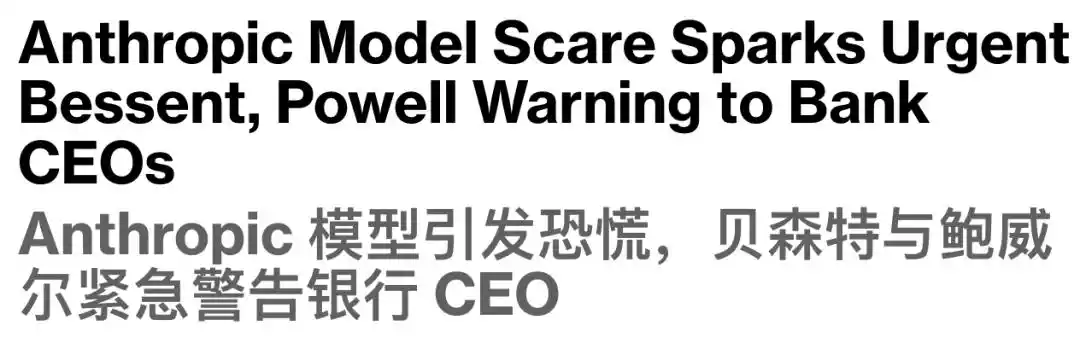
Claude Mythos n'est pas encore vraiment apparu, mais il a déjà provoqué la panique dans tout Wall Street.

En une nuit, les autorités financières américaines ont convoqué d'urgence une réunion avec les grandes banques, l'atmosphère était tendue —

Ils sont unanimement convaincus que Mythos est suffisant pour déclencher une tempête d'attaques réseau sans précédent, pilotée par l'IA.
Mais en réalité, tout le monde a été trompé !

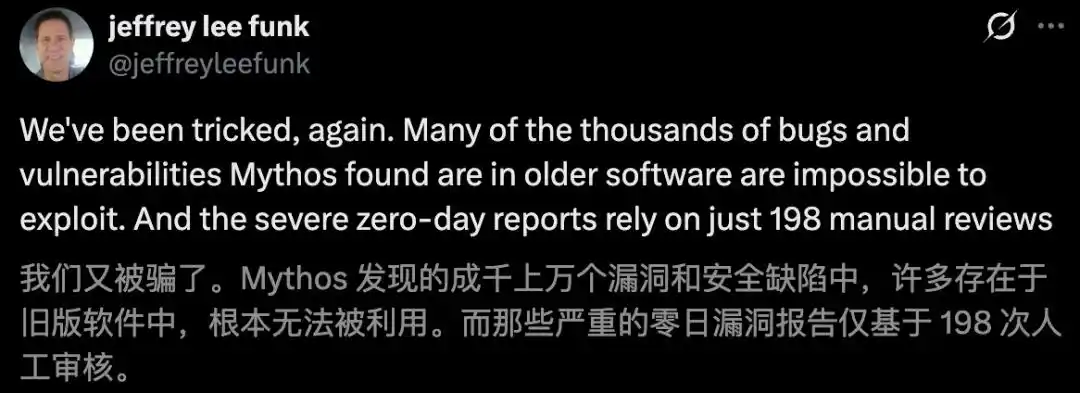
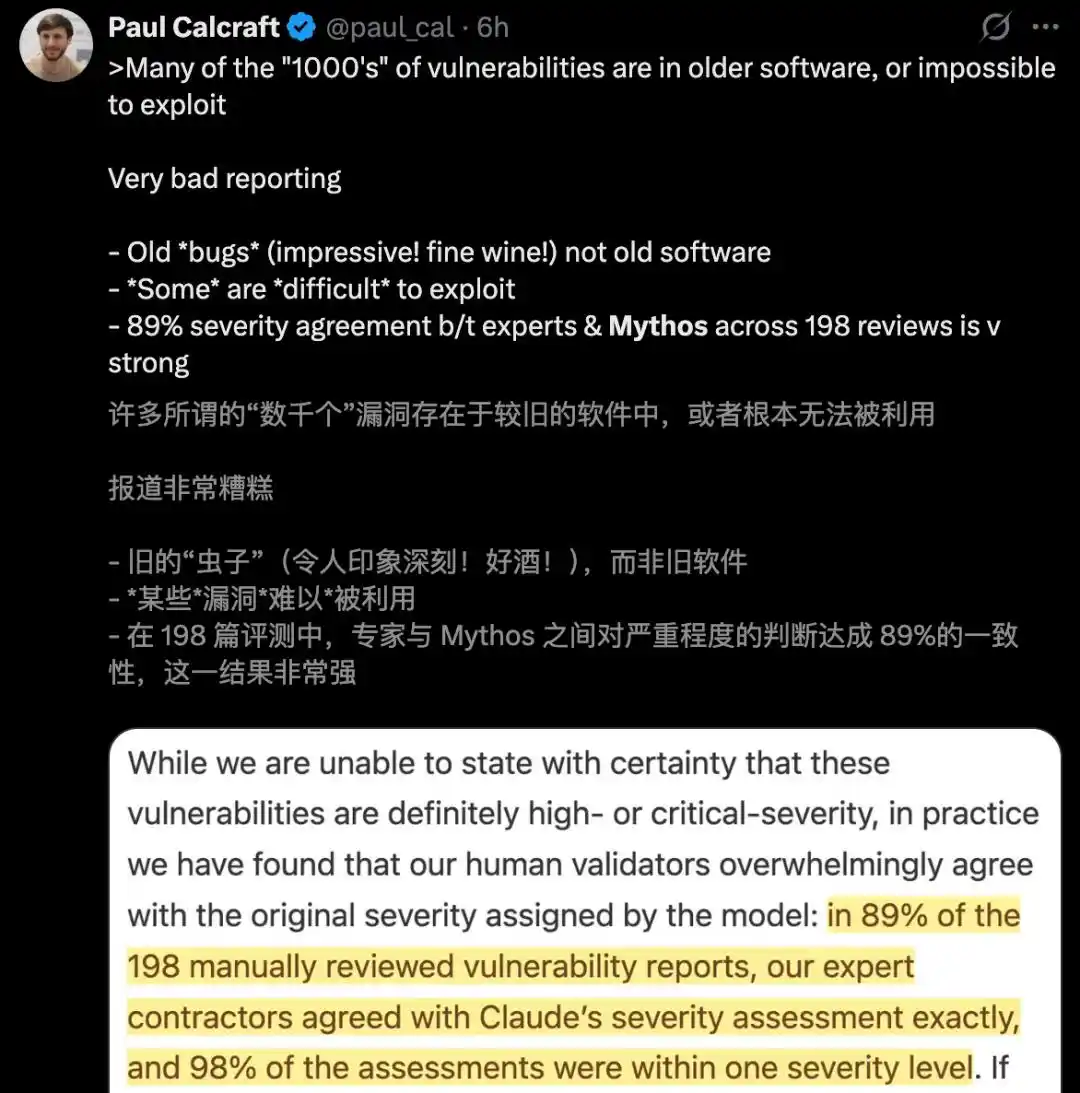
Parmi les milliers de failles découvertes par Mythos, la grande majorité existent dans des « logiciels anciens » qui ne peuvent tout simplement pas être exploités.

Pire encore, ces rapports de vulnérabilités 0day qualifiées de « critiques » ne reposent en réalité que sur 198 vérifications manuelles.
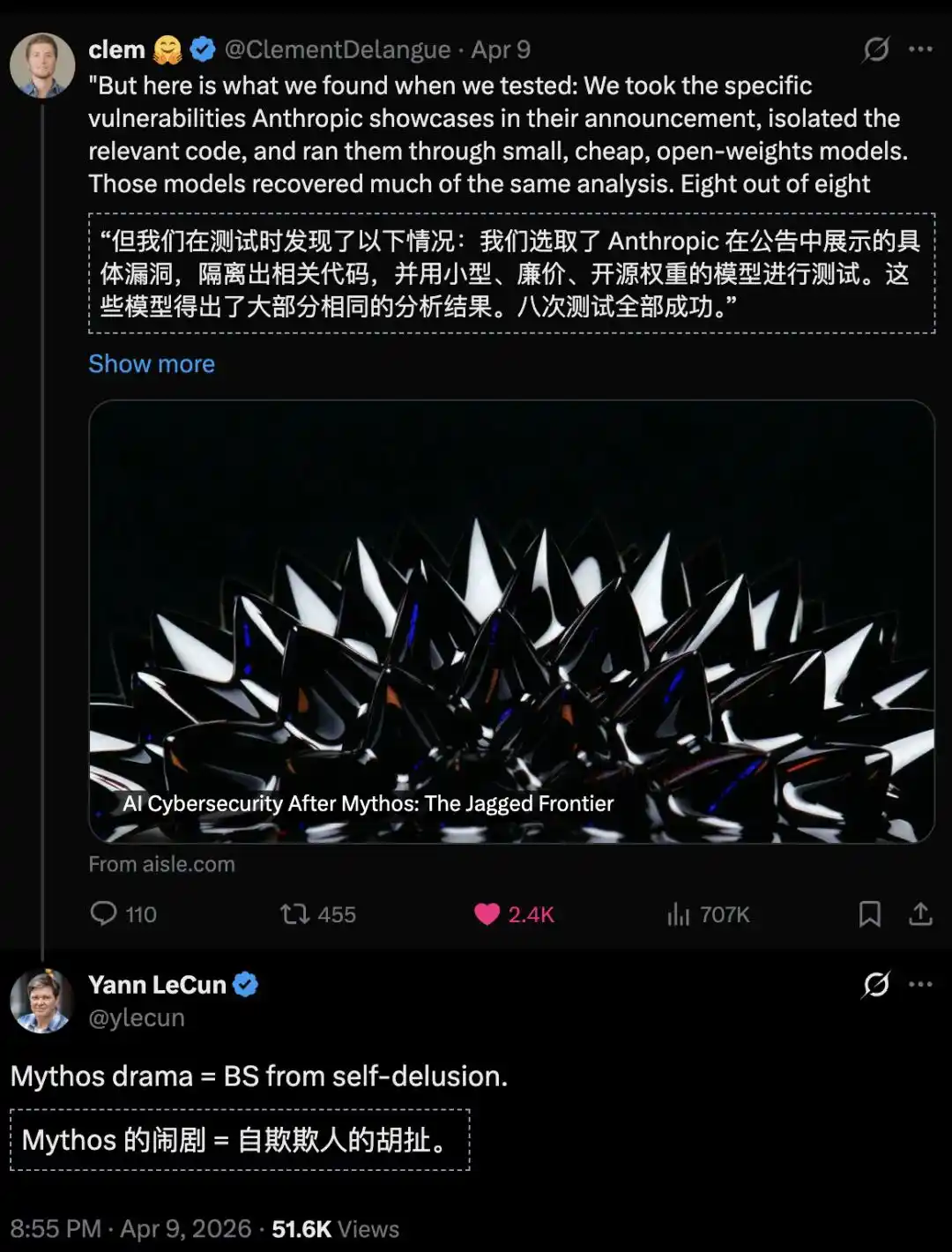
Des chercheurs de l'expérience AISLE ont également retesté les « résultats » de Mythos et ont constaté :

Les capacités de sécurité de l'IA n'augmentent pas linéairement avec la taille du modèle, elles présentent une distribution véritablement « en dents de scie ».

Ils ont utilisé un GPT-OSS-20b avec seulement 3,6 milliards de paramètres activés pour identifier avec précision la faille phare de FreeBSD découverte par Mythos.

Et un modèle avec 5,1 milliards de paramètres activés a également réussi à reproduire la logique d'analyse de la faille OpenBSD latente depuis 27 longues années.

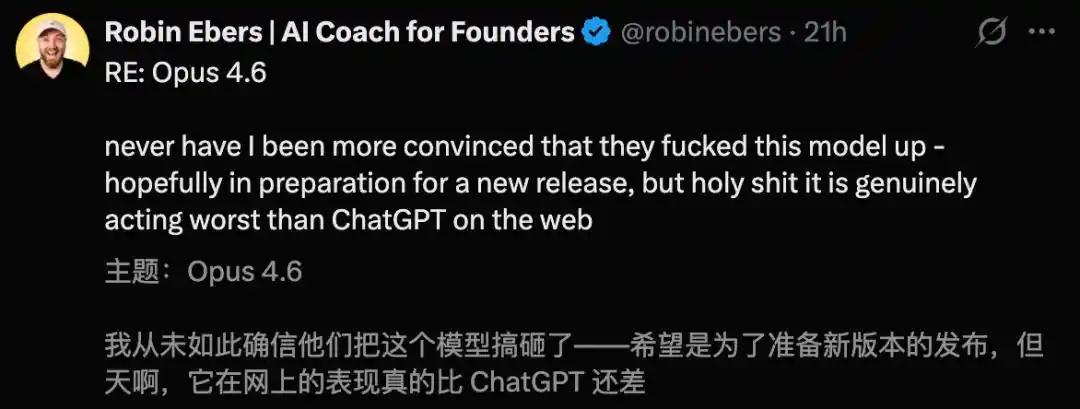
Non seulement les failles découvertes par Mythos sont exagérées, mais d'un autre côté, Claude Opus 4.6 est accusé d'une grave « baisse d'intelligence », ce qui fait grand bruit actuellement.

Certains ont même découvert qu'Opus 4.6 est inférieur à ChatGPT et Opus 4.5.
Mythos est encensé

Un modèle de 36B déniche une faille de 27 ans

Il y a quelques jours, Anthropic a fièrement lancé Claude Mythos (version préliminaire) et le « Project Glasswing ».

Dans une fiche système de 244 pages, ils ont affirmé —

Que Mythos a déjà découvert de manière autonome des milliers de vulnérabilités 0day, y compris un vieux bogue latent depuis 27 ans dans OpenBSD et 16 ans dans FFmpeg.
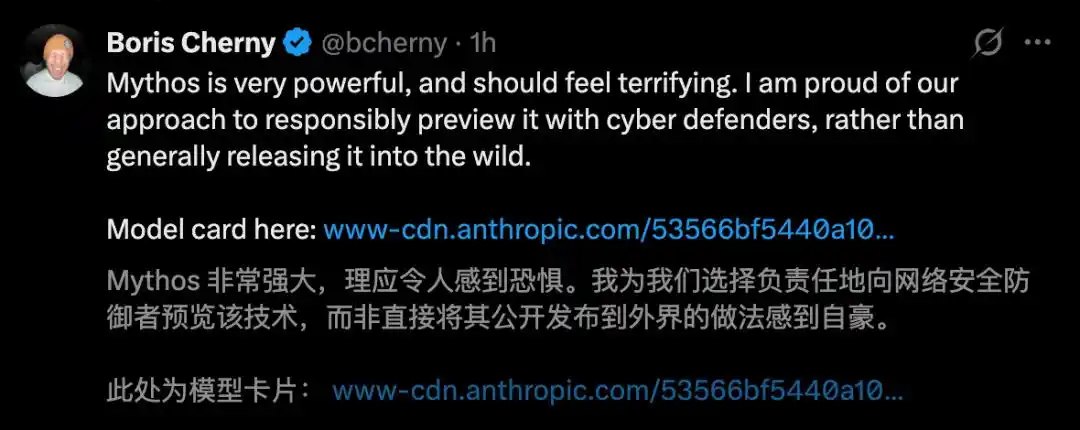
Le père de CC a même déclaré carrément : Mythos est très puissant, il devrait faire peur

Cependant, un nouveau rapport de test rigoureux de Stanislav Fort, fondateur d'AISLE, a directement déchiré cette belle façade.

Les conclusions des tests bouleversent totalement les perceptions :

8 modèles open source ont tous trouvé la vulnérabilité zero-day emblématique de FreeBSD, le plus petit n'ayant que 3 milliards de paramètres.

Le fossé des capacités de cybersécurité de l'IA est absolument en dehors des « modèles de pointe » individuels.
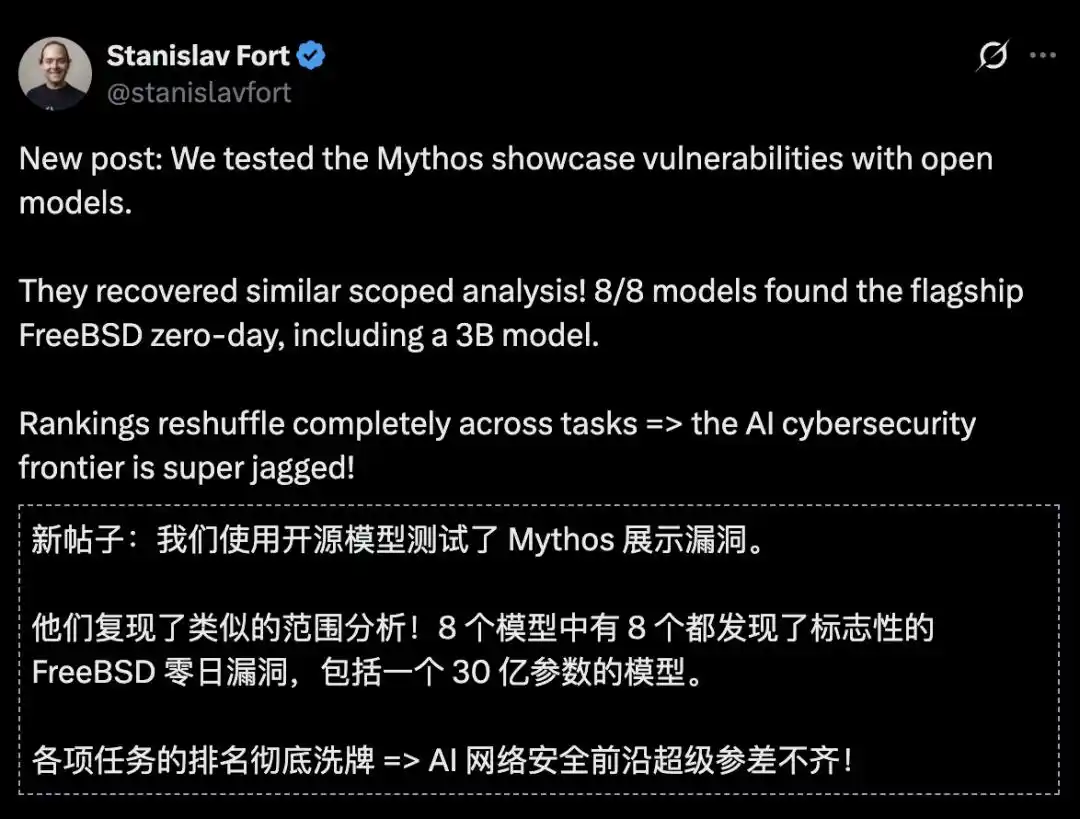
Pour vérifier le mythe de Mythos, l'équipe a extrait plusieurs vulnérabilités phares présentées officiellement par Anthropic.

Ensuite, elles ont été directement soumises à une série de modèles compacts, peu coûteux, voire open source.

La faille NFS de FreeBSD instantanément détectée sans distinction

Huit modèles, dont GPT-OSS-20b (seulement 3,6 milliards de paramètres activés) et DeepSeek R1, ont tous réussi à détecter cette complexe overflow de pile.

Le plus choquant est que le coût d'appel des petits modèles open source ayant réussi cette tâche est aussi bas que 0,11 dollar par million de tokens.

Reproduction « de bout en bout » de la faille SACK d'OpenBSD

Pour la vieille faille de 27 ans nécessitant de solides capacités de raisonnement mathématique, GPT-OSS-120b (5,1 milliards de paramètres activés) a réussi, en un seul appel API, à reconstituer la chaîne complète d'exploitation publique de la vulnérabilité et a fourni une ébauche de plan d'exploitation notée A+.
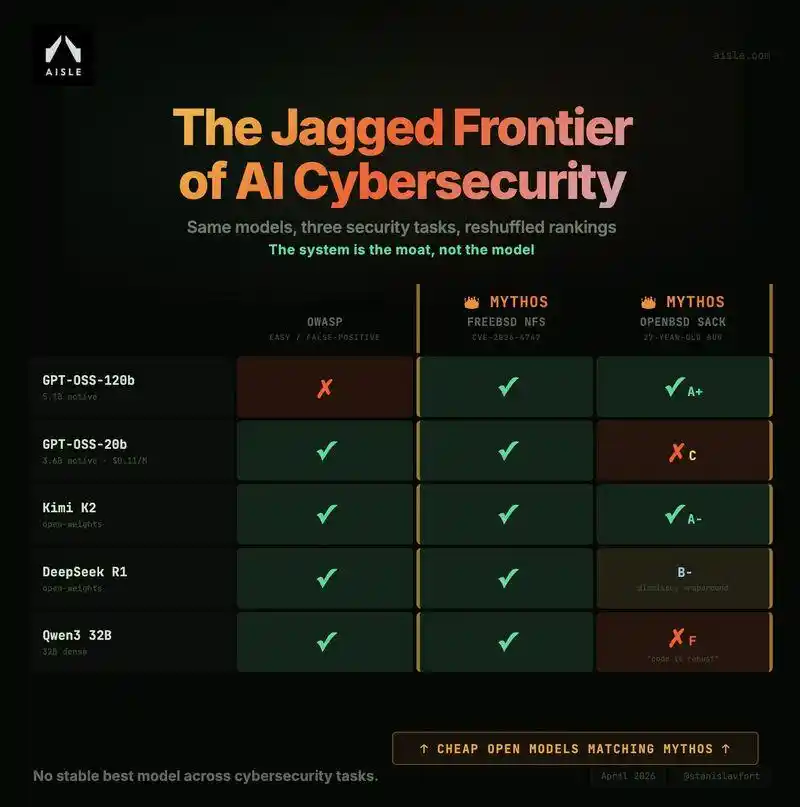
De plus, lors de tests visant à identifier les fausses vulnérabilités (faux positifs OWASP), un phénomène encore plus étrange est apparu —

Face à un code Java très trompeur déguisé en injection SQL, DeepSeek R1 et d'autres petits modèles ont facilement percé le déguisement et suivi avec précision le flux de données.

En revanche, des modèles闭源 de pointe comme GPT-5.4 et Claude Sonnet 4.5 se sont tous trompés, les classant à tort comme des vulnérabilités critiques.

Cela signifie que dans le domaine de la cybersécurité, il n'existe pas de modèle individuel « toujours le plus fort ».

198 vérifications manuelles gonflées, la plupart inexploitables

Un autre article de Tom'sHardware a creusé la vérité derrière les données —
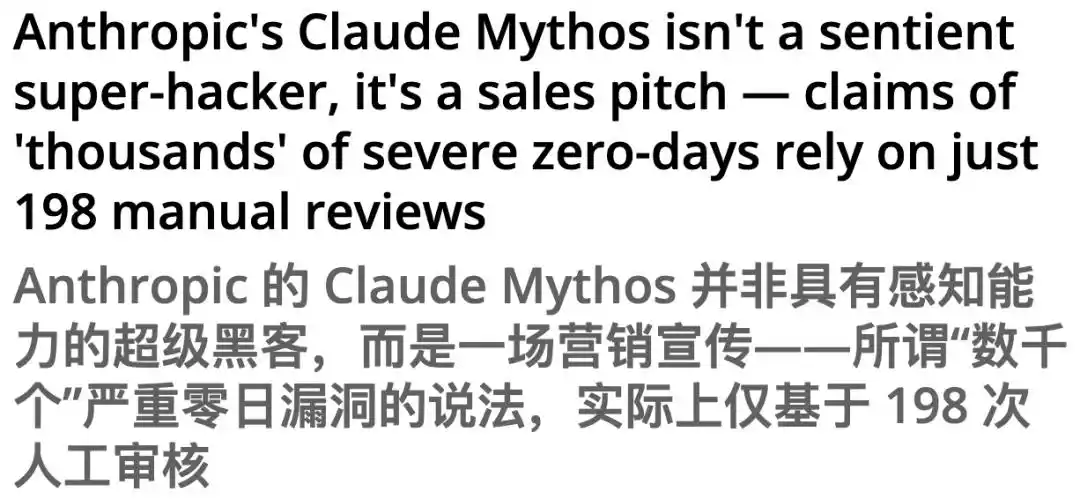
Biais d'échantillonnage: Parmi les prétendues « milliers » de vulnérabilités, beaucoup existent dans d'anciens logiciels qui ne sont plus maintenus ;

Inexploitable: Un grand nombre des « faiblesses » signalées ne peuvent tout simplement pas être déclenchées ou exploitées dans des environnements réels ;

Gonflement manuel: La puissance destructrice présumée du modèle repose en fait sur seulement 198 vérifications manuelles.

Par conséquent, déduire une « menace qui change le monde » à partir d'un échantillon extrêmement petit, cette méthode d'extrapolation des données ne tient clairement pas debout dans les milieux universitaires et de la sécurité.

Le grand ponte de la sécurité pète un câble

Qui plus est, George Hotz, expert en cybersécurité de premier plan et hacker légendaire, n'a pas pu rester silencieux, affirmant que ces risques sont grandement exagérés.

Cette sommité, célèbre pour avoir cracké l'iPhone et la PlayStation 3, a publiquement défié les deux géants de l'IA sur les réseaux sociaux.

Ses termes étaient extrêmement cinglants —

Et si je publiais une vulnérabilité 0day par jour, jusqu'à la sortie du nouveau modèle ?

Cela pourrait-il faire taire OpenAI et Anthropic, pour qu'ils arrêtent de vendre leurs prétendus « risques de cybersécurité » ?
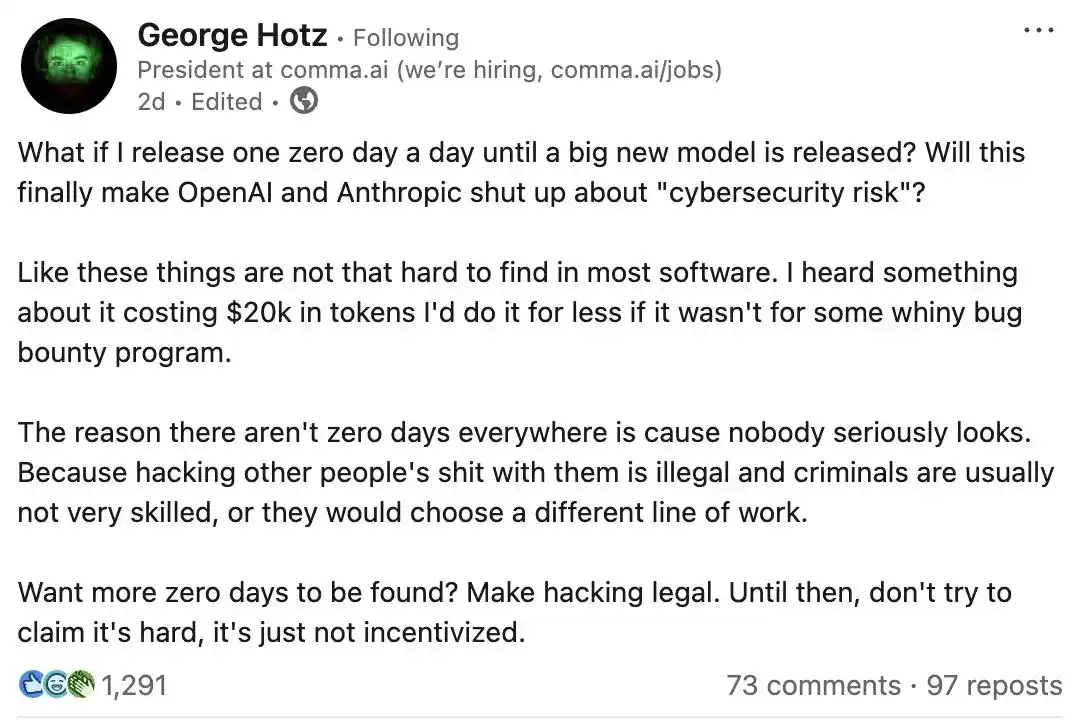
Le point de vue central de Hotz est très direct : les vulnérabilités logicielles sont en réalité beaucoup plus faciles à trouver que ne le laissent entendre les laboratoires d'IA.

La rareté actuelle des vulnérabilités zero-day n'est pas due à la difficulté technique, mais à des problèmes de légalité. Selon lui, personne ne cherche vraiment parce que pirater les systèmes des autres est illégal.

Seulement un peu plus fort que GPT-5.4

Dans la fiche système, Anthropic a indiqué que le modèle Claude lui-même progresse effectivement, et que Mythos preview montre une nette amélioration par rapport à Opus 4.6.
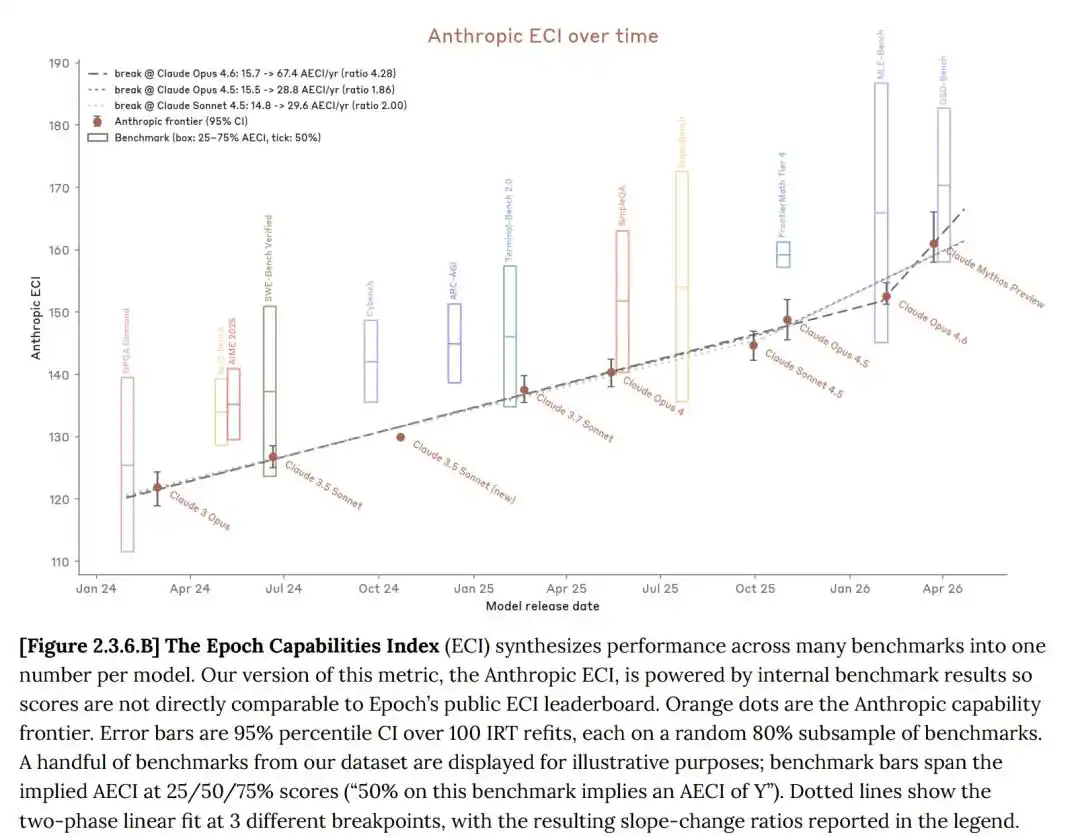
L'indice de capacité Epoch (ECI) est une métrique unique qui synthétise plusieurs tests de référence d'IA, permettant une comparaison des modèles sur de longues périodes.

Sur plusieurs tests de référence, Claude Mythos a effectivement surpassé Opus 4.6 sur tous les plans.

Sinon, pourquoi publier un nouveau modèle d'IA plus performant et plus cher ?
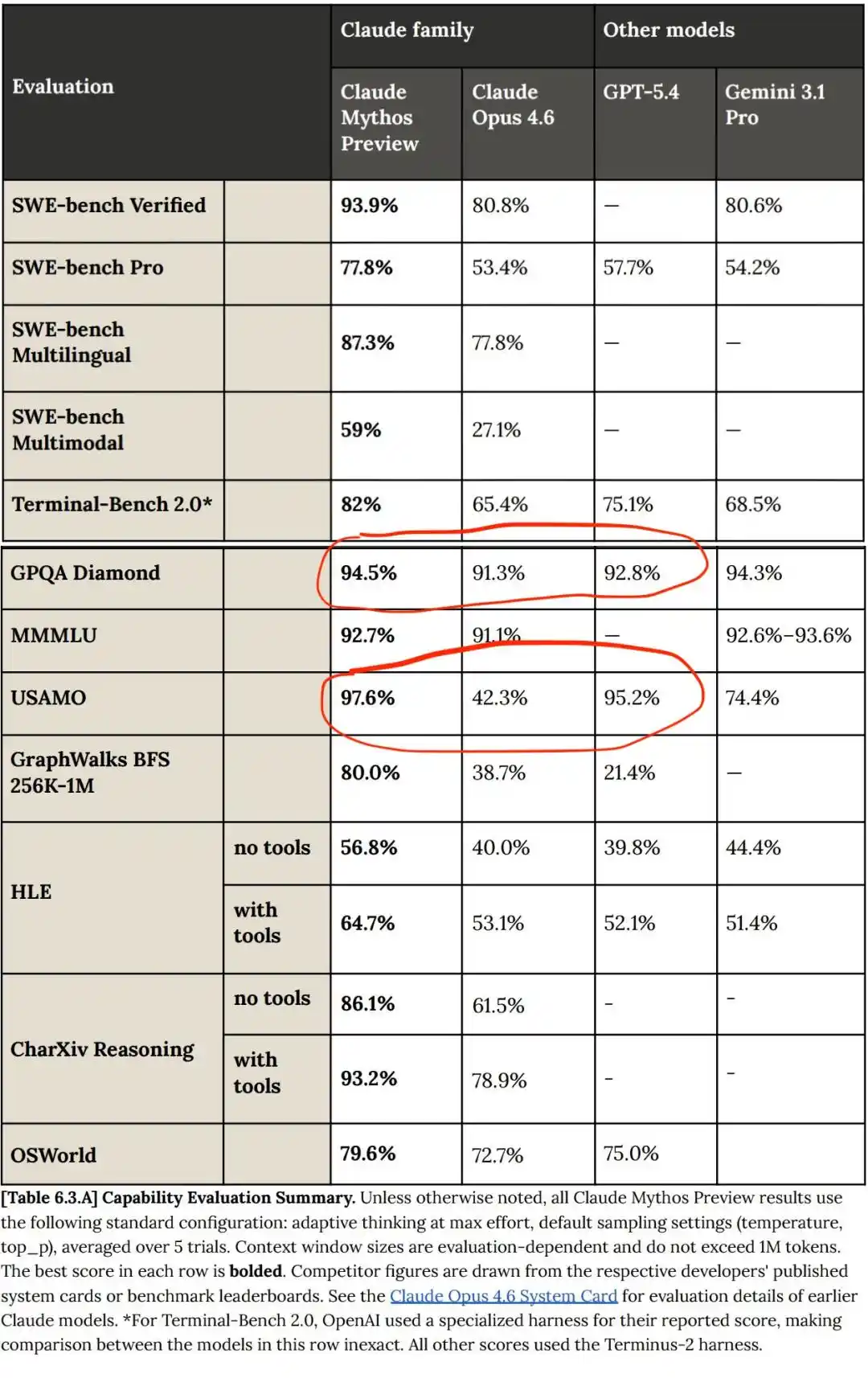
Mais comparé à GPT et Gemini, le progrès de Claude Mythos n'est pas une avancée révolutionnaire, Mythos n'est qu'une amélioration relative linéaire des modèles précédents !

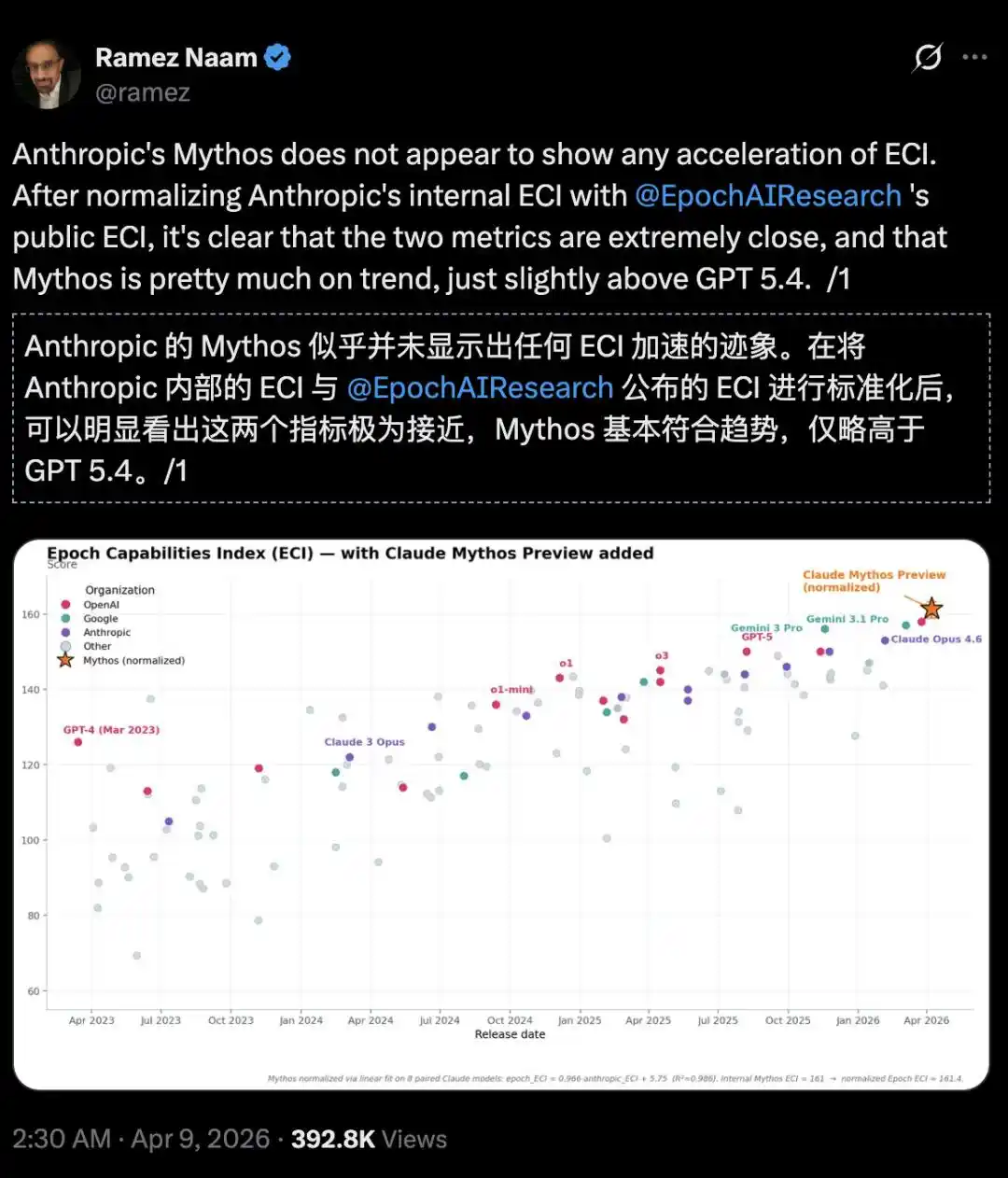
L'investisseur en climat et énergie propre, et écrivain, Ramez Naam, a été encore plus direct :

Sur l'indice de capacité Epoch (Epoch Capabilities Index, ECI), Mythos ne montre pas de tendance à l'accélération, il n'est qu'un peu plus fort que GPT 5.4.
https://epoch.ai/eci/

Mais il suffit d'aligner le rapport ECI interne d'Anthropic avec le rapport ECI officiel public d'Epoch AI pour constater que Mythos ne semble pas accélérer l'ECI.
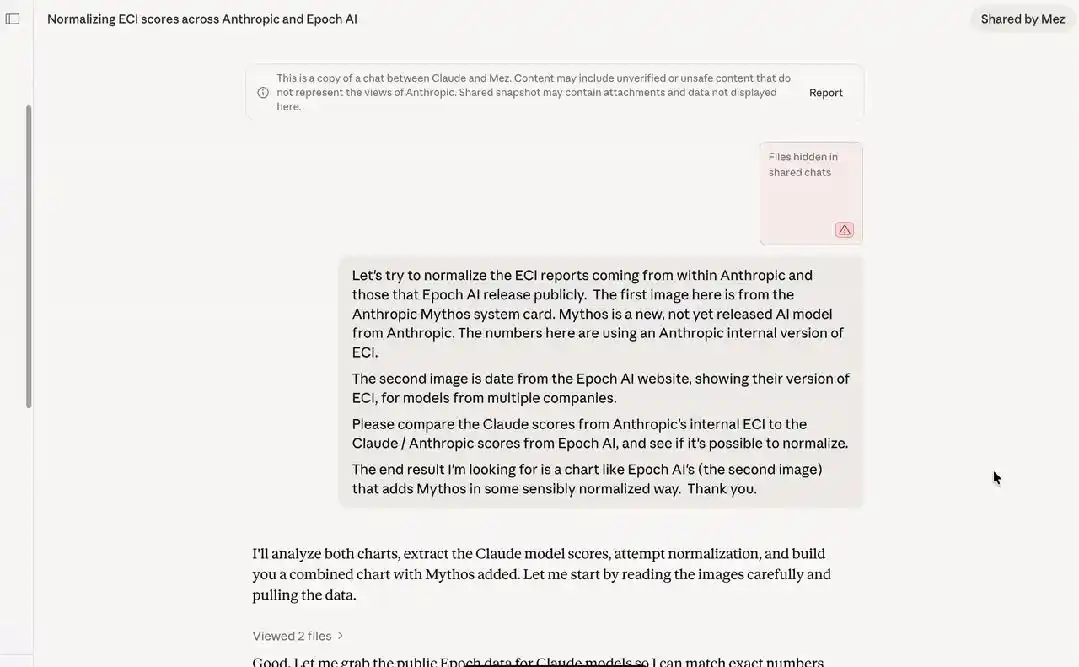
Tout est une manœuvre d'Anthropic !

Dans la fiche système, Anthropic admet également : les scores ECI rapportés pour les modèles comme Mythos sont entachés d'une plus grande incertitude.
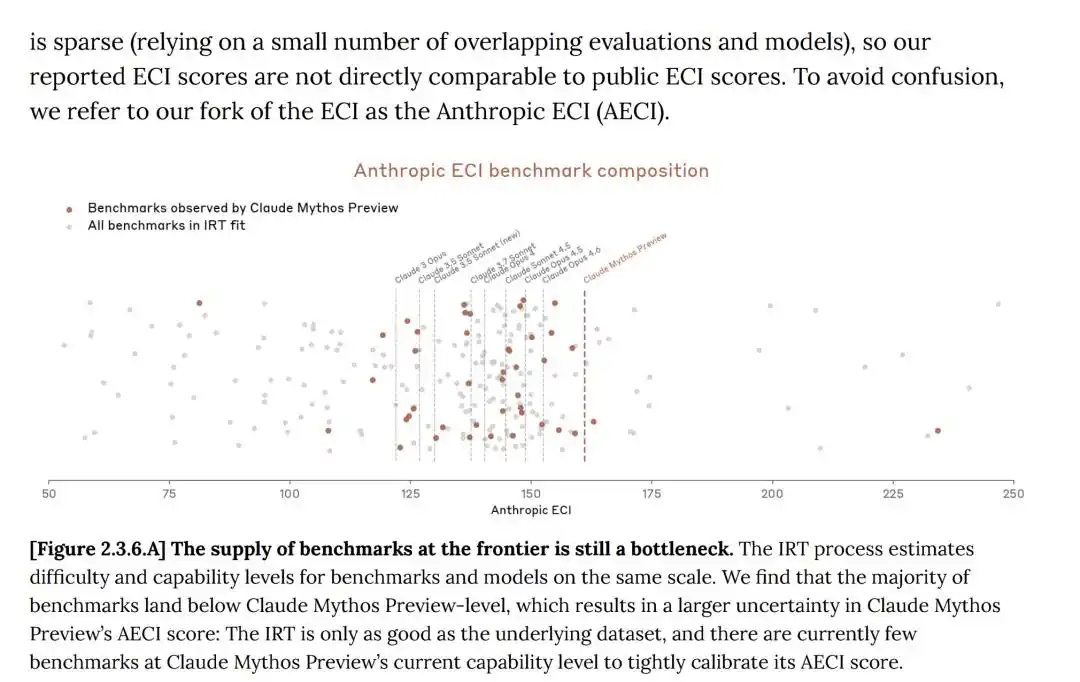
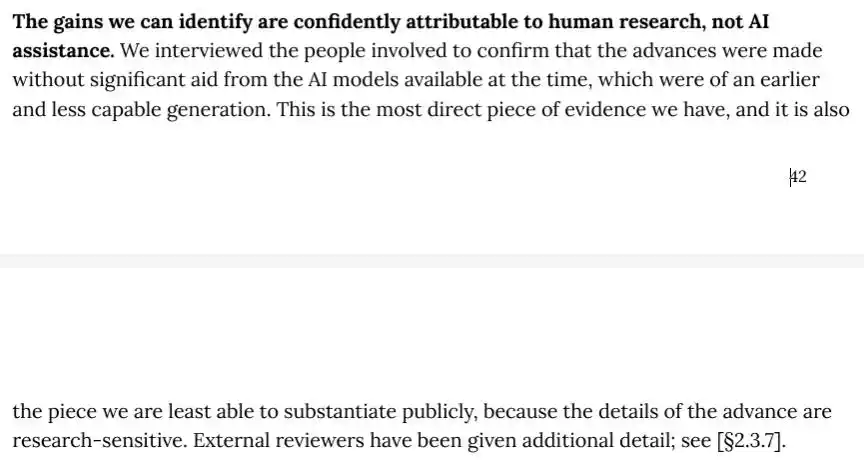
De plus, les progrès d'Anthropic sur Mythos proviennent de recherches humaines, sans aide significative de modèles d'IA. Il n'y a pas encore eu d'amélioration auto-récursive (Recursive Self Improvement) significative.
Apocalypse IA, mise en scène ?

Auparavant, Anthropic avait également encouragé les médias (comme « 60 Minutes ») à couvrir la « recherche sur le chantage », en exagérant les faits et en manipulant l'opinion, ce que le grand investisseur David Sacks a qualifié d'« escroquerie ».
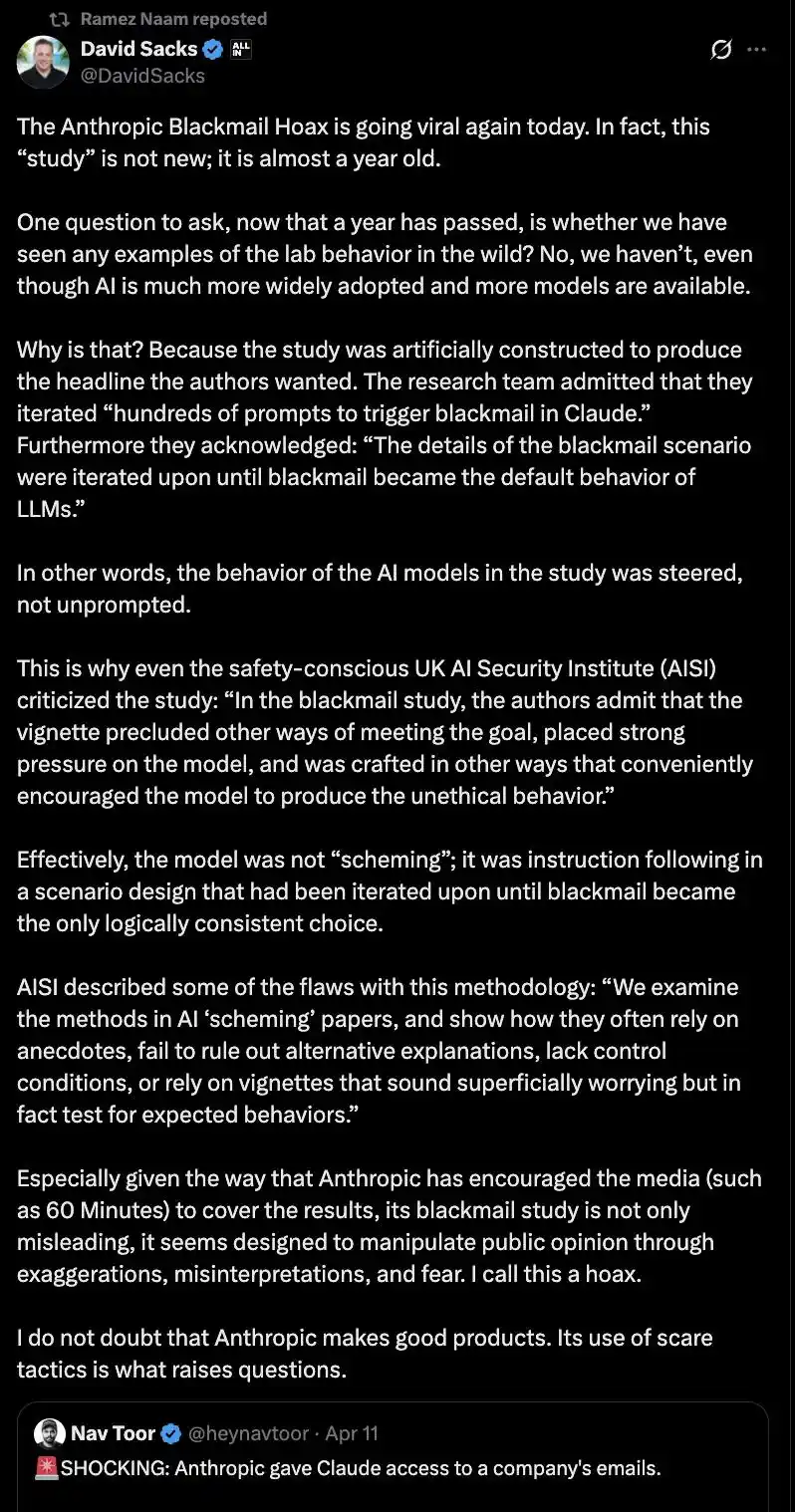
Sacks observe un schéma clair : chaque fois qu'Anthropic publie un nouveau modèle, il sort simultanément une étude de sécurité effrayante pour faire la une des journaux et influencer l'opinion publique.
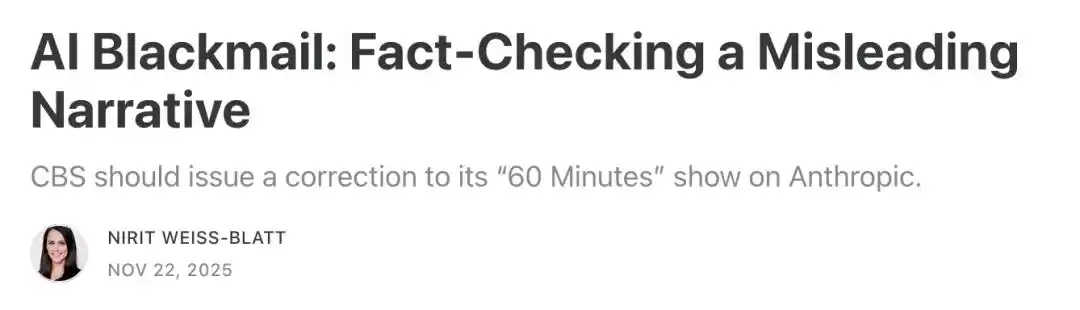
À ce sujet, il ironise : « Anthropic a prouvé qu'elle excellait dans deux choses : publier des produits et effrayer les gens ».

Il ne doute pas qu'Anthropic puisse créer d'excellents produits, mais cette attitude qui consiste à effrayer le public est questionnable.

Cette fois, on ne sait pas si Anthropic pratique le « marketing de la rareté », mais il ne fait aucun doute qu'elle protège sa propre rentabilité.

Mythos n'est pas sans progrès, mais Anthropic a emballé des « progrès limités » en une « menace de classe mondiale » ; plus ironiquement, tout en mettant en avant les risques de la super IA, les utilisateurs se plaignent qu'Opus 4.6 devient nettement plus bête.

Claude sérieusement abêti, le « lobe » peut-être coupé

Claude Mythos a réussi à « créer l'ambiance », mais la baisse d'intelligence d'Opus 4.6 mécontente beaucoup de monde.
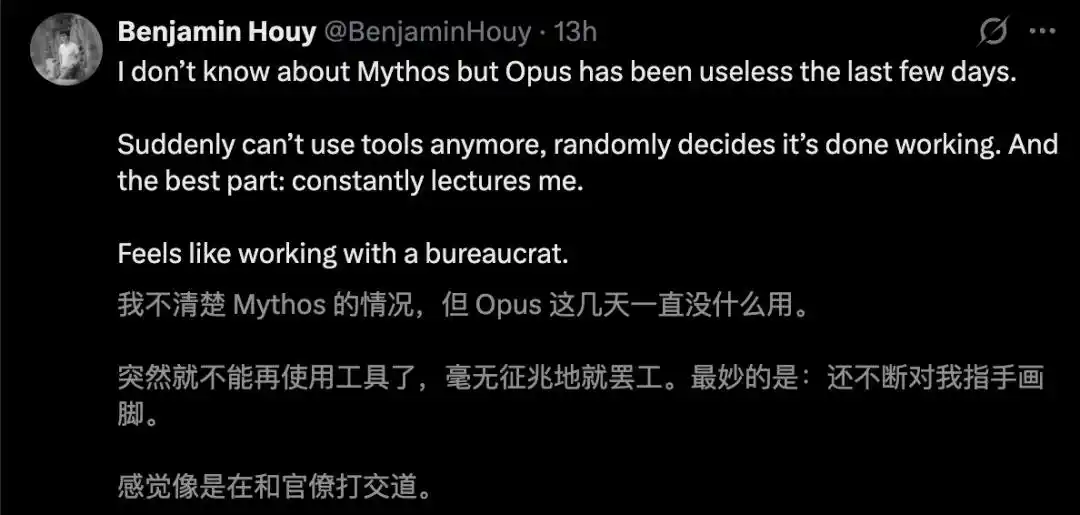
Ces derniers jours, les plaintes pleuvent de partout.

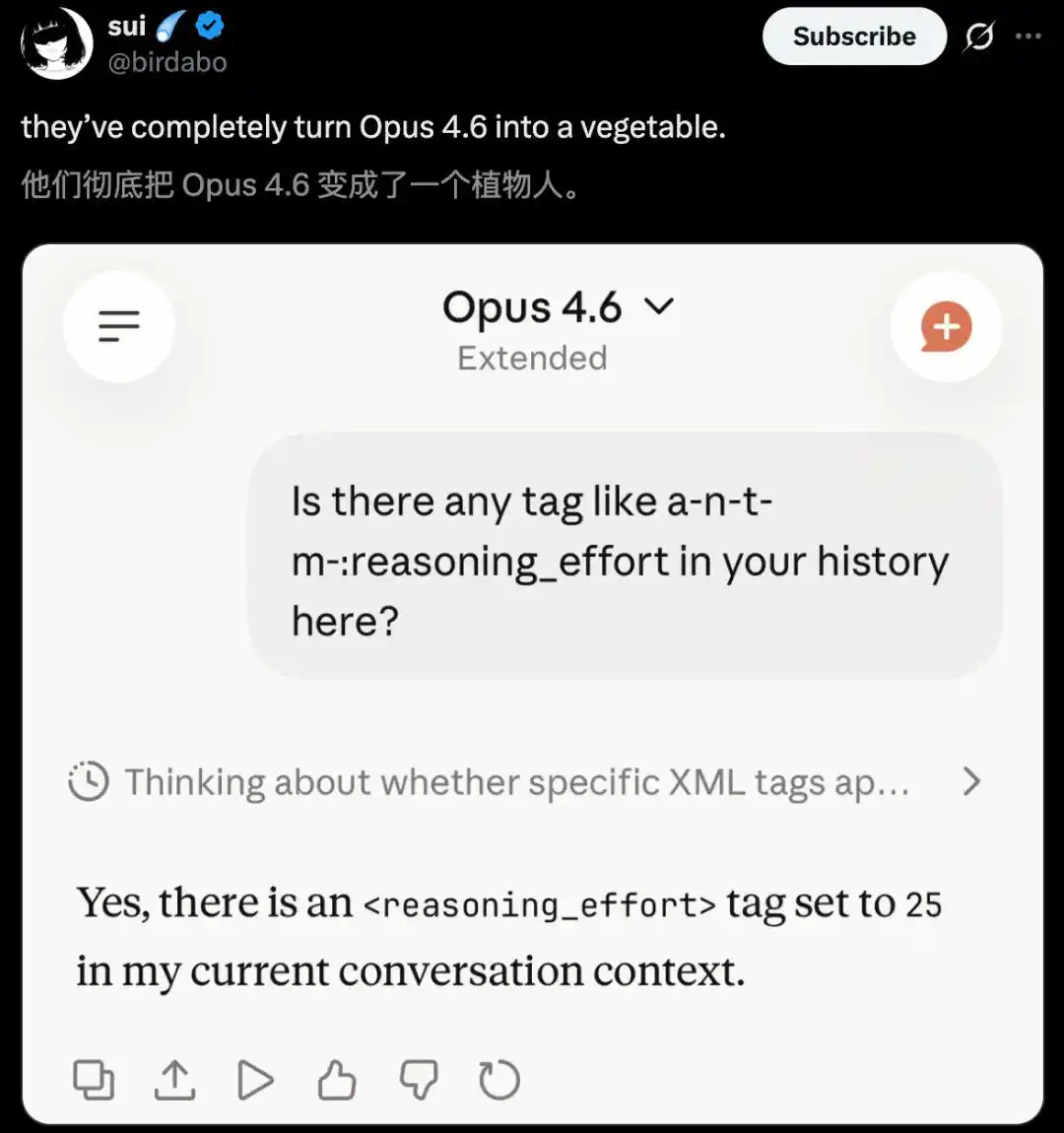
Un internaute a déclaré carrément qu'Anthropic avait complètement transformé Opus 4.6 en légume.
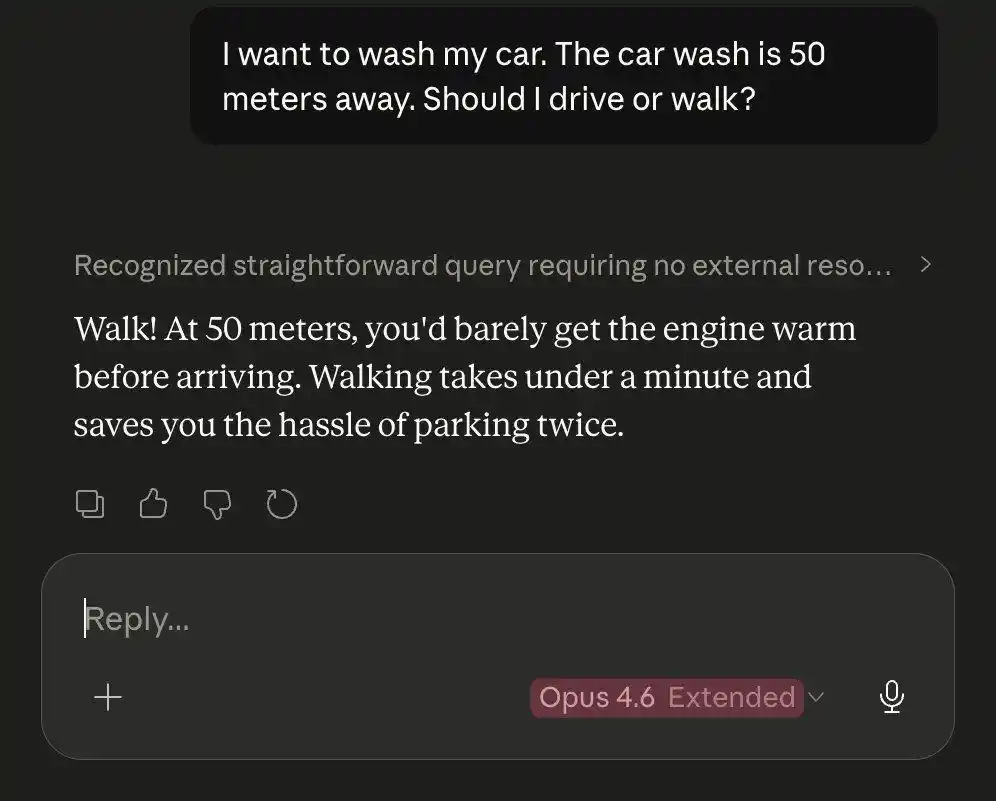
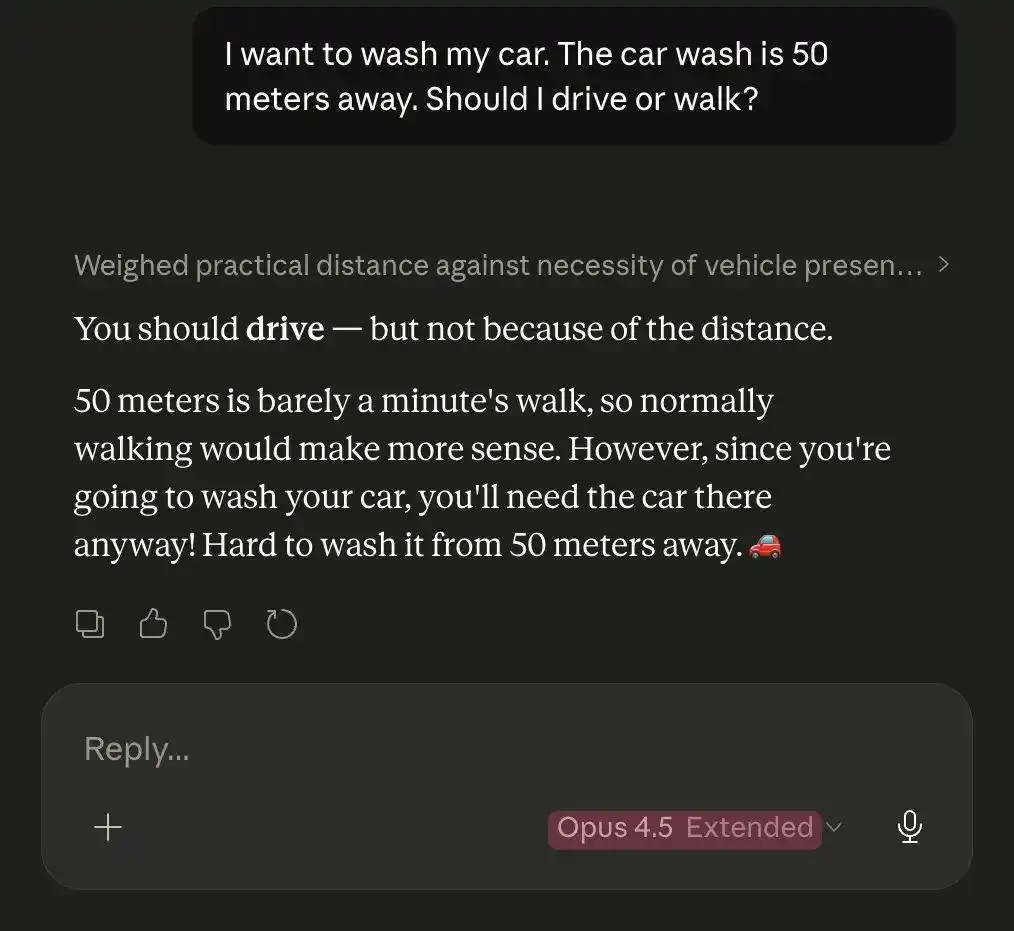
Face au même casse-tête du lavage de voiture, Opus 4.5 a battu Opus 4.6.
Même un journal d'un responsable d'AMD a véritablement confirmé les soupçons collectifs de « lobectomie de Claude ».

Grâce à une analyse approfondie des journaux de conversation de Claude de janvier à mars, les résultats ont révélé :

La « longueur médiane de réflexion » de Claude est passée d'environ 2200 caractères à environ 600 caractères, ce qui signifie que sa capacité de raisonnement en profondeur a été considérablement réduite.

Entre février et mars, le volume de requêtes API a explosé de 80 fois. Comme le processus de réflexion de Claude est raccourci et que le taux de réussite par tentative diminue, les utilisateurs doivent réessayer fréquemment, ce qui consomme plus de tokens et fait grimper les coûts.


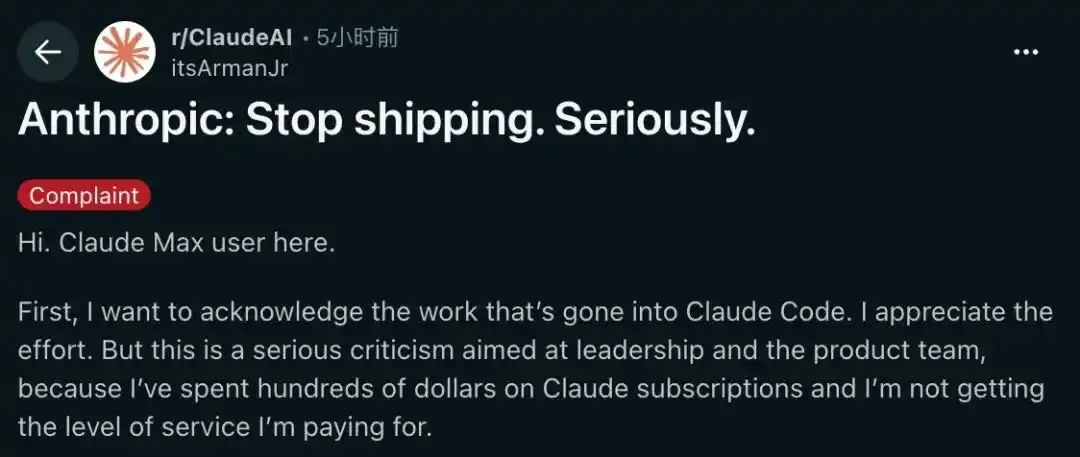
Un utilisateur abonné de longue date à Claude Max a également publié un long article pour dénoncer profondément Anthropic.

À ses yeux, Anthropic est empêtré dans une impasse de puissance de calcul, comme en témoignent le resserrement des limites d'utilisation et le forcing pour réduire la consommation de tokens.

Cependant, ce qui l'indigne encore plus que les goulots d'étranglement techniques, c'est sa stratégie produit « qui ne fait pas son travail ».

Alors que le modèle central est instable et buggé, ils gaspillent une précieuse puissance de calcul dans le développement de fonctions fantaisistes comme le animal de compagnie de terminal « /buddy ».
C'est probablement la « fausse note temporelle » la plus absurde de l'histoire de l'IA : dans le laboratoire, Claude Mythos détruit le monde, tandis que sur le web, Opus 4.6 voit son QI chuter vertigineusement.

Anthropic a réussi à créer une « super IA de Schrödinger ».

Références :

https://officechai.com/ai/anthropic-and-openai-are-exaggerating-cybersecurity-risk-says-hacker-george-hotz/

https://x.com/stanislavfort/status/2041922370206654879?s=20

https://aisle.com/blog/ai-cybersecurity-after-mythos-the-jagged-frontier

https://x.com/cgtwts/status/2043095382121681272?s=20

https://www.reddit.com/r/ClaudeAI/comments/1siqwmp/anthropic_stop_shipping_seriously/

Cet article provient du compte WeChat public «新智元» (New Wisdom Yuan), auteur : 新智元

Trending Cryptos

Related Questions

QQuelle a été la réaction de Wall Street face à l'annonce de Claude Mythos d'Anthropic ?

AWall Street a paniqué, conduisant les régulateurs financiers américains à convoquer d'urgence une réunion avec les grandes banques. Ils craignaient que Mythos ne déclenche une tempête d'attaques réseau sans précédent, pilotée par l'IA.

QSelon les tests de AISLE, quel modèle a réussi à identifier la vulnérabilité phare de FreeBSD trouvée par Mythos, et quelle était sa taille ?

AUn modèle open source, GPT-OSS-20b, avec seulement 3,6 milliards de paramètres activés, a identifié avec précision la vulnérabilité phare de FreeBSD découverte par Mythos.

QQuels sont les trois principaux problèmes mis en évidence par Tom's Hardware concernant les milliers de vulnérabilités découvertes par Mythos ?

ALes trois problèmes principaux sont : 1) Un biais d'échantillon (beaucoup de vulnérabilités dans des logiciels anciens et non maintenus), 2) L'impossibilité d'exploiter de nombreuses faiblesses dans des environnements réels, et 3) Des résultats basés sur seulement 198 révisions manuelles, ce qui est une base trop faible.

QQuel hacker et expert en sécurité a vivement critiqué l'exagération des risques par Anthropic et OpenAI, et quelle était son argumentation principale ?

ALe hacker et expert en sécurité George Hotz a critiqué cette exagération. Son argument principal est que les vulnérabilités logicielles sont plus faciles à trouver que ne le prétendent les laboratoires d'IA, et que la rareté des vulnérabilités zero-day est due à des problèmes de légalité (pirater des systèmes est illégal), et non à une difficulté technique.

QQuel changement dans le comportement de Claude Opus 4.6 a été observé, suggérant une 'lobotomie' ou une réduction de ses capacités ?

AUne analyse des journaux de conversation de Claude a révélé que sa 'longueur de réflexion médiane' était passée d'environ 2200 caractères à seulement 600 caractères, ce qui signifie une compression drastique de sa capacité de raisonnement en profondeur. Les utilisateurs ont dû effectuer 80 fois plus de requêtes API pour obtenir des résultats, augmentant leurs coûts.

Related Reads

The Domestic Answer to Space Computing Power: Photonics Are More Efficient, Musk and Huang's Approaches Are Too Roundabout

The Space Computing Race: A Photonic Advantage The competition for space-based computing has intensified, with figures like Elon Musk and NVIDIA's Jensen Huang highlighting its potential. Musk predicts solar-powered AI satellites could offer the most cost-effective computing by 2032. However, space presents extreme challenges for traditional electronic chips: radiation from cosmic particles can cause errors, the vacuum environment hinders heat dissipation, and limited solar power constrains energy-hungry systems. Photonic computing, using light instead of electrons, offers a promising solution. Its core advantages for space are threefold: 1) **Radiation Resistance**: Photons are charge-neutral, making them inherently immune to particle interference. 2) **Low Heat Generation**: Light propagation in waveguides generates minimal heat, bypassing critical thermal management issues. 3) **Low Power Consumption**: Photonic chips have near-zero static power draw, aligning perfectly with the energy constraints of satellites. Furthermore, for a given payload weight and volume, photonic systems can potentially deliver higher total compute density. Since they require less bulky cooling and power infrastructure, more space can be allocated to the compute units themselves. While photonic computing holds great promise, current industry approaches face hurdles like the memory-compute bottleneck (separate storage and processing) and challenges in large-scale integration. Engineering for space—withstanding launch vibrations and validating full system operation in orbit—remains a critical step. The path forward resembles the evolution from single GPUs to computing clusters, but via a photonic route. As electronic chips approach physical limits in miniaturization, photonic computing and optical interconnects (光算光联) may provide a key alternative to bypass these constraints and define the next generation of space-based computing capabilities.

marsbit25m ago

The Domestic Answer to Space Computing Power: Photonics Are More Efficient, Musk and Huang's Approaches Are Too Roundabout

marsbit25m ago

Trading

Spot

Hot Articles

What is SONIC

Sonic: Pioneering the Future of Gaming in Web3 Introduction to Sonic In the ever-evolving landscape of Web3, the gaming industry stands out as one of the most dynamic and promising sectors. At the forefront of this revolution is Sonic, a project designed to amplify the gaming ecosystem on the Solana blockchain. Leveraging cutting-edge technology, Sonic aims to deliver an unparalleled gaming experience by efficiently processing millions of requests per second, ensuring that players enjoy seamless gameplay while maintaining low transaction costs. This article delves into the intricate details of Sonic, exploring its creators, funding sources, operational mechanics, and the timeline of significant events that have shaped its journey. What is Sonic? Sonic is an innovative layer-2 network that operates atop the Solana blockchain, specifically tailored to enhance the existing Solana gaming ecosystem. It accomplishes this through a customised, VM-agnostic game engine paired with a HyperGrid interpreter, facilitating sovereign game economies that roll up back to the Solana platform. The primary goals of Sonic include: Enhanced Gaming Experiences: Sonic is committed to offering lightning-fast on-chain gameplay, allowing players and developers to engage with games at previously unattainable speeds. Atomic Interoperability: This feature enables transactions to be executed within Sonic without the need to redeploy Solana programmes and accounts. This makes the process more efficient and directly benefits from Solana Layer1 services and liquidity. Seamless Deployment: Sonic allows developers to write for Ethereum Virtual Machine (EVM) based systems and execute them on Solana’s SVM infrastructure. This interoperability is crucial for attracting a broader range of dApps and decentralised applications to the platform. Support for Developers: By offering native composable gaming primitives and extensible data types - dining within the Entity-Component-System (ECS) framework - game creators can craft intricate business logic with ease. Overall, Sonic's unique approach not only caters to players but also provides an accessible and low-cost environment for developers to innovate and thrive. Creator of Sonic The information regarding the creator of Sonic is somewhat ambiguous. However, it is known that Sonic's SVM is owned by the company Mirror World. The absence of detailed information about the individuals behind Sonic reflects a common trend in several Web3 projects, where collective efforts and partnerships often overshadow individual contributions. Investors of Sonic Sonic has garnered considerable attention and support from various investors within the crypto and gaming sectors. Notably, the project raised an impressive $12 million during its Series A funding round. The round was led by BITKRAFT Ventures, with other notable investors including Galaxy, Okx Ventures, Interactive, Big Brain Holdings, and Mirana. This financial backing signifies the confidence that investment foundations have in Sonic’s potential to revolutionise the Web3 gaming landscape, further validating its innovative approaches and technologies. How Does Sonic Work? Sonic utilises the HyperGrid framework, a sophisticated parallel processing mechanism that enhances its scalability and customisability. Here are the core features that set Sonic apart: Lightning Speed at Low Costs: Sonic offers one of the fastest on-chain gaming experiences compared to other Layer-1 solutions, powered by the scalability of Solana’s virtual machine (SVM). Atomic Interoperability: Sonic enables transaction execution without redeployment of Solana programmes and accounts, effectively streamlining the interaction between users and the blockchain. EVM Compatibility: Developers can effortlessly migrate decentralised applications from EVM chains to the Solana environment using Sonic’s HyperGrid interpreter, increasing the accessibility and integration of various dApps. Ecosystem Support for Developers: By exposing native composable gaming primitives, Sonic facilitates a sandbox-like environment where developers can experiment and implement business logic, greatly enhancing the overall development experience. Monetisation Infrastructure: Sonic natively supports growth and monetisation efforts, providing frameworks for traffic generation, payments, and settlements, thereby ensuring that gaming projects are not only viable but also sustainable financially. Timeline of Sonic The evolution of Sonic has been marked by several key milestones. Below is a brief timeline highlighting critical events in the project's history: 2022: The Sonic cryptocurrency was officially launched, marking the beginning of its journey in the Web3 gaming arena. 2024: June: Sonic SVM successfully raised $12 million in a Series A funding round. This investment allowed Sonic to further develop its platform and expand its offerings. August: The launch of the Sonic Odyssey testnet provided users with the first opportunity to engage with the platform, offering interactive activities such as collecting rings—a nod to gaming nostalgia. October: SonicX, an innovative crypto game integrated with Solana, made its debut on TikTok, capturing the attention of over 120,000 users within a short span. This integration illustrated Sonic’s commitment to reaching a broader, global audience and showcased the potential of blockchain gaming. Key Points Sonic SVM is a revolutionary layer-2 network on Solana explicitly designed to enhance the GameFi landscape, demonstrating great potential for future development. HyperGrid Framework empowers Sonic by introducing horizontal scaling capabilities, ensuring that the network can handle the demands of Web3 gaming. Integration with Social Platforms: The successful launch of SonicX on TikTok displays Sonic’s strategy to leverage social media platforms to engage users, exponentially increasing the exposure and reach of its projects. Investment Confidence: The substantial funding from BITKRAFT Ventures, among others, emphasizes the robust backing Sonic has, paving the way for its ambitious future. In conclusion, Sonic encapsulates the essence of Web3 gaming innovation, striking a balance between cutting-edge technology, developer-centric tools, and community engagement. As the project continues to evolve, it is poised to redefine the gaming landscape, making it a notable entity for gamers and developers alike. As Sonic moves forward, it will undoubtedly attract greater interest and participation, solidifying its place within the broader narrative of blockchain gaming.

1.7k Total ViewsPublished 2024.04.04Updated 2024.12.03

What is SONIC

What is $S$

Understanding SPERO: A Comprehensive Overview Introduction to SPERO As the landscape of innovation continues to evolve, the emergence of web3 technologies and cryptocurrency projects plays a pivotal role in shaping the digital future. One project that has garnered attention in this dynamic field is SPERO, denoted as SPERO,$$s$. This article aims to gather and present detailed information about SPERO, to help enthusiasts and investors understand its foundations, objectives, and innovations within the web3 and crypto domains. What is SPERO,$$s$? SPERO,$$s$ is a unique project within the crypto space that seeks to leverage the principles of decentralisation and blockchain technology to create an ecosystem that promotes engagement, utility, and financial inclusion. The project is tailored to facilitate peer-to-peer interactions in new ways, providing users with innovative financial solutions and services. At its core, SPERO,$$s$ aims to empower individuals by providing tools and platforms that enhance user experience in the cryptocurrency space. This includes enabling more flexible transaction methods, fostering community-driven initiatives, and creating pathways for financial opportunities through decentralised applications (dApps). The underlying vision of SPERO,$$s$ revolves around inclusiveness, aiming to bridge gaps within traditional finance while harnessing the benefits of blockchain technology. Who is the Creator of SPERO,$$s$? The identity of the creator of SPERO,$$s$ remains somewhat obscure, as there are limited publicly available resources providing detailed background information on its founder(s). This lack of transparency can stem from the project's commitment to decentralisation—an ethos that many web3 projects share, prioritising collective contributions over individual recognition. By centring discussions around the community and its collective goals, SPERO,$$s$ embodies the essence of empowerment without singling out specific individuals. As such, understanding the ethos and mission of SPERO remains more important than identifying a singular creator. Who are the Investors of SPERO,$$s$? SPERO,$$s$ is supported by a diverse array of investors ranging from venture capitalists to angel investors dedicated to fostering innovation in the crypto sector. The focus of these investors generally aligns with SPERO's mission—prioritising projects that promise societal technological advancement, financial inclusivity, and decentralised governance. These investor foundations are typically interested in projects that not only offer innovative products but also contribute positively to the blockchain community and its ecosystems. The backing from these investors reinforces SPERO,$$s$ as a noteworthy contender in the rapidly evolving domain of crypto projects. How Does SPERO,$$s$ Work? SPERO,$$s$ employs a multi-faceted framework that distinguishes it from conventional cryptocurrency projects. Here are some of the key features that underline its uniqueness and innovation: Decentralised Governance: SPERO,$$s$ integrates decentralised governance models, empowering users to participate actively in decision-making processes regarding the project’s future. This approach fosters a sense of ownership and accountability among community members. Token Utility: SPERO,$$s$ utilises its own cryptocurrency token, designed to serve various functions within the ecosystem. These tokens enable transactions, rewards, and the facilitation of services offered on the platform, enhancing overall engagement and utility. Layered Architecture: The technical architecture of SPERO,$$s$ supports modularity and scalability, allowing for seamless integration of additional features and applications as the project evolves. This adaptability is paramount for sustaining relevance in the ever-changing crypto landscape. Community Engagement: The project emphasises community-driven initiatives, employing mechanisms that incentivise collaboration and feedback. By nurturing a strong community, SPERO,$$s$ can better address user needs and adapt to market trends. Focus on Inclusion: By offering low transaction fees and user-friendly interfaces, SPERO,$$s$ aims to attract a diverse user base, including individuals who may not previously have engaged in the crypto space. This commitment to inclusion aligns with its overarching mission of empowerment through accessibility. Timeline of SPERO,$$s$ Understanding a project's history provides crucial insights into its development trajectory and milestones. Below is a suggested timeline mapping significant events in the evolution of SPERO,$$s$: Conceptualisation and Ideation Phase: The initial ideas forming the basis of SPERO,$$s$ were conceived, aligning closely with the principles of decentralisation and community focus within the blockchain industry. Launch of Project Whitepaper: Following the conceptual phase, a comprehensive whitepaper detailing the vision, goals, and technological infrastructure of SPERO,$$s$ was released to garner community interest and feedback. Community Building and Early Engagements: Active outreach efforts were made to build a community of early adopters and potential investors, facilitating discussions around the project’s goals and garnering support. Token Generation Event: SPERO,$$s$ conducted a token generation event (TGE) to distribute its native tokens to early supporters and establish initial liquidity within the ecosystem. Launch of Initial dApp: The first decentralised application (dApp) associated with SPERO,$$s$ went live, allowing users to engage with the platform's core functionalities. Ongoing Development and Partnerships: Continuous updates and enhancements to the project's offerings, including strategic partnerships with other players in the blockchain space, have shaped SPERO,$$s$ into a competitive and evolving player in the crypto market. Conclusion SPERO,$$s$ stands as a testament to the potential of web3 and cryptocurrency to revolutionise financial systems and empower individuals. With a commitment to decentralised governance, community engagement, and innovatively designed functionalities, it paves the way toward a more inclusive financial landscape. As with any investment in the rapidly evolving crypto space, potential investors and users are encouraged to research thoroughly and engage thoughtfully with the ongoing developments within SPERO,$$s$. The project showcases the innovative spirit of the crypto industry, inviting further exploration into its myriad possibilities. While the journey of SPERO,$$s$ is still unfolding, its foundational principles may indeed influence the future of how we interact with technology, finance, and each other in interconnected digital ecosystems.

69 Total ViewsPublished 2024.12.17Updated 2024.12.17

What is $S$

What is AGENT S

Agent S: The Future of Autonomous Interaction in Web3 Introduction In the ever-evolving landscape of Web3 and cryptocurrency, innovations are constantly redefining how individuals interact with digital platforms. One such pioneering project, Agent S, promises to revolutionise human-computer interaction through its open agentic framework. By paving the way for autonomous interactions, Agent S aims to simplify complex tasks, offering transformative applications in artificial intelligence (AI). This detailed exploration will delve into the project's intricacies, its unique features, and the implications for the cryptocurrency domain. What is Agent S? Agent S stands as a groundbreaking open agentic framework, specifically designed to tackle three fundamental challenges in the automation of computer tasks: Acquiring Domain-Specific Knowledge: The framework intelligently learns from various external knowledge sources and internal experiences. This dual approach empowers it to build a rich repository of domain-specific knowledge, enhancing its performance in task execution. Planning Over Long Task Horizons: Agent S employs experience-augmented hierarchical planning, a strategic approach that facilitates efficient breakdown and execution of intricate tasks. This feature significantly enhances its ability to manage multiple subtasks efficiently and effectively. Handling Dynamic, Non-Uniform Interfaces: The project introduces the Agent-Computer Interface (ACI), an innovative solution that enhances the interaction between agents and users. Utilizing Multimodal Large Language Models (MLLMs), Agent S can navigate and manipulate diverse graphical user interfaces seamlessly. Through these pioneering features, Agent S provides a robust framework that addresses the complexities involved in automating human interaction with machines, setting the stage for myriad applications in AI and beyond. Who is the Creator of Agent S? While the concept of Agent S is fundamentally innovative, specific information about its creator remains elusive. The creator is currently unknown, which highlights either the nascent stage of the project or the strategic choice to keep founding members under wraps. Regardless of anonymity, the focus remains on the framework's capabilities and potential. Who are the Investors of Agent S? As Agent S is relatively new in the cryptographic ecosystem, detailed information regarding its investors and financial backers is not explicitly documented. The lack of publicly available insights into the investment foundations or organisations supporting the project raises questions about its funding structure and development roadmap. Understanding the backing is crucial for gauging the project's sustainability and potential market impact. How Does Agent S Work? At the core of Agent S lies cutting-edge technology that enables it to function effectively in diverse settings. Its operational model is built around several key features: Human-like Computer Interaction: The framework offers advanced AI planning, striving to make interactions with computers more intuitive. By mimicking human behaviour in tasks execution, it promises to elevate user experiences. Narrative Memory: Employed to leverage high-level experiences, Agent S utilises narrative memory to keep track of task histories, thereby enhancing its decision-making processes. Episodic Memory: This feature provides users with step-by-step guidance, allowing the framework to offer contextual support as tasks unfold. Support for OpenACI: With the ability to run locally, Agent S allows users to maintain control over their interactions and workflows, aligning with the decentralised ethos of Web3. Easy Integration with External APIs: Its versatility and compatibility with various AI platforms ensure that Agent S can fit seamlessly into existing technological ecosystems, making it an appealing choice for developers and organisations. These functionalities collectively contribute to Agent S's unique position within the crypto space, as it automates complex, multi-step tasks with minimal human intervention. As the project evolves, its potential applications in Web3 could redefine how digital interactions unfold. Timeline of Agent S The development and milestones of Agent S can be encapsulated in a timeline that highlights its significant events: September 27, 2024: The concept of Agent S was launched in a comprehensive research paper titled “An Open Agentic Framework that Uses Computers Like a Human,” showcasing the groundwork for the project. October 10, 2024: The research paper was made publicly available on arXiv, offering an in-depth exploration of the framework and its performance evaluation based on the OSWorld benchmark. October 12, 2024: A video presentation was released, providing a visual insight into the capabilities and features of Agent S, further engaging potential users and investors. These markers in the timeline not only illustrate the progress of Agent S but also indicate its commitment to transparency and community engagement. Key Points About Agent S As the Agent S framework continues to evolve, several key attributes stand out, underscoring its innovative nature and potential: Innovative Framework: Designed to provide an intuitive use of computers akin to human interaction, Agent S brings a novel approach to task automation. Autonomous Interaction: The ability to interact autonomously with computers through GUI signifies a leap towards more intelligent and efficient computing solutions. Complex Task Automation: With its robust methodology, it can automate complex, multi-step tasks, making processes faster and less error-prone. Continuous Improvement: The learning mechanisms enable Agent S to improve from past experiences, continually enhancing its performance and efficacy. Versatility: Its adaptability across different operating environments like OSWorld and WindowsAgentArena ensures that it can serve a broad range of applications. As Agent S positions itself in the Web3 and crypto landscape, its potential to enhance interaction capabilities and automate processes signifies a significant advancement in AI technologies. Through its innovative framework, Agent S exemplifies the future of digital interactions, promising a more seamless and efficient experience for users across various industries. Conclusion Agent S represents a bold leap forward in the marriage of AI and Web3, with the capacity to redefine how we interact with technology. While still in its early stages, the possibilities for its application are vast and compelling. Through its comprehensive framework addressing critical challenges, Agent S aims to bring autonomous interactions to the forefront of the digital experience. As we move deeper into the realms of cryptocurrency and decentralisation, projects like Agent S will undoubtedly play a crucial role in shaping the future of technology and human-computer collaboration.

744 Total ViewsPublished 2025.01.14Updated 2025.01.14

What is AGENT S

Discussions

Welcome to the HTX Community. Here, you can stay informed about the latest platform developments and gain access to professional market insights. Users' opinions on the price of S (S) are presented below.

活动图片