Dòng Tiền USDC Chảy Vào Sàn Giao Dịch Tăng Vọt Lên 778 Triệu USD—Mức Cao Nhất Kể Từ Khi Bitcoin Đạt Đỉnh Mọi Thời Đại

bitcoinistPublished on 2026-04-04Last updated on 2026-04-04

Abstract

Lượng USDC chuyển vào các sàn giao dịch đã tăng vọt lên 778,56 triệu USD, mức cao nhất kể từ tháng 9/2025. Sự kiện này xảy ra trước đợt tăng giá kỷ lục của Bitcoin lên trên 126.000 USD vào tháng 10/2025. Dòng tiền ổn định lớn thường được coi là thanh khoản sẵn sàng để mua vào, có thể báo hiệu một đợt bơm vốn mới vào thị trường tiền mã hóa. Chỉ số RSI của Tỷ lệ Cung Ổn định Bitcoin (SSR) cũng đã giảm xuống vùng xanh, cho thấy sức mua tiềm năng vẫn còn lớn. Hiện tại, Bitcoin đang giao dịch quanh mức 66.600 USD.

Dữ liệu on-chain cho thấy chỉ báo Dòng Tiền Vào Sàn Giao Dịch đã tăng vọt đối với USDC, điều này có thể có liên quan đến Bitcoin và các tài sản kỹ thuật số khác.

Dòng Tiền Vào Sàn Giao Dịch Của USDC Đã Đạt Mức Cao Nhất Trong Nhiều Tháng

Như được nhà phân tích cộng đồng CryptoQuant Maartunn nêu bật trong một bài đăng mới trên X, Dòng Tiền Vào Sàn Giao Dịch gần đây đã quan sát thấy một đợt tăng mạnh đối với stablecoin USDC của Circle. "Dòng Tiền Vào Sàn Giao Dịch" ở đây là một chỉ báo theo dõi tổng lượng một tài sản nhất định đang được chuyển đến các ví được kết nối với các sàn giao dịch tập trung.

Nhìn chung, một trong những lý do chính khiến các nhà đầu tư gửi token của họ vào các nền tảng này là cho mục đích liên quan đến bán hàng, vì vậy sự tăng đột biến của chỉ số này có thể cho thấy nhu cầu chuyển đổi tiền điện tử tăng cao. Trong trường hợp các tài sản như Bitcoin, điều này đương nhiên có thể có tác động giảm giá đối với giá.

Tuy nhiên, đối với một stablecoin như USDC, không có tác động như vậy vì giá của nó theo định nghĩa là ổn định quanh mốc 1 đô la. Dù vậy, dòng tiền vào sàn giao dịch liên quan đến tài sản vẫn có thể quan trọng đối với toàn bộ lĩnh vực rộng lớn hơn.

Thông thường, các nhà đầu tư cất giữ vốn của họ dưới dạng các token gắn liền với tiền pháp định này khi họ muốn chờ đợi thời cơ thích hợp để tham gia vào thị trường biến động. Một khi các nhà giao dịch cảm thấy thời điểm thích hợp, họ gửi stablecoin của mình vào các sàn giao dịch, chuyển đổi chúng lấy Bitcoin hoặc bất kỳ tài sản kỹ thuật số nào họ chọn. Việc chuyển đổi này đương nhiên có thể cung cấp một sự thúc đẩy mua vào cho loại tiền điện tử mục tiêu.

Như biểu đồ dưới đây, được Maartunn chia sẻ, cho thấy, Dòng Tiền Vào Sàn Giao Dịch USDC đã quan sát thấy một đợt tăng mạnh trong ngày qua, ngụ ý rằng các sàn giao dịch đã nhận được một lượng lớn stablecoin.
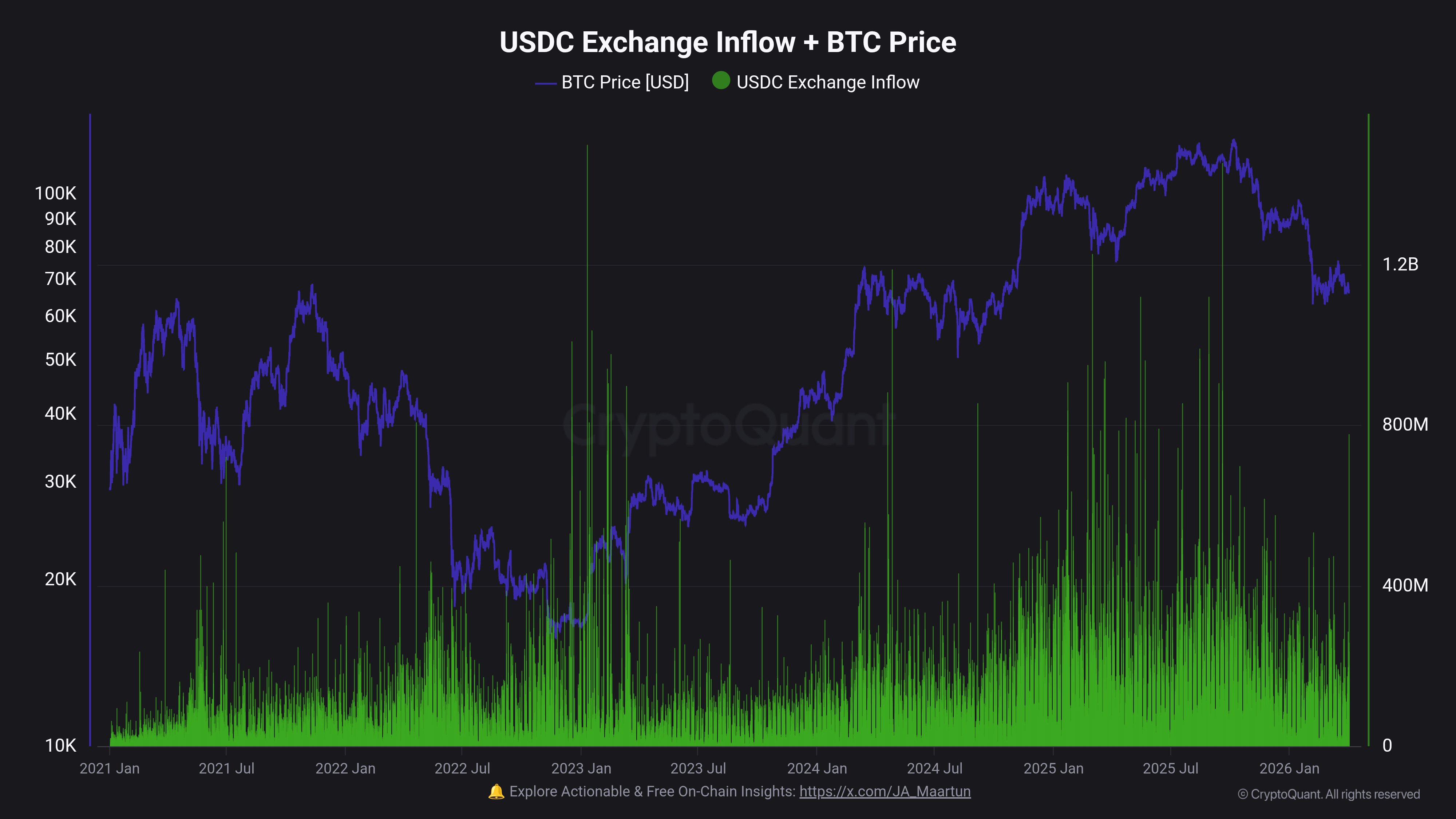
Giá trị của chỉ số dường như đã tăng vọt trong ngày qua | Nguồn: @JA_Maartun trên X

Đợt gửi tiền mới nhất đã chứng kiến dòng vào 778.566.191,65 USDC, mức cao nhất kể từ tháng 9 năm 2025. Khi đó, đợt tăng mạnh lớn đã dẫn đến đợt tăng giá của Bitcoin lên mức cao nhất mọi thời đại (ATH) mới trên 126.000 USD vào đầu tháng 10. Bây giờ vẫn còn phải xem liệu đợt tăng mới của chỉ số này có phải là dấu hiệu của việc mua vào thị trường hay không.

Vì stablecoin thường được sử dụng để bơm vốn vào phần biến động của thị trường, nguồn cung của chúng được coi là thước đo thanh khoản của lĩnh vực đang chờ ở bên lề. Một chỉ số gọi là Tỷ Lệ Nguồn Cung Stablecoin (SSR) so sánh vốn hóa thị trường của Bitcoin với tính thanh khoản này để ước tính mức độ mà đồng tiền điện tử có thể có để phát triển.

Như nhà phân tích đã chỉ ra trong một bài đăng X khác, Chỉ Số Sức Mạnh Tương Đối (RSI) của BTC SSR gần đây đã giảm xuống vùng xanh.
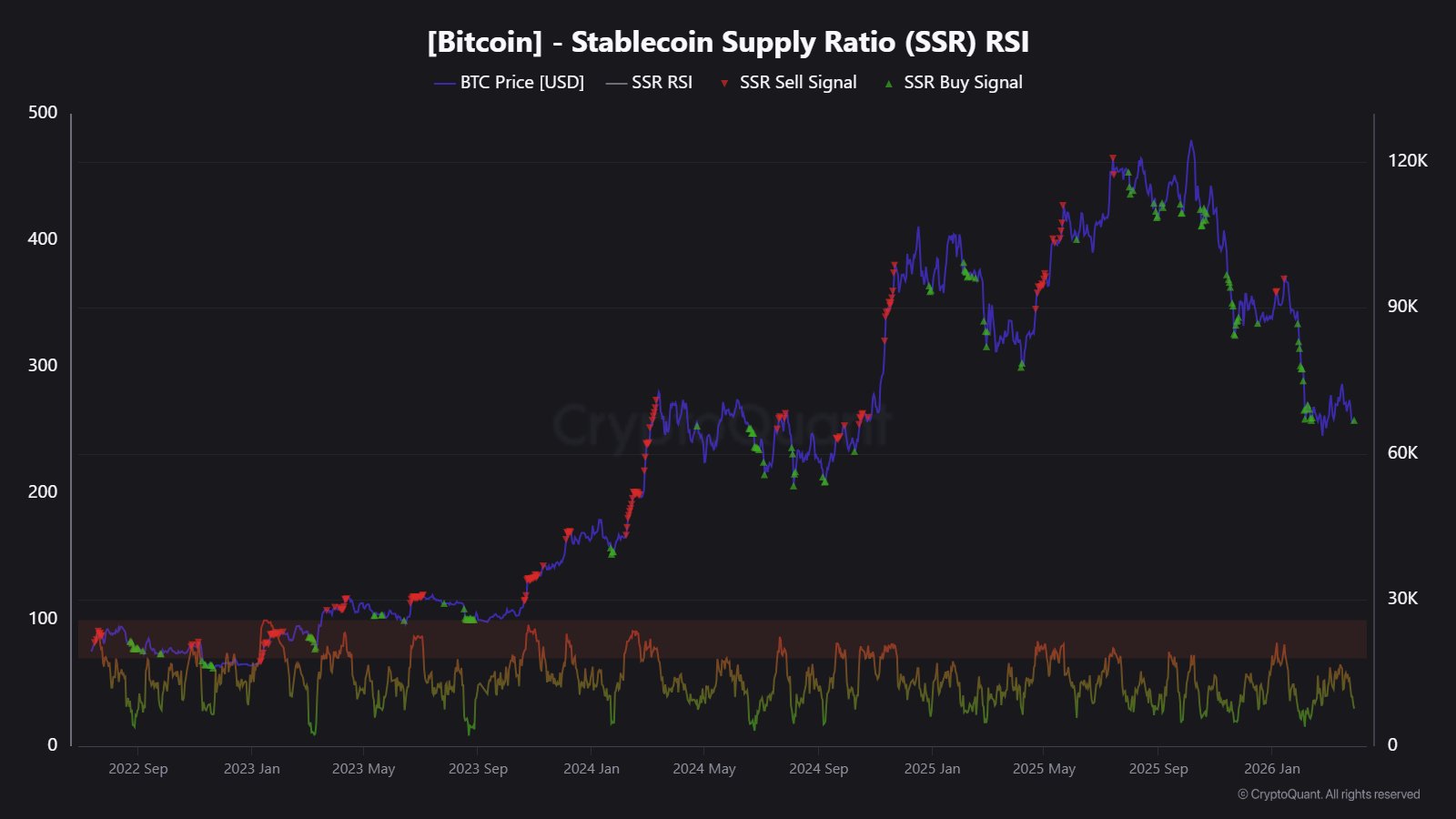
Xu hướng trong RSI của Bitcoin SSR trong vài năm qua | Nguồn: @JA_Maartun trên X

Dựa trên xu hướng, Maartunn giải thích, "Vẫn còn một lượng lớn thanh khoản stablecoin so với vốn hóa thị trường của Bitcoin, cho thấy sức mua vẫn còn ở bên lề."

Giá BTC

Tại thời điểm viết bài, Bitcoin đang được giao dịch quanh mức 66.600 USD, tăng 1% trong 24 giờ qua.

Có vẻ như giá của đồng coin đã cho thấy hành động trì trệ gần đây | Nguồn: BTCUSDT trên TradingView


Related Questions

QChỉ số Exchange Inflow của USDC đã tăng lên mức bao nhiêu trong bài viết?

AChỉ số Exchange Inflow của USDC đã tăng vọt lên 778.566.191,65 USDC, mức cao nhất kể từ tháng 9 năm 2025.

QTại sao dòng tiền chảy vào sàn giao dịch của một stablecoin như USDC lại quan trọng đối với thị trường tiền điện tử?

AVì các nhà đầu tư thường gửi stablecoin vào sàn để chờ đợi thời cơ thích hợp để mua các tài sản biến động mạnh như Bitcoin. Điều này cho thấy một lượng vốn lớn đang chờ ở bên lề và có thể cung cấp sức mua mạnh mẽ, thúc đẩy giá của các loại tiền điện tử khác.

QSự kiện tăng vọt tương tự của USDC Exchange Inflow trước đây đã dẫn đến điều gì?

AVào tháng 9 năm 2025, đợt tăng vọt lớn tương tự của chỉ số này đã dẫn đến đợt tăng giá của Bitcoin lên mức cao kỷ lục (ATH) mới trên 126.000 USD vào đầu tháng 10 năm đó.

QChỉ số RSI của Bitcoin SSR hiện đang ở trạng thái nào theo phân tích?

ATheo phân tích, Chỉ số Sức mạnh Tương đối (RSI) của Bitcoin SSR (Stablecoin Supply Ratio) gần đây đã giảm xuống vùng xanh lục, cho thấy vẫn còn một lượng thanh khoản stablecoin lớn so với vốn hóa thị trường của Bitcoin.

QGiá Bitcoin tại thời điểm bài viết được công bố là bao nhiêu?

ATại thời điểm bài viết, Bitcoin đang được giao dịch quanh mức 66.600 USD, tăng 1% trong 24 giờ qua.

Related Reads

Warsh's Debut: Will the FED Chair Who Knows Crypto Best Bring Surprises or Shocks to the Market?

Kevin Warsh, the new Federal Reserve Chairman, prepares for his inaugural press conference amidst a challenging macroeconomic landscape: resurgent inflation, a bond market sell-off, and political pressure from President Trump for rate cuts. Uniquely, Warsh holds indirect investments in over 20 crypto and Web3 entities (e.g., Solana, dYdX), making him the first Fed Chair with disclosed crypto exposure. His stance may combine a hawkish, inflation-focused monetary policy with a crypto-friendly regulatory philosophy that shifts from Powell’s “same risk, same rule” approach toward a framework acknowledging blockchain’s productivity value. Warsh’s leadership could impact crypto markets across three dimensions: a paradigm shift in regulation (potentially accelerating pro-innovation legislation and stable币 rules), a re-pricing of risk premiums based on clearer communication and his view of AI as a structural disinflationary force, and a long-term reallocation of global institutional capital driven by increased legitimacy. Two potential scenarios for the press conference are outlined. A “positive surprise” would involve a dovish-leaning tone on rates coupled with signals of regulatory openness, potentially boosting crypto asset valuations. Conversely, a “negative shock” would see a more hawkish-than-expected stance on inflation and rates, triggering a broad risk-asset selloff that crypto markets would not escape. While ethics rules required Warsh to divest his crypto holdings upon confirmation, his deep understanding of the technology may fundamentally lower policy uncertainty and build a more receptive long-term foundation for digital assets’ integration into the mainstream financial system.

marsbit9h ago

Warsh's Debut: Will the FED Chair Who Knows Crypto Best Bring Surprises or Shocks to the Market?

marsbit9h ago

Trading

Spot
Futures

Hot Articles

What is $BITCOIN

DIGITAL GOLD ($BITCOIN): A Comprehensive Analysis Introduction to DIGITAL GOLD ($BITCOIN) DIGITAL GOLD ($BITCOIN) is a blockchain-based project operating on the Solana network, which aims to combine the characteristics of traditional precious metals with the innovation of decentralized technologies. While it shares a name with Bitcoin, often referred to as “digital gold” due to its perception as a store of value, DIGITAL GOLD is a separate token designed to create a unique ecosystem within the Web3 landscape. Its goal is to position itself as a viable alternative digital asset, although specifics regarding its applications and functionalities are still developing. What is DIGITAL GOLD ($BITCOIN)? DIGITAL GOLD ($BITCOIN) is a cryptocurrency token explicitly designed for use on the Solana blockchain. In contrast to Bitcoin, which provides a widely recognized value storage role, this token appears to focus on broader applications and characteristics. Notable aspects include: Blockchain Infrastructure: The token is built on the Solana blockchain, known for its capacity to handle high-speed and low-cost transactions. Supply Dynamics: DIGITAL GOLD has a maximum supply capped at 100 quadrillion tokens (100P $BITCOIN), although details regarding its circulating supply are currently undisclosed. Utility: While precise functionalities are not explicitly outlined, there are indications that the token could be utilized for various applications, potentially involving decentralized applications (dApps) or asset tokenization strategies. Who is the Creator of DIGITAL GOLD ($BITCOIN)? At present, the identity of the creators and development team behind DIGITAL GOLD ($BITCOIN) remains unknown. This situation is typical among many innovative projects within the blockchain space, particularly those aligning with decentralized finance and meme coin phenomena. While such anonymity may foster a community-driven culture, it intensifies concerns about governance and accountability. Who are the Investors of DIGITAL GOLD ($BITCOIN)? The available information indicates that DIGITAL GOLD ($BITCOIN) does not have any known institutional backers or prominent venture capital investments. The project seems to operate on a peer-to-peer model focused on community support and adoption rather than traditional funding routes. Its activity and liquidity are primarily situated on decentralized exchanges (DEXs), such as PumpSwap, rather than established centralized trading platforms, further highlighting its grassroots approach. How DIGITAL GOLD ($BITCOIN) Works The operational mechanics of DIGITAL GOLD ($BITCOIN) can be elaborated on based on its blockchain design and network attributes: Consensus Mechanism: By leveraging Solana’s unique proof-of-history (PoH) combined with a proof-of-stake (PoS) model, the project ensures efficient transaction validation contributing to the network's high performance. Tokenomics: While specific deflationary mechanisms have not been extensively detailed, the vast maximum token supply implies that it may cater to microtransactions or niche use cases that are still to be defined. Interoperability: There exists the potential for integration with Solana’s broader ecosystem, including various decentralized finance (DeFi) platforms. However, the details regarding specific integrations remain unspecified. Timeline of Key Events Here is a timeline that highlights significant milestones concerning DIGITAL GOLD ($BITCOIN): 2023: The initial deployment of the token occurs on the Solana blockchain, marked by its contract address. 2024: DIGITAL GOLD gains visibility as it becomes available for trading on decentralized exchanges like PumpSwap, allowing users to trade it against SOL. 2025: The project witnesses sporadic trading activity and potential interest in community-led engagements, although no noteworthy partnerships or technical advancements have been documented as of yet. Critical Analysis Strengths Scalability: The underlying Solana infrastructure supports high transaction volumes, which could enhance the utility of $BITCOIN in various transaction scenarios. Accessibility: The potential low trading price per token could attract retail investors, facilitating wider participation due to fractional ownership opportunities. Risks Lack of Transparency: The absence of publicly known backers, developers, or an audit process may yield skepticism regarding the project's sustainability and trustworthiness. Market Volatility: The trading activity is heavily reliant on speculative behavior, which can result in significant price volatility and uncertainty for investors. Conclusion DIGITAL GOLD ($BITCOIN) emerges as an intriguing yet ambiguous project within the rapidly evolving Solana ecosystem. While it attempts to leverage the “digital gold” narrative, its departure from Bitcoin's established role as a store of value underscores the need for a clearer differentiation of its intended utility and governance structure. Future acceptance and adoption will likely depend on addressing the current opacity and defining its operational and economic strategies more explicitly. Note: This report encompasses synthesised information available as of October 2023, and developments may have transpired beyond the research period.

376 Total ViewsPublished 2025.05.13Updated 2025.05.13

What is $BITCOIN

Discussions

Welcome to the HTX Community. Here, you can stay informed about the latest platform developments and gain access to professional market insights. Users' opinions on the price of BTC (BTC) are presented below.

活动图片