'Cukup Menempel' – Arti Retensi Pengguna HIP-3 60% bagi Hyperliquid

ambcryptoPublished on 2026-03-18Last updated on 2026-03-18

Abstract

Ringkasan: Platform perdagangan Hyperliquid mengalami pergeseran signifikan di mana aset non-kripto (HIP-3) seperti minyak, emas, dan perak kini lebih disukai daripada aset kripto tradisional. Data menunjukkan retensi pengguna HIP-3 mencapai 64%, jauh lebih tinggi dibandingkan retensi aset kripto yang hanya 27%. Analis menyoroti volatilitas ekstrem dan risiko manipulasi pasar pada kripto sebagai faktor pendorong preferensi ini. Volume perdagangan HIP-3 mencakup 33% dari total volume Hyperliquid ($15.1 miliar), tertinggi kedua setelah Bitcoin. Dominasi HIP-3 secara tahunan meningkat dari 5% menjadi lebih dari 30%, berkontribusi pada nearly 10% dari total fee platform. Pendiri BitMEX Arthur Hayes memprediksi momentum ini dapat mendorong nilai token HYPE hingga $150. HYPE telah mengalami kenaikan 57% menjadi $41 selama krisis Iran, namun analis Coinbase menekankan bahwa level $42 harus ditembus terlebih dahulu untuk membuka potensi rally menuju $50.

Trader Hyperliquid semakin menyukai aset non-kripto (HIP-3) seperti minyak, emas, dan perak dibandingkan aset kripto seperti Bitcoin.

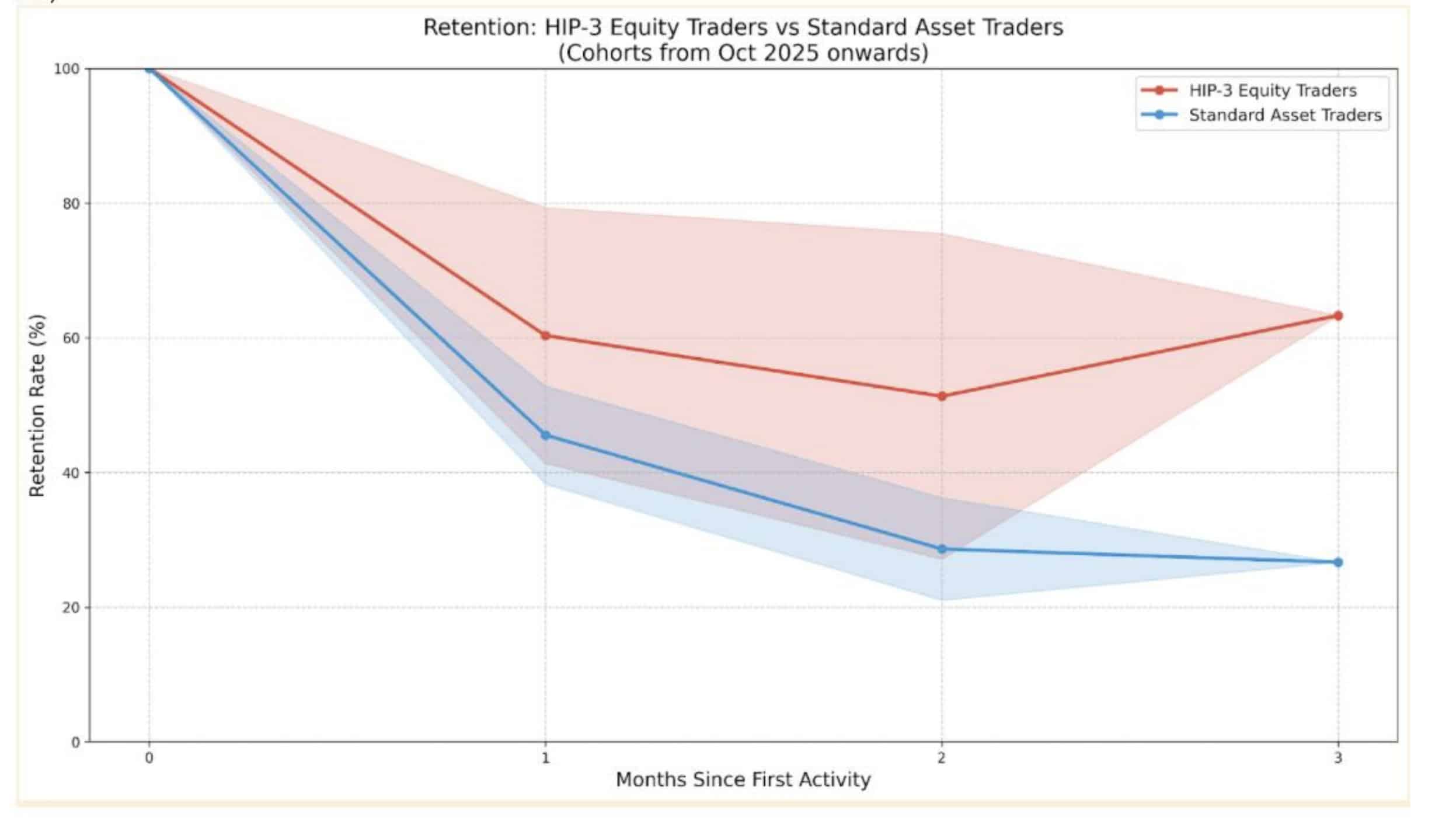
Menurut data terbaru, HIP-3 memiliki basis pengguna yang sangat menempel, dengan retensi pengguna 64%, dibandingkan dengan hanya 27% untuk aset kripto.

Sumber: X

Analis kripto Keisan menyebutkan volatilitas ekstrem kripto dan leverage 'perps' yang ramah dibandingkan dengan kontrak Opsi sebagai beberapa pendorong utama aktivitas pengguna HIP-3 yang 'menempel'.

Aset tradisional lebih nyaman untuk diperdagangkan daripada kripto, yang menderita volatilitas ekstrem, manipulasi pasar, dan token penipuan.

Dia menambahkan bahwa basis pengguna yang menempel akan mengarah pada likuiditas yang lebih dalam dan aset yang lebih dapat diperdagangkan. Pada akhirnya, ini mengarah pada lebih banyak aktivitas perdagangan dan pembelian kembali HYPE, yang secara tidak langsung meningkatkan nilai altcoin tersebut.

Volume HIP-3 meledak

Kemampuan untuk memperdagangkan berbagai aset (tradisional dan kripto) pada satu platform terpadu 24/7 menjadikan Hyperliquid salah satu pemenang dari krisis Asia Barat.

Sumber: Blockworks

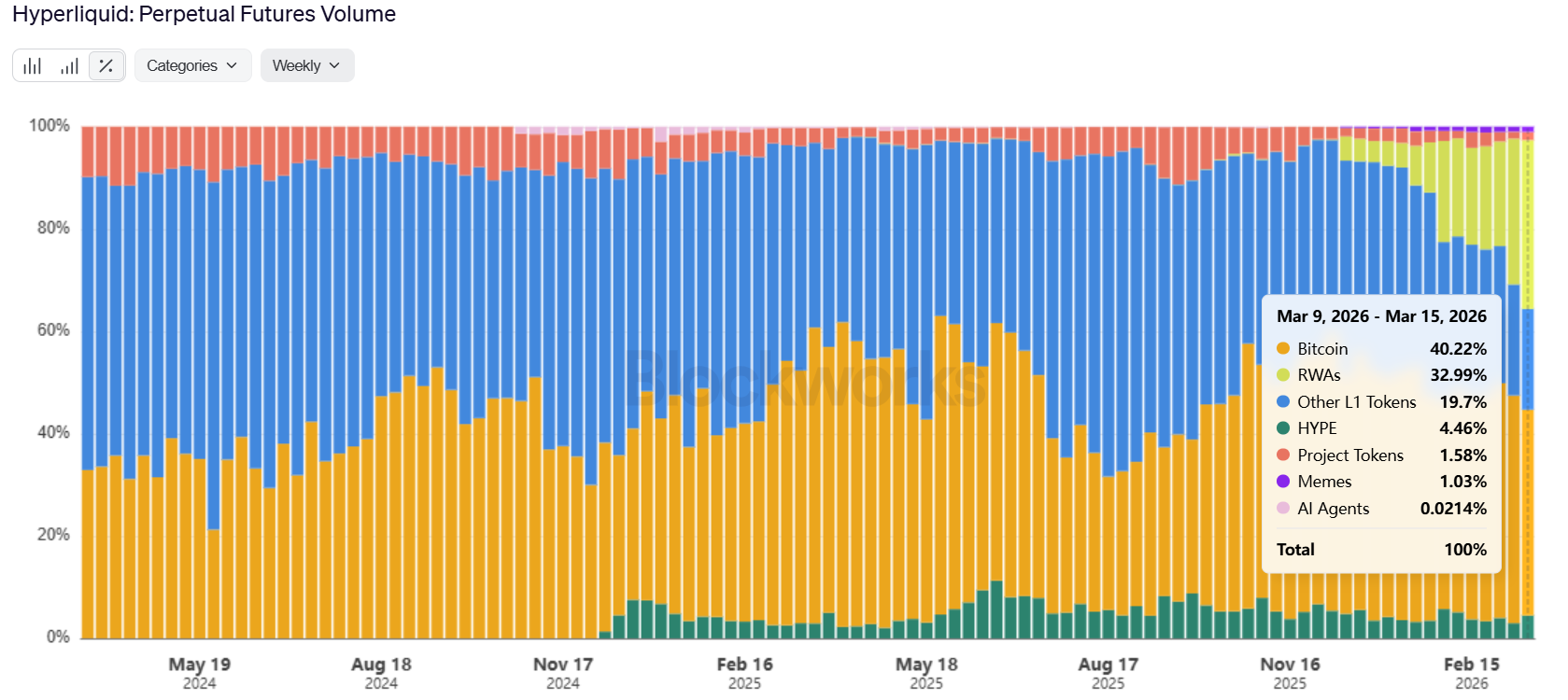
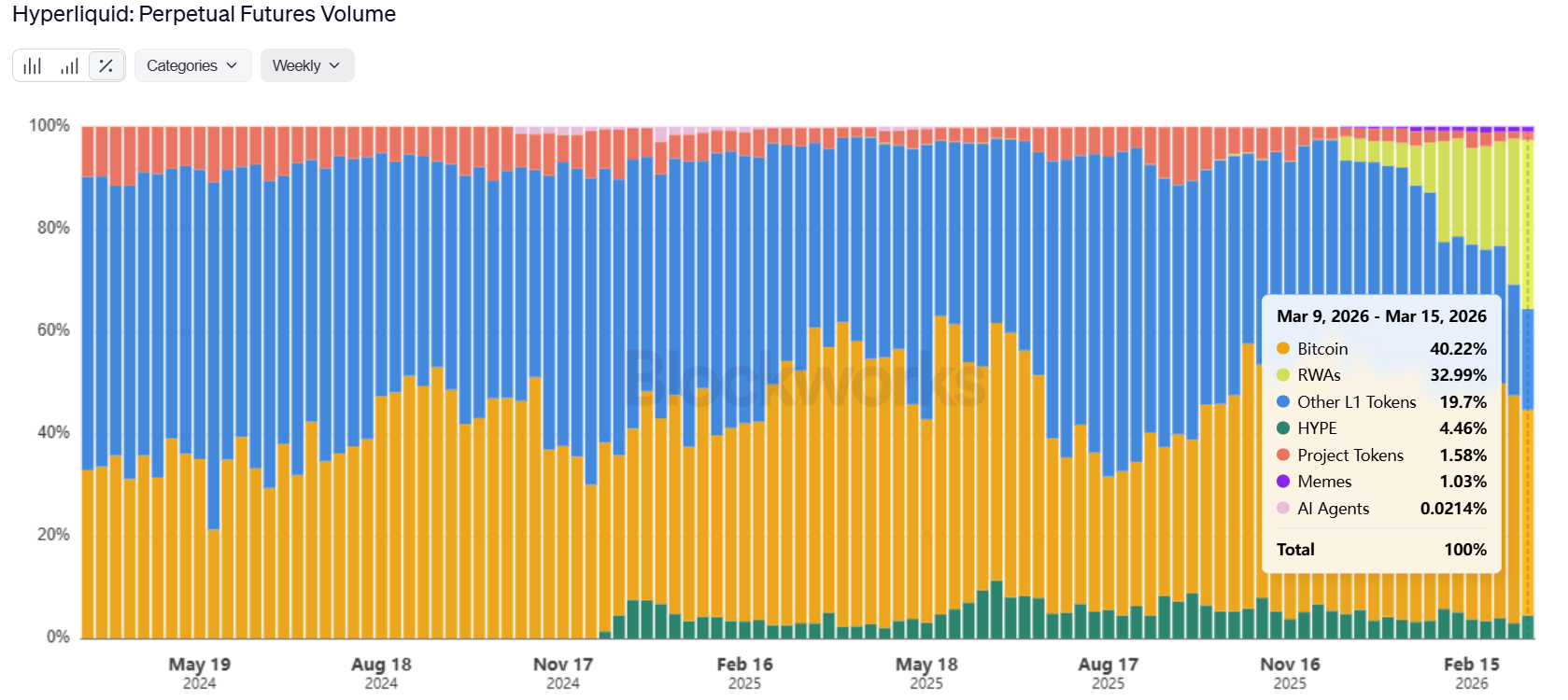
Minggu lalu, HIP-3 menyumbang 33% ($15,1 miliar) dari total volume perdagangan Hyperliquid. Ini hanya kedua setelah Bitcoin, yang mencapai $18,4 miliar (40%).

Berdasarkan tahun hingga saat ini (YTD), dominasi HIP-3 atau RWA (tokenisasi aset dunia nyata) meningkat dari 5% menjadi lebih dari 30% – Menekankan adopsi dan momentum yang kuat.

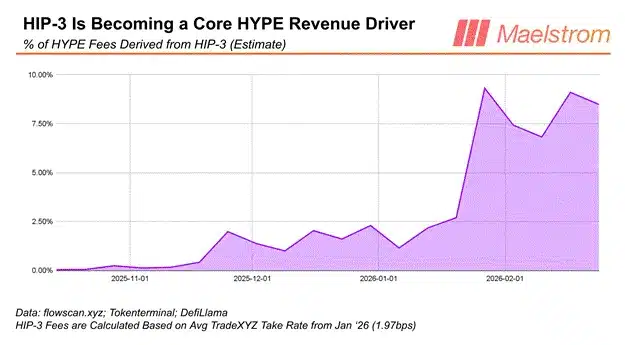
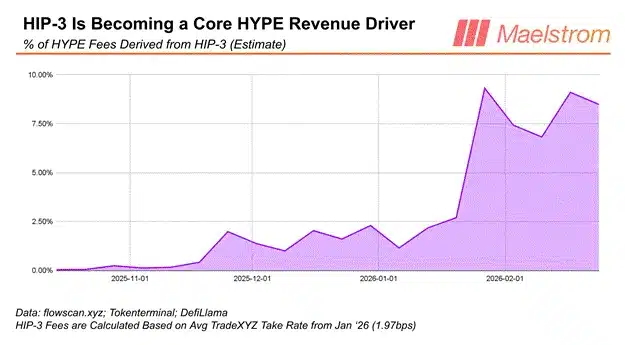
Bahkan, menurut pendiri BitMEX Exchange Arthur Hayes, HIP-3 sekarang mendorong hampir 10% dari total biaya yang dikumpulkan di platform.

Sumber: Arthur Hayes

Menurut Hayes, adopsi besar-besaran Hyperliquid sebagai platform perdagangan lintas aset kemungkinan akan mengangkat HYPE ke $150.

Bisakah bull HYPE merebut kembali $50?

Yang menarik, momentum naik HYPE membaik selama krisis Iran. Sejak dimulai, HYPE telah rally 57% dari $26 menjadi $41.

Jika diukur dari titik terendah Januari di $20, HYPE telah berlipat ganda atau rally 100%. Jadi, seseorang dapat mengatakan platform dan altcoin tersebut menjadi pemenang terbesar dari seluruh episode tersebut.

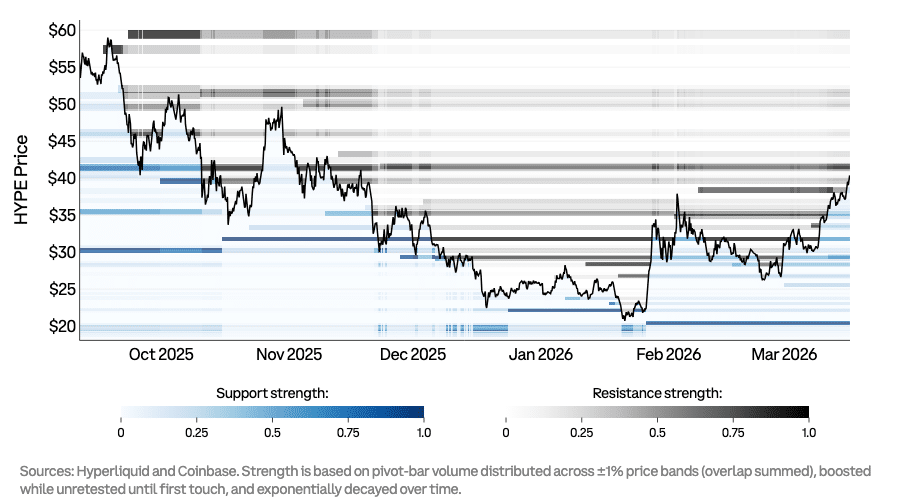
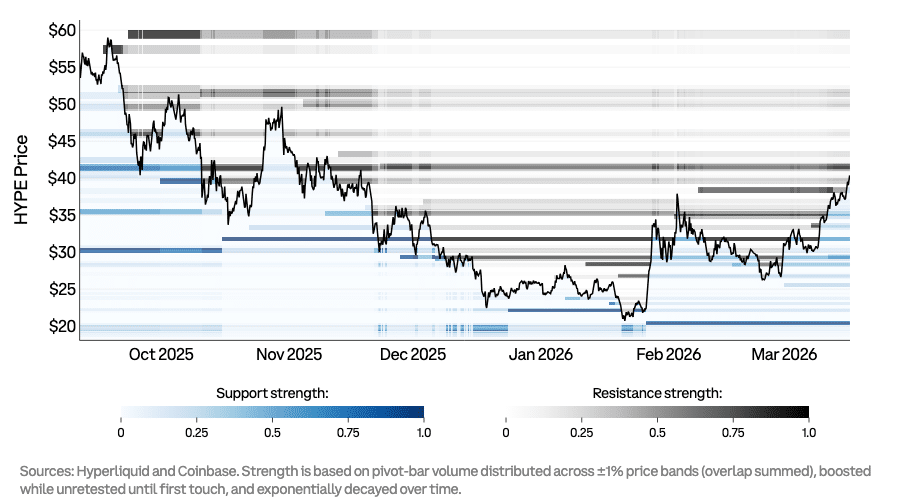
Namun, analis penelitian Coinbase Colin Basco, meskipun bullish pada altcoin tersebut, percaya bahwa $42 sebagai resistance kunci harus dibersihkan untuk rally yang berkelanjutan. Jika rintangan langsung ini berhasil dibersihkan, level berikutnya yang harus diperhatikan adalah $46 dan level psikologis $50.

Sumber: Coinbase

Ringkasan Akhir

  • Segmen HIP-3 Hyperliquid kini memiliki basis pengguna yang relatif lebih kuat dan lebih menempel dengan retensi trader lebih dari 60% dibandingkan dengan trader kripto normal.
  • Analis Coinbase percaya bahwa rally extended ke $50 mungkin terjadi, tetapi bull harus membersihkan level resistance $42 dan $46 terlebih dahulu.

Trending Cryptos

Related Questions

QApa yang dimaksud dengan HIP-3 di platform Hyperliquid dan aset apa saja yang termasuk di dalamnya?

AHIP-3 merujuk pada perdagangan aset non-kripto seperti minyak, emas, dan perak di platform Hyperliquid, yang merupakan bagian dari tokenisasi aset dunia nyata (RWA).

QBerapa persen retensi pengguna HIP-3 dibandingkan dengan aset kripto tradisional di Hyperliquid?

AHIP-3 memiliki retensi pengguna sebesar 64%, jauh lebih tinggi dibandingkan aset kripto tradisional yang hanya 27%.

QMenurut analis kripto Keisan, apa alasan utama pengguna lebih 'lengket' dengan HIP-3?

AAlasan utamanya adalah volatilitas ekstrem pada aset kripto, manipulasi pasar, dan token scam, sementara aset tradisional lebih nyaman untuk diperdagangkan dengan leverage 'perps' yang ramah.

QBerapa kontribusi volume perdagangan HIP-3 terhadap total volume Hyperliquid pekan lalu?

AHIP-3 menyumbang 33% dari total volume perdagangan Hyperliquid pekan lalu, setara dengan $15.1 miliar, hanya di bawah Bitcoin yang mencapai 40%.

QLevel resistensi kunci apa yang harus dilewati HYPE untuk rally berkelanjutan menuju $50 menurut analis Coinbase?

AMenurut analis Coinbase Colin Basco, HYPE harus terlebih dahulu melewati level resistensi kunci di $42 dan $46 untuk rally berkelanjutan menuju level psikologis $50.

Related Reads

a16z: From Companies to DAOs, DUNA May Become the Next Generation Organizational Form

This article, "From Companies to DAOs: How DUNA Could Become the Next Organizational Form," traces the 500-year evolution of business collaboration. It begins with medieval structures like the *commenda* and Florentine *compagnia*, which exposed partners to personal risk. The modern corporation, exemplified by the Dutch East India Company (VOC), was a revolutionary leap, enabling large-scale, capital-intensive ventures by offering limited liability and reducing coordination costs. However, corporations introduced new challenges like principal-agent problems and bureaucratic overhead. The piece argues that software and internet-native protocols are now reducing these traditional overheads. Decentralized Autonomous Organizations (DAOs) emerged as a new model for coordination without centralized management. Yet, DAOs face a significant legal vacuum: they lack legal recognition, leaving members exposed to unlimited personal liability, and their tokens are vulnerable to being classified as securities under unclear regulations (e.g., the Howey Test). This has forced projects into suboptimal workarounds like offshore foundations. The article identifies the Decentralized Unincorporated Nonprofit Association (DUNA) as a potential solution. Recently legalized in states like Wyoming, the DUNA provides a legal wrapper for decentralized networks. It grants key protections—legal personality, limited liability, and perpetual existence—to a group without imposing a traditional hierarchical management structure. This allows token-holder communities to govern, hold assets, and contract as a single legal entity, aligning with their decentralized nature. While DUNA doesn't solve all governance challenges or magically resolve securities law questions, it represents a crucial step. It fills the legal recognition gap, offering a native legal form for internet-scale, decentralized collaboration and extending the separation of personal risk from organizational venture into a new domain.

marsbit47m ago

a16z: From Companies to DAOs, DUNA May Become the Next Generation Organizational Form

marsbit47m ago

2026 Mid-Year Report On-Chain RWA: Tokenized Stock Market Cap Doubles in a Year, But 90% of Rights Are Hollow Shells

The 2026 Mid-Year Report on On-Chain RWA highlights a significant growth in tokenized stock market capitalization, which nearly doubled from $951 million in March to $1.89 billion by July. However, the report reveals a fundamental contradiction in this "layer 2.5" ecosystem: products with the strongest legal foundation (like regulated U.S. infrastructure) lack liquidity and distribution, while freely tradable offshored wrapper products often lack substantive ownership rights. The increase is driven largely by a few products (SECZ, FGRS, STRCx) and platforms (Ondo, xStocks, Securitize collectively hold over 85% share). While distributed value across networks like Ethereum, Solana, and BNB Chain has grown, the market remains fragmented. Products referencing the same underlying asset (e.g., Apple stock) are distinct legal liabilities with different intermediaries and jurisdictional rules, offering varying degrees of legal claim. The report cautions that headline numbers are misleading, as they reflect changes in distributed token value—driven by issuance, conversions, and price movements—not pure investor inflows. True "canonical shares" with legal ownership, wide wallet distribution, institutional liquidity, and independent on-chain price discovery do not yet exist at scale. Tokenized treasuries show stronger product-market fit, and ETFs may be easier to scale than single stocks. The core takeaway is a trade-off: legal certainty versus liquidity and composability.

marsbit1h ago

2026 Mid-Year Report On-Chain RWA: Tokenized Stock Market Cap Doubles in a Year, But 90% of Rights Are Hollow Shells

marsbit1h ago

Coldcard Hardware Wallet Hacked: 594 Bitcoin Withdrawn in 25 Minutes

The Coldcard hardware wallet has been compromised, with hackers stealing approximately 594.5 Bitcoin (~$40 million) from 500 addresses in just 25 minutes. The root cause was a critical software bug, undetected for five years, which disabled the device's secure chip for generating true random numbers. This led to the creation of private keys based on predictable data like the processor's serial number, drastically reducing cryptographic security. The attackers exploited this offline by brute-forcing possible seed phrases, finding active addresses on the public ledger, and signing transactions. Initially, Coinkite (Coldcard's maker) claimed only older models were at risk but later admitted all devices running the compromised firmware were vulnerable. CEO Rodolphe Novak (NVK) apologized but ruled out financial compensation for affected users. To secure funds, owners must urgently update their firmware to specific safe versions, generate a completely new seed phrase on the updated device, and transfer all assets to new addresses created with that new seed. While a BIP-39 passphrase can help, it does not replace this migration process. Other Coinkite products like TAPSIGNER were not affected. This incident underscores that even specialized hardware requires rigorous, independent code audits, especially for cryptographic functions. It parallels past failures, like a 2006 OpenSSL bug in Debian, and raises questions about whether automated code analysis can ever fully replace human scrutiny in critical security areas.

cryptonews.ru3h ago

Coldcard Hardware Wallet Hacked: 594 Bitcoin Withdrawn in 25 Minutes

cryptonews.ru3h ago

Trading

Spot

Hot Articles

What is G$

Understanding GoodDollar ($G$): A Blueprint for Decentralised Universal Basic Income Introduction In the ever-evolving landscape of cryptocurrency and blockchain technology, initiatives that seek to address pressing social issues have garnered increased attention. One such project is GoodDollar ($G$), a Web3-based universal basic income (UBI) solution. GoodDollar endeavours to tackle inequality and bridge the wealth gap by creating and distributing accessible economic resources to those most in need. Through its innovative use of decentralised finance (DeFi), GoodDollar presents a unique model that could potentially reshape the way financial assistance is perceived and delivered globally. What is GoodDollar ($G$)? GoodDollar is a cryptocurrency protocol that facilitates the issuance and distribution of digital tokens, referred to as $G$, to its registered users on a daily basis. These tokens function as a form of universal basic income, promoting financial empowerment for individuals from various backgrounds, especially those traditionally excluded from the financial system. Operating on the blockchain, GoodDollar utilises multiple chains, including Ethereum, Celo, and Fuse, ensuring broad access and usability. The fundamental goal of GoodDollar is to make cryptocurrency accessible and beneficial to everyone, irrespective of their economic starting point. The Creator of GoodDollar ($G$) Details concerning the creator of GoodDollar remain somewhat obscure. However, it is notably highlighted that the project has strong backing from eToro, a widely recognised investment platform that provided the initial funding and foundational support for GoodDollar's development. The vision behind the project is not solely profit-driven but leans heavily towards social entrepreneurship, aiming for a systemic change in economic accessibility. Investors of GoodDollar ($G$) GoodDollar enjoys the financial backing and operational support of eToro. This partnership has played a significant role in launching the protocol and its subsequent developments. While eToro was instrumental in establishing the foundation of the project, GoodDollar envisions transitioning towards a model funded by its community in the long run. This shift to community funding is in line with GoodDollar's commitment to decentralisation, allowing its users to have a direct stake in the project's future. How Does GoodDollar ($G$) Work? GoodDollar's operational framework relies heavily on DeFi principles to generate interest from staked cryptocurrencies. This mechanism allows the project to mint and distribute $G$ tokens as a digital basic income for users worldwide. Several key features contribute to GoodDollar's uniqueness and innovation: Universal Basic Income (UBI): Every day, registered users receive free tokens, establishing an automatic income stream intended to alleviate financial pressures. Sustainable Economic Model: The project’s tokenomics aim to balance supply and demand for $G$ tokens, ensuring that the value remains stable over time. Reserve-Backed Tokens: Each $G$ token is backed by a reserve of cryptocurrencies, providing it with inherent value and reliability, a crucial aspect for maintaining user trust. Decentralised Governance: GoodDollar incorporates a democratic approach to decision-making through token-powered decentralised governance. This allows community members to actively participate in the shaping of the project's trajectory, making it truly community-driven. Global Accessibility: GoodDollar has established a considerable community footprint, boasting over 640,000 members spanning 181 countries. Such widespread reach is instrumental in facilitating UBI on a global scale. Timeline of GoodDollar ($G$) The evolution of GoodDollar is marked by several significant milestones throughout its history: 2019: The launch of the GoodDollar wallet marked the first step in operationalising its vision of delivering UBI through cryptocurrency. 2020: Following the successful wallet rollout, the GoodDollar protocol officially debuted. This marked a crucial phase in its mission to provide daily distributed income. 2021: The project advanced further with the introduction of its Decentralised Autonomous Organization (DAO), fostering a greater level of community involvement and governance. 2022: GoodDollar unveiled its DeFi-friendly version 2 (V2), striving for enhanced user engagement and operational efficiency. The same year also saw the transition to a decentralised governance structure via GoodDAO. 2022: A new roadmap was conceptualised, focusing on initiatives like a grant program designed to promote $G$-related entrepreneurial ventures and an upgraded GoodDollar Marketplace. Key Features of GoodDollar ($G$) The GoodDollar project introduces numerous critical features aimed at redefining the landscape of basic income: Universal Basic Income: Delivering daily free tokens to its users fundamentally underscores its mission to eliminate economic precarity. Multi-Chain Operation: Leveraging multiple blockchain networks enhances accessibility and scalability, ensuring broader participation. Engagement with Decentralised Finance: The use of DeFi allows for sustainable funding of the UBI model, reinforcing its viability as an economic solution. Community Engagement and Governance: GoodDollar envisions a model where the community influences operations through democratic participation, fostering transparency and accountability. Global Community: Boasting a diverse global community enables the project to implement UBI solutions tailored to various cultural and economic contexts. Conclusion GoodDollar represents a transformative leap towards incorporating the principles of universal basic income through the innovative lens of blockchain technology. By harnessing decentralised finance, the project not only provides a solution to financial inequality but also actively engages users in its governance and operations. With a growing community and evolving roadmap, GoodDollar stands as a significant player in the intersection of cryptocurrency and social good, paving the way for a more equitable financial future. As it continues to evolve, GoodDollar’s journey may ultimately inspire other initiatives to consider similar models, furthering the cause of economic empowerment for all.

270 Total ViewsPublished 2024.04.05Updated 2024.12.03

What is G$

What is @G

Graphite Network, $@G: Bridging TradFi and Web3 Introduction to Graphite Network, $@G In the vibrant world of cryptocurrencies and web3 projects, Graphite Network emerges as a beacon of innovation. With its native token, $@G, this Layer-1, Proof-of-Authority (PoA) blockchain is tailored to bridge the gap between traditional finance (TradFi) and the rapidly evolving Web3 ecosystem. As digital currencies gain traction, Graphite Network strives to offer a blockchain platform that prioritises security, compliance, and speed, presenting itself as a facilitator of trust and accountability. What is Graphite Network, $@G? Graphite Network is not merely another blockchain project; it aims to redefine how decentralisation, security, and user accountability are perceived in the digital finance realm. The project boasts a series of distinctive features: Reputation-Based Blockchain: At its core, Graphite Network implements a one-user, one-account policy, fortified with integrated Know Your Customer (KYC) verification and scoring mechanisms. This design ensures a balance between user privacy and transparency—a critical aspect of financial operations in today’s digital world. Entry-Point Node Income: The network incentivises users to set up entry-point nodes, allowing operators to earn rewards from network transactions. This income generation model not only boosts user engagement but also reinforces network health and decentralisation. EVM Compatibility: With an Ethereum-compatible virtual machine (VM), Graphite Network enables seamless integration of existing Solidity decentralised applications (dApps) and smart contracts, thereby inviting developers to leverage its capabilities without extensive modifications. KYC Integration: In an era where compliance is paramount, the integrated KYC framework with multiple verification tiers enhances control over financial operations without mandatory participation, setting a precedent for user autonomy. Who is the Creator of Graphite Network, $@G? The Graphite Network is borne out of the endeavours of the Graphite Foundation, a non-profit organisation dedicated to the development, maintenance, and evolution of the Graphite Network. The foundation’s commitment underscores the project’s vision to create a secure and sustainable blockchain environment focused on genuine user engagement and compliance. Who are the Investors of Graphite Network, $@G? Currently, there is limited information available on the specific investors backing the Graphite Network initiative. The founding organisation, the Graphite Foundation, functions independently in fostering the project’s growth while seeking partnerships that resonate with its vision of a compliant and accessible blockchain platform. How Does Graphite Network, $@G Work? Graphite Network’s operation is grounded in its unique Proof-of-Authority consensus mechanism, which strikes an impressive balance between high throughput and decentralisation. Let's delve into the various components that define its operation: Transport Nodes: Serving as the entry-point nodes, these are critical to the ecosystem. Operators can earn revenue from transactions that traverse the network, which not only empowers individual users but also bolsters network decentralisation. Authorised Nodes: At the heart of the Graphite Network are core validators who undergo rigorous compliance tests, encompassing robust KYC verification along with technical assessments. This layer of trust is essential for ensuring that transactions within the network maintain a high level of integrity. Ticker System: Graphite Network employs a distinctive ticker system for its wrapped tokens, denoted as @G. This feature enhances clarity in asset integration, making user transactions comprehensible and straightforward. Graphite Network’s innovative approach reflects a significant step in addressing the crucial issues of digital finance, positioning itself favourably for the future as more users transition from traditional forms of finance into the world of decentralised applications. Timeline of Graphite Network, $@G To understand the progression and milestones of Graphite Network, it is beneficial to overview key events in its timeline: 2021: The inception of Graphite Network by the Graphite Foundation marks the commencement of a new chapter in blockchain development, focusing on compliance and user empowerment. Key Developments: Following its launch, the introduction of entry-point node income, the establishment of a reputation-based model, integrated KYC verification, and the provision of EVM compatibility represent significant advancements in the project. Recent Activities: The continuous development and nurturing efforts of the Graphite Foundation have focused on augmenting network features while fostering the ecosystem's growth, demonstrating a long-term commitment to sustainability and innovation. Additional Key Points Beyond its foundational components, Graphite Network encompasses several tools and features that bolster its usability: Graphite Wallet: A user-friendly Chrome extension that facilitates access to various network features and applications across Ethereum-compatible chains, enhancing user convenience. Graphite Bridge: This utility allows seamless transfers of Graphite assets across different networks, fostering an integrated and interoperable ecosystem. Graphite Explorer: Serving as an essential tool within the ecosystem, this feature enables users to view and verify smart contract source code, track transactions, and explore other vital information in real-time. Graphite Testnet: The project provides a robust testing environment for developers, allowing them to ensure stability and scalability prior to mainnet deployment. This initiative not only empowers developers but also enhances the reliability of the entire network. Conclusion Graphite Network, with its native token $@G, represents a significant stride toward bridging traditional finance and cutting-edge blockchain technology. By focusing on security, compliance, and decentralisation, this innovative platform is set to lead the transition into the Web3 era. As user engagement grows and more projects leverage its capabilities, Graphite Network is poised to make lasting contributions to the rapidly evolving digital landscape. In conclusion, Graphite Network stands as a testament to what can be achieved when innovative thinking meets the growing demands of modern finance and technology. As the world explores the potential of decentralised finance, Graphite Network will undoubtedly remain a noteworthy player in this arena.

49 Total ViewsPublished 2025.01.06Updated 2025.01.06
What is @G

Discussions

Welcome to the HTX Community. Here, you can stay informed about the latest platform developments and gain access to professional market insights. Users' opinions on the price of G (G) are presented below.

活动图片