Plasma tăng 12% – Liệu XPL có thể vượt qua ngưỡng kháng cự NÀY?

ambcryptoPublished on 2026-03-17Last updated on 2026-03-17

Abstract

Mã token Plasma (XPL) đã tăng 12,89% lên 0,1238 USD vào ngày 17/3, kèm theo khối lượng giao dịch tăng hơn 155%, phản ánh sự tham gia mạnh mẽ của nhà đầu tư. Giá đã phục hồi từ mức thấp gần đây, với cấu trúc thị trường và thanh khoản cho thấy dấu hiệu tăng giá. Mức kháng cự chính tại vùng $0,1259 đang là rào cản then chốt, và việc vượt qua được nó có thể kích hoạt một đợt tăng giá mạnh do các lệnh bán khống bị thanh lý ở vùng $0,128. Chỉ báo DMI cho thấy phe mua đang chiếm ưu thế, trong khi dòng tiền rút khỏi các sàn giao dịch (khoảng 664 nghìn USD) cho thấy áp lực bán giảm và hành vi tích lũy gia tăng. Miễn là giá giữ được trên mức hỗ trợ $0,1045, triển vọng tiếp tục tăng là khả thi.

Vào ngày 17 tháng 3, Plasma [XPL] đã tăng 12.89% lên mức $0.1238, trong khi khối lượng giao dịch tăng hơn 155%, phản ánh sự gia tăng mạnh mẽ về mức độ tham gia.

Token này đã phục hồi từ các mức thấp gần đây, và người mua đã tích cực tham gia trong các phiên giao dịch mới nhất. Động thái này cho thấy sự quan tâm đã trở lại sau một giai đoạn hạ nhiệt kéo dài.

Tuy nhiên, đợt tăng giá không diễn ra một cách riêng lẻ, vì cả cấu trúc thị trường và động thái thanh khoản đã bắt đầu đồng nhất với xu hướng tăng.

Sự mở rộng hoạt động cho thấy các nhà giao dịch đang định vị lại thay vì thoát ra.

Kết quả là, sự thay đổi này đặt XPL vào một giai đoạn quan trọng, nơi sự tiếp diễn phụ thuộc vào cách giá tương tác với các vùng kháng cự gần đó và sức mạnh nhu cầu cơ bản.

Liệu XPL có thể giữ vững hỗ trợ và thách thức kháng cự?

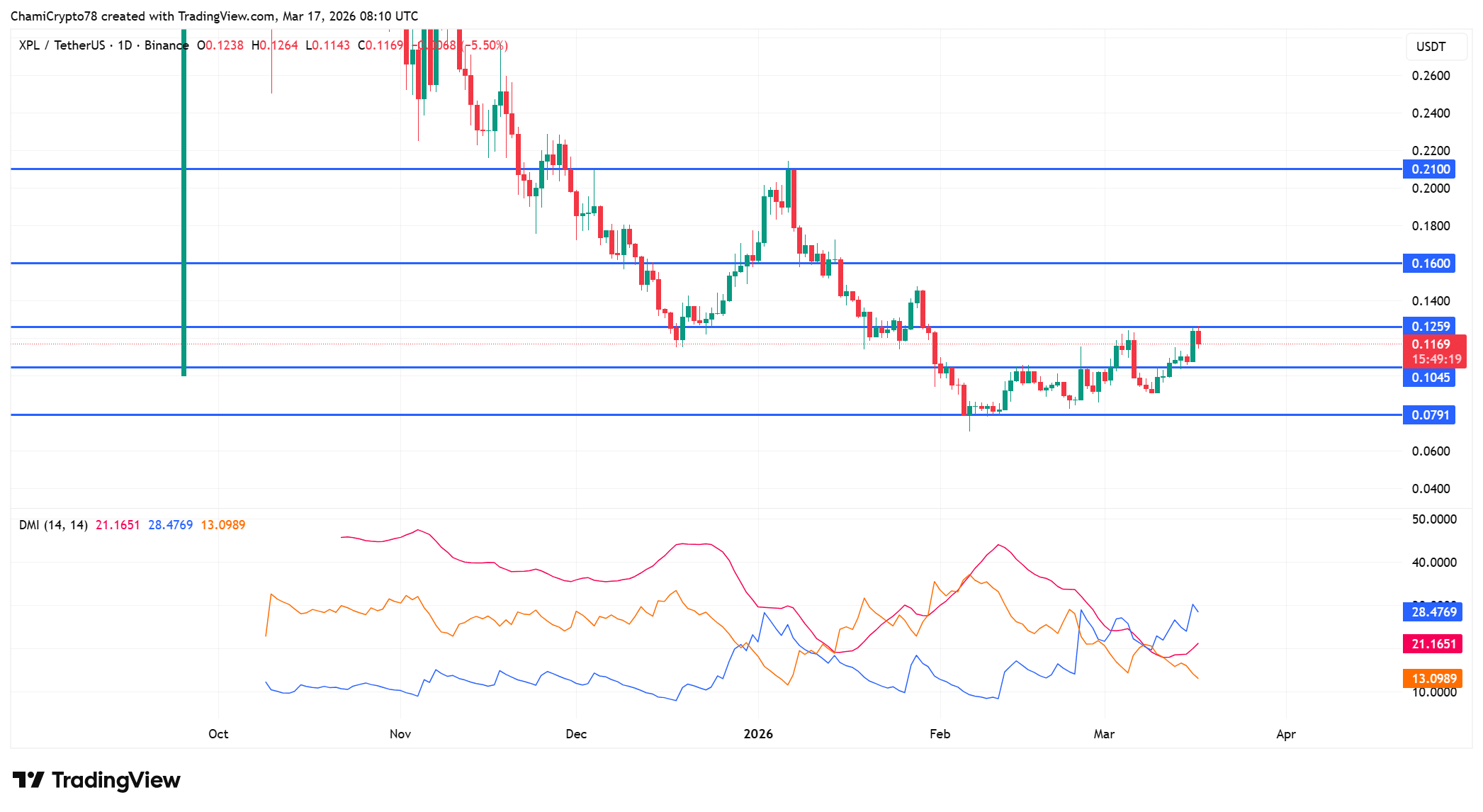
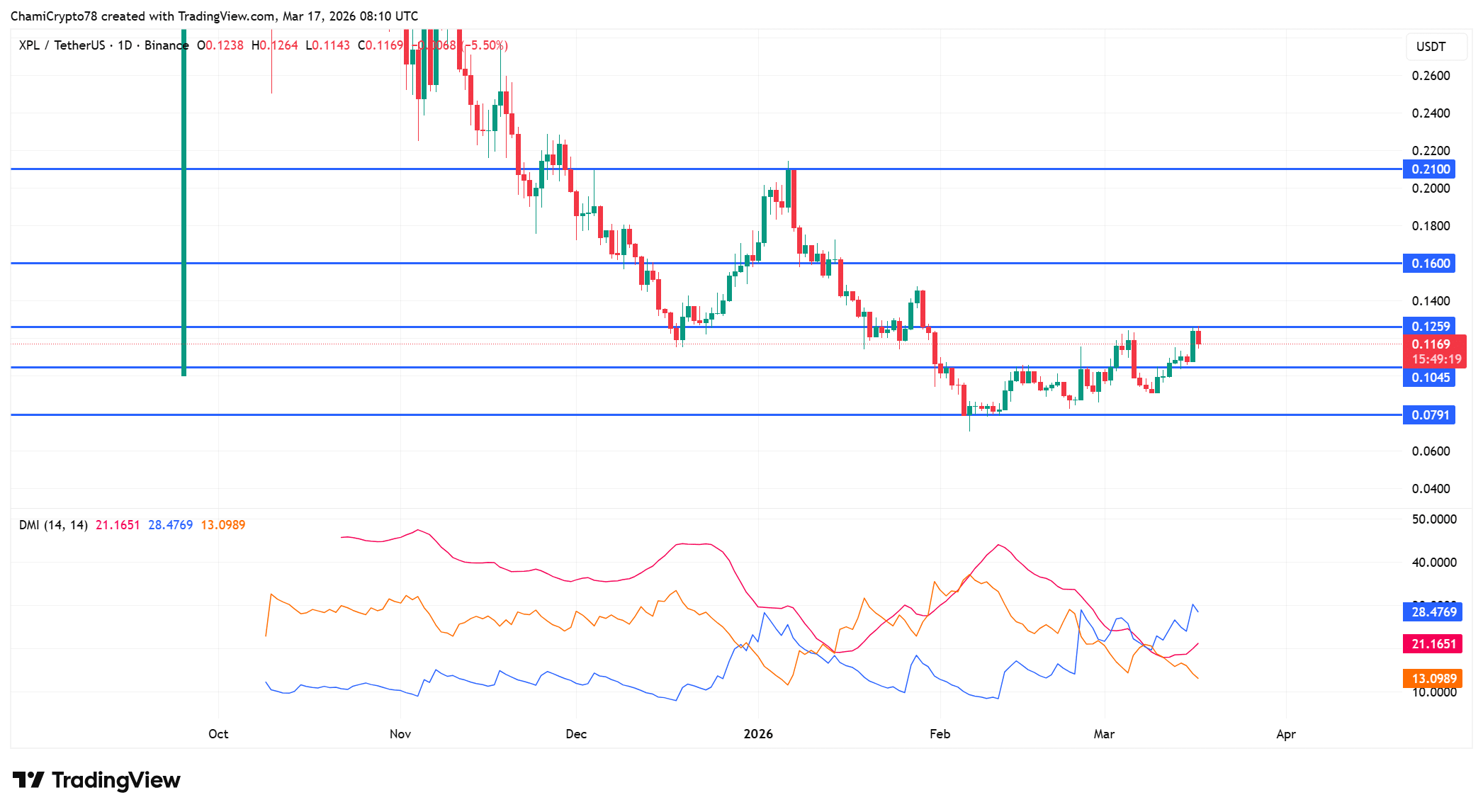
Giá đã lấy lại mức $0.1045, vốn từng đóng vai trò là vùng hỗ trợ mạnh trong giai đoạn tích lũy.

Kể từ đó, XPL đã đẩy về phía ngưỡng kháng cự $0.1259, nơi từng xuất hiện sự từ chối trước đây.

Khu vực này hiện là rào cản chính có thể xác định hướng di chuyển tiếp theo.

Tuy nhiên, cấu trúc cho thấy các mức đáy cao hơn đang hình thành, phản ánh sự kiểm soát ngày càng mạnh của người mua. Mỗi đợt giảm đều thu hút nhu cầu, ngăn chặn các đợt điều chỉnh sâu hơn.

Cấu trúc DMI đã thay đổi đáng kể, khi đường +DI đã vượt lên trên đường -DI, báo hiệu rằng người mua đã bắt đầu chi phối hành động giá gần đây.

Đồng thời, ADX dao động quanh mức 21, cho thấy sức mạnh xu hướng đã bắt đầu hình thành thay vì mất dần.

Sự đồng nhất này phản ánh sự chuyển đổi từ một pha trung lập sang một xu hướng có định hướng đang phát triển.

Khi giá nén lại dưới ngưỡng kháng cự, áp lực tiếp tục tích tụ trong phạm vi này.

Việc duy trì trên mức $0.1045 giữ cho cấu trúc nguyên vẹn, trong khi các lần kiểm tra lặp lại mức $0.1259 làm tăng khả năng bứt phá.

Thiết lập này cho thấy XPL đang định vị cho một động thái quyết định thay vì di chuyển ngang.
Nguồn: TradingView

Dòng tiền rút ra từ sàn giao dịch thắt chặt nguồn cung khả dụng

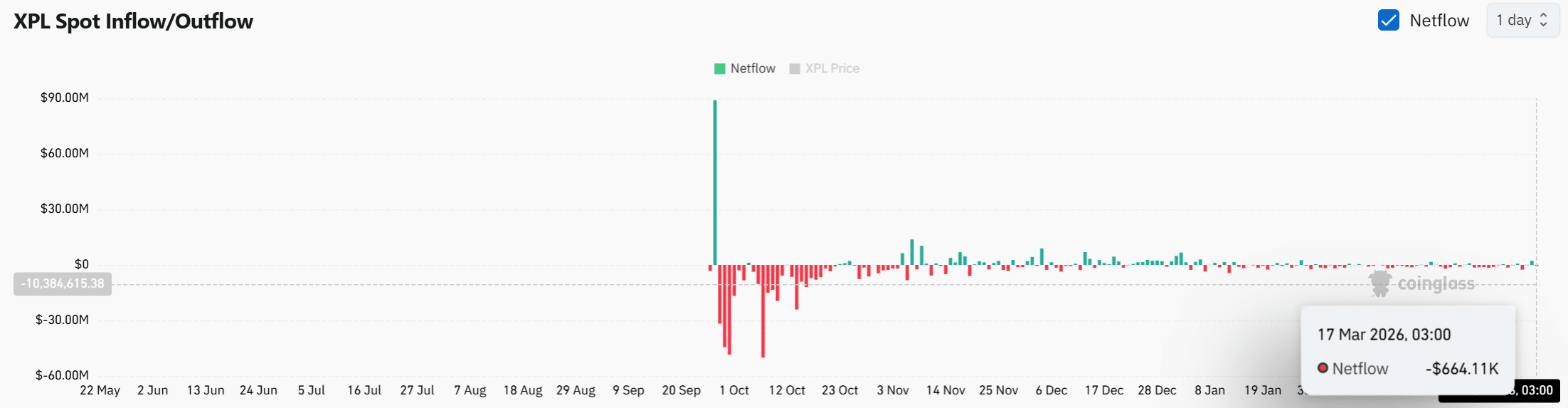
Dòng tiền ròng (Spot Netflows) vẫn âm tại thời điểm báo chí, với dòng tiền ra gần đây khoảng $664K từ các sàn giao dịch.

Sự thay đổi này cho thấy token đã được chuyển ra khỏi các nền tảng giao dịch thay vì chuẩn bị để bán ngay lập tức.

Khi nguồn cung trên các sàn giao dịch giảm, tính thanh khoản khả dụng thắt chặt, điều này có thể khuếch đại phản ứng giá trong các giai đoạn nhu cầu mạnh.

Bên cạnh đó, áp lực bán giảm tạo ra điều kiện để các động thái tăng giá ít gặp kháng cự hơn.

Tuy nhiên, động thái này cũng phụ thuộc vào việc liệu nhu cầu có tiếp tục phù hợp với nguồn cung giảm hay không.

Miễn là dòng tiền ra vẫn tồn tại, cấu trúc thị trường hỗ trợ hành vi tích lũy hơn là phân phối.

Mô hình này củng cố bối cảnh tăng giá vốn đã hiển thị trong hành động giá và các chỉ báo kỹ thuật.
Nguồn: CoinGlass

Các cụm thanh khoản phía trên giá báo hiệu thiết lập bị ép (squeeze setup)

Bản đồ nhiệt Thanh khoản (Liquidation Heatmap) đã tiết lộ các cụm thanh khoản dày đặc nằm phía trên giá hiện tại, đặc biệt là quanh vùng $0.128.

Những vùng này đại diện cho các khu vực mà các vị thế bán khống (short) có thể phải đóng ép nếu giá di chuyển cao hơn. Khi XPL tiến gần đến các mức này, áp lực tăng giá có thể tăng tốc do hiệu ứng thanh lý dây chuyền.

Tuy nhiên, giá trước tiên phải phá vỡ ngưỡng kháng cự gần đó để kích hoạt hiệu ứng này.

Sự hiện diện của thanh khoản xếp chồng phía trên các mức hiện tại tạo ra hiệu ứng giống như nam châm, thu hút giá về phía những vùng đó.
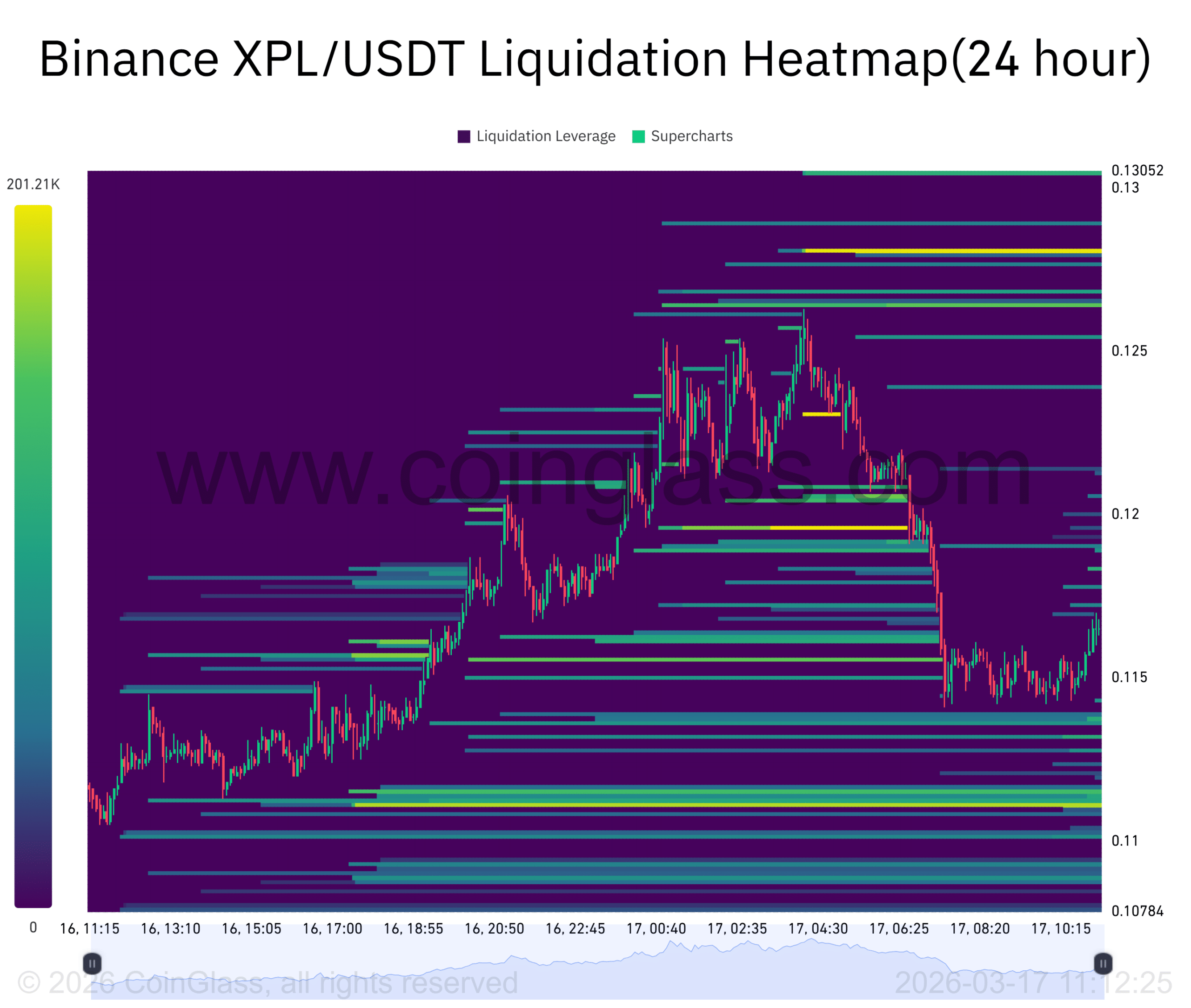
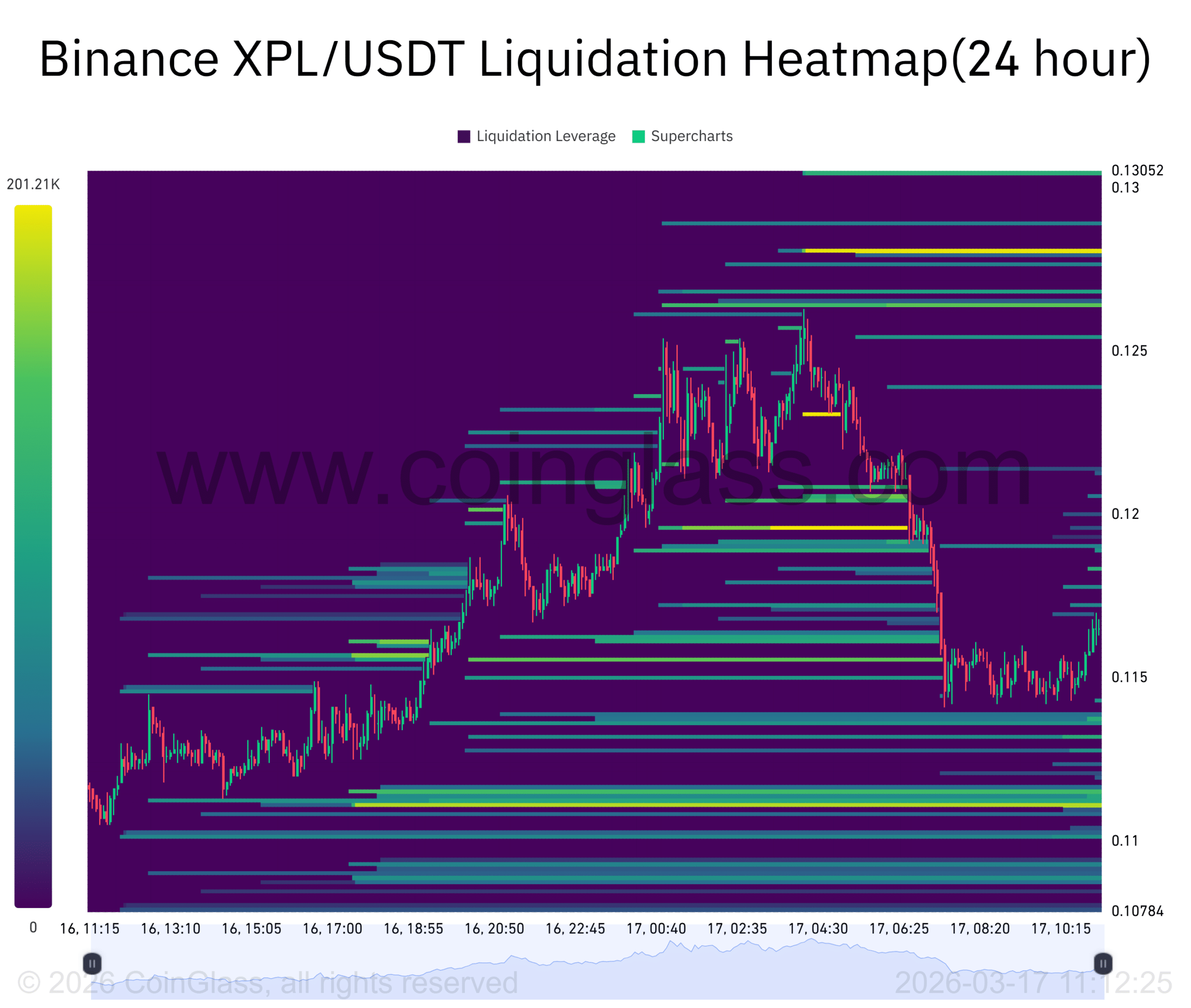
Nguồn: CoinGlass

XPL dường như đã được định vị để tiếp tục tăng khi cấu trúc mạnh lên, nhu cầu tăng và nguồn cung thắt chặt đồng nhất với áp lực tăng giá.

Một động thái quyết định trên $0.1259 có khả năng sẽ mở khóa thanh khoản quanh $0.128, đẩy nhanh đợt tăng giá.

Tuy nhiên, sức mạnh bền vững phụ thuộc vào việc giữ vững hỗ trợ $0.1045. Miễn là người mua bảo vệ được nền tảng này, thiết lập hiện tại ủng hộ việc mở rộng tăng thêm.


Tóm tắt cuối cùng

  • Cấu trúc XPL cho thấy người mua tham gia sớm, tạo áp lực có thể thúc đẩy sự tiếp diễn vượt qua các ngưỡng kháng cự gần đó.
  • Thanh khoản nằm phía trên giá Plasma [XPL] tạo ra một con đường cho việc mở rộng tăng nhanh chóng nếu sức mạnh tăng giá vẫn được duy trì ở đây.


Trending Cryptos

Related Questions

QPlasma (XPL) đã tăng bao nhiêu phần trăm vào ngày 17 tháng 3 và giá đạt mức nào?

AVào ngày 17 tháng 3, Plasma (XPL) đã tăng 12.89% lên mức giá $0.1238.

QMức kháng cự quan trọng nào mà XPL cần vượt qua để tiếp tục tăng giá?

AMức kháng cự quan trọng mà XPL cần vượt qua là $0.1259. Việc phá vỡ mức này có thể kích hoạt một đợt tăng giá mạnh.

QChỉ báo DMI cho thấy điều gì về xu hướng giá của XPL?

AChỉ báo DMI cho thấy đường +DI đã vượt lên trên đường -DI, báo hiệu phe mua đang bắt đầu chi phối hành động giá gần đây.

QDòng tiền ròng trên các sàn giao dịch (Spot Netflows) cho XPL có ý nghĩa gì?

ADòng Netflows âm, với khoảng 664 nghìn USD chảy ra khỏi các sàn giao dịch, cho thấy token đang được rút đi để tích lũy thay vì chuẩn bị bán ra, làm thắt chặt nguồn cung.

QCụm thanh khoản ở mức giá nào được cho là có thể thúc đẩy đợt tăng giá mạnh nếu bị phá vỡ?

ACụm thanh khoản dày đặc ở vùng $0.128 được xem là một 'nam châm' hút giá lên. Nếu giá phá vỡ kháng cự và chạm đến vùng này, nó có thể kích hoạt các lệnh thanh lý và đẩy giá tăng nhanh hơn.

Related Reads

Vitalik's Algorithmic Stablecoin Vision: Interpreting the Mechanism and Challenges from an Options Perspective

Vitalik Buterin's recent algorithmic stablecoin proposal envisions using an option-like mechanism to create a stablecoin without the liquidation risks inherent in traditional collateralized debt position (CDP) models. The design splits one unit of ETH into two components: a 'stable' leg (P) that maintains value up to a certain strike price, and an 'upside' leg (N) that captures any appreciation above that price. Together, they always sum to one ETH, eliminating the need for debt or liquidation mechanisms. From an options perspective, the stable leg essentially functions as a synthetic, covered call position. However, significant challenges exist. For the stable asset to maintain its peg, it must continuously roll deep in-the-money call options, leading to potential rollover slippage, predictable trading paths vulnerable to front-running, and liquidity issues. Crucially, the system's scalability depends on a constant demand for the upside leg—a form of leveraged ETH long position without funding rates or liquidation risk. It's unclear if such persistent, specific demand will materialize from speculators or market makers who have simpler alternatives like perpetual swaps. The author, drawing from experience with Rysk, argues that DeFi options have struggled as standalone trading products due to complexity and fragmented liquidity. Their potential lies instead as foundational infrastructure underpinning more complex financial primitives like stablecoins, structured yields, or index products—transforming from a direct product into a core pricing and risk distribution engine for the next generation of on-chain finance.

marsbit1h ago

Vitalik's Algorithmic Stablecoin Vision: Interpreting the Mechanism and Challenges from an Options Perspective

marsbit1h ago

GPT-5.6 Countdown: Abandon the Illusion of a Single API, Computational Iteration Can't Outpace a Single Page of Compliance

In mid-June, three seemingly independent industry events—the compliance-driven throttling of Fable 5, the open-sourcing of GLM-5.2, and the leaked release timeline for GPT-5.6—are pushing the global AI industry toward a watershed moment. These shifts signal a fundamental restructuring of the industry's underlying logic. First, **"usability" has substantially overtaken "advanced capabilities"** as the primary weight, pushing the global large language model (LLM) supply chain into a "dual-track" phase of controlled closed-source and local open-source coexistence. Second, **the competitive moats of closed-source giants are shifting**. Their technical focus is moving from "language intelligence" toward "spatial intelligence (world models)"—a domain heavily reliant on computing power. Third, faced with常态化 transnational compliance risks, **a "model-agnostic" decoupled design has become a survival necessity for application-layer developers to maintain business continuity.** The article details how Anthropic's Fable 5, despite its advanced engineering feats, was restricted for non-U.S. citizens within 72 hours of launch, highlighting how geopolitical compliance can instantly limit even the most advanced models. In response, the open-source camp, exemplified by Zhipu AI's MIT-licensed GLM-5.2, is gaining market share by offering stable performance improvements and significant cost advantages (up to 70% savings for enterprises), while achieving full adaptation with domestic semiconductor platforms. Meanwhile, closed-source leaders like OpenAI are pivoting. The anticipated GPT-5.6 reportedly shifts focus from language to spatial intelligence and world models, aiming to rebuild a generational gap in areas like 3D understanding, simulation, and industrial design that demand immense compute. The core conclusion is that the LLM supply chain's logic has changed. Enterprises must now evaluate infrastructure based on a composite of technical performance and policy compliance. For developers, complete reliance on a single closed-source API poses unacceptable risk. Implementing a truly model-agnostic architecture—enabling swift switches to compliant, locally deployable open-source alternatives—is no longer just good practice but a fundamental baseline for business continuity.

marsbit3h ago

GPT-5.6 Countdown: Abandon the Illusion of a Single API, Computational Iteration Can't Outpace a Single Page of Compliance

marsbit3h ago

Is the 'Token Subsidy War' Among AI Giants Almost Over?

The article discusses the ongoing "token subsidy war" among AI giants like OpenAI and Anthropic, questioning whether it's nearing its end. It reveals that current AI subscription prices are heavily subsidized, with some plans offering tokens at up to 70 times the actual cost to attract and retain heavy users, especially developers and enterprises. This strategy mirrors past internet-era subsidy battles, but with a key difference: AI tokens lack "lock-in" effects. Unlike ride-hailing or food delivery apps, users can easily switch between AI providers as APIs become standardized, making it difficult for companies to raise prices post-subsidy. The piece highlights a structural asymmetry in the competition. Giants like Google, with massive advertising revenue, can afford to subsidize tokens indefinitely, akin to using "tokens as a weapon." In contrast, venture-backed companies like OpenAI and Anthropic face pressure to become profitable, especially as they approach IPO. The article cites Google Ventures founder Bill Maris, who suggests Google could slash token prices by 80%, putting immense pressure on competitors. Two potential endgames are presented: the "internet service" model (subsidize, monopolize, then raise prices) and the "utility" model (tokens become a standardized, low-margin commodity like electricity). Given the low switching costs, the latter seems more likely. The competition may not have a single winner but could instead accelerate AI's evolution into a foundational, infrastructure-level technology, akin to a public utility. For now, users continue to benefit from heavily subsidized token costs.

marsbit4h ago

Is the 'Token Subsidy War' Among AI Giants Almost Over?

marsbit4h ago

Trading

Spot
Futures

Hot Articles

What is PLASMA

Plasma: A Cutting-Edge Solution for Blockchain Scalability Introduction to Plasma As the cryptocurrency landscape evolves, there is an increasing need for enhanced efficiency within blockchain networks. Plasma, a Layer 2 scaling solution, emerges as a pioneering player in this area, particularly in the sphere of Web3 development. By strategically shifting a significant portion of tasks from the main chain to a series of smaller chains, Plasma aims to significantly enhance the scalability and performance of Ethereum—a widely-used blockchain platform that is at the forefront of decentralised applications. What is Plasma? Plasma is an innovative off-chain scaling solution specifically designed for the Ethereum blockchain. It was introduced in August 2017 by Vitalik Buterin, co-founder of Ethereum, and Joseph Poon, a prominent advocate of scaling solutions like the Lightning Network. Plasma serves as a framework that enables the creation of scalable applications by establishing a hierarchical structure of child chains that sit above the main Ethereum chain. At its core, Plasma facilitates the development of potentially unlimited side chains that can operate independently while still relying on the Ethereum network for security and consensus. This architecture is supported by smart contracts and Merkle Trees, which efficiently manage transactions and data storage. Core Objectives of Plasma The primary goal of Plasma is to increase the throughput of the Ethereum network. By diverting a significant volume of transactions away from the congested main chain, Plasma's architecture offers higher transaction speeds, more efficient data processing, and lower transaction costs. This is particularly crucial in an age where the demand for decentralised applications—especially in finance, gaming, and supply chain management—is reaching unprecedented levels. Creator of Plasma Plasma is the brainchild of two renowned figures in the blockchain community: Vitalik Buterin and Joseph Poon. Buterin is celebrated primarily for co-founding Ethereum and pushing the boundaries of what blockchain technology can achieve. Poon, on the other hand, is known for advocating scalable solutions that enable faster and more cost-effective transactions on blockchain networks. Their collaboration on the Plasma framework has significantly contributed to its innovative nature, merging advanced technical insights with practical applications. Investors of Plasma While the specific investment foundations or organisations supporting Plasma remain undisclosed, the project has attracted interest from various prominent figures and players in the blockchain and cryptocurrency space. With its potential for enhancing scalability within Ethereum, it has captured the attention of various entities aiming to push the boundaries of blockchain technology. How Does Plasma Work? Plasma's unique functionality stems from its architectural framework that relies on child chains and their interaction with the main Ethereum network. Below are some key factors that contribute to Plasma's innovative approach: Child Chains: Plasma establishes numerous child chains that can execute transactions independently of the main Ethereum chain. Each child chain operates as a separate smart contract with unique features, allowing developers to create tailored solutions based on their specific requirements. Smart Contracts and Merkle Trees: The framework utilises smart contracts, which are self-executing agreements with predefined conditions, combined with Merkle Trees that enable efficient verification of data. This technology allows Plasma to achieve both high scalability and security. Transaction Compression: By batching transactions on the child chains, Plasma reduces the data load on the Ethereum network. This implies that fewer transactions need to be recorded on the main chain—thereby freeing up space and alleviating congestion. Enhanced Security: Despite being off-chain, Plasma leverages the security measures of the main Ethereum network, ensuring that all transactions on child chains maintain a high level of integrity and security. Timeline of Plasma Understanding the development of Plasma involves tracing its significant milestones: August 2017: Plasma was first introduced by Vitalik Buterin and Joseph Poon as a scalable solution to address Ethereum's performance challenges. 2018: The Plasma framework was officially developed and made available on GitHub, marking a crucial step towards its implementation in practical applications. 2019: As awareness about Plasma grew, it began to attract developers interested in scaling Ethereum applications, thus increasing its adoption. 2020: Plasma continued evolving, with substantial enhancements made to its architecture and functionality—making it even more appealing to developers. Key Features of Plasma Plasma boasts several characteristics that position it as a transformative solution in the blockchain space: Scalability: By creating multiple child chains, Plasma can handle a higher volume of transactions without placing further strain on the main Ethereum chain. Speed: Each child chain can process transactions more rapidly, providing users with a better experience and service. Lower Transaction Costs: Plasma's structure effectively reduces the costs associated with transactions by minimising the burden on the main chain. Interoperability: The architecture allows Plasma to seamlessly interact with multiple blockchains, enhancing cross-network functionality. Security: By harnessing the security of Ethereum’s main chain, Plasma ensures the integrity of its operations while using its child chains. Use Cases for Plasma The innovative architecture of Plasma opens the door for various practical applications across different sectors: Decentralised Finance (DeFi): Plasma has the capacity to enhance the scalability and efficiency of DeFi applications, creating smoother and more effective trading processes. Gaming: The framework facilitates the development of quick and cost-efficient gaming experiences, making it appealing to developers in the gaming industry. Supply Chain Management: With the ability to achieve efficient transaction processing, Plasma can promote the development of decentralised supply chain management solutions. Conclusion Plasma stands at the forefront of blockchain technology, positioned as a pivotal Layer 2 scaling solution aimed at enhancing the efficiency of the Ethereum network and beyond. Through its unique structure of child chains, smart contracts, and Merkle Trees, Plasma presents a compelling solution to the scalability crisis that has long plagued blockchain networks. As blockchain technology continues to advance, solutions like Plasma promise to reshape how developers approach scalability challenges, potentially revolutionising how decentralised applications function. The ongoing efforts by its creators and the interest of various stakeholders indicate a bright future for Plasma as it seeks to elevate blockchain capabilities to new heights in the digital realm.

187 Total ViewsPublished 2024.12.03Updated 2024.12.03

What is PLASMA

Discussions

Welcome to the HTX Community. Here, you can stay informed about the latest platform developments and gain access to professional market insights. Users' opinions on the price of XPL (XPL) are presented below.

活动图片