Pump.fun挺进十亿美金俱乐部,“MEME提款机”如今还剩下多少生意?

marsbitPublished on 2026-03-17Last updated on 2026-03-17

Abstract

Pump.fun作为Solana上首个收入突破10亿美元的MEME代币发行平台,稳居行业绝对寡头地位,尽管市场整体下滑,其日均发币量、交易额和收入仍保持高位。然而,大部分收入用于创作者激励和代币回购,未能有效推动币价回升。 GMGN在2026年第一季度收入环比增长近5倍,主要受益于BSC链交易量激增,但增长可能部分源于数据统计调整。 Four.meme作为BSC链上的头部平台,收入较峰值大幅缩水,日均发币量和毕业率远低于Pump.fun,反映BSC与Solana生态的差距。 Axiom收入持续下滑,从高峰期的单季超1.5亿美元降至2903万美元,增长动力不足。 Photon、BullX和BONKbot收入呈阶梯式下跌,但BONK生态整体仍保持一定活力。 总体而言,MEME赛道并未消亡,但行业洗牌加速,流量和收入日益向头部平台集中,具备完整商业闭环的玩家更可能在未来行情中受益。

作者:Frank,PANews

3月8日,Pump.fun累计收入突破10亿美元,是Solana上首个达到这一里程碑的平台,也稳坐MEME赛道最醒目的印钞机。但在热潮退去之后,问题已经不只是“谁赚得最多”,而是这些靠MEME起家的平台,如今到底还剩下多少生意。

沿着Pump.fun、GMGN、Four.meme、Axiom,以及Photon、BullX、BONK这些头部生态项目看下去,答案其实已经越来越清楚:MEME并没有消失,只是生意越来越向头部集中,链与链之间、平台与平台之间的分化也越来越明显。

Pump.fun:跨越牛熊的“绝对寡头”,上亿利润却难沉淀

如果说上一轮MEME热潮是一场昼夜不停的淘金潮,那么Pump.fun无疑是这座淘金镇里最赚钱的收费站。公开数据显示,截至2026年3月,Pump.fun累计总收入已经突破10亿美元。其中,2024年贡献了约3.21亿美元,2025年进一步放大到约6.64亿美元。2026年开始,MEME行业遭遇严重的滑坡,但Pump.fun的影响似乎不算太大,至今也仍有约9830万美元收入。

从市场格局上来看,Pump.fun在Solana生态的统治地位进一步得到了加强。以3月15日的数据为例,Pump.fun代币创建数量占比达到了99.1%,毕业代币比例为94.8,单日的交易量占比约为93%。当天,Pump.fun发币24938个,而LetsBonk只有132个,Bags为50个,Moonshot为28个,其他的代币发射平每日的数据量已经完全无法和Pump.fun进行竞争。
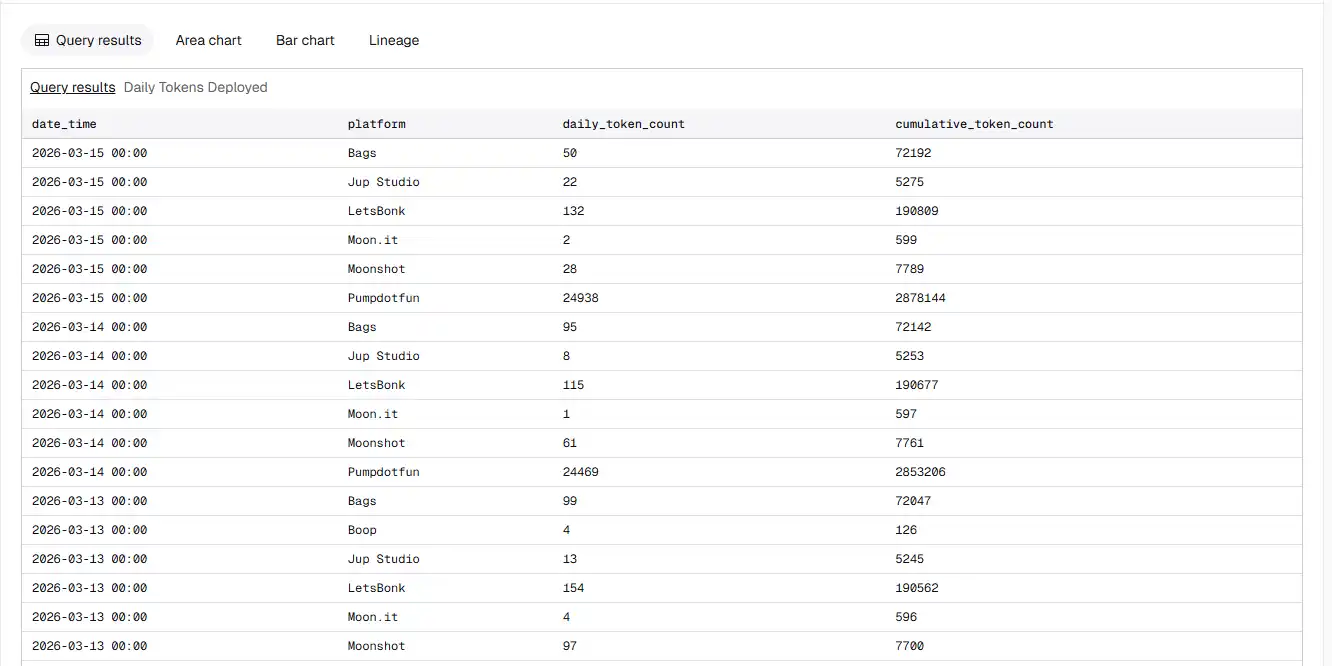
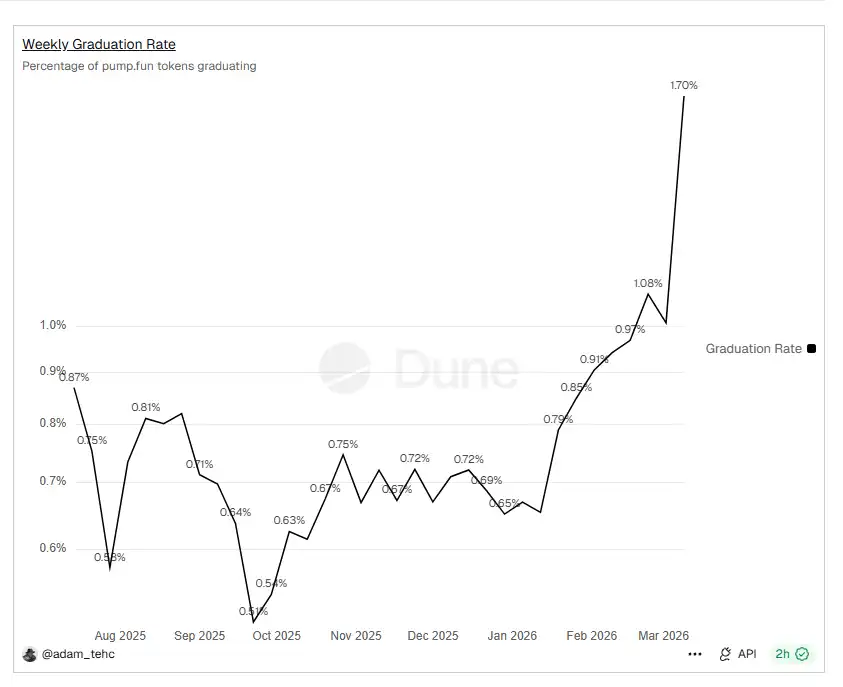
而回看Pump.fun本身的数据,也十分奇特的维持了一定的高水准,最近两周可见数据粗算,Pump.fun当前日均发币量约为2.97万个,日均活跃钱包约为15.77万个,日均成交额约为9365万美元,日均收入约为87万美元。与此同时,长期被视为平台软肋的毕业率也出现了修复迹象,最近甚至一度冲到1.70%左右。虽然这个短期高点还未能确定背后具体的原因,但Pump.fun的毕业效率确实在回暖。
不过,虽然费用产生情况依旧稳健,但对Pump.fun来说,但并不意味着这些收入都能完整沉淀成协议利润。首先,是一多半的的费用都让渡给创作者和LP。其次,在创作者收入之外,剩余的收入也都用于代币回购。2026年第一季度,Pump.fun共产生费用达到2.27亿美元,其中1.23亿美元分给了创作者和LP,剩余的1亿美元也几乎全部用于代币回购。
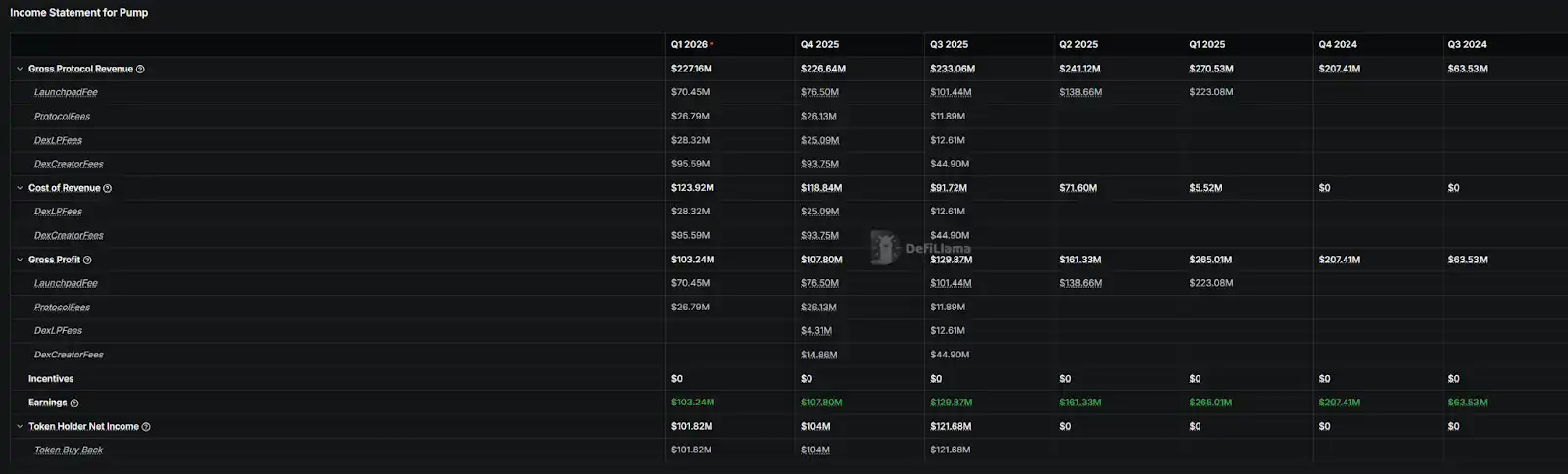
但问题在于,回购并没有自动转化成币价上行,截至3月16日,PUMP价格约为0.002美元,较其历史高点0.0088美元仍低了约76.21%。这里更合理的解释是,回购只能起到托底和维持叙事的作用,却不足以逆转整个MEME板块估值压缩的趋势。换句话说,Pump.fun的现金流机器仍在高速运转,但市场已经不再愿意像上一轮热潮里那样,单纯因为“会赚钱”就给它更高的估值倍数。

总结一下,对Pump.fun来说,市场格局仍旧相对稳健,虽然整个meme币赛道迎来下滑,但死掉的基本是对手,反而让Pump.fun的统治力越来越强。如果这个市场再次能迎来爆发,Pump.fun可能将吸收到更大的红利。

GMGN:单季收入环比增长五倍,BSC成“流量新贵”

GMGN的收入在2026第一季度迎来了又一次爆发式增长。2026年第一季的总收入达到2531万美元,相比2025年第四季度的564万美元,增长接近5倍。这一季度收入也成为GMGN历史上第二高的单季度收入(仅低于2025年一季度的4081万美元)。

仔细拆分这个收入结构来看,主要得益于BSC链,2025年10月开始,GMGN在BSC链上的交易量开始明显超过Solana,到2026年这一趋势已经趋于稳定。截至目前,在GMGN上BSC链的交易占比已经接近Solana链的3倍。

从整体的交易量来看,2026年第一季度GMGN的用户活跃度与交易量都有了一定提升,不过这一提升幅度并不像收入变化所显示的那么高。因此,从这个角度来看,2026年的一季度的GMGN收入提升的确存在,但爆发式增长则很有可能是defilama的统计问题(2025年10月前BSC链的收入数据为空)。

不过,这种增长主要源于1月份的BSC链上MEME交易量激增,当月产生全链收入达到1634万美元,到2月这个数字降为518万美元,3月截至目前约为377万美元。今年一季度总体水平和2025年同期接近。

Four.meme:BSC上的“门面担当”,日收入仅为峰值零头

如果说Pump.fun几乎吃下了Solana发射平台的大部分流量,那么在BSC上,最接近类似角色的就是Four.meme。

DeFiLlama数据显示,截至3月16日,Four.meme 2026年第一季度协议收入已经达到1600万美元,明显低于2025年第四季度的5424万美元,但从今年每月收入变化来看,仍有小幅回升。
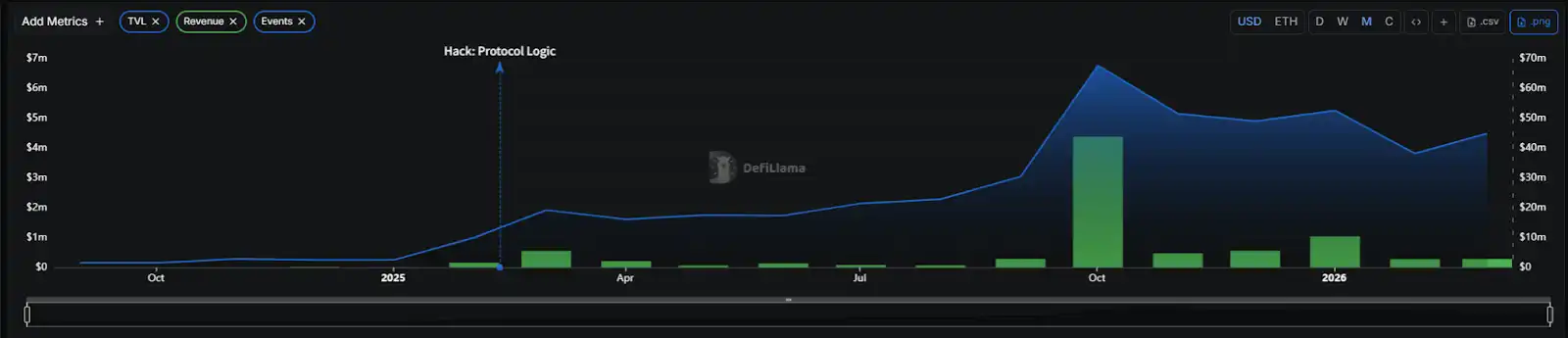
按Dune追踪的最近10天的可见数据,Four.meme日均发币约4858个,日均用户约5749个,日均真正上线 DEX Pancake的代币只有25.7个,短期毕业率进一步压到0.53%左右。这些数据变化上来看,当前的Four.meme也正处在低位运行的状态,与2025年10月的最高日均422万美元收入相比,目前的收入已经降至20~30万美元水平。
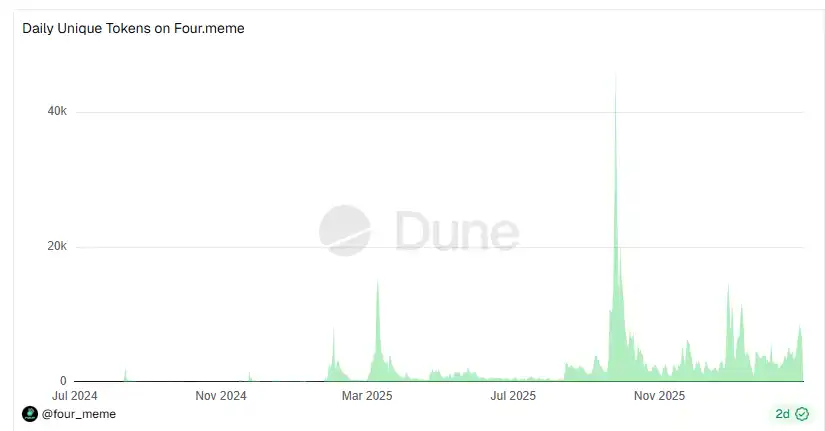
作为对比,Pump.fun最近两周的数据估算,其日均发币量仍有约2.97万个,日均成交额约9365万美元。显然,作为Solana和BSC这两条链MEME币的主阵地,Four.meme和Pump.fun在规模和代币质量上有着较大差距,背后折射的也是两条链的MEME发展情况。

Axiom:告别高增长,持续陷入缩量泥潭

如果说GMGN在2026年第一季度的增长更像是吃到了BSC轮动的红利,那么Axiom的情况几乎相反。

按DeFiLlama数据显示,截至目前,协议在2026年第一季度的收入约为2903万美元,高于GMGN同期的2531万美元。
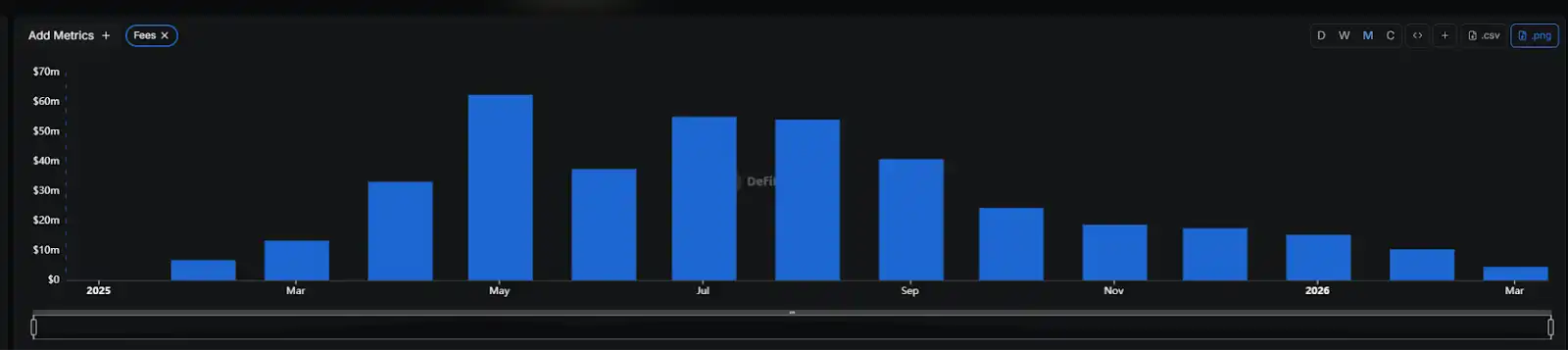
不过,Axiom当前的问题在于其业务处于一种持续下滑的状态。按DeFiLlama的季度收入数据,Axiom在2025年第二季度和第三季度的协议收入曾分别高达1.33亿美元和1.50亿美元,但到了2025年第四季度回落到6066万美元,而2026年第一季度截至目前为2903万美元。和去年最疯狂的阶段相比,业务体量已经明显收缩。这一点和GMGN进行对比后可以发现,虽然都是高峰后的下滑阶段,但GMGN收入时不时仍有阶段性反弹,而Axiom的状态却似乎未能再次振作。

对Axiom来说,它已经不再是一个单纯依赖MEME热潮爆发的工具,而更像是一台经历过多轮行情检验的成熟交易机器。相比还在讲增长弹性的GMGN,Axiom想象空间似乎正在萎缩。

Photon、BullX与BONK:潮水退去后的“掉队者”

相比仍有反弹的GMGN和仍维持头部规模的Axiom,Photon、BullX和BONKbot的收入曲线在2026年都更明显地进入了下行区间。

按DeFiLlama截至3月16日的数据,Photon累计收入约4.38亿美元,但单季度收入已经从2025年第一季度的1.228亿美元,依次下滑到第二季度的3231万美元、第三季度的1899万美元、第四季度的529万美元,2026年第一季度截至目前仅为452万美元,呈现出近乎阶梯式坠落的趋势。
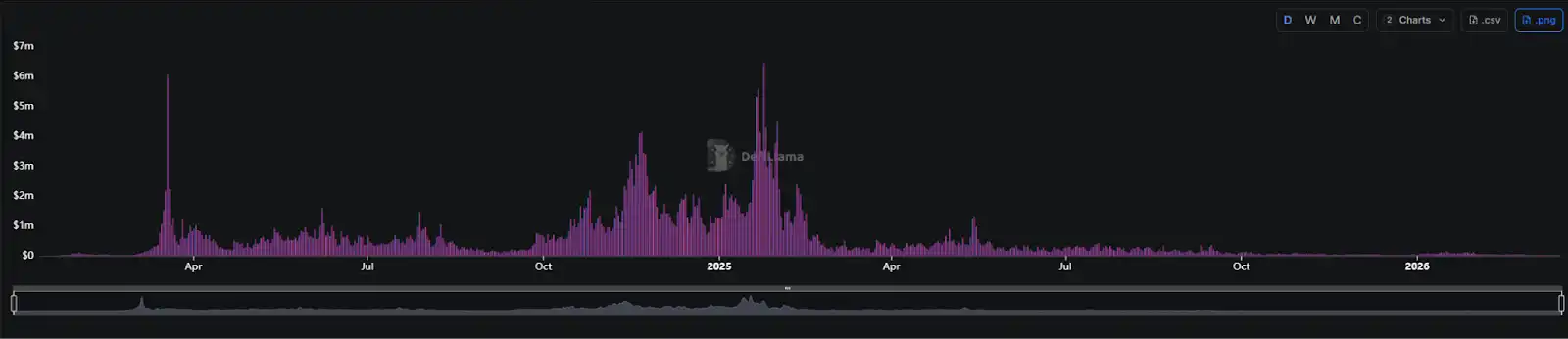
BullX的累计收入约2.03亿美元,但同样出现快速收缩,单季度收入从2025年第一季度的8737万美元降到第二季度的1425万美元、第三季度的386万美元、第四季度的87.8万美元,2026年第一季度截至目前仅为49.1万美元。
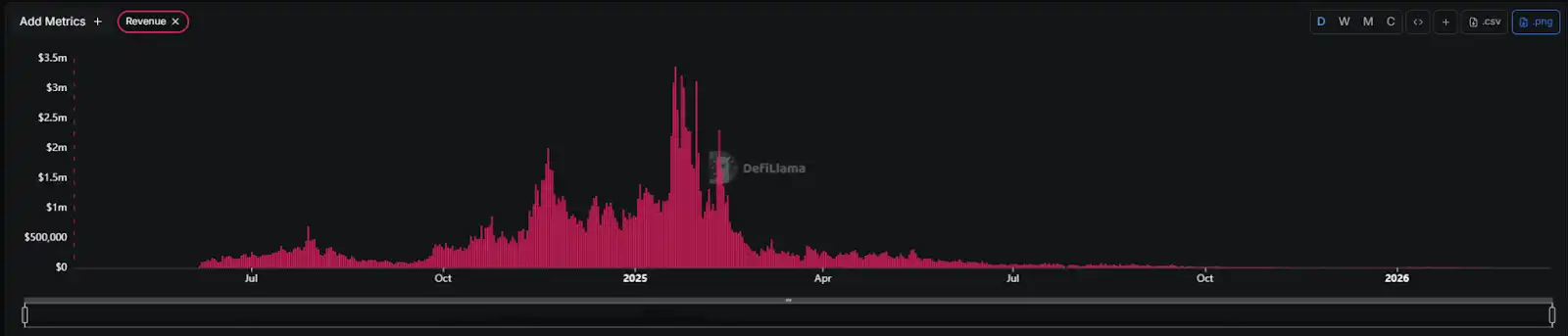
BONKbot的下滑幅度相对没那么陡,但同样已经明显退潮。按DeFiLlama数据,其累计收入约9357万美元,2025年第一季度单季收入还有1261万美元,之后回落到第二季度的340万美元、第三季度的285万美元、第四季度的185万美元,2026年第一季度截至目前为184万美元。
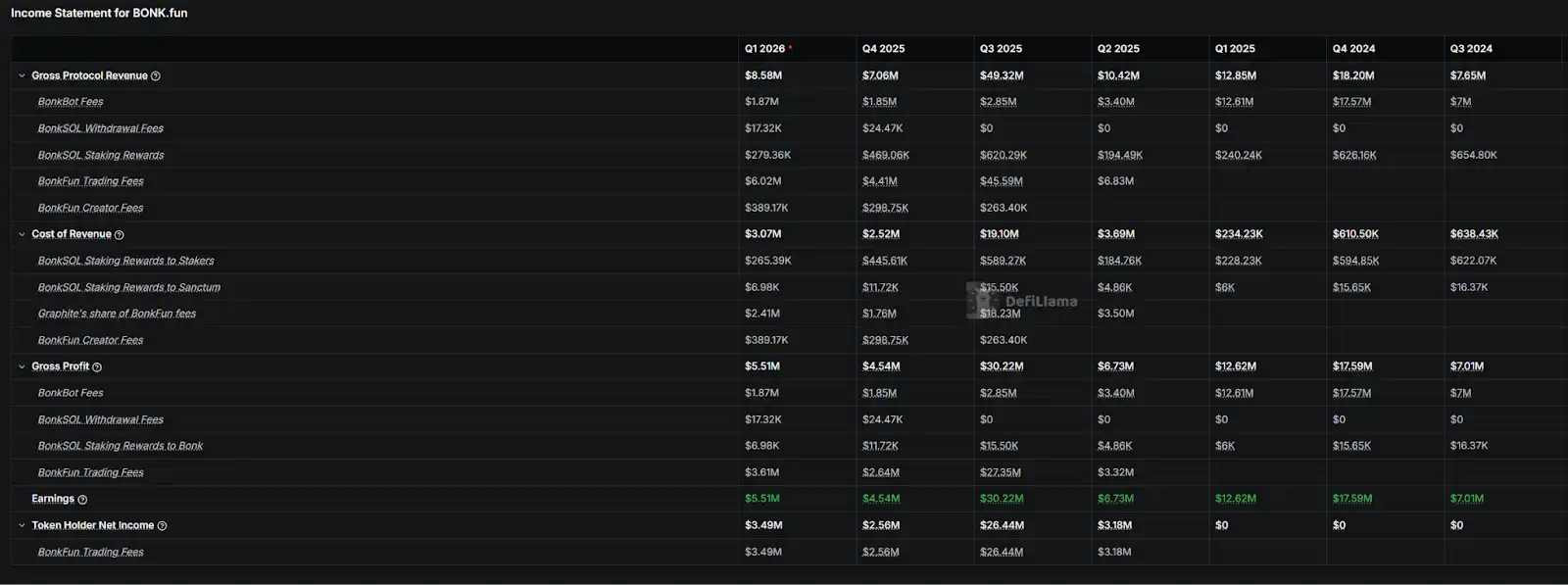
不过,BONK生态本身并没有同步熄火。截至目前,BONK.fun 2026年第一季度协议收入约851万美元,已经高于2025年第四季度的706万美元。其中,当前季度约有600万美元来自Bonk.Fun,约184万美元来自BonkBot。

纵观这场MEME币大逃杀,我们不难得出一个结论:MEME赛道并没有走向消亡,只是草莽竞争的时代已经彻底终结,洗牌速度远超所有人的想象。

潮退去之后,真正留下来的平台,不再只是跑得快的那批人,而是那些已经把发射、交易、流动性和收费链路做成完整闭环的玩家。如果下一轮MEME行情再次启动,最先吃到红利的,大概率也还是它们。

Related Questions

QPump.fun在2026年3月8日达到了什么重要里程碑?

APump.fun累计收入突破10亿美元,成为Solana上首个达到这一里程碑的平台。

Q根据文章,Pump.fun在2026年第一季度的费用分配情况如何?

APump.fun在2026年第一季度共产生费用2.27亿美元,其中1.23亿美元分给了创作者和流动性提供者(LP),剩余的1亿美元几乎全部用于代币回购。

QGMGN在2026年第一季度的收入表现如何?其增长主要归功于哪条区块链?

AGMGN在2026年第一季度的总收入达到2531万美元,环比增长接近5倍。其增长主要归功于BSC链,该链的交易量已明显超过Solana链,占比接近后者的3倍。

Q与Pump.fun相比,BSC链上的主要MEME发射平台Four.meme的近期数据表现如何?

AFour.meme近期数据表现远低于Pump.fun。其日均发币量约4858个,日均用户约5749个,日均毕业代币仅25.7个,毕业率约0.53%,日均收入已从峰值422万美元降至20~30万美元水平。

Q文章指出,Photon、BullX和BONKbot在2026年的收入趋势是怎样的?

APhoton、BullX和BONKbot的收入在2026年都明显进入下行区间,呈现出阶梯式坠落或持续收缩的趋势,与仍有反弹的GMGN和维持规模的Axiom形成对比。

Related Reads

Wintermute Market Weekly: Iran War Ends, Inflation Meets Expectations, BTC Rebounds to Lower 60ks But Don’t Rush to Buy the Dip

**Wintermute Market Weekly: BTC Rebounds to $60K Lows, But Caution Advised** This week saw a broad market rebound, primarily driven by two converging factors: a US CPI inflation reading that met expectations (4.2% YoY) and former President Trump's announcement of a deal to end the Iran conflict. The latter triggered a sharp drop in oil prices, reducing geopolitical risk premiums and easing inflation fears. Consequently, risk assets like equities and cryptocurrencies rallied, with Bitcoin recovering from lows around $60,000 to close the week up 1.9%, while altcoins gained 3.1%. Despite the price bounce, the underlying liquidity picture for crypto remains weak. Key funding channels—stablecoin flows, ETF inflows, and Digital Asset Treasury (DAT) activity—show no signs of structural improvement. ETF outflows recently hit a record streak, and DAT assets have declined significantly. The rally from $60K to $83K earlier is now viewed as a bear-market rally that has failed. The current environment is characterized by low directional conviction and choppy, range-bound trading, likely persisting into summer. The report advises caution against aggressively buying the dip. While the $60K area offers attractive long-term risk/reward, a sustained bull run requires a visible turnaround in capital inflows, which hasn't materialized. The upcoming FOMC meeting and Powell's commentary, alongside the formal Iran deal signing, are noted as near-term catalysts. The core takeaway is to watch fund flows rather than price action and avoid being whipsawed by volatility before clear signs of institutional or retail capital returning emerge.

marsbit6m ago

Wintermute Market Weekly: Iran War Ends, Inflation Meets Expectations, BTC Rebounds to Lower 60ks But Don’t Rush to Buy the Dip

marsbit6m ago

Cursor, Why Boarded Musk's Starship?

SpaceX announced its acquisition of AI programming startup Cursor's parent company, Anysphere, for $60 billion in an all-stock deal, just days after its record-breaking IPO. The move sent SpaceX's stock soaring, briefly making it the most valuable U.S. company. Cursor, founded in 2022 by MIT graduate Michael Truell and his classmates, is a popular AI coding assistant that allows developers to switch between models from OpenAI, Anthropic, and others. It saw explosive revenue growth, reaching a $4 billion annualized run rate in early 2026. However, its market share was eroded by the launch of competitor Claude Code from its key AI supplier, Anthropic. This dependence prompted Cursor to develop its own AI model, Composer, in early 2026. To scale Composer, Cursor needed immense computing power. In April 2026, it struck a deal with SpaceX, granting the latter an option to acquire it post-IPO. SpaceX exercised this option, offering Cursor access to its Colossus supercomputer, powered by hundreds of thousands of top-tier Nvidia AI chips. For SpaceX, the acquisition is a strategic move to bolster its AI capabilities, particularly for its xAI division, and advance its broader ambition of building orbital, solar-powered data centers. While the deal surprised some employees and investors given Truell's earlier stance on independence, it represents a high-stakes partnership. SpaceX CEO Elon Musk has projected the company could reach $1 trillion in revenue by 2030. For Truell, joining forces with SpaceX is a monumental gamble on an unprecedented scale in the race for AI dominance.

链捕手8m ago

Cursor, Why Boarded Musk's Starship?

链捕手8m ago

The More It Rises, the More Dangerous? The Systemic Risks Behind SpaceX's Soaring Valuation

Summary: The article raises concerns about the systemic risks posed by SpaceX's skyrocketing valuation, arguing that modern market mechanics, rather than fundamentals, are driving its price discovery. Following SpaceX's market capitalization surpassing $3 trillion in after-hours trading, the author contends that the market is no longer functioning properly. The core issue is not SpaceX's business prospects but the unhealthy market structure surrounding it. With limited float and the imminent launch of options trading, the stage is set for a potential "gamma squeeze"—a feedback loop where market makers hedging call options are forced to buy shares, pushing the price higher and attracting more speculative momentum traders. This mechanism, seen previously with Tesla and meme stocks, can decouple valuation from financial reality. The danger escalates as extreme valuations force passive funds, ETFs, pensions, and major indices to hold the stock. If SpaceX grows large enough—hypothetically reaching $5 or even $10 trillion—its performance would increasingly dictate broader market indices, embedding systemic risk. The author warns that when price appreciation itself becomes the primary bullish thesis, the market transforms from a capital allocation mechanism into a self-reinforcing speculative machine, endangering the retirement savings of ordinary investors tied to passive strategies. The piece questions whether such a system can still perform its fundamental role of price discovery.

marsbit13m ago

The More It Rises, the More Dangerous? The Systemic Risks Behind SpaceX's Soaring Valuation

marsbit13m ago

OpenAI's Hyperliquid Pre-IPO Pricing Venture: Why Did It Last Only Half a Year?

The article discusses the rise and fall of Pre-IPO pricing markets on the Hyperliquid blockchain. Trade.xyz, an anonymous team, successfully built the largest pre-market for SpaceX (SPCX) by launching a contract with a clear anchor: the eventual Nasdaq listing price. This provided inherent price stability and validation. In contrast, Ventuals, a team backed by Paradigm, failed despite holding exclusive contracts for highly sought-after companies like OpenAI and Anthropic. Its key mistake was its pricing mechanism. For companies with no near-term IPO date, Ventuals' oracle relied partly on opaque private market transactions and, critically, partly on its own contract's moving average price. This created a self-referential feedback loop where prices were artificially propped up and detached from genuine supply and demand, leading to illiquid markets. Ventuals shut down after nine months, settling positions at final prices of $1,341.80 for OpenAI and $1,618.90 for Anthropic. Ironically, some employees and late-stage investors of these very companies reportedly used these flawed Ventuals prices for valuation reference, highlighting the acute demand for any price signal in illiquid private markets. The article concludes that while demand for pre-IPO trading is real and growing, with players like Coinbase now entering the space, the fundamental challenge remains: without a public listing to provide a definitive price anchor, these markets struggle to establish truly accurate and liquid pricing. The need for a transparent, self-correcting market is the critical lesson from Ventuals' failure.

marsbit39m ago

OpenAI's Hyperliquid Pre-IPO Pricing Venture: Why Did It Last Only Half a Year?

marsbit39m ago

Trading

Spot
Futures

Hot Articles

Discussions

Welcome to the HTX Community. Here, you can stay informed about the latest platform developments and gain access to professional market insights. Users' opinions on the price of MEME (MEME) are presented below.

活动图片