Collection d'Interactions | Gagnez des points en vous connectant à Mahojin ; Demande d'inscription sur liste d'attente KAIO (23 février)

Odaily星球日报Published on 2026-02-23Last updated on 2026-02-23

Abstract

L'article présente trois projets cryptos avec des opportunités d'interaction pour les utilisateurs : **Mahojin** : Une plateforme d'infrastructure AI décrite comme un "GitHub pour les créateurs de modèles AI", permettant de suivre la propriété intellectuelle et de rémunérer les contributeurs. Le projet a levé 5 millions de dollars. L'interaction consiste à se connecter sur son site, à lier son compte X et à effectuer une check-in quotidienne pour gagner des points. **KAIO** : Une blockchain de niveau 1 (L1) spécialisée dans la tokenisation d'actifs réels (RWA) pour les institutions. Elle a levé 11 millions de dollars en 2023. Les utilisateurs peuvent rejoindre une liste d'attente en connectant leur portefeuille et remplir des tâches sur Galxe. **Edgen** : Un assistant de trading intelligent pour les crypto-actifs, offrant des renseignements et des conseils. Il a levé un total de 11 millions de dollars. L'interaction se fait via son site en se connectant avec X pour effectuer des tâches quotidiennes et d'autres défis.

Original | Odaily Planet Daily (@OdailyChina)

Auteur | Asher (@Asher_ 0210)
Mahojin : Plateforme d'infrastructure IA

Présentation du projet

Mahojin vise à créer un « GitHub » pour les créateurs de modèles d'IA et les développeurs d'ensembles de données. Sa plateforme permet le suivi de la propriété intellectuelle et rémunère les contributeurs originaux des modèles et des ensembles de données.

Le 1er avril 2025, Mahojin a annoncé avoir levé 5 millions de dollars, lors d'un tour de table co-dirigé par a16z CSX et Maelstrom.

Tutoriel d'interaction

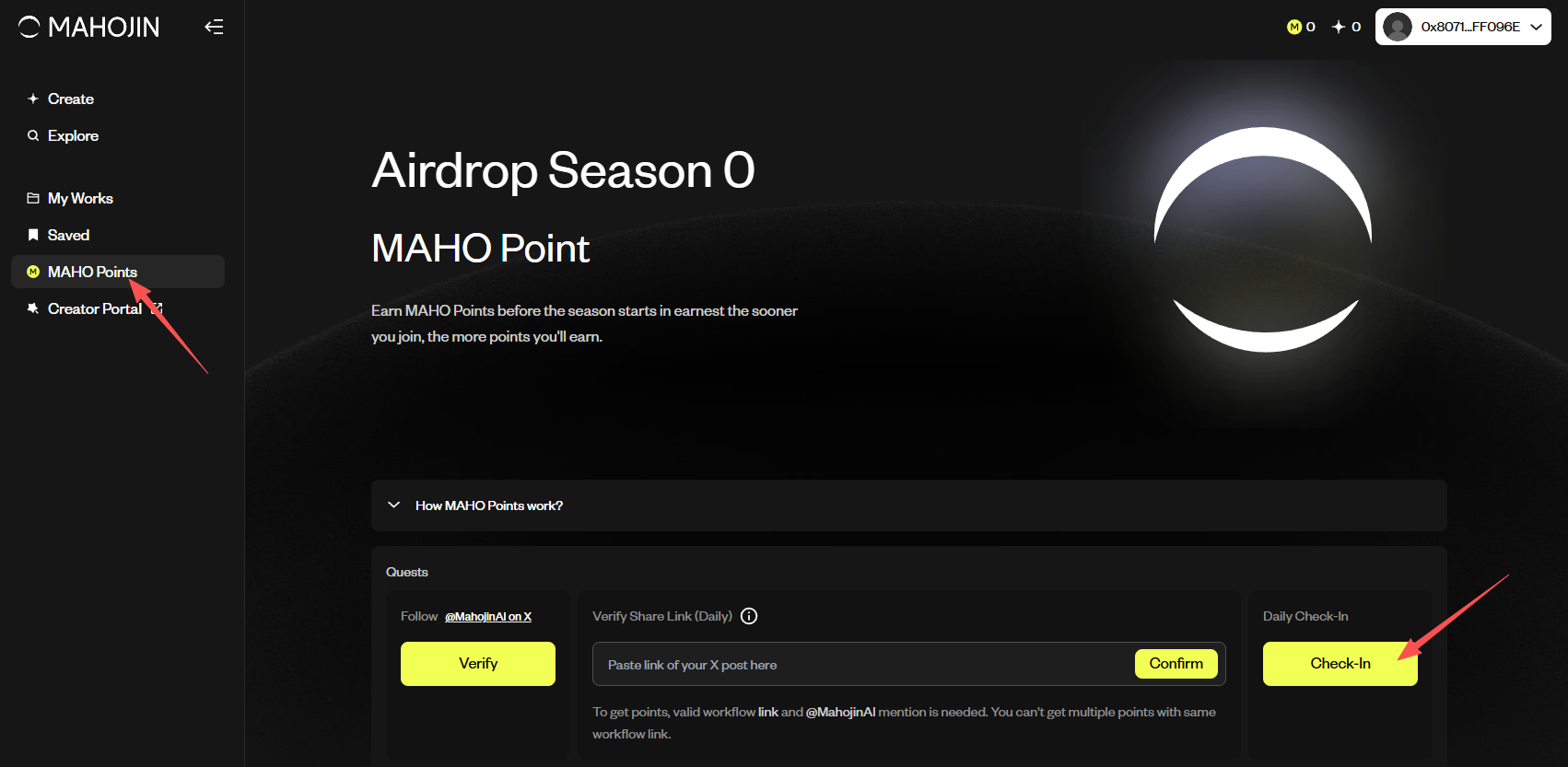
ÉTAPE 1. Rendez-vous sur le site officiel (lien : https://app.mahojin.ai/maho-point), cliquez sur "Sign in" pour vous connecter à votre compte et liez votre compte X.
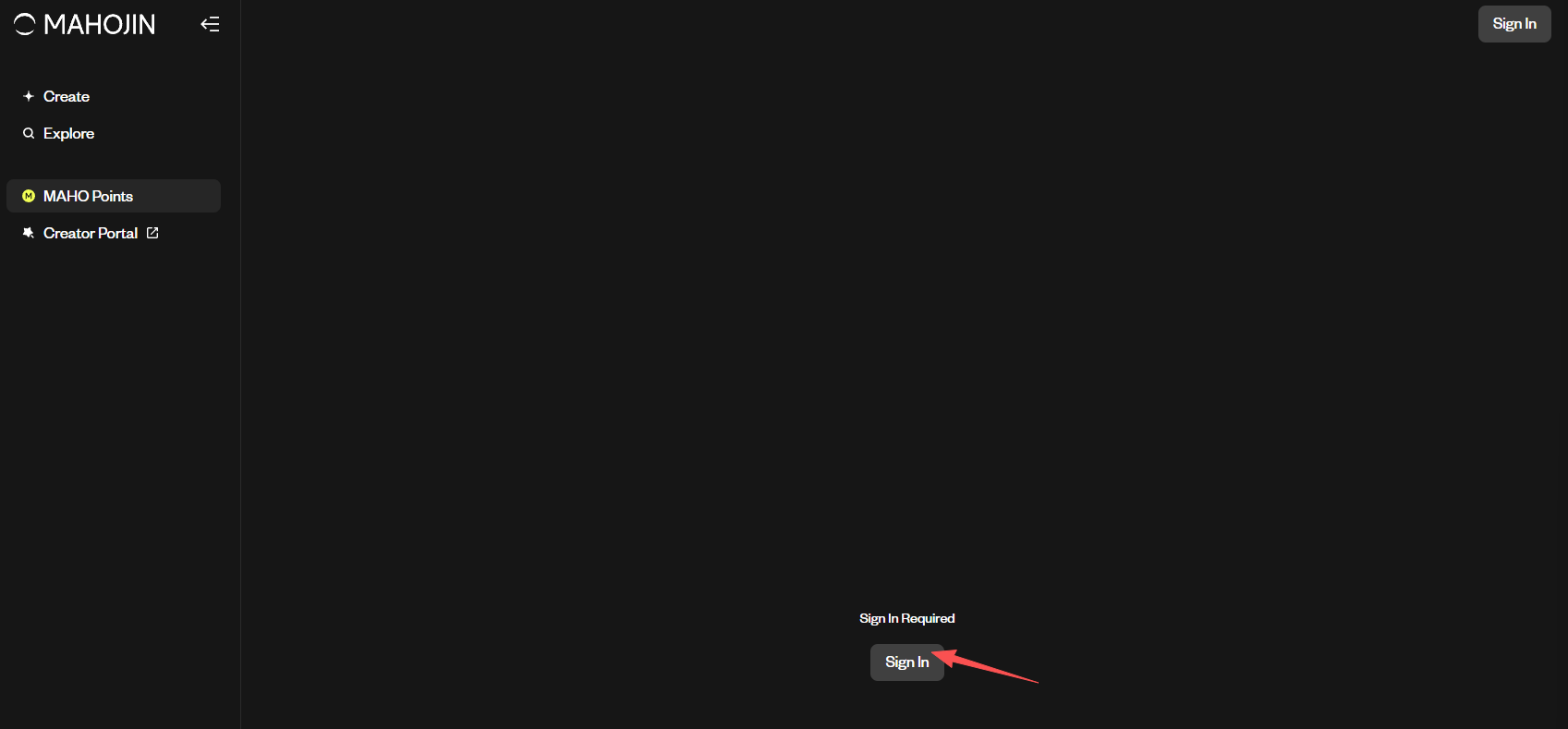
ÉTAPE 2. Cliquez sur "MAHO Points", puis sur "Check-in" pour effectuer votre connexion quotidienne et gagner des points.
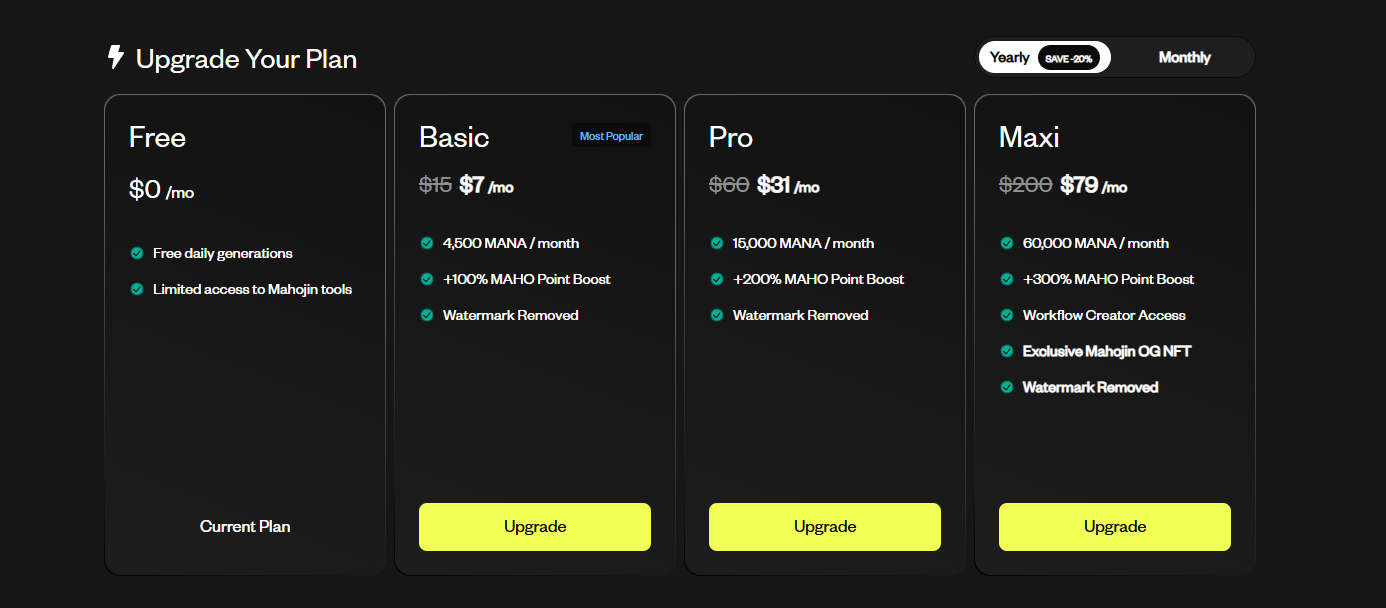
ÉTAPE 3. Améliorez votre forfait pour obtenir un bonus de points.
KAIO : L1 spécialisé dans la tokenisation RWA institutionnelle

Présentation du projet
KAIO est une blockchain de niveau 1 (L1) spécialisée dans la tokenisation d'actifs réels (RWA) pour les institutions. Le projet a levé 11 millions de dollars en 2023, lors d'un financement dirigé par Laser Digital (filiale d'actifs numériques de Nomura) et WebN Group.

Tutoriel d'interaction

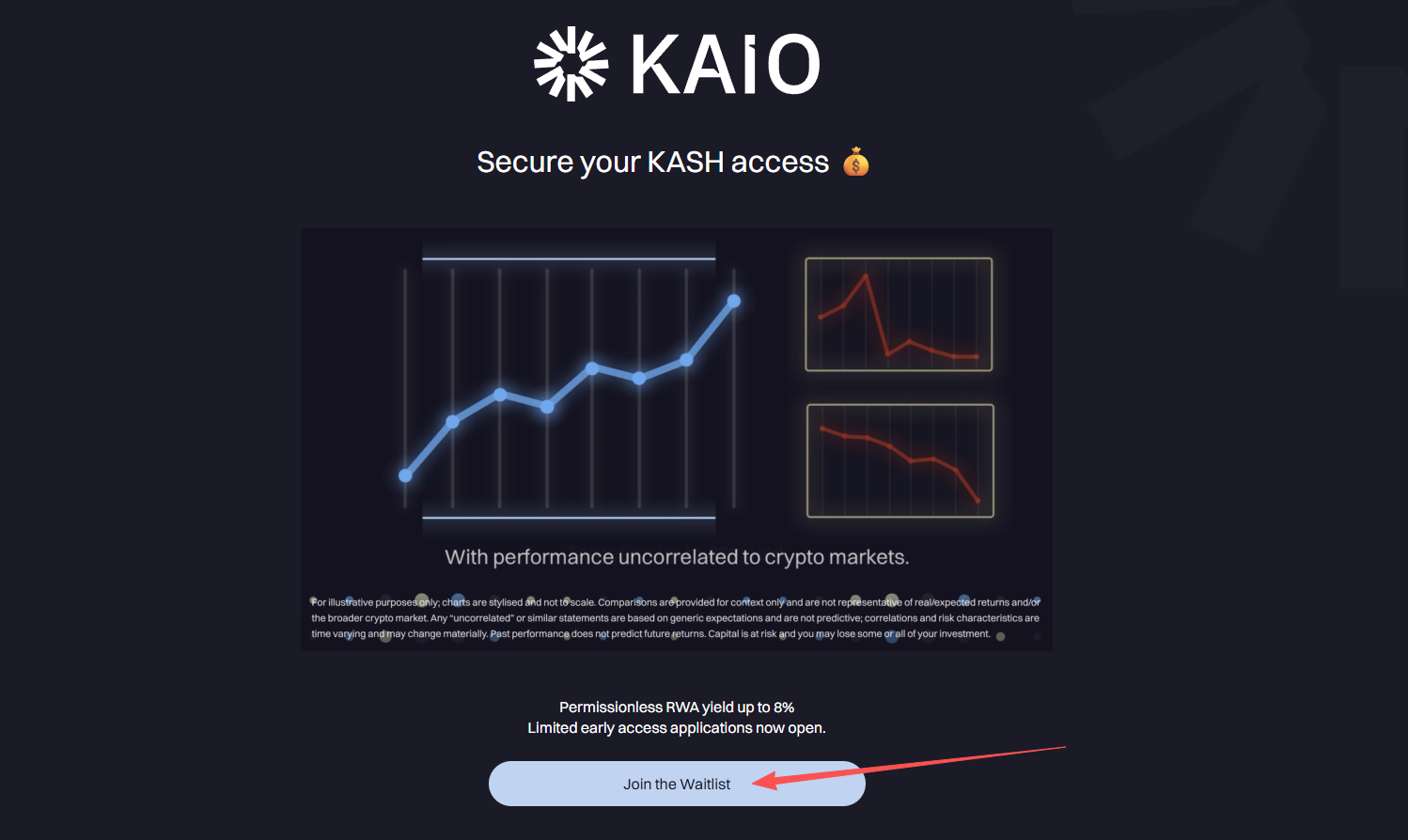
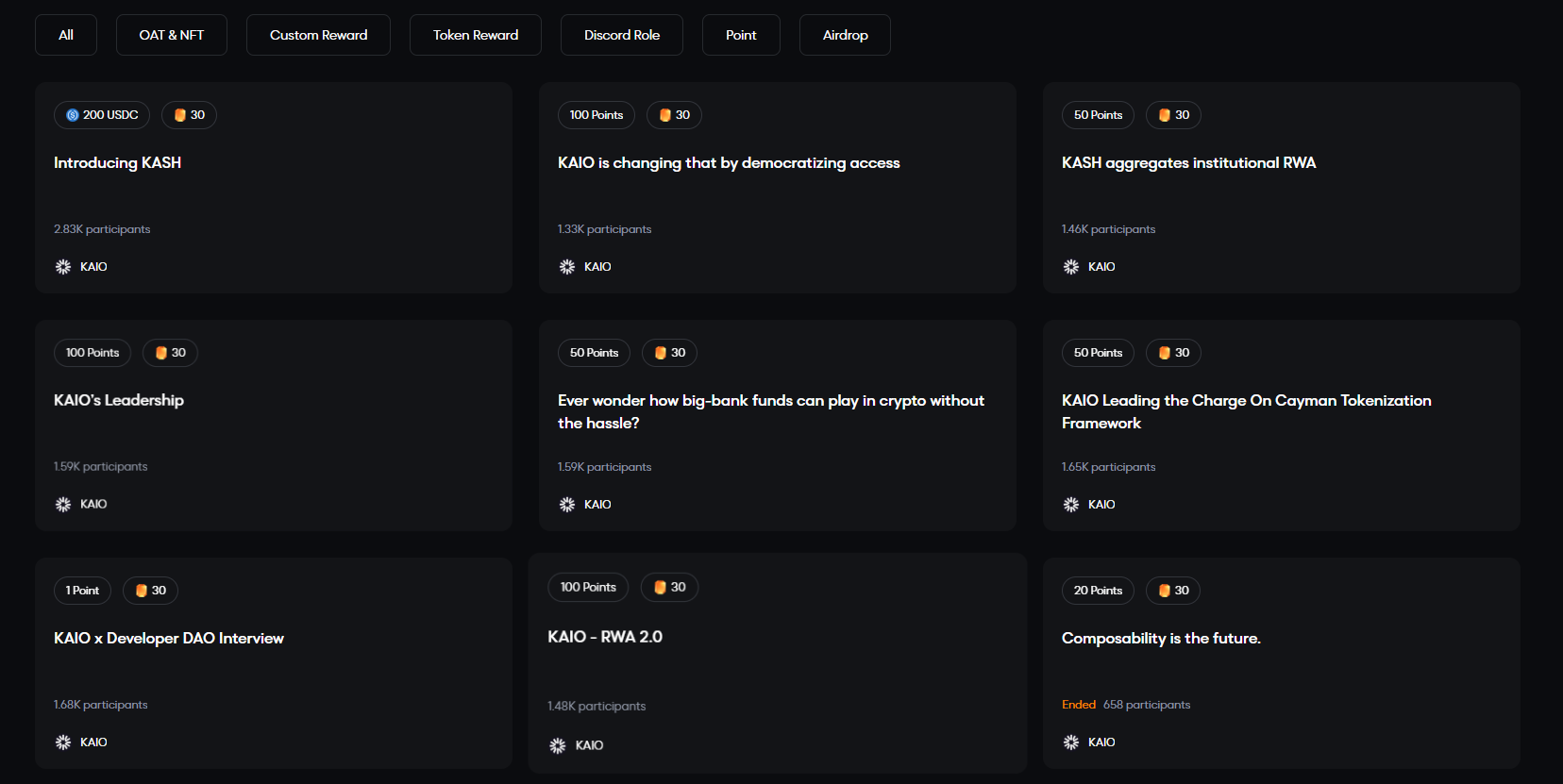
ÉTAPE 1. Rendez-vous sur le site de demande de liste d'attente (lien : https://waitlist.kaio.xyz/), connectez votre portefeuille et remplissez les informations requises pour soumettre votre demande.
ÉTAPE 2. Complétez les tâches associées à KAIO sur Galxe (lien : https://app.galxe.com/quest/KAIO?sort=Trending).
Edgen : Assistant de trading intelligent pour actifs cryptographiques

Présentation du projet
Edgen est un assistant de trading intelligent pour actifs cryptographiques, conçu pour offrir aux traders de crypto, des particuliers aux institutions, une intelligence de marché complète, instantanée et exploitable ainsi que des conseils de trading. Il appartient au secteur InfoFi. Il n'est pas seulement un "analyste financier à temps plein", mais aussi un assistant intelligent pour les particuliers qui affrontent les baleines, aidant les traders à prendre l'avantage sur un marché en constante évolution.

Selon les données de ROOTDATA, Edgen a déjà complété deux tours de table, pour un montant total de 11 millions de dollars, avec des investisseurs tels que Framework Ventures et North Island Ventures.

Tutoriel d'interaction

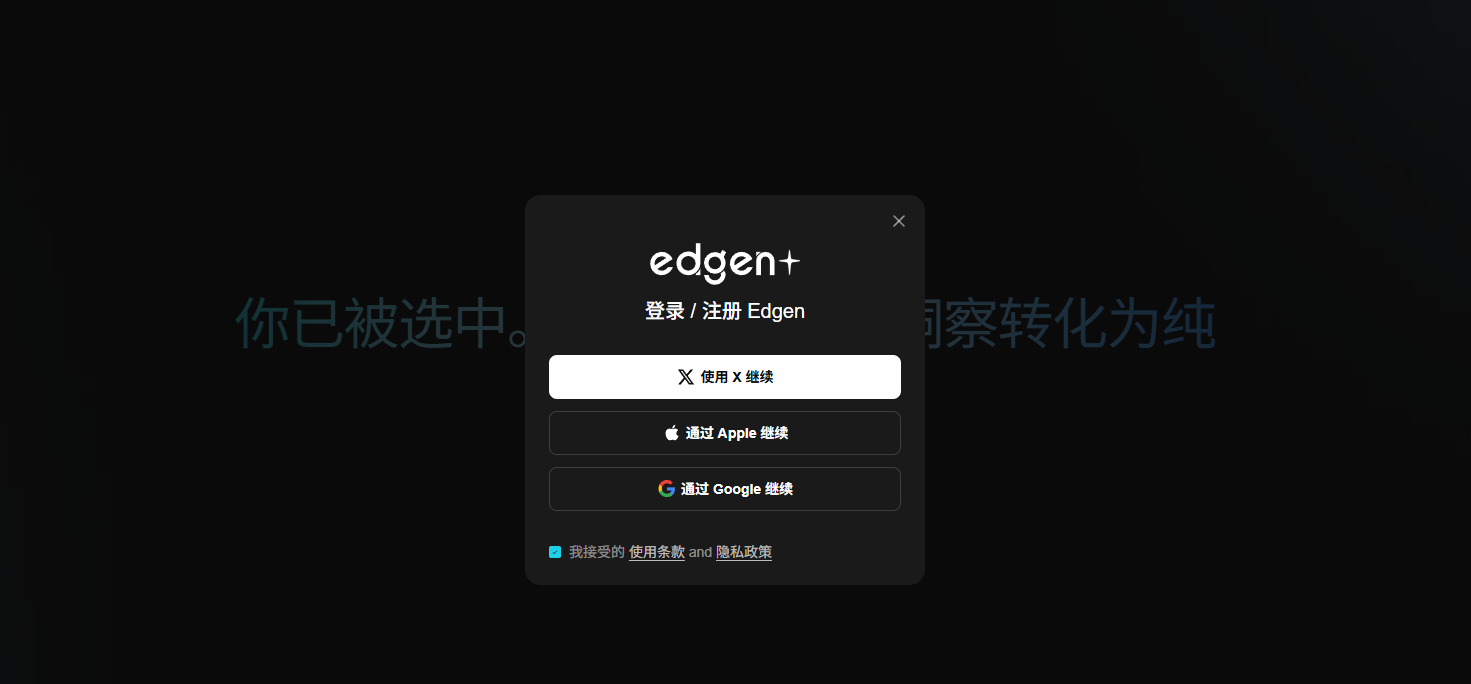
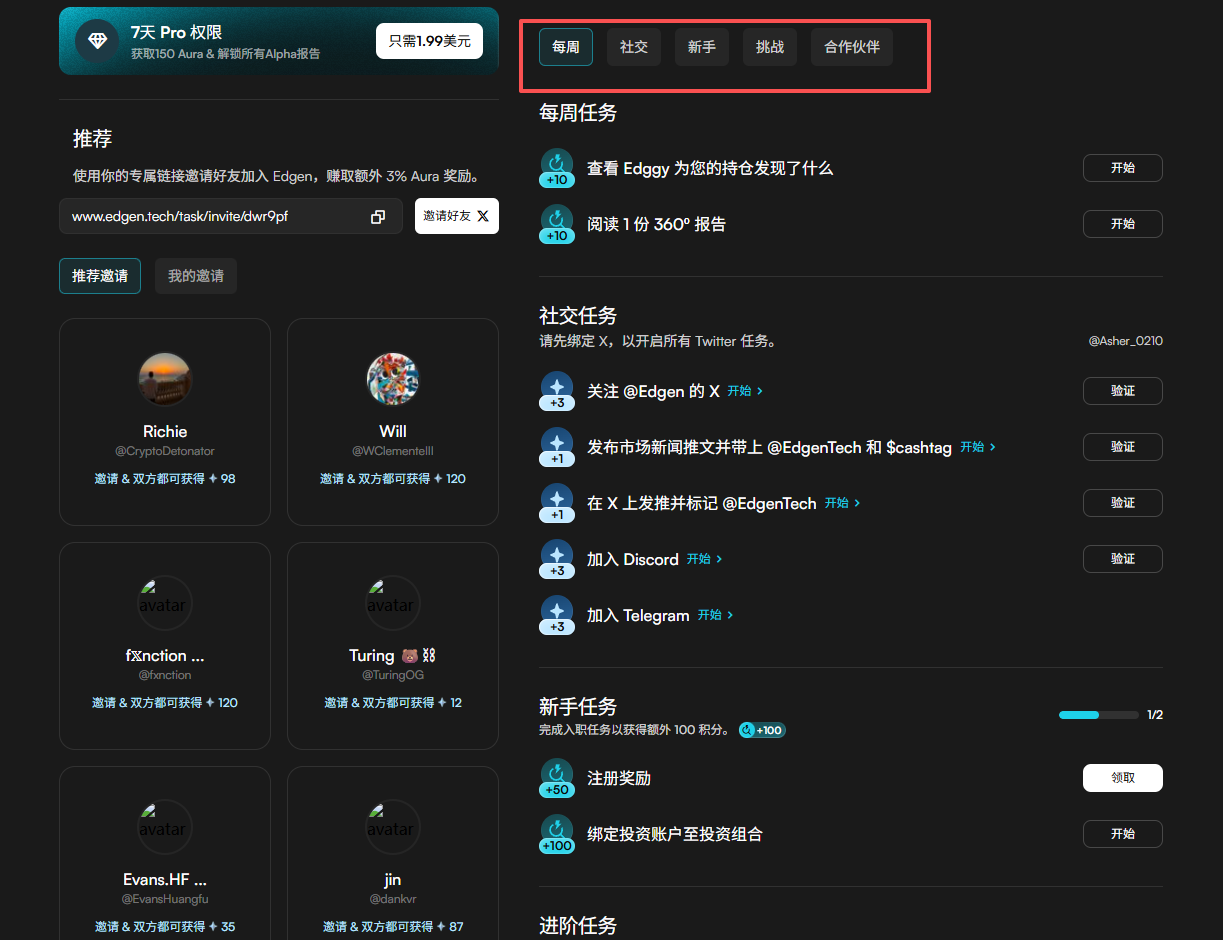
ÉTAPE 1. Rendez-vous sur le site officiel (lien : https://www.edgen.tech/zh/task/), connectez-vous avec votre compte X.
ÉTAPE 2. Cliquez sur "Centre de tâches" puis complétez la tâche de connexion quotidienne.
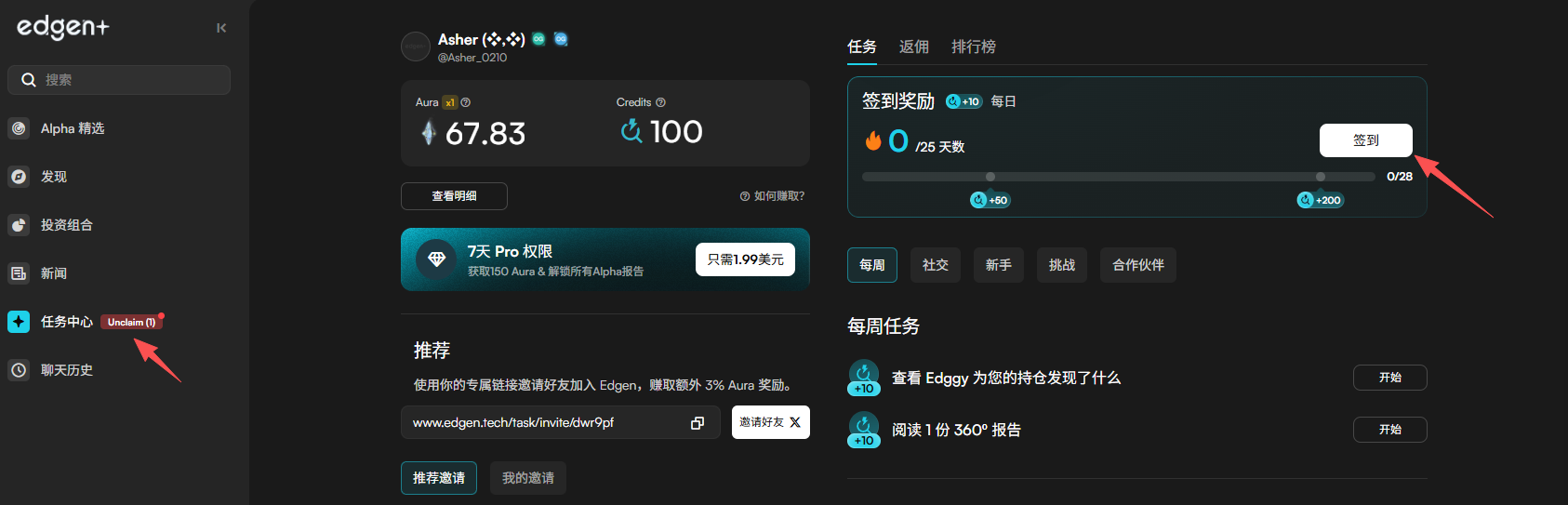
ÉTAPE 3. En plus de la tâche de connexion quotidienne, vous pouvez également compléter les tâches pour débutants, les tâches hebdomadaires, les tâches sociales, etc.
Related Questions

QQu'est-ce que Mahojin et quel est son objectif principal ?

AMahojin est une plateforme d'infrastructure IA visant à créer un 'GitHub' pour les créateurs de modèles d'IA et les développeurs d'ensembles de données. Elle permet le suivi de la propriété intellectuelle et rémunère les contributeurs originaux des modèles et des ensembles de données.

QQui a dirigé le tour de table de 500 millions de dollars de Mahojin en avril 2025 ?

ALe tour de financement de 500 millions de dollars de Mahojin a été co-dirigé par a16z CSX et Maelstrom.

QQuel est le domaine de spécialisation de KAIO et quel montant a-t-il levé en 2023 ?

AKAIO est une blockchain de niveau 1 (L1) spécialisée dans la tokenisation RWA (Real World Assets) de niveau institutionnel. Le projet a levé 11 millions de dollars en 2023.

QQuelle est la fonction principale de l'assistant de trading intelligent Edgen ?

AEdgen est un assistant de trading intelligent pour actifs cryptographiques qui fournit des renseignements de marché complets, instantanés et exploitables ainsi que des conseils de trading pour tous types de traders, des particuliers aux institutions.

QQuelles sont les étapes pour s'inscrire sur la liste d'attente de KAIO ?

APour s'inscrire sur la liste d'attente de KAIO, il faut se rendre sur le site web dédié (https://waitlist.kaio.xyz/), connecter son portefeuille crypto, puis remplir les informations requises pour finaliser la demande.

Related Reads

Rain Valuation Approaches $20 Billion: The Battle for U-Cards Extends to Rewards Systems

Rain, a stablecoin payments infrastructure company, is shifting the competitive focus for U Cards from simple issuance to user retention and repeated usage. On June 15, Rain launched "Rain Rewards," an embedded loyalty program capability within its card-issuing infrastructure. This allows partner businesses—like fintech platforms and neobanks—to configure branded loyalty points, earning rules, redemptions, and merchant promotions directly within their card products. The system, built from the 2025 acquisition of Uptop, ensures points are only issued upon final transaction settlement, preventing liabilities from refunds. Trials, such as with Avalanche Card, reportedly boosted spending by 25% among enrolled users. Founded by Farooq Malik and Charles Yoo-Naut, Rain evolved from a tool for managing Web3 company expenses into a full-stack enterprise platform. It is a Principal Member of Visa and Mastercard, enabling partners to issue stablecoin-backed cards and wallets while leveraging traditional payment networks. Notably, the popular U Card Plasma One is issued by Rain under Visa's authority. Rain also integrates with Visa's stablecoin settlement pilot, using USDC for network settlement. Rain's rapid funding reflects growing institutional interest in stablecoin payment infrastructure. It raised a $245 million Series A in March 2025, a $58 million Series B in August 2025, and a $250 million Series C in January of this year, reaching a $19.5 billion valuation. Annualized transaction volume exceeds $3 billion, serving over 200 partners including Western Union and Nuvei. Beyond cards, Rain is expanding into programmable payments. Its June 2026 "Agent Control Layer" allows businesses to set spending rules—like merchant categories, amounts, and frequency—for AI agents before transactions occur. This positions Rain not as a single product but as an operating system for stablecoin payments, handling everything from card issuance and wallet management to rewards, on/off-ramps, and automated compliance. The goal is to enable seamless, often invisible, real-world spending of on-chain assets.

Foresight News5m ago

Rain Valuation Approaches $20 Billion: The Battle for U-Cards Extends to Rewards Systems

Foresight News5m ago

Google TPU Shipments Revised Up by 50%

Recent industry research indicates a significant upward revision in the shipments of Google's TPU (Tensor Processing Unit) chips. Previous expectations for 2027 were set at around 10 million units, but new estimates now point to 15 million units, a 50% increase. This substantial boost directly translates to higher demand across the entire supporting supply chain. Google's TPU clusters utilize a standardized all-optical interconnect architecture. Consequently, key hardware components are deeply integrated and scaled in fixed ratios with the chips. The 15 million TPU target will drive corresponding demand increases for NPO optical engines (roughly a 1:1 match), 1.6T optical modules, OCS optical switches, high-end server power supplies, fiber optics & MPO connectors, and liquid cooling solutions. Among these, liquid cooling is highlighted as the sector experiencing the most significant transformation and offering the most stable potential for excess returns. As next-generation TPU chips reach power levels where traditional air cooling is insufficient, liquid cooling becomes essential. 2026 is forecasted as the first year of substantial adoption for Google's liquid cooling solutions. This shift, coupled with delivery and capacity bottlenecks faced by incumbent overseas manufacturers, is creating a prime window for domestic Chinese suppliers to enter and secure Google's core supply chain. The market size for Google-specific liquid cooling is projected to potentially triple from a baseline of hundreds of billions to around 300 billion units by 2028. The logic for the fiber optic sector is also being rewritten. Once considered a cyclical commodity tied to telecom operator procurement, fiber is now a strategic and scarce resource for AI Data Centers (AIDC). A severe supply-demand imbalance, driven by the long lead time for preform production (18-24 months) and surging demand from cloud giants, is supporting strong performance. Chinese fiber manufacturers are well-positioned to capture a significant share of global AIDC demand, with exports potentially reaching 200-300 million core kilometers in 2026. Overall, the investment focus within the AI computing industry is shifting from pure "chip performance speculation" towards the more certain incremental growth in computing infrastructure and its supporting ecosystem. The upward revision in Google TPU shipments, along with the potential for further doubling by 2028, is seen as solidifying performance visibility for the entire supporting supply chain over the next two years.

marsbit1h ago

Google TPU Shipments Revised Up by 50%

marsbit1h ago

What Wall Street Really Wants After the Crypto Story Recedes

The tide of speculative crypto narratives has receded, revealing Wall Street's true objective: building a controlled, yield-generating, and compliant financial pipeline on distributed ledgers. They are migrating core functions onto blockchains, not for decentralization, but for efficiency and new revenue streams. Key developments include BlackRock's BUIDL fund, a tokenized treasury fund acting as a foundational reserve asset, and the rise of Securitize, which is going public and partnering with the NYSE to build a 24/7 digital securities trading and settlement system. This signals a major shift of securities clearing to blockchain technology. To make volatile assets like Bitcoin palatable for institutional investors, firms like BlackRock and Goldman Sachs are creating "covered call" ETFs (e.g., BITA). These products systematically sell options on Bitcoin holdings, transforming price volatility into stable monthly income, effectively repackaging crypto as a yield-bearing asset. Stablecoins are being positioned not as speculative tools but as efficient payment rails. Companies like Stripe and Mastercard are integrating them for instant, low-cost merchant settlements and cross-border card payments, respectively. Critically, new legislation like the GENIUS Act shapes them as non-interest-bearing, heavily regulated extensions of the US dollar system. In summary, Wall Street is quietly constructing a parallel, blockchain-based financial infrastructure featuring tokenized traditional assets, structured crypto yields, and programmable dollar pipelines—all under its control and fully integrated with existing regulatory and credit frameworks.

marsbit1h ago

What Wall Street Really Wants After the Crypto Story Recedes

marsbit1h ago

Tying Itself to SpaceX: Cursor's $60 Billion Rise

This article recounts the rapid rise of AI-powered coding startup Cursor and its 25-year-old MIT graduate CEO, Michael Truell. Launched in 2023, Cursor achieved explosive growth, reaching over 10 billion USD in revenue by late 2025. However, its journey highlights a central dilemma for AI application companies: dependence on foundational model providers. Cursor initially relied heavily on Anthropic's models but faced an existential threat when Anthropic launched its own competing coding tool, Claude Code. In response, Cursor declared an internal emergency in early 2026 and accelerated development of its own model, Composer. To secure the immense computing power needed, Truell struck a pivotal deal with Elon Musk's SpaceX in April 2026. The collaboration grants Cursor access to SpaceX's supercomputing resources for Composer, while SpaceX's Grok model benefits from Cursor's programming data. The agreement includes a potential 600 billion USD acquisition of Cursor by SpaceX later in the year, though a substantial termination fee is in place if the deal falls through. The story explores Cursor's intense, sometimes controversial hiring practices involving lengthy unpaid "work trials," its complex partnership-turned-rivalry with Anthropic, and its high-stakes gamble to ensure independence through the SpaceX alliance. The core question remains: will Cursor evolve into a defining, independent "generational" software company, or become a key piece in a tech giant's AI arsenal?

marsbit2h ago

Tying Itself to SpaceX: Cursor's $60 Billion Rise

marsbit2h ago

Trading

Spot
Futures

Hot Articles

How to Buy CHECK

Welcome to HTX.com! We've made purchasing Checkmate (CHECK) simple and convenient. Follow our step-by-step guide to embark on your crypto journey.Step 1: Create Your HTX AccountUse your email or phone number to sign up for a free account on HTX. Experience a hassle-free registration journey and unlock all features.Get My AccountStep 2: Go to Buy Crypto and Choose Your Payment MethodCredit/Debit Card: Use your Visa or Mastercard to buy Checkmate (CHECK) instantly.Balance: Use funds from your HTX account balance to trade seamlessly.Third Parties: We've added popular payment methods such as Google Pay and Apple Pay to enhance convenience.P2P: Trade directly with other users on HTX.Over-the-Counter (OTC): We offer tailor-made services and competitive exchange rates for traders.Step 3: Store Your Checkmate (CHECK)After purchasing your Checkmate (CHECK), store it in your HTX account. Alternatively, you can send it elsewhere via blockchain transfer or use it to trade other cryptocurrencies.Step 4: Trade Checkmate (CHECK)Easily trade Checkmate (CHECK) on HTX's spot market. Simply access your account, select your trading pair, execute your trades, and monitor in real-time. We offer a user-friendly experience for both beginners and seasoned traders.

4.0k Total ViewsPublished 2026.01.19Updated 2026.06.02

How to Buy CHECK

Discussions

Welcome to the HTX Community. Here, you can stay informed about the latest platform developments and gain access to professional market insights. Users' opinions on the price of CHECK (CHECK) are presented below.

活动图片