How should investors prepare for The Merge?

cryptoslatePublished on 2022-07-31Last updated on 2022-07-31

Abstract

This upgrade will change how the network is secured, its energy consumption, and tokenomics. Staking will play an essential part in it. So how should the investor prepare for the upcoming events?

Last week, ETH saw a significant uptick in its price, following the release of the notes from the last dev’s meeting that hinted at the timeline for its upcoming upgrade, known as The Merge.
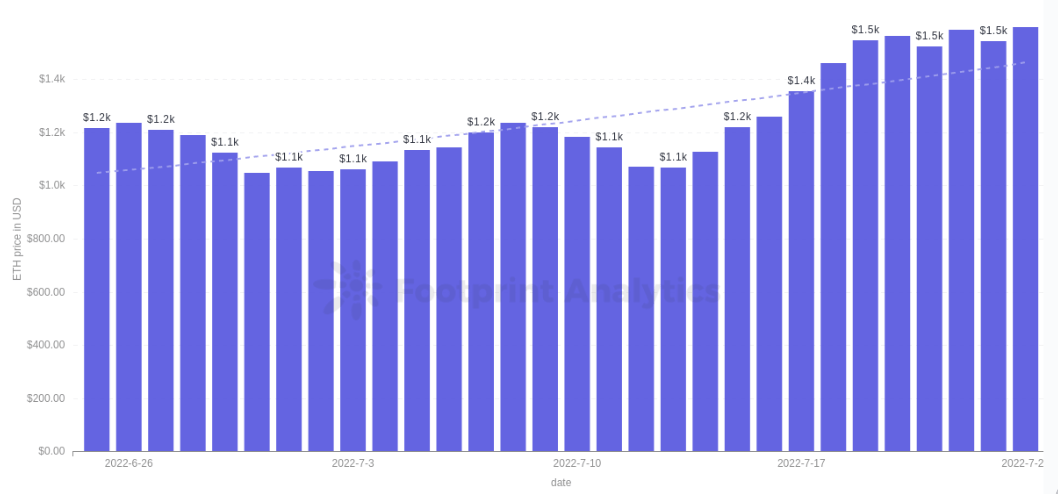
This upgrade will change how the network is secured, its energy consumption, and tokenomics. Staking will play an essential part in it. So how should the investor prepare for the upcoming events?

What is The Merge?

A series of upgrades are happening on the Ethereum blockchain to change it from a Proof of Work (PoW) to a Proof of Stake (PoS) consensus mechanism. For this to be completed, the milestones are:

1. The creation and launch of the Beacon Chain happened on Dec. 1, 2020. The Beacon Chain is what introduces the PoS on Ethereum. Because of this, it is called the “consensus layer.”

2. Replace the consensus mechanism of the current chain from PoW to PoS (current estimate: happening in September.) The existing chain, Mainnet, will then act as the “execution layer”, as the current PoW running it will be replaced by the Beacon Chain.

The consensus layer will take care of the security of the network. The execution layer is where the smart contracts run and the transactions are created.

As the upgrade will connect these two chains to act as one, the name of this event was updated from ETH 2.0 to “The Merge.”

Why The Merge Matters
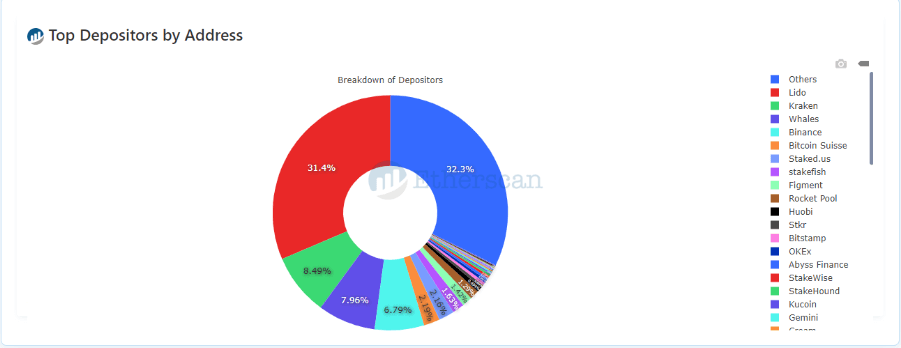
As the Beacon Chain is already running since December 2020, a good part of the ETH supply is already being staked on it, receiving rewards for running the network. Currently, there is over 12 million ETH staked on the Beacon Chain smart contract:

That number is almost 10% of the current ETH supply. Furthermore, this ETH is locked long-term, as there is no date for deploying the unstaking capability under the PoS ETH chain.

How it affects the ETH emissions

After the change for PoS, there will be no more mining rewards. Therefore, the ETH emissions will drop significantly, on top of that 10% supply already locked on the staking contract.
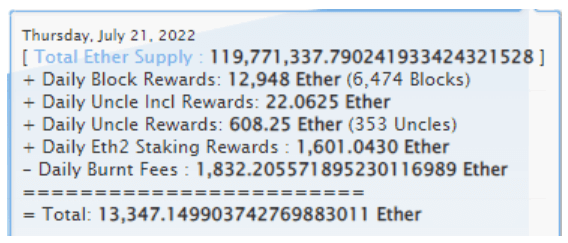
As per Etherscan, a total of 13,347 ETH was added to the current supply on July 21. If we remove the Block Rewards (mining) and leave only the Staking Rewards (staking), the daily net result would be negative. That means that more ETH would be burnt as fees than rewarded, lowering the ETH total supply.

How to Capitalize on This Shift

None of the following is meant to be financial advice, and investors should always proceed with extreme caution when trading cryptocurrencies. Analyzing the data presented, there are some investment strategies that an investor could take:

Buy ETH

With the release of a somewhat firm date for “The Merge,” there is a short period where ETH supply will continue to grow. After that, it will become “deflationary.” If the investor believes that ETH will have a relevant place in the crypto markets and its demand will increase, the ETH price will rise. We saw some price action already happening, but there is still room for more upside, as the incentive to increase the amount of ETH staked (and out of circulation) will rise.

Buy liquid staked ETH

As the ETH sent to the Beacon Chain staking contract is locked for an unknown period, and the minimal amount needed to be sent is relatively high (at least 32 ETH), pools were created to help users to stake their ETH. Some of these pools then created an ERC-721 token as a tradeable receipt of that staked ETH.

Examples are the Lido’s stETH token and the Rocket Pool rETH. When the user accesses their platform to stake ETH, their token is minted 1:1 to ETH.


Trending Cryptos

Related Reads

Ethereum 2026 Q1 Review: On-Chain Activity Hits Record Highs, Tokenized Assets Lead the Industry

Ethereum Q1 2026 Review: Record On-Chain Activity, Tokenized Assets Lead the Industry. Despite a price correction impacting USD-denominated metrics, Ethereum's on-chain usage hit all-time highs in Q1 2026. Monthly active addresses surged 85.9% year-over-year to 13.2 million, while L1 transactions and throughput also set new records. This growth occurred alongside a significant 47.9% quarterly drop in L1 transaction fees, demonstrating the impact of network scaling via upgrades like the Blob Parameter Fork. The ecosystem maintained its dominance in decentralized finance (DeFi), holding 71% of the total value locked among top chains and 79.2% of active borrowing. Ethereum solidified its position as the primary platform for tokenized real-world assets (RWAs), with a total market cap of $203.4B. It holds leading shares in stablecoins (61.8%), tokenized funds (73%), and tokenized commodities (84%) across major chains. Key developments included the ERC-8004 standard for AI agents and heightened institutional engagement at forums. Major financial institutions like BlackRock, JPMorgan, and a European banking consortium announced new tokenized products on Ethereum throughout the period. The report draws parallels to the early internet, suggesting Ethereum is sacrificing short-term fee revenue for long-term network expansion and adoption. Its strategy focuses on becoming a neutral, open settlement layer for global finance, with scaling roadmaps aiming for tens of thousands of TPS by 2029.

marsbit11m ago

Ethereum 2026 Q1 Review: On-Chain Activity Hits Record Highs, Tokenized Assets Lead the Industry

marsbit11m ago

Matrixdock Featured Again in SBMA’s 《Crucible》: Discussing How Tokenisation Enhances Efficiency in the Precious Metals Market

Matrixdock's research article, titled "Why Tokenisation Matters for the Bullion Industry and How Carrying Costs Fit In," has been featured again in the SBMA's industry publication *Crucible*. Authored by Matrixdock lead Eva Meng, the piece examines how tokenisation enhances the efficiency and utility of the precious metals market. The article argues that tokenisation builds upon the accessibility improvements brought by gold ETFs, not by redefining gold's value but by enabling it to function within digital finance. It extends gold's role beyond a portfolio holding, potentially facilitating instant settlement, digital collateral, and operation in 24/7 markets. A key focus is transparently handling the unavoidable carrying costs (storage, insurance) of physical assets like gold and silver. Matrixdock introduces the Fungible Reserve Standard (FRS) framework, based on an "Economic Purity Principle," which aims to reflect these real-world economic costs clearly within the token mechanism, rather than bundling them opaquely. The platform's practical applications are highlighted, including its gold token XAUm and its silver token XAGm, the first built on the FRS framework. As the tokenised gold market surpassed $6 billion in February 2026, the industry's focus is shifting from initial proofs of reserves to broader concerns of market efficiency and capital utilization. Tokenisation is positioning gold and other precious metals to become active components within the evolving digital financial system.

marsbit43m ago

Matrixdock Featured Again in SBMA’s 《Crucible》: Discussing How Tokenisation Enhances Efficiency in the Precious Metals Market

marsbit43m ago

New Huo Research: Dense Bottom Fishing in the $60K BTC Range, a 'High Value-for-Money Zone' Sees a Handover Surge

Bitcoin has shown a significant oversold rebound this week, with extreme panic in the crypto market easing. Multiple data points indicate a notable market bottom is forming. On the market front, the net outflow from Bitcoin spot ETFs has continued to shrink, and the negative premium between Coinbase and USDT is steadily correcting. Industry fundamentals suggest the shutdown cost for mainstream miners is concentrated between $30,000 and $50,000, potentially solidifying a阶段性 industry cost floor—a classic signal of market bottoms in previous cycles. Institutional capital is notably positioning against the trend. For instance, Sinohope Group's weekly OTC trading volume surged over 8 times环比, with active platform users doubling, both reaching record highs. This confirms a sharp increase in large capital transaction activity and a spike in off-exchange funding demand. Sinohope Research also observed on-chain data showing that funds from entities with public company attributes and long-term "whale" wallets are actively accumulating Bitcoin around the key $60,000 price level. The research institute has maintained since mid-May that a high-value investment window has reopened, and the market is now undergoing a shift from panic selling to long-term holding. Looking ahead, the core drivers for an upward market move will be liquidity release and macro policy developments. The successful and strong performance of SpaceX's IPO has reignited market optimism, and the massive liquidity frozen during its subscription period is now being unlocked. This substantial capital is expected to seek new value opportunities, potentially flowing into currently undervalued assets like Bitcoin. On the macro and policy front, the tone set in Kevin Warsh's upcoming speech at the FOMC meeting is crucial for near-term monetary policy expectations. Furthermore, the potential passage of the CLARITY Act by late July could significantly boost institutional confidence for capital entry. Considering these bottoming signals alongside favorable liquidity and policy factors, Sinohope Research remains optimistic about the market's subsequent trajectory.

marsbit47m ago

New Huo Research: Dense Bottom Fishing in the $60K BTC Range, a 'High Value-for-Money Zone' Sees a Handover Surge

marsbit47m ago

Trading

Spot
Futures

Hot Articles

Discussions

Welcome to the HTX Community. Here, you can stay informed about the latest platform developments and gain access to professional market insights. Users' opinions on the price of ETH (ETH) are presented below.

活动图片