JustLend DAO's Second JST Buyback and Burn: Cumulative 10.96% of Total Supply Destroyed, Accelerating Entry into a New Era of Value Growth

marsbitPublished on 2026-01-16Last updated on 2026-01-16

Abstract

JustLend DAO has executed its second major JST token buyback and burn, permanently removing 525 million JST (5.3% of total supply) from circulation. This brings the cumulative burned amount to over 1.08 billion JST, representing 10.96% of the total supply, significantly accelerating JST’s deflationary trajectory. The burn was funded by $10.19 million from Q4 2025 net profits and $10.34 million from accumulated reserve earnings, demonstrating the protocol’s strong financial health and sustainable revenue model. Key drivers include JustLend’s TVL surpassing $7.08 billion, robust growth in sTRX staking (over 9.3 billion TRX staked), and widespread adoption of GasFree smart wallets, which have facilitated over $46 billion in transactions and saved users $36.25 million in fees. Additionally, USDD’s multi-chain ecosystem reached a milestone with TVL exceeding $1 billion, further supporting JST’s value accrual mechanism. This burn reinforces JST’s transition from a governance token to a yield-backed asset tied to ecosystem cash flow. Market response has been positive, with JST’s market cap breaking $400 million and trading volume rising 21.92% amid a 10.82% monthly price increase. The recurring burn mechanism establishes a deflationary model that enhances scarcity, governance weight per token, and long-term value alignment with holders, setting a new standard for sustainable tokenomics in DeFi.

JustLend DAO Launches Second Round of Buyback and Burn: 525 Million JST Permanently Destroyed, Deflation Engine Continues to Accelerate

525 Million JST Burn Executed! JustLend DAO's Deflation Mechanism Fulfilled Again

Summary: Profit returns and transparent burns form a closed loop for JST value growth, providing a new paradigm for the DeFi market driven by real yield for token value.

January 15, 2026 - The JST token has officially completed its second large-scale buyback and burn. This burn action not only demonstrates the project's firm commitment to its deflation mechanism but also, with the scale of 525,000,000 JST burned (5.3% of the total supply), showcases the strong profitability and financial health of the JUST ecosystem to the entire cryptocurrency market.

According to the official JustLend DAO announcement, the estimated value corresponding to this burn exceeds $21 million USD. Combined with the amount from the first JST burn, the cumulative number of JST tokens burned has reached 1,084,890,753, accounting for 10.96% of the total supply. This means that in less than three months, JST has achieved the permanent removal of over one-tenth of its total supply, a remarkable deflation speed.

From a broader perspective, this burn marks a fundamental evolution in JST's value narrative. It is transitioning from a governance token to an equity asset anchored to the growth of the ecosystem's cash flow. This process not only enhances the scarcity and value foundation of the JST token but also provides a clear, traceable, practical path for the decentralized finance sector—one driven by real yield for token value—demonstrating a transparent and sustainable new paradigm for deflation.

Strong JustLend DAO Ecosystem Performance Forms the Financial Cornerstone for Large-Scale Buybacks

Such a large-scale buyback and burn necessarily requires a solid financial foundation as support. The announcement clearly reveals the dual pillars of the funding source: $10,192,875 came from JustLend DAO's net profit in Q4 2025, while another $10,340,249 originated from the project's accumulated retained earnings reserve. These two figures are, in themselves, the most powerful proof of performance. They collectively point to one core fact: the JustLend DAO ecosystem not only possesses strong immediate profitability but also boasts a robust financial structure and sustainable cash flow, which is the solid foundation supporting its commitment to buybacks and its deflation strategy.

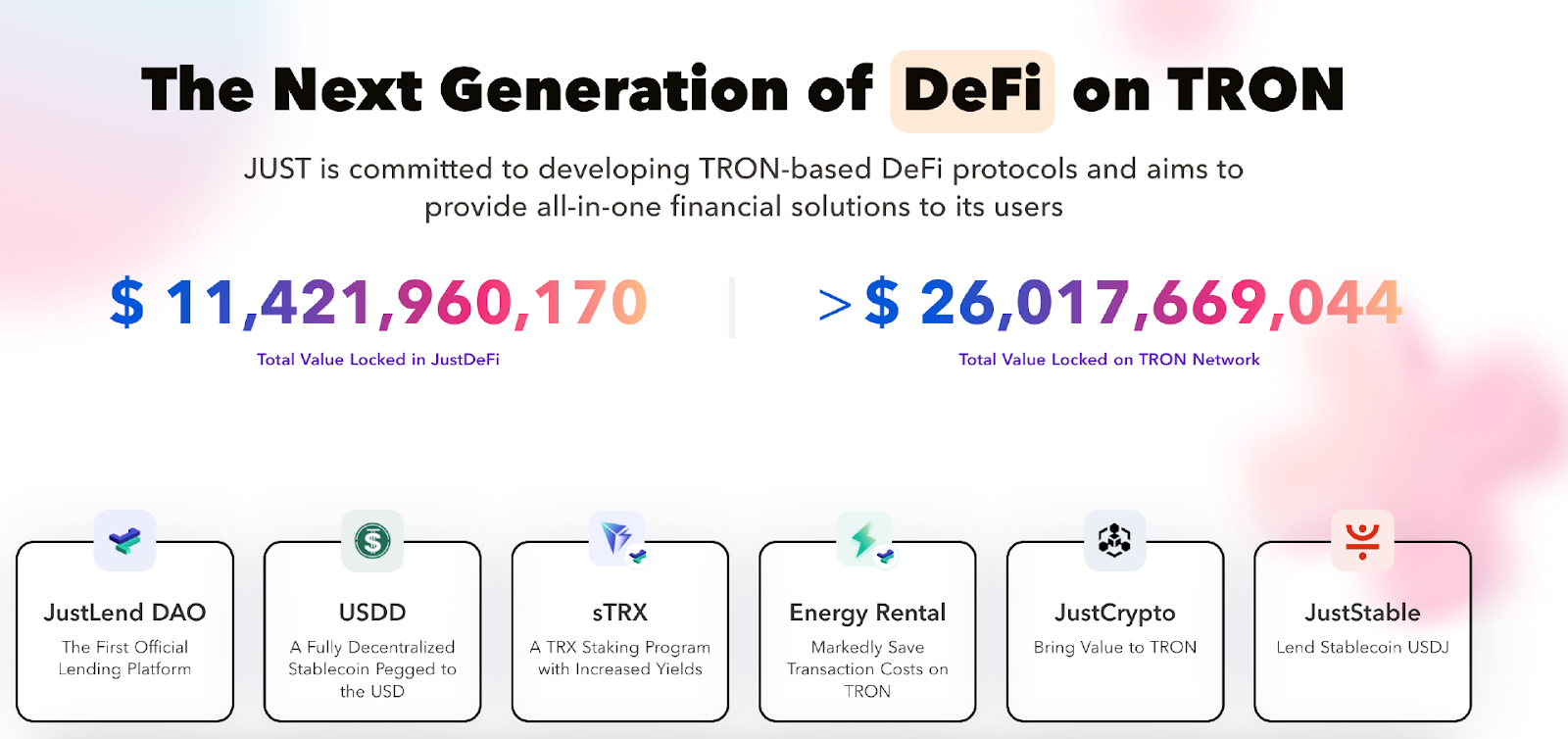
A deep dive into JustLend DAO's Q4 2025 performance reveals clear growth trajectories. First, as the flagship lending protocol of the JUST ecosystem, JustLend DAO benefits from the continuous improvement of the TRON infrastructure, with its Total Value Locked (TVL) breaking through the $7.08 billion mark in the fourth quarter, consistently ranking among the top three in the lending market, and the lending activity in its SBM market also climbed to a new cycle high.

It is worth noting that the source of the $10,340,249 in retained earnings, which forms a significant part of this buyback fund, can be traced back to the revenue generated from the reserve capital deposited into the SBM USDT market during the first JST buyback. The增值 process of this capital is itself the most direct proof of the SBM market's strong profitability. It demonstrates JustLend DAO's sophisticated financial operation model: strategically redeploying ecological profits for regenerative use within the protocol, allowing them to continue "self-generating blood," thereby providing an endogenous, sustainable source of funding for subsequent value returns.

On this basis, JustLend DAO's revenue structure shows a trend of diversification. While the traditional lending market, its fundamental business, maintains steady growth, JustLend DAO has innovatively built a product matrix including sTRX (Staked TRX) and Energy Rental, greatly expanding the boundaries and depth of its value capture.

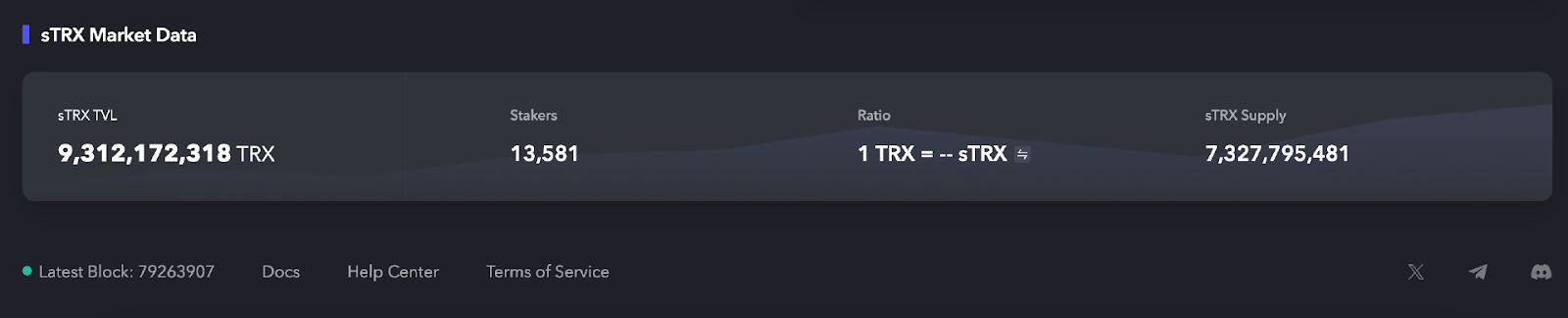
Among these, the sTRX service allows users to stake TRX to earn rewards while still flexibly participating in other DeFi activities. This innovative design significantly improves capital efficiency and user stickiness. As of January 15th, the platform's TRX staking volume has surpassed 9.3 billion tokens. This staggering figure not only reflects the community's high recognition of the sTRX product but also brings considerable and sustainable service revenue.
At the same time, the "Energy Rental" service, designed to reduce user on-chain operation costs, has also demonstrated strong market appeal through active rate optimization. Since September 2025, the base fee rate for this service was significantly reduced from 15% to a more competitive 8%. The fee optimization directly stimulated market demand and transaction frequency, thereby creating steady incremental revenue for the protocol through more active leasing business.

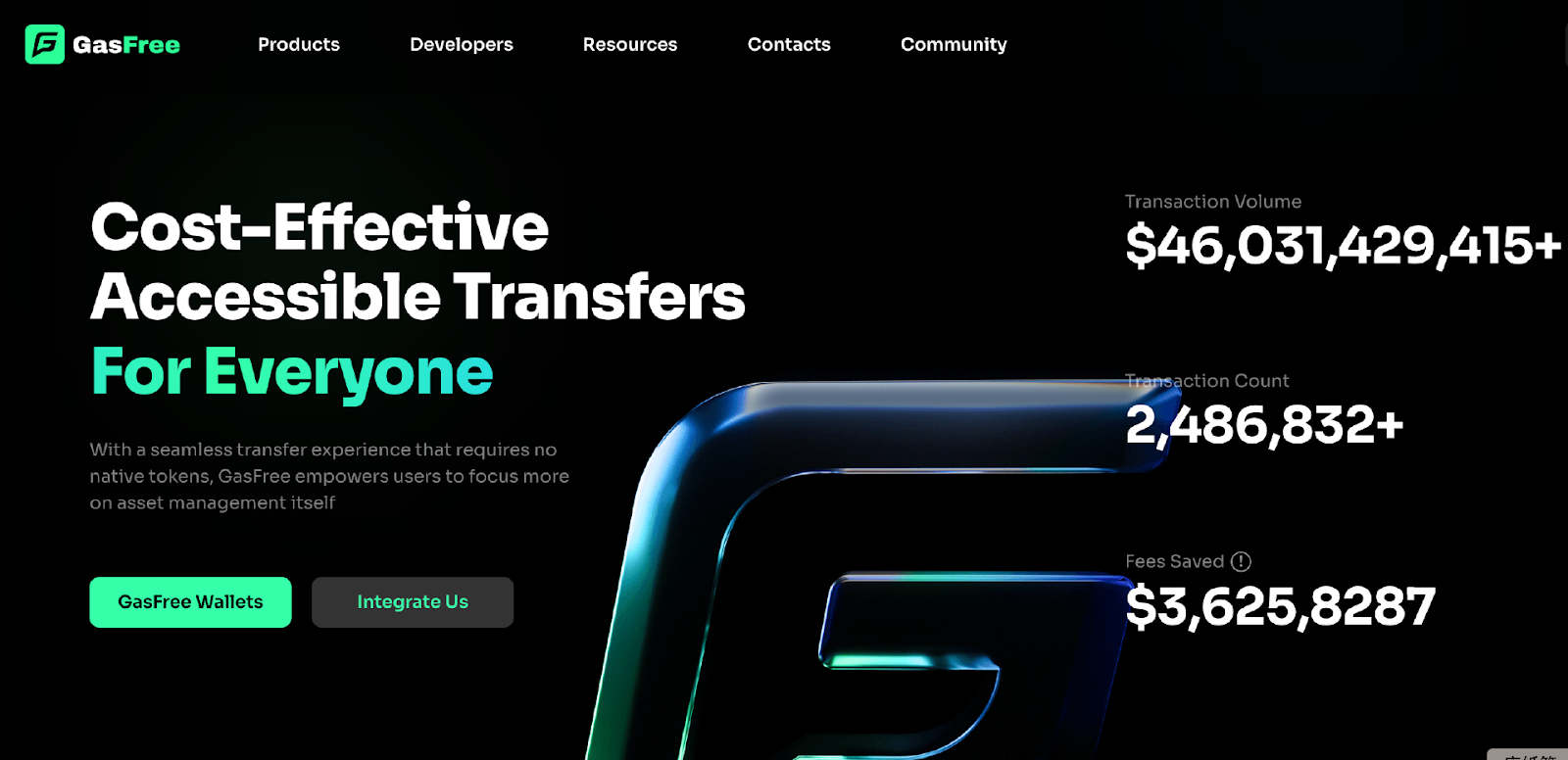
While the core product matrix continues to exert force, JustLend DAO, focusing on lowering the participation barrier for general users, innovatively launched the GasFree smart wallet in March 2025. This feature completely breaks the long-standing barrier for new users of having to pre-hold native tokens (TRX) to pay transaction fees. It allows users to deduct and pay the required network fees directly from the token assets they are transferring (e.g., USDT). This design not only achieves ultimate operational convenience but also fundamentally broadens the accessibility of blockchain finance.

To accelerate the adoption of this innovative feature, JustLend DAO simultaneously launched a highly attractive 90% transfer fee subsidy campaign. With this support, users using the GasFree function for USDT transfers only need to pay an extremely low fee of about 1 USDT. This combined strategy quickly ignited market demand. As of January 15th, the total transaction volume driven by the GasFree smart wallet has surpassed $46 billion. This staggering scale not only validates the market's strong desire for a frictionless transaction experience but also directly saved users a cumulative total of over $36.25 million in network fee costs. This innovation, by significantly reducing actual usage costs and cognitive barriers, has introduced massive incremental users and capital flow into the ecosystem, constituting another strong growth pole for the platform's network effects and revenue potential.
Meanwhile, another funding channel in the buyback and burn plan, the incremental revenue from the USDD multi-chain ecosystem (the portion exceeding $10 million), also constitutes a significant source. USDD, as the core decentralized stablecoin of the TRON ecosystem, has seen fruitful results from its multi-chain expansion strategy. It has been successfully deployed on mainstream public chains like Ethereum and BNB Chain, broadening its application scenarios and user base.

Its ecosystem value recently achieved a milestone breakthrough. On January 14th, USDD's TVL historically broke through the $1 billion mark. This means that in less than two months, USDD's TVL scale achieved an astonishing 100% growth, its expansion speed and market acceptance fully confirming the strong momentum and deep asset appeal of this stablecoin in the multi-chain ecosystem. The rapid growth of its TVL and the continued prosperity of its ecosystem significantly enhance the potential scale of this funding channel, providing an anticipated value source for JST's buyback and burn plans in subsequent quarters.

Through deep integration with various DeFi protocols, USDD not only consolidates its peg stability but also creates continuous value inflow for the entire ecosystem. The inclusion of USDD ecosystem's excess income in the JST buyback and burn plan builds a value closed loop of "stablecoin + lending protocol + governance token". In this model, the expansion and prosperity of USDD and JustLend DAO directly power JST's deflation, while the increase in JST's value in turn enhances the attractiveness and cohesion of the entire TRON DeFi ecosystem, creating a powerful internal synergy and value feedback effect.

Deepening Deflation Mechanism: Revolutionary Reshaping of JST's Value Foundation

In summary, the significance of this buyback and burn extends far beyond mere price support; it is triggering a series of profound structural changes. Most fundamentally, it completes the reshaping of JST's value support logic. JST is no longer merely a "utility token" for paying network fees or participating in governance votes; it has evolved into an "equity asset" directly anchored to the cash flow performance of JustLend DAO, USDD, and associated ecosystems.


Through the buyback and burn mechanism, the profit growth of the ecosystem is continuously injected into the value foundation of the JST token. This makes holding JST equivalent to holding an equity certificate that shares in the future profit growth of the ecosystem. On January 8th, CoinMarketCap data showed that JST market cap historically broke through the $400 million mark. This is not just a numerical leap but substantial market recognition of its new positioning. Along with the rising market cap came increased fund activity. On January 8th, its 24-hour trading volume significantly increased by 21.92%, reaching $31.49 million, and its price had also risen steadily by 10.82% over the past month, with a daily increase of 3.1%.

The synchronous expansion of trading volume and market cap at key junctures is not accidental market fluctuation but a clear "vote of confidence" from capital in response to the positive fundamentals of the JUST ecosystem, particularly the profitability and value return mechanism demonstrated by the buyback and burn.

Secondly, the JST buyback and burn also brings substantial增值 in governance power. As the total token supply is irreversibly reduced, the governance weight in the protocol represented by each remaining JST in the market will increase accordingly. This means long-term holders not only enjoy the economic benefits of value appreciation but also see their voice in key community decisions (such as parameter adjustments, new product launches, treasury fund usage, etc.) amplified simultaneously. This design deeply binds the interests of core community members to the long-term success of the protocol, greatly enhancing community stability and sense of participation.

From a broader industry perspective, JST's buyback and burn practice provides a clear, referable new paradigm for token economics in the DeFi field. Removing 10.96% of the total supply through two burns in a very short time not only demonstrates efficient execution but, more profoundly, deeply binds the protocol's financial success to the interests of token holders, thereby setting a benchmark for a virtuous cycle of "value creation - value return".

This model fundamentally shifts the old logic of token value relying on speculative narratives towards a sustainable path driven by the protocol's fundamental cash flow, providing a solid and credible case study for the industry on how to build economic models with substantial value support.

Looking ahead, with quarterly JST buyback and burn becoming the norm, a clear, predictable deflation path has been laid out. The scarcity of JST will be a certain narrative that strengthens over time. Each quarterly report disclosure and the subsequent burn will serve as a catalyst for reassessing its intrinsic value. This burn is not an endpoint but the beginning of a more magnificent chapter of value accumulation. A value revolution, supported by ecological profits and driven by product synergy, has already pressed the accelerator.


Related Questions

QWhat was the total amount of JST tokens burned in the second round of JustLend DAO's buyback and burn, and what percentage of the total supply does this represent?

A525,000,000 JST tokens were burned in the second round, representing 5.3% of the total supply.

QWhat are the two main sources of funding for the JST buyback and burn initiative as detailed in the announcement?

AThe two main sources are $10,192,875 from JustLend DAO's net profit in Q4 2025 and $10,340,249 from the project's accumulated reserve earnings.

QWhat significant milestone did the Total Value Locked (TVL) of JustLend DAO achieve in the fourth quarter of 2025?

AJustLend DAO's Total Value Locked (TVL) surpassed $7.08 billion in Q4 2025.

QWhat is the name of the innovative, gas-free smart wallet feature launched by JustLend DAO, and what was the total transaction volume it facilitated by January 15th?

AThe feature is called the GasFree smart wallet, and it had facilitated a total transaction volume exceeding $46 billion by January 15th.

QWhat major milestone did the USDD ecosystem achieve on January 14th, and what does this signify for its growth?

AOn January 14th, the USDD ecosystem's TVL historically broke through the $1 billion mark, signifying a 100% growth in less than two months and demonstrating its rapid expansion and market adoption.

Related Reads

Sharplink CEO: One Million Ethereum Developers, Who Can Compete?

Etherean Ecosystem: One Million Developers and a Formidable Moat The Ethereum network has surpassed a significant milestone: over one million unique lifetime developers, with approximately 232,000 active in the past year. This vast and growing talent pool is Ethereum's core advantage, far more critical than transient metrics like speed or transaction fees. The central question is not which blockchain is fastest, but where the best builders choose to build long-term. Ethereum's answer lies in a decade-long accumulation of infrastructure, standards, tools, liquidity, and collaborative culture that is exceptionally difficult to replicate. It has become the default operating system for programmable finance. This massive developer base is actively working on complex, high-risk challenges that deepen Ethereum's strategic moat: * **Glamsterdam Upgrade (2026):** Focused on core protocol scalability (ePBS, parallel execution) while preserving core values like credible neutrality. * **Synchronous Composability:** Aims to make numerous Rollups interoperate like a single chain, directly addressing fragmentation concerns. * **Quantum Resistance:** Ethereum leads mainstream ecosystems in coordinated preparation for post-quantum cryptography, with a targeted migration plan around 2029. This developer advantage is self-reinforcing, fueled by: * **Deep Composability:** Applications interact like interoperable financial Lego bricks via shared standards (e.g., EVM, Solidity). * **Credible Neutrality:** Secured by over 900,000 validators, making it trusted by major institutions. * **Modularity:** Rollups (Base, Arbitrium, etc.) expand, rather than fracture, the ecosystem into a tightly connected modular internet economy. * **Culture:** Attracts top-tier researchers and standard-setters who guide the entire industry. In essence, while other chains generate activity, Ethereum is consolidating as the trusted, long-term coordination layer for internet-native finance. Its future is being built now by the architects of the next-generation financial infrastructure.

Odaily星球日报7m ago

Sharplink CEO: One Million Ethereum Developers, Who Can Compete?

Odaily星球日报7m ago

Ethereum Reaches the Milestone of One Million Developers, Sharplink CEO Delves Deep into Ethereum's Future Possibilities

Ethereum Surpasses One Million Developers Milestone: A Look at Its Unshakeable Dominance and Future Joseph Chalom, CEO of Sharplink, reflects on his recent Asia trip where he engaged deeply with Ethereum developers and ecosystem leaders. The most striking takeaway was not just the industry's vibrancy, but the rigorous, long-term vision of local builders. This context brings to life a pivotal statistic: Ethereum has now surpassed one million cumulative developers (1,012,824), with approximately 232,000 remaining active in the past year—a talent pool unmatched by any other crypto ecosystem. The critical question isn't which blockchain is fastest, but where top developers choose to build long-term. Ethereum's answer is unequivocal. Its decade-long lead stems from a unique convergence of technology, institutional culture, economic systems, and composability, cementing its role as the foundational operating system for programmable finance. This massive developer base is tackling the industry's hardest problems, continuously strengthening Ethereum's moat. Key initiatives include: * **The Glamsterdam Upgrade (planned 2026):** Introducing ePBS and Block-level Access Lists for parallel execution and higher throughput while preserving core values like credible neutrality and fair MEV distribution. * **Synchronous Composability:** Projects are working to enable atomic transactions across dozens of Rollups, making them function as one unified chain and eliminating ecosystem fragmentation. * **Post-Quantum Security:** Ethereum is far ahead in preparing for quantum computing threats, with a dedicated foundation working group and testnets targeting a full migration by ~2029—a crucial factor for institutional adoption. Beyond developers, Ethereum's core network effects are its unparalleled composability and unified standards (like EVM and Solidity), which create a powerful flywheel: more developers → better tools → greater liquidity → more institutional participation. Its other decisive advantages include credible neutrality (over 900k validators), a secure modular architecture with interconnected Rollups, and a deeply entrenched culture shaped by top-tier researchers. Ultimately, there's a vast difference between generating short-term activity and becoming the trusted, long-term coordination layer for global native finance. Major institutions prioritize security, trust, and liquidity—areas where Ethereum holds dominant mindshare. The industry's trajectory shows resources consolidating around unified standards, deep liquidity, and developer consensus. After meeting the builders in Seoul and Hong Kong, Chalom is more convinced than ever: Ethereum's unshakeable future is being built right now.

Foresight News19m ago

Ethereum Reaches the Milestone of One Million Developers, Sharplink CEO Delves Deep into Ethereum's Future Possibilities

Foresight News19m ago

Saylor's Latest Long Read: Bitcoin is Not Money, It's Digital Capital, and Money is Built Upon It

Michael Saylor presents his "Digital Asset Stack" theory, positioning Bitcoin as the foundational layer of digital capital. He argues Bitcoin itself should remain unchanged—no staking, inflation, or protocol alterations. Instead, a five-layer financial architecture should be built atop it: Digital Capital (BTC), Digital Credit (e.g., yield instruments like STRC), Digital Currency (stable, yield-bearing instruments pegged to fiat), Digital Yield (leveraged/structured products), and Digital Equity (e.g., MSTR stock, absorbing residual volatility). Saylor asserts this stack transforms Bitcoin's high-volatility, high-energy capital into tailored products: stable currencies for payments/savings, yield instruments for income seekers, and equity for growth investors. This approach meets diverse needs—corporate treasuries, banks, retirees, emerging market users—without compromising Bitcoin's core properties (scarcity, decentralization). The "killer use case" is rebuilding global money, credit, and capital markets on Bitcoin, bridging the fiat world with a superior digital asset foundation. The system leverages traditional finance principles (risk layering, structured products) while using Bitcoin as the ultimate collateral. This expands Bitcoin's utility, drives adoption, and offers a better monetary experience: digital, yield-bearing, stable-value tools for everyday use.

marsbit31m ago

Saylor's Latest Long Read: Bitcoin is Not Money, It's Digital Capital, and Money is Built Upon It

marsbit31m ago

Can SK Hynix's Stock Double Again in This Rally?

The article discusses the highly optimistic price target of approximately $3,500 for SK Hynix stock, set by Aletheia Capital. This target is significantly above the consensus range of $2,000-$2,520 from major brokerages. The core debate is whether SK Hynix deserves a fundamental re-rating beyond its traditional cyclical discount, based on the long-term impact of AI-driven demand. The $3,500 target hinges on three key assumptions holding simultaneously until at least 2027: 1) Continued shortage and high pricing for HBM (High Bandwidth Memory), a critical component for AI chips; 2) Sustained high prices for standard DRAM, as HBM production consumes capacity and constrains general supply; and 3) Strong AI server demand generating substantial, above-expectation free cash flow. SK Hynix's leading ~58% market share in HBM and its early certification with key clients like Nvidia provide a competitive advantage, allowing it to capture significant supply chain premiums. The HBM shortage is seen not just as a niche growth driver but as a catalyst that amplifies profitability across the entire memory business by tightening overall DRAM supply. However, the article cautions that this target represents an optimistic "tail scenario." Key risks include potential supply increases from competitors (Samsung, Micron) by 2027, a possible slowdown in HBM price growth, and high capital expenditures that could erode the projected free cash flow. The divergence in analyst targets reflects the market's uncertainty over whether the current AI-driven boom will temporarily elevate earnings or permanently raise the memory industry's profit baseline.

marsbit35m ago

Can SK Hynix's Stock Double Again in This Rally?

marsbit35m ago

Trading

Spot
Futures

Hot Articles

How to Buy DAO

Welcome to HTX.com! We've made purchasing DAO Maker (DAO) simple and convenient. Follow our step-by-step guide to embark on your crypto journey.Step 1: Create Your HTX AccountUse your email or phone number to sign up for a free account on HTX. Experience a hassle-free registration journey and unlock all features.Get My AccountStep 2: Go to Buy Crypto and Choose Your Payment MethodCredit/Debit Card: Use your Visa or Mastercard to buy DAO Maker (DAO) instantly.Balance: Use funds from your HTX account balance to trade seamlessly.Third Parties: We've added popular payment methods such as Google Pay and Apple Pay to enhance convenience.P2P: Trade directly with other users on HTX.Over-the-Counter (OTC): We offer tailor-made services and competitive exchange rates for traders.Step 3: Store Your DAO Maker (DAO)After purchasing your DAO Maker (DAO), store it in your HTX account. Alternatively, you can send it elsewhere via blockchain transfer or use it to trade other cryptocurrencies.Step 4: Trade DAO Maker (DAO)Easily trade DAO Maker (DAO) on HTX's spot market. Simply access your account, select your trading pair, execute your trades, and monitor in real-time. We offer a user-friendly experience for both beginners and seasoned traders.

2.4k Total ViewsPublished 2024.03.29Updated 2026.06.02

How to Buy DAO

Discussions

Welcome to the HTX Community. Here, you can stay informed about the latest platform developments and gain access to professional market insights. Users' opinions on the price of DAO (DAO) are presented below.

活动图片