Laporan Mendalam 6 Model Uang Polymarket 2025, Dimulai dari 95 Juta Transaksi On-Chain

marsbitPublished on 2025-12-29Last updated on 2025-12-29

Abstract

Laporan mendalam tentang enam model menghasilkan ugan di Polymarket 2025, berdasarkan analisis 95 juta transaksi on-chain. Hanya 0,51% dompet yang menghasilkan profit lebih dari $1.000, menunjukkan pasar prediksi adalah permainan zero-sum. Enam strategi inti yang terbukti menguntungkan diidentifikasi: 1. **Arbitrase Informasi**: Trader Prancis Théo menghasilkan $85 juta dengan survei unik "efek tetangga" selama pemilu AS 2024. 2. **Arbitrase Lintas Platform**: Menangkap perbedaan harga di pasar berbeda, menghasilkan keuntungan tanpa risiko ~$40 juta secara total. 3. **Strategi Obligasi Probabilitas Tinggi**: Membeli kontrak "hampir pasti" (harga >$0.95) untuk imbal hasil tahunan tinggi dengan risiko rendah. 4. **Penyedia Likuiditas (LP)**: Menyediakan likuiditas dan mengambil keuntungan dari spread, sering dikombinasikan dengan prediksi. 5. **Spesialisasi Domain**: Fokus pada bidang tertentu (seperti olahraga) untuk membangun keunggulan informasi dengan tingkat kemenangan sangat tinggi (~96%). 6. **Trading Kecepatan**: Bereaksi sangat cepat terhadap berita menggunakan algoritma dan infrastruktur canggih, meski semakin kompetitif. Kunci kesuksesan bukanlah memprediksi masa depan, tetapi secara sistematis menemukan kesalahan harga pasar, manajemen risiko yang ketat, dan membangun keunggulan informasi di area tertentu. Laporan ini memberikan kerangka strategis untuk peserta pasar prediksi.

Penulis Asli: Kucing Lin Wanwan (X:@linwanwan823)

Malam pemilihan umum Amerika Serikat 2024, seorang trader Prancis meraup laba bersih 85 juta dolar AS di Polymarket.

Angka ini melampaui kinerja tahunan sebagian besar dana lindung nilai.

Polymarket, pasar prediksi terdesentralisasi yang menangani volume perdagangan lebih dari 9 miliar dolar AS dan menghimpun 314.000 trader aktif, sedang mendefinisikan ulang batas "memilih dengan uang".

Tetapi pertama-tama kita harus jujur: pasar prediksi adalah permainan zero-sum.

Hanya 0,51% dompet di Polymarket yang berhasil mendapatkan keuntungan lebih dari 1000 dolar AS.

Lalu, apa yang dilakukan para pemenang dengan benar?

Saya sebelumnya menulis serangkaian strategi, dan baru-baru ini juga mencoba menganalisis retrospektif sistematis terhadap 86 juta transaksi on-chain,

(Data berdasarkan penelitian akademik IMDEA Networks Institute, mencakup catatan on-chain lengkap lebih dari 86 juta transaksi, 17.218 kondisi pasar selama periode 1 April 2024 hingga 1 April 2025.

Serta menurut data Dune Analytics, Polymarket menangani lebih dari 95 juta transaksi pada tahun 2025, volume perdagangan nominal lebih dari 21,5 miliar dolar AS, tetapi ada situasi perhitungan ganda)

Membedah logika posisi dan waktu masuk-keluar trader papan atas,

Menyimpulkan enam strategi profit yang telah terverifikasi: dari arbitrase informasi "jajak pendapat tetangga" paus Prancis, hingga strategi obligasi probabilitas tinggi dengan imbal hasil 1800% per tahun; dari penangkapan selisih harga lintas platform, hingga metode spesialisasi domain dengan tingkat kemenangan 96%.

Kita dapat melihat secara retrospektif bahwa ciri umum trader puncak bukanlah "kemampuan prediksi",

melainkan tiga hal:

Menangkap kesalahan penetapan harga pasar secara sistematis, manajemen risiko yang ketat hingga hampir paranoid, serta kesabaran dalam membangun keunggulan informasi yang sangat besar di satu bidang tertentu.

Jika Anda membaca sampai di sini, saya kira cepat atau lambat tahun 2026 Anda akan mencobanya sendiri.

Tentu ini bukan panduan "cara berjudi",

hanya berharap dapat memberikan kerangka strategi sistematis dan referensi metodologi yang dapat direplikasi bagi peserta pasar prediksi, terutama pemula.

Kata kunci: Pasar prediksi; Polymarket; Strategi trading; Arbitrase; Manajemen risiko; Blockchain

Saya akan membaginya menjadi lima bagian, bagi yang hanya ingin melihat strategi, bisa langsung lompat ke bagian ketiga.

I. Latar Belakang Penelitian

II. Dimensi dan Kriteria Penilaian

III. Enam Strategi Inti 2025

IV. Manajemen Posisi dan Strategi

V. Kesimpulan

I. Latar Belakang Penelitian

Oktober 2025, perusahaan induk NYSE, ICE, mengeluarkan cek 2 miliar dolar AS ke Polymarket, valuasi 9 miliar.

Sebulan kemudian, Polymarket mengakuisisi bursa berlisensi CFTC, secara resmi kembali ke AS. Proyek "area abu-abu" yang diusir regulator tiga tahun lalu, kini menjadi incaran keuangan tradisional.

Titik baliknya adalah pemilu 2024.

Saat semua jajak pendapat utama mengatakan "terlalu dekat, tidak bisa diprediksi", odds Polymarket dengan stabil mengarah ke Trump. Taruhan 3,7 miliar dolar AS, akhirnya memprediksi hasil lebih awal dan lebih akurat daripada lembaga jajak pendapat profesional. Dunia akademis mulai meninjau ulang pertanyaan lama: apakah membuat orang "menaruh uang di mulut mereka" benar-benar dapat memaksa penilaian yang lebih jujur?

Tiga puluh tahun pertama internet menciptakan tiga jenis infrastruktur: mesin pencari memberi tahu "apa yang terjadi", media sosial memberi tahu "bagaimana orang lain berpikir", rekomendasi algoritma memberi tahu "apa yang mungkin ingin Anda tonton". Tetapi selalu ada yang kurang: tempat yang dapat diandalkan untuk menjawab "apa yang akan terjadi selanjutnya".

Polymarket sedang mengisi kekosongan ini, dan menjadi aplikasi crypto pertama yang benar-benar melampaui batas, menembus kebutuhan pokok "penetapan harga informasi".

Saat media menulis berita mulai memeriksa odds terlebih dahulu, saat investor membuat keputusan mulai merujuk pasar, saat tim politisi mulai memantau Polymarket bukan jajak pendapat.

Ini bergerak dari perjudian, menuju semacam "konsensus penetapan harga".

Pasar yang membuat Wall Street mengeluarkan uang, membuat regulator membuka jalan, membuat jajak pendapat berkeringat, layak untuk dipelajari secara serius.

II. Metode Penelitian dan Kriteria Penilaian

2.1 Sumber Data

Penelitian ini menggunakan sumber data majemuk untuk verifikasi silang:

(1) Data peringkat resmi Polymarket;

(2) Platform analisis pihak ketiga Polymarket Analytics (diperbarui setiap 5 menit);

(3) Alat pelacak trader PolyTrack;

(4) Dasbor data on-chain Dune Analytics;

(5) Laporan analisis blockchain Chainalysis.

Data mencakup catatan on-chain lengkap lebih dari 86 juta transaksi, 17.218 kondisi pasar selama periode April 2024 hingga Desember 2025.

2.2 Dimensi dan Bobot Penilaian

Pemilihan strategi menggunakan sistem evaluasi komprehensif multidimensi, secara khusus termasuk:

Kemampuan laba absolut (bobot 30%):

Dengan laba/rugi kumulatif (PnL) sebagai indikator inti, menghitung jumlah total keuntungan yang dihasilkan strategi. Data menunjukkan, dompet dengan PnL lebih dari 1.000 dolar AS hanya 0,51% dari total, akun paus dengan volume perdagangan lebih dari 50.000 dolar AS hanya 1,74%.

Imbal hasil disesuaikan risiko (bobot 25%):

Menghitung indikator seperti Tingkat Pengembalian Investasi (ROI) dan Rasio Sharpe. Trader unggul biasanya mempertahankan tingkat kemenangan 60-70%, sambil mengontrol eksposur risiko per transaksi dalam 20-40% dari total modal.

Keterreplikaan strategi (bobot 20%):

Mengevaluasi tingkat sistematis dan teratur strategi. Keuntungan yang murni bergantung pada informasi orang dalam atau keberuntungan kebetulan tidak diperhitungkan dalam penilaian.

Keberlanjutan dan stabilitas (bobot 15%):

Mengkaji konsistensi kinerja strategi dalam berbagai siklus pasar, mengesampingkan keuntungan tipe "sekali kena" seperti judi.

Skalabilitas (bobot 10%):

Menganalisis penerapan strategi pada skala modal yang lebih besar, mempertimbangkan kendala likuiditas dan biaya dampak pasar.

2.3 Kriteria Pengecualian

Situasi berikut tidak dimasukkan dalam penilaian strategi terbaik:

(1) Perilaku yang diduga memanipulasi pasar, seperti peristiwa serangan治理 token UMA pada Maret 2025, seekor paus yang memegang 5 juta token UMA (25% hak suara) memanipulasi penyelesaian pasar senilai 7 juta dolar AS;

(2) Perdagangan judi dengan posisi 40-50%+ sekali jalan;

(3) Strategi "kotak hitam" yang tidak dapat diverifikasi atau direplikasi;

(4) Perdagangan orang dalam yang bergantung pada informasi non-publik.

III. Rekap Enam Strategi Profit Inti Tahun 2025

1. Strategi Arbitrase Informasi: Ketika Seorang Prancis Lebih Paham Pemilu Daripada Semua Lembaga Jajak Pendapat AS

Dini hari 5 November 2024, ketika pembawa acara CNN dan Fox News masih hati-hati mengatakan "pemilihan ketat",

sebuah akun anonim Fredi9999 sudah mendapat laba mengambang lebih dari 50 juta dolar AS.

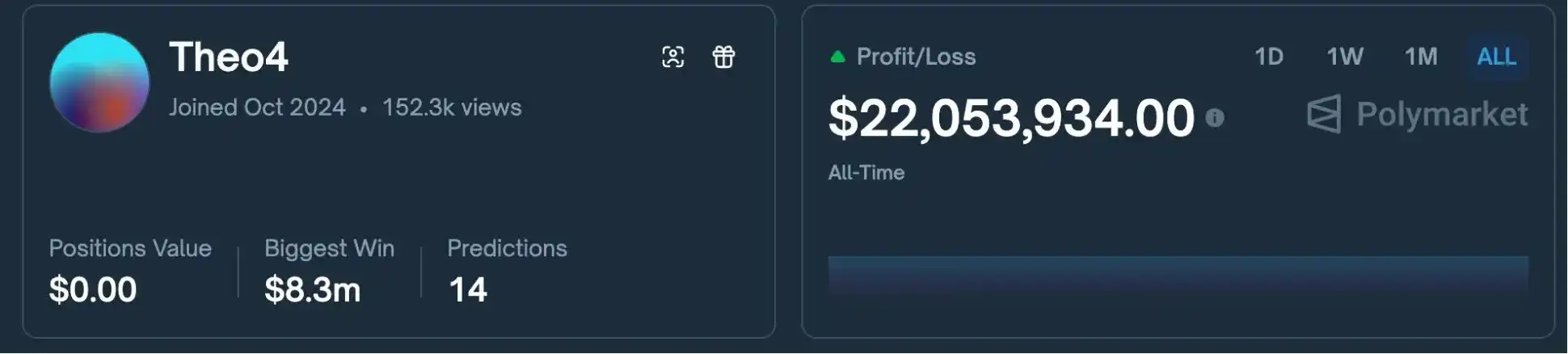
Beberapa jam kemudian, Trump menyatakan menang, akun ini, bersama 10 dompet terkait di belakangnya, akhirnya menuai keuntungan 85 juta dolar AS.

Orang di balik akun itu bernama Théo, seorang trader Prancis yang pernah bekerja di Wall Street.

Ketika semua jajak pendapat utama menunjukkan Harris dan Trump berimbang,

dia melakukan hal yang tampak gila: menjual hampir semua aset likuid, mengumpulkan 80 juta dolar AS, bertaruh penuh Trump menang.

Théo tidak bertanya pada pemilih "Anda memilih siapa", tetapi meminta YouGov melakukan jajak pendapat khusus di tiga negara bagian ayunan Pennsylvania, Michigan, dan Wisconsin, pertanyaannya: "Menurut Anda tetangga Anda akan memilih siapa?"

Logika jajak pendapat "efek tetangga" ini sederhana: beberapa orang malu mengakui dukungan mereka pada Trump, tetapi mereka tidak keberatan mengatakan tetangga mendukung.

Hasilnya "secara mengejutkan condong ke Trump". Saat mendapatkan data itu, Théo menambah dari posisi 30% menjadi All-in.

Kasus ini mengungkap esensi arbitrase informasi: bukan tahu lebih banyak daripada orang lain, tetapi bertanya pertanyaan yang benar. Théo menghabiskan kurang dari 100.000 dolar AS untuk jajak pendapat, ditukar dengan imbalan 85 juta dolar AS.

Ini mungkin penelitian pasar dengan tingkat pengembalian investasi tertinggi dalam sejarah manusia. Saat ini total keuntungannya peringkat pertama di Polymarket.
Penilaian Keterreplikaan: Ambang batas arbitrase informasi sangat tinggi, membutuhkan metodologi penelitian orisinal, modal besar, serta ketahanan mental untuk bertahan pada penilaian saat "semua orang mengatakan Anda salah". Namun ide intinya, mencari penyimpangan sistematis dalam penetapan harga pasar, berlaku untuk pasar prediksi kontroversial apa pun.

2. Strategi Arbitrase Lintas Platform: Seni "Memungut Uang" di Antara Dua Pasar

Jika arbitrase informasi adalah "permainan intelektual", arbitrase lintas platform adalah "pekerjaan fisik": membosankan, mekanis, tetapi hampir tanpa risiko.

Prinsipnya bisa dipahami anak SD: hal yang sama, toko A jual 45, toko B jual 48, Anda beli satu di setiap sisi untuk lindung nilai, apa pun hasilnya bisa dapat selisih.

April 2024 hingga April 2025, penelitian akademis mencatat satu angka: arbitraseur mengambil total lebih dari 40 juta dolar AS "keuntungan tanpa risiko" dari Polymarket. Hanya tiga dompet puncak saja menghasilkan 4,2 juta dolar AS.

Kasus nyata: Suatu hari tahun 2025, pertanyaan "Bitcoin menembus 95.000 dolar AS dalam satu jam", harga YES di Polymarket adalah 0,45 dolar AS, sedangkan di pesaing Kalshi, harga NO untuk peristiwa yang sama adalah 0,48 dolar AS.

Trader pintar membeli kedua sisi secara bersamaan, total biaya 0,93 dolar AS. Apapun yang terjadi pada Bitcoin, dia bisa mendapatkan kembali 1 dolar AS, keuntungan tanpa risiko 7,5%, sampai dalam satu jam.

Tapi ada "detail mematikan" di sini: dua platform mungkin memiliki definisi berbeda untuk "peristiwa yang sama".

Dalam peristiwa penutupan pemerintah AS 2024, sekelompok arbitraseur menemukan: Polymarket menetapkan "penutupan terjadi" (YES), sedangkan Kalshi menetapkan "penutupan tidak terjadi" (NO).

Posisi lindung nilai yang mereka kira aman, justru rugi di kedua sisi.

Penyebabnya? Standar penyelesaian Polymarket adalah "OPM mengumumkan penutupan", sedangkan Kalshi mensyaratkan "penutupan aktual lebih dari 24 jam".

Arbitrase juga bukan memungut uang dengan mata tertutup. Di balik setiap sen selisih harga, ada detail aturan penyelesaian.

Penilaian Keterreplikaan: Ini adalah strategi dengan ambang batas terendah dari enam strategi. Yang Anda butuhkan hanyalah membuka akun di beberapa platform, sedikit modal awal, dan kesabaran membandingkan selisih harga. Bahkan ada kode bot arbitrase sumber terbuka di GitHub. Tetapi seiring masuknya modal institusional, jendela arbitrase menyempit dengan kecepatan yang terlihat jelas.

3. Strategi Obligasi Probabilitas Tinggi: Mengubah "Hampir Pasti" Menjadi Bisnis dengan Imbal Hasil 1800% per Tahun

Kebanyakan orang datang ke Polymarket untuk mencari sensasi: bertaruh pada kuda hitam, memprediksi kejutan.

Tetapi "uang pintar" yang sebenarnya justru melakukan sebaliknya: mereka khusus membeli hal-hal yang "sudah pasti".

Data menunjukkan, lebih dari 90% pesanan besar lebih dari 10.000 dolar AS di Polymarket terjadi pada harga 0,95 dolar AS ke atas. Apa yang dilakukan "paus" ini? Mereka sedang "Bonding", membeli peristiwa yang hampir pasti terjadi seperti membeli obligasi.

Contoh: Tiga hari sebelum rapat suku bunga Fed Desember 2025, harga kontrak YES "pemotongan suku bunga 25 basis points" diperdagangkan pada 0,95 dolar AS. Data ekonomi sudah terbuka, pidato pejabat Fed juga mengisyaratkan dengan jelas, tidak ada ruang untuk kejutan. Anda membeli dengan 0,95 dolar AS, tiga hari kemudian diselesaikan mendapatkan kembali 1 dolar AS, keuntungan 5,2%, sampai dalam 72 jam.

5% terdengar tidak banyak? Hitung: jika Anda dapat menemukan dua peluang seperti ini setiap minggu, setahun adalah 52 minggu × 2 kali × 5% = 520% keuntungan sederhana. Mempertimbangkan bunga majemuk, imbal hasil tahunan mudah melebihi 1800%. Dan risiko yang Anda tanggung mendekati nol.

Ada trader yang mengandalkan strategi ini, hanya melakukan beberapa transaksi per minggu, pendapatan tahunan lebih dari 150.000 dolar AS.

Tentu, "hampir pasti" tidak sama dengan "benar-benar pasti".

Musuh terbesar strategi obligasi adalah angsa hitam, kejutan dengan probabilitas 0,01%. Satu kesalahan dapat menelan puluhan kali keuntungan yang berhasil. Jadi kemampuan inti pemain obligasi puncak bukanlah mencari peluang, tetapi mengidentifikasi "kepastian palsu": hal-hal yang tampaknya sudah pasti, tetapi sebenarnya menyembunyikan risiko.

Penilaian Keterreplikaan: Ini adalah strategi yang paling cocok untuk pemula. Tidak perlu penelitian mendalam, tidak perlu keunggulan kecepatan, hanya perlu kesabaran dan disiplin. Tetapi batas atas imbal hasilnya juga terendah. Ketika modal Anda mencapai skala tertentu, pasar tidak memiliki cukup peluang 95%+ untuk Anda "panen".

4. Strategi Penyedia Likuiditas: Hanya Dapat "Biaya Lalu Lintas"? Tidak Sesederhana Itu

Mengapa kasino selalu menghasilkan uang? Karena tidak berjudi dengan Anda, hanya mengambil komisi.

Di Polymarket, ada sekelompok orang memilih "menjadi kasino" bukan "menjadi penjudi" — mereka adalah Penyedia Likuiditas (LP).

Pekerjaan LP: secara bersamaan memasang pesanan beli dan jual di buku pesanan, mendapatkan selisih harga di tengah. Misalnya Anda memasang pesanan beli 0,49 dolar AS, pesanan jual 0,51 dolar AS, siapa pun yang melakukan perdagangan, Anda dapat mendapatkan 0,02 dolar AS di tengah. Anda tidak peduli hasil peristiwa, hanya peduli apakah ada orang yang berdagang.

Polymarket setiap hari meluncurkan pasar baru. Ciri pasar baru adalah: likuiditas buruk, selisih harga besar, banyak retail. Bagi LP, ini seperti surga. Data menunjukkan, imbal hasil setara tahunan untuk menyediakan likuiditas di pasar baru dapat mencapai 80%-200%.

Seorang trader bernama @defiance_cr menerima wawancara resmi Polymarket, berbagi secara rinci bagaimana dia membangun sistem pasar pembuat otomatis. Pada puncaknya, sistem ini menghasilkan keuntungan 700-800 dolar AS per hari.

Dia memulai dengan modal 10.000 dolar AS, awalnya menghasilkan sekitar 200 dolar AS per hari. Seiring pengoptimalan sistem dan perluasan modal, keuntungan meningkat menjadi 700-800 dolar AS per hari. Intinya adalah memanfaatkan program hadiah likuiditas Polymarket, memasang pesanan di kedua sisi pasar secara bersamaan dapat mendapatkan hadiah hampir 3 kali lipat.
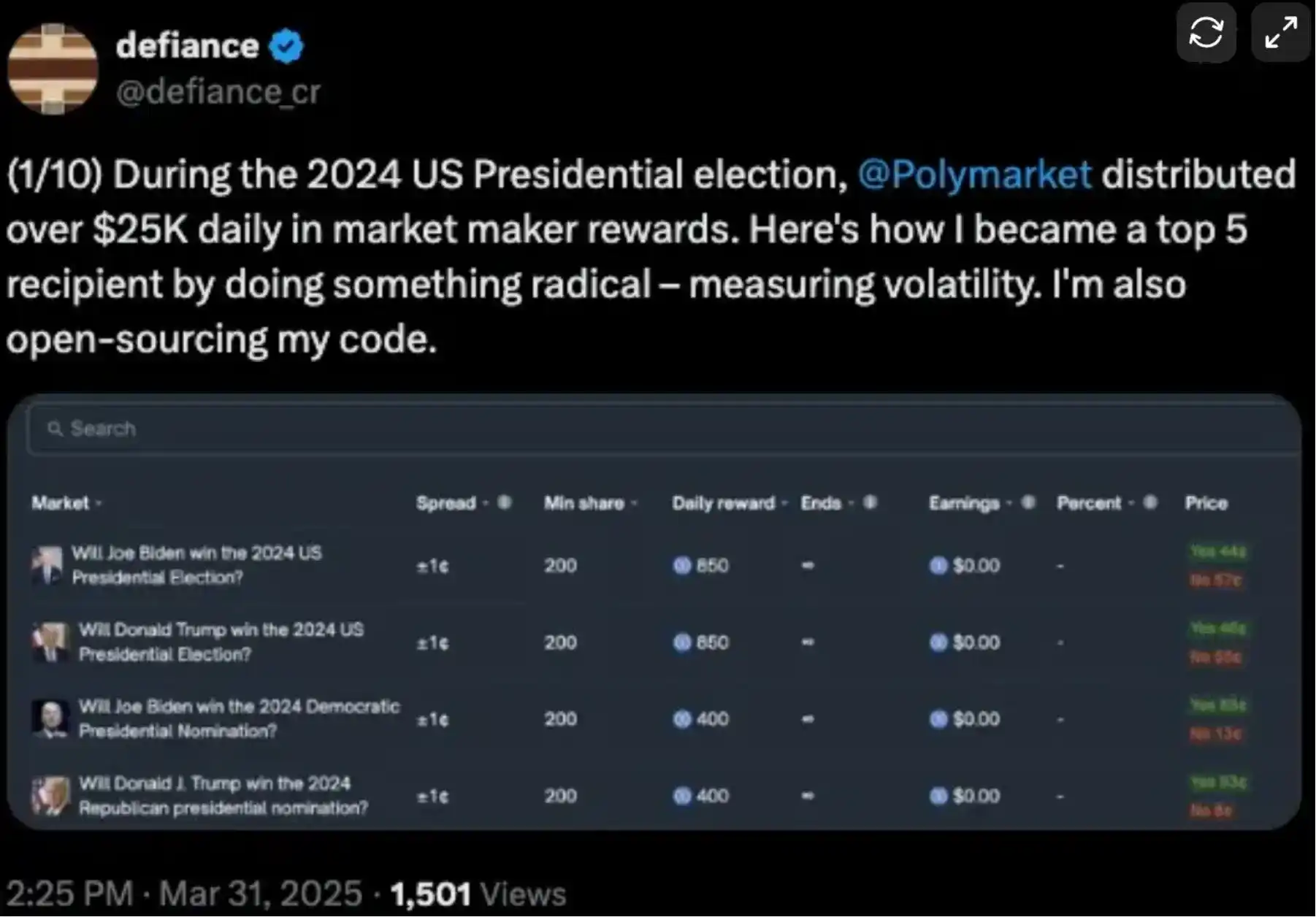
Sistemnya berisi dua modul inti: modul pengumpulan data mengambil harga historis dari API Polymarket, menghitung indikator volatilitas, memperkirakan pengembalian yang diharapkan per investasi 100 dolar AS, lalu mengurutkan berdasarkan imbal hasil disesuaikan risiko; modul eksekusi perdagangan secara otomatis melakukan pemesanan berdasarkan parameter yang ditetapkan — pasar dengan likuiditas baik menggunakan selisih sempit, pasar dengan volatilitas tinggi menggunakan selisih lebar.

Tetapi setelah pemilu, hadiah likuiditas Polymarket turun drastis.

Strategi LP pada akhir 2025 masih layak, tetapi imbal hasil menurun, persaingan meningkat. Biaya konfigurasi perdagangan frekuensi tinggi lebih tinggi dari gaji karyawan biasa. Infrastruktur VPS high-end perlu dihosting di dekat server Polymarket. Algoritma kuantitatif dioptimalkan, dapat mencapai eksekusi cepat.

Jadi jangan iri "trader yang berpenghasilan 200.000 dolar AS per bulan memang ada. Mereka adalah 0,5% teratas."

Kombinasi "pembuat pasar + prediksi" ini adalah perlengkapan standar pemain tingkat lanjut.

Penilaian Keterreplikaan: Strategi LP membutuhkan pemahaman mendalam tentang struktur mikro pasar, termasuk dinamika buku pesanan, manajemen selisih harga, kontrol risiko inventaris, dll. Ini tidak "mekanis" seperti arbitrase, juga tidak membutuhkan wawasan unik seperti arbitrase informasi, tetapi di antara keduanya, membutuhkan teknologi, tetapi teknologi dapat dipelajari.

5. Strategi Spesialisasi Domain: Versi Pasar Prediksi dari Aturan 10.000 Jam

Ada fenomena menarik di peringkat Polymarket: orang yang paling menghasilkan uang hampir semuanya "tidak seimbang". Mereka bukan generalis yang tahu sedikit tentang segala hal, tetapi ahli yang memiliki keunggulan sangat besar di bidang sempit tertentu.

Lihat beberapa kasus nyata:

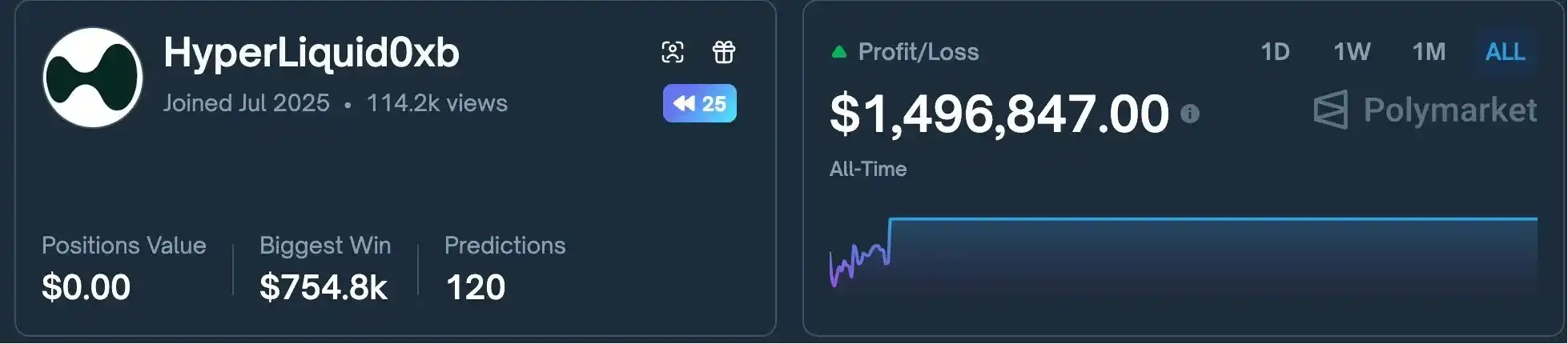
Penguasa pasar olahraga HyperLiquid0xb: Total keuntungan lebih dari 1,4 juta dolar AS, keuntungan tunggal terbesar 755.000 dolar AS berasal dari prediksi pertandingan bisbol. Dia mengenal data MLB seperti analis profesional, dapat dengan cepat menyesuaikan penilaian berdasarkan rotasi pitcher, perubahan cuaca di pertengahan pertandingan.
Jenius pasar Mention Axios: Di pasar seperti "apakah Trump akan mengatakan kata 'crypto' dalam pidatonya", mempertahankan tingkat kemenangan menakutkan 96%. Metodenya sederhana tetapi sangat memakan waktu: menganalisis semua pidato publik target, menghitung frekuensi dan konteks kemunculan kata tertentu, membangun model prediksi. Saat orang lain masih "berjudi", dia sudah "menghitung".
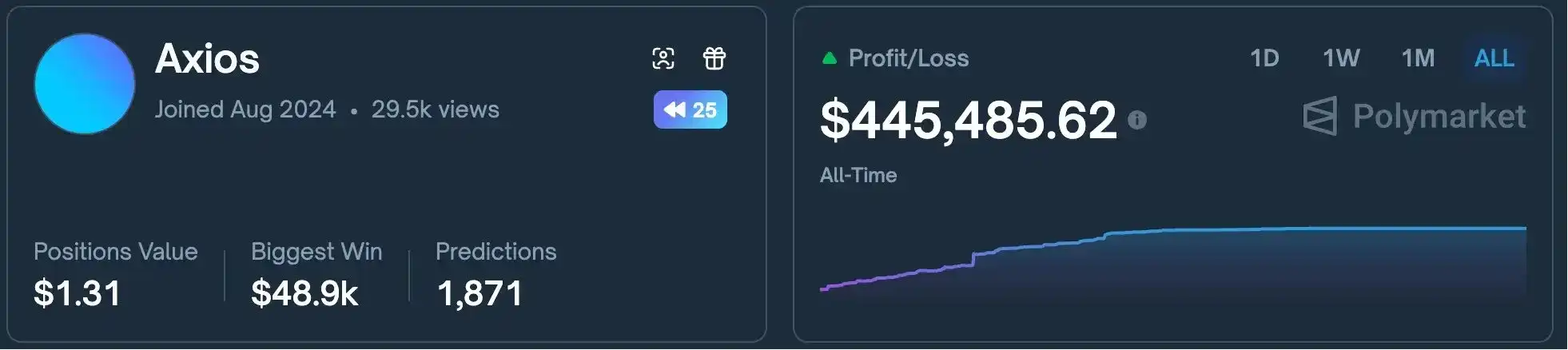
Kasus-kasus ini memiliki kesamaan: trader ahli mungkin hanya berpartisipasi dalam 10-30 transaksi per tahun, tetapi setiap transaksi memiliki keyakinan dan potensi keuntungan yang sangat tinggi.

Jadi spesialisasi lebih menguntungkan daripada luas.

Tentu, saya (Wanwan) juga melihat seorang ahli olahraga SeriouslySirius, rugi tunggal 440.000 dolar AS di World Series, setelahnya serangkaian acara olahraga juga rugi banyak.
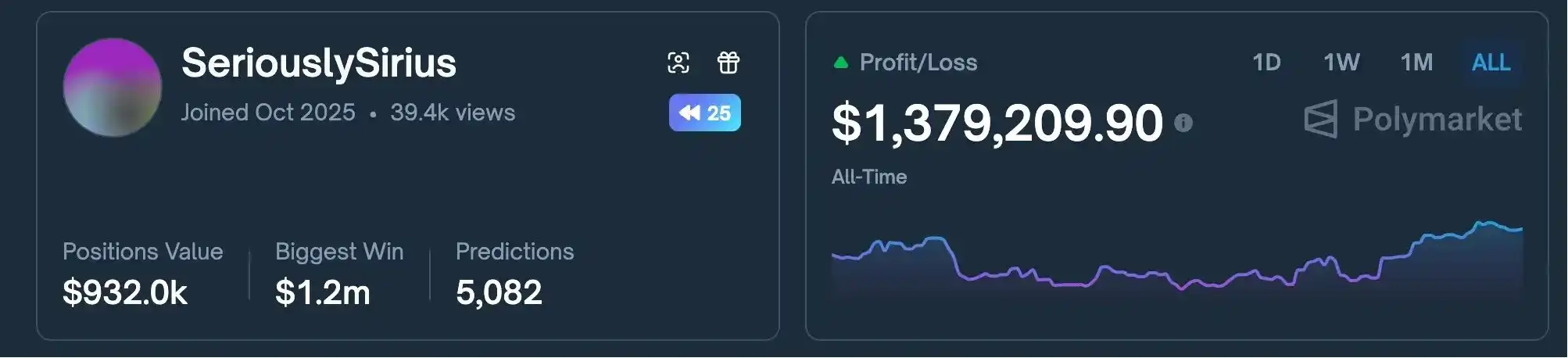
Jika Anda hanya "agak paham", Anda sedang memberikan uang kepada ahli. Tentu, yang disebut "paham", juga adalah bentuk judi lainnya.

Penilaian Keterreplikaan: Ini adalah strategi yang paling membutuhkan investasi waktu, tetapi juga strategi dengan hambatan tertinggi. Begitu Anda membangun keunggulan informasi di suatu bidang, keunggulan ini sulit direplikasi. Disarankan memilih bidang di mana Anda sudah memiliki akumulasi pengetahuan atau terkait dengan profesi.

6. Strategi Perdagangan Kecepatan: Merebut Sebelum Dunia Menyadari

Suatu Rabu sore jam 2 tahun 2024, Ketua Fed Powell berpidato. Dalam 8 detik setelah dia mengatakan "kami akan menyesuaikan kebijakan pada waktunya", harga kontrak "pemotongan suku bunga Fed Desember" di Polymarket melonjak dari 0,65 dolar AS menjadi 0,78 dolar AS.

Apa yang terjadi dalam 8 detik itu? Sekelompok kecil "trader kecepatan" dengan memantau siaran langsung, kondisi pemicu yang ditetapkan sebelumnya, menyelesaikan pemesanan sebelum orang biasa "memahami" apa yang dikatakan Powell.

Trader hebat GCR pernah mengatakan, inti perdagangan kecepatan adalah "reaksi". Ini memanfaatkan jendela waktu antara informasi yang dihasilkan dan dicerna oleh pasar, biasanya hanya beberapa detik hingga beberapa menit.

Strategi ini sangat efektif di pasar "Mention". Misalnya "apakah pidato Biden hari ini akan menyebutkan Cina", jika Anda bisa tahu jawabannya 30 detik lebih cepat daripada orang lain (dengan memantau siaran langsung Gedung Putih bukan menunggu push berita), Anda dapat membangun posisi sebelum harga berubah.

Beberapa tim kuantitatif telah mengindustrialisasikan strategi ini. Menurut analisis data on-chain, 2024-2025, trader algoritma puncak mengeksekusi lebih dari 10.200 perdagangan kecepatan, menghasilkan keuntungan kumulatif 4,2 juta dolar AS. Alat yang mereka gunakan termasuk: akses API latensi rendah, sistem pemantauan berita real-time, skrip aturan keputusan yang ditetapkan sebelumnya, serta modal yang terdistribusi di beberapa platform.

Tetapi perdagangan kecepatan menjadi semakin sulit. Seiring masuknya lebih banyak modal institusional, jendela arbitrase menyusut dari "tingkat menit" menjadi "tingkat detik", orang biasa hampir tidak dapat berpartisipasi. Ini adalah perlombaan senjata, dan alat retail jauh lebih buruk daripada institusi.

Penilaian Keterreplikaan: Kecuali Anda memiliki latar belakang teknis dan bersedia menginvestasikan waktu untuk mengembangkan sistem perdagangan, tidak disarankan untuk mencoba. Alpha perdagangan kecepatan dengan cepat menghilang, ruang yang tersisa untuk retail semakin kecil. Jika Anda tetap ingin berpartisipasi, disarankan memulai dengan pasar kecil yang kurang kompetitif (seperti pemilihan daerah, acara olahraga niche) untuk berlatih.

IV. Manajemen Risiko dan Kombinasi Strategi

4.1 Prinsip Manajemen Posisi

Trader sukses umumnya mengikuti prinsip manajemen posisi berikut:

Secara bersamaan memegang 5-12 posisi tidak terkorelasi; Mencampur posisi jangka pendek (beberapa hari) dan jangka panjang (beberapa minggu/bulan);

Menyisakan 20-40% modal sebagai dana cadangan untuk peluang baru;

Eksposur risiko per transaksi tidak lebih dari 5-10% dari total modal.

Terlalu tersebar (30+ posisi) akan mengencerkan keuntungan, sedangkan terlalu terkonsentrasi (1-2 posisi) terlalu berisiko.

Jumlah posisi terbaik biasanya antara 6-10.

4.2 Saran Kombinasi Strategi

Saran konfigurasi strategi berdasarkan preferensi risiko sebagai berikut.

  • Investor konservatif: 70% strategi obligasi + 20% penyedia likuiditas + 10% perdagangan ikutan.
  • Investor seimbang: 40% spesialisasi domain + 30% arbitrase + 20% obligasi + 10% penggerak peristiwa.
  • Investor agresif: 50% arbitrase informasi + 30% spesialisasi domain + 20% perdagangan kecepatan.

Apapun kombinasinya, hindari mempertaruhkan lebih dari 40% modal pada satu peristiwa atau kelompok peristiwa yang sangat terkorelasi.

V. Kesimpulan

Tahun 2025 adalah tahun kunci bagi Polymarket untuk bergerak dari eksperimen tepi ke keuangan utama.

Enam strategi profit yang direkap dalam tulisan ini: arbitrase informasi, arbitrase lintas platform, obligasi probabilitas tinggi, penyedia likuiditas, spesialisasi domain, dan perdagangan kecepatan, mewakili sumber alpha yang telah terverifikasi di pasar prediksi.

Tahun 2026, pasar prediksi akan menyambut persaingan yang lebih sengit dan ambang profesionalisme yang lebih tinggi.

Disarankan bagi pemula yang masuk kemudian untuk fokus pada: (1) Memilih bidang vertikal di mana keunggulan informasi dapat dibangun dan diperdalam; (2) Memulai dengan strategi obligasi skala kecil untuk mengumpulkan pengalaman; (3) Memanfaatkan alat seperti PolyTrack untuk melacak dan mempelajari pola trader puncak; (4) Mempertahankan perhatian ketat pada perubahan regulasi dan pembaruan aturan platform.

Esensi pasar prediksi adalah "mekanisme penemuan kebenaran dengan memilih menggunakan uang".

Di pasar ini, keunggulan sejati tidak berasal dari keberuntungan, tetapi dari informasi yang lebih baik, analisis yang lebih ketat, manajemen risiko yang lebih rasional. Semoga rekap ini dapat memberikan peta sistematis di dunia baru untuk Anda.

Referensi

[1] Chainalysis. "Laporan Analisis Paus Polymarket." November 2024.

[2] The Free Press. "Bagaimana Seekor Paus Prancis Menghasilkan $85 Juta dari Kemenangan Trump." November 2024.

[3] Polymarket Analytics. "Peringkat Trader dan Metrik Kinerja." Desember 2025.

[4] PolyTrack. "Trader Polymarket Terbaik untuk Diikuti 2025." November 2025.

[5] Dune Analytics. "Data Volume Pasar Prediksi dan Bunga Terbuka." September 2025.

[6] Wall Street Journal. "Trader Prancis yang Bertaruh Besar pada Trump." November 2024.

[7] Bloomberg. "Hasil Paus Trump di Polymarket Meningkat menjadi $85 Juta." November 2024.

[8] CBS News 60 Minutes. "Bagaimana seorang 'paus' Prancis menghasilkan lebih dari $80 juta di Polymarket." Desember 2025.

Tautan asli

Related Questions

QApa yang dilakukan trader Prancis Théo untuk menghasilkan keuntungan besar $85 juta di Polymarket selama pemilu AS 2024?

AThéo melakukan survei khusus melalui YouGov di tiga negara bagian swing (Pennsylvania, Michigan, dan Wisconsin) dengan menanyakan 'Siapa yang akan dipilih tetangga Anda?' alih-alih preferensi langsung. Hasilnya menunjukkan kecenderungan kuat untuk Trump, yang tidak terdeteksi oleh jajak pendapat tradisional. Dengan informasi ini, ia mengalokasi hampir semua aset likuidnya sebesar $80 juta untuk bertaruh pada kemenangan Trump, menghasilkan keuntungan $85 juta.

QApa itu strategi 'High Probability Bond' di Polymarket dan bagaimana cara kerjanya?

AStrategi High Probability Bond melibatkan pembelian kontrak 'YES' pada peristiwa yang hampir pasti terjadi dengan harga diskon (misalnya $0,95). Ketika peristiwa itu terjadi, kontrak diselesaikan seharga $1,00, menghasilkan keuntungan kecil yang hampir bebas risiko. Dengan melakukan ini secara konsisten pada beberapa peluang serupa, trader dapat mencapai pengembalian tahunan yang sangat tinggi (contoh dalam artikel: 1800%) karena efek gabungan dari banyak perdagangan dengan probabilitas tinggi.

QApa saja dimensi dan bobot penilaian yang digunakan untuk mengevaluasi strategi盈利 di Polymarket menurut artikel tersebut?

AArtikel tersebut menggunakan sistem evaluasi multi-dimensi dengan bobot sebagai berikut: Kemampuan Hasil Mutlak (Absolute Earning Capacity - bobot 30%) diukur dengan total keuntungan (PnL), Hasil Disesuaikan Risiko (Risk-Adjusted Return - bobot 25%) diukur dengan ROI dan Sharpe Ratio, Keterulangan Strategi (Strategy Replicability - bobot 20%), Kelestarian dan Stabilitas (Sustainability & Stability - bobot 15%), dan Skalabilitas (Scalability - bobot 10%).

QApa itu strategi 'Liquidity Providing' (Penyedia Likuiditas) di Polymarket dan bagaimana perkembangannya pada akhir 2025?

AStrategi Liquidity Providing (LP) mirip dengan menjadi 'bandar': trader secara bersamaan memasang order beli dan jual untuk menciptakan likuiditas dan mendapatkan keuntungan dari spread. Awalnya sangat menguntungkan berkat program insentif likuiditas Polymarket, dengan beberapa trader melaporkan keuntungan harian $700-$800. Namun, pada akhir 2025, insentif ini berkurang secara signifikan, persaingan meningkat, dan strategi ini menjadi lebih menuntut secara teknis, memerlukan algoritma canggih dan infrastruktur low-latency untuk tetap menguntungkan.

QMengapa artikel menekankan pentingnya 'Bidang Keahlian Khusus' (Domain Expertise) sebagai strategi yang sukses di Polymarket?

AArtikel menekankan bahwa trader paling sukses di Polymarket seringkali adalah 'spesialis' yang memiliki keunggulan informasi yang sangat besar di bidang tertentu (seperti olahraga tertentu atau pola bicara politisi), bukan generalis. Keahlian mendalam ini memungkinkan mereka membuat prediksi yang lebih akurat dengan keyakinan tinggi, seringkali hanya melakukan 10-30 transaksi setahun tetapi dengan tingkat keberhasilan dan potensi keuntungan yang sangat tinggi (contoh: 96% win rate untuk prediksi penyebutan kata). Ini menciptakan hambatan yang sulit ditiru oleh trader biasa.

Related Reads

Fed's Internal Doves Flock to Hawkish Stance, Warsh's Debut "Between a Rock and a Hard Place"

U.S. Federal Reserve officials who previously advocated for rate cuts, including Governor Christopher Waller, have recently shifted their stance, with many now not ruling out the possibility of future rate hikes. This sets a challenging stage for new Fed Chair Kevin Warsh's first policy meeting. Appointed by President Trump based on his dovish views, Warsh now faces a committee where the debate has pivoted from "when to cut" to "whether to hike," driven by persistent inflation above 3%, a strong labor market, and supply-side pressures from AI infrastructure demands and geopolitical tensions. Key figures illustrate the shift. Governor Waller, once concerned about employment, now says data has pushed him toward considering rate increases. Even moderate voices like Governor Lisa Cook, while expecting inflation to ease, have indicated readiness to hike if it fails to do so. Long-time hawks such as regional Fed presidents Beth Hammack, Lorie Logan, and Neel Kashkari have grown more vocal, arguing that the real policy rate is effectively falling and that action may soon be needed. The upcoming Fed meeting is expected to keep rates steady but will likely remove the "easing bias" from its statement, signaling a neutral stance between cuts and hikes. The quarterly "dot plot" is anticipated to show most officials projecting no cuts this year, with some potentially indicating hikes. Chair Warsh, a critic of the Fed's reliance on forward guidance like the dot plot, must navigate communicating this pivot using tools he has questioned, all while steering policy in a direction counter to the preferences of the president who appointed him. The consensus suggests the Fed's next move could well be a rate increase.

marsbit56m ago

Fed's Internal Doves Flock to Hawkish Stance, Warsh's Debut "Between a Rock and a Hard Place"

marsbit56m ago

The Trillion-Yuan Market Cap 'Yi Zhong Tian': Who is the True Value King?

The article analyzes the three leading Chinese optical module companies, collectively nicknamed "Yi Zhong Tian": Xinyisheng, Zhongji Innolight, and TFC Optical Communication. It evaluates their "cost-performance" not by current stock price, but through three lenses: PEG ratio (growth vs. valuation), earnings quality, and premium/discount for certainty. Xinyisheng shows the most attractive PEG ratio and high profitability, but its valuation reflects discounts for risks like high customer concentration and reliance on overseas markets. Zhongji Innolight, the most expensive, commands a premium for its market leadership, dominant share in key products like 800G/1.6T modules, and higher earnings certainty, though it faces geopolitical risks. TFC Optical, as an upstream component supplier ("water seller"), has the highest gross margin and bets on the long-term CPO/NPO architecture trend, but trades at a high valuation with more stable, less explosive growth. The core argument is that while these companies dominate module assembly, the true profit pool and technological moat lie upstream in laser and switch chips, currently controlled by U.S. firms like Lumentum and Coherent. The long-term "cost-performance" for these Chinese leaders hinges on whether the domestic industry, exemplified by companies like Yuanjie Technology, can successfully move up the value chain into high-power laser chips. Otherwise, their high growth may remain confined to the lower-margin assembly segment.

marsbit1h ago

The Trillion-Yuan Market Cap 'Yi Zhong Tian': Who is the True Value King?

marsbit1h ago

Has the Crypto Market Bottomed? Here's What Institutions Think

The crypto market is in a period of significant debate, with leading institutions offering differing views on whether a bottom has been reached. Three prominent firms have published detailed analyses: * **Galaxy Digital** argues Bitcoin has **not yet bottomed**. Their analysis of 13 historical indicators across six dimensions (valuation, profit-taking, miner pressure, etc.) shows only four are fully met. They project a potential bottom range between $30k and $54k. * **NYDIG** states a bottom is **possible but not likely**. While metrics are close to historic bear market extremes, they note the absence of a classic panic-selling event. They also suggest increased institutional adoption may have structurally altered the market cycle, potentially leading to a shallower downturn. * **Standard Chartered Bank** asserts the **bottom has already occurred** at around $59k. They cite two key factors: potential US-Iran diplomatic progress and the anticipated SpaceX IPO, which they believe absorbed capital and caused ETF selling pressure that is now subsiding. They forecast a year-end price target of $100k. Despite the surface-level disagreement, the reports share critical common ground more valuable for long-term investors: 1. All three believe the market bottom will form **within this year**. 2. All agree the current price is **closer to the bottom than to previous highs**. 3. All maintain a **bullish long-term outlook** for Bitcoin and a new cycle. The core takeaway is that while the exact bottom price ($40k, $50k, or $60k) is debated, the consensus is that a bottom is imminent. For long-term holders, the primary focus should not be pinpointing the absolute low, but on the future potential for prices to reach $100k, $200k, or higher. The fundamental thesis for Bitcoin—sovereign debt accumulation, inflation, declining trust in centralized institutions, global digitization, and improved accessibility—remains intact and is arguably strengthening. The overall landscape is viewed as more favorable than in previous crypto winters.

marsbit1h ago

Has the Crypto Market Bottomed? Here's What Institutions Think

marsbit1h ago

The 'Chip' Challenge and Breakthroughs in China's Optical Industry Chain

China's Photonics Industry: Bottlenecks and Breakthroughs In the global AI race, computing chips dominate the narrative, but the underlying bottleneck increasingly defining the scale of AI clusters is light—or more specifically, optical connectivity. Optical modules, which translate electrical signals to light and vice versa, are crucial for connecting thousands of GPUs in AI data centers, preventing data congestion and ensuring efficient model training. High-speed modules (800G, 1.6T) are now standard, with performance hinging on advanced DSP (Digital Signal Processor) chips. This is where a critical dependency lies. Two US giants—Marvell and Broadcom—collectively dominate over 90% of the high-end DSP chip market. Chinese optical module leaders like Zhongji Innolight and Eoptolink rely on these chips to manufacture modules for overseas AI customers, primarily in North America. While this creates a supply chain vulnerability, complete decoupling is difficult. Marvell derives over half its revenue from Greater China, and the US firms depend on Chinese partners for chip packaging and optical components. The risk from laser chips (e.g., from Lumentum), another key component, is considered more manageable due to multiple global suppliers and faster progress in domestic alternatives from companies like YOFC and Accelink. To mitigate risks, China's industry is pursuing a multi-pronged strategy: diversifying supply chains and locking in long-term orders; fostering a domestic market ecosystem to adopt homegrown DSPs from firms like Huawei HiSilicon and CETC; accelerating R&D in high-speed DSPs and advanced packaging; and investing in next-gen technologies like silicon photonics and Co-Packaged Optics (CPO) to reduce reliance on discrete DSPs. The ultimate solution lies not in short-term博弈 but in persistent advancement of domestic high-end chip R&D and manufacturing. While challenges remain in performance, certification, and ecosystem building, China's vast domestic market and manufacturing base provide a crucial buffer, buying time for the industry to achieve greater technological independence.

marsbit1h ago

The 'Chip' Challenge and Breakthroughs in China's Optical Industry Chain

marsbit1h ago

Trading

Spot
Futures

Hot Articles

What is SONIC

Sonic: Pioneering the Future of Gaming in Web3 Introduction to Sonic In the ever-evolving landscape of Web3, the gaming industry stands out as one of the most dynamic and promising sectors. At the forefront of this revolution is Sonic, a project designed to amplify the gaming ecosystem on the Solana blockchain. Leveraging cutting-edge technology, Sonic aims to deliver an unparalleled gaming experience by efficiently processing millions of requests per second, ensuring that players enjoy seamless gameplay while maintaining low transaction costs. This article delves into the intricate details of Sonic, exploring its creators, funding sources, operational mechanics, and the timeline of significant events that have shaped its journey. What is Sonic? Sonic is an innovative layer-2 network that operates atop the Solana blockchain, specifically tailored to enhance the existing Solana gaming ecosystem. It accomplishes this through a customised, VM-agnostic game engine paired with a HyperGrid interpreter, facilitating sovereign game economies that roll up back to the Solana platform. The primary goals of Sonic include: Enhanced Gaming Experiences: Sonic is committed to offering lightning-fast on-chain gameplay, allowing players and developers to engage with games at previously unattainable speeds. Atomic Interoperability: This feature enables transactions to be executed within Sonic without the need to redeploy Solana programmes and accounts. This makes the process more efficient and directly benefits from Solana Layer1 services and liquidity. Seamless Deployment: Sonic allows developers to write for Ethereum Virtual Machine (EVM) based systems and execute them on Solana’s SVM infrastructure. This interoperability is crucial for attracting a broader range of dApps and decentralised applications to the platform. Support for Developers: By offering native composable gaming primitives and extensible data types - dining within the Entity-Component-System (ECS) framework - game creators can craft intricate business logic with ease. Overall, Sonic's unique approach not only caters to players but also provides an accessible and low-cost environment for developers to innovate and thrive. Creator of Sonic The information regarding the creator of Sonic is somewhat ambiguous. However, it is known that Sonic's SVM is owned by the company Mirror World. The absence of detailed information about the individuals behind Sonic reflects a common trend in several Web3 projects, where collective efforts and partnerships often overshadow individual contributions. Investors of Sonic Sonic has garnered considerable attention and support from various investors within the crypto and gaming sectors. Notably, the project raised an impressive $12 million during its Series A funding round. The round was led by BITKRAFT Ventures, with other notable investors including Galaxy, Okx Ventures, Interactive, Big Brain Holdings, and Mirana. This financial backing signifies the confidence that investment foundations have in Sonic’s potential to revolutionise the Web3 gaming landscape, further validating its innovative approaches and technologies. How Does Sonic Work? Sonic utilises the HyperGrid framework, a sophisticated parallel processing mechanism that enhances its scalability and customisability. Here are the core features that set Sonic apart: Lightning Speed at Low Costs: Sonic offers one of the fastest on-chain gaming experiences compared to other Layer-1 solutions, powered by the scalability of Solana’s virtual machine (SVM). Atomic Interoperability: Sonic enables transaction execution without redeployment of Solana programmes and accounts, effectively streamlining the interaction between users and the blockchain. EVM Compatibility: Developers can effortlessly migrate decentralised applications from EVM chains to the Solana environment using Sonic’s HyperGrid interpreter, increasing the accessibility and integration of various dApps. Ecosystem Support for Developers: By exposing native composable gaming primitives, Sonic facilitates a sandbox-like environment where developers can experiment and implement business logic, greatly enhancing the overall development experience. Monetisation Infrastructure: Sonic natively supports growth and monetisation efforts, providing frameworks for traffic generation, payments, and settlements, thereby ensuring that gaming projects are not only viable but also sustainable financially. Timeline of Sonic The evolution of Sonic has been marked by several key milestones. Below is a brief timeline highlighting critical events in the project's history: 2022: The Sonic cryptocurrency was officially launched, marking the beginning of its journey in the Web3 gaming arena. 2024: June: Sonic SVM successfully raised $12 million in a Series A funding round. This investment allowed Sonic to further develop its platform and expand its offerings. August: The launch of the Sonic Odyssey testnet provided users with the first opportunity to engage with the platform, offering interactive activities such as collecting rings—a nod to gaming nostalgia. October: SonicX, an innovative crypto game integrated with Solana, made its debut on TikTok, capturing the attention of over 120,000 users within a short span. This integration illustrated Sonic’s commitment to reaching a broader, global audience and showcased the potential of blockchain gaming. Key Points Sonic SVM is a revolutionary layer-2 network on Solana explicitly designed to enhance the GameFi landscape, demonstrating great potential for future development. HyperGrid Framework empowers Sonic by introducing horizontal scaling capabilities, ensuring that the network can handle the demands of Web3 gaming. Integration with Social Platforms: The successful launch of SonicX on TikTok displays Sonic’s strategy to leverage social media platforms to engage users, exponentially increasing the exposure and reach of its projects. Investment Confidence: The substantial funding from BITKRAFT Ventures, among others, emphasizes the robust backing Sonic has, paving the way for its ambitious future. In conclusion, Sonic encapsulates the essence of Web3 gaming innovation, striking a balance between cutting-edge technology, developer-centric tools, and community engagement. As the project continues to evolve, it is poised to redefine the gaming landscape, making it a notable entity for gamers and developers alike. As Sonic moves forward, it will undoubtedly attract greater interest and participation, solidifying its place within the broader narrative of blockchain gaming.

1.7k Total ViewsPublished 2024.04.04Updated 2024.12.03

What is SONIC

What is $S$

Understanding SPERO: A Comprehensive Overview Introduction to SPERO As the landscape of innovation continues to evolve, the emergence of web3 technologies and cryptocurrency projects plays a pivotal role in shaping the digital future. One project that has garnered attention in this dynamic field is SPERO, denoted as SPERO,$$s$. This article aims to gather and present detailed information about SPERO, to help enthusiasts and investors understand its foundations, objectives, and innovations within the web3 and crypto domains. What is SPERO,$$s$? SPERO,$$s$ is a unique project within the crypto space that seeks to leverage the principles of decentralisation and blockchain technology to create an ecosystem that promotes engagement, utility, and financial inclusion. The project is tailored to facilitate peer-to-peer interactions in new ways, providing users with innovative financial solutions and services. At its core, SPERO,$$s$ aims to empower individuals by providing tools and platforms that enhance user experience in the cryptocurrency space. This includes enabling more flexible transaction methods, fostering community-driven initiatives, and creating pathways for financial opportunities through decentralised applications (dApps). The underlying vision of SPERO,$$s$ revolves around inclusiveness, aiming to bridge gaps within traditional finance while harnessing the benefits of blockchain technology. Who is the Creator of SPERO,$$s$? The identity of the creator of SPERO,$$s$ remains somewhat obscure, as there are limited publicly available resources providing detailed background information on its founder(s). This lack of transparency can stem from the project's commitment to decentralisation—an ethos that many web3 projects share, prioritising collective contributions over individual recognition. By centring discussions around the community and its collective goals, SPERO,$$s$ embodies the essence of empowerment without singling out specific individuals. As such, understanding the ethos and mission of SPERO remains more important than identifying a singular creator. Who are the Investors of SPERO,$$s$? SPERO,$$s$ is supported by a diverse array of investors ranging from venture capitalists to angel investors dedicated to fostering innovation in the crypto sector. The focus of these investors generally aligns with SPERO's mission—prioritising projects that promise societal technological advancement, financial inclusivity, and decentralised governance. These investor foundations are typically interested in projects that not only offer innovative products but also contribute positively to the blockchain community and its ecosystems. The backing from these investors reinforces SPERO,$$s$ as a noteworthy contender in the rapidly evolving domain of crypto projects. How Does SPERO,$$s$ Work? SPERO,$$s$ employs a multi-faceted framework that distinguishes it from conventional cryptocurrency projects. Here are some of the key features that underline its uniqueness and innovation: Decentralised Governance: SPERO,$$s$ integrates decentralised governance models, empowering users to participate actively in decision-making processes regarding the project’s future. This approach fosters a sense of ownership and accountability among community members. Token Utility: SPERO,$$s$ utilises its own cryptocurrency token, designed to serve various functions within the ecosystem. These tokens enable transactions, rewards, and the facilitation of services offered on the platform, enhancing overall engagement and utility. Layered Architecture: The technical architecture of SPERO,$$s$ supports modularity and scalability, allowing for seamless integration of additional features and applications as the project evolves. This adaptability is paramount for sustaining relevance in the ever-changing crypto landscape. Community Engagement: The project emphasises community-driven initiatives, employing mechanisms that incentivise collaboration and feedback. By nurturing a strong community, SPERO,$$s$ can better address user needs and adapt to market trends. Focus on Inclusion: By offering low transaction fees and user-friendly interfaces, SPERO,$$s$ aims to attract a diverse user base, including individuals who may not previously have engaged in the crypto space. This commitment to inclusion aligns with its overarching mission of empowerment through accessibility. Timeline of SPERO,$$s$ Understanding a project's history provides crucial insights into its development trajectory and milestones. Below is a suggested timeline mapping significant events in the evolution of SPERO,$$s$: Conceptualisation and Ideation Phase: The initial ideas forming the basis of SPERO,$$s$ were conceived, aligning closely with the principles of decentralisation and community focus within the blockchain industry. Launch of Project Whitepaper: Following the conceptual phase, a comprehensive whitepaper detailing the vision, goals, and technological infrastructure of SPERO,$$s$ was released to garner community interest and feedback. Community Building and Early Engagements: Active outreach efforts were made to build a community of early adopters and potential investors, facilitating discussions around the project’s goals and garnering support. Token Generation Event: SPERO,$$s$ conducted a token generation event (TGE) to distribute its native tokens to early supporters and establish initial liquidity within the ecosystem. Launch of Initial dApp: The first decentralised application (dApp) associated with SPERO,$$s$ went live, allowing users to engage with the platform's core functionalities. Ongoing Development and Partnerships: Continuous updates and enhancements to the project's offerings, including strategic partnerships with other players in the blockchain space, have shaped SPERO,$$s$ into a competitive and evolving player in the crypto market. Conclusion SPERO,$$s$ stands as a testament to the potential of web3 and cryptocurrency to revolutionise financial systems and empower individuals. With a commitment to decentralised governance, community engagement, and innovatively designed functionalities, it paves the way toward a more inclusive financial landscape. As with any investment in the rapidly evolving crypto space, potential investors and users are encouraged to research thoroughly and engage thoughtfully with the ongoing developments within SPERO,$$s$. The project showcases the innovative spirit of the crypto industry, inviting further exploration into its myriad possibilities. While the journey of SPERO,$$s$ is still unfolding, its foundational principles may indeed influence the future of how we interact with technology, finance, and each other in interconnected digital ecosystems.

58 Total ViewsPublished 2024.12.17Updated 2024.12.17

What is $S$

What is AGENT S

Agent S: The Future of Autonomous Interaction in Web3 Introduction In the ever-evolving landscape of Web3 and cryptocurrency, innovations are constantly redefining how individuals interact with digital platforms. One such pioneering project, Agent S, promises to revolutionise human-computer interaction through its open agentic framework. By paving the way for autonomous interactions, Agent S aims to simplify complex tasks, offering transformative applications in artificial intelligence (AI). This detailed exploration will delve into the project's intricacies, its unique features, and the implications for the cryptocurrency domain. What is Agent S? Agent S stands as a groundbreaking open agentic framework, specifically designed to tackle three fundamental challenges in the automation of computer tasks: Acquiring Domain-Specific Knowledge: The framework intelligently learns from various external knowledge sources and internal experiences. This dual approach empowers it to build a rich repository of domain-specific knowledge, enhancing its performance in task execution. Planning Over Long Task Horizons: Agent S employs experience-augmented hierarchical planning, a strategic approach that facilitates efficient breakdown and execution of intricate tasks. This feature significantly enhances its ability to manage multiple subtasks efficiently and effectively. Handling Dynamic, Non-Uniform Interfaces: The project introduces the Agent-Computer Interface (ACI), an innovative solution that enhances the interaction between agents and users. Utilizing Multimodal Large Language Models (MLLMs), Agent S can navigate and manipulate diverse graphical user interfaces seamlessly. Through these pioneering features, Agent S provides a robust framework that addresses the complexities involved in automating human interaction with machines, setting the stage for myriad applications in AI and beyond. Who is the Creator of Agent S? While the concept of Agent S is fundamentally innovative, specific information about its creator remains elusive. The creator is currently unknown, which highlights either the nascent stage of the project or the strategic choice to keep founding members under wraps. Regardless of anonymity, the focus remains on the framework's capabilities and potential. Who are the Investors of Agent S? As Agent S is relatively new in the cryptographic ecosystem, detailed information regarding its investors and financial backers is not explicitly documented. The lack of publicly available insights into the investment foundations or organisations supporting the project raises questions about its funding structure and development roadmap. Understanding the backing is crucial for gauging the project's sustainability and potential market impact. How Does Agent S Work? At the core of Agent S lies cutting-edge technology that enables it to function effectively in diverse settings. Its operational model is built around several key features: Human-like Computer Interaction: The framework offers advanced AI planning, striving to make interactions with computers more intuitive. By mimicking human behaviour in tasks execution, it promises to elevate user experiences. Narrative Memory: Employed to leverage high-level experiences, Agent S utilises narrative memory to keep track of task histories, thereby enhancing its decision-making processes. Episodic Memory: This feature provides users with step-by-step guidance, allowing the framework to offer contextual support as tasks unfold. Support for OpenACI: With the ability to run locally, Agent S allows users to maintain control over their interactions and workflows, aligning with the decentralised ethos of Web3. Easy Integration with External APIs: Its versatility and compatibility with various AI platforms ensure that Agent S can fit seamlessly into existing technological ecosystems, making it an appealing choice for developers and organisations. These functionalities collectively contribute to Agent S's unique position within the crypto space, as it automates complex, multi-step tasks with minimal human intervention. As the project evolves, its potential applications in Web3 could redefine how digital interactions unfold. Timeline of Agent S The development and milestones of Agent S can be encapsulated in a timeline that highlights its significant events: September 27, 2024: The concept of Agent S was launched in a comprehensive research paper titled “An Open Agentic Framework that Uses Computers Like a Human,” showcasing the groundwork for the project. October 10, 2024: The research paper was made publicly available on arXiv, offering an in-depth exploration of the framework and its performance evaluation based on the OSWorld benchmark. October 12, 2024: A video presentation was released, providing a visual insight into the capabilities and features of Agent S, further engaging potential users and investors. These markers in the timeline not only illustrate the progress of Agent S but also indicate its commitment to transparency and community engagement. Key Points About Agent S As the Agent S framework continues to evolve, several key attributes stand out, underscoring its innovative nature and potential: Innovative Framework: Designed to provide an intuitive use of computers akin to human interaction, Agent S brings a novel approach to task automation. Autonomous Interaction: The ability to interact autonomously with computers through GUI signifies a leap towards more intelligent and efficient computing solutions. Complex Task Automation: With its robust methodology, it can automate complex, multi-step tasks, making processes faster and less error-prone. Continuous Improvement: The learning mechanisms enable Agent S to improve from past experiences, continually enhancing its performance and efficacy. Versatility: Its adaptability across different operating environments like OSWorld and WindowsAgentArena ensures that it can serve a broad range of applications. As Agent S positions itself in the Web3 and crypto landscape, its potential to enhance interaction capabilities and automate processes signifies a significant advancement in AI technologies. Through its innovative framework, Agent S exemplifies the future of digital interactions, promising a more seamless and efficient experience for users across various industries. Conclusion Agent S represents a bold leap forward in the marriage of AI and Web3, with the capacity to redefine how we interact with technology. While still in its early stages, the possibilities for its application are vast and compelling. Through its comprehensive framework addressing critical challenges, Agent S aims to bring autonomous interactions to the forefront of the digital experience. As we move deeper into the realms of cryptocurrency and decentralisation, projects like Agent S will undoubtedly play a crucial role in shaping the future of technology and human-computer collaboration.

732 Total ViewsPublished 2025.01.14Updated 2025.01.14

What is AGENT S

Discussions

Welcome to the HTX Community. Here, you can stay informed about the latest platform developments and gain access to professional market insights. Users' opinions on the price of S (S) are presented below.

活动图片