Procès Pump.fun : Rétrospective annuelle - Informateur mystérieux, documents internes et réponses en attente

深潮Published on 2025-12-23Last updated on 2025-12-23

Abstract

Le procès contre Pump.fun, initié en janvier 2025, s'est transformé en une action collective majeure visant l'écosystème Solana. Des investisseurs, ayant subi des pertes (dont 242 000 $ pour le plaignant principal), accusent Pump.fun, ses fondateurs, ainsi que Solana Labs et Jito, d'avoir créé un système frauduleux. Les accusations incluent la vente de titres non enregistrés, la gestion d'une entreprise de jeu illégale, la fraude électronique et le blanchiment d'argent. Le tournant décisif est survenu avec la production de preuves substantielles : un informateur confidentiel a fourni plus de 15 000 messages internes, censés révéler une coordination technique étroite entre Pump.fun, Solana et Jito. Ces documents allegedly détaillent l'intégration d'outils MEV de Jito, permettant des transactions prioritaires pour les initiés. Une plainte révisée, intégrant ces nouvelles preuves, doit être déposée le 7 janvier 2026. L'affaire soulève des questions fondamentales sur la décentralisation réelle et l'équité des lancements "fair" dans la cryptomonnaie.

Rédaction : June, Deep Tide TechFlow

En janvier 2025, le marché des meme coins était à son apogée, en pleine frénésie. Alors que le président américain Donald Trump lançait le token TRUMP, une vague de spéculation sans précédent a déferlé, et le mythe de l'enrichissement rapide avec des « coins à x100 » a capté toute l'attention du marché.

Au même moment, une action en justice contre la plateforme Pump.fun était également lancée discrètement.

Avance rapide jusqu'à ces derniers jours.

Alon Cohen, cofondateur et directeur de l'exploitation de Pump.fun, n'a pas pris la parole sur les réseaux sociaux depuis plus d'un mois. Pour quelqu'un d'aussi actif et toujours en ligne pour « surfer et suivre l'actualité », ce silence est particulièrement remarquable. Les données montrent que le volume hebdomadaire des transactions sur Pump.fun est passé de 3,3 milliards de dollars à son pic de janvier à 481 millions de dollars actuellement, soit une chute de plus de 80 %. Parallèlement, le prix de PUMP est tombé à 0,0019 dollar, en baisse d'environ 78 % par rapport à son plus haut historique.
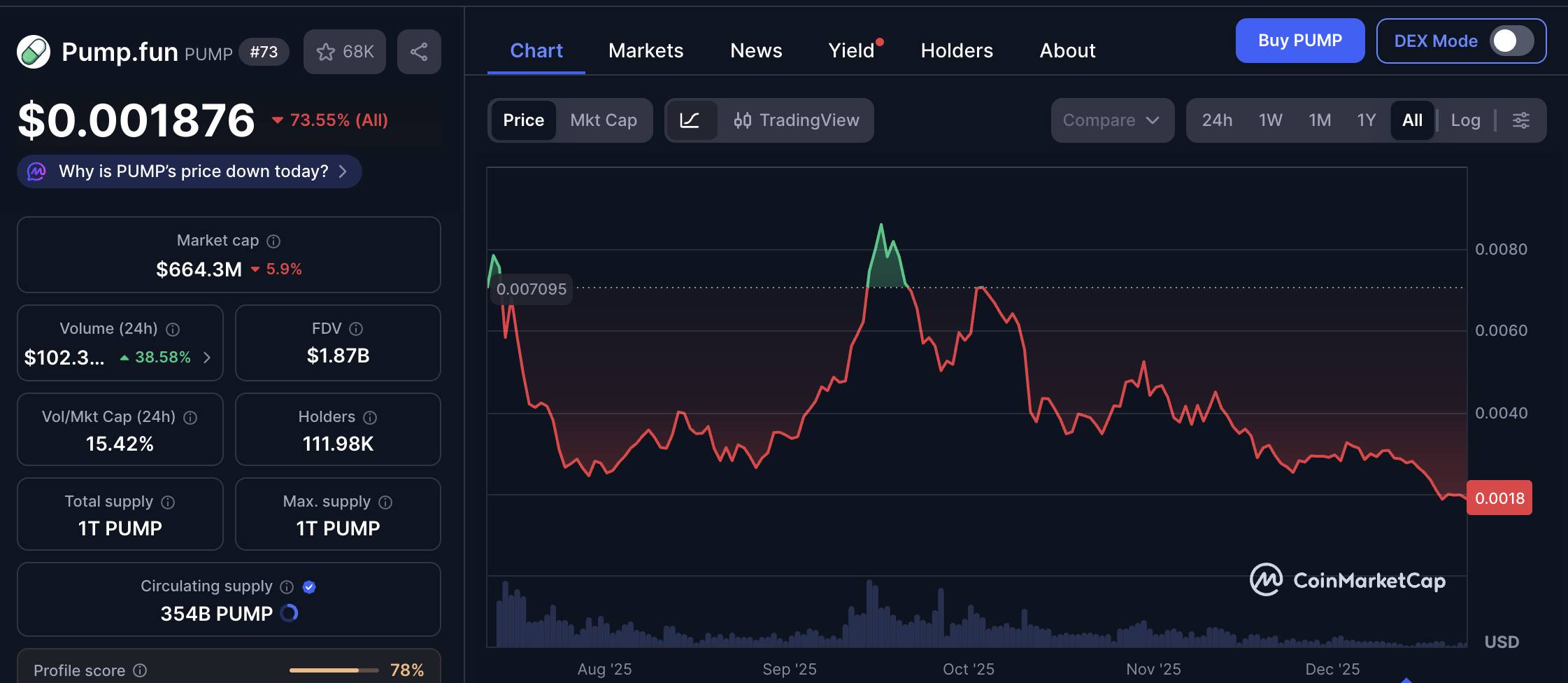
Si l'on revient quelques mois en arrière, au 12 juillet, la situation était radicalement différente. La vente publique de Pump.fun a émis des tokens à un prix uniforme de 0,004 dollar pièce, s'est vendue en 12 minutes et a levé environ 600 millions de dollars, poussant l'euphorie à son paroxysme.

De l'agitation du début d'année à la froideur actuelle, l'attitude du marché forme un contraste saisissant.

Au milieu de tous ces changements, la seule chose qui ne s'est pas arrêtée est le plan de rachat. L'équipe de Pump.fun continue d'exécuter méthodiquement son plan de rachat quotidien. Jusqu'à présent, le montant cumulé des rachats s'élève à 216 millions de dollars, absorbant environ 15,16 % de l'offre en circulation.

Pendant ce temps, ce procès qui avait été négligé pendant la frénésie du marché est en train de prendre de l'ampleur en silence.

Tout a commencé par la perte sur $PNUT

L'histoire commence en janvier 2025.

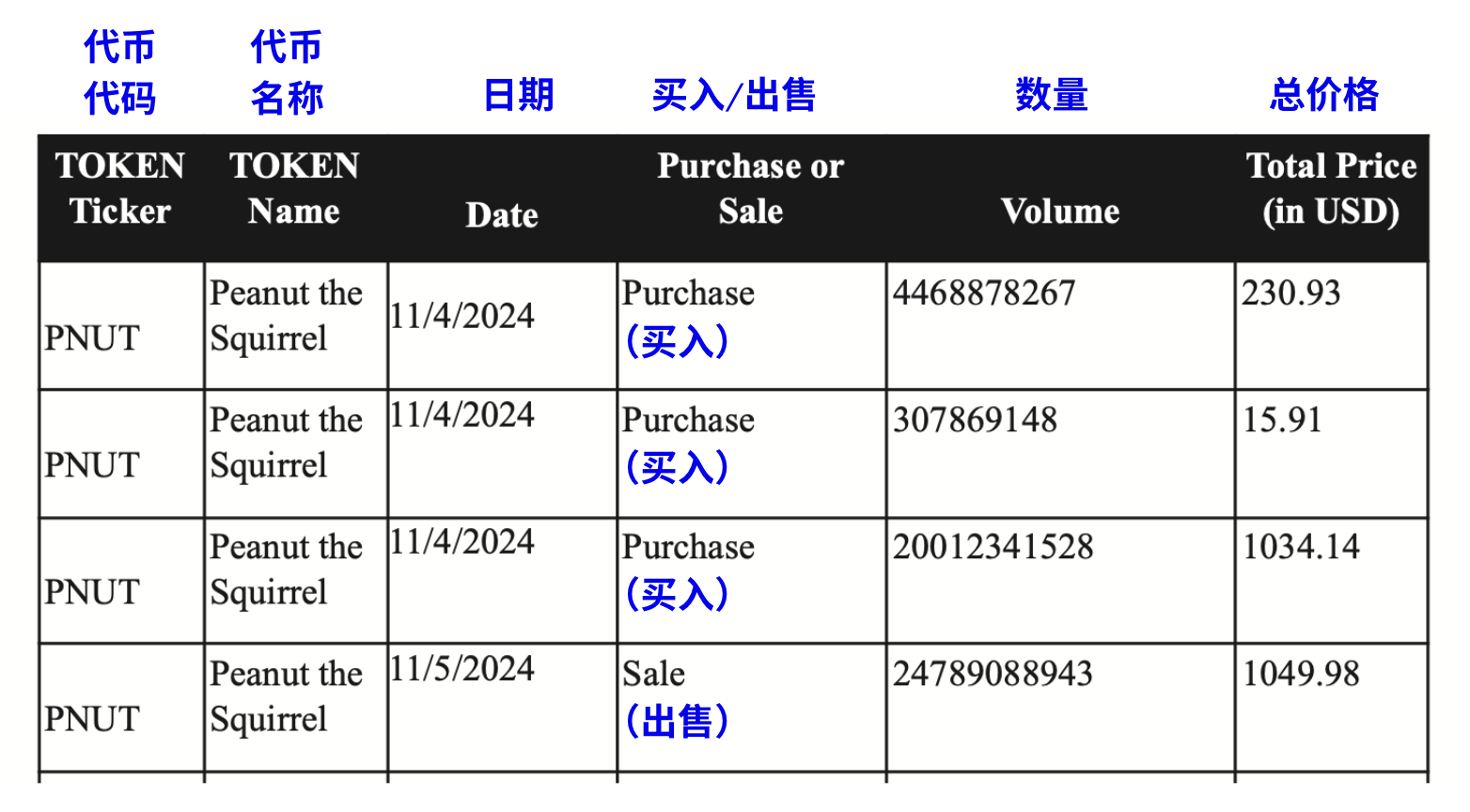
Le 16 janvier, l'investisseur Kendall Carnahan a intenté le premier procès devant le tribunal de district sud de New York (numéro de dossier : Carnahan v. Baton Corp.), pointant du doigt Pump.fun et ses trois fondateurs. La demande de Carnahan était claire : il avait subi des pertes après avoir acheté le token $PNUT sur la plateforme et accusait Pump.fun de vendre des titres non enregistrés, violant ainsi le Securities Act de 1933 des États-Unis.

Selon les documents du procès, les pertes réelles de cet investisseur s'élevaient à seulement 231 dollars.
À peine deux semaines plus tard, le 30 janvier, un autre investisseur, Diego Aguilar, a intenté un procès similaire (numéro de dossier : Aguilar v. Baton Corp.). Contrairement à Carnahan, Aguilar avait acheté une plus grande variété de tokens, incluant $FRED, $FWOG, $GRIFFAIN et plusieurs autres meme coins émis sur la plateforme Pump.fun. Son action en justice était plus large, représentant tous les investisseurs ayant acheté des tokens non enregistrés sur cette plateforme.

À ce moment-là, les deux affaires se déroulaient indépendamment, les défendeurs étant les mêmes :

La société opérant Pump.fun, Baton Corporation Ltd, et ses trois fondateurs, Alon Cohen (Directeur de l'exploitation), Dylan Kerler (Directeur technique) et Noah Bernhard Hugo Tweedale (Directeur général).

Fusion des affaires, le plaignant principal est celui qui a perdu 240 000 dollars

Les deux actions en justice indépendantes ont rapidement attiré l'attention du tribunal. La juge Colleen McMahon du tribunal de district sud de New York, chargée de l'affaire, a soulevé une question : les deux affaires ciblaient les mêmes défendeurs, la même plateforme, les mêmes violations de la loi, alors pourquoi étaient-elles jugées séparément ?

Le 18 juin 2025, la juge McMahon a directement interrogé l'équipe d'avocats des plaignants :

Pourquoi existait-il deux actions en justice indépendantes pour le même problème ? Elle a demandé aux avocats d'expliquer pourquoi les deux affaires ne devraient pas être consolidées.

Les avocats des plaignants ont d'abord tenté de se défendre, affirmant qu'il était possible de conserver deux affaires indépendantes, une spécifiquement pour le token $PNUT et l'autre pour tous les tokens de la plateforme Pump.fun, et ont suggéré de nommer deux plaignants principaux distincts.

Mais la juge n'était manifestement pas convaincue. Cette stratégie de « diviser pour mieux régner » non seulement gaspillerait les ressources judiciaires, mais pourrait aussi conduire à des verdicts contradictoires dans les différentes affaires. L'essentiel était que tous les plaignants faisaient face au même problème central : ils accusaient Pump.fun de vendre des titres non enregistrés et se considéraient comme victimes du même système frauduleux.

Le 26 juin, la juge McMahon a rendu sa décision, consolidant officiellement les deux affaires. Simultanément, conformément aux dispositions du Private Securities Litigation Reform Act (PSLRA), la juge a officiellement nommé Michael Okafor, celui ayant subi les pertes les plus importantes, comme plaignant principal (selon les archives du tribunal, Okafor a perdu environ 242 000 dollars dans des transactions sur Pump.fun, bien plus que les autres plaignants).

Ainsi, les investisseurs, qui agissaient auparavant chacun de leur côté, ont formé un front uni.

Le fer de lance se tourne vers Solana Labs et Jito

Un mois seulement après la consolidation de l'affaire, la partie plaignante a lancé une bombe.

Le 23 juillet 2025, les plaignants ont déposé une « Plainte modifiée consolidée », et la liste des défendeurs s'est considérablement élargie de manière dramatique. Cette fois, les accusations ne visaient plus seulement Pump.fun et ses trois fondateurs, mais ciblaient directement les acteurs centraux de tout l'écosystème Solana.

Les nouveaux défendeurs incluaient :

  • Solana Labs, la Solana Foundation et leurs dirigeants (Défendeurs Solana) : Les plaignants ont accusé Solana de bien plus que simplement fournir une technologie blockchain. Selon les documents de la plainte, il existait une coordination et une communication techniques étroites entre Pump.fun et Solana Labs, dépassant largement la relation standard développeur-plateforme.

  • Jito Labs et ses dirigeants (Défendeurs Jito) : Les plaignants ont estimé que c'est la technologie MEV de Jito qui permettait initiés de payer des frais supplémentaires pour garantir la priorité de leurs transactions, leur permettant ainsi d'acheter des tokens avant les utilisateurs ordinaires et de réaliser de l'arbitrage sans risque.

La stratégie des plaignants était claire : ils ont tenté de prouver que Pump.fun, Solana et Jito ne fonctionnaient pas indépendamment, mais formaient une communauté d'intérêts étroitement liée. Solana fournissait l'infrastructure blockchain, Jito fournissait les outils MEV, Pump.fun exploitait la plateforme ; ensemble, ils construisaient un système apparemment décentralisé mais en réalité manipulé.

Accusations principales, bien plus qu'une simple « perte d'argent »

Beaucoup pourraient penser qu'il s'agit simplement d'un groupe d'investisseurs en colère parce qu'ils ont perdu de l'argent en tradant des crypto-monnaies. Mais une lecture attentive des centaines de pages de documents judiciaires révèle que les accusations des plaignants pointent vers un système de fraude soigneusement conçu.

Première accusation : Vente de titres non enregistrés

Ceci est la base juridique de toute l'affaire.

Les plaignants estiment que tous les meme tokens émis sur la plateforme Pump.fun sont essentiellement des contrats d'investissement et que, selon le test de Howey, ces tokens répondent à la définition d'un titre. Cependant, les défendeurs n'ont jamais soumis de déclaration d'enregistrement à la Securities and Exchange Commission (SEC) américaine avant de vendre ces tokens au public, violant ainsi les articles 5, 12(a)(1) et 15 du Securities Act de 1933.

La plateforme, via son mécanisme de « courbe de liaison » (bonding curve) pour vendre les tokens, n'a absolument pas divulgué aux investisseurs les informations nécessaires sur les risques, la situation financière ou les antécédents du projet, toutes informations qui doivent être fournies lors de l'émission de titres enregistrés.

Note : Le test de Howey (Howey Test) est une norme juridique établie par la Cour suprême des États-Unis en 1946 dans l'affaire SEC v. W.J. Howey Co., utilisée pour déterminer si une transaction ou un plan spécifique constitue un « contrat d'investissement » (Investment Contract). S'il répond aux critères de ce test, l'actif est considéré comme un « titre » (Security), doit être réglementé par la SEC et respecter les exigences d'enregistrement et de divulgation du Securities Act de 1933 et du Securities Exchange Act de 1934.

Deuxième accusation : Exploitation d'une entreprise de jeu illégale

Les plaignants ont défini Pump.fun comme un « casino de meme coins » (Meme Coin Casino). Ils ont souligné que le fait pour les utilisateurs d'investir du SOL pour acheter des tokens équivalait essentiellement à « parier », le résultat dépendant principalement de la chance et de la spéculation de marché, et non de l'utilité réelle du token. La plateforme, en tant que « maison », prélève 1 % de frais sur chaque transaction, tout comme les prélèvements d'un casino.

Troisième accusation : Fraude électronique et publicité mensongère

Pump.fun promouvait superficiellement le « Fair Launch » (Lancement équitable), « No Presale » (Pas de prévente), « Rug-proof » (Protégé contre les arnaques à la liquidation), donnant l'impression que tous les participants partaient sur la même ligne de départ. Mais en réalité, c'était un mensonge complet.

Les documents de la plainte indiquent que Pump.fun avait secrètement intégré la technologie MEV fournie par Jito Labs. Cela signifiait que les initiés, qui connaissaient les « dessous » et étaient prêts à payer un « pourboire » supplémentaire, pouvaient utiliser les « bundles Jito » (Jito bundles) pour acheter des tokens avant l'exécution des transactions des utilisateurs ordinaires, puis les revendre immédiatement pour réaliser un profit une fois le prix monté, ce que l'on appelle le front-running.

Quatrième accusation : Blanchiment d'argent et transfert d'argent sans licence

Les plaignants ont accusé Pump.fun de recevoir et de transférer des fonds importants sans détenir aucune licence de transfert d'argent. Les documents de la plainte affirment que la plateforme a même aidé le groupe de pirates nord-coréen Lazarus Group à blanchir de l'argent sale. Un cas concret : les pirates ont émis un meme token nommé « QinShihuang » (Qin Shi Huang) sur Pump.fun, utilisant le trafic élevé et la liquidité de la plateforme pour mélanger l'« argent sale » avec les fonds de transaction légitimes des petits investisseurs ordinaires.

Cinquième accusation : Absence totale de protection des investisseurs

Contrairement aux plateformes financières traditionnelles, Pump.fun n'avait aucun processus « Know Your Customer » (KYC), de protocole anti-blanchiment d'argent (AML), ni même la vérification d'âge la plus basique.

L'argument central des plaignants peut se résumer en une phrase : il ne s'agit pas d'un investissement normal affecté par la volatilité du marché, mais d'un système frauduleux conçu dès le départ pour faire perdre les petits investisseurs et enrichir les initiés.

Cette extension signifiait que la nature de la procédure avait fondamentalement changé. Les plaignants ne se contentaient plus d'accuser Pump.fun d'agir seul, mais le décrivaient comme faisant partie d'un « réseau criminel » plus vaste.

Un mois plus tard, le 21 août, les plaignants ont en outre soumis une « Déclaration de cause RICO », accusant officiellement tous les défendeurs de constituer ensemble une « entreprise de racket » (Racketeering Enterprise), exploitant, via Pump.fun, une plateforme prétendument de « lancement équitable », un « casino de meme coins » manipulé.

La logique des plaignants était claire : Pump.fun ne fonctionnait pas seul, il avait Solana pour l'infrastructure blockchain et Jito pour les outils technologiques MEV. Les trois parties formaient une communauté d'intérêts étroite, fraudant ensemble les investisseurs ordinaires.

Mais quelles preuves tangibles les plaignants détenaient-ils pour étayer ces accusations ? La réponse est venue quelques mois plus tard.

Preuves clés, un informateur mystérieux et des historiques de discussion

Après septembre 2025, la nature de l'affaire a radicalement changé.

Parce que les plaignants avaient obtenu des preuves tangibles.

Un « informateur confidentiel » (confidential informant) a fourni à l'équipe d'avocats des plaignants le premier lot d'historiques de discussions internes, d'environ 5000 messages. Ces historiques de discussion proviendraient supposément des canaux de communication internes de Pump.fun, Solana Labs et Jito Labs, enregistrant la coordination technique et les échanges commerciaux entre les trois parties.

L'apparition de cette preuve a été une aubaine pour la partie plaignante. Car jusqu'alors, toutes les accusations concernant la collusion technique, la manipulation MEV, les transactions prioritaires des initiés, en étaient au stade de la spéculation, manquant de preuves directes.

Et ces discussions internes, supposément, pourraient prouver la « relation de connivence » entre les trois parties.

Un mois plus tard, le 21 octobre, cet informateur mystérieux a fourni un deuxième lot de documents, cette fois encore plus impressionnant : plus de 10 000 historiques de discussion et documents associés. Ces matériaux enregistreraient supposément en détail :

  • Comment Pump.fun a coordonné l'intégration technique avec Solana Labs

  • Comment les outils MEV de Jito ont été intégrés dans le système de transaction de Pump.fun

  • Comment les trois parties ont discuté « d'optimiser » le processus transactionnel (les plaignants estiment que c'est un euphémisme pour manipulation de marché)

  • Comment le personnel interne a utilisé l'avantage informationnel pour trader

Les avocats des plaignants ont déclaré dans les documents judiciaires que ces historiques de discussion « révèlent un réseau de fraude soigneusement conçu », prouvant que la relation entre Pump.fun, Solana et Jito allait bien au-delà d'un simple « partenariat technique ».

La demande de seconde plainte modifiée

Face à une telle quantité de nouvelles preuves, les plaignants avaient besoin de temps pour les trier et les analyser. Le 9 décembre 2025, le tribunal a approuvé la demande des plaignants de déposer une « Seconde Plainte Modifiée », leur permettant d'inclure ces nouvelles preuves dans la procédure.

Mais un problème se posait : plus de 15 000 historiques de discussion devaient être examinés un par un, filtrés, traduits (une partie pouvant être dans une langue autre que l'anglais), analysés pour leur signification juridique, ce qui représentait un énorme travail. Ajoutez à cela les vacances de Noël et du Nouvel An à venir, l'équipe d'avocats des plaignants manquait clairement de temps.

Le 10 décembre, les plaignants ont déposé une motion auprès du tribunal demandant une prolongation du délai pour soumettre la « Seconde Plainte Modifiée ».

À peine un jour plus tard, le 11 décembre, la juge McMahon a approuvé la demande de prolongation. La nouvelle date limite a été fixée au 7 janvier 2026. Cela signifiait qu'après le Nouvel An, une « Seconde Plainte Modifiée » susceptible de contenir des accusations encore plus explosives serait présentée au tribunal.

État actuel de l'affaire

À ce jour, cette procédure dure depuis près d'un an, mais le véritable affrontement ne fait que commencer.

Le 7 janvier 2026, les plaignants soumettront la « Seconde Plainte Modifiée » contenant toutes les nouvelles preuves, et nous verrons alors ce que révèlent réellement ces 15 000 historiques de discussion. Pendant ce temps, la partie des défendeurs reste étrangement silencieuse. Le cofondateur de Pump.fun, Alon Cohen, n'a pas pris la parole sur les réseaux sociaux depuis plus d'un mois, et les dirigeants de Solana et Jito n'ont fait aucune déclaration publique concernant le procès.

Il est intéressant de noter que, malgré l'ampleur et l'influence croissantes de cette procédure, le marché des crypto-monnaies ne semble pas s'en soucier outre mesure. Le prix de Solana n'a pas connu de fluctuations importantes à cause du procès, et bien que le token $PUMP continue de chuter, cela est davantage dû à l'effondrement général du récit des meme coins qu'à l'impact du procès lui-même.

Épilogue

Ce procès, né de pertes sur des transactions de meme coins, s'est transformé en une action collective visant tout l'écosystème Solana.

L'affaire a également dépassé le cadre de « quelques investisseurs qui perdent de l'argent et intentent un procès ». Elle touche aux questions les plus centrales de l'industrie des crypto-monnaies : La décentralisation est-elle réelle ou une illusion soigneusement emballée ? Le lancement équitable est-il vraiment équitable ?

Cependant, de nombreuses questions clés restent sans réponse :

  • Qui est exactement cet informateur mystérieux ? Un ancien employé ? Un concurrent ? Ou un infiltré des autorités de régulation ?

  • Que contiennent exactement ces 15 000 historiques de discussion ? S'agit-il de preuves tangibles de connivence ou de communications commerciales normales sorties de leur contexte ?

  • Comment la défense va-t-elle se positionner ?

En 2026, avec le dépôt de la « Seconde Plainte Modifiée » et l'avancement de l'affaire, nous obtiendrons peut-être quelques réponses.


Related Questions

QQuel est l'essence de l'affaire judiciaire intentée contre Pump.fun début 2025 ?

AL'affaire judiciaire, initiée par des investisseurs comme Kendall Carnahan et Diego Aguilar, accuse Pump.fun et ses fondateurs de vendre des jetons non enregistrés, constituant des titres financiers selon le test de Howey, en violation du Securities Act de 1933. Les plaignants allèguent que la plateforme opérait un système frauduleux qui favorisait les initiés et causait des pertes aux investisseurs retail.

QPourquoi le tribunal a-t-il fusionné les deux plaintes initiales et qui a été désigné comme plaignant principal ?

ALe juge Colleen McMahon de la cour du district sud de New York a fusionné les deux affaires (Carnahan v. Baton Corp. et Aguilar v. Baton Corp.) le 26 juin 2025 car elles concernaient les mêmes défendeurs, la même plateforme et les mêmes allégations fondamentales. Michael Okafor, qui a subi la plus grande perte enregistrée de 242 000 dollars, a été nommé plaignant principal conformément au Private Securities Litigation Reform Act (PSLRA).

QQuelles sont les nouvelles parties mises en cause dans la plainte révisée consolidée déposée en juillet 2025 ?

ADans la plainte révisée consolidée déposée le 23 juillet 2025, les plaignants ont élargi la liste des accusés pour inclure des acteurs clés de l'écosystème Solana : Solana Labs, la Solana Foundation et leurs dirigeants, ainsi que Jito Labs et ses dirigeants. Ils sont accusés d'avoir formé une entreprise commune avec Pump.fun pour exploiter un système frauduleux.

QQuel type de preuve cruciale les plaignants ont-ils obtenu à l'automne 2025 et que contient-elle ?

AÀ l'automne 2025, un informateur confidentiel a fourni aux plaignants deux lots de preuves cruciales : environ 5000 messages de discussion internes en septembre, suivis de plus de 10 000 autres en octobre. Ces documents, provenant supposément des canaux de communication internes de Pump.fun, Solana Labs et Jito Labs, détailleraient la coordination technique, l'intégration des outils MEV de Jito, les discussions sur 'l'optimisation' des transactions et l'utilisation d'avantages informationnels par les initiés.

QQuel est le prochain jalon important dans cette affaire judiciaire ?

ALe prochain jalon important est la date limite du 7 janvier 2026, fixée par le tribunal, pour que les plaignants déposent leur « Deuxième Plainte Révisée » (Second Amended Complaint). Ce document intégrera l'analyse des plus de 15 000 messages de discussion internes obtenus et pourrait contenir de nouvelles allégations explosives contre les défendeurs.

Related Reads

Warsh's Debut: Will the FED Chair Who Knows Crypto Best Bring Surprises or Shocks to the Market?

Kevin Warsh, the new Federal Reserve Chairman, prepares for his inaugural press conference amidst a challenging macroeconomic landscape: resurgent inflation, a bond market sell-off, and political pressure from President Trump for rate cuts. Uniquely, Warsh holds indirect investments in over 20 crypto and Web3 entities (e.g., Solana, dYdX), making him the first Fed Chair with disclosed crypto exposure. His stance may combine a hawkish, inflation-focused monetary policy with a crypto-friendly regulatory philosophy that shifts from Powell’s “same risk, same rule” approach toward a framework acknowledging blockchain’s productivity value. Warsh’s leadership could impact crypto markets across three dimensions: a paradigm shift in regulation (potentially accelerating pro-innovation legislation and stable币 rules), a re-pricing of risk premiums based on clearer communication and his view of AI as a structural disinflationary force, and a long-term reallocation of global institutional capital driven by increased legitimacy. Two potential scenarios for the press conference are outlined. A “positive surprise” would involve a dovish-leaning tone on rates coupled with signals of regulatory openness, potentially boosting crypto asset valuations. Conversely, a “negative shock” would see a more hawkish-than-expected stance on inflation and rates, triggering a broad risk-asset selloff that crypto markets would not escape. While ethics rules required Warsh to divest his crypto holdings upon confirmation, his deep understanding of the technology may fundamentally lower policy uncertainty and build a more receptive long-term foundation for digital assets’ integration into the mainstream financial system.

marsbit6h ago

Warsh's Debut: Will the FED Chair Who Knows Crypto Best Bring Surprises or Shocks to the Market?

marsbit6h ago

Trading

Spot
Futures

Hot Articles

What is LINON

Linde plc Tokenized Stock (Ondo): Revolutionizing Traditional Equity Access Through Blockchain Innovation The emergence of Linde plc Tokenized Stock (Ondo), represented by the ticker $LINON, signifies a monumental shift in the fusion of traditional financial structures and decentralized finance (DeFi). This innovative financial instrument showcases the tremendous potential of blockchain technology to democratize access to traditional equity markets while ensuring the security and regulatory compliance necessary for institutional-grade financial products. Through Ondo Finance's pioneering tokenization platform, $LINON provides a seamless pathway for global investors to engage with one of the world's leading industrial gas companies, Linde plc, creating a blockchain-native representation of the underlying equity. Introduction to Linde plc Tokenized Stock The landscape of financial markets is witnessing a groundbreaking transformation through the tokenization of real-world assets. Linde plc Tokenized Stock (Ondo) epitomizes this revolutionary approach by bridging the gap between conventional stock ownership and blockchain-enabled financial infrastructure. The $LINON token allows investors to gain exposure to one of the prominent industrial companies worldwide through decentralized technology. Operating within Ondo Finance's comprehensive ecosystem, $LINON symbolizes a practical application of tokenization technology that enhances accessibility, efficiency, and global connectivity in traditional financial markets. By leveraging blockchain infrastructure, this tokenized stock enables international investors to participate in U.S. equity markets, overcoming traditional barriers associated with cross-border investing. The significance of $LINON goes beyond technological innovation; it represents a fundamental shift in asset structuring, distribution, and trading in the digital age. This tokenized stock maintains all the economic benefits associated with traditional Linde plc shares while offering improved liquidity, programmable compliance features, and seamless integration with decentralized finance protocols. The development of $LINON indicates a growing acceptance of blockchain technology as a viable means for traditional finance, exemplifying how even well-established assets like Linde plc can integrate into blockchain systems. This approach preserves the core attributes that appeal to investors while introducing advanced capabilities that enhance the overall investment proposition. Project Overview and Objectives Linde plc Tokenized Stock (Ondo) encapsulates a strategic effort to democratize access to traditional equity markets through advanced blockchain technologies. The primary objective of $LINON is to provide approved global investors seamless access to the economic exposure associated with Linde plc shares, furthering an effort to create a more inclusive financial ecosystem. Beyond the digital representation of traditional assets, $LINON endeavors to eliminate barriers of geography and time zones that limit investor participation. Its design ensures that blockchain technology can elevate traditional investment vehicles without undermining the security or compliance requirements expected by investors. Key goals of the project include enhanced liquidity provision, programmable compliance mechanisms, and interoperability with other blockchain networks. Each $LINON token is fortified by actual Linde plc securities housed at U.S.-registered broker-dealers, allowing holders to reap economic advantages akin to traditional stockholders, such as dividend reinvestment. Furthermore, $LINON aims to establish new industry standards for institutional-grade tokenized securities, paving the way for traditional assets to embrace blockchain technology while remaining compliant with regulatory frameworks. By associating itself with a company as reputable as Linde plc, the project opens avenues for exploring tokenized equities catering to both conservative institutional players and daring retail investors. Project Creator and Development Team The vision for Linde plc Tokenized Stock (Ondo) comes from Nathan Allman, founder and CEO of Ondo Finance. His background in traditional finance coupled with expertise in blockchain technology positions him uniquely to navigate the complexities of asset tokenization. Allman's academic journey began at Brown University, focusing on Economics and Biology, equipping him with valuable analytical skills. His time at Goldman Sachs in the Digital Assets division strengthened his understanding of the interplay between financial institutions and emerging technologies, laying the groundwork for his later endeavors in alternative investment strategies. Under Allman's guidance, Ondo Finance has emerged as a leader in asset tokenization, launching $LINON as a flagship example of the company's larger mission towards revolutionizing traditional financial systems using blockchain technology. His commitment to leveraging blockchain for creating institutional-grade financial products has shaped the landscape of real-world asset tokenization. Investment and Funding Structure The growth of Ondo Finance, the platform powering Linde plc Tokenized Stock (Ondo), is bolstered by robust financial backing from prestigious venture capital firms and strategic investors. This strong investment foundation underpins the development of the key infrastructure essential for compliant tokenized securities like $LINON. In August 2021, Ondo Finance secured $4 million in seed funding led by a major venture capital firm, which enabled the company to commence platform development and establish the necessary regulatory processes for tokenizing real-world assets. This early investment cemented Ondo Finance's credibility within the industry. The Series A funding round followed, garnering $20 million with participation from renowned firms committed to transformative technology companies. This backing demonstrated substantial institutional confidence in Ondo Finance's vision, allowing it to hone its approach to asset tokenization through mechanisms that ensure compliance and accessibility. Noteworthy contributors, including institutional investors and experienced partners, have added significant value to Ondo Finance’s development efforts. Their involvement underscores the confidence across sectors in Ondo Finance's approach to bridging traditional finance with blockchain innovations. Technical Infrastructure and Innovation The technical architecture that underpins Linde plc Tokenized Stock (Ondo) represents a sophisticated melding of traditional finance systems and cutting-edge blockchain technology. The architecture's foundation is built on the Ethereum network, renowned for its security and programmability—both critical for intricate financial instruments. The $LINON tokenization process comprises creating a blockchain-native representation of Linde plc shares that preserves economic benefits while augmenting investor capabilities. Each token corresponds to actual shares held at U.S.-registered broker-dealers, creating a compliant custody structure that legitimizes the asset's existence and value. Automated compliance systems are integrated into the tokenization process, managing critical components such as know-your-customer (KYC) verification and anti-money laundering (AML) protocols. This incorporation of programmable compliance empowers $LINON to uphold regulatory standards essential for institutional proliferation. Cross-chain interoperability characterizes the advanced technical features of $LINON. While initially deployed on Ethereum, the framework is designed for expansion to other networks such as Solana and BNB Chain. This adaptability enhances liquidity and accessibility, allowing investors to select their preferred blockchain ecosystems. Historical Timeline and Development Crafting the history of Linde plc Tokenized Stock (Ondo) unfolds in parallel with the evolution of Ondo Finance's tokenization platform. The timeline's inception dates back to March 2021 when Nathan Allman laid the foundations for creating institutional-grade financial products on blockchain infrastructure. The initial funding round in August 2021 provided crucial resources for developing the platform and establishing partnerships necessary for effective tokenization. By January 2023, Ondo Finance launched its tokenized treasury products, establishing mechanisms that would facilitate future tokenized equities such as $LINON. A pivotal milestone arose in February 2025 when Ondo Chain—a Layer 1 blockchain designed specifically for asset tokenization—was introduced. This infrastructure enhances capabilities vital for institutional markets, demonstrating Ondo Finance's long-term commitment to tokenization. Subsequently, the launch of Ondo Global Markets in September 2025 marked the official debut of $LINON. This milestone showcased the successful transition from development to active trading, enabling investors around the world to access American financial markets seamlessly. Ongoing development plans include a targeted expansion of available tokenized assets to over 1,000 by the end of 2025, pointing to a bright future for Ondo Finance's ecosystem and its mission to broaden tokenized equity accessibility. Regulatory Compliance and Legal Framework The legal architecture governing Linde plc Tokenized Stock (Ondo) emphasizes a sophisticated approach to regulatory compliance, allowing tokenized securities to be implemented within a blockchain-based framework. The legal structure governing $LINON spans multiple jurisdictions while maintaining a robust legal footing. Compliance systems ensure that only eligible investors can access the token, enforced through automated verification that aligns with international regulations. This innovative regulatory technology promises real-time enforcement of complex requirements, considerably enhancing efficiency in operating within the regulatory landscape. The custody framework undergirding $LINON ensures that the underlying shares are securely held at U.S.-registered broker-dealers, complying with necessary regulations while delivering blockchain-driven access to investors. The token maintains its economic equivalency and security through this carefully structured custody arrangement. KYC and AML compliance systems are embedded within the smart contract architecture, ensuring integrity and adherence to regulatory practices while fostering transparency for investors. The jurisdictional restrictions mark a commitment to navigating the evolving landscape of international securities laws. Market Impact and Industry Significance The advent of Linde plc Tokenized Stock (Ondo) holds profound implications for the broader financial landscape, symbolizing a clear shift towards blockchain-enabled markets. $LINON serves as a proof-of-concept for integrating traditional companies into blockchain ecosystems, showcasing the potential benefits such as broader accessibility and improved efficiency. The market's response to $LINON indicates a growing acceptance of tokenization among institutional investors, contributing to the emergence of an expanding sector wherein traditional assets can be interconnected with blockchain innovations. The success of $LINON further solidifies market confidence, indicating an overarching shift towards recognizing asset tokenization as a transformative force in finance. Future Development and Expansion Plans The future trajectory for Linde plc Tokenized Stock (Ondo) centers around the expansion of the tokenization ecosystem and enhanced infrastructure supporting blockchain-enabled financial services. Plans for cross-chain integration usher in new opportunities for liquidity and flexibility within the investment framework, with existing capabilities poised for continuous enhancement. With the introduction of Ondo Chain, Ondo Finance aims to transition $LINON to an optimized blockchain environment specifically designed for asset tokenization. This new infrastructure heralds exciting prospects for the development of institutional-grade financial products, ensuring ongoing compatibility with contemporary investment strategies. Further integration with decentralized finance protocols signifies a commitment to empowering $LINON holders through advanced financial strategies. The anticipated expansion of available tokenized assets promises to broaden investor access, enhancing the utility and appeal of the platform. In alignment with ambitions for regulatory expansion, ongoing efforts to secure approvals for new jurisdictions will enhance investor access, further positioning $LINON at the forefront of the burgeoning tokenization market. Conclusion Linde plc Tokenized Stock (Ondo), as represented by the $LINON token, stands at the intersection of traditional finance and blockchain innovation. It embodies a transformative milestone in how financial assets are structured, distributed, and engaged within modern investment ecosystems. The technical sophistication behind $LINON, combined with its regulatory compliance framework, illustrates that asset tokenization can improve financial infrastructure rather than simply digitizing existing products. This pioneering effort not only enhances investor access to U.S. equity markets but also signifies an evolution of how traditional financial services can integrate blockchain technology. As the asset tokenization market grows exponentially, with prospects suggesting significant valuation increases, $LINON paves the way for a future where tokenized securities become standard fixtures in the financial landscape. The trajectory of $LINON will undoubtedly influence how traditional finance adapts to a transformed, blockchain-powered world.

3.2k Total ViewsPublished 2025.12.05Updated 2025.12.05

What is LINON

What is CRMON

Salesforce Tokenized Stock (Ondo): Revolutionising Traditional Equity Access Through Blockchain Innovation The emergence of Salesforce Tokenized Stock (CRMON) marks a pivotal advancement in integrating traditional financial markets with blockchain technology. This innovative approach offers investors unprecedented access to equity exposure through tokenisation. Developed by Ondo Finance, CRMON provides tokenholders with economic exposure equivalent to holding Salesforce stock (CRM) while automatically reinvesting dividends. This effectively bridges the gap between conventional equity markets and decentralised finance (DeFi). Introduction and Comprehensive Overview of Salesforce Tokenized Stock In recent years, the financial landscape has dramatically transformed due to blockchain technology, fundamentally altering how investors access and interact with traditional assets. The development of Salesforce Tokenized Stock (CRMON) is a prime example of this evolution, representing a sophisticated fusion of conventional equity markets with cutting-edge distributed ledger technology. CRMON is a tokenised version of Salesforce stock, emerging from the innovative work of Ondo Finance, a leading platform in the real-world asset tokenisation sector that positions itself as a bridge between traditional finance and decentralised systems. Designed to provide tokenholders with economic exposure that mirrors the performance of the underlying Salesforce stock, CRMON incorporates automatic dividend reinvestment mechanisms. This eliminates many traditional barriers associated with international equity investment, such as complex brokerage relationships, currency conversion challenges, and restricted trading hours. The tokenisation process reimagines stock ownership as a blockchain-native asset while maintaining its economic equivalence with the underlying security, offering enhanced portability and integration capabilities within decentralised finance ecosystems. CRMON transcends its individual utility as an investment instrument to represent a fundamental shift in how financial markets can operate in an increasingly digital world. By maintaining full backing through U.S.-registered broker-dealers and implementing robust compliance frameworks, CRMON demonstrates that tokenised securities can achieve the regulatory standards necessary for institutional adoption while delivering the technological advantages of blockchain infrastructure. Understanding Tokenized Real-World Assets and CRMON's Strategic Position Tokenised real-world assets signify one of the most significant innovations in modern finance, fundamentally reimagining how traditional securities are represented, traded, and utilised within digital ecosystems. CRMON operates as a tokenised equity instrument correlating directly with Salesforce stock while optimising accessibility and efficiency. This aligns with Ondo Finance's broader mission to democratise access to institutional-grade financial products through innovative tokenisation strategies. The tokenisation process guarantees complete economic equivalence with the underlying Salesforce equity. Each CRMON token represents a proportional claim on Salesforce stock held by qualified custodians, with dividend payments automatically reinvested to maintain continuous exposure to total return performance. This structure simplifies dividend management and ensures that tokenholders receive the full economic benefit of their equity exposure, encompassing both capital appreciation and income generation. Ondo Finance's strategy in tokenising Salesforce stock demonstrates its expertise in creating compliant, institutional-grade products that meet traditional financial markets' stringent requirements. The platform’s focus on merging regulatory compliance with blockchain benefits positions it at the forefront of decentralised finance, captivating both institutional and retail investors seeking blockchain-native solutions. The Technology and Innovation Framework Behind CRMON The technological infrastructure supporting CRMON integrates blockchain technology with traditional financial mechanisms, delivering institutional-grade security and compliance while maintaining the operational advantages of decentralised systems. Built on the Ethereum blockchain, CRMON utilises robust smart contract capabilities to ensure transparent, secure operations. The smart contract architecture incorporates layered security and compliance mechanisms, enabling automated compliance checks and real-time asset backing verification. Integration with oracle services maintains accurate pricing and dividend information, ensuring CRMON reflects the underlying Salesforce stock's accurate performance. This architecture delivers automated dividend reinvestments and other corporate actions, eliminating manual processing requirements and directly enhancing tokenholder benefits. Ondo Finance ensures CRMON's security structure includes daily third-party verification of holdings, independent collateral agents, and a multiple-layer custody system through partnerships with established financial institutions. This framework safeguards tokenholder interests against operational risks while providing robust asset backing. The user interface enhances integration capabilities, allowing seamless interaction between CRMON and various decentralised finance protocols, as well as cryptocurrency exchanges. This interoperability enables users to leverage their tokenised equity across multiple platforms, creating sophisticated investment strategies that marry traditional equity characteristics with blockchain-native innovation. Leadership and Corporate Structure of Ondo Finance The leadership team behind CRMON and Ondo Finance blends expertise from traditional finance and blockchain technology, presenting a robust combination of skills essential for successfully bridging conventional markets with decentralised finance. Nathan Allman, the founder and CEO, emerged from a distinguished financial background before establishing Ondo Finance in 2021. Allman's experience includes notable roles at major financial institutions, including significant contributions to developing cryptocurrency market services. His insights into regulatory compliance were paramount in developing products like CRMON that successfully unify traditional securities with blockchain technology. With a team of professionals boasting substantial experience in both conventional finance and blockchain sectors, Ondo Finance's leadership comprises diverse expertise that covers every aspect of tokenised asset development. Justin Schmidt serves as President and COO, contributing unique operational expertise, while Chris Tyrell brings essential compliance knowledge. Investment Landscape and Funding History The investment landscape surrounding Ondo Finance reflects significant institutional confidence in its mission to tokenise real-world assets. The company has raised substantial funds through various investment rounds, attracting leading venture capital firms and strategic investors that recognise the transformative potential of tokenised securities like CRMON. Notably, Ondo Finance completed a successful Series A funding round in 2022, led by well-known venture capital firms. This funding success validates Ondo Finance's innovative approach to creating compliant, institutional-grade tokenised products. In total, Ondo Finance has successfully secured substantial funding, raising significant capital for product development and market expansion, including a noteworthy token sale that reinforced its governance structure through the establishment of the ONDO token. The diverse composition of investors reflects broad market confidence in Ondo Finance's business model, demonstrating support from both traditional and blockchain-native organisations. Operational Mechanics and Technical Implementation The operational framework supporting CRMON exemplifies sophisticated integration of traditional financial mechanisms with blockchain technology. The technical implementation introduces multiple layers of security, compliance, and operational efficiency to meet institutional standards while enhancing accessibility. The tokenisation process begins by acquiring actual Salesforce stock through U.S.-registered broker-dealers, ensuring each CRMON token maintains direct correlation with the underlying equity performance. Smart contracts automate operational processes, including dividend reinvestment and corporate action processing, facilitating a streamlined user experience. The Minting and redemption processes allow authorised participants to manage CRMON tokens effectively. During U.S. trading hours, institutions can mint new tokens by depositing stablecoins that are used to purchase corresponding Salesforce equity. This structure maintains a tight correlation with underlying assets, enhancing liquidity and price discovery. Additionally, the infrastructure supports twenty-four-hour token transfer capabilities, providing CRMON holders with operations outside traditional market hours. This represents a significant advantage over conventional securities ownership, thus promoting integration with decentralised finance applications. Plans for cross-chain compatibility through partnerships signal further ambitions for CRMON's market reach. By expanding to other blockchain networks, Ondo Finance aims to enhance accessibility and user engagement with tokenised equity products. Timeline and Historical Development of Tokenized Equity Innovation The timeline of CRMON's development and Ondo Finance's broader tokenised capabilities demonstrates a systematic innovation process beginning with the company's founding in 2021. 2021: Ondo Finance is founded by Nathan Allman and co-founders, launching initial products focused on structured vault offerings on the Ethereum blockchain. 2022: The company completes substantial funding rounds—both equity and token sales—totaling significant capital and launching initial tokenised U.S. Treasury products. 2023-2024: Ondo Finance experiences substantial growth, establishing partnerships with major financial institutions while expanding its product offerings beyond fixed-income securities. February 2025: Ondo Global Markets is announced, marking the transition into equity tokenisation with plans for accessing over one hundred U.S. stocks and ETFs. September 2025: The official launch of Ondo Global Markets includes CRMON alongside other tokenised equity offerings, marking a significant evolution in Ondo Finance's product ecosystem. This timeline highlights the organisation's rapid growth and its capability to adapt its technological and compliance frameworks to accommodate different asset classes effectively while maintaining security and regulatory integrity. Regulatory Framework and Compliance Approach Ondo Finance's regulatory framework showcases a sophisticated compliance strategy, essential for achieving institutional adoption in the tokenised securities market. The company's strong partnerships with U.S.-registered broker-dealers promote adherence to Securities and Exchange Commission regulations and apply robust investor protections. Acquisitions, such as Oasis Pro—a registered broker-dealer—significantly enhance Ondo Finance's compliance capabilities, ensuring thorough alignment with existing regulatory structures. The company employs independent verification procedures that foster transparency, aiming for a solid performance standards reputation. Furthermore, Ondo Finance's commitment extends to international regulatory compliance, ensuring token access remains restricted to eligible investors while adhering to pertinent cross-border securities regulations. Comprehensive attention to tax implications and reporting requirements fortifies the security and compliance landscape of CRMON, ensuring that investor obligations remain manageable. Future Prospects and Market Positioning The forward-looking landscape for CRMON and Ondo Finance illustrates substantial growth opportunities driven by institutional adoption of blockchain technology and escalating demand for efficient alternatives to conventional securities ownership. Market projections indicate the tokenised asset sector could value multiple trillion dollars by 2030. With plans to scale CRMON offerings significantly and integrate it with a dedicated blockchain infrastructure—Ondo Chain—Ondo Finance aims to elevate its institutional-grade tokenised asset operations. Additionally, the development of strategic partnerships enhances distribution capabilities while establishing the company's credibility in the financial market. Furthermore, the integration of tokenised equity with decentralised finance protocols offers new potential for innovative financial products and strategies previously impossible with traditional securities. These factors underscore CRMON's positioning to effectively capture increased market share and deliver innovative solutions for international investment exposure. Conclusion Salesforce Tokenized Stock (CRMON) symbolises a transformative development within financial markets, successfully bridging traditional equity ownership with blockchain technology to create unprecedented accessibility for global investors. Through Ondo Finance's sophisticated tokenisation framework, CRMON provides complete economic exposure to Salesforce equity performance while enhancing operational advantages that exceed traditional ownership. The launch of CRMON reflects the broader evolution of financial markets towards blockchain infrastructures that maintain regulatory compliance while delivering increased efficiency. Ondo Finance's extensive approach to regulatory adherence, institutional-grade security, and technological innovation solidifies CRMON as a model for future tokenised securities, delivering access previously unattainable in conventional brokerage structures. As the tokenised asset sector continues to develop, CRMON is well-positioned to address historical inefficiencies in capital markets while providing investors with innovative solutions for accessing traditional securities. The outlook for CRMON looks exceptionally promising, supported by ambitious expansion plans, technological innovations, and strategic partnerships, thereby representing a pioneering model of modern financial infrastructure evolving through blockchain integration.

3.3k Total ViewsPublished 2025.12.05Updated 2025.12.05

What is CRMON

What is SHOPON

Shopify Tokenized Stock (Ondo): A Comprehensive Analysis of Real-World Asset Tokenization in Web3 This article delves into the Shopify Tokenized Stock (Ondo), recognised by its ticker symbol $SHOPON, exploring its implications at the intersection of traditional finance and blockchain technology. As a part of Ondo Finance's tokenized securities platform, Shopify’s tokenized stock exemplifies advancements in democratizing access to global capital markets through innovative digital assets. Introduction and Overview of Shopify Tokenized Stock (Ondo) Shopify Tokenized Stock (Ondo), or $SHOPON, portrays a pivotal innovation in the realm of tokenized securities, allowing investors to gain economic exposure akin to directly owning shares of Shopify Inc. This token, developed under the umbrella of Ondo Finance, not only provides investors with the ability to hold digital representations of the company’s stock but also integrates features such as automatic reinvestment of dividends. This advancement represents a substantial shift in the landscape of decentralized finance (DeFi), linking conventional equity markets with blockchain solutions designed to enhance accessibility, transparency, and liquidity. By eliminating geographical barriers and enabling 24/7 trading capabilities, $SHOPON is positioned as a bridge connecting traditional financial instruments and the emerging Web3 ecosystem. What is Shopify Tokenized Stock (Ondo), $SHOPON? The $SHOPON token serves as a digital manifestation of Shopify Inc.'s shares, engineered to provide a direct correlation to the underlying asset's performance. Through the utilization of blockchain technology, the token gives holders a mechanism to participate in the economic benefits associated with equity ownership, including capital appreciation and dividend distribution. The unique aspect of $SHOPON lies in its automatic dividend reinvestment mechanism, which allows returns to compound without necessitating active management by the investor. This feature inherently enhances its attractiveness as an investment vehicle, particularly for individuals seeking passive income growth alongside exposure to high-performing equities. The tokenization process is facilitated by the custody of actual Shopify shares through regulated intermediaries, ensuring that every $SHOPON token is verifiably backed by real equity. This structure empowers investors with the dual advantages of both traditional financial characteristics and the innovative benefits tied to blockchain technology. Who is the Creator of Shopify Tokenized Stock (Ondo)? The creator of Shopify Tokenized Stock (Ondo), Nathan Allman, is an experienced figure in the finance sector, formerly associated with Goldman Sachs. His rich background includes significant expertise in digital asset development, bridging the gap between traditional finance and cryptocurrencies. Allman’s educational journey, marked by studies at Brown University, provided him with a deep understanding of economics and biology, equipping him with analytical skills that inform his strategic vision. In 2021, he founded Ondo Finance, committing to developing tokenized securities that meet institutional-grade standards while leveraging blockchain's transformative capabilities. Under Allman's leadership, Ondo Finance has focused on creating compliant and innovative financial products that empower a diverse investor base. Who are the Investors of Shopify Tokenized Stock (Ondo)? The investment landscape surrounding Shopify Tokenized Stock (Ondo) is notably robust, underpinned by significant institutional support. Primarily, Pantera Capital stands out as a strategic partner through the Ondo Catalyst initiative, a $250 million commitment aimed at accelerating the development of on-chain capital markets. This partnership not only signifies institutional confidence in the potential of tokenized assets but also reinforces Ondo Finance's operational capabilities and market positioning. The funding pathways have included earlier rounds that amassed millions in seed funding and further structural investments, solidifying relationships with both venture capital firms and private investors. Moreover, the financial framework is complemented by strategic partnerships with established financial institutions and technology companies, enhancing Ondo’s infrastructure and operational expertise. How Does Shopify Tokenized Stock (Ondo), $SHOPON Work? At the core of $SHOPON's operational framework is a sophisticated system integrating traditional finance mechanisms with blockchain technology. The custody of actual Shopify shares ensures that token holders retain authentic economic exposure, safeguarding their investments in line with recognized legal structures. The smart contracts employed in managing $SHOPON handle various functions, including automatic dividend reinvestment and ownership transfer, offering instant settlement and increased liquidity, marking a significant departure from conventional trading systems plagued by multi-day settlement delays. By providing interoperability with other decentralized finance applications, $SHOPON empowers holders with potentially lucrative opportunities for advanced investment strategies, including lending and automated market making. This complex integration presents a unique value proposition, catering to both traditional and crypto-native investors. The innovative structure of $SHOPON also allows for real-time settlements and transactions documented on the blockchain, delivering unparalleled transparency and security—a major advancement over standard equity trading practices. Timeline of Shopify Tokenized Stock (Ondo) March 2021: Nathan Allman establishes Ondo Finance, initially focusing on decentralized finance yield optimization. August 2021: Completion of a $4 million seed funding round led by Pantera Capital. January 2023: Launch of initial tokenized treasury security products, laying the groundwork for future equity tokenization. July 2025: Announcement of the Ondo Catalyst initiative, a strategic investment program valued at $250 million, aimed at propelling the development of tokenization in capital markets. September 3, 2025: Launch of Ondo Global Markets featuring over 100 tokenized U.S. stocks and ETFs, including $SHOPON. Technical Implementation and Blockchain Infrastructure Shopify Tokenized Stock (Ondo) operates on a technical architectural framework that marries blockchain protocols with traditional financial custody arrangements. The ecosystem leverages Ethereum's smart contract capabilities, providing seamless transaction management while ensuring compliance with regulatory standards through established financial custodians. Central to this architecture are security measures and transparent transaction records that affirm the legitimacy of each tokenholder's economic stake. With automated features managed by intricate smart contracts, $SHOPON not only streamlines ownership transfers but also allows for the tactical reinvestment of dividends—a hallmark of modern investment strategies. Moreover, the incorporation of LayerZero technology facilitates cross-chain interoperability, making $SHOPON accessible across multiple blockchain environments while preserving its functional robustness. This forward-thinking technical design positions $SHOPON as an adaptable asset within the larger DeFi milieu. Regulatory Framework and Compliance Architecture $SHOPON's regulatory framework is built upon the meticulous navigation of existing financial regulations that govern securities. The custody arrangements for the underlying Shopify shares are managed by U.S.-regulated broker-dealers, ensuring compliance and protection for investors. By maintaining a separation between the blockchain tokenization process and traditional custody, $SHOPON adheres to legal requirements while offering innovative functionalities that challenge conventional constraints. This dual-layered compliance approach enhances investor confidence and underscores Ondo Finance's commitment to regulatory integrity. Notably, the availability of $SHOPON is tailored to international investors from regions such as Asia-Pacific, Europe, and Africa, as regulatory parameters in the U.S. and U.K. present challenges in accessing tokenized securities. Market Access and Global Distribution Strategy The distribution strategy of $SHOPON is keenly designed to optimize global access while conforming to regulatory standards. The platform aims to establish comprehensive coverage for eligible investors across multiple regions, effectively dismantling traditional barriers through the implementation of blockchain technology. Integration with various cryptocurrency wallets and exchanges also promotes user-friendliness and accessibility, establishing a streamlined experience for investors to manage their holdings. Moreover, the 24/7 trading capabilities afforded by the tokenized model allow participants to react promptly to market shifts, fundamentally transforming how global equities are accessed and traded. Technology Integration and Cross-Chain Functionality The remarkable technological underpinnings of $SHOPON propagate its multi-chain functionality, set to expand its reach beyond Ethereum to networks such as Solana and BNB Chain. Such cross-chain capabilities allow users flexibility when navigating between blockchains, concurrently leveraging distinct network attributes to optimize their trading experience. LayerZero serves as the backbone for ensuring decentralized transfers between networks while providing the requisite security and speed, quintessential for maintaining investor trust. This comprehensive interoperability illustrates $SHOPON's commitment to being a versatile, user-centric asset in the evolving investment landscape. Ecosystem Integration and DeFi Compatibility Incorporating $SHOPON into broader DeFi protocols signifies its potential beyond traditional stock ownership. Token holders can leverage their holdings for various sophisticated strategies and applications, enhancing investment returns and liquidity management. By establishing a presence in lending protocols and automated trading systems, $SHOPON effectively democratizes access to advanced financial strategies previously limited to institutional investors. Such integration contributes to a more competitive and dynamic financial landscape, where individual investors can capitalize on tools typically reserved for larger entities. Risk Management and Security Framework Security remains paramount in the operational infrastructure of $SHOPON. The tokenization framework employs multiple layers of protection—beginning with regulated custody of the underlying Shopify shares. The operational protocols establish rigorous auditing, key management, and transaction monitoring standards, thus safeguarding against potential vulnerabilities. Moreover, meticulous adherence to evolving regulatory requirements provides an extra layer of security, fortifying investor protections and institutional compliance. Market Impact and Industry Implications The introduction of Shopify Tokenized Stock (Ondo) heralds a transformative shift in how financial markets operate, emphasizing the potential of tokenized securities to reshape traditional investment paradigms. The successful integration of $SHOPON encapsulates the efficiencies inherent in blockchain technology and opens avenues for new user demographics previously barred from extensive market participation. The impact extends beyond the immediate benefits to token holders, indicating broader trends that may challenge the status quo of investment services, particularly in addressing geographic restrictions and operational costs typically associated with traditional brokerage platforms. Undeniably, $SHOPON encapsulates the potential for traditional institutions to innovate further, leveraging the increasing demand for seamless blockchain access to complement existing financial infrastructure. Future Development Roadmap and Strategic Vision As Ondo Finance looks forward, the trajectory of $SHOPON rests on ambitious goals aimed at broadening the spectrum of available tokenized assets significantly. Over the next few years, plans are in place to expand to more than 1,000 tokenized securities, further enhancing market participation and investment options for individuals worldwide. Continued integration with traditional financial actors, development of specialized institutional products, and enhancements in automated trading capabilities will ensure that $SHOPON maintains its position at the forefront of financial innovation. Regulatory collaboration will also remain a focal point, establishing a framework that not only supports the compliance requirements but also promotes a healthy environment for tokenized asset proliferation. Conclusion and Market Significance In summary, Shopify Tokenized Stock (Ondo), represented by the ticker $SHOPON, is more than merely a tokenized equity offering; it embodies the innovation possible when traditional finance collides with modern blockchain applications. With a robust technical architecture, a commitment to compliance, and a clear strategic vision, $SHOPON exemplifies the potential for tokenized assets to enhance liquidity, accessibility, and functionality in capital markets. As the global investment landscape evolves, the transformative implications of $SHOPON extend beyond individual investors to revolutionize how financial instruments are perceived, traded, and utilized within both traditional and decentralized frameworks.

3.2k Total ViewsPublished 2025.12.05Updated 2025.12.05

What is SHOPON

Discussions

Welcome to the HTX Community. Here, you can stay informed about the latest platform developments and gain access to professional market insights. Users' opinions on the price of PUMP (PUMP) are presented below.

活动图片












