December 22: BTC, ETH, SOL, LIGHT, MERL, PIPPIN Market Analysis

金色财经Published on 2025-12-22Last updated on 2025-12-22

Abstract

December 22: BTC, ETH, SOL, LIGHT, MERL, PIPPIN Market Analysis Bitcoin saw low liquidity and reduced volatility over the weekend but halted its downward trend, climbing back to around $90,000. The weekly chart shows signs of stabilization, with limited downside and potential upside in the coming month. Macro conditions currently don’t support further decline. BTC is trading at $89,240, still in a broad consolidation range. Key resistance is at 89.5K–90K; a break above could signal further gains. Key support lies at 87,900, with major resistance near 100,000 and strong support around 78,000–79,000. ETH has consolidated and reclaimed $3,000. Long positions can consider partial profit-taking or break-even stops. Next targets are $3,144 and $3,269. A pullback to $2,980–$2,950 may offer entry opportunities. SOL has shown weak momentum, with less than 3% gains over three days. It faces strong resistance near $134, making it a candidate for shorting. Further downside is expected after a potential brief rebound. LIGHT experienced a sharp drop with little buyer reaction. Such altcoins often have short cycles and high risk. Caution is advised—avoid FOMO. Better opportunities may lie in tokens like XPIN, NIGHT, and BEAT after clearer signals emerge. MERL has repeatedly failed to hold above $0.50 due to heavy selling pressure, especially with large unlocks in mid-December. A drop toward $0.30 is likely, making it a candidate for short positions with a stop above $0.52. PIPPIN has...

Over the weekend, Bitcoin lacked liquidity and trading volume, with volatility severely decreasing. However, the selling pressure trend ended by the weekend, and last night it climbed back to around $90,000.

There are signs of a halt in the decline on the weekly chart. From a macro perspective, there are currently no reasons for a drop. The current range is in a position with limited downside and unlimited upside potential. A rebound is expected to occur within the next month.

In Q1 2026, Trump has vowed to directly distribute ?, so there is considerable hope. However, we will need to analyze the situation when the time comes.

BTC

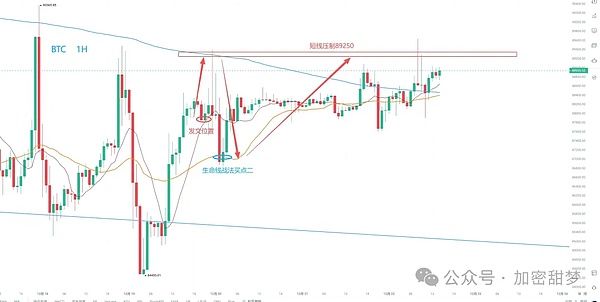
Current price: $89,240, still in a wide consolidation range. The $89.5K-$90K range is currently seen as the top resistance level (for shorting). A failed breakout will lead to further decline; a bullish move requires a complete breakout above this range. Short-term trading should focus around these support and resistance levels.

The current upper volatility band is at $90,500, and the lower band is at $87,900. Corresponding short-term resistance is at $90,777–$92,410 (avoid shorting), and short-term support is at $85,710–$82,569.

Secondary resistance is at $93,668–$95,240 (enter on pullback after a breakout with volume; if only reached, enter on pullback to short-term resistance). Secondary support is at $83,540–$82,650.

Outside the range: Upwards, the resistance around the $100,000 mark ±$2,000 remains, referenced at $98,110–$101,116. Downwards, support at $79,050–$78,000 is effective, as is support at $75,750–$74,635.
ETH

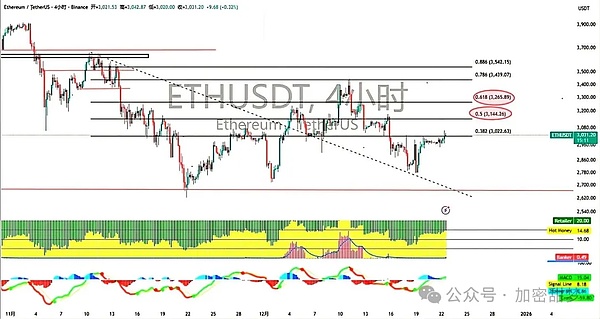
ETH has finally broken above the $3,000 level after two days of consolidation. Those holding long positions can set breakeven stop-losses or take partial profits. The next targets are the $3,144 and $3,269 levels.

Today, the U.S. stock market will open with a slight downward correction before continuing to rise. Those without long positions can wait for a pullback to around $2,980–$2,950.
SOL

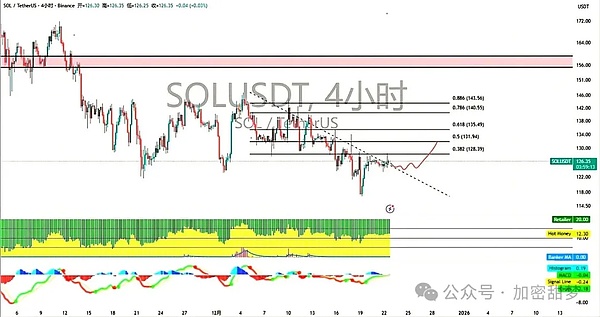
SOL has seen less than a 3% increase over the past three days... quite disappointing. The on-chain profitability is also poor, with major funds only recognizing BTC and ETH. After a rebound this week, it is likely to continue declining to new lows.

The biggest resistance this week is at $134, which is the highest point of the rebound from $116. Shorting near $133.85 offers the best risk-reward ratio for short-term trades. The secondary shorting point is around $131.5.
LIGHT

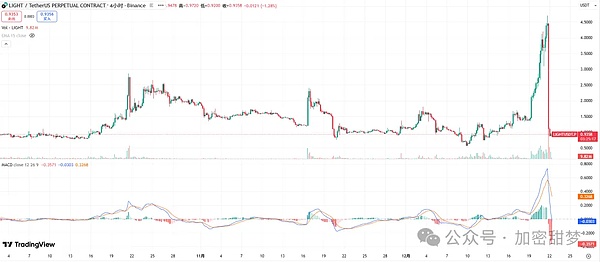
LIGHT suddenly crashed early this morning, leaving bulls with almost no time to react. For small-cap coins, this is not unexpected but a common occurrence. To be blunt: most people won’t make money on such coins. The cycles are extremely short, the pace is extremely fast, and the outcome is often either sideways distribution or a path to zero.

Currently, the overall position of altcoins is not stable. Don’t rush to go all-in, and don’t be swayed by a few big green candles. At this stage, I’d rather keep coins like $XPIN, $NIGHT, and $BEAT in the watchlist. Don’t rush or chase. Wait for the structure to clarify and signals to emerge before considering action. The market is not short of opportunities; what’s lacking are those who can stay steady when emotions are hottest.
MERL

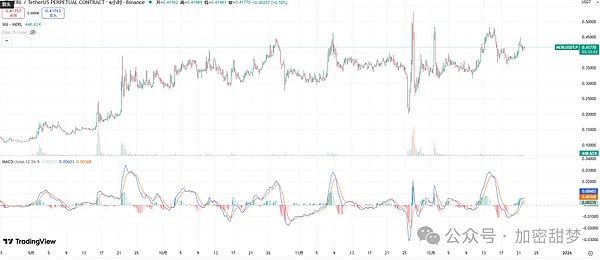
MERL has touched around $0.50 three times recently, each time pulling back sharply after a brief rise. The selling pressure is heavy, showing typical divergence between volume and price. The unlock volume in December is too concentrated: the 12th, 15th, 16th, and 19th alone add 70 million tokens directly into circulation. With such solid and certain selling pressure and no substantial buying support, the price is likely to decline slowly initially. Once expectations build, it could accelerate downward.

I lean toward shorting on rallies. My short-term target is around the $0.30 support area, with a stop-loss set above $0.52. Before the unlock period, I’d rather stay short than try to withstand this pressure.
PIPPIN

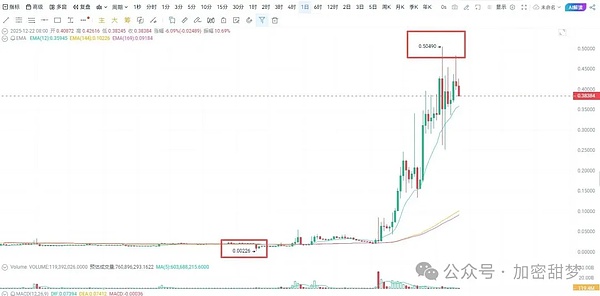
PIPPIN has surged over 200x, with two daily chart peaks followed by pullback. This coin has likely topped out. It’s a shame I missed it during yesterday’s second peak.
If you find our content helpful, please share our public account with your friends! Welcome to follow and stay updated with the latest crypto news! After every sharp decline comes vast opportunities. If you’re unsure about future market strategies, follow Tianmeng. Contact: RFGH8689


Trending Cryptos

Related Questions

QWhat is the current price of BTC and what are the key resistance and support levels mentioned in the analysis?

AThe current price of BTC is 89,240. The key resistance levels are 89.5K-90K (top of the range), 90,500 (upper volatility band), and 100,000 ± 2,000. The key support levels are 87,900 (lower volatility band), 85,710-82,569 (short-term support), and 79,050-78,000.

QWhat is the trading advice for ETH after it broke above $3000 according to the article?

AFor ETH, which have broken above $3000, the advice is to set a break-even stop-loss or take partial profits. The next targets are $3144 and $3269. For those without a long position, wait for a pullback to around $2980-$2950 to enter.

QWhat is the outlook for SOL and what is the recommended trading strategy?

AThe outlook for SOL is bearish. The analysis states it has poor on-chain benefits and that major funds are only focused on BTC and ETH. It is expected to hit new lows after a rebound this week. The recommended strategy is to short near the major resistance at $134 (or near $133.85) for the best risk-reward ratio, with a secondary shorting point around $131.5.

QWhy does the analysis recommend being cautious with altcoins like LIGHT and what alternative coins are mentioned for observation?

AThe analysis recommends caution with altcoins like LIGHT because they are highly volatile with extremely fast cycles, often ending in sideways distribution or trending to zero. Instead, the author prefers to observe coins like $XPIN, $NIGHT, and $BEAT, waiting for their structures to become clear and for signals to appear before considering any action.

QWhat is the reasoning behind the bearish view on MERL and what is the suggested trade?

AThe bearish view on MERL is due to heavy selling pressure and a typical volume-price divergence. It has failed three times near $0.50, and there is a concentrated unlock of 70 million tokens in December, creating significant and certain selling pressure with little buying support. The suggested trade is to short on rallies, with a short-term target around $0.30 and a stop-loss placed above $0.52.

Related Reads

GPT-5.6 Countdown: Abandon the Illusion of a Single API, Computational Iteration Can't Outpace a Single Page of Compliance

In mid-June, three seemingly independent industry events—the compliance-driven throttling of Fable 5, the open-sourcing of GLM-5.2, and the leaked release timeline for GPT-5.6—are pushing the global AI industry toward a watershed moment. These shifts signal a fundamental restructuring of the industry's underlying logic. First, **"usability" has substantially overtaken "advanced capabilities"** as the primary weight, pushing the global large language model (LLM) supply chain into a "dual-track" phase of controlled closed-source and local open-source coexistence. Second, **the competitive moats of closed-source giants are shifting**. Their technical focus is moving from "language intelligence" toward "spatial intelligence (world models)"—a domain heavily reliant on computing power. Third, faced with常态化 transnational compliance risks, **a "model-agnostic" decoupled design has become a survival necessity for application-layer developers to maintain business continuity.** The article details how Anthropic's Fable 5, despite its advanced engineering feats, was restricted for non-U.S. citizens within 72 hours of launch, highlighting how geopolitical compliance can instantly limit even the most advanced models. In response, the open-source camp, exemplified by Zhipu AI's MIT-licensed GLM-5.2, is gaining market share by offering stable performance improvements and significant cost advantages (up to 70% savings for enterprises), while achieving full adaptation with domestic semiconductor platforms. Meanwhile, closed-source leaders like OpenAI are pivoting. The anticipated GPT-5.6 reportedly shifts focus from language to spatial intelligence and world models, aiming to rebuild a generational gap in areas like 3D understanding, simulation, and industrial design that demand immense compute. The core conclusion is that the LLM supply chain's logic has changed. Enterprises must now evaluate infrastructure based on a composite of technical performance and policy compliance. For developers, complete reliance on a single closed-source API poses unacceptable risk. Implementing a truly model-agnostic architecture—enabling swift switches to compliant, locally deployable open-source alternatives—is no longer just good practice but a fundamental baseline for business continuity.

marsbit2h ago

GPT-5.6 Countdown: Abandon the Illusion of a Single API, Computational Iteration Can't Outpace a Single Page of Compliance

marsbit2h ago

Is the 'Token Subsidy War' Among AI Giants Almost Over?

The article discusses the ongoing "token subsidy war" among AI giants like OpenAI and Anthropic, questioning whether it's nearing its end. It reveals that current AI subscription prices are heavily subsidized, with some plans offering tokens at up to 70 times the actual cost to attract and retain heavy users, especially developers and enterprises. This strategy mirrors past internet-era subsidy battles, but with a key difference: AI tokens lack "lock-in" effects. Unlike ride-hailing or food delivery apps, users can easily switch between AI providers as APIs become standardized, making it difficult for companies to raise prices post-subsidy. The piece highlights a structural asymmetry in the competition. Giants like Google, with massive advertising revenue, can afford to subsidize tokens indefinitely, akin to using "tokens as a weapon." In contrast, venture-backed companies like OpenAI and Anthropic face pressure to become profitable, especially as they approach IPO. The article cites Google Ventures founder Bill Maris, who suggests Google could slash token prices by 80%, putting immense pressure on competitors. Two potential endgames are presented: the "internet service" model (subsidize, monopolize, then raise prices) and the "utility" model (tokens become a standardized, low-margin commodity like electricity). Given the low switching costs, the latter seems more likely. The competition may not have a single winner but could instead accelerate AI's evolution into a foundational, infrastructure-level technology, akin to a public utility. For now, users continue to benefit from heavily subsidized token costs.

marsbit2h ago

Is the 'Token Subsidy War' Among AI Giants Almost Over?

marsbit2h ago

Beyond the Stadium: The Profitable Games Surrounding the World Cup

"Beyond the Pitch: The Profit Game Around the World Cup" The FIFA World Cup transcends being a sporting spectacle, evolving into a massive global arena for speculation and profit-seeking. The 2026 tournament has amplified this dynamic, creating a multi-layered ecosystem of financial opportunism alongside the football. **Prediction markets** have surged into the mainstream. Platforms like Polymarket and Kalshi saw trading volumes for World Cup contracts soar, attracting new users with their financial trading model and high-profile, chain-based wealth stories that overshadow traditional sports betting in terms of growth and narrative. However, **traditional sportsbooks** remain the dominant force, leveraging established user habits, legal markets, and comprehensive product offerings to handle the vast majority of speculative wagers, with projections suggesting record-breaking betting volumes. Capital markets also react. **"Concept stocks"** in countries like South Korea and Japan experience volatile price swings based on team performance and anticipated fan spending on items like chicken, beer, and viewing parties, effectively becoming a stock market reflecting fan sentiment. The **ticket resale market** has become a sophisticated arena for arbitrage. Prices fluctuate wildly based on team draws and star power, with sellers sometimes listing tickets they don't yet own in a practice akin to short-selling, while FIFA's own "Right to Buy" tokens add another layer of speculative trading. **Collectibles and merchandise** offer another avenue. Panini sticker albums, with their inherent scarcity and nostalgic value, can become high-value collectibles. Limited-edition or locally themed jerseys command significant premiums on secondary markets, and even counterfeit vendors profit from fans' desire for affordable match-day identity. The **cryptocurrency** space has seen a frenzy of speculative, unauthorized World Cup-themed meme coins on chains like Solana. These tokens, often exploiting team names and player imagery, experience extreme pump-and-dump cycles, creating stories of massive gains for a few early entrants and steep losses for many others. Finally, an entire industry thrives on **providing information and tools** to other speculators. Developers create platforms like SeatSidekick to track ticket inventory and prices, while paid Telegram groups and subscriptions sell betting tips and predictions, monetizing the widespread desire for an informational edge. In essence, the World Cup has become a compressed, global laboratory for speculation. While the games determine champions on the field, a parallel, complex network of financial transactions—spanning prediction contracts, bets, stocks, tickets, collectibles, crypto, and information services—settles its own scores in the global market.

marsbit3h ago

Beyond the Stadium: The Profitable Games Surrounding the World Cup

marsbit3h ago

Trading

Spot
Futures

Hot Articles

What is $BITCOIN

DIGITAL GOLD ($BITCOIN): A Comprehensive Analysis Introduction to DIGITAL GOLD ($BITCOIN) DIGITAL GOLD ($BITCOIN) is a blockchain-based project operating on the Solana network, which aims to combine the characteristics of traditional precious metals with the innovation of decentralized technologies. While it shares a name with Bitcoin, often referred to as “digital gold” due to its perception as a store of value, DIGITAL GOLD is a separate token designed to create a unique ecosystem within the Web3 landscape. Its goal is to position itself as a viable alternative digital asset, although specifics regarding its applications and functionalities are still developing. What is DIGITAL GOLD ($BITCOIN)? DIGITAL GOLD ($BITCOIN) is a cryptocurrency token explicitly designed for use on the Solana blockchain. In contrast to Bitcoin, which provides a widely recognized value storage role, this token appears to focus on broader applications and characteristics. Notable aspects include: Blockchain Infrastructure: The token is built on the Solana blockchain, known for its capacity to handle high-speed and low-cost transactions. Supply Dynamics: DIGITAL GOLD has a maximum supply capped at 100 quadrillion tokens (100P $BITCOIN), although details regarding its circulating supply are currently undisclosed. Utility: While precise functionalities are not explicitly outlined, there are indications that the token could be utilized for various applications, potentially involving decentralized applications (dApps) or asset tokenization strategies. Who is the Creator of DIGITAL GOLD ($BITCOIN)? At present, the identity of the creators and development team behind DIGITAL GOLD ($BITCOIN) remains unknown. This situation is typical among many innovative projects within the blockchain space, particularly those aligning with decentralized finance and meme coin phenomena. While such anonymity may foster a community-driven culture, it intensifies concerns about governance and accountability. Who are the Investors of DIGITAL GOLD ($BITCOIN)? The available information indicates that DIGITAL GOLD ($BITCOIN) does not have any known institutional backers or prominent venture capital investments. The project seems to operate on a peer-to-peer model focused on community support and adoption rather than traditional funding routes. Its activity and liquidity are primarily situated on decentralized exchanges (DEXs), such as PumpSwap, rather than established centralized trading platforms, further highlighting its grassroots approach. How DIGITAL GOLD ($BITCOIN) Works The operational mechanics of DIGITAL GOLD ($BITCOIN) can be elaborated on based on its blockchain design and network attributes: Consensus Mechanism: By leveraging Solana’s unique proof-of-history (PoH) combined with a proof-of-stake (PoS) model, the project ensures efficient transaction validation contributing to the network's high performance. Tokenomics: While specific deflationary mechanisms have not been extensively detailed, the vast maximum token supply implies that it may cater to microtransactions or niche use cases that are still to be defined. Interoperability: There exists the potential for integration with Solana’s broader ecosystem, including various decentralized finance (DeFi) platforms. However, the details regarding specific integrations remain unspecified. Timeline of Key Events Here is a timeline that highlights significant milestones concerning DIGITAL GOLD ($BITCOIN): 2023: The initial deployment of the token occurs on the Solana blockchain, marked by its contract address. 2024: DIGITAL GOLD gains visibility as it becomes available for trading on decentralized exchanges like PumpSwap, allowing users to trade it against SOL. 2025: The project witnesses sporadic trading activity and potential interest in community-led engagements, although no noteworthy partnerships or technical advancements have been documented as of yet. Critical Analysis Strengths Scalability: The underlying Solana infrastructure supports high transaction volumes, which could enhance the utility of $BITCOIN in various transaction scenarios. Accessibility: The potential low trading price per token could attract retail investors, facilitating wider participation due to fractional ownership opportunities. Risks Lack of Transparency: The absence of publicly known backers, developers, or an audit process may yield skepticism regarding the project's sustainability and trustworthiness. Market Volatility: The trading activity is heavily reliant on speculative behavior, which can result in significant price volatility and uncertainty for investors. Conclusion DIGITAL GOLD ($BITCOIN) emerges as an intriguing yet ambiguous project within the rapidly evolving Solana ecosystem. While it attempts to leverage the “digital gold” narrative, its departure from Bitcoin's established role as a store of value underscores the need for a clearer differentiation of its intended utility and governance structure. Future acceptance and adoption will likely depend on addressing the current opacity and defining its operational and economic strategies more explicitly. Note: This report encompasses synthesised information available as of October 2023, and developments may have transpired beyond the research period.

411 Total ViewsPublished 2025.05.13Updated 2025.05.13

What is $BITCOIN

Discussions

Welcome to the HTX Community. Here, you can stay informed about the latest platform developments and gain access to professional market insights. Users' opinions on the price of BTC (BTC) are presented below.

活动图片