Bankless | Hyperliquid 2025 : La consécration, mais saura-t-il se maintenir en 2026 ?

比推Published on 2025-12-12Last updated on 2025-12-12

Abstract

Hyperliquid a dominé 2025 en devenant la quatrième plus grande plateforme de revenus dans la crypto, avec plus de 650 millions de dollars de revenus et 70% des volumes de trading de perpétuels à son apogée. Son succès est dû à son agilité pour lister rapidement de nouveaux jetons comme TRUMP, au lancement réussi de HyperEVM, et à des intégrations majeures via des « builder codes » avec MetaMask et Phantom. La bataille pour son stablecoin natif USDH, remportée par Native Markets, a marqué un tournant. Cependant, face à la concurrence croissante d'Aster et Lighter, sa part de marché est tombée à 17,1%. Un événement d'ADL en octobre et le déverrouillage des jetons de l'équipe ont ajouté des pressions. En 2026, Hyperliquid devra prouver que son modèle décentralisé et axé sur l'écosystème peut résister à une concurrence de plus en plus intense.

Auteur : David Christopher

Titre original : Hyperliquid & The Year Perps Caught Fire

Compilation et édition : BitpushNews


La fièvre des échanges de contrats perpétuels a marqué l'année 2025, et Hyperliquid en a été le fer de lance. Alors que la concurrence s'intensifie, pourra-t-il conserver sa position dominante ?
Lorsque l'on revient sur la croissance du secteur crypto en 2025, Hyperliquid est un acteur incontournable.

L'échange a clôturé l'année 2024 par un airdrop et des performances de prix épiques, attirant à nouveau l'attention de nombreux utilisateurs de Crypto Twitter sur le produit.

Et à la fin de l'année 2025, il s'est complètement transformé — devenant une plateforme qui défie les conventions, se classant quatrième en termes de revenus dans l'ensemble de l'écosystème crypto avec des revenus totaux dépassant 650 millions de dollars, et dominant à un moment donné 70 % du volume des contrats perpétuels.
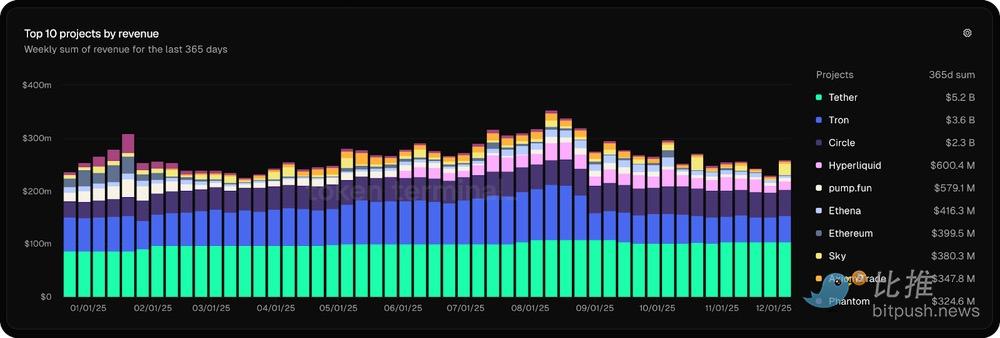
(Source des données : Token Terminal)

Si vous n'avez pas suivi chaque étape de l'évolution d'Hyperliquid, ce succès fracassant peut sembler être apparu de nulle part. Mais sa voie vers la conquête est le fruit d'une conception minutieuse, de stratégies de croissance non conventionnelles et d'une reconnaissance externe amplement méritée.

Voici un retour complet sur le parcours d'Hyperliquid en 2025 (et pourquoi il sera vraiment mis à l'épreuve en 2026) :

Premier trimestre 2025 : L'avantage natif de la crypto

L'année de croissance rapide d'Hyperliquid a commencé par un rappel saisissant de ce que signifie « être vraiment à l'écoute du secteur ».

Lorsque le jeton TRUMP a été lancé en janvier, Hyperliquid a presque immédiatement listé des contrats perpétuels, devançant les autres bourses et entamant une série de succès en tant que « lieu de prédilection pour le trading de jetons pré-lancement ».

Bien sûr, sa capacité d'action rapide était en partie due à l'absence des « garde-fous d'entreprise » qui protègent les utilisateurs et les sociétés sur les grandes plateformes d'échange.

Mais un facteur important résidait dans sa ferme « connaissance des rouages internes » — son équipe étant étroitement imbriquée avec la dynamique on-chain, capable de repérer les opportunités et de reconnaître l'avantage à être le premier à lister ces jetons. Cela a consolidé la réputation d'Hyperliquid en tant que lieu de prédilection pour trader de nouveaux actifs avant que les géants établis ne réagissent.

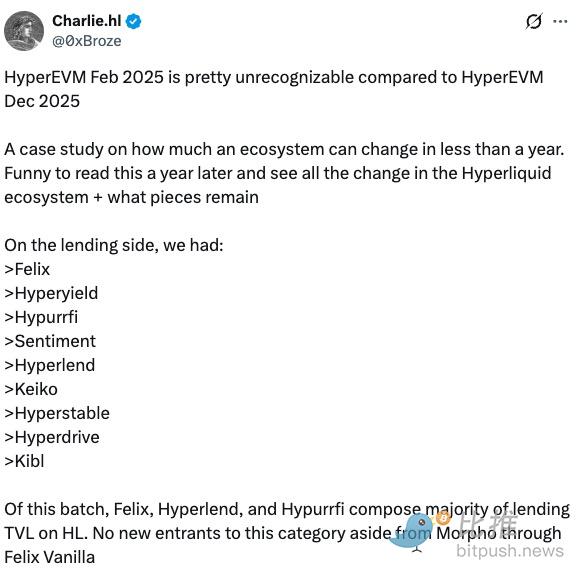
En février, HyperEVM a été lancé — une couche de contrats intelligents universelle construite sur HyperCore (le moteur de bourse d'Hyperliquid). Bien qu'il ait mis un certain temps à trouver ses marques, son succès n'a reposé sur aucun programme d'incitation descendant. Cela signifiait que lorsqu'il a pris son envol au deuxième trimestre, il avait déjà constitué une base d'utilisateurs centrale qui restait non pas pour « farmer » des récompenses, mais parce qu'ils croyaient en la vision de la chaîne et voulaient exploiter ses fonctionnalités uniques (comme l'interopérabilité avec HyperCore), plutôt que de simplement extraire des incitations.
Deuxième trimestre 2025 : L'explosion

L'attention du marché est arrivée plus vite que la plupart ne l'avaient prévu. Outre une multiplication par près de 4 du prix du jeton HYPE depuis les bas de avril, en mai, Hyperliquid capturait 70 % de tout le volume de trading de contrats perpétuels on-chain — un chiffre stupéfiant pour une plateforme sans soutien de VC et sans incitation token.

Les sommets du jeton HYPE, l'explosion de l'activité sur HyperCore et le développement de l'écosystème HyperEVM ont tous contribué à diffuser l'histoire d'Hyperliquid.

Alors que le marché reprenait vie, l'expérience utilisateur (UX) fluide d'Hyperliquid et sa liquidité profonde ont capturé un flux d'ordres massif, le volume total des transactions grimpant à 1,5 billion de dollars.

Comme mentionné précédemment, HyperEVM a également pris son envol simultanément, sa valeur totale locked (TVL) passant de 350 millions de dollars en avril à 1,8 milliard de dollars à la mi-juin, grâce au lancement de projets (comme Kinetiq, Felix et Liminal) et à l'exploration par les utilisateurs de nouvelles opportunités de gain — le tout brûlant continuellement des jetons HYPE en arrière-plan.

Dans cette croissance rapide, Hyperliquid semblait être partout.

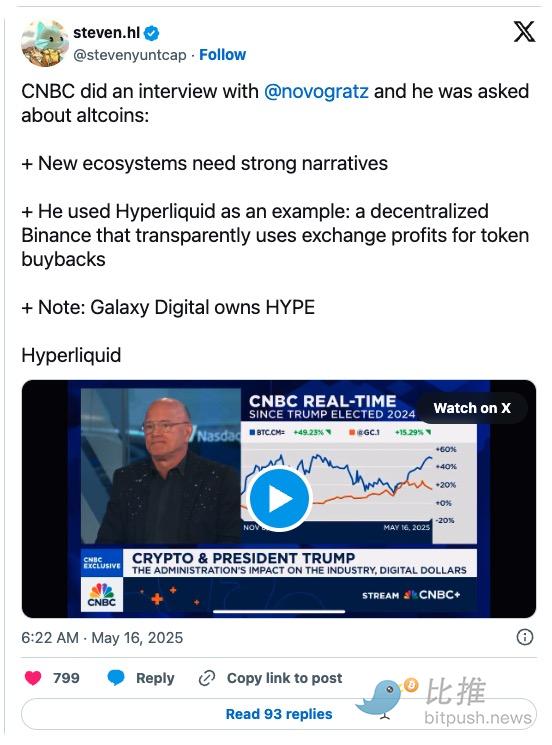
Il est apparu à la télévision nationale, a été couvert par Bloomberg, est devenu un point central des discussions politiques de la CFTC. Cet échange était devenu impossible à ignorer.
Troisième trimestre 2025 : Apogée de l'élan et début de la fragmentation

Le troisième trimestre a commencé avec un signal indiquant que l'infrastructure d'Hyperliquid devenait indispensable en dehors de son propre écosystème.

Le portefeuille Phantom a contourné les plateformes de contrats perpétuels basées sur Solana, choisissant plutôt d'intégrer Hyperliquid via des codes de construction (builder codes). Les builder codes sont un mécanisme d'Hyperliquid qui permet à des plateformes externes de gagner des frais en routant les transactions vers HyperCore.

Rabby a suivi. Puis MetaMask.

Une multitude d'applications de trading mobiles sont passées par les builder codes.

Au total, grâce à ces intégrations, les « partenaires » ont gagné près de 50 millions de dollars de frais, en routant 158 milliards de dollars de volume de transactions.
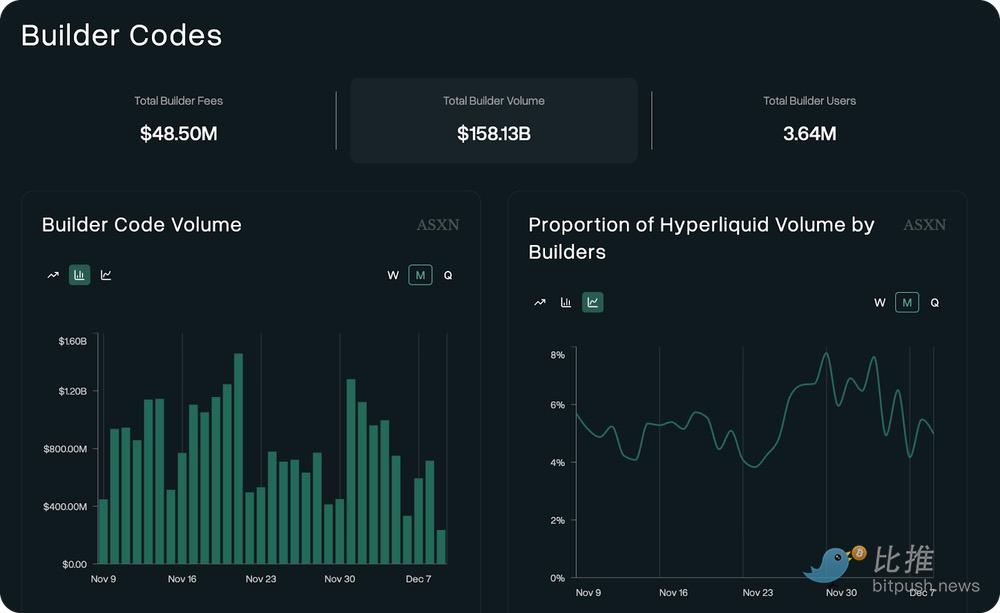
(Source des données : Hyperscreener)

Ensuite, en septembre, la bataille d'enchères pour USDH a éclaté — révélant à quel point Hyperliquid était devenu précieux et reconnu.

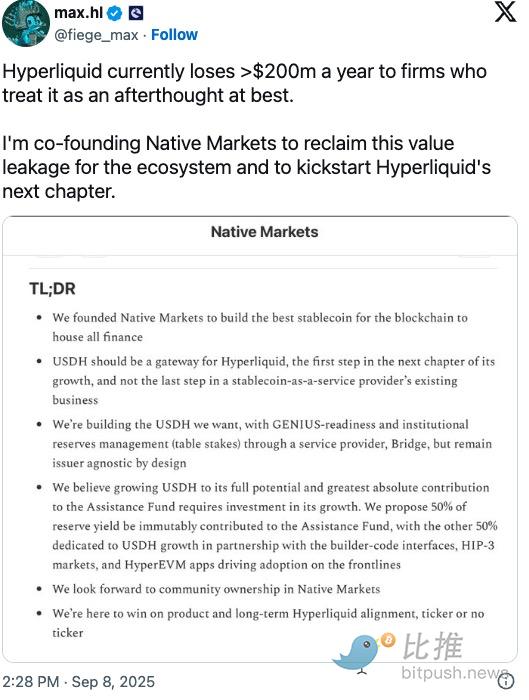
Le problème était simple : Hyperliquid détenait environ 8 % de l'offre de Circle USDC dans son pont inter-chaînes, divulguant ainsi environ 100 millions de dollars de revenus annuels à un concurrent direct (Coinbase), sans que son propre écosystème ne puisse récupérer ces bénéfices. L'émission d'un stablecoin natif pourrait résoudre ce problème, permettant potentiellement de rediriger 200 millions de dollars de revenus annuels vers Hyperliquid.

Une proposition pour lancer un stablecoin a été émise, et de lourds concurrents ont participé aux enchères.

Ethena a offert un engagement de croissance de 75 millions de dollars et une collaboration institutionnelle. Paxos a mis sur la table des intégrations avec PayPal et Venmo, faisant même que PayPal mentionne Hyperliquid sur Twitter.

Mais finalement, Native Markets a remporté l'enchère — une équipe dirigée par le contributeur HYPE très respecté Max Fiege, l'ancien COO de Uniswap Labs MC Lader, et le chercheur de Paradigm Anish Agnihotri.

Pourquoi une équipe plus petite et moins capitalisée a-t-elle battu ces géants ? Parce qu'elle était plus appréciée, plus alignée avec l'esprit d'Hyperliquid : auto-financée, partageant les mêmes objectifs, et prête à construire quelque chose de vraiment organique — tout comme Hyperliquid lui-même s'était construit.
L'effet domino a dépassé Hyperliquid lui-même. MegaETH a peu après annoncé ses plans pour un stablecoin natif. Sui a emboîté le pas en novembre.

Cependant, USDH a également marqué le pic du jeton HYPE à la mi-septembre — et le moment où la concurrence a commencé à se manifester. Aster (un échange soutenu par CZ et basé sur Binance) et Lighter (une plateforme de contrats perpétuels sur L2 Ethereum) ont tous deux lancé avec des campagnes d'airdrop agressives. Les volumes ont continué à se fragmenter, la part de marché d'Hyperliquid s'est divisée, ne représentant plus que 17,1 % au moment de la rédaction.
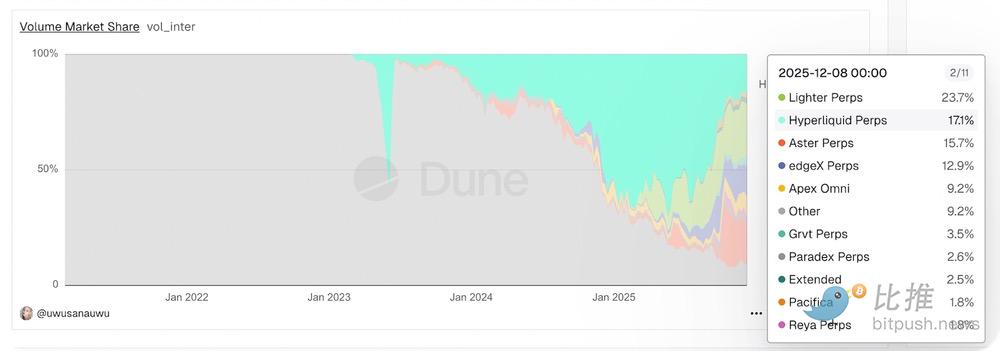
(Source des données : @uwusanauwu | Dune)

Quatrième trimestre 2025 : Maturité et douleurs de croissance

En octobre, le très attendu HIP-3 est lancé, ouvrant le listing sans permission sur HyperCore, favorisant l'expansion et la décentralisation de la bourse.

Toute personne stakant 500 000 HYPE peut désormais déployer des marchés personnalisés, tels que :

  • Des contrats perpétuels sur actions de Trade.xyz par Unit et Felix Protocol

  • Des marchés de contrats perpétuels utilisant des collatéraux générateurs de rendement (comme sUSDE) via des protocoles comme Ethena

  • Des marchés offrant une exposition synthétique à des sociétés non cotées comme SpaceX ou Anthropic via des plateformes comme Ventuals

Cependant, malgré le lancement du HIP-3, le prix du jeton HYPE a chuté de près de 50 % depuis son pic de septembre.

Pourquoi ? Outre les conditions du marché et la concurrence, deux événements se sont particulièrement distingués.

Premièrement, Hyperliquid a subi son premier événement ADL (déleveraging automatique) depuis plus de deux ans ce trimestre. Lors de l'effondrement du marché du 10 octobre, des positions excessivement leveragées ont épuisé leurs marges plus rapidement que la capacité d'absorption du moteur de liquidation et du HLP (Fournisseur de Liquidité Hyperliquid). Le protocole a déclenché plus de 40 déleverageings automatiques en 12 minutes, réduisant de force les positions les plus rentables pour rééquilibrer le livre. Bien que certains aient argué que les positions affectées étaient toujours « clôturées dans le vert », d'autres ont soutenu que le mécanisme avait liquidé plus que nécessaire pour rembourser la mauvaise dette. Oui, le système est resté solvable, sans intervention de fonds externes, mais Hyperliquid, comme l'ensemble du marché, pourrait avoir besoin de temps pour se remettre de cet événement.

Deuxièmement, en novembre, le déverrouillage des jetons de l'équipe a commencé. Bien que le total déverrouillé ait été inférieur aux attentes, cet échelonnement de vesting a probablement également contribué à la sous-performance de HYPE. Le volume des ventes était faible — seulement 23 % sont allés sur le marché de gré à gré, tandis que 40 % ont été restakés — mais le rythme des futurs déverrouillages reste incertain. Mon interprétation est que l'équipe centrale est peut-être encore en train de déterminer le calendrier pour équilibrer l'équité envers les contributeurs et la santé de l'écosystème. Mais pour un protocole connu pour sa transparence et son « honnêteté », ce manque de clarté pourrait susciter une certaine inquiétude sur le marché.

Le premier déverrouillage d'Hyperliquid a libéré 1,75 million de HYPE après la période de blocage, mais la vitesse des futurs déverrouillages de l'équipe n'a pas encore été entièrement divulguée.

Le champ d'épreuves des perpétuels

Malgré le refroidissement du marché et de l'activité de trading, il ne faut pas négliger, en essayant de comprendre les raisons de la sous-performance de Hype, le fait que l'écosystème des perpétuels a évolué en profondeur parallèlement au développement d'Hyperliquid lui-même.

Lighter et Aster ne sont que deux exemples de la concurrence on-chain. Bien que leurs volumes de trading puissent être gonflés par du farming d'airdrop, ils offrent de réelles alternatives.

Dans le domaine off-chain, l'offre de contrats perpétuels de Coinbase rivalisera bientôt avec les initiatives de Robinhood dans cet espace. Alors que les contrats perpétuels continuent de se populariser, davantage de concurrents émergeront.

En d'autres termes, Hyperliquid entre dans sa phase d'épreuve, qui se poursuivra en 2026.

La question n'est pas de savoir s'il a réellement réalisé quelque chose de remarquable en 2025 — il l'a fait. La question est de savoir si, alors que l'espace devient encombré, cette bourse pourra prouver que sa voie de croissance via des intégrations comme les builder codes et des modèles de décentralisation comme le HIP-3 conserve toujours un avantage.

Ce qui les a amenés jusqu'ici, c'est d'avoir construit un meilleur produit et un meilleur écosystème, sans prendre de raccourcis. Ce qui leur permettra de rester en tête, ce sera de le refaire une fois de plus.


Twitter : https://twitter.com/BitpushNewsCN

Groupe de discussion Telegram de BiTui : https://t.me/BitPushCommunity

Abonnement Telegram de BiTui : https://t.me/bitpush

Lien original : https://www.bitpush.news/articles/7595102

Related Questions

QQuel a été le facteur clé du succès fulgurant de Hyperliquid en 2025 selon l'article ?

ALa stratégie de croissance non conventionnelle de Hyperliquid, comprenant son agilité à lister rapidement de nouveaux jetons comme TRUMP, le lancement de HyperEVM, et son intégration profonde dans la dynamique on-chain, sans recourir à des incitations token ou à un soutien VC.

QQuel mécanisme a permis à des portefeuilles comme Phantom et MetaMask d'intégrer Hyperliquid et de gagner des frais ?

ALe mécanisme des 'codes builder' (codes de construction), qui permet à des plateformes externes de router les transactions vers HyperCore et de gagner une partie des frais.

QQuel événement a marqué le début d'une baisse de la part de marché de Hyperliquid en termes de volume de transactions perpétuelles ?

AL'arrivée de nouveaux concurrents comme Aster (soutenu par CZ) et Lighter, qui ont lancé des campagnes airdrop agressives, fragmentant le marché et réduisant la part de Hyperliquid à environ 17,1%.

QQuel fut un défi important auquel Hyperliquid a dû faire face au quatrième trimestre de 2025 ?

AUn événement d'ADL (Auto-Deleveraging) majeur le 10 octobre, où des positions sur-leveragées ont déclenché plus de 40 ADL en 12 minutes, forçant la réduction des positions les plus profitables pour rééquilibrer les livres.

QQuel est le principal défi identifié pour Hyperliquid en 2026 ?

AHyperliquid devra prouver que son modèle de croissance, basé sur des intégrations via les codes builder et une décentralisation accrue (comme avec HIP-3), peut maintenir son avantage dans un paysage de plus en plus concurrentiel pour les contrats perpétuels.

Related Reads

Wintermute Market Weekly: Iran War Ends, Inflation Meets Expectations, BTC Rebounds to Lower 60ks But Don’t Rush to Buy the Dip

**Wintermute Market Weekly: BTC Rebounds to $60K Lows, But Caution Advised** This week saw a broad market rebound, primarily driven by two converging factors: a US CPI inflation reading that met expectations (4.2% YoY) and former President Trump's announcement of a deal to end the Iran conflict. The latter triggered a sharp drop in oil prices, reducing geopolitical risk premiums and easing inflation fears. Consequently, risk assets like equities and cryptocurrencies rallied, with Bitcoin recovering from lows around $60,000 to close the week up 1.9%, while altcoins gained 3.1%. Despite the price bounce, the underlying liquidity picture for crypto remains weak. Key funding channels—stablecoin flows, ETF inflows, and Digital Asset Treasury (DAT) activity—show no signs of structural improvement. ETF outflows recently hit a record streak, and DAT assets have declined significantly. The rally from $60K to $83K earlier is now viewed as a bear-market rally that has failed. The current environment is characterized by low directional conviction and choppy, range-bound trading, likely persisting into summer. The report advises caution against aggressively buying the dip. While the $60K area offers attractive long-term risk/reward, a sustained bull run requires a visible turnaround in capital inflows, which hasn't materialized. The upcoming FOMC meeting and Powell's commentary, alongside the formal Iran deal signing, are noted as near-term catalysts. The core takeaway is to watch fund flows rather than price action and avoid being whipsawed by volatility before clear signs of institutional or retail capital returning emerge.

marsbit9m ago

Wintermute Market Weekly: Iran War Ends, Inflation Meets Expectations, BTC Rebounds to Lower 60ks But Don’t Rush to Buy the Dip

marsbit9m ago

Cursor, Why Boarded Musk's Starship?

SpaceX announced its acquisition of AI programming startup Cursor's parent company, Anysphere, for $60 billion in an all-stock deal, just days after its record-breaking IPO. The move sent SpaceX's stock soaring, briefly making it the most valuable U.S. company. Cursor, founded in 2022 by MIT graduate Michael Truell and his classmates, is a popular AI coding assistant that allows developers to switch between models from OpenAI, Anthropic, and others. It saw explosive revenue growth, reaching a $4 billion annualized run rate in early 2026. However, its market share was eroded by the launch of competitor Claude Code from its key AI supplier, Anthropic. This dependence prompted Cursor to develop its own AI model, Composer, in early 2026. To scale Composer, Cursor needed immense computing power. In April 2026, it struck a deal with SpaceX, granting the latter an option to acquire it post-IPO. SpaceX exercised this option, offering Cursor access to its Colossus supercomputer, powered by hundreds of thousands of top-tier Nvidia AI chips. For SpaceX, the acquisition is a strategic move to bolster its AI capabilities, particularly for its xAI division, and advance its broader ambition of building orbital, solar-powered data centers. While the deal surprised some employees and investors given Truell's earlier stance on independence, it represents a high-stakes partnership. SpaceX CEO Elon Musk has projected the company could reach $1 trillion in revenue by 2030. For Truell, joining forces with SpaceX is a monumental gamble on an unprecedented scale in the race for AI dominance.

链捕手11m ago

Cursor, Why Boarded Musk's Starship?

链捕手11m ago

The More It Rises, the More Dangerous? The Systemic Risks Behind SpaceX's Soaring Valuation

Summary: The article raises concerns about the systemic risks posed by SpaceX's skyrocketing valuation, arguing that modern market mechanics, rather than fundamentals, are driving its price discovery. Following SpaceX's market capitalization surpassing $3 trillion in after-hours trading, the author contends that the market is no longer functioning properly. The core issue is not SpaceX's business prospects but the unhealthy market structure surrounding it. With limited float and the imminent launch of options trading, the stage is set for a potential "gamma squeeze"—a feedback loop where market makers hedging call options are forced to buy shares, pushing the price higher and attracting more speculative momentum traders. This mechanism, seen previously with Tesla and meme stocks, can decouple valuation from financial reality. The danger escalates as extreme valuations force passive funds, ETFs, pensions, and major indices to hold the stock. If SpaceX grows large enough—hypothetically reaching $5 or even $10 trillion—its performance would increasingly dictate broader market indices, embedding systemic risk. The author warns that when price appreciation itself becomes the primary bullish thesis, the market transforms from a capital allocation mechanism into a self-reinforcing speculative machine, endangering the retirement savings of ordinary investors tied to passive strategies. The piece questions whether such a system can still perform its fundamental role of price discovery.

marsbit16m ago

The More It Rises, the More Dangerous? The Systemic Risks Behind SpaceX's Soaring Valuation

marsbit16m ago

OpenAI's Hyperliquid Pre-IPO Pricing Venture: Why Did It Last Only Half a Year?

The article discusses the rise and fall of Pre-IPO pricing markets on the Hyperliquid blockchain. Trade.xyz, an anonymous team, successfully built the largest pre-market for SpaceX (SPCX) by launching a contract with a clear anchor: the eventual Nasdaq listing price. This provided inherent price stability and validation. In contrast, Ventuals, a team backed by Paradigm, failed despite holding exclusive contracts for highly sought-after companies like OpenAI and Anthropic. Its key mistake was its pricing mechanism. For companies with no near-term IPO date, Ventuals' oracle relied partly on opaque private market transactions and, critically, partly on its own contract's moving average price. This created a self-referential feedback loop where prices were artificially propped up and detached from genuine supply and demand, leading to illiquid markets. Ventuals shut down after nine months, settling positions at final prices of $1,341.80 for OpenAI and $1,618.90 for Anthropic. Ironically, some employees and late-stage investors of these very companies reportedly used these flawed Ventuals prices for valuation reference, highlighting the acute demand for any price signal in illiquid private markets. The article concludes that while demand for pre-IPO trading is real and growing, with players like Coinbase now entering the space, the fundamental challenge remains: without a public listing to provide a definitive price anchor, these markets struggle to establish truly accurate and liquid pricing. The need for a transparent, self-correcting market is the critical lesson from Ventuals' failure.

marsbit42m ago

OpenAI's Hyperliquid Pre-IPO Pricing Venture: Why Did It Last Only Half a Year?

marsbit42m ago

Trading

Spot
Futures

Hot Articles

What is SONIC

Sonic: Pioneering the Future of Gaming in Web3 Introduction to Sonic In the ever-evolving landscape of Web3, the gaming industry stands out as one of the most dynamic and promising sectors. At the forefront of this revolution is Sonic, a project designed to amplify the gaming ecosystem on the Solana blockchain. Leveraging cutting-edge technology, Sonic aims to deliver an unparalleled gaming experience by efficiently processing millions of requests per second, ensuring that players enjoy seamless gameplay while maintaining low transaction costs. This article delves into the intricate details of Sonic, exploring its creators, funding sources, operational mechanics, and the timeline of significant events that have shaped its journey. What is Sonic? Sonic is an innovative layer-2 network that operates atop the Solana blockchain, specifically tailored to enhance the existing Solana gaming ecosystem. It accomplishes this through a customised, VM-agnostic game engine paired with a HyperGrid interpreter, facilitating sovereign game economies that roll up back to the Solana platform. The primary goals of Sonic include: Enhanced Gaming Experiences: Sonic is committed to offering lightning-fast on-chain gameplay, allowing players and developers to engage with games at previously unattainable speeds. Atomic Interoperability: This feature enables transactions to be executed within Sonic without the need to redeploy Solana programmes and accounts. This makes the process more efficient and directly benefits from Solana Layer1 services and liquidity. Seamless Deployment: Sonic allows developers to write for Ethereum Virtual Machine (EVM) based systems and execute them on Solana’s SVM infrastructure. This interoperability is crucial for attracting a broader range of dApps and decentralised applications to the platform. Support for Developers: By offering native composable gaming primitives and extensible data types - dining within the Entity-Component-System (ECS) framework - game creators can craft intricate business logic with ease. Overall, Sonic's unique approach not only caters to players but also provides an accessible and low-cost environment for developers to innovate and thrive. Creator of Sonic The information regarding the creator of Sonic is somewhat ambiguous. However, it is known that Sonic's SVM is owned by the company Mirror World. The absence of detailed information about the individuals behind Sonic reflects a common trend in several Web3 projects, where collective efforts and partnerships often overshadow individual contributions. Investors of Sonic Sonic has garnered considerable attention and support from various investors within the crypto and gaming sectors. Notably, the project raised an impressive $12 million during its Series A funding round. The round was led by BITKRAFT Ventures, with other notable investors including Galaxy, Okx Ventures, Interactive, Big Brain Holdings, and Mirana. This financial backing signifies the confidence that investment foundations have in Sonic’s potential to revolutionise the Web3 gaming landscape, further validating its innovative approaches and technologies. How Does Sonic Work? Sonic utilises the HyperGrid framework, a sophisticated parallel processing mechanism that enhances its scalability and customisability. Here are the core features that set Sonic apart: Lightning Speed at Low Costs: Sonic offers one of the fastest on-chain gaming experiences compared to other Layer-1 solutions, powered by the scalability of Solana’s virtual machine (SVM). Atomic Interoperability: Sonic enables transaction execution without redeployment of Solana programmes and accounts, effectively streamlining the interaction between users and the blockchain. EVM Compatibility: Developers can effortlessly migrate decentralised applications from EVM chains to the Solana environment using Sonic’s HyperGrid interpreter, increasing the accessibility and integration of various dApps. Ecosystem Support for Developers: By exposing native composable gaming primitives, Sonic facilitates a sandbox-like environment where developers can experiment and implement business logic, greatly enhancing the overall development experience. Monetisation Infrastructure: Sonic natively supports growth and monetisation efforts, providing frameworks for traffic generation, payments, and settlements, thereby ensuring that gaming projects are not only viable but also sustainable financially. Timeline of Sonic The evolution of Sonic has been marked by several key milestones. Below is a brief timeline highlighting critical events in the project's history: 2022: The Sonic cryptocurrency was officially launched, marking the beginning of its journey in the Web3 gaming arena. 2024: June: Sonic SVM successfully raised $12 million in a Series A funding round. This investment allowed Sonic to further develop its platform and expand its offerings. August: The launch of the Sonic Odyssey testnet provided users with the first opportunity to engage with the platform, offering interactive activities such as collecting rings—a nod to gaming nostalgia. October: SonicX, an innovative crypto game integrated with Solana, made its debut on TikTok, capturing the attention of over 120,000 users within a short span. This integration illustrated Sonic’s commitment to reaching a broader, global audience and showcased the potential of blockchain gaming. Key Points Sonic SVM is a revolutionary layer-2 network on Solana explicitly designed to enhance the GameFi landscape, demonstrating great potential for future development. HyperGrid Framework empowers Sonic by introducing horizontal scaling capabilities, ensuring that the network can handle the demands of Web3 gaming. Integration with Social Platforms: The successful launch of SonicX on TikTok displays Sonic’s strategy to leverage social media platforms to engage users, exponentially increasing the exposure and reach of its projects. Investment Confidence: The substantial funding from BITKRAFT Ventures, among others, emphasizes the robust backing Sonic has, paving the way for its ambitious future. In conclusion, Sonic encapsulates the essence of Web3 gaming innovation, striking a balance between cutting-edge technology, developer-centric tools, and community engagement. As the project continues to evolve, it is poised to redefine the gaming landscape, making it a notable entity for gamers and developers alike. As Sonic moves forward, it will undoubtedly attract greater interest and participation, solidifying its place within the broader narrative of blockchain gaming.

1.7k Total ViewsPublished 2024.04.04Updated 2024.12.03

What is SONIC

What is $S$

Understanding SPERO: A Comprehensive Overview Introduction to SPERO As the landscape of innovation continues to evolve, the emergence of web3 technologies and cryptocurrency projects plays a pivotal role in shaping the digital future. One project that has garnered attention in this dynamic field is SPERO, denoted as SPERO,$$s$. This article aims to gather and present detailed information about SPERO, to help enthusiasts and investors understand its foundations, objectives, and innovations within the web3 and crypto domains. What is SPERO,$$s$? SPERO,$$s$ is a unique project within the crypto space that seeks to leverage the principles of decentralisation and blockchain technology to create an ecosystem that promotes engagement, utility, and financial inclusion. The project is tailored to facilitate peer-to-peer interactions in new ways, providing users with innovative financial solutions and services. At its core, SPERO,$$s$ aims to empower individuals by providing tools and platforms that enhance user experience in the cryptocurrency space. This includes enabling more flexible transaction methods, fostering community-driven initiatives, and creating pathways for financial opportunities through decentralised applications (dApps). The underlying vision of SPERO,$$s$ revolves around inclusiveness, aiming to bridge gaps within traditional finance while harnessing the benefits of blockchain technology. Who is the Creator of SPERO,$$s$? The identity of the creator of SPERO,$$s$ remains somewhat obscure, as there are limited publicly available resources providing detailed background information on its founder(s). This lack of transparency can stem from the project's commitment to decentralisation—an ethos that many web3 projects share, prioritising collective contributions over individual recognition. By centring discussions around the community and its collective goals, SPERO,$$s$ embodies the essence of empowerment without singling out specific individuals. As such, understanding the ethos and mission of SPERO remains more important than identifying a singular creator. Who are the Investors of SPERO,$$s$? SPERO,$$s$ is supported by a diverse array of investors ranging from venture capitalists to angel investors dedicated to fostering innovation in the crypto sector. The focus of these investors generally aligns with SPERO's mission—prioritising projects that promise societal technological advancement, financial inclusivity, and decentralised governance. These investor foundations are typically interested in projects that not only offer innovative products but also contribute positively to the blockchain community and its ecosystems. The backing from these investors reinforces SPERO,$$s$ as a noteworthy contender in the rapidly evolving domain of crypto projects. How Does SPERO,$$s$ Work? SPERO,$$s$ employs a multi-faceted framework that distinguishes it from conventional cryptocurrency projects. Here are some of the key features that underline its uniqueness and innovation: Decentralised Governance: SPERO,$$s$ integrates decentralised governance models, empowering users to participate actively in decision-making processes regarding the project’s future. This approach fosters a sense of ownership and accountability among community members. Token Utility: SPERO,$$s$ utilises its own cryptocurrency token, designed to serve various functions within the ecosystem. These tokens enable transactions, rewards, and the facilitation of services offered on the platform, enhancing overall engagement and utility. Layered Architecture: The technical architecture of SPERO,$$s$ supports modularity and scalability, allowing for seamless integration of additional features and applications as the project evolves. This adaptability is paramount for sustaining relevance in the ever-changing crypto landscape. Community Engagement: The project emphasises community-driven initiatives, employing mechanisms that incentivise collaboration and feedback. By nurturing a strong community, SPERO,$$s$ can better address user needs and adapt to market trends. Focus on Inclusion: By offering low transaction fees and user-friendly interfaces, SPERO,$$s$ aims to attract a diverse user base, including individuals who may not previously have engaged in the crypto space. This commitment to inclusion aligns with its overarching mission of empowerment through accessibility. Timeline of SPERO,$$s$ Understanding a project's history provides crucial insights into its development trajectory and milestones. Below is a suggested timeline mapping significant events in the evolution of SPERO,$$s$: Conceptualisation and Ideation Phase: The initial ideas forming the basis of SPERO,$$s$ were conceived, aligning closely with the principles of decentralisation and community focus within the blockchain industry. Launch of Project Whitepaper: Following the conceptual phase, a comprehensive whitepaper detailing the vision, goals, and technological infrastructure of SPERO,$$s$ was released to garner community interest and feedback. Community Building and Early Engagements: Active outreach efforts were made to build a community of early adopters and potential investors, facilitating discussions around the project’s goals and garnering support. Token Generation Event: SPERO,$$s$ conducted a token generation event (TGE) to distribute its native tokens to early supporters and establish initial liquidity within the ecosystem. Launch of Initial dApp: The first decentralised application (dApp) associated with SPERO,$$s$ went live, allowing users to engage with the platform's core functionalities. Ongoing Development and Partnerships: Continuous updates and enhancements to the project's offerings, including strategic partnerships with other players in the blockchain space, have shaped SPERO,$$s$ into a competitive and evolving player in the crypto market. Conclusion SPERO,$$s$ stands as a testament to the potential of web3 and cryptocurrency to revolutionise financial systems and empower individuals. With a commitment to decentralised governance, community engagement, and innovatively designed functionalities, it paves the way toward a more inclusive financial landscape. As with any investment in the rapidly evolving crypto space, potential investors and users are encouraged to research thoroughly and engage thoughtfully with the ongoing developments within SPERO,$$s$. The project showcases the innovative spirit of the crypto industry, inviting further exploration into its myriad possibilities. While the journey of SPERO,$$s$ is still unfolding, its foundational principles may indeed influence the future of how we interact with technology, finance, and each other in interconnected digital ecosystems.

58 Total ViewsPublished 2024.12.17Updated 2024.12.17

What is $S$

What is AGENT S

Agent S: The Future of Autonomous Interaction in Web3 Introduction In the ever-evolving landscape of Web3 and cryptocurrency, innovations are constantly redefining how individuals interact with digital platforms. One such pioneering project, Agent S, promises to revolutionise human-computer interaction through its open agentic framework. By paving the way for autonomous interactions, Agent S aims to simplify complex tasks, offering transformative applications in artificial intelligence (AI). This detailed exploration will delve into the project's intricacies, its unique features, and the implications for the cryptocurrency domain. What is Agent S? Agent S stands as a groundbreaking open agentic framework, specifically designed to tackle three fundamental challenges in the automation of computer tasks: Acquiring Domain-Specific Knowledge: The framework intelligently learns from various external knowledge sources and internal experiences. This dual approach empowers it to build a rich repository of domain-specific knowledge, enhancing its performance in task execution. Planning Over Long Task Horizons: Agent S employs experience-augmented hierarchical planning, a strategic approach that facilitates efficient breakdown and execution of intricate tasks. This feature significantly enhances its ability to manage multiple subtasks efficiently and effectively. Handling Dynamic, Non-Uniform Interfaces: The project introduces the Agent-Computer Interface (ACI), an innovative solution that enhances the interaction between agents and users. Utilizing Multimodal Large Language Models (MLLMs), Agent S can navigate and manipulate diverse graphical user interfaces seamlessly. Through these pioneering features, Agent S provides a robust framework that addresses the complexities involved in automating human interaction with machines, setting the stage for myriad applications in AI and beyond. Who is the Creator of Agent S? While the concept of Agent S is fundamentally innovative, specific information about its creator remains elusive. The creator is currently unknown, which highlights either the nascent stage of the project or the strategic choice to keep founding members under wraps. Regardless of anonymity, the focus remains on the framework's capabilities and potential. Who are the Investors of Agent S? As Agent S is relatively new in the cryptographic ecosystem, detailed information regarding its investors and financial backers is not explicitly documented. The lack of publicly available insights into the investment foundations or organisations supporting the project raises questions about its funding structure and development roadmap. Understanding the backing is crucial for gauging the project's sustainability and potential market impact. How Does Agent S Work? At the core of Agent S lies cutting-edge technology that enables it to function effectively in diverse settings. Its operational model is built around several key features: Human-like Computer Interaction: The framework offers advanced AI planning, striving to make interactions with computers more intuitive. By mimicking human behaviour in tasks execution, it promises to elevate user experiences. Narrative Memory: Employed to leverage high-level experiences, Agent S utilises narrative memory to keep track of task histories, thereby enhancing its decision-making processes. Episodic Memory: This feature provides users with step-by-step guidance, allowing the framework to offer contextual support as tasks unfold. Support for OpenACI: With the ability to run locally, Agent S allows users to maintain control over their interactions and workflows, aligning with the decentralised ethos of Web3. Easy Integration with External APIs: Its versatility and compatibility with various AI platforms ensure that Agent S can fit seamlessly into existing technological ecosystems, making it an appealing choice for developers and organisations. These functionalities collectively contribute to Agent S's unique position within the crypto space, as it automates complex, multi-step tasks with minimal human intervention. As the project evolves, its potential applications in Web3 could redefine how digital interactions unfold. Timeline of Agent S The development and milestones of Agent S can be encapsulated in a timeline that highlights its significant events: September 27, 2024: The concept of Agent S was launched in a comprehensive research paper titled “An Open Agentic Framework that Uses Computers Like a Human,” showcasing the groundwork for the project. October 10, 2024: The research paper was made publicly available on arXiv, offering an in-depth exploration of the framework and its performance evaluation based on the OSWorld benchmark. October 12, 2024: A video presentation was released, providing a visual insight into the capabilities and features of Agent S, further engaging potential users and investors. These markers in the timeline not only illustrate the progress of Agent S but also indicate its commitment to transparency and community engagement. Key Points About Agent S As the Agent S framework continues to evolve, several key attributes stand out, underscoring its innovative nature and potential: Innovative Framework: Designed to provide an intuitive use of computers akin to human interaction, Agent S brings a novel approach to task automation. Autonomous Interaction: The ability to interact autonomously with computers through GUI signifies a leap towards more intelligent and efficient computing solutions. Complex Task Automation: With its robust methodology, it can automate complex, multi-step tasks, making processes faster and less error-prone. Continuous Improvement: The learning mechanisms enable Agent S to improve from past experiences, continually enhancing its performance and efficacy. Versatility: Its adaptability across different operating environments like OSWorld and WindowsAgentArena ensures that it can serve a broad range of applications. As Agent S positions itself in the Web3 and crypto landscape, its potential to enhance interaction capabilities and automate processes signifies a significant advancement in AI technologies. Through its innovative framework, Agent S exemplifies the future of digital interactions, promising a more seamless and efficient experience for users across various industries. Conclusion Agent S represents a bold leap forward in the marriage of AI and Web3, with the capacity to redefine how we interact with technology. While still in its early stages, the possibilities for its application are vast and compelling. Through its comprehensive framework addressing critical challenges, Agent S aims to bring autonomous interactions to the forefront of the digital experience. As we move deeper into the realms of cryptocurrency and decentralisation, projects like Agent S will undoubtedly play a crucial role in shaping the future of technology and human-computer collaboration.

732 Total ViewsPublished 2025.01.14Updated 2025.01.14

What is AGENT S

Discussions

Welcome to the HTX Community. Here, you can stay informed about the latest platform developments and gain access to professional market insights. Users' opinions on the price of S (S) are presented below.

活动图片