HIVE在安第斯市场测试投资者对AI-比特币基础设施的兴趣

cointelegraphPublished on 2025-12-11Last updated on 2025-12-11

Abstract

HIVE数字科技公司在哥伦比亚证券交易所上市,股票代码为HIVECO,成为首家在拉美交易所公开交易的比特币与人工智能基础设施公司。该公司借此进入安第斯市场体系(涵盖哥伦比亚、秘鲁和智利),为传统以资源型产业为主的地区提供了结合高性能计算、可再生能源和比特币的数字基础设施投资机会。 HIVE此前已在北美和欧洲多地上市,此次扩张进一步拓宽其投资者基础。该公司在拉美已有业务布局,尤其在巴拉圭运营完全由水力发电支持的一级数据中心。 随着比特币挖矿经济压力增大(受2024年减半事件、电费及设备成本上升影响),HIVE较早转向AI和高性能计算领域。其他大型矿企如Core Scientific、Hut 8等也纷纷跟进多元化战略。行业数据显示,当前矿工利润空间被严重压缩,促使挖矿企业加速向AI基础设施转型寻求突破。

HIVE数字科技公司以股票代码HIVECO在哥伦比亚证券交易所首次亮相,成为首家在拉丁美洲交易所公开交易的比特币和人工智能基础设施公司。此举标志着该行业扩张的又一迹象,比特币矿商和高性能计算(HPC)公司正深入全球资本市场。

该上市于周四宣布,使HIVE能够面向安第斯市场体系(连接哥伦比亚、秘鲁和智利交易所)的投资者。

对于一个传统上由能源和自然资源发行商主导的地区而言,数字基础设施公司的加入提供了一个不断增长的行业机会,该行业处于高性能计算、可再生能源和比特币(BTC)的交汇点。

哥伦比亚交易所是安第斯市场体系中机构联系最紧密的平台之一,使HIVE能够接触到比拉丁美洲其他地区更广泛、更一体化的投资者群体。

来源:HIVE数字科技

HIVE的股票已在北美和欧洲交易,包括多伦多创业板交易所、纳斯达克和法兰克福证券交易所。

在纳斯达克,HIVE股票周四下跌超过1%,但今年仍保持上涨。

相关:比特币矿商去年押注人工智能,结果获得回报

随着比特币挖矿经济收紧,HIVE在拉丁美洲的足迹扩大

HIVE在拉丁美洲已有运营足迹,开发了完全由水力发电供电的巴拉圭Tier I数据中心。据Cointelegraph此前报道,该公司于2024年底开始扩大在该地区的业务,并于今年3月完成了对Yguazú站点的收购。

HIVE是早期转向人工智能和高性能计算的比特币矿商之一,因为挖矿经济收紧且对GPU基础设施的需求激增。

其他主要上市矿商,包括Core Scientific、Hut 8、Riot Platforms、TeraWulf和Marathon Holdings,也在不同程度上扩展了人工智能和高性能计算工作负载。

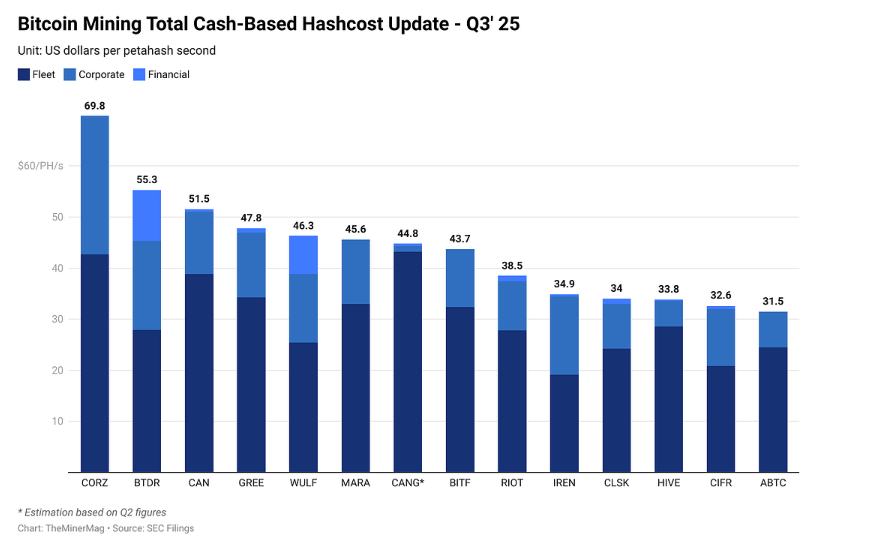
上市比特币矿商的当前挖矿成本。来源:TheMinerMag

尽管这些公司仍在积极从事比特币挖矿,但该行业正面临迄今为止最艰难的环境之一。行业研究将当前的矿商利润率描述为历史性压缩,收入处于“结构性低点”,同时哈希价格下降和运营成本上升。

大部分压力源于2024年比特币减半,这将区块奖励减少至3.125 BTC,并 effectively 使挖矿收入减半。更高的电力成本和持续的设备费用进一步增加了压力,使得许多矿商越来越重视向人工智能和高性能计算的多元化发展。

相关:首次减半十三年后,2025年的比特币挖矿面貌大不相同

Trending Cryptos

Related Questions

QHIVE Digital Technologies在哪个证券交易所上市,交易代码是什么?

AHIVE Digital Technologies在哥伦比亚证券交易所上市,交易代码为HIVECO。

QHIVE在安第斯市场的上市有什么重要意义?

AHIVE成为首家在拉丁美洲交易所公开交易的比特币和AI基础设施公司,这标志着该行业在拓展全球资本市场方面又迈出了一步,并为传统由能源和自然资源发行商主导的安第斯市场投资者提供了接触高性能计算、可再生能源和比特币交叉领域增长行业的机会。

QHIVE在拉丁美洲已有哪些业务布局?

AHIVE已在巴拉圭开发了完全由水力发电供电的Tier I数据中心,并于2024年底开始扩大其在该地区的业务,今年3月完成了对Yguazú站点的收购。

Q为什么比特币矿工开始转向AI和高性能计算?

A由于比特币挖矿经济性收紧(挖矿奖励减半导致收入减少,电力成本和设备费用上升)以及GPU基础设施需求激增,比特币矿工为了多元化发展和维持盈利能力,开始转向AI和高性能计算领域。

Q当前比特币矿工面临的主要挑战是什么?

A当前比特币矿工面临的主要挑战包括:2024年比特币减半后区块奖励减少至3.125 BTC,挖矿收入减半;哈希价格下跌和运营成本上升导致矿工利润空间被压缩至历史低点;行业研究显示矿工收入处于“结构性低点”。

Related Reads

Debate: Korean Workers Fear Unemployment, While Musk Envisions a Society 'Without Work'?

While South Korean auto workers fear job losses from robotics, Elon Musk envisions a future where AI and robots render most work optional. This article explores the growing tension between immediate anxieties over automation and long-term visions of a post-work society. The piece begins with recent strikes at Hyundai's Korean plants, where unions, amid standard wage negotiations, also sought job guarantees against advancing robotics—specifically mentioning Boston Dynamics' Atlas. This reflects how anxiety about technological displacement is emerging even before robots are fully capable of replacing skilled labor on assembly lines. The author argues that while current robotics still struggle with the nuanced, experiential knowledge of veteran workers, the *perception* of imminent replacement is fueling social conflict prematurely. This modern "Luddite" sentiment is compared to the 19th-century English textile workers who smashed machines. Historically, Luddites weren't simply anti-technology; they were protesting the rapid devaluation of their skills and the unequal distribution of productivity gains. Similarly, today's workers ask who will bear the cost of transition and share in the new wealth created by machines. In contrast, figures like Elon Musk propose an optimistic endpoint: with AI and robotics driving extreme abundance, the link between work and survival could break. He suggests concepts like "Universal High Income" could allow society to share the technological bounty, transforming work from a necessity into a choice. The core challenge, however, lies in the transition. The author notes that technology's benefits diffuse slowly, while its disruptive costs—job losses, skill obsolescence—can be concentrated and immediate. The risk is a painful interim period where productivity gains are captured by a few before new social contracts, safety nets, and retraining systems are established. The conclusion calls for proactive governance. Just as past industrial revolutions gave rise to labor standards and social safety nets, the robotics era needs its own frameworks. These should address job transition support, distribution of productivity gains, safety liability, and ethical deployment. Embracing such "constraints" is not opposition to progress but a necessary step to ensure technology benefits society broadly. The discussion sparked by Hyundai's workers, therefore, is not premature but essential.

marsbit2m ago

Debate: Korean Workers Fear Unemployment, While Musk Envisions a Society 'Without Work'?

marsbit2m ago

CATL Invests in a 00s Graduate from Harbin Institute of Technology

Contemporary Amperex Technology Co., Limited (CATL) has exclusively invested in the Pre-A round of RoboParty, a company founded by 22-year-old Huang Yi. A former student at Harbin Institute of Technology, Huang built a bipedal humanoid robot in his dorm room and later dropped out to launch RoboParty in Shanghai. The company focuses on developing a fully open-source platform for humanoid robots, combining self-developed hardware, operating systems (Party OS), and foundational models. RoboParty's strategy emphasizes open-source collaboration to accelerate development and build a developer ecosystem, positioning itself as foundational infrastructure for embodied AI. Since its 2025 founding, the team—composed largely of top-tier university graduates—has secured six funding rounds in eight months, with investors including Matrix Partners, Xiaomi, and now CATL. This investment by CATL's corporate venture arm signals strong industry confidence in RoboParty's potential for real-world manufacturing and complex scenarios. Huang Yi prioritizes technological excellence and developer community growth over rapid commercialization. The company has already garnered significant interest from developers and research institutions globally. With a focus on continuous, rapid iteration and open innovation, RoboParty aims to prove the versatility of humanoid robots and drive the field toward an open-source future.

marsbit5m ago

CATL Invests in a 00s Graduate from Harbin Institute of Technology

marsbit5m ago

Will SpaceX's First Quarterly Report Rescue Its Stock Price Under the Pressure of 1.2 Billion Shares Unlocking?

SpaceX is set to release its first quarterly earnings report since going public, a key test for its stock which has declined 20% from its IPO price. Approximately 9.12 billion shares are set to unlock on August 6, with an additional 3.19 billion following a week later, creating potential selling pressure from early investors. A strong report may be the only catalyst to reverse the downtrend. The report will cover three segments: Space, Connectivity (Starlink), and AI. The AI business, centered on the merged xAI, is the biggest uncertainty. While it generated $818 million in revenue last quarter, it also reported a $2.5 billion operating loss and $7.7 billion in capital expenditures. New data center rental agreements with Anthropic and Google, particularly the substantial $1.25 billion monthly deal with Anthropic, add significant revenue variability this quarter. Investors await guidance on AI's future outlook and the timeline for launching AI computing satellites via Starship. Starlink remains the stable profit driver, ending last quarter with 10.3 million subscribers. Key metrics will be user growth, average revenue per user (ARPU), and enterprise/government contract backlogs. The Space segment, which posted a $657 million operating loss last quarter, will be scrutinized for updates on Starship development following its 13th test flight and the pace of Falcon 9 launches, many of which support internal Starlink deployment. Wall Street expects Q2 revenue of around $6.9 billion and EBITDA of $2.1 billion. However, as this is the first earnings report, analyst forecasts lack a historical baseline and could see significant variance. With a current market cap of ~$1.4 trillion and a high valuation, the market's reaction post-earnings will hinge on the report's strength, the magnitude of post-lockup selling, and ongoing investor concerns.

marsbit5m ago

Will SpaceX's First Quarterly Report Rescue Its Stock Price Under the Pressure of 1.2 Billion Shares Unlocking?

marsbit5m ago

Soaring 20% Then Dropping 5%: When Will the Bottom of the Korean Stock Market Be?

"South Korean stocks face a turbulent period as the KOSPI index, after a 20% surge, fell 5% to 6257 points. The market is grappling with severe issues: over 500,000 leveraged retail accounts have been liquidated, and more than 24 trillion won has flowed from stocks into bank deposits for safety. This reflects a significant loss of market liquidity and shaken investor confidence. In response, Korean financial regulators are taking action. They have tripled the minimum保证金 (margin) requirement for single-stock leveraged ETF trades to 30 million won and are considering granting themselves "emergency intervention" powers. These could include capping leverage ratios and setting investment limits on these ETFs, seen by many as amplifying market volatility. Initial results show a 75% drop in these products' trading volume post-regulation. The market downturn has political repercussions, pushing President Yoon Suk-yeol's approval rating to a new low. Meanwhile, foreign investors made a record net purchase of 7.18 trillion won during a recent rebound, while domestic retail investors sold off massively. Morgan Stanley has upgraded South Korean stocks to "overweight," citing the ongoing "leverage unwinding" and potential for a 36% upside, with giants like Samsung Electronics and SK Hynix providing valuation support. However, analysts caution that the market's structure remains vulnerable to foreign capital flows, and the current low may not be the bottom."

marsbit20m ago

Soaring 20% Then Dropping 5%: When Will the Bottom of the Korean Stock Market Be?

marsbit20m ago

Trading

Spot

Hot Articles

How to Buy HIVE

Welcome to HTX.com! We've made purchasing Hive (HIVE) simple and convenient. Follow our step-by-step guide to embark on your crypto journey.Step 1: Create Your HTX AccountUse your email or phone number to sign up for a free account on HTX. Experience a hassle-free registration journey and unlock all features.Get My AccountStep 2: Go to Buy Crypto and Choose Your Payment MethodCredit/Debit Card: Use your Visa or Mastercard to buy Hive (HIVE) instantly.Balance: Use funds from your HTX account balance to trade seamlessly.Third Parties: We've added popular payment methods such as Google Pay and Apple Pay to enhance convenience.P2P: Trade directly with other users on HTX.Over-the-Counter (OTC): We offer tailor-made services and competitive exchange rates for traders.Step 3: Store Your Hive (HIVE)After purchasing your Hive (HIVE), store it in your HTX account. Alternatively, you can send it elsewhere via blockchain transfer or use it to trade other cryptocurrencies.Step 4: Trade Hive (HIVE)Easily trade Hive (HIVE) on HTX's spot market. Simply access your account, select your trading pair, execute your trades, and monitor in real-time. We offer a user-friendly experience for both beginners and seasoned traders.

2.1k Total ViewsPublished 2024.03.29Updated 2026.06.02

How to Buy HIVE

Discussions

Welcome to the HTX Community. Here, you can stay informed about the latest platform developments and gain access to professional market insights. Users' opinions on the price of HIVE (HIVE) are presented below.

活动图片