Phân tích thị trường BTC, ETH, SOL, MERL, ZEC ngày 10/12

金色财经Published on 2025-12-10Last updated on 2025-12-10

Abstract

Vào ngày 10/12, thị trường tiền điện tử ghi nhận biến động mạnh. Bitcoin (BTC) tăng đột biến lên mức cao nhất 94.640 USD trong phiên Mỹ trước khi điều chỉnh về khoảng 92.000 USD, cho thấy sự mua vào mạnh mẽ từ các tổ chức. Dự báo, BTC có khả năng tiếp tục tăng nếu vượt ngưỡng 98.000 USD, với các điểm hỗ trợ quan trọng tại 92.000 và 90.540 USD. Ethereum (ETH) thể hiện xu hướng mạnh hơn với 4 phiên tăng liên tiếp, vượt qua mức 3.260 USD. Tuy nhiên, khả năng điều chỉnh ngắn hạn có thể xảy ra, với ngưỡng kháng cự tại 3.380 - 3.480 USD và hỗ trợ tại 3.230 - 3.150 USD. SOL có triển vọng tăng nếu phá vỡ mức 147,5 USD, mở đường cho mục tiêu 154 - 158 USD. Tuy nhiên, cần theo dõi động thái điều chỉnh sau đó. MERL duy trì xu hướng giảm, liên tục bị từ chối tại vùng 0,5 USD. Điểm then chốt cần quan sát là 0,2 USD - nơi có thể xuất hiện phản ứng hoặc bán tháo mạnh. ZEC được khuyến nghị chốt lời do dấu hiệu điều chỉnh ngắn hạn, với giá tăng từ 359 lên 440 USD. Nhìn chung, thị trường đang trong giai đoạn tích cực nhưng cần thận trọng với các biến động ngắn hạn.

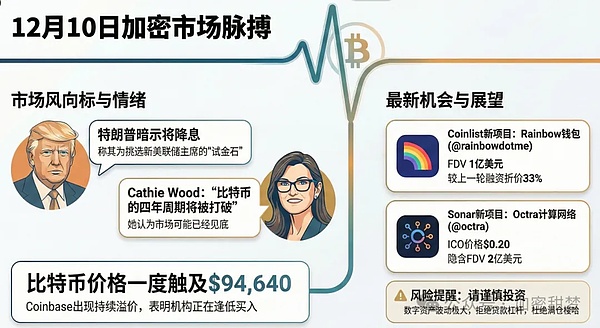
Bitcoin đột ngột tăng mạnh vào đêm qua theo giờ Mỹ, đạt mức cao nhất 94.640 USD, sau đó giảm xuống khoảng 92.000 USD. Hiệu ứng chênh lệch giá liên tục trên CB tái xuất, cho thấy các tổ chức đang mua vào mạnh mẽ ở mức giá thấp.

Gần đây, Cathie Wood, CZ và nhiều người khác đã tuyên bố chu kỳ 4 năm đã kết thúc. Ở cấp độ thị trường, các tổ chức chính thống đang rất tự tin, nhưng niềm tin của các nhà đầu tư nhỏ lẻ vẫn còn yếu. Cách duy nhất để khôi phục niềm tin của họ là kéo giá lên, đưa Bitcoin trở lại mức 100.000 USD, khi đó các nhà đầu tư nhỏ lẻ sẽ một lần nữa trở nên điên cuồng.
BTC

Nhìn từ biểu đồ ngày, BTC đã phá vỡ đường xu hướng tăng với khối lượng giao dịch lớn, thoát khỏi mô hình giảm và có thể tiếp tục mua vào khi điều chỉnh giảm. Chỉ báo MACD sắp vượt lên trên đường 0, cho thấy nhu cầu phục hồi thêm. Khối lượng giao dịch tăng mạnh, lực mua tăng lên, nên thận trọng khi bán khống. Kháng cự phía trên ở khoảng 98.000 USD.

Ở khung 4 giờ, mức phá vỡ đã hoàn tất. Hai vị trí quan trọng sau khi phá vỡ và điều chỉnh là vị trí đường trung bình của kênh tăng và vị trí kháng cự chuyển thành hỗ trợ trước khi phá vỡ (cả hai đều được đánh dấu trên biểu đồ).

Hai mốc quan trọng: 92.000 và 90.540. Nếu phá vỡ dưới 90.540, không nên mua vào trong ngắn hạn. Có thể mua vào nhẹ ở cả hai vị trí này và cắt lỗ nếu phá vỡ.

ETH

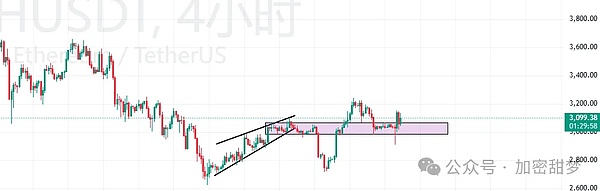
Biểu đồ ngày của Ethereum mạnh hơn, tạo thành 4 nến tăng liên tiếp, vượt qua mức 3.260 USD và hiện ở mức 3.320 USD, dao động gần dải Bollinger trên. Trên khung 4 giờ, giá tăng mạnh rồi giảm, có nhu cầu điều chỉnh.

Trong ngày, chiến lược vẫn là bán ở mức cao. Nếu đã bỏ lỡ lệnh mua, không nên mua đuổi ở vùng giá cao. Kháng cự phía trên ở 3.380 và 3.480 USD, có thể đặt lệnh bán quanh các vùng này nếu giá điều chỉnh giảm.

Hỗ trợ phía dưới ở 3.230, 3.150 và 3.060 USD. Chỉ khi phá vỡ dưới 3.000 USD, giá mới có thể giảm xuống các mức 2.900, 2.820, 2.730 và 2.620 USD.
SOL

SOL đã yếu trong một thời gian dài, không thể vượt qua mức 147 USD. Trước đây, SOL thường biến động sớm hơn BTC, nhưng lần này ETH là người vượt qua ngưỡng kháng cự quan trọng trước. Vì vậy, tối nay rất có thể SOL cũng sẽ theo sau và phá vỡ. Nếu vượt qua 147.5 USD và điều chỉnh trên 141.85-138.85 USD (tức ổn định trên 138 USD), thì vài ngày tới có thể kỳ vọng lên các mức 154-158 USD.

Trên biểu đồ 3 ngày, đợt phục hồi của SOL vẫn chưa hình thành. Nếu kéo lên tối nay thì gần như sẽ bắt đầu có hiệu lực. Nhưng khi chạm điểm kháng cự, vẫn sẽ điều chỉnh giảm. Mua ở mức thấp có thể có lãi, bán ở mức cao cũng có thể, nhưng cần biết điểm dừng lỗ khi điều chỉnh, sau đó có thể mua lại.

$MERL

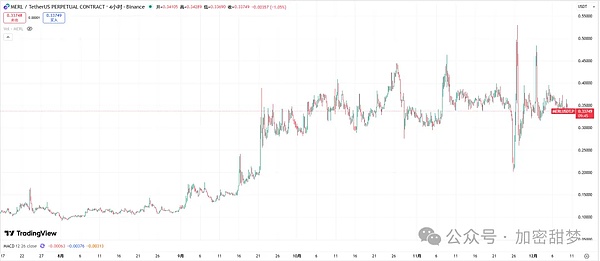
MERL trong một tháng qua đã ba lần chạm mức 0.5 USD và đều bị bán ra mạnh. Khối lượng giao dịch tăng có vẻ sôi động, nhưng thực ra toàn là ảo, lực mua không theo kịp. Hiện các đỉnh thấp dần, các đợt phục hồi ngắn hơn, cấu trúc giảm rõ ràng.

Tôi đang theo dõi kỹ mức 0.2 USD, chủ yếu vì ba lý do:

1. Chi phí của đội ngũ dự án về cơ bản trong khoảng 0.18-0.22 USD, khi giảm xuống đây thường sẽ có phản ứng;

2. Đây cũng là ranh giới tâm lý của nhà đầu tư nhỏ lẻ, nếu giữ được thì có thể thở, nếu phá vỡ sẽ là đợt bán hoảng loạn;

3. Điểm then chốt của xu hướng: Nếu ổn định ở đây cho thấy lực bán đã yếu dần, nếu phá vỡ thì hoàn toàn mất kiểm soát, không gian phía sau thoải mái.

Vì vậy, hiện không nên vội mua vào đáy, cũng đừng kỳ vọng nó sẽ tăng mạnh một cách độc lập.

Xu hướng giảm của MERL là rõ ràng, đừng vội đứng về phe mua trước 0.2 USD. Hãy chờ quanh 0.2 USD xem nó tiếp tục giảm hay có dấu hiệu phục hồi, thị trường sẽ cho câu trả lời. Giữ tiền mặt, giao dịch theo xu hướng, đừng ngược.
ZEC

Nên chốt lời tất cả lệnh mua. Trên khung 1 giờ, giá đang trong mô hình nêm tăng và có đỉnh đôi M, ngắn hạn có thể điều chỉnh giảm, đồng thời đang trong trạng thái phân kỳ đỉnh. Xét đến việc bảo toàn lợi nhuận, nên chốt lời tất cả lệnh mua. Lợi nhuận đã khá nhiều, chi phí của chúng ta là 359 USD, giá hiện tại là 440 USD, đừng tham lam miếng cuối cùng.

Nếu thấy nội dung của chúng tôi hữu ích, hãy chia sẻ kênh của chúng tôi với bạn bè nhé! Chào mừng tham gia theo dõi để cập nhật thông tin mới nhất về thị trường tiền điện tử! Sau mỗi đợt giảm mạnh là cả một bầu trời sao, những ai còn bối rối về chiến lược cho thị trường sắp tới có thể theo dõi Tianmeng, liên hệ WeChat: RFGH8689


Trending Cryptos

Related Questions

QBitcoin (BTC) đã có biến động giá như thế nào vào đêm qua và các tổ chức đang làm gì?

ABitcoin đã tăng mạnh vào đêm qua, đạt mức cao nhất là 94.640 USD, sau đó giảm xuống khoảng 92.000 USD. Sự chênh lệch giá liên tục trên CB cho thấy các tổ chức đang mua vào mạnh mẽ khi giá giảm.

QTheo phân tích kỹ thuật, các mức hỗ trợ quan trọng cho BTC là gì?

AHai mức hỗ trợ quan trọng cho BTC là 92.000 USD và 90.540 USD. Nếu giá giảm dưới 90.540 USD, không nên mua vào trong ngắn hạn.

QEthereum (ETH) hiện đang ở vị trí nào và chiến lược giao dịch được đề xuất là gì?

AETH đã tăng mạnh, vượt qua mức 3.260 USD và hiện ở khoảng 3.320 USD. Chiến lược được đề xuất là bán ở các mức cao 3.380 USD và 3.480 USD, với hỗ trợ tại 3.230 USD và 3.150 USD.

QTình hình hiện tại của Solana (SOL) và dự báo giá là gì?

ASOL đã yếu trong một thời gian dài và chưa vượt qua mức 147 USD. Nếu vượt qua 147.5 USD và giữ trên 138.85 USD, giá có thể tăng lên 154-158 USD. Tuy nhiên, cần thận trọng với các điểm hỗ trợ và kháng cự.

QXu hướng của MERL và mức giá quan trọng cần theo dõi là gì?

AMERL đang trong xu hướng giảm với các đỉnh thấp dần. Mức giá quan trọng là 0.2 USD, nơi có thể xảy ra phản ứng từ nhà phát triển hoặc tâm lý nhà đầu tư. Không nên mua vào trước khi giá chạm 0.2 USD.

Related Reads

GPT-5.6 Countdown: Abandon the Illusion of a Single API, Computational Iteration Can't Outpace a Single Page of Compliance

In mid-June, three seemingly independent industry events—the compliance-driven throttling of Fable 5, the open-sourcing of GLM-5.2, and the leaked release timeline for GPT-5.6—are pushing the global AI industry toward a watershed moment. These shifts signal a fundamental restructuring of the industry's underlying logic. First, **"usability" has substantially overtaken "advanced capabilities"** as the primary weight, pushing the global large language model (LLM) supply chain into a "dual-track" phase of controlled closed-source and local open-source coexistence. Second, **the competitive moats of closed-source giants are shifting**. Their technical focus is moving from "language intelligence" toward "spatial intelligence (world models)"—a domain heavily reliant on computing power. Third, faced with常态化 transnational compliance risks, **a "model-agnostic" decoupled design has become a survival necessity for application-layer developers to maintain business continuity.** The article details how Anthropic's Fable 5, despite its advanced engineering feats, was restricted for non-U.S. citizens within 72 hours of launch, highlighting how geopolitical compliance can instantly limit even the most advanced models. In response, the open-source camp, exemplified by Zhipu AI's MIT-licensed GLM-5.2, is gaining market share by offering stable performance improvements and significant cost advantages (up to 70% savings for enterprises), while achieving full adaptation with domestic semiconductor platforms. Meanwhile, closed-source leaders like OpenAI are pivoting. The anticipated GPT-5.6 reportedly shifts focus from language to spatial intelligence and world models, aiming to rebuild a generational gap in areas like 3D understanding, simulation, and industrial design that demand immense compute. The core conclusion is that the LLM supply chain's logic has changed. Enterprises must now evaluate infrastructure based on a composite of technical performance and policy compliance. For developers, complete reliance on a single closed-source API poses unacceptable risk. Implementing a truly model-agnostic architecture—enabling swift switches to compliant, locally deployable open-source alternatives—is no longer just good practice but a fundamental baseline for business continuity.

marsbit2h ago

GPT-5.6 Countdown: Abandon the Illusion of a Single API, Computational Iteration Can't Outpace a Single Page of Compliance

marsbit2h ago

Is the 'Token Subsidy War' Among AI Giants Almost Over?

The article discusses the ongoing "token subsidy war" among AI giants like OpenAI and Anthropic, questioning whether it's nearing its end. It reveals that current AI subscription prices are heavily subsidized, with some plans offering tokens at up to 70 times the actual cost to attract and retain heavy users, especially developers and enterprises. This strategy mirrors past internet-era subsidy battles, but with a key difference: AI tokens lack "lock-in" effects. Unlike ride-hailing or food delivery apps, users can easily switch between AI providers as APIs become standardized, making it difficult for companies to raise prices post-subsidy. The piece highlights a structural asymmetry in the competition. Giants like Google, with massive advertising revenue, can afford to subsidize tokens indefinitely, akin to using "tokens as a weapon." In contrast, venture-backed companies like OpenAI and Anthropic face pressure to become profitable, especially as they approach IPO. The article cites Google Ventures founder Bill Maris, who suggests Google could slash token prices by 80%, putting immense pressure on competitors. Two potential endgames are presented: the "internet service" model (subsidize, monopolize, then raise prices) and the "utility" model (tokens become a standardized, low-margin commodity like electricity). Given the low switching costs, the latter seems more likely. The competition may not have a single winner but could instead accelerate AI's evolution into a foundational, infrastructure-level technology, akin to a public utility. For now, users continue to benefit from heavily subsidized token costs.

marsbit2h ago

Is the 'Token Subsidy War' Among AI Giants Almost Over?

marsbit2h ago

Beyond the Stadium: The Profitable Games Surrounding the World Cup

"Beyond the Pitch: The Profit Game Around the World Cup" The FIFA World Cup transcends being a sporting spectacle, evolving into a massive global arena for speculation and profit-seeking. The 2026 tournament has amplified this dynamic, creating a multi-layered ecosystem of financial opportunism alongside the football. **Prediction markets** have surged into the mainstream. Platforms like Polymarket and Kalshi saw trading volumes for World Cup contracts soar, attracting new users with their financial trading model and high-profile, chain-based wealth stories that overshadow traditional sports betting in terms of growth and narrative. However, **traditional sportsbooks** remain the dominant force, leveraging established user habits, legal markets, and comprehensive product offerings to handle the vast majority of speculative wagers, with projections suggesting record-breaking betting volumes. Capital markets also react. **"Concept stocks"** in countries like South Korea and Japan experience volatile price swings based on team performance and anticipated fan spending on items like chicken, beer, and viewing parties, effectively becoming a stock market reflecting fan sentiment. The **ticket resale market** has become a sophisticated arena for arbitrage. Prices fluctuate wildly based on team draws and star power, with sellers sometimes listing tickets they don't yet own in a practice akin to short-selling, while FIFA's own "Right to Buy" tokens add another layer of speculative trading. **Collectibles and merchandise** offer another avenue. Panini sticker albums, with their inherent scarcity and nostalgic value, can become high-value collectibles. Limited-edition or locally themed jerseys command significant premiums on secondary markets, and even counterfeit vendors profit from fans' desire for affordable match-day identity. The **cryptocurrency** space has seen a frenzy of speculative, unauthorized World Cup-themed meme coins on chains like Solana. These tokens, often exploiting team names and player imagery, experience extreme pump-and-dump cycles, creating stories of massive gains for a few early entrants and steep losses for many others. Finally, an entire industry thrives on **providing information and tools** to other speculators. Developers create platforms like SeatSidekick to track ticket inventory and prices, while paid Telegram groups and subscriptions sell betting tips and predictions, monetizing the widespread desire for an informational edge. In essence, the World Cup has become a compressed, global laboratory for speculation. While the games determine champions on the field, a parallel, complex network of financial transactions—spanning prediction contracts, bets, stocks, tickets, collectibles, crypto, and information services—settles its own scores in the global market.

marsbit3h ago

Beyond the Stadium: The Profitable Games Surrounding the World Cup

marsbit3h ago

Trading

Spot
Futures

Hot Articles

What is $BITCOIN

DIGITAL GOLD ($BITCOIN): A Comprehensive Analysis Introduction to DIGITAL GOLD ($BITCOIN) DIGITAL GOLD ($BITCOIN) is a blockchain-based project operating on the Solana network, which aims to combine the characteristics of traditional precious metals with the innovation of decentralized technologies. While it shares a name with Bitcoin, often referred to as “digital gold” due to its perception as a store of value, DIGITAL GOLD is a separate token designed to create a unique ecosystem within the Web3 landscape. Its goal is to position itself as a viable alternative digital asset, although specifics regarding its applications and functionalities are still developing. What is DIGITAL GOLD ($BITCOIN)? DIGITAL GOLD ($BITCOIN) is a cryptocurrency token explicitly designed for use on the Solana blockchain. In contrast to Bitcoin, which provides a widely recognized value storage role, this token appears to focus on broader applications and characteristics. Notable aspects include: Blockchain Infrastructure: The token is built on the Solana blockchain, known for its capacity to handle high-speed and low-cost transactions. Supply Dynamics: DIGITAL GOLD has a maximum supply capped at 100 quadrillion tokens (100P $BITCOIN), although details regarding its circulating supply are currently undisclosed. Utility: While precise functionalities are not explicitly outlined, there are indications that the token could be utilized for various applications, potentially involving decentralized applications (dApps) or asset tokenization strategies. Who is the Creator of DIGITAL GOLD ($BITCOIN)? At present, the identity of the creators and development team behind DIGITAL GOLD ($BITCOIN) remains unknown. This situation is typical among many innovative projects within the blockchain space, particularly those aligning with decentralized finance and meme coin phenomena. While such anonymity may foster a community-driven culture, it intensifies concerns about governance and accountability. Who are the Investors of DIGITAL GOLD ($BITCOIN)? The available information indicates that DIGITAL GOLD ($BITCOIN) does not have any known institutional backers or prominent venture capital investments. The project seems to operate on a peer-to-peer model focused on community support and adoption rather than traditional funding routes. Its activity and liquidity are primarily situated on decentralized exchanges (DEXs), such as PumpSwap, rather than established centralized trading platforms, further highlighting its grassroots approach. How DIGITAL GOLD ($BITCOIN) Works The operational mechanics of DIGITAL GOLD ($BITCOIN) can be elaborated on based on its blockchain design and network attributes: Consensus Mechanism: By leveraging Solana’s unique proof-of-history (PoH) combined with a proof-of-stake (PoS) model, the project ensures efficient transaction validation contributing to the network's high performance. Tokenomics: While specific deflationary mechanisms have not been extensively detailed, the vast maximum token supply implies that it may cater to microtransactions or niche use cases that are still to be defined. Interoperability: There exists the potential for integration with Solana’s broader ecosystem, including various decentralized finance (DeFi) platforms. However, the details regarding specific integrations remain unspecified. Timeline of Key Events Here is a timeline that highlights significant milestones concerning DIGITAL GOLD ($BITCOIN): 2023: The initial deployment of the token occurs on the Solana blockchain, marked by its contract address. 2024: DIGITAL GOLD gains visibility as it becomes available for trading on decentralized exchanges like PumpSwap, allowing users to trade it against SOL. 2025: The project witnesses sporadic trading activity and potential interest in community-led engagements, although no noteworthy partnerships or technical advancements have been documented as of yet. Critical Analysis Strengths Scalability: The underlying Solana infrastructure supports high transaction volumes, which could enhance the utility of $BITCOIN in various transaction scenarios. Accessibility: The potential low trading price per token could attract retail investors, facilitating wider participation due to fractional ownership opportunities. Risks Lack of Transparency: The absence of publicly known backers, developers, or an audit process may yield skepticism regarding the project's sustainability and trustworthiness. Market Volatility: The trading activity is heavily reliant on speculative behavior, which can result in significant price volatility and uncertainty for investors. Conclusion DIGITAL GOLD ($BITCOIN) emerges as an intriguing yet ambiguous project within the rapidly evolving Solana ecosystem. While it attempts to leverage the “digital gold” narrative, its departure from Bitcoin's established role as a store of value underscores the need for a clearer differentiation of its intended utility and governance structure. Future acceptance and adoption will likely depend on addressing the current opacity and defining its operational and economic strategies more explicitly. Note: This report encompasses synthesised information available as of October 2023, and developments may have transpired beyond the research period.

411 Total ViewsPublished 2025.05.13Updated 2025.05.13

What is $BITCOIN

Discussions

Welcome to the HTX Community. Here, you can stay informed about the latest platform developments and gain access to professional market insights. Users' opinions on the price of BTC (BTC) are presented below.

活动图片