¿Fracasó STABLE, el "hijo predilecto" de Tether? Se desploma un 60% en su primer día, ballenas se adelantan y ausencia en CEX desatan pánico de confianza

marsbitPublished on 2025-12-09Last updated on 2025-12-09

Abstract

STABLE, la nueva cadena de bloques estable respaldada por Tether y Bitfinex, tuvo un lanzamiento problemático. Su token homónimo cayó más del 60% en su primer día, pasando de un precio máximo de $0.046 a un mínimo de $0.015. La falta de listados en exchanges centralizados (CEX) como Binance o Coinbase limitó severamente su liquidez y acceso a inversores minoristas. La controversia aumentó cuando se descubrió que una ballena (gran inversor) había depositado millones de USDT antes de la hora oficial de la preventa, generando acusaciones de tráfico de información privilegiada y dañando la confianza en el proyecto. Técnicamente, Stable se presenta como la primera L1 que utiliza USDT como gas fee nativo, buscando una experiencia de usuario sin fricciones. Su token STABLE se usa solo para gobernanza y staking, no para pagar tarifas, y el 50% de su oferta total está asignada a equipo e inversores, con un año de bloqueo. A pesar del respaldo de Tether y una ronda de financiación de $28 millones, Stable enfrenta un escepticismo significativo y una intensa competencia en el espacio de las cadenas de pago estables de jugadores como Circle's Arc y Tempo. Su futuro dependerá de su capacidad de ejecución para construir un ecosistema y atraer a desarrolladores e instituciones.

Otra stablecoin que lleva el título de "hijo predilecto de Tether" se lanzó oficialmente, pero el mercado parece no estar comprándolo.

El 8 de diciembre por la noche, la muy anticipada cadena pública dedicada a stablecoins, Stable, lanzó su mainnet y el token STABLE. Como una Layer 1 incubada en profundidad por el equipo central de Bitfinex y Tether, la narrativa del "hijo predilecto de Tether" hizo que Stable atrajera una amplia atención del mercado desde su aparición.

Sin embargo, en un contexto de liquidez ajustada en el mercado, Stable no tuvo un inicio tan exitoso como su competidor Plasma, mostrando no solo precios bajos sino también sumiéndose en una crisis de confianza por presuntas operaciones de información privilegiada (rat trading). ¿El guion de Stable busca empezar bajo para luego subir, o continuará en una tendencia bajista?

STABLE cae un 60% desde su máximo tras el lanzamiento, se hunde en una crisis de confianza por rat trading

Antes del lanzamiento de Stable, el sentimiento del mercado era bastante optimista. El proyecto recaudó más de 1300 millones de dólares en dos rondas de pre-depósitos, con un total de aproximadamente 25,000 direcciones participantes, y un depósito promedio de about 52,000 dólares por dirección, lo que mostraba un fuerte interés de los usuarios. Esto era particularmente valioso en una fase de bajo ánimo en el mercado y también indicaba un alto reconocimiento por parte del capital hacia el aval del "ecosistema Tether", esperando que el inicio de STABLE repitiera la historia de riqueza de Plasma en su momento.

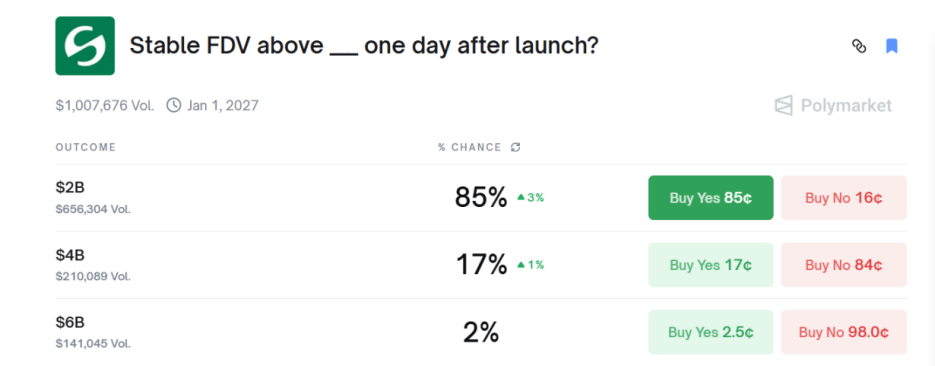
Datos del mercado de predicciones Polymarket mostraban que el mercado llegó a estimar que había un 85% de probabilidad de que el FDV (valor fully diluted) del token STABLE superara los 2000 millones de dólares.
Sin embargo, la ley de "lo muy caliente muere seguro" una vez más se cumplió.

El rendimiento del token STABLE en su primer día de TGE (Token Generation Event) no fue el esperado. El token STABLE abrió alrededor de 0.036 dólares, alcanzó un precio máximo cercano a 0.046 dólares después de su lanzamiento, y luego cayó más de un 60%, tocando un mínimo de 0.015 dólares. Hasta las 21:00 del 9 de diciembre, el FDV del token STABLE se redujo a 1700 millones de dólares, y en un estado de liquidez escasa, nadie en el mercado quería comprar.
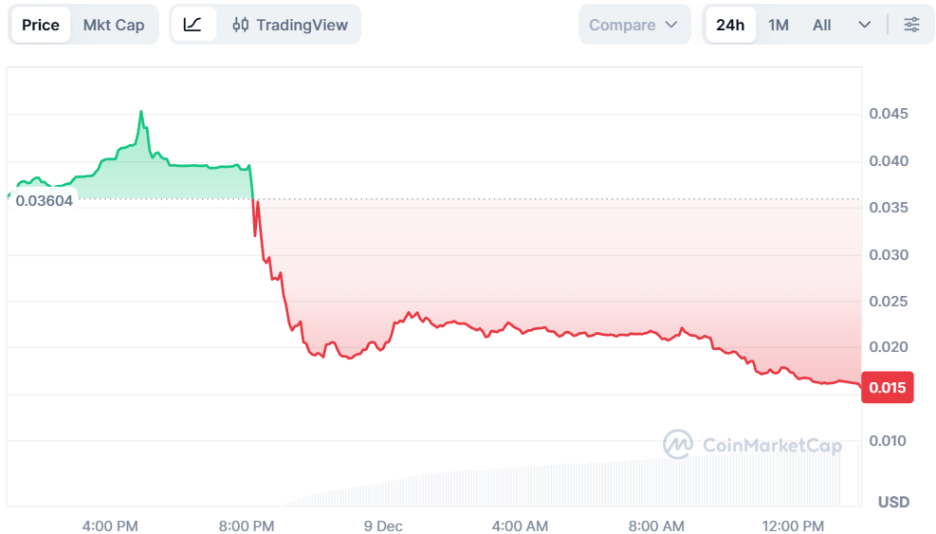
Cabe destacar que los mercados spot de los principales CEX (intercambios centralizados) como Binance, Coinbase y Upbit aún no han listado el token STABLE. Su ausencia limita el acceso del token STABLE a una base más amplia de inversionistas minoristas, lo que further restringe su liquidez.

El desplome de STABLE también desató un acalorado debate en la comunidad.

El investigador de DeFi @cmdefi dijo: Mis expectativas para Stable son relativamente bajas; en el lanzamiento inicial del proyecto hubo varias operaciones amateur, su seriedad es cuestionable.

El KOL de cripto @cryptocishanjia señaló: La multitud está más dispuesta a pagar por una nueva narrativa. Cuando el mercado ya tiene un claro líder número uno (Plasma), el consenso de la multitud sobre el número dos (Stable) se verá极大增强 (nota: texto original en chino, significa "muy reforzado"), lo que lleva a una reducción en el margen de beneficio.

El ex profesional de VC @Michael_Liu93直言 (dijo directamente): La valoración previa al lanzamiento de 3000 millones para Stable,叠加 (sumado a) un FDV inflado, lo convierte en un objetivo adecuado para shortear a largo plazo. El control ajustado de la oferta (sin airdrop, sin preventa, sin ronda de KOL) no equivale a bombeo (pump), pero precisamente por no estar en los principales CEX, podría experimentar un rebote.

Además, muchos usuarios también mencionaron la controversia sobre los pre-depósitos antes del lanzamiento de la mainnet de Stable. En la primera ronda de actividades de pre-depósito, algunas billeteras de ballenas depositaron miles de millones de USDT antes de la hora oficial de apertura de depósitos, lo que generó fuertes质疑 (cuestionamientos) de la comunidad sobre la equidad del proyecto y posibles operaciones con información privilegiada. El equipo del proyecto no respondió directamente y simplemente abrió una segunda ronda de pre-depósitos.

Este evento crea una paradoja en la narrativa de Stable, cuya propuesta de valor es proporcionar una infraestructura transparente, confiable y compliant. Que el proyecto muestre疑似 (suntas) operaciones con información privilegiada en su etapa inicial crea un déficit de confianza que obstaculizará la participación activa de la comunidad y tendrá un impacto negativo en su narrativa a largo plazo.

USDT como tarifa Gas para optimizar la experiencia de pago, el modelo económico del token oculta preocupaciones

La arquitectura de Stable está diseñada para lograr la máxima eficiencia en las transacciones y ser amigable para el usuario.

Stable es la primera L1 que utiliza USDT como tarifa Gas nativa), lo que ofrece una experiencia de usuario similar a no tener Gas. La importancia de este diseño radica en minimizar al máximo la fricción para el usuario. Los usuarios pueden pagar las tarifas de transacción con el medio de intercambio en sí (es decir, USDT), sin necesidad de gestionar ni mantener tokens de gobernanza altamente volátiles. Esta característica permitirá liquidaciones en menos de un segundo y tarifas mínimas, siendo especialmente adecuada para transacciones diarias y escenarios de pago institucional que requieren una estricta estabilidad y previsibilidad de precios.

Stable adopta el mecanismo de consenso StableBFT, un modelo DPoS (Proof-of-Stake delegado) personalizado basado en CometBFT (anteriormente Tendermint) y完全兼容 (completamente compatible) con EVM (Máquina Virtual de Ethereum). StableBFT garantiza la finalidad de las transacciones a través de un mecanismo de tolerancia a fallos bizantinos, lo que significa que una transacción, una vez confirmada, es irreversible, algo crucial para escenarios de pago y liquidación. Además, StableBFT permite a los nodos procesar propuestas en paralelo, asegurando que la red pueda ofrecer tanto alto rendimiento (throughput) como baja latencia, cumpliendo así con los exigentes requisitos de una red de pagos.

Stable obtuvo una fuerte apuesta de capital desde su inicio. El proyecto recaudó 28 millones de dólares en una ronda de financiación semilla, liderada por Bitfinex y Hack VC. El CEO de Tether/Bitfinex, Paolo Ardoino, actúa como asesor, lo que también hizo que el mercado especulara sobre una estrecha协同关系 (relación de colaboración) estratégica entre Stable y el líder en emisión de stablecoins, Tether.

El CEO de Stable, Brian Mehler, previously worked como Vicepresidente de Venture Capital en Block.one (compañía desarrolladora de EOS), gestionando un fondo de cripto de 1000 millones de dólares e invirtiendo en gigantes como Galaxy Digital y Securitize.

El CTO es Sam Kazemian, fundador del proyecto de stablecoin algorítmica híbrida Frax, quien ha estado inmerso en el campo DeFi durante años y ha asesorado para la legislación de stablecoins en Estados Unidos.

Sin embargo, el CEO inicial de Stable era Joshua Harding, ex director de inversiones de Block.one. El proyecto cambió de líder en el último momento sin ningún anuncio o explicación, lo que añadió otra capa de sombra sobre la transparencia de Stable.

El modelo económico de tokens de Stable adopta una estrategia de separación entre la utilidad de la red y el valor de gobernanza. El único propósito del token STABLE es la gobernanza y el staking. No se utiliza para pagar ninguna tarifa de red; todas las transacciones se liquidan en USDT.

Los holders del token pueden hacer staking de STABLE para convertirse en validadores y mantener la seguridad de la red.同时 (Al mismo tiempo), también pueden participar en decisiones clave como actualizaciones de la red, ajustes de tarifas o introducción de nuevas stablecoins mediante votación comunitaria. Al no poder participar de los ingresos de la red, esto debilita el atractivo del token. Antes de que el ecosistema tome forma, su token carece de utility.

Es importante señalar que el 50% de la oferta total de tokens (1000 mil millones de tokens) se asignará al equipo, inversores y asesores. Aunque estos tokens tienen un período de bloqueo (cliff) de un año antes de comenzar a liberarse linealmente, la clara侧重 (clara inclinación) en su分配比例 (proporción de distribución) representará un impacto potencial a largo plazo sobre el precio del token.
Feroz competencia en el sector de cadenas de stablecoins, la ejecución será la clave del éxito

Stable se enfrenta a una competencia de mercado extremadamente feroz. En el actual panorama multichain, Polygon y Tron tienen una gran base de usuarios minoristas en remesas de bajo coste en el Sudeste Asiático, América del Sur, Oriente Medio y África, mientras que Solana también ocupa un lugar en el ámbito de los pagos gracias a su ventaja de alto rendimiento (throughput).

Más importantly, Stable también se enfrenta a competidores emergentes verticales de L1 que同样 se dedican (también se dedican) a los pagos con stablecoins. Por ejemplo, Arc, desarrollado por Circle, se enfoca en ser una infraestructura para tesorería institucional on-chain, liquidación global y activos tokenizados. Además, Tempo, respaldado por Stripe y Paradigm, también se posiciona como una cadena de pagos, siendo un competidor formidable apuntando al mismo vertical.

En el ámbito de pagos y liquidaciones, el efecto de red será el factor central para ganar. El éxito de Stable dependerá de su capacidad para aprovechar rápidamente el impulso del ecosistema USDT, atraer desarrolladores y usuarios institucionales, y establecer una ventaja de ser primero en el campo de las liquidaciones a gran escala. Si la fuerza de ejecución y la tasa de penetración en el mercado son insuficientes, podría quedar por detrás de L1 similares con mayor capacidad de integración o un背景 de cumplimiento (background de compliance) más sólido.
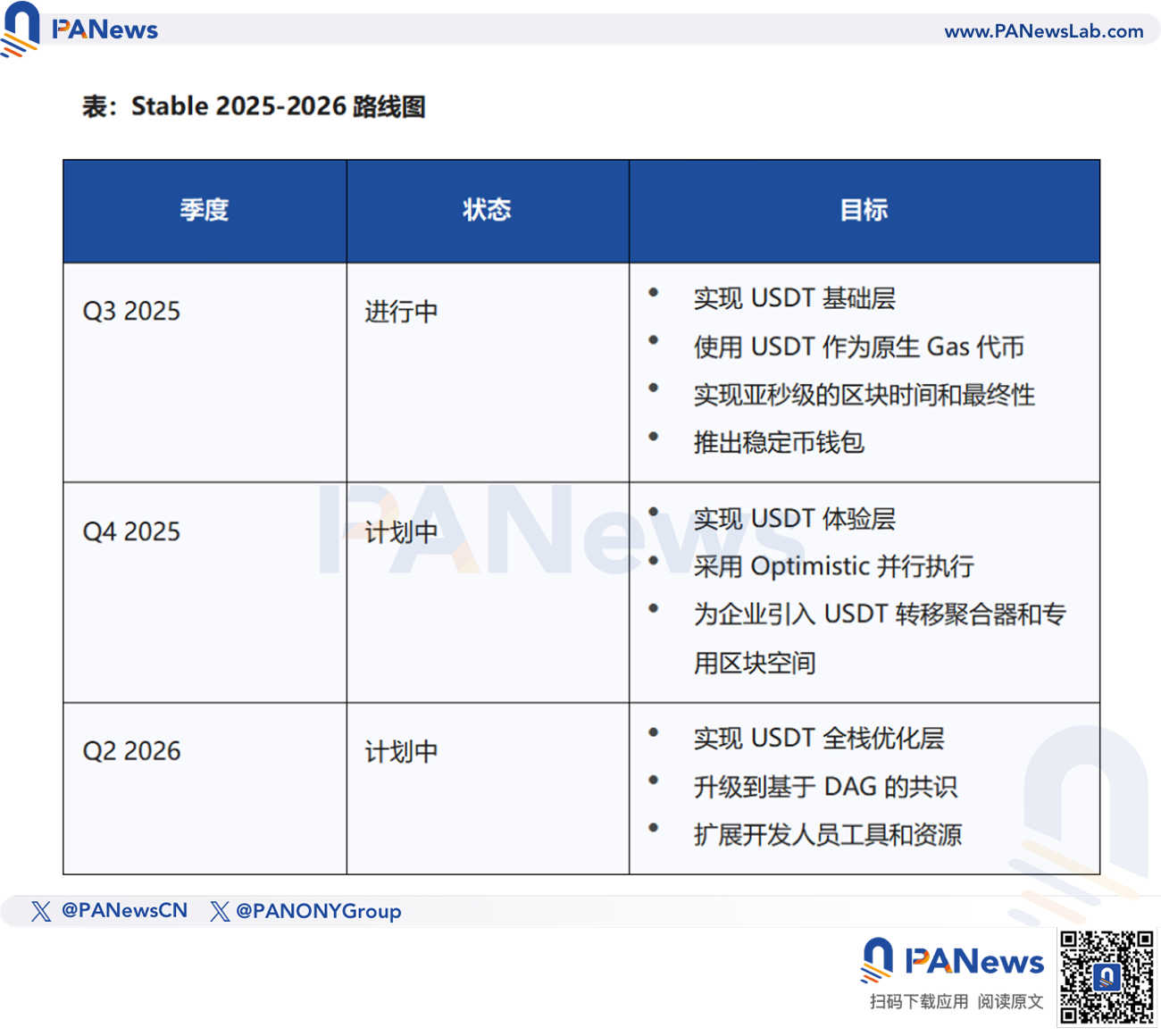
Según su hoja de ruta, los hitos principales son la integración empresarial y la construcción del ecosistema de desarrolladores previstos para Q4 de 2025 - Q2 de 2026. Si estos objetivos se pueden lograr顺利 (sin problemas) será clave para validar la propuesta de valor de Stable y la viabilidad de una L1 verticalizada. Pero desde el lanzamiento de la mainnet hasta la implementación de pilotos, solo hay unos seis meses. Stable debe superar rápidamente múltiples desafíos: optimización técnica, integración institucional y cultivo del ecosistema. Cualquier error en la ejecución podría causar una further caída en la confianza del mercado sobre su potencial a largo plazo.

El lanzamiento de la mainnet de Stable marca la entrada de la competencia en el sector de las stablecoins en una nueva etapa de infraestructura, y su capacidad para lograr el objetivo de remodelar la red de pagos最终将取决于 (finalmente dependerá de) la ejecución y no de la narrativa.


Trending Cryptos

Related Questions

Q¿Qué es STABLE y por qué se le llama 'el hijo favorito de Tether'?

ASTABLE es un nuevo token y cadena de bloques (Layer 1) diseñada específicamente para stablecoins, desarrollada por el equipo central de Bitfinex y Tether. Se le llama 'el hijo favorito de Tether' debido a esta estrecha relación y respaldo, lo que generó grandes expectativas en el mercado.

Q¿Cuál fue el desempeño del precio de STABLE en su primer día de trading?

AEl token STABLE tuvo un desempeño muy pobre en su primer día. Su precio de apertura fue de aproximadamente $0.036, alcanzó un máximo de cerca de $0.046 y luego cayó más del 60%, tocando un mínimo de $0.015.

Q¿Qué controversia de 'rat trading' o tráfico de información privilegiada afectó a STABLE?

AAntes del lanzamiento oficial, una ballena (gran inversor) depositó cientos de millones de USDT antes de la hora oficial de la primera ronda de predepósitos, lo que generó fuertes acusaciones de falta de equidad y tráfico de información privilegiada por parte de la comunidad.

Q¿Qué característica técnica única tiene la cadena Stable en cuanto al pago de comisiones (Gas)?

AStable es la primera cadena de bloques Layer 1 que utiliza USDT como gas fee nativo para pagar las comisiones de las transacciones, lo que ofrece una experiencia de usuario similar a no pagar gas y reduce la fricción al no necesitar manejar un token volátil para ello.

Q¿Cuáles son algunos de los principales competidores de Stable en el sector de las cadenas de bloques para pagos con stablecoins?

AStable enfrenta una competencia intensa. Además de cadenas establecidas como Polygon, Tron y Solana en el espacio de pagos, también compite con nuevos L1 verticales como Arc (desarrollado por Circle) y Tempo (respaldado por Stripe y Paradigm), ambos enfocados en pagos y infraestructura de stablecoins.

Related Reads

When the World Cup Collides with Agents: From Web2 to Web3, How Are Wallets Evolving into Agentic Wallets?

World Cup as a Catalyst for Agentic Wallets: From Web2 to Web3 This article explores how the World Cup provides a real-world scenario for observing the evolution of digital wallets from simple asset managers towards "Agentic Wallets"—intelligent, AI-powered interfaces. Using the example of prediction markets like Polymarket, it illustrates how AI Agents can lower the barrier to Web3 interaction. Instead of navigating complex DApps, users can express intent in natural language (e.g., "I think Portugal will win") within platforms like Discord or web pages. The Agent then interprets this intent, finds the relevant market, and seamlessly guides the user through the on-chain transaction via their wallet. The core shift is from wallets as mere "function menus" for signing transactions to "intent interpreters" that understand user goals. The article highlights parallel developments in traditional finance, such as Mastercard's "Agent Pay" and WeChat Pay's AI tests, which focus on granting AI controlled, authorized, and auditable payment capabilities. This underscores a broader trend of AI entering the financial layer. However, the article emphasizes that the primary challenge for Agentic Wallets in Web3 is not automation but establishing clear security boundaries. Unlike traditional systems with chargebacks, on-chain transactions are often irreversible. Therefore, future wallets must ensure users retain ultimate control and comprehension. They need to transparently communicate an Agent's permissions, spending limits, authorized durations, and provide easy ways to pause or revoke access. The World Cup experiments represent early steps toward wallets that are not just applications but ubiquitous, intelligent interfaces that simplify Web3 while keeping users securely in control.

marsbit36m ago

When the World Cup Collides with Agents: From Web2 to Web3, How Are Wallets Evolving into Agentic Wallets?

marsbit36m ago

Options Don't Work in DeFi? Vitalik Might Not Agree

For years, the prevailing view has been that options struggle to gain traction in DeFi due to complexity, fragmented liquidity, and lack of natural demand compared to products like perpetual futures. However, a recent algorithmic stablecoin design proposed by Vitalik Buterin presents a different perspective, using options not as a standalone trading product, but as foundational infrastructure for other financial instruments. In this design, one unit of ETH is split into two components: a "stable" side (P) that retains value up to a specified strike price, and an "upside" side (N) that captures all appreciation above that strike. Combined, they always equal one ETH, eliminating debt, margin, and liquidation risks inherent in typical collateralized debt position (CDP) stablecoins. The stable component essentially mimics the payoff of a covered call option. To function as a stablecoin, this structure requires continuously rolling deep in-the-money calls, which introduces challenges like rollover slippage, predictable transaction flow vulnerable to front-running, and persistent liquidity needs. A core hurdle is finding consistent buyers for the leveraged ETH upside exposure (N). While it offers leverage without funding rates or liquidation, it must compete with simpler alternatives like direct call options or perpetuals. The system's scalability depends on a sustained demand for this specific form of leverage. The author draws parallels to their experience with Rysk, where earlier versions of DeFi options protocols struggled. The breakthrough came with Rysk V12, which aligns incentives: asset holders generate yield by selling covered calls against their holdings, while market makers efficiently acquire the desired option exposure. This demonstrates that options can find product-market fit when embedded as a risk distribution and pricing engine within structured products, stablecoins, or yield-generating assets, rather than marketed as a complex direct trading instrument. Vitalik's proposal reinforces this architectural approach—using fully collateralized, non-custodial, and physically settled options as a fundamental building block. The real opportunity for options in DeFi may lie not in becoming the next perpetual swap, but in powering the next generation of on-chain financial products.

marsbit1h ago

Options Don't Work in DeFi? Vitalik Might Not Agree

marsbit1h ago

Conversation with Investor Zheng Di: MicroStrategy's Coin Sale Experiment, AI Economy, and Opportunities in US Stocks

Frontier tech investor Zheng "Didier" Di discusses the recent Bitcoin price drop, the financial strategy shift at MicroStrategy, the AI-driven surge in U.S. stocks, and the evolving role of crypto exchanges. Didier posits that the recent BTC decline stems less from macro factors or ETF outflows, and more from market repricing due to MicroStrategy's new financial structure. Following a wave of preferred stock and debt issuance (STRC, STRZ, etc.), MicroStrategy must now manage cash flow to pay dividends, potentially leading to a market expectation of sustained, small-scale BTC sales to maintain its "per-share bitcoin neutral" principle. Didier views this as a financial "experiment" testing market capacity for such recurring sell pressure, which, while creating near-term structural headwinds, likely avoids a true "death spiral" absent major new external shocks. Shifting to AI, Didier argues that tokens are becoming the new form of labor, with AI models and compute (tokenized inputs) increasingly replacing human roles in execution and middle-management. This drives enterprise efficiency and higher margins, fueling the sustained rally in U.S. semiconductor, data center, and infrastructure stocks. He foresees an emerging "machine economy" where automated agents transact and collaborate on-chain. Regarding crypto exchanges offering U.S. equities, Didier sees this as a natural evolution. With few crypto-native assets generating lasting value, exchanges are pivoting towards real-world assets (RWAs) like stocks and bonds. This doesn't necessarily cannibalize crypto but reflects a maturing industry focusing on blockchain's core utilities: decentralized choice and efficient settlement. He notes that trading logic for crypto natives doesn't need to drastically change, as meme-driven and fundamentalist strategies find analogs in U.S. markets. The "1011 event" (likely referring to a major market crash) severely damaged crypto market liquidity, marking a probable end to the altcoin speculative cycle, with capital flowing towards the deeper liquidity of U.S. markets. For the macro outlook, Didier is cautious about near-term market pressure from potential mega-IPOs (e.g., SpaceX) and the U.S. midterm elections, which could bring more regulatory scrutiny. Long-term, he remains bullish on AI's productivity gains and its convergence with blockchain/Web3, predicting a shift from speculative frenzy to a more institutionalized, industrial phase for the crypto sector.

marsbit1h ago

Conversation with Investor Zheng Di: MicroStrategy's Coin Sale Experiment, AI Economy, and Opportunities in US Stocks

marsbit1h ago

Playnance’s $GCOIN Lists on KoinBX Amid Rapid Growth in India

Playnance's native token, $GCOIN, has been listed on the cryptocurrency exchange KoinBX as of June 18. This move aims to enhance accessibility for its rapidly growing community, particularly in India, where the blockchain-powered Web3 iGaming ecosystem has gained significant traction. Over 130 partners in Playnance's "Be the Boss" program have built communities engaging thousands of active players in the region. The "Be the Boss" model allows participants to create and manage their own gaming communities, earning rewards tied to community activity. CEO Pini Peter noted India's high engagement, with community leaders successfully building player networks. One partner, Dr. Nicolas, reported earning over $57,000 through the program in recent months, highlighting both the financial rewards and the opportunity to grow an engaged community. $GCOIN serves as the ecosystem's core utility token, incentivizing participation and aligning the interests of players and community leaders ("Bosses"). The listing on KoinBX is part of Playnance's strategy to expand globally, increasing the token's utility and accessibility by combining community ownership, gamified engagement, and blockchain-based incentives. Founded in 2020, Playnance is a Web3 iGaming infrastructure company focused on creating live, non-custodial, on-chain products to onboard mainstream users. It currently processes approximately one million transactions daily, aiming to simplify the user experience while maintaining full on-chain transparency.

TheNewsCrypto2h ago

Playnance’s $GCOIN Lists on KoinBX Amid Rapid Growth in India

TheNewsCrypto2h ago

Trading

Spot
Futures

Hot Articles

What is SONIC

Sonic: Pioneering the Future of Gaming in Web3 Introduction to Sonic In the ever-evolving landscape of Web3, the gaming industry stands out as one of the most dynamic and promising sectors. At the forefront of this revolution is Sonic, a project designed to amplify the gaming ecosystem on the Solana blockchain. Leveraging cutting-edge technology, Sonic aims to deliver an unparalleled gaming experience by efficiently processing millions of requests per second, ensuring that players enjoy seamless gameplay while maintaining low transaction costs. This article delves into the intricate details of Sonic, exploring its creators, funding sources, operational mechanics, and the timeline of significant events that have shaped its journey. What is Sonic? Sonic is an innovative layer-2 network that operates atop the Solana blockchain, specifically tailored to enhance the existing Solana gaming ecosystem. It accomplishes this through a customised, VM-agnostic game engine paired with a HyperGrid interpreter, facilitating sovereign game economies that roll up back to the Solana platform. The primary goals of Sonic include: Enhanced Gaming Experiences: Sonic is committed to offering lightning-fast on-chain gameplay, allowing players and developers to engage with games at previously unattainable speeds. Atomic Interoperability: This feature enables transactions to be executed within Sonic without the need to redeploy Solana programmes and accounts. This makes the process more efficient and directly benefits from Solana Layer1 services and liquidity. Seamless Deployment: Sonic allows developers to write for Ethereum Virtual Machine (EVM) based systems and execute them on Solana’s SVM infrastructure. This interoperability is crucial for attracting a broader range of dApps and decentralised applications to the platform. Support for Developers: By offering native composable gaming primitives and extensible data types - dining within the Entity-Component-System (ECS) framework - game creators can craft intricate business logic with ease. Overall, Sonic's unique approach not only caters to players but also provides an accessible and low-cost environment for developers to innovate and thrive. Creator of Sonic The information regarding the creator of Sonic is somewhat ambiguous. However, it is known that Sonic's SVM is owned by the company Mirror World. The absence of detailed information about the individuals behind Sonic reflects a common trend in several Web3 projects, where collective efforts and partnerships often overshadow individual contributions. Investors of Sonic Sonic has garnered considerable attention and support from various investors within the crypto and gaming sectors. Notably, the project raised an impressive $12 million during its Series A funding round. The round was led by BITKRAFT Ventures, with other notable investors including Galaxy, Okx Ventures, Interactive, Big Brain Holdings, and Mirana. This financial backing signifies the confidence that investment foundations have in Sonic’s potential to revolutionise the Web3 gaming landscape, further validating its innovative approaches and technologies. How Does Sonic Work? Sonic utilises the HyperGrid framework, a sophisticated parallel processing mechanism that enhances its scalability and customisability. Here are the core features that set Sonic apart: Lightning Speed at Low Costs: Sonic offers one of the fastest on-chain gaming experiences compared to other Layer-1 solutions, powered by the scalability of Solana’s virtual machine (SVM). Atomic Interoperability: Sonic enables transaction execution without redeployment of Solana programmes and accounts, effectively streamlining the interaction between users and the blockchain. EVM Compatibility: Developers can effortlessly migrate decentralised applications from EVM chains to the Solana environment using Sonic’s HyperGrid interpreter, increasing the accessibility and integration of various dApps. Ecosystem Support for Developers: By exposing native composable gaming primitives, Sonic facilitates a sandbox-like environment where developers can experiment and implement business logic, greatly enhancing the overall development experience. Monetisation Infrastructure: Sonic natively supports growth and monetisation efforts, providing frameworks for traffic generation, payments, and settlements, thereby ensuring that gaming projects are not only viable but also sustainable financially. Timeline of Sonic The evolution of Sonic has been marked by several key milestones. Below is a brief timeline highlighting critical events in the project's history: 2022: The Sonic cryptocurrency was officially launched, marking the beginning of its journey in the Web3 gaming arena. 2024: June: Sonic SVM successfully raised $12 million in a Series A funding round. This investment allowed Sonic to further develop its platform and expand its offerings. August: The launch of the Sonic Odyssey testnet provided users with the first opportunity to engage with the platform, offering interactive activities such as collecting rings—a nod to gaming nostalgia. October: SonicX, an innovative crypto game integrated with Solana, made its debut on TikTok, capturing the attention of over 120,000 users within a short span. This integration illustrated Sonic’s commitment to reaching a broader, global audience and showcased the potential of blockchain gaming. Key Points Sonic SVM is a revolutionary layer-2 network on Solana explicitly designed to enhance the GameFi landscape, demonstrating great potential for future development. HyperGrid Framework empowers Sonic by introducing horizontal scaling capabilities, ensuring that the network can handle the demands of Web3 gaming. Integration with Social Platforms: The successful launch of SonicX on TikTok displays Sonic’s strategy to leverage social media platforms to engage users, exponentially increasing the exposure and reach of its projects. Investment Confidence: The substantial funding from BITKRAFT Ventures, among others, emphasizes the robust backing Sonic has, paving the way for its ambitious future. In conclusion, Sonic encapsulates the essence of Web3 gaming innovation, striking a balance between cutting-edge technology, developer-centric tools, and community engagement. As the project continues to evolve, it is poised to redefine the gaming landscape, making it a notable entity for gamers and developers alike. As Sonic moves forward, it will undoubtedly attract greater interest and participation, solidifying its place within the broader narrative of blockchain gaming.

1.7k Total ViewsPublished 2024.04.04Updated 2024.12.03

What is SONIC

What is $S$

Understanding SPERO: A Comprehensive Overview Introduction to SPERO As the landscape of innovation continues to evolve, the emergence of web3 technologies and cryptocurrency projects plays a pivotal role in shaping the digital future. One project that has garnered attention in this dynamic field is SPERO, denoted as SPERO,$$s$. This article aims to gather and present detailed information about SPERO, to help enthusiasts and investors understand its foundations, objectives, and innovations within the web3 and crypto domains. What is SPERO,$$s$? SPERO,$$s$ is a unique project within the crypto space that seeks to leverage the principles of decentralisation and blockchain technology to create an ecosystem that promotes engagement, utility, and financial inclusion. The project is tailored to facilitate peer-to-peer interactions in new ways, providing users with innovative financial solutions and services. At its core, SPERO,$$s$ aims to empower individuals by providing tools and platforms that enhance user experience in the cryptocurrency space. This includes enabling more flexible transaction methods, fostering community-driven initiatives, and creating pathways for financial opportunities through decentralised applications (dApps). The underlying vision of SPERO,$$s$ revolves around inclusiveness, aiming to bridge gaps within traditional finance while harnessing the benefits of blockchain technology. Who is the Creator of SPERO,$$s$? The identity of the creator of SPERO,$$s$ remains somewhat obscure, as there are limited publicly available resources providing detailed background information on its founder(s). This lack of transparency can stem from the project's commitment to decentralisation—an ethos that many web3 projects share, prioritising collective contributions over individual recognition. By centring discussions around the community and its collective goals, SPERO,$$s$ embodies the essence of empowerment without singling out specific individuals. As such, understanding the ethos and mission of SPERO remains more important than identifying a singular creator. Who are the Investors of SPERO,$$s$? SPERO,$$s$ is supported by a diverse array of investors ranging from venture capitalists to angel investors dedicated to fostering innovation in the crypto sector. The focus of these investors generally aligns with SPERO's mission—prioritising projects that promise societal technological advancement, financial inclusivity, and decentralised governance. These investor foundations are typically interested in projects that not only offer innovative products but also contribute positively to the blockchain community and its ecosystems. The backing from these investors reinforces SPERO,$$s$ as a noteworthy contender in the rapidly evolving domain of crypto projects. How Does SPERO,$$s$ Work? SPERO,$$s$ employs a multi-faceted framework that distinguishes it from conventional cryptocurrency projects. Here are some of the key features that underline its uniqueness and innovation: Decentralised Governance: SPERO,$$s$ integrates decentralised governance models, empowering users to participate actively in decision-making processes regarding the project’s future. This approach fosters a sense of ownership and accountability among community members. Token Utility: SPERO,$$s$ utilises its own cryptocurrency token, designed to serve various functions within the ecosystem. These tokens enable transactions, rewards, and the facilitation of services offered on the platform, enhancing overall engagement and utility. Layered Architecture: The technical architecture of SPERO,$$s$ supports modularity and scalability, allowing for seamless integration of additional features and applications as the project evolves. This adaptability is paramount for sustaining relevance in the ever-changing crypto landscape. Community Engagement: The project emphasises community-driven initiatives, employing mechanisms that incentivise collaboration and feedback. By nurturing a strong community, SPERO,$$s$ can better address user needs and adapt to market trends. Focus on Inclusion: By offering low transaction fees and user-friendly interfaces, SPERO,$$s$ aims to attract a diverse user base, including individuals who may not previously have engaged in the crypto space. This commitment to inclusion aligns with its overarching mission of empowerment through accessibility. Timeline of SPERO,$$s$ Understanding a project's history provides crucial insights into its development trajectory and milestones. Below is a suggested timeline mapping significant events in the evolution of SPERO,$$s$: Conceptualisation and Ideation Phase: The initial ideas forming the basis of SPERO,$$s$ were conceived, aligning closely with the principles of decentralisation and community focus within the blockchain industry. Launch of Project Whitepaper: Following the conceptual phase, a comprehensive whitepaper detailing the vision, goals, and technological infrastructure of SPERO,$$s$ was released to garner community interest and feedback. Community Building and Early Engagements: Active outreach efforts were made to build a community of early adopters and potential investors, facilitating discussions around the project’s goals and garnering support. Token Generation Event: SPERO,$$s$ conducted a token generation event (TGE) to distribute its native tokens to early supporters and establish initial liquidity within the ecosystem. Launch of Initial dApp: The first decentralised application (dApp) associated with SPERO,$$s$ went live, allowing users to engage with the platform's core functionalities. Ongoing Development and Partnerships: Continuous updates and enhancements to the project's offerings, including strategic partnerships with other players in the blockchain space, have shaped SPERO,$$s$ into a competitive and evolving player in the crypto market. Conclusion SPERO,$$s$ stands as a testament to the potential of web3 and cryptocurrency to revolutionise financial systems and empower individuals. With a commitment to decentralised governance, community engagement, and innovatively designed functionalities, it paves the way toward a more inclusive financial landscape. As with any investment in the rapidly evolving crypto space, potential investors and users are encouraged to research thoroughly and engage thoughtfully with the ongoing developments within SPERO,$$s$. The project showcases the innovative spirit of the crypto industry, inviting further exploration into its myriad possibilities. While the journey of SPERO,$$s$ is still unfolding, its foundational principles may indeed influence the future of how we interact with technology, finance, and each other in interconnected digital ecosystems.

59 Total ViewsPublished 2024.12.17Updated 2024.12.17

What is $S$

What is AGENT S

Agent S: The Future of Autonomous Interaction in Web3 Introduction In the ever-evolving landscape of Web3 and cryptocurrency, innovations are constantly redefining how individuals interact with digital platforms. One such pioneering project, Agent S, promises to revolutionise human-computer interaction through its open agentic framework. By paving the way for autonomous interactions, Agent S aims to simplify complex tasks, offering transformative applications in artificial intelligence (AI). This detailed exploration will delve into the project's intricacies, its unique features, and the implications for the cryptocurrency domain. What is Agent S? Agent S stands as a groundbreaking open agentic framework, specifically designed to tackle three fundamental challenges in the automation of computer tasks: Acquiring Domain-Specific Knowledge: The framework intelligently learns from various external knowledge sources and internal experiences. This dual approach empowers it to build a rich repository of domain-specific knowledge, enhancing its performance in task execution. Planning Over Long Task Horizons: Agent S employs experience-augmented hierarchical planning, a strategic approach that facilitates efficient breakdown and execution of intricate tasks. This feature significantly enhances its ability to manage multiple subtasks efficiently and effectively. Handling Dynamic, Non-Uniform Interfaces: The project introduces the Agent-Computer Interface (ACI), an innovative solution that enhances the interaction between agents and users. Utilizing Multimodal Large Language Models (MLLMs), Agent S can navigate and manipulate diverse graphical user interfaces seamlessly. Through these pioneering features, Agent S provides a robust framework that addresses the complexities involved in automating human interaction with machines, setting the stage for myriad applications in AI and beyond. Who is the Creator of Agent S? While the concept of Agent S is fundamentally innovative, specific information about its creator remains elusive. The creator is currently unknown, which highlights either the nascent stage of the project or the strategic choice to keep founding members under wraps. Regardless of anonymity, the focus remains on the framework's capabilities and potential. Who are the Investors of Agent S? As Agent S is relatively new in the cryptographic ecosystem, detailed information regarding its investors and financial backers is not explicitly documented. The lack of publicly available insights into the investment foundations or organisations supporting the project raises questions about its funding structure and development roadmap. Understanding the backing is crucial for gauging the project's sustainability and potential market impact. How Does Agent S Work? At the core of Agent S lies cutting-edge technology that enables it to function effectively in diverse settings. Its operational model is built around several key features: Human-like Computer Interaction: The framework offers advanced AI planning, striving to make interactions with computers more intuitive. By mimicking human behaviour in tasks execution, it promises to elevate user experiences. Narrative Memory: Employed to leverage high-level experiences, Agent S utilises narrative memory to keep track of task histories, thereby enhancing its decision-making processes. Episodic Memory: This feature provides users with step-by-step guidance, allowing the framework to offer contextual support as tasks unfold. Support for OpenACI: With the ability to run locally, Agent S allows users to maintain control over their interactions and workflows, aligning with the decentralised ethos of Web3. Easy Integration with External APIs: Its versatility and compatibility with various AI platforms ensure that Agent S can fit seamlessly into existing technological ecosystems, making it an appealing choice for developers and organisations. These functionalities collectively contribute to Agent S's unique position within the crypto space, as it automates complex, multi-step tasks with minimal human intervention. As the project evolves, its potential applications in Web3 could redefine how digital interactions unfold. Timeline of Agent S The development and milestones of Agent S can be encapsulated in a timeline that highlights its significant events: September 27, 2024: The concept of Agent S was launched in a comprehensive research paper titled “An Open Agentic Framework that Uses Computers Like a Human,” showcasing the groundwork for the project. October 10, 2024: The research paper was made publicly available on arXiv, offering an in-depth exploration of the framework and its performance evaluation based on the OSWorld benchmark. October 12, 2024: A video presentation was released, providing a visual insight into the capabilities and features of Agent S, further engaging potential users and investors. These markers in the timeline not only illustrate the progress of Agent S but also indicate its commitment to transparency and community engagement. Key Points About Agent S As the Agent S framework continues to evolve, several key attributes stand out, underscoring its innovative nature and potential: Innovative Framework: Designed to provide an intuitive use of computers akin to human interaction, Agent S brings a novel approach to task automation. Autonomous Interaction: The ability to interact autonomously with computers through GUI signifies a leap towards more intelligent and efficient computing solutions. Complex Task Automation: With its robust methodology, it can automate complex, multi-step tasks, making processes faster and less error-prone. Continuous Improvement: The learning mechanisms enable Agent S to improve from past experiences, continually enhancing its performance and efficacy. Versatility: Its adaptability across different operating environments like OSWorld and WindowsAgentArena ensures that it can serve a broad range of applications. As Agent S positions itself in the Web3 and crypto landscape, its potential to enhance interaction capabilities and automate processes signifies a significant advancement in AI technologies. Through its innovative framework, Agent S exemplifies the future of digital interactions, promising a more seamless and efficient experience for users across various industries. Conclusion Agent S represents a bold leap forward in the marriage of AI and Web3, with the capacity to redefine how we interact with technology. While still in its early stages, the possibilities for its application are vast and compelling. Through its comprehensive framework addressing critical challenges, Agent S aims to bring autonomous interactions to the forefront of the digital experience. As we move deeper into the realms of cryptocurrency and decentralisation, projects like Agent S will undoubtedly play a crucial role in shaping the future of technology and human-computer collaboration.

733 Total ViewsPublished 2025.01.14Updated 2025.01.14

What is AGENT S

Discussions

Welcome to the HTX Community. Here, you can stay informed about the latest platform developments and gain access to professional market insights. Users' opinions on the price of S (S) are presented below.

活动图片