以太坊进行「Fusaka 升级」,继续「扩容和提效」,强化链上结算能力

深潮Published on 2025-12-03Last updated on 2025-12-04

Fusaka 升级将巩固其结算层地位,并推动Layer-2竞争维度向用户体验与生态深度演进。

撰文:叶慧雯

来源:华尔街见闻

以太坊今日正在执行名为「Fusaka」的关键网络升级,这是其持续扩展路线图中的又一重要里程碑。此次升级旨在通过大幅提升数据容量和优化协议效率,进一步降低 Layer-2 网络的交易成本,巩固以太坊作为全球高效结算层的核心地位。

根据计划,Fusaka 升级将于 2025 年 12 月 3 日在区块高度 13,164,544 处被激活。这是继 Dencun 和 Pectra 升级之后,以太坊在扩展道路上迈出的新一步。高盛加密业务负责人 Kenny Lee 指出,Fusaka 代表了以太坊可扩展性路线图的下一阶段,其目标是推动网络演变为一个兼具全球影响力与成本效益的结算层。
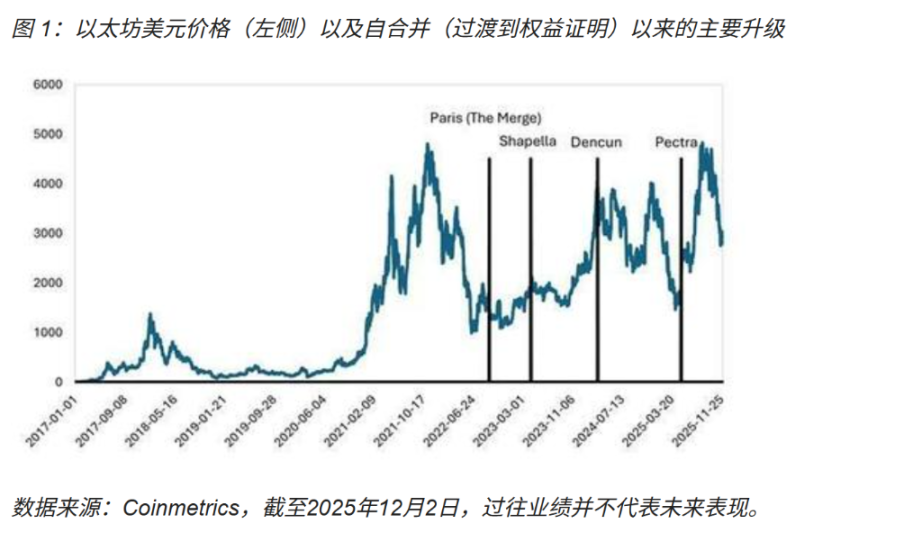
本次升级最核心的变化是引入了「PeerDAS」(Peer Data Availability Sampling,对等数据可用性抽样)技术。该功能旨在将 Layer-2 网络的数据容量理论上提升 8 倍,从而实现更高的交易吞吐量,并有望显著降低 Layer-2 用户的交易费用。

此外,Fusaka 升级还包括引入「仅 Blob 参数」(BPO)分叉机制,使未来的网络容量提升更加灵活;同时通过存储过期和区块控制等功能优化 Layer-1 主网性能,并改善钱包功能与用户体验。这些变化共同构成了以太坊在可扩展性、可持续性和操作性方面的一次结构性飞跃。

从 Dencun 到 Fusaka:专注扩展与基础设施优化

Fusaka 升级实际上是共识层「Fulu」升级与执行层「Osaka」升级的同步激活。根据以太坊基金会确认的最终方案,升级所包含的以太坊改进提案(EIPs)主要聚焦于三大领域:

  • 提升 Layer-1 效率: 包括存储到期(EIP-7642)和交易 Gas 上限(EIP-7825)等,旨在随着网络使用量增长,保持节点运行的高效性。

  • 扩展 Layer-2 数据容量: 核心是 PeerDAS(EIP-7594),辅以 Blob 参数更新(EIP-7892)和 Blob 费用优化(EIP-7918)。

  • 改善用户体验与开发者工具: 涵盖了确定性提议者前瞻(EIP-7917)和对 secp256r1 曲线支持的预编译(EIP-7951)等,以增强钱包功能和应用开发。

这三大方向与以太坊基金会于 2025 年 4 月确立的战略重点(扩展以太坊主网、扩展 Blobs、改善用户体验)完全一致,本文将重点关注其对 Layer-2 数据容量的提升和费用机制的优化。

核心使命:以「L2 为中心」的扩容之路

为了理解以太坊为何专注于通过 Layer-2 进行扩展,需要回顾其设计哲学。

在「区块链三难困境」(即去中心化、安全性和可扩展性三者无法兼得)中,以太坊的设计早期优先保障了其基础层(Layer-1)的去中心化和安全性。这导致随着去中心化应用需求的增长,Layer-1 出现了交易费用高昂和确认时间缓慢的瓶颈。

为解决此问题,以太坊采纳了「以 Rollup 为中心」的路线图。该策略将绝大部分交易处理任务转移到 Layer-2 网络上,Layer-2 在链下执行交易,然后将压缩后的数据发布回以太坊 Layer-1 进行最终结算和保障安全。

这种模块化方法使以太坊在不牺牲其核心去中心化原则的前提下,实现了可扩展性。然而,这也引出了新的「数据可用性」问题——即如何向全网证明已发布的压缩数据是有效的,而又无需每个节点都下载全部数据。

PeerDAS:实现数据容量 8 倍增长的关键

Fusaka 升级中最具影响力的功能 PeerDAS,正是为了解决上述数据可用性问题而生。

在 Fusaka 之前,尽管 Dencun 升级引入了「Blobs」作为一种经济高效的 Layer-2 数据存储方式,但每个以太坊全节点仍需下载完整的 Blob 数据,这限制了网络的带宽和吞吐量上限。

PeerDAS 从根本上改变了这一模式。升级后,网络会将 Blob 数据分割成小片,并分散到不同节点。每个节点只需下载并验证总数据的一小部分(约 1/8),便能通过加密方法确保整个数据集的可用性和完整性。这一机制大幅降低了单个节点的资源要求,从而为网络带来了理论上约 8 倍的数据容量增长。PeerDAS 为后续的 Blob 扩容奠定了基础,是推动 Layer-2 交易成本下降的关键驱动力。

BPO 分叉:更灵活地提升 Blob 上限

随着 Layer-2 交易活动的持续增长 ( 图二),其对 Blob 空间的需求也在不断上升。
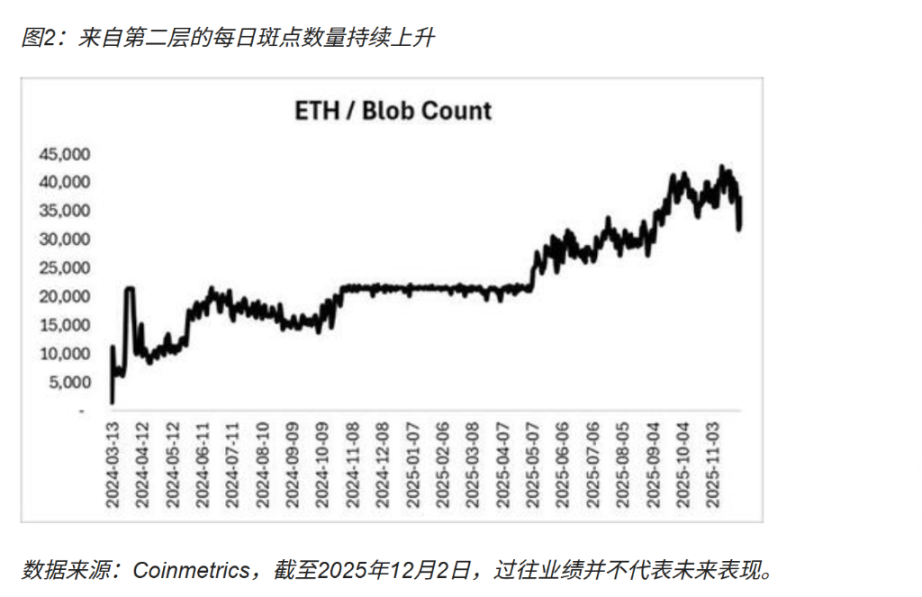
据 Coinmetrics 数据显示,每日 Blob 数量呈上升趋势。然而,在现有机制下,增加每区块的 Blob 数量需要进行一次复杂的「硬分叉」,这类重大升级协调难度大且频率低。

为解决这一瓶颈,Fusaka 引入了「仅 Blob 参数(BPO)分叉」机制。这是一种专用的轻量级分叉,仅用于更新与 Blob 相关的参数(如每区块最大 Blob 数)。由于其范围小、影响可控,开发团队可以更频繁、更安全地部署此类升级,使网络能够渐进式地增加数据容量,而无需等待包含其他功能的重大升级。据以太坊基金会称,BPO 分叉将被预先编程,以在几周内分阶段将 Blob 数量翻倍,直至达到最大值。

稳定费用市场:引入 Blob 底价机制

Dencun 升级后,Layer-2 向以太坊发布数据面临两种独立的费用:执行 Gas 和 Blob Gas。当 Blob 需求低时,其费用可能降至接近零,但 Layer-2 仍需支付可能相当可观的执行 Gas。这种「价格信号失灵」会导致定价效率低下和市场不稳定。

为解决此问题,Fusaka 通过 EIP-7918 引入了 Blob 的「底价」机制。该底价并非固定值,而是与执行 Gas 费用动态挂钩。

当市场驱动的 Blob 费用低于此底价时,费用调整算法将阻止其进一步下降。此举旨在确保 Blob 费用始终能反映其经济价值,使费用市场对网络拥堵保持敏感,并为 Layer-2 提供一个更稳定、更可预测的定价环境。

市场影响与潜在风险

Fusaka 升级预计将对市场产生深远影响。PeerDAS 和 BPO 分叉带来的数据容量提升,有望进一步降低 Layer-2 的运营成本。同时,EIP-7918 的底价机制则确保了 Blob 空间不会被不合理地廉价使用,维持了网络的经济可持续性。这可能会加剧 Layer-2 网络之间的竞争,竞争焦点或将从交易成本转向用户体验、生态合作和流动性深度。

不过,此次升级也伴随着一些风险与考量:

  • 执行风险:任何重大硬分叉都存在客户端协调失败或出现漏洞的风险,可能导致网络暂时不稳定。

  • 主网费用影响有限: 升级的直接好处主要体现在 Layer-2,以太坊主网的 Gas 费用短期内可能不会立即下降。

  • 硬件要求: 尽管 PeerDAS 优化了效率,但更高的 Blob 目标仍可能随时间推移增加验证者的带宽需求。

  • 生态适应延迟: Layer-2 和 dApp 开发者需要时间来充分利用新的架构优势。

Trending Cryptos

Related Reads

The Networking Game in Silicon Valley's Elite Circles: Those with Connections Get $50 Million, While the Truly Talented Can't Raise Money?

"Silicon Valley's Meritocracy to Relationship Game: How Networks Now Trump Talent." The article argues that Silicon Valley has shifted from a meritocracy to a "kingmaker" system where connections and background outweigh true ability. Key factors driving this change include: 1. **AI-Distorted Expectations:** Unprecedented growth curves (e.g., Anthropic) have led VCs to seek only "sure things" or pattern-match against past successes. 2. **Capital Concentration:** LP funds are concentrated in a few large, multi-stage funds, pushing VCs to overpay for hot deals to secure capital. 3. **VC Professionalization:** The industry has become a standardized career path, attracting conformist "NPCs" rather than independent thinkers. The long IPO timeline incentivizes safe, consensus bets for career advancement over risky, fund-returning outliers. This consensus capital fuels consensus founders. Startups are now a standard career option, with accelerators pressuring uniform ideas (e.g., 81% AI). Founders from elite schools (Stanford, OpenAI) easily raise millions based on pedigree, not proof. Large funds preemptively back "centrally cast" teams with $10-50M war chests to dominate categories, sidelining outsiders. The "kingmaker" strategy has downstream effects: it encourages aggressive, sometimes fraudulent, revenue reporting and allows founders to sell significant secondary shares early, attracting grifters. The author predicts a mean reversion. History shows the hottest trends rarely produce the most valuable companies. They advocate backing underestimated outsiders with "a chip on their shoulder" over anointed insiders, believing true meritocracy will ultimately win. "Those chasing the herd are set up for slaughter."

marsbit5m ago

The Networking Game in Silicon Valley's Elite Circles: Those with Connections Get $50 Million, While the Truly Talented Can't Raise Money?

marsbit5m ago

From 2 Million Monthly Active Users to Zero: Zapper's Demise in the "Maturation" of DeFi

From 2M MAU to Zero: The Demise of Zapper in a Maturing DeFi Landscape On July 8, 2026, Zapper co-founder Seb Audet announced the platform's full shutdown. Once a DeFi star with 2 million monthly active users, $13B in processed transactions, and $16.5M in funding, Zapper's journey ends. Born in 2020 from the merger of DeFiZap and DeFiSnap, Zapper rode the "DeFi Summer" wave. It became essential for users to track complex, multi-protocol yield farming positions across chains. At its peak, it supported 14 chains, 450+ protocols, and 7000+ tokens, with its signature "Zap" feature simplifying multi-step DeFi actions. However, sustainable revenue never materialized. Its primary model—taking small fees from DEX aggregation—faced fierce competition and squeezed margins. Meanwhile, maintaining its extensive, real-time data indexing system was costly. Crucially, the DeFi ecosystem matured, with activity and liquidity concentrating in fewer top protocols. The core demand for a complex, multi-protocol dashboard waned as user behavior simplified. Zapper attempted multiple pivots that failed to gain traction: an NFT-based points system (2021), a social app called Chainchat (2023), and plans for a ZAP token and open protocol (2024). These efforts reflected a persistent "blockchain-native" mindset focused on creating new C端 (consumer) needs rather than addressing existing pain points or bolstering its revenue-generating products. The article contrasts Zapper with DeBank, which successfully narrowed its asset-tracking focus while developing Rabby Wallet—a revenue-stabilizing, competitive product. Zapper's story serves as a cautionary tale for tooling projects: over-immersion in a purist vision, coupled with an inability to adapt business models to market shifts—like the consolidation of DeFi activity—can be fatal, even for once-dominant platforms.

marsbit28m ago

From 2 Million Monthly Active Users to Zero: Zapper's Demise in the "Maturation" of DeFi

marsbit28m ago

Goldman Sachs Bans It, Google Bans It Too: The Gray Zone of Prediction Markets Is Shrinking Fast

Goldman Sachs has updated its personal trading policy, prohibiting employees from trading event contracts on prediction markets involving specific companies (including whether Goldman itself might restructure or initiate acquisitions in a quarter), election outcomes, financial market performance (including Bitcoin prices), macroeconomic data, geopolitical events, and regulatory results for pending M&A deals. Sports and entertainment bets remain allowed. Violations can lead to dismissal or account closure, and the firm may reclaim profits over $200 or donate them to charity. This follows a CFTC case against a Google engineer who allegedly used non-public data to profit $1.2 million on Polymarket. Simultaneously, Google's Chrome Web Store updated its policy, banning extensions that facilitate real-money trading on prediction market outcomes, effective August 1, 2026. While not affecting platforms' websites or mobile apps directly, this restricts a key user access channel. These actions occur amid growing regulatory pressure on prediction markets. The CFTC is investigating Polymarket for alleged misconduct, and a consumer group has filed a lawsuit. Over 30 countries, including Argentina, have blocked access. Despite this, trading volume has hit record highs, and major investments continue, such as ICE's $2 billion stake in Polymarket. The core debate remains whether prediction markets are financial instruments or gambling. CFTC argues for federal oversight as derivatives, while some states seek to regulate them under gambling laws. Multiple fronts—federal probes, political pressure, internal corporate bans, and platform restrictions—are narrowing the operational space for these markets.

Foresight News34m ago

Goldman Sachs Bans It, Google Bans It Too: The Gray Zone of Prediction Markets Is Shrinking Fast

Foresight News34m ago

Trading

Spot

Hot Articles

Discussions

Welcome to the HTX Community. Here, you can stay informed about the latest platform developments and gain access to professional market insights. Users' opinions on the price of ETH (ETH) are presented below.

活动图片