爆仓 7.52 亿后再临大考:比特币 98000 美元关口,该抄底还是等破位?

MarsBitPublished on 2025-11-13Last updated on 2026-04-02

Abstract

若98,000美元失守,下一个关键支撑将下移至8.45万美元。

比特币价格

截至2025年11月14日,比特币价格一度下探98,000美元关口,较本周高点下跌约3.5%,且期货市场清算规模激增,近30日内长期持有者抛售量高达81.5万枚比特币,加剧了市场对流动性薄弱区域的担忧。
比特币价格

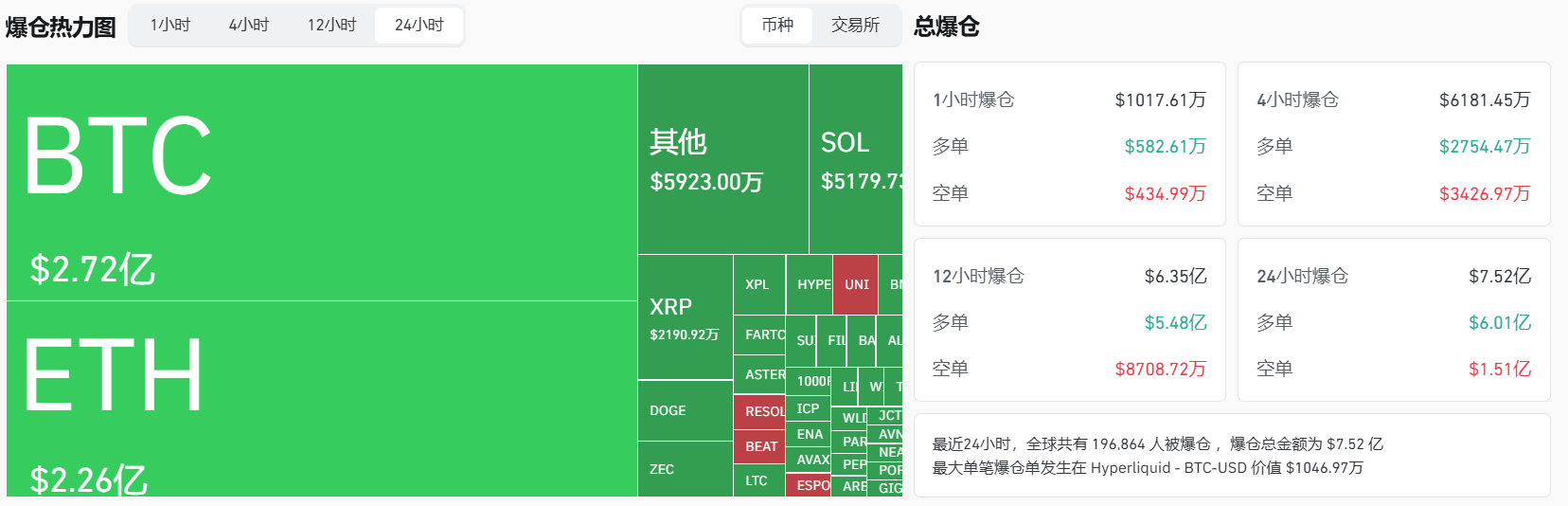
最近24小时,全球共有 196,882 人被爆仓 ,爆仓总金额为 $7.52 亿


最大单笔爆仓单发生在 Hyperliquid - BTC-USD 价值 $1046.97万


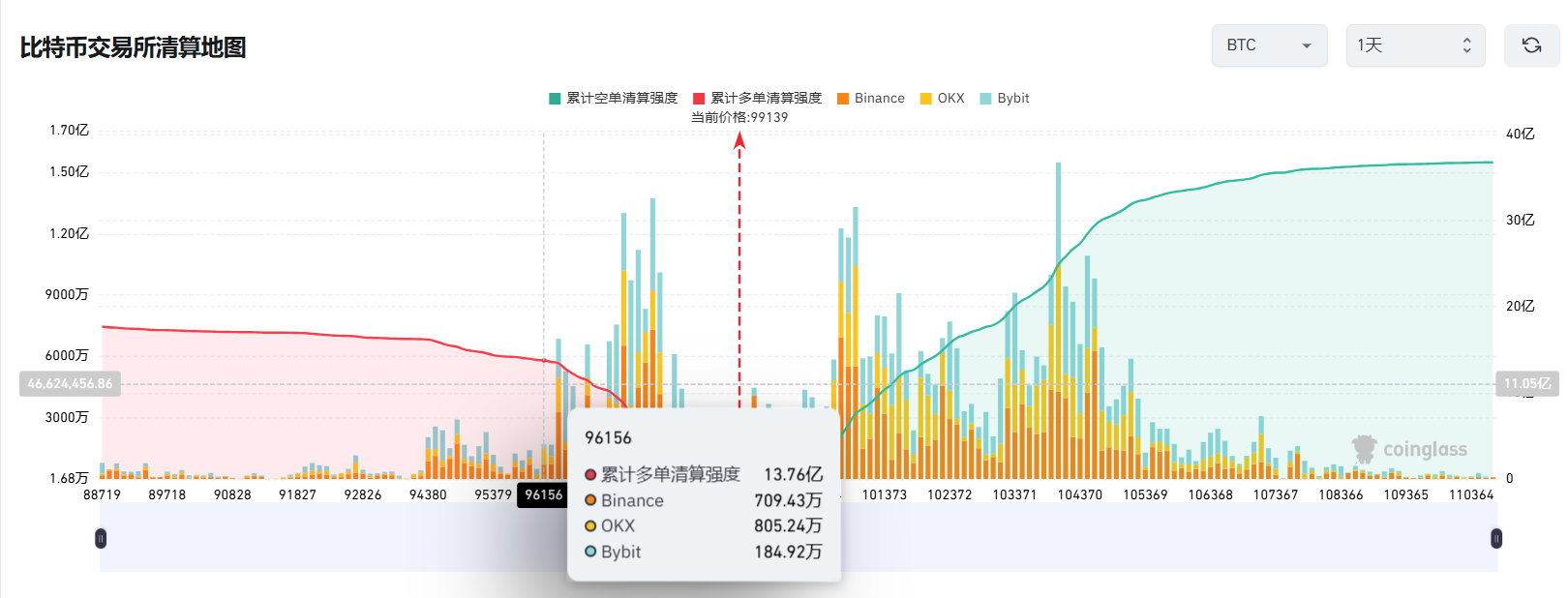
尽管部分多头仍在102,000美元至98,000美元支撑区间反复抵抗,但第四次测试该区域已暴露结构性疲软,而98,000美元下方密集的清算流动性(近13亿美元)正成为空头攻击的首要目标。这一局面的形成,是技术面、资金面和宏观政策三重压力共同作用的结果。


技术面破位与流动性危机:98,000美元为何成为“多空生死线”?​


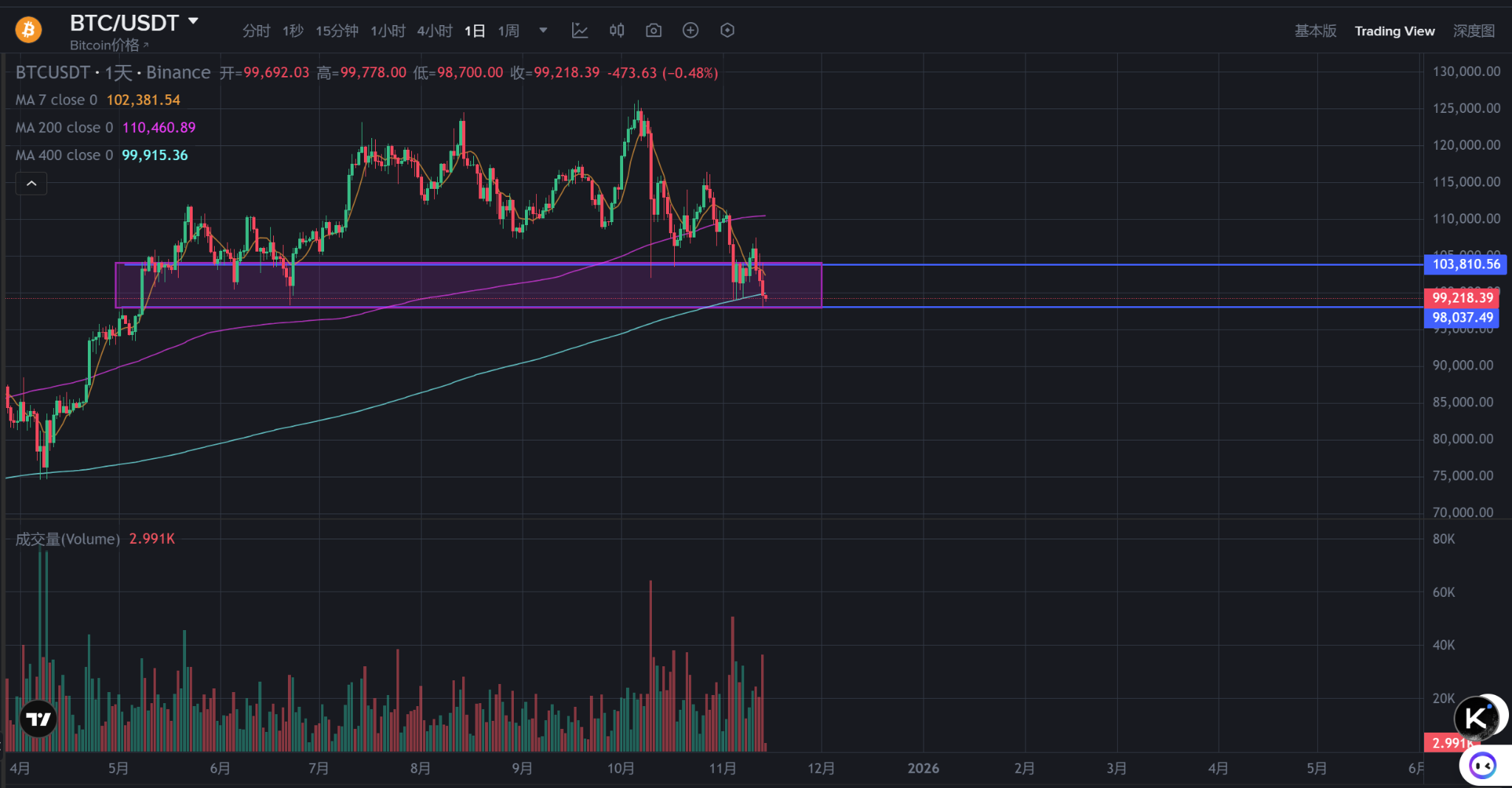
从技术分析视角看,比特币已处于关键趋势转折点。价格不仅跌破了维持数月的上升趋势线,更失守365日均线(9.9万美元)这一长期牛熊分界线,标志着自8月反弹以来的结构性支撑已被破坏。


多次对102,000美元至98,000美元支撑区的测试,虽暂未形成彻底破位,但每次回测都消耗了多头的防御能力。


根据历史规律,同一支撑位的反复试探通常导致“支撑钝化”,即买盘信心逐渐衰竭,一旦破位可能引发加速下跌。 更严峻的问题在于流动性分布的不平衡。
比特币价格


CoinGlass数据显示,98,000美元至100,000美元区间聚集了约13亿美元的多头杠杆清算单,而上方108,000美元至112,000美元虽存在空头清算压力,但当前市场结构下,空头更具优势。这种流动性格局使得价格极易被牵引至清算密集区,形成“下跌→清算→抛压加剧”的负反馈循环。


若98,000美元失守,下一个关键支撑将下移至8.45万美元(2025年4月高点与2月低点连线支撑),甚至7.3万至7.5万美元区间。

机构行为分化:ETF失血、微策抄底与政策落空的博弈​

比特币价格

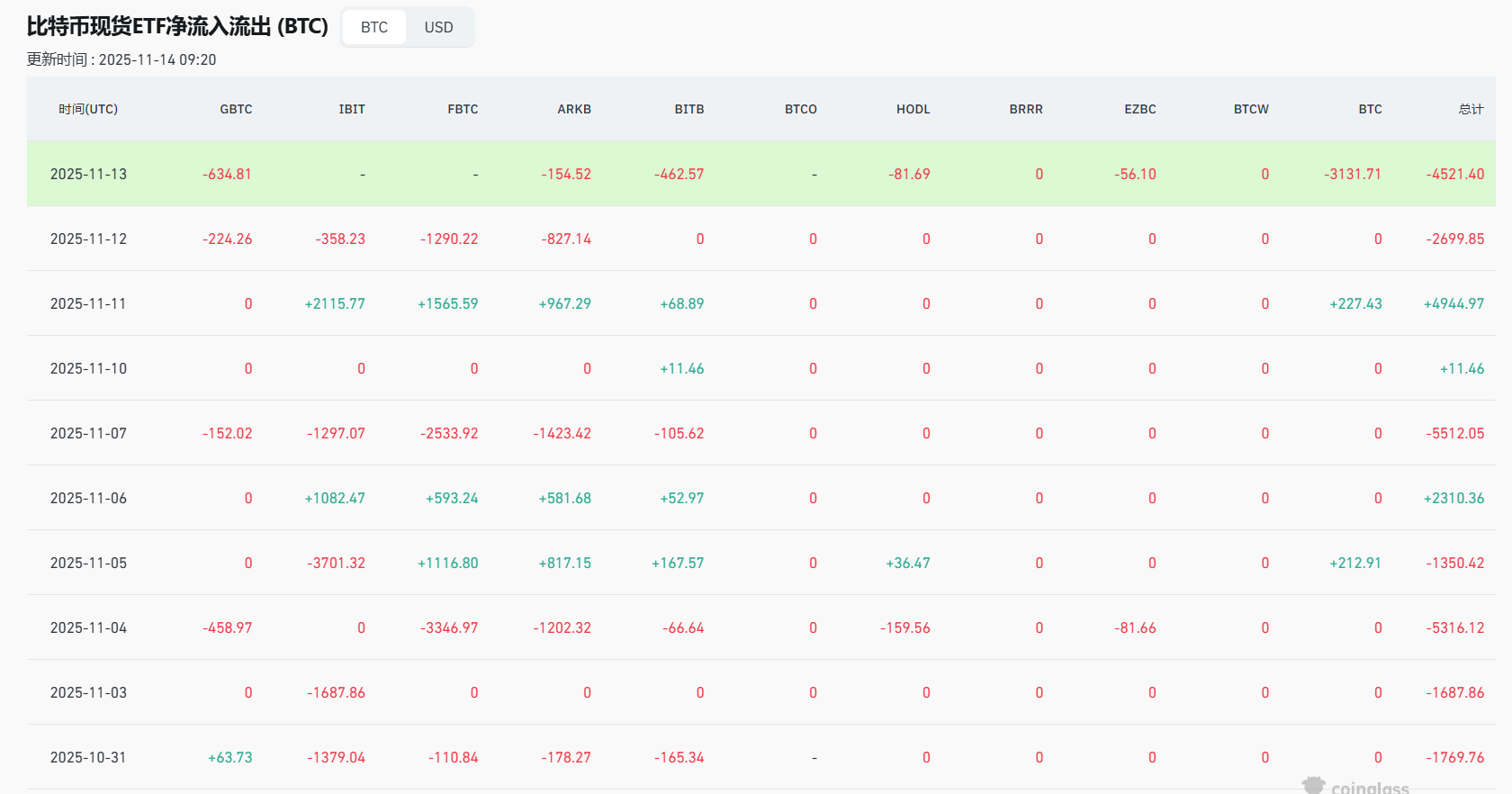
机构资金的动向成为短期市场情绪的核心变量。现货比特币ETF连续7日净流出累计达15.2亿美元,其中60%来自单笔超1000万美元的大型机构持仓,贝莱德IBIT、富达FBTC等头部产品的机构持有比例较10月下降4.2%。


这一现象背后是机构对“政策预期落空”的失望:特朗普政府承诺的监管宽松与国家战略储备计划迟迟未落地,而美国国税局强化加密资产税务监管的消息反而打压了风险偏好。


此外,美联储12月降息概率已降至50.7%(CME FedWatch数据),鹰派信号进一步抑制了机构对高风险资产的配置意愿。


然而,市场并非全然悲观。


部分长期投资者正逆向布局:微策投资(MicroStrategy)在11月10日至12日期间以均价9.15万美元增持1200枚比特币,某亚洲主权基金旗下数字资产基金也在9万至9.2万美元区间买入超5000万美元。这种分化表明,当前价位已接近部分机构的“价值底”共识(Galaxy Digital模型显示比特币公允价值约为8.8万美元),但资金流入的持续性仍取决于政策明朗化。

期货市场杠杆危机:多空双爆风险与流动性陷阱​

比特币价格

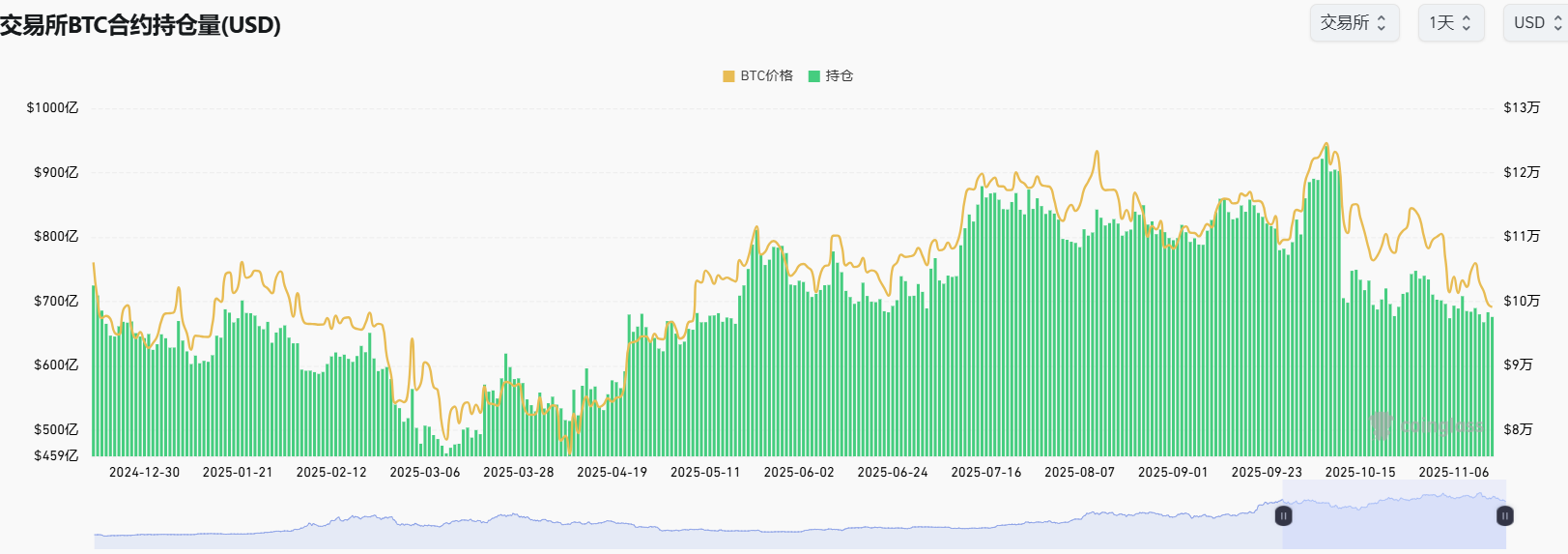
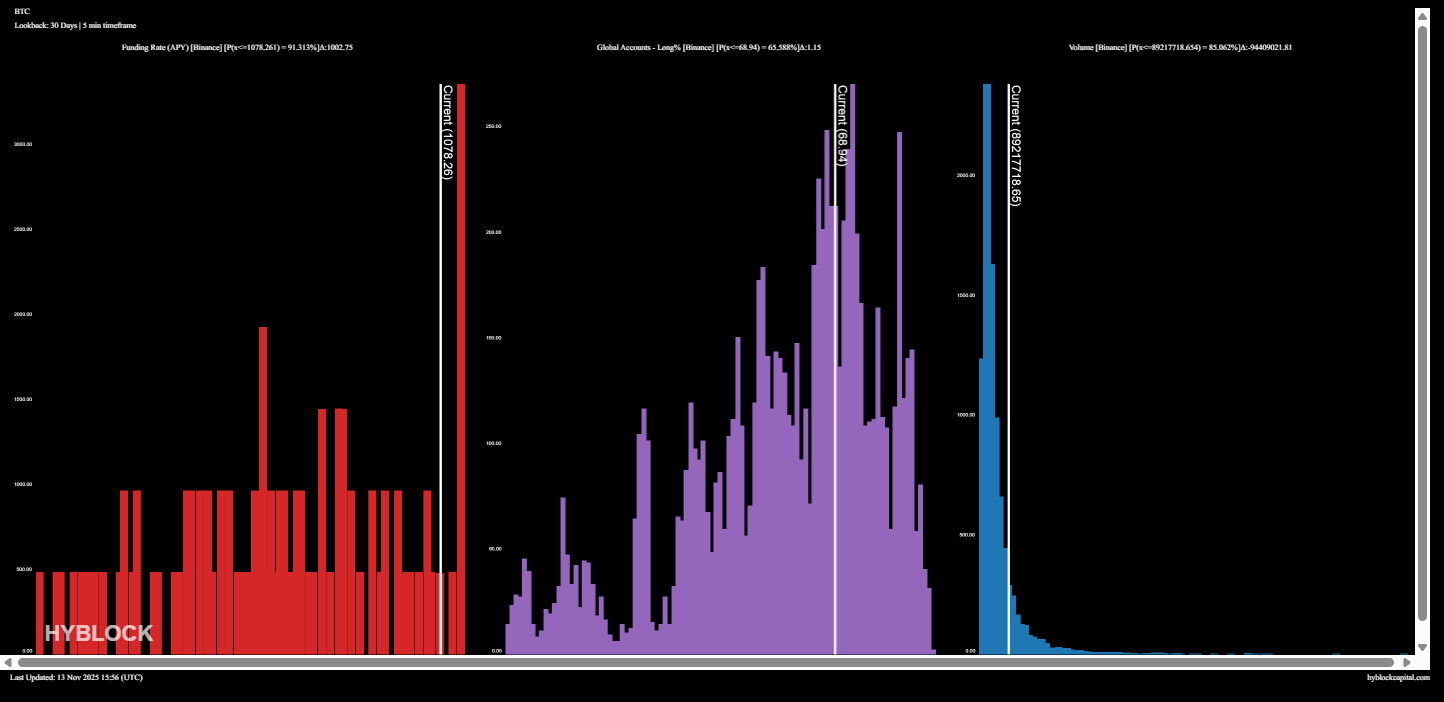
衍生品市场的极端情绪是加剧波动的核心因素。比特币期货未平仓合约仍高达689.6亿美元,而多空比率严重失衡(币安平台68.9%的订单为多头),导致市场脆弱性攀升。当价格波动加剧时,高倍杠杆多头(占比28%)可能率先被清算,引发连锁反应。
比特币价格

币安平台比特币多头持仓的全球百分比。数据来源:Hyblock


例如,11月13日单日爆仓人数达17.3万,爆仓金额5.39亿美元,其中多头清算占比超80%。这种结构极易引发“多空双爆”——即价格剧烈震荡时,无论方向如何变动,杠杆头寸均被强制平仓。 历史案例显示,当价格低于期权最大痛点(如11月12日的10.7万美元)时,做市商为平衡Delta敞口可能主动抛售现货,形成短期抛压。


当前市场与之类似,但风险更甚:若98,000美元破位,清算瀑布可能推动价格滑向更深支撑,而反弹需依赖现货市场资金大规模承接,但目前散户抄底资金(单笔金额多低于10万美元)难以抗衡机构抛压。

宏观压力与未来情景:政策与资金成破局关键​


比特币的短期走向与宏观环境紧密绑定。美联储12月利率决议(12月10日)将成为关键节点,若维持鹰派立场,风险资产可能继续承压;反之,若释放降息信号,或能提振市场信心。


同时,美国加密监管政策的明朗化(如ETF审批进展、稳定币法案)将是资金回流的触发条件。 基于当前变量,市场可能面临三种情景:

  1. 乐观情景:比特币守住98,000美元,且ETF资金流出结束(单日净流入超5000万美元),价格在8.5万至9.5万美元区间震荡筑底,周期约1至2个月,随后重新测试200日均线。
  2. 中性情景:98,000美元破位但8.45万美元支撑有效,市场形成“W底”形态,需等待美联储政策或监管利好助推反弹。
  3. 悲观情景:若8.45万美元失守,下跌趋势可能延续至7.3万至7.5万美元区间,对应回调幅度达20%,熊市周期将延长。

结语:波动中的价值重塑,理性优于赌徒心态​


比特币当前的多空决战,本质是市场对“短期流动性危机”与“长期稀缺性叙事”的抉择。98,000美元关口的得失不仅是技术面分水岭,更是对投资者策略的考验——盲目抄底或恐慌抛售均可能沦为多空绞杀下的牺牲品。


尽管ETF流出、杠杆清算与政策不确定性构成逆风,但机构逆势增持与估值回归合理区间也提供了长期布局机会。历史表明,加密货币的每次深度回调既是风险的释放,也是价值的重塑。在9万关口决战结果明朗前,保持仓位弹性、远离高杠杆、聚焦美联储政策与资金面变化,方能在高波动中守住生存底线。


Related Reads

$700 Billion Poured into AI, Americans Taste the Bitter Fruit of Inflation First

A Federal Reserve analysis from the St. Louis Fed argues that AI optimism itself is a driver of inflation. The "news shock" of AI's revolutionary potential causes households and businesses to increase spending and investment in anticipation of future gains, pushing demand beyond current supply and creating inflationary pressure. This is supported by a Deutsche Bank experiment where AI models (dbLumina, Claude, ChatGPT-5.2) assessed a 20-40% probability that AI would raise inflation in the next year, citing surging demand for data centers, semiconductors, and electricity. They saw only a 5% chance of AI significantly reducing inflation. Massive capital expenditure underscores this demand. Amazon, Microsoft, Google, and Meta are projected to spend a combined ~$663B in 2026, a fourfold increase in four years. A significant portion funds power-hungry data centers. For example, OpenAI's "Stargate" project plans a 10-gigawatt capacity, equivalent to the entire electricity load of 16 Vermont states. U.S. data center electricity consumption is forecast to triple by 2030. While AI could eventually boost productivity and be disinflationary long-term, current data shows no such productivity jump. The U.S. economy now faces a cycle: massive AI investment fuels inflation, delays interest rate cuts, raises financing costs—yet the investment continues to accelerate. The outcome hinges on whether these AI models will ultimately make the economy more efficient, a question that remains unanswered.

marsbit41m ago

$700 Billion Poured into AI, Americans Taste the Bitter Fruit of Inflation First

marsbit41m ago

What Kind of DeFi Does Wall Street Want?

Wall Street's vision for DeFi has shifted from simple asset tokenization to building a programmable, restructurable fixed-income infrastructure that enables yield financialization. The key driver is no longer retail speculation but institutional capital and Real-World Assets (RWA), with DeFi TVL surging from ~$115B to over $237B in 2025, while active wallets declined—indicating large, infrequent institutional inflows. RWA, now valued at $27.5B (up 2.4x YoY), is used as collateral in protocols like Aave Horizon, Maple Finance, and Centrifuge, creating an on-chain repo and rehypothecation flywheel. These structures function like institutional money-market funds, offering 4–6% yields from tokenized treasuries and stablecoin pools. Crucially, institutions are moving beyond holding assets to actively managing yield and risk. Protocols like Pendle Finance allow yield tokenization—splitting assets into Principal Tokens (PT) and Yield Tokens (YT)—enabling fixed-rate exposure, speculation, and on-chain interest rate hedging using mechanisms like yield AMMs. However, major barriers remain: public blockchain transparency exposes positions and liquidation levels, creating adversarial risks, and compliance (KYC, sanctions screening, audit trails) must be natively embedded into protocols—not added externally. Zero-knowledge proofs could offer a solution by enabling regulatory verification without leaking sensitive data. In summary, Wall Street wants a DeFi that integrates with global compliance infrastructure, replicates traditional fixed-income modularity for risk and return, and embeds programmable privacy and regulation—not to replace traditional finance, but to create a parallel system for more flexible capital and risk restructuring.

marsbit1h ago

What Kind of DeFi Does Wall Street Want?

marsbit1h ago

Trading

Spot
Futures

Hot Articles

What is $BITCOIN

DIGITAL GOLD ($BITCOIN): A Comprehensive Analysis Introduction to DIGITAL GOLD ($BITCOIN) DIGITAL GOLD ($BITCOIN) is a blockchain-based project operating on the Solana network, which aims to combine the characteristics of traditional precious metals with the innovation of decentralized technologies. While it shares a name with Bitcoin, often referred to as “digital gold” due to its perception as a store of value, DIGITAL GOLD is a separate token designed to create a unique ecosystem within the Web3 landscape. Its goal is to position itself as a viable alternative digital asset, although specifics regarding its applications and functionalities are still developing. What is DIGITAL GOLD ($BITCOIN)? DIGITAL GOLD ($BITCOIN) is a cryptocurrency token explicitly designed for use on the Solana blockchain. In contrast to Bitcoin, which provides a widely recognized value storage role, this token appears to focus on broader applications and characteristics. Notable aspects include: Blockchain Infrastructure: The token is built on the Solana blockchain, known for its capacity to handle high-speed and low-cost transactions. Supply Dynamics: DIGITAL GOLD has a maximum supply capped at 100 quadrillion tokens (100P $BITCOIN), although details regarding its circulating supply are currently undisclosed. Utility: While precise functionalities are not explicitly outlined, there are indications that the token could be utilized for various applications, potentially involving decentralized applications (dApps) or asset tokenization strategies. Who is the Creator of DIGITAL GOLD ($BITCOIN)? At present, the identity of the creators and development team behind DIGITAL GOLD ($BITCOIN) remains unknown. This situation is typical among many innovative projects within the blockchain space, particularly those aligning with decentralized finance and meme coin phenomena. While such anonymity may foster a community-driven culture, it intensifies concerns about governance and accountability. Who are the Investors of DIGITAL GOLD ($BITCOIN)? The available information indicates that DIGITAL GOLD ($BITCOIN) does not have any known institutional backers or prominent venture capital investments. The project seems to operate on a peer-to-peer model focused on community support and adoption rather than traditional funding routes. Its activity and liquidity are primarily situated on decentralized exchanges (DEXs), such as PumpSwap, rather than established centralized trading platforms, further highlighting its grassroots approach. How DIGITAL GOLD ($BITCOIN) Works The operational mechanics of DIGITAL GOLD ($BITCOIN) can be elaborated on based on its blockchain design and network attributes: Consensus Mechanism: By leveraging Solana’s unique proof-of-history (PoH) combined with a proof-of-stake (PoS) model, the project ensures efficient transaction validation contributing to the network's high performance. Tokenomics: While specific deflationary mechanisms have not been extensively detailed, the vast maximum token supply implies that it may cater to microtransactions or niche use cases that are still to be defined. Interoperability: There exists the potential for integration with Solana’s broader ecosystem, including various decentralized finance (DeFi) platforms. However, the details regarding specific integrations remain unspecified. Timeline of Key Events Here is a timeline that highlights significant milestones concerning DIGITAL GOLD ($BITCOIN): 2023: The initial deployment of the token occurs on the Solana blockchain, marked by its contract address. 2024: DIGITAL GOLD gains visibility as it becomes available for trading on decentralized exchanges like PumpSwap, allowing users to trade it against SOL. 2025: The project witnesses sporadic trading activity and potential interest in community-led engagements, although no noteworthy partnerships or technical advancements have been documented as of yet. Critical Analysis Strengths Scalability: The underlying Solana infrastructure supports high transaction volumes, which could enhance the utility of $BITCOIN in various transaction scenarios. Accessibility: The potential low trading price per token could attract retail investors, facilitating wider participation due to fractional ownership opportunities. Risks Lack of Transparency: The absence of publicly known backers, developers, or an audit process may yield skepticism regarding the project's sustainability and trustworthiness. Market Volatility: The trading activity is heavily reliant on speculative behavior, which can result in significant price volatility and uncertainty for investors. Conclusion DIGITAL GOLD ($BITCOIN) emerges as an intriguing yet ambiguous project within the rapidly evolving Solana ecosystem. While it attempts to leverage the “digital gold” narrative, its departure from Bitcoin's established role as a store of value underscores the need for a clearer differentiation of its intended utility and governance structure. Future acceptance and adoption will likely depend on addressing the current opacity and defining its operational and economic strategies more explicitly. Note: This report encompasses synthesised information available as of October 2023, and developments may have transpired beyond the research period.

363 Total ViewsPublished 2025.05.13Updated 2025.05.13

What is $BITCOIN

Discussions

Welcome to the HTX Community. Here, you can stay informed about the latest platform developments and gain access to professional market insights. Users' opinions on the price of BTC (BTC) are presented below.

活动图片