BTC Market Pulse: Week 46

insights.glassnodePublished on 2025-11-09Last updated on 2025-11-10

Overview

Bitcoin retested the key $100K level this week, a zone that has repeatedly acted as pivotal support. After a sharp drawdown in late October, price action has begun to stabilize, forming what appears to be a potential bottoming structure. The recovery toward $106K suggests early signs of buyer re-engagement, with momentum beginning to firm up from deeply oversold conditions.

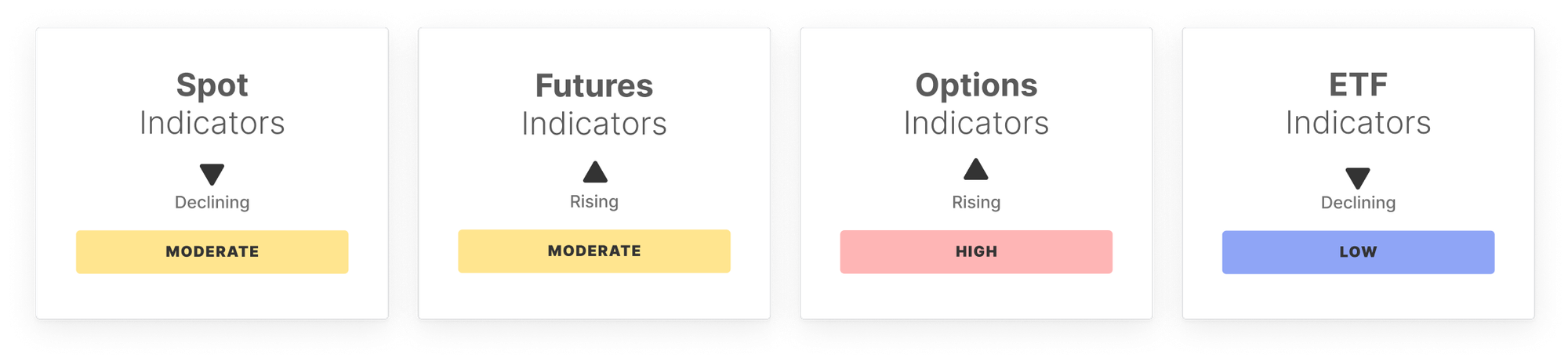
The Relative Strength Index (RSI) has rebounded from sub-30 readings, indicating that selling pressure may be waning. This aligns with a mild improvement in cumulative volume delta, showing reduced aggression from sellers and a gradual return of two-way flow. Spot trading activity remains elevated near recent highs, confirming sustained participation and the potential for volatility expansion should price break beyond short-term resistance levels around $111K–$116K.

In derivatives, open interest continues to contract modestly, reflecting deleveraging and reduced speculative exposure. Options markets remain defensive, with skew elevated as traders maintain downside hedges, though the narrowing volatility spread implies that fear is beginning to subside. These conditions point to a cautious but stabilizing derivatives environment.

ETF flows remain negative but consistent, suggesting measured profit-taking rather than large-scale exits. Meanwhile, on-chain activity remains constructive: transfer volumes have surged above their statistical range, signaling renewed capital movement, while address activity and transaction fees indicate stable network utilization.

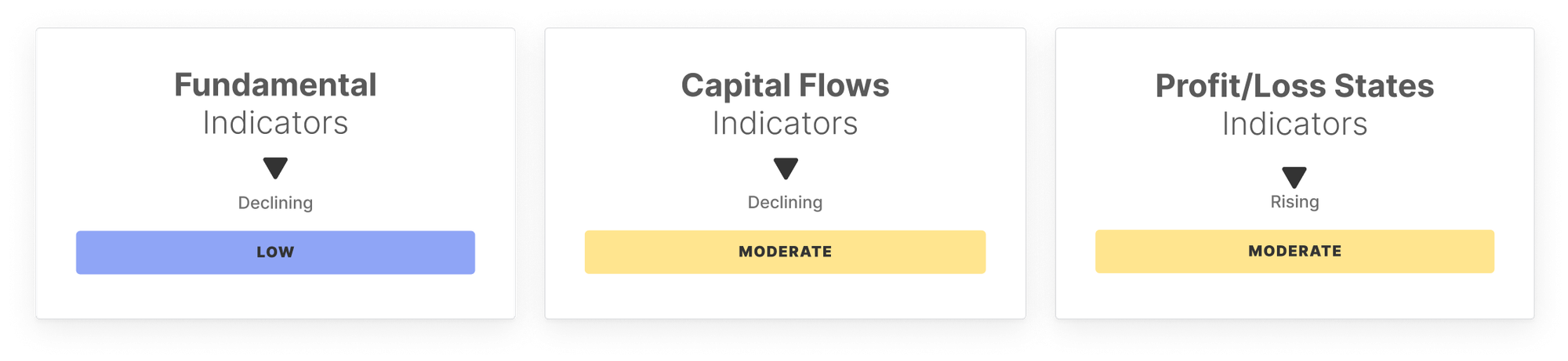
Profitability metrics remain weak, with a deeper drawdown in unrealized gains and losses, reflecting stress across short-term holders. However, such conditions often precede accumulation phases as stronger hands absorb supply from capitulating participants.

Bitcoin appears to be testing a critical inflection zone. Market conditions remain cautious yet constructive, with improving momentum, stabilizing flows, and signs of a potential local bottom forming around $100K. This range between $100K and $108K could mark a mid-term base of support, though the broader macro downtrend in profitability continues to anchor sentiment and limit upside conviction.

Off-Chain Indicators
On-Chain Indicators
🔗 Access the full report in PDF

Don't miss it!

Smart market intelligence, straight to your inbox.

Subscribe now

Disclaimer: This report does not provide any investment advice. All data is provided for information and educational purposes only. No investment decision shall be based on the information provided here and you are solely responsible for your own investment decisions.

Exchange balances presented are derived from Glassnode’s comprehensive database of address labels, which are amassed through both officially published exchange information and proprietary clustering algorithms. While we strive to ensure the utmost accuracy in representing exchange balances, it is important to note that these figures might not always encapsulate the entirety of an exchange’s reserves, particularly when exchanges refrain from disclosing their official addresses. We urge users to exercise caution and discretion when utilizing these metrics. Glassnode shall not be held responsible for any discrepancies or potential inaccuracies. 

Please read our Transparency Notice when using exchange data.

Trending Cryptos

Related Reads

U.S. National Debt Approaches $40 Trillion in 5 Months, Bitcoin Debate Gains Momentum

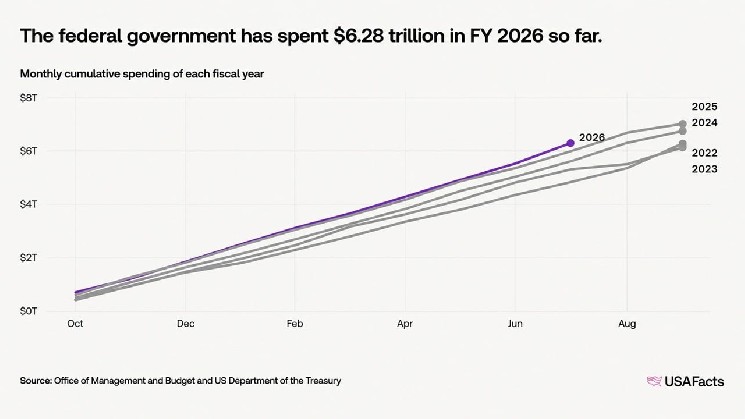
The US national debt has surged to nearly $40 trillion in just five months, the fastest trillion-dollar increase on record. The debt's growth has accelerated dramatically over time, from taking 192 years to reach the first $1 trillion in 1981 to adding the latest $1 trillion in only five months. The federal budget deficit for the fiscal year is already over $1.8 trillion, exceeding last year's total, and net interest payments on the debt have surpassed $1 trillion, now exceeding defense or Medicare spending. This rapid debt accumulation is fueling arguments within the cryptocurrency industry that Bitcoin serves as a hedge against government-backed currencies and fiscal irresponsibility. Proponents, including some lawmakers and industry leaders, argue Bitcoin could act as a "hard currency" fiscal control mechanism. Legislation has even been proposed for the Treasury to acquire Bitcoin to help reduce the national debt. The International Monetary Fund has warned that global public debt could hit 100% of world GDP by 2029 if current trends continue, with the US and China as primary drivers. Some analyses suggest a sovereign debt crisis could drive capital into alternative assets like Bitcoin, similar to past regional banking crises. However, skeptics point out that both Bitcoin and gold have fallen in price at times during 2026 despite record debt, indicating the depreciation hedge theory may operate over a much longer timeframe than short-term price action.

cryptonews.ru10m ago

U.S. National Debt Approaches $40 Trillion in 5 Months, Bitcoin Debate Gains Momentum

cryptonews.ru10m ago

Technological Self-Reliance in China: A War from Lithography Machines to ABF Films

"China's Tech Independence: A Battle from Lithography Machines to ABF Film" In August 2026, Japan's Ajinomoto announced a 30% supply cut of ABF film to Chinese mainland clients, causing industry-wide shock and fears of price hikes and shortages in the semiconductor supply chain. That same year, Chinese company Lotus Holdings, known for its MSG business, acquired a small domestic ABF film startup for 103 million yuan, aiming to change this passive situation. ABF film is a core insulating material for advanced CPU, GPU, and AI chip packages. Ajinomoto, originally a food flavoring company, has monopolized over 95% of the global ABF film market for nearly 30 years, deriving its technology from byproducts of monosodium glutamate production. With AI chips consuming 5-10 times more ABF film than traditional chips, the supply-demand gap is widening. Ajinomoto's supply cut to China, where domestic ABF film production accounts for less than 5%, directly threatens the production of domestic high-end AI chips and their substrates. This incident highlights a crucial but often overlooked truth: the vulnerabilities in China's quest for technological self-reliance extend beyond headline areas like lithography machines to critical but seemingly minor components—insulating films, photoresists, electronic specialty gases, etc. The article frames China's tech independence as a multi-front war. While major breakthroughs have been achieved in chip design (e.g., Huawei's HiSilicon), foundry (e.g., SMIC), and memory chips (e.g., YMTC), countless smaller "Ajinomoto-style" chokepoints remain. Lotus Holdings' acquisition represents a significant shift: the battle is no longer fought only by tech giants but has become a collective, industry-wide effort involving companies from diverse backgrounds. Historically, external blockades have often spurred China's technological breakthroughs, as seen with Huawei's Kirin chips and YMTC's 3D NAND flash memory. Ajinomoto's supply cut, while a short-term challenge, may similarly catalyze domestic innovation in ABF film and other critical materials. The path to technological sovereignty is long and arduous, requiring sustained patience and investment to fill every gap in the complex supply chain. Lotus's move is not an immediate solution but a step towards that future, symbolizing a broader, relentless march toward independence.

marsbit29m ago

Technological Self-Reliance in China: A War from Lithography Machines to ABF Films

marsbit29m ago

The Great Ethereum "Rate Cut" Debate: Is Now the Golden Window for Staking with the Unconventional EIP-8363?

Ethereon's economic policy is under review as a new proposal, EIP-8363, sparks debate over potential "interest rate cuts" for staking. The unconventional proposal suggests gradually increasing the proportion of newly issued ETH rewards that are burned as the total staked ETH ratio rises, with issuance fully offset by burns once the ratio nears 50%. This would drive the protocol-level staking APR towards 0%, though validators would still earn transaction fees and MEV. This discussion emerges as staked ETH approaches 35% of supply, with the current protocol APR at ~2.6%. The core question is whether Ethereum needs to continue paying high issuance costs for marginal gains in security once sufficient participation is achieved. EIP-8363 aims to optimize security spending, but critics warn it could disproportionately impact solo stakers and potentially increase centralization among large, resilient operators. Paradoxically, this debate coincides with the Pectra upgrade (EIP-7251), which introduces native compounding for staking rewards, significantly improving capital efficiency for long-term holders. This creates a dual narrative: the protocol is making staking more efficient while reconsidering the economic incentive to stake. For long-term ETH holders, this environment may present a "time window" rather than a fixed-rate opportunity. While future APRs are expected to trend downward, starting staking earlier maximizes the compounding effect over time. The decision to stake depends on individual factors like investment horizon, liquidity needs, and risk tolerance regarding options like native validation, staking services, or liquid staking tokens (LSTs). The evolution from encouraging staking to managing its economic cost marks a new, mature phase for Ethereum's tokenomics, where the true value of staking may increasingly lie in the long-term power of compounding time.

marsbit38m ago

The Great Ethereum "Rate Cut" Debate: Is Now the Golden Window for Staking with the Unconventional EIP-8363?

marsbit38m ago

Analyst States Bitcoin Remains Within $61-68k Range

An analyst stated that Bitcoin is likely to remain within a trading range of $61,000 to $68,000. According to Kirill Komalenkov, director of strategic communications at Bitbanker, Bitcoin continues to trade sideways amidst declining market volatility. He attributes its current stability to high market liquidity, with volatility near three-year lows. Komalenkov warned that sustained low activity carries risks of a price decline, with potential tests of support at $62,300 and $61,600. He suggested that major market players might use the current situation to accumulate liquidity, meaning any initial breakout from the range could be a false move. The analyst expects this sideways movement to persist until the latter part of August. Key factors for determining future market direction include fund flows into Exchange-Traded Funds (ETFs) and trader activity. However, Komalenkov noted a potential negative scenario for the second half of August, where heightened geopolitical tensions or hawkish rhetoric from US monetary authorities could trigger a new decline. In such a case, Bitcoin could fall to a range of $45,000–$50,000 by early autumn, which might form a new base for a potential market recovery later in the season. Separately, a Russian deputy finance minister recently announced that non-qualified investors in Russia will soon be allowed to legally purchase Bitcoin, Ethereum, and popular stablecoins, with an annual limit of 300,000 rubles per intermediary.

cryptonews.ru40m ago

Analyst States Bitcoin Remains Within $61-68k Range

cryptonews.ru40m ago

Trading

Spot

Hot Articles

What is $BITCOIN

DIGITAL GOLD ($BITCOIN): A Comprehensive Analysis Introduction to DIGITAL GOLD ($BITCOIN) DIGITAL GOLD ($BITCOIN) is a blockchain-based project operating on the Solana network, which aims to combine the characteristics of traditional precious metals with the innovation of decentralized technologies. While it shares a name with Bitcoin, often referred to as “digital gold” due to its perception as a store of value, DIGITAL GOLD is a separate token designed to create a unique ecosystem within the Web3 landscape. Its goal is to position itself as a viable alternative digital asset, although specifics regarding its applications and functionalities are still developing. What is DIGITAL GOLD ($BITCOIN)? DIGITAL GOLD ($BITCOIN) is a cryptocurrency token explicitly designed for use on the Solana blockchain. In contrast to Bitcoin, which provides a widely recognized value storage role, this token appears to focus on broader applications and characteristics. Notable aspects include: Blockchain Infrastructure: The token is built on the Solana blockchain, known for its capacity to handle high-speed and low-cost transactions. Supply Dynamics: DIGITAL GOLD has a maximum supply capped at 100 quadrillion tokens (100P $BITCOIN), although details regarding its circulating supply are currently undisclosed. Utility: While precise functionalities are not explicitly outlined, there are indications that the token could be utilized for various applications, potentially involving decentralized applications (dApps) or asset tokenization strategies. Who is the Creator of DIGITAL GOLD ($BITCOIN)? At present, the identity of the creators and development team behind DIGITAL GOLD ($BITCOIN) remains unknown. This situation is typical among many innovative projects within the blockchain space, particularly those aligning with decentralized finance and meme coin phenomena. While such anonymity may foster a community-driven culture, it intensifies concerns about governance and accountability. Who are the Investors of DIGITAL GOLD ($BITCOIN)? The available information indicates that DIGITAL GOLD ($BITCOIN) does not have any known institutional backers or prominent venture capital investments. The project seems to operate on a peer-to-peer model focused on community support and adoption rather than traditional funding routes. Its activity and liquidity are primarily situated on decentralized exchanges (DEXs), such as PumpSwap, rather than established centralized trading platforms, further highlighting its grassroots approach. How DIGITAL GOLD ($BITCOIN) Works The operational mechanics of DIGITAL GOLD ($BITCOIN) can be elaborated on based on its blockchain design and network attributes: Consensus Mechanism: By leveraging Solana’s unique proof-of-history (PoH) combined with a proof-of-stake (PoS) model, the project ensures efficient transaction validation contributing to the network's high performance. Tokenomics: While specific deflationary mechanisms have not been extensively detailed, the vast maximum token supply implies that it may cater to microtransactions or niche use cases that are still to be defined. Interoperability: There exists the potential for integration with Solana’s broader ecosystem, including various decentralized finance (DeFi) platforms. However, the details regarding specific integrations remain unspecified. Timeline of Key Events Here is a timeline that highlights significant milestones concerning DIGITAL GOLD ($BITCOIN): 2023: The initial deployment of the token occurs on the Solana blockchain, marked by its contract address. 2024: DIGITAL GOLD gains visibility as it becomes available for trading on decentralized exchanges like PumpSwap, allowing users to trade it against SOL. 2025: The project witnesses sporadic trading activity and potential interest in community-led engagements, although no noteworthy partnerships or technical advancements have been documented as of yet. Critical Analysis Strengths Scalability: The underlying Solana infrastructure supports high transaction volumes, which could enhance the utility of $BITCOIN in various transaction scenarios. Accessibility: The potential low trading price per token could attract retail investors, facilitating wider participation due to fractional ownership opportunities. Risks Lack of Transparency: The absence of publicly known backers, developers, or an audit process may yield skepticism regarding the project's sustainability and trustworthiness. Market Volatility: The trading activity is heavily reliant on speculative behavior, which can result in significant price volatility and uncertainty for investors. Conclusion DIGITAL GOLD ($BITCOIN) emerges as an intriguing yet ambiguous project within the rapidly evolving Solana ecosystem. While it attempts to leverage the “digital gold” narrative, its departure from Bitcoin's established role as a store of value underscores the need for a clearer differentiation of its intended utility and governance structure. Future acceptance and adoption will likely depend on addressing the current opacity and defining its operational and economic strategies more explicitly. Note: This report encompasses synthesised information available as of October 2023, and developments may have transpired beyond the research period.

1.9k Total ViewsPublished 2025.05.13Updated 2025.05.13

What is $BITCOIN

Discussions

Welcome to the HTX Community. Here, you can stay informed about the latest platform developments and gain access to professional market insights. Users' opinions on the price of BTC (BTC) are presented below.

活动图片