比特币可能面临“最后一跌”:流动性紧缩的真实剧本正在上演

marsbitPublished on 2025-11-04Last updated on 2025-11-05

一、前言

当投资者仍在为比特币的下跌寻找情绪与技术面的解释时,真正的答案已悄然写进美国金融系统的账本:美元流动性正遭遇一次结构性紧缩。具体表现为

  • 财政部TGA账户余额接近1万亿美元,大量吸走市场流动性;
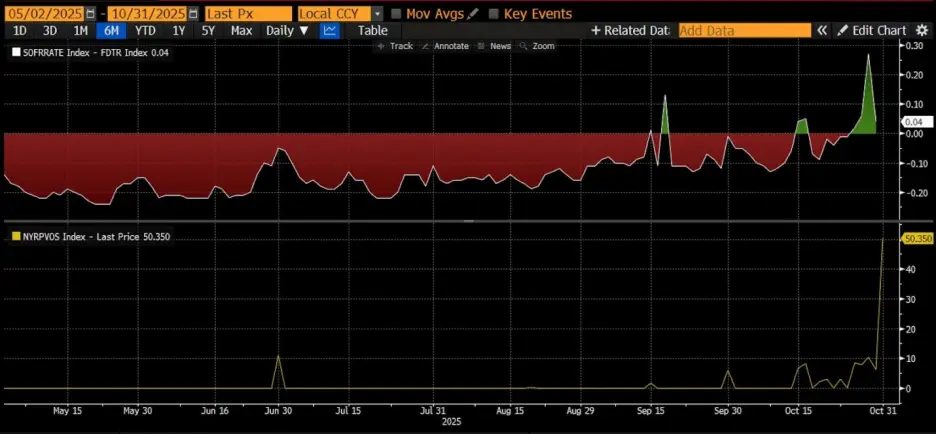
  • 短端资金市场压力陡升,SOFR–FDTR利差一度扩大至+30bp;
  • 美联储被迫重启临时回购操作(Overnight Repo),向市场注入近300亿美元流动性——这是自2019年回购危机以来首次。

这场流动性“真空”并非偶然,核心是政府关门导致。财政部在预算僵局与潜在政府关门风险下提前“吸金备粮”,大量发债将现金锁入TGA账户,直接抽走银行体系准备金,可支配的“市场美元”正在减少,风险资产自然承压——比特币成为最早、也最敏感的受害者。

然而,剧本并非全然悲观。历史经验表明,每一次财政部补库存、流动性极度紧绷之际,往往也预示着反转的临近。

截止11月5日,美国政府关门天数已刷新历史峰值,财政、经济与民生层面的压力正急剧累积SNAP食品补助受限,部分机场安全检查与联邦航管服务被迫临时停摆,民众与企业的信心同步下滑。在此背景下,两党对峙出现缓和迹象,尤其是近期美股在高位回调,也将助力加速解决政府关门问题。

市场预期,参议院可能在11月15日感恩节休会前推动妥协方案,结束政府停摆。届时,财政部将重新启动支出,TGA余额有望自高位回落,流动性重返、风险偏好回升,比特币或正处在这轮调整的“最后一跌”阶段——在财政支出恢复与未来降息周期开启的交汇点,新的流动性周期也将随之重启。

二、BTC正面临美元流动性冲击

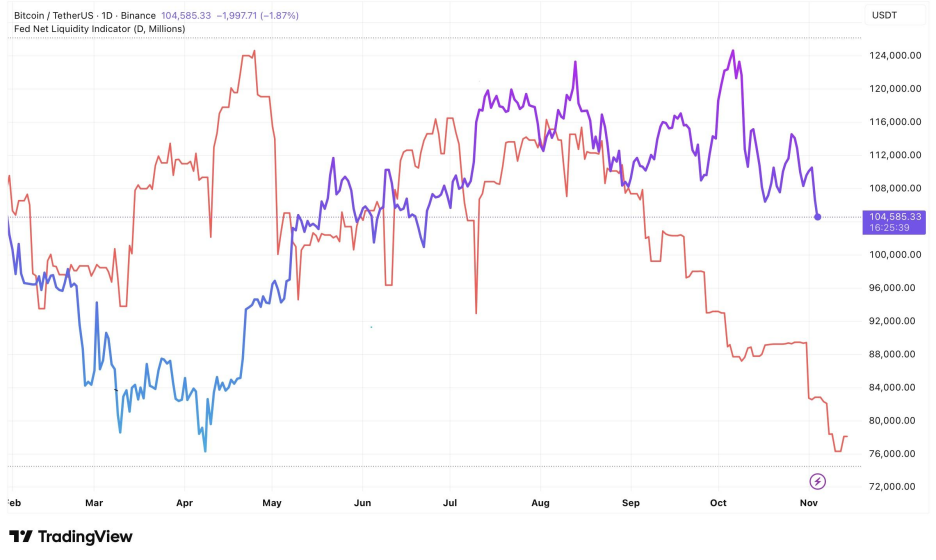
作为不生息的资产,BTC对流动性非常敏感,美元流动性紧张往往会给BTC带来下跌压力,这是10月中以来BTC明显弱势的原因之一,特别是在纳指一路创历史新高的背景下。

如图一所示,截止10月31日:

  1. SOFR–FDTR利差转正最高至+30bp → 银行间真实资金价格高于政策利率上限,代表银行以更高成本借钱,流动性紧张;
  2. RRP余额回升至503亿美元→ 市场重新向联储寻求抵押流动性;

图一:SOFR–FDTR利差和RRP余额
美元流动性

这表明美国短端资金市场出现明显紧张迹象,美联储被迫重启临时回购操作(Overnight Repo Operations),于10月31日向市场注入近300亿美元流动性。

这是自2019年回购危机以来首次出现此类操作,标志着流动性短缺已从阶段性现象转为结构性问题。

整体而言,宏观货币供应(M2)仍然宽松,但银行体系准备金的安全垫正在被快速抽干,而市场拆借利率的上行显示流动性压力已不再是预期,而是正在发生的现实。

因此,后续对流动性情况的观察,是判断BTC价格走向的一个重要参考。

图二:BTC价格与美联储流动性
美元流动性

三、美元流动性拆解

美元流动性= 银行准备金+ 流通现金= 美联储资产负债表总规模− ON RRP(隔夜逆回购) − 财政部TGA账户

这是观察「美国金融体系中可支配美元余额」的核心框架。它揭示了:

美元流动性总量= 美联储的「供给端」 - 财政部与货币市场的「吸收端」。

具体组成如下:

组成部分说明对流动性的影响银行准备金(Reserves)商业银行在美联储的存款余额,是体系内最直接的流动性。增加时→ 流动性宽松流通现金(Currency in Circulation)企业与个人手中持有的现金。一般稳定增长,短期变化小ON RRP(Overnight Reverse Repo)货币市场基金将资金「借给」美联储的短期工具,相当于「吸走」流动性。增加时→ 流动性紧缩TGA(Treasury General Account)财政部在美联储的主账户,用于政府收支。当TGA上升,意味着财政部「吸走」了市场流动性。增加时→ 流动性紧缩

1、逻辑关系

这条公式实际上描述了美联储、财政部与货币市场三者之间的资金流转路径:

美联储扩表→ 增加准备金与现金→ 流动性增加例如QE(量化宽松)时期,美联储购买资产增加银行准备金。

TGA升高→ 财政部发债吸金→ 流动性减少当政府增加发债、税收流入TGA,市场资金被「吸走」。

ON RRP上升→ 货币市场基金将闲钱存入Fed → 流动性减少相当于货币基金把市场资金「停泊」在Fed,不再流通于银行体系。

因此:

Liquidity ↑ = Fed资产↑ + TGA↓ + RRP↓

2、实际应用

这个指标是观察风险资产流动性周期的关键:

当TGA + RRP 同时下降→ 银行准备金激增→ 美元流动性宽松→ 通常伴随风险资产(股市、比特币)上涨。

当TGA 回补、RRP 上升→ 流动性回收→ 风险资产承压。

具体例子:

2023年下半年:债务上限解除后,TGA补库存→ 流动性短暂收紧→ 美股与加密资产出现波动。

2024年初:RRP快速下降,资金回流银行→ 准备金回升→ 市场风险偏好上升。

3、延伸观察:与市场的关联

指标相关性说明S&P 500 / NASDAQ正相关流动性宽松助推估值扩张比特币BTC高度正相关流动性松时风险偏好上升美元指数DXY负相关流动性宽松时美元供给增多、指数走弱美债收益率视阶段而定QE阶段压低收益率;QT阶段推高收益率

4、结论

这条公式实际上是整个美元体系的流动性平衡方程。

美联储决定了「总量供给」。

TGA与ON RRP是两个「流动性阀门」,决定多少资金能流入金融市场。

因此,在分析风险资产走势时,比单看美联储资产负债表更重要的,是观察RRP + TGA 的变化,它们才是短期美元流动性的真实驱动。

四、近期流动性紧张原因——TGA 持续吸金

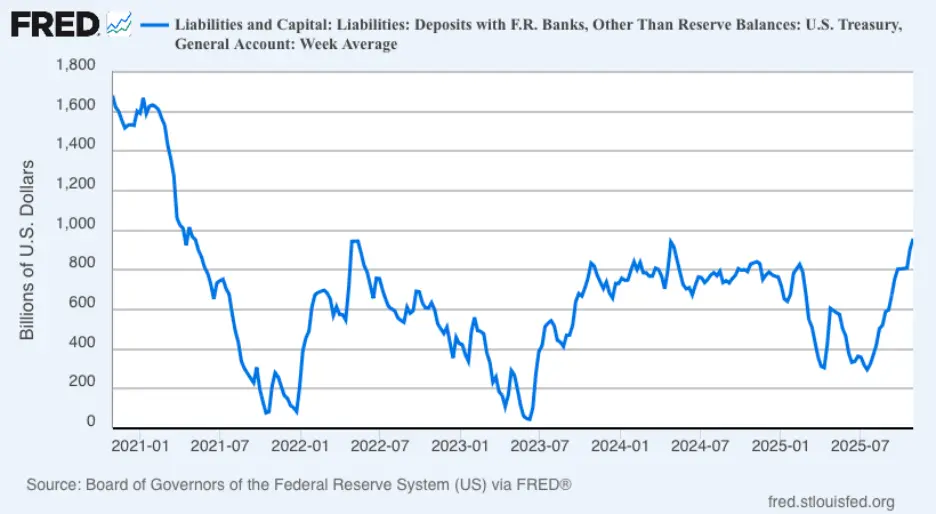
图三: 美国财政部TGA账户余额变动
美元流动性

1、指标解读

上图显示的是美国财政部在美联储的主帐户TGA(Treasury General Account)余额。横轴是时间(2021–2025),纵轴为金额(十亿美元)。这条线其实反映了财政部吸收或释放流动性的状况,也是美元流动性的重要调节阀门。下面是结合近年的政府关门(shutdown)风险与财政操作的完整专业解读。

这条线的上下波动,代表财政部「在市场吸金(TGA 上升)」或「向市场释放资金(TGA 下降)」。

TGA 上升→ 政府吸收市场流动性(银行准备金减少)

TGA 下降→ 政府释放市场流动性(银行准备金增加)

因此:

TGA ≈ 市场美元流动性的反向指标

当TGA 上升时,市场资金变紧;当TGA 下滑时,市场资金变松。

结合时间与事件:2021–2025 五年流动性节奏

时间区段TGA 变化特征背景事件与流动性影响2021 Q1–Q3持续下降(从1.6 兆→ 0.2 兆)拜登政府推大规模财政刺激,财政部支出高、TGA 消耗;美元流动性极度宽松,推动股市与加密资产上涨。2022 上半年TGA 迅速回升至~800 B财政部为应对上限风险补库存;同时Fed 启动QT,流动性收紧,美股与加密市场转弱。2023 上半年TGA 急跌至~100 B美国债务上限危机,财政部暂停发债、动用现金支付开支;流动性短暂大幅释放(银行准备金增),比特币从16K→30K。2023 夏季后TGA 大幅回补(从100 B → 700 B +)债限协议通过后大量发债重建TGA,吸走流动性;同期美股震荡、债市收益率上升。2024 全年中度波动于400–800 B预算谈判反覆、部分关门威胁;财政部采「动态库存管理」,波动影响短端利率与流动性。2025 年初至今快速上升(重新接近1 兆)政府为新财年支出与潜在停摆做预防性储备;TGA 补库存使流动性再度收紧。

2、与「政府关门」的结构性联动

关门前:财政部提高TGA 以备应急

当国会预算僵局迫近、关门风险上升时,财政部会提前发债筹资、拉高TGA 余额,确保政府停摆期间仍有现金支付必需支出。

这一阶段市场会出现短期流动性收紧、短端利率上升。

关门期间:支出暂停、债务发行受限

关门期间政府部分支付暂停,TGA 水平短期持平或微降,但由于市场无新国债供应,货币基金需求涌向ON RRP。

形成「流动性结构性错配」:总量中性但短端紧张。

关门结束后:补拨款、补发薪→ TGA 急降

政府恢复支出后,TGA 下降、流动性瞬间释放。银行准备金上升、Repo 市场压力缓解,风险资产常在此阶段反弹。

例如2023 年债限解除后BTC 短期暴涨、纳指反弹。

五、美联储在行动:流动性注入

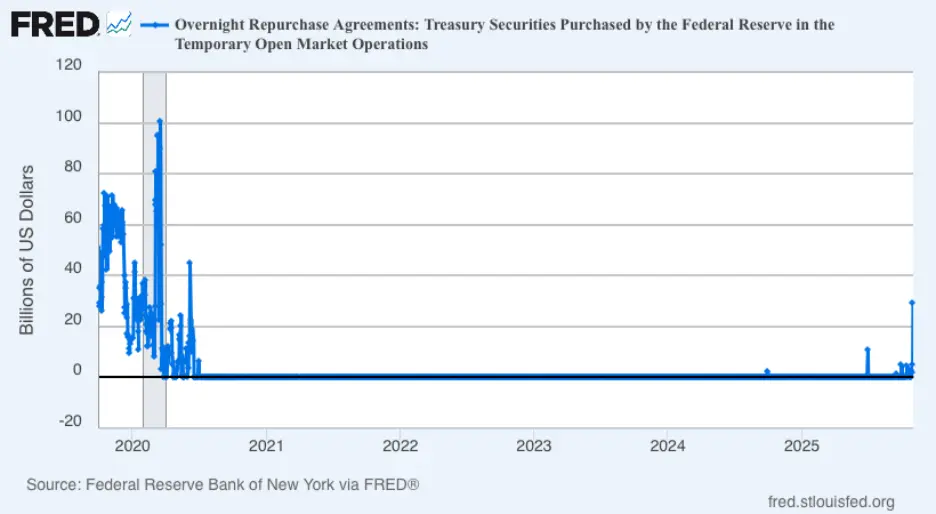
图四、美联储ON RPs(隔夜逆回购)
美元流动性

1、指标解读

资料来源: FRED(纽约联储)

最新数据(2025年10月31日): 294亿美元

对比参考: 2019年9月高点为497.5亿美元

这项指标代表美联储透过临时回购操作(以美债为抵押)向主要交易商提供隔夜现金,是直接的流动性注入手段。

自疫情后该工具长期停用,此次重新启动,具有重大政策信号意涵。

2、三大观察重点

政策背景: 美联储此举是对短端资金市场「真实紧缺」的回应。 QT虽将要停止,但准备金持续下滑导致拆借压力加剧。 ON RPs 的重启代表: 「美联储从被动缩表→ 主动流动性管理。」

规模特征: 294亿美元虽低于2019年危机水准,但其象征意义极强,显示流动性缺口已突破联储的观察阈值。 若未来两周操作规模持续上升,则可视为「准政策转向」。

市场机制:

银行与货币市场基金因准备金短缺被迫提高融资利率;

美联储透过回购释放流动性,暂时压低SOFR与Repo利差;

若此行为延续,将形成「微型再QE」效果

3、历史对照:2019年 vs 2025年

指标2019年回购危机2025年10月事件触发因素国债结算+ RRP耗尽国债结算+ QT导致准备金枯竭SOFR–FDTR利差+30bp+30bp联储回购规模497亿美元294亿美元政策反应Term Repo + QE重启ON Repo + 观望中结果准备金重建+ QE4开启尚待观察,或逐步回补流动性

六、结论

1、目前TGA帐户接近1万亿,是近期流动性紧张的主要原因,后续政府重开、支出重启,TGA 将下滑、美元流动性恢复,BTC等风险资产有望获得支撑;

2、在政府重启前,美联储会持续透过回购释放流动性,暂时压低SOFR与Repo利差,缓解市场流动性紧张局面;

3、预测网站的真金白银下注是11月中旬,也就是11月10日~11月15日,高盛等机构预计两周内政府会开门;

4、所以BTC很可能在进行'最后一跌',至少政府开门和未来降息是确定的,虽然节奏时间有不确定性。

Trending Cryptos

Related Reads

Aave Withdrawal, TVL Plunges: Where is MegaETH's Valuation Anchor?

MegaETH, once a highly anticipated new blockchain, has seen a dramatic decline in its Total Value Locked (TVL) and token price. According to DefiLlama data, its TVL plummeted nearly 60% in 24 hours, falling to just over $30 million from a May peak, with the Aave V3 protocol withdrawing 80% of its liquidity. The MEGA token price dropped to around $0.048, with a market cap of ~$54 million and a fully diluted valuation (FDV) of ~$480 million. The analysis identifies three key mismatches between MegaETH's valuation and its fundamentals. First, its high FDV contrasts with minimal real usage: low protocol revenue (~$90k/30 days) and few daily active addresses. Second, its DeFi narrative is contradicted by its revenue structure, where a collectible card game (Monster) generates most income, not major DeFi protocols like Aave. Third, initial hype from VC backing and airdrop farming has faded without sustained user adoption or clear applications. The TVL was heavily concentrated in Aave and largely driven by cyclical arbitrage strategies involving stablecoins like USDm and USDe. As the yield for these strategies diminished, funds rapidly exited. The departure of this speculative capital has exposed a lack of substantial, organic ecosystem activity. While the sharp drop could be seen as a correction from inflated expectations, the article suggests MegaETH's valuation lacks a solid foundation. Future price movements may rely on short-term market sentiment rather than genuine improvement in network fundamentals, such as increased real usage, a diversified application ecosystem, and consistent user growth. The situation reflects a broader market trend of demanding clearer value propositions beyond just high TVL figures.

marsbit37m ago

Aave Withdrawal, TVL Plunges: Where is MegaETH's Valuation Anchor?

marsbit37m ago

Trading

Spot

Hot Articles

What is $BITCOIN

DIGITAL GOLD ($BITCOIN): A Comprehensive Analysis Introduction to DIGITAL GOLD ($BITCOIN) DIGITAL GOLD ($BITCOIN) is a blockchain-based project operating on the Solana network, which aims to combine the characteristics of traditional precious metals with the innovation of decentralized technologies. While it shares a name with Bitcoin, often referred to as “digital gold” due to its perception as a store of value, DIGITAL GOLD is a separate token designed to create a unique ecosystem within the Web3 landscape. Its goal is to position itself as a viable alternative digital asset, although specifics regarding its applications and functionalities are still developing. What is DIGITAL GOLD ($BITCOIN)? DIGITAL GOLD ($BITCOIN) is a cryptocurrency token explicitly designed for use on the Solana blockchain. In contrast to Bitcoin, which provides a widely recognized value storage role, this token appears to focus on broader applications and characteristics. Notable aspects include: Blockchain Infrastructure: The token is built on the Solana blockchain, known for its capacity to handle high-speed and low-cost transactions. Supply Dynamics: DIGITAL GOLD has a maximum supply capped at 100 quadrillion tokens (100P $BITCOIN), although details regarding its circulating supply are currently undisclosed. Utility: While precise functionalities are not explicitly outlined, there are indications that the token could be utilized for various applications, potentially involving decentralized applications (dApps) or asset tokenization strategies. Who is the Creator of DIGITAL GOLD ($BITCOIN)? At present, the identity of the creators and development team behind DIGITAL GOLD ($BITCOIN) remains unknown. This situation is typical among many innovative projects within the blockchain space, particularly those aligning with decentralized finance and meme coin phenomena. While such anonymity may foster a community-driven culture, it intensifies concerns about governance and accountability. Who are the Investors of DIGITAL GOLD ($BITCOIN)? The available information indicates that DIGITAL GOLD ($BITCOIN) does not have any known institutional backers or prominent venture capital investments. The project seems to operate on a peer-to-peer model focused on community support and adoption rather than traditional funding routes. Its activity and liquidity are primarily situated on decentralized exchanges (DEXs), such as PumpSwap, rather than established centralized trading platforms, further highlighting its grassroots approach. How DIGITAL GOLD ($BITCOIN) Works The operational mechanics of DIGITAL GOLD ($BITCOIN) can be elaborated on based on its blockchain design and network attributes: Consensus Mechanism: By leveraging Solana’s unique proof-of-history (PoH) combined with a proof-of-stake (PoS) model, the project ensures efficient transaction validation contributing to the network's high performance. Tokenomics: While specific deflationary mechanisms have not been extensively detailed, the vast maximum token supply implies that it may cater to microtransactions or niche use cases that are still to be defined. Interoperability: There exists the potential for integration with Solana’s broader ecosystem, including various decentralized finance (DeFi) platforms. However, the details regarding specific integrations remain unspecified. Timeline of Key Events Here is a timeline that highlights significant milestones concerning DIGITAL GOLD ($BITCOIN): 2023: The initial deployment of the token occurs on the Solana blockchain, marked by its contract address. 2024: DIGITAL GOLD gains visibility as it becomes available for trading on decentralized exchanges like PumpSwap, allowing users to trade it against SOL. 2025: The project witnesses sporadic trading activity and potential interest in community-led engagements, although no noteworthy partnerships or technical advancements have been documented as of yet. Critical Analysis Strengths Scalability: The underlying Solana infrastructure supports high transaction volumes, which could enhance the utility of $BITCOIN in various transaction scenarios. Accessibility: The potential low trading price per token could attract retail investors, facilitating wider participation due to fractional ownership opportunities. Risks Lack of Transparency: The absence of publicly known backers, developers, or an audit process may yield skepticism regarding the project's sustainability and trustworthiness. Market Volatility: The trading activity is heavily reliant on speculative behavior, which can result in significant price volatility and uncertainty for investors. Conclusion DIGITAL GOLD ($BITCOIN) emerges as an intriguing yet ambiguous project within the rapidly evolving Solana ecosystem. While it attempts to leverage the “digital gold” narrative, its departure from Bitcoin's established role as a store of value underscores the need for a clearer differentiation of its intended utility and governance structure. Future acceptance and adoption will likely depend on addressing the current opacity and defining its operational and economic strategies more explicitly. Note: This report encompasses synthesised information available as of October 2023, and developments may have transpired beyond the research period.

756 Total ViewsPublished 2025.05.13Updated 2025.05.13

What is $BITCOIN

Discussions

Welcome to the HTX Community. Here, you can stay informed about the latest platform developments and gain access to professional market insights. Users' opinions on the price of BTC (BTC) are presented below.

活动图片