SOL ETF 开闸放水,Jito 能否借力引爆 Solana 生态反弹?

深潮Published on 2025-10-28Last updated on 2025-10-29

Jito 正处在新的资本流入和微观结构改进的交叉点。

撰文:Sam Schubert、Carlos

编译:AididiaoJP,Foresight News

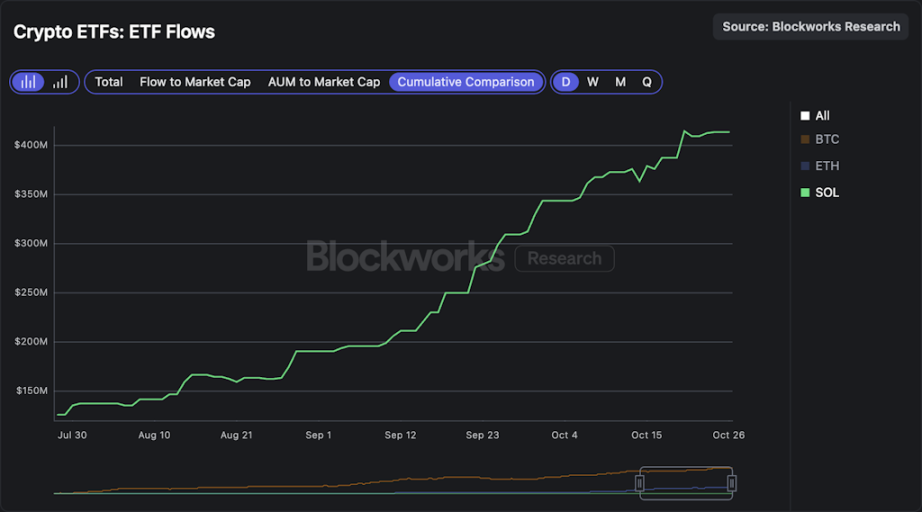
Bitwise SOL 质押 ETF(BSOL)已经开始交易,与 SSK 一起成为美国仅有的两只 Solana 现货 ETF。值得注意的是 Bitwise 表示其目标是通过实现 100% 的质押比率来最大化质押奖励,从而实现 7.34% 的质押奖励率。是否真的能够质押 100% 的 SOL 持仓将会很有趣。SSK 和欧洲的 SOL ETP 已经运行了四年多,它们有意将质押比率远低于 100%。原因完全是操作性的:这些发行商需要确保有足够的流动性来满足每日的赎回需求。

与这些参与者相比,Bitwise 将通过 Helius 进行内部质押,这可能会提高 BSOL 的运营效率。在三个月内,Bitwise 将对前 10 亿美元的管理资产免收管理费。BSOL 将为更多 SOL ETF 打开闸门,这些 ETF 实际可以吸引的资金量,很可能远超 SKK 自 7 月以来累计流入的 4.15 亿美元。
在加密领域方面,MegaETH 的公售昨天启动,截至撰稿时已获得约 9 倍的超额认购,承诺金额接近 4.5 亿美元。到目前为止,很明显拍卖将以 0.0999 美元的价格结算,这意味着完全稀释估值为 9.99 亿美元。随着销售在两天后结束,我们可能会看到超额认购倍数进一步上升(未经考证的猜测是大约 20 倍),分配标准将根据社交信息(Twitter 资料、链上历史等)决定。过去几天 MEGA 在 Hyperliquid 的预上市市场上的完全稀释估值在 40 亿至 50 亿美元之间交易,这表明参与此次销售投入资金很可能会获得回报,尽管大多数用户可能无法获得他们期望的分配额度。

剖析 Jito 的弱势及其可能逆转的力量

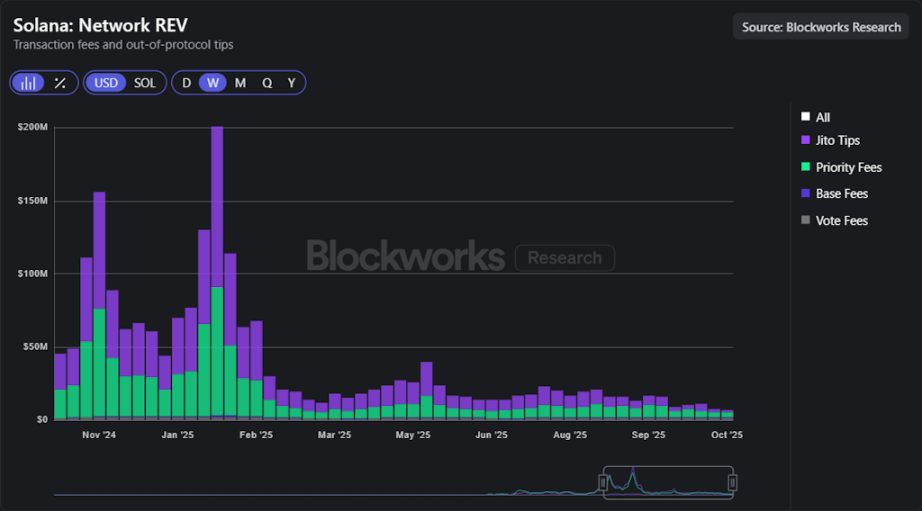
Jito 代币(JTO)在价格表现上一直疲软,并且显著跑输了 Solana 本身。Jito 在网络收入中的费用份额已急剧下降,从占 Solana 收入基础的一半以上降至现在的 30% 以下,加之 Solana 整体收入普遍下降的影响,情况更加复杂。现在的问题是 Jito 是否具备反身性,能够从 Solana 网络活动的反弹中受益,而它本身正是为增强这种活动而设计的。
Solana 的架构设计曾备受赞誉,但最近却引发了质疑,因为许多应用程序和 DeFi 活动的表现逊于更广泛的加密市场。这引出了一个问题,为什么 Solana 上还没有出现一个具有竞争力的永续合约交易所,能与 Hyperliquid 的执行质量相媲美?为什么像 Elipisis Labs 这样的团队转而构建 Atlas?该架构提供了速度,但并不总能提供可预测的交易排序、公平的费用路由或强大的抗垃圾邮件能力。

Jito 的区块组装市场(BAM)旨在通过保留 Solana 的整体式设计,同时给予应用程序应用链式的对交易排序和费用的控制权来解决这个问题。一个潜在的例子是采用者速度缓冲,它可以减缓有害流量并缩小价差,类似于 Hyperliquid 所部署的方案。目标是更清晰的队列、更少的延迟博弈和更高质量的成交,从而可以催生更好的应用程序并加强 DeFi 活动,可能支撑 Solana 收入的反弹。所有的 BAM 费用将路由至 DAO,提供了一个新的费用来源,而 BAM 主网最近已跨越了 1000 万 + SOL 质押的门槛。
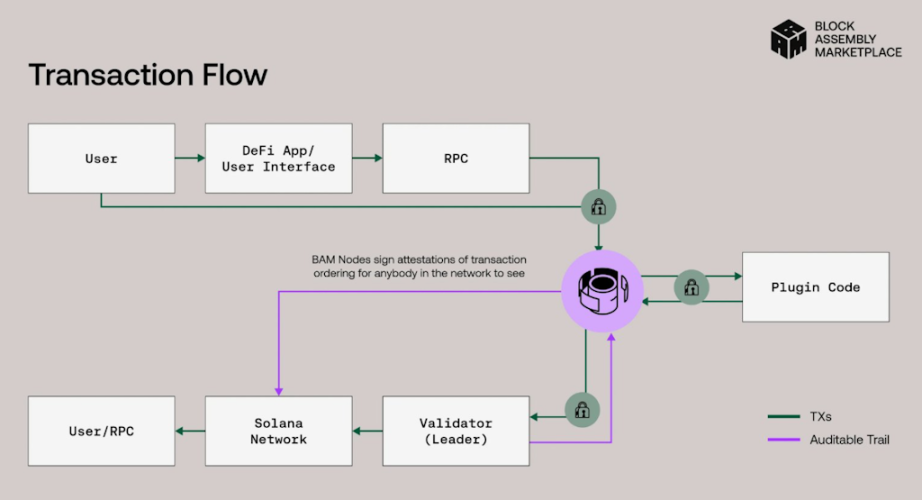
最近由 Andreessen Horowitz 领投的 5000 万美元战略投资(私募代币销售)表明了支持者的强烈信心。它凸显了 BAM 作为核心 Solana 基础设施的地位,通过给予应用程序对交易排序的控制权同时减少有害的 MEV,从而改善市场。BAM 是一个扩展 Solana 并解锁链上原语(如中央限价订单簿和暗池)的网络,这些原语过去由于 MEV 而一直无法实现。

Solana 质押 ETF 即将到来。VanEck 已为一只 JitoSOL ETF 提交了 S-1 申请,该 ETF 将直接持有 Jito 的流动性质押代币。随着更多基金的推出和规模扩大,LST 渗透的潜力更高,传统金融流入与 Jito 价值循环之间的联系也更紧密。请注意 Solana 上的流动性质押一直在稳步增加,目前已达到质押量的近 15%。

自 SIMD-0096 以来,验证者接收所有优先费用,而不是与销毁机制分摊,这使他们获得了不成比例的巨大网络收入份额。一旦 SIMD-0123 激活,它将通过要求验证者与质押者分享部分这些费用来重新引入平衡,从而提高质押收益,并使奖励在网络中更均匀地分配。这两种动态更多与质押者分享的生态系统活动以及流动性质押的扩张,都直接转化为 Jito 从流动性质押管理费中产生的收入。
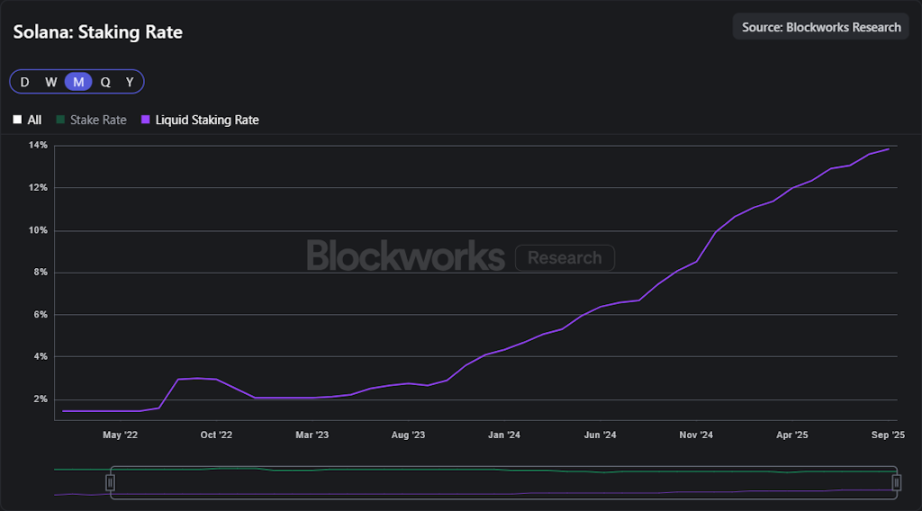
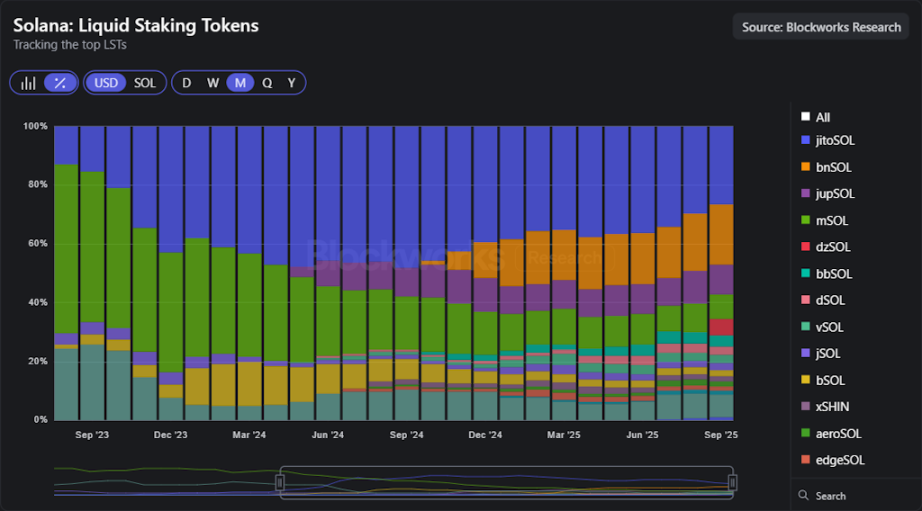
然而,Solana 流动性质押市场的竞争已经加剧。JitoSOL 曾持有近一半的质押流动性,但其份额已降至约 25%,因为新进入者使得市场格局碎片化。特别是 Sanctum,通过其品牌 LST 模式和合作伙伴关系获得了发展势头,为协议提供了推出与 Jito 产品直接竞争的定制质押产品的能力。
在此背景下,Jito 正在将协议激励与代币持有者价值对齐。在 JIP 24 之后,所有区块引擎和 BAM 费用都流入 DAO 国库。DAO 将所有收入分配给持续的 JTO 回购,自 2025 年 8 月以来已执行了约 250 万美元的回购。SubDAO 正在推出 Vault、JTO 拍卖和 TWAP 回购系统,以使这一流程自动化。每月的回购金额设定为与上月的收入相匹配,从而在网络活动和代币价值之间建立了直接且重复出现的联系。


Trending Cryptos

Related Reads

Programmers Worldwide Are Wasting Money on Anthropic! The Company Can't Stand It Anymore

Anthropic recently published guidelines to help developers using Claude Code reduce unnecessary token costs. The key recommendations include: 1) Clear (/clear) conversations after completing a task to avoid carrying irrelevant file reads and command outputs into the next task. 2) Set the model and reasoning effort level at the start of a session, as switching mid-session invalidates the prompt cache, requiring a full-price recalculation of the entire dialog history. 3) Attach files using @ references instead of typing paths manually to avoid extra tool calls and searches that bloat the context. 4) Add quiet flags to verbose commands (e.g., in CLAUDE.md) to minimize lengthy output in the dialog history. 5) Use /compact while the session cache is still warm (before breaks) to compress the dialog at one-tenth the cost. 6) Offload large-output tasks to a sub-agent, which runs in an isolated context and only returns conclusions, preventing intermediate outputs from polluting the main dialog. The article explains token pricing: input tokens (prefill) are processed in parallel, while output tokens (decode) are generated serially, making output tokens five times more expensive. Caching is crucial for savings—if a request's prefix (system prompt, CLAUDE.md, dialog history) matches the previous one byte-for-byte, reading it costs only 10% of the standard input price. However, cache invalidation occurs when changing models, effort levels, fast mode, compressing dialogs, after cache expiration, or when resuming old sessions. Dialog history also grows quadratically (O(n²)) as file contents and command outputs accumulate, increasing costs per round. Proactive context management—like isolating noisy tasks, using /rewind to trim unproductive turns, and task-based session clearing—is becoming an essential skill for cost-effective AI-assisted development.

marsbit1h ago

Programmers Worldwide Are Wasting Money on Anthropic! The Company Can't Stand It Anymore

marsbit1h ago

Pax Silica vs. WAICO: The US Wants to Prohibit Europe from Using Chinese Artificial Intelligence

The United States is preparing to demand that European and other partners abandon Chinese artificial intelligence initiatives, threatening exclusion from the American-led "Pax Silica" coalition, according to a leaked U.S. State Department document. This ultimatum forces signatories of the "AI Opportunity Statement" to choose between the Western technological ecosystem and alternative frameworks, with China not explicitly named but clearly targeted. Pax Silica is a U.S. strategy for AI and semiconductor hegemony, launched in late 2025. Its European presence expanded significantly in mid-2026. Concurrently, China, Russia, and 27 other nations established the World AI Cooperation Organization (WAICO) in July 2026 as an independent intergovernmental platform promoting AI governance based on UN principles. This situation creates a difficult choice, especially for European nations balancing strategic autonomy with dependence on U.S. tech and security. It also pressures Global South countries with pragmatic ties to both Washington and Beijing. The formation of competing blocks risks fragmenting the global tech landscape, forcing companies to split supply chains, increasing costs, and potentially leading to incompatible standards and protocols. The era of open globalization in AI may be ending, replaced by geopolitical confrontation where technological sovereignty trumps economic efficiency. The decisions made will shape the global digital economy for decades.

cryptonews.ru3h ago

Pax Silica vs. WAICO: The US Wants to Prohibit Europe from Using Chinese Artificial Intelligence

cryptonews.ru3h ago

Robert Kiyosaki Shares His Mentor's Predictions About the Emergence of Bitcoin and AI

American entrepreneur and author of "Rich Dad Poor Dad," Robert Kiyosaki, discussed the influence of futurist R. Buckminster Fuller on his worldview, linking Fuller's past technological predictions to the emergence of Bitcoin and the development of artificial intelligence. In an X post, Kiyosaki also reflected on personal purpose, sharing his journey from the music business—where he worked with bands like The Police and Iron Maiden—to creating the "Cashflow" board game and writing his famous book. He described feeling an inner emptiness despite his success, a turning point that came after meeting Fuller, whom he studied with for three summers. Kiyosaki described Fuller as a "friendly genius" who foresaw world-changing developments like Bitcoin and AI. However, the core of his post focused on Fuller's philosophical impact, particularly a quote about belonging to the universe and finding purpose by dedicating one's life to the maximum benefit of others. The entrepreneur remains a vocal advocate for cryptocurrencies. He regularly advises buying Bitcoin during market panics, viewing it and assets like Ethereum, gold, and silver as hedges against traditional financial system failures. Kiyosaki has predicted a major market crash by 2026, seeing it as an opportunity for prepared investors, with long-term price targets including $750,000 for Bitcoin and $95,000 for Ethereum.

cryptonews.ru5h ago

Robert Kiyosaki Shares His Mentor's Predictions About the Emergence of Bitcoin and AI

cryptonews.ru5h ago

Etherealize CEO Calls Wall Street's Private Blockchains a 'Race to the Bottom'

Etherealize co-founder and CEO Vivek Raman criticized Wall Street's growing interest in private, permissioned blockchains, calling them a "race to the bottom." In an interview with CoinDesk, Raman argued that consortium networks fragment liquidity and return the industry to the siloed systems that blockchain technology was meant to overcome. He stated that closed networks do not interoperate, undermining two key advantages of the technology: system compatibility and liquidity concentration. Etherealize promotes Ethereum as an open, foundational layer for institutional players. Raman insists that privacy and access restrictions should be built on top of public infrastructure—at the application or L2 level—rather than creating separate, closed networks. He compared Ethereum to HTTP as a base layer, with additional permissioned and private layers akin to HTTPS. Examples of this new wave of "closed" solutions mentioned include Canton Network from Digital Asset, Circle's Arc project, and Stripe's Tempo. Raman termed this trend "consortium chains 2.0," recalling earlier initiatives like the R3 interbank consortium and the Hyperledger corporate ecosystem from 2016 that failed to gain significant traction. He reiterated his firm belief that a global, open, permissionless infrastructure is necessary as a foundational base layer. Raman previously noted in June that traditional financial institutions had begun implementing Ethereum-based solutions into real business processes.

cryptonews.ru5h ago

Etherealize CEO Calls Wall Street's Private Blockchains a 'Race to the Bottom'

cryptonews.ru5h ago

Trading

Spot

Hot Articles

Discussions

Welcome to the HTX Community. Here, you can stay informed about the latest platform developments and gain access to professional market insights. Users' opinions on the price of SOL (SOL) are presented below.

活动图片