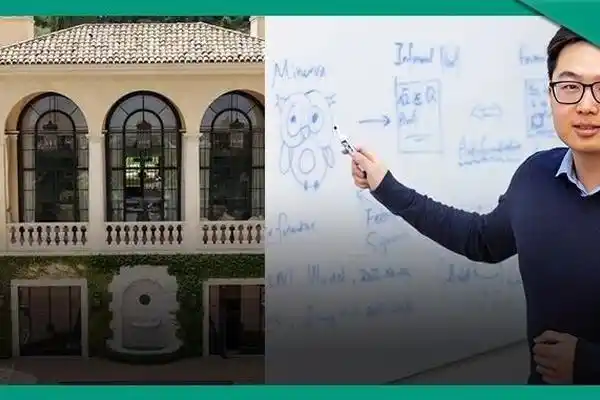
Со временем биткоин примут почти все государства — Самсон Моу

cryptonews.ruPublished on 2025-09-03Last updated on 2025-10-04

Основатель Jan3 Самсон Моу (Samson Mow) заявил в подкасте What Bitcoin Did, что многие государства постепенно преодолевают скептицизм в отношении криптовалют и уже разрабатывают стратегии по внедрению биткоина.

По словам Моу, государства постепенно переходят от экспериментов с биткоином в фазу быстрорастущего интереса. Моу уверен, что скоро у правительств наступит массовый синдром упущенной выгоды (FOMO), и многие государства поспешат создавать стратегический резерв в биткоинах, следуя примеру Соединенных Штатов.

В этом году президент США Дональд Трамп подписал указ о создании крипторезерва. Сейчас во владении США находится 198 012 BTC, что делает страну крупнейшим держателем криптовалюты. Однако Моу предупредил, что конкурирующие страны, в том числе Пакистан, могут обогнать США в развитии крипторезерва, если Вашингтон оставит эту инициативу. В мае Пакистан уже объявил о создании резерва в BTC.

Моу также отметил Латинскую Америку — страны этого региона тоже будут готовы внедрить биткоин на государственном уровне, чтобы снизить риски девальвации фиатных валют. В сентябре власти Парагвая начали обсуждать перспективы создания резервного фонда в биткоинах.

Тем не менее, динамика курса биткоина немного не оправдала ожиданий Моу на 2025 год. По его подсчетам, на крипторынке уже должен наблюдаться бычий тренд, который мог бы продлиться до 2026 года. Сейчас биткоин торгуется на уровне $120 900, что почти на 7% больше, чем за последний месяц, а его рыночная капитализация составляет $2,4 млрд.

Ранее гендиректор Jan3 предположил, что держатели эфира распродадут этот альткоин как только его курс поднимется, а затем вложат вырученные средства в биткоин.


Trending Cryptos

Related Reads

IPO Imminent, OpenAI Faces Major Personnel Upheaval

OpenAI, preparing for a potential IPO, is experiencing significant leadership turmoil. In mid-August 2026, longtime "GPU geek" Scott Gray quietly left, and within three days, Chief Operating Officer Brad Lightcap (8-year veteran) and Chief Revenue Officer Denise Dresser (8-month tenure) departed. This follows a broader exodus of at least 10 senior executives in 2026, including heads of product, safety, and ethics. Analysts view this as a strategic "surgery" to transform from a research lab into a sales-driven enterprise company before going public. Revenue now tilts toward enterprise clients, surpassing consumer income sooner than expected, with annualized revenue reaching $40 billion. The new CRO, Dali Rajic, is a veteran enterprise sales leader. Concurrently, OpenAI has disbanded independent safety teams like "Preparedness," which assessed catastrophic risks, integrating their functions into core research. Critics warn this removes dedicated "brakes" on AI development. The leadership vacuum raises questions about who is the clear second-in-command after former apps CEO Fidji Simo moved to an advisory role. Co-founder Greg Brockman appears to be consolidating power. As OpenAI races against rival Anthropic ($47B annualized revenue), it faces the dual challenge of commercial execution while managing the departure of foundational technical talent and ensuring responsible AI development remains a priority.

marsbit1h ago

IPO Imminent, OpenAI Faces Major Personnel Upheaval

marsbit1h ago

AI Can 'Have Moods Too'! New Research from USTC: Confusion and Anxiety Make AI Work Better

The article discusses research from the University of Science and Technology of China and Oxford, revealing that allowing AI to recognize and act upon simulated "internal emotions" can significantly improve its performance. The study demonstrates a coherent pairing between specific emotional states in AI agents and their subsequent skill choices. For instance, an agent feeling curious and desirous will search for products, while one feeling confused and tense will rephrase queries. This mirrors human decision-making influenced by emotions. Statistical validation showed a 76.5% semantic consistency in these pairings. Crucially, the research challenges the traditional view of AI errors as flaws to be eliminated. It found that "bad" emotions like confusion, tension, or frustration serve as useful metacognitive signals, indicating a mismatch between the current strategy and the environment. By responding to these signals, AI can proactively adjust before a failure occurs. This is particularly effective in complex tasks prone to failure. For example, in tasks like "heating an item" and "picking up two items," success rates surged from 9.6% to 56.9% and 4.4% to 31.3%, respectively, when using the emotion-driven skill selection method (EMOTION2SKILL). The AI's "nervous" state about a closed microwave, for instance, prompted it to check and open it first, preventing failure. The article also mentions related work from Tianjin University, which embeds emotional prediction into world models (Large Emotional World Model, LEWM), significantly improving prediction accuracy in human-centric environments. Removing emotional data was found to degrade performance even in unrelated logical reasoning tasks. These studies build on earlier findings, like those from Anthropic, that identifiable emotional representations exist within large language models (LLMs). The focus is shifting from philosophical debate about AI emotion to practically harnessing these internal states as functional signals to enhance AI robustness and capability.

marsbit2h ago

AI Can 'Have Moods Too'! New Research from USTC: Confusion and Anxiety Make AI Work Better

marsbit2h ago

Trading

Spot

Hot Articles

What is $BITCOIN

DIGITAL GOLD ($BITCOIN): A Comprehensive Analysis Introduction to DIGITAL GOLD ($BITCOIN) DIGITAL GOLD ($BITCOIN) is a blockchain-based project operating on the Solana network, which aims to combine the characteristics of traditional precious metals with the innovation of decentralized technologies. While it shares a name with Bitcoin, often referred to as “digital gold” due to its perception as a store of value, DIGITAL GOLD is a separate token designed to create a unique ecosystem within the Web3 landscape. Its goal is to position itself as a viable alternative digital asset, although specifics regarding its applications and functionalities are still developing. What is DIGITAL GOLD ($BITCOIN)? DIGITAL GOLD ($BITCOIN) is a cryptocurrency token explicitly designed for use on the Solana blockchain. In contrast to Bitcoin, which provides a widely recognized value storage role, this token appears to focus on broader applications and characteristics. Notable aspects include: Blockchain Infrastructure: The token is built on the Solana blockchain, known for its capacity to handle high-speed and low-cost transactions. Supply Dynamics: DIGITAL GOLD has a maximum supply capped at 100 quadrillion tokens (100P $BITCOIN), although details regarding its circulating supply are currently undisclosed. Utility: While precise functionalities are not explicitly outlined, there are indications that the token could be utilized for various applications, potentially involving decentralized applications (dApps) or asset tokenization strategies. Who is the Creator of DIGITAL GOLD ($BITCOIN)? At present, the identity of the creators and development team behind DIGITAL GOLD ($BITCOIN) remains unknown. This situation is typical among many innovative projects within the blockchain space, particularly those aligning with decentralized finance and meme coin phenomena. While such anonymity may foster a community-driven culture, it intensifies concerns about governance and accountability. Who are the Investors of DIGITAL GOLD ($BITCOIN)? The available information indicates that DIGITAL GOLD ($BITCOIN) does not have any known institutional backers or prominent venture capital investments. The project seems to operate on a peer-to-peer model focused on community support and adoption rather than traditional funding routes. Its activity and liquidity are primarily situated on decentralized exchanges (DEXs), such as PumpSwap, rather than established centralized trading platforms, further highlighting its grassroots approach. How DIGITAL GOLD ($BITCOIN) Works The operational mechanics of DIGITAL GOLD ($BITCOIN) can be elaborated on based on its blockchain design and network attributes: Consensus Mechanism: By leveraging Solana’s unique proof-of-history (PoH) combined with a proof-of-stake (PoS) model, the project ensures efficient transaction validation contributing to the network's high performance. Tokenomics: While specific deflationary mechanisms have not been extensively detailed, the vast maximum token supply implies that it may cater to microtransactions or niche use cases that are still to be defined. Interoperability: There exists the potential for integration with Solana’s broader ecosystem, including various decentralized finance (DeFi) platforms. However, the details regarding specific integrations remain unspecified. Timeline of Key Events Here is a timeline that highlights significant milestones concerning DIGITAL GOLD ($BITCOIN): 2023: The initial deployment of the token occurs on the Solana blockchain, marked by its contract address. 2024: DIGITAL GOLD gains visibility as it becomes available for trading on decentralized exchanges like PumpSwap, allowing users to trade it against SOL. 2025: The project witnesses sporadic trading activity and potential interest in community-led engagements, although no noteworthy partnerships or technical advancements have been documented as of yet. Critical Analysis Strengths Scalability: The underlying Solana infrastructure supports high transaction volumes, which could enhance the utility of $BITCOIN in various transaction scenarios. Accessibility: The potential low trading price per token could attract retail investors, facilitating wider participation due to fractional ownership opportunities. Risks Lack of Transparency: The absence of publicly known backers, developers, or an audit process may yield skepticism regarding the project's sustainability and trustworthiness. Market Volatility: The trading activity is heavily reliant on speculative behavior, which can result in significant price volatility and uncertainty for investors. Conclusion DIGITAL GOLD ($BITCOIN) emerges as an intriguing yet ambiguous project within the rapidly evolving Solana ecosystem. While it attempts to leverage the “digital gold” narrative, its departure from Bitcoin's established role as a store of value underscores the need for a clearer differentiation of its intended utility and governance structure. Future acceptance and adoption will likely depend on addressing the current opacity and defining its operational and economic strategies more explicitly. Note: This report encompasses synthesised information available as of October 2023, and developments may have transpired beyond the research period.

1.9k Total ViewsPublished 2025.05.13Updated 2025.05.13

What is $BITCOIN

Discussions

Welcome to the HTX Community. Here, you can stay informed about the latest platform developments and gain access to professional market insights. Users' opinions on the price of BTC (BTC) are presented below.

活动图片