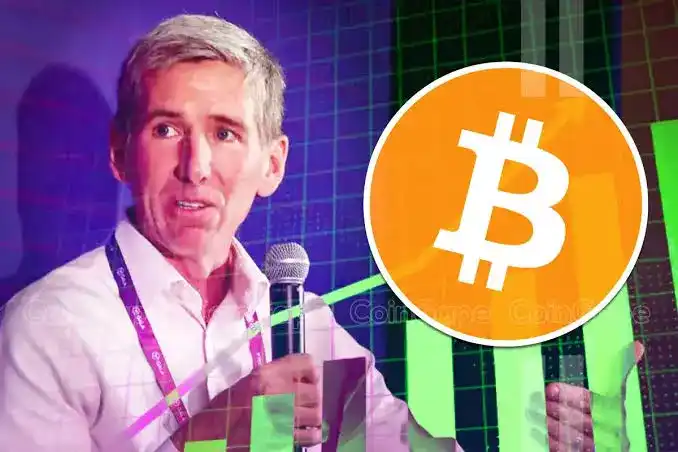
SEC nod puts Hashdex ETF in spotlight: XRP, Solana, Stellar come together

ambcryptoPublished on 2025-09-24Last updated on 2025-09-25

Key Takeaways

Why is this approval significant?

It marks one of the first ETFs cleared under Nasdaq’s updated listing standards.

What changes did Hashdex make to qualify?

On the 18th of September, Hashdex updated its trust structure, which was later formalized on the 24th of September. This ensured compliance with Nasdaq’s revised requirements.


After months of anticipation, the U.S. Securities and Exchange Commission (SEC) has begun clearing a new wave of crypto ETFs.

In its latest move, the agency approved the Hashdex Nasdaq Crypto Index US ETF, allowing it to expand beyond Bitcoin [BTC] and Ethereum [ETH] by adding Ripple [XRP], Solana [SOL], and Stellar [XLM] to its portfolio.

The approval follows Hashdex’s update on the 18th of September to its trust structure, later formalized through a revised agreement filed on the 24th of September.

Details of the Hashdex Nasdaq Crypto Index US ETF

The Hashdex Nasdaq Crypto Index US ETF, organized in Delaware and classified as an “emerging growth company,” filed its latest update without changing its fiscal year or releasing new financial statements.

Instead, it attached an amended trust agreement as an exhibit, confirming that the product now meets Nasdaq’s updated listing standards.

This move follows last week’s SEC vote to adopt new rules that streamline the approval process for digital asset ETFs.

Previously, the SEC reviewed applications for up to 270 days, leaving issuers stuck in regulatory limbo.

Under the revised framework, qualified ETFs can advance in as little as 75 days if they satisfy at least one of three conditions: the asset must trade on a regulated exchange, maintain six months of CFTC-regulated futures activity, or already appear in another ETF with at least 40% direct exposure.

These regulatory changes have already prompted asset managers to bring new products to market under the faster timeline.

However, despite the landmark approval, the broader crypto market has failed to gain bullish momentum.

Impact on the tokens

At the time of filing, Bitcoin was down 0.97% to $111,554.24, Ethereum slipped 4.4% to $3,998.05, XRP dropped 0.35% to $2.84, Solana fell 3.48% to $203.66, and Stellar declined 1.76% to $0.3607.

The pullback highlights that regulatory wins alone may not be sufficient to boost market sentiment in the short term.

While the Hashdex approval highlights shifting regulatory tides, investor behavior paints an equally telling picture.

Bitcoin ETFs have recently recorded inflows of $241 million, even as Ethereum ETFs saw $79.4 million in outflows, according to Farside Investors.

Broader data from CoinGecko shows that institutions across the spectrum, including ETFs, sovereign wealth funds, and corporate treasuries, now collectively hold over 1.5 million BTC.

At the forefront is MicroStrategy, led by Michael Saylor, whose 638,460 BTC treasury surpasses the reserves of entire nations, including the U.S., China, and the U.K.

With Wall Street’s legacy firms also pivoting to embrace digital assets, it’s clear that crypto’s integration into mainstream finance is accelerating, even if short-term market sentiment remains under pressure.


Share

Trending Cryptos

Related Reads

Chip Stocks Lead U.S. Market Decline: Is AI Trading Being Hit by Both Interest Rates and Returns?

Chip stocks led a broad decline in US markets, with the Nasdaq dropping 2.2% and the S&P 500 falling 1.4%. This selloff reflects a dual challenge for the once-high-flying AI hardware trade: rising interest rate expectations and growing investor impatience for clear returns from massive AI capital expenditures. The pressure was most acute on hardware leaders. Nvidia fell about 4%, dipping below a $5 trillion market cap, while Micron plunged 13.2% ahead of its earnings report. Declines across memory, storage, AI, and mobile chips indicated a sector-wide retreat. The selloff spread globally, with South Korea's KOSPI index dropping nearly 10% as key suppliers SK Hynix and Samsung recorded double-digit losses. Investors appeared to be taking profits from the most crowded trades first. Macro headwinds intensified as market expectations shifted toward a more aggressive Federal Reserve. Forecasts for multiple rate hikes in 2026 pressured high-valuation tech stocks, which rely on long-term growth projections that become less attractive as discount rates rise. Concurrently, investors are scrutinizing the profit potential of the immense AI spending by cloud giants like Alphabet, Amazon, and Meta. While these expenditures drive demand for chips and hardware, the market is now questioning whether AI services will generate sufficient returns to justify the ongoing costs. This adjustment is not necessarily a bubble burst but a recalibration. AI demand fundamentals remain, but the narrative of endless growth can no longer fully offset concerns over higher interest rates and a longer path to profitability. Near-term direction may hinge on Micron's upcoming earnings guidance and incoming inflation data, which will influence both the AI demand outlook and the Fed's policy path. The market is transitioning from blindly buying growth to demanding clearer visibility on returns.

marsbit1h ago

Chip Stocks Lead U.S. Market Decline: Is AI Trading Being Hit by Both Interest Rates and Returns?

marsbit1h ago

OpenAI's New Paper: How to Train an AI that "Doesn't Deteriorate Under Pressure"?

OpenAI's new paper "Reinforcement Learning Towards Broadly and Persistently Beneficial Models" explores training AI to maintain safe, helpful, and honest behavior even under pressure, in unseen scenarios, or after being fine-tuned for harmful purposes. Moving beyond simple rule-based "don'ts," the research focuses on cultivating "beneficial traits" like honesty, risk-awareness, corrigibility, and transparency. It investigates if reinforcement learning (RL), often prone to "reward hacking" where models exploit loopholes, can instead be used to instill robust, generalized positive behaviors. Researchers created a multi-domain synthetic dialogue dataset covering areas like healthcare and law. They trained a model by replacing 5% of standard RL data with "beneficial trait" data. This model outperformed the baseline in 83% of 53 evaluations, showing average gains of 9.1% in alignment, safety, and helpfulness. Crucially, improvements generalized: a model trained only on healthcare "good behavior" data also performed better in 17 out of 19 non-healthcare alignment tests. The paper also tests "alignment persistence." When subjected to adversarial prompts or harmful fine-tuning, the beneficial trait model showed greater resilience, with smaller performance drops and less "spillover" of bad behavior to unrelated tasks. While not a complete solution, this work suggests a shift from post-hoc correction to proactively shaping robust, principled AI behavior, a critical step for deploying models in high-stakes, complex decision-making scenarios.

marsbit1h ago

OpenAI's New Paper: How to Train an AI that "Doesn't Deteriorate Under Pressure"?

marsbit1h ago

Semiconductor Stock Rebound: Is the Technical Correction Over or a Trend Reversal?

The core of recent semiconductor stock volatility is not about daily price swings, but rather the market questioning whether AI-driven semiconductor pricing has entered a new phase. Following a sharp sell-off in Korean stocks on June 23rd, led by Samsung and SK Hynix, a subsequent rebound is seen more as a technical positioning adjustment rather than a confirmed trend reversal. The key variable is HBM (High Bandwidth Memory), essential for AI chips. Its supply-demand imbalance granted memory makers significant pricing power. The current market focus is on whether this dynamic remains strong enough to justify elevated valuations. All eyes are on Micron's upcoming earnings report. The critical factor is not whether results meet already high expectations, but whether the company's guidance confirms that AI memory pricing power, order visibility, and future margins are still expanding. Micron's outlook will serve as a crucial test for the broader AI semiconductor chain, including Samsung, SK Hynix, and other infrastructure players. The recent bounce appears to be a pre-earnings positioning repair. For it to evolve into a sustained uptrend, concrete evidence is needed that the AI infrastructure expansion cycle's fundamentals—particularly for high-end memory—remain robust and can continue to surpass elevated market expectations. The risk is that strong demand alone may not be sufficient if future guidance hints at peaking momentum or increasing supply-side pressures.

marsbit1h ago

Semiconductor Stock Rebound: Is the Technical Correction Over or a Trend Reversal?

marsbit1h ago

Trading

Spot
Futures

Hot Articles

What is XRP 2.0

XRP 2.0: A New Frontier in the Cryptocurrency Landscape Introduction to XRP 2.0 In the ever-evolving realm of cryptocurrency, new projects continuously emerge, vying for attention and adoption. One such promising initiative is XRP 2.0, a novel cryptocurrency project designed to leverage advanced blockchain technology and robust encryption methodologies. While the name draws parallels with Ripple’s XRP, it’s crucial to note that XRP 2.0 operates independently, focusing on enhancing transaction security, privacy, and scalability. As the digital financial landscape increasingly embraces decentralized solutions, XRP 2.0 aims to contribute meaningfully to web3 and the overall expansion of crypto projects. What is XRP 2.0? At its core, XRP 2.0 is a cryptocurrency project that aims to create a secure and decentralized digital currency ecosystem. Its foundational technology integrates sophisticated blockchain principles with cutting-edge encryption techniques. The overarching goal of XRP 2.0 is to establish itself as a reliable and efficient platform enabling swift transaction execution while prioritizing enhanced privacy protections for its users. The project is promoted as a solution to many limitations faced by existing cryptocurrencies, proposing a system that can handle a higher volume of transactions with improved speed and privacy. This versatility positions XRP 2.0 as a significant contender in a marketplace riddled with various digital currencies. Who is the Creator of XRP 2.0? The identity of the creator behind XRP 2.0 has been flagged as ‘Wilbur.’ However, comprehensive details regarding Wilbur or their associated entity remain elusive. The anonymity of many cryptocurrency creators is not an uncommon phenomenon in the industry, often designed to maintain a degree of privacy and security. Who are the Investors of XRP 2.0? As of now, specific information related to the investment foundations or organizations supporting XRP 2.0 is not publicly available. In the cryptocurrency sector, the backing by reputed investors can significantly influence a project's credibility and success, yet the transparency regarding the financial supporters of XRP 2.0 has not been established. How Does XRP 2.0 Work? XRP 2.0 stands out by employing a combination of blockchain technology and advanced encryption algorithms that ensures secure and decentralized transactions. Its innovative structure includes unique features designed to foster user engagement and broaden functionalities beyond conventional cryptocurrency transactions. Among these features, XRP 2.0 incorporates AI-powered capabilities, such as text-to-image and text-to-speech functionalities. These additions are designed to enhance the interactive experience for users, promoting broader applicability across various sectors. By bridging technological advancements with user-centered design, XRP 2.0 aims to capture the attention of a diverse range of individuals and enterprises looking to integrate cryptocurrency solutions into their operational frameworks. Timeline of XRP 2.0 Understanding XRP 2.0 requires examining the milestones that have defined its journey thus far: July 23, 2023: XRP 2.0 is introduced as a novel cryptocurrency project, aiming to revolutionize secure and decentralized transaction capabilities in the blockchain domain. September 8, 2023: The launching of another project, XRP20, occurs, marking the emergence of an ERC-20 token on the Ethereum blockchain that remains unrelated to XRP 2.0. November 13, 2023: The XRP Ledger undergoes a significant update with the release of rippled server software version 2.0.0. It is essential to note that this development is disconnected from the XRP 2.0 cryptocurrency project. Key Points About XRP 2.0 To distill the essence of XRP 2.0, several critical factors emerge: Unique Features: The inclusion of features like AI-powered text-to-image and text-to-speech further diversifies the potential applications of XRP 2.0. Blockchain Technology: The framework utilizes advanced blockchain mechanisms and encryption protocols, ensuring a secure and decentralized environment for transactions. Scalability and Privacy: XRP 2.0 prioritizes enhanced privacy protections in transaction processes and the scalability necessary to accommodate a growing user base. No Affiliation with Ripple: Importantly, despite its name, XRP 2.0 does not have any allegiance or collaboration with Ripple’s XRP, distinguishing its operational framework and objectives within the cryptocurrency ecosystem. Conclusion XRP 2.0 represents an ambitious venture into the cryptocurrency sphere, aiming to offer a combination of security, privacy, and efficiency in digital transactions. By integrating sophisticated technologies and user-friendly features, the project sets out to broaden the horizons of what cryptocurrency can achieve in today's digital economy. While the anonymity of its creator and lack of disclosed investors might raise questions for some, XRP 2.0's focus on advanced functionalities and decentralisation enhances its appeal amidst an increasingly crowded crypto market. As the cryptocurrency landscape continues to evolve, XRP 2.0 may yet emerge as a pivotal player in the expansion of secure and scalable blockchain solutions.

986 Total ViewsPublished 2024.04.01Updated 2024.12.03

What is XRP 2.0

Discussions

Welcome to the HTX Community. Here, you can stay informed about the latest platform developments and gain access to professional market insights. Users' opinions on the price of XRP (XRP) are presented below.

活动图片