当狗狗币穿上 ETF 外衣:互联网 Meme 的 「华尔街驯化记」

深潮Published on 2025-09-18Last updated on 2025-09-19

ETF 只是将文化能量转化为机构产品的载体。

撰文:Thejaswini M A

编译:Luffy,Foresight News

交易所交易基金(ETF)的诞生源于一场危机。1987 年 「黑色星期一」,道琼斯工业平均指数单日暴跌超 20%。监管机构与市场参与者意识到,他们需要更可靠的投资工具。共同基金仅能在每日收盘后交易,这让投资者在市场恐慌时束手无策。

ETF 应运而生,成为解决问题的关键。这种 「一篮子证券」 能像个股一样交易,在市场动荡时提供即时流动性。

ETF 简化了指数投资,以低费率优势提供广泛的市场敞口,它的设计初衷是 「无需干预、高度透明」,仅追踪指数而非试图跑赢指数。1993 年推出的首只成功 ETF—— 标普 500 指数 ETF,凭借 「精准追踪标普 500」 的承诺,成为全球最大基金。

最初的 ETF 是个纯粹的好想法。如果你想投资 「整个股市」,却不愿研究个股或支付高昂管理费请基金经理代劳,它就是最优选择。
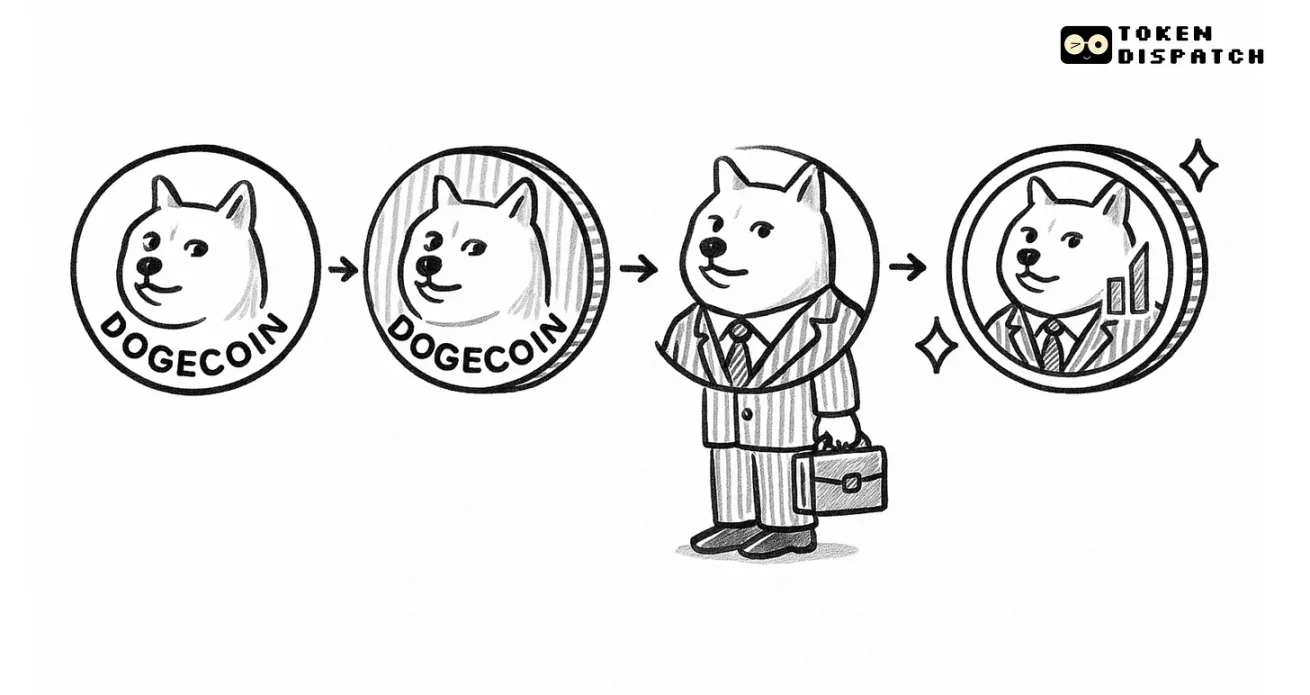
跨时代的转折:Memecoin ETF 登场

2025 年 9 月,华尔街跨过了新的门槛:将 Memecoin 包装成受监管的投资产品,并为此收取 1.5% 的年费率。

ETF 已从 「简化投资的工具」 演变为 「可包装任意策略的复杂载体」。组合、对冲、择时等投资方式无穷无尽,但可供投资的实体公司数量却是有限的。

如今,美国市场的 ETF 数量已超 4300 只,而公开上市公司仅约 4200 家。ETF 在所有投资工具中的占比从十年前的 9% 升至 25%,这是市场史上首次出现 「基金数量多于股票数量」 的情况。
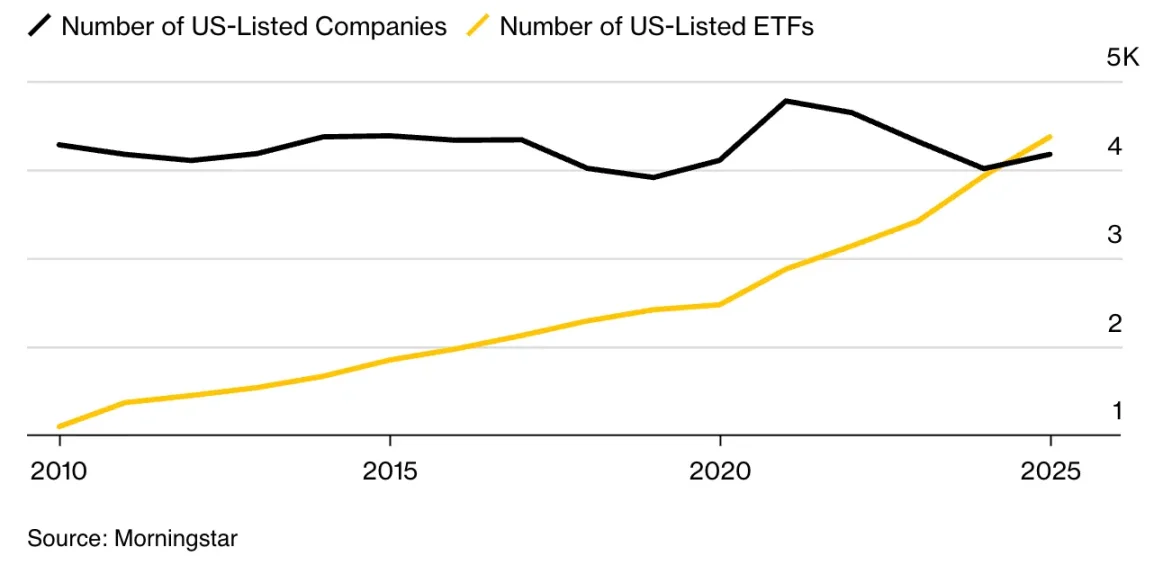
这催生了一个根本性问题:选择过剩非但没有赋予投资者权力,反而让他们陷入瘫痪。如今的基金覆盖了所有能想到的主题、趋势甚至政治立场,严肃长期投资与娱乐化投机的界限彻底模糊,已几乎无法区分 「为积累财富设计的产品」 与 「为蹭热点设计的产品」。

等等……这种焦虑完全偏离了重点,狗狗币 ETF 并非对加密货币使命的扭曲。

15 年来,加密货币一直被质疑为 「无价值支撑的虚拟货币」。传统金融称我们是 「沉迷无价值代币的投机者」,断言我们永远无法构建真实事物、得不到机构认可、不配获得严肃监管对待。

而现在,他们正试图从我们 「玩笑般创造的资产」 中榨取价值。

加密行业创造了一种传统金融无法忽视、无法扼杀、最终无法置身事外的全新价值类别。狗狗币能先于半数财富 500 强企业拥有专属 ETF,正是加密货币文化主导地位最有力的证明。

好了,庆祝的话就说到这,我们来认真审视一下这场胜利的本质。

为何有人愿为可以「免费买到」的东西支付 1.5% 年费?

Memecoin ETF 的经济逻辑对投资者毫无意义,对华尔街却再合理不过。

你只需 5 分钟就能在 Coinbase 上直接购买狗狗币,且无任何持续费用;而 REX-Osprey 狗狗币 ETF 提供相同敞口,却要收取 1.5% 的年费率。要知道,比特币 ETF 的费率仅为 0.25%。为何有人愿为 Memecoin 支付 6 倍于 「数字黄金」 的成本?

答案揭示了这类产品的真实目标客户。比特币 ETF 服务于机构投资者和经验丰富的财富管理者,他们需要遵守监管规定,但了解加密货币。它们在费用上展开竞争,因为他们的客户有其他选择,并且知道如何使用它们。

Memecoin ETF 则瞄准了 「在 TikTok 上刷到狗狗币却不知如何直接购买」 的散户。他们付费买的不是市场敞口,而是便捷性与合法性背书。这些投资者不会比价,只是想在 Robinhood App 里点一下 「买入」,就能沾到自己常听的 Meme 热点的边。

发行者很清楚这有多荒谬,也知道客户本可以在别处更便宜地买到狗狗币。他们赌的是:大多数人不会发现这一点,或者不愿费心去折腾加密货币交易所与钱包。1.5% 的费率本质上是对金融文盲征收的税,却被包装成机构合法性的幌子。

什么资产配得上 ETF?

传统 ETF 定义是:「持有多元化证券组合、像股票一样在交易所交易的受监管投资基金,提供广泛市场敞口,同时具备专业监管、托管标准与透明报告机制。」

经典模型如追踪标普 500 的 ETF,持有跨多个行业的数百只股票;即便行业 ETF(如科技、医疗)也会覆盖数十只相关股票。它们通过分散投资降低风险,同时捕捉市场趋势。

再看狗狗币的本质:2013 年有人复制莱特币代码,加了个 Meme 狗 logo,纯粹以讽刺为目的创造的加密货币。它没有开发团队、没有商业计划、没有收入模型、没有技术创新;每年固定增发 50 亿枚代币,刻意设计成通胀模式只为嘲讽比特币的稀缺性。

这个代币没有任何经济用途:不能在上面开发应用,不能质押生息,唯一的功能就是作为互联网 Meme 存在,偶尔因名人推文被拉盘。

是什么监管漏洞造就了这一切?

这款产品的上市路径,暴露了 「金融创新」 的真实玩法:在技术上符合法律条文,却绕过法律精神的监管套利。

REX-Osprey 狗狗币 ETF(代码:DOJE)并非依据监管大宗商品 ETF 的《1933 年证券法》上市,而是采用了《1940 年投资公司法》框架,这个选择至关重要。根据《1940 年法案》,若 SEC 未提出异议,申请将在 75 天后自动获批,相当于一条监管捷径。但问题在于:该法案原本是为 「分散投资于多资产的共同基金」 设计的,而非 「单一 Memecoin 的投机工具」。

为满足分散投资要求,DOJE 无法直接持有狗狗币,转而通过开曼群岛子公司借助衍生品获取敞口,且相关持仓不得超过资产的 25%。这就造成了一个荒谬的结果:一只狗狗币 ETF,最多只能有 25% 的资产与狗狗币相关。
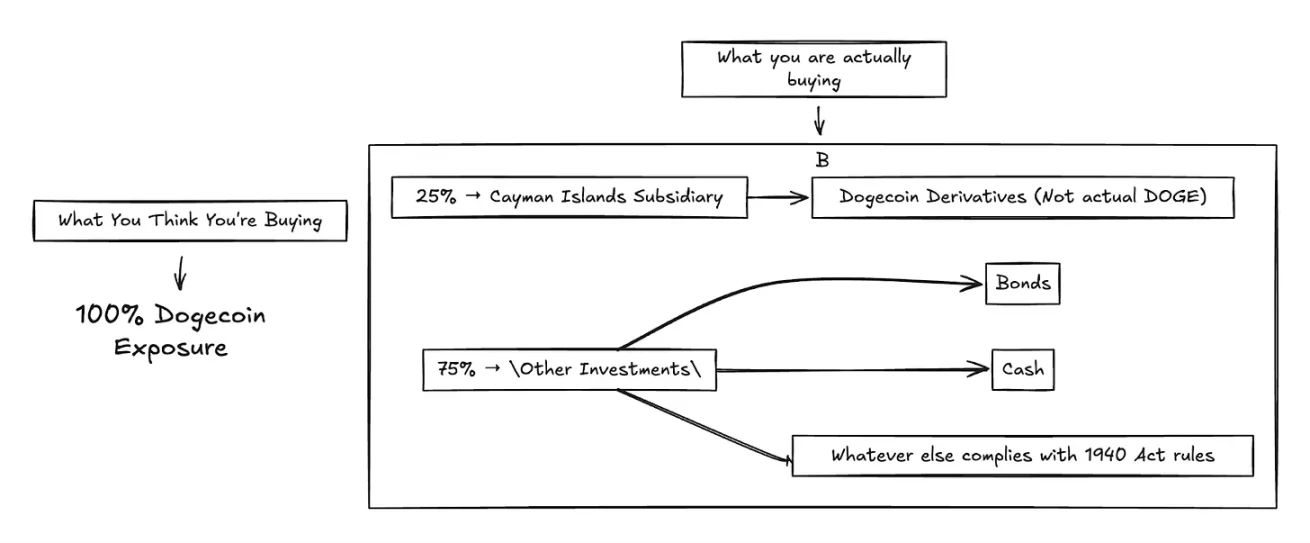
它从根本上改变了投资者的实际购买方式。直接持有资产的 ETF 能精准追踪价格,而通过离岸子公司使用衍生品,会引入跟踪误差、交易对手风险与复杂性,导致基金表现与狗狗币实际走势脱节。

这种监管变通还带来了透明度问题:散户买狗狗币 ETF,是想直接沾到社交平台上的 Meme 热点,但他们实际买到的是 「复杂衍生品组合」:四分之三的投资与狗狗币价格变动毫无关系,收益会被基金其余 75% 的持仓稀释。

更糟糕的是,这种结构完全违背了《1940 年法案》的保护初衷。国会制定分散投资规则,是为了通过多资产配置降低风险;而华尔街却利用这些规则,将高风险投机包装成监管产品,规避了本应有的监管力度。监管框架非但没有保护投资者免受风险,反而用 「机构合法性」 掩盖了新的风险。

对比比特币 ETF。多数比特币 ETF(如 ProShares BITO 或 Grayscale 现货比特币 ETF)采用《1933 年证券法》或其他大宗商品基金框架,允许直接持有比特币敞口(或通过期货),无需遵守 25% 的持仓上限;它们通常直接持有期货合约或寻求比特币现货托管(获批后),能更精准地追踪比特币价格。

狗狗币 ETF 堪称监管套利的完美风暴。一只 「主要不投标的资产」 的 ETF,持有 「公开宣称无任何用途」 的资产,借助 「本为阻止此类投机而生」 的 1940 年代法案上市。这是金融工程最玩世不恭的体现,利用监管漏洞,在投资者保护的幌子下制造投机产品。

为何对收益率如此痴迷?

华尔街已不再假装关注基本面,而是不顾一切地追逐收益,无论资产质量如何。

道富银行数据显示,机构投资组合中股票的超配比例达到 2008 年以来的最高水平。投资者疯狂涌入承诺月付收益的期权收入 ETF、高收益垃圾债,以及通过衍生品提供两位数回报的加密货币收益产品。

资金总是先追逐收益,再问问题。当利率飙升时,投资者果断从安全的投资级债券转向高收益公司债;围绕 AI、加密货币、Meme 资产的主题 ETF 正以创纪录的速度推出,迎合的是投机需求而非长期价值。

风险偏好指标全线飘绿。尽管宏观环境充满不确定性,波动率指数(VIX)仍维持低位;2025 年初市场波动后,防御性板块曾短暂吸引资金,但很快又回流到工业、科技、能源等高风险高回报板块。

华尔街基本上已经认定,在一个流动性无限、创新不断的世界里,收益率高于一切。只要某样东西能提供超额回报,投资者就会找到买入的理由,无视基本面或可持续性。

我们正在制造泡沫吗?

当投资产品数量超过实际可投资资产时,会发生什么?

我们已跨过 「ETF 数量多于股票」 的临界点,这是市场结构的根本性变化。我们本质上在 「真实市场之上创造合成市场」,每一层都叠加了费用、复杂性与潜在的故障点。

Matt Levine 曾指出:「随着 ETF 日益流行,技术使其实施成本降低,更多曾经定制化的交易将变成标准化 ETF。而潜在的交易策略数量,远比股票数量多得多…… 从长远来看,ETF 的潜在市场空间受限于无限的交易策略数量,而不是日益减少的股票数量。

Memecoin ETF 现象加速了这一趋势。Rex-Osprey 已提交 TRUMP 币 ETF、Bonk 币 ETF 的申请,同时还有 XRP、Solana 等传统加密资产 ETF;SEC 目前积压了 92 份加密货币 ETF 申请。每一只产品的成功上市,都会催生对下一只的需求,无论其标的是否有实际用途。

这与 2008 年的次贷危机如出一辙:当时华尔街将衍生品再打包成新的衍生品,直到金融产品与底层资产彻底脱节;如今我们只是用 「关注度与文化现象」 取代了 「抵押贷款」。

市场看似比实际更具流动性,因为围绕同一底层资产有多种产品在交易。但危机来临时,这些产品会同步波动,所谓的流动性会瞬间蒸发。

Memecoin ETF 意味着什么?

更深层的故事是:金融已演变为 「全面的注意力捕捉机制」,任何能引发价格波动的事物,都能被变现。

ETF 上市通过网络效应自我强化。DOJE 上市前一个月,狗狗币价格因 「机构资金入场预期」 上涨 15%;价格上涨吸引更多关注,进而催生更多 Meme,提升文化影响力,反过来为更多金融产品提供合理性,成功会催生模仿。

传统金融变现的是生产性资产,如工厂、技术、现金流;现代金融则能变现任何能推动价格的事物,如叙事、Meme。ETF 这个包装壳,将文化投机转化为机构产品,从最初创造这些现象的社群中抽取费用

更核心的问题是:这究竟是创新还是掠夺?将 Meme 金融化,是创造了新价值,还是仅通过叠加机构成本,从自发的文化运动中榨取价值?

互联网文化本就创造了巨大的经济价值:广告收入、周边销售、平台流量、创作者经济……

我一直在思考是什么推动着 2025 年这些企业估值达到数十亿美元。我最近甚至从班加罗尔的 Mitico 咖啡烘焙店订购了抹茶;不是因为喜欢这种绿色粉末的味道,而是因为抹茶已成为 「高效与静谧奢华」 的仪式性符号,能让我感觉自己融入了某种全球健康美学。

这就是互联网文化的现状:一系列伪装成生活方式选择的 「参与费」。而变现机会无处不在,从荒诞不经到巧妙创新,包罗万象。

以 2025 年的热点为例。酷玩乐队 「亲吻镜头」 事件,将两个人的尴尬瞬间演变成企业辞职丑闻,格温妮丝・帕特洛还莫名其妙成了 「临时发言人」;全网为 「100 个男人能否打败一只大猩猩」 吵翻;Labubu 盲盒热潮让 30 美元的收藏品变成 「人们在店里争抢的身份象征」。

还有我永远跨不过的语言壁垒。Z 世代的俚语更新太快。上周有人说我的穿搭 「bussin」,我真不知道该生气还是高兴 ,显然这是夸人的词?侄子试着解释 「rizz」 是 「有魅力」 的意思,但接着又开始说 「skibidi」「Ohio」 之类的词,我突然意识到自己彻底落伍了。说真的,我在努力跟上,但每次试图正确使用这些词,都感觉自己很 俗套。这完全是 「千禧一代用力过猛」 的既视感,不是我想要的风格。

泰勒・斯威夫特与特拉维斯・凯尔西订婚的消息刚传出几分钟,整个营销界就集体转向:从沃尔玛到乐高再到星巴克,所有品牌都立刻蹭起了这个热点。

关键在于:这种文化势头本身就是经济引擎。当凯蒂・佩里进行 11 分钟的太空飞行,互联网花一周争论,这种关注度能转化为广告收入、品牌曝光与文化资本,有十几种变现方式;当 TikTok 上一对情侣让 「pookie」成为流行词,立刻就出现了 「pookie 播放列表、pookie 周边」 的完整生态。

互联网文化通过创作者经济、周边销售、平台流量、「能比财报更快拉动股价」 ,创造了巨大的经济价值。如果埃隆・马斯克一条推文能为狗狗币增加数十亿美元市值,如果特斯拉的估值更多由文化势头而非基本面决定,那么 「文化现象」 就是合法的经济力量,理应获得与其他资产类别同等的机构包装。

ETF 这个 「包装壳」 并没有从社群中榨取价值。它将已存在的价值正式化,让此前被排斥在外的人也能参与。俄亥俄州的退休老人现在可以通过 401 (k) 养老金接触互联网文化,无需学习加密货币钱包或逛 Discord 社群。

但另一面是:这位退休老人也可能在 「被遗弃的互联网玩笑」 上输掉大笔退休金。仅 1.5% 的年费率,对 10 万美元投资来说每年就要吞噬 1500 美元 。而且由于监管要求,ETF 最多只能有 25% 的敞口与狗狗币相关,这位老人甚至可能没买到自己想要的 「文化敞口」。

没有金融教育的 「金融可及性」 是危险的。让投机资产更容易购买,并不会降低其风险;只是让 「不懂自己在买什么」 的人看不到风险而已。

但 Meme 金融化或许能强化社群,而非掠夺社群。当文化运动获得机构投资支持,它会获得稳定性与资源。

如果互联网文化能推动价格,它就成了资产类别;如果社交势头能制造波动,它就成了可交易标的。ETF 只是将文化能量转化为机构产品的载体。

Related Reads

Google CEO Admits Lagging Behind in Coding

Google CEO Sundar Pichai acknowledged in a recent interview that Google's Gemini AI models are currently "lagging behind" in coding capabilities, particularly for complex, long-horizon tasks requiring advanced developer expertise. He noted the field is advancing at an "unprecedented" pace, where 30-60 days now brings changes equivalent to five years in the past. Pichai expressed that achieving Artificial General Intelligence (AGI) now seems closer than previously imagined due to rapid progress. While highlighting strengths in text, multimodal, and reasoning tasks, Pichai admitted competitors like Anthropic and OpenAI have focused more intently on coding. He emphasized Google's commitment to catching up, citing internal tools like Antigravity 2.0 and the newly released Gemini 3.5 Flash, which aims to address previous shortcomings. Regarding Google Search's AI-driven overhaul, Pichai stated changes will be gradual to align with user needs, not disrupt the core search experience or its advertising model. He addressed public AI anxiety as understandable, given the technology's potential to reshape jobs and society, but remained optimistic about AI augmenting human capabilities and creating new opportunities. Pichai stressed the need for broad societal dialogue and responsible development as AI approaches more advanced, potentially recursive self-improvement stages. He affirmed Google's long-term commitment to leading in AI while navigating its profound implications responsibly.

marsbit10m ago

Google CEO Admits Lagging Behind in Coding

marsbit10m ago

The Paradox of Automation: The Stronger the AI, the Busier Humans Become

The Paradox of Automation: The more powerful AI becomes, the more work humans have to do. This article, based on observations from AI-heavy company Every, argues that while AI agents automate tasks like coding, writing, and customer service, they don't eliminate human jobs. Instead, they transform work and create *more* demand for human expertise. AI commoditizes "yesterday's human capabilities" by cheaply generating code, text, and images from past data. This leads to an abundance of similar, generic outputs. Consequently, what becomes scarce and valuable is human judgment in the present moment: knowing *what* is worth doing, *why*, and *how* to do it well. The article identifies two collaboration models: "Agent employees" for delegated tasks and "human-AI collaboration" within tools like Claude Code for complex work. In both cases, humans are essential to set direction, judge quality, and maintain systems. As AI makes execution cheap, human roles shift from executors to designers, reviewers, and meaning-makers. The author addresses "benchmark anxiety" by explaining that AI excels within specific, human-defined problem "frames." As AI masters one frame (e.g., code rewriting), new, more complex frames emerge (e.g., deciding *when* to rewrite). This creates an ongoing cycle where AI chases the frames, but humans remain the "framers." Even with advanced AGI, this dynamic may persist as long as AI lacks true human-like agency and self-directed purpose. The core paradox holds: automation amplifies the need for the very human judgment it seems to replace.

marsbit1h ago

The Paradox of Automation: The Stronger the AI, the Busier Humans Become

marsbit1h ago

a16z: 7 Charts to Understand How Tokenization is Changing the Nature of Assets

"a16z: 7 Charts on How Tokenization is Changing the Nature of Assets" Tokenized Assets (or Real-World Assets - RWA) are transforming asset forms, liquidity, and financial system construction. The market recently surpassed $30 billion, stabilizing around $34 billion (excluding stablecoins), representing a tenfold increase in less than two years, driven by clearer regulations, mature institutional infrastructure, and increased financial institution adoption. The primary driver of recent growth is tokenized U.S. Treasury bonds. These offer investors efficient, flexible digital access to yield-bearing assets and improve institutional operations like settlement and collateral management. Other asset classes show varied growth: asset-backed credit leads, followed by niche financial assets (e.g., reinsurance, mining notes), while venture capital took longer to scale. Market segmentation shows high concentration. In commodities, tokenized gold dominates (~$5 billion), as its standardized, storable nature fits tokenization well. Bonds are the largest category ($15.2B), but only ~5% are used in DeFi protocols. Conversely, smaller niches like reinsurance tokens see high (~84%) on-chain utilization, highlighting a core industry divide: most current tokenized assets are merely digitized records for easier holding/transfer, lacking the "composability" (free combination/interaction) that is key to blockchain-native finance. The ecosystem is distributed across multiple blockchains, with Ethereum hosting over half the value ($15.7B), followed by BNB Chain, Solana, and others. Future market size predictions vary widely (e.g., $2-$30 trillion by 2030+), but all indicate massive potential from the current small base. Tokenized assets currently represent minuscule fractions of their global counterparts (e.g., 0.01% of global bonds). The current phase focuses on digitizing straightforward assets. The next challenge is to bring more complex financial components on-chain and deeply integrate tokenized assets into composable, internet-native financial infrastructure.

链捕手2h ago

a16z: 7 Charts to Understand How Tokenization is Changing the Nature of Assets

链捕手2h ago

a16z: How Tokenization is Transforming the Nature of Assets in 7 Charts

"Tokenized Assets: How Tokenization Changes the Nature of Assets" by a16z Crypto The market for tokenized assets, excluding stablecoins, has grown from under $3 billion two years ago to over $340 billion today. US Treasury bonds are the primary growth driver, allowing investors to hold yield-bearing assets digitally and enabling more efficient settlement. Other key sectors include private credit (growing fastest), commodities (dominated by gold), and niche financial assets. However, the market remains concentrated in tokenized US Treasuries and gold. A critical insight is that most tokenized assets currently lack "composability." While the total market is large, only a small fraction is actively used within DeFi protocols. For instance, only about 5% of tokenized bonds and a low percentage of tokenized gold are utilized on-chain. In contrast, assets like reinsurance and private credit tokens show much higher on-chain usage rates (84% and 33%, respectively). This highlights a divide: many tokenized assets are merely digital records on a blockchain without enabling new, programmable financial applications. The Pantera Capital Token Native Index indicates over 70% of tokenized assets have minimal on-chain native functionality. Ethereum remains the dominant blockchain for tokenized assets (over $150B), but the ecosystem is diversifying across chains like BNB Chain, Solana, and Stellar, based on factors like cost and compliance. Major institutions forecast massive future growth, with predictions for the tokenized asset market ranging from $2 trillion to over $30 trillion by the early 2030s. However, compared to the global financial system (e.g., ~$140T bonds, multi-trillion dollar gold market), tokenized assets currently represent a tiny fraction (0.01% or less). The conclusion is that while tokenization has begun by digitizing and streamlining settlement for simpler assets, the next phase involves bringing more complex financial instruments on-chain and deeply integrating them into composable, internet-native financial infrastructure.

Odaily星球日报2h ago

a16z: How Tokenization is Transforming the Nature of Assets in 7 Charts

Odaily星球日报2h ago

The Revived Codex, Carrying OpenAI's Hopes for IPO

This article analyzes the intense recent development of OpenAI's Codex, positioning it as a crucial component for OpenAI's impending IPO. Over the past two months, Codex has seen a rapid series of major updates focused on integrating into real enterprise workflows. Key new features include enhanced context capture (Appshots, file previews, built-in browser), long-running task execution ("Goal Mode"), remote operation (phone control, lock-screen access), and enterprise management tools (plugin sharing, access tokens, automated risk review). These updates aim to make Codex a comprehensive AI workbench that can "see the scene, push tasks, and manage risks." The author argues that while ChatGPT proves OpenAI's massive user base and API provides foundational revenue, Codex represents OpenAI's clearest path to demonstrating tangible, high-value commercial viability. It targets developers and engineering teams—a segment already accustomed to paying for efficiency gains in costly software development cycles. This is critical because, despite higher overall revenue, OpenAI's adjusted operating margins remain deeply negative, highlighting the challenge of outrunning immense compute costs. The pressure is amplified by competitor Anthropic's success with Claude Code, which has shown that a focused approach on high-value enterprise and developer workflows can lead to a path toward profitability. Codex's aggressive evolution is thus seen as OpenAI's strategic move to capture a similar enterprise-ready, revenue-generating narrative essential for its market debut. In essence, "ChatGPT proved OpenAI has users. Codex needs to prove OpenAI is a business that can make money."

marsbit3h ago

The Revived Codex, Carrying OpenAI's Hopes for IPO

marsbit3h ago

Trading

Spot
Futures

Hot Articles

What is DOGE M

Doge Matrix ($doge m): The New Breed of Community-Driven Cryptocurrency Introduction In the ever-evolving landscape of cryptocurrency, new projects constantly emerge, each aiming to capture the interest of investors and enthusiasts alike. One of the latest entrants to this domain is Doge Matrix, represented by the ticker symbol $doge m. This project has attracted attention thanks to its roots in the popular meme culture surrounding Dogecoin, establishing its place within the web3 space. This article aims to provide a comprehensive analysis of Doge Matrix, covering its overview, creator, investors, functionality, timeline, and notable aspects. What is Doge Matrix ($doge m)? Doge Matrix is a community-driven cryptocurrency project that seemingly builds upon the widespread appeal of Dogecoin, a digital currency known for its Shiba Inu mascot and its meme origins. While the overarching objectives of Doge Matrix are not extensively defined, it is characterized by a commitment to harnessing community involvement and support. Unlike traditional cryptocurrencies that often emphasize utility or intrinsic value through underlying technologies, Doge Matrix positions itself within a space that embraces the cultural phenomenon of cryptocurrencies, particularly appealing to those who resonate with the ethos of meme-based assets. Drawing on the strengths of the Dogecoin community, Doge Matrix operates as part of a broader ecosystem, inviting participation and engagement from users who share an interest in cryptocurrency and the digital landscape. Who is the Creator of Doge Matrix ($doge m)? The identity of the creator of Doge Matrix remains unknown. This lack of transparency is not an uncommon occurrence in the cryptocurrency space, where some projects are launched without revealing the identities of their founders. The absence of information regarding the founding team can raise questions among potential investors about the project’s accountability and direction. Who are the Investors of Doge Matrix ($doge m)? As it stands, there is no publicly available information detailing the investors or investment foundations that back Doge Matrix. The project appears to rely primarily on community support rather than institutional investment. This model aligns with the community-driven nature of the initiative, fostering an environment where the direction of the project is shaped by its participants rather than being dictated by a select few financial backers. How Does Doge Matrix ($doge m) Work? The specifics regarding the operational mechanisms of Doge Matrix are somewhat vague, reflecting a broader trend of projects in the meme coin space where innovative functionalities are not always clearly articulated. Nonetheless, Doge Matrix seems designed to tap into the existing cryptocurrency ecosystem by encouraging user participation while tapping into the familiar cultural references associated with Dogecoin. Its potentially unique characteristics derive from community interactions rather than technological advancements, emphasizing shared experiences and collaboration among token holders. While the exact innovations have not been explicitly outlined, the project appears to create a space where community members can engage, share ideas, and propel the project's potential forward. Timeline of Doge Matrix ($doge m) Reflecting on the project’s timeline reveals notable events that have defined its journey thus far: November 25, 2024: Doge Matrix reached its all-time high value, marking a significant milestone in its early history. January 1, 2025: Conversely, Doge Matrix hit its all-time low value, illustrating the volatility often associated with cryptocurrencies, especially in the early stages of a project's lifecycle. Ongoing: The project continues to be actively traded and supported by its community, although specific future milestones or objectives have yet to be disclosed. Key Points About Doge Matrix ($doge m) Community Focus At the heart of Doge Matrix is a commitment to community engagement. The project thrives on the premise of collaboration and shared objectives among its members, emphasizing the importance of collective effort. Unlike centralized projects that often have a defined leadership structure, Doge Matrix at present showcases a more fluid approach to governance, where every community member's voice matters. Volatility The cryptocurrency market is notorious for its volatility, and Doge Matrix is no exception. Its price history reflects significant fluctuations between high and low values, which is typical of many new cryptocurrencies but underscores the risks associated with investment in emerging tokens. Lack of Detailed Information One of the most striking features about Doge Matrix is the scarcity of detailed information regarding its technological underpinnings and operational mechanisms. This ambiguity necessitates that potential investors conduct thorough due diligence before engaging with the project. Conclusion In summary, Doge Matrix ($doge m) illustrates a new wave of cryptocurrency projects that lean heavily on community engagement and cultural relevance. While lacking in certain specifics—such as clear leadership, defined objectives, and detailed functionality—the project has managed to generate interest within the crypto community, leveraging the established appeal of meme culture. As with any investment in the cryptocurrency space, understanding the inherent risks and conducting comprehensive research is essential for potential participants. Doge Matrix stands as a reminder of the dynamic, sometimes unpredictable nature of the crypto industry, marked by constant evolution and enthusiasm for community-driven initiatives.

3.5k Total ViewsPublished 2025.02.03Updated 2025.02.03

What is DOGE M

Discussions

Welcome to the HTX Community. Here, you can stay informed about the latest platform developments and gain access to professional market insights. Users' opinions on the price of DOGE (DOGE) are presented below.

活动图片