Whales Pour into Bitcoin Hyper Presale, Sending It to $16M in its Bid to Supercharge Bitcoin

bitcoinistPublished on 2025-09-15Last updated on 2025-09-15

Abstract

The Bitcoin Hyper ($HYPER) presale continues to heat up, with whales buying $64K worth of $HYPER tokens over the past...

Trusted Editorial content, reviewed by leading industry experts and seasoned editors. Ad Disclosure

The Bitcoin Hyper ($HYPER) presale continues to heat up, with whales buying $64K worth of $HYPER tokens over the past weekend. This saw the project raise over $16M on its ongoing fundraiser.

As a Layer 2 project, Bitcoin Hyper ($HYPER) has the potential to transform the Bitcoin ecosystem and make transactions faster and cheaper, while expanding $BTC’s utility.

Bitcoin’s Need for Speed, Low-Cost and Flexibility

Bitcoin ($BTC) has been changing the world of finance ever since its launch in 2009. While initially seen as a highly speculative and risky investment, it has gained legitimacy among institutions.

In fact, funds and public companies now own roughly 12.3% of all bitcoins. With the amount of $BTC capped at 21M, that translates to about 2.5M owned by these organizations.
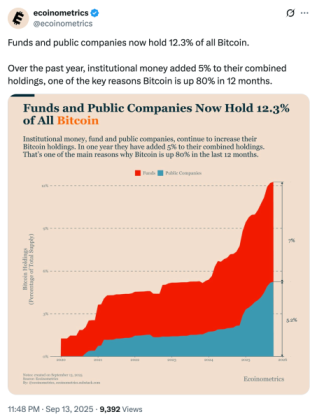
Ecoinometrics' post on X showing companies owning 12.3% of Bitcoin.

Yet, despite all the buzz, Bitcoin has a few drawbacks.

The chain’s simplified script makes Bitcoin one of the most secure cryptocurrencies. However, it limits Bitcoin from being used in more advanced applications, such as smart contracts, dApps, DeFi protocols, and NFTs.

What’s more, the chain can only handle up to seven transactions per second (TPS). In contrast, popular chains like Ethereum and Solana can handle up to 119.1 TPS and 65K TPS, respectively. This leads to congestion, which in turn makes Bitcoin transactions expensive.
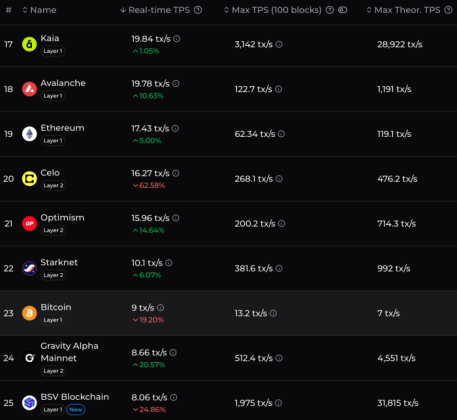
Bitcoin's transactions per second numbers compared to other chains.

Bitcoin Hyper to the Rescue

While updating Bitcoin’s code could make it faster and more scalable, this would come at the cost of its security.

This reluctance to fiddle with Bitcoin’s base layer may be why investors are looking to Bitcoin Hyper ($HYPER) for an alternative solution.

Bitcoin Hyper aims to create a Bitcoin Layer 2. This will serve as a fast lane to Bitcoin’s congested highway. By bringing your $BTC over to the L2, you’ll be able to enjoy faster and cheaper transactions, and use your sats for staking, interacting with dApps, and other applications.

Here’s how the L2 will work once launched:

Bitcoin Hyper Layer 2 -- How it works.

📖For a complete lowdown on the project, be sure to check out our ‘What is Bitcoin Hyper?’ page. Here, we’ll cover everything from its tokenomics to community sentiment to help you decide if this is the presale for you.

Unlocking Bitcoin Hyper’s Benefits with the $HYPER Token

Powering Bitcoin Hyper is its native $HYPER tokens.

Investor interest in this presale is rising, with whale buys worth over $64K pouring in this weekend, sending the total raise to over $16M.

When the L2 launches, holders can use $HYPER for gas fees. They’ll also enjoy exclusive features and governance rights.

At the moment, you can buy tokens at the official Bitcoin Hyper presale page or via the Best Wallet app.

If you’re on the website, simply connect your crypto wallet to the presale widget, and then buy $HYPER using your credit/debit card or crypto.

There’s less than two days left until the next price increase, though, so it’s best to act quickly.

Staking your tokens is another option if you want to earn passive rewards. In return, you’ll receive 71% p.a. in staking rewards.

For more information on joining the presale, check out our page on how to buy Bitcoin Hyper.

If you feel like you’ve missed your chance with Bitcoin, the good news is that Bitcoin Hyper could be the next best thing. According to our Bitcoin Hyper price prediction, $HYPER has the potential to reach as much as $1.50 by 2030.

Things can get even better when Bitcoin Hyper ($HYPER) launches, as its Layer 2 can potentially turbocharge the Bitcoin ecosystem just as adoption swells to new highs.

Get ahead of the curve — join the Bitcoin Hyper presale today.

Authored by Bogdan Patru, Bitcoinist — https://bitcoinist.com/bitcoin-hyper-presale-raises-16m/

Editorial Process for bitcoinist is centered on delivering thoroughly researched, accurate, and unbiased content. We uphold strict sourcing standards, and each page undergoes diligent review by our team of top technology experts and seasoned editors. This process ensures the integrity, relevance, and value of our content for our readers.

As a crypto writer, Bogdan’s responsibilities are split between researching and writing articles and entertaining the team with his humor bordering on the politically incorrect, an aspiring Bill Burr, if you will. Thanks to his 12+ years of writing experience in just as many fields, including tech, cybersecurity, modelling, fitness, crypto, and other topics-that-shall-not-be-named, he's become a genuine asset to the team. While his position as a senior writer at PrivacyAffairs thought him valuable lessons about the power of self-management, his entire writing career was and is an exercise in self-improvement. Now, he's ready to sink his teeth into crypto and teach people how to take control of their own money on the blockchain. With fiat as an eternally devaluing currency, Bitcoin and altcoins seem like the best-fitting alternative for Bogdan. Bogdan’s biggest professional accomplishment, aside from securing a position as a main writer for Bitcoinist, was his 5-year run as a writing manager at Blackwood Productions, where he coordinated a team of four writers. During that time, he learned the value of teamwork and that of creating a working environment that breeds efficiency, positivity, and friendship.

Trending Cryptos

Related Reads

Olympus DAO Myth Reappears? A "Sovereign On-Chain Central Bank" Written with 4000 Lines of Immutable Code

A new project called The Standard Reserve has emerged, branding itself as a "sovereign on-chain central bank." It aims to replicate core central bank functions—currency issuance, money supply adjustment, and reserve accumulation—entirely through 4,000 lines of immutable code, with no human governance. Its core mechanism is a "reflexive monetary policy" based on a single signal: the net ETH flow into or out of the system's sole Uniswap v4 ETH/$STANDARD pool. Sustained net ETH inflows trigger an "expansion" phase, increasing $STANDARD issuance and using protocol fees to buy tokenized gold as a permanent hard reserve. Net outflows (or zero flow) trigger an immediate "contraction" phase, reducing issuance and using fees to buy back and burn $STANDARD. The system involves six key entities: the $STANDARD token (hard-capped at 1 billion), the central Uniswap pool, the Central Bank contract, Charter NFTs (acting as "banking licenses"), Branch units under each Charter (which earn a share of newly minted $STANDARD), and separate Vaults for expansion (buying gold) and contraction (buying back $STANDARD). To participate, users ideally acquire a Founding Charter NFT (initially 1,000 are free via allowlist/public mint). Each Charter comes with one Branch; more can be opened by burning $STANDARD for "expansion permits," increasing revenue share. Retiring a Branch lets users claim accumulated $STANDARD but imposes a dynamic exit fee (higher if many exit simultaneously), with half the fee burned and half distributed to remaining participants. All protocol revenue (from pool fees and Charter auctions) is allocated: 70% to the active Vault (for gold or buybacks), 15% to permanent protocol-owned liquidity, and 15% to the team. The project presents an innovative, game-theoretic model where user actions (expanding Branches by burning tokens or exiting) align with system goals of building reserves or inducing deflation. However, it is fully anonymous, with key parameters undefined and unaudited code, posing significant risks.

marsbit15m ago

Olympus DAO Myth Reappears? A "Sovereign On-Chain Central Bank" Written with 4000 Lines of Immutable Code

marsbit15m ago

US Jobs, China PMI, and Inflation on Stage: Can Global Growth Maintain Resilience?

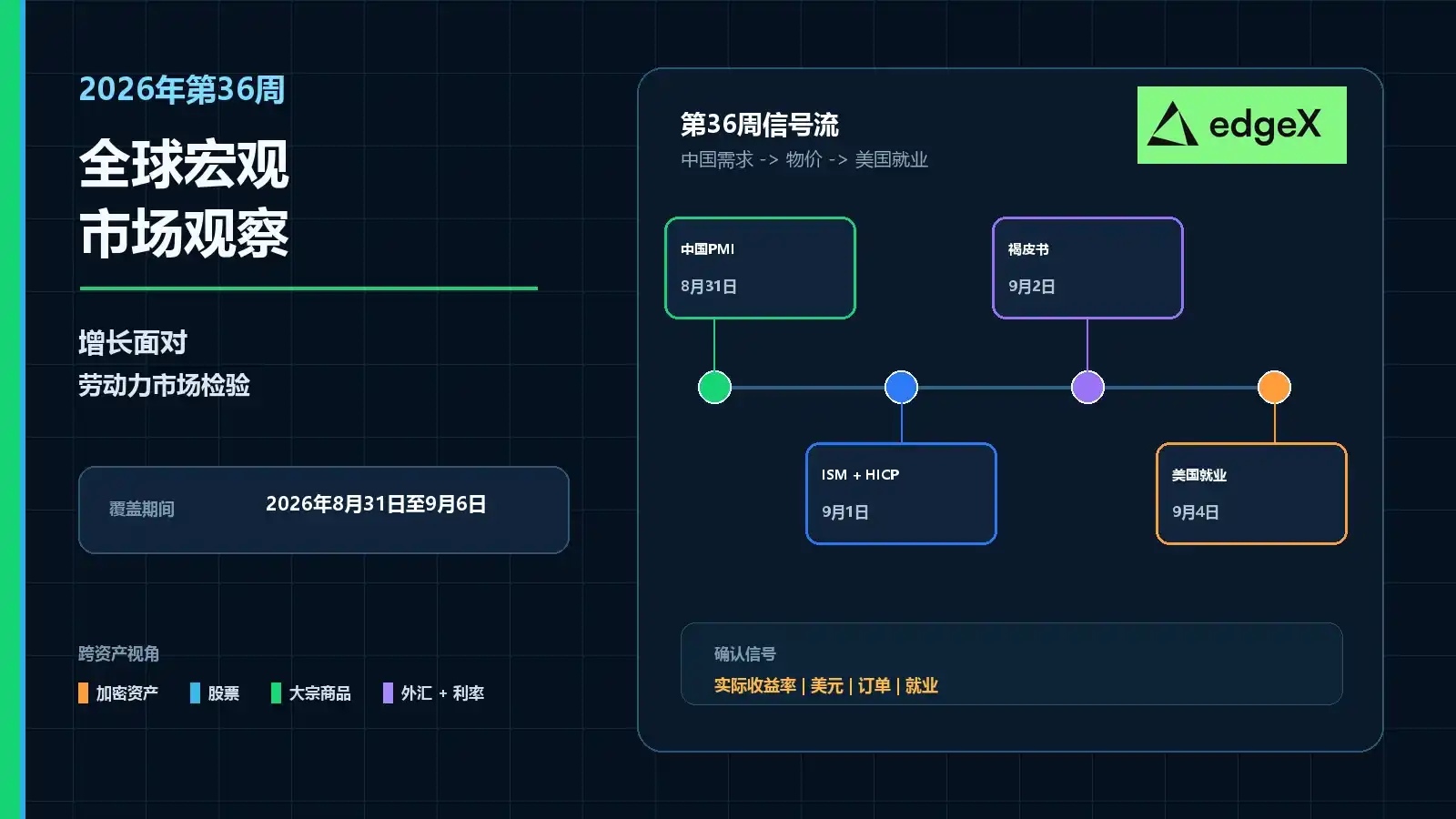
**Week 36 Macro Outlook: Key Data to Test Global Growth Resilience** The week from August 31 to September 6 will shift focus from policy discussions to a critical test of global economic activity. The sequence of events is key, starting with China's official August PMI on Aug 31, which will provide early signals on factory orders, services, and employment following July's contraction. The data flow then broadens. On September 1, US ISM Manufacturing PMI and the Eurozone's flash inflation estimate will offer simultaneous checks on demand, prices, and regional divergence. The subsequent US Federal Reserve Beige Book on September 2 adds granular, qualitative evidence on consumer spending, wages, and regional conditions. Australian Q2 GDP and Canadian trade and jobs data will test resilience in other major economies. The week's pivotal event, however, is the US August employment report on September 4. It will decisively influence expectations for interest rates, the US dollar, and broader risk appetite, acting as a final cross-check for the preceding data. The core question for markets is whether global growth can remain resilient. An ideal outcome would combine a rebound in China's PMI, stable US jobs growth, cooling inflation, and signs of a gradual demand slowdown. Conversely, weak Chinese manufacturing, sticky Eurozone prices, and disappointing US non-farm payrolls would create a more complex scenario of reduced corporate confidence and limited room for aggressive monetary easing, increasing pressure on cyclical assets. Investors should monitor the breadth of improvements—such as new orders and employment—rather than headline PMI figures alone. Confirmation across different data points is crucial. A positive combination of steady activity and disinflation could support equities, industrial commodities, and risk assets like crypto. However, if a growth slowdown triggers lower yields, it must be distinguished from a scenario of rising recession risks that would pressure corporate earnings, potentially limiting rallies. The market's final reaction will hinge on whether the week's signals align to either reinforce or challenge the current growth narrative.

marsbit17m ago

US Jobs, China PMI, and Inflation on Stage: Can Global Growth Maintain Resilience?

marsbit17m ago

Trading

Spot

Hot Articles

What is $BITCOIN

DIGITAL GOLD ($BITCOIN): A Comprehensive Analysis Introduction to DIGITAL GOLD ($BITCOIN) DIGITAL GOLD ($BITCOIN) is a blockchain-based project operating on the Solana network, which aims to combine the characteristics of traditional precious metals with the innovation of decentralized technologies. While it shares a name with Bitcoin, often referred to as “digital gold” due to its perception as a store of value, DIGITAL GOLD is a separate token designed to create a unique ecosystem within the Web3 landscape. Its goal is to position itself as a viable alternative digital asset, although specifics regarding its applications and functionalities are still developing. What is DIGITAL GOLD ($BITCOIN)? DIGITAL GOLD ($BITCOIN) is a cryptocurrency token explicitly designed for use on the Solana blockchain. In contrast to Bitcoin, which provides a widely recognized value storage role, this token appears to focus on broader applications and characteristics. Notable aspects include: Blockchain Infrastructure: The token is built on the Solana blockchain, known for its capacity to handle high-speed and low-cost transactions. Supply Dynamics: DIGITAL GOLD has a maximum supply capped at 100 quadrillion tokens (100P $BITCOIN), although details regarding its circulating supply are currently undisclosed. Utility: While precise functionalities are not explicitly outlined, there are indications that the token could be utilized for various applications, potentially involving decentralized applications (dApps) or asset tokenization strategies. Who is the Creator of DIGITAL GOLD ($BITCOIN)? At present, the identity of the creators and development team behind DIGITAL GOLD ($BITCOIN) remains unknown. This situation is typical among many innovative projects within the blockchain space, particularly those aligning with decentralized finance and meme coin phenomena. While such anonymity may foster a community-driven culture, it intensifies concerns about governance and accountability. Who are the Investors of DIGITAL GOLD ($BITCOIN)? The available information indicates that DIGITAL GOLD ($BITCOIN) does not have any known institutional backers or prominent venture capital investments. The project seems to operate on a peer-to-peer model focused on community support and adoption rather than traditional funding routes. Its activity and liquidity are primarily situated on decentralized exchanges (DEXs), such as PumpSwap, rather than established centralized trading platforms, further highlighting its grassroots approach. How DIGITAL GOLD ($BITCOIN) Works The operational mechanics of DIGITAL GOLD ($BITCOIN) can be elaborated on based on its blockchain design and network attributes: Consensus Mechanism: By leveraging Solana’s unique proof-of-history (PoH) combined with a proof-of-stake (PoS) model, the project ensures efficient transaction validation contributing to the network's high performance. Tokenomics: While specific deflationary mechanisms have not been extensively detailed, the vast maximum token supply implies that it may cater to microtransactions or niche use cases that are still to be defined. Interoperability: There exists the potential for integration with Solana’s broader ecosystem, including various decentralized finance (DeFi) platforms. However, the details regarding specific integrations remain unspecified. Timeline of Key Events Here is a timeline that highlights significant milestones concerning DIGITAL GOLD ($BITCOIN): 2023: The initial deployment of the token occurs on the Solana blockchain, marked by its contract address. 2024: DIGITAL GOLD gains visibility as it becomes available for trading on decentralized exchanges like PumpSwap, allowing users to trade it against SOL. 2025: The project witnesses sporadic trading activity and potential interest in community-led engagements, although no noteworthy partnerships or technical advancements have been documented as of yet. Critical Analysis Strengths Scalability: The underlying Solana infrastructure supports high transaction volumes, which could enhance the utility of $BITCOIN in various transaction scenarios. Accessibility: The potential low trading price per token could attract retail investors, facilitating wider participation due to fractional ownership opportunities. Risks Lack of Transparency: The absence of publicly known backers, developers, or an audit process may yield skepticism regarding the project's sustainability and trustworthiness. Market Volatility: The trading activity is heavily reliant on speculative behavior, which can result in significant price volatility and uncertainty for investors. Conclusion DIGITAL GOLD ($BITCOIN) emerges as an intriguing yet ambiguous project within the rapidly evolving Solana ecosystem. While it attempts to leverage the “digital gold” narrative, its departure from Bitcoin's established role as a store of value underscores the need for a clearer differentiation of its intended utility and governance structure. Future acceptance and adoption will likely depend on addressing the current opacity and defining its operational and economic strategies more explicitly. Note: This report encompasses synthesised information available as of October 2023, and developments may have transpired beyond the research period.

2.1k Total ViewsPublished 2025.05.13Updated 2025.05.13

What is $BITCOIN

Discussions

Welcome to the HTX Community. Here, you can stay informed about the latest platform developments and gain access to professional market insights. Users' opinions on the price of BTC (BTC) are presented below.

活动图片